Archive

2026

Browsing

It seems like a sure thing, with less than four weeks until Selection Sunday, that UConn, UCLA and South Carolina will all be on the one-line as top seeds in the NCAA Tournament.

By almost every metric the Huskies, Bruins and Gamecocks rank first, second and third, respectively. That’s true for the NET, Her Hoop Stats Rating and Bart Torvik. In WAB, UConn is fourth, UCLA is first and South Carolina is third. The Huskies are lone undefeated team in the nation, UCLA leads the country in Quad 1 wins with 14, and South Carolina has the best win percentage in Quad 1 games in the SEC — arguably the deepest conference in the nation.

The question is, who gets the fourth No. 1 seed?

Texas, Michigan and Vanderbilt seem to be the best candidates. Vanderbilt was projected as the fourth overall seed in the NCAA Tournament Selection Committee’s top 16 reveal on Saturday night, but then the Commodores lost at Georgia while the Longhorns and Wolverines picked up impressive wins.

For now, USA Today Sports is projecting Texas as the fourth No. 1 seed.

Chances exist for LSU, Louisville and Duke too, but those scenarios would likely involve one of those three teams playing near-perfect basketball from now through the end of their conference tournaments, plus the three teams ahead of them choking in dramatic ways.

Elsewhere in the top 16, the No. 4 seeds — the final hosting spots for the opening weekend of March Madness — are far from locked in. If Ole Miss, North Carolina or West Virginia have great finishes to their seasons, they could find themselves hosting. The Rebels picked up an important win Tuesday night, defeating Tennessee by double figures at home in Oxford, Mississippi.

Here’s USA Today Sports’ projection of the top 16 seeds in the Women’s NCAA Tournament as of Wednesday, Feb. 18:

1. UConn

2. UCLA

3. South Carolina

4. Texas

5. Michigan

6. Vanderbilt

7. LSU

8. Louisville

9. Duke

10. Iowa

11. TCU

12. Maryland

13. Oklahoma

14. Ohio State

15. Michigan State

16. Kentucky

In the hunt: Ole Miss, North Carolina, West Virginia, Tennessee, Baylor, Minnesota

Bubble Watch

Last Four Byes: Nebraska, Richmond, Syracuse, Villanova

Last Four In: Princeton, Virginia Tech, Arizona State, Virginia

First Four Out: Clemson, Colorado, South Dakota State, Stanford

Next Four Out: Utah, Cal, Seton Hall, Kansas

Ultimately, a few things are going to determine how the bubble picture plays out. How the teams in the middle of the standings in the ACC and Big 12 finish their seasons, and how four mid-major conference tournaments end.

Currently, USA Today Sports is projecting a bid-stealing situation in the Ivy League. Columbia is not currently in position to get an at-large bid, but the Lions swept Princeton in the regular season and are now in first-place. Princeton, however, does have a strong enough resume to get an at-large bid, so they’re in a sense stealing a bid that typically goes to an at-large Power 4 team.

This situation could also play out in the Summit League and the MAAC, where North Dakota State and Fairfield have resumes worthy of at-large consideration. If those teams lose their conference tournaments, the bubble could get very messy.

It’s more likely that a bid-stealing situation rises out of the Atlantic-10, where Rhode Island and Richmond both have resumes that could land them at-large bids, and where George Mason looks like a real threat to win the conference tournament for a second year in a row. Don’t sleep on Davidson either, a sharp 3-point shooting team that could get hot in a tournament setting.

The ACC and Big 12 will be rooting for those four conference tournaments to go chalk. Of the teams currently on the bubble, Virginia has the most opportunities to play its way safely into the field with upcoming games against Louisville, North Carolina and rival Virginia Tech before the ACC Tournament starts. In the Big 12, Arizona State has the chance to pad its position with road games at Iowa State and Texas Tech left in the regular season.

This post appeared first on USA TODAY

MILAN — USA goes into the quarterfinals of the men’s hockey tournament at the 2026 Winter Olympics with a distinct advantage. Two, actually.

The Americans are well rested after having two days between the preliminary round and the games on Feb. 18, which will decide who plays in the semifinals. But they’re also used to the 9:10 p.m. Italy time starts, which normally in the NHL would be around when the third period begins.

‘We just went through a stretch where we played three games in four nights,’ coach Mike Sullivan said. ‘We had a nine o’clock game every night. So guys weren’t getting to sleep very early. But I thought the guys played extremely hard. I thought the last game was our best against Germany, certainly our most complete on both sides of the puck. That’s the game that we’re trying to get to more consistently, and that’s the game you’re going to need to get to have success moving forward when the competition gets stiffer.’

Watch Olympic men’s hockey on Peacock

The competition doesn’t get any stiffer than win or go home. To open the day’s slate, Slovakia knocked off Germany 6-2. Still to come: USA plays Sweden, Canada plays Czechia, and Finland plays Switzerland.

There haven’t been any upsets so far, but Czechia hopes to change that despite losing to Canada 5-0 in its opener.

‘We let them win the first one because we knew that we’re not going to win two in a row against Canada,’ Martin Necas, who plays for the Colorado Avalanche, said jokingly.

Follow along for Olympic men’s hockey quarterfinal action as teams either win or go home:

Slovakia 6, Germany 2

The Germans, confident they were hitting their stride, stumbled instead, losing to plucky Slovakia, who went from group winner to Olympic semifinalist. The Slovakians, well-rested from having two days between games, made it 1-0 in the first period on a goal from Pavol Regenda. Slovakia really took over in the second period, with goals from Milos Kelemen and Oliver Okuliar 33 seconds apart early in the second period, prompting Germany to take a timeout. 

Dalibor Dvorsky furthered the damage to 4-0 before Lukas Reichel put Germany on the board.

Regenda scored again in the third period, and Frederik Tiffels edged Germany within three goals with 11 minutes to play. Tomas Tatar put his Slovaks back up by four with an empty-net goal with 3:27 to play.

The Germans looked tired from having played the previous day, needing to advance to the quarterfinals by beating France in a qualification game.

Olympic men’s hockey scores and schedule today

All times Eastern and accurate as of Tuesday, Feb. 17, 2026, at 5:36 p.m.

Slovakia 6, Germany 2
10:40 a.m. – Canada vs. Czechia, quarterfinals on USA, Peacock
12:10 p.m. – Finland vs. Switzerland, quarterfinals on Peacock
3:10 p.m. – USA vs. Sweden, quarterfinals on NBC, Peacock

Where to watch Olympic men’s hockey

How the Olympics men’s hockey tournament works

The 12 teams are divided into three groups. They are:

Group A: Canada, Switzerland, Czechia, France
Group B: Finland, Sweden, Slovakia, Italy
Group C: USA, Germany, Latvia, Denmark

Teams play one game each against the other three teams in their group. Countries get three points for a regulation win, two for an overtime win, one for an overtime/shootout loss and zero for a regulation loss.

After the preliminary round is complete, teams are seeded 1 through 12 under the following criteria:

Higher position in the group
Higher number of points
Better goal difference
Higher number of goals scored for
Better IIHF world ranking

The top four teams (group winners and best second-place team) get a bye to the quarterfinals. Teams 5-12 play in a qualifying round, with the winners going to the quarterfinals.

Playoff qualification games are on Feb. 17, quarterfinals are Feb. 18 and semifinals are Feb. 20.

The bronze medal game is Feb. 21 and the gold medal game is Sunday, Feb. 22.

This post appeared first on USA TODAY

The San Francisco 49ers are going international in 2026.

On Feb. 18, the NFL announced that the 49ers will host the upcoming Mexico City game, marking the league’s return to the city for a sixth time. The official date, time and matchup will be announced when the schedule is released in the spring. It will mark the league’s first regular season game in Mexico’s capital city since 2022 and the start of a multi-year commitment through 2028 to play in the country.

It also marks a return to Mexico City for the 49ers, who played the first regular season game in the nation’s capital back in 2005 and the most recent game in 2022.

The 49ers are one of 10 teams with marketing rights to Mexico as part of the NFL’s global markets program. The Arizona Cardinals, Dallas Cowboys, Denver Broncos, Houston Texans, Kansas City Chiefs, Las Vegas Raiders, Miami Dolphins, Pittsburgh Steelers and Los Angeles Rams are the other teams with marketing rights to the country.

Of that group, the Niners have home games scheduled against the Cardinals, Broncos, Raiders, Dolphins and Rams in 2026.

The announcement comes as the NFL is set to play a record nine international games in 2026 across four continents, seven countries and eight stadiums.

Estadio Banorte is set to host the contest in Mexico City. Formerly known as Estadio Azteca, the venue has undergone renovations ahead of the 2026 FIFA World Cup.

The news means that the Niners are now scheduled to have two international games in the upcoming season. San Francisco was previously announced on Feb. 5 as one of the participants for the NFL’s first game in Australia, where they will take on NFC West rival Los Angeles Rams.

This post appeared first on USA TODAY

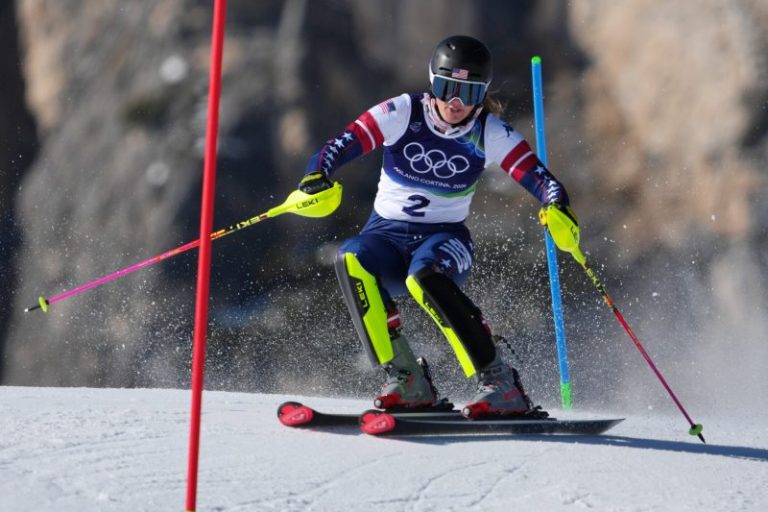
CORTINA D’AMPEZZO, Italy — An early Olympic medal contender, Team USA’s Paula Moltzan squeaked into the top-10 of women’s slalom by the wax of her skis.

Moltzan finished eighth in the slalom Wednesday, Feb. 18, eight days after winning bronze with Jackie Wiles in the team combined. Moltzan looked poised to possibly earn her first individual medal at the start gate, but a disastrous first run kept her off the podium, though she rebounded with the fastest time in run No. 2.

Moltzan’s first split of the first run ranked second of 95 skiers. She had the third-fastest second split. And sixth-fastest third split. Her fourth (and final) split ranked 28th, as she nearly missed the fifth-to-last gate and had to practically ski uphill to avoid a disqualification.

That disaster seemingly took her out of medal contention before the second runs even began. But as one of the first skiers to race in Run No. 2, Moltzan showed a glimpse of what could have been.

She had the speediest second trip down the mountain (51.39), over half a second faster than gold medalist Mikaela Shiffrin (51.97). Moltzan topped the leaderboard for nearly half the second run, finally relinquishing the overall lead to Switzerland’s Melanie Meillard after 15 skiers had come down.

Moltzan finished the two-run race with a combined time of 1:41.29, finishing just 0.48 seconds off the podium – and incredible comeback after finishing the first run down in 28th place.

‘I’m happy to leave the Olympics on that run,’ Moltzan said after the race, ‘and I’m excited to see my family and excited to go home.’

Moltzan has traditionally been stronger in giant slalom, but she’s made herself a contender in both events this season. She has five top-five slalom finishes this season, including a silver in the night race in Flachau, Austria, where she shared the podium with Shiffrin.

Shiffrin told the NBC broadcast between runs No. 1 and 2 that ‘There were a couple moments when I thought I could easily be off this course right now.’

Thirty-one skiers recorded DNFs (did not finish) or DSQs (disqualifications) in the first run, including Moltzan’s teammate Nina O’Brien. Eleven more skiers joined them on the second, including German Lena Duerr and Swede Cornelia Öehlund, who each had the second and third fastest first runs among all skiers.

‘There’s a lot more turns in the second run,’ Moltzan said. ‘Their offset between the gates is about one meter more, so you’re turning a lot more, the speeds are a lot slower. You can control it, and I preferably liked to turn, so it was better for me, so I’m happy.’

The USA TODAY app gets you to the heart of the news — fastDownload for award-winning coverage, crosswords, audio storytelling, the eNewspaper and more.

This post appeared first on USA TODAY

MILAN — A Slovakian hockey star was on his bench, an ice bag to his neck, and couldn’t have been happier.

There in front of him, his teammates scored two goals 33 seconds apart en route to securing a spot in the semifinals of the men’s hockey tournament at the 2026 Winter Olympics. Slovakia defeated Germany, 6-2, on Wednesday, Feb. 18, at Milano Santagiulia Ice Hockey Arena in quarterfinal action.

Those goals frustrated the Germans into taking a timeout. While they did that, Slafkovsky was getting looked at by a team trainer after an awkward spill along the boards when he was tied up with Germany’s Moritz Seider and Fabio Wagner. Slafkovsky ended up on his belly, looking a bit confused, but had no problem getting up and skating to his bench.

‘I kind of, I don’t know, broke my ankle, fell on the board,’ Slafkovsky said, joking. ‘I was a little shaken up. But, ice pack fixes everything. So I put the ice pack on my neck, on my head, and then I was ready to go back out there. And we got two goals. So, I take it.’

Easy to joke, of course, when part of a run like Slovakia is having in Milan. They won their Group when they scored a late goal in a loss against Sweden. That earned two days off between round-robin play and the quarterfinals. Now they have a 75 percent chance of winning a medal, as the semifinals winners advance to the gold medal game and the losers to the bronze medal game.

‘It’s big for our country, it’s big for all of our fans,’ Slafkovsky said. ‘I’m super excited to go back to semifinals after four years again. An even bigger tournament and a great opportunity for us. We just got to make sure we’re prepared and we got to play good. And wherever it takes us, it’ll take us there.’

This post appeared first on USA TODAY

The speed skating venue for the Milano Cortina Winter Games is a temporary arena, a first for the Olympics.
Despite concerns that a temporary venue would create slow ice, multiple Olympic records have been broken.
Ice-maker Mark Messer and his crew face challenges managing the ice thickness to support the Zambonis.

MILAN — United States speed skater Jordan Stoltz will have a chance to set a third Olympic record in three races when he competes in the 1,500 meters at the Winter Olympics on Thursday, Feb. 19.

It wouldn’t be possible without unsung heroes.

That would be Mark Messer and his small crew managing the ice that created concerns before the Milano Cortina Winter Games began.

The ice resides in a temporary arena, the first to be used during a Winter Olympics. One worry was that the presence of spectators would heat up the building, soften the ice and slow the likes of Stolz.

‘I knew it was a challenge,’ Messer, working in his seventh Winter Olympics, told USA TODAY Sports. ‘They threw around a couple different options when they finally decided on doing it in this building as a temporary track. It was just, OK, you’ve decided, so let’s go to work.’

The use of preexisting and temporary facilities are being used to reduce costs of hosting the games. The plan appears to be working at the speed skating venue.

Olympic records were set in six of the first eight races.

Stolz has set Olympic records in the men’s 500 and 1,000 – two of the four races he will compete in here – and said of the ice, ‘The condition is actually really good. I’m not sure how they did it.’

Paul Golomski, a member of Messer’s crew, said, ‘It’s a miracle.’

Zamboni poses some risk

Messer said the ice is ‘a little bit noisier underneath’ than in permanent rinks.

‘There’s some hallways underneath, there’s insulation on the bottom,’ said Messer, whose full-time job is Director of the Olympic Oval, a covered speed skating oval built for the 1988 Winter Olympics in Calgary. ‘And that gives us some challenges because we’re taking a six-ton Zamboni onto the ice.’

In fact, two Zambonis roll onto the ice at once.

‘We need to have a thick ice to be able to keep the weight of that machine,’ Messer said. ‘So we are having some challenges with the weight of the machines, and we don’t want to make the ice any thicker because then we lose control of the temperatures a little bit. So we’re trying to run as thin as we can so that we can get the refrigeration from the bottom to the top where the skaters are and thick enough that we’re not having blowouts from the (Zamboni) tires.’

When Messer and his crew track these issues, monitoring temperature of the ice is key.

‘We’re running around minus-9 degrees in the middle of the ice,’ he said.

Ice is on the move

This is not to suggest everything has gone perfectly.

‘Oh, no,’ Messer said. ‘Things change daily. The ice is moving all the time. We’ve had the ice move and crack where it’s pulled apart. One of the antennas in the ice pulled the wire apart. So everything’s in constant flux.

‘There’s a hollow spot today, it sounds solid tomorrow, but the next day it’s somewhere else. It’s a constant shifting and (we keep a) really vigilant eye on the conditions out there.’

Messer is not working alone.

He said he’s got got three Zamboni operators from North America and a crew of the contractor that installed the refrigeration.

‘We have somebody that’s working on just keeping the refrigeration going into the rink, and then there’s somebody outside that’s supplying the coolant that we bring into the rink,’ he said, adding three companies are involved in the operation. ‘And I think that’s one of the challenges, too, is kind of getting everybody on the same page and seeing who does what and being able to coordinate the three or four different groups.’

‘Nice to hear’

In the second speed skating race at the Milan Cortina Winter Games, American Casey Dawson finished eighth in the men’s 5,000.

‘I think the ice conditions can be variable here compared to other tracks because all the other tracks are permanent and they can control conditions a lot easier,’ Dawson said afterward. ‘So from day-to-day here, it’s been a little different, and on race day it’s going to be a little bit harder to control the temperature and everything because having everyone in the stands is going to warm up the building.’

Others voiced similar concerns.

But two days later, Stolz set an Olympic record in the men’s 1,000 meters and offered his stamp of approval for the ice.

‘Well, it’s nice to hear that Jordan thought it was good,’ Messer said. ‘We’re getting some pretty positive feedback.’

Heading into the Winter Olympics, Messer said, his hope was the speed skaters would be able to challenge a few of the Olympic records.

‘I thought in Beijing (at the 2022 Winter Olympics) we had some really fast times,’ he said. ‘But seeing some of the spaces there between the Olympic record and the world records, I thought that we could maybe challenge some of the Olympic records.

‘But this is exceeding our expectations for sure.’

This post appeared first on USA TODAY

ACC features a number of hot seats, including Adrian Autry and Jeff Capel.
Will Lane Kiffin remain the only new coach at LSU? Matt McMahon in trouble.
Penny Hardaway follows a good season with a really bad one at Memphis.

Jerome Tang called his Kansas State basketball team ’embarrassing.’ No argument on that point. K-State fans wore paper bags over their heads. Embarrassed by all of it, the university fired Tang.

Tang won’t be the last college basketball coach fired these next several weeks. The hot seat steams from Syracuse to LSU to Oklahoma and lands in between.

Adrian Autry, Syracuse

Why it’s hot: Syracuse is mired in a yearslong nosedive. Never mind the glory days, is it too much to ask the Orange to make the NCAA Tournament? No, it shouldn’t be too much to ask. It might be time for Syracuse to break with the Jim Boeheim coaching tree.

Jeff Capel, Pittsburgh

Why it’s hot: This is Capel’s eighth season. He’s been to the NCAA Tournament once. This season has been a disaster, including losses to Hofstra and Quinnipiac. If Pitt keeps Capel, take that as a sign it’s too poor to pay his buyout. There’s no other case for retention.

Jake Diebler, Ohio State

Why it’s hot: On one hand, Diebler’s buyout would be a de minimis housekeeping cost for a revenue behemoth like Ohio State. On the other hand, the Buckeyes are on the bubble for the Big Dance. If they go dancing, there’s probably nothing to see here. If not, stay tuned.

Kim English, Providence

Why it’s hot: Providence became an NCAA Tournament regular under Ed Cooley, English’s predecessor. With English, the Friars are a Big East doormat. A recent loss to St. John’s included a brawl, the latest embarrassing moment in a bad season.

Steve Forbes, Wake Forest

Why it’s hot: Forbes won 25 games in his second season. An affable coach, he’s delivered some decent years and good soundbites. Eventually, though, every coach needs an NCAA bid. Forbes, now in Year 6, hasn’t gotten Wake Forest there.

Earl Grant, Boston College

Why it’s hot: Grant isn’t the sole problem at Boston College. This program lost its way almost 15 years ago and hasn’t found its way back. But Grant hasn’t been the solution, either. This bleak season includes a loss to Central Connecticut. That’s the definition of a call to action.

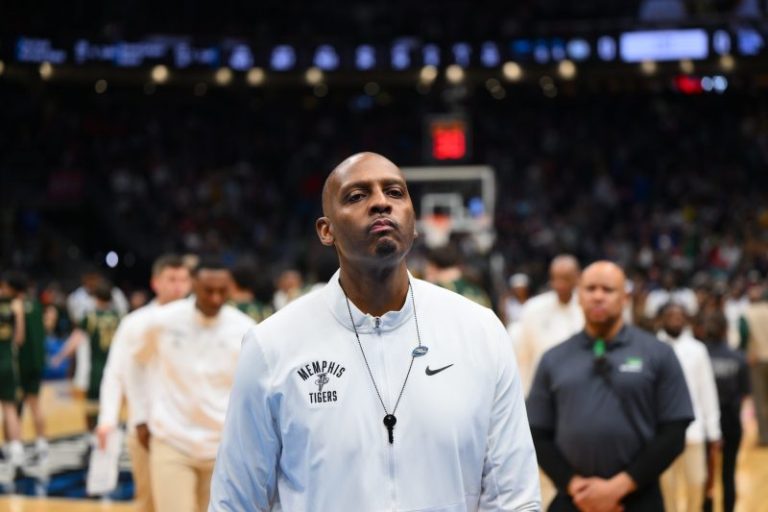
Penny Hardaway, Memphis

Why it’s hot: Hardaway is following a good year (he won 29 games last season) with one of his worst. Memphis probably would hesitate before firing one of its own, but Hardaway knows as well as anyone this program has standards. He’s not meeting them.

Bobby Hurley, Arizona State

Why it’s hot: It’s never a good sign when a coach admits he’s “failing.” Hurley offered that brutal assessment after a loss in January. Well, you said it, coach. Prep the buyout cannon, but hold off on firing after ASU’s upset of Texas Tech.

Matt McMahon, LSU

Why it’s hot: McMahon was great at Murray State. He’s gone splat at LSU. If LSU wants to be an “everything school,” it must fix its basketball program. What better time than with a new athletic director, new president and new board of supervisors chairman? Would Will Wade listen to a ‘strong-ass offer’?

Wes Miller, Cincinnati

Why it’s hot: Bob Huggins and Mick Cronin set a high bar for Cincinnati. Miller isn’t meeting the standard through five seasons. Cincinnati isn’t the type of program that’s OK with going 0-for-5 in NCAA bids under the same coach.

Porter Moser, Oklahoma

Why it’s hot: Like his SEC counterpart McMahon, Moser thrived at a mid-major but fizzled in the Power Four ranks. A tale as old as peach baskets. Oklahoma endured a nine-game losing streak earlier this winter. That’s the foundation for a firing.

Lamont Paris, South Carolina

Why it’s hot: Paris has a meaty buyout, and South Carolina football coach Shane Beamer will enter this season on the hot seat. How many buyouts do the Gamecocks want to stomach this year? And yet, two straight disaster seasons leave Paris in trouble.

Damon Stoudamire, Georgia Tech

Why it’s hot: Within an ACC with a handful of bad teams, Georgia Tech might be the worst.The decision here will be a test of how badly (and how quickly) first-year Georgia Tech athletic director Ryan Alpert wants to address this program.

Blake Toppmeyer is a columnist for the USA TODAY Network. Email him at BToppmeyer@gannett.com and follow him on X @btoppmeyer.

This post appeared first on USA TODAY

A newly proposed bill by House Republicans would cement President Donald Trump’s energy agenda by taking a sledgehammer to a vast array of his Democrat predecessor’s regulations.

Rep. Craig Goldman, R-Texas, is introducing legislation that would give all future energy-related regulations a five-year sunset window, while requiring many existing rules to be amended with a one-year expiry pending a review process.

It comes after Trump levied a similar executive order that would target energy red tape imposed by former President Joe Biden during his first year in office.

But if Goldman’s bill becomes law, it would significantly hamstring the ability of future Democratic administrations to impose new long-term energy policies like Biden’s, many of which Republicans have panned as burdensome and unnecessary.

He argued to Fox News Digital that those regulations were compounding the rising costs Americans have seen in their daily lives.

‘It is going through and looking at every single cost, basically from start to finish, of energy costs, and how it affects every single American taxpayer,’ Goldman said of his legislation.

‘All anyone has to do is look at where they were a year and a half ago with costs of certain things. It was all based on regulations passed by the Biden administration, and that’s exactly what we hope to cut and codify.’

The Texas Republican pointed out that increased energy costs, including prices at the gas pump, bled into other facts of Americans’ daily lives.

‘My dad and I owned a wine and food store and, yeah, when gas prices went up, the guy who drove the 18-wheeler full of cheese from Chicago, Illinois, charged us an extra $2,000 for that delivery because his gas prices were up tremendously. And so we couldn’t afford to eat that cost, so the cheese prices went up,’ he said as an example. 

‘Everything that every single American taxpayer touches — whether they know it or not, when energy prices are high, their cost of living is in turn going to be high.’

His legislation would primarily target regulations issued under major energy and land laws overseen by the Department of Energy and Department of the Interior.

The House has already voted to roll back a number of Biden-era regulatory policies so far this term and with bipartisan support.

Last month, 11 Democrats voted with Republicans to overturn Biden administration regulations on showerhead pressure.

Both the House and Senate passed resolutions early last year to overturn Biden-era regulations targeting water heaters, with six Democrats joining Republicans in the House on that measure.

Rising energy costs have been targeted by both parties as they make competing arguments ahead of the November 2026 midterms.

But Goldman is arguing that Democrats have less of a footing to talk about affordability with select goods like gas seeing a decrease in prices this year.

‘We pushed back, and we made people realize, ‘No, wait a minute. Let’s talk about affordability. Let’s talk about where the cost of things were just over a year and two months ago, before Donald Trump came into office and before Republicans could push through good legislation that President Trump signed,’ Goldman said. ‘I kind of find it quite interesting that all of a sudden the buzzword affordability isn’t much talked about anymore.’

Co-sponsors of Goldman’s bill include Republican Study Committee Chairman August Pfluger, R-Texas, and Reps. Beth Van Duyne, R-Texas, Randy Weber, R-Texas, Dan Crenshaw, R-Texas, Anna Paulina Luna, R-Fla., Pat Harrigan, R-N.C., and Barry Moore, R-Ala. 

A Senate counterpart was introduced by Sen. Jim Risch, R-Idaho.

This post appeared first on FOX NEWS

MILAN — Entering the 2026 Winter Olympics, Team USA had only won four cross-country skiing medals in Olympic history. The Americans have nearly matched that in Milano Cortina alone after picking up another medal.

Team USA claimed silver in the men’s team sprint free on Wednesday. Ben Ogden and Gus Schumacher posted a time of 18:30.35 for the U.S. cross-country skiing team’s third podium finish after Jessie Diggins claimed bronze in the women’s 10km and Ogden won bronze in the individual sprint.

In team sprint, each pairing is made up of two athletes who alternate laps. In the final round, teams start at the same time and complete six total laps (three per team member). Whoever crosses the finish line first wins.

Ogden and Schumacher finished 1.37 seconds off the top pace of Norway. Italy claimed the bronze medal.

Norwegian sensation Johannes Høsflot Klæbo won another gold medal with partner Einar Hedegart with a time of 18:28.98. Klaebo has won gold in every men’s cross-country event so far at the 2026 Winter Games, with one more event to go. Klaebo improves to 10 total gold medals and joins Michael Phelps (23) as the only Olympians, Summer or Winter, to reach double-digit gold medals.

This silver medal is the second of the 2026 Games for Ogden. He also captured silver in the men’s sprint classic, finishing with a time of 3:40.61, less than a second behind Norwegian star Johannes Høsflot Klæbo. Norway’s Oskar Opstad Vike finished with the bronze medal with a time of 3:46.55.

Ogden’s silver in the classic sprint ended a nearly 50-year Olympic medal drought for the American men. He became just the second American man to win an Olympic cross-country skiing medal and the first to make the podium since Bill Koch captured silver in 30km at the 1976 Innsbruck Winter Olympics.

Now, Ogden and Schumacher have added another entry to the American history books.

The USA TODAY app gets you to the heart of the news sfast—Download for award-winning coverage, crosswords, audio storytelling, the eNewspaper and more.

This post appeared first on USA TODAY

Sweden is 2-0 against the USA in the NHL era of the Winter Olympics.

The United States will try to change that history when it faces Sweden (3:10 p.m. ET, NBC, Peacock) in the quarterfinals on Wednesday, Feb. 18.

Sweden defeated the USA 4-2 in 1998 in the first Olympics to use NHL players and it also won in 2006 on its way to a gold medal.

The USA is the higher seed in 2026 in the NHL’s first Olympics participation since 2014. The Americans finished 3-0 in the preliminary round and earned a bye to the quarterfinals. Those wins came against teams with fewer NHL players, so Sweden will be the United States’ toughest opponent to date.

Sweden lost to NHL-stocked Finland in the round robin and is playing on back-to-back days. It beat Latvia 5-1 in the qualification round, the same score as the USA’s win over the Latvians.

Which team will advance to the semifinals? USA TODAY Network staffers weigh in:

Watch USA vs. Sweden men’s hockey on Peacock

Mike Brehm, USA TODAY

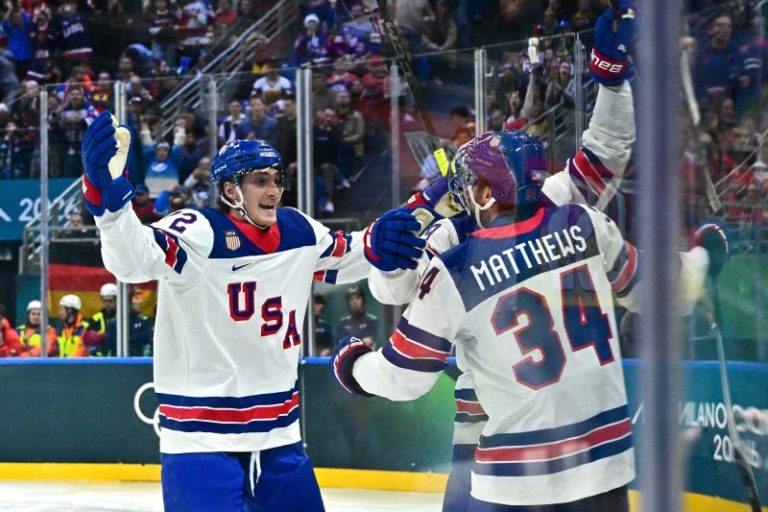
USA 4, Sweden 2: The Americans are getting balanced scoring and played a near-perfect game against Germany, shutting down superstar Leon Draisaitl and getting two goals from Auston Matthews. Sweden will be a tougher test, but the Americans’ depth and goaltending will get the job done.

Kevin Skiver, USA TODAY

USA 5, Sweden 3: Though the Swedes managed to find life against Latvia in the qualification playoff round – helped along by Gabriel Landeskog and Lucas Raymond – long flat stretches plagued them throughout the preliminary round. The United States have also looked slow on the ice at times, but the scores haven’t reflected it to date. Ultimately, talent wins out and Team USA manages to find the net enough to move past Sweden with relative ease, but not without wishing for more from its top players ahead of the semifinals.

Helene St. James, Detroit Free Press

USA 5, Sweden 3: The USA has the better goaltending and overall depth in general, so expect the Americans to advance to the semifinals. This should be the best test of their tournament so far, though the Swedes haven’t looked as good as they arguably should given the stars on their roster.

This post appeared first on USA TODAY