Archive

2026

Browsing

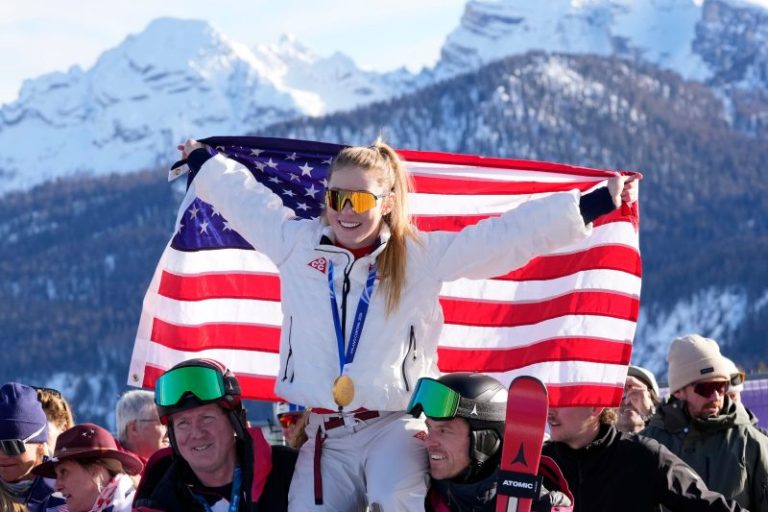
Mikaela Shiffrin won the Olympic slalom gold medal, finishing 1.50 seconds ahead of the silver medalist.
The victory gives Shiffrin her third Olympic gold, tying her for the second-most by a U.S. Winter Olympian.
Her four total Olympic medals tie her for the most by a U.S. woman in Alpine skiing.

CORTINA D’AMPEZZO, Italy — Mikaela Shiffrin didn’t need this Olympic gold medal.

Her legacy was secured long ago, between her other two Olympic golds, her World Cup wins record and all the other superlatives she’s achieved. But that’s never been good enough for the peanut gallery, which tunes in every four years and doesn’t understand why Shiffrin can’t just conjure gold medals out of snow.

Ski racing is hard. Really, really hard. Get a couple of inches off your line and you’re toast. Or worse. Get a course or a hill that doesn’t suit your style and it’s just not going to be your day.

But the Winter Olympics is the only measuring stick for some folks and, in their minds, Shiffrin hasn’t measured up.

Maybe now they’ll finally get off her back.

“The irony is I’ve cared so much about wanting everybody to know the reality and to not want to answer those questions and to be so sick and tired of it. And I’ve felt that way since (being) fourth in South Korea in the slalom,” Shiffrin said.

“In order to do this today, I kind of needed to accept the possibility that those questions would keep coming,” she said. “It was like, just don’t resist it. Just live in my own moment.”

And that moment? My God, was it magnificent.

Shiffrin obliterated the field in winning the Olympic slalom on Wednesday, Feb. 18, finishing a whopping 1.50 seconds ahead. Silver medalist Camille Rast was closer to 12th-place finisher Laurence St-Germain than she was Shiffrin.

With three gold medals, Shiffrin is now tied with snowboarder Shaun White and bobsledder Kaillie Humphries for second-most by a U.S. Winter Olympian. (Speedskaters Bonnie Blair and Eric Heiden have five each.) Her four total medals tie her with Julia Mancuso for most medals in Alpine skiing by a U.S. woman. Only Norway’s Kjetil Andre Aamodt and Croatia’s Janica Kostelic have more gold medals, with four.

When Shiffrin crossed the finish line, she looked at the scoreboard for several long seconds — “I never seem to be able to read the scoreboard” — before reality hit. About what she’d done, what it took to get here, and all the people — here and beyond — who’ve played a part in it.

She cried as she hugged her mother Eileen, who is also one of her coaches. She paused to gather herself and then kissed her hand and touched the snow, a tribute to her late father, before climbing onto the medals podium.

“These moments, we do build them up for sure. I think everybody builds it up and I’m building it up for myself, too,” she said. “Like I said, the biggest task today was to simplify and focus on the skiing.”

Shiffrin’s career, at the Olympics and everywhere else, is the kind of dominance that inspires people to hang banners, build statues and name their children and pets after. Yet rather than appreciating what she’s done, she’s always been held to an impossible standard.

You won a gold medal in the giant slalom at the Pyeongchang Games? Great, but what about that fourth-place finish in the slalom? The Beijing Olympics were Bizarro World because of the COVID restrictions and it was the first Games since the unexpected death of your dad, who was so central to you as both a person and a ski racer, but what’s wrong with you that you couldn’t win a single medal?

And when Shiffrin struggled in the slalom portion of the team combined, her 15th-place finish dropping her and Breezy Johnson from first to fourth, it was here we go again.

“I knew after the team combined that there would be some stories out there that would be really frustrating to look at,” Shiffrin said.

The truth is, Shiffrin never had an “Olympic problem.” She had ski races that didn’t go her way. Which is no different than what happens every season.

No different than the Olympic experience of pretty much every other skiing great, by the way. Marcel Hirscher, whose eight overall World Cup titles are the most of any skier? Has three Olympic medals, two of them gold. Same for Ingemar Stenmark, whose World Cup wins record Shiffrin broke.

“The reality of our sport is you lose a lot more than you win,” Shiffrin said. “When you look back on my career, I know statistics and everything, but still I’ve definitely lost a lot more than I’ve won. So that’s the one thing that’s certain is that you’re not going to win everything.”

But most people don’t see, or care, about that. So Shiffrin’s “reality” blew up into something it wasn’t.

“This whole season, every single slalom race, I’m like, ‘Oh God, I am really just digging myself into a hole here,’” Shiffrin said of her success this year in the World Cup, where she’s won seven of the eight slalom races and finished second in the other.

“The one thing that’s certain is that that wave’s going to stop,” she added. “You don’t get to ride that wave forever.”

Shiffrin has ridden it longer, and better, than most, however.

It’s about time she gets the recognition, and appreciation she deserves. She’s more than earned it.

Follow USA TODAY Sports columnist Nancy Armour on social media @nrarmour.
This post appeared first on USA TODAY

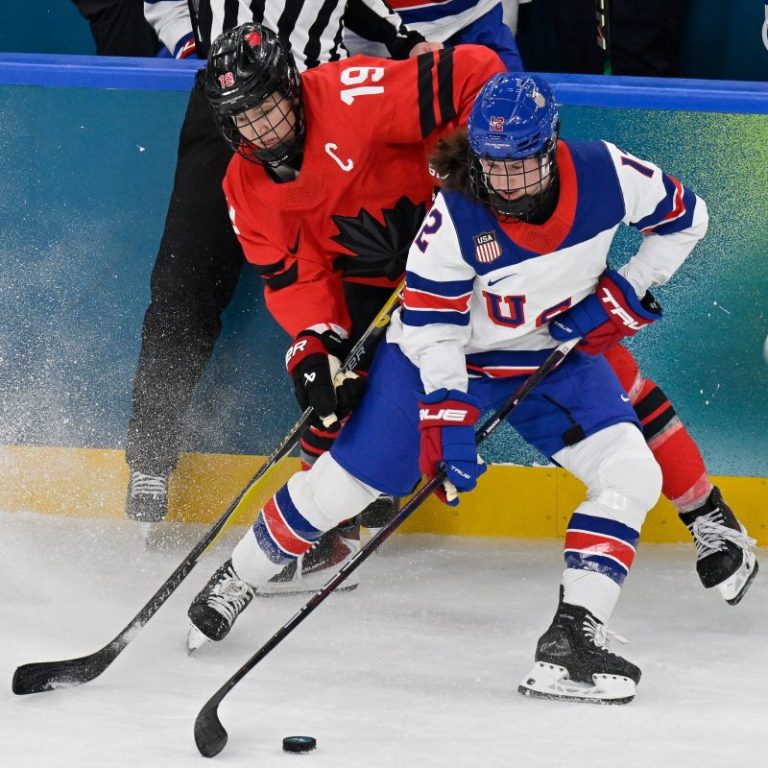
The USA’s 5-0 win against rival Canada in the preliminary round was an anomaly in the history of Olympics women’s hockey.

The USA and Canada will meet on Thursday, Feb. 19, in the gold medal game (1:10 p.m. ET on USA/Peacock) and all of their previous six meetings in championship games have been close. In fact, the last three and four of the six have been 3-2 scores.

Canada’s Marie-Philip Poulin and the USA’s Hilary Knight are likely to play key roles, not surprising considering Poulin is now the leading Olympic goal scorer and Knight has tied the U.S. Olympic record for goals and points.

In 2014, the USA held a 2-0 lead with five minutes left before Brianne Jenner made it 2-1. The Americans hit the post on a shot toward an empty net, then Poulin tied the game in the final minute. Knight was in the penalty box when Poulin scored in overtime.

The USA did the rallying in 2018 in a game in which both Knight and Poulin scored. Monique Lamoureux tied the game in the third period and her sister Jocelyne had the decisive goal to give the Americans a shootout win.

In 2022, Poulin scored twice for a 3-0 lead before Knight scored. Amanda Kessel made it 3-2 with 13 seconds left, but that ended up as the final score.

Canada is 4-2 against the United States in gold-medal games. Here are the previous scores:

USA vs. Canada gold medal game results

1998 gold medal game: 3-1 USA

2002 gold medal game: 3-2 Canada

2010 gold medal game: 2-0 Canada

2014 gold medal game: 3-2 Canada (OT)

2018 gold medal game: 3-2 USA (shootout)

2022 gold medal game: 3-2 Canada

This post appeared first on USA TODAY

MILAN – There were nerves and then, immense relief, the kind that comes with knowing the despair of the alternative.

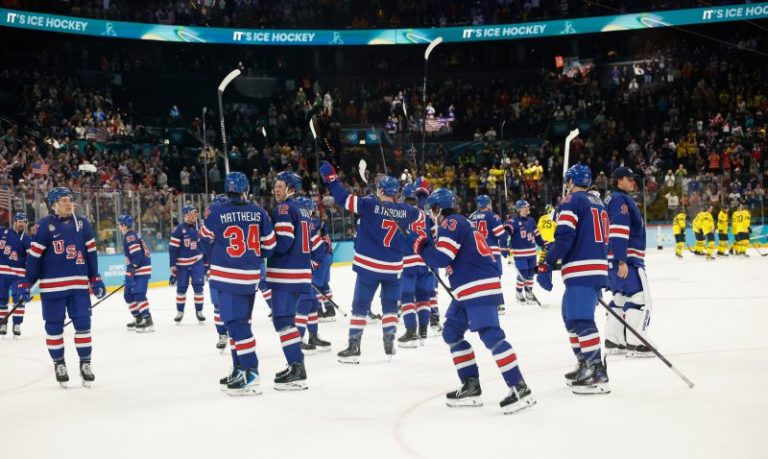
The USA men’s hockey team remains on a path to the gold medal game, as does top rival Canada, at the 2026 Winter Olympics. The next step comes Friday, Feb. 20 in a semifinal matchup against Slovakia, the same day Canada plays Finland.

Both teams needed to win in overtime on Feb. 18 at Milano Santagiulia Ice Hockey Arena, and in between their victories – USA, 2-1 over Sweden; Canada, 4-3 over Czechia – Finland needed overtime to defeat Switzerland, 3-2.

Overtime ruffles even the best of teams.

‘That’s as nervous as I’ve been ever in a hockey game,’ said Dylan Larkin, who scored in regulation. ‘Just the way 3-on-3 goes, it’s really just being opportunistic. Someone could fall, some puck could bounce, anything could happen, especially with the ice out there.’

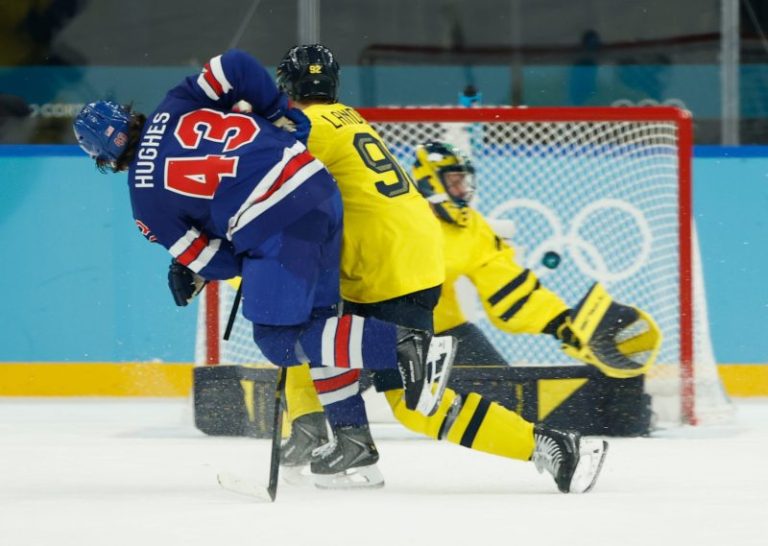
Then Quinn Hughes stepped on the ice, Matt Boldy got him the puck, and Hughes created space for himself, put the puck on his forehand and took a shot.

‘That was one of the best feelings I’ve ever had,’ Brady Tkachuk said. ‘Just the relief of scoring that goal, but seeing it was him, I think it just shows why he’s one of the best defensemen in the show.’

The USA’s roster is entirely NHL elite talent, but Sweden’s roster was stellar, too. The USA wasn’t able to take advantage of Sweden having had to play a qualification game the day before. The Americans couldn’t close them out, and so with 91 seconds left, Lucas Raymond made an incredible pass to set up Mika Zibanejad, and the Americans had to collect themselves.

‘I think it just showed exactly what we’ve been talking about this whole time,’ Tkachuk said. ‘It’s just the adversity, the character, just the will to win with our group. Probably something that can deflate you and end your tournament if you don’t just put your mind back in a good spot, and I think it just shows the character of being able to bounce back and get that win.’

Hughes shrugged it off.

‘Got to pick yourself back up,’ he said. ‘I’ve been saying all along, we’ve got guys that have won Cups and gone deep in the playoffs and superstars in the league, so I feel like it’s resilient group. You just pick yourself back up, get ready to go and I feel like we had an attack mindset in overtime.’

It’s one thing to settle NHL games via 3-on-3 overtime in the regular season. But when everything is on the line, it’s a pressure cooker. And unlike NHL teams, where the same three guys tend to rotate together in OT, as much as USA players know one another, it’s different in such a format.

‘We did address overtime at the beginning of at the start of this tournament because we felt at some point it was going to play a role,’ coach Mike Sullivan said. ‘We had a video session on it. It’s hard with the limited practice time that we have and the condensed schedule, the amount of games in a short period of time. It’s hard to maybe have an opportunity to actually give them reps and practice. But we dedicated a meeting on overtime 3-on-3 on both sides of the puck so that we could have some predictability around it.’

The players aced the test, and now get to study up on Slovakia.

This post appeared first on USA TODAY

Mikaela Shiffrin won her first Olympic gold medal since the death of her father in 2020.
Shiffrin won the women’s slalom by a 1.50-second margin, the largest in any Olympic Alpine event since 1998.
After crossing the finish line, Shiffrin took a moment of silence to honor her late father.

CORTINA D’AMPEZZO, Italy — Mikaela Shiffrin wanted to win Olympic gold in women’s slalom as much as she feared it.

‘Everything in life that you do after you lose someone you love is like a new experience,’ Shiffrin said. ‘It’s like being born again.’

A feeling she’s resisted every day since her father Jeff died on Feb. 2, 2020. A feeling she embraced at the bottom of la Olimpia delle Tofane Wednesday afternoon, Olympic champion once more.

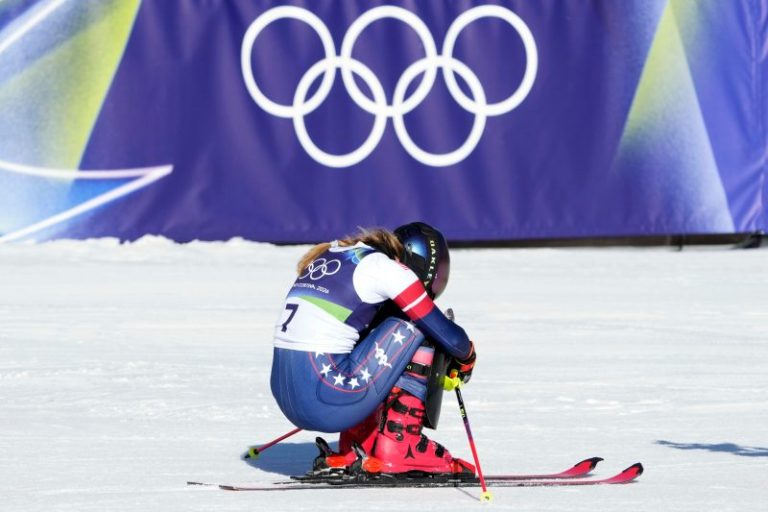
After she crossed the finish line, 1.50 seconds ahead of the next closest skier — an eternity in the sport — she dropped her chest to her knees and her head in her lap. Gliding along the smooth snow at the bottom of the track in silence. Awkward, perhaps, to the average onlooker. But not to Shiffrin. This was her first Olympic gold medal without her dad there to witness it. And she was going to take the moment to sit in silence with him.

‘Maybe he doesn’t have to specifically answer,’ she said, reflecting on the last six years, ‘Which is hard. But it’s OK.’

Shiffrin used to resent people who said their departed loved ones were with them in big moments. Carrying them through the day. Anchoring them with their spiritual presence.

‘Where? The (expletive)?’ she’d think to herself, frustrated beyond comprehension. ‘… Why do you get to feel that way?’

Shiffrin’s mother Eileen didn’t think her daughter would ever ski again after Jeff fell off the roof of their family home. She heard his heart stop beating in the hospital. She struggled to get out of bed, eat or drink. She lost weight.

She battled between a refusal to accept a life without her dad and a desire to stick around for ski racing. Something she loved to do. And something she was great at. Her grief compounded with traumatic injuries — to her own body as well as her fiancé Norwegian skier Aleks Aamodt Kilde — to create what she described as ‘a perfect-storm situation for PTSD to take hold.’

Treatment has been an ongoing process. Lots of self-reflection. Lots of manifesting. Lots of loud, positive self-talk.

Redemption defined the buzz around Shiffrin heading into the 2026 Milan Cortina Winter Games. Could the most accomplished skier of all time end an 0-for-6 Olympic medal drought here? She blew the first event, women’s team combined, by squandering speed skier Breezy Johnson’s lead in the downhill with the 15th slowest slalom in the field of 18. They finished fourth — 0.06 seconds off the podium.

‘There will always be criticism,’ Shiffrin said Wednesday, reflecting on the overwhelming narrative after her fourth-place finish that Cortina may just be Beijing all over again. ‘But I am here to earn the moment.’

Shiffrin wasn’t a medal favorite in her next race: Giant slalom. She finished third in her last GS before the Olympics, but it was her first podium in the event in two years. She hasn’t won a GS since December 2023. A devastating crash during the event 15 months ago left her with an abdominal puncture wound.

Feeling good rounding curves bodes well for slalom skiing, which means a shorter course with quicker turns. And sure enough, she obliterated the competition Wednesday. Her 1.50-second margin of victory was the largest in any Olympic Alpine skiing event since 1998. It was one one-hundredth slower than the combined margin of victory from every women’s Olympic slalom race from Nagano to Beijing.

She looked over at the big screen for her time, unable to read it for a moment, which isn’t unusual. Green means good, but sometimes it’s hard to believe. This was one of those times.

‘Wait, are we sure?’ she thought. ‘Because it would be embarrassing to celebrate and have that not be real.’

Oh, we’re sure. More than sure. She won Olympic gold. By a lot.

That’s when Shiffrin communed with her dad, whom she could finally accept was really gone.

Before stepping up to accept her medal, Shiffrin kissed her fingertips, pressed them into the snow.

‘I don’t want to be in life without my dad,’ she said after ceremony. ‘And maybe today was the first time that I could actually accept this like reality, and instead of thinking I would be going in this moment without him, to take the moment to be silent with him.’

Reach USA TODAY Network sports reporter Payton Titus at ptitus@gannett.com, and follow her on X @petitus25.

This post appeared first on USA TODAY

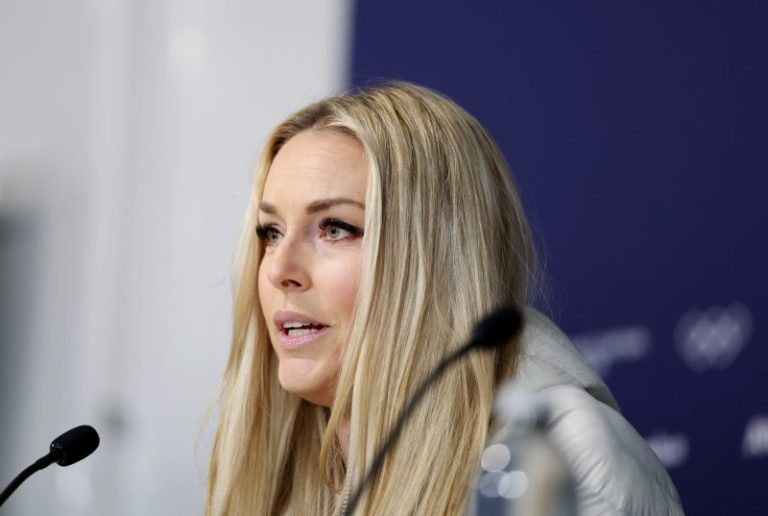
CORTINA D’AMPEZZO, Italy — Lindsey Vonn will have another surgery today on the leg she shattered during a crash at the 2026 Winter Olympics, she announced in an Instagram post Wednesday, Feb. 18.

Vonn also shared her dog Leo died Feb. 9, the day after her crash at the Tofana Alpine Skiing Center during the Winter Olympics. This is the second of Vonn’s dogs to die since last spring. Lucy, her spaniel, died right after World Cup finals.

‘This has been an incredibly hard few days,’ Vonn wrote. ‘Probably the hardest of my life.

‘… The day I crashed, so did Leo.’

Vonn shared that Leo had recently been diagnosed with lung cancer after surviving lymphoma a year-and-a-half ago. ‘He was in pain,’ she wrote, ‘and his body could no longer keep up with his strong mind. As I layed in the hospital bed the day after my crash, we said goodbye to my big boy.’

Leo was with Vonn for 13 years, comforting her through the 2014 Sochi Olympics (which she missed due to injury), her retirement in 2019 and comeback.

‘There will never be another Leo,’ she wrote. ‘He will always be my first love.

‘Heading in for more surgery today. Will be thinking of him when I close my eyes. I will love you forever my big boy.’

Opinion: Lindsey Vonn’s crash was cruel. Her bravery epitomizes Olympic spirit

What happened to Lindsey Vonn?

Vonn hooked the fourth gate with her right arm, which sent her spinning and hurtling into the hard, packed snow. She tumbled end over end several times before coming to a stop.

‘Things just happen so quick in this sport,’ U.S. teammate Bella Wright said after the race. ‘It looked like Lindsey had incredible speed out of that turn, and she hooked her arm and it’s just over just like that.’

The three-time Olympic medalist remained prone in the snow, and she could be heard wailing in pain. The gasps and groans from fans faded into shocked silence as medics worked on her. Vonn remained on the course for approximately 13 minutes before being loaded into a helicopter.

What is Lindsey Vonn’s injury?

In an Instagram post on Feb. 9, Vonn shared the devastating news that she suffered a complex tibia fracture that will require multiple surgeries. The 41-year-old updated fans on Feb. 11 after a third surgery in Italy and included some gruesome photos of her progress . Upon returning to the United States on Feb. 17, Vonn shared that her injury was ‘a lot more sever than just a broken leg’.

‘I’m still wrapping my head around it, what it means and the road ahead.’ Vonn wrote. ‘But I’m going to give you more detail in the coming days.”

A tibia fracture is a break in the shin bone that is an emergency needing immediate treatment. ‘Your tibias are some of the strongest bones in your body. It usually takes a lot of force to break one,’ according to the Cleveland Clinic. ‘You probably won’t be able to stand, walk or put weight on your leg if you have a broken shin bone.’

A complex fracture involves multiple breaks in a bone and damaged soft tissue, according Yale Medicine. Symptoms include extreme pain, numbness and, sometimes, a bone that protrudes through the skin. Treatment involves stabilization and surgery.

Lindsey Vonn crash video

NBC broadcasts the Olympics and posted video of Vonn’s crash .

USA TODAY Sports’ Samantha Cardona-Norberg breaks down Linsdey Vonn’s crash just after it happened.

Fans went silent as soon as Vonn crash, reacting with shock, grief and later support as the helicopter lifted her into the sky. USA TODAY Sports talked to some fans after the crash .

Is Lindsey Vonn OK?

Vonn was in obvious pain after the crash, but she was moving her arms, head and neck.

About 18 minutes after the crash, the helicopter slowly began flying toward Cortina. ‘Let’s let Lindsey Vonn hear us!’ the American announcer said as the chopper flew away with her, and the crowd cheered and applauded.

Vonn’s sister Karin Kildow was at the course today for the downhill and spoke to NBC reporters during their live broadcast:

‘I mean that definitely was the last thing we wanted to see and it happened quick and when that happens, you’re just immediately hoping she’s okay. And it was scary because when you start to see the stretchers being put out, it’s not a good sign,’ Kildow said. ‘But she really … She just dared greatly and she put it all out there. So it’s really hard to see, but we just really hope she’s okay.

‘She does have all of her surgeons and her PT staff here and her doctors, so I’m sure they’ll give us a report and we’ll meet her at whatever hospital she’s at.’

Lindsey Vonn torn ACL

It was second time in as many weeks Vonn left a mountaintop on a chopper. She fully ruptured her left ACL, sustaining meniscus damage and bone bruising , in a downhill crash on Jan. 30, in the final World Cup event prior to the start of the Olympics.

Vonn is also skiing with a partial replacement of her right knee. She had dominated the sport before the crash, making the podium in all five downhill races this season and winning two of them.

Despite the latest injury, Vonn was determined to race at her fifth and final Olympics. She said her knee felt stable and strong, and she had spent the last week doing intense rehab , pool workouts, weight lifting and plyometrics. She skied both training runs, posting the third-fastest time in the second run before it was canceled because of fog and snow.

Lindsey Vonn torn ACL

Vonn is 41 and was skiing in her fifth Winter Olympics (2002, 2006, 2010, 2018, 2026). She has won three Olympic medals (1 gold, 2 bronze).

This post appeared first on USA TODAY

MILAN U.S. defenseman Quinn Hughes promises he’s having a good time. 

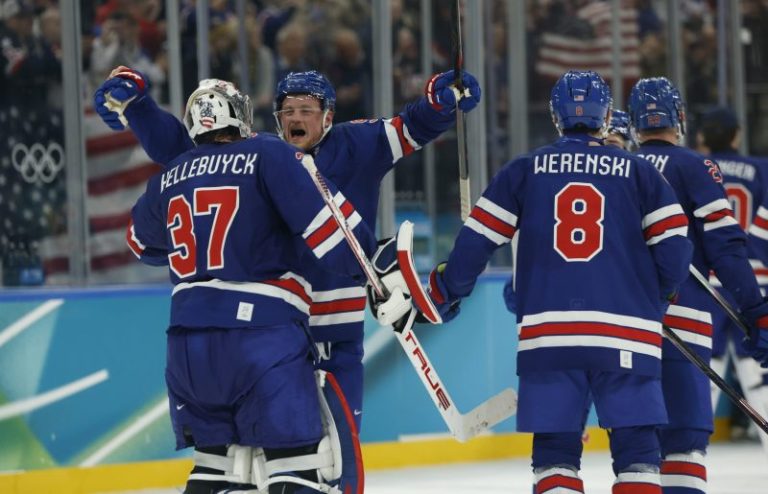
As internet sleuths debate whether the U.S. defender is happy based on his facial expressions (or lack thereof), Hughes’ excitement was on full display after he scored the game-winning overtime goal to defeat Sweden 2-1 in the quarterfinals on Wednesday at the 2026 Winter Olympics.

When asked what he felt after finding the back of the net, Hughes simply said, ‘Relief.’

Hughes’ teammates embraced him in celebration after the goal, which punched Team USA’s ticket to the semifinals, where they will face Slovakia on Friday. Hughes then shared a hug with his brother, Jack Hughes.

‘That is unreal. That is a massive goal, in a massive moment. It was just one of our best players taking over and winning the game for us,’ Jack Hughes said.

Dylan Larkin added, ‘Unbelievable moment for our country and for USA hockey. For him to do it, it gives me chills. It was an unbelievable performance.’

Matthew Tkachuk said the Hughes’ first career Olympic goal sent him airborne. “It was definitely the highest I’ve jumped since my surgery. … I’ll have to hit the foam roll,’ he joked.

Hughes was ‘disappointed’ he wasn’t able to represent his country in last year’s 4 Nations Face-Off due to injury, but he’s making up for lost time at the Olympics, the first to include NHL players since 2014.

‘I felt like I was playing great hockey at the time and wasn’t able to be there,’ he said of the 4 Nations tournament in 2025. ‘It sucks, but you’re moving on. I’m here this time. I’m just really enjoying it.

Hughes has six points in four games with one goal and five assists. He’s one of two players on Team USA to record at least one point in every game of the tournament, joining Auston Matthews, who assisted on his overtime goal along with Matt Boldy. Hughes’ five assists ties Brian Leetch for the most by a U.S. defenseman in the Olympics with NHL players participating. 

‘I have been enjoying wearing the crest and playing with the superstars that we have on our team, getting to know these guys in the (Olympic) Village,’ Hughes said. ‘I just wanted to extend it as long as I can.’

The Hughes brothers collaborated on an assist on Larkin’s goal to open scoring in the second period. The siblings’ connection has been productive — Quinn Hughes and Jack Hughes have contributed to half of Team USA’s goals, according to ESPN Insights.

‘That is family business, right there,’ Jack Hughes said.

‘There’s something unique about an opportunity to play with your brother,’ U.S. head coach Mike Sullivan added. ‘I just think that that’s another added inspiration for a guy like him to want to participate in these types of events. I know I spoke to him last year before the 4 Nations and during the 4 Nations and told him how much we missed them and what he meant to this team and there would be a time that he would join the group and this is it. And I couldn’t be happier that he’s healthy and he’s competing hard for us.’

The Americans led 1-0 in the closing minutes of the game and were 1:31 away from a regulation win when Sweden’s Mika Zibanejad scored an equalizer. The shot sent the quarterfinal game to overtime, a 10-minute sudden-death period played at 3-on-3. Space and opportunity is where Hughes thrives.

Quinn Hughes, Jack Eichel and Jake Guentzel took the ice for the USA as their teammates anxiously watched from the bench. Larkin said that was ‘as nervous as (he’s) ever been in a hockey game,’ but seeing Hughes with the puck gave him reassurance: ‘I calmed down a lot when I saw Quinn (Hughes) with it.’

Hughes said he ‘created some space for myself’ on the shot. ‘Got lucky. Kind of got the defenders in the position that I wanted and was able to get the shot off. … Took it to my forehand where I wanted it.’

But his teammates wouldn’t describe it as luck.

“He’s got to be one of the hardest guys in the world to cover 3-on-3. the way he’s able to move laterally and get a shot off quick,” Matthew Tkachuk said. “He does it 5-on-5. He does it on the power play. We had a lot of looks like right in that middle area. I don’t know if he was the third or fourth one. Went glove side, post-and-in and live to fight another day. It’s just most incredible feeling.”

Hughes’ performance was all the more impressive considering he played many minutes in Wednesday’s overtime win. Coach Sullivan said overtime was their ‘Game 7’ and they were emptying the tank to keep their gold-medal dreams alive.

‘There’s nothing to play for unless we win,’ Sullivan added. ‘So we were going to make decisions behind the bench based on that. Just trying to put guys on the ice in certain situations that we think ourselves give our team the best chance to win and (Hughes) in a lot of those situations. ‘

Hughes and Team USA will face Slovakia in the semifinals on Friday. The Hughes brothers may be back at the Milano Santagiulia Ice Hockey Arena on Thursday for the U.S. women’s national team’s gold medal game against Canada. Hughes mother, Ellen Hughes, serves as the performance consultant for the women’s national team.

Reach USA TODAY National Women’s Sports Reporter Cydney Henderson at chenderson@gannett.com and follow her on X at @cydhenderson.

The USA TODAY app gets you to the heart of the news — fast. Download for award-winning coverage, crosswords, audio storytelling, the eNewspaper and more.

This post appeared first on USA TODAY

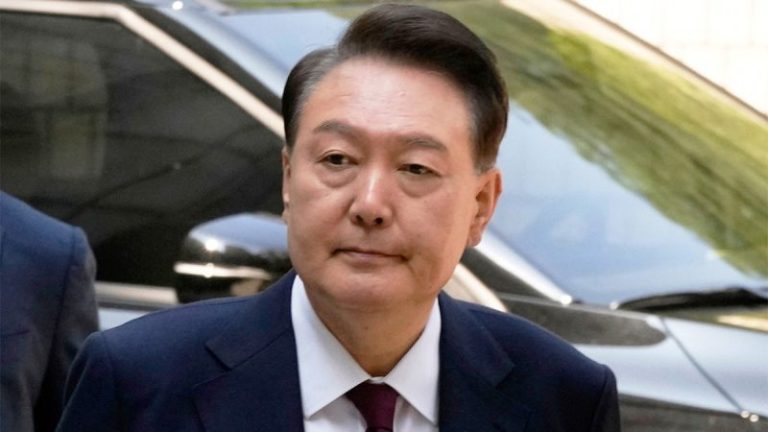
A South Korean court sentenced former President Yoon Suk Yeol to life in prison Thursday for leading an insurrection after declaring martial law in December 2024.

Yoon was found guilty of abuse of authority and masterminding the insurrection.

Yoon, 65, denied the charges and argued that he had presidential authority to declare martial law and that his action was aimed at sounding the alarm over opposition parties’ obstruction of government.

Prosecutors said in January that Yoon’s ‘unconstitutional and illegal emergency martial law undermined the function of the National Assembly and the Election Commission … actually destroying the liberal democratic constitutional order.’

Yoon’s attempt to impose martial law lasted roughly six hours, sparking mass street protests before parliament quickly voted it down.

Under South Korean law, masterminding an insurrection carries a maximum sentence of death or life imprisonment. Prosecutors hadsought the death penalty.

While courts last imposed a death sentence in 2016, South Korea has not carried out an execution since 1997.

Yoon is expected to appeal the ruling.

Yoon faces eight ongoing trial proceedings and was already given a five-year prison sentence last month in a separate case on charges including obstructing authorities’ attempts to arrest him following his martial law declaration. He has appealed that sentence.

Reuters contributed to this report.

This post appeared first on FOX NEWS

A Washington, D.C., grandmother who lost her grandson to gun violence delivered a fiery defense of President Donald Trump during a Black History Month celebration Wednesday at the White House.

Forlesia Cook’s grandson, Marty William McMillan Jr., was killed in 2017 at the age of 22. Cook has since spoken publicly about the loss, including testifying before Congress about his killing.

After Trump invited Cook to say a few words at the event, she used the moment to defend him, urging critics to ‘get off the man’s back.’

‘I love him, I don’t want to hear nothing you got to say about that racist stuff,’ she said. ‘And don’t be looking at me on the news, hating on me because I’m standing up for somebody that deserves to be standing for.’

Cook’s voice grew louder as she continued.

‘Get off the man’s back,’ she said. ‘Let him do his job. He’s doing the right thing. Back up off him.’

She ended her remarks by declaring, ‘And grandma said it.’

The East Room crowd erupted in applause and cheers.

Trump appeared to welcome the praise, joking that she should run for public office.

‘Wow, that’s pretty good,’ Trump said. ‘When is she running for office? Forlesia, when are you running for office? You have my endorsement.’

Cook also thanked Trump for calling the National Guard to the capital and praised his tough-on-crime approach.

‘One thing I like about him, he keeps it real, just like grandma,’ she said. ‘I appreciate that because I can trust him.’

The White House event marked the annual celebration of Black History Month.

Trump also addressed the death of the Rev. Jesse Jackson, saying, ‘I wanted to begin by expressing a sadness at the passing of a person who was, I knew very well, Jesse was a piece of work. He was a piece of work, but he was a good man.’

‘I just want to pay my highest respects to Reverend Jesse Jackson,’ Trump added, calling him ‘a real hero’ and saying, ‘he really was special, with lots of personality, grit and street smarts.’

The president also announced that former Housing and Urban Development (HUD) Secretary Ben Carson would receive the Presidential Medal of Freedom.

Fox News Digital’s Jasmine Baehr contributed to this report.

This post appeared first on FOX NEWS

There’s a new sport at the 2026 Milan Cortina Olympics, and it could provide one country a path to winning its first gold medal at the Winter Games in more than 50 years.

Spain’s Oriol Cardona Coll will be one of the favorites when ski mountaineering makes its Olympic debut next week, with a chance to end a drought that dates back to 1972. Ski mountaineering will be the first new sport introduced to the Winter Olympics since skeleton in 2002 and snowboarding in 1998, and other neighboring countries along the Alps like France and Switzerland are also considered medal contenders in the event.

Here’s more on the newest sport at the 2026 Winter Olympics, as well as a full schedule for the ski mountaineering events taking place at the Milan Cortina Games and how to watch:

When does ski mountaineering start at 2026 Winter Olympics?

The three ski mountaineering events take place over two days beginning on Thursday, Feb. 19 near the end of the 2026 Winter Olympics. The women’s and men’s sprint events will occur on Feb. 19 and the mixed relay is slated for Saturday, Feb. 21. All races will take place at the Stelvio Ski Centre in Bormio, Italy.

What is ski mountaineering?

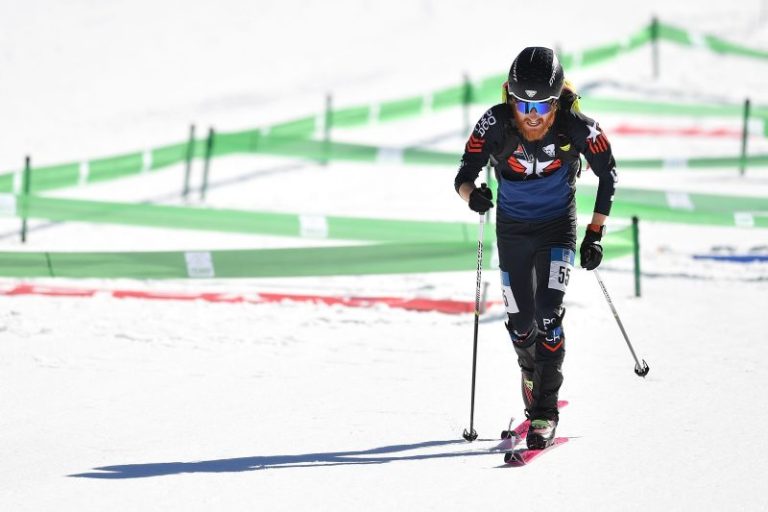
Also known as ‘skimo,’ ski mountaineering is a combination of two skiing skillsets. It combines backcountry and downhill skiing through rugged terrain, navigating the strength and cardiovascular endurance for ascents on foot and higher-speed descents more akin to a typical skiing race. The races occur in stages and it has been recognized as a sport by the IOC since 2016.

There will be a men’s sprint race, a women’s sprint and a mixed relay at the 2026 Winter Games. Anna Gibson and Cameron Smith will represent the United States in the mixed relay. Olympic organizers noted the sport is particularly popular in Italy with roots in the Alps before ski lifts.

‘Athletes begin the race with skis attached, then remove them and place them on their backpacks to tackle a set of steps,’ according to the Winter Olympics description of the event. ‘The final stage involves a further ascent on skis before the skins are removed for the descent to the finish line. There are various elimination rounds in the lead-up to the final, in which medals are awarded. The normal duration of the race is about 3.5 minutes per heat.

‘The mixed relay consists of two ascents plus a section on foot with skis attached to the backpack for each ascent and two descents.’

2026 Winter Olympics ski mountaineering schedule

All times Eastern

Thursday, February 19

Women’s sprint heats, 3:50 a.m.
Men’s sprint heats, 4:30 a.m.
Women’s sprint semifinals, 6:55 a.m.
Men’s sprint semifinals, 7:25 a.m.
Women’s sprint final, 7:55 a.m.
Men’s sprint final, 8:15 a.m.

Saturday, February 21

Mixed relay, 7:30 a.m.

How to watch ski mountaineering at 2026 Winter Olympics: TV, streaming

The ski mountaineering qualifying heats and medal races will be broadcast nationally on USA Network and are available via live stream on Peacock and NBCOlympics.com.

Watch 2026 Olympics with Peacock

This post appeared first on USA TODAY

The men’s ice hockey playoffs at the 2026 Milano Cortina Winter Olympics are heating up.

The quarterfinals saw three overtime thrillers on Wednesday — tournament-favorite Canada rallied to avoid an upset by Czechia, Finland outlasted Switzerland and the United States survived a late comeback by Sweden. Slovakia, meanwhile, breezed through its quarterfinal matchup against Germany in a 6-2 rout.

The 2026 Winter Games are down to the last few days, but they’re doing anything but winding down. Here is the full bracket for the men’s ice hockey semifinals and finals:

2026 Winter Olympics men’s ice hockey bracket

Here is the full schedule for the men’s ice hockey semifinals and finals this weekend:

Semifinals: Friday, Feb. 20

Canada vs. Finland, 10:40 a.m. ET | Milan Santagiulia Ice Hockey Arena | USA Network, Peacock, NBCOlympics.com
USA vs. Slovakia, 3:10 p.m. ET | Milan Santagiulia Ice Hockey Arena | Peacock, NBCOlympics.com

Bronze medal game: Saturday, Feb. 21

TBD vs. TBD, 2:30 p.m. ET | Milan Santagiulia Ice Hockey Arena | USA Network, Peacock, NBCOlympics.com

Gold medal game: Sunday, Feb. 22

TBD vs. TBD, 8:10 a.m. ET | Milan Santagiulia Ice Hockey Arena | NBC, Peacock, NBCOlympics.com

Scores for quarterfinals, first round

First round scores

Switzerland 3, Italy 0
Germany 5, France 1
Czechia 3, Denmark 2
Sweden 5, Latvia 1

Quarterfinals scores

Slovakia 6, Germany 2
Canada 4, Czechia 3 (OT)
Finland 3, Switzerland 2 (OT)
USA 2, Sweden 1 (OT)

This post appeared first on USA TODAY