Archive

2026

Browsing

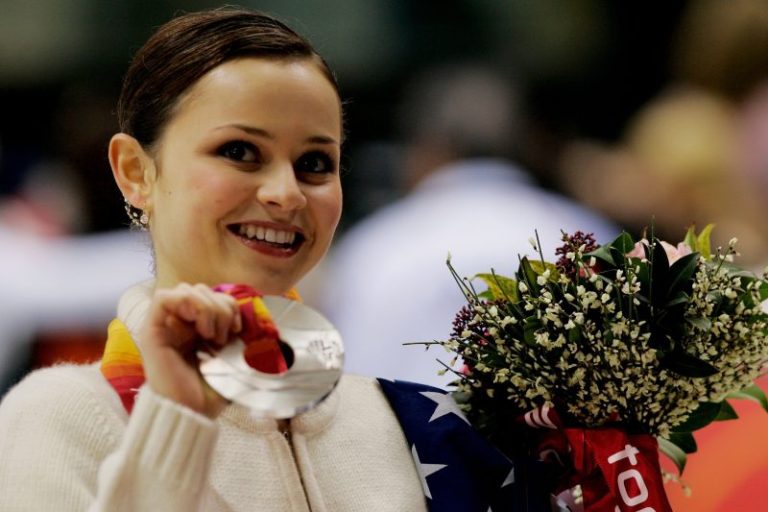
Twenty years ago, I was on the Olympic podium in Turin, Italy. Now, I’m back as a spectator, watching the figure skating events with both nostalgia and relief as I relive the highs and lows of my Olympic experience. I was keenly reminded of my own choice to pursue the Olympic dream at the expense of all else.

It stirred reflections on my skating career and all that has transpired since. Knowing what it took, I would still do it again in a heartbeat. At the same time, it’s hard to imagine my kids following in my footsteps — not only because of what I missed out on, but the weight of the hopes and expectations I carried.

I first fell in love with the feeling of gliding across the ice at age seven. The next 10 years were full of joyful growth, quickly mastering difficult jumps, and early competitive success. Early mornings in cold damp ice rinks were filled with possibility and promise. I couldn’t get enough and hated anything keeping me away from the ice.

But when I was just 12, I was forced to take months off when another skater collided with me, slicing my calf open. Then again at 15 I fractured my lower back, sidelined for another three months. The time away from the ice only strengthened my resolve and commitment to qualify for the 2002 Olympic Games in Salt Lake City. I made the games, but missed the podium and ended up a disappointing 4th place, determined to come back in 2006 and redeem myself. 

I moved across the country to work with a coach known internationally for minting Olympic champions, shutting down any outside interests. It paid off and I had my best year yet, winning almost every competition I entered.

But the time between the Olympics is long. Two years in and still a long two years out; stress mounted and joy faded. 2004 was a particularly brutal year; I withdrew from a season of competitions, crippled by mental health struggles and tortured by long, anxiety ridden nights, precipitated by the growing fear that my best days were behind me.

Just two years earlier, I was a fresh upstart with almost no senior international experience. Making the Olympic team as a 17-year-old in my home country felt like there was only possibility ahead.

Four years later, in 2006, I knew most of my career was behind me, and I was weighed down by the tremendous weight of expectation —mine, and my country’s. It was most likely my last shot at Olympic gold, but injuries marred my training leading up to the Games.

That’s the thing about an Olympic career, one can spend a whole lifetime training for a certain moment in time, only to be thwarted by the body’s limits. 

I knew that even one mistake would cost me Gold and that two would likely knock me off the podium. In the end, I stumbled but so did my competitors. I took home the silver.

The Olympics are the most glorious and, arguably, agonizing of human endeavors. With the gift of time, I am profoundly aware of the dark side that we glaze over, often oblivious to the costs. The world isharsh in judging our hero athletes — the media’s adulation over team medal counts obscures each athlete’s individual and very human trials and tribulations, focusing on times, records, and outcomes.

In 2006, I was alone on the world stage, and blamed only myself when I fell. 

If falling was hard, harder still was walking away.  After two decades spent mastering my sport, I finally hung up my skates and found myself profoundly disoriented as the sense of self I achieved as a result of years of hard work on the ice, quickly disintegrated.

But in the best moments, I was able to transcend place and time, losing myself in the music. I felt the audience on the edge of their seats, cheering me on, and sharing in my triumphs.  My short program in Turin was one of those moments. 

All of this played out for me when most young adults are headed off to college, experiencing their first real taste of independence, making lifelong friendships, and charting out what direction their careers might take. Their mistakes won’t be scrutinized in the public eye (at least that was largely the case before social media) and for most, passing final exams is the biggest source of stress.

Part of me wishes that I, too, could have had those rights of passage. 

Yet looking back at my life choices, I would absolutely do it all over again. Medaling at the Olympics was the realization of a dream that I had and committed to achieving in a way few people can ever understand. Other than having children, it was the most profound and meaningful part of my life and for that, I would not exchange it for anything.  

These days, my world now revolves around two little people — constantly testing boundaries and figuring out who they are. I want my kids to know that accomplishing great things takes work.

I want them to know the priceless triumph of overcoming their fears because they chose to show up, despite the nerves and doubt. But when success is defined by perfection in one particular moment, that’s a tough way to live and it’s not for everyone. It’s a deeply personal and consequential choice.  And yet, I would never want them to miss pursuing their dreams because the cost of admission is too high.

Sasha Cohen is the 2006 Olympic silver medalist, 2006 U.S. Champion, 2003 Grand-Prix Final Champion, and a three-time World medalist. Following her competitve career, she graduated from Columbia University’s General Studies and now works as a financial analyst. 
This post appeared first on USA TODAY

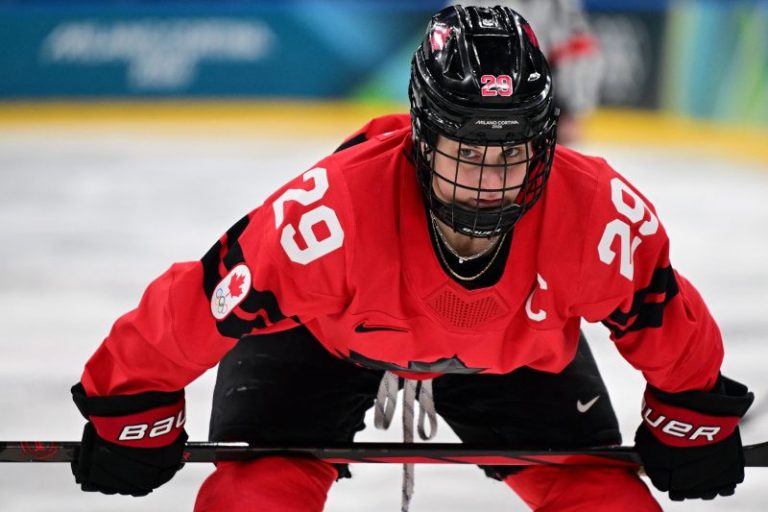
Marie-Philip Poulin’s fifth Winter Olympics has been nothing but historic for the Canadian women’s hockey team at the 2026 Milano Cortina Winter Olympics.

In Canada’s close 2-1 win over Switzerland on Monday, Feb. 16, Poulin further etched her name into the Olympics record book as the all-time leading scorer in Olympic women’s hockey action when she put one into the back of the net for her then-19th Olympic goal.

Now, the legendary women’s hockey player, who is known as ‘Captain Clutch,’ looks to add a fourth gold medal to her resume when Canada and the U.S. women’s hockey team clash once again in the gold medal game of the Winter Olympics.

Poulin missed the first meeting between the two North American rivals at the 2026 Winter Olympics, as she was ruled out with a lower-body injury suffered in the team’s 5-1 win over Czechia in Group A play. The injury came in the first period when she took a shoulder from Czechia’s Kristyna Kaltounkova and hit the boards hard. 

Thursday’s game marks the fifth gold-medal game that the five-time Olympian has led Canada to the gold medal game, with all four previous matchups coming against the United States. Both countries have competed against each other in all but one gold medal game since women’s hockey made its Olympic debut in 1998.

Here’s what to know about Poulin ahead of Thursday’s gold medal game:

Who is Marie-Philip Poulin?

Poulin is not only the captain and anchor of the Canadian women’s hockey team, but she’s one of the top and most decorated women’s hockey players in the world.

She played collegiate hockey at Boston University, where in her senior season she was named a First-Team All-American while becoming the first Terrier to be named a top-three finalist for the Patty Kazmaier Award, which is handed out annually to the top female college ice hockey player in the United States. That season, Poulin finished with 27 goals and 27 assists for 54 points, with her 27 goals tying for fifth most in the country.

When she is not competing for Canada on the international stage, Poulin plays for the Montréal Victoire in the Professional Women’s Hockey League (PWHL), where she also serves as the captain.

Stream USA vs. Canada women’s hockey gold medal game with Peacock (digital only)

Why is Canada’s Marie-Philip Poulin’s nickname ‘Captain Clutch’?

It’s because, well… she’d been extremely clutch for Canada at the Winter Olympics throughout her career.

Her first ‘Captain Clutch’ moment at the Winter Games came in her debut at the 2010 Vancouver Winter Olympics when she scored both goals for Canada in the gold medal game to beat the United States. Her next ‘clutch’ moment then came four years later in another gold medal game against the United States, where she scored the game-winning goal in overtime after scoring the game-tying goal.

Those two Winter Games just cover the surface of the ‘clutch’ moments that Poulin has delivered for Canada at the Winter Olympics, as she also scored two of Canada’s three goals in the gold medal game in 2022 at the Beijing Winter Games.

All told, Poulin has scored the game-winning goal in all of Canada’s gold medal wins at the Winter Olympics. She also has a second-period goal in Canada’s lone loss in the gold medal game during her career at the 2018 PyeongChang Winter Olympics.

‘She’s Captain Clutch. There’s a reason she has that nickname and she’s always there offensively to give the team the boost that it needs,’ fellow Canadian teammate Brianne Jenner told SportsNet. ‘But no teammate would ever call Poulin ‘Captain Clutch’ while she’s within earshot.’

How many Winter Olympics has Marie-Philip Poulin competed in?

The 2026 Milano Cortina Winter Olympics are the fifth Winter Games that Poulin is competing in, the same number of Winter Olympics that U.S. women’s hockey captain Hilary Knight has competed in. Her first Winter Olympics came before she started playing at Boston University, as she made her debut on the Olympic stage at the 2010 Vancouver Winter Olympics.

In Canada’s semifinal win over Switzerland, Poulin became the all-time leading goal scorer in Olympic women’s hockey with her 19th career goal. She’d add her 20th career goal at the Winter Olympics roughly seven minutes after her first goal of the semifinal in the second period.

How many Olympic medals has Marie-Philip Poulin?

Poulin has won four total Olympic medals in her career, including three gold medals.

Here’s a breakdown of Poulin’s Olympic medals:

2010 Vancouver Winter Olympics: Gold
2014 Sochi Winter Olympics: Gold
2018 PyeongChang Winter Olympics: Silver
2022 Beijing Winter Olympics: Gold

How to watch Canada vs USA women’s hockey gold medal game today: TV channel, streaming options

TV channel: USA Network
Streaming options: Peacock (Digital Only) | NBCOlympics.com | NBC Olympics App

USA Network will broadcast Thursday’s women’s hockey gold medal game between the United States and Canada. Streaming options include Peacock, NBC’s subscription streaming service, and both NBCOlympics.com and the NBC Olympics App with a TV login.

This post appeared first on USA TODAY

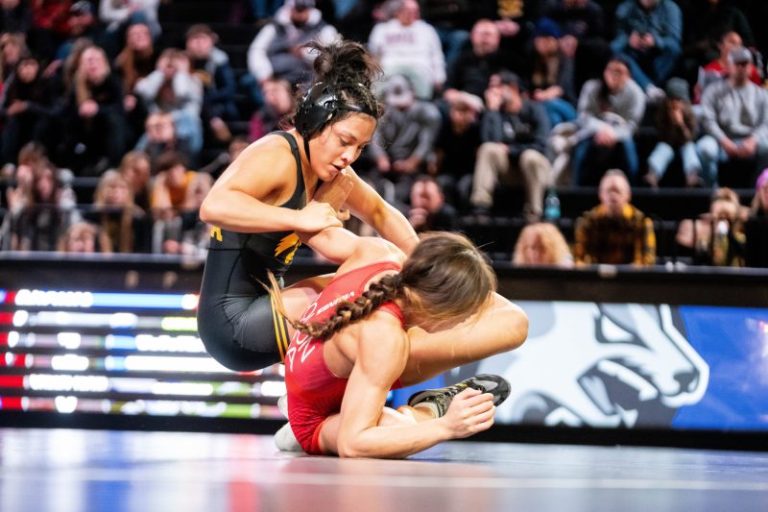
For the first time ever this year, the NCAA will host a national championship for women’s wrestling. For hundreds of women across the country, the road to securing a national title begins this weekend.

Before the national championship gets underway at Xtream Arena in Coralville, Iowa, next month, wrestlers will be sent to six regionals this weekend. Regional tournaments will be held Friday through Sunday in Elmira, New York; West Liberty, West Virginia; Franklin Springs, Georgia; Tiffin, Ohio; Indianola, Iowa; and Saint Charles, Missouri.

From each regional, 30 wrestlers — the top three in each of the 10 weight classes — will move on to Coralville to wrestle for a national title. There, each division will have an 18-woman bracket to determine its champion. The NCAA championship will be streamed live on ESPN+ March 6 and 7, and the finals will be reaired on ESPNU on March 8.

Ryan Tressel is the director of championships for the NCAA and he said designing the first women’s wrestling tournament began about a year ago. After it graduated from the NCAA’s Emerging Sports for Women program last January and became the 91st championship sport, women’s wrestling formed a committee made up of six people from Division I, II and III to help shape the inaugural tournament.

Before women’s wrestling was granted NCAA championship status, Xtream Arena had hosted the National Collegiate Women’s Wrestling Championships — a non-NCAA-affiliated tournament. In preparation for this competition, Tressel and others from the NCAA went to last year’s NCWWC and were impressed.

“Xtream did a tremendous job last year and it was like, let’s build on that,” Tressel told USA Today Sports. “It was a place where we could be confident they’re going to do some great work and a great job there.

‘It’s just the right size for what we’re going to be doing.”

Combined divisions, for now

Iowa is one of six Division I teams that competes in women’s wrestling at the varsity level, the only program in the Power 4. The Hawkeyes enter regionals as the No. 1 ranked team in the country. In the 145 weight class, Iowa’s Reese Larramendy leads the nation in technical falls with 145. The Hawkeyes also feature Olympic silver medalist Kennedy Blades in the 160 weight class.

This season, more than 112 programs across all NCAA divisions compete in women’s wrestling at the varsity level. For this year and next, the national tournament will be a combined one, featuring wrestlers from across all divisions.

In 2028, that will change. A good chunk of the NCAA programs that sponsor women’s wrestling come from Division III — 55 of them this season — and they will have their own tournament. The change was approved at the NCAA convention in January, but organizers still have time to figure it out.

“How that looks, that’s what we’re talking about now. Is there a way we can adjust, figure out the schedules where they’re all in one spot still and they’re handing out multiple trophies? We do that with rowing, for instance. Those are some of the questions that will come up,” Tressel said. “For this year and for next year, we’ll be all together, one big happy family.”

What to watch

In addition to powerhouse Iowa, the other Division I schools competing in women’s wrestling this year are Lehigh, Presbyterian, Delaware State, Lindenwood and Sacred Heart. Kent State and Mercyhurst will add teams in the coming seasons, and Oklahoma State is among those with a club team.

Lehigh has the top-ranked wrestler in the 110 weight class in Audrey Jimenez, who is 13-0 this season and won a gold medal at the 2025 Pan American Championships.

There are stars in other divisions too, like Division III North Central’s Bella Mir. The daughter of former UFC heavyweight champion Frank Mir, she was named USA Wrestling Athlete of the Week earlier this month after posting a 10-0 tech fall 43 seconds into her match in a dual against Wartburg.

One difference between men’s and women’s wrestling at the NCAA level is that the women compete in freestyle wrestling, which matches the Olympics. The men compete in folkstyle. In women’s freestyle, points are not awarded for escapes. They can earn a point for a step-out, when one wrestler pushes another out of the competition circle.

A path for other women’s sports

With this being the first NCAA Tournament for women’s wrestling, Tressel and his team will be watching the competition closely to find ways to improve.

“The student-athlete experience is our biggest thing,” Tressel said. “How can we make that better? That’s No. 1. And then there’s other things operationally — how we’re managing the mats and floor control and access and things like that.”

Women’s wrestling was added to the NCAA Emerging Sports for Women program in 2020. By 2023, more than 40 schools sponsored the sport and it was awarded championship status in 2025.

That timeline could be similar for flag football, which was added to the NCAA Emerging Sports for Women program this year.

“(NCAA President Charlie Baker) is really excited about this. It’s starting this excitement, which is what I’ve felt,” Tressel said. “You know, what’s the future hold for other emerging sports out there too, with women’s flag football coming on? There’s a lot of great opportunities coming up for women’s sports in the next number of years.”

This post appeared first on USA TODAY

MILAN — Switzerland forward Alina Müller is speechless.

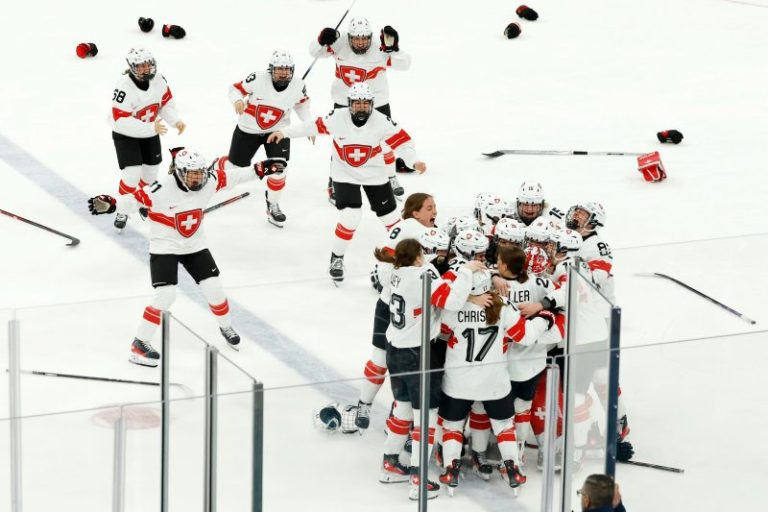
Müller said she’s ‘still at a loss of words’ after scoring a game-winning overtime goal against Sweden Thursday, Feb. 19 to clinch a bronze medal at the 2026 Winter Olympics, the nation’s first since the 2014 Sochi Games.

Switzerland’s 2-1 win over Sweden came during a sudden-death, 10-minute overtime period, continuing a theme at the Milano Cortina Games after three men’s quarterfinal matchups went to extra time on Wednesday.

Overtime is played 3-on-3, as opposed to 5-on-5, and the bronze-medal game was less than a minute away from going to a decisive shootout. But then Muller found the back of the net with 51 seconds remaining.

‘I was tired and my legs were heavy. I saw a little open and hoped that Ivana (Wey) saw me and she did,’ Muller said. ‘She made an unbelievable pass and I just got rid of it as fast as I can.’

As for what happened next? ‘I blacked out.’

‘It means everything. This team, this staff, everybody fought so hard for this moment,’ Muller added. ‘Seeing all my friends coming at me, jumping, with tears in their eyes. That is a feeling you can’t repeat.’

Sweden’s Mira Jungaker opened the scoring in the second period at the 31:40 mark, but Switzerland’s Sinja Leemann responded minutes later to get her team on the board at the 35:40 mark. Each team had opportunities to break the tie in regulation Switzerland had a penalty shot and two power plays, while Sweden had a late power-play chance in the closing minutes of the third period but neither was able to capitalize.

Jungaker said the Swedish team ‘fought so hard,’ but didn’t turn in a complete game when it mattered most.

“It wasn’t good enough and we didn’t play hockey for 60 minutes,’ Jungaker said. ‘It was only 20 minutes that we were good, so it’s very disappointing that we couldn’t finish it off in a good way.”

USA TODAY Sports is in Milan for the 2026 Winter Olympics and provided live coverage of the bronze medal match.

What time is the Olympic women’s hockey gold-medal game?

Team USA faces arch rival Canada in the gold-medal game of the 2026 Milano Cortina Olympics at 1:10 p.m. ET (7:10 p.m. local). You can follow all the action here.

Sweden vs. Switzerland goes to overtime

The sides were tied at 1-1 at the end of regulation.

Sweden on power play

Sweden has its first power play of the night. Switzerland’s Marie Lena was called for a cross-checking penalty at the 57:33 mark. Switzerland killed off the power play in the final minute of regulation time to keep the nation’s podium hopes alive.

Sweden called for interference

Sweden’s Anna Kjellbin is skating toward the penalty box after being called for interference, setting up Switzerland’s second power play of the night.

End of 2nd period: Sweden 1, Switzerland 1

We are all tied up after the second period. Sweden opened scoring at the 31:40 mark, but Switzerland responded minutes later to get on the board at the 35:40 mark. Sweden outshot Switzerland 18-12 through two periods, but the Swiss women are probably kicking themselves over missed opportunities. They weren’t able to convert a penalty shot or power play earlier in the bronze-medal game.

Switzerland evens it up

We’re even in the bronze-medal match following a goal from Switzerland’s Sinja Leemann. Alina Marti took the puck behind the net and connected with Leemann, who tapped it in past Sweden goalkeeper Ebba Svensson Traff to tie it up, 1-1.

Sweden’s Mira Jungaker scores

Sweden is on the score sheet first. Mira Jungaker opened scoring in the bronze-medal game to give Sweden a 1-0 lead over Switzerland. Hilda Svensson and Thea Johansson assisted on the goal.

Switzerland’s penalty shot blocked

Sweden goalkeeper Ebba Svensson Traff is rolling. Switzerland’s Ivana Wey was awarded a penalty shot after Sweden’s Thea Johansson was called for hooking on a breakaway at the 26:21 mark. However, Wey wasn’t able to capitalize on the penalty shot and Svensson Traff swiftly blocked the puck. Svensson Traff is up to 10 saves.

End of 1st period: Sweden 0, Switzerland 0

We are scoreless after one period. Sweden outshot Switzerland 8-5 in the frame and killed off a Swiss power play. Sweden goalkeeper Ebba Svensson Traff has been solid in front of the net and withstood several close-range shots during Switzerland’s power play to keep the Swiss off the board.

Switzerland on power play

Switzerland has the first power play of the night. Sweden’s Anna Kjellbin was called for cross-checking with 4:11 remaining in the first period. Can Switzerland capitalize?

We’re underway

The bronze-medal game is officially underway. Sweden has been the more aggressive team to start and has a slight edge with four shots on goal, compared to three for Switzerland.

Goalkeeper matchup

Sweden will have Ebba Svensson Traff in the net for Thursday’s bronze-medal game, while Switzerland is turning to Andrea Braendli.

Stream the 2026 Winter Olympics on Peacock

What time is the Olympic women’s hockey bronze medal game?

The bronze medal game between Switzerland and Sweden begins at 8:40 a.m. ET (2:40 p.m. in Milan.

What TV channel is the Olympic women’s hockey bronze medal game on?

USA Network will have tape-delayed coverage of the game between Switzerland and Sweden beginning at 12 p.m. ET.

Is there a live stream of the Olympic women’s bronze medal game?

You can live stream the game between Switzerland and Sweden on Peacock, which will have live coverage at 8:40 a.m. ET.

Reach USA TODAY National Women’s Sports Reporter Cydney Henderson at chenderson@gannett.com and follow her on X at @CydHenderson.

The USA TODAY app gets you to the heart of the news — fast. Download for award-winning coverage, crosswords, audio storytelling, the eNewspaper and more.

This post appeared first on USA TODAY

AC Milan coach Max Allegri was furious after Como manager Cesc Fàbregas dragged back Milan midfielder Alexis Saelemaekers in the middle of play.

The incident took place with 10 minutes remaining in a 1-1 draw between Milan and Como in Serie A on Wednesday, Feb. 18.

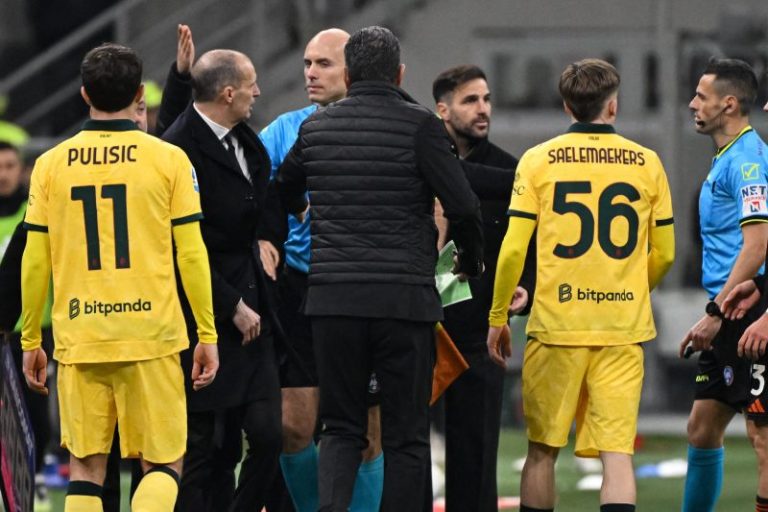
Saelemaekers lost control of the ball right in front of the touchline. As the Belgian attempted to get back on defense Fàbregas briefly grabbed his jersey, prompting a furious reaction.

Allegri and Fàbregas clashed on the sideline, with the AC Milan boss ultimately shown a red card and the Como manager not receiving any punishment.

After the game, the 58-year-old Allegri was hugely critical of Fàbregas, who is 20 years his junior.

‘Next time someone is on the line, I’ll also go on the pitch and make a tackle,’ the Milan coach told DAZN.

‘When you are on the pitch you have to be respectful towards your rivals and referees. He is a very young coach, he’s just getting started,’ Allegri added in his post-match news conference:

‘He is doing well. I hope he wins a lot in his career and has all the capability to do so. A young coach like him needs experience. With experience you improve, you mature.’

Cesc Fabregas apologizes for Saelemaekers incident

For his part, Fàbregas was apologetic after the match and admitted wrongdoing.

‘I apologize once again,’ the longtime Arsenal midfielder said.

‘I have already done it publicly. I am not proud of it. I have done something that is probably unsportsmanlike. It is true it was a little touch, you shouldn’t do it, especially a coach.

‘I understand that he [Saelemaekers] was angry. I apologize to the coach [Allegri], I have already done so to [Milan] players Luka [Modrić], [Mike] Maignan and Saelemaekers. I will learn from this and I hope I don’t do it again in my career.’

This post appeared first on USA TODAY

The senior lawmaker leading the U.S. House of Representatives investigation of Jeffrey Epstein is the latest high-profile official to sound off on the arrest of former British royal Andrew Mountbatten-Windsor.

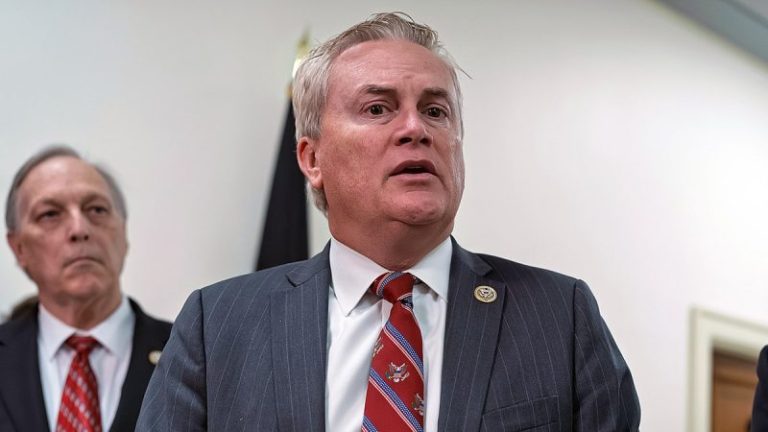
House Oversight Committee Chairman James Comer, R-Ky., reiterated the need for accountability and lauded the Trump administration’s commitment to releasing its own information on Epstein.

‘There must be accountability for anyone who was involved in Jeffrey Epstein’s horrific crimes,’ Comer told Fox News Digital. ‘The Justice Department’s transparency is ensuring that no one is above the law — even British royalty.’

News first broke of the former Prince Andrew’s arrest on suspicion of misconduct in public office in the early hours of Thursday morning on the U.S. East Coast.

It comes after a British police department said it was looking into a complaint that Andrew shared confidential information with Epstein, according to the BBC.

While he has denied any wrongdoing in relation to Epstein, Andrew was one of the late pedophile’s most well-known associates through the years.

Virginia Giuffre, one of Epstein’s earliest and most vocal accusers, alleged in a memoir that Andrew had sex with her when she was a minor.

Giuffre died of suicide in April of last year. Epstein died of suicide in a Manhattan jail while awaiting trial in 2019.

Rep. Nancy Mace, R-S.C., one of the earliest U.S. lawmakers to call for Andrew’s arrest in October 2025, told Fox News Digital, ‘If you’re watching a former prince get arrested today, remember: four Republicans refused to flinch, refused to fold, and forced the Epstein files into the light.’

‘Courage has consequences. So does corruption,’ said Mace, also a House Oversight Committee member.

She was one of four House Republicans who voted with Democrats to force a vote on mandating that the Department of Justice (DOJ) release all of its files related to Epstein’s case. The subsequent House vote was nearly unanimous, with just one GOP lawmaker voting against it.

Meanwhile, Democrats on the House Oversight Committee sounded off with renewed calls for accountability for other alleged Epstein associates.

Rep. Suhas Subramanyam, D-Va., said Andrew ‘appears repeatedly in the documents we have uncovered as having knowledge of Jeffrey Epstein’s crimes and is specifically named by victims as someone who engaged in wrongdoing.’

‘We hope today’s arrest will lead to answers and show that there will be accountability even if you hide, regardless of how rich and powerful you are,’ he said in a statement.

Rep. Pramila Jayapal, D-Wash., wrote on X, ‘This is exactly the kind of accountability we need from the Department of Justice. It’s time to bring the perpetrators to justice.’

This post appeared first on FOX NEWS

Texas Democratic Senate candidate James Talarico’s campaign is $2.5 million richer this week and a bit closer to victory after Stephen Colbert, host of ‘The Late Show’ on CBS, made up a ridiculous lie about being censored by President Trump.

It took a few days for the dust to settle, but now that we have a clear picture of what happened, it is about as bad as it can be. In fact, it would likely be a fireable offense if the ratings challenged Colbert was not already slated to get the ax in May.

According to Colbert’s version of events, which is falling apart faster than a house of cards in a wind tunnel, he was told by CBS lawyers on Monday, just minutes before he was set to interview Talarico, that he could not air the conversation. Why? Because of the Trump administration Federal Communication Commission’s new rules on equal time.

A petulant Colbert went on to tell his audience that he wasn’t even supposed to mention being censored to them, but, putting on his free speech super hero cape, he would do the interview anyway, defying his bosses and release it on YouTube.

The only problem with all of this is that, according to both CBS and the FCC, nobody told Colbert the interview could not air. He just made it up. All that happened was that CBS lawyers told him if he had Talarico on, he might also have to give equal time to his Demcorat primary opponent, Rep. Jasmine Crockett, D-Texas.

It is not clear why Colbert would have any issue with having Crockett on, unless perhaps he and his friends in high places think the preppy White Bible school boy is more electable than the sassy Black finger-snapping lady.

Talarico was fundraising off of Colbert’s lie within minutes and raked in $2.5 million. Oh, and did I mention that early voting in Texas started on Tuesday, the day after this duplicitous debacle?

It truly was remarkable to watch. Even by Wednesday, when they knew quite well Colbert had not been censored, CNN had an entire panel that argued the Trump administration’s pressure on CBS had backfired because of the fundraising and the 5 million YouTube views the video got.

But there was no pressure on Colbert from the Trump administration. As FCC Chairman Brendan Carr told Fox News Channel’s Laura Ingraham, ‘CBS was very clear that Colbert could run the interview that he wanted with that political candidate. They just said, you may have to comply with equal time… But instead of doing that, they claimed that they were victims.’

All that the FCC has said, without taking any action, is that it may enforce equal time rules for talk shows, something it has not done in the past, but given how skewed late night comedy and daytime talk have become, it is worth considering.

‘The View,’ ABC’s mid-morning girl gaggle, had 128 liberal guests in 2025 and only two conservatives, one of which was actress Cheryl Hines, who is actually not conservative, just married to Health and Human Services Secretary Robert F. Kennedy Jr. 

Put bluntly, the reason that the equal time rules have not been enforced on talk shows is that they never had to be, because Johnny Carson, Tom Snyder and Phil Donahue didn’t turn their shows into nonstop political ads. Obviously, that has changed.

Colbert has been very clear that he purposefully uses his ‘comedy show’ to push a political agenda, in this case, to the benefit of James Talarico and the detriment of Jasmine Crockett, who is now in the awkward position of defending the Trump administration.

However, wherever one comes down on the equal time rules, it is crystal clear that Colbert is just flat-out, stone-cold lying when he says they were used to ban his interview from the air. Sadly, it is a lie many Democratic voters may take to their deathbeds.

There were two big victims to Colbert’s perfidy, the first being Crockett, who may be discovering that she is a little too Brown and uppity for the rich White men who still control liberal media and politics.

The second victim was the average citizen, who was separated from their money based on Colbert’s lies to fill the coffers of Talarico.

Thankfully, we only have about two more months to deal with Colbert’s nonsense and lies, at least on CBS late night. After that he can go to YouTube and interview anyone he pleases, just as he could have on Monday night.

This post appeared first on FOX NEWS

The Administration for Children and Families (ACF), an agency within the Department of Health and Human Services (HHS) overseeing the well-being of children, eliminated thousands of pages of regulatory guidance that had been languishing on the books as far back as 1976, Fox News Digital learned. 

The Administration for Children and Families is a Health and Human Services agency charged with promoting the economic and social well-being of kids and their families via overseeing programs such as the Head Start school readiness program, child support enforcement, foster care and adoption services, and managing unaccompanied minors. 

The office rescinded 35,781 pages of guidance documents after an agencywide review found 74% of its ‘sub-regulatory footprint’ was obsolete. The documents included technical bulletins, program instructions, action transmittals and dear colleague letters — letters from federal agencies or members of Congress that typically inform colleagues on new guidance or legislation — that had accumulated across the past 50 years. 

The Administration for Children and Families emphasized that the rescinded documents were not erased, but instead archived online along with a detailed list of current guidance documented on the Department of Health and Human Services’ website. 

The Administration for Children and Families was officially established in 1991, but its origins and work stretch back decades, inheriting programs and guidance from earlier Health and Human Services offices — including major initiatives that date to the mid-1970s. 

‘President Trump’s regulatory reform agenda is unparalleled in U.S. history,’ the Administration for Children and Families Assistant Secretary Alex J. Adams said in a statement to Fox News Digital. 

‘ACF is proud to do our part to advance the President’s agenda by taking the first of many planned actions, namely removing 36,000 pages of obsolete sub-regulatory guidance that had quietly accumulated over decades and shining a brighter spotlight on what remains,’ he added. ‘In essence, ACF has brought our regulatory dark matter to light.’ 

The rescinded guidance included program-specific documents such as a memo on filing the June 1999 Child and Family Services Plan and Final Report, 2005 avian flu guidance and a 2010 staffing-change notice for the now-defunct Division of Energy Assistance.

The Administration for Children and Families directed its Office of Legislation and Budget to compile a comprehensive list of guidance documents considered active — a process that took three weeks just to catalog the files, the agency said. The inventory produced more than 4,000 documents totaling about 55,776 pages, dating back to 1976. 

Each program office was required to justify whether the individual documents were still needed, and ordered to provide written rationale if guidance was deemed obsolete or necessary. Obsolete documents were considered ones that related to old funding cycles, guidance superseded by newer rules, duplicate statutes or documents related to programs that no longer list, Fox News Digital learned. 

The Administration for Children and Families said the goal of cleaning up the office with outdated guidance is to reduce confusion and allow grant recipients to focus resources on ‘delivering outcomes for American children and families,’ rather than navigating tens of thousands of pages of outdated documentation.

The move aligns with the Trump administration’s broader push to pare back regulations and cut what it calls bureaucratic red tape.

The Federal Communications Commission, for example, took a hatchet to outdated policies in a sweeping deregulation effort in 2025, including doing away with outdated guidance on the use of telegraphs, rabbit-ear TV receivers and phone booth rules in July 2025. 

This post appeared first on FOX NEWS

MILAN — The final day of the women’s figure skating competition at the 2026 Winter Olympics is here.

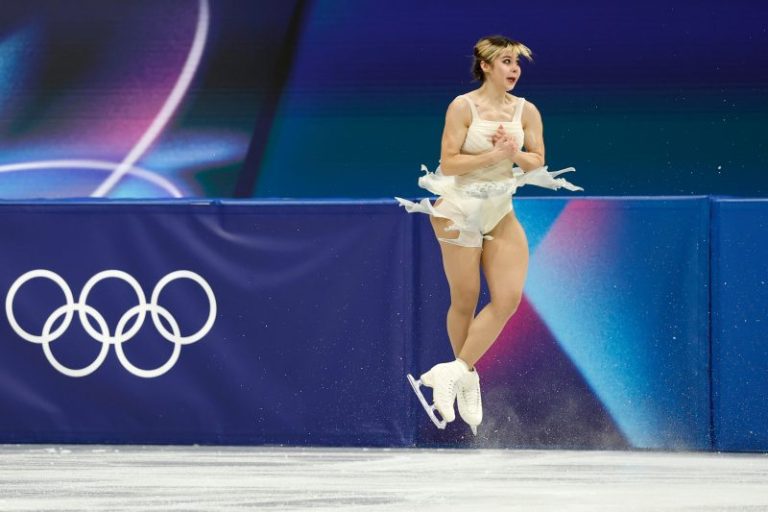
The Americans are coming off a short program day filled with mixed emotions for the ‘Blade Angels.’ Alysa Liu skated a beautiful program to put her in third position while Isabeau Levito’s clean routine has her in eighth, and Amber Glenn’s devastating struggles landed her in 13th.

Liu, who remains unapologetically herself, sits behind the Japanese pair of Ami Nakai and Kaori Sakamoto as she tries to become the first American woman to win an individual figure skating medal in 20 years.

‘A medal?’ Liu chuckled after her short program. ‘I don’t need a medal. I just need to be here, and I just need to be present. And I need people to see what I do next.’

USA TODAY Sports is at Milano Ice Skating Arena to bring you all the live updates, scores and highlights. Follow along.

Watch Olympics figure skating on Peacock

What time is figure skating on TV today?

The women’s free skate begins at 1 p.m. ET.

Figure skating TV schedule

NBC is broadcasting the women’s free skate, and Peacock is live streaming it.

When does Alysa Liu skate?

Liu will skate third to last, scheduled to take the ice at 4:32 p.m. ET.

Women’s figure skating standings

Here are standings entering the free skate. The top 24 skaters after the short program advanced to the final day of competition.

Ami Nakai (Japan): 78.71 short program score.
Kaori Sakamoto (Japan): 77.23 short program score.
Alysa Liu (USA): 76.59 short program score.
Mone Chiba (Japan): 67.39 short program score.
Adeliia Petrosian (Neutral Athlete): 72.89 short program score.
Anastasiia Gubanova (Georgia): 71.77 short program score.
Loena Hendrickx (Belgium): 70.93 short program score.
Isabeau Levito (USA): 70.84 short program score.
Haein Lee (Korea): 70.07 short program score.
Niina Petrokina (Estonia): 69.63 short program score.
Nina Pinzarrone (Belgium): 68.97 short program score.
Sofia Samodelkina (Kazakhstan): 68.47 short program score.
Amber Glenn (USA): 67.39 short program score.
Jia Shin (Korea): 65.66 short program score.
Iida Karhunen (Finland): 65.06 short program score.
Julia Sauter (Romania): 63.13 short program score.
Olga Mikutina (Austria): 61.72 short program score.
Lara Naki Gutmann (Italy): 61.56 short program score.
Ekaterina Kurakova (Poland): 60.14 short program score.
Ruiyang Zhang (China): 59.38 short program score.
Kimmy Repond (Switzerland): 59.20 short program score.
Mariia Seniuk (Israel): 58.61 short program score.
Livia Kaiser (Switzerland): 55.69 short program score.
Lorine Schild (France): 55.63 short program score.

How is figure skating scored?

A figure skating routine is made up of two scores: Technical elements score and program components score. The technical elements score is exactly what it sounds like: It’s for the jumps, spins and step sequences in a performance. The program components score is made of up composition, presentation and skating skills.

Figure skating Olympics winners list

Here is who has medaled in women’s singles figure skating over the last four decades.

2022: ROC’s Anna Shcherbakova (gold), ROC’s Aleksandra Trusova (silver), Japan’s Kaori Sakamoto (bronze)
2018: ROC’s Alina Zagitova (gold), ROC’s Yevgeniya Medvedeva (silver), Canada’s Kaetlyn Osmond (bronze)
2014: Russia’s Adelina Sotnikova (gold), Korea’s Yu-Na Kim (silver), Italy’s Carolina Kostner (bronze)
2010: Korea’s Yu-Na Kim (gold), Japan’s Mao Asada (silver), Canada’s Joannie Rochette (bronze)
2006: Japan’s Shizuka Arakawa (gold), USA’s Sasha Cohen (silver), Russia’s Irina Slutskaya (bronze)
2002: USA’s Sarah Hughes (gold), Russia’s Irina Slutskaya (silver), USA’s Michelle Kwan (bronze)
1998: USA’s Tara Lipinski (gold), USA’s Michelle Kwan (silver), China’s Chen Lu (bronze)
1994: Ukraine’s Oksana Baiul (gold), USA’s Nancy Kerrigan (silver), China’s Chen Lu (bronze)
1992: USA’s Kristi Yamaguchi (gold), Japan’s Midori Ito (silver), USA’s Nancy Kerrigan (bronze)
1988: East Germany’s Katarina Witt (gold), Canada’s Elizabeth Manley (silver), USA’s Debi Thomas (bronze)
1984: East Germany’s Katarina Witt (gold), USA’s Rosalynn Sumners (silver), USSR’s Kira Ivanova (bronze)

Blade Angels of USA figure skating

It’s time for the ‘Blade Angels’ of the United States of America to take the figure skating ice.

Some of the most popular Team USA athletes at the 2026 Winter Olympics − Amber Glenn, Alysa Liu and Isabeau Levito − opened their pursuit for individual gold with women’s short program on Tuesday, Feb. 17. Not only are they some of the best skaters in the world, but they have also captivated the nation for their pure appreciation and love for each other, which features plenty of fun and chaos sprinkled in.

So what exactly is the story of the ‘Blade Angels’? It’s a friendship that has been building for years, and is flourishing in the Olympic spotlight.

Amber Glenn, Alysa Liu on their friendship

USA TODAY Sports’ Jordan Mendoza spoke to Amber Glenn and Alysa Liu on the tight friendship they have formed. Here’s what they said.

What Liu said about Glenn: ‘She’s just such a big sister to me. The idea that we compete against each other, it’s so weird to me. I really just see her as one of my friends and truly one of my teammates. I don’t know, doing things with her is really fun.’

When Glenn said about Liu: ‘It’s been great to have someone that has such a positive outlook on skating and on her career around me. And then on the flip side, I have an extra pair of tights if she rips them and doesn’t have a backup, or I have the schedule ready because she doesn’t have it.’

Figure skating jump types

Toe jump: A skater drives the toe pick of their non-takeoff foot into the ice to launch themselves into the air and generate momentum into the jump.

Toe loop: A skater takes off backward and lands on the same back edge of their blade.
Lutz: A skater moving backward jumps off the back outside edge of their skate and uses the toe-pick of their other skate to catapult into the air in the opposite direction and lands on the back outside edge of the picking leg.
Flip: A skater launches off the back inside edge of one skate and lands on the back outside edge of the other skate.

Edge jump: A skater takes off not with their toe pick but off the edge of their skate.

Salchow: A skater launches off the back inside edge of one skate and lands on the back outside edge of their other skate.
Axel: The only forward-facing jump, a skater lands on the back outside edge of their non-takeoff foot while traveling backward. The axel is the hardest jump because of the extra half-revolution that comes with a forward takeoff and a backward landing.
Loop: The skater jumps off a back outside edge of their skate and lands on the same edge.

Facts about figure skating

Athleticism meets grace in figure skating, one of the most popular sports at the Winter Olympics. Whether skaters are performing gravity-defying jumps or experiencing a wide array of emotions in the designated ‘Kiss and Cry’ area, figure skating has captivated Olympic audiences across the world for more than a century. The 2026 Milano Cortina Games will be no different.

Here’s everything you need to know about figure skating and how it works at the 2026 Winter Olympics.

This post appeared first on USA TODAY

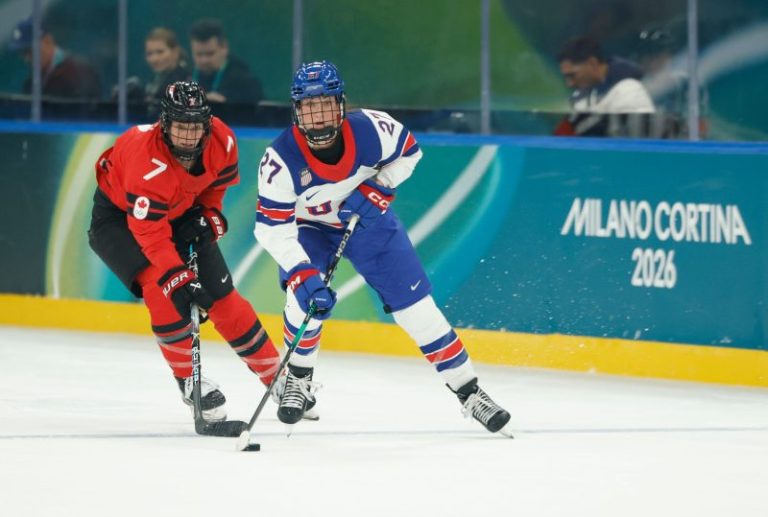
MILAN It’s the moment we’ve all been waiting for: USA women’s hockey vs. Canada in the gold-medal game of the 2026 Winter Olympics.

The Americans and Canadians have clashed in six of the seven Olympic gold-medal matches since women’s hockey made its Olympic debut in 1998. Canada has walked away with the gold five times, compared to only two for Team USA, but the red, white and blue have an advantage heading into the final Thursday, Feb. 19.

The U.S. women have won seven consecutive games against Canada, dating back to the 2025 IIHF Women’s World Championship, where the Americans won 4-3 in overtime. Team USA swept Canada in the 2025 Rivalry Series for the first time in tournament history and shut out Canada 5-0 during the preliminary round, marking the first time the Canadian women haven’t got on the score sheet in Olympic history.

Canadian captain Marie-Philip Poulin wasn’t in the lineup for the Feb. 10 preliminary matchup due to injury, but will look to lead Canada to another gold medal. Poulin is up to 20 career Olympic goals, surpassing fellow Canadian Hayley Wickenheiser’s previous all-time Olympic goal-scoring record of 18 goals.

Five-time U.S. Olympian Hilary Knight  is on the brink of history herself. She’s one point and one goal away from setting two U.S. Olympic records: most goals and most points. Knight said she’s looking forward to facing off against Poulin at the Games one more time after previously announcing her retirement from Olympic competition.

‘You have two great players duelling it out on the world stage. One is from Canada and one is from America,’ said Knight, who recently proposed to girlfriend, U.S. speed skater Brittany Bowe. Poulin added, ‘I have played against (Knight) my whole career. It is always a battle. Both of us are hungry. We want it again.’

USA TODAY Sports is in Milan for the 2026 Winter Olympics and will provide live coverage of the bronze medal match. Here’s what you need to know:

Stream the 2026 Winter Olympics on Peacock

What time is USA women’s hockey vs. Canada today?

Date: Thursday, Feb. 19
Time: 1:10 p.m. ET (7:10 p.m. local)
Location: Santagiulia Ice Hockey Arena (Milan)

Puck drop between the U.S. women’s hockey team and Canada is set for 1:10 p.m. ET on Thursday, Feb. 19 from Santagiulia Ice Hockey Arena in Milan.

Where to watch USA women’s hockey vs Canada gold-medal game

TV channel: USA Network
Streaming options: NBCOlympics.com | NBC Olympic App | Peacock

USA Network will broadcast Thursday’s gold-medal game between U.S. women’s and Canada at the 2026 Winter Olympics.

Is there a live stream of the Olympic women’s gold medal game?

Streaming options for the game include NBCOlympics.com and the NBC Olympic App (with a cable TV or satellite login). You can also stream the game on Peacock, NBC’s subscription streaming service.

Reach USA TODAY National Women’s Sports Reporter Cydney Henderson at chenderson@gannett.com and follow her on X at @CydHenderson.

The USA TODAY app gets you to the heart of the news fast. Download for award-winning coverage, crosswords, audio storytelling, the eNewspaper and more.

This post appeared first on USA TODAY