Archive

2026

Browsing

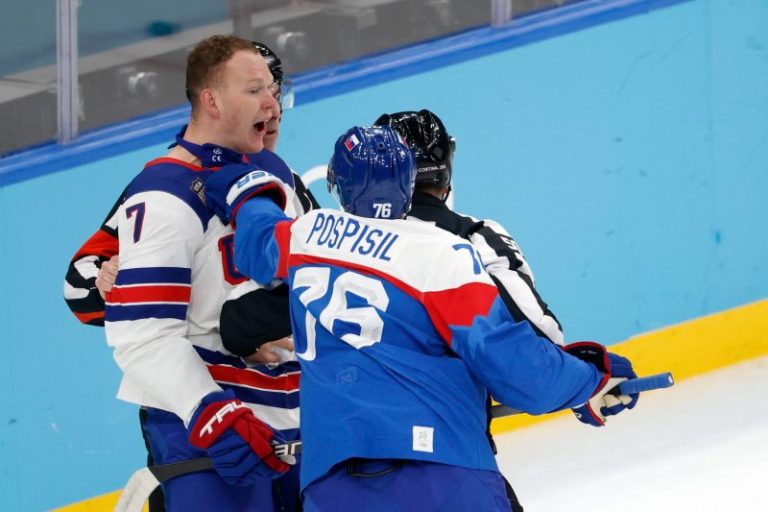
All you see on the ice during the second men’s hockey semifinal at the 2026 Winter Olympic Games in Milan are red, white and blue jerseys everywhere.

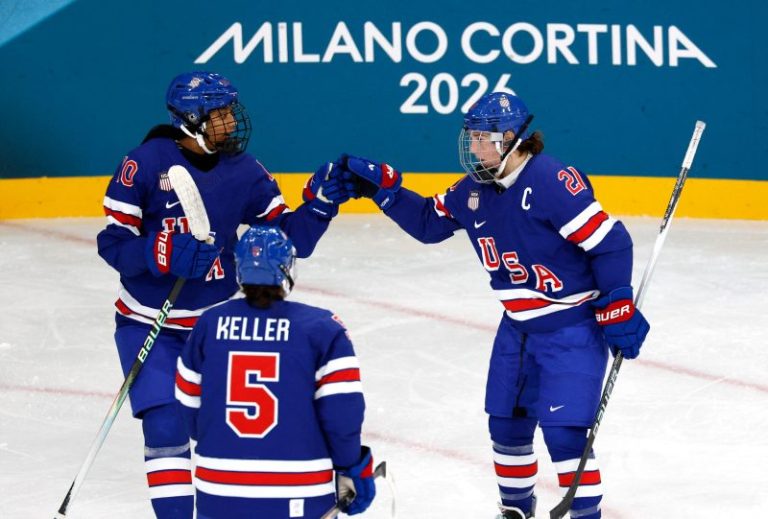
One thing both the United States and Slovakia men’s hockey teams have in common are their nations’ colors. From the colors to the design, the jerseys are eerily similar.

They are some pretty cool looking jerseys, but have some empathy for the average fan, new fans, or those just tuning in to watch sports — this is hard to follow.

No shame, even the best of the best are having to lock in on who’s who. Maybe it was by design. Here’s what we know:

Who designed the USA men’s ice hockey jerseys?

The United States men’s and women’s ice hockey jerseys, designed by Nike, take inspiration from the iconic jersey worn by Team USA at the 1960 Winter Olympics, the first Olympic gold medal in U.S. hockey history.

Their home jersey is white, while the away is royal blue.

The jerseys have ‘USA’ going diagonal across the chest, a gold-accented USA hockey crest as an ode to the nation’s success at the Olympics near the shoulder and the words ‘land of the free, home of the brave’ located inside the collar.

Who designed the Slovakia men’s ice hockey jersey?

Nike also designed new jerseys for Slovakia, which also has white, red and blue as national colors.

It includes a silhouette of the Tatra Mountains across the players’ chests. For them, it’s a sense of the pride, strength and perseverance that Slovak hockey players represent on the ice all over the world.

Their jersey also features symbolic gestures to Slovakia, including the first words of the Slovak anthem, “Nad Tatrou sa blýska’ which translates to ‘lightning over the Tatras.’

Reactions to USA-Slovakia jersey similarities

Check out these reactions across social media:

This post appeared first on USA TODAY

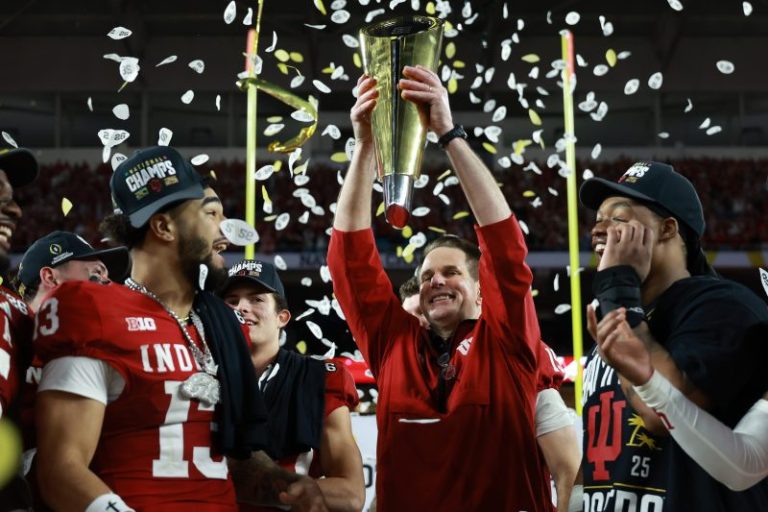
Coach Curt Cignetti brought a national championship to Indiana football, and he’s being paid handsomely for it.

The second-year Hoosiers coach received a new contract on Friday, Feb. 20, according to the IndyStar, part of the USA TODAY Network. It’s his third contract revision at Indiana, and will pay him an average of $13.2 million per season, among the highest in college sports.

Indiana and Cignetti capped off a perfect 16-0 season with their national championship win over Miami in January, which came two seasons after the Hoosiers went 3-9 in Tom Allen’s last season as head coach. The program entered the 2025-26 season with three bowl wins ever, yet won three CFP games en route to a title.

It’s clear Indiana is continuing to invest in its skyrocketing football program, and it doesn’t seem like they’re leaving anywhere soon.

Here’s everything to know of Cignetti’s new contract:

Curt Cignetti contract

Cignetti’s new contract will pay him an average annual salary of $13.2 million through 2033. His previous contract was also through 2033, but was for $11.6 million per season.

The contract makes him among the highest-paid coach in college sports, next to LSU’s Lane Kiffin and Georgia’s Kirby Smart, who are also making $13 million or more per season on average. Kiffin signed a seven-year, $91 million deal with LSU after leaving Ole Miss and Smart is on a 13-year, $130 million contract.

Cignetti’s contract he signed in October featured a clause that called for a ‘good faith market review’ of his deal within 120 days of Indiana reaching the CFP semifinals, should it ever reach it. The contract is also designed to keep him within the top three of highest-paid coaches in college football.

This post appeared first on USA TODAY

MILAN — It’s Friday, Feb. 20 at the 2026 Winter Olympics and we’re underway with another day of competition at the Milano Cortina Games.

If Friday’s action can match the excitement we saw Thursday – with the USA women’s hockey team and Alysa Liu both winning gold – we will be lucky Olympic viewers.

Among the action to keep an eye on Friday: the U.S. men’s hockey team takes on Slovakia in the Olympic tournament semifinals, while Canada takes on Finland.

USA TODAY Sports has a team of more than a dozen journalists on the ground in Italy to bring you behind the scenes with Team USA and keep you up to date with every medal win, big moment and triumphant finish. Get our Chasing Gold newsletter in your inbox every morning and join our WhatsApp channel to get the latest updates right in your texts.

USA men’s hockey scores two goals in 19 seconds

It’s back-to-back goals in 19 seconds for the United States against Slovakia in men’s hockey. It was first Jack Hughes who extended the lead to 3-0 before Jack Eichel pushed it to 4-0 in the second period.

Corrine Stoddard wins bronze in women’s short track

Corrine Stoddard takes home bronze in the women’s short track 1500-meter race. It is the first Olympic medal in short track by an American since 2010. It’s also Team USA’s 29th medal won at the 2026 Winter Olympics, which is the second most, only behind Norway.

Corrine Stoddard advances to gold medal race in women’s short track

Team USA’s Corrine Stoddard is on to the gold medal race for the women’s short track 1500 meters. Stoddard finished second in the third semifinal with a time of 2:21.042.

USA men’s hockey leads Slovakia 2-0 after first period

Dylan Larkin put USA on the board 4:19 into the game, scoring his second goal in two games. Slovakia played hard, but the USA took a 2-0 lead with 40.9 seconds on the clock, with Tage Thompson scoring on a power play. The USA has looked fast and strong, and has an 11-8 edge in shots. – Helene St. James, Cydney Henderson and Mike Brehm

Team USA in third place of two-woman bobsled after qualifying runs

The Americans are in contention for an Olympic medal in the two-woman bobsled event after Friday’s qualifying runs, with the duo of Kallie Armbruster Humphries and Jasmine Jones currently in third place. Team USA also has the duo of Kaysha Love and Azaria Hill in fifth place.

Competition resumes on Saturday with Runs 3 and Run 4 at 6 a.m. ET in Cortina.

Johnny Gaudreau’s family in attendance for USA-Slovakia men’s hockey semifinal

The family of the late Johnny Gaudreau is in Milan for the game. Team USA has his jersey in the locker room, just as they did in the 4 Nations Face-Off. Zach Werenski, who played with Gaudreau on the Blue Jackets, set up the opening goal. Gaudreau and brother Matthew died in 2024 when they were bicycling in New Jersey and were hit by a driver. – Helene St. James, Cydney Henderson and Mike Brehm

Dylan Larking puts USA men’s hockey on board

Dylan Larkin gets the USA’s opening goal for the second game in a row. Beautiful up-ice by Zach Werenski to Larkin, who splits the defense and beats Samuel Hlavaj. – Helene St. James, Cydney Henderson and Mike Brehm

Click here to view live updates of USA vs. Slovakia in men’s hockey.

USA men’s hockey almost underway vs Slovakia

USA men’s hockey looks to secure its spot in Sunday’s gold medal game against Canada with a win over Slovakia in the second semifinal of the day. Puck drop between the United States and Slovakia is just a few seconds away.

Click here to view live updates of USA vs. Slovakia in men’s hockey.

Alex Ferreira finally wins Olympic gold medal in men’s freeski halfpipe

Just before the Olympics, American freestyle skier Alex Ferreira told media in Milan, ‘It’s time to complete the set.’

Ferreira, 31, won silver in Pyeongchang in 2018 and bronze in Beijing in 2022 in the men’s freeski halfpipe. Clearly, gold was the goal in Italy.

And as it turned out, Ferreira did it. He snatched the gold medal Friday, Feb. 20 at Livigno Snow Park in one of the last events of these Olympics. His high score of 93.75 came on his final run, edging Estonia’s Henry Sildaru by 0.75. Read more here. – Gentry Estes

Americans move into medal contention in men’s free ski halfpipe

That’s more like it for the U.S. men’s free ski halfpipe team.

Birk Irving moved into first place momentarily with a healthy dose of switchback skiing in the second of three finals runs. Hunter Hess went big and lost a ski on his fourth jump (he was OK). Alex Ferreira showed why he’s a two-time medalist in this event and laid down a gorgeous run to propel himself into first (90.50).

Estonia’s Henry Sildaru upped that with one of the biggest tricks this halfpipe has seen on his fourth hit and the judges rewarded him with a 92.75. Nick Goepper of the USA moved into podium contention with a 89.0. But Canada’s Brendan McKay seemed primed to be right there with the rest of the heavy hitters but fell on his final, perhaps easiest, trick. – Chris Bumbaca

Slow start for U.S. in men’s freestyle skiing halfpipe

Not a good first run for Team USA and its four members in the men’s halfpipe finals.

Each of the quartet endured miscues at some point during their first of three attempts, and their scores reflected those issues. But the entire field struggled, with 76.50 standing as the highest score heading into the second run down the halfpipe. The conventional wisdom indicates the medalists score in the 90s.

Hunter Hess couldn’t quite land his final jump attempt of his first run. American Alex Ferreira, who won the Olympic bronze medal in 2018 and a silver medal in 2022 in the men’s halfpipe, sits in third place despite a score of 49.50 during his initial run of 2026. – Chris Bumbaca

Men’s hockey: Canada completes dramatic Olympic comeback

Canada is headed to the gold medal game in men’s hockey at the 2026 Winter Olympics, but the favorites entering this Olympic hockey tournament sure cut it close again in their pursuit of a gold medal for the first time since 2014.

After Canada fell behind 2-0 to Finland playing without captain Sidney Crosby, Nathan MacKinnon took a cross-ice feed from Connor McDavid with two seconds remaining on a late power-play to score the game-winning goal with 35.2 seconds remaining in the third period of Friday’s first semifinal game.

The goal was confirmed after a challenge by Finland, which had been called for high sticking after MacKinnon nearly scored earlier during Canada’s frantic charge.

Canada then held off the final Finnish attempts to secure its 3-2 victory. Sam Reinhart and Shea Theodore had the Canadians’ first two goals of the comeback. Canada also trailed in the third period of its overtime win against Czechia in the quarterfinal round.

Canada will face the winner of Friday’s semifinal game between the United States and Slovakia in Sunday’s gold medal game.

Connor McDavid sets NHL-era Olympic record in Canada vs. Finland

Canada has erased a 2-0 deficit to tie its Olympic men’s hockey semifinal against Finland, and the comeback started with a little history.

Canada’s Connor McDavid picked up an assist on Sam Reinhart’s second-period goal in the semifinals to give him 12 points in Milan. That breaks the record of 11 held by Teemu Selanne and Saku Koivu in an Olympics using NHL players. The Finnish players did that in 2006.

Shea Theodore got the game-tying goal for the Canadians midway through the third period and Canada has mostly dominated play since after the first intermission. But the score is deadlocked at 2 with a spot in the Olympic gold medal game on the line.

No medal for Brittany Bowe in final Olympic speedskating race

Bowe finished in fourth in the 1,500 meters on Friday, Feb. 20. Her time of 1:54.70 was 0.61 seconds behind gold medal winner Antoinette Rijpma-deJohn of the Netherlands, who pulled off a huge upset to win. Norway’s Ragne Wiklund took silver (1:54.15), and Canada’s Valerie Maltais won bronze (154:40.).

Bowe previously won bronze in the 1,000 meters in Beijing and bronze in the team pursuit at the 2018 Games in Pyeongchang.

Bowe, who turns 38 next week, had already said 2026 Milano Cortina would be her last Olympics. Though she is still among the best in the world — she finished third in the World Cup standings in the 1,000 meters this season and was fifth in the 1,500 meters — she said she’s excited to do other things in life, including getting married. Bowe and U.S. hockey captain Hilary Knight, who met four years ago at the Beijing Olympics, got engaged Wednesday, Feb. 18. Read more here. — Nancy Armour

Hilary Knight watching fiancée Brittany Bowe chase Olympic speedskating gold

A day after leading the U.S. women to an overtime win over archrival Canada, Knight was at the Milan Speed Skating Arena on Friday, Feb. 20, to watch Bowe skate in the 1,500 meters, her final Olympic race. Like Knight, Bowe announced before 2026 Milano Cortina that these would be her final Games.

Knight arrived about halfway through the lineup, Bowe slated to compete in the 14th pairing. She sat with Bowe’s parents, Debbie and Mike Bowe, who donned Bowe Team USA gear, and family.

Bowe is a medal contender in the 1,500. She was in the top five at each of the World Cups this season, including one third-place finish. Read more here. – Nancy Armour

U.S. women’s curling will play for bronze medal after semifinal setback

The United States women’s curling team featuring Tabitha and Tara Peterson, Cory Thiesse and Taylor Anderson-Heide still has a chance to make history at the 2026 Milan Cortina Games despite a semifinal setback Friday in the Olympic semifinals.

Switzerland bested the Americans, 7-4, and it means the U.S. team will play for the bronze medal on Saturday. The U.S. team is slated to face Canada, which lost to Sweden in Friday’s other semifinal in women’s curling

No American women have ever medaled in Olympic women’s curling competition.

Celebrate US women’s hockey with commemorative page prints

How will you remember Team USA’s thrilling victory over Canada that earned the gold medal in the women’s Olympic hockey tournament? Whatever your answer, USA TODAY Sports will help fans long relive the country’s golden glory with two commemorative page prints.

Buy Team USA gold medal page print!Buy Hilary Knight record page print!

Page prints come on high-quality art paper, in a variety of sizes and start at $29 (plus shipping and handling) through the USA TODAY Store. For more details, go to usatodaystore.com and search ‘Olympic.’

Lindsey Vonn provides update on latest surgery

Vonn provided an update on her health after another surgery to repair a lower-leg injury suffered in her final downhill event of the Olympics.

‘Just a quick update… my last surgery went well. It took a little over 6 hours. I have been recovering from the surgery but pain has been hard to manage. Making slow progress but I hope I can be out of the hospital soon. Thank you all for the support,’ Vonn said on social media.

Canada vs. Finland men’s hockey semifinal; Sidney Crosby out

Top-seeded Canada is looking to win its first Olympic men’s hockey gold medal since the NHL last sent players to the Winter Games in 2014. Finland is looking to defend the gold medal that it won in 2022 in Beijing without NHL players.

The two teams will play in Friday’s early men’s hockey semifinal to see which country advances to the gold medal game and which plays for bronze.

Sidney Crosby will not play in the semifinals because of a lower-body injury, Hockey Canada announced. Connor McDavid will wear the captain’s jersey, and Cale Makar and Nathan MacKinnon will serve as alternates.

Get real-time updates as Canada takes on Finland.

US biathlon team experiences familiar feeling

The Olympic medal drought for the U.S. biathlon team continues.

Campbell Wright finished 29th in the men’s 15 km mass start Friday, Feb. 20, ending hopes that the Americans would capture their first Olympic medal in a sport that combines cross-country skiing and riflery.

Johannes Dale-Skjevdal of Norway won the gold, Sturla Holm Laegreid of Norway won the silver and Quentin Fillon Mailett of France won the bronze.

Dale-Skjevdal finished the race in 39:17.1, 10.5 seconds ahead of Laegreid.

Wright, a 23-year-old with dual citizenship to the United States and New Zealand, began competing for the U.S. in 2023. It was a significant addition for the Americans.

Wright won silver medals at the 2025 World Championships in the 10K km sprint and the 12.5 km pursuit.

At the Milan Cortina Winter Games, he finished 27th in the men’s 20K individuals and 12th in the men’s 10 km spring before competing in the men’s 15 km mass start. He finished 29th in a field of 30 in what was the final men’s race of the Milano Cortina Winter Games.

No Americans are in the field for the final women’s biathlon race, the women’s 12.5 km mass start Saturday, Feb. 21. — Josh Peter

Hilary Knight, Evan Bates to carry Team USA flag at Closing Ceremony

Olympic gold medalist hockey player Hilary Knight and ice dancer Evan Bates, a three-time Olympic medalist, will be the flag bearers for Team USA at the Closing Ceremonies of the Winter Olympics on Sunday.

Men’s freestyle skiing: Americans out of aerials finals

Chris Lillis, Derek Krueger and Connor Curran failed to make the next round of finals in aerials. Athletes from Switzerland and China make up the finalists.

Mikaela Shiffrin gets Taylor Swift shoutout

MILAN — Ruining the friendship was worth it for Mikaela Shiffrin.

Taylor Swift responded to one of Shiffrin’s Instagram posts, congratulating her on winning her third Olympic gold medal. The post was a photo of Shiffrin during the slalom race Wednesday, Feb. 18, and she captioned it, ‘My advice is always ruin the friendship.’

‘HISTORIC’ Swift replied, adding three gold medal emojis.

Shiffrin put a screenshot of the comment on her IG story, saying ‘Ummmm’ with several starstruck and stunned emojis. Shiffrin is a big Swift fan, and she took her U.S. Ski teammates to the Denver stop of the Eras tour in July 2023. – Nancy Armour

Empire State Building shines red, white and blue

The Empire State Building displayed its patriotism on Thursday night after the dramatic and emphatic gold medal won by the US women’s hockey team.

Men’s freestyle skiing: Three Americans into aerials finals

That’s a great way to make an Olympic debut for 21-year-old Connor Curan, who automatically punched his ticket to men’s aerials finals by placing in the top six (of 24 competitors) in the first qualifying round.

Fellow Americans Derek Krueger (10th) and Chris Lillis (11th) joined Curran thanks to their jumps in the second qualifying round.

Quinn Dehlinger ended up not making his Olympic debut at the Winter Games in Milano Cortina after re-aggravating a knee injury, his mother, Cindy Dehlinger, confirmed to The Cincinnati Enquirer on Feb. 18.

After speaking with doctors, Dehlinger decided not to compete in this year’s Games, News 5 (WLWT-TV) reported.The three-time World Cup winner has two gold and two silver medals at two world championships. – Chris Bumbaca

Men’s freestyle skiing: Team USA in good shape in halfpipe

The Americans are crushing it in the morning qualifying of the men’s freestyle skiing halfpipe.

Nick Goepper (90.00), Alex Ferreira (85.75), Birk Irving (84.25) and Hunter Hess (82.75) all posted solid first runs and are in solid shape to advance to the finals.

After the first round, Goepper is in first, followed by Ferreira (third), Irving (fourth) and Hess (fifth) all in the top five, an early indication that Team USA will be in contention for multiple medals in this event.

Of the 25-man field, 12 will advance. As a result of snowy conditions pushing the qualifying back a day, the halfpipe finals are set for later tonight. — Gentry Estes

Where to watch Olympics today

Watch all 2026 Winter Olympics events on NBC and Peacock.

Watch Olympics on Peacock

Feb. 20 Winter Olympics TV Schedule

All times Eastern and accurate as of Thursday, Feb. 19, 2026, at 7:33 p.m.

2:00 AM – FIGURE SKATING (REPLAY) (Medal Event) Women’s Free Skate USA NETWORK
4:00 AM – FREESTYLE SKIING (LIVE) Women’s Cross Qualification USA NETWORK, PEACOCK
4:30 AM – FREESTYLE SKIING (LIVE) Men’s Aerials Qualification USA NETWORK, PEACOCK
6:00 AM – FREESTYLE SKIING (LIVE) (Medal Event) Women’s Cross Final USA NETWORK, PEACOCK
7:30 AM – FREESTYLE SKIING (LIVE) (Medal Event) Men’s Aerials Finals USA NETWORK
8:45 AM – CURLING (LIVE) USA vs. Switzerland Women’s Semifinal USA NETWORK, PEACOCK
11:00 AM – SPEED SKATING (LIVE) (Medal Event) Women’s 1500m USA NETWORK
11:50 AM – ICE HOCKEY (LIVE) Canada vs. Finland Men’s Semifinal USA NETWORK, PEACOCK
12:00 PM – BOBSLED (LIVE) Women’s Doubles: Heat 1 NBC
12:15 PM – FREESTYLE SKIING (REPLAY) (Medal Event) Men’s Aerials Finals NBC
1:00 PM – FREESTYLE SKIING Men’s Halfpipe Qualifying USA NETWORK
1:00 PM – SPEED SKATING (REPLAY) (Medal Event) Women’s 1500m NBC
1:30 PM – BIATHLON (REPLAY) (Medal Event) Men’s 15km Mass Start USA NETWORK
1:30 PM – FREESTYLE SKIING (LIVE) (Medal Event) Men’s Halfpipe Final NBC, PEACOCK
2:15 PM – SHORT TRACK (LIVE) (Medal Event) Men’s 5000m Relay Final, Women’s 1500m Prelims, Final USA NETWORK, PEACOCK
3:10 PM – ICE HOCKEY (LIVE) USA vs. Slovakia Men’s Semifinal NBC, PEACOCK
4:15 PM – BOBSLED (REPLAY) Women’s Doubles: Heat 1 and 2 USA NETWORK
5:00 PM – BIATHLON (REPLAY) (Medal Event) Men’s 15km Mass Start USA NETWORK
6:00 PM – CURLING (REPLAY) (Medal Event) Men’s Bronze Final USA NETWORK
8:00 PM – PRIMETIME IN MILAN (REPLAY) Speed Skating, Short Track, Freestyle Skiing, Bobsled NBC, PEACOCK
8:00 PM – BIATHLON (REPLAY) (Medal Event) Men’s 15km Mass Start USA NETWORK
8:45 PM – CURLING (REPLAY) USA vs. Switzerland Women’s Semifinal USA NETWORK
11:35 PM – OLYMPIC LATE NIGHT (REPLAY) NBC, PEACOCK
11:45 PM – ICE HOCKEY (REPLAY) USA vs. Slovakia Men’s Semifinal USA NETWORK

Feb. 20 Winter Olympics Streaming Schedule

Sign up for Peacock here

4:00 AM – FREESTYLE SKIING (LIVE) Women’s Ski Cross Qualifying PEACOCK
6:00 AM – FREESTYLE SKIING (LIVE) (Medal Event) Women’s Ski Cross Finals PEACOCK
8:00 AM – GOLD ZONE: DAY 14 (LIVE) Digital Exclusive PEACOCK
8:05 AM – CURLING (LIVE) Sweden vs. Canada Women’s Semifinal PEACOCK
10:30 AM – SPEED SKATING (LIVE) (Medal Event) Women’s 1500m PEACOCK
12:00 PM – BOBSLED (LIVE) Women’s Doubles: Heat 1 and 2 PEACOCK
1:05 PM – CURLING (LIVE) (Medal Event) Norway vs. Switzerland Bronze Final PEACOCK

Meet Team USA 2026: Get to know the athletes behind the games

More 2026 Winter Olympics

See the full Milano Cortina Games schedule

See the 2026 Medal Count Here

This post appeared first on USA TODAY

The ‘Teddy Bridgewater Act’ could bring significant change to the high school sports scene, setting off a potential ripple effect across the country. If passed, the bill would allow high school coaches to use up to $15,000 of personal funds to support student athletes with things like transportation and food.

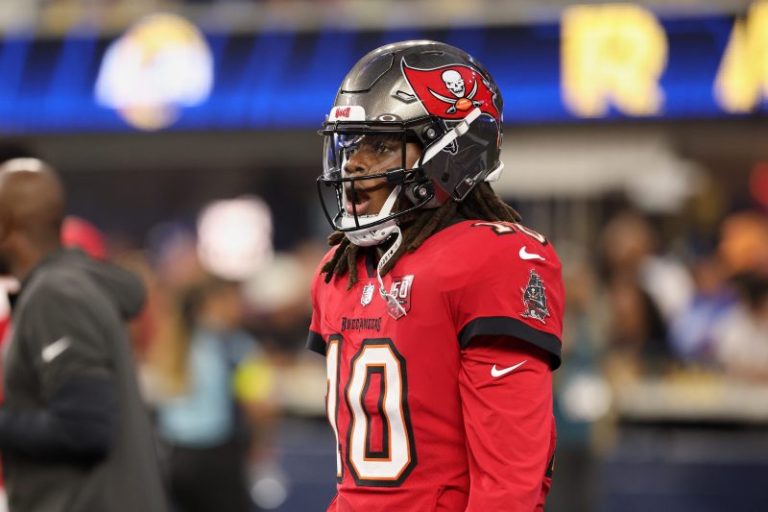
It was something that the 33-year-old NFL quarterback brought attention to a year ago, when he was suspended by his alma mater, Miami Northwestern High School, for using impermissible funds on the team.

Bridgewater returned to the NFL in the wake of the suspension, signing a one-year deal with the Tampa Bay Buccaneers. It’s unclear if he’d return to the high school coaching ranks if the bill passes, but the quarterback could have a lasting impact on the sport regardless.

Here’s what to know about the ‘Teddy Bridgewater Act’ in Florida.

What is the Teddy Bridgewater Act?

The ‘Teddy Bridgewater Act’ (officially Senate Bill 178) is a bill designed to allow high school coaches to use personal funds to support student-athletes with transportation, food and recovery services. The bill’s language indicates that the coaches must act in good faith and cannot spend more than $15,000 per year.

Any use of funds must be reported and the act would cover public K-12 schools in Florida.

Is the Teddy Bridgewater Act signed into law?

The ‘Teddy Bridgewater Act’ has not become law yet in Florida.

It passed the state’s Senate unanimously, collecting 38 votes. The bill will now head to the Florida House of Representatives. If it passes through that government body without issue, it will head to the governor’s desk.

At that point, Gov. Ron DeSantis can sign the bill into law.

Why was Teddy Bridgewater suspended?

Bridgewater was suspended for providing impermissible benefits to his players. The violation occurred during the 2024 season, when the quarterback-turned-coach paid for transportation, food, recovery efforts and more for his team.

The suspension came after Miami Northwestern High School won the Class 3A state championship in Bridgewater’s first season as head coach.

What high school did Teddy Bridgewater coach?

Bridgewater coached Miami Northwestern High School, his alma mater.

The quarterback took the opportunity as a way to continue giving back to the community, saying that he was a younger version of himself in the players.

“I was once in that locker room that I coach in,” Bridgewater, who was raised by a single mother, Rose, told USA TODAY Sports’ Jarrett Bell in January 2025. “I know the level of maturity that I had when I was 14, 15, 16, 17. And I knew that I still needed to grow up a little bit. I had some great coaches, but if I had other extensive male figures in my life, I would’ve been even more mature. So, I approach them from that aspect. Because really, honestly, I’m trying to help these kids make it past Miami, make it outside the city.”

The school posted a 12-2 record with Bridgewater running the show, eventually winning a state championship that season.

How much money did Teddy Bridgewater spend on his players?

Bridgewater revealed that he spent more than $28,000 on his team during the 2024 season. The quarterback later asked for help from the community to fund the effort, which led to his suspension.

He spoke about the situation on Aug. 6, 2025 after signing with the Buccaneers.

‘When I decided to coach, those players became my sons and I wanted to make sure that I just protect them in the best way that I can,’ Bridgewater said. ‘Miami Northwestern is in a tough neighborhood and sometimes things can happen when kids are walking home and different things like that. So I just tried to protect them, give them a ride home instead of them having to take those dangerous walks.’

In a Facebook post, Bridgewater shared what he spent on the team:

$2,200 per week to feed his players pregame meals;
$14,000 for a training camp;
$9,500 for uniforms;
$1,300 per week for recovery services;
$300 per week to keep the team’s field painted;
$700 for Uber rides

Teddy Bridgewater career earnings

Bridgewater has earned about $66 million in his NFL career, per Spotrac.

Drafted by the Minnesota Vikings with the 32nd overall pick in the 2014 NFL Draft, Bridgewater played 11 seasons with the Vikings, Buccaneers, New Orleans Saints, Detroit Lions, Carolina Panthers, Denver Broncos and Miami Dolphins.

Only four of those years came as his team’s primary starter.

This post appeared first on USA TODAY

: The State Department has finalized a new privacy-preserving app intended to give users worldwide access to what officials describe as the same uncensored internet available to Americans, even in countries with strict online repression such as China and Iran and as Europe enacts tighter content oversight. 

The platform, Freedom.gov, will roll out ‘in the coming weeks,’ Fox News Digital has learned. 

It will operate as a one-click desktop and mobile application compatible with iOS and Android devices.

The app is open-source and includes built-in anonymity protections. 

‘In the interest of total transparency, we made Freedom.gov completely open-source. But we also made it completely anonymous,’ a State Department official said. ‘Anyone can see how it works. No one, including us, can track or identify you.’

According to the official, the application does not log IP addresses, session data, browsing activity, DNS queries or device identifiers that could be used to personally identify users.

Specific details about the app’s underlying technical structure were not disclosed.

Governments with sophisticated censorship systems historically have moved quickly to block or criminalize circumvention tools. Authorities can restrict app downloads, block domains, throttle traffic or impose penalties on users.

Whether Freedom.gov maintains accessibility in heavily restricted environments may depend on its technical architecture and its ability to adapt to countermeasures.

The initiative is being led by Under Secretary for Public Diplomacy Sarah Rogers, who oversees the State Department’s Digital Freedom office.

‘Freedom.gov is the latest in a long line of efforts by the State Department to protect and promote fundamental freedoms, both online and offline,’ Rogers said. ‘The project will be global in its scope, but distinctly American in its mission: commemorating our commitment to free expression as we approach our 250th birthday.’

Reuters previously reported that the State Department was developing the Freedom.gov platform.

The rollout comes amid intensifying global battles over internet governance, as governments across Europe and beyond move to assert greater control over online content.

In Europe, regulators have tightened oversight under new laws aimed at policing digital platforms. The European Union’s Digital Services Act expands government authority over major platforms and requires removal of illegal content, including hate speech and extremist material, with regulators empowered to impose steep fines for violations.

In the United Kingdom, the Online Safety Act imposes new obligations on platforms to address harmful and illegal content and includes age-verification requirements for certain services. Critics warn the measures risk incentivizing aggressive content removal and expanding government influence over lawful speech online.

Elsewhere, restrictions have been more direct. Russia recently moved to ban WhatsApp, further consolidating state control over digital communications.

China maintains the world’s most sophisticated online censorship system, widely known as the ‘Great Firewall,’ blocking foreign news outlets and social media platforms while promoting a state-controlled digital ecosystem.

Iran repeatedly has imposed sweeping internet shutdowns during periods of unrest. During protests, government blackouts have cut citizens off from global communications.

The Wall Street Journal previously reported that thousands of Starlink satellite internet terminals were covertly brought into the country following a blackout, in an effort backed by the United States to help dissidents bypass censorship. 

Iranian authorities have attempted to jam satellite signals and criminalized possession of such equipment. Satellite connectivity — which does not rely on domestic telecommunications infrastructure — has emerged as one of the few viable lifelines during shutdowns.

This post appeared first on FOX NEWS

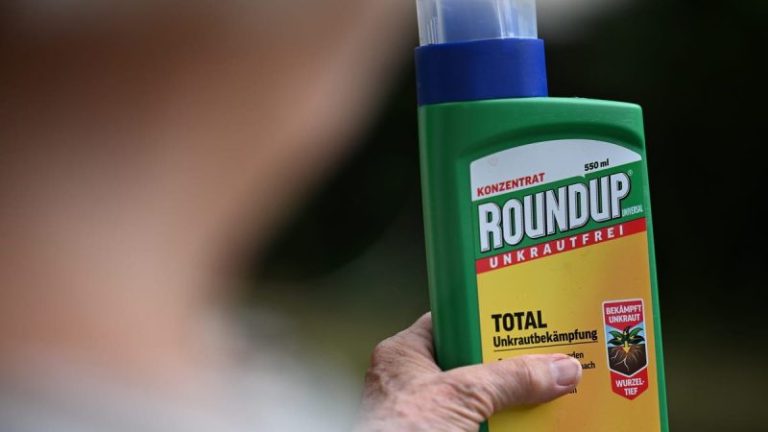
Health and Human Services (HHS) Secretary Robert F. Kennedy Jr. recently defended a move by President Donald Trump to protect and boost the production of a precursor chemical for pesticides, which just two years ago RFK Jr. said was a major contributor to ‘America’s chronic disease epidemic,’ and if elected he would ‘ban’ it. 

Citing national defense imperatives, Trump passed an executive order earlier this week to protect a precursor element used in the production of an herbicide known as glyphosate. Trump’s executive order described glyphosate-based herbicides as ‘a cornerstone’ of the United States’ agricultural productivity. 

The directive created a furor among proponents of the Make America Healthy Again (MAHA) agenda. Just two years ago, in June 2024, when Kennedy was still running for president, he posted on X, formerly Twitter, that ‘glyphosate is one of the likely culprits in America’s chronic disease epidemic.’

‘The herbicide Glyphosate is one of the likely culprits in America’s chronic disease epidemic. Much more widely used here than in Europe. Shockingly, much of our exposure comes from its use as a desiccant on wheat, not as an herbicide. From there it goes straight into our bodies,’ RFK Jr. said in 2024 while running for president. ‘MY USDA will ban that practice.’

A MAHA Commission report released in May 2025 highlighted the concerns surrounding glyphosate as well. 

‘Some studies have raised concerns about possible links between some of these products and adverse health outcomes, especially in children, but human studies are limited,’ the report said. ‘For example, a selection of research studies on a herbicide (glyphosate) have noted a range of possible health effects, ranging from reproductive and developmental disorders as well as cancers, liver inflammation and metabolic disturbances.’

Trump’s executive order was immediately praised by agriculture industry leaders, but MAHA loyalists were sharply critical. 

‘This move betrays the very MAHA voters who put this administration in power,’ Kelly Ryerson, co-executive director of American Regeneration and a leading grassroots voice within MAHA, said in a statement. ‘It stands in direct opposition to the President’s original promise to address the contribution of pesticides to chronic disease.’

‘The right is captured by Big Glyphosate,’ added Alex Clark, a podcast host affiliated with Turning Point USA, founded by the late-Charlie Kirk. 

‘It feels like MAHA is going through a breakup, or just found out our husband was having an affair,’ she told the Wall Street Journal.

When reached for comment, RFK Jr. said Trump’s directive on glyphosate ‘puts America first where it matters most,’ citing the nation’s defense readiness and food supply.

‘We must safeguard America’s national security first, because all of our priorities depend on it,’ he said in a statement to Fox News Digital. ‘When hostile actors control critical inputs, they weaken our security. By expanding domestic production, we close that gap and protect American families.’

This post appeared first on FOX NEWS

It’s not often that a Major League Baseball team veers significantly from its intended path based on anything achieved under the skies of Florida or Arizona while pitchers get their extra running in on the warning track.

Still, there’s plenty worth watching as spring training exhibitions get underway in the Cactus and Grapefruit leagues.

From position changes to emerging prospects to depth concerns, a great deal of business will get settled – or unsettled – in the 33 days before clubs pack up their trucks and head north – or west, or east – away from the languid pace of spring training.

With that, USA TODAY Sports looks at 30 storylines to monitor as games get underway:

Houston Astros: How nasty is Tatsuya Imai?

Clearly, there are a few teams harboring doubts about Imai, the latest pitching sensation to jump from Japan. He received a three-year, $54 million deal, far shy of Yoshinobu Yamato’s record-setting (and clearly warranted) $325 million guarantee.

Yet Imai can opt out of his contract after each season, a reflection of his confidence that he’s undervalued.

The right-hander does bring an advanced five-pitch mix, including a potentially devastating slider and a fastball that plays up in the zone, the way they like ‘em these days. And there’s always the mystery of how shifting from Japan’s baseball to the Rawlings product stateside affects a pitcher’s stuff.

The Astros have fallen behind Seattle in the AL West arms race. Clawing back to the top will be a lot easier if Imai has a better idea how great he is than the clubs who passed on him.

Kansas City Royals: Is Bobby Witt Jr. cuing up an MVP season?

We’re gonna cheat a little bit and loop the World Baseball Classic into this exercise. Witt will be the undisputed starting shortstop for Team USA, batting atop the lineup and likely around Aaron Judge.

Lest we forget, it was Judge who kept Witt from the 2024 AL MVP award.

Witt has played four full seasons and in the past three, he’s finished seventh, second and fourth in MVP voting. He doesn’t turn 26 until June and already he has a pair of 30-30 seasons and a batting title under his belt.

It feels like his time. And the spring run-up before, during and after the WBC may offer a glimpse of what’s in store.

New York Yankees: Can Spencer Jones get closer to the Bronx?

One thing about Yankee prospects: They’re almost always overhyped, but if they can survive multiple trade deadlines and hot stove seasons and remain in their system, the club probably like them a lot.

Jones, the 6-foot-7, lefty-swinging 24-year-old who clubbed 35 homers between Classes AA and AAA last season, is still around. And while there’s no path to playing time right now, he’s as close as ever to Yankee Stadium.

Oh, the winter was bookended by moves that blocked any viable path to a job: Center fielder Trent Grisham accepted the club’s qualifying offer, and left fielder Cody Bellinger re-signed with the club after testing free agent waters.

So it’s Bellinger-Grisham-Aaron Judge once again, with Giancarlo Stanton slotted to DH. Yet with Grisham a regression candidate after a 34-homer outlier season, injury histories for the starting outfielders and no true backup outfielder on the projected roster, a path isn’t far from clearing.

The question could be whether the Yankees would prefer giving Jasson Dominguez another extended run. But should their run-it-back lineup fizzle, Jones’ prodigious power may inspire them to opt for a jolt of energy.

Especially if Jones can hit a few light towers across the Grapefruit League.

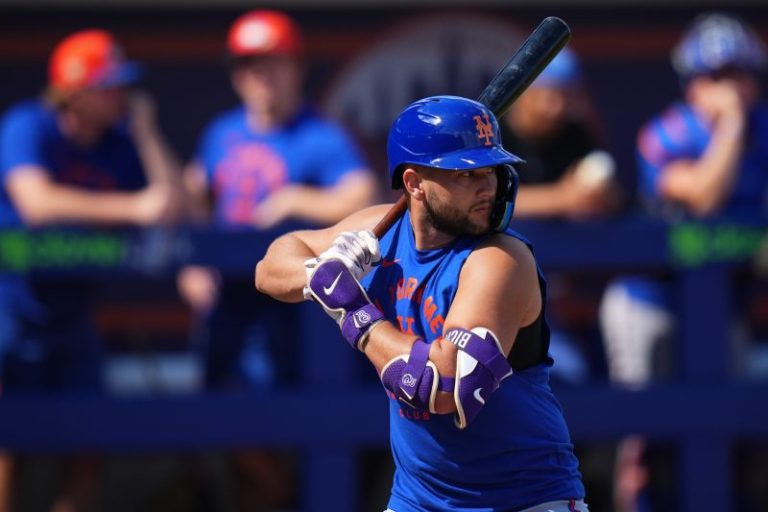
New York Mets: How’s Bo Bichette looking at third base?

Look, there’s probably nothing to see here. We feel shame simply by bringing up the “moderate position change” spring trope. And Bichette is shifting from the more demanding shortstop to the hot corner.

Yet it will be fascinating to see how he looks there and most of all, how a new-look Mets infield may coalesce, with Marcus Semien at second and Jorge Polanco getting reps at first. All this while Francisco Lindor stands on the dirt, his right hand wrapped after hamate surgery, helpless to lend a tangible hand until, hopefully, Opening Day.

Bichette remains in his offensive prime, and after a strong World Series turn at second base – on one leg, essentially – adding a solid third base to his portfolio will only enhance his marketability should he opt out of Queens after one year.

In the meantime, every misplayed short hop will be scrutinized as if Bichette’s never played on the dirt before.

Cincinnati Reds: Is Chase Burns ready to stick?

“Cactus League opening-day starter” is typically not apropos of anything. Yet when Chase Burns throws the first pitch of the Cincinnati Reds’ fake baseball schedule Feb. 21 in Goodyear, it’s absolutely reason to watch.

The fifth starter role in Cincy appears to be Burns’ to lose – unless Rhett Lowder or Brandon Williamson somehow float your boat. And Burns seems poised to build on an eight-start 2025 debut that was at times electric.

He struck out 13.9 batters per nine innings, notched three consecutive 10-strikeout games – the last coming against the Dodgers – and famously struck out the side against Aaron Judge and the Yankees in his debut.

All that thunder came with a fastball-slider combo. But Burns has insisted this spring his changeup is now ready for prime time, a pitch that would play quite nicely off his slider. And if Burns is polished enough to nab the last rotation spot following Hunter Greene, Andrew Abbott, Nick Lodolo and Brady Singer, the Reds’ 83-win playoff campaign last year would look merely like the floor for 2026.

White Sox/Blue Jays: Will Munetaka Murakami and Kazuma Okamoto hit the ball hard and often?

Apologies for the paired entry, but both grads of NPB came to the majors on relatively modest contracts: A two-year, $34 million deal from the White Sox for Murakami, who hit 56 homers one year in Japan; and four years, $60 million for Okamoto, whose stakes are more immediately higher.

The open-ended question: Can they handle big league pitching?

It’s harder and nastier and deeper than what those gents consistently saw in Japan, which is not to say they can’t or won’t succeed. It’s just that for every Ohtani there might be a Tsutsugo or an Akiyama.

The answer to the question matters much more in Toronto.

Okamoto isn’t exactly replacing Bichette, as the Blue Jays will bounce a handful of folks through various positions, but that’s kind of how their offseason worked out. For a team once again harboring World Series expectations, Okamoto’s production will matter.

And while facing spring repertoires isn’t exactly what they’ll see when the big lights come on, every plate appearance is at least a small data point toward whether they’re undervalued gems or potentially overmatched.

Baltimore Orioles: Who is the opening-day starter?

OK, this is the last one of these Dumb Spring Questions we’re gonna do. That Game 1 nod is always good fodder to kill time in February, but it’s legitimately interesting to see how the Orioles’ staff breaks out of Sarasota.

They all but promised a high-priced arm this winter – then came home with Chris Bassitt and, via trade, Shane Baz. That leaves the O’s with a trio of potential aces – the revived Trevor Rogers, the back-at-full-strength Kyle Bradish and the still-seeking-his-ceiling Baz.

The overall group can be formidable, but there’s also enough volatility that they’ll rue failing to land a Framber Valdez type. Rogers and Bradish figure to be the top candidates to open up Camden Yards next month, though Bassitt -already emerging as a key voice in the clubhouse – shouldn’t be ruled out.

Either way, they could sure use a bell cow to emerge in Grapefruit League play.

Detroit Tigers: Can Kevin McGonigle insert himself into the mix?

With each passing week this winter, the Tigers looked more and more like shoo-ins to win the AL Central. Should they reach a third consecutive postseason, they’ll be in need of a difference-maker to finally vault them past ALDS Game 5.

Can McGonigle be that guy?

The consensus No. 2 prospect in all the game likely does not have a home on the Tigers’ opening-day infield, and nothing this spring can change that. Yet given the manner in which teams integrate dynamic young talent onto playoff rosters these days, it seems extremely likely he’ll be around by then.

And quite possibly much sooner.

What a 2025: As a 20-year-old, McGonigle posted a .305/.408/.583 line at three levels, the majority coming at Class AA. He followed that with 25 hits – 12 for extra bases – in 69 at-bats in the Arizona Fall League.

All that makes his at-bats this spring appointment viewing, even if he’s not likely to dislodge Zack McKinstry or Colt Keith from their spots on the infield anytime soon.

Boston Red Sox: Will ABS be a boon for short king Caleb Durbin?

There’s a good chance you’ll be seeing some shrinkage across big league rosters this year.

With ABS paving the way for the inaugural season for a ball-strike challenge system, a player’s height suddenly mattered. And Durbin, the Boston Globe reported, shrank just a smidge when the measuring tape came out to get his ABS dimensions.

Somewhere between Milwaukee and Boston, Durbin tumbled from 5-7 to 5-6 ¼, or 168.3 centimeters. Hey, no need to break out boots: Smaller is better when an automatic ball or strike is on the line.

The Red Sox will be looking for a lot more than borderline calls from Durbin. With Alex Bregman gone, he’s likely their second baseman. Durbin was a league-average hitter in Milwaukee, though worth 2.8 WAR in 136 games.

Peppering the Fort Myers Monster at JetBlue Park could get Durbin ready to impersonate another diminutive star at the keystone in Fenway.

Los Angeles Angels: Can veterans actually improve in Anaheim?

A handful of franchises have proven they can take a veteran ballplayer and unlock the best version of himself, gleaning value where the previous squad failed.

The Angels are not one of those franchises.

Yet if this increasingly cursed club is bound to have any success, they better get started. A pair of off-season trades guaranteed that: Taylor Ward, the 36-homer left fielder, was shipped out for oft-injured but high-ceiling starter Grayson Rodriguez.

And Josh Lowe, a star in the making in 2023, was imported from Tampa Bay and handed the right field job.

It would be a wild turnabout if Lowe – who amassed 3.7 WAR and an .835 OPS in 2023 – found consistent success in Anaheim and not Tampa Bay. Injuries have kept him from playing more than 108 games since; perhaps the waters of the Newport Coast will prove rejuvenating.

Rodriguez, meanwhile, saw several body parts break down the past two years and hasn’t pitched since July 31, 2024. Yet he has a crackling fastball and four years of control. Perhaps he can find it in Anaheim.

Pittsburgh Pirates: How loud are Konnor Griffin’s skills?

The legend is already building in Pirate City. Konnor Griffin, launching a ball over the batter’s eye in dead center field during live BP. Griffin, getting into his pull side power and nearly hitting a set of dormitories behind the left field fence.

Griffin… seizing the shortstop job in Pittsburgh?

Whoa, whoa, whoa. Grainy cell phone footage of tape-measure blasts does not win a man a job. Yet the “if” is written in almost invisible ink and the “when” might as well be in 100-point type: Griffin will own the position in Pittsburgh for years, and pair with Paul Skenes for at least four seasons.

For now, the “when” is fairly immaterial. This Grapefruit League stint is more about building remember-when moments – can he reach the Manatee River? – for a guy whose stardom seems imminent.

Los Angeles Dodgers: Time for the rookies* to make a splash?

For all the boo-hoos over Kyle Tucker’s $60 million salary and Edwin Diaz’s defection west, the Dodgers’ threepeat will almost certainly hinge on other factors. And for all the attention their superstars rightly get, the youngsters among them will certainly factor into this.

Enter Dalton Rushing, Hyseong Kim and Alex Freeland.

Sure, Dodger Stadium is typically no country for young men. Yet the Dodgers’ golden oldies aren’t getting any spryer. And while Freeland is the last of the trio that’s technically a rookie, these heretofore bit players should take this spring as a chance to grab more of the glory in L.A.

Kim already projects to be at least the part-time starting second baseman as Tommy Edman recovers from ankle surgery. Rushing is technically the backup catcher – but Will Smith is coming off an October in which he caught 148 additional innings. And Freeland – at 24, an absolute cherub within this group – should vie for at-bats at both second and third base.

These are no schlubs: Rushing and Freeland were both top-100 prospects and Kim was guaranteed $12.5 million signing out of Korea. No, the great transition has not yet begun at Chavez Ravine. But it can’t hurt to get to know the next wave a little better.

Minnesota Twins: Will the bullpen deepen their disaster?

Reliable relief might be the most elusive element for a playoff team. The 2025 Twins did their very best to solve the crisis for as many teams as possible – yet may have left even more of a debacle for 2026.

Jhoan Duran (Phillies), Griffin Jax (Rays), Brock Stewart (Dodgers), Louis Varland (Blue Jays), Danny Coulombe (Rangers) – they all found greener pastures. The Twins? Their franchise freefall hasn’t stopped – and their deadline sell-off left virtually nothing in relief.

The closer? The less-heralded Rogers twin (Taylor). Anthony Banda was peeled off the Dodgers’ DFA line for lefty relief. Andrew Chafin was summoned from his deer stand. Justin Topa, Kody Funderburk, Cole Sands….it’s, shall we say, not the group it was from a year ago.

An entire unit, essentially, must be re-formed under the Fort Myers sunshine. With Pablo López already out for the year, the misadventures may have only just begun.

San Francisco Giants: Time for Bryce Eldridge to win a job?

The visuals from Scottsdale have been stirring: Towering rookie Bryce Eldridge working out at first base alongside Rafael Devers, and under the tutelage of infield wizard Ron Washington. And then Eldridge borrows an outfielder’s glove and shags balls out there, a testament to the Giants’ determination to get his massive power somewhere, anywhere in their lineup.

And now Eldridge has to hit his way to that gig.

The 6-foot-7 lefty swinger received 28 at-bats last September and still awaits his first home run after striking out 13 times. Giants officials are also patiently waiting on a strikeout rate that hit 27.2% in his first two full pro seasons to diminish.

It’s not a stretch to say this is the most significant position-player prospect the club has had since Buster Posey. Yeah, it’s been a bit of a dry run on that side of the ball for a minute. That’s certainly a lot to put on a 21-year-old who may yet get on the China Basin-Yolo County shuttle a few more times.

For now, they’ll settle for that power that produced 25 homers in 102 games last year to pop in the Cactus League.

Tampa Bay Rays: Can Sugar Shane make Opening Day sweet?

They say the game is at its best when its stars are healthy. Shane McClanahan started the 2022 All-Star Game as a 25-year-old, made a return appearance the next year – and essentially hasn’t pitched since. Tommy John surgery followed by a nerve problem in his left biceps one year ago cost him the past two seasons. It’s been an odd and frustrating period for Sugar Shane.

“I learned how important this game is, and to be honest with you, too, I learned how to find happiness in everyday life,” he said last week, per MLB.com.

While most of the league opens its exhibition schedule Feb. 20, McClanahan is slated to face live hitters in camp for the first time. His Grapefruit League debut won’t come until next month, and the Rays expect him to align for their first run through the rotation when the games count.

He was that close to making it back last year when the nerve issue arose during his final Grapefruit League start before getting the opening-day nod. Perhaps a new year will get him over that last hurdle.

Arizona Diamondbacks: Can Jordan Lawlar play center field?

And hit consistently? And hold down a semi-regular gig in the big leagues?

The Diamondbacks are hoping for all of that out of the sixth overall pick in the 2021 draft, a shortstop who has been limited to 42 major league games due to injury and lackluster performance.

Call this the reinvention: Geraldo Perdomo emerged as one of the game’s most valuable shortstops and Ketel Marte remains an All-Star second baseman. So to unblock Lawlar, Arizona hopes he can be a part-time center fielder.

He played a dozen games there for Licey in the Dominican Winter League and is spending ample time under the tutelage of veteran coach Dave McKay this spring. More outfield at-bats could initially open up if hamate victim Corbin Carroll isn’t ready for Opening Day.

His career .910 minor league OPS could conceivably help the D-backs if he can make the leap. And handle those high Arizona skies this spring.

Athletics: Just how close is Leo De Vries?

There’s nothing quite so intriguing as a 19-year-old in big league camp.

And when you’re a consensus top 10 overall prospect and the headliner of one of the biggest deadline deals last year, it’s tough to hide. So just how will Leo De Vries handle his spring with the A’s?

The shortstop has an absurd array of tools and also an advanced approach at the plate, all the signs you like to see in a quick mover. Certainly, the A’s already have an All-Star shortstop in Jacob Wilson, so it’s iffy whether De Vries can get to Yolo County before the A’s depart Sacramento for Las Vegas in, conceivably, 2028.

Yet for as long as he’s in A’s camp this year, it’s a look at the future.

Philadelphia Phillies: Will Justin Crawford get deep into his bag?

Justin Crawford wants to do it all, including bunt. And like his old man Carl, he may yet have the tools to pull it off.

A lefty-swinging outfielder with burgeoning power and elite on-base and stolen-base ability? The younger Crawford has that, too.

And the Phillies would certainly love to see him seize the primary center fielder job.

It was a weird winter in Philly, with the dismissal of Nick Castellanos and rescuing Adolis Garcia off the non-tendered pile. Not much else was in the offing. Yet the profligate Phils are suddenly ripe for a youthful infusion: Crawford, elite infielder Aiden Miller somehow working into the mix, Andrew Painter holding down the fort for Zack Wheeler.

Yet nothing might be as exciting as Crawford unleashing his skills and jump-starting a power-heavy offense.

Cleveland Guardians: Can Travis Bazzana join class of ’24 in the bigs?

Nick Kurtz is already a superstar. Trey Yesavage took a hero’s turn in the 2025 postseason. Chase Burns should crack the Reds rotation.

So, what of the No. 1 pick in the class of 2024?

Bazzana will get a crash course in international competition representing Australia in the WBC, hoping to escape a group populated by Japan and Korea. Yet before and after he departs for the Tokyo Dome and Pool C, there’s an impression to be left in the Cactus League.

It probably won’t be enough runway to break with the Guardians, as Bazzana was limited to 84 games by an oblique injury in 2025. Yet still, with Brayan Rocchio and Gabriel Arias as likely starters up the middle, opportunity – good health willing – shouldn’t be far away.

“I haven’t sensed anything other than Travis is excited to be in camp. He’s excited to get into a season healthy and play a full six months,” says Guardians manager Stephen Vogt. “So we’re really, really pumped to watch him play this spring.’

Seattle Mariners: Is Cole Young the lone missing puzzle piece?

Every single Seattle Mariner regular is either an All-Star, a Gold Glover or a World Series champion.

And then there is Cole Young, full of promise and for now, seemingly the final puzzle piece to a championship squad.

The club bid farewell to Eugenio Suárez, punted on Alex Bregman, traded for Brendan Donovan and then left second base, most likely, to Young. He was just 21 when he made his big league debut last season, posting a .211/.302/.305 line that belied his tools and was deep enough (77 games) to exhaust his rookie status.

And now, the next generation is already breathing down his neck.

Colt Emerson, 20, is also in big league camp, and while Young was a consensus top 50 prospect the previous two years, Emerson is a top 10 guy and, the Mariners believe, a potential star.

“Colt Emerson will play a part in our season. I’m sure of that,” club president Jerry Dipoto told the Seattle Times.

A big enough part to steal an opening-day gig from Young? That might be rushing it. Either way, Young has a window to show he can play with a star-studded roster with World Series aspirations.

Texas Rangers: Is Jake Burger ready to eat?

Speaking of the AL West, the Rangers may be reloaded to contend three years after winning it all, what with a powerful starting rotation, better outfield depth with Brandon Nimmo aboard and burgeoning stars like Wyatt Langford.

Yet is Burger ready to resume banging in the AL?

His adjusted OPS dropped from 125 to 107 to 99 last season, his first after a trade from Miami. Now, they badly need his right-handed pop in a fairly lefty-dominated lineup.

Atlanta Braves: Time to speed dial some arms?

Alex Anthopoulos can only hope this isn’t an avert-your-eyes kind of spring. The Braves have already lost starters Spencer Schwellenbach and Hurston Waldrep to elbow injuries that may knock them out a while.

The club president insists there may not be external pitching adds. We wonder if that will hold true should Reynaldo Lopez or Bryce Elder or Grant Holmes get cuffed around a bit down in North Port.

Chicago Cubs: Can James Triantos take another leap toward Wrigley Field?

Interesting situation in Chicago: The Cubs are loaded for a title run, have Alex Bregman secured for the long haul, but are slated to lose second baseman Nico Hoerner and left fielder Ian Happ to free agency next season.

And it’s never too early to ponder some reinforcements.

Enter Triantos, an infielder by trade who’s now billed as a multi-positional guy. A lifetime .282/.341/.405 minor league hitter recently added to the 40-man roster, who can handle several positions the club may soon need to fill?

Yeah, an interesting spring looming for the kid.

Colorado Rockies: The spring they turned sentient?

Paul DePodesta isn’t revolutionizing the game this time around. Instead, he is simply acquiring position players like Jake McCarthy and Edouard Julien, and pitchers like Michael Lorenzen, Jose Quintana and Tomo Sugano and, you know, seeing what happens?

It’s just a workshopping year for the new club president. And the club won’t even threaten fourth place in the NL West. But they probably won’t threaten 119 losses, either – and perhaps trot out a product that’s watchable.

Miami Marlins: Will Owen Caissie and Kyle Stowers be big hits?

It’s a potentially daunting corner outfield combo: Kyle Stowers, fresh off a 25-homer season in 117 games, opposite Owen Caissie, who once hit 20 homers as a 20-year-old in Class AA.

It’s also a potential swing and a miss: Stowers punched out 27.4% of the time last year, and is at 30% over a career stretching across three seasons. Caissie, meanwhile, had a career 29.1% strikeout rate in his minor league career, and whiffed 11 times in 27 plate appearances in a 12-game Cubs cameo last year.

Tough level to work those woes out, to be sure. That just makes the sound of ball striking bat all the more important in South Florida.

Milwaukee Brewers: Is Garrett Mitchell ready to roll?

At one point Mitchell was the fastest man in the major leagues, by one metric, and a young building block for a typically youth-heavy Milwaukee Brewers team. And then the injuries kept coming and coming, culminating in a miserable 2025 when he aggravated an oblique injury – and then aggravated a shoulder injury on a rehab assignment, resulting in season-ending surgery.

Without him, the Brewers won 95 games and reached the NLCS. Yet nothing’s permanent in Dairyland, save for the cow pies. Isaac Collins was dealt to Kansas City, taking 441 plate appearances with him.

Now, wunderkind Jackson Chourio is slated to slide over to left field, leaving the majority of center field at-bats in Mitchell’s hands. The 20th overall pick in 2020, Mitchell has a 112 adjusted OPS in 141 career games and elite defensive potential. Heck, he hasn’t even stayed upright to truly exploit the liberal stolen base rules introduced in his second season.

A spry and healthy Mitchell roaming Maryvale, and then Milwaukee, is long overdue.

San Diego Padres: Will the last-minute shopping spree pay off?

A.J. Preller’s mad scientist shtick usually involves trading top 10 overall prospects for immediate help, or throwing nine-figure contracts out with little hesitation.

This spring was something else, though: Grab Nick Castellanos off the scrap heap, add Ty France on a minor league deal, give Miguel Andujar a one-year guarantee oh, and add German Marquez, Griffin Canning and Walker Buehler to the pitching derby.

That’s a busier February than most groundhogs.

And it also makes the Padres’ Cactus League games….interesting? How much does Castellanos have left, and will his 305 pal Manny Machado keep his spirits up? Does France’s past contributions matter at all? Can Buehler make the team on a minor league deal?

A fair amount of drama to play out in Peoria.

St. Louis Cardinals: Does the Winn-Wetherholt era begin now?

Amid the significant restructuring in St. Louis, it’s a little hard to find both current and future excitement on the roster.

Except in the middle of the diamond.

That’s where Gold Glove shortstop Masyn Winn could be joined by rookie JJ Wetherholt, the seventh overall pick in 2024 who has zoomed to the minor leagues with an urgency that suggests, “What rebuild?”

Wetherholt nearly broke down the door to St. Louis a year ago, when he posted a .931 OPS at Class AA and AAA while stealing 23 bags in 28 attempts and ripping 47 extra-base hits.

It is a potentially electric combo. And while their spring digs of Roger Dean Stadium are still under construction, a significant portion of the rebuild may come together even as their spring digs in Jupiter need some spit-shining.

Washington Nationals: Can Harry Ford seize opportunity?

Big Dumper was more like “Big Bummer” for Ford’s career prospects.

Yet an offseason trade sent Ford away from the long shadow cast by Cal Raleigh in Seattle to Washington, where opportunity abounds on the youngest and perhaps rawest team in the game.

Youngest, in terms of both players and management, with 33-year-old manager Blake Butera helming the youth movement. In short, youthful mistakes won’t be tolerated but will be understood.

It’s not a bad place to try and grow, especially when the incumbent catcher, Keibert Ruiz, has posted a .284 OBP over his past three seasons. Hey, Ford may not crack the squad right away. But the dude with the .405 career minor league OBP can certainly give the rebuilding squad a little something to think about

This post appeared first on USA TODAY

MILAN Black Eyed Peas’ “I Gotta Feeling” blasted on the speakers at the Milano Santagiulia Ice Hockey Arena in Milan ahead of the gold-medal game between the U.S. women’s national hockey team and Canada.

“I got a feelin’ that tonight’s gonna be a good night,” musician Will.i.am sang on the track. The song served as a premonition for what was to come: USA captain Hilary Knight had a good night, indeed.

The five-time Olympian scored a late equalizer to send the game to overtime, where Megan Keller’s sudden-death goal lifted the Americans to the top of the podium for the first time since 2018. Knight’s goal not only kept the Americans’ hopes alive, it also established a new all-time U.S. Olympic record in points (33) and goals (15).

Knight, the first American hockey player, male or female, to win five Olympic medals, announced the 2026 Winter Games would be her last, but the 36-year-old proved her final Olympic lap was far from a swan song.

‘Hilary always goes out with a bang,’ Kendall Coyne Schofield said, referring to Knight’s whirlwind week filled with a marriage proposal to Brittany Bowe and a gold medal. ‘I mean you can’t script it any better.’

Knight is not your typical superstar. She doesn’t like to bask in the limelight and would prefer if it weren’t on her at all. When Knight scored her 14th career Olympic goal in Team USA’s 5-0 win over Finland on Feb. 7, she had ‘no idea’ she tied the U.S. Olympic all-time scoring record held by Natalie Darwitz and Katie King.

While Knight noted it’s ‘super special’ to be mentioned among legendary players like Darwitz and King, she said the goal was no less special than every other she’s scored along the way. And Knight has done plenty of that.

‘I just love scoring and the pure elation of finding the back of the net and putting our team in a better position than we were before,’ added Knight. ‘It’s just a little kid moment… It’s pure excitement and it’s fun to celebrate.”

Although Knight herself couldn’t care less about adding yet another record to her resume, some began to wonder if she would reach the points and scoring record before her Olympic career ended. Team USA crushed Italy and Sweden in the quarterfinal and semifinals, respectively, but Knight didn’t get on the score sheet in either game.

But leave it to Knight to step up when Team USA needed her most. With their backs against the wall and the clock ticking down on their dreams, Knight tipped in a goal with less than three minutes remaining in regulation.

When asked what went through her head after scoring, Knight recalled, ‘We’re going to win the game. It was just that simple. Obviously we peppered their goaltender a lot and picked up momentum throughout the game, but you never want to run out of time, especially with a great team. So to find the back of the net, I was like, here we go, this is ours… it’s a special feeling. It’s a rare feeling, but you get that feeling with this group.’ 

Lee Stecklein said it was the ‘perfect way for her to break (the record).’ Stecklein added, ‘She’s the best player of all time. To score goals like that as consistently as she did… it’s just a classic Hilary Knight.’

It’s also typical Knight fashion to quickly shifted the spotlight off her personal accolades onto what matters most: her teammates. That’s what has kept her playing for two decades.

‘I didn’t want to put more pressure on us leading into… this tournament by saying we’re the best hockey team in the world. I truly felt that at every single step,’ Knight said. ‘This was a testament to our preparation and the togetherness and the love and the family environment that we created in that room that we’re willing to do whatever it takes to get the job done and do it for one another.’

Knight has influenced an entire generation of players throughout her career, many of whom are now her teammates who will carry on the legacy of the U.S. national team when she’s gone. First-time Olympian Haley Winn recalls taking a photo with Knight in upstate New York at a hockey camp when she was younger.

‘Obviously she’s someone a lot of us have looked up to since we were little,’ said Haley Winn, who scored her first Olympic goal in USA’s win over Switzerland on Feb. 9. ‘I know I have a picture with her from when I was probably seven or eight, so to be able to play on a team with her obviously is it leaves you kind of speechless.’

Winn isn’t the only one. Tessa Janecke, Laila Edwards, Hannah Bilka and Caroline Harvey have all idolized Knight in their youth. It was Edwards who assisted Knight’s historic goal on Thursday, alongside Keller.

‘It’s unbelievable. It just seemed to be a very small part of what Hilary’s accomplished,’ Edwards said. ‘I’m so honored and to learn from her every day, it’s just been such a blessing.’

Knight doesn’t have to say too much to lead. Her coaches and teammates describe her as a ‘silent force,’ who leads by example, as cliche as that may sound. ‘Her actions mean everything,’ added Taylor Heise, who said she just likes to sit and observe how Knight operates on a daily basis, ‘as weird as that sounds.’

‘She knows how to bring a group together, like ‘Let’s go and fight and we’re going to go to the end,’ and it’s inspiring to be around. She’s an amazing human being,’ said U.S. women’s hockey coach John Wroblewski, who was brought to tears after the gold-medal win. ‘(Knight) needs her teammates and I think that she’s as cognizant of that as anybody can imagine.’

Knight has scored two goals in as many games to open Olympic play. Her first came in the second period of USA’s 5-1 win over Czechia on Feb. 5 to become the third player to score in five different Olympics, joining Canadians Jayna Hefford and Hayley Wickenheiser. Canada’s Marie-Philip Poulin later joined the list and surpassed Wickenheiser (18) as the all-time leading women’s Olympic scorer with 20 goals.

Knight again found the back of the net in the second period against Finland on Feb. 7, which was all the more impressive considering the veteran left the ice in the first period with an apparent injury.

Finland forward Ida Kuoppala collided with Knight’s left leg right in front of the U.S. bench as Knight possessed the puck with 4:28 remaining in the first period. Knight’s left leg buckled and she immediately fell down to the ice, where she withered in pain. She went right off the ice and didn’t return with the starting line the remainder of the first period as she received medical attention on the bench.

‘When we saw her kind of roll over and got hurt a little bit, (it) almost brought me to tears on the bench,’ Heise recalled. ‘(Knight) is such a resilient player and she worked so hard and you could see her when she got in the locker room, it didn’t phase her. Straight to the trainer and did what she needed to do and figured it out.’

Knight recorded two assists in USA’s 5-0 shutout of Switzerland on Feb. 9, in addition to an assist in the team’s 5-0 win over Canada on Feb. 10. She finished with six points in the tournament.

‘She’s the best player in the world,’ Heise added.

Her performance was so good that many questioned whether Knight should retire or run it back.

Heise said she’s ‘never going to count (Knight) out,’ while Coyne Schofield added, ‘I don’t put anything past Hillary Knight. Whatever goals in her head, she’s going to accomplish it.’

She accomplished her goal of winning a gold medal and even dished out a silver engagement ring to her fiancé, U.S. speed skater Brittany Bowe, all in the span of 48 hours.

‘This is my last Games and I’ve had a heck of a week personally, so it’s been an incredible ride and I have to soak this all in because this room is just so special,’ Knight said. ‘This team is so special. This is the best US hockey team I’ve ever been a part of and that is just so tremendous.’

The USA TODAY app gets you to the heart of the news — fastDownload for award-winning coverage, crosswords, audio storytelling, the eNewspaper and more.

This post appeared first on USA TODAY
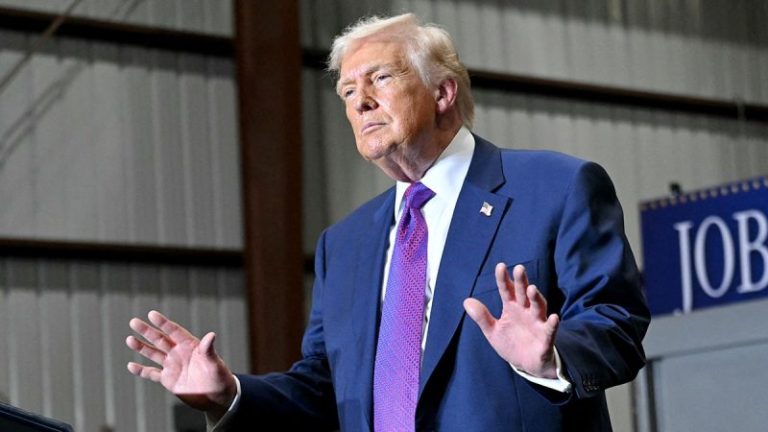
President Donald Trump slammed the Supreme Court’s 6-3 decision that ruled he does not have the authority to levy sweeping tariffs under a specific emergency powers law, noting he will pursue ‘alternatives’ to tariffs under emergency law.

‘Other alternatives will now be used to replace the ones that the court incorrectly rejected,’ Trump said during a White House press briefing Friday afternoon. ‘We have alternatives. Great alternatives. Could be more money. We’ll take in more money, and we’ll be a lot stronger for it. We’re taking in hundreds of billions of dollars. We’ll continue to do so.’

The president also announced he is imposing a 10% ‘global tariff’ following the court’s decision.

‘Today I will sign an order to impose a 10% global tariff under section 122 over and above our normal tariffs already being charged,’ Trump said. ‘And we’re also initiating several section 301 and other investigations to protect our country from unfair trading practices of other countries and companies.’

The high court blocked Trump’s tariffs levied under the International Emergency Economic Powers Act in what amounts to a major test of executive branch authority. 

Trump called the ruling ‘deeply disappointing,’ saying he was ‘ashamed’ of certain members of the court.

‘I’m ashamed of certain members of the court, absolutely ashamed, for not having the courage to do what’s right for our country,’ the president said. ‘In actuality, I was very modest in my ask of other countries and businesses because… I wanted to be very well-behaved.

‘I didn’t want to do anything that would affect the decision of the court, because I understand the court. I understand how they are very easily swayed. I want to be a good boy. I have very effectively utilized tariffs over the past year to make America great again,’ he said.

A source outside the Trump administration told Fox News that an aide came into the closed-door White House breakfast with governors earlier Friday and handed Trump a note about the Supreme Court ruling.

The source said Trump ‘called it a disgrace, and then he went on with the remarks.’

Some of the Supreme Court’s nine justices will likely be sitting in the audience when the president delivers the State of the Union address on Tuesday.

‘The Democrats on the court are thrilled, but they will automatically vote no,’ Trump said during the news conference. ‘They also are a, frankly, disgrace to our nation… They’re very unpatriotic and disloyal to our Constitution. It’s my opinion that the court has been swayed by foreign interests and a political movement that is far smaller than people would ever think.’

In the opinion, the high court declared, ‘Our task today is to decide only whether the power to ‘regulate… importation,’ as granted to the President in IEEPA, embraces the power to impose tariffs. It does not.’

Trump has made tariffs a key plank of his economic agenda since retaking the Oval Office last year, but his policies have not come without controversy.

Republican reaction to the ruling has been mixed.

Rep. Buddy Carter, R-Ga., slammed the high court’s decision.

‘The Supreme Court just undercut the President’s ability to defend American workers. President Donald Trump was elected to fight unfair trade and stop the United States from being ripped off. I’m outraged by this decision; it’s clearly judicial overreach,’ Carter asserted in a post on X.

But Sen. Rand Paul, R-Ky., welcomed the ruling.

‘In defense of our Republic, the Supreme Court struck down using emergency powers to enact taxes. This ruling will also prevent a future President such as AOC from using emergency powers to enact socialism,’ Paul noted in a post on X.

Rep. Don Bacon, R-Neb., also hailed the decision.

‘The Constitution’s checks and balances still work. Article One gives tariff authority to Congress. This was a common-sense and straightforward ruling by the Supreme Court. I feel vindicated as I’ve been saying this for the last 12 months. In the future, Congress should defend its own authorities and not rely on the Supreme Court. Besides the Constitutional concerns I had on the Administration’s broad-based tariffs, I also do not think tariffs are smart economic policy. Broad-based tariffs are bad economics,’ Bacon wrote in a post on X.

House Speaker Mike Johnson, R-La., said Congress and the administration will determine the ‘best path forward’ in the coming weeks.

‘No one can deny that the President’s use of tariffs has brought in billions of dollars and created immense leverage for America’s trade strategy and for securing strong, reciprocal America-first trade agreements with countries that had been taking advantage of American workers for decades,’ Johnson wrote in an X post.

This is a developing story. Please check back for updates.

This post appeared first on FOX NEWS

The Supreme Court rebuked President Trump’s use of the International Emergency Economic Powers Act to impose sweeping ‘Liberation Day’ tariffs, ruling that the Constitution gives Congress — not the president — authority over tariffs.

But the decision may not be the final word. From the Trade Expansion Act to the Trade Act of 1974 and even Depression-era statutes, multiple legal avenues remain that could allow Trump to reassert aggressive trade powers.

In a 6-3 decision led by George W. Bush-appointed Chief Justice John Roberts, the court ruled that the ‘framers gave [tariff] power to Congress alone, notwithstanding the obvious foreign affairs implications of tariffs.’

George H.W. Bush-appointed Justice Clarence Thomas, Trump-appointed Justice Brett Kavanaugh and George W. Bush-appointed Justice Samuel Alito dissented.

On ‘Liberation Day’ in 2025, Trump cited the International Emergency Economic Powers Act (IEEPA), drafted by former Rep. Jonathan Brewster-Bingham, D-N.Y., to declare an emergency situation in which foreign countries were ‘ripping off’ the U.S.

With that avenue now closed by Roberts, Trump could try to use the same national security rationale to invoke the Trade Expansion Act of 1962, which in part allows the Commerce Department to impose tariffs on ‘article[s]… imported… in such quantities or under such circumstances as to threaten or impair the national security.’

Unlike the IEEPA, the JFK-era law has been tested in the courts, and Commerce Secretary Howard Lutnick has since built on his predecessor Wilbur Ross’ 2018 steel and aluminum tariffs imposed under the act, adding 407 more imports to the tariff list on the grounds that they are ‘derivative’ of the two approved metals.

During his 2025 confirmation hearing, Lutnick voiced support for a ‘country by country, macro’ approach to tariffs and agreed with the president that the U.S. is ‘treated horribly by the global trading environment.’

While tariffs imposed under Section 232 of the Trade Expansion Act are not immediate and require the Commerce Department to conduct a formal investigation, the law provides a court-tested avenue for the president.

In the wake of Friday’s ruling, Sen. Rand Paul, R-Ky., and others celebrated the court’s affirmation that Trump cannot use ’emergency powers to enact taxes,’ but Congress has previously approved another avenue to impose tariffs.

Then-Rep. Albert Ullman, D-Ore., crafted a bill signed by President Gerald Ford that expressly gave presidents broader authority to impose tariffs: the Trade Act of 1974.

A federal appeals court in September ruled against thousands of companies that challenged tariffs on China imposed under Section 301 of the Trade Act.

In this case, U.S. Trade Representative Jamieson Greer, a Trump appointee, could seek retaliatory tariffs against countries with unfair trade barriers, according to Global Policy Watch.

An investigation, including negotiations with the targeted countries, would then ensue, and Greer could ultimately be cleared to impose trade restrictions if the probe finds that the U.S. is being denied trade agreement benefits or that such a deal is unjustifiable.

However, in most cases, imposed tariffs sunset after four years, according to reports.

In Trump’s favor, it could be argued that the same reasoning Roberts used to strike down the IEEPA authority could backfire on tariff opponents because the 1974 law explicitly gives the executive branch trade-restriction authority.

Another section of the Ford-signed law could also be used to unilaterally impose tariffs.

Section 122, the ‘Balance of Payments’ portion of the law, allows Trump to temporarily enforce tariffs or import quotas in certain situations.

A president may impose tariff duties of up to 15% for 150 days against all or certain countries if they are found to be ‘maintain[ing] unjustifiable or unreasonable restrictions on U.S. commerce,’ according to the Retail Industry Leaders Association.

‘This authority is intended to give the executive branch flexibility to respond quickly to trade practices that may harm U.S. economic interests or to correct significant balance-of-payments deficits,’ the trade group said in a June report.

However, reports show Section 122 has not been tested in court as extensively, which could lead to lawsuits and legal uncertainty.

Another potential policy option for Trump is one that drew sharp criticism when President Herbert Hoover signed it against the advice of economists early in the Great Depression.

The Smoot-Hawley Tariff Act of 1930, named for Republican Sen. Reed Smoot of Utah and Rep. Willis Hawley of Oregon, imposed tariffs on tens of thousands of imports in hopes of protecting American producers facing dire economic conditions.

Hawley’s great-granddaughter, Carey Cezar of Baltimore, told NBC News in 2025 that she voted for Kamala Harris and opposed Trump’s tariffs after her ancestor’s name resurfaced in public discourse.

Other critics of Smoot-Hawley say it is a key reason the Depression was so dire and expansive.

However, the law still provides a mechanism for the Commerce Department to determine when a good is being ‘dumped’ on U.S. consumers or whether a foreign country is unfairly subsidizing an export to the U.S., and to respond with tariffs.

Additionally, while Trump has imposed tariffs largely on a country-by-country basis, Smoot-Hawley requires that levies be applied on a product-by-product basis.

A fifth avenue that is largely unreachable by Trump is the Fordney-McCumber Tariff Act of 1922.

Sen. Porter McCumber, R-N.D., and Rep. Joseph Fordney, R-Mich., passed a bill allowing Republican President Warren Harding to impose much higher tariffs than were standard at the time, in hopes of protecting U.S. farmers from a sharp decline in revenue following World War I.

In one of the first contemporary rebukes of protectionism, Fordney-McCumber was criticized for permitting tariffs as high as 50% on countries, including allies, which opponents said had the unintended consequence of hurting America’s ability to service its war debts.

Fordney-McCumber was eventually superseded by Smoot-Hawley, and any remaining provisions are considered obsolete following the Reciprocal Trade Agreements Act, signed by President Franklin Roosevelt to undo some of Congress’ trade restrictions.

The RTAA shifted tariff authority from Congress to the president, granting authority for bilateral negotiations aimed at lowering tariffs at the time.

That dynamic, often called ‘reciprocity,’ is being used in the Trump era not to lower tariffs but to raise them.

This post appeared first on FOX NEWS