Archive

2026

Browsing

A federal judge on Tuesday appeared receptive to the claim from Sen. Mark Kelly, D-Ariz., that the Pentagon is retaliating against him for protected political speech, raising concerns about potential violations of the First Amendment.

U.S. District Court Judge Richard Leon is considering whether to issue a preliminary injunction that would halt War Secretary Pete Hegseth’s efforts to reopen Kelly’s military retirement grade, a process that could result in a reduction of his pension, while the case proceeds.

‘You don’t need a weatherman to see which way the wind is blowing,’ Leon said, invoking Bob Dylan and suggesting he needed little additional information to determine whether Kelly’s First Amendment rights were violated.

The case stems from a video posted on social media in November in which Kelly and five other Democratic lawmakers told members of the U.S. military to refuse illegal orders.

Hegseth issued a letter of censure against Kelly on Jan. 5, accusing him of undermining the chain of command, counseling disobedience, and engaging in conduct unbecoming an officer.

Kelly sued Hegseth days later, arguing the censure and effort to reopen his military retirement grade amounted to unconstitutional retaliation for protected political speech.

Kelly’s defense team argued in court that the situation is unprecedented, and that Hegseth is ‘openly admitting they are punishing a decorated war veteran and senator’ for exercising his First Amendment rights.

Justice Department lawyers arguing for Hegseth contended that Kelly is still subject to the Uniform Code of Military Justice as a retired officer and that his comments undermined order and discipline within the armed forces.

They also suggested an injunction from the judge could take power away from the government to administer personnel matters in its own military.

Judge Leon did not rule from the bench but acknowledged that he knew Kelly was up against looming deadlines and would make an effort to issue a ruling in the coming days.

Kelly said after the high-stakes hearing that the case is not only about his First Amendment rights, but those of all retired military personnel. 

‘Since taking office, this administration has repeatedly gone after the First Amendment rights of Americans,’ he said. ‘That’s not how we do things in the United States of America. We have the Constitution and the law on our side.’

This post appeared first on FOX NEWS

For months after the Trump administration dismantled the U.S. Agency for International Development, critics warned that America’s global health programs were being gutted. What drew far less attention was what replaced it. 

In December 2025, the White House quietly rolled out the America First Global Health Strategy, shifting control of U.S. global health aid from USAID to the State Department and fundamentally rewriting how billions of dollars in foreign assistance are distributed.

The transition has been shaped in part by a small group of former officials now advising the White House from the private sector, including former USAID administrator Mark Green and former lawmakers Ted Yoho and Chris Stewart. They are not running the programs, but they have been involved in pressing for clearer accountability standards, tighter performance metrics and congressional guardrails they say are necessary if the new framework is going to last beyond a single administration.

At the core of the strategy is a sharp break from how U.S. health aid traditionally has worked. The America First Global Health Strategy replaces USAID’s grant-heavy, nongovernmental organization-driven model with country-by-country agreements that tie funding to performance benchmarks and push foreign governments to assume greater responsibility over time. The framework promises tighter control over spending, but many of its enforcement details — including how benchmarks will be set and applied — are still being developed.

So far, the strategy has been implemented through a limited number of bilateral health agreements negotiated country by country. In December 2025, the United States signed a five-year health cooperation agreement with Kenya, covering areas such as HIV/AIDS, malaria and tuberculosis, with U.S. funding tied to continued performance and increased co-investment by the Kenyan government. Similar memorandums of understanding have since been signed or are under negotiation with countries including Nigeria and Cameroon, according to State Department disclosures.

Congress has long appropriated global health funding at a high level, giving USAID broad discretion over how programs were designed and implemented — a structure that left lawmakers with oversight but little involvement in individual funding decisions. Yoho said that discretion allowed the agency to drift over time.

‘It lost the purity of purpose of what it was designed to do,’ Yoho said. ‘They lost their mark and they became political and ideological.’

The new strategy, by contrast, explicitly frames global health assistance around U.S. national security, bilateral relationships and economic interests. But because it has not been codified into law, those priorities could be redefined or reversed by a future administration.

‘If it’s not codified in the law, how aid is supposed to be done, it’ll go away if we flip to a Democratic administration,’ Yoho said.

Former Rep. Chris Stewart, who served on both the House Intelligence Committee and the Appropriations subcommittee responsible for funding foreign assistance, said that even lawmakers who approved global health spending often had limited visibility into how programs operated once money left Washington.

‘Even as an appropriator — someone who supposedly wrote the checks — we didn’t have the oversight that we needed,’ Stewart said.

Under the America First Global Health Strategy, Stewart said oversight is intended to begin earlier, with clearer priorities and closer alignment between U.S. objectives and what recipient countries actually want. During his travels, Stewart said foreign leaders repeatedly told him they were less interested in open-ended aid than in building their own capacity.

‘We don’t really just want aid,’ Stewart said. ‘We want trade. We want to build our own capacity.’

Stewart said the shift toward government-to-government agreements is intended to make spending more traceable and more directly attributable to the United States, while still requiring firm controls to prevent waste or abuse.

‘That doesn’t mean every government we work with is perfect,’ he said, ‘but it does make it easier to know where the money is actually going.’

Supporters of the new framework point to longstanding disease-specific programs as evidence that tighter oversight does not require abandoning global health investments altogether. Yoho, Stewart and Green all cited PEPFAR, the U.S. government’s HIV/AIDS initiative, as a model of bipartisan foreign assistance that has saved lives while strengthening U.S. relationships abroad. 

Stewart and Green also pointed to malaria prevention efforts, while both emphasized child health and nutrition as areas Congress should continue to prioritize.

Yoho also cited the use of ready-to-use therapeutic food (RUTF) to treat severe childhood malnutrition, describing it as a low-cost intervention with clear humanitarian impact and broad bipartisan support.

Former USAID administrator Green said the strategy is built around accelerating what he calls the ‘journey to self-reliance,’ moving countries from long-term aid recipients to partners — and eventually, in some cases, donors themselves.

‘We want every country to go from being an aid recipient, to a partner, to — in a perfect world — a fellow donor and investor,’ Green said.

Under the new framework, Green said global health assistance is negotiated nation by nation through bilateral agreements tailored to local conditions and reciprocal obligations. 

‘This isn’t a handout,’ he said. ‘This instead is a joint venture between the U.S. and the government in another country,’ designed to build local capacity and shift responsibility over time.

The strategy also places greater emphasis on leveraging private-sector tools alongside government funding. 

Green pointed to partnerships with U.S. companies such as Zipline, which uses drone technology to deliver blood and medical supplies in hard-to-reach areas, as an illustration of how the framework seeks to pair public health goals with American innovation.

Still, Green acknowledged that much of the system remains a work in progress. While the agreements are intended to tie funding to performance and burden-sharing, he said many of the specific benchmarks and enforcement mechanisms are still being finalized.

‘A wedding is easy and a marriage is hard,’ Green said, describing the challenge of translating broad agreements into measurable, enforceable outcomes.

For supporters of the new strategy, the tighter focus on accountability is also meant to address longstanding skepticism on the right about foreign aid itself. Yoho said he once shared that skepticism.

‘I was one of those that wanted to get rid of foreign aid,’ he said. ‘Then I got up there and realized how ignorant I was about good, effective foreign aid.’

He said the argument becomes easier when programs are clearly defined and measurable.

‘If representatives have credible information and can go back to their constituents and explain why we should support something — because it makes America safer, stronger, and more prosperous — the majority of people will support it,’ Yoho said.

Whether the America First Global Health Strategy ultimately delivers on its promises — or exposes new risks — may depend less on its design than on how much authority Congress chooses to formalize, and how rigorously the administration enforces the accountability standards it has laid out.

This post appeared first on FOX NEWS

This year’s Super Bowl matchup between the New England Patriots and Seattle Seahawks was not predicted by many NFL fans before the season began, and it’s become a problem for the league’s exclusive supplier of Nike adult products and one of the country’s largest online apparel retailers.

Fanatics issued an apology on Monday, Feb. 2, ahead of Super Bowl 60 after complaints about jersey availability and quality from Seahawks and Patriots fans. The backlash even sparked an #endfanatics hashtag on social media with consumers posting photos of jerseys that were allegedly of poor quality.

The company eventually acknowledged it could not keep up with demand in recent weeks, but pushed back on alleged issues regarding product quality associated with its Super Bowl gear.

‘We’ve let Patriots and Seahawks fans down with product availability – we own that and we are sorry,’ Fanatics said in a statement posted to social media.

The company went on to note that this predicament is, in part, due to the limited on-field expectations the Seahawks and Patriots had before the season began.

‘This Super Bowl matchup has created unprecedented challenges for us because of the massive surge in demand we saw from Patriots and Seahawks fans,’ Fanatics wrote. ‘Both teams went from missing the playoffs last season to being in the Super Bowl, an incredibly rare occurrence that led to these two fanbases buying nearly 400% more jerseys since Thanksgiving vs. last year. Even though we ordered substantially more jerseys for these teams than ever before, we’ve struggled to meet the overwhelming demand to keep team color jerseys in stock, which we know is your expectation. As sports fans, we understand your frustration and we will work tirelessly to be better.’

But Fanatics emphasized that its available alternate jersey options are identical to its standard Nike replica game jerseys, ‘despite some unflattering photos’ featured on social media. Fanatics added customers can still return any product they’re not fully satisfied with free of charge, as has been the company’s long-standing policy.

The NFL and Fanatics agreed to a 10-year partnership in 2018 that granted Fanatics exclusive consumer product licensing rights to manufacture and distribute all Nike NFL adult products (jerseys, sideline apparel and fan gear) sold through the retail community, including NFLShop.com and NFL teams. The NFL has also invested more than $400 million in Fanatics over the past decade.

This post appeared first on USA TODAY
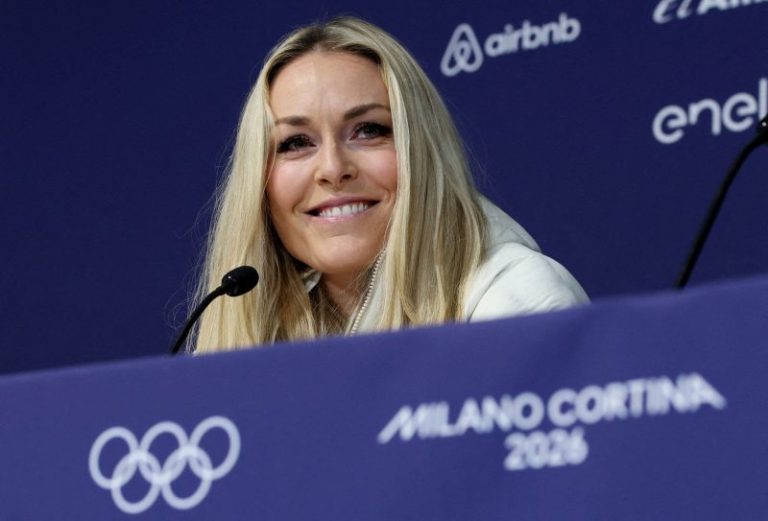
This time it came down to a missed fadeaway 3-pointer from Buffalo’s Ryan Sabol to win 73-71 after the 24th-ranked Redhawks (23-0, 11-0 in MAC play) were unable to go up 5-points on a pair of missed free throws from Luke Skaljac, who finished with a team-high 19 points on 9-of-15 shooting from the field and five steals, four rebounds and three assists.

It’s the second time in the last two and a half weeks that Miami was able to escape an upset against Buffalo.

The way Miami’s game played out — a missed free throw and having the other team go short on a game-winning 3-point attempt — was its second close call in the last seven days, with the other being an 86-84 win over UMass on Tuesday, Jan. 27.

It also marked the fourth single-digit win in the last five games for the Redhawks, with two of them coming against the Bulls.

‘The results will take care of themselves if our process is right,’ Miami coach Travis Steele told USA TODAY Sports’ Craig Meyer recently on the Redhawks’ run. ‘It may not always happen immediately, but eventually it will figure itself out. That’s why our guys have been so loose. We feel no pressure, none. Our guys are enjoying it. We’re having fun on this journey together.’

Miami will look to extend its 23-game win streak on the road in Huntington, West Virginia against Marshall at 4 p.m. ET on Saturday, Feb. 7.

Miami Ohio basketball 2026 schedule

Here’s who the RedHawks have left on their schedule:

All times Eastern

Feb. 7: at Marshall, 4 p.m. (ESPN+)
Feb. 13: vs. Ohio, 8 p.m. (ESPNU)
Feb. 17: at UMass, 7 p.m. (ESPN+)
Feb. 21: vs. Bowling Green, 3:30 p.m. (ESPN+)
Feb. 24: at Eastern Michigan, 6:30 p.m. (ESPN+)
Feb. 28: at Western Michigan, 2:30 p.m. (ESPN+)
March 3: vs. Toledo, 7 p.m. (ESPN+)
March 6: at Ohio, 7 p.m. (ESPN+)
March 12-14: MAC Tournament, at Cleveland

The USA TODAY app gets you to the heart of the news — fastDownload for award-winning coverage, crosswords, audio storytelling, the eNewspaper and more.

This post appeared first on USA TODAY

Ryan Kennedy – the Detroit Lions fan who was shoved by Pittsburgh Steelers wide receiver DK Metcalf during an altercation at a Dec. 21 NFL game between the two teams – has filed a new lawsuit in Wayne County Court seeking $100 million in damages.

Kennedy’s lawsuit was filed on Feb. 3, according to the Detroit Free Press of the USA Today Network. The lawsuit names Metcalf, the Steelers, former NFL wide receiver Chad Johnson, Ford Field management and several media platforms for what he alleges is their role in making ‘defamatory and life altering statements’ about him after the incident.

Nine total counts are listed in the lawsuit. Included among those are two counts of defamation against Metcalf, Johnson, Shannon Sharpe’s company, Shay Shay Media, and one count of negligence against Ford Field.

Kennedy is also suing Metcalf for assault and battery and both the Steelers and Ford Field management for their liability in the incident.

‘Defendant Ford Field Management, LLC breached its duty by failing to establish or enforce adequate barriers, protocols, or security measures to prevent players from reaching into the stands and making physical contact with patrons,’ the lawsuit reads.

Kennedy and Metcalf’s altercation took place during the second quarter of the Detroit Lions’ Dec. 21 game against the Steelers. Metcalf was suspended two games for the incident, which saw him take a swipe at Kennedy after a brief conversation between the two.

‘He doesn’t like his government name,’ Kennedy said. ‘I called him that and then he grabbed me and ripped my shirt. I’m a little shocked. Like everyone’s talking to me. I’m a little rattled, but I just want the Lions to win, baby.’

But on Sharpe and Johnson’s ‘Nightcap’ podcast released Dec. 22, Johnson relayed that Metcalf told him Kennedy had used a racial slur against Metcalf and a misogynistic slur aimed at the wide receiver’s mother.

Kennedy steadfastly denied those allegations at a press conference regarding the incident on Dec. 26.

‘I guess want to be crystal clear about one thing: I didn’t use any racial slurs, no hate speech, none of that stuff at the game,’ Kennedy said. ‘Actually, never. Fifteen years as a season ticket holder for the Lions, I’ve never done that at all.’

Kennedy – who is being represented by Jon Marko – continues to deny that allegation in the lawsuit.

‘The statements were false and reckless,’ the lawsuit reads. ‘Plaintiff Kennedy did not call Defendant Metcalf the ‘N-word’; did not call Defendant Metcalf mother a ‘c—‘; and did not ever use any racial slurs or hate speech whatsoever … Defendant Metcalf provided false information to Defendant Johnson about what Plaintiff Kennedy allegedly said, thereby instigating and authorizing the publication of the defamatory and reckless statements which were intended to harm Plaintiff Kennedy.’

In addition to the $100 million Kennedy is seeking in damages, he is also seeking a ‘full public retraction and correction of defamatory statements’ from Johnson and Sharpe.

This post appeared first on USA TODAY
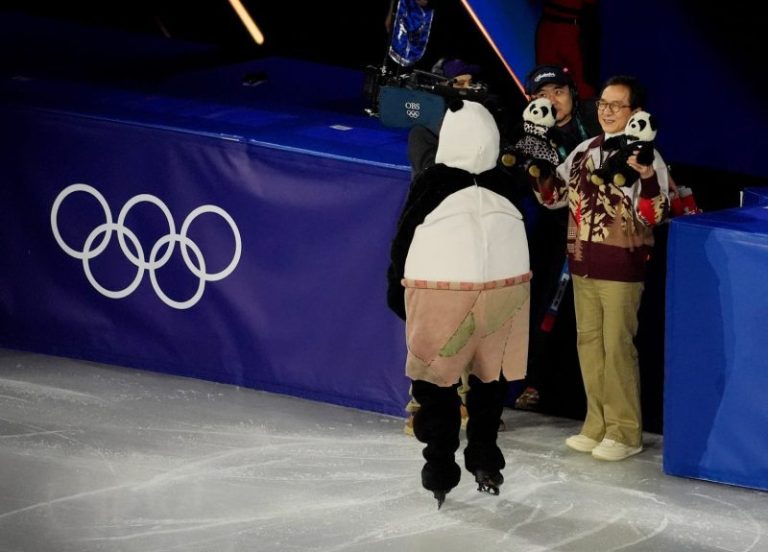
Tampa Bay Lightning center Anthony Cirelli, who was injured in the Stadium Series game, will miss the 2026 Winter Olympics.

He was replaced by Team Canada by Florida Panthers center Sam Bennett, who won the Conn Smythe Trophy as 2025 playoff MVP. He is currently day-to-day with an injury.

Cirelli left Sunday’s game after being hit by the Boston Bruins’ Mark Kastelic.

Injured Buffalo Sabres goalie Ukko-Pekka Luukkonen was also ruled out for the Olympics. He was replaced by Bruins goalie Joonas Korpisalo.

The USA’s Seth Jones (Florida), Sweden’s Jonas Brodin (Minnesota) and Leo Carlsson (Anaheim) and Philadelphia’s Rodrigo Abols (Latvia) earlier were replaced because of injury.

Here are other NHL Olympians who are currently out with injury, with Olympic status to be determined:

USA: Jack Hughes (New Jersey).

Canada: Brayden Point (Tampa Bay), Brad Marchand (Florida), Logan Thompson (Washington).

Sweden: Gabriel Landeskog (Colorado), Elias Lindholm (Boston).

Czechia: Martin Necas (Colorado), Pavel Zacha (Boston).

Finland: Anton Lundell (Florida).

France: Alexandre Texier (Montreal).

This post appeared first on USA TODAY
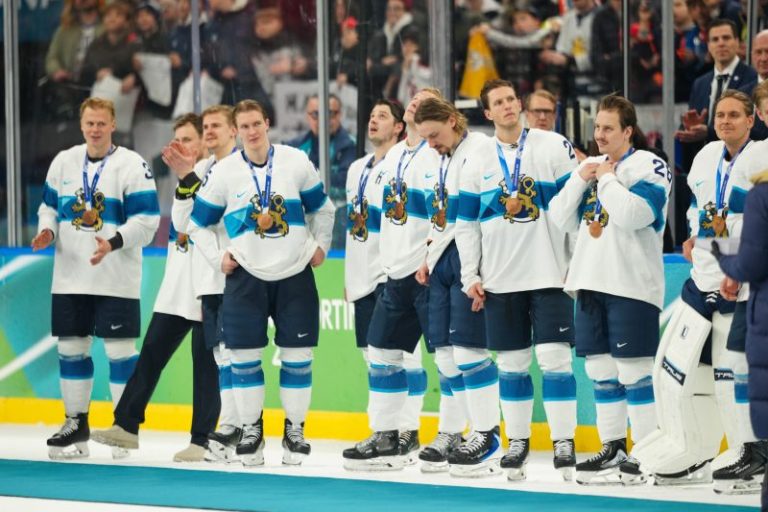
SACRAMENTO — The Sacramento Kings had a chance to welcome newly acquired forward De’Andre Hunter to California’s capital during their Tuesday practice following a Jan. 31 trade which sent Keon Ellis and Dennis Schroder to the Cleveland Cavaliers.

Hunter, 28, was acquired in the trade to be a potential piece for the Kings’ future as general manger Scott Perry retools the roster with aspirations of establishing a winning culture.

Hunter, who will make $23.3 million this season as part of a four-year $90 million rookie contract extension he signed with the Hawks in 2022, expressed his excitement to get going in Sacramento and becoming acclimated with his new team.

‘It’s good energy here,’ Hunter told reporters after his first Kings practice. ‘A lot of great coaches that have a lot of experience in the league. Very experienced players who have been here in the league for a while, I’m just excited for a new opportunity.’

Hunter, a 6-foot-7, 221-pound swingman, is averaging 14 points, 4.2 rebounds and 2.1 assists in 26.2 minutes per game so far during the 2025-26 regular-season.

Through 43 games, Hunter has shot the ball at a 42.3% rate on field goals. He shoots 30.8% from deep and is a solid free throw shooter at 86.9%.

Defensively, he averages 0.7 blocks and 0.1 steals per game.

Hunter told USA TODAY Sports what he intends to bring to the Kings as he becomes engulfed in the basketball culture in Sacramento.

‘Just versatility, on both ends,’ Hunter said. ‘A guy that plays hard, a guy that’s gong to do what the team needs. I feel like that’s kind of what everyone says but night in, night out I’m going to give my best effort.’

Hunter’s versatility will allow the Kings to play him at the three (small forward) or experiment playing him at the four (power forward).

For Hunter, it’s nothing new.

‘I don’t think there’s much difference in the league right now,’ he said. ‘A lot the threes play four when guys go small, teams go small. I don’t see much of a difference, but I’m very comfortable playing both, I’ve been doing it for the past four or five years. It’s not really difficult to adjust to.’

He’s most likely going to play alongside Kings forward Keegan Murray.

The team announced Tuesday that Murray is progressing in his rehabilitation of a moderate left ankle sprain he suffered in their loss against the Milwaukee Bucks on Jan. 4.

‘Murray has been approved for on-court contact activities. He will be reevaluated in two weeks,’ the Kings said in a news release.

Hunter anticipates playing with Murray because their abilities to do some of the same things on the floor.

‘Playing with a guy like Keegan, he’s another versatile guy who can defend, who can shoot, who can score. I think it’ll be fun,’ Hunter said. ‘Definitely (exciting). Like I said, he’s another guy with size, another guy that guard one through four. As a guy that could do that, it’s always good to see another dude on the court that can help you out when you’re a little tired.’

Kings head coach Doug Christie was all smiles when discussing the acquisition of Hunter.

‘Super excited man,’ Christie told reporters. ‘The weather didn’t allow us to practice on the road, but got up and down a little bit. Watching him on the defensive end makes me smile. Elite length, athleticism, knowing that he can stretch the floor and shoot the three-ball, has midrange, like just a really, really good player. A smart player, very heady, as far as the communication. We’ll get him in a game, [I’m] excited to see him get out there.’

Christie, too, envisions a lineup that will feature both Hunter and Murray, when he’s back from injury. When asked about the possibility, he grinned from cheek-to-cheek.

‘Both of their size and athleticism allows you to you to guard across the board,’ Christie said. ‘They can switch if there’s a matchup that you like more. But definitely, his size and his ability to guard can keep Keegan at the three.’

He added: ‘I’m just excited to see them. When you think about it, you have two long wings, both of them can shoot the basketball, both of them can guard pretty much one through five, rebounding, cutting, midrange and they both play the right way, for the right reasons. They are team players. They’re going to move the basketball, move their body when we talk about next actions, when we talk about crashing [for rebounds] all of the little things that equate to winning, both of them do so really excited to see them out there together.’

Hunter said that he hadn’t had many interactions with Perry, Kings general manager, but was told by Perry that he had him on his radar for many years and that Perry ‘sees potential’ in him.

‘He knows a few people that I know. I heard through the grapevine what kind of guy he is and vice versa. I think that played a huge part in me coming here. I’m excited to get to know the guys and get acclimated to the city,’ Hunter said. ‘It was more so just talking about how he previously wanted me. In previous years but we at a different team so he couldn’t make it happen but he was just really glad that he could make this happen. He sees potential in me, he knows the things I can do, just looking to do that.’

Hunter is ready to work and provide a spark for Kings basketball. No one is asking more of Hunter than himself.

‘I have my own expectations,’ he said. ‘I feel like my own expectations are higher than what anyone else expects of me. I just try to hold myself to a standard.’

As far his new city and getting used to his surroundings, Hunter looks forward to seeing what Sacramento has to offer.

‘I never did much here honestly, so I don’t really know about the city,’ Hunter said about his knowledge of Sacramento as a visiting player. ‘I usually stay in the hotel because we usually come here on a long west coast trip. I’m excited to get out there and probably get some recommendations from some people on what to do and where to eat and stuff.’

This post appeared first on USA TODAY
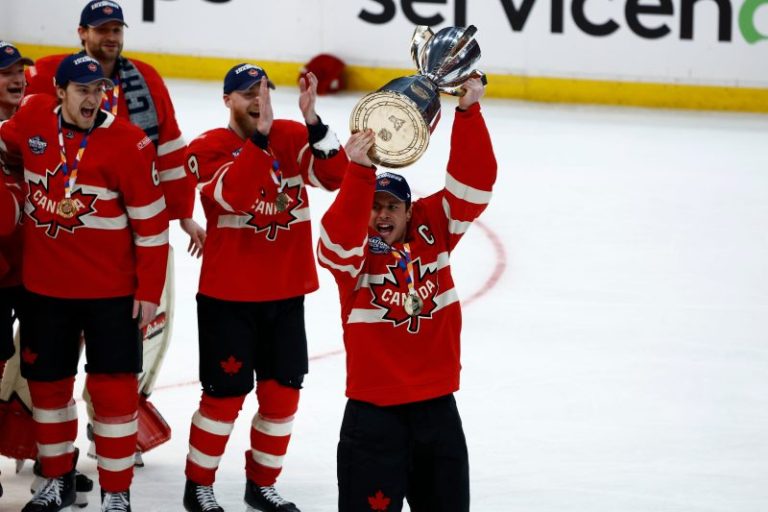
Veteran receiver Stefon Diggs is preparing for his first Super Bowl appearance with the New England Patriots.
Diggs has found new life in New England after contentious exits from Minnesota and Buffalo, and a short stint in Houston.
The receiver faces strangulation and assault charges from an alleged December incident, which he has denied.
Diggs has become the top target for second-year quarterback Drake Maye, helping rejuvenate the Patriots’ offense.

SAN JOSE, CA — Two trades, four different teams, playoff flameouts, emotional exits and a torn ACL last season. Stefon Diggs has endured the ebbs and flows of an NFL veteran.

Yet, he’s been rejuvenated in New England.

‘The amount of work that I put in brought me confidence. I’m not scared of nothing. I’m ready for everything that you know God throws at me. I just feel like I got big shoulders and I worked hard for it. So, what I learned about myself is I’m resilient,’ Diggs said Feb. 2, in the Patriots’ first Super Bowl 60 media appearance. ‘Having a passion for it is different when you fall short a million times. How many times can you get back up? And I got back up every time. I brush myself off. I made sure I was okay. I never gave up. I never gave up on myself, either. Even when those gave up around me.’

Since signing a three-year deal with the Patriots in March, Diggs has become New England’s leading receiver. Simultaneously, the Patriots have taken the 11-year veteran further than he’s ever gone before as he prepares for his first career Super Bowl.    

The mercurial receiver’s time in New England hasn’t come without controversy. He faces strangulation and assault charges from an alleged incident involving his personal chef in December. He categorically denied the allegations, the Patriots said in a statement. Diggs’ arraignment on the charges was originally scheduled for Jan. 23 in Dedham District Court, but the court date was later postponed to Feb. 13.

The charges came as an extension of the baggage the 11th-year NFL veteran brought to Foxborough. Diggs’ lone injury-shortened season with the Houston Texans followed a falling out of sorts between Diggs and the Buffalo Bills, who traded him to Houston in 2024 for a second-round pick in last year’s draft. It was only after a falling out in Minnesota that the Vikings traded Diggs to the Bills in 2020.

After securing a career-first Super Bowl berth with the Patriots’ 10-7 AFC Championship victory over the Denver Broncos, a teary-eyed Diggs said he was grateful that the Patriots ‘took a chance on me’ in signing him as he returned from injury.

Stefon Diggs-Drake May pairing helped rejuvenate Patriots offense

Diggs was part of a massive overhaul for the Patriots this past offseason. The Patriots spent more than $200 million in guaranteed money on free agents in 2025, the most by any team in the NFL last offseason. The new faces in New England and first-year coach Mike Vrabel have helped the Patriots become the fifth team to appear in the Super Bowl the year after winning fewer than five games.

This year’s edition of the Patriots features a unique blend of veterans and young players.

On offense, though, it’s Diggs who’s become Drake Maye’s No. 1 wide receiver in what’s been an MVP-caliber campaign for the second-year quarterback. It’s a small sample size, but Diggs is the best wideout Maye’s had in New England. Diggs is Maye’s first 1,000-yard receiver and only player to register over 70 receptions.

Maye and Diggs produced the highest completion percentage (83.3%) among quarterback and wide receiver duos in 2025, according to Next Gen Stats.

‘I think it’s been an incredibly positive growing experience for Drake to be around a player as accomplished as Stef. And Stef has done many, many, many things in this league. He came in with a lot of pelts on the wall. Drake has learned how to assimilate with him, work together with a player that has been around a long time and been around a lot of good quarterbacks,’ Patriots offensive coordinator Josh McDaniels said. ‘I think it’s been really great for Drake’s growth and development in general.’

Maye said Diggs has even helped build up his confidence.  

‘He’s big on trust and trust in him. He’s always instilling trust into me and confidence in myself. He’s always pumping me up. His trust and confidence in himself never wavers,’ Maye said. ‘To see somebody at his level who has done it at a high level in this league a long time. To see that and knowing that his confidence never waivers, why should mine?’

Diggs had a frustrating end in Minnesota, followed by an unceremonious exit in Buffalo and a cup of coffee in Houston.

Is Diggs’ fourth team the charm? Super Bowl 60 could provide a more definitive answer.

“It’s been a long time I’ve been playing. I’ve been in the NFL for 11 years,” Diggs said. “I’m here on a business trip. It’s a good experience but I’m here on a mission.”

Follow USA TODAY Sports’ Tyler Dragon on X @TheTylerDragon.

This post appeared first on USA TODAY
If you thought former NFL quarterback Tom Brady, who won six Super Bowls with the New England Patriots, would root for his former team in Super Bowl 60, you’d be wrong.

But Brady also isn’t rooting against his former team by pulling for the Seattle Seahawks.

‘I don’t have a dog in the fight in this one,’ the Fox Sports NFL analyst said in the latest episode of his ‘Let’s Go!’ podcast. ‘May the best team win.’

Brady went on to compliment the work that Patriots head coach Mike Vrabel has done in New England, righting the ship and helping lead the team to another Super Bowl appearance after a couple of 4-13 seasons. As far as rooting interests go, the seven-time Super Bowl champion is just rooting for a good game.

‘I wanna see good plays, good throws, good strategy, good decisions,’ Brady said.

The reality may be that Brady actually has two dogs in Super Bowl 60’s two-dog fight.

The Patriots are one dog. The former NFL quarterback spent 20 years of his career in New England, winning six Super Bowls, four Super Bowl MVP awards and three NFL MVP awards during his time there. The Patriots memorialized Brady’s legacy with the team in the form of a statue of their former quarterback, standing 17 feet tall in front of Gillette Stadium.

The other dog is Klint Kubiak, the Seahawks’ offensive coordinator. On Sunday, Feb. 1, multiple reports indicated that the Las Vegas Raiders, a team in which Brady holds a minority ownership stake, were closing on on hiring Kubiak as their next head coach. The hiring cannot become official until after the Seahawks’ season is over – after Super Bowl 60 – but both sides anticipate they’ll close the deal shortly thereafter.

Time will tell which of Brady’s two dogs will come out on top – and whether they’ll put on the show he’s hoping for.

This post appeared first on USA TODAY

The Memphis Grizzlies continued to dismantle their once-promising roster with another major move involving the team’s core. But it doesn’t involve the star the NBA thought might be traded this week.

The Utah Jazz have acquired Jaren Jackson Jr. as part of a significant trade in which the Memphis Grizzlies will receive three future first-round draft picks and several players, according to a report from ESPN on Tuesday, Feb. 3. The deal comes two days before the NBA’s trade deadline and represents a significant swerve after weeks of rumors surrounding Ja Morant’s future with the Grizzlies.

The trade, once finalized, would send Jackson, center Jock Landale and forward Vince Williams, Jr. to the Jazz, according to multiple reports. Utah rookie Walter Clayton Jr., Kyle Anderson, Taylor Hendricks, Georges Niang and three future first-round draft picks are going back to the Grizzlies in the transaction.

Jackson joins a rebuilding Utah roster that features Lauri Markannen, promising second-year guard Keyonte George, center Walker Kessler and top-five 2025 NBA draft pick Ace Bailey. Memphis, meanwhile, adds to the haul of first-round draft picks it acquired by trading Desmond Bane to the Orlando Magic this past offseason. The Grizzlies indicated last month they were also fielding offers for Morant for the first time.

Jackson, 26, was the longest-tenured member of the franchise after being selected with the No. 4 overall pick in the 2018 NBA draft. The 2023 NBA defensive player of the year is averaging 19.2 points and 5.8 rebounds per game this season.

Jaren Jackson Jr. trade details

Here are the official trade details between the Grizzlies and Jazz, including draft picks, according to multiple reports:

Utah Jazz receive: Jaren Jackson Jr., John Konchar, Jock Landale and Vince Williams Jr.
Memphis Grizzlies receive: Walter Clayton Jr., Kyle Anderson, Taylor Hendricks, Georges Niang, 2027 first-round pick (most favorable of Cleveland/Minnesota/Utah), 2027 first-round pick (Lakers), and a 2031 first-round pick (Phoenix).

Jaren Jackson Jr. trade reaction

Here’s a sampling of details that have emerged on social media since the reported trade between the Grizzlies and Jazz featuring Jaren Jackson Jr. went public:

Jaren Jackson Jr. contract

Jackson, 26, is under contract through the 2029-30 season after signing a 5-year, $240-million extension this past offseason. He has a cap hit of $35 million this season that then increases to $49 million during the 2026-27 season. There is a player option for the 2029-30 season.

This post appeared first on USA TODAY