Archive

2026

Browsing

Manchester City manager Pep Guardiola spoke out about a number of non-soccer topics in an extraordinary press conference on Tuesday, including the recent deaths of two Americans in Minneapolis at the hands of federal agents.

In his 10th season of a trophy-filled spell as City manager, Guardiola has become more outspoken on social issues. The Spaniard appeared at a Palestinian charity concert in Barcelona last week and has frequently spoken out on his belief that Israel has carried out a genocide during its war in Gaza.

Ahead of Wednesday’s Carabao Cup semifinal against Newcastle, Guardiola was asked about his recent turn toward activism.

“With the technologies and advances that we have, humanity is better than ever in terms of possibilities” he said. “We can reach the moon, we can do anything, but still right now, we kill each other.

“For what? When I see the images, I am sorry, it hurts me, that is why in every position I can help by speaking up for a better society, I will try and will be there. This is for my kids, my family, for you and your families, for the players, the staff.

“Never, ever in the history of humanity — never ever have we had the info in front of our eyes more clearly than now: genocide in Palestine, what happened in Ukraine, what happened in Russia, what happened all around the world — in Sudan, everywhere.”

Guardiola then turned his attention toward the United States, where an immigration crackdown in Minnesota has led to widespread unrest.

Amid resistance from community members, two Minneapolis residents — Renee Good and Alex Pretti — were killed by federal immigration agents in January.

Guardiola was well aware of the the two deaths, calling the pair out by name.

“You have to talk. Otherwise, justice moves on, moves on. Look what happened in the United States of America. With Renee Good and Alex Pretti. They have been killed, one a nurse — NHS (the UK’s National Health Service), imagine the NHS — five or six people around him, go on the grass, 10 shots. Tell me how you can defend that?’

This post appeared first on USA TODAY
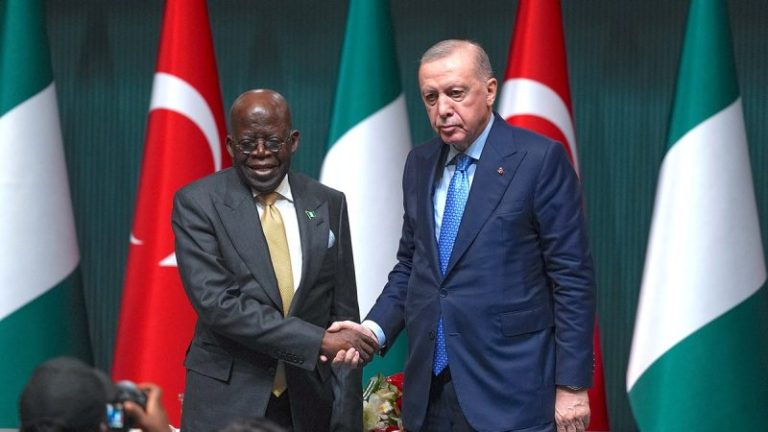
SAN FRANCISCO — As the buzzer sounded and capped the Golden State Warriors’ final game before the NBA trade deadline, Draymond Green was on the court sharing laughs and conversations with teammate Stephen Curry and Philadelphia 76ers guard Kyle Lowry.

Was the 113-94 loss on Tuesday, Feb. 3 at Chase Center Green’s final game as a Warrior?

The Warriors have had multiple players’ names swirling around the rumor mill ahead of the 3 p.m. ET (noon PT) trade deadline on Thursday, Feb. 5, and Green was one of them.

The Warriors’ next game against the Phoenix Suns on Feb. 5 at 10 p.m. ET (7 p.m. PT) is after the deadline.

Green has been mentioned in a potential trade that would send him and other Warriors players to the Milwaukee Bucks for Giannis Antetokounmpo, according to ESPN. NBA insider Marc Stein reported on Jan. 23 that Green would be included in a trade, rather than Jimmy Butler, who tore his ACL in a season-ending injury on Jan. 9.

Stein said the potential trade would include Green, Jonathan Kuminga and Brandin Podziemski, who grew up in Greenfield of Milwaukee County in Wisconsin.

Green said after the loss to the Sixers that he doesn’t know if he’s played his last game for the Warriors.

‘Maybe,’ Green told USA TODAY Sports. ‘I don’t know. I don’t foresee it that way. But if I have, like I said it’s been an amazing run. But I don’t know, we’ll see. I don’t sit and think about the possibilities of what may happen. It’s gon’ be what it’s gon’ be, regardless. That just, it is what it is.’

Green finished the game with six points, seven rebounds and three assists in 25 minutes. He wore his jersey during his postgame conference with reporters as he does with most postgame scrums, nothing unusual. But he acknowledged that there’s a ‘possibility’ he could be traded.

‘It’s a possibility that I might get traded. It’s kind of just what it’s like −yeah but at some point it’s going to come to an end,’ Green told reporters about being involved in trade rumors and his Warriors’ tenure. ‘Whether it’s a day or two or a year or two, it’s going to come to an end at some point. You got to be okay with that. It’s not something that I can hold onto forever because I can’t play basketball forever. It’s got to come to an end at some point anyway.’

‘Business as usual’

Green is 35 years old. He was drafted by Golden State out of Michigan State with the 35th pick in the 2012 NBA Draft. He’s become a Defensive Player of the Year, four-time All-Star and a four-time NBA champion in 14 seasons with the Warriors.

Green told ESPN’s Anthony Slater that Warriors head coach Steve Kerr talked to him before the game that his name has been mentioned in trade talks and asked how his wife was handling it. Green said ‘that’s when it got real’ to him and he spoke to his son about it on the way to Tuesday’s game.

‘I was like ‘yo what if I get traded?’ He was like ‘well why would they trade you,” Green said summarizing the chat pregame with his son. ‘I was like ‘It’s just the business. I’ve never been traded but it can happen to anybody.’ He was like ‘Oh, I just don’t understand why they would do that.”

He told reporters that he’s spoke to the front office, but added, ‘it’s probably not quite the conversation you think it was’ and that he talks to them ‘pretty often.’

Green didn’t feel like he played his last game with the Warriors. But he reflected on his time in the Bay Area after 13 to 14 years.

He said ‘it’s business as usual.’

‘All good things must come to an end at some point’

Green has been getting the question for the last couple days now and said ‘it doesn’t wear’ on him since he can’t control it. If anything, he said, he can’t wait for the deadline so people will stop asking him about it.

‘A lot of people want to know how I feel about it, if I’m upset about it, I’m not at all,’ Green said. ‘If that’s what’s best for this organization, that’s what’s best for this organization. I’m not like ‘aww man, they (expletive) me over’ or something like that, I don’t really feel that way.’

Green has averaged 8.4 points, 5.7 rebounds, 5.2 assists, 0.9 steals and 0.7 blocks in 42 games with the Warriors in the 2025-26 regular-season. For his 14-year NBA career, he averages 8.7 points, 6.9 rebounds, 5.6 assists, 1.3 steals and 1 block per game.

He won the 2017 NBA Defensive Player of the Award after being named runner-up in 2015 and 2016. Green has made NBA All-Defensive team nine times.

Kerr said that Green will have a statue outside of the Chase Center for what he’s meant to the franchise, on 95.7FM The Game’s Willard and Dibs radio show.

‘If you would have told me 13 and a half years ago like ‘yo I’m going to hand you this sheet of paper and you can sign it to be in a place for 13 years and a half years, would you sign it?’ I would’ve signed it faster than you can blink,’ Green told reporters. ‘So what do I have to sit and worry about? What do I have to be upset about? I’ve been here for 13 and 1/2 years. That’s longer probably than 98% of NBA players have been in one place and a guy from Saginaw has been in one place for 13 and a half years. I don’t know that it ends at 13 and a half, but if it does what a (expletive) run it’s been.’

He’s seemingly content with whatever his destiny may be. There’s no animosity from Green towards the Warriors, he said that he’s ‘blessed,’ ‘lucky’ and ‘grateful.’

‘My family hasn’t had to move anywhere since I started my family,’ Green said. ‘That’s incredible. I don’t take that for granted. There’s guys that’s been on the move every year, moving their family two, three times in a year. So, I have so much gratitude for where I am in my career, the run I’ve been on here And I don’t know that it ends or what not. We’ll all see. But if it does, it does. All good things must come to an end at some point.’

If it comes to a point where Green needs to say goodbye, then he’ll say goodbye, he said.

The USA TODAY app gets you to the heart of the news — fast.Download for award-winning coverage, crosswords, audio storytelling, the eNewspaper and more.

This post appeared first on USA TODAY

The championship rings for the Texas softball team have a heartwarming detail.

Ahead of the 2026 college softball season, the Longhorns unveiled their Women’s College World Series title rings. Texas beat Texas Tech in three games to secure the first title in program history.

Hidden on the underbelly of the ring are the words ’20 years in the making’ and the final score of Game 3 (10-4). There’s also a single black diamond. The diamond is in honor of pitcher Teagan Kavan’s grandmother, Anna Lukehart, who died on May 31, 2025, during the team’s WCWS run. Lukehart was 97 years old.

Kavan’s grandmother was an inspiration to her and the reason the pitcher wears number 17.

‘She was born on November 17, and so I wear that number in honor of her. She was my biggest fan in everything,’ Kavan said. ‘She knew everybody’s name. She knew everyone’s nickname. She would ask me all about them, and they all loved her, too. It was super special for them to also get to know her and love on her. It made it even more special during the [Women’s College] World Series [that] they were able to rally around me during a tough time when we lost her.’

Texas begins its 2026 season on Friday, Feb. 6, against Nebraska in San Antonio at the UTSA Invitational.

This post appeared first on USA TODAY
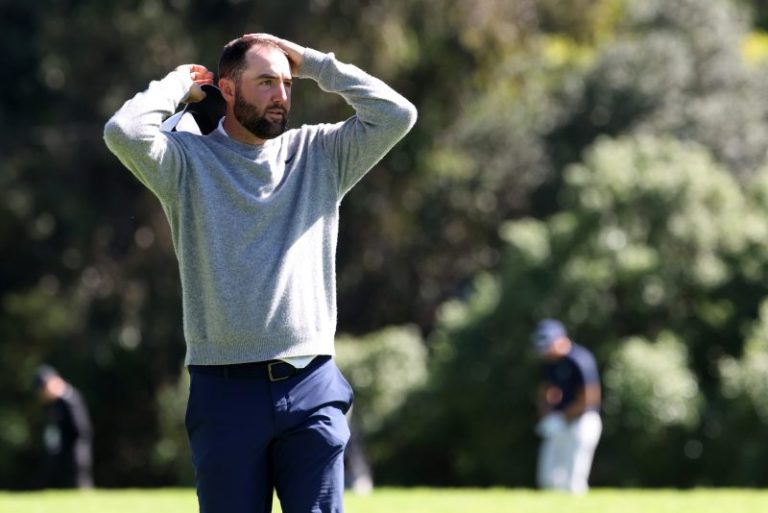
Christian McCaffrey touches the ball more than most in football, but now that the San Francisco 49ers are out of contention, he says the real work begins.

Backstage at the Intuit for Education Super Bowl Financial Literacy Forum, the running back spoke candidly about what the offseason looks like for a player who carries such a heavy load.

‘How much time do you have?’ he joked when asked about how he recovers following a season. ‘It’s an all-year commitment and 24-7 commitment to putting your body in the best position it can be in to go out there and do what I have to do for my team.’

McCaffrey explained he meticulously trains in phases mapped to the calendar, recovery cycles built around his workload.

‘It’s just a consistent effort to find the exact best thing to do and the time that you have and commit to a plan,’ he said.

This year, the grind begins under a familiar cloud of disappointment: the 49ers aren’t playing the pinnacle football game on their home turf of Levi’s Stadium. The running back didn’t pretend that feels normal, or easy.

‘Any time you’re not playing in the Super Bowl, everybody’s bitter,’ he said. ‘There’s only one team happy at the end of the year.’

Instead of watching from inside the stadium, he will be on a plane heading to see family with his wife, Olivia Culpo, and their six-month-old daughter, Colette. He’s ‘hoping it’s a good game,’ not committing to rooting for the Seattle Seahawks or New England Patriots. Instead, his mind is looking toward the fall.

‘Every year you have to start from zero, getting young guys on board, and starting fresh from that,’ he said. ‘So we really take it one day at a time and it starts with offseason training.’

That attention to process is also what brought him to the Intuit forum, a day centered on teaching high school students financial discipline.

McCaffrey told the room of Bay-area teenagers that success, whether on the field or with money, requires the right motivation.

‘I don’t play football for money, and I don’t play football even for accolades,’ he said. ‘I never have, and I never will. The guys that love the game, ironically, are the ones that get the money and the accolades.’

The running back may get his next accolade Feb. 5. He’s a finalist for Most Valuable Player and Offensive Player of the Year and Comeback Player of the Year at the annual NFL Honors.

This post appeared first on USA TODAY
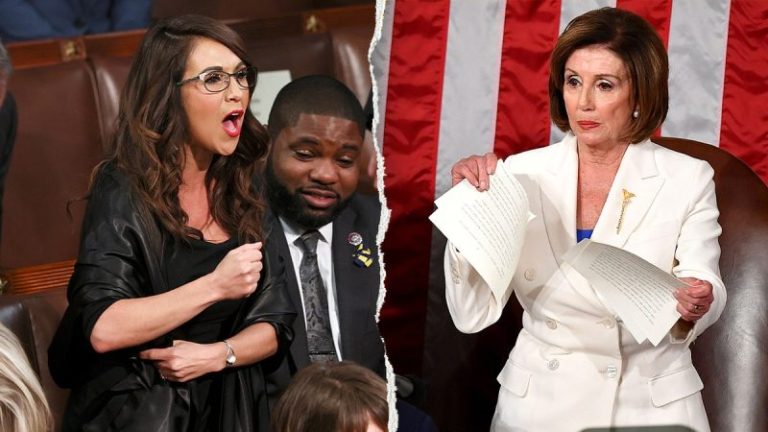
When the opening weekend of the women’s college basketball tournament gets underway in mid-March, ESPN will likely be sending the majority of its camera crews and on-air talent to the southeast region of the country.

That’s because, once again, the top half of the SEC is extremely good.

In USA Today Sports’ latest bracketology, seven SEC teams are projected to host as top 16 seeds and two teams — South Carolina and Texas — are on track to get No. 1 seeds for the second consecutive season. The other five teams projected to grab hosting rights are LSU, Vanderbilt, Oklahoma, Ole Miss and Kentucky.

These seven teams have a combined 25 Quad 1 wins and are a combined 87-0 in Quad 3 and 4 games. Put more simply, they’ve beaten a great number of good teams and haven’t slipped when facing bad ones.

Combine the SEC’s dominance with projections that have Louisville, Duke and TCU hosting, March Madness will have 10 opening weekend locations that are east of the Rocky Mountains and below the Mason-Dixon Line.

While UConn looks like the best team in the sport and the Big Ten has flashed its dominance as well, many of the roads to the national championship will go through the South.

Here’s USA Today Sports’ projection of the top 16 seeds in the women’s NCAA Tournament as of Wednesday, Feb. 4:

1. UConn

2. UCLA

3. Texas

4. South Carolina

5. LSU

6. Michigan

7. Louisville

8. Vanderbilt

9. Iowa

10. Michigan State

11. TCU

12. Oklahoma

13. Duke

14. Ole Miss

15. Ohio State

16. Kentucky

In the hunt: Tennessee, Maryland, Baylor, West Virginia, North Carolina

Bubble Watch

Last Four Byes: Mississippi State, Syracuse, Virginia Tech, Villanova

Last Four In: Stanford, Utah, Clemson, Richmond

First Four Out: BYU, Virginia, Colorado, Fairfield

Next Four Out: Seton Hall, South Dakota State, Arizona State, Miami

Virginia Tech and Clemson both have opportunities on Thursday to boost their resume with Quad 1 wins on the road. The Tigers play the North Carolina Tar Heels in Chapel Hill, while the Hokies face Notre Dame in South Bend.

Both teams are playing well lately under coaches in their second season — Shawn Poppie’s Tigers have won six of their last eight and Meg Duffy’s Hokies have won seven in a row. Virginia Tech will have the chance to pick up another solid win on Sunday when it hosts NC State in a Quad 2 game, while Clemson simply needs to take care of business against a Boston College team that has lost 16 consecutive games.

Perhaps the bigger storyline here is Arizona State projected to be on the wrong side of the bubble after starting the year with 15 straight wins. Molly Miller’s Sun Devils are 3-5 since that streak ended. They have two Quad 3 losses and no Quad 1 wins, and are in need of a few resume boosters if they want to get into the field of 68 when Selection Sunday rolls around.

This post appeared first on USA TODAY

A debate is ongoing in Congress and federal courts over whether college athletes should be classified as employees.
Colorado’s football program under coach Deion Sanders is cited as an example of treating players as employees.
Proponents argue for employee status to grant athletes wages and labor rights, while opponents worry about the financial cost to universities.

A heated debate about college sports recently has been raging in Congress and the federal court system: Should college athletes be considered employees who should be provided hourly wages and labor rights?

The NCAA and Republican Sen. Ted Cruz say definitely not.

But player advocates say yes, they should. And there’s one team they can hold up as the poster case for how players are treated as employees under the control of a pro-style program — Colorado with football coach Deion Sanders.

Sanders, 58, has been unabashed about it, most recently with an NFL-style disciplinary system in which players are fined for team rules violations, including $500 for being late to practice.

“Viewed in a broader context, what Sanders is doing is an extension of longstanding control tactics by NCAA coaches,” Illinois law professor Michael LeRoy told USA TODAY Sports. “They set schedules, manage work, expect performance, push out or cut deficient players, recruit better ones. But Sanders’ approach strips any remaining veneer from the idea that his players are not employees.”

The way he operates and markets his program takes the debate to a different level, complete with dozens of annual free-agent signings and a de facto waiver wire for players who have fallen out of favor.  

“At the end of the day, man, this is an NFL-based program,” Colorado receiver Sincere Brown said in September. “It’s like a mini-NFL program.”

What’s at stake in this debate about college athletes as employees?

It’s about more money and rights for players. Those who oppose college athletes as employees generally say it would be too expensive for colleges that already are struggling to come up with the money to pay players under the revenue-sharing terms of the House vs. NCAA legal settlement.

One pending lawsuit, Johnson vs. the NCAA, wants college athletes classified as employees under the Fair Labor Standards Act so they can be entitled to wages for services they provided unrelated to academics. That case is still active in federal court after being filed by plaintiffs attorney Paul McDonald in 2019.

“Certainly, what’s going on in Colorado is a big flashing light kind of thing,” McDonald told USA TODAY Sports.

But to McDonald and his case, the issue is much simpler: Why can regular college students earn employee wages for selling popcorn at games in a work-study program but not student-athletes for playing in the games? He’s pushing for an answer in court.

The political football of college athletes as employees

Separately, under the National Labor Relations Act, players as employees could unionize and reach a collective bargaining agreement (CBA) with private schools or conferences for more money and benefits. In exchange, they would make tradeoffs in a CBA, such as a cap on the number of times a player can transfer to a new school.

In 2021, the then-general counsel of the National Labor Relations Board, Jennifer Abruzzo, issued a memo that said she considered college athletes to be employees under the NLRA.

“Under common law, an employee includes a person ‘who perform(s) services for another and (is) subject to the other’s control or right of control,’” the memo stated. The memo said payment for services “is strongly indicative of employee status.”

The Trump Administration rescinded that memo in 2025. Now the U.S. Congress is in conflict about the issue as it considers legislation to regulate college sports. Democrats don’t want to forbid employment status for college athletes while Cruz recently told ESPN it was “absolutely critical” to clarify “that student athletes are not employees.”

The ‘mini-NFL program’ under Deion Sanders

To be sure, Sanders promotes classwork and education at Colorado. He has said he wants to develop his players as young men, not just football players.

At the same time, probably no other major college sports program in America is a better example of a college team treating players like employees in a setting that advertises itself as a pro development operation. Here are some examples below.

Deion Sanders issues fines for rules violations

Colorado players are fined for infractions like in the NFL — $400 for being late to a meeting and up to $5,000 for “social media misconduct.”

This isn’t the first time a college program has tried this. In 2015, the Richmond Times-Dispatch in Virginia reported Virginia Tech had a system for fining players, including $100 for drawing a personal foul penalty. The newspaper said Virginia Tech’s athletic director “had no idea” about it and discontinued it immediately.

“The fact that the players are required to follow specific rules and are subject to consequences for violating them is a level of control often seen in the employment context,” Abruzzo told USA TODAY Sports. “This conduct seems to be similar to an employer taking action against a worker for a handbook rule infraction. But, rather than suspend the worker, thus making them unavailable for work (games), for example, he assesses fines.”

Deion Sanders’ pro-style roster control

Sanders pioneered the practice of signing dozens of free-agent transfers every year, even more so than NFL teams. This year, he’s signing players for money under the national revenue-sharing rules that started last July. He also has used the transfer portal as a pro-style waiver wire as an escape hatch for players who underperform. He’s not the only coach who controls roster spots like this, but he’s been the most famous example of it. He’s said he had to ‘get rid of’ the mess he inherited.

“Those of you we don’t run off, we’re gonna make you quit,” Sanders told his inherited Colorado players at his first team meeting in December 2022.

Deion Sanders ‘wanted pros’ for pro development

Sanders has advertised his program as a pro-development program filled with former NFL players and coaches. Last year, three Pro Football Hall of Famers were on staff. His offensive coordinator last year, Pat Shurmur, previously was the head coach of the NFL’s Cleveland Browns and New York Giants.

“We have two new coordinators that are wonderful, that combined I believe they have over 35 years of NFL experience, because I wanted pros,” Sanders said in 2024. “It’s like a navigational system. You can’t tell me where to go unless you’ve been there (the NFL).”

Online classes and reality TV at Colorado

His players previously signed releases or agreements to appear in a reality show featuring Sanders on Amazon Prime Video, including for compensation.

Many of his players don’t attend classes in-person and do their college classwork online instead. His quarterback son Shedeur Sanders said he attended only one in-person class in his time at Colorado. This isn’t unique to Colorado and isn’t unusual for athletes after the pandemic of 2020, but it doesn’t exactly contribute to the notion players are living the campus life as “student-athletes.” Instead, it adds to the notion these players are separated from the rest of the student body while “working” on a separate revenue-generating mission.

“The rules, the perhaps implied coercion to appear on and promote the reality TV shows for his financial gain, and the lack of taking in-person classes if as a consequence of scheduling conflicts related to games, traveling, practice (and) training where academics is forced to take a second seat to athletics, all together suggest that the player is more akin to an employee than a student,” Abruzzo said.

‘Pro Day’ at Colorado on NFL Network

Sanders hosted a massive “pro day” event last April, in which NFL scouts, coaches, executives and media came to campus to measure his players and watch them work out before the NFL draft. Other schools have “pro days,” too, but this was televised on the NFL Network — the kind of marketing and publicity that other programs want but few can get.

Sanders called it “a tremendous boost for our program and what we’re trying to accomplish here at CU.”

‘Focused on the NFL’ at Colorado

To legal experts, it’s a matter of control and compensation in exchange for services provided, not marketing. In the Johnson vs. NCAA case, the 3rd U.S. Circuit Court of Appeal set up a test to determine whether minimum-wage law applies to college athletes.

The court said they may be considered employees in this context if they “perform services for another party, that are ‘necessarily and primarily for the (other party’s) benefit,’ under that party’s control or right of control and in return for ‘express’ or ‘implied’ compensation or ‘in-kind benefits.’ 

“My view has long been that the football and basketball players in the Power 5 conferences easily meet the definition of employee,” said Marc Edelman, law professor at Baruch College in New York. “So while Deion Sanders adding fines to compensated athletes marks another obvious indicia of employment status,  this decision just seems to be indicative of a far broader scope of control over athletes, extending from control over what they wear to control over their social media.”

Sanders has never tried to hide what he’s been trying to build. At his introductory news conference in December 2022, he said he wanted his players focused on more than making money from their names, images and likenesses (NIL).

“I’m not crazy about the NILs, but I understand the NILs,” Sanders said then. “But I would rather our kids be focused on the NFL, not just the NIL.”

Follow reporter Brent Schrotenboer @Schrotenboer. Email: bschrotenb@usatoday.com

This post appeared first on USA TODAY
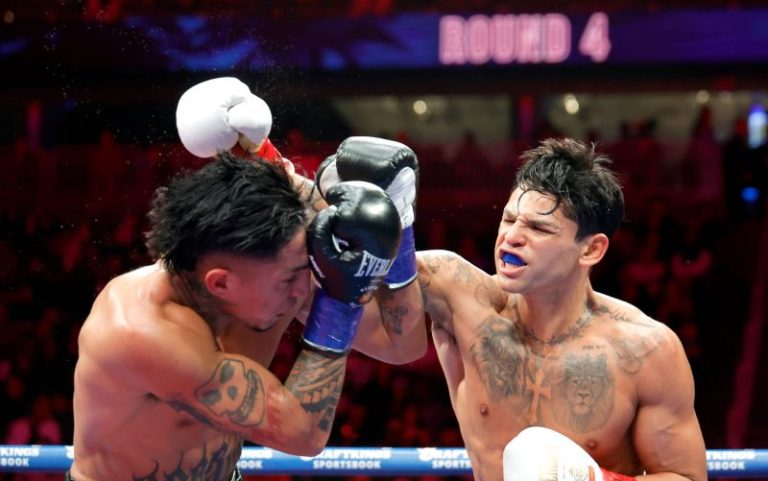
Despite success of New England Patriots’ dynasty, Robert Kraft and Bill Belichick will have to wait for induction into the Pro Football Hall of Fame.
Patriots’ unexpected Super Bowl run this season ends the longest drought between Super Bowl appearances with Robert Kraft as owner.
Head coach Mike Vrabel has established Patriot Way 2.0, helped by the emergence of second-year QB Drake Maye.

SANTA CLARA, Calif. — All of a sudden, amid the countdown to Super Bowl 60, the New England Patriots had another Hall of Fame snub in the wind during the Tuesday media session at the team’s hotel.

This time, it’s Robert Kraft, the venerable Patriots owner and significant NFL power broker, passed over as a finalist in the contributor category – days after news leaked that legendary coach Bill Belichick won’t be a member, either, for the Class of 2026.

Word of Kraft’s fate emerged with an ESPN.com report that broke Tuesday, shortly before Patriots coach Mike Vrabel and several players held media availability.

“It’s kind of a shocking, to be honest,” linebacker Christian Elliss told reporters gathered at his podium.

“Unfortunate,” Vrabel said, responding to the first question at his press conference.

As was the case with Belichick, it’s rather bizarre that for all the success achieved by the Patriots dynasty, the two chief architects will have to wait to get busts in Canton.

I’m taken aback, too, as a member of the Hall’s 50-member selection committee. The panel didn’t know the results of our voting when we finished our annual meeting in January — the class will be officially revealed during the NFL Honors show on Thursday night — but I didn’t see this one coming, either.

“All of the Hall of Fame stuff kind of blows my mind,” Elliss said. “Robert Kraft is a special owner, obviously, when you win as much as this organization has. If he doesn’t deserve it, then who does? He’s been an amazing owner this year, and hopefully we can get a trophy for him.”

The Patriots presence in Super Bowl 60 is just one more reminder of the merits behind a long-overdue ticket to Canton for the 84-year-old Kraft — especially when compared to other owners inducted into the Hall. When it faces the Seattle Seahawks on Sunday, New England can potentially claim the franchise’s seventh Lombardi Trophy. Under Kraft (and Belichick, and with Tom Brady), the Patriots won a record-tying six Super Bowls, matching the Pittsburgh Steelers’ total.

Furthermore, no NFL owner in history has led a franchise to 11 Super Bowl appearances and won 20 division titles. In the 33 years before Kraft bought the Patriots in 1994, the franchise won four playoff games and hosted all of one home playoff game.

Yet this unexpected run to the Super Bowl — the six-year drought between Super Bowl appearances is the longest during Kraft’s ownership tenure — comes in a different context.

Hey, this time the Patriots are in the Super Bowl with some appeal as an underdog. As the dynasty era rolled on, with Spygate and Deflategate controversies in the mix, the Patriots became undeniable arch-villains to much of America. Now, Hall of Fame snubs or not, there’s not so much to hate.

“I would say the majority of Americans, or a majority of people, probably are more underdogs than they are favorites,” Vrabel said of the shift in perception. “Favorites are the talented, elite, top 10%. Most groups are made out of a lot of people that are average and 80%, and we’re trying to make the 80% a little bit better.”

Talk about having their own identity.

“Identity has been our word since April,” receiver Kayshon Boutte said, alluding to the start of the offseason program under Vrabel. “We’ve been rolling with it ever since.”

Vrabel was lured back after the Patriots endured back-to-back 4-13 finishes, including Belichick’s final season in 2023, and Kraft fired coach Jerod Mayo in January 2025 after just one season.

And look at them now. It’s like Patriot Way 2.0. Vrabel has re-established a winning culture and demonstrated that such a remarkable turnaround is indeed possible in the parity-influenced NFL. It helps to have an impressive young quarterback in second-year pro Drake Maye, tutored by returning offensive coordinator Josh McDaniels, but this quick rise goes deeper than that and undoubtedly started at the top when Kraft cut the cord with Mayo — the former Patriots linebacker who was promoted as his hand-picked, coach-in-waiting from Belichick’s staff — and brought back Vrabel.

“It was difficult to have to let Jerod go and bring in Vrabel,” Richard Seymour, the Hall of Fame defensive lineman who won three Super Bowl rings during his eight seasons with the Patriots, told USA TODAY Sports. “I don’t think a lot of people would have done that. But leadership starts at the top.”

Seymour added that Kraft and his son, Jonathan, the team’s president, deserve “a ton of credit for being visionaries of what the culture should be. They’re smart in that way, in terms of doing what’s best for the team and not just any one individual. And the culture is about winning and doing things the right way.”

Of course, Kraft’s Hall of Fame case is bolstered by his impact on the NFL’s business, including the pivotal role he played in helping to end the league’s lockout of players in 2011 and striking a new labor deal. And as chairman of the NFL’s media committee, he’s been an impetus for growing enormous revenues with multiple record-breaking media rights deals for the league.

No, those two Patriots scandals — Spygate and Deflategate — shouldn’t be the reason for Kraft’s lengthy wait for a Hall call. The Deflategate saga was largely Brady’s issue — the star quarterback was suspended for four games in 2015, while the team paid a $1 million fine and lost first- and fourth-round picks — related to alleged doctoring of footballs. The Spygate controversy in 2007 was on Belichick, who authorized the secret videotaping of New York Jets sideline hand signals. Belichick was fined $500,000, the team was fined $250,000 and was docked a first-round draft pick.

In the book, ‘Brady vs, Belichick: The Dynasty Debate,’ published in 2025 (St. Martin’s Press), author Gary Myers described an exchange between the owner and coach, that attempted to get to the bottom of Spygate.

According to Kraft, he asked Belichick: “How much did this help us on a scale of 1 to 100?”

Belichick: “One.”

Kraft: “Then you’re a real schmuck.”

That assessment hardly sounds like a disqualifying factor for Kraft.

Then there was the arrest at a Florida day spa in 2019, where, as part of a sting operation, Kraft was accused of soliciting sex. Charges were ultimately dropped, and Kraft was never disciplined by NFL commissioner Roger Goodell under the league’s personal conduct policy.

Has that weighed on Kraft’s candidacy? Given the ultimate legal outcome, it shouldn’t, at this point. None of the Hall voters have publicly stated that as a factor.

Still, the questions linger on … big game looming or not.

“I would say that in my experiences with Robert, he’s more than deserving and he’ll be in the Hall of Fame,” Vrabel said. “I’m not in charge of deciding when that happens. So, I appreciate the relationship that I’ve had with him and the success as a player, and now as a coach.”

Of course, you’d expect nothing less than the full support of Vrabel, who also won three Super Bowl rings in eight seasons as a Patriots linebacker. Naturally, he vouched for the support that Kraft — who presented Vrabel with a game ball during an emotional postgame celebration after the AFC championship game victory at Denver — provided the staff and team this season.

Added Vrabel: “I’m glad that he’s back here and continuing to help us do things that will help the team win and ultimately allow him to be recognized.”

It shouldn’t take another Super Bowl victory to ensure Kraft’s Hall of Fame status. He’s already done more than enough to earn the honor. Yet, as it stands now, it can only add to his case.

Kraft, uncharacteristically, hasn’t accommodated interview requests from USA TODAY Sports. And he hasn’t conducted his typical Super Bowl sessions this week for large numbers of media.

During an appearance on CNBC on Tuesday, after news broke of the Hall of Fame snub. Kraft maintained, “What matters to me is we win Sunday.”

At least one prize is still in play this week.

This post appeared first on USA TODAY
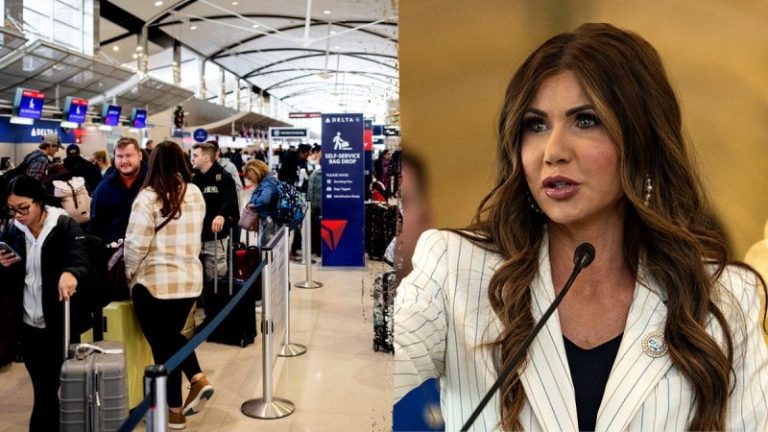
These days, he’s hard to miss, be it hosting a suite of ‘Real Housewives’ shows plus his own late-night chat on Bravo, getting low-key turnt with Anderson Cooper on CNN’s New Year’s Eve special or holding forth on his eponymous satellite radio station.

In a sense, Cohen will complete the transition from That Guy to living-room fixture come Super Bowl Sunday, with his first starring role in a big-game ad, for Nerds. Cohen has plans to host a party at his new apartment in Manhattan, nosh on the candy of honor and, he says, “watch my phone blow up.”

Yeah, he doesn’t hate this.

Rate the best and worst Super Bowl ads!

“Anderson Cooper likes to rib me and he’s like, ‘You love being famous,’” Cohen tells USA TODAY Sports of his CNN New Year’s running mate. “It’s fun. I was not famous for a long time in my life. I didn’t get famous until I was very set in who I was as a person, and I knew a lot of famous people just from working in the media.

“I had a really good sense of how not to turn into a horrible person as a result of being famous. It’s been a really fun ride for me. I’ve gotten to do incredible things. To go places and do things I never thought I’d be able to do or see.

“I got a star on the Hollywood Walk of Fame. And I have to say, being in a Super Bowl ad is something I’m crossing off my bucket list and can say that I was a part of.”

Not that the Gummy needs one – the Nerds Gummy Cluster, introduced in 2020, has transformed the Nerds mode of transmission, creating an arguably unsettling level of fandom via TikTok and other means. The snack treat, in a global sense, is designed as a fleeting respite, a sweet and ephemeral hit to the senses.

Enter Mr. Bravo.

“Look, I’m a taste bud to Gummy in the ad. But I’m a taste bud to a lot of my friends, too,” says Cohen. “Which means kind of being there for the big moments and hyping them up and celebrating what makes them special, which is what best buds do.

“I’m really proud to produce shows that are a great escape for people and make people really happy and provide an environment where people have fun. I think it’s all lighthearted and positive and that’s what I want to be associated with.”

And not take himself too seriously. Cohen got an invite to the Super Bowl, but after his family moved to their new digs his seven-year-old son asked, “Are we going to have a Super Bowl party here this year?’”

So, the traditional household soiree is on, to the delight of his son and 4-year-old daughter. Sure, their dad loves the spotlight, but also isn’t so big that he can’t keep it unpretentious.

“I’m going to be comfortably home, watching the ad in the second quarter, with the kids. They’re so excited. They haven’t seen it yet,” he says. “We’re going to wait until it airs on TV, old-school style, and serve Nerds to all my guests.”

This post appeared first on USA TODAY
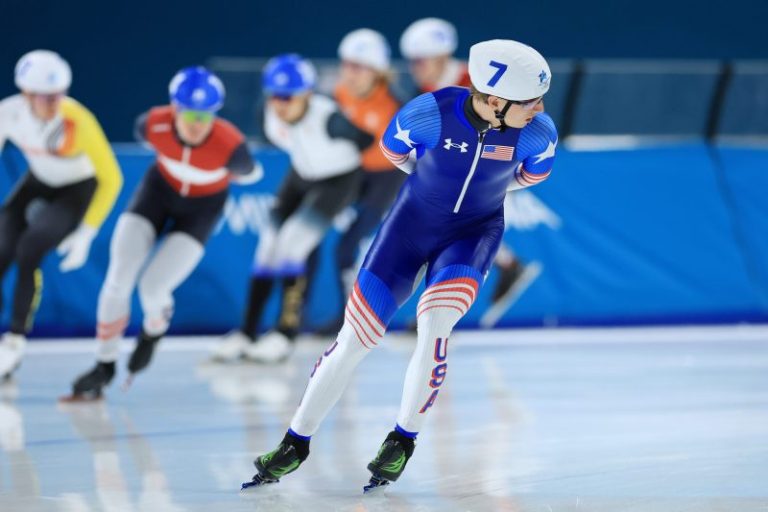
For weeks, President Donald Trump has promised the Iranian people that ‘help is on the way’ while positioning a massive U.S. naval armada within striking distance of Iran’s coast. But as the White House pivots toward a diplomatic summit in Istanbul Friday, analysts warn the president may face a growing credibility test if threats are not followed by action.

By threatening ‘speed and fury’ against a regime accused of killing thousands of protesters, Trump has drawn a red line — one that analysts say echoes President Barack Obama’s 2013 warning over Syria’s use of chemical weapons. Obama ultimately chose diplomacy over military strikes, a decision critics said weakened U.S. credibility and emboldened adversaries, while supporters argued it avoided a broader war and succeeded in removing large portions of Syria’s chemical arsenal. Trump now faces a similar debate as he weighs whether to enforce his own warnings against Iran.

Trump’s envoys are set to meet Friday in Istanbul with Iranian officials to press for an end to Iran’s nuclear enrichment program, curbs on ballistic missiles and a halt to support for proxy groups such as Hamas and Hezbollah — terms Tehran has shown little public sign of accepting. Trump has also demanded an end to the regime’s violent crackdown on protesters.

But signs of strain are already emerging around the talks. 

Iran is now seeking a change in venue to Friday’s meeting — wanting it to be held in Oman, according to a source familiar with the request — raising questions about whether the summit will proceed as scheduled or produce substantive progress.

Tensions on the ground have continued to rise even as diplomacy is pursued. This week, U.S. Central Command (CENTCOM) said American forces shot down an Iranian drone after it aggressively approached the USS Abraham Lincoln while the aircraft carrier was operating in international waters in the Arabian Sea. CENTCOM said the drone ignored de-escalatory measures before an F-35C fighter jet downed it in self-defense. 

No U.S. personnel were injured.

Hours later, Iranian naval forces harassed a U.S.-flagged, U.S.-crewed commercial tanker transiting the Strait of Hormuz, according to CENTCOM. Iranian gunboats and a surveillance drone repeatedly threatened to board the vessel before the guided-missile destroyer USS McFaul intervened and escorted the tanker to safety. 

CENTCOM warned that continued Iranian harassment in international waters increases the risk of miscalculation and regional destabilization.

Despite weeks of delay, foreign policy analysts say the pause does not mean military action has been taken off the table.

‘If you just look at force movements and the president’s past statements of policy, you would have to bet on the likelihood that military action remains something that is coming,’ Rich Goldberg, a former Trump National Security Council official now at the Foundation for Defense of Democracies, told Fox News Digital.

‘I don’t think the window is closed,’ said Michael Makovsky, president of the Jewish Institute for National Security of America. ‘If the president doesn’t do something militarily, it would damage his credibility.’

The standoff is reviving comparisons to Obama’s 2013 decision not to carry out military strikes in Syria after warning that the use of chemical weapons would cross a U.S. ‘red line.’ The moment became a touchstone in debates over American deterrence. 

The Syria episode remains a touchstone in Washington’s red-line debates. Critics argued Obama’s decision not to strike emboldened adversaries, while supporters said diplomacy prevented war — a divide resurfacing as Trump weighs his next move.

‘They have challenged the president now to try to turn him into Obama in 2013 in Syria, rather than Donald Trump in 2025 in Iran,’ Goldberg said.

Fox News Digital has reached out to Obama’s office for comment.

Trump has publicly encouraged Iranian protesters to continue their demonstrations, telling them in early January to ‘KEEP PROTESTING’ and promising that ‘HELP IS ON ITS WAY.’

U.S. officials, however, have previously said the pause reflects caution rather than retreat, pointing to concerns about retaliation against American forces and uncertainty over who would lead Iran if the regime were significantly weakened. Trump himself raised those questions in January, publicly casting doubt on whether any opposition figure could realistically govern after decades in exile.

‘As for the president, he remains committed to always pursuing diplomacy first,’ White House press secretary Karoline Leavitt said Tuesday. ‘But in order for diplomacy to work, of course, it takes two to tango, you need a willing partner to engage.’

‘The president has always a range of options on the table, and that includes the use of military force,’ she added. 

Some analysts reject the premise that the administration has meaningfully slowed its military posture.

‘I don’t think they’ve paused action,’ said Gregg Roman, executive director of the Middle East Forum. ‘The more assets that the president deploys to the theater gives the U.S. more maneuvering room, rather than less.’

Roman pointed to continued U.S. force movements into the region, arguing the buildup signals preparation rather than restraint.

‘That’s not the behavior of a country backing away from military options,’ he said.

Fox News’ Aishah Hashnie contributed to this report. 

This post appeared first on FOX NEWS

As the House crushed Republican resistance to a Trump-backed funding package to end the latest partial government shutdown, lawmakers in the upper chamber weren’t confident that Congress could avoid being in the same position in the coming weeks.

President Donald Trump and Senate Minority Leader Chuck Schumer, D-N.Y., brokered the deal to end the shutdown last week. That funding truce included a move to sideline the controversial Department of Homeland Security (DHS) funding bill in favor of a short-term extension to keep the agency open.

The House’s passage of the package, which funds 11 out of 12 government agencies under Congress’ purview, sets the stage for tense negotiations between the White House and Senate Democrats over reforms to DHS.

But several Senate Republicans are questioning whether two weeks, which had shrunk to just nine days as of Wednesday, would be enough time to avert another partial shutdown — this time only for DHS.

‘I think it’s gonna be very difficult to get the funding bill done for DHS in two weeks,’ Sen. Rick Scott, R-Fla., told Fox News Digital.

Scott was one of a handful of Republicans in the upper chamber that rejected the compromise plan and the underlying original package because of bloated spending on earmarks and concerns that Senate Democrats would effectively try to kneecap Immigration and Customs Enforcement (ICE) operations across the country.

‘We’re going to be in a worse spot,’ Scott said. ‘I mean… all their earmarks got done, and then now they’re going to want to, you know, they want to [get] busy de-fanging and defunding ICE.’

Congressional Democrats wanted to relitigate the bipartisan DHS bill after the fatal shooting of Alex Pretti during an immigration enforcement operation in Minneapolis. The demand forced Trump to intervene and thrust the government into a partial shutdown on Friday.

While the funding deal made it across his desk, it won’t get Congress out of the jam it’s in, given the short amount of time lawmakers have to negotiate the bill, which is consistently the most difficult spending bill to pass year in and year out. 

Senate Majority Leader John Thune, R-S.D., noted that once negotiations began, Congress had a ‘very short timeframe in which to do this, which I am against.’

‘But the Democrats insisted on, you know, a two-week window, which, again, I don’t understand the rationale for that,’ Thune said. ‘Anybody who knows this place knows that’s an impossibility.’

Some Senate Democrats did not want to weigh in on a hypothetical scenario just days away, but Sen. Mark Kelly, D-Ariz., contended that because of the events in Minnesota, ‘there should be some motivation across the aisle to do something on, you know, all these issues.’ 

‘I mean, I think [DHS Secretary] Kristi Noem should be fired, leadership needs to be changed at ICE, their budget needs to be the right size,’ Kelly said. ‘We got to get them looking like normal police officers.’

Senate Appropriations Chair Susan Collins, R-Maine, struck a more positive tone. 

She told Fox News Digital that Congress would be in a much better position, considering that lawmakers will have passed 11 out of the 12 bills needed to fund the federal government. 

‘We’ll now start the negotiations on DHS, and I hope we’ll be successful, but I don’t see how you can compare where we are today,’ Collins said.

Thune believed that Noem’s announcement that ICE agents in Minneapolis would begin wearing body-worn cameras could act as a sweetener for Democrats. There is already $20 million baked into the current bipartisan DHS funding bill for body cameras. 

Schumer rejected that olive branch from Noem, arguing that it didn’t come nearly close enough to the portfolio of reforms Democrats wanted for the agency. And he reaffirmed that Senate Democrats wanted actual legislative action on DHS reforms, not an executive order. 

‘We know how whimsical Donald Trump is,’ Schumer said. ‘He’ll say one thing one day and retract it the next. Same with Secretary Noem.’

‘So, we don’t trust some executive order, some pronouncement from some Cabinet secretary. We need it enshrined into law.’

When asked if lawmakers would need to turn to another short-term funding patch, Schumer argued that ‘if Leader Thune negotiates in good faith, we can get it done. We expect to present to the Republicans a very serious, detailed proposal very shortly.’

But Thune has said for several days that it would be the White House in the driver’s seat, and ultimately it would be Trump who could broker a new deal. 

‘But at some points, obviously it has to be the White House engaged in the conversation with the Senate Democrats, and that’s how that thing’s gonna land,’ Thune said.

This post appeared first on FOX NEWS