Archive

2026

Browsing

Lindsey Vonn plans to race on Sunday despite a fully ruptured left ACL and meniscus damage.
An orthopedic surgeon noted that while Vonn is not a ‘normal human being,’ skiing without an ACL presents significant stability challenges.
Vonn has a history of competing with severe injuries, including previously racing on a torn ACL in her other knee.

CORTINA D’AMPEZZO, Italy – Lindsey Vonn hears a familiar voice in her head.

It’s only 90 seconds. Ninety seconds in a lifetime. It’s nothing you can’t do.

That’s what the late Erich Sailer, Vonn’s former coach, would tell her now, she said Tuesday. Vonn announced then that her crash at the World Cup run in Crans Montana on Jan. 30 resulted in a fully ruptured left ACL, meniscus damage and bone bruising. After coming out of retirement to become world No. 1 in the downhill at age 41, the injury threw Vonn’s 2026 Winter Olympics comeback into disarray.

Despite the devastating injury, she has every intention to race Sunday. Ligaments be damned.

“I will try, as long as I have the ability to,” Vonn said. “I will not go home regretting not trying. I will do everything in my power to be in that starting gate.’

Get Olympics updates in your texts! Join USA TODAY Sports’ WhatsApp Channel

Vonn’s declaration was shocking only with respect to the feat itself, not her desire to participate. Many interested parties wondered how it’s even possible to ski without an ACL. Sliding from the top of a mountain, jumping and landing while flying at 70 mph (give or take) before skiing some more is not something a normal person could do in her state. 

“But Lindsey’s not a normal human being,” Dr. Kevin Stone, an orthopedic surgeon, ACL specialist and former U.S. Ski Team physician, told USA TODAY Sports by phone Wednesday. “The question is, can a super well-trained athlete accommodate for the loss of stability she will have?

“You’ll know the answer as soon as she comes off the first jump.”

When an athlete tears their ACL, the knee’s key guiding ligament, their tibia subflexes forward, hitting the femur regularly. This causes bone bruising. There’s also often damage to the soft tissue supporting the knee, so tears in the meniscus cartilage are common.

Vonn previously – unknowingly – raced on a fully torn ACL in her right knee before the Sochi Olympics in 2014. That knee has since been partially replaced with a block of titanium. 

Vonn’s biggest concern this week (as is Stone’s) is instability. She’s wearing a brace to prevent further damage. “Not that it really matters,” Vonn said, “because my meniscus is not great anyway.’

There’s no brace in the world, though, that could replace the control an ACL provides, Stone said. Not with what Vonn’s trying to do. “Unless the brace were to be drilled into the bones, which, of course, we would not do,” he said. 

Same goes for the muscular apparatus around Vonn’s knee. Sure, that will help her rehab. And her mind-body connection combined with her strength will make controlling the knee easier. But, Stone said, “no amount of muscle strain can control or produce the exact normal motions of a knee joint missing its key guiding ligament.”

Between technological and medical advancements, a doctor could repair Vonn’s knee regardless of whether she’s able to land smoothly and into skiing the rest of the course this week. But, “the knee part, I can rebuild,” Stone warned. “The head, I can’t. If she’s unable to control landing and go into the fences.”

“But as many times as I crash, I’ve always gotten back up,” Vonn said. “As many times as I’ve failed, I’ve always won.”

Fellow Team USA speed skiers expressed their confidence in Vonn after her announcement. Bella Wright said they’re cheering her on “every step of the way,” pointing directly to the veteran’s mental game as the reason for her success. It’s “what makes Lindsey, Lindsey.”

Fellow Team USA speed skier Breezy Johnson said she tried and failed to ski in Cortina with no ACL four years ago. She had one successful training run, but crashed in the second. Johnson sustained severe right knee damage, which kept her out of the 2022 Beijing Olympics.

“There are, I think, more athletes that ski without ACLs and with knee damage than maybe talk about it,” Johnson said. “And I think it’s better to not judge people for doing it without (an ACL) and just see how it goes. I think people often are unwilling to talk about it because of judgement from the media and (from) the outside.”

Get our Chasing Gold Olympics newsletter in your inbox for coverage of your favorite Team USA athletes

Italian skier Sofia Goggia fractured her fibula and partially tore her ACL on a downhill run in Cortina four years ago. She was on crutches for three days after the crash. Twenty days later, she won silver in the women’s downhill in Beijing.

The difference between Goggia and Vonn is that she doesn’t have 23 days. She has nine. Between her crash and the women’s downhill Sunday. 

So there’s very little time to let her knee calm down from the initial trauma of the tear. And there’s very little time for her to learn how to accommodate the defunct ligament. Swelling and acute pain will be constant concerns, Stone said, although Vonn said Tuesday that she has not been in pain and has not experienced swelling.

The first training run for women’s alpine downhill is scheduled for Friday now after Thursday’s session was canceled due to snow that’s been falling all day in Cortina. That’ll allow Vonn to assess her knee. As long as she still feels stable and strong, she said she’ll ski in the downhill.

Until then, Vonn will rely on her head and her heart. To keep fears at bay and passion in check.

Actually, scratch that first part. Lindsey Vonn has “never been afraid.”

“I’ve always been the adventurer,” she said. “I’ve always been the kid that climbs the tree. My grandpa always called me a daredevil. It’s always who I’ve been. I’ve never been afraid of much in my life, and that’s why I’m a downhiller. I like risk. I like going fast. I like pushing myself to the limit. 

“I love being on the mountain.”

Reach USA TODAY Network sports reporter Payton Titus at ptitus@gannett.com, and follow her on X @petitus25.

This post appeared first on USA TODAY
The 15-day order in Knox County Chancery Court was obtained by Knoxville News on Wednesday, Feb. 4. The order prohibits the NCAA from using Aguilar’s two seasons of junior college football against him — but only temporarily.

The Knoxville News notes Aguilar’s next step is seeking a preliminary injunction, which then could allow him to play next season. Aguilar’s lawyers asked for the injunction hearing to be set on Friday, Feb. 6, though ESPN reports the date is likely for the following Friday, on Feb. 13.

Aguilar, a seventh-year senior in 2025, passed for an SEC-leading 3,565 yards with 24 touchdowns to 10 interceptions in his first season at Tennessee after transferring from Appalachian State. His return would be a boost to coach Josh Heupel’s offense, as the Vols return zero quarterbacks with starting experience and didn’t add a surefire starter from the transfer portal.

Aguilar started his career in 2019 at City College of San Francisco, redshirting as a freshman. His redshirt freshman season was then canceled due to the COVID-19 pandemic. He then transferred to Diablo Valley College in California, where he was a two-year starter.

Aguilar’s complaint asks for a quick resolution, as he would need to start preparing for the NFL draft if he can’t return to school, according to Knox News. The complaint also states Tennessee has an open roster spot for Aguilar, along with approximately $2 million in name, image and likeness (NIL) money set aside for the quarterback.

If Aguilar doesn’t return to Tennessee, the Vols would have a likely quarterback battle between incoming five-star recruit Faizon Brandon, redshirt freshman George MacIntyre and Colorado transfer Ryan Staub, who has one career start.

Alabama forward Charles Bediako, who played three NBA G-League seasons before receiving a temporary restraining order to return to the Crimson Tide this season, is also set for a preliminary injunction on Feb. 6.

This post appeared first on USA TODAY
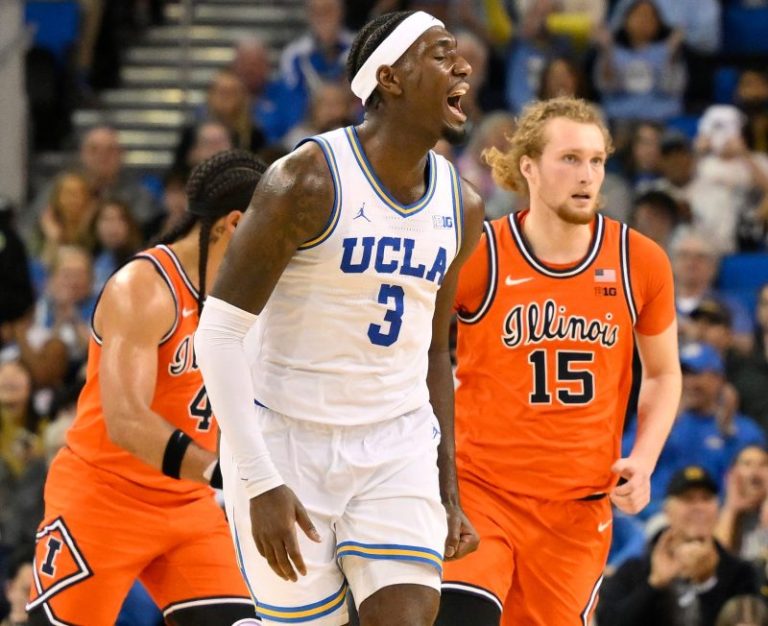
Longtime U.S. men’s national team goalkeeper Kasey Keller has revealed that he was diagnosed with non-Hodgkin lymphoma in 2010.

Keller, 56, shared his story for the first time on World Cancer Day, thankfully also noting that he is in full remission.

In 2010, Keller went in for an MRI for a hip injury during his time with the Seattle Sounders. Doctors noticed something concerning during the scan and five days later, the goalkeeper received a cancer diagnosis.

Because the lymphoma was slow moving, doctors determined that it didn’t require immediate treatment and Keller was able to continues his career. In 2011, Keller retired at age 41 and embarked on a career in broadcasting.

Keller began experiencing weight loss and swollen lymph nodes in 2017, with doctors informing him that his diagnosis had changed to large B‑cell lymphoma (LBCL).

After trying several different treatment options with no success, Keller was among the first people to try the new drug Breyanzi when it was introduced in 2021. The results were immediate: Keller was in remission within two months and was given a declaration of “no evidence of disease” at 14 weeks.

Still cancer free, Keller decided to share his story through Bristol Myers Squibb, the maker of Breyanzi.

‘No one should have to navigate this alone. If hearing what I went through helps someone else feel empowered to take their next step, then it’s worth it,’ Keller said.

Who is Kasey Keller?

Keller enjoyed one of the most successful careers of any American goalkeeper, both for club and country.

At the club level, Keller represented a number of top-tier European teams including Millwall, Leicester City, Rayo Vallecano, Tottenham, Borussia Mönchengladbach and Fulham.

Keller was on four World Cup rosters for the USMNT, starting at the 1998 and 2006 tournaments.

When he retired, Keller was the all-time USMNT leader in caps with 102. He now sits second after he was passed by Tim Howard.

Keller was inducted into National Soccer Hall of Fame in 2015.

This post appeared first on USA TODAY
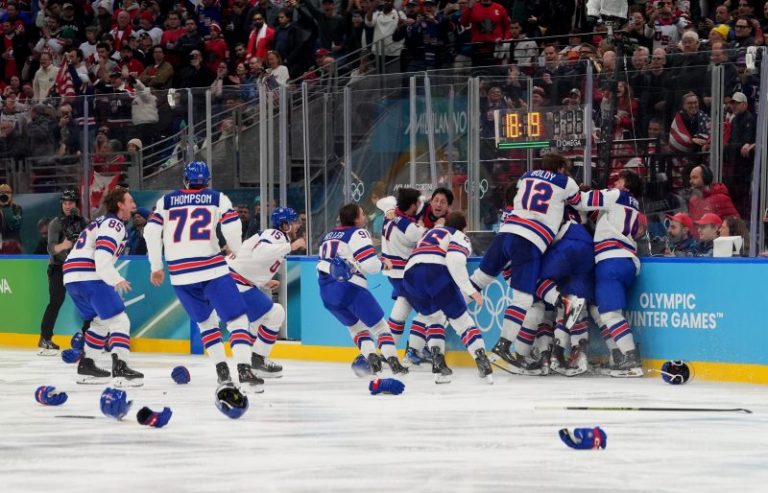
Rep. Maxine Waters, D-Calif., and Treasury Secretary Scott Bessent clashed on Wednesday over President Donald Trump’s economic agenda, with the irate congresswoman asking at one point if someone could ‘shut him up.’

The fiery exchange occurred during Bessent’s testimony before the House Financial Services Committee. Waters, the committee ranking member, posed a series of questions about the inflationary impact of Trump’s tariffs on American consumers — and demanded a yes-or-no answer.

So I ask you, Secretary Bessent, will you be the voice of reason in this administration and urge President Trump to stop waging a war on American consumers, harming housing affordability, and putting the economy at risk? Yes or no. You don’t have to explain.

Representative—

Will you be the voice of reason? Will you be the voice of reason?

A study from Wharton University has shown—

Reclaiming my time. Reclaiming my time. Mr. Chair, will you let him know when I ask to reclaim my time—

The time does belong to the gentlewoman from California.

Ten to twenty million immigrants—

Can you shut him up?

What about the housing stock for working Americans? And can you maintain some level of dignity?

The gentlewoman’s time has expired.

No, my time has not expired.

Your time has expired. The gentleman—

The gentleman took up my time. I think you should recognize that, Mr. Chair.

The gentlewoman’s time has expired.

Bessent’s testimony comes as the Trump administration awaits a Supreme Court ruling on whether some of the trade duties imposed in 2025 exceeded presidential authority, a decision that could have broad implications for current tariff actions. 

Tariffs are taxes levied on imported goods. Although they are paid by companies at the border, the costs are often passed along through higher prices, leaving consumers to bear much of the burden.

This post appeared first on FOX NEWS

The top congressional Democrats appear to have mended their rift over the controversial Homeland Security spending bill and presented a revamped list of demands to earn the party’s support to fund the agency.

Senate Minority Leader Chuck Schumer, D-N.Y., and House Minority Leader Hakeem Jeffries, D-N.Y., presented a unified front on Wednesday to unveil a retooled wish list of reforms for the Department of Homeland Security (DHS) and Immigration and Customs Enforcement (ICE) after the top House Democrat bucked his colleague’s deal with President Donald Trump.

‘We’re united as House and Senate Democrats,’ Schumer said. ‘We’re going to have tough, strong legislation. We hope to have it within the next 24 hours that we will submit together. And then we want our Republican colleagues to finally get serious about this.’

Schumer laid out congressional Democrats’ requirements for their support of a full-year DHS funding bill, which varied little from the same list of demands he unveiled last week. The only difference now is that he had a buy-in from House Democrats.

Among the demands are an end to roving patrols, oversight by state and local governments where ICE and DHS are operating, along with the right to sue. Lastly, Schumer demanded that there be ‘no secret police.’

‘I find it amazing that the Speaker of the House, [is] saying… they should be allowed to have masks,’ Schumer said. ‘This group, which needs to be identified more than any other group, should have a standard much more lenient and hidden than other police forces?’

‘I would bet when Speaker Johnson goes down to Louisiana, the sheriffs and the police deputies are well identified as they are in almost every city,’ he continued.

Jeffries spurned Schumer and Senate Democrats just a day earlier when he and the vast majority of House Democrats rejected the funding deal that the top Senate Democrat struck with Trump that allowed Congress more time to negotiate over the DHS funding bill.

That divide, for now, appears to have been bridged.

The negotiations over the funding bill are expected to largely take place in the Senate, and Republicans are skeptical that Democrats will negotiate in good faith, given that they abandoned an already bipartisan bill and Jeffries’ defection from Schumer over the Trump-backed spending deal.

But Democrats argue that their demands aren’t too burdensome, and should be accomplished with legislation, not through executive action at the White House.

‘These are just some of the commonsense proposals that the American people clearly would like to see in terms of the dramatic changes that are needed at the Department of Homeland Security before there is a full-year appropriations bill,’ Jeffries said.

This post appeared first on FOX NEWS

Taylor Heise used being cut from the 2022 Olympic team as motivation for her career.
Since 2022, Heise has become a key player for the U.S. women’s hockey team.
She was the first overall pick in the PWHL Draft and led the Minnesota Frost to a championship.
Heise is now a member of the U.S. team competing at the 2026 Winter Olympics in Milan.

MILAN — There are two ways to respond when you’re cut: Sulk and let the hurt hold you back, or use the setback as fuel.

Taylor Heise did the latter.

One of the last cuts from the U.S. women’s hockey team for the 2022 Beijing Olympics, Heise has made herself indispensable over the last four years. Since 2022, she’s played in every game at the world championships. In April 2025, she had the assist on the game-winner as the U.S. beat Canada in overtime for their second title in three years. In the most recent Rivalry Series at the end of last year, Heise led the U.S. women with nine points as they walloped the Canadians 24-7 over four games.

Now, she’s in Milan for the 2026 Winter Olympics.

“(Getting cut) was definitely the best thing that ever happened to me,” Heise said. “It’s taken me a few years to figure it out, but (the Olympics) is something that I’ve wanted for a really long time and really bad. And it’s kind of just pushed me to figure out those things in me that I need to work on.

“I just feel like, in these past four years, I’ve had a lot of work mentally, physically, emotionally and spiritually. That I’ve just grown further,” Heise added. “And that’s just something that you can’t do without being cut or figuring out that you need to change something.”

Looking back, Heise said she didn’t realize that being in the player pool in the lead-up to the Beijing Games was only a beginning, not a culmination. The U.S. women’s team has a long history of success, and that is partly because of the team’s chemistry.

That is developed on the ice, yes. But it also comes from team dinners. Pranks in the locker room. Spending time together off the ice.

“I was like, ‘I just want to get there,’” Heise said. “I didn’t see it as one step at a time. I saw it as one big leap.”

When Heise returned to Minnesota to finish her senior season in 2022, she began putting her newfound lessons into practice. She went on to lead the nation in points and was second in goals, helping her earn the the Patty Kazmaier Memorial Award that season as the country’s best player.

After that NCAA season wrapped, she had back surgery, but new U.S. coach John Wroblewski named her to his team for the 2022 world championships anyhow.

“I just think it showed me that, mentally, I can get past anything,” Heise said.

Heise got COVID just before the tournament started, delaying her arrival until the day before the U.S. women’s opener against Japan. No matter. Heise had a game-high five assists as the Americans won 10-0. Heise would go on to lead the tournament in both goals scored and points, and was named tournament MVP even though the U.S. women lost to Canada in the final.

“I remember playing so free that tournament,” Heise said.

She spent one more year at Minnesota, leading the country in goals scored and finishing second in points. She was a finalist for the Kazmaier and a first-team All-American.

In September 2023, the Minnesota Frost made Heise the No. 1 pick in the PWHL Draft. She went on to lead the playoffs in scoring and was named Finals MVP as the Frost won the PWHL’s inaugural title.

Last season, she tied for a team-high six assists in the playoffs as the Frost won their second consecutive title.

Now, Heise is an Olympian. And grateful she wasn’t four years ago. The U.S. women begin their gold medal campaign with a preliminary round game against Czech Republic.

“It’s OK to not make a team because the next time it gives you that motivation to keep going,” Heise said. “If things keep going your way in life, sometimes it’s hard to get better because you’re just OK with things, with just being mediocre.

“So yeah, I’m very proud of myself,” she added. “… I just know for a fact I’ve been continuing to do the right things to put myself in the best position I can be.”

This post appeared first on USA TODAY

Instead, less than one week before the start of spring training, he sits unemployed.

Valdez, 32, the two-time All-Star who has averaged 30 starts a year the past four seasons, with Cy Young votes in three of them, was arguably the best pitcher on the free-agent market.

He was projected to be the highest-paid player this winter outside his former Houston Astros teammate, Kyle Tucker. Yet, three full months have come and gone, and Valdez continues to wait with questions abound throughout the game.

Is he asking for too much money? Are teams concerned about the wear and tear on his arm, pitching 809 innings in the regular season and postseason the past four years?

Do they wonder whether Valdez intentionally hit his own catcher, Cesar Salazar, in the chest with a 93-mph fastball out of frustration in September after giving up a grand slam against the New York Yankees?

Whatever the reason, or if it’s simply a matter of a slow developing market for free agent pitchers, Valdez is easily the best player remaining on the market.

With time running out, in a survey of scouts, executives and agents, here are their predictions for the top six candidates to sign Valdez:

Baltimore Orioles

The Orioles remain the heavy favorite to sign Valdez, and could turn a fabulous winter into a spectacular one. And let’s face it, if they’re going to have a real chance to bounce back and win the AL East, they need another front-line starter.

Valdez would give them a formidable rotation with Trevor Rogers, Kyle Bradish, Shane Baz, Dean Kremer and Zach Eflin already in the mix. And remember, they were aggressive in the bidding for Ranger Suarez before he signed a five-year, $130 million deal with the Boston Red Sox.

The Orioles are clearly the team to beat in the Valdez sweepstakes, executives believe.

Toronto Blue Jays

The Orioles’ biggest threat to signing Valdez is the Blue Jays. They’ve had perhaps the best winter of any team in baseball, spending $337 million to give them every chance for a return trip to the World Series. So why not push it closer to $500 million?

If they signed Valdez, they will have locked up the top two starters on the market, having already signed Dylan Cease to a seven-year, $210 million contract. They would be even further flush with starters with Valdez, Cease, Kevin Gausman, Shane Bieber, Trey Yesavage, Cody Ponce and Jose Berrios. Considering that Gausman and Bieber are free agents after the 2026 season, the signing of Valdez makes perfect sense.

Besides, if they had $350 million to sign Kyle Tucker before he went to the Dodgers, why not give up a chunk of that to Valdez?

San Diego Padres

They haven’t done anything all winter besides bringing back Michael King and signing Korean infielder Sung-mun Song, and may have trouble enough keeping up with the San Francisco Giants – let alone the Dodgers. The signing of Valdez could save the offseason..

Financial constraints and an impending sale has handicapped them, but if Yu Darvish walks away from the $43 million he’s owed – including $16 million this season – the Padres could use it to find a creative way of bringing in Valdez. It would be similar to their deal a year ago with free agent Nick Pivetta when he was left stranded on the free agent market, giving him an opt-out after two seasons.

The Padres are a longshot compared to the Orioles and Blue Jays chances, but with GM A.J. Preller at the helm, you can never rule anything out.

Chicago Cubs

You want the Cubs’ fans to lose their minds after their fine winter? Go ahead and sign Valdez, giving them a team that could not only run win the NL Central, but peraps challenge the mighty Dodgers.

The Cubs, who already dropped $175 million with the Alex Bregman signing, would have a sensational rotation of Justin Steele (when he returns the second half), Edward Cabrera, Matthew Boyd, Cade Horton, Shota Imanaga and Jameson Taillon in the mix for starts.

The Cubs, who have been engaged in talks with fellow free agent Zac Gallen, will need another front-line starter in a year, anyways, with Boyd, Taillon and Imanaga all free agents after the 2026 season.

Detroit Tigers

Can you imagine a rotation with Tarik Skubal and Valdez as your 1-2 punch? It would bring back memories when Justin Verlander and Max Scherzer were leading their powerful rotation during their glory days.

While it may seem to be far-fetched, the Tigers have to face reality, too. They are not going to fork out $400 million and sign Skubal when he hits free agency in 10 months. They will have a gaping hole in the rotation. So why not be proactive and grab his replacement a year early? This would give them a rotation of Skubal, Valdez, Jack Flaherty, Casey Mize, Reese Olson and Drew Anderson to start 2026.

They would have the team built for a deep October run. Who says no?

Milwaukee Brewers

We get it. If you can’t afford to keep Freddy Peralta, why turn around and spend money for Valdez? Yet, the Peralta trade was simply acknowledging they couldn’t keep him a year from now.

Considering the Brewers have spent only $1.25 million in free agency this winter, and the fans are loudly grumbling about losing Peralta. Why not get them feeling as if you’re giving away free beer and cheese curds at all home games?

The Brewers privately say they still are interested in signing a free-agent pitcher, they could shoot for the sunand leave the Cubs cursing under their breath.

Follow Nightengale on X: @Bnightengale

This post appeared first on USA TODAY
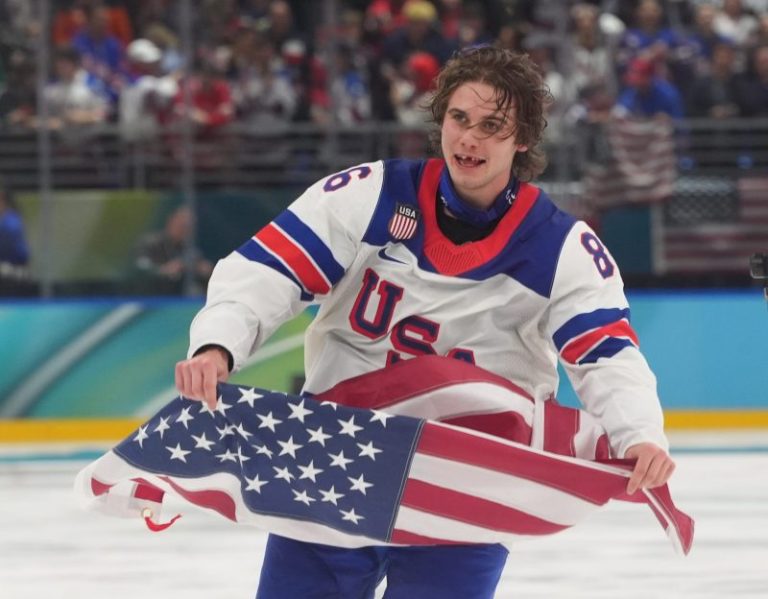
Former New England Patriots head coach was a surprising snub from the Pro Football Hall of Fame after failing to reach the 40 of 50 votes needed for enshrinement.

Jordon Hudson, Belichick’s girlfriend, has reportedly planned to throw a bash for the future Hall of Famer on Thursday, Feb. 5, the date of the NFL Honors and Awards show, where Hall of Fame inductees will be named.

Ahead of that, she (somewhat) broke her silence on Belichick’s Hall of Fame snub, posting a screenshot to her Instagram page of a canceled Pro Football Hall of Fame online purchase with a sarcastic caption to accompany it on Wednesday, Feb. 3.

‘Hey @profootballhof, what were the ‘unforeseen circumstances’?’ she posted with a laughing emoji.

The order seemed to include three Pro Football Hall of Fame patches. The automated email from the Pro Football Hall of Fame says that the order was ‘canceled because of unforeseen circumstances.’

It’s unclear if the order was canceled by the retail arm of the Hall or by Hudson.

Hudson and Belichick have been attached at the hip since 2024, with the pairing appearing in public together beginning in December 2024.

This post appeared first on USA TODAY
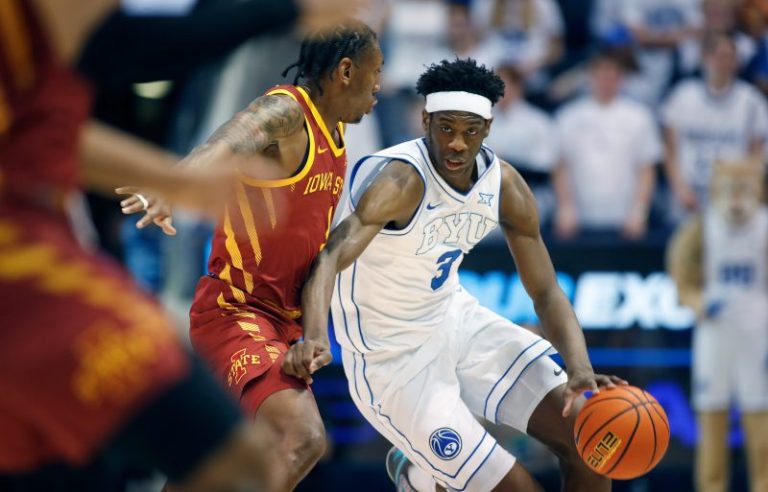
Athletes using banned drugs or violating other anti-doping rules at the 2026 Winter Olympics will face a formidable team trained to catch them.

The International Testing Agency (ITA), which oversees drug testing at the Olympics, arrives at the Milano Cortina Games with a contingent of about 800 people. That includes 20 people to oversee the operation, 150 doping control officers and hundreds of people to chaperone the athletes to doping control stations, according to the ITA.

The ITA also plans to collaborate with Italian police and conduct 2,200 drug tests, which involves collecting samples of urine and blood. The program got underway Jan. 30, when the Olympic Villages that house the athletes opened, and ITA will be testing for substances on the World Anti-Doping Agency (WADA) Prohibited List.

‘The anti-doping program in itself is a deterrent factor,’ an ITA spokesperson told USA TODAY Sports on the condition the quotes be attributed to the organization, a not-for-profit based in Switzerland. ‘If you know you’re going to meet a police officer, you don’t drunk drive to go there and present yourself drunk in front of that person.

‘The fact is that you can get caught cheating a lot higher than not at the Olympics.’

Selected by the International Olympic Committee (IOC), the ITA took over the anti-doping program at 2018 Winter Olympics. The number of positive doping tests has steadily dropped from 132 at the 2012 Summer Olympics, to 55 at the 2014 Winter Olympics to 16 at the 2016 Summer Olympics to four at the 2018 Winter Olympics, according to Statista.

The ITA has reported six anti-doping rule violations at the 2021 Summer Olympics, four at the 2022 Winter Olympics and five at the 2024 Summer Olympics.

Assessing risk of doping violations

Every Olympian winning a medal at the Milano Cortina Games will be drug tested. That will require about 350 drug tests, which leaves 1,850 drug tests – about 700 fewer than necessary to test all of the Olympians at least once.

Citing limited funds, the ITA said it focuses on targeted testing. That means allocating more resources to ‘high risk’ sports in which data shows doping is more common. At the Winter Olympics, that would be endurance sports such as biathlon and cross country, according to the ITA, which said ‘low risk’ sports include team sports.

Risk assessment also takes into account participating countries and, among other factors, a country’s history of doping, testing statistics and intelligence received, according to the ITA.

‘This risk assessment is a very fine-tuned instrument that the ITA has developed and serves as an indicator to target high-risk sports and countries,’ the group says on its website.

Threat of getting caught lingers

Research studies and experience have helped change the approach to drug testing, according to the ITA.

‘It has evolved from running after the cheaters to trying to anticipate more, having long-term tool,’ the ITA said.

For example, the ITA can conduct reanalysis of testing samples for up to 10 years, potentially uncovering doping violations with more sophisticated testing tools than were available at the time the samples were collected.

A reanalysis of testing samples from the 2012 Olympics led to the discovery of 73 doping violations and the reallocation of 46 medals. A reanalysis of testing samples from the 2016 Olympics uncovered seven cases of doping but only one medalist.

‘That doesn’t mean that we are eradicate doping as much as police can’t eradicate any criminal behavior, but it has professionalized massively,’ the ITA said.

Collaborating with police

Doping by athletes is a crime under the Italian Criminal Code. The crime carries a maximum prison sentence of three years and a fine of up to about $60,000.

During the Olympics, the ITA will exchange information with the police.

‘We don’t have the same capacities to act as law enforcement does, so we need to share information mutually,’ the ITA said. ‘The police don’t do anti-doping testing and we don’t search, for instance. So we have to exchange (information) to be able to use our respective capacities as best we can.’

Italian courts have shown a willingness to enforce the law. Such as a case in 2017.

Michele Ferrari, a doctor involved with biathlete Daniel Taschler in the banned practice of blood-boosting EPO, was handed an 18-month suspended prison sentence, fined about $5,500 and banned from working as a physician or trainer for 18 months.

Taschler was handed a suspended prison sentence of nine months and fined about $4,300.

Gottlieb Taschler, Daniel’s father who arranged the collaboration between Ferrari and his son, was handed a suspended prison sentence of one year and fined $4,800. At the time, Gottlieb Taschler was vice president for sport of the International Biathlon Union.

Other tools in use

Drug tests are not the only tool used by the ITA to stop athletes from doping.

The ITA said it employs former policeman to help gather intelligence, authorities share information across borders and there’s the use of biological passports, which according to WADA monitors ‘selected biological variables over time that indirectly reveal the effects of doping, rather than attempting to detect the doping substance or method itself.’

Data is used to determine how best to allocate the drug tests. according to the ITA.

‘I think data is going to be the future of anti-doping testing more and more,’ the ITA said, comparing anti-doping to ‘the matrix.’

This post appeared first on USA TODAY
Denver Summit FC announced they have surpassed 40,000 tickets sold for their inaugural home game, putting them on track to break the NWSL’s single-match attendance record.

Denver is one of two expansion franchises to enter the NWSL this year along with Boston Legacy FC, taking the league up to 16 teams.

The Summit will play their first three matches on the road before their inaugural home match against the Washington Spirit on March 28 at Empower Field at Mile High — home of the Denver Broncos.

The game will almost certainly break the current record of 40,061, set last year when the Spirit faced Bay FC at Oracle Park in San Francisco.

The Summit will play the majority of their home games this year at Centennial Stadium, a 12,000-seat temporary venue that will be used for two years until the team has a permanent stadium of its own.

In December, the club received approval from the Denver City Council to move forward with a proposed 14,500-seat stadium to be built in the city’s Santa Fe Yards district.

The venue is slated to open in 2028.

This post appeared first on USA TODAY