Archive

2026

Browsing

Lindsey Vonn is determined to compete in the 2026 Winter Olympics despite rupturing her ACL on Jan. 30.
Vonn’s comeback at age 41 follows a 2019 retirement and a 2024 partial knee replacement.
Despite her recent injury, Vonn remains confident in her ability to compete, citing her past experiences with overcoming setbacks.
She’ll be holding tight to her fierce self-belief at these Olympics, as she tries to do something others think is impossible. Or crazy.

CORTINA D’AMPEZZO, Italy — The strongest part of Lindsey Vonn is not her legs or her core or even that titanium that’s now in her right knee.

It’s her belief in herself, as fierce as it is unshakable. She will need that now, maybe more than ever. Despite a left knee shredded and an ACL torn in a crash on Jan. 30, Vonn is determined to compete in one final Olympics, to see through a comeback that was already nothing short of amazing.

‘As many times as I crash, I’ve always gotten back up. As many times as I’ve failed, I’ve always won,’ Vonn said Tuesday, Feb. 3. ‘So actually, all of my experience in my life has given me a lot of confidence in knowing what my body can and cannot do.

‘I’ve been in this position before. I know how to handle it. I’ve been on the world stage before. I know how to handle that,’ she added. ‘So, everything together, even though I don’t want to be in this position, I know how to be in this position, and I can handle it.’

Get our Chasing Gold Olympics newsletter in your inbox for coverage of your favorite Team USA athletes

Even before the crash, which occurred in the final World Cup downhill before the 2026 Winter Olympics in Milano Cortina, Vonn’s comeback has been one of the most incredible stories in sports history. It’s not just that she is 41 years old, or that she resumed her career after being retired for almost six years. It’s not even that she’s doing this with a partial knee replacement, uncharted territory for a world-class ski racer.

It’s that, despite all that, Vonn has been dominant, as good now as she’s ever been.

She’s been on the podium in every downhill race this season, winning two of them, and has been in the top three of two of the three super-G races she did. She leads the downhill standings and is sixth in the overall race.

“Everyone told me I couldn’t,” Vonn said. “I knew what I was capable of doing, and I showed the world that I could.”

It’s that refusal to accept less than what she believes she can do that is driving Vonn now. She knows she is not the gold-medal favorite in Cortina she would have been last week. She knows she might not even contend for a medal.

But she also believes she can make it to the starting gate for Sunday’s downhill. And that is reason enough to try.

‘I feel a lot better right now than I did in 2019 for the last world championships,’ Vonn said, referring to the torn LCL she had in her left knee then, ‘and I still got a medal there.’

A life of pain

This was not the comeback Vonn envisioned when she had her partial knee replacement in April 2024. She didn’t envision a comeback at all then.

Vonn did not have her partial knee replacement because she didn’t know what else to do with herself or because she was seeking some glorious second act and the spotlight that would come with it. She had built a full life in retirement, working with her foundation and sponsors, investing, traveling and trying all the things she could never do when she was competing.

But she was also in extraordinary pain.

Vonn’s right knee was in such shambles she felt as if she was walking on Rice Krispies every time she took a step. Snap. Crackle. Pop. And those activities she was finally doing? It’s hard to fully enjoy them when you’re gritting your teeth the entire time.

The knee replacement was so Vonn could be active like anyone else. Well, as active as anyone who wants to try rodeo and kite surfing and driving a race car.

“When you’re a professional athlete, you sacrifice a lot of things that you would like to do because it’s too dangerous or it’s going to make you tired and you have to set certain priorities in your life,” Vonn said. “I waited a long time to do all these things and I couldn’t really do them. I did them, but it was very painful.

“So when I did the surgery, it was literally just to live a pain-free life.”

During the procedure, orthopedic surgeon Martin Roche removed the cartilage and bone from the outside of Vonn’s right knee and replaced it with titanium. Her ACL and medial meniscus remained intact, as did the cartilage on the inside of her knee, which maintained the joint’s “feel.”

Within days, Vonn knew things were different. She’s had plenty of surgeries before — at least nine on her knees alone — and had never felt this good during recovery. She could bend and straighten her knee, something she hadn’t been able to do in a decade. She could push herself in the gym and not pay the price later that day or the next.

As she sped through recovery, she began toying with the idea of a comeback.

“I retired in 2019 because my body said no more,” Vonn said, “not because I didn’t want to continue racing.”  

A second act

After getting clearance from her doctors, Vonn resumed training. The reaction, from some, was downright hostile.

“Lindsey is a grande dame of the sport, but for me, she can only lose with this comeback,” Sonja Nef, the giant slalom world champion in 2001, told Blick.ch in November 2024. “It feels like she’s jeopardizing her legacy.”

The comments were, of course, hurtful. Coupled with mixed results in her first season back, Vonn acknowledges her self-confidence took a hit.

But that’s the beauty of being a woman in her 40s who’s been through some things. Vonn had both the perspective and self-awareness to withstand the negativity. No matter what anyone said, Vonn knew she was always going to be the 2010 Olympic downhill gold medalist, a four-time overall champion and No. 3 on the career World Cup wins list.

No matter what happened in her second act, she’d already won.

“I’m not skiing to prove anything to anyone,” Vonn said. “That time away just made me realize, ‘OK, I’ve done everything I ever set out to do.’ This is something different. This is a separate journey that I’m taking. It’s not really connected to — I feel like my first career. I feel like this is its own chapter in my book of life, and it’s very special for many reasons.”

Get Olympics updates in your texts! Join USA TODAY Sports’ WhatsApp Channel

Back on the podium

That doesn’t mean Vonn was just happy to be racing again. She is, after all, Lindsey Vonn. If she’s going to race, she’s going to do it right.

That’s what made last season so frustrating. Because she hadn’t had much training time before the World Cup season began, Vonn was constantly trying to fine-tune her equipment on the fly. Her skis were fine, but her boots were another story.

The model had changed during her retirement. Though they initially felt fine and Vonn trained well in them, she wasn’t skiing fast on race day.

“And I could not figure out why,” Vonn said. “Everyone else skis with the same boot and everyone else is fast, but I was not fast.”

She finally went back to her old model — “which was collecting dust in the basement” — about three-quarters of the way through the season. She could feel a difference immediately.

Then, at the World Cup finals in Sun Valley, Idaho, Vonn was second in the super-G.

“I knew that I could compete,” Vonn said. “I knew the way I felt on my skis, and I never stopped believing in that.”

Everything comes together

In addition to getting her boots figured out, Vonn convinced two-time overall World Cup champion Aksel Lund Svindal to join her coaching staff. The two had raced at the same time — they both retired after the 2019 world championships — and Vonn knew he could help her.

“(At) inspection, he knows the line that men ski and that’s the type of edge that I need. I need to be able to push the limits in a way that the other women are not willing to,” Vonn said. “He knows what I’m capable of because he’s been in that exact same position.”

Svindal was already watching Vonn’s races when she called to recruit him, and he had ideas of where she could get more speed. Specifically, the flat portions of the course.

Everyone thinks Vonn is best when she’s gliding. But Svindal said it’s her turns that are the former slalom skier’s superpower.

“The more power you can pull in the turns, the faster she is,” he said. “So if we can make you as good as the rest of the field in gliding, you will pull away in the turns. That’s why you won all those races.”

Vonn felt good going into this season, but you never really know until the races begin.

She won the first downhill, finishing almost a second ahead. The next day, in another downhill, she was second.

Vonn’s comeback was all the way back.

“All the people that didn’t believe in me, I have to thank them because it really gives me a lot of motivation,” Vonn said at weekend. “I’m surprised that people haven’t figured that out by now. Every time you talk bad about me, it just makes me stronger and better and more motivated.”

It doesn’t matter if others believed in her. Vonn believes in herself, and that’s more than enough.

She’ll be holding tight to that faith at these Olympics, as she tries once again to do something others think is impossible. Or crazy.

‘I will make it to the starting gate,’ she said. ‘It’s already been one of the best chapters of my life so far. I think this would be the best comeback I’ve done so far. Definitely the most dramatic, that’s for sure.’

Follow USA TODAY Sports columnist Nancy Armour on social media @nrarmour.

This post appeared first on USA TODAY

MILAN — United States Immigration and Customs Enforcement agents are not part of the Team USA delegation at the 2026 Winter Olympics, a U.S. Olympic official said while addressing questions about the protests and concerns over ICE contributing to security in Italy.

‘I can tell you unequivocally, there are no ICE agents that are part of the team USA delegation on the ground here in Milan,” U.S. Olympic & Paralympic Committee Chief Security Officer Nicole Deal said during a news conference Thursday. ‘When it comes to securing major events, a lot of people don’t know what the capacities and the capabilities and the resources that are needed, so there’s a lot of misinformation and assumptions that are made.

‘I think this inaccuracy that ICE is here on the ground, securing games was one of those. So, I’m glad we’re able to set the record straight and provide on-the-ground truth that ICE is not part of the Team USA delegation.’

When asked to clarify whether ICE agents are in Milan as part of the U.S. Embassy’s overall security plan for the Olympics, Deal said, ‘I can’t speak on behalf of the State Department or the embassy.’

The opening ceremony for the 2026 Milano Cortina Olympics is Friday, and Deal said security is expecting protests.

Government officials previously said Homeland Security Investigations, a unit within ICE that focuses on cross-border crimes, frequently sends officers to overseas events to assist with security and would be part of operations for the Olympics. HSI officers are separate from the ICE arm at the forefront of the immigration crackdown known as Enforcement and Removal Operations, and there was no indication ERO officers were being sent to Italy, according to the Associated Press.

‘This is a militia that kills, a militia that enters into the homes of people, signing their own permission slips,’ Sala said.

U.S. Ambassador to Italy, Tilman J. Fertitta, told The Athletic the ICE agents’ role at the Olympics is strictly advisory and intelligence-based.

Deal said she has not heard of any athlete concerns related to ICE or the protests, and said the USOPC has “an extensive Games readiness program.”

U.S. Olympic winter sport national governing bodies changed the name of their Milan hospitality space over concerns about the ICE protests in Italy. U.S. Figure Skating, USA Hockey and U.S. Speedskating decided to turn The Ice House into The Winter House.

Team USA plans for protests, backlash

The political climate of the U.S. raises questions about how Team USA athletes will be received at the Olympics, but USOPC CEO Sarah Hirschman said she doesn’t anticipate anti-American sentiment.

‘While I don’t anticipate there to be a negative environment, particularly in venues and on the field of play, that tends to be a very, very positive environment, and we anticipate the same to be true here,’ Hirschman said. ‘We also we want to be prepared and ensure that athletes feel supported in everything they do, and done our job to make sure that that’s happened.’

An environmental protest is expected in Milan as the Olympic torch makes its way into the city Thursday, but Deal said she is tracking another protest happening Saturday. The focus of that protest was not shared during the news conference.

‘Normally, we do put a notice up to the delegation, just letting them know where the protests are,’ Deal said. ‘So when they’re reading about the city, they’re aware.’

This post appeared first on USA TODAY

LIVIGNO, Italy – Ollie Martin has already made his “dream come true.”

Here at the 2026 Winter Olympics, the Team USA snowboarder says he’s making his “younger self proud,” and “everything that I’ve wanted since I was a kid has been sort of coming to fruition.”

Yeah, about that:

Martin is only 17.

Still a kid – legally. Not so much, however, in world-class snowboarding.

In this breathtakingly acrobatic sport, an athlete like Red Gerard, Martin’s U.S. teammate, calls himself “one of the older ones” at a ripe 25. Team USA will also feature Alessandro Barbieri, 17, in the men’s halfpipe competition at the Milano Cortina Games.

Like Barbieri, Martin is viewed as a potential breakout American star at these Olympics. He will join former Olympic gold medalist Gerard and two other Americans – Jake Canter and Sean Fitzsimons – in the men’s slopestyle and in the big air competition, which begins with qualifying Feb. 5 at Livigno Snow Park, making it one of the first contests at these Games.

The top 12 (out of 30) entrants in big air qualify for the finals on Feb. 7.

“It’s always been a dream of mine to go to the Olympics and to perform well,” Martin told reporters Feb. 3 at Livigno Snow Park. “It only happens every four years. It’s kind of one opportunity. I’ve been preparing myself for that extra pressure.”

Team USA didn’t medal in men’s big air at the last Olympics, though Gerard and Martin – both Colorado residents – figure to be among the contenders this time around.

Now in his third Olympics, Gerard was 17 when he won gold in slopestyle in PyeongChang in 2018. He barely missed the podium in Beijing, finishing fifth in big air and fourth in slopestyle.

This time, however, he has roughly 45 friends and family – “it’s like a crazy group, man” – who’ve made the trip over with him for these Games.

“I know what it takes. I feel like I’m riding the best I ever have in a lot of ways,” Gerard told reporters in Livigno. “I think I’m just trying to get back to that 17-year-old self.”

Which leads back to Martin. He sounds older than his age, though there are still indicators.

Like when Martin was asked at Team USA’s press conference about this small snowboarding figure that he used to take on trips, flipping it and acting out tricks. Does he still have that figure with him at this Olympics? Yes, Martin replied.

“My mom made me bring it,” he said. “Honestly, that toy was really helpful for me. I could use it to visualize. I was able to come up with some tricks with that toy. Sounds silly, but it was actually really helpful.”

Seems like it was. Martin’s rise to prominence began at 16. He cracked the top three in big air and slopestyle at the 2025 world championships.

He also became the youngest rider to ever land a 2160, according to the U.S. Ski & Snowboard team.

“Ollie’s his own beast. I look up to him, man,” Gerard said. ‘I look at what Ollie does, and I’m like, ‘Yo, how do I do that? That’s insane.’ I think it’s a friendly push off each other.”

This post appeared first on USA TODAY

Former Secretary of State Hillary Clinton called on House Oversight Committee Chairman James Comer, R-Ky., to allow her and her husband to have a public hearing on the Epstein files Thursday.

Clinton issued the challenge in a post on X, saying Republicans have ignored her and former President Bill Clinton’s previous testimony on the topic.

‘For six months, we engaged Republicans on the Oversight Committee in good faith. We told them what we know, under oath. They ignored all of it. They moved the goalposts and turned accountability into an exercise in distraction,’ Hillary wrote.

‘So let’s stop the games. If you want this fight, Rep. James Comer, let’s have it—in public,’ she continued, tagging the committee chairman. ‘You love to talk about transparency. There’s nothing more transparent than a public hearing, cameras on. We will be there.’

Comer announced on Wednesday that the former first lady will sit for a closed-door transcribed interview on Feb. 26, and the former president will appear on Feb. 27 under the same terms. Both interviews will be filmed, Comer said in a press release.

The Clintons were both facing contempt of Congress votes in the House this week if they did not agree to come to Capitol Hill for in-person interviews with the Oversight Committee.

Those votes were likely to succeed as well. Late last month, nine Democrats on the House Oversight Committee joined all Republicans in voting to advance Bill Clinton’s contempt of Congress resolution to a House-wide vote. Three Democrats voted to advance the resolution against Hillary Clinton.

A contempt of Congress vote would have referred both Clintons to the Department of Justice (DOJ) for criminal prosecution.

‘Republicans and Democrats on the Oversight Committee have been clear: no one is above the law — and that includes the Clintons. After delaying and defying duly issued subpoenas for six months, the House Oversight Committee moved swiftly to initiate contempt of Congress proceedings in response to their non-compliance,’ Comer said in a statement.

‘Once it became clear that the House of Representatives would hold them in contempt, the Clintons completely caved and will appear for transcribed, filmed depositions this month. We look forward to questioning the Clintons as part of our investigation into the horrific crimes of Epstein and Maxwell, to deliver transparency and accountability for the American people and for survivors,’ he added.

Fox News’ Elizabeth Elkind contributed to this report.

This post appeared first on FOX NEWS

U.S. special presidential envoy for peace missions Steve Witkoff announced on Thursday that delegations from the U.S., Ukraine and Russia had agreed to the exchange of hundreds of prisoners.

‘Today, delegations from the United States, Ukraine, and Russia agreed to exchange 314 prisoners — the first such exchange in five months,’ a Thursday post on X declared. 

‘This outcome was achieved from peace talks that have been detailed and productive. While significant work remains, steps like this demonstrate that sustained diplomatic engagement is delivering tangible results and advancing efforts to end the war in Ukraine,’ the post continued.

‘Discussions will continue, with additional progress anticipated in the coming weeks. We thank the United Arab Emirates for hosting these discussions, and President Donald J. Trump for his leadership in making this agreement possible,’ the post noted.

President Donald Trump’s administration has been aiming to try to help broker a peace deal between Russia and Ukraine.

The president said in a Wednesday Truth Social post that ‘the War between Russia/Ukraine’ was one of the topics during a phone call he had that day with Chinese President Xi Jinping.

Sen. Lindsey Graham, R-S.C., said in a Tuesday post on X that he ‘would urge President Trump to start a process to provide Ukraine with Tomahawk missiles which would be a game changer militarily.’ 

‘In the coming days and weeks, we must apply more pressure to Putin. Any negotiation that is seen as overly rewarding aggression will set in motion catastrophes all over the world. The opposite is equally true. If negotiations result in a free, strong and independent Ukraine — who had to make concessions — then the world will be far more stable,’ Graham asserted.

This post appeared first on FOX NEWS

I applaud President Donald Trump’s Jan. 29 executive order known as the Great American Recovery Initiative, but I think it should be renamed the Bill W. and Dr. Bob Initiative, after the founders of Alcoholics Anonymous. Both men suffered from severe alcoholism until a fateful day in December 1934, when Bill Wilson experienced a spiritual awakening — described as a blinding white light — after demanding that God show Himself. Bill also described the sensation of standing on a mountain with the wind of the Spirit blowing through him, and he instantly felt liberated, his obsession with alcohol gone.

This conversion experience formed the basis for Bill W.’s spiritual transformation and recovery from alcoholism, and it led to the core 12-step program of Alcoholics Anonymous, which Bill W. co-founded in June 1935 with Dr. Robert Smith. Dr. Bob also suffered from severe alcoholism, and Bill W. helped him quit. By that June, Dr. Bob had taken his final drink. Together with Sister Ignatia, Dr. Bob helped transfer his freedom from alcohol to others, providing medical care and physical guidance to thousands of alcoholics in Akron, Ohio, and around the country.

The reason I believe President Trump’s initiative could be called the Bill W. and Dr. Bob Initiative is because, like AA, it recognizes the importance of community, health and faith. These elements must be central tenets of the plan for it to be successful. The White House announcement states its goal is ‘to coordinate a national response to the disease of addiction across government, health care, faith communities and the private sector in order to save lives, restore families, strengthen our communities and build the Great American Recovery.’

Trump’s initiative was soon followed this week by the HHS $100 million Safety Through Recovery, Engagement and Evidence-based Treatment and Supports (STREETS) program, which will focus on addiction, mental health, homelessness and crisis intervention. 

This is a much-needed program and I was glad to see it spearheaded by HHS Secretary Robert F. Kennedy Jr., himself a recovered heroin addict, along with his cousin, former Rep. Patrick Kennedy, a recovering alcoholic whom I have interviewed and found to be a powerful and convincing voice for recovery.

The reason I believe President Trump’s initiative could be called the Bill W. and Dr. Bob Initiative is because, like AA, it recognizes the importance of community, health and faith. 

Keep in mind that denial is a key part of the problem for most addicts, and deep faith, along with role modeling, is a critical way to overcome that denial. As the White House pointed out in its fact sheet, ‘48.4 million Americans, or 16.8% of our nation’s population, suffer from addiction, yet very few who need treatment receive it or believe they need it.’

During President Trump’s first term, in 2019, when he declared the opioid crisis a public health emergency, he also acknowledged that his brother Fred had ‘a very, very, very tough life’ before succumbing to alcoholism and heart disease. Trump said the same to me when I interviewed him at the White House in July 2020, and I could see how deeply the loss affected him personally.

Trump’s heart is clearly in the right place when it comes to the current initiative — and he is not alone. The announcement of the new federal plan to combat drug and alcohol addiction included Kathryn Burgum, a former alcoholic and the wife of Interior Secretary Doug Burgum, as well as United State Special Envoy to the Middle East Steve Witkoff, who told the story of his son dying from a drug overdose during the event.

Raising awareness is a lofty goal, along with acknowledging just how hard addictions are to break. The role of faith and the church must be emphasized, but so too must the scientific tools that enable miraculous recoveries — from buprenorphine, a partial opioid agonist, to naltrexone, an opioid antagonist that blocks both euphoria and craving. GLP-1 agonists are also showing promise in decreasing cravings for alcohol and drugs and reducing alcohol consumption, in part by delaying gastric emptying. Medically assisted therapy for opioids — specifically methadone, naltrexone and buprenorphine — has been shown to reduce opioid-related deaths by more than 50%.

As I wrote in my new book, ‘The Miracles Among Us,’ so-called soft miracles arise from an intricate combination of science and faith.

All these tools must be paid for, and the federal government should help make them more available. Indeed, every primary care physician like me should have the unrestricted ability to prescribe these lifesaving medications, and every major church and synagogue should have a federally subsidized recovery program for drug and alcohol addiction.

Addiction destroys not just individuals, but entire families and communities. Recovery from addiction is a multi-pronged process involving faith, access to quality health care and committed leaders who can relate to the problem. 

Ninety years after Bill W. and Dr. Bob started us down the path toward beating addiction, their caring, spiritual approach is more important than ever.

This post appeared first on FOX NEWS

Nicki Minaj, who has recently been a vocal critic of California Gov. Gavin Newsom, accused him in a new interview of trying to be like President Donald Trump, referring to recent social media posts of the governor’s that emulate the president’s frank style.

‘With Newscum, it’s the fact that with everything you said, but then having the audacity to be playing on Twitter, obsessed with Trump, trying to be Trump, trying to be funny when it’s not and then wanting to roll around in the mud with female rappers or whomever and completely missing the plot,’ Minaj told Katie Miller on her podcast this week.

Many of Minaj’s online attacks have been over the governor’s support of transgender children.

‘Imagine being the guy running on wanting to see trans kids,’ Minaj wrote on social media late last year. ‘Not even a trans ADULT would run on that. Normal adults wake up & think they want to see HEALTHY, SAFE, HAPPY kids. Not Gav. The Gav Nots. GavOUT. Send in the next guy, I’m bored.’

She suggested to Miller that Newsom would be better off not trying to compete with Trump.

‘But President Trump is already the president, get it?’ she said as if speaking directly to Newsom. ‘He’s already done it twice. He’s won. Good. OK. Meanwhile, you are embarking on what — a journey that will end up being a big huge failure for him.’

The ‘Tukoh Taka’ singer said the governor still doesn’t ‘seem to grasp the fact that these jokes that you’re making are only funny to your assistant, you know, the weirdo little guy that calls Black women stupid h— and stuff.’

Newsom’s assistant responded to one of Minaj’s slams on social media last year by posting a picture of a Nicki Minaj T-shirt in the trash. He captioned the image: ‘Stupid H–,’ a reference to her 2012 song of the same name.

She claimed that ‘no one cares’ about Newsom’s rhetoric online, ‘and he’s making a fool out of himself like when he went all the way to another country to speak ill of the country and the president. We would never want someone like that to be our president. Americans are so big on loyalty and that just showed us all you do not have a loyal bone in your body and no one is going to vote for you.’

Newsom spoke at the World Economic Forum in Davos, Switzerland, last month, expressing his concerns that ‘freedom of expression, freedom of assembly, freedom of speech’ are all under attack because of the Trump administration.

‘They’re censoring historical facts, they’re rewriting history,’ he added, also claiming that the administration had canceled an earlier event the governor was supposed to speak at.

Minaj said Newsom failed to respond to her when she asked for his office’s help ‘on Twitter about swatting calls that were happening that were clearly a part of their extended smear campaign. And he completely ignored it, right? And next thing you know, he’s on there flapping his gums about female rap stuff and trying to get in women’s business. So I had to. I had to show him who’s boss on Twitter.’

Newsom has only responded to her tirade of social media attacks once.

In December, he posted a mashup of videos and images of Trump, including with Jeffrey Epstein, set to Meghan Thee Stallion’s Minaj diss track ‘HISS.’

A spokesperson for Newsom told Fox News Digital: ‘We wish Mrs. Minaj-Petty, her husband, and his parole officer well.’

This post appeared first on FOX NEWS

The U.S. Olympic and Paralympic Committee identified sleep as a key area to support athlete health and performance.
Team USA created a program to educate athletes on sleep needs, addressing factors like travel, training, and jet lag.
Athletes like Chloe Kim and Lindsey Vonn emphasize the importance of adequate sleep for mood, recovery, and performance.

LIVIGNO, Italy – Don’t sleep on Team USA.

Unless, of course, you’re one of the athletes representing the United States at the 2026 Milano Cortina Winter Olympics. In that case, catching some ‘Zs’ is a priority – one the U.S. Olympic and Paralympic Committee has prioritized ahead of these Games.

About two years ago, Team USA performance and medical staff identified sleep as an area in which the USOPC could continuously support athlete health, said senior psychological services provider Dr. Emily Clark. Around that time, during the 2024 Paris Olympics, athletes complaining about ‘cardboard beds’ at the Olympic Village went viral on social media. One athlete even said he brought his own bed.

‘There was some low-hanging fruit that we were really wanting to build robust supports around,” she said.

That prompted leadership to create an interdisciplinary working group of providers across sports sciences and sports medicine. They studied different times athletes relayed they struggled with sleep. They opened dialogues with athletes to learn more.

‘Sleep is something that we know it’s really pivotal for health or performance for recovery, and yet many Olympic and Paralympic athletes really struggled with sleep disruption at different times for a number of sport and non-sport related factors,” Clark said. ‘So our goal was really to help athletes be able to understand their sleep needs with depth and then be able to make sound decisions across the number of the contexts that they operate within.’

Count snowboarder and two-time Olympic gold medalist Chloe Kim as someone who definitely wants her nightly eight hours.

‘I’m a good sleeper. I am also dependent on sleep,’ Kim told USA TODAY Sports. ‘If you catch me in a bad mood, it’s probably because I didn’t get eight hours. That’s like my minimum requirement for a functional, productive day. I always try to get eight hours, but you know, stuff happens. It doesn’t always work out. On those days I just try to lock myself away and try to get a nap in and try to reset.

“But yeah, sleep is very important for a lot of different reasons. I find I’m a lot moodier when I don’t sleep well. My body doesn’t feel good. I’m not recovered. There’s so many things. But yeah, big, big fan of sleep over here.”

Many factors, as Kim said, impact sleep. Travel, parenting and training loads are three examples of the non-sport and sport factors the sleep-study group examined and addressed. Scaling the resources, and then making that all available to every athlete, was the next step. Team USA piloted the sleep program for Paris and repeated it, with some improvements, for Milan, Clark said.

Starting early ahead of Milan was key to stabilizing and refining an athlete’s sleep based on their contextual demands, she added.

“And then help them prepare for getting to the game so that when they arrive, they’re well rested, right?” Clark said.

Rest is one component of sleep though. Mood stability, cognitive function, emotional stability and resilience to illness are all things that can greatly affect an athlete’s experience at an Olympics.

Prior to tearing her ACL, Lindsey Vonn said the main reason she wouldn’t attend Friday’s opening ceremony was because the travel time would negatively impact her sleep.

‘It’s almost physically impossible for me to do that unless I just don’t sleep,” the 41-year-old said. “At my age, I kind of need it.”

Team USA rolled out a broad-based process, starting with sports-specific education for teams and coaches. A dietician is part of the sleep-study group, an example of the holistic approach. But then targeted the individual for maximized results. Doctors screened for sleep disorders. Next was asking about an athlete’s beliefs, behaviors, environment and biology, as Clark put it, ‘to really target what their goals for sleep are based on whatever their specific needs are.’

Sometimes, for speedskater Jordan Stolz, he needs a nap between qualifying and finals, especially if there is an extended gap. He said the last thing he wants to do is wait around the rink and hear another competitor’s qualifying.

‘I’d rather be in my bed laying down and sometimes I do that,’ he said. “If the hotel is really close to the rink, I’ll just get a ride back and go to sleep and then come back an hour before.’

The good news for Stolz is Team USA has published extensive literature, available to the public, about all types of best-sleep practices. To tackle jet lag, there are sections for how to prepare (shifting the sleep schedule in 30-60 minute intervals to match the new time zone), what to do while traveling (stay hydrated) and how to adjust in the new location (take 20-90 minute naps and prioritize sunlight).

Also available to athletes is a sleep diary outline. On the sleep webpage is a ‘myth busting’ section, which explains why napping isn’t bad for athletes and why they don’t need to compensate after one poor night’s rest. The ‘eight hours’ threshold – nobody tell Kim – is caveated with the following:

‘Getting enough hours of sleep is generally important for performance, but one night of poor sleep is rarely enough to derail your performance when you have adrenaline on your side and good sleep banked from prior nights.’

Many of the U.S. ski and snowboard athletes trained and competed in Europe during the World Cup season prior to the Olympics, making the jet-lag transition minor compared to some of their teammates coming from the U.S., particularly those traveling from the West Coast.

‘I’ve got a good routine,’ said alpine skier Paula Moltzan. ‘I think going to Europe is easy, honestly, if you can get a couple of hours of sleep on the plane, I have never been crazy affected by jet lag.

‘We’ve always had a crazy schedule. It’s never that convenient. We do a lot of travel compared to most sports and it’s just kind of the name of the game.’

Team USA partnered with Saatva this year to provide mattress partners to each athlete staying in their respective village, Clark said.

‘Hopefully the beds will provide that environmental support,’ Clark said. ‘And then the other thing that we really tried to work on in advance of Milan is supporting the ecosystem around the athletes. So if we can also give this education and environmental support to staff, they are more likely to provide high-level support for Team USA athletes in any scenarios and environments.’

This post appeared first on USA TODAY

The 285th and final game of the 2025 NFL season − Super Bowl 60 − has arrived after five months in the making.

In the ever unpredictable league, the Seattle Seahawks and New England Patriots will meet for the second time in 11 years − this matchup a far bigger surprise than the first given neither of these teams reached the playoffs a year ago. The next question will be whether their second Super Sunday showdown, if not exactly a rematch with Tom Brady and the Legion of Boom having left the stage years ago, can somehow approach the unforgettable Super Bowl 49 classic.

For the final time this season, USA TODAY Sports’ NFL experts submit their predictions − including Super Bowl 60’s MVP:

(Odds provided by BetMGM)

Super Bowl 60 picks, predictions, odds

Seahawks vs. Patriots

This post appeared first on USA TODAY

PHOENIX — They will be packing their bags, practicing their introductory speeches, and arriving in a few days early to spring training camps from West Palm Beach, Florida to Surprise, Arizona.

They are young. They have little or no experience.

They make up Major League Baseball’s incoming managerial class.

Ten managers have been hired since the end of last season.

And just like the NFL’s coaching carousel, none are Black.

Four have never managed a game – even in the minor leagues. One has never even coached a game outside of college.

One is in his 30s. Eight are in their 40s. One is in his 50s.

The newbies will be scrutinized, dissected, questioned and debated all season.

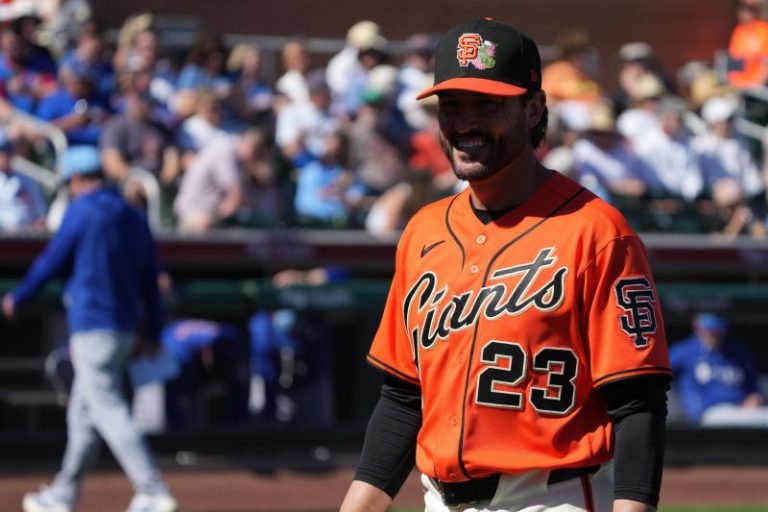
“There’s going to be a lot of people watching,’ future Hall of Fame manager Dusty Baker, now a special advisor for the San Francisco Giants, tells USA TODAY Sports. “A lot of people are wondering if they can do it. We’re all going to find out.’

Three of the new managers – Skip Schumaker (Texas), Walt Weiss (Atlanta) and Derek Shelton (Minnesota) – had previous MLB managerial experience.

Two of the managers – Don Kelly (Pittsburgh) and Warren Schaeffer Colorado) – were interim managers last season, and proved to their front offices and ownership that they were deserving of being promoted to full time.

But for the other five rookie managers, it’s a whole new ballgame.

Los Angeles Angels manager Kurt Suzuki, 42, played for 16 years and was a special assistant in the front office, but also never coached or managed.

Craig Albernaz, 43, of the Baltimore Orioles, is the most traditional hire of those with no experience, spending five years in the minor leagues and five years as a major-league coach.

MLB divided on Tony Vitello hire

Vitello becomes the first college coach to immediately transition to a major-league manager with no professional coaching experience. He was an assistant collegiate coach for 15 years, and a head coach for eight years at the University of Tennessee.

He also was rewarded as the highest-paid first-year manager in baseball history, earning $3.5 million a year for the next three seasons.

“It’s a bold move,’ says Baker, who met with Vitello and talked to him about the challenges of managing before he was hired. “That was my first thought.’

Joe Maddon, who led the Chicago Cubs to the 2016 World Series championship, had another thought.

‘Quite frankly, I’m using the word insulting,’ Maddon told KNBR radio in San Francisco after the hire, “only from the perspective that it appears as though you don’t have to have any kind of experience on a professional level to do this job anymore.

‘When I was coming up, you had to have all that. You had to, like, go through the minor leagues. You had to ride buses. I was a scout. I started in 1981. I finally get a managerial job in 2006. I mean, there was a rite of passage, a method to get to that point.

“To think that somebody could just jump in there and do it, you took 20-some years to be considered qualified to do, it is kind of insulting.’

So, will it work? And will this be the wave of the future?

Buckle up, we’re about to find out.

Newbie managers have strong recent track record

“It’s certainly going to be challenging for them,’ says Ernie Whitt, a 15-year MLB catcher and manager of Team Canada in the World Baseball Classic. “Some of them come from good college baseball backgrounds, but to be at the highest level, and never experienced any type of managing at that level, or even in the minor leagues, that’s going to be tough.

‘The game speeds up on you in a hurry.’

It’s hardly as if young, inexperienced managers have no prayer to succeed.

You don’t have to look any further than Steven Vogt of the Cleveland Guardians. He spent 11 years as a big-league catcher, and after just one year as the Seattle Mariners’ bullpen and quality control coach, was hired to manage the Guardians before the 2024 season.

Two years later, he has twice led the Guardians to the AL Central title, and twice been honored as the American League Manager of the Year.

Aaron Boone had never managed or coached in the major leagues or minors when he was hired before the 2018 season by the Yankees. He has led the Yankees to the postseason in seven of the eight years, including a World Series appearance.

Dave Roberts, who has the greatest winning percentage (.621) of any manager in history with at least 850 games – along with three World Series titles – had only one game of managerial experience at any level before being hired to lead the Dodgers 10 years ago. Yet, he did have experience being on on the Padres’ coaching staff for five years.

Work hard to find for experienced MLB coaches

“I just feel sorry for the number of players that need these jobs and they’re not available,’ Baker says. “You’d be surprised how many calls from guys who are White, Black, who say they need a job, can’t get one. Now, if you’re a former [big-league] player, it’s almost like a detriment. Teams are going with inexperienced guys, even college guys, looking for guys elsewhere to fill these jobs.’

Says Whitt: “Guys go through the trenches as a manager in the minors just to have a chance, and for them not to get an opportunity is tough to see. I don’t understand it. I know guys are relying on analytics, but you still have to have a feel for the game. You let your eyes tell you what’s going on.’’

Davey Martinez, who led the Washington Nationals to their first World Series championship in 2019, still can’t believe he didn’t receive a single phone call to interview for a vacancy.

Brandon Hyde, the AL Manager of the Year in 2023 after leading the Baltimore Orioles to 101 wins, got only one interview.

Bruce Bochy, who should be inducted into the Hall of Fame with Baker in 2027, let teams know he was willing to keep managing, but no one called. The Giants eventually hiring him as an advisor.

Even veteran coaches like Eric Young, who was instrumental in Atlanta’s recent dominance in the NL East, didn’t get a call for another coaching job – let alone for a managerial vacancy.

Bo Porter, the former Houston Astros manager and major-league coach with five different organizations, also couldn’t find a job after the Angels turned over its staff.

Gary Pettis, the five-time Gold Glove winner who has coached 26 years and won two World Series titles, remains unemployed after the Astros didn’t re-sign him after the 2024 season.

Dusty Baker sees ‘regression’ on diversity

Just as the NFL went 0-for-10 in hiring a Black head coach in the offseason, so did MLB. There are now just two Black managers (Roberts and Will Venable of the Chicago White Sox) in baseball, and one Black GM (Dana Brown of the Astros).

The only minority candidates who received managerial interviews from more than one team were future Hall of Famer Albert Pujols, who interviewed with the Angels and San Diego Padres; nine-time Gold Glove winner Torii Hunter with the Angels and Twins, and Suzuki, who was the lone minority candidate the Giants interviewed for their vacancy.

“You don’t see a lot of progression,’ Baker says, “you see regression. It’s getting discouraging. Some of the best teachers, some of the most influential people in our lives, are not even in baseball anymore. You can’t turn your back completely on the guys who played. They not only can tell you what to do, but also show you what you can do.

“I don’t see the diversity on coaching staffs, either. I always had Latin guys, Black guys, White guys, country guys. Having a diverse staff helps communication. You need someone to talk to. When you’re the only somebody, it gets lonely sometimes.’

The landscape is filled with strong minority managerial candidates who continue to be on the outside looking in. It makes no sense for someone like Benji Gil, who was born in Tijuana, Mexico, to never be given a chance to be an MLB manager. He played eight years in the major leagues, won a World Series championship with the 2002 Angels, managed the Mexico national team in the Tokyo Olympics, is managing Charros de Jalisco in the Mexican Pacific League, and will manage Team Mexico again in the WBC in March.

Gil, who continually draws rave reviews by everyone from his players to his peers to tournament officials, leading Mexico to a stunning third-place finish in the 2023 WBC, has had only ever had one major-league managerial interview – with the Padres in 2023.

“I believe I’m more than ready,’ Gil says. “I check all of the boxes. As a player, I was on teams that won. I understand winning baseball. I understand culture. I think I do a good job with the media. I don’t think there are many resumes in the last decade that are better than what I’ve done.

“So, I would think that would hopefully encourage somebody to at least consider me, to get in a room with people to see what I’m all about.’

Maybe, Baker says, he should go find the reggae song he was listening to at his home Monday night, and send it to all 30 teams, just so they can to hear the lyric: “Experience is the greatest teacher.’

Then again, the executives whole lot more experience than the managers and coaches they’re hiring.

‘Everybody’s inexperienced’

Jeremy Zoll, promoted just last week to run the Minnesota Twins baseball operations, is 35 years old. He’s the youngest head of baseball operations in MLB.

Buster Posey, the Giants’ president of baseball operations who retired as a player just four years ago, is 38.

Scott Harris, president of baseball operations for the Detroit Tigers, is 39.

And Paul Toboni, hired in November as the Nationals’ new president of baseball operations, turns 36 on Sunday.

The Nationals, who were run by Mike Rizzo, 65, with Martinez, 61, as manager, are now the youngest organization in baseball. Their GM is 31-year-old Anirudh Kilambi. The assistant GMs are Justin Horowitz (34) and Devin Pearson (31). The coaching staff has eight members between the ages of 29 and 39.

Certainly, it’s a risk having precious little experience in the dugout, but then again, it’s not as if the Nationals are going to be matched up against the likes of Joe Torre, Bobby Cox and Tony La Russa night after night.

Four of the game’s most experienced managers are gone with the departures of Bochy, Bob Melvin, Buddy Black and Brian Snitker. There are now just nine managers who have been with their current team for four or more seasons.

“I think the thing that young managers have going for them,’ Baker says, “is how much inexperience the other managers have, too. So, how can you tell one that’s going to be good and one that’s not good if everybody’s inexperienced. The experienced managers had such a tremendous advantage when I came in, but now you have inexperience managing against other inexperience.

“It gives even more credence to the front office and the sabermetrics and being kind of told what to do and how to manage the game.’

There may be fewer than a handful of managers who make out their only lineup each game without heavy front-office interference. If you’ve got little or no experience, are you really going to argue with your bosses?

“I hear that over and over about the lineup being sent down,’ Whitt says. “That’s not a good way to manage. It’s crazy. I wouldn’t manage if I had to do that. If it’s not my thumbprint on it, then I don’t want anything to do with it.

“I mean, analytics are good, don’t get me wrong, but you still have to have a feel for the game. You’ve got to let your eyes tell you what’s going on.’’

The evaluations on this class of managers will begin the first day of spring training. Six months from now, we’ll find out who thrived, who managed to survive, and who succumbed to the pressure.

“The best advice I can give,’ Baker says, “is to just be yourself. You can’t be anybody but you. Now, it’s all up to you.’

Follow Nightengale on X: @Bnightengale

This post appeared first on USA TODAY