Archive

2025

Browsing

Donna Kelce, the mother of Kansas City Chiefs tight end Travis Kelce and retired Philadelphia Eagles center Jason Kelce, is having a busy NFL offseason.

‘The Traitors’ is reality competition show following a group of contestants in a Scottish castle who are secretly split into two groups: traitors and faithfuls. The faithfuls must determine who the traitors are and banish them from the game in order to win a grand cash prize.

The American version of the show, which airs on Peacock, has racked up several accolades since premiering in 2023, including an Emmy Award and, as NBC touted, being named the most-watched unscripted series in the country.

Here’s what to expect from Donna Kelce’s appearance on the show.

What is ‘The Traitors’? Why Donna Kelce was cast

‘The Traitors’ features a lineup of reality stars and other public figures on its cast. The first season of the American version consisted of a combination of regular people and big name stars, but the previous two seasons have strictly included the latter.

While the cast generally includes fan favorites from shows like ‘The Real Housewives,’ ‘Survivor’ and several other reality TV programs, there have also been a few wild card picks − which helps explain how Donna Kelce may have ended up in the group.

For example, last season saw a few celebrity relatives on the cast. Dylan Efron, the brother of actor Zac Efron, was one of Season 3’s winners. Sam Asghari, the ex-husband of pop star Britney Spears, was also on the show.

Who is Donna Kelce?

Donna Kelce is the mother of Travis and Jason Kelce, who are both known for their NFL careers.

While she has long been in the spotlight as a two-time NFL parent, her prominence rose in 2023 when her sons competed against each other in Super Bowl LVII, during which ‘Mama Kelce’ wore her signature split jersey.

Since then, she has appeared in ads for brands like Pillsbury and Ziploc and even made cameos in two Hallmark films last year.

Melina Khan is a national trending reporter for USA TODAY. She can be reached at melina.khan@usatoday.com. 

This post appeared first on USA TODAY

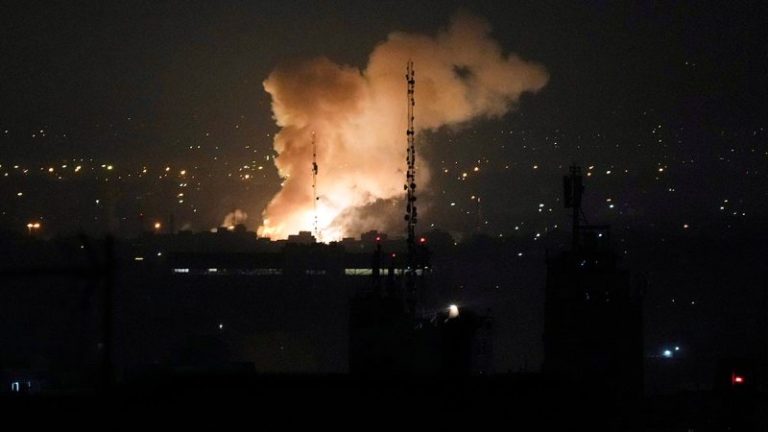
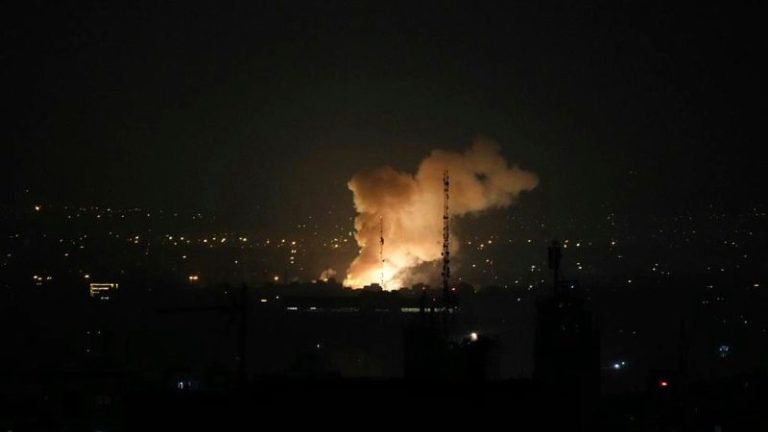
Israel’s overnight strike on Iran was not only one of the most ambitious aerial campaigns in recent history, it was the result of years of covert planning, surveillance and infiltration by Israeli intelligence. 

While dozens of fighter jets bombed nuclear and military targets across Iran early Friday morning, the groundwork had long been laid by Mossad agents working in lockstep with the Israeli military.

Code-named ‘Am Kelavi’ (Rising Lion), the preemptive operation was the product of unprecedented coordination between the Israeli air force, the Military Intelligence Directorate, Mossad and the country’s defense industries. For years, they worked ‘shoulder to shoulder’ to gather the intelligence files needed to eliminate Iran’s most sensitive military and nuclear assets.

A senior Israeli security official told Fox News Digital, ‘The Mossad worked with a huge number of people—a mass of agents deep inside Iran, operating at the highest level of penetration imaginable. Some of these agents were retrained as commando fighters to carry out mission-critical operations.’

That work culminated in what the official described as a three-layered strike. ‘We eliminated vast areas of Iran’s surface-to-surface and surface-to-air missile infrastructure, a massive number of senior scientists, and large portions of their air defense systems.’

‘We established a drone base inside Iran, and at zero hour, Mossad operatives retrieved them from hiding spots. We placed precision missiles on numerous vehicles and embedded additional missiles throughout the country, hidden inside rocks. We activated this entire array in precise coordination with the Israeli air force.’

Israeli jets launched simultaneous strikes on dozens of sites, including Iran’s primary uranium enrichment facility at Natanz. Located 1,500 kilometers from Israeli territory, Natanz had long been a critical part of Iran’s nuclear program. Brig. Gen. Effie Defrin, the Israeli Defense Forces spokesperson, described it as an underground compound containing multi-level centrifuge halls and electrical infrastructure.

‘We inflicted significant damage on this site,’ Defrin said. ‘This facility was used by the IRGC to advance Iran’s project for acquiring nuclear weapons.’

Avner Golov, vice president of the Mind Israel think tank, told Fox News Digital, ‘The biggest success was hitting the Natanz facility and neutralizing Iran’s first wave of retaliation—the automatic response. 

‘We took out their opening move—the ballistic missiles that were meant to launch immediately, and the drones that were already on the way. The fact that scientists were eliminated—that’s the true achievement.’

However, far beyond the airstrikes, Israeli sources revealed that a massive intelligence and sabotage campaign was unfolding in parallel inside Iran. A former senior Israeli official told Fox News Digital, ‘There was activity inside Iran—an insane level of intelligence work.

‘They located the entire command center of the Iranian Air Force. All the commanders were together, and they were taken out in real time.’

According to the same official, Iran’s military had gathered its top air force brass in one facility as part of a publicized drill meant to project deterrence. Instead, it exposed them. ‘It was partly luck, but also planned—the ability to see them in real time and strike with precision,’ he said. ‘It’s a reminder of what happened in Lebanon—taking out contaminated leadership with surgical intelligence.’

That operation in Lebanon, often referred to as the ‘pagers’ operation, saw Israel infiltrate and sabotage Hezbollah’s command network using Chinese-made radios embedded with explosives. The current operation, Israeli experts say, was broader, deeper, and more strategically impactful.

‘I think this is so much more substantial,’ said Nadav Eyal, an Israeli journalist and analyst for ‘Yediot Ahronot’ newspaper. ‘What was done here was much more than the James Bond kind of type of pagers operation. It’s more about the infrastructure, intelligence needed to read devastating strikes on military installations, and the ingenuity of its intelligence services—electronic surveillance, things that it’s been developing for many years now.’

The Mossad’s infiltration campaign involved the quiet smuggling of sophisticated weaponry into Iran, hidden inside vehicles and embedded near strategic targets. In central Iran, precision-guided weapons were planted near surface-to-air missile batteries and launched on command. Disguised vehicles were also used to destroy Iran’s air defense systems at the moment of the strike. Meanwhile, explosive drones positioned near Tehran were activated to destroy long-range missile launchers at the Esfajabad base.

All of it took place under the watch of Iranian intelligence and succeeded without detection.

Israeli defense officials now say the mission represents one of the most successful intelligence-military integrations in the country’s history. If the Lebanon pagers stunned the world, the message from this strike is even clearer: nowhere is out of reach.

This post appeared first on FOX NEWS

And finally, he pounded his mitt and strutted off the mound to punctuate one of the most dominant stretches of pitching in major league history.

The Detroit Tigers left-hander won both the American League Cy Young Award and its pitching triple crown last season, yet somehow, in the season after, has only built upon those august accomplishments. Thursday night at Camden Yards, he capped a 12-start span in which he’s been virtually unhittable while driving the Tigers to the best record in the AL.

He shut out the Baltimore Orioles over seven innings, his fourth straight start of at least that length, and Detroit improved to 45-25 with a 4-1 victory.

Baltimore loaded its lineup with right-handed batters, yet advanced just one batter into scoring position. The Orioles did goad Skubal into showing his human side, however: He walked two batters for the first time in more than two months, yet in reality, was never in anything but full control.

While Skubal’s body of work is just coming together this season, his 12 starts dating from April 8 are historically surgical: He’s struck out 101 batters and walked just five. Since 1893, only Los Angeles Dodgers stalwart Clayton Kershaw – in 2015 and 2016 – and New York Mets ace Jacob deGrom in 2021 had similar stretches of precision and dominance.

On a night that felt like the first of summer, with the temperature touching a season-high 88 degrees, Skubal admitted to battling himself from the jump, when leadoff batter Jordan Westburg nearly took him out of the park to right field.

Seven innings, six strikeouts and three hits later, Skubal had conquered yet another foe – the Orioles and the elements.

“Listen, he’s one of the best in the league and will counter whatever they’re doing and stays in the fight a ton,” says Tigers manager A.J. Hinch. “He didn’t quite have the command he normally has, which doesn’t mean he had bad command tonight.

“It just means it was not perfection. If that’s your off day and it’s seven scoreless? Pretty good pitcher.”

Indeed, Skubal has been so good for so long – he’s earned the right to consider two so-so starts to begin this season the outlier – that any critiques of his work come off as so much nitpicking.

“I’ll go and work on my command in my bullpen,” Skubal deadpanned.

But seriously. If this is his worst of late?

“Twenty-four balls? How many throws?” asked Skubal, who was then informed he made 98 pitches.

“That’s pretty good. It just felt like my misses were bigger. But it’s two walks. It’s not the end of the world.”

Especially when the Tigers are just getting started. They’ve built an eight-game lead in the AL Central, are well on course to earn a first-round playoff bye and suddenly have a group seasoned by 2024’s stunning run to a wild card berth and trip to the AL Division Series.

Sure, Skubal is just a starting pitcher, albeit one with a 7-2 record, a 1.99 ERA, and a generational 111-9 strikeout-walk ratio. Yet there’s really no way to oversell his contributions to the Tigers, not when they’ve lost rookie Jackson Jobe to Tommy John surgery and still enjoy deploying Hinch’s “chaos” pitching plans that can zap the bullpen.

A Skubal start provides oxygen that can last the whole week, a benefit that’s immeasurable even within his 3.1 WAR entering Thursday, tops among AL pitchers.

“We can use the bullpen aggressively on both ends of his starts because he’s been so reliable,” says Hinch. “Now, he doesn’t have to be perfect. He doesn’t have to carry any more than his share of the responsibility.

“But I get to react accordingly to how he does for the next couple of days. So when he pitches well and deep into the game, we feel that benefit for two and three and four games until he gets on the mound again.”

That’s what made Thursday’s start so instructive. Skubal needed to wriggle out of a first-and-third jam in the second and was up to 48 pitches after three innings.

And then what? Consecutive nine-pitch innings in the fourth and fifth, all six outs coming on ground balls.

That’s value.

“That’s probably what I’m most proud of. I’m prouder of the grind-it-out than when you’re on early,” says Skubal, who nonetheless leads the AL in strikeouts.

His ERA over these dozen starts is 1.47, though Skubal stops short of calling it the greatest stretch of his career. He puts his ’24 finish – including three postseason starts – above this stretch.

“That’s the best I’ve thrown a baseball,” he says, “and I’ll continue to chase that and elevate my game.”

For now, he’s chasing deGrom and Kershaw and by the end of this season certainly looks like he’ll catch them in one regard: Multiple Cy Young awards.

Those trophies come as a result of the dominant days, the 13-strikeout shutouts like the one he authored four starts ago.

They also come on the nights that are a relative struggle, that end with 98 mph past rookie Coby Mayo and an exultation worthy of the toil.  

“I felt like I finished stronger than I started,” says Skubal. “That’s why the emotion came out.”

And summer’s just getting started.

This post appeared first on USA TODAY
A second federal judge on Friday blocked an executive order from President Donald Trump aimed at overhauling elections in the U.S.

Trump’s March 25 executive order sought to compel officials to require documentary proof of citizenship for everyone registering to vote for federal elections, accept only mailed ballots received by Election Day and condition federal election grant funding on states adhering to the new ballot deadline.

‘The Constitution does not grant the President any specific powers over elections,’ Judge Denise J. Casper of the U.S. District Court in Massachusetts said in Friday’s ruling.

A group of Democratic state attorneys general had challenged the executive order as unconstitutional. 

The attorneys general said the directive ‘usurps the States’ constitutional power and seeks to amend election law by fiat.’

The defended the order as ‘standing up for free, fair and honest elections’ and called proof of citizenship a ‘commonsense’ requirement.

‘Despite pioneering self-government, the United States now fails to enforce basic and necessary election protections employed by modern, developed nations, as well as those still developing,’ Trump wrote in the executive order, titled ‘Preserving and protecting the integrity of American elections.’

‘India and Brazil, for example, are tying voter identification to a biometric database, while the United States largely relies on self-attestation for citizenship. In tabulating votes, Germany and Canada require use of paper ballots, counted in public by local officials, which substantially reduces the number of disputes as compared to the American patchwork of voting methods that can lead to basic chain-of-custody problems,’ he continued.

‘Further, while countries like Denmark and Sweden sensibly limit mail-in voting to those unable to vote in person and do not count late-arriving votes regardless of the date of postmark, many American elections now feature mass voting by mail, with many officials accepting ballots without postmarks or those received well after Election Day,’ he also said.

Casper also noted that, when it comes to citizenship, ‘there is no dispute (nor could there be) that U.S. citizenship is required to vote in federal elections and the federal voter registration forms require attestation of citizenship.’

Casper cited arguments made by the states that the requirements would ‘burden the States with significant efforts and substantial costs’ to update procedures.

The ruling is the second legal setback for Trump’s election order. A federal judge in Washington, D.C., previously blocked parts of the directive, including the proof-of-citizenship requirement for the federal voter registration form.

The Associated Press contributed to this report.

This post appeared first on FOX NEWS

Iran on Friday confirmed it will not end its nuclear programs despite the overnight attacks by Israel on its atomic facilities and apparent continued U.S. efforts to meet with Iranian counterparts on Sunday.

In a statement released by the Iranian government, Tehran claimed Israel’s attack proved it has a ‘right to enrichment and nuclear technology and missile capability.’

‘The enemy has caused our victimhood and legitimacy to be proven as to who is the aggressor and which regime threatens the security of the region,’ the statement said.

The comments not only followed Israel’s strike that killed seven top officials – including four military commanders, one official allegedly involved in the nuclear talks with the U.S., and two nuclear scientists – but also after the board of governors from the U.N.’s nuclear watchdog on Thursday declared Iran is in breach of its non-proliferation obligations for the first time in nearly 20 years.

Despite the formal rebuke over its nuclear violations, including its substantial stockpiles of near-weapons-grade uranium, Iranian President Masoud Pezeshkian vowed Tehran would continue to enrich uranium – the core hiccup in ongoing U.S.-Iran nuclear negotiations. 

‘The cowardly nocturnal operation while the diplomatic process on the nuclear issue of Iran was underway is a sign of this regime’s fear of Iran’s power of persuasion and defense for the world,’ Tehran said Friday. 

Iranian political heads have claimed that the overnight strikes mean Tehran will not continue with nuclear negotiations with Washington, D.C., and that a meeting set with Middle East Special Envoy Steve Witkoff in Oman on Sunday was off. 

However, the Trump administration has not confirmed these claims and neither has the Iranian regime. 

When asked if Iranian officials have notified the U.S. that Iran is withdrawing from nuclear negotiations, a US official said, ‘We still hope to have talks.’

Neither the White House nor the State Department immediately responded to Fox News Digital’s questions regarding the talks. 

President Donald Trump is set to hold a security meeting at 11 a.m. on Friday, when the future of the talks is expected to be addressed. 

Rich Edson contributed to this report. 

This post appeared first on FOX NEWS

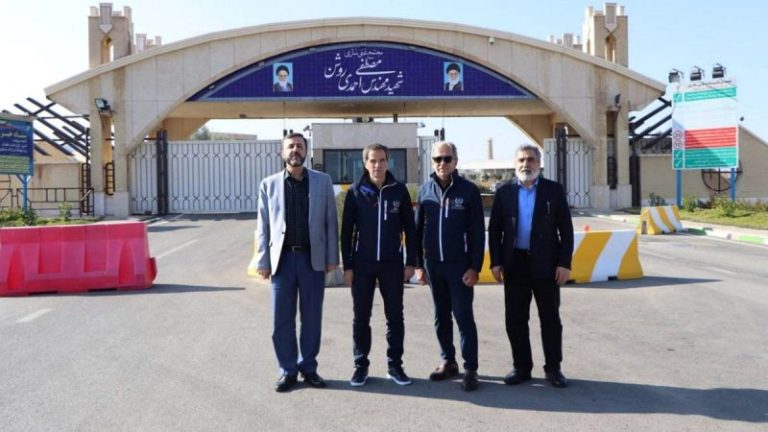
International Atomic Energy Agency Director General Rafael Mariano Grossi called Israeli President Isaac Herzog on Friday following airstrikes on Iran’s Natanz nuclear facility, an Israeli presidential spokesperson told Fox News. 

Grossi told Herzog that the facility was severely damaged in the strikes, according to Israeli media reports. 

‘We are currently in contact with the Iranian nuclear safety authorities to ascertain the status of relevant nuclear facilities and to assess any wider impacts on nuclear safety and security,’ Grossi said in a statement. 

‘At present, the competent Iranian authorities have confirmed that the Natanz enrichment site has been impacted and that there are no elevated radiation levels. They have also reported that at present the Esfahan and Fordow sites have not been impacted.’ 

‘This development is deeply concerning. I have repeatedly stated that nuclear facilities must never be attacked, regardless of the context or circumstances, as it could harm both people and the environment. Such attacks have serious implications for nuclear safety, security and safeguards, as well as regional and international peace and security,’ Grossi continued. 

‘As Director General of the International Atomic Energy Agency, and consistent with the objectives of the IAEA under the IAEA Statute, I call on all parties to exercise maximum restraint to avoid further escalation. I reiterate that any military action that jeopardizes the safety and security of nuclear facilities risks grave consequences for the people of Iran, the region, and beyond,’ he also said. 

The Israel Defense Forces said in a statement that ‘Overnight, Israeli Air Force fighter jets, guided by precise intelligence from the Intelligence Directorate, struck the Iranian regime’s uranium enrichment site in the Natanz area.’ 

‘This is the largest uranium enrichment site in Iran, which has operated for years to achieve nuclear weapons capability and houses the infrastructure required for enriching uranium to military-grade levels. As part of the strikes, the underground area of the site was damaged. This area contains a multi-story enrichment hall with centrifuges, electrical rooms, and additional supporting infrastructure,’ according to the IDF. 

‘In addition, critical infrastructure enabling the site’s continuous operation and the Iranian regime’s ongoing efforts to obtain nuclear weapons were targeted,’ it said. 

Fox News’ Yael Rotem-Kuriel contributed to this report. 

This post appeared first on FOX NEWS

Rep. Marjorie Taylor Greene, R-Ga., and her DOGE subcommittee are launching an investigation into Planned Parenthood on Friday.

Greene is sending a letter to Planned Parenthood CEO Alexis McGill Johnson, questioning whether the nonprofit is commingling ‘federal funds and using them for unpermitted purposes.’

Federal funds are barred from being used for abortions under a measure called the Hyde Amendment. President Donald Trump has also taken executive action toward affirming the Hyde Amendment and blocking federal dollars from organizations that provide transgender healthcare to youth.

However, Greene’s letter suggested she is accusing Planned Parenthood of doing both.

‘Despite receiving 39 percent of its annual revenue from federal funds intended for essential health services, such as cancer screenings and wellness exams, Planned Parenthood is increasingly using its resources to offer abortions to its patients,’ Greene wrote.

Greene said the data show that the ‘latest Planned Parenthood annual report shows that it performed more than 400,000 abortions, an increase of 23 percent over the last 10 years.’

The letter also accused Planned Parenthood of providing ‘gender-affirming care’ with ‘allegedly little to no medical or psychological evaluation.’

An annual report by Planned Parenthood, cited by Greene, showed 45 ‘affiliate health centers’ providing hormone therapy for so-called ‘gender-affirming care.’

However, Greene said other gender transition services were reported as ‘other procedures,’ including pediatric care and infertility services as well, which she said obscured the ‘true number of transgender services provided.’

‘Planned Parenthood’s official policy varies by state, but some Planned Parenthood health centers will provide cross-sex hormones to minors as young as 16 years old with parental consent,’ Greene wrote, while also accusing the group of ‘not consistently adhering to its own parental consent policies.’

To assist her probe, Greene is seeking Planned Parenthood’s non-public financial statements from between January 2020 through June 2025, as well as a list of its independent affiliate health centers, informed consent documents, and other documentation.

Notably, that period includes when the Supreme Court overturned Roe v. Wade and sent the issue of abortion back to the states in June 2022.

Republicans have long targeted Planned Parenthood, accusing the nonprofit of misusing federal dollars despite the longstanding anti-abortion funding measure.

The group’s supporters, meanwhile, have held it up as a key nationwide provider of women’s healthcare – which they believe has only gotten more critical after the high court’s June 2022 decision.

Greene’s panel, which is under the House Oversight Committee, is opening the probe weeks after House Republicans passed their version of Trump’s ‘big, beautiful bill,’ which includes a provision to block federal funds from organizations that provide abortions.

Fox News Digital reached out to Planned Parenthood for comment but did not immediately hear back.

This post appeared first on FOX NEWS

Far-left House Democrats are hammering Israel for its Thursday night strikes on Iran.

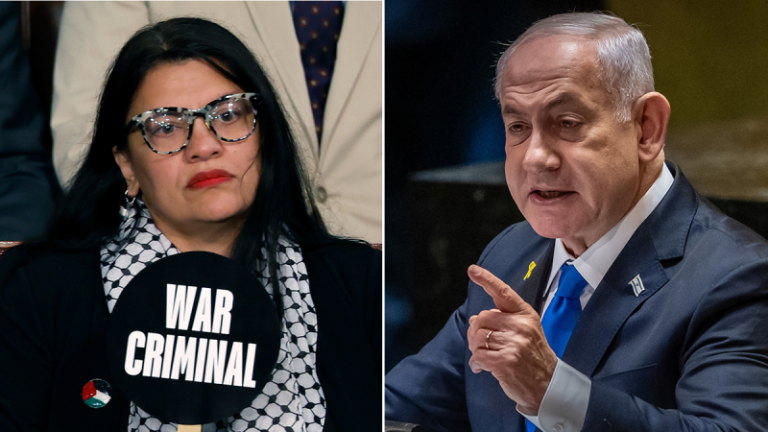
Members of the House’s progressive ‘Squad,’ already critical of Israel’s war on Gaza, are denouncing Israeli Prime Minister Benjamin Netanyahu as a ‘war criminal’ after his government launched attacks on Tehran and surrounding areas.

‘Israel has once again bombed Iran, a dangerous & reckless escalation. The war criminal Netanyahu wants to ignite an endless regional war & drag the US into it,’ Rep. Summer Lee, D-Pa., wrote on X. ‘Any politician who tries to help him betrays us all. The American people do not want this.’

Reps. Rashida Tlaib, D-Mich., and Ilhan Omar, D-Minn., claimed Israel would drag the U.S. into war in the Middle East.

‘The Israeli government bombing Iran is a dangerous escalation that could lead to regional war. War Criminal Netanyahu will do anything to maintain his grip on power,’ Tlaib wrote.

‘We cannot let him drag our country into a war with Iran. Our government must stop funding and supporting this rogue genocidal regime.’

Omar said, ‘Regardless of what [President Donald Trump] thinks, Israel knows America will do whatever they want and feels confident about their ability to get into war and have the American government back them up. Israel also knows they can always rely on getting America to protect and serve its needs.’

‘Everyone in America should prepare themselves to either see their tax dollars being spent on weapon supplies to Israel or be dragged into war with Iran if this escalates,’ Omar said.

Washington and Tehran have been engaged in talks about a new Iran nuclear deal aimed at reining in the Islamic republic’s uranium enrichment.

Trump posted on Truth Social Friday morning that Iran now had a ‘second chance’ to come to the table after Israel’s strikes.

Democrats, meanwhile, were more concerned.

Sen. Chris Murphy, D-Conn., said on MSNBC’s ‘Morning Joe’ that he thought Israel’s strikes, which it called preemptive, were a bid to scuttle those talks.

‘It appears as if this was an attempt by Israel to scuttle Donald Trump’s negotiations with Iran. Of course, our preferred pathway here to keep Iran from getting a nuclear weapon is diplomacy,’ Murphy said.

U.S. officials have been warning Iran not to respond to what Israel has said will be a multi-strike operation.

This post appeared first on FOX NEWS

For someone who is the head of soccer’s global governing body, FIFA president Gianni Infantino sure does hate the sport. Or the players who play it, at least.

The expanded Club World Cup, the latest frontier in Infantino and FIFA’s incessant cash grab, kicks off Saturday. An idea that no one was clamoring for, the 32-team, month-long tournament adds to what is already an overcrowded calendar and threatens to dilute the quality of the game.

Well, yes. But what’s a little thing like risk of injury and exhaustion when Infantino and his FIFA cronies can stuff more money into their pockets?

Oh, Infantino will say the Club World Cup is meant to expand the game. To bring a spotlight to teams outside of Europe and broaden soccer’s appeal. But that is, to put it nicely, hogwash.

The Club World Cup is a glorified ego trip for Infantino, who put his name on the trophy and his face on a Panini sticker. He wants credit, and cash, and he doesn’t really care about the long-term consequences.

Players have, for years already, been complaining about the increasingly crowded calendar.

Say you’re a top men’s player from one of Europe’s powerhouse countries and you play in one of the top European leagues. The club schedule is 38 or 34 games, depending on the league. Champions League or Europa League games will add anywhere from eight to 17 more games. Domestic cups can mean another half-dozen or more.

Then there’s national team duty. There are qualifiers, for either the European championship or the World Cup. Friendlies. And, for the last seven years, the Nations League.

That adds up.

Even before the Club World Cup starts, France and Inter Milan striker Marcus Thuram has played 56 games this season, according to FBRef.com. After playing 58 last season. Should Inter reach the Club World Cup final, Thuram will have gone more than 12 months without a significant break.

His France teammate Kylian Mbappe has played a whopping 64 games since last July — and that’s with Real Madrid going out in the quarterfinals of the Champions League. Lamine Yamal, arguably the game’s brightest young star, played in 65 games this season between Spain and Barcelona.

These aren’t garbage minutes, either. Thuram, Mbappe, Yamal and the other top players are starting and playing most, if not all, of these games.

Christian Pulisic has gotten grief for asking out of the U.S. men’s national team roster for the Gold Cup so he can be in top form for next summer’s World Cup, but can you blame him? According to FBRef.com and U.S. Soccer, Pulisic has played in 118 games for club and country since signing with Milan in July 2023.

And that doesn’t even take into account the transatlantic travel required when he plays for the USMNT during the club season. Pulisic is banged up and he’s bone tired, and you can’t keep running him into the ground if you want him in top form for next summer’s World Cup in the United States, Canada and Mexico.

“After thoughtful discussions and careful consideration, we made the collective decision that this is the right moment for him to get the rest he needs,” said Matt Crocker, U.S. Soccer’s sporting director.

“The objective is to ensure he’s fully prepared to perform at the highest level next season.”

Players aren’t the only ones showing signs of fatigue. Broadcasters worldwide yawned at the media rights for the Club World Cup before the now-Saudi-backed DAZN agreed at the 11th hour to take them. Ticket sales have been anemic, with FIFA having to cut prices even for games featuring Lionel Messi’s Inter Miami.

This is a problem of FIFA’s own making.

Infantino is going heavy on the “historical” nature of the Club World Cup, but that’s a tough sell. Especially when the World Cup is just a year away and will be played in many of the same cities.

Fans don’t have Saudi sugar daddies like Infantino and his FIFA brethren. If the choice for their disposable income is between next year’s World Cup and a second-tier tournament that is not new, just revamped, and is being played in many of the same cities as the World Cup, that’s not really a choice at all.

“Football is such an important sport all over the world,” Infantino said Tuesday.

Be nice if he and FIFA treated it that way, rather than a means of feeding their own egos and bank accounts.

Follow USA TODAY Sports columnist Nancy Armour on social media @nrarmour.

This post appeared first on USA TODAY

The amount of pressure on a football field could make a volcano erupt. Players and coaches are under intense scrutiny, with people eyeing their every move and ready to burst with an emotionally-charged reaction for anything that happens.

The same goes for the officials.

Sports fans have their beloved franchises and their hated rivalries, but there’s one thing even lifelong enemies can seemingly agree on: referees suck.

Whether it’s a missed holding call or an uncertain first down, referees are under constant judgment. For most of the 60 minutes of play, coaches and players will argue their decisions, and fans will hurl endless expletives and threats at the calls they’re certain are wrong.

The life of a referee is not for the faint of heart. Some level above perfection is required to satisfy all parties involved – and it still isn’t enough. And no one knows that more than Dean Blandino, vice president of officiating for the United Football League and Fox Sports rules analyst.

‘What I’ve learned over a long time is it doesn’t matter if you could be really good at what you do, a lot of people are going to think you’re not very good at it, because officiating is just that,’ Blandino told USA TODAY Sports. ‘Half the people are going to be upset about the call, the other half are going to like the call, and then that’s going to switch the next time you make a decision.’

A never-ending list could be made of all the issues people have with officiating, and it would likely take forever to appease the complaints. Even worse, fans really don’t like referees.

But the UFL is trying to bridge the splintered gap between fans and refs. The spring football league has an officiating process you wouldn’t see in the NFL or college football, offering more access and insight into every call made on the field – and possibly pave the way for other leagues.

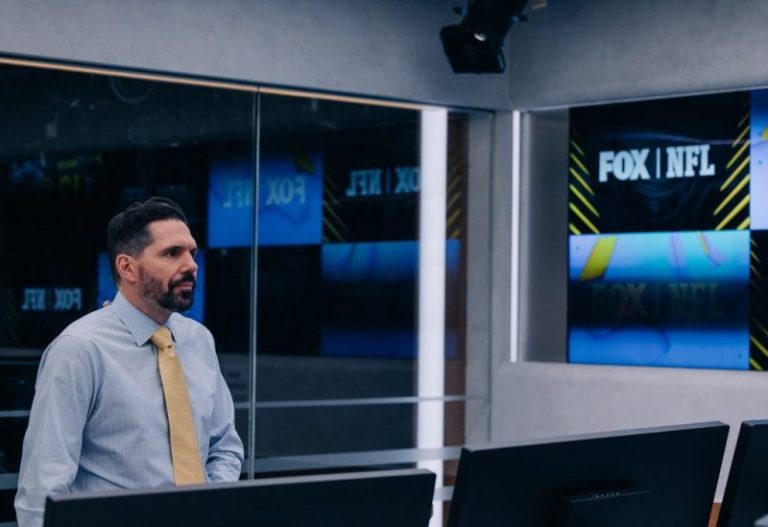
The UFL invited USA TODAY Sports to Fox Sports’ studio in Los Angeles to get an inside look at how the league’s officiating process works and the big issues in football’s rule enforcement.

How UFL officiating is different than NFL, college football

In the NFL, the head of officiating doesn’t communicate with the on-field officials unless a play is under replay review. It’s mostly the standard in college football as well, as conferences vary in their replay process.

What’s different in the UFL is there’s constant communication between the head official and those on the field. From just before kickoff until the game ends, Blandino is able to speak with the referees on the field.

‘Our goal is not to re-officiate every play from up here,’ he said. ‘We’re not there to check every spot. But if there is something significant, maybe it’s a third-down play going fourth down, or if there’s six or seven yards, something like that, we’ll communicate that.’

It makes for a smooth product. On nearly every play, Blandino can use a multitude of camera angles available at the stadium to ensure whatever call was made on the field is correct – all with an Xbox controller.

The UFL uses the Hawk-Eye cameras, a similar type the NFL will be using for first down measurements during the 2025 season. With the system, Blandino is able to sync several camera angles together to show a certain moment in a play and slow things down. A crew is alongside him to look at all available camera angles, and point him to the right ones that are critical to making the call. He touted the system allows him to ‘start to evaluate (plays) right away’ rather than put everything on hold.

Speed is the name of the game when reviewing. One of the biggest complaints with referees is reviews take too long. Drag it out and people get frustrated with all the time it takes.

Blandino said the speed of replay in the UFL has shortened how long the review process takes. He wants to have a decision made within 60 seconds – unless a commercial break is needed, in which he can take his time. Still, he said the replay center has averaged about 56 seconds per replay stoppage.

‘The goal is always, obviously, we want to be accurate, but we want to be efficient as well,’ he said.

Granted, the UFL is able to do this with a schedule that isn’t as chaotic as the NFL. While the NFL will have several games in the 1 p.m. and 4 p.m. ET Sunday window, the UFL typically has one game at a time, allowing Blandino and head of officiating Mike Pereira to have their undivided attention on one field rather than bouncing around.

What UFL officiating is like

It’s one thing to boast about how effective officiating is in the UFL, but it needs to be seen in action to put it to the test. USA TODAY Sports was in the command center for the final day of the regular season on June 1 for the Arlington Renegades vs. the San Antonio Brahmas and the Birmingham Stallions vs. the Memphis Showboats.

Over the course of the two games, the command center was able to have limited disruptions to the contest. In the first quarter between the Renegades and Brahmas, a play that was initially called a catch on the field was immediately reviewed by Blandino, and he overturned the call. The decision was made quick enough that the ensuing play wasn’t close to being snapped, and by the time he relayed the call to the referees, there wasn’t much time between re-spotting the ball.

“We’re really cognizant of that, and trying to keep those stoppages to a minimum, keep the game flowing,” Blandino said.

In the UFL, there’s super challenges where teams can challenge anything on the field. In the game, one was made by Arlington regarding a potential defensive holding. With the command center crew assisting in finding angles, Blandino was able to rule the challenge was unsuccessful in about 80 seconds. 

Another unique aspect about the UFL is the audience can hear what Blandino is looking at, giving viewers a peek into what key components are used to determine a call. He’s able to justify his reviews on-air with the broadcast team, and his deeper explanations to USA TODAY Sports weren’t something you’d get during a game with a replay center.  

The pressure on officiating

Even though the day ran smoothly, controversy did arise. In the first quarter of the Birmingham-Memphis contest, the Stallions turned a tip drill into a pick-six, but the Showboats challenged the play for potential hands to the face on quarterback Dresser Winn. While the defender’s hand made contact with Winn’s facemask, Blandino ruled it wasn’t grabbed.

The decision didn’t go well with Memphis, particularly Showboats defensive coordinator Jim Horton, who was visibly frustrated with thecall, pointing to a freeze frame of the play. It was just as tense in the command center as Blandino walked through his decision process, using slow motion replays to make his call. Slow motion and regular speed are the most optimal ways to review a play, as going frame-by-frame doesn’t give concise answers.

‘If I freeze it, I can see the hand here, but what’s happening? How can I tell the force if I freeze it?’ Blandino said. ‘Was it forcible? Was there a grab? The freeze frame does not tell the whole story.’

The call is just one of infinite examples of a decision making people quite upset. It’s pretty much been a thing since sports began, but Blandino believes the intensity of distaste with officials has risen.

He pointed to when he joined the NFL in the mid-1990s. At that time, there was just pressure for officials to make correct calls in real time. Whatever decision was made stood for eternity. Then instant replay was introduced, and it raised the expectation for officials, especially as technology became so advanced to where everything on the field is seen.

‘The technology continues to improve in terms of how we view the game, and I think that raises the expectation on the officials right there. If I can see it, right, why can’t the official see it?’ Blandino said.

Perfection is what everyone on a football field – including referees – strives for, and it doesn’t always happen, leading to concerning situations for officials. The National Association of Sports Officials noted in a 2023 survey more than half of respondents reported instances of not feeling safe as a result of players, coaches or spectators. Blandino added the rise of sports betting has raised tensions further, as one call could decide whether a bettor hits it big or not. 

While replay is available at the collegiate and professional level, it’s not in youth leagues and high school. But regardless of level, Blandino wants people to remember plays happen quickly, and on the field referees have to make a quick judgment based on their point of view – not yours.

‘I really feel there’s a disconnect in how we watch the game on television, and how the game is officiated or watched live. Because you see it once at full speed as an official and then you’re evaluated based on seven different angles, slow motion, all these different technological advancements that we have,’ he said. ‘The expectation continues to be perfection, which isn’t possible, right?

‘Coaches make mistakes. Players make mistakes. Officials make mistakes.’

Pushing toward more transparency in officiating

Despite the pressure facing officials, there is a silver lining being produced in the UFL in transparency. The league allows fans to see the process of its officiating, and viewers getting the scoop helps repair the relationship between the two sides.

The access has helped ‘a push for more transparency’ within officiating, Blandino said, and small steps are being made in other leagues, like how the Atlantic Coast Conference has cameras in its command center so viewers can see what’s going on during the broadcast.

It’s not like that at the NFL, and Blandino said he’s not sure it will ever get that much transparency on Sundays. But he noted the league has made strides, such as clueing him in on calls when he serves as a network rules analyst. It’s not everything, but it’s something as the world of officiating evolves.

The UFL has helped football fans get a better understanding of why certain calls are made – but that doesn’t mean they are satisfied with it. Sports will always need a scapegoat. The game is progressing in the right direction, but maybe the relationship between fans and officials is forever meant to be complicated.

‘They still disagree,’ Blandino said of fans. ‘They may think that I need my eyes checked or whatever. But, yeah, they understand the process and they have a better feel for it.’

This post appeared first on USA TODAY