Archive

2025

Browsing

PHOENIX — They met for the first time last November, and now 3,229 miles away, Hall of Fame catcher Johnny Bench can’t keep his eyes off him.

He watches him on TV. He scours the box scores looking for his name. He checks out the latest stats.

Bench, considered the greatest all-around catcher in baseball history with his 14 All-Star appearances, 10 Gold Gloves, two MVPs and two World Series championships, is mesmerized these days by a young man in Seattle who could become the next, well, Johnny Bench.

He is a modern-day combination of Hall of Fame catcher Mike Piazza (427 homers) and future Hall of Famer Yadier Molina (nine Gold Gloves, four Platinum Gloves).

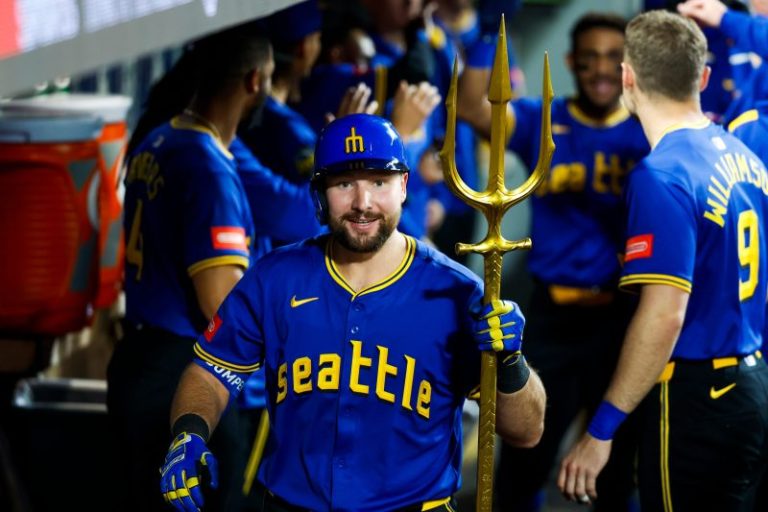
The name is Cal Raleigh, the Seattle Mariners’ switch-hitting catcher.

He’s not only the premier power-hitting catcher in the game today, tied for the major-league lead with 26 homers entering June 15, but also is the game’s best defensive catcher. Raleigh, who has produced the most home runs by a catcher in his first four seasons in baseball history, also won the Gold Glove and the Platinum Gold award last year as the top defensive player in the American League, regardless of position.

Raleigh, 28, has taken the torch from 35-year-old Kansas City Royals star Salvador Perez (five-time Gold Glove winner, five-time Silver Slugger) as the game’s finest all-around catcher.

He already is on his way to carving a spot in the record books. He became the first catcher to hit 20 home runs before June 1, and is just two homers behind Bench for producing the most by a catcher before the All-Star break (28 HR in 1970). He’s on pace to smash Perez’s record of 48 homers for a catcher. He’ll soon join Piazza, Bench and Roy Campanella as the only catchers to hit 30 or more homers in three consecutive years.

“Believe me, I’m paying close attention,’ Bench tells USA TODAY Sports from his Jupiter, Florida, home. “I love watching him hit, seeing him go the other way while trying to get guys in from second and third. I love watching him throw, and unlike some guys you see, he’s not afraid to throw. I love watching him call a game. I love watching him drive in runs.

“I love watching everything he does, it’s just so impressive.’

Bench started closely following Raleigh when they met at the Rawlings Gold Glove dinner in New York last November. They sat at the same table. And they talked. And talked. Raleigh listened. And Bench talked some more.

“He’s such a nice young man,’ Bench says, “and for him to win his first Gold Glove will just give him more confidence. I call it inner-conceit. You’re better than the situation. You’re better than the opposing pitcher you’re facing. You’re better than the batter you’re trying to get out.

“Guys like him have come along maybe 14, 15 times in the history of the game.’

Raleigh, who has been in the big leagues for 3 ½ years, breaks into a smile hearing Bench’s praise. You kidding? Johnny Bench is raving about him? He still can’t believe he got to sit next to Bench during the luncheon, stunned the legend even knew who he was, and blown away by the advice he provided.

“That was so cool. He’s definitely one of a kind,’ Raleigh says. “He was awesome. Old school. Knows baseball. Loves to talk about it.

“There were a lot of stories. He was really adamant about as you get older, taking care of yourself as a catcher. So he was giving me stuff on that. But then the big thing was runners in scoring position, what he was trying to do as a hitter, telling me he was taught to get runs in, and be an RBI guy. Those are the two things that stuck with me, slowing it down, not trying to do too much, and just getting those runs in. He was big on those two things.’

Now, Raleigh has Bench beaming with pride. Raleigh has played in all but one Mariners game this season. He would be perhaps be the MVP favorite if not for Yankees slugger Aaron Judge’s ridiculous year.

“I don’t know about that,’ Raleigh says. “I’m a huge fan of [Kansas City Royals shortstop] Bobby Witt. I think he’s one of the best players in baseball. What he can do, how he can impact the game, the guy is unbelievable.’

Then again, what Raleigh is doing deserves the same hype. He has 26 homers and 53 RBIs, to go along with 44 runs, 11 doubles, seven stolen bases, a .376 on-base percentage and .998 OPS. He has 13 homers and 40 RBIs with runners on base.

“That’s what [former Mariners third baseman] Kyle Seager always told me, too,’ Raleigh says. “He was really a big RBI guy. That’s an important thing that people don’t realize. Can you drive in runs? That’s a huge part of the game. Walks are great, but driving in runs win games.’

Says Mariners All-Star center fielder Julio Rodriguez: “When he’s getting his pitches, he’s not missing them. Whenever someone throws a fastball, and he’s looking for it, it’s gone. It’s pretty amazing what he’s doing.’

And, then, there’s the Gold Glove defense, throwing out the most runners trying to steal in back-to-back years for the first time since Hall of Famer Gary Carter in 1982-83, and a mastermind behind the plate.

“It’s cool to see the progression because coming out of college,’ Mariners backup catcher Mitch Garver Says, “he was really more of a bat-first catcher, and really revamped his whole catching style over the last few years. We saw the rewards last year with the way he was able to receive the ball better. I think it improved his blocking and his throwing as well.

“Here he is, close to 30 homers already, still catching five or six times a week, and is able to do what he does with the staff and produce offensively is just amazing to see. We’re playing in a ballpark that’s not easy to hit in, and he’s making it look easy. He’s hitting balls above his head, hitting balls that are almost about to bounce, and staying locked in behind the plate.’

Says Mariners veteran starter Luis Castillo: “He’s so very good for us, just having that confidence that we have in him. He does so much for us helping the team win defensively, offensively, everything. But the big thing for the pitchers is the confidence for us to throw the pitch that we want, but also the confidence in him to throw the pitch that he wants, too.’

Raleigh is hardly satisfied with just becoming the greatest hitting catcher in the game. He also wants to be the best behind the plate.

“What kid didn’t love Yadi (Molina) coming up?’ Raleigh says. “You wanted to be him. You wanted to be that guy. He was so good in every aspect of the game. Calling a game, blocking, receiving, throwing guys out, back-picking, everything. He was amazing. When he was back there, it was a whole different game. It was special. It was different.’

Raleigh is getting those same rave reviews as Molina, not only what he does on the field night after night, behind the plate and at the plate, but also in the clubhouse.

“He’s a very smart player, very understanding, very professional,’ Mariners first baseman Rowdy Tellez says, “but I don’t think people give him the credit for being a great leader and what he does for everyone in this clubhouse. He’s a true superstar. He’s putting up numbers nobody else is doing. If he did this anywhere else in the country, people would be blown away.

“Oh yeah, and he’s got good hair, too.’

Raleigh couldn’t care less about appearing in commercials. He doesn’t need fans hanging out for hours outside the team hotel on the road for pictures and autographs. He doesn’t even need MLB officials to beg him to be in their Home Run Derby, with Raleigh already volunteering. He’s still waiting on the call.

“I think the last time I did a Home Run Derby was in the High-A Cal League,’’ Raleigh said. “I don’t think I made it out of the first round. But if they invite me, why wouldn’t you want to do something like that? It’d be pretty cool to do something like that one day.’

Who knows, maybe the Derby will let everyone know that MLB’s best catcher plays in Seattle. He received a six-year, $105 million extension this spring, hopefully long enough to be the one to help lead the Mariners to where they’ve never gone before: the World Series.

“This city is amazing,’ Raleigh said. “The people are amazing. The Mariners fans are amazing. It’s the only place I’ve ever known, and it’s hopefully the only place I’ve ever known. I just look really forward to what’s to come, and hopefully get these guys in the World Series because these last two seasons have been extremely disappointing.’’

The Mariners, 34-34, have been to the postseason just once since 2001, and those who are still in the organization – like Mariners manager Dan Wilson – can tell you just how electric the city became when the Mariners reached the postseason in 1995. They were in the playoffs four times in seven years with future Hall of Famers Ken Griffey Jr. Edgar Martinez, Ichiro Suzuki and Randy Johnson.

“For Cal, it comes from in here with him,’ Wilson says, tapping his chest. “He’s got a lot of heart, a lot of desire, and a lot of determination. He wants to win in the worst way. He wants to be out there every day and compete. His at-bats are just so good, the way he receives, the way he blocks, the way he throws, the way he handles our pitching staff. He just does it all, but what really shines through is his desire to win.’

Says Mariners hitting coach Kevin Seitzer: “He’s very intense, very focused, quiet, soft-spoken, but he’s not afraid to share his mind. The stuff that comes out of his mouth is really rock solid. What can you say, he’s a freakin’ pro.’

It’s why the Mariners didn’t hesitate investing $105 million in him before he was eligible for arbitration. Who knows, he could wind up on the Mariners’ Mount Rushmore one day, already hitting more home runs than any Mariner but Griffey this quickly in his career.

“Nothing really changes, but it’s nice to know that you’re going to be somewhere for a long period of time,’ Raleigh says, “especially where you want to be. It probably did ease my mind a little bit in the sense that I know I can just go out and play, enjoy it, and win as many games as we can, and get us to October.

“That’s what you play for. That’s what you constantly remind yourself. We’re playing for something bigger come October, something that you’ll never forget. Something the city will never forget.’

Something like the night of Sept. 30, 2022, when it was his ninth-inning, walk-off homer that finally ended the Mariners’ 21-year playoff drought.

“That’s what I want more than anything,’ he says.

Raleigh pauses, takes a deep breath, and says: “Only this time, in October.’

Around the basepaths

– The Arizona Diamondbacks, who could be the epicenter of the trade deadline, are getting swarmed with calls from rival GMs with hopes they can land the piece to get them into October.

The D-backs have starters Zac Gallen and Merrill Kelly, power-hitting third baseman Eugenio Suarez and first baseman Josh Naylor, along with relievers Shelby Miller and Jalen Beeks, all pending free agents who could be available.

The Seattle Mariners and San Francisco Giants are keeping a close eye on those power hitters, while virtually every contender is looking at their pitching.

One little problem.

The D-backs (35-34) still are contenders.

As long as the D-backs still have a legitimate shot, they are making it clear they are not interested in breaking up the band.

– GMs who have spoken to Atlanta recently are convinced that Alex Anthopoulos has zero interest in giving up players for prospects at the trade deadline.

– The Chicago White Sox were thrilled getting veteran starter Aaron Civale from the Milwaukee Brewers for first baseman Andrew Vaughn, who had been demoted to the minors a month ago.

Still, they won’t have Civale in uniform long.

They plan to trade him at the July 31 deadline, believing they could get at least a couple of mid-tier prospects in return.

– If the Brewers become convinced Vaughn could return to being an everyday first baseman, veteran Rhys Hoskins could be a valuable chip at the trade deadline.

– Miami Marlins ace Sandy Alcantara is starting to look like himself again after undergoing Tommy John surgery, with his fastball (97.6-mph) and command returning just in time to get traded. Alcantara, who’s yielding a 1.50 ERA in his last two starts compared to 8.47 in his first 11 starts, should be the No. 1 trade piece on the market.

The Dodgers, who have plenty of prospects, are one of the teams lurking.

– The Dodgers are encouraged, and awfully tempted, but aren’t planning to use Shohei Ohtani as a pitcher until after the All-Star break.

– The Pirates believe they could get a healthy return for veteran starter Andrew Heaney at the trade deadline. Heaney (3-5, 3.33 ERA) has made every start this season and has pitched at least five innings in 12 of his 14 starts, going into the seventh inning six times.

– The Rockies could shop reliever Jake Bird, who should be their All-Star representative with his 2.06 ERA and 51 strikeouts in 39⅓ innings, and even nine-year veteran infielder Ryan McMahon at the trade deadline.

– You think the Phillies would love to find a center fielder at the deadline? Their center fielders have a .609 OPS, which would rank the lowest at the position in franchise history.

– MLB is hosting the Draft Combine once again in Phoenix this week while teams are cruelly reminded that nothing is ever guaranteed in the draft.

All you have to do is look at this past week:

The Houston Astros dumped Forrest Whitley, the 17th pick of the 2016 draft, while the Chicago White Sox gave up on first baseman Andrew Vaughn, the third pick in 2019.

– Paul Skenes has made 15 starts this season.

He has given up 19 earned runs for a 1.78 ERA.

He has only four victories.

He is the first pitcher in MLB history to have a sub-1.80 ERA over a 15-game stretch and have fewer than five victories, according to Codify Baseball.

In Skenes’ career, spanning 38 starts, he has given up just 48 earned runs for a 1.89 ERA.

– When San Francisco Giants ace Logan Webb (6-5, 2.58 ERA) suffocated the Los Angeles Dodgers’ powerful offense on Friday night, it was his seventh start this season of at least seven innings.

The entire Dodgers rotation has two starts of seven innings.

Webb, in fact, has already tied the franchise record with at least three starts of 10 or more strikeouts and no walks, and it’s still June.

– It may be a century later, but the Boston Red Sox at least are getting a little payback from selling Babe Ruth to the Yankees.

The Yankees traded minor-league catcher Carlos Navarez during the winter to Boston for pitching prospect Elmer Rodriguez-Cruz. Navarez, who spent nine years in the Yankees organization but had only six games of big-league experience, was a long shot to even make the opening-day roster.

Today, he is their everyday catcher, not only exhibiting fabulous defense, but hitting .280 with six homers. He was the hero with his walk-off Friday night against the Yankees.

“He’s been a revelation,” Red Sox ace Garrett Crochet told reporters. “You talk to him and you forget that he’s still classified as a rookie. It’s really special, he really calls games like he’s been doing it for 10 years in the show and his at-bats at the plate late in crunch time, he just never gives in.”

– The Chicago Cubs bullpen has four players who are older than 36 years old and five who weren’t on their opening day roster.

It’s also the same bullpen that has yielded a major-league leading 0.90 ERA since May 14, according to Fangraphs.

– Atlanta rookie Drake Baldwin not only is on the verge of becoming the first African-American everyday catcher since Charles Johnson, but just could be the best hockey player in baseball.

Baldwin, who grew up in Madison, Wisconsin, was also a hockey star in high school, leading the state with 43 goals as a junior and was a finalist for Wisconsin Player of the Year as a senior.

– Kudos to Phillies ace Zack Wheeler, who told The Athletic’s Matt Gelb that he plans to retire after the 2027 season to spend time with his family.

– Just how dominant is Tarik Skubal?

He has thrown 90.1 innings this season, and hasn’t permitted a run in 79 of them, yielding a 1.99 ERA and a 0.808 WHIP.

He’s on pace to become the first pitcher to win consecutive Cy Young awards since Pedro Martinez in 1999-2000.

Oh, and he’s a free agent after the 2026 season, too.

– The best free agent signing of the winter may be Griffin Canning of the Mets.

The Mets didn’t even bother making an offer for Corbin Burnes ($210 million) or Blake Snell ($182 million), but believed in Canning, signing him to a one-year, $4.25 million contract.

He is now having the best season of his career, going 6-2 with a 3.22 ERA after going 6-13 with a 5.19 ERA last year with the Angels, giving up the most runs (99) by any AL pitcher.

Meanwhile, Burnes is out for this year and most of next season undergoing Tommy John surgery. And Snell has made only two starts.

– The Yankees have four 1-0 victories this season, already their most since 1976, according to research extraordinaire Bill Chuck.

– The Yankees are bidding to become the first playoff team since the 2006 Mets to have two starting infielders at the age of 36 or older (Paul Goldschmidt and DJ LeMahieu), according to Joel Sherman of the New York Post.

– The A’s will have their official groundbreaking ceremony June 23 in Las Vegas at the former Tropicana Hotel site. The ceremony will be at 8 a.m. before temperatures hit 105 by noon.

– Don Kelly certainly is showing why the Boston Red Sox nearly hired him as manager a few years ago. He took over a Pirates team that was 12-26, and they since have gone 17-16 entering Saturday.

– Yes, those are the Rays, who revolutionized using openers, who have still used only five starters this entire season, throwing the most innings with the most quality starts. They lead the major leagues in innings, averaging 5.2 innings per start, throwing at least five innings in 88% of their starts.

– The Angels are hanging in the AL West race, but if things change, starting pitcher Tyler Anderson and closer Kenley Jansen will attract plenty of interest.

– Don’t look now, but Yankees castoff Gleyber Torres of the Detroit Tigers could be the American League’s staring second baseman at the All-Star Game. He’s hitting .271 with a .778 OPS, best among AL second basemen.

– The Red Sox’s seven walk-off victories this season already has equaled their franchise with 3 ½ months left to play.

– Torii Hunter, the nine-time Gold Glove outfielder, came up with a nickname for Athletics center fielder Denzel Clarke after his unreal catch to rob Nolan Schanuel of the Angels of a home run by elevating his body over the left-field fence.

“Elastic man,’ Hunter says. “The way he climbed that wall and stretched and caught that ball, you got to have some rubber in you.”

– The Texas Rangers’ offense is starting to surge with the hiring of hitting coach Bret Boone.

They scored five or more runs in just eight of their first 35 games before Boone’s arrival. Since the hiring of Boone, they have scored five or more runs in 13 of the 36 games.

The Rangers (35-36) still remain quite dangerous in the AL West.

– The Los Angeles Angels can never be accused of not giving their minor leaguers or young players a fair shot. They just called up second baseman Christian Moore, their first round pick of a year ago, who played only 79 minor league games. The Angels now have eight of their former first-round picks on their active roster, none who spent more than 100 games in the minors, and all 25 or younger.

– Do you realize the Cleveland Guardians have not lost a game since 2023 when leading after eight innings, going 112-0? They are the only team to remain undefeated since opening day of the 2024 season, according to Codify Baseball.

– The Savannah Bananas may look like all fun and games, but apparently it can be a bit dangerous.

Former All-Star first baseman Sean Casey tore his hamstring running the bases in a Bananas game, and former 20-game winner Adam Wainwright injured his arm training to pitch in one of the games.

This post appeared first on USA TODAY

Israeli parliament member Ohad Tal told Fox News Digital that striking a deal with Iran should not be the goal without first toppling its ‘evil, jihadist regime,’ as President Donald Trump on Sunday called on both sides to come to the negotiating table. 

Tal, who sits on the Knesset foreign affairs and defense committees, spoke to Fox News Digital from outside of Jerusalem on Sunday as Israel and Iran traded strikes for a third day.  

‘We are now engaging in a war with Iran, a war which I believe is historic, because we are now, finally, hopefully, we will liberate, not just ourselves, not just the Iranian people, but the entire world from the threat of the evil Iranian regime,’ he said. 

Earlier Sunday, Trump said on TRUTH Social that ‘Iran and Israel should make a deal, and will make a deal,’ noting how his administration has successfully negotiated other conflict resolutions, including between India and Pakistan, ‘by using TRADE with the United States to bring reason, cohesion, and sanity into the talks with two excellent leaders who were able to quickly make a decision and STOP!’ 

Tal, however, made the distinction that the goal of the Ayatollah and the Muslim Brotherhood is the ‘destruction of Israel’ and the ‘destruction of America.’   

‘I think that our goal should be taking down the Iranian regime, because if you really want to put an end to the ambitions of Iran to acquire a nuclear weapon, the only way to do that is by taking down this regime,’ Tal said. ‘This regime has only one purpose, not to destroy Israel … they want to take down America.’ 

He said more deals would only allow Iran to re-arm and re-develop their nuclear program. 

‘I think just the idea of negotiating deals with a jihadist terror supporter regime is outrageous,’ he continued. ‘I mean, the only goal we should have, we should all have, is taking down this evil regime. Again, if we really want to build a better future of stability and prosperity for everybody in the region, in the world, that should be the goal.’ 

Trump has vetoed a plan floated by Israel to the U.S. to kill Iran’s Supreme Leader Ayatollah Ali Khamenei, a U.S. official told Fox News, amid concerns doing so would further destabilize the region. 

Tal told Fox News Digital that the West must face the reality that ‘we must take down this evil, jihadistic regime’ not just to save the region, but the ‘entire world from this threat.’ 

Since last Thursday, when the Israel Defense Forces launched a large-scale preemptive strike against Iran, targeting nuclear facilities, key infrastructure and leadership, Tal said he’s received calls from Muslim and Arab leaders across the Middle East who told him, ‘You’re not just saving yourself, you’re saving us as well.’ 

‘That is the reality. Iran and the Ayatollahs are not just a threat to Israel, they are a threat to the entire world, and therefore I believe that by the fact that Israel is not looking the other way,’ Tal said. ‘We’re not burying our head in the sand. We are standing in front of this threat, and we are fighting back. I think we are doing a big favor to the world.’ 

Tal said Iran has suffered ‘an unbelievable amount of damage’ and the IDF ‘basically has total control over the Iranian airspace.’ Israeli forces, he argued, are targeting military bases, nuclear facilities and officials, while Iran is targeting civilian populations. Some Iranian missiles have made it past Israel’s aerial defense systems. 

‘That’s a culture that glorifies death, doesn’t care about civilian casualties, and we’re a culture that sanctifies life,’ he said. 

Tal said he has received support from U.S. officials, including members of Congress. 

He believes that Israel’s actions are in line with Trump’s ‘America First’ policy, in that the ongoing operation will prevent the United States from being pulled into a broader conflict. 

‘We’re getting the support from the Trump administration 100 percent,’ Tal said. ‘Trump is supporting America First Policy. We are also supporting America First Policy because fighting this evil regime will help to prevent much, much bigger war.’

‘If the Iranians would have managed to get their desire and acquire a weapon, that would not have just been a threat to America,’ he continued. ‘We’re not asking [for] American boots on the ground, we’re not asking America to fight for us. We’re just asking them to support us in taking away the threat coming from Iran.’ 

Fox News’ Peter Doocy contributed to this report.

This post appeared first on FOX NEWS

ST. LOUIS — Gold and white confetti fell at The Dome at America’s Center on Saturday night as the DC Defenders put a bow on the United Football League’s second season by winning their first spring league title.

The UFL’s leaders will take a moment to bask in the glow of the championship game, which featured a record-breaking performance from the Defenders (58 points) and Jordan Ta’amu (390 passing yards, five total touchdowns).

But in the weeks after, the league will begin looking at ways to improve in planning sessions ahead of its 2026 season. That will include beefing up efforts to improve attendance, exploring expansion and considering several changes that could improve and make more exciting what it believes is an already strong on-field product.

Here’s a look at what’s next for the UFL as the league enters its second full offseason since the 2024 USFL-XFL merger.

Will the UFL expand for 2026 season?

The UFL has not yet announced any plans to expand for the 2026 campaign, but it continues to explore markets that could potentially house future teams.

‘We’re looking heavily into the process,’ Brandon said of expansion. ‘We’re taking a lot of rigor to it. We’re taking a lot of time and effort to do it the right way.’

The UFL’s executive vice president of football operations Daryl Johnston added that it’s ‘great’ to hear so many are interested in the league’s potential expansion.

However, he was adamant sustainability is at the front of the league’s mind as it evaluates potential UFL markets.

‘One of the things that Russ always talks about is incremental growth, and doing it in a way that is sound and provides us the opportunity to make sure this league is sustainable moving forward,’ Johnston said, before adding. ‘When it’s right for the league, that’s when we’ll make that decision.’

The league’s reticence about expansion comes after ProFootballTalk’s Mike Florio reported USFL Enterprises LLC — which owns the USFL conference side of the UFL — had filed trademarks for the names of the names of four original USFL teams: Oakland Invaders, Philadelphia Stars, New Jersey Generals, and Tampa Bay Bandits.

The filings occurred on May 6, 2025. It isn’t clear whether the league views these as potential future market options or if it just wants to own the former USFL team names.

Either way, the UFL isn’t looking to rush into a hasty decision about expansion. The league is simply getting its ducks in a row as it considers the possibility.

‘I think as we stand now, we will continue to look at it over the next few months, meet with the board, and make some decisions,’ Brandon said. ‘But I think it’s in a very good place from a process standpoint.’

UFL attendance: League remains focused on improvement

Expansion is one of the UFL’s eventual goals, but improving its attendance remains one of its No. 1 priorities.

Those results could be viewed as discouraging given that the UFL invested resources into each of its markets for the 2025 season in the hopes of improving attendance.

However, Brandon outlined the 2025 campaign was the first ahead of which the league was able to really focus on its attendance goals. Much of the 2024 season was spent getting operationally situated after the USFL-XFL merger closed on Jan. 13, just two-and-a-half months before the start of the season.

‘We were drinking out of a fire hose operationally to get up and running,’ Brandon detailed.

But after learning more about consumer habits in 2025, UFL owner Dany Garcia explained the league has a better idea of what ‘The market actually thinks of us.’

‘This is the year that we got the clarity, and now we know who we are, and now we push forward,’ Garcia said.

As such, the league’s focus investment in market-by-market strategies to improve attendance will continue on.

‘We know this: We have a great product. We know it’s affordable,’ Brandon said. ‘We’re trying to activate as much as possible in each of these local markets. And we have a great plan, I believe, in place to do that.’

UFL to evaluate start of season date

The UFL has started its season on March 28 in consecutive years. Brandon revealed the league is planning to evaluate whether that rough timeframe — which was established to split the difference between the XFL and USFL start dates following the 2024 merger — works.

‘We’re going to take a look and see what makes sense,’ Brandon said. ‘Not only the player feedback, but our consumer feedback as well.’

The UFL’s current start date forces it to face early season ratings competition from the NCAA Tournament, which could be a part of the reason overall TV viewership for 2025 declined by 20%, per Sports Business Journal.

Brandon didn’t seem overly worried about the state of the league’s TV ratings, referring to them as ‘phenomenal.’

‘People would give their eyeteeth for the amount of eyeballs that are watching our games on TV,’ he said.

UFL training camp length under evaluation

The UFL set its roster size at 64 for the 2025 season after it was 75 for 2024. That roster size reduction also prompted the league to cut training camp from four weeks to three weeks.

Some UFL offenses got off to a slower start in 2025 than the league was hoping, so Johnston explained going back to a four-week training camp model could be in play.

‘Those will be conversations we have with our coaches,’ Johnston detailed. ‘Did that impact you? Do you need more time?’

Johnston also opined one of the reasons some UFL teams struggled out of the gate was because they hadn’t yet found their No. 1 quarterback. He and Brandon pointed to the Houston Roughnecks — who finished 5-5 despite starting the season with a 1-3 record — as one of the prime examples, as their performance improvement coincided with Jalan McClendon’s insertion into the starting quarterback role.

A longer training camp could allow coaches more time to evaluate the position and make the all-important call about a Week 1 starter.

‘You have to have your guy in place Week 1,’ Johnston said. ‘I hope that’s the big lesson that our teams learned this year.’

Could UFL free agency shake up league?

UFL rosters have often been plundered in the offseason as NFL teams swoop in and scoop up some of the league’s top players to give them a shot at making it in the UFL.

However, the league is set to have some of its own players experiencing free agency ahead of the 2026 season, as Johnston explained.

‘We’ve actually got players experiencing free agency this year,’ he said. ‘So, there could be movement with guys being on a team for two consecutive seasons.’

That will create a new challenge for UFL teams in addition to the one posed by the omnipresent threat of losing players to other professional leagues, namely the NFL.

‘How do we create that continuity where we’re able to retain those guys without the other teams coming in and picking some of the higher-profile, more successful players in our league to try to bring them their way?’ Johnston said.

He believes that off-the-field battle for players could create some additional excitement within league circles.

‘I think it’s going to be a fun offseason for us and for our young league to grow and mature.’

All the NFL news on and off the field. Sign up for USA TODAY’s 4th and Monday newsletter.

This post appeared first on USA TODAY

When Rave leaves the on-deck circle to hit, he draws a cross in the dirt with his spikes in the corner of the batter’s box. He steps back, touches his forehead, then his heart, and his shoulders from left to right. He glances towards the left-field foul pole, then a brief prayer, and says, “Let’s go.’

Rave, 27, does this every single game, and will do so again Sunday afternoon against the Athletics at Kauffman Stadium.

Only this time, it will be much more emotional.

You see, today is Father’s Day.

This is Rave’s first Father’s Day as a Major League baseball player.

It will also be his first Father’s Day as a major leaguer without his father.

“I can’t begin to tell you how much I miss him,’ Rave says. “I think of him every single day, every time I put on my uniform, every time I step to the plate. He meant everything to me.

“He was my biggest fan.’

Mike Rave was John’s coach growing up. He and his wife, Sue, were the ones who were always at his games growing up, from T-ball to Little League to Central Catholic High School in Bloomington, Illinois, to Illinois State. They were there, of course, when he was selected in the fifth round of the 2019 draft by the Royals.

Mike Rave, who spend his entire career as a proud insurance agent for State Farm, passed away less than a year later on Feb. 18, 2020. He was feeling ill at work, went home, fell down a flight of stairs, died from internal bleeding.

John, who had just arrived into town a night earlier for a quick visit before returning to the Royals’ complex in Surprise, Arizona, never got a chance to say good-bye.

“It still hurts, it always will,’ Rave says. “We would talk after all every game. He always believed I could make it. He always gave me that confidence. Now, not to share this with him, it hurts.’’

Rave wasn’t even sure he wanted to keep playing baseball after his father passed, and certainly wasn’t ready to immediately report to the Royals’ minor-league camp. His big brother, Matt, assured him that he needed to leave. It was natural to grieve, but he couldn’t discard his dreams.

“He didn’t want to go back right away,’ says Matt Rave, 30, a commodity broker in the Bloomington, Illinois area. “I told him, ‘You have to go play ball. That’s what you need to do. This is what Dad would want.”

Rave went back to the Royals’ camp, kept grinding through the minor leagues for seven years, and two weeks before the callup of his buddy, prized outfield prospect Jac Caglianone, got the call he waited his whole life for.

He was going to the big leagues.

The trouble was letting everyone know.

He called his wife, Amy, but the cell phone reception was so spotty she wasn’t sure what was happening.

“It was probably the weirdest call-up ever,’ says Amy. “I knew the game was starting, and I knew he wasn’t playing, but I was confused why he was calling me. I’m in the middle of nowhere and he says he’s going to Kansa City, but wasn’t sure he was going to be activated. I didn’t even know what he meant.’

He twice called his mom, Sue, but she was having lunch with friends and never picked up. She finally called back, but the service was so bad, she didn’t know what was happening until calling Amy.

“I was so excited, I couldn’t even function,’ Sue Rave says. “I left my friends, gave them money, and headed home to pack. I kept saying, ‘Oh my God, my son made it. My kid is a big-leaguer. That’s John Rave. I’m his mother. I’m the mother of a major-league baseball player.’ It’s so surreal.’

There were calls to his big brother, Matt, and his sister, Sarah, 31. The next thing they all knew, they were driving six hours to Kansas City, renting an Airbnb, sitting in a suite at Kauffman Stadium, and screaming and hugging when Rave got his first hit on a bunt against the Cincinnati Reds. Only for the call to be painfully overturned. The first hit became only a sacrifice bunt.

It wasn’t until two days later when he made sure his first hit couldn’t be overturned with a double to right field off ace Hunter Greene.

“Mike would have just been over the moon to see this,’ says Sue, who was married 23 years to Mike. “When John got called up, Mike probably would have taken out a billboard to let everyone know. It’s so sad he’s not here, but he is here. We feel him.’’

John feels his presence too, and constantly finds himself talking to him, whether it’s in the dugout, standing in the outfield, or in the batter’s box. When he hits a home run, he’ll point to the sky looking up to his dad, pump his fist, as if his Mike could feel the strength of those knuckles.

“It’s almost like a sense of calmness talking to him,’ says Rave, who’s hitting .240 with a .606 OPS as the Royals’ speedy reserve outfielder. “I know my dad’s still here. He’s watching. He’s got the best seat in the house. I know he’s there every game with me.

“And I know he always will be.’

Father’s Day, and every day.

Follow Nightengale on X: @Bnightengale

This post appeared first on USA TODAY

The U.S. men’s national team is short-handed and under intense scrutiny as it kicks off its 2025 Concacaf Gold Cup campaign with a game against Trinidad and Tobago.

The USMNT’s biggest star, Christian Pulisic, will controversially be rested for the tournament, while other big names like Weston McKennie are instead obliged to play at the overlapping FIFA Club World Cup. Making matters worse, a 4-0 embarrassment at the hands of Switzerland on Tuesday served as a reminder that entry-level basics in terms of intensity and effort have been in question for some time now.

Manager Mauricio Pochettino — who came in at significant expense after the U.S. badly underwhelmed at the 2024 Copa América — has run into the same sorts of issues that sunk his predecessor, Gregg Berhalter. On a four-game losing streak for the first time since 2007, the USMNT is under pressure to produce a comfortable win over the Soca Warriors.

Here is what to know for Sunday’s Gold Cup game between the USMNT and Trinidad and Tobago:

What time is USMNT vs. Trinidad and Tobago at Concacaf Gold Cup?

The Concacaf Gold Cup group stage game pairing the USMNT with Trinidad and Tobago is set for 6 p.m. ET, with PayPal Park in San Jose, Calif. hosting.

How to watch USMNT vs. Trinidad and Tobago Gold Cup game: TV, stream

Time: 6 p.m. ET/3 p.m. PT
Location: PayPal Park (San Jose, Calif.)
TV: Fox
Stream: Fubo

Watch USMNT vs. Trinidad and Tobago with a free trial of Fubo

This post appeared first on USA TODAY

The Phoenix Mercury and Las Vegas Aces square off Sunday in a WNBA Commissioner’s Cup game that could prove crucial for both teams’ hopes in the midseason competition.

This will be the first meeting of the two teams during the 2025 season, though the Aces did claim an 85-84 preseason victory back in May. For Phoenix, this trip to Vegas will be about establishing more consistency after alternating wins and losses over the last seven games. The Mercury (7-4) will be hoping to replicate Wednesday’s 93-80 win over the Dallas Wings.

The Aces (5-4) snapped a three-game losing streak Friday in a four-point win over the Wings, which they picked up without star A’ja Wilson (who missed the game while in concussion protocol). Wilson’s status is unclear, and as the center leads Las Vegas in most statistical categories, Sunday would be a formidable test if she has to sit out a second straight contest.

Here’s what to know to watch the Mercury-Aces game as the WNBA Commissioner’s Cup continues:

What time is Mercury vs. Aces WNBA game?

The WNBA Commissioner’s Cup game between the Phoenix Mercury and Las Vegas Aces is set for a 6 p.m. ET tip-off at Michelob Ultra Arena in Las Vegas, Nevada.

How to watch Mercury vs. Aces WNBA game: TV, stream

Time: 6 p.m. ET/3 p.m. PT
Location: Michelob Ultra Arena (Las Vegas, Nevada)
TV: Vegas 34 (greater Las Vegas only), Arizona’s Family 3TV, Arizona’s Family Sports (both Arizona only)
Stream: WNBA League Pass

This post appeared first on USA TODAY

Former Biden-era White House press secretary Karine Jean-Pierre abruptly left the Democratic Party in her rear-view mirror, announcing in June that she had become an Independent after spending more than two years as President Joe Biden’s top spokesperson and defender. 

‘Our country has become obsessed with blind loyalty to a two-party democratic system. In her new book, timed for publication just one year after the 2024 election, Karine Jean-Pierre shares why Americans must begin to look beyond party lines and why she chose to embrace life as an Independent,’ a press release announcing Jean-Pierre’s upcoming book, ‘Independent,’ stated while revealing that the former spox had ditched the Democratic Party. 

‘Jean-Pierre didn’t come to her decision to be an Independent lightly, she has served two American presidents, Obama and Biden. . . . She takes us through the three weeks that led to Biden’s abandoning his bid for a second term and the betrayal by the Democratic Party that led to his decision,’ the press release continued. 

Fox News Digital took a look back at Jean-Pierre’s history as press secretary – which spanned from May 13, 2022, until January 20, 2025 – including the most partisan stances and statements she made in defense of the administration as the immigration crisis spiraled to new highs, the Supreme Court overturned Roe v. Wade, the administration embraced transgender issues, and the White House’s heated rhetoric aimed at President Donald Trump ahead of the 2024 election. 

‘We are not finishing a wall. We are cleaning up the mess that the prior administration made. We are trying to save lives. This is what the prior administration left behind that we are now cleaning up,’ Jean-Pierre declared from the White House briefing room’s podium in July of 2022, as the Biden administration said it would not continue work on the Trump administration’s border wall. 

 ‘A border wall is an ineffective use of taxpayer dollars, so it’s ineffective,’ she added. 

Months later, as Title 42, a Trump-era policy that allowed U.S. officials to turn away migrants who came to the U.S.-Mexico border because of health concerns was set to expire, Jean-Pierre argued, ‘It would be wrong to think that the border is open. It is not open.’

Critics at the time slammed the press secretary over the comment, calling the comment a ‘bold-faced lie’ as migrants were seen coming across the border with little consequences. 

The Biden administration was in power when the Supreme Court issued its landmark decision effectively ending the recognition of abortion as a constitutional right in the Dobbs v. Jackson decision in June of 2022, with Jean-Pierre calling the ruling ‘extreme.’ 

‘When the Supreme Court made that extreme decision on Dobbs, it really put a lot of families and women’s lives at risk,’ she said during a press conference in July of 2022. 

The Biden White House frequently celebrated LGBTQ holidays during its four years, including fiercely defending transgender issues and policies that the Trump administration has since ended. 

‘Tomorrow is Trans Visibility Day,’ Jean-Pierre said during a March 2023 press conference slamming Republicans who put forth legislation that aimed to keep biological boys out of girls’ sports and end transgender surgeries for minors. ‘On a day that we should be lifting up our trans kids and our trans youth and making sure that they feel seen, we’re seen more and more of these hateful, hateful bills.’

‘We’ve been very clear about these anti-LGBTQ bills that we’re seeing in state legislatures across the country, in particular these anti-trans bills, as they attack trans kids, as they attack trans parents. It is shameful, and it is unacceptable,’ she added. 

In the months leading up to Election Day, Trump faced two separate assassination attempts, including one in Butler, Pennsylvania, during a campaign rally in July that left him with an injury to the side of his head after a bullet whizzed towards him, and another in September when a man attempted to kill Trump while he played golf in Florida. 

‘It’s been only two days since somebody allegedly tried to kill Donald Trump again, and you’re here at the podium in the White House briefing room calling him a threat,’ Fox News’ Peter Doocy pressed during a news conference in September of 2024. ‘How many more assassination attempts on Donald Trump until the president and the vice president and you pick a different word to describe Trump other than ‘threat’?’

Then-Vice President Kamala Harris and Biden had both repeatedly claimed that ‘Democracy is on the ballot’ last year amid Trump’s re-election campaign. While the White House, Biden and Harris additionally described Trump as a ‘threat’ to democracy, Fox Digital previously extensively reported. 

Jean-Pierre exhaled in a sign of disapproval before answering: ‘Peter, if anything, from this administration, I actually completely disagree with the premise of your question, the question that you’re asking. It is also incredibly dangerous in the way that you are asking it, because American people are watching. And to say that, when you start bringing political rhetoric. . . . That is not okay.’

‘There are people watching at home who might miss the part where you say, let’s lower the temperature. And there are mentally unstable people who are attempting to kill political candidates, attempting to kill Donald Trump. And they are still hearing this White House refer to him as a threat. Is there no concern?’ Doocy continued in the press conference. 

‘We’re using examples. We’re not just saying that just to say it,’ Jean-Pierre responded. 

This post appeared first on FOX NEWS

What’s Gavin Brown’s favorite part about having his Dad as his baseball coach?

“I always have someone to talk to after practice if I need to,” he says, “and he can help me with extra stuff at home if I miss it at practice.”

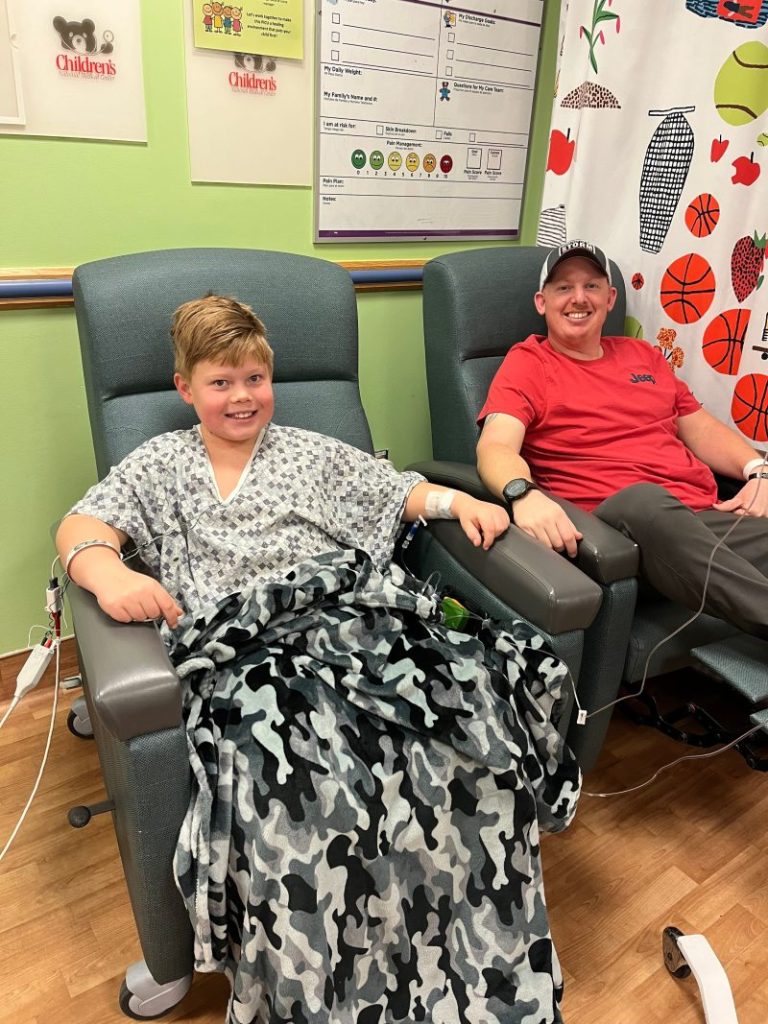
This past winter, Gavin and his father, Matt, spent extended time away from the field together. They sat next to one another in matching recliners. They even slept in them.

As our kids seem to advance so rapidly in age, we might say in passing how we’d give anything for an uninterrupted period with them like this. For this father-son duo, the time together came after Matt Brown gave his kidney, which saved his son.

Matt and Gavin will be together at the Angels-Orioles game on Father’s Day in Baltimore, and they are playing with Calvert (Maryland) American Little League All-Stars this summer as they attempt to advance out of their state. It’s the shot about which every Little Leaguer can dream.

In the meantime, the Brown family, which has managed Gavin’s chronic kidney disease since birth, has been renewed with a successful transplant and recovery.

“We were completely shocked,” says Gavin’s mother, Erin. “He went from he can’t sit up to, ‘Holy Moly, he’s playing baseball,’ three months later.”

USA TODAY Sports spoke with Gavin and his parents, as well as Yi Shi, a pediatric nephrologist at Children’s National Hospital and a member of Gavin’s care team, about their journey.

“Gavin was extremely brave throughout the entire process,” Erin says. “Even up until the time he went back for surgery, he was confident and reassuring, making sure to tell me everything was going to be just fine. Gavin has known this was coming his entire life, and by the time it got here, he was very ready to just get it over with and try to get back to normal life.” 

Their story also details the role sports can play in managing life’s obstacles, no matter how steep they are, and in bringing fathers and sons closer together.

Coach Steve: Cal Ripken’s father passed down these four lessons for youth athletes

‘I just kept going with it’: How a parent makes a kidney transplant work

According to the latest data from the Organ Procurement and Transplantation Network (OPTN), there have been 8,082 pediatric transplants performed through parent-child kidney donations since 1988, when national stats were first recorded.

Erin and Matt knew pretty much from Day 1 Gavin would need a transplant. Matt got tested and cleared to be a donor seven or eight years ago, and they waited.

In the meantime, Matt began helping out with the coaching on Gavin’s baseball team. He put his son directly into kid pitch, skipping tee ball and coach pitch. Gavin has come into his own and become a local All-Star.

But during adolescence, which is a kid’s highest period of physical growth, doctors see the steepest drop in kidney function, Shi says. That moment for Gavin came last fall, when he was 11.

“It was still kind of positioned that it was going to be a little ways away,” Erin says. “And then we saw a drastic decline. And they made the determination that we were, most likely, going to do the transplant.”

Shi says children usually do better with a living donor, and parents or other family members are the best matches: “We try to get donors less than 40 [years old] for kids, but we work around if the parents are older, for whatever reason.”

Matt, 38, was within the usual age range but there was one particular problem. “Healthy weight is a requirement for donation,” Shi says.

He weighed 238 pounds last summer.

“It wasn’t until I got out of the military that I just got soaked up with working shift work, and then kind of let myself go for a number of years,” says Matt, who served in the Army from June 2004 to October 2009, including stints in Iraq and Afghanistan.

Matt, who now works in security at Calvert Cliffs Nuclear Power Plant, had to lose 15 to 20 pounds from his 5-foot-9 frame. He hit the number, “and I just kept going with it,” he says. Today, he’s down to 200.

Pediatric transplant surgeon Jennifer Verbesey and a surgical team started Matt’s kidney removal surgery around 7 a.m. Feb. 10 at Washington’s MedStar Georgetown University Hospital. Verbesey was with Gavin and Erin at Children’s National across town by 11:30 a.m. that day.

Father’s Day can come early: The importance of spending time together

It was five days after his 12th birthday and still, his mom says, Gavin was smiling right up until the time he went into surgery, which took 4 to 5 hours.

Doctors recommended staying out of school and avoiding large crowds for the first three months, when his immune system would be the most suppressed.

“The main part of the recovery process is really the post surgical recovery, which takes about a week or so,” Shi says. “Generally, kids feel quite good after that, so it’s not a prolonged recovery process. … It is common that children recover quickly and can return to full activity within a month.’

Gavin had swelling and some minor complications that were quickly resolved, Matt says, though they made everything a little more uncomfortable for him.

At first, neither one of them could even lie flat. Gavin had a lot of pain and, after he spent a week in the hospital, he and Matt spent about two weeks, off and on, in those reclining chairs.

“It was really just getting used to it and living with it for the most part,” Gavin says. “We went on walks a lot after we could and went outside in general. It was really just hard to get used to.”

But there was familiarity, first in spending time with dad, and then, after an isolation period together had ended, he moved to practice with his Little League team (the Orioles) in late May.

At first, the activity was about supporting his teammates and feeling like he was part of the group. Being with his friends is one of his favorite parts of baseball.

He learned the shifts and the plays, he tossed the ball softly, stretched a little and took in all the energy of practice.

“That way, when he’s ready, he can hop back in with the team,” Matt says. “You know, crawl before you walk and run.”

Shi says a transplant kidney is usually placed in the front of the belly and is less protected than our regular kidneys. They marked the spot and helped Gavin fashion a shirt, through Zoombang, that provides padding for it under his jersey.

There was a therapeutic function to playing baseball, too.

“It’s not like major league baseball, or at that level where we expect high-force injury,” Shi says. “In general, we advocate for kids to exercise, play sports, do what they otherwise would be doing. I think it’s better for quality of life and just general recovery, but kids in general, after transplant tend to gain weight, and so things like exercise really do help with blood pressure and the weight gain.

“On top of that, it’s something that he really likes doing so we try our best to accommodate.”

Coach Steve: Keep the ‘team’ in team sports − even when your child is injured

Learning how to forge kids’ independence

Though he has been on medication since he was born, Gavin and his parents decided he is now responsible enough to manage the process on his own.

He takes an antibiotic (Bactrim), which he will stop at the six-month mark after his surgery. He also takes Tacrolimus and Cellcept, two anti-rejection medications that prevent the immune system from attacking transplanted kidneys.  

Gavin takes medications at 9 a.m. and 9 p.m., excusing himself momentarily from our video interview last week to do so.

“Timing is very important, as keeping his body regulated with the anti-rejection medications is the best way to prolong the life of his new kidney,” Erin says. “We get notifications (through an app) if he hasn’t marked them off, which allows us to monitor him without having to do the medication administration for him. Our goal with allowing him to do this is to start preparing him to be independent and understand the importance of taking his meds on time, without micromanaging.

“We also put all his medications into daily containers with his help each week. He’s been great about remembering to take them when he leaves the house and taking them on time. We’re really proud of how well he is doing.”

There have been unexpected hurdles, though. Just recently, for example, his white blood cell count was low and he missed school.

“Just things we weren’t necessarily prepared for that we’re kind of learning along the way,” Erin says. “He seemed fine, but his blood work wasn’t showing fine, so we had to make adjustments.”

When he plays baseball, he has been instructed to not slide headfirst. He was there, though, when the Orioles won their Little League’s championship.

“He’s hitting the ball well,” Matt says, “just not as far as he used to, which he understands. And mobility is a little bit slower … (He’s) still not back 100% but he’s able to compete.”

‘Doing something he loves’: Taking life and running with it

A point of emphasis for this season is recognizing not everyone on the team is at the same skill level.

“But we can always help people work to their strengths,” Erin says.

Gavin has an athletic stance. He puts the ball in play with a quick right-handed swing and sprints toward his dad urging him forward as a first base coach.

“Kidney donors should make a full recovery like any other surgery,” Shi says. “Matt has one kidney now compared to two, which means his one kidney has to work hard enough to take the place of two.”

He has helped his son avoid dialysis, a procedure that removes waste substances and fluid from blood that are normally eliminated by the kidneys.

“Dialysis generally has worse health outcomes than transplant, but also has worse quality of life,” Shi says. “Kids would either need to come to the hospital for dialysis three times a week or do dialysis at home every night. They have more dietary restrictions as well.”

Gavin will some day need another transplant. Shi says they last 10 to 15 years on average, sometimes longer.

Erin, who works in marketing for a software company, and Matt are hopeful that medical advances will give Gavin more options. Before his surgery, the family was introduced to the National Kidney Registry, a U.S.-based organization that aims to increase the quality, speed and number of living donor kidney transplants.

Transplant speed can increase when someone donates on behalf of a patient through programs like paired exchange or the voucher program.

Erin, 37, has had Type 1 Diabetes since 1999 and is automatically disqualified from being a donor.

“As a mom, this was very hard to accept,” she says.

She is looking forward to running a local 5K turkey trot with Gavin, and perhaps his younger brother, Connor, 11, on Thanksgiving. There could also be a winter family trip to Vermont to snowboard, which is Gavin’s other favorite sport and approved by Shi (if he wears his protective shirt).

In the more immediate future, there is lots of baseball.

“I just really enjoy it,” Matt says of coaching his son, “going out there and doing something he loves, just encouraging him, watching him grow.”

And to grow into someone who has learned to look to the future as an opportunity to seize what comes next.

“We spent time going through what the process would be like,” Erin says. “Gavin functions very well when he knows what to expect. Having a clear game plan for the day of surgery and a good idea what the post surgery recovery would look like was very comforting to him.”

Steve Borelli, aka Coach Steve, has been an editor and writer with USA TODAY since 1999. He spent 10 years coaching his two sons’ baseball and basketball teams. He and his wife, Colleen, are now sports parents for two high schoolers. His column is posted weekly. For his past columns, click here.

This post appeared first on USA TODAY

Jackson Holliday has read the scouting reports and heard the buzz about his own skills and those of his younger brother, Ethan, for most of his young life. And it rarely takes more than a sentence or two before talk turns from their work ethics or their gorgeous swings or power potential to the tie that ostensibly binds them to predictive greatness.

Bloodlines.

It’s both the most obvious and yet oversimplified evaluation a baseball scout can make – a recognizable name leaping off the page, a player profile to dream on based on how far their father made it in the game.

And ostensibly, the Holliday family justifies those dreams: For the second time in four years, a Holliday lad will be picked at or near the very top of Major League Baseball’s draft when Ethan is selected somewhere in the first five or so picks at the July 13 selection party.

Jackson, still just 21, is in his second year as a Baltimore Oriole and perhaps already on his way to his first All-Star Game. Ethan, while having to conquer several levels of minor league ball to join his older brother in a major league middle infield, could be a bigger and more powerful version of Jackson.

Both are carrying the legacy of their father Matt, a seven-time All-Star, a batting champion, a World Series winner who slugged 316 home runs over 15 years in the major leagues.

Genes to dream on, for certain.

Yet the story of baseball bloodlines will forever be a classic nature vs. nurture equation, and despite inherent advantages of growing up Holliday or Clemens or Bellinger, countless environmental factors will determine if the child’s most important adult acronym, say, is OPS or CPA.

“It’s nice to have the genes – my dad’s a big guy and played baseball a long time,” says Holliday, on pace for a 20-homer, 20-steal season in his first full season in the majors. “But I don’t look like him and I just have the last name and he happens to be my dad.

“I think a lot of it has to do with growing up in the game and watching someone you want to be like, and that’s what they do. So, that’s essentially what me and my brothers wanted to do.”

Indeed, the Holliday patriarch is built like an NFL linebacker – at 6-4, 240 pounds, he had both speed and power and at 45 still cuts an imposing figure when he’s around a major league batting cage.

While Holliday was a slugging left fielder, his eldest sons are cut from a different template: Jackson is 6 feet and 185 pounds, while Ethan is already 6-4, about 200 pounds and projected to stick at shortstop long term.

 Not exactly daddy duplicates from a physical standpoint.

“Yeah, it’s nice having good genetics,” says Kody Clemens, youngest son of seven-time Cy Young Award winner Roger Clemens, and a versatile reserve for the Minnesota Twins.

“But the exposure is probably more important.”

The scientific community generally agrees.

‘Biology is really good at mixing things up’

It’s been nearly a decade since Alejandro Lucia collaborated with renowned genomic professor Claude Bouchard – regarded as a godfather of genetics and exercise – on a 2016 study exploring the responses and adaptations of the body to exercise.

Lucia, a professor and researcher at European University of Madrid, worked with human patients and animals and extensively explored how genetics influence the body.

“We found, basically, nothing,” says Lucia.

That’s not to say genetics don’t affect body types. Lucia says there is an “undeniable genetic influence” that he pegs at around 50% that determines whether a person’s phenotype is better suited toward respiratory fitness or muscular makeup.

Humans, at their core, are endurance animals, he says. Yet what makes athletes great are almost exclusively influenced by environment, be it the preponderance of elite East African distance runners or, say, an elite travel baseball team from Texas.

“Is it the genes you have inherited from your father? Or is it the influence, the atmosphere?” says Lucia. “In the case of sports performance, we’re not talking about a single phenotype. It’s the combination of many phenotypes. What makes you a good basketball player? Is it strength? Is it skill? Is it motivation? It’s many different things.

“It is probably the combination of too many factors. We tend to blame our genetics on too many things.”

Certainly, genetics play some role in getting a child into the game. Stephen M. Roth, a professor of kinesiology at the University of Maryland, has studied genetics and elements of skeletal muscle and athletic performance for more than 20 years.

Loosely, he pegs the chances of bestowing athletic genes on offspring at about 50%, though some factors have a higher likelihood of inheritance. Height, for instance, has closer to 80% inheritability.

“Most of these traits are remarkably complex. It’s not just a single gene that’s contributing and you either have it or you don’t,” says Roth. “It’s going to be a lot of different genes, all contributing and the likelihood that at least some of those are passed down is probably pretty good. But certainly not all of them, in the exact pattern that either parent has.

“Biology is really good at mixing things up, and purposefully doing so.”

Roth says certain psychological factors – competitiveness, say – have about a 20-30% likelihood of inheritability. Yet it’s almost impossible for genetics to outkick an athlete’s surroundings.

“When you see a given geographic group or set of families who are especially successful in a given sport, instead of thinking of genes I will think of the special environment of this particular geographic reason or this particular family” says Lucia. “The example, the inspiration they get from their parents.

“I will never be a great baseball player. But maybe my genetic makeup is not that different from the best baseball player in the U.S.”

‘The Clay Stare’

And sometimes the next generation quickly exceeds its predecessors.

Cody Bellinger didn’t need much time to push the label “son of ex-Yankee Cody Bellinger” into the background. He hit 20 home runs in his first 51 major league games, and doubled his father’s career total of 12 in his first 57.

No, Cody wasn’t inheriting Babe Ruth’s genetic profile. Yet growing up Bellinger – Clay was part of World Series-winning Yankees teams in 1999 and 2000 – was pivotal.

“You’re in the batting cage, you’re picking up baseballs, you’re going out to batting practice and you just fall in love with it,” says Bellinger, who won the 2019 NL MVP award and has a .760 OPS this season for the Yankees. “Moreso than other kids who don’t have that opportunity. A huge blessing.

“I think just being around it, you just appreciate it and you love it and it’s not forced. For me, I loved it.”

That’s one trait that can’t be underestimated. The pressure of following in a famous father’s footsteps can be immense. With no ceiling on travel ball and many ballplayer families residing in warm-weather climes, the potential for burnout is immense.

“It’s almost like going into the family business. You have this, maybe stated, but unstated expectation that you could, or maybe should, be following in this person’s footsteps,” says Roth, the Maryland professor. “You have this unique opportunity to go into this particular business. I think the concern is, how many of these kids actually feel pressure to do it, but don’t realize they may not want to do it?

“They may be good at it, but is this how they want to spend their lives? That can be really hard to disentangle. We see that following in the family business, too, where someone says, ‘No, actually, I don’t want to be a butcher.’”

The second-gen kids who made the big leagues tended to steer into it. Craig Biggio, the Hall of Fame second baseman for the Houston Astros, was already retired by the time his son Cavan was in high school.

So the elder Biggio took the coaching reins at Houston’s St. Thomas High School, giving Cavan a potential double-whammy: A legacy to look up to, and the stigma that can come by being The Coach’s Son.

Yet it turns out his teammates thought it was nifty having a coach who was two years from having a bust in Cooperstown.

“Because everybody loved having him, having a Hall of Fame guy,” says Cavan, who is in his seventh major league season. “It was a professional environment from a high school level, which was really rare and cool.

“So when I eventually got to pro ball, it was already things I was doing from a young age.”

Not that Dad can’t be hard on the kid. Clay Bellinger also coached some of Cody’s teams, preaching lessons Cody relies upon to this day, and also saying so much by saying virtually nothing.

“I was lucky enough that my dad was the coach,” says Bellinger, drafted in the fourth round by the Dodgers in 2013, “but me and my friends had a little joke – if you didn’t do something well, you’d get the ‘Clay Stare.’

“He’d stare at you and you’d feel it. That you did something wrong. That was always something that we joked around with and that stuck with me – play the game hard.”

‘This was going to be for me’

Of course, having a ballplayer dad means having lots of famous uncles. Matt Holliday played long enough that Jackson can remember kibitzing in the clubhouse and on the field with the likes of Nolan Arenado and Aaron Judge.

Biggio recalls catcher Brad Ausmus as a “funny, witty guy,” and appreciates the respect he was afforded from Astros such as Morgan Ensberg, Lance Berkman and Willy Taveras.

Josh Barfield, a four-year major leaguer and now the assistant general manager of the White Sox and son of Blue Jays legend Jesse Barfield, counted Rickey Henderson and Ken Griffey Jr. as de facto family members thanks to his father’s longtime friendships with both.

As little kids and adolescents, they didn’t go through the grind. But they got an up-close view of what it took to survive it.

“You watch the work every day – and go out and try to replicate what I watched for so long,” says Jackson Holliday.

Sometimes, it’s the only life they know.

“Kasey and I always talk about how we really didn’t understand what there was in life besides being a baseball fan or baseball player,” says Kody Clemens of his older brother. “Growing up, we knew we wanted to be the players.

“When (Roger Clemens) was in New York and in the tail end of his career in Houston – that was when I realized how good he was, why these people were coming to the stadium, why we were going to the stadium. From 5 to 10 years old was when I realized what was going on.”

While some of the legacy ballplayers become elite – like Bellinger and Blue Jays slugger Vladimir Guerrero Jr. – or are burgeoning stars like the Hollidays, others are determined to stick.

Clemens has never played in more than 56 games since his 2022 debut and at 29 is enjoying his first taste of extended success with Minnesota, slugging six homers in 36 games after Philadelphia designated him for assignment in April.

Biggio is currently at Class AAA with Kansas City, after making the club out of spring training; he’s with his fourth organization in the past two seasons.

It’s plenty of time to ponder who makes it, who stays, and why.

“I think athleticism has a ton to do with it, but everybody in pro ball is athletic, even college baseball,” says Biggio. “I more credit being around it as a young kid. For me, it developed a passion and a love and a want for what this was going to be for me.”

Or, as Maryland’s Roth puts it, “baseball is always in the environment. You have this almost constant presence. That’s going to lead to expectations and opportunities for these kids.”

And the cycle rolls along. As Bellinger glances about the Yankees clubhouse, a pair of young boys, baseball gloves in hand, tail behind assistant hitting coach Casey Dykes, like ducklings following their mother to the pond.

“There you go,” he says as elementary-school aged Kash and Jett head out to the field, perhaps taking the tiniest steps toward draft day 2036.

The USA TODAY app gets you to the heart of the news — fastDownload for award-winning coverage, crosswords, audio storytelling, the eNewspaper and more.

This post appeared first on USA TODAY

The winner of the 2025 U.S. Open at Oakmont Country Club will pocket $4.3 million as the U.S. Golf Association announced this week that the total purse will be $21.5 million.

Both the prize money and the purse amounts are the highest of the four major golf tournaments and are the same as last year’s, when Bryson DeChambeau took home the title with a one-shot victory over Rory McIlroy at Pinehurst Resort, Course No. 2 in North Carolina.

Even though the purse amount did not change this year, it still signifies a healthy increase, as four years ago the total purse was $12.5 million, with the winner receiving $2.25 million.

2025 U.S. Open purse breakdown:

1st: $4,300,000
2nd: $2,322,000
3rd: $1,459,284
4th: $1,023,014
5th: $852,073
6th: $755,520
7th: $681,131
8th: $610,034
9th: $552,103
10th: $507,118
11th: $462,792
12th: $427,901
13th: $398,716
14th: $367,995
15th: $341,663
16th: $319,719
17th: $302,164
18th: $284,609
19th: $267,054
20th: $249,499
21st: $234,358
22nd: $219,217
23rd: $204,515
24th: $190,910
25th: $179,060
26th: $168,966
27th: $161,286
28th: $154,483
29th: $147,900
30th: $141,317
31st: $134,734
32nd: $128,151
33rd: $121,567
34th: $115,643
35th: $110,815
36th: $105,987
37th: $101,379
38th: $96,991
39th: $92,602
40th: $88,213
41st: $83,824
42nd: $79,436
43rd: $75,047
44th: $70,658
45th: $66,269
46th: $62,320
47th: $58,370
48th: $54,639
49th: $52,445
50th: $50,251
51st: $48,934
52nd: $47,837
53rd: $46,959
54th: $46,520
55th: $46,081
56th: $45,642
57th: $45,203
58th: $44,765
59th: $44,326
60th: $43,887
61st: $43,448
62nd: $43,009
63rd: $42,570
64th: $42,131
65th: $41,692
66th: $41,254

This post appeared first on USA TODAY