Archive

2025

Browsing

Democrats in Washington, D.C., are misrepresenting major criticisms of President Trump’s ‘big beautiful bill’ with incorrect facts, according to an expert who spoke to Fox News Digital this week as Trump’s budget reconciliation package is debated in Congress. 

‘The bill doesn’t cut benefits for anyone who has income below the poverty line, anyone who is working at least 20 hours a week and not caring for a child, and people who are Americans,’ Jim Agresti, president and cofounder of Just Facts, told Fox News Digital in response to criticisms from Democrats and a handful of Republicans, including Sen. Josh Hawley, that Trump’s bill will cut Medicaid and disproportionately hurt the poor. 

‘In other words, it cuts out illegal immigrants who are not Americans and fraudsters. So that narrative has no basis in reality. See, what’s been going on since the Medicaid program was started? Is that it’s been expanded and expanded and extended. You know, it got its start in 1966. And since that time, the poverty rate has stayed roughly level around 11% to 15%. While the portion of people in the United States on Medicaid has skyrocketed from 3% to 29%. Right now, 2.5 times more people are on Medicaid than are in poverty.’

Medicaid cuts and reform have been a major sticking point with Democrats, who have merged data from two new reports from the nonpartisan Congressional Budget Office (CBO) to back up claims that nearly 14 million would lose coverage. The White House and Republicans have objected, as not all the policy proposals evaluated were actually included in Republicans’ legislation, and far fewer people would actually face insurance loss. 

Instead, Republicans argue that their proposed reforms to implement work requirements, strengthen eligibility checks and crack down on Medicaid for illegal immigrants preserve the program for those who really need it. 

‘I agree,’ Dem. Rep. Jasmine Crockett said in response to a claim on CNN that Republicans ‘want poor people to die’ with Medicaid cuts. 

Agresti told Fox News Digital that the Medicaid cuts are aimed at bringing people out of poverty and waste. 

‘It’s putting some criteria down to say, ‘Hey, if you want this, and you’re not in poverty, you need to work,” Agresti said. ‘You need to do something to better your situation, which is what these programs are supposed to be, lifting people out of poverty, not sticking them there for eternity. So the whole idea is to get people working, give them an incentive. Hey, if you want to do better in life, and you want this Medicaid coverage, then you have to earn it.’

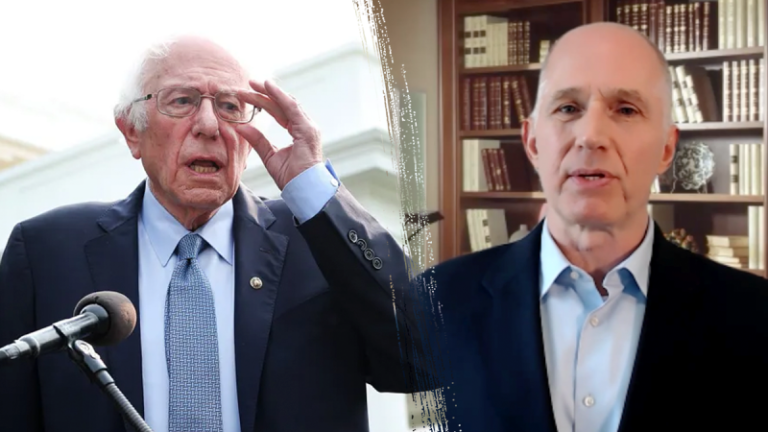
Independent Sen. Bernie Sanders has claimed the bill is a ‘death sentence for the working class,’ because it raises health insurance ‘copayments for poor people.’

Agresti called that claim ‘outlandish.’

‘First of all, the Big Beautiful Bill does not raise copayments on anyone who’s below the poverty line,’ he explained. ‘Now, for people who are above the poverty line, it requires states to at least charge some sort of copayment, and it also reduces, actually, the max copayment from $100 per visit to $35 per visit.’

Agresti went on to explain that under the current system, ‘people have basically free rein to just go to a doctor or an emergency room or any other place without any co-payment, and they’re not in poverty.’

‘What ends up happening is they waste a ton of money,’ Agresti said. ‘This has been proven through randomized control trials, which are the gold standard for social science analysis, where you have people in a lottery system, some people get the benefit, and some people don’t, and what you end up seeing is that people who don’t have to have skin in the game, abuse emergency rooms, they go there for a stuffy nose, rack up all this money, and it does nothing to improve their health. It’s just wasteful.’

In a statement to Fox News Digital, Sanders Communications Director Anna Bahr said, ‘Mr. Agresti’s facts here are simply incorrect.’

Sanders’ office added that ‘nearly half of all enrollees on the ACA exchanges are Republicans’ and pointed to the House-passed reconciliation bill that Sanders’ office argues ‘says that if a worker can’t navigate the maze of paperwork that the bill creates for Medicaid enrollees, they are barred from receiving ACA tax credits as well.’

‘But workers must earn at least $15,650 per year to qualify for tax credits on the ACA marketplaces – approximately equal to the annual income for a full-time worker earning the federal minimum wage.’

Sanders’ office also pointed to ‘CBO estimates that 16 million people will lose insurance as a result of the House-passed bill and the Republicans ending the ACA’s enhanced premium tax credits.’

Sanders’ office also reiterated that the House-passed bill makes a ‘fundamental change’ to copay for Medicaid beneficiaries, shifting from optional to mandatory.

‘While claiming that I’m ‘incorrect,’ Sanders’ staff fails to provide a single fact that shows the BBB cuts health care for poor working Americans,’ Agresti responded. 

‘It’s especially laughable that they cite expanded Obamacare subsidies in this context, because people in poverty aren’t even eligible for them,’ Agresti continued. ‘After this ‘temporary’ Covid-era handout expires, people with incomes up to 400% of the federal poverty level — or $150,600 for a family of five — will still be eligible for this welfare program, although they will receive less.’

Agresti argued that the claim a ‘max $35 copay (for people who are not poor) ‘hurts working families’’ is not supported by research ‘which makes generalizations and merely cites ‘associations.”

‘As commonly taught in high school math, association doesn’t prove causation,’ Agresti said. 

Sanders’ office told Fox News Digital, ‘Mr. Agresti seems to believe that a working family of four earning only $32,150 per year doesn’t deserve help affording their health care. Health care in the United States is more expensive than anywhere in the world. Terminating health care coverage for 16 million Americans and increasing health care costs for millions will make it harder for working people to afford the health care they need, even if Mr. Agresti doesn’t agree.’

Agresti also took issue with the narrative that cuts cannot be made to Medicaid without cutting benefits to people who are entitled to them.

‘The Government Accountability Office has put out figures that are astonishing, hundreds of billions of dollars a year are going to waste,’ Agresti said. ‘So, yeah, some criteria to make sure that doesn’t happen is a wise idea. Unfortunately, there is a ton of white-collar crime in this country, and this kind of crime is a white-collar crime. It’s not committed with a gun, or by robbing or punching someone, it’s committed by fraud, and there’s an enormous amount of it. 

‘And the big, beautiful bill, again, seeks to rein that in by putting a criteria to make sure we’re checking people’s income, we’re checking their assets. A lot of these federal programs, government health care programs, they’ve stopped checking assets. So you could be a lottery winner sitting on $3 million in cash and have very little income. And still get children’s health insurance program benefits for your kids.’

Hawley said on Monday that he did not have a problem with some of the marquee changes to Medicaid that his House Republican counterparts wanted, including stricter work requirements, booting illegal immigrants from benefit rolls and rooting out waste, fraud and abuse in the program that serves tens of millions of Americans.

However, he noted that about 1.3 million Missourians rely on Medicaid and the Children’s Health Insurance Program (CHIP), and contended that most were working.

‘These are not people who are sitting around, these are people who are working,’ he said. ‘They’re on Medicaid because they cannot afford private health insurance, and they don’t get it on the job.’

‘And I just think it’s wrong to go to those people and say, ‘Well, you know, we know you’re doing the best, we know that you’re working hard, but we’re going to take away your health care access,’’ he continued. 

Fox News Digital’s Diana Stancy and Alex Miller contributed to this report.

This post appeared first on FOX NEWS

President Donald Trump came back into office promising no new wars. So far, he’s kept that promise. But he’s also left much of Washington — and many of America’s allies — confused by a series of rapid, unexpected moves across the Middle East. 

In just a few months, Trump has reopened backchannels with Iran, then turned around and threatened its regime with collapse. He’s kept Israel at arm’s length — skipping it on his regional tour — before signaling support once again. He lifted U.S. sanctions on Syria’s Islamist leader, a figure long treated as untouchable in Washington. And he made headlines by hosting Pakistan’s top general at the White House, even as India publicly objected. 

For those watching closely, it’s been hard to pin down a clear doctrine. Critics see improvisation — sometimes even contradiction. But step back, and a pattern begins to emerge. It’s not about ideology, democracy promotion, or traditional alliances. It’s about access. Geography. Trade. 

More specifically, it may be about restarting a long-stalled infrastructure project meant to bypass China — and put the United States back at the center of a strategic economic corridor stretching from India to Europe. 

The project is called the India–Middle East–Europe Corridor, or IMEC. Most Americans have never heard of it. It was launched in 2023 at the G20 summit in New Delhi, as a joint initiative among the U.S., India, Saudi Arabia, the UAE and the European Union. Its goal? To build a modern infrastructure link connecting South Asia to Europe — without passing through Chinese territory or relying on Chinese capital. 

IMEC’s vision is bold but simple: Indian goods would travel west via rail and ports through the Gulf, across Israel, and on to European markets. Along the way, the corridor would connect not just trade routes, but energy pipelines, digital cables, and logistics hubs. It would be the first serious alternative to China’s Belt and Road Initiative — a way for the U.S. and its partners to build influence without boots on the ground. 

But before construction could begin, war broke out in Gaza. 

The October 2023 Hamas attacks and Israel’s military response sent the region into crisis. Normalization talks between Saudi Arabia and Israel fell apart. The Red Sea became a warzone for shipping. And Gulf capital flows paused. The corridor — and the broader idea of using infrastructure to tie the region together — was quietly shelved.

That’s the backdrop for Trump’s current moves. Taken individually, they seem scattered. Taken together, they align with the logic of clearing obstacles to infrastructure. Trump may not be drawing maps in the Situation Room. But his instincts — for leverage, dealmaking and unpredictability — are removing the very roadblocks that halted IMEC in the first place. 

His approach to Iran is a prime example. In April, backchannels were reopened on the nuclear front. In May, a Yemen truce was brokered — reducing attacks on Gulf shipping. In June, after Israeli strikes inside Iran, Trump escalated rhetorically, calling for Iran’s ‘unconditional surrender.’ That combination of engagement and pressure may sound erratic. But it mirrors the approach that cleared a diplomatic path with North Korea: soften the edges, then apply public pressure. 

Meanwhile, Trump’s temporary distancing from Israel is harder to miss. He skipped it on his regional tour and avoided aligning with Prime Minister Netanyahu’s continued hard-line approach to Gaza. Instead, he praised Qatar — a U.S. military partner and quiet mediator in the Gaza talks — and signaled support for Gulf-led reconstruction plans. The message: if Israel refuses to engage in regional stabilization, it won’t control the map. 

Trump also made the unexpected decision to lift U.S. sanctions on Syria’s new leader, President Ahmad al-Sharaa — a figure with a past in Islamist groups, now leading a transitional government backed by the UAE. Critics saw the move as legitimizing extremism. But in practice, it unlocked regional financing and access to transit corridors once blocked by U.S. policy. 

Even the outreach to Pakistan — which angered India — fits a broader infrastructure lens. Pakistan borders Iran, influences Taliban-controlled Afghanistan, and maintains ties with Gulf militaries. Welcoming Pakistan’s military chief was less about loyalty, and more about leverage. In corridor politics, geography often trumps alliances. 

None of this means Trump has a master plan. There’s no confirmed strategy memo that links these moves to IMEC. And the region remains volatile. Iran’s internal stability is far from guaranteed. The Gaza conflict could reignite. Saudi and Qatari interests don’t always align. But there’s a growing logic underneath the diplomacy: de-escalate just enough conflict to make capital flow again — and make corridors investable. 

That logic may not be ideologically pure. It certainly isn’t about spreading democracy. But it reflects a real shift in U.S. foreign policy. Call it infrastructure-first geopolitics — where trade routes, ports and pipelines matter more than treaties and summits. 

To be clear, the United States isn’t the only player thinking this way. China’s Belt and Road Initiative has been advancing the same model for over a decade. Turkey, Iran and Russia are also exploring new logistics and energy corridors. But what sets IMEC apart — and what makes Trump’s recent moves notable — is that it offers an opening for the U.S. to compete without large-scale military deployments or decades-long aid packages. 

Even the outreach to Pakistan — which angered India — fits a broader infrastructure lens. Pakistan borders Iran, influences Taliban-controlled Afghanistan, and maintains ties with Gulf militaries.

For all his unpredictability, Trump has always had a sense for economic leverage. That may be what we’re seeing here: less a doctrine than a direction. Less about grand visions, and more about unlocking chokepoints. 

There’s no guarantee it will work. The region could turn on a dime. And the corridor could remain, as it is now, a partially built concept waiting on political will. But Trump’s moves suggest he’s trying to build the conditions for it to restart — not by talking about peace, but by making peace a condition for investment. 

In a region long shaped by wars over ideology and territory, that may be its own kind of strategy. 

This post appeared first on FOX NEWS

LOS ANGELES — In a simmering dispute, the Los Angeles Dodgers say Immigration and Customs Enforcement agents were denied entry to the stadium grounds – while ICE says the agency was ‘never there’ and the Department of Homeland Security claims the masked agents were with Customs and Border Patrol.

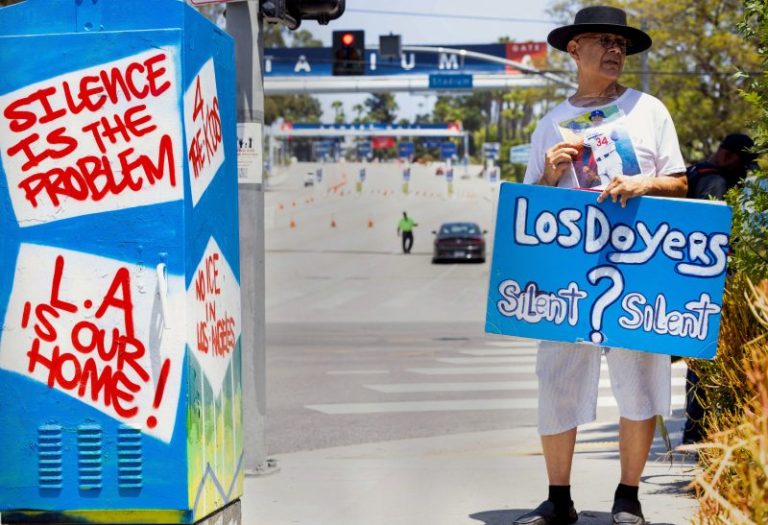
Who indisputably is here: Al Aguilar, one of many gathering outside the stadium hours before the Dodgers faced the San Diego Padres on June 19.

Aguilar, a lifelong Dodgers fan who says he was born and raised in Los Angeles, stood near the intersection on a corner near Dodger Stadium five hours before the team’s game. And three hours before a scheduled protest sparked by the Dodgers’ silence amidst immigration raids and unrest in Los Angeles.

“At least make a statement,” said Aguilar, 72, who came from his home about two miles from the stadium.

Aguilar held a sign that said “Dodger Boo” instead of “Dodger Blue” and many motorists honked as they drove past.

Aguilar said he was old enough to remember when Latinos were displaced from the Chavez Ravine area to make way for the construction of Dodger Stadium, critical to luring the team to Los Angeles from Brooklyn in the 1950s.

‘I still love them, but say something,’ Aguilar said. ‘Especially on this day of Juneteenth. We stand on the shoulders of Martin Luther King and Cesar Chavez.’

But even as drivers honked in apparent support of Aguilar’s message, he said that ‘whether (the team) says something or not, people will still be Dodgers fans.’

Himself included.

Some protesters try to block traffic outside Dodger Stadium

LOS ANGELES — About 100 protesters outside Dodger Stadium disrupted traffic before the team’s game and prompted more than two dozen police officers to head to the scene.

At one point, the protesters spread out electric scooters across an intersection near an entrance and temporarily halted traffic. Police closed the gates and redirected traffic to another entrance while they tried to gain control of the situation.

While there were a couple of tense standoffs between protesters and police officers, there were no known arrests as of 8 p.m. PT.

All the while, the protesters kept up their chants, including “Boycott the Dodgers.”

It was the Dodgers’ silence over the Los Angeles protests sparked by immigration raids that galvanized the crowd on Thursday night.

“If the Dodgers can’t say anything, I guess we can,” Dodgers fan Amanda Carrera, 31, told USA TODAY Sports.

The police officers calmly removed the scooters and seemed unbothered by the chants. But things grew more tense when some people lingered in the crosswalks.

“Get out of the street, move,” an officer shouted. A protester leaned toward the officer and yelled back, but the moment did not escalate further.

By 7:50 PT, a few innings into the game inside, the protest outside Dodger Stadium had dwindled to about two dozen.

But not everybody in the crowd was a fan of those who were trying to block traffic.

“Protesters like that ruin the cause,’ Carrera said. ‘It’s people coming to cause problems.”

Dodgers delay announcement on support for LA community

LOS ANGELES — The Dodgers were supposed to make an announcement about their ‘plans for assistance to immigrant communities’ but club president Stan Kasten said the organization would be delaying an announcement after the federal agents showed up.

“Because of the events earlier today, we continue to work with groups that were involved with our programs,’ Kasten said in a statement, per the Los Angeles Times. ‘But we are going to have to delay today’s announcement while we firm up some more details.’

Protesters showing up at Dodger Stadium

Amanda Carrera, who said she is a singer who wrote a song called ‘Dodger Girl,’ arrived with a sign that said ‘Proud to be a Latina.’

‘As much as I love the Dodgers, I love my people even more,’ said Carrera, 31.

‘Silence is the problem’: Graffiti near Dodger Stadium

Graffiti artists have left their mark near the ballpark, clearly targeting the organization over its perceived silence amidst the protests with messages like ‘stop selling out,’ ‘LA is our home’ and ‘silence is the problem.’

In the hours leading up to the game, there were fans around Dodger Stadium with megaphones and others chanting ‘ICE out of L.A.’

Kiké Hernández has been only Dodgers player to speak out

One masked protester outside the stadium held a sign that read ‘Kiké Forever,’ referencing the longtime Dodgers utilityman who became the first active player to speak out against the immigration raids with an Instagram post in both English and Spanish.

‘I may not be Born & Raised, but this city adopted me as one of their own. I am saddened and infuriated by what’s happening in our country and our city. Los Angeles and Dodger fans have welcomed me, supported me and shown me nothing but kindness and love,’ Hernández wrote.

‘This is my second home. And I cannot stand to see our community being violated, profiled, abused and ripped apart. ALL people deserve to be treated with respect, dignity and human rights. #CityOfImmigrants’

Hernández has spent nine seasons with the Dodgers over two stints, winning World Series titles in 2020 and 2024.

Fans out in full force as game begins

This post appeared first on USA TODAY

Pittsburgh Pirates relief pitcher Dennis Santana was involved in a fan altercation during Game 2 of the Pirates’ doubleheader against the Detroit Tigers on June 19.

The altercation, which included a jumping swing by Santana, came during the 8-4 win by the Pirates at Comerica Park in Detroit on June 19 and was caught on camera and later surfaced on social media, including X (formerly Twitter). In the video, Santana was also seen exchanging words with fans along the wall in the Pirates’ bullpen.

Meeting with reporters outside of his locker at Comerica Park, Santana, through a team interpreter, confirmed that the altercation took place around the seventh inning of the second game of the doubleheader. He additionally said he didn’t want to ‘get into’ the details of what caused it.

‘You guys know me. I’m a calm demeanor type of person. I’ve never had any issues for any of the teams that I’ve played for. I guess the guy crossed the line a few times and I would not like to get into it,’ Santana said.

Asked further by the Pittsburgh Post-Gazette’s Noah Hiles whether the fans in the stands were chirping with him during the whole game or if it was one comment that escalated the altercation, Santana continued to deflect the question.

‘Like I said, you guys know me and you know my temper. I’m a calm person and they crossed the line a few times. I would like to leave it at that,’ Santana said.

Here’s another look at the altercation between Santana and the fans:

Santana came into pitch in the ninth inning with the game tied at 4-4, and got the first out of the inning by getting Zach McKinstry to fly out to center before the tarp came out for the second rain delay of the game. The 6-foot-2 right-hander now has a 1.72 ERA in 31 1/3 innings of work this season across 32 appearances.

Paul Skenes earned the no-decision for the Pirates. The 2024 National League Rookie of the Year struck out nine hitters across six innings of work whole allowed two runs on three hits and five walks. The Pirates scored four runs in the top of the 10th inning to win it in extras.

Despite losing Game 2 of the doubleheader, the Tigers still took two of three against the Pirates to win the series. Detroit (48-28) leads the MLB in wins this season.

There was another fan ejection in the game as three fans were ejected from behind home plate in the 10th inning after an involvement with Pirates outfielder Tommy Pham.

The USA TODAY app gets you to the heart of the news — fastDownload for award-winning coverage, crosswords, audio storytelling, the eNewspaper and more.

This post appeared first on USA TODAY

The U.S. men’s national team clinched a spot in the knockout round of the Concacaf Gold Cup after a grind-it-out 1-0 win over Saudi Arabia in Austin, Texas, on Thursday, June 19.

The U.S. will close out group play on Sunday, June 22 against Haiti at AT&T Stadium, Arlington, Texas (7 p.m. ET, Fox).

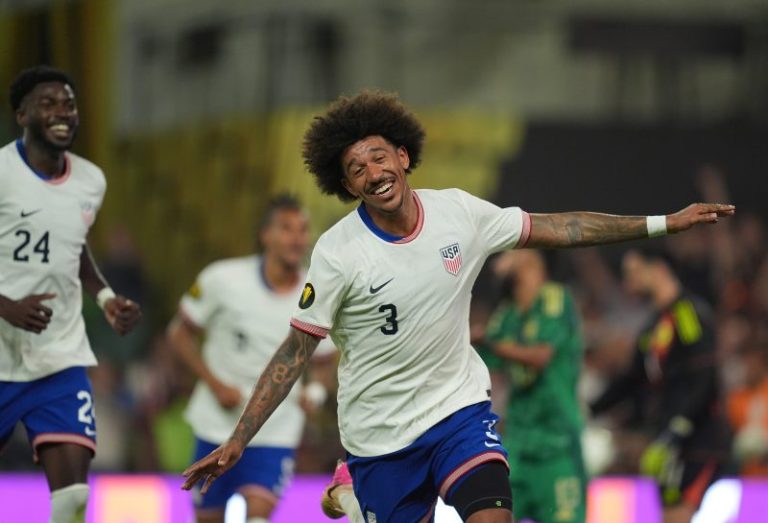
Defender Chris Richards put in a ‘man of the match’ performance, scoring the game’s lone goal and circumventing a Saudi Arabia scoring threat in the first half.

‘We needed tonight. It was a tough game against a tough opponent. Props to them,’ Richards told Fox Sports after the game. ‘But that’s Concacaf for you. Sometimes you’ve got to get physical, sometimes you’ve got to get nasty, and that’s exactly what we did tonight.’

As expected, Saudi Arabia proved to be a much tougher opponent to break than Trinidad and Tobago, which the U.S. steamrolled 5-0 on Sunday, June 15. On Thursday night, it took until late in the first half for the U.S. to even manage a shot on goal. For their part, the U.S. was equally as stingy defensively, allowing just one shot on goal the entire game.

USMNT vs. Saudi Arabia highlights

Brouhaha in the 89th minute

Tempers flared after Tyler Adams was pushed to the ground. Both Saudi Arabia manager Hervé Renard and U.S. coach Mauricio Pochettino got involved as players from both teams got into a scrum.

Sebastian Berhalter was issued a yellow card, as were Saudi Arabia’s Ziyad Al Johani and Abdulrahman Al Obud.

USMNT 1, Saudi Arabia 0: Chris Richards finds back of net on set piece

The USA-Saudi Arabia Gold Cup match finally had a breakthrough, as Chris Richards scored off a free kick from Sebastian Berhalter in the 63rd minute.

The play went to VAR, but Richards was ruled onside, giving the defender his second career USMNT goal.

USA 0, Saudi Arabia 0: Scoreless match at halftime

The USMNT was not able to break down their disciplined opponents and make any threatening attempts on goal in the first half.

The U.S. enjoyed the majority of possession (72% to 28%), but did not get a shot on goal until late in the first half. In the 45th minute, Patrick Agyemang’s header attempt was on goal, but Saudi Arabia ‘keeper Nawaf Al Aqidi made an easy save.

Earlier in the first half, defender Chris Richards made the USMNT’s best play of the game so far, thwarting a potential Saudi Arabia goal-scoring opportunity.

Haji Wright out with an Achilles injury

Haji Wright, who came on as a second-half substitute and scored a goal on June 15, is not with the U.S. team for Thursday night’s game against Saudi Arabia. Wright is dealing with an Achilles issue.

What time is USMNT vs. Trinidad and Tobago at Concacaf Gold Cup?

The Concacaf Gold Cup group stage game pairing the USMNT with Saudi Arabia is set for 9:15 p.m. ET at Q2 Stadium in Austin, Texas. Q2 Stadium is the regular home of Austin FC of Major League Soccer.

How to watch USMNT vs. Saudi Arabia Gold Cup game: TV, stream

Time: 9:15 p.m. ET
Location: Q2 Stadium (Austin, Texas)
TV: FS1 (TUDN for Spanish-language broadcast)
Stream: Fubo

Watch USMNT vs. Saudi Arabia with a free trial of Fubo

USMNT starting lineup vs. Saudi Arabia

Mauricio Pochettino is going with the same starting 11 as the U.S. featured in Sunday’s win over Trinidad and Tobago.

For Sebastian Berhalter and Alex Freeman, the start against Saudi Arabia represents a third national team cap for each player.

Saudi Arabia starting lineup vs. USA

Saudi Arabia is coming off a 1-0 win over Haiti in its Gold Cup opener. The goal scorer from that win, Saleh Al-Shehri, starts this game on the bench. Forward Firas Al-Buraikan (known as Feras) is the team’s most-capped active player (52).

Why is Saudi Arabia in the Gold Cup?

Concacaf announced in December 2024 that Saudi Arabia would participate in the 2025 and 2027 Gold Cup tournaments. This announcement came shortly after Saudi Arabia was selected as the host nation for the 2034 World Cup.

Saudi Arabia is the eighth different non-Concacaf affiliated nation to be invited to compete in the Gold Cup. Other invited teams include Brazil (1996, 1998 and 2003), Colombia (2000, 2003 and 2005), South Korea (2000 and 2002), Peru (2000), Ecuador (2002), South Africa (2005) and Qatar (2021 and 2023).

USMNT schedule for the 2025 Gold Cup

Sunday, June 15: 5-0 win vs. Trinidad and Tobago
Thursday, June 19: vs. Saudi Arabia, 9:15 p.m. ET (FS1)
Sunday, June 22: vs. Haiti, 7 p.m. ET (FOX)

What is the Concacaf Gold Cup?

The Gold Cup is a biennial tournament for national teams in the North and Central American and Caribbean region associated with Concacaf. Mexico (nine times), the U.S. (seven times) and Canada (one time) are the only nations to have won the Gold Cup. Mexico won the last Gold Cup competition in 2023.

2025 Concacaf Gold Cup key dates

Group stage: June 14-24
Quarterfinals: June 28-29
Semifinals: July 2
Final: July 6

What are the 2025 Concacaf Gold Cup host cities and stadiums?

Arlington, Texas (AT&T Stadium)
Austin (Q2 Stadium)
Carson, California (Dignity Health Sports Park)
Glendale, Arizona (State Farm Stadium)
Houston (NRG Stadium and Shell Energy Stadium)
Las Vegas (Allegiant Stadium)
Los Angeles (SoFi Stadium)
Minneapolis (U.S. Bank Stadium)
San Diego (Snapdragon Stadium)
San Jose, California (PayPal Park)
Santa Clara, California (Levi’s Stadium)
St. Louis (Energizer Park)
Vancouver, British Columbia (BC Place)

Which players are on the USMNT Gold Cup roster?

Goalkeepers (3): Chris Brady (Chicago Fire), Matt Freese (New York City FC), Matt Turner (Crystal Palace/England)

Defenders (9): Max Arfsten (Columbus Crew), Alex Freeman (Orlando City SC), Nathan Harriel (Philadelphia Union), Mark McKenzie (Toulouse/France), Tim Ream (Charlotte FC), Chris Richards (Crystal Palace/England), Miles Robinson (FC Cincinnati), John Tolkin (Holstein Kiel/Germany), Walker Zimmerman (Nashville SC)

Midfielders (9): Brenden Aaronson (Leeds United/England); Tyler Adams (Bournemouth/England), Sebastian Berhalter (Vancouver Whitecaps/Canada), Johnny Cardoso (Real Betis/Spain), Luca de la Torre (San Diego FC), Diego Luna (Real Salt Lake), Jack McGlynn (Houston Dynamo), Quinn Sullivan (Philadelphia Union), Malik Tillman (PSV Eindhoven/Netherlands)

Forwards (5): Paxten Aaronson (FC Utrecht/Netherlands), Patrick Agyemang (Charlotte FC), Damion Downs (FC Köln/Germany), Brian White (Vancouver Whitecaps/Canada), Haji Wright (Coventry City/England)

This post appeared first on USA TODAY

President Donald Trump came back into office promising no new wars. So far, he’s kept that promise. But he’s also left much of Washington — and many of America’s allies — confused by a series of rapid, unexpected moves across the Middle East. 

In just a few months, Trump has reopened backchannels with Iran, then turned around and threatened its regime with collapse. He’s kept Israel at arm’s length — skipping it on his regional tour — before signaling support once again. He lifted U.S. sanctions on Syria’s Islamist leader, a figure long treated as untouchable in Washington. And he made headlines by hosting Pakistan’s top general at the White House, even as India publicly objected. 

For those watching closely, it’s been hard to pin down a clear doctrine. Critics see improvisation — sometimes even contradiction. But step back, and a pattern begins to emerge. It’s not about ideology, democracy promotion, or traditional alliances. It’s about access. Geography. Trade. 

More specifically, it may be about restarting a long-stalled infrastructure project meant to bypass China — and put the United States back at the center of a strategic economic corridor stretching from India to Europe. 

The project is called the India–Middle East–Europe Corridor, or IMEC. Most Americans have never heard of it. It was launched in 2023 at the G20 summit in New Delhi, as a joint initiative among the U.S., India, Saudi Arabia, the UAE and the European Union. Its goal? To build a modern infrastructure link connecting South Asia to Europe — without passing through Chinese territory or relying on Chinese capital. 

IMEC’s vision is bold but simple: Indian goods would travel west via rail and ports through the Gulf, across Israel, and on to European markets. Along the way, the corridor would connect not just trade routes, but energy pipelines, digital cables, and logistics hubs. It would be the first serious alternative to China’s Belt and Road Initiative — a way for the U.S. and its partners to build influence without boots on the ground. 

But before construction could begin, war broke out in Gaza. 

The October 2023 Hamas attacks and Israel’s military response sent the region into crisis. Normalization talks between Saudi Arabia and Israel fell apart. The Red Sea became a warzone for shipping. And Gulf capital flows paused. The corridor — and the broader idea of using infrastructure to tie the region together — was quietly shelved.

That’s the backdrop for Trump’s current moves. Taken individually, they seem scattered. Taken together, they align with the logic of clearing obstacles to infrastructure. Trump may not be drawing maps in the Situation Room. But his instincts — for leverage, dealmaking and unpredictability — are removing the very roadblocks that halted IMEC in the first place. 

His approach to Iran is a prime example. In April, backchannels were reopened on the nuclear front. In May, a Yemen truce was brokered — reducing attacks on Gulf shipping. In June, after Israeli strikes inside Iran, Trump escalated rhetorically, calling for Iran’s ‘unconditional surrender.’ That combination of engagement and pressure may sound erratic. But it mirrors the approach that cleared a diplomatic path with North Korea: soften the edges, then apply public pressure. 

Meanwhile, Trump’s temporary distancing from Israel is harder to miss. He skipped it on his regional tour and avoided aligning with Prime Minister Netanyahu’s continued hard-line approach to Gaza. Instead, he praised Qatar — a U.S. military partner and quiet mediator in the Gaza talks — and signaled support for Gulf-led reconstruction plans. The message: if Israel refuses to engage in regional stabilization, it won’t control the map. 

Trump also made the unexpected decision to lift U.S. sanctions on Syria’s new leader, President Ahmad al-Sharaa — a figure with a past in Islamist groups, now leading a transitional government backed by the UAE. Critics saw the move as legitimizing extremism. But in practice, it unlocked regional financing and access to transit corridors once blocked by U.S. policy. 

Even the outreach to Pakistan — which angered India — fits a broader infrastructure lens. Pakistan borders Iran, influences Taliban-controlled Afghanistan, and maintains ties with Gulf militaries. Welcoming Pakistan’s military chief was less about loyalty, and more about leverage. In corridor politics, geography often trumps alliances. 

None of this means Trump has a master plan. There’s no confirmed strategy memo that links these moves to IMEC. And the region remains volatile. Iran’s internal stability is far from guaranteed. The Gaza conflict could reignite. Saudi and Qatari interests don’t always align. But there’s a growing logic underneath the diplomacy: de-escalate just enough conflict to make capital flow again — and make corridors investable. 

That logic may not be ideologically pure. It certainly isn’t about spreading democracy. But it reflects a real shift in U.S. foreign policy. Call it infrastructure-first geopolitics — where trade routes, ports and pipelines matter more than treaties and summits. 

To be clear, the United States isn’t the only player thinking this way. China’s Belt and Road Initiative has been advancing the same model for over a decade. Turkey, Iran and Russia are also exploring new logistics and energy corridors. But what sets IMEC apart — and what makes Trump’s recent moves notable — is that it offers an opening for the U.S. to compete without large-scale military deployments or decades-long aid packages. 

Even the outreach to Pakistan — which angered India — fits a broader infrastructure lens. Pakistan borders Iran, influences Taliban-controlled Afghanistan, and maintains ties with Gulf militaries.

For all his unpredictability, Trump has always had a sense for economic leverage. That may be what we’re seeing here: less a doctrine than a direction. Less about grand visions, and more about unlocking chokepoints. 

There’s no guarantee it will work. The region could turn on a dime. And the corridor could remain, as it is now, a partially built concept waiting on political will. But Trump’s moves suggest he’s trying to build the conditions for it to restart — not by talking about peace, but by making peace a condition for investment. 

In a region long shaped by wars over ideology and territory, that may be its own kind of strategy. 

This post appeared first on FOX NEWS

The Golden State Valkyries pulled away in the fourth quarter to beat Caitlin Clark and the Indiana Fever 88-77 at home on Thursday.

The Valkyries have won four of their last five games and improved to 6-6 overall, after becoming the fastest franchise to win five games in its inaugural season earlier this month.

The Fever finished each of the first three quarters with the lead and put the Valkyries in a deficit as large as 13 points, but it wasn’t enough to deny Golden State.

Kayla Thornton led Golden State with 16 points and six rebounds in 20 minutes of play. Tiffany Hayes, playing her first home game since her return from injury, produced 14 points and five assists in 32 minutes off the bench.

Aliyah Boston finished with a game-high 17 points and 12 rebounds for the Fever in the loss. Clark had 11 points, nine assists and seven rebounds. She shot just 3-for-14 from the field and didn’t hit a 3-pointer (0-for-7).

Clark was coming off a game where she was in the middle of a scuffle that led to an ejection, flagrant fouls and subsequent fines. It inspired Indiana Fever coach Stephanie White to blast the league’s refs and reignited the national debate about how the WNBA’s biggest star is treated and viewed by opposing players.

White missed Thursday’s game for personal reasons. Austin Kelly served as the acting coach for Indiana.

Fever vs. Valkyries highlights

Caitlin Clark stats tonight vs. Valkyries

Points: 11
FG: 3-for-14
3PTs: 0-for-7
FT: 5-for-5
Rebounds: 7
Assists: 9
Blocks: 0
Steals: 1
Turnovers: 6
Fouls: 3
Minutes played: 34

Final: Valkyries 88, Fever 77

The Valkyries overcame a double-digit deficit to regain the lead in the fourth quarter.

Aliyah Boston was forced to sit in the middle of the quarter after picking up her fifth personal foul.

3Q: Fever 59, Valkyries 55

The Fever went on a 10-3 run to start the quarter and built up one of its biggest leads of the game against the Valkyries. The Valkyires went on a 10-2 scoring run of their own to end the third quarter. Kate Martin scored back-to-back baskets, scoring five of her nine points in the final minute of the period. Kayla Thornton has 10 points and five rebounds through three quarters for Golden State.

Aliyah Boston has produced a double-double for the Fever with 15 points and 11 rebounds. Caitlin Clark scored five of her seven points in the third quarter for Indiana to go along with her seven assists and six rebounds.

Indiana has led by as many as 13 points. Golden State’s largest lead has been five.

Halftime: Fever 44, Valkyries 38

Aliyah Boston and Natasha Howard led the way for the Fever in the first half against the Valkyries. Boston has produced 15 points, seven rebounds and three blocks for Indiana. Howard has chipped in with eight points, three rebounds and two assists.

Caitlin Clark was limited to just two points in the first half but contributed with six assists and four defensive rebounds.

Carla Leite and Chloe Bibby led Golden State with eight points each in the first half. Kayla Thornton had seven points and five rebounds.

1Q: Fever 21, Valkyries 12

Monique Billings scored four of the Valkyries’ first seven points in the quarter against the Fever. Kayla Thornton and the Valkyries led Caitlin Clark and the Fever 7-2 with 7:43 left in the opening quarter. Thornton has scored three points.

Natasha Howard would help rally the Fever with four points as part of an 11-0 scoring run to take a 13-7 lead with 3:08 left in the quarter. The scoring run was built up to 14-0 before Golden State’s Chloe Bibby made a layup off an assist from Laeticia Amihere.

Clark went scoreless in the first quarter.

Fever’s starting lineup vs. Valkyries

Guard Caitlin Clark
Guard Kelsey Mitchell
Guard Lexie Hull
Forward Natasha Howard
Forward Aliyah Boston

Valkyries’ starting lineup vs. Fever

Guard Carla Leite
Guard Veronica Burton
Forward Kayla Thornton
Forward Stephanie Talbot
Center Monique Billings

What time is Fever vs. Valkyries?

The WNBA regular-season game between the Indiana Fever and Golden State Valkyries is scheduled to tip at 10 p.m. ET (7 p.m. local time).

How to watch Fever vs. Valkyries WNBA game: TV, stream for Caitlin Clark

The WNBA regular-season game between the Indiana Fever and Golden State Warriors will be streamed nationally exclusively via Amazon Prime, with only local affiliates in the Bay Area and Indianapolis able to televise the game.

Time: 10 p.m. ET/7 p.m. PT
Location: Chase Center in San Francisco, California
TV: KPIX 5 (Bay Area), KOVR 13 (Sacramento), WTHR Channel 13 (Indianapolis)
Stream: Amazon Prime

Watch Fever vs. Valkyries with Amazon Prime

This post appeared first on USA TODAY

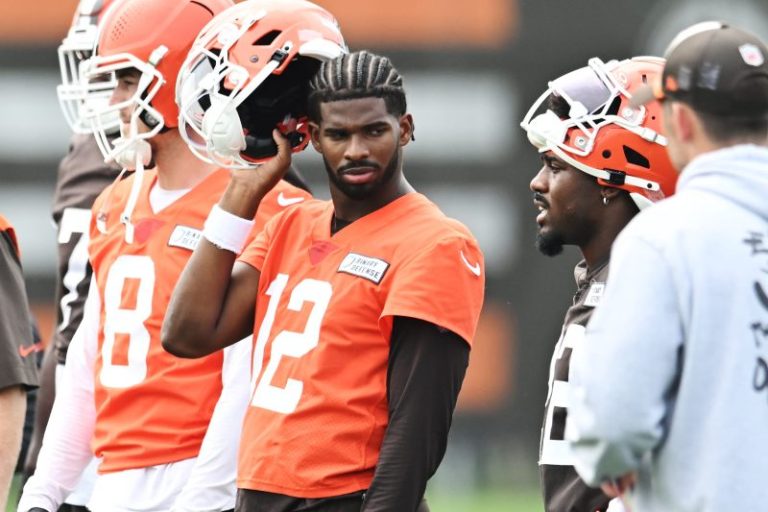
Cleveland Browns traded up on the final day of the 2025 NFL Draft to select high-profile quarterback Shedeur Sanders. His fall to the fifth round was the story of the draft this year.

Less than two months later, there’s a new story attached to Sanders as minicamps wrap up in Cleveland.

Sanders was cited for driving 101 mph in a 60 mph speed limit zone around 12:30 a.m. on June 17. According to municipal court records from Medina, Ohio, this is Sanders’ second speeding citation of the month.

The first citation stemmed from a June 5 incident in Brunswick, Ohio and Ohio State Highway Patrol told WKBN-TV that Sanders was cited for going 91 mph in a 65 mph speed limit zone.

Sanders failed to appear for his arraignment, which was scheduled for June 16, on the first speeding ticket. He is facing $269 in fines and court costs for that citation.

‘He is taking care of the tickets,’ team spokesman Peter John-Baptiste told Cleveland.com.

Sanders is competing for the starting quarterback role in Cleveland alongside veterans Joe Flacco and Kenny Pickett as well as fellow rookie Dillon Gabriel.

Will the NFL suspend Shedeur Sanders?

No, the league won’t suspend Sanders for these speeding tickets. The NFL has not yet provided a statement on the citations.

At time of publishing, Sanders has not released a statement on the speeding citations.

This post appeared first on USA TODAY

Igor Jesus scored a first-half goal, leading Botafogo to a stunning 1-0 win over the reigning European champions Paris Saint-Germain in the Club World Cup on Thursday, June 19 in Pasadena, California.

The result leaves Botafogo (2-0-0, 6 points) alone atop Group B. PSG (1-1-0, 3 points) are tied for second with Atletico Madrid, who defeated the Seattle Sounders, 3-1, earlier on Thursday.

In the game’s decisive moment, Botafogo’s Jefferson Savarino rolled a pass from midfield into the attacking half. Jesus ran onto the ball between Paris Saint-Germain defenders, then took a shot from the top of the 18-yard box that bounced once and nestled into the bottom left corner of the net.

Botafogo goalkeeper John made two saves to register a clean sheet. PSG’s Gianluigi Donnarumma stopped three shots.

PSG finished with a 16-4 advantage in shots, though Botafogo had a 4-2 edge in shots on target.

Botafogo vs. PSG highlights

The biggest stories, every morning. Stay up-to-date on all the key sports developments by subscribing to USA TODAY Sports’ newsletter.

This post appeared first on USA TODAY

Like so many farms, meat-packing plants and other industries that rely heavily on immigrant labor, horse racing is full of people who supported President Trump’s campaign in 2024 but did not believe he would target their businesses with the mass deportations he promised. 

“They were convinced that he was only going after the bad guys,” said Will Velie, an immigration attorney who specializes in the horse racing industry. “But the definition of bad guys to a lot of people in the administration is anyone here without status.” 

And now, perhaps predictably, there’s reason for horse racing to be nervous that it’s about to have a major problem on its hands. 

An ICE raid Tuesday morning at Delta Downs in Vinton, Louisiana, where more than 80 backstretch workers were reportedly detained, should be a wake-up call for an industry that would simply not be able to function without a workforce of grooms and hotwalkers and stall cleaners who are, by some credible estimates, roughly 75% immigrants. 

They come from places like Venezuela, Panama, Colombia and Mexico, working low-wage jobs but filling indispensable roles, caring round-the-clock for animals worth hundreds of thousands, even millions of dollars. 

Most of these workers at the glamorous tracks like Churchill Downs and Saratoga are here on H-2B visas that the prominent and well-resourced barns manage to secure for them, allowing them to travel from one race meet to the next. 

Even in the best of times, though, it can be a tricky system to navigate with just 66,000 issued each year by the U.S. government, long processing times and an intricate renewal mechanism. And, of course, these are not the best of times. In a climate where immigrant construction workers are getting systematically arrested in Home Depot parking lots, the only thing that would prevent racetracks from being a big, fat target for ICE are the whims of a president. 

“We’re out in the middle of the open,” Velie said. “There’s no hiding. You’re in the middle of a town and they can surround you and come round up a lot of people at once.”

‘Everybody’s nervous’

Ever since it became clear during the first weeks of the current Trump Administration that its posture toward deportations would be more aggressive than in his first term, it has been horse racing’s barely spoken but impossible-to-ignore fear, lingering in the background every day on the backside. 

“Everybody’s nervous about it,” prominent trainer Dale Romans told reporters during a Kentucky Derby-week news conference set up to specifically address the threat posed by a potential ICE raid at a racetrack. “If we couldn’t have an immigrant workforce on the backside, I don’t know how horse racing exists. We need a common sense path to long-term legalization. We’re not talking citizenship, just some kind of work permit.

‘The perfect scenario is we get an amnesty program that leads to a work permit. If you’re vetted, if you’re proven not to be a criminal, you pay your taxes, you are sponsored by an employer, you have a right to work in the United States. That’s all we’re asking for.” 

It is, of course, a difficult topic to get most people to address. Not just because trainers or owners are reticent to draw undue attention to themselves but because of the clear political implications: The racetrack is, by and large, an unabashedly Republican-leaning ecosystem. Many prominent owners and racetrack executives have direct lines to Trump himself. 

And that’s why it seemed like there was relief last week when the Department of Homeland Security issued guidance exempting the agricultural industry, hotels and restaurants from these raids due to the harm being inflicted on those businesses. Though horse racing wasn’t specifically mentioned, it clearly falls into the same category. 

Then, a couple days later, the White House reversed course and decided to resume those raids. It didn’t take long for a racetrack to be on the hit list.

“The head of the New York Racing Association, Marc Holliday, is business partners with (Trump’s son-in-law) Jared Kushner, so he had pretty strong assurances there would be some type of executive action protecting the horsemen and agriculture workers,” Velie said. “But I think there’s a lot of competing factions inside the administration battling over this.”

Sweeping up ‘folks that are constantly caring for the horses’

Regardless of where you fall on the political spectrum, the issue of whether horse racing should be relying on cheap immigrant labor is fair game for critique. Steve Asmussen, the all-time winningest trainer in North America, earlier this month finally settled a 10-year-old court case with the Department of Labor over hundreds of thousands of dollars in overtime and back pay. Over the years, whenever wages and living conditions of backstretch workers have been subject to media scrutiny, it’s rarely made the industry look good. 

It’s a tough way to make a living. But in the end, for thousands of people who desperately need it, it is a living. And their symbiotic relationship with horses who need to be fed and taken care of isn’t just a human story. One of the biggest concerns coming out of any potential racetrack raid is what happens to the horses while their grooms are being arrested. 

‘The problem is that the kind of work the people on the backside, the grooms and hotwalkers, those folks that are constantly caring for the horses and making sure they’re maintained and healthy, that job is 24-7 just a real difficult job,’ said Peter Ecabert, the general counsel for the National Horsemen’s Benevolent and Protective Association.

‘It’s hard to get anyone to do that job, and we depend a lot on immigrants and they’re hard-working and good people. Obviously there are a couple that may have run afoul of the legal system, and in those cases, especially if there’s a violent situation we don’t want them around either. We’d work with ICE in any way possible to make sure those people are taken into custody and transported back after their due process hearing. But as far as an unannounced raid on the backside of racetracks, that just puts all of us in a real difficult situation and puts the horses at risk.’

Chelsea Perez, the senior program manger of equine protection at Humane World for Animals, told USA TODAY Sports that it was critical for any law enforcement action to include a process where the safety and well-being of the horses is secured.

“Horses are large, easily frightened animals who can suffer serious injury or injure others when not properly handled,’ she said. ‘The development of appropriate protocols is key to effective emergency response for both law enforcement agencies and equine facility managers.”

Meanwhile, there is a school of thought among those USA TODAY Sports has spoken with that a racetrack in Louisiana was particularly vulnerable to an ICE raid for a few reasons, including the fact that racing in the state is operating under a court injunction preventing the Horseracing Integrity and Safety Act (HISA) rules from being enforced. A HISA spokesperson declined comment, and the National Thoroughbred Racing Association did not answer a request for comment. 

Delta Downs is also currently running its quarter horse meet, where there would be stronger suspicion about workers without visas being present than at higher-profile Thoroughbred tracks. 

Still, there’s a potential chilling effect for the whole industry now that an ICE raid has taken place at a racetrack, particularly given the lack of consistent message from the Trump Administration.

‘There is a lot of tension on the backside,’ Ecabert said. ‘People are concerned, obviously, that there’s going to be (another) raid and a lot of apprehensive people for sure.’

Of course, this is what many of those owners and trainers voted for – even if they didn’t realize it. 

“I got calls from tracks all over the country (the next day), and every one of them was saying the same thing: ‘If it happens there, it can happen here. What’s our plan?’ Velie said. “The long-term plan is to get your workforce on to stable visas, but in the short term, we’re stuck.”

This post appeared first on USA TODAY