Archive

2025

Browsing

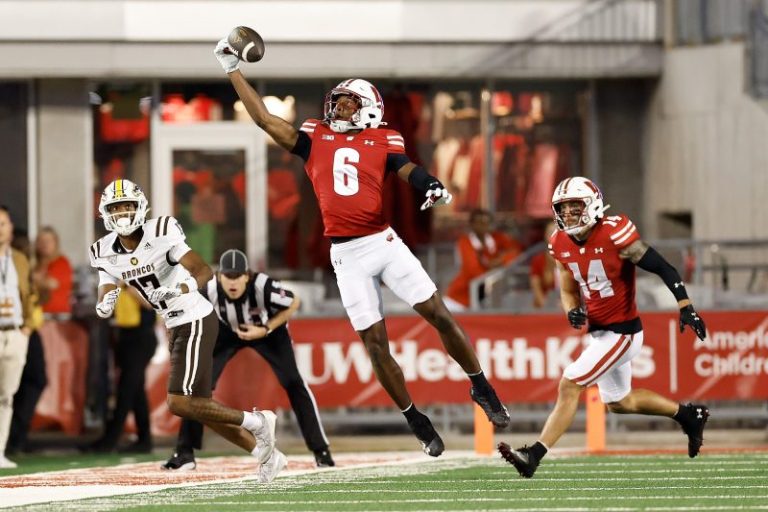
The latest first has come to the current era of college football, with name, image and likeness (NIL) reigning supreme.

Wisconsin football and its NIL collective filed a complaint in state court on June 20 against Miami over alleged recruiting interference, according to a report from Yahoo Sports’ Ross Dellenger. The move is the first of its kind and a potentially precedent-setting action.

The situation revolves around former Wisconsin defensive backXavier Lucas, with the school claiming that Miami interfered with Lucas’ revenue-binding contract with the Badgers and their NIL collective. Lucas left Wisconsin for Miami in January.

Lucas notably transferred to Miami without entering his name in the transfer portal, according to numerous reports in January. Lucas had announced his intention to enter the portal in December, but Wisconsin reportedly refused to put his name in the portal after he had already signed a contract with the school.

The documents obtained by Yahoo Sports claims Miami communicated with Lucas despite knowing the defensive back had already signed a contract with Wisconsin.

“Miami interfered with UW-Madison’s relationship with Student-Athlete A (Lucas) by making impermissible contact with him and engaging in tampering,” the suit writes, according to Yahoo Sports

“We stand by our position that respecting and enforcing contractual obligations is essential to maintaining a level playing field,” Wisconsin said in a statement to Yahoo Sports. “In addition to our legal action, we will continue to be proactive to protect the interests of our student-athletes, our program and the broader collegiate athletics community.”

Dellenger also reported the Big Ten support Wisconsin on the matter.

Revenue sharing was approved in a House settlement on June 6, allowing for schools to directly pay athletes across all sports. The Wisconsin-Miami case could serve precedent for future situations of alleged or potential tampering.

Lucas finished his freshman season at Wisconsin with 18 total tackles, a sack and an interception. The 6-foot-2 defensive back from Pompano Beach, Florida, withdrew from classes at Wisconsin and enrolled at Miami as a student in order to skirt the NCAA transfer rules regarding enter your name in the transfer portal during the two separate portal windows.

Lucas reportedly signed a two-year revenue sharing contract with Wisconsin, according to Yahoo Sports. The contract binds the player’s non-exclusive rights to the school, allowing it to market their NIL. The contract forbids the player’s NIL rights to be used by other schools.

This post appeared first on USA TODAY
Canelo Alvarez and Terence Crawford met Fridaym June 20 in Saudi Arabia for a press conference to promote their megafight, scheduled for Sept. 13 in Las Vegas. But a Saudi powerbroker spoke first.

He is Turki Alalshikh (a.k.a. “His Excellency”), the central figure in Saudi Arabia becoming a big player in professional boxing as a deep-pocketed promoter.

“I hate Tom and Jerry’s kind of boxing,’ Alalshikh said, referring to the famous animated series as well as boxers who run from their opponents. ‘I am sure (Alvarez and Crawford) will deliver for me smashing face and blood and this is the boxing.’

Additionally, Alalshikh said, ‘We will have in this fight and our next fight’s a bonus for a KO.’

He did not provide specifics, but his message was clear. Alvarez and Crawford will be expected to deliver, despite recent history.

Alvarez (63-2-2, 39 KOs) is coming off a lackluster victory over William Scull by unanimous decision in May. The crowd booed as Scull spent most of the fight running from Alvarez, who exerted modest effort to chase down Scull. It also happened to be the first fight of Alvarez’s five-fight deal with the Saudis.

Crawford (41-0, 31 KOs) has not fought since August 2024, and that was an unforgettable bout, too. He beat Israil Madrimov by unanimous decision. Like Alvarez, he heard boos during a fight that included no knockdowns.

Alalshikh suggested he didn’t want a 12-by-12 ring to ensure adequate action for the fight. But apparently he thought it would be a good idea to have dinner with Alvarez and Crawford before the press conference.

“We talked yesterday and they are professional,’’ Alalshikh said later in the press conference. “But I think starting from last night they know what they need to do.’

Do Alvarez, Crawford get it?

Neither Alvarez or Crawford sounded as if Alalshikh’s words will have great impact when they fight at Allegiant Stadium, home of the Las Vegas Raiders, for the undisputed super middleweight championship.

Crawford, 37, is moving up two weight classes (14 pounds) to fight Alvarez at super middleweight. His standing toe-to-toe with Alvarez would enthrall the fans and perhaps create the fight that Alalshikh wants. But don’t count on it.

“I’m not going to let somebody else force or tell me how to fight,’’ Crawford said. “When I’ve been in fighting my whole life, I won’t be running. I could tell you that, but I will be doing a lot of touching.’’

 In defense of Crawford, before the fight against Madrimov, he’d won 11 straight fights by knockout.

Alvarez, 34, suggested his fight would be one for the history books. But it’s worth revisiting recent history – his fight against Scull. It was a dreadful fight.

“…but we win,’’ Alvarez said. “That’s all that matters.’’

If Alvarez had been listening, at the dinner or at the press conference, he’d know that’s not all that matters to Alalshikh – or, largely speaking, boxing fans.

Alvarez’s next knockout will be his first since 2021 – when he finished Caleb Plant with an 11th-round TKO.

Maybe it’s something “His Excellency’’ will address during another dinner with Alvarez and Crawford.

The USA TODAY app gets you to the heart of the news — fastDownload for award-winning coverage, crosswords, audio storytelling, the eNewspaper and more.

This post appeared first on USA TODAY

MIAMI GARDENS, FL – It took six days and 24 matches, but the FIFA Club World Cup finally secured its first sellout of the tournament.

A sea of singing and chanting fans clad in the yellow and blue of Argentine club Boca Juniors serenaded Hard Rock Stadium, while fans of German giants Bayern Munich, wearing red, were scattered among them on Friday night.

The official number: 63,587.  

They got to see the first win by a European club against a South American side in the Club World Cup, too.

Michael Olise broke a deadlock in the 84th minute, English captain Harry Kane also scored (18’) and Bayern beat Boca Juniors 2-1.

European soccer fans will wake up Saturday morning breathing a sigh of relief seeing the scoreline. CONMEBOL teams had won six matches with three draws and zero losses against UEFA clubs before the Bayern-Boca match.

“There’s still a long way to go, of course,” Kane said after the victory, which pushed Bayern through to the knockout stage. “But I think people looking at us will definitely put us as one of the favorites for the thing this week.”

Bayern leads Group C with six points. Portuguese side Benfica is second with four points. Boca is in third with one point, while Auckland City (New Zealand) will be eliminated with zero points through two matches.

All four clubs play their final group-stage match Tuesday at 3 p.m. ET: Boca will meet Auckland in Nashville, while Bayern will face Benfica in Charlotte, North Carolina.

Boca’s Miguel Merentiel tied the match with a breakaway goal in the 66th minute, nearly stealing another result for the South Americans.

The biggest Club World Cup wins against the Europeans were by Brazilian teams. Flamengo beat Chelsea 3-1 in Philadelphia earlier Friday, while the biggest upset was Copa Libertadores winners Botafogo edging Champions League winners Paris Saint-Germain 1-0 in Los Angeles on Thursday.

Lionel Messi and Inter Miami scored the first victory for a North American club against a European side when they beat Portugal’s FC Porto 2-1 on Thursday in Atlanta. Al-Hilal also became the first Arab and Asian team to score a point against a European side, when they drew 1-1 with Real Madrid in Miami on Wednesday.

“I think it’s great to experience different teams,” Kane said. “I think you’ve seen in this tournament already, the South American teams, especially, have caused big problems for some of the European teams. It shows how big football is worldwide, and how good some of these players are. I’m loving this tournament so far, and hopefully, we’re going to be here for a while.”

Hard Rock Stadium has hosted three of the top four attended Club World Cup matches. The Real Madrid match with Al-Hilal drew 62,415 fans. The tournament opener between Messi’s Inter Miami and Egyptian club Al Ahly drew 60,927 fans last Saturday.

The most attended Club World Cup match was Paris Saint-Germain’s 4-0 win against Atlético de Madrid at the Rose Bowl Stadium near Los Angeles.

FIFA said in a press release Thursday the first round of the group stage in the tournament (16 matches) yielded 556,369 fans.

FIFA has been criticized for empty seats at Club World Cup matches during the first week of the tournament. There’s been debate over whether NFL-sized stadiums were the right choice for games instead of soccer-specific venues with lesser capacities.

Choosing Hard Rock Stadium instead of Inter Miami’s Chase Stadium led to 114,412 more fans during the first three games held at the home of the NFL’s Miami Dolphins. Three matches at the Rose Bowl near Los Angeles led to 108,629 more fans, than if matches were held at Los Angeles FC’s BMO Stadium, FIFA shared with USA TODAY Sports.

It’s also a stress test for the venues World Cup matches will be played at next year. Hard Rock Stadium, Atlanta’s Mercedes-Benz Stadium, Philadelphia’s Lincoln Financial Field, Seattle’s Lumen Field and MetLife Stadium in East Rutherford, New Jersey, are hosting Club World Cup and World Cup matches. SoFi Stadium – home to the NFL’s Los Angeles Rams and Chargers – will host World Cup games instead of the Rose Bowl.

The best crowd by far in the tournament have been the Boca Juniors fans, who transformed Hard Rock Stadium into their beloved “La Bombonera” venue in Buenos Aires for two matches this week. They drew 2-2 with Benfica last Monday.

“I’m grateful to all the people who came here to Miami, the United States, who made a huge trip to be with us,” Boca goalkeeper Agustín Marchesín said after the loss. “They always make you feel it on every pitch, and it proves once again that this is the greatest team in Argentina, without a doubt.”

Added Kane: “I love playing in front of these fans. One of the best in my career, for sure. Credit to them, credit to the Bayern fans. The Bayern fans tried to help us as much as possible, but it was hard with all the Boca fans there. So, credit to them. They made it a special night. Of course, they’re not going to go home happy, but I think they saw a great game.”

Bayern Munich vs. Boca Juniors highlights

The USA TODAY app gets you to the heart of the news — fastDownload for award-winning coverage, crosswords, audio storytelling, the eNewspaper and more.

This post appeared first on USA TODAY

Pittsburgh Pirates reliever Dennis Santana has been suspended four games and fined for his altercation with a fan during an 8-4 win over the Detroit Tigers on June 19.

The statement said Santana has elected to appeal the suspension and fine, meaning he remains eligible to pitch for the Pirates until the appeal process comes to a close.

When asked after the game about the situation and what escalated it, Santana told reporters via an interpreter that he didn’t want to ‘get into’ the details of what caused it but said the fan ‘crossed the line’ a few times throughout the night. The fan was removed from the game by Tigers’ security, while Santana had to be walked back by a member of the Pirates’ bullpen staff.

‘Like I said, you guys know me and you know my temper. I’m a calm person and they crossed the line a few times. I would like to leave it at that,’ Santana said on June 19 through Pirates interpreter Stephen Morales.

Santana entered the game in the ninth inning with the game tied 4-4 but was only able to pitch to one hitter before the game was sent into its second rain delay of the evening. In that at-bat, Santana got Tigers right fielder Zach McKinstry to fly out to center.

The 6-foot-2 right-hander holds a 1.72 ERA in 31⅓ innings of work this season across 32 appearances.

The Pirates started their three-game weekend series against the Texas Rangers 15½ games back of the Chicago Cubs in the NL Central.

The USA TODAY app gets you to the heart of the news — fastDownload for award-winning coverage, crosswords, audio storytelling, the eNewspaper and more.

This post appeared first on USA TODAY

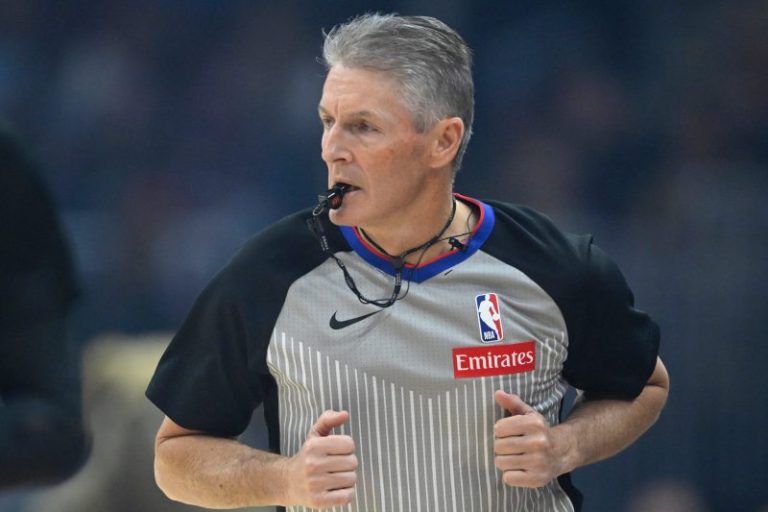
It is a strong likelihood that NBA referee Scott Foster will officiate Game 7 of the NBA Finals between the Indiana Pacers and Oklahoma City Thunder Sunday, June 22.

Foster, who is one of the NBA’s top referees based on a multi-pronged ratings system that uses feedback from teams, called Game 4 in Indianapolis, and Pacers fans were unhappy with his whistle in the Thunder victory.

The NBA does not publicly reveal referees until 9 a.m. ET of game day, but given the rotation of the Finals refs, it makes sense that Foster would get the assignment since he has reffed just one 2025 Finals game and hasn’t been in the rotation since Game 4.

Pacers coach Rick Carlisle defended Foster at media availability before Game 5.

“I think it’s awful some of the things I’ve seen about officiating, and Scott Foster in particular,” Carlisle said on Sunday, June 15. “I’ve known Scott Foster for 30 years. He is a great official. He has done a great job in these playoffs. We’ve had him a lot of times. The ridiculous scrutiny that is being thrown out there is terrible and unfair and unjust and stupid.”

Before the Finals began, the NBA announced the 12 referees who were selected to officiate Finals games based on evaluations from playoff games this season.

Not every ref will get two games, but it won’t be a surprise if Foster gets Game 7.

Foster is working his 18th Finals and has reffed 25 Finals games, including Game 7 in the 2010 Finals between the Boston Celtics and Los Angeles Lakers and Game 7 of the 2013 Finals between the Miami Heat and San Antonio Spurs.

James Capers, Tyler Ford, Ben Taylor, Josh Tiven and Sean Wright are the other officials who have had just one Finals games this season. A crew of Foster plus a combination of Capers, Tiven and Williams makes sense. Ford and Taylor called their first Finals games this month.

In Game 4, both teams combined to shoot 71 free throws, including 38 by the Thunder. On the NBA’s Last Two-Minute Report, referee operations examined 17 plays and found they were all “correct calls” or “correct no-calls.”

Foster had reffed one previous Pacers playoff game this season.

Some fans have given Foster the nickname “The Extender,” claiming that he has a history of making dubious calls during the playoffs that have extended series.

Longtime NBA writer Tom Haberstroh, however, referenced a study that says there’s “not much evidence at all” of Foster’s ability to ‘extend’ the series.

How are NBA Finals referees selected?

According to the NBA, playoff referees are selected, “based on their overall performance throughout the first three rounds of the NBA Playoffs 2025. Officials were evaluated by the NBA Referee Operations management team after each round to determine advancement in this year’s postseason.”

Who is NBA referee Scott Foster?

Foster is considered one of the best referees in the league.

An official in his 30th season with the NBA, Foster entered this season having officiated 1,675 regular season games and 241 postseason games. Friday night was Foster’s 25th time officiating an NBA Finals game. This is his 18th NBA Finals, overall..

Foster is also a noted pickleball player.

This post appeared first on USA TODAY
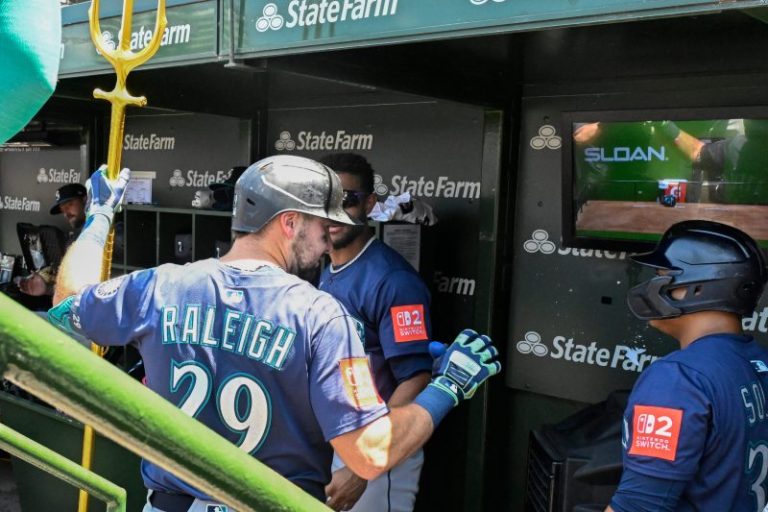
It’s not every day a player is able to break a long-standing record held by a Baseball Hall of Famer.

But that’s just what Seattle Mariners catcher Cal Raleigh did on June 20 at Wrigley Field, breaking Hall of Famer Johnny Bench’s record for most home runs by a catcher before the All-Star break.

Raleigh, who is currently slated to start the Midsummer Classic for the American League based on recent voting, hit two home runs to break Bench’s 1970 record of 28 home runs in the Mariners’ 9-4 win over the Chicago Cubs. The Mariners’ catcher also recorded the mark in fewer games than Bench; Raleigh did it in 73 games compared to Bench’s 87.

Raleigh tied Bench’s record in the top of the first inning with a two-out, solo home run to left center field to give the Mariners an early 1-0 lead.

Then came the big shot for ‘Big Dumper’ in the seventh inning. On a 1-1 pitch against Cubs reliever Caleb Thielbar, Raleigh sent one out of ‘The Friendly Confines’ and onto Waveland Avenue for a go-ahead, two-run home run.

It marked Raleigh’s sixth multi-homer game of the season and increased his MLB-leading home run total to 29. On the afternoon, Raleigh finished 3-for-4 at the plate with three RBIs, three runs scored, two home runs and a walk.

“I love watching everything he does, it’s just so impressive.’

Per MLB.com, Raleigh is on pace for 63 homers this season, which would surpass Kansas City Royals catcher Salvador Perez’s 2021 record for most home runs in a single season by a primary catcher (48).

The Mariners moved to 38-36 overall on the season with their win over the Cubs.

The USA TODAY app gets you to the heart of the news — fastDownload for award-winning coverage, crosswords, audio storytelling, the eNewspaper and more.

This post appeared first on USA TODAY
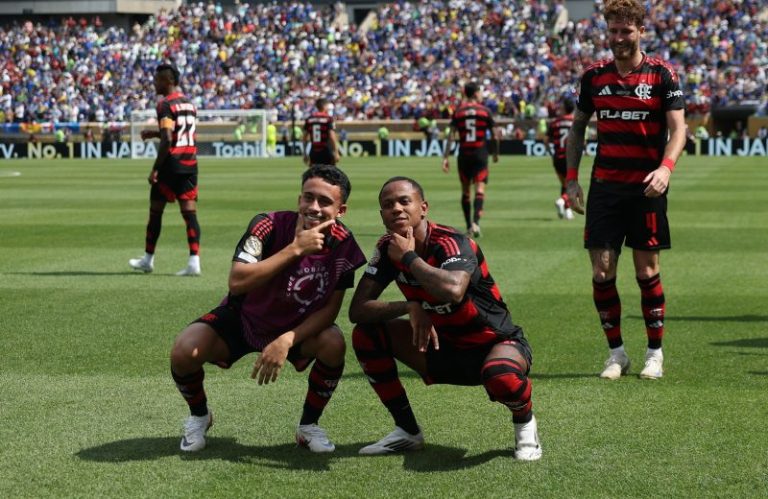
The 2025 FIFA Club World Cup has not gone according to plan for some of European soccer’s biggest clubs, with Brazilian side Flamengo stunning Chelsea 3-1 on Friday, June 20, providing the latest example.

Before a raucous, pro-Flamengo crowd of 54,619 at Lincoln Financial Field in Philadelphia, the Brazilian club came from a goal down to provide the latest surprise at the Club World Cup, striking three times in the second half to jump to the top of Group D. The upset came one day after another Brazilian team, Botafogo, shocked the world by taking down UEFA Champions League winners Paris Saint-Germain 1-0.

It didn’t seem like this game would follow the script of Thursday’s shocking result. Neto put Chelsea ahead in the 13th minute after a defensive blunder from Flamengo that could have caused the Brazilian side to lose belief.

Instead, a wild six-minute spell in the second half changed everything. First, Bruno Henrique pounced for a 62nd-minute equalizer, and Flamengo nosed in front three minutes later thanks to an acrobatic finish from veteran Brazilian national team defender Danilo.

If that served to stagger Chelsea, the English side’s fortunes went into a tailspin in the 68th minute, as striker Nicolas Jackson received a straight red card for stomping on the foot of Flamengo defender Ayrton Lucas. Young striker Wallace Yan then completed Chelsea’s misery in the 83rd minute, powering a close-range shot past goalkeeper Robert Sánchez.

The upset victory left Flamengo – widely regarded as Brazil’s most popular soccer team – at the top of Group D with six points, with Chelsea three points behind. MLS’s LAFC and Tunisian side Espérance Sportive de Tunis played later on Friday, June 20 in Nashville, and a win for either side would draw them level on points with one of European soccer’s giants with one round of games to play.

Flamengo vs. Chelsea Club World Cup highlights

Club World Cup: Brazilian teams, Inter Miami notch early upset wins

Most soccer experts felt that the massive spending advantage for Europe’s biggest teams would be insurmountable at the Club World Cup, which draws teams from every one of the six confederations that govern soccer in each continent.

However, the reality has been far different. Whether it’s the oppressive heat that most games have been played in, the timing of the tournament coming in what is normally the early weeks of the European offseason, or a pack of hungry underdogs eager to prove themselves, the Club World Cup has been very competitive thus far.

Brazilian clubs have made the biggest splash. Flamengo’s win over Chelsea is a stunning outcome, while Botafogo’s defeat of PSG – who less than three weeks ago crushed Inter Milan 5-0 in the the UEFA Champions League final, and who opened the Club World Cup by demolishing Atlético Madrid 4-0 – is nothing short of a monumental shock.

These aren’t isolated incidents, either. Another Brazilian side, Palmeiras, held Portuguese powerhouse Porto to a 0-0 draw earlier in the tournament, while the nation’s fourth representative Fluminense came up with the same scoreline against German giant Borussia Dortmund. Thus far, Brazil’s contingent has gone unbeaten, winning five times and picking up two ties.

Lionel Messi and Inter Miami joined the fun as well, producing what is arguably the biggest international win in MLS history by downing Porto 2-1 on Thursday. That victory unsurprisingly came thanks in large part to a glorious, game-winning free kick from Messi.

Elsewhere, Benfica (Portugal’s other entrant) needed a late comeback to secure a 2-2 draw with iconic Argentine club Boca Juniors, and Mexican team Monterrey secured a 1-1 draw with Italy’s Inter Milan. Mighty Real Madrid, long considered a tournament specialist, started their Club World Cup off with a disappointing 1-1 draw with Saudi Arabian club Al-Hilal.

Club World Cup 2025: How to watch, TV, streaming

Every one of the 63 games at the Club World Cup will stream for free on DAZN, while select matches will be carried on TBS, TNT and truTV in English.

Univision, TUDN, and ViX will all carry games in the U.S. in Spanish.

Watch the entire Club World Cup FREE on DAZN

This post appeared first on USA TODAY
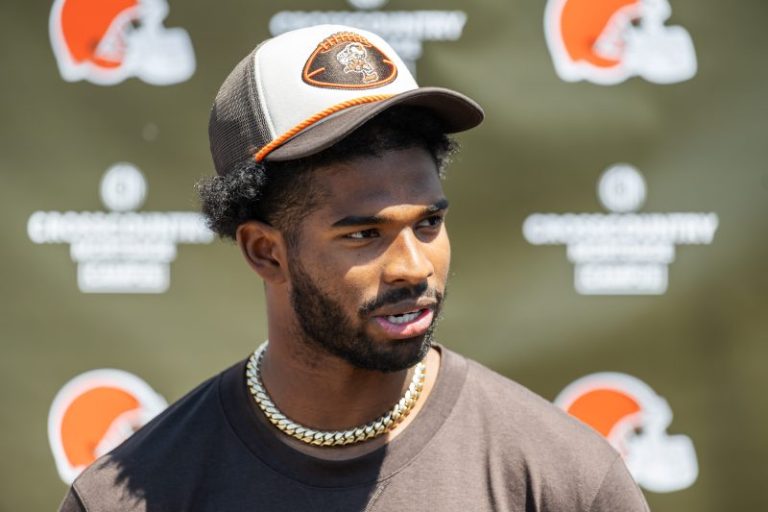
Shedeur Sanders has been living life in the fast lane during the month of June. While the quarterback is battling for the Cleveland Browns starting quarterback job on the field, he’s been speeding off of it.

Sanders was ticketed for speeding on two separate occasions in June, according to court records.

As of Friday morning, both tickets have been paid. Sanders paid $269 in fines and court fees on June 20 to settle his ticket from a June 5 incident, according to records from Medina, Ohio. In addition, the quarterback paid $250 in fines and court costs for his June 17 speeding ticket, which also cost him four points on his license, according to the Strongsville Mayor’s Court Online Docketing and Ticket Payment System.

Sanders addressed the incidents at Browns tight end David Njoku’s celebrity softball game.

“I’ve made some wrong choices,” Sanders said with a laugh. “I gotta own up to them. … I learn from them.”

Sanders was cited for driving 101 mph in a 60 mph speed limit zone in Strongsville, Ohio at around 12:30 a.m. on June 17, according to court records from Medina, Ohio. It was the second incident involving the 23-year-old’s speed in June, with the other coming on June 5 in Brunswick, Ohio, where he was ticketed for driving 91 mph in a 65 mph zone.

He later failed to appear in court for the first ticket on June 16, leaving $269 outstanding in fines and court costs for the former Colorado quarterback to deal with.

Team spokesman Peter John-Baptiste told Cleveland.com on Thursday, ‘He is taking care of the tickets.’

Up to this point, Sanders has been mostly in the news for good reasons. He’s been involved in the community and hasn’t let his draft slide dominate the offseason.

After falling to the fifth round of the 2025 NFL Draft, Sanders was eventually selected with the 144th overall pick. He’s battling Joe Flacco, Kenny Pickett and Dillon Gabriel for the starting gig — and a roster spot.

While a pair of speeding tickets won’t cost him the job, Sanders will want to return everyone’s attention to his work on the field rather than any potential issues off of it.

Rookies are set to report to Browns training camp on July 18 in Berea, Ohio.

This post appeared first on USA TODAY
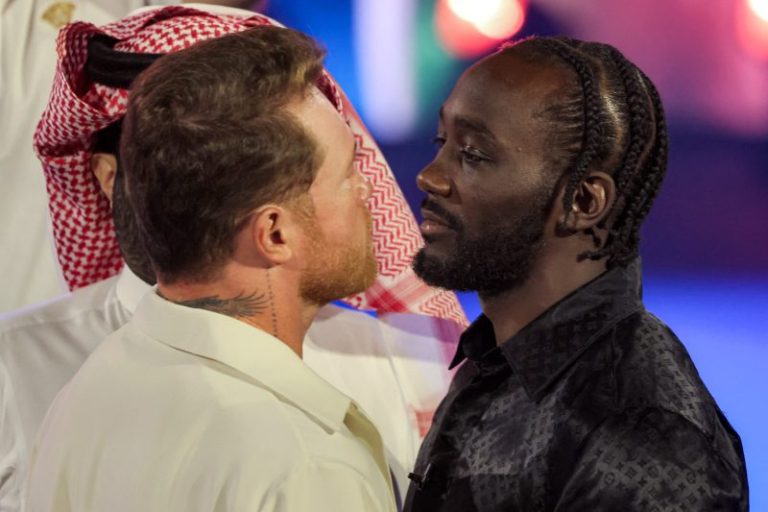
Canelo Alvarez and Terence Crawford met Fridaym June 20 in Saudi Arabia for a press conference to promote their megafight, scheduled for Sept. 13 in Las Vegas. But a Saudi powerbroker spoke first.

He is Turki Alalshikh (a.k.a. “His Excellency”), the central figure in Saudi Arabia becoming a big player in professional boxing as a deep-pocketed promoter.

“I hate Tom and Jerry’s kind of boxing,’ Alalshikh said, referring to the famous animated series as well as boxers who run from their opponents. ‘I am sure (Alvarez and Crawford) will deliver for me smashing face and blood and this is the boxing.’

Additionally, Alalshikh said, ‘We will have in this fight and our next fight’s a bonus for a KO.’

He did not provide specifics, but his message was clear. Alvarez and Crawford will be expected to deliver, despite recent history.

Alvarez (63-2-2, 39 KOs) is coming off a lackluster victory over William Scull by unanimous decision in May. The crowd booed as Scull spent most of the fight running from Alvarez, who exerted modest effort to chase down Scull. It also happened to be the first fight of Alvarez’s five-fight deal with the Saudis.

Crawford (41-0, 31 KOs) has not fought since August 2024, and that was an unforgettable bout, too. He beat Israil Madrimov by unanimous decision. Like Alvarez, he heard boos during a fight that included no knockdowns.

Alalshikh suggested he didn’t want a 12-by-12 ring to ensure adequate action for the fight. But apparently he thought it would be a good idea to have dinner with Alvarez and Crawford before the press conference.

“We talked yesterday and they are professional,’’ Alalshikh said later in the press conference. “But I think starting from last night they know what they need to do.’

Do Alvarez, Crawford get it?

Neither Alvarez or Crawford sounded as if Alalshikh’s words will have great impact when they fight at Allegiant Stadium, home of the Las Vegas Raiders, for the undisputed super middleweight championship.

Crawford, 37, is moving up two weight classes (14 pounds) to fight Alvarez at super middleweight. His standing toe-to-toe with Alvarez would enthrall the fans and perhaps create the fight that Alalshikh wants. But don’t count on it.

“I’m not going to let somebody else force or tell me how to fight,’’ Crawford said. “When I’ve been in fighting my whole life, I won’t be running. I could tell you that, but I will be doing a lot of touching.’’

 In defense of Crawford, before the fight against Madrimov, he’d won 11 straight fights by knockout.

Alvarez, 34, suggested his fight would be one for the history books. But it’s worth revisiting recent history – his fight against Scull. It was a dreadful fight.

“…but we win,’’ Alvarez said. “That’s all that matters.’’

If Alvarez had been listening, at the dinner or at the press conference, he’d know that’s not all that matters to Alalshikh – or, largely speaking, boxing fans.

Alvarez’s next knockout will be his first since 2021 – when he finished Caleb Plant with an 11th-round TKO.

Maybe it’s something “His Excellency’’ will address during another dinner with Alvarez and Crawford.

The USA TODAY app gets you to the heart of the news — fastDownload for award-winning coverage, crosswords, audio storytelling, the eNewspaper and more.

This post appeared first on USA TODAY
Hardly anybody in charge of major college athletics wants to talk about this publicly.

It’s the Trump effect. Will the Trump administration’s plan to defund American universities trickle down to college sports in the form of funding cuts?

USA TODAY Sports contacted more than 25 universities and college leadership organizations to ask them about concerns that athletics could be affected at least indirectly by this federal funding uncertainty. Almost all of them dodged the question by not responding at all, or by providing vague, undetailed answers, or by saying they didn’t want to talk about it on the record.

“I’m not surprised that nobody wants to talk, particularly at red-state public universities,” said Robert Kelchen, a professor in the Department of Educational Leadership and Policy Studies at the University of Tennessee. “It’s such a touchy topic right now.”

At the same time, many of the same colleges are bracing for another coming financial earthquake after a federal judge recently approved the House vs. NCAA legal settlement. This allowed colleges to start paying their athletes directly for the first time ever, creating a massive new cost of up to $20.5 million per school per year starting July 1, according to the NCAA.

Trouble and tension in major college sports

Add it all together and tensions have started simmering during a titanic moment in history for higher education and college sports. Expenses are going up in athletic departments while the other side of campus remains anxious about Trump cuts to higher education, such as grants for medical and scientific research.

“There’s never been a time in college sports where so many issues have hit at once − both with the squeeze on institutional support and now this brand-new way of doing business in college sports,” said Amy Perko, CEO of the Knight Commission on Intercollegiate Athletics.

USA TODAY Sports examined how it might affect athletics, why it’s a sensitive topic and what some schools are doing about it.

How the federal uncertainty trickles down

Trump’s attempted funding cutbacks at American universities aren’t directly related to college sports. They instead largely involve funding for research at these universities, including from the National Institutes of Health, which faces $18 billion in cuts under the Trump administration.

But as part of their universities, most athletic departments depend on university financial support to pay the bills. And when universities face funding shortfalls, they have to make decisions about what to cut and where. That’s where that institutional support for athletics could get squeezed.

Out of 232 Division I public schools tracked by USA TODAY Sports in fiscal year 2023, only 12 athletic departments reported receiving no institutional support from their schools, including from student fees or university transfers. That includes big football schools such as Ohio State, Penn State, Texas and LSU.

On the other end of the spectrum, 75 Division I public schools received at least $20 million in university support from their schools in fiscal year 2023, including from student fees. Sixteen received direct institutional support from their schools of more than $20 million, not counting student fees, led by Houston ($39.7 million), California ($36.7 million), Cincinnati ($35.5 million) and Connecticut ($30.2 million).

“As a matter of basic math, less money from any source will constrain any university’s ability to make discretionary decisions about how to allocate their finite resources,” said Roger Pielke, emeritus professor at the University of Colorado. “Something then has to give − either more revenues are needed or some activities must be cut back. If athletics demands more funding (such as for paying athletes) that compounds the issues.”

A number of examples have emerged.

At the University of Washington

In March, the provost at the University of Washington sent out a message outlining the financial risks the university was facing, including state budget shortfalls and the “unprecedented and rapid policy changes at the federal level.” The provost mentioned possible cutbacks including “pausing non-essential staff hiring,” limiting faculty hiring and reducing food purchases and other discretionary spending.

“These measures apply to all units that report to the President and Provost, including Athletics,” university spokesman Victor Balta confirmed to USA TODAY Sports.

How that applied to athletics isn’t clear. The university didn’t get into detail about that when asked about it. But the athletic department received $10 million direct institutional support in fiscal 2024. Now the House settlement is also pressuring the Huskies, too, just like all the other schools in major college sports.

The Huskies are projecting a $19 million deficit in athletics for fiscal year 2026. Loans will help cover the gap, including $10 million from the Big Ten Conference in the form of a revenue-sharing advance and more from an “internal loan of institutional funds,” Balta said.

“Rising expenses and back damages related to the House settlement are factors, as are expenses associated with transitioning to the Big Ten Conference,” Balta said. “UW Athletics did execute required budget reductions and revenue enhancements in their approved FY26 operating budget – they were not held harmless in this exercise related to overall budget concerns.”

At Michigan State

This is happening to different degrees at other universities, too, each dealing with it in different ways. At Michigan State, for example, President Kevin Guskiewicz sent a message to faculty and staff fin May, noting financial challenges that included navigating “federal policies and directives that undercut our ability to advance our land-grant mission and continue essential research projects that make life better.”

A subsequent memo went to university leaders calling for a 9% base reduction in university-wide general funds over the next two years.

Asked if that included MSU athletics, university spokeswoman Amber McCann replied, “The reductions are to general funds across the university.”

Additional details were not provided. MSU athletics received less than $650,000 in direct institutional support in fiscal 2024 and $3.6 million in indirect institutional support in the form of costs covered by the university but not charged to athletics. MSU athletics also reported an annual operating deficit of $16.7 million for fiscal 2024.

But even at the small number of schools that provide little or no institutional support for athletics, disharmony can increase across campus if athletic departments are insulated from university budget cuts. Take Nebraska, for example.

Is athletics ‘sharing the pain?’

The University of Nebraska Board of Regents on June 19 approved a 5% tuition increase amid financial challenges that included less state funding than they asked for and an estimated federal funding reduction of nearly $12 million. The new budget included $18 million in cuts and no funding for pay increases for university staff.

But over in the athletic department, football coach Matt Rhule is set to get a $1 million pay increase this year, then another $1 million more in 2026, according to the terms of his contract. Athletic director Troy Dannen is set for a $100,000 annual raise.

The athletic department didn’t respond to an inquiry about it.

“There is a feeling that the athletic department should be sharing the pain,” said Jordan Gonzales, president of the University of Nebraska-Lincoln Staff Senate.

Nebraska is one of the relatively few schools in the nation that reported receiving no university support for athletics in fiscal 2023. Even so, any immunity from university austerity measures adds to the perception that athletic departments are becoming increasingly detached from their universities as they move to become more like professional sports.

“When the university asks its core academic support staff to tighten their belts and absorb budget cuts while the athletic department appears to operate under a separate set of financial rules, it fosters a sense of two separate universities − one that’s facing austerity and another that is investing in and entering into multimillion deals and contracts,” Gonzales said.

Why it’s a sensitive subject

As the Trump administration targets certain colleges such as Harvard for funding cuts, others are wary of becoming the next target. When resources shrink on campus, discord also intensifies about university priorities and who is or isn’t taking on a fair share of the burden. Some colleges might not even want to talk about any cutbacks in sports because now is the time they want to appear flush with cash to pay athletes.

Among those that didn’t respond to inquiries about federal funding cuts affecting athletics were UCLA, Virginia, Stanford, Minnesota, Houston, Northwestern, Harvard and the National Association of Collegiate Directors of Athletics.

‘I think people are laying low,’ said Ruth Johnston, vice president of consulting at the National Association of College and University Business Officers (NACUBO). ‘I think people are wanting to wait and see a little bit.’

In the meantime, the pressure mounts for Division I athletic departments to spend money on players, all the way up to the initial cap of $20.5 million. Not doing so would mean falling behind the competition.

“They need more money right now,” said James Nussbaum, a former Northwestern football player and in-house counsel at Indiana University now at the firm Church Church Hittle + Antrim. “It’s those schools in the middle that are going to be really interesting to watch as they try to figure out if they want to continue to fund athletics at the level they have been as it becomes more and more clear that they’re not going to be able to compete with those top-tier schools, just from a resource standpoint.”

Where will the money come from?

Some athletic departments are getting students to help pay the bills. Some are getting more from their universities. Some might pursue other sources:

∎ The Board of Governors for the State University System of Florida on June 18 granted permission for state universities to give a $22.5 million annual lifeline to athletics through at least June 2028.

∎ At the University of Michigan, athletic director Warde Manuel sent a letter to supporters after the House settlement was approved, saying his department faced a projected deficit of $27 million for the 2025-26 academic year, including $20.5 million for paying players. The letter asked for support and mentioned a planned 10% reduction in staff, in addition to other cost-cutting moves. Spokesman Dave Ablauf said the university also has offered the department a loan of up to $15 million.

∎ Louisiana Gov. Jeff Landry recently signed a bill to increase taxes on sports gambling, helping raise more than $20 million to be divided among 11 state universities for athletics, including LSU. Incidentally, LSU athletics is not subject to university cutbacks there because it is considered “auxiliary” to the university, according to the Louisiana Illuminator in April. LSU didn’t respond to a follow-up question about that from USA TODAY Sports.

∎ At the University of Colorado Boulder, the school approved an increase of the student athletic fee from $28.50 to $90 per semester, the first change to this fee since 1994. Funding from it was to support women’s sports scholarships and non-revenue sports.

∎ At Virginia Tech, student athletic fees are set to go up by $295 annually, up to $732.

∎ At Wichita State, the university proposed a 3.5% tuition increase, citing the challenging financial landscape for higher education, as well as the House settlement.

∎ At the University of Kansas, Chancellor Douglas Girod told the Lawrence Journal-World that KU athletics possibly could pay the university a reduced tuition rate for its athletes.

∎ Private investment in athletics is on the way. Elevate, a sports strategy and marketing company, recently announced the launch of the Collegiate Investment Initiative to provide colleges with “capital and strategic resources to develop revenue-generating projects.” What those schools must provide in return for that is not yet clear.

Johnston of NACUBO said “everything is going to be affected” by federal funding cuts at the top, in addition to the big new cost for athletic departments. New sources of funding are needed in the absence of cutbacks.

“It’s not gonna go back to normal,” Johnston said. “I think we’ re in an inflection point.”

Follow reporter Brent Schrotenboer @Schrotenboer. Email: bschrotenb@usatoday.com

This post appeared first on USA TODAY