Archive

2025

Browsing

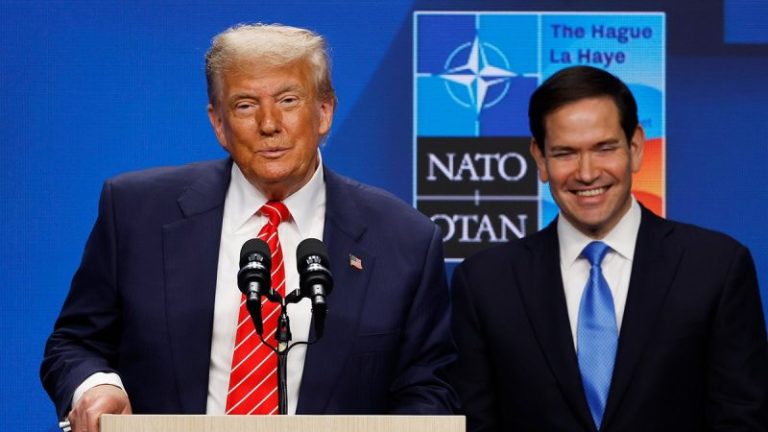
Secretary of State Marco Rubio cracked up laughing when President Donald Trump gave his reaction to NATO Secretary General Mark Rutte calling the commander in chief ‘daddy’ earlier Wednesday. 

During their bilateral meeting in The Hague, Netherlands, Trump discussed the U.S.’ role in brokering a fragile ceasefire between Israel and Iran, saying both countries were like ‘two kids in a school yard’ who ‘fight like hell’ for a short time before ‘it’s easier to stop them.’ 

Rutte interjected, ‘Then daddy has to sometimes use strong language.’ 

Trump had used profanity in front of reporters outside the White House before boarding Marine One on Tuesday, saying about Israel and Iran that they ‘have been fighting so long and so hard that they don’t know what the f— they’re doing. ‘ 

At a subsequent press conference Wednesday, Rubio broke into hysterics when a reporter from Sky News asked Trump about the remark. 

The reporter reminded Trump that Rutte, ‘who is your friend.… He called you daddy.’ 

‘Do you regard your NATO allies as kind of children?’ the reporter asked. 

Trump responded lightheartedly, and Rubio could be seen standing next to him starting to smile and laugh. ‘No, he likes me. I think he likes me. If he doesn’t, I’ll let you know. I’ll come back, and I’ll hit him hard. Okay?’ Trump said jokingly. 

‘He did. He did it. Very affectionate,’ Trump added of Rutte. ”Daddy, You’re my daddy.” 

The reporter pressed on with a more serious tone, as Rubio continued to laugh. 

‘Do you regard your NATO allies, though, as kind of like children?’ she said. 

NATO leaders on Wednesday committed that the member states would contribute 5% of GDP annually to defense and security obligations by 2035. 

‘You’re obviously appreciative of that,’ the reporter said. ‘But do you hope that actually they’re going to be able to defend themselves, defend Europe on their own?’ 

‘I think they’ll need help a little bit at the beginning, and I think they’ll be able to,’ Trump said. ‘I think they’re going to remember this day and this is a big day for NATO. You know, this was a very big day.’ 

‘It’s been sort of an amazing day for a lot of reasons, but also for that,’ Trump added, referencing how the greater contributions were decades in the making. Trump claimed it was not possible until he came along. 

The reporter pressed, ‘Do you think they can do it without you, though in the future? Can they do more states?’ 

‘I mean, you have to ask Mark,’ Trump said, concluding the press conference. The president had noted earlier that the only NATO member that did not agree to hike its defense contribution was Spain. 

This post appeared first on FOX NEWS

It’s practically a given for leagues and owners to cry poverty at some point during contract talks.

David Stern famously did it in 2011, saying the NBA was losing money. Adam Silver raised similar concerns four years later. Major League Baseball’s current contract doesn’t expire until the end of next season, yet Rob Manfred is already putting the idea out there.

The implication of this kind of hand-wringing, of course, is that the leagues can’t possibly have the money needed to give the players what they’re asking. But it’s usually more negotiating tactic than reality, a way of moving the bar lower.

The WNBA won’t have that luxury this time around.

Sportico released its latest valuation of the 13 WNBA teams on Tuesday, and the numbers are jaw-dropping. The Golden State Valkyries lead the league with a $500 million valuation, which is a whopping 10 times what owners Joe Lacob and Peter Gruber paid to get the expansion team just two years ago.

The average valuation is $269 million, and six teams are worth $250 million or more.

Now, those numbers pale in comparison to the $10 billion the Los Angeles Lakers sold for last week. But aside from the fact the W is still playing catchup, beginning 50 years after the NBA, that average valuation of $269 million is a 180% increase from last year.

And that, according to Sportico, is more than double the previous record gain by a sports league.

To put it simply, the W is a growth stock. A rocket-fueled one. And the players know it.

‘This is a defining moment for the WNBA. As the league grows, it’s time for a CBA that reflects our true value,” Chicago Sky veteran Elizabeth Williams said over the weekend, echoing a message shared by several other player reps.

“We’re fighting for a fair share of the business that we built. It’s business. We’re not fighting for anything unreasonable. We’re fighting to share in the growth that we’ve created,” Williams added. ‘Every other category across this business has grown: Media rights, ticket sales, team values. The only thing that’s still capped is player salaries. We deserve our fair share. We’re demanding salaries that reflect our true value. Again, it’s business.”

Negotiations between the WNBA and the Players Association are private, so it’s unclear what prompted the collective warning from players over the weekend. Maybe they got wind of Sportico’s valuations. Maybe it’s a result of the op-ed in the New York Times earlier this month by Noble Prize-winning economist Claudia Goldin, who said W players are making 1/80th of what NBA players make rather than the one quarter or one third that would be required for equitable pay.

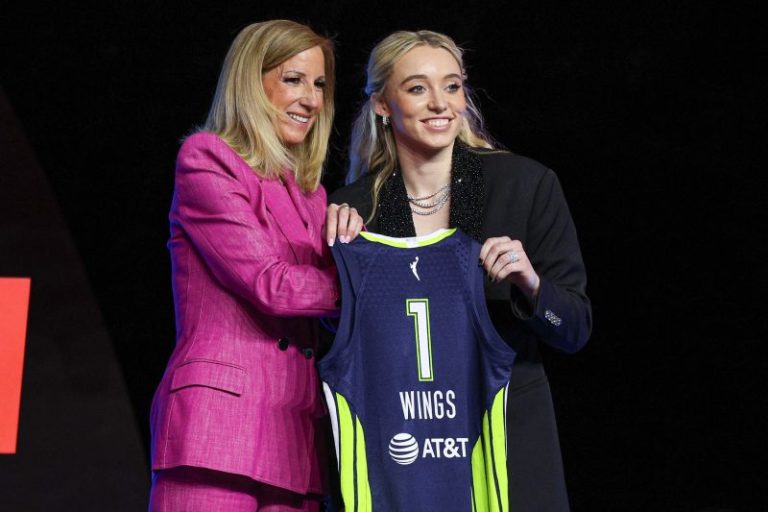
And before the peanut gallery chimes in, W players are not asking for LeBron money. They’re not even asking for Cooper Flagg money, assuming he’s the No. 1 pick that he’s expected to be Wednesday night.

What they are asking for is a fair share, and the W and its owners are going to have to open their wallets to get them there.

Currently, W players get about 10% of the league’s revenues. That’s less — way less — than the roughly 50% of revenues that players in the NBA, NFL, MLB and NHL get. Yes, the W has stepped up, finally providing charter flights last year for the entire season and boosting the payout for the Commissioner’s Cup. Some individual teams now have their own practice facilities, an “amenity” that’s been a given in men’s sports for years.

But there’s more to be done. Much more.

This isn’t a charity project, either. The Sportico valuations confirm what has been evident for the last five years: There is money to be made in women’s sports. A lot of it. But sports are driven by stars, not owners. Fans are shelling out for tickets, merch and the league pass because of Caitlin Clark, A’ja Wilson, Napheesa Collier, Angel Reese, Breanna Stewart and Paige Bueckers, not because of any owner.

Which means the players need to be equal partners.

“The current system is unsustainable for us and that means it’s unsustainable for the business that we created. Nothing short of transformational change will do for the future we see and the fans clearly see,” Williams said. “So we’re paying attention.”

The W players know their value. More importantly, they know the value of the league and its teams, too.

Follow USA TODAY Sports columnist Nancy Armour on social media @nrarmour.

This post appeared first on USA TODAY

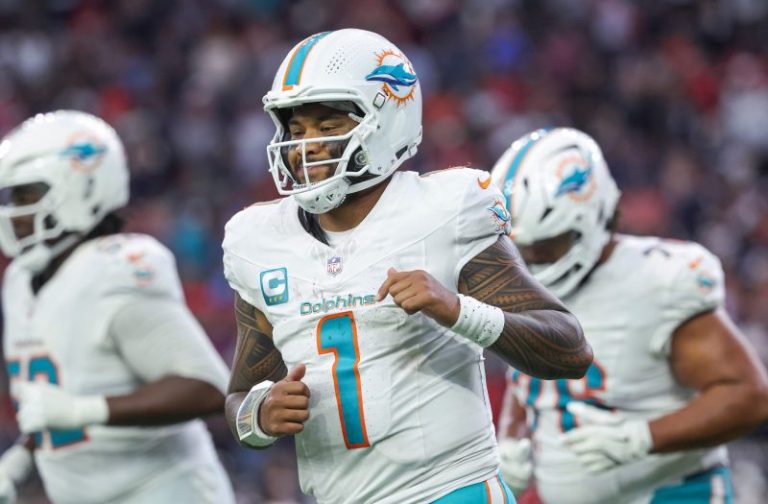
Terron Armstead blocked in front of both Drew Brees and Tua Tagovailoa during his 12-year NFL career with the New Orleans Saints and Miami Dolphins.

‘The anticipation, the accuracy, timing of throws, the ability to knock a wing off a fly, repeatedly. Those guys throw darts,’ Armstead said of Brees and Tagovailoa. ‘They don’t throw to areas, they are very precise. And that’s an elite talent, it’s an elite trait [that] very few people possess. He’s one of them and Drew Brees is another.’

The recently retired offensive tackle was careful to note he wasn’t claiming the two were ‘the same player or same person.’

‘No two people are,’ Armstead explained.

Still, the 33-year-old expressed confidence Tagovailoa could eventually work his way into consideration as one of the best quarterbacks in the league, much like Brees did during his time with the Saints.

What has stopped Tagovailoa from reaching those heights over his first six seasons?

‘I would say time on task,’ Armstead told Eisen. ‘Having more experience, getting more reps, getting more snaps. I don’t know exactly where Drew Brees was going into his sixth year. I know he had a shoulder that had to get reconstructed when he signed to New Orleans and really pushed his career even further, to be the Hall of Famer player that he was.’

Armstead also lauded Tagovailoa for being a ‘fierce competitor’ who plays ‘with such love for the game.’

However, Armstead also noted the 27-year-old quarterback needs to better protect himself in order to stay on the field.

‘He is willing to put his body on the line in any situation,’ Armstead explained. ‘But he has to understand – and I think he’s starting to understand – his value is deeper than any one play or any one game. Him being out of the lineup changes the franchise. It does. It changes the identity of the offense, it changes the franchise.

‘So, I believe that he has to play the game with that in mind, as opposed to let me do whatever I need to do to get this first down,’ Armstead added. ‘That first down is not nearly as valuable as him being there the next series.’

Armstead understands Tagovailoa will continue to face scrutiny until he can consistently stay on the field and lead the Dolphins to playoff success.

He remains confident Tagovailoa will be able to challenge those narratives as he continues to progress during his NFL career.

‘Tua has his questions, and it’s up to him to answer these question – not me,’ Armstead said. ‘Do I believe he can? I do. Do I believe he will? I do.’

This post appeared first on USA TODAY

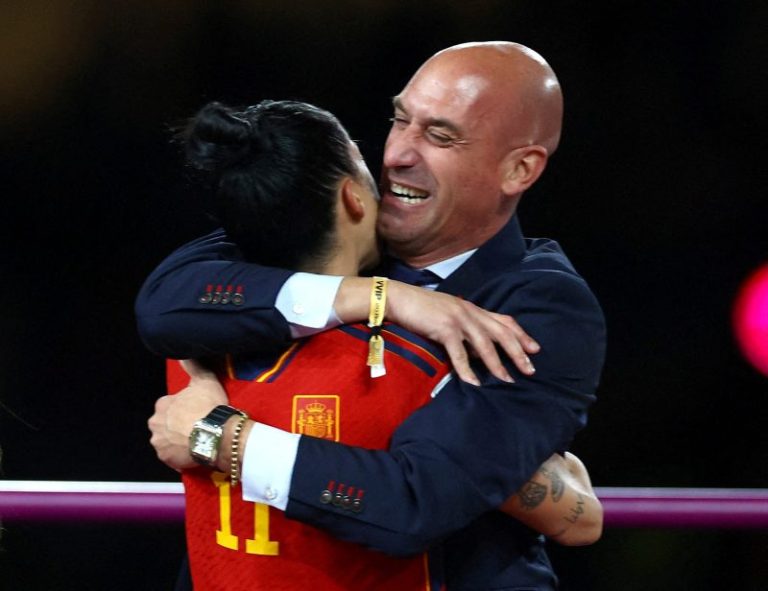
MADRID — Spain’s High Court on Wednesday, June 25, upheld a verdict that found former soccer federation president Luis Rubiales guilty of sexual assault for an unsolicited kiss on the lips of national team player Jenni Hermoso at the 2023 World Cup in Sydney.

The court rejected multiple appeals against the conviction, reaffirming Rubiales kissed Hermoso without her consent during the medal ceremony after Spain’s women had won the trophy, according to the ruling seen by Reuters.

Rubiales was fined over 10,000 euros ($11,592) and acquitted of coercion charges alongside three co-defendants. Prosecutors had sought a 2-1/2-year prison sentence and called for a retrial, both of which were dismissed.

The incident sparked widespread debate about sexism in Spanish society and women’s football, fueling momentum for the ‘Me Too’ movement in the country.

Rubiales argued that his actions were motivated by an uncontrollable joy, but the court ruled that his restraint with other players and attendees demonstrated he could have avoided such behaviour with Hermoso.

‘Since that emotion did not lead him to express his joy so effusively by kissing the other players or the accompanying persons in the box, and he restrained himself, he could also have done so, without too much effort, with the captain of the team,’ the court said.

The USA TODAY app gets you to the heart of the news — fast.Download for award-winning coverage, crosswords, audio storytelling, the eNewspaper and more.

This post appeared first on USA TODAY

The NFL has played 105 seasons, and 531 different men have served at least one game as a head coach. Before last year merely four — or 0.75% — were Latino.

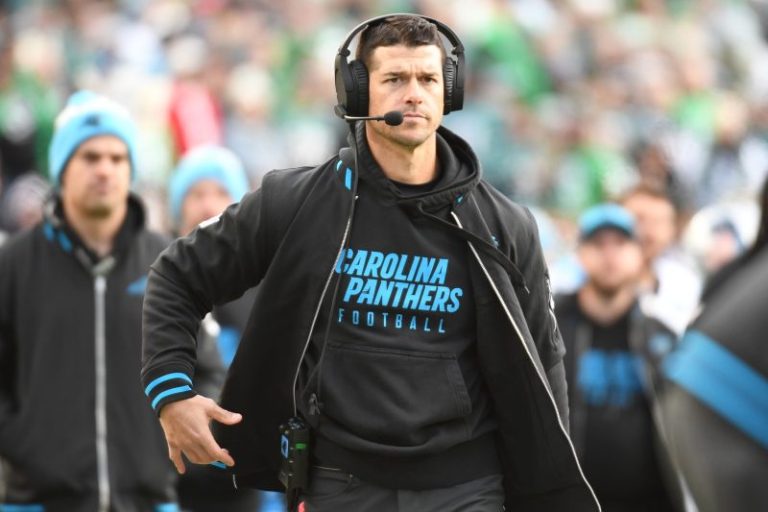
The Carolina Panthers last season hired Dave Canales as the fifth. He’s Mexican-American and has the coveted reputation of quarterback whisperer. His schemes are fluid and multiple, concepts blended from different systems to better suit his players.

The team in 2024 went 5-12, but toward the end of last season you saw some of the Canales effect. Second-year quarterback Bryce Young struggled as a rookie, but in his final three games last season Young completed 65 percent of his passes for 612 yards, 7 touchdowns and no interceptions. That was good for a 111.6 passer rating.

What does this all mean? Canales got the opportunity many Latino coaches in the NFL do not, and he’s making the most of that chance. His path is also something of a contradiction, one that perfectly captures the complicated state of the Latino experience in today’s NFL.

From the moment Carolina hired him, Canales became a symbol of seismic progress. His hiring came just 17 days after the Commanders fired Ron Rivera, the fourth Latino head coach in NFL history. Moreover, Canales rode a path observed almost exclusively in the career arcs of white coaches; before getting the Panthers gig, he had spent just one season as an offensive coordinator.

But from the moment he was hired, Canales also became a more uncomfortable marker, an acknowledgement of acute scarcity. He remains the only Latino head coach in the NFL. His appointment in Carolina came during a record NFL hiring cycle in which four men of color were named head coaches, signaling further progress. But a harsh reality remains: given the extremely low number of Latino coordinators and assistants, it might be several years — perhaps even much longer — before we see the NFL’s sixth Latino head coach.

“My grandfather came from Mexico,” Canales told the Panthers’ official website. “He made a life for himself in the Central Valley in California, joined the military to get citizenship. He and my grandma just breathed life into their children that anything is possible. For me, I found football early on and I was able to chase that dream — it’s that Mexican American in me, that willingness to take a job and just apply yourself to it and take real pride in your work, just show up every day and take advantage of opportunities that come along.”

Those opportunities, by and large, have been atypical for Latino coaches in the NFL. A lack of exposure and lack of institutional support for candidates, racial biases in hiring and a lack of diversity at the ownership and executive level have complicated pathways for Latino assistants to ascend into coordinator roles, jobs that USA TODAY Sports research has shown are springboards for head coaching positions.

Canales is an exception. From 2006-08, he was coaching at El Camino College, which is more or less a straight shot down I-110 from the University of Southern California. At the time Canales was at El Camino, Pete Carroll was coaching the Trojans, and Carroll ran summer camps for high school and elementary school players on USC’s campus. Carroll hired Canales to be a coach at these camps and it was then that Carroll became his mentor. In 2009, Carroll hired Canales to be USC’s assistant strength coach, and when Carroll bolted for the Seattle Seahawks the following year, he once again brought Canales.

Canales spent 13 seasons in Seattle, grinding from offensive quality control assistant all the way to quarterbacks coach and passing game coordinator. Before the 2023 season, he broke away from Carroll’s mentorship when the Buccaneers hired him as offensive coordinator. He starred in the role, resurrecting the career of Baker Mayfield. Then he got the Panthers job.

What the recent history of Latino coaches shows is that Canales is a distinct anomaly.

‘Does it feel good to be a trailblazer?’

There have been few Latino assistants in the NFL with coordinator-level titles. What happened to two of them in Vikings defensive coordinator Brian Flores and former Commanders run game coordinator Juan Castillo shows how difficult it is for Latino coaches.

Flores, 44, was already a head coach, for the Miami Dolphins, for three seasons. He went 24-25 in Miami before he was fired in 2021. He has an open class-action lawsuit against the NFL and three of its franchises, alleging the league is “rife with racism,” particularly in the hiring and promotion of Black assistants.

Rivera, 63, wasn’t hired as a head coach in the NFL after his last head coaching stint. He’s currently with the University of California as the football program’s general manager.

That leaves Castillo, 65, a veteran assistant with over 30 years in the NFL, and one who has extensive experience on both offense and defense. He has worked under three different NFL head coaches, and some of the game’s brightest minds: Andy Reid (Chiefs), John Harbaugh (Ravens) and Sean McDermott (Bills). Castillo told the Philadelphia Inquirer back in 2011 that he dreamed of becoming a head coach. At the NFL scouting combine later that year, Harbaugh said he was “a supporter of Juan” and that he thought ‘he’ll be a head coach in this league someday.”

Castillo told USA TODAY Sports that he was never asked to do a single head coaching interview. When the Commanders fired Rivera in January 2024, they also released Castillo, and many others, too. After spending last season with UCLA, Castillo is now an offensive analyst for the University of Michigan.

In 2024, the NFL, for the first time since the Rooney Rule was implemented in 2003, did not feature a single non-white offensive coordinator. Currently, there are only two coordinators who identify as Latino or Hispanic. Flores identifies as Latino and Mike Kafka, from the Giants, has previously told USA TODAY Sports through a team spokesman he identifies as Hispanic. While Latino and Hispanic are often colloquially used interchangeably they can have different meanings.

An increasing Latino fan base

In 2023, only 23 of the 844 NFL assistants (2.73%) for which there were data identified specifically as Hispanic or Latino(a). That’s according to The Institute for Diversity and Ethics in Sport (TIDES), which publishes annual report cards on racial and gender hiring in the major U.S. sports leagues. (The most recent year for the report is 2023.) That figure was three more than the year prior, a 0.2% increase.

For NFL players, the number is even lower. Only seven of 1,536 (0.5%) for which there were data in 2023 identified specifically as Hispanic or Latino(a), according to TIDES.

“I don’t think the public thinks of Latinos when they think of head coaching jobs,” Dr. Richard Lapchick, the director of TIDES, told USA TODAY Sports. “I don’t even think most people know this topic as a point of discussion in their fandom, whereas they might have a passing knowledge of people pushing for more Black head coaches. It’s just not on the radar.”

Playing is arguably the quickest pathway into coaching, and the consistently low total of Latino players explains in part the lagging number of Latino coaches. But this is where everything becomes further complicated.

Per the SSRS/Luker on Trends Sports Poll, there were 34.6 million Hispanic NFL fans in the U.S. in 2023, the most ever recorded. That was up 13.4% from last year’s total of 30.5 million. In fact, compared with a decade ago, when there were 26.3 million Hispanic fans, today’s figure represents a colossal 31.6% increase.

Chad Menefee, the executive vice president of strategic intelligence at SSRS, told USA TODAY Sports in an email that Hispanic NFL fandom is outperforming all other demographics the company tracks. Since 2014, there were 8.2 million new Hispanic NFL fans recorded, while there were 1.9 million new non-Hispanic Black fans. Non-Hispanic white fandom has remained essentially flat.

These millions of new Hispanic fans are flocking to a league where they increasingly will not see themselves represented on the sideline. For the moment, Hispanic fandom is a booming market for the NFL, one the league has tried to monetize with International Series games, targeted commercials and other initiatives. But there might come a time when these new fans abandon the sport, perhaps in search of something where they are more robustly represented, something with stronger cultural ties to their heritage.

That also might never happen. But as these new Hispanic fans converge in this space, they might encounter something all too familiar, for the obstacles facing Latino assistants in the NFL are precisely the same forces that often keep Latino people in the domestic workforce from also ascending in their chosen industry.

All the NFL news on and off the field. Sign up for USA TODAY’s 4th and Monday newsletter.

This post appeared first on USA TODAY

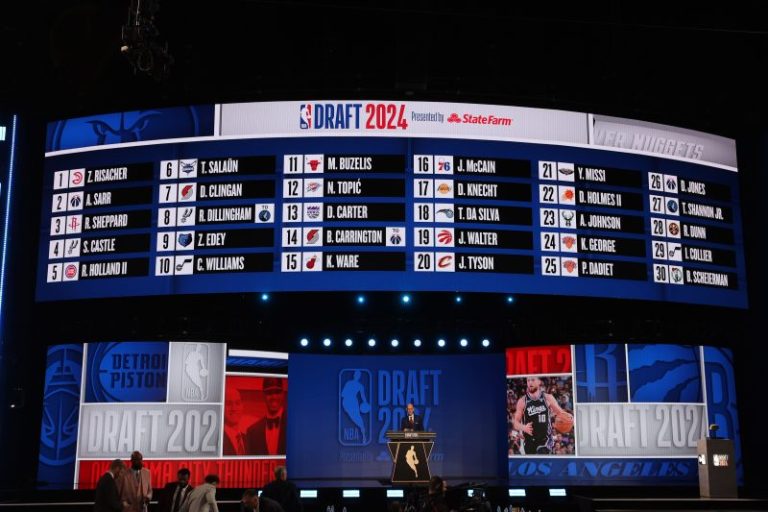
In just a few hours, the next wave of NBA talent will be welcomed into the association at the Barclays Center in Brooklyn, New York, with NBA commissioner Adam Silver announcing their names — and that includes the highly anticipated moment of the No. 1 overall pick.

The No. 1 overall pick for the 2025 NBA Draft is all but a done deal and a selection that doesn’t have much uncertainty surrounding it going into the draft, as the Dallas Mavericks are widely expected to take Duke’s Cooper Flagg with the top overall pick.

At 18 years old, Flagg will be the second youngest player taken with the No. 1 overall pick in the draft’s history, only behind four-time NBA champion LeBron James. Should Flagg be taken by the Mavericks, Flagg not only will be able to start his NBA career with a true contender for the Larry O’Brien Trophy, but will add his name to the legacy and history of former Blue Devils that have been taken with the pick.

So with the 2025 NBA Draft set to get underway on June 25 at 8 p.m. ET at the Barclays Center, what exclusive group of past NBA talent is Flagg expected to join as the presumed No. 1 overall pick? Here’s a full look at the history of the No. 1 overall pick in the NBA draft, including a year-by-year list of the top overall pick and which Division I colleges have the most No. 1 overall picks:

Who is expected to be the No. 1 overall pick in 2025 NBA Draft?

The expected No. 1 overall pick in the 2025 NBA Draft is Duke’s Cooper Flagg, who won the Naismith, Wooden and Associated Press National Player of the Year awards this past season as a true freshman.

The do-it-all young star led the Blue Devils in scoring, rebounding, assists and steals. Flagg has outstanding footwork, especially in the low post. He can use either hand on shots in the paint, knows how to run plays, can hit catch-and-shoot 3s and is an active weakside defender. Flagg, who added more muscle since the start of the year, is a physical player who initiates contact, is confident and plays with force when necessary.

Most NBA draft No. 1 overall picks by a single college

Here’s a breakdown of which Division I basketball programs have the most No. 1 overall picks:

Five (1): Duke
Three (1): Kentucky
Two (16): Cincinnati, Duquesne, Georgetown, Houston, Indiana, Kansas, Kansas State, LSU, Maryland, Michigan, North Carolina, Purdue, UCLA, UNLV, Utah and West Virginia
One (31): Arizona, Bowling Green, Bradley, Davidson, DePaul, Furman, Georgia, Illinois State, LIU Brooklyn, Loyola Chicago, Marshall, Memphis, Michigan State, Minnesota, Navy, NC State, Notre Dame, Ohio State, Oklahoma, Oklahoma State, Pacific, Providence, Seattle, St. Bonaventure, Syracuse, Texas Wesleyan, Texas Western, Virginia, Wake Forest and Washington

NBA draft No. 1 pick history

Here’s a full list of No. 1 overall picks in the NBA draft dating back to 1947:

2024: Zaccharie Risacher (France) — Atlanta Hawks
2023: Victor Wembanyama (France) — San Antonio Spurs
2022: Paolo Banchero (Duke) — Orlando Magic
2021: Cade Cunningham (Oklahoma State) — Detroit Pistons
2020: Anthony Edwards (Georgia) — Minnesota Timberwolves
2019: Zion Williamson (Duke) — New Orleans Pelicans
2018: Deandre Ayton (Arizona) — Phoenix Suns
2017: Markelle Fultz (Washington) — Philadelphia 76ers
2016: Ben Simmons (LSU) — Philadelphia 76ers
2015: Karl-Anthony Towns (Kentucky) — Minnesota Timberwolves
2014: Andrew Wiggins (Kansas) — Cleveland Cavaliers
2013: Anthony Bennett (UNLV) — Cleveland Cavaliers
2012: Anthony Davis (Kentucky) — New Orleans Hornets
2011: Kyrie Irving (Duke) — Cleveland Cavaliers
2010: John Wall (Kentucky) — Washington Wizards
2009: Blake Griffin (Oklahoma) — Los Angeles Clippers
2008: Derrick Rose (Memphis) — Chicago Bulls
2007: Greg Oden (Ohio State) — Portland Trail Blazers
2006: Andrea Bargnani (Italy) — Toronto Raptors
2005: Andrew Bogut (Utah) — Milwaukee Bucks
2004: Dwight Howard (High School, SACA) — Orlando Magic
2003: LeBron James (High School, St. Vincent-St. Mary) — Cleveland Cavaliers
2002: Yao Ming (China) — Houston Rockets
2001: Kwame Brown (High School, Glynn Academy) — Washington Wizards
2000: Kenyon Martin (Cincinnati) — New Jersey Nets
1999: Elton Brand (Duke) — Chicago Bulls
1998: Michael Olowokandi (Pacific) — Los Angeles Clippers
1997: Tim Duncan (Wake Forest) — San Antonio Spurs
1996: Allen Iverson (Georgetown) — Philadelphia 76ers
1995: Joe Smith (Maryland) — Golden State Warriors
1994: Glen Robinson (Purdue) — Milwaukee Bucks
1993: Chris Webber (Michigan) — Orlando Magic
1992: Shaquille O’Neal (LSU) — Orlando Magic
1991: Larry Johnson (UNLV) — Charlotte Hornets
1990: Derrick Coleman (Syracuse) — Charlotte Hornets

Click here to look at the full list of No. 1 overall NBA draft picks dating back to 1947.

The USA TODAY app gets you to the heart of the news — fastDownload for award-winning coverage, crosswords, audio storytelling, the eNewspaper and more.

This post appeared first on USA TODAY
Ukrainian President Volodymyr Zelenskyy thanked President Donald Trump after they had a talk Wednesday at the NATO summit in the Netherlands — months after Vice President JD Vance called out Zelenskyy for not voicing more gratitude for U.S. support for Kyiv as it battles Moscow. 

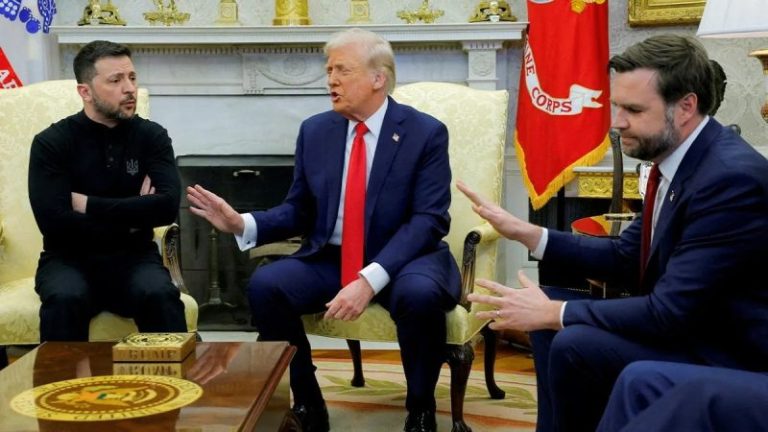
When Zelenskyy visited the White House in February he sparred openly with Trump and Vance in the Oval Office over engaging in diplomacy with Russia to end the conflict, prompting Vance to ask the Ukrainian leader if he’d ‘said thank you once this entire meeting.’

But on Wednesday Zelenskyy made sure to thank Trump and the U.S. in a post on X following their meeting in The Hague. 

‘We covered all the truly important issues. I thank Mr. President, I thank the United States. We discussed how to achieve a ceasefire and a real peace,’ Zelenskyy said in a post on X on Wednesday. ‘We spoke about how to protect our people. We appreciate the attention and the readiness to help bring peace closer. Details will follow.’

Trump, Vance and Zelenskyy’s infamous Oval Office meeting in February started after Zelenskyy challenged Vance’s statements that diplomacy was the correct avenue to end the conflict. Zelenskyy questioned the value of diplomacy, noting that Russian President Vladimir Putin has broken other agreements in the past.

‘What kind of diplomacy, JD, you are speaking about?’ Zelenskyy said. ‘What do you mean?’

Vance said, ‘I’m talking about the kind of diplomacy that’s going to end the destruction of your country.’

‘Mr. President, with respect, I think it’s disrespectful for you to come into the Oval Office to try to litigate this in front of the American media,’ Vance said. ‘Right now, you guys are going around and forcing conscripts to the front lines because you have manpower problems. You should be thanking the president for bringing it, to bring it into this country.’

Following the tense exchange, Trump announced a halt to peace negotiations and said that Zelenskyy could return to the White House when he was ‘ready’ for peace. Just after leaving the White House, Zelenskyy issued a post on X thanking the U.S., Trump, Congress and the American people for backing Ukraine. 

Although Zelenskyy and Trump continued to exchange harsh barbs at one another following the Oval Office visit, they’ve subsequently spoken over the phone and met in person at St. Peter’s Basilica in Vatican City during Pope Francis’ April funeral. 

Meanwhile, Trump said Wednesday that his administration has not been able to finalize a peace deal with Ukraine and Russia, claiming that both leaders have been more challenging to work with than expected. 

‘Vladimir Putin has been more difficult,’ Trump told reporters Wednesday. ‘Frankly, I had some problems with Zelenskyy. You may have read about him, and it’s been more difficult than other wars.’ 

Still, Trump said that his meeting with Zelenskyy went smoothly, and that he would be speaking to Putin as well. 

‘He’s very nice, actually,’ Trump said of Zelenskyy. ‘A little rough at times. He couldn’t have been nicer. I think he’d like to see an end to this.’ 

This post appeared first on FOX NEWS

An Israeli assessment determined that the U.S. strikes on Iran set the country’s nuclear program back ‘many years.’ 

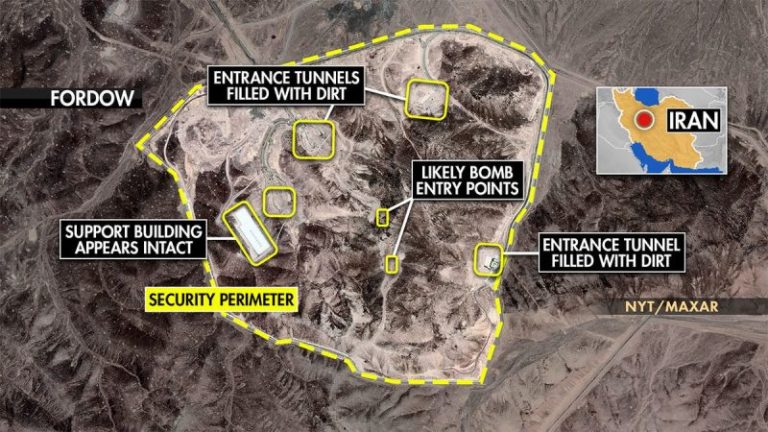
The Israel Atomic Energy Commission said that the U.S. destroyed ‘critical infrastructure’ at the Fordow nuclear facility and rendered it ‘inoperable.’

‘The devastating U.S. strike on Fordow destroyed the site’s critical infrastructure and rendered the enrichment facility inoperable. We assess that the American strikes on Iran’s nuclear facilities, combined with Israeli strikes on other elements of Iran’s military nuclear program, have set back Iran’s ability to develop nuclear weapons by many years,’ the Israel Atomic Energy Commission said in a statement. ‘The achievement can continue indefinitely if Iran does not get access to nuclear material.’

The Israeli assessment seemingly aligns with the Iranian Foreign Ministry spokesperson Esmail Baghaei’s statement on the status of the site. According to The Associated Press, Baghaei said that the country’s ‘nuclear installations have been badly damaged, that’s for sure.’

In the early hours of June 22 local time, Iran’s Fordow, Natanz and Isfahan nuclear facilities were hit. U.S. B-2 stealth bombers used 30,000-pound bunker busters on Fordow, which was Iran’s main underground enrichment site. 

Israel hit the site again on Monday as the country carried out strikes on roads leading to the underground facility.

The latest strike on Fordow comes as the Israel Defense Forces said Israel also launched a series of strikes targeting the notorious Evin prison and several Iranian military command centers in an ‘ongoing effort to degrade the Iranian regime’s military capabilities.’

Iran’s nuclear chief, Mohammad Eslami, said on Tuesday that the country was assessing the damage and preparing to restore the facilities, according to Reuters. He added that Iran’s ‘plan is to prevent interruptions in the process of production and services.’ 

Both President Donald Trump and Israeli Prime Minister Benjamin Netanyahu vowed to respond if Iran rebuilds its nuclear program.

Fox News Digital’s Stephen Sorace contributed to this report.

This post appeared first on FOX NEWS

The headlines may proclaim a ceasefire, but let us be clear: the Israeli-Iranian war is far from over. What we are witnessing is not peace—it is a tactical intermission. The guns may be momentarily silent, but the war remains alive in motive, method, and mindset.

Don’t be fooled. Israel-Iran ceasefire represents tactical intermission, not lasting peace

President Donald Trump’s June 23 announcement of a ‘complete and total ceasefire’ between Israel and Iran brought a welcome pause to twelve days of deadly escalation. Yet his own remarks in the hours that followed, including en route to the NATO summit, betrayed the precarious nature of that agreement—and the volatility of the players involved.

Just before boarding Air Force One, Trump issued a pointed public rebuke: ‘Calm down, Israel!’ He warned Prime Minister Benajamin Netanyahu that any strike against Iran after the ceasefire’s effective hour would constitute a violation. His words reflected not only diplomatic urgency but the fragility of the arrangement he had just announced.

And yet, within hours, both Iran and Israel reportedly launched limited retaliatory actions. Trump, visibly frustrated, criticized both sides for breaking faith: ‘They don’t know what the f*** they’re doing.’ He added: ‘I gotta get Israel to calm down now,’ underscoring the degree to which U.S. pressure—not mutual trust—was the linchpin of the ceasefire’s early survival.

Therein lies the truth: the war has not ended. It has simply shifted forms.

Is the war between Israel and Iran over? Only if we define ‘war’ in the narrowest kinetic terms. But if we understand war as a clash of wills, ideologies, and strategic aims—then this war continues, just under a different banner.

There is no treaty, no verification regime, and no mutual recognition of legitimacy between the two states. Iran continues to deny Israel’s right to exist, and Israel views Iran’s nuclear program—and its regional proxy network—as existential threats. A formal cessation of hostilities requires more than silence; it requires resolution. We are nowhere near that.

To understand why this war is not over, consider the strategic objectives of each side. Israel’s campaign was aimed at degrading Iran’s nuclear infrastructure—particularly the underground enrichment site at Fordow. While successful in the short term, it did not eliminate Iran’s scientific knowledge or ideological commitment to nuclear capability. Tehran still possesses the technical talent, the raw materials, and—most dangerously—the motivation to rebuild and accelerate its weapons program.

Iran’s retaliatory missile strikes on Israel and U.S. bases in Qatar and Iraq—though largely intercepted—served as symbolic warnings. More importantly, Tehran signaled that it retains the capacity to strike deep into the region. That message wasn’t just for Tel Aviv—it was for Washington, Riyadh, and the world.

Behind the scenes, the shadow war continues. Iran’s Islamic Revolutionary Guard Corps still arms Hezbollah in Lebanon, trains militias in Iraq and Syria, and directs proxy warfare through the Houthis in Yemen. Israeli airstrikes on Damascus and other locations in Syria persist, albeit in a lower-key fashion. Cyber operations, drone surveillance, and intelligence targeting remain on full alert. These are not post-war conditions. These are indicators of an unresolved and evolving conflict.

Even the diplomacy surrounding the ceasefire reflects its fragility. The agreement was brokered through indirect channels, with no official joint communiqué, no UN endorsement, and no follow-on roadmap. Iran has not re-engaged with the International Atomic Energy Agency. Israel, understandably, maintains its right to strike again if necessary. The rhetoric has cooled, but the posture remains hardened.

And then there is the political reality. Leaders in both countries face domestic constituencies who are skeptical of compromise. Hardliners in Tehran see the ceasefire as a pause to reload, not a step toward reconciliation. In Jerusalem, the Israeli public broadly supports preemptive action against a nuclear-armed adversary. Neither side has the political incentive—nor the strategic trust—to walk away from confrontation.

So, is the war over? Only if we define ‘war’ in the narrowest kinetic terms. But if we understand war as a clash of wills, ideologies, and strategic aims—then this war continues, just under a different banner.

The international community must not confuse this quiet with peace. Rather, it must prepare for what comes next: a sustained period of covert confrontation, regional volatility, and the ever-present risk of open warfare returning with little warning. Diplomats must act urgently, not naively. Military leaders must remain on alert. And political leaders—especially in Washington—must resist the temptation to declare victory before the conflict is truly resolved.

Trump’s visible exasperation and his blunt warnings serve as a reminder: this ceasefire is no more secure than the tempers and tactics of the adversaries it binds. The Israeli-Iranian war is not over. It has simply entered its next, and perhaps most perilous, phase.

This post appeared first on FOX NEWS

The Trump White House is waiving executive privilege for key former Biden administration aides who have been summoned by Republicans on the House Oversight Committee.

Chair James Comer, R-Ky., is probing the alleged cover-up of former President Joe Biden’s mental decline. 

Letters obtained by Fox News Digital via a source familiar with the matter show the Trump administration will not allow the people of interest in Comer’s probe to use their past White House work as a legal shield.

Deputy Counsel to the President Gary Lawkowski sent the letters to former Biden Chief of Staff Ron Klain, former senior advisors Anita Dunn, Steve Ricchetti, Mike Donilon, Annie Tomasini, Bruce Reed and Ashley Williams, and Anthony Bernal, former advisor to former first lady Jill Biden.

‘In light of the unique and extraordinary nature of the matters under investigation, President Trump has determined that an assertion of executive privilege is not in the national interest, and therefore is not justified, with respect to particular subjects within the purview of the House Oversight Committee,’ the letters said.

‘Those subjects include your assessment of former President Biden’s fitness for the office of the President and your knowledge of who exercised executive powers during his administration.’

Both congressional Republicans and the White House are investigating whether those senior Biden aides played any role in keeping concerns about the elderly former president’s mental acuity shielded from the public eye and even from lower-level White House staff.

It is not clear if any of the aforementioned former Biden aides planned to claim executive privilege in communications with the committee, but it is not unheard of for a new administration to waive it for investigations involving its predecessor.

The Biden administration waived executive privilege for records sought by the now-defunct House select committee on the Jan. 6 Capitol attack in 2021.

The Biden White House also rejected executive privilege claims made by Peter Navarro and Michael Flynn in that panel’s investigation. However, the latest movement in Comer’s probe comes after he and committee staff held their first closed-door interview with one of Biden’s former aides.

Neera Tanden appeared on Capitol Hill for an hourslong sworn deposition Tuesday. As it had for others, the Trump White House waived any claim to executive privilege for Tanden’s sitdown.

She told reporters afterward that there was ‘absolutely not’ any effort by senior aides to disguise Biden’s mental state.

‘I answered every question, was pleased to discuss my public service, and it was a thorough process, and I’m glad I answered everyone’s question,’ Tanden also said.

A source familiar with the matter told Fox News Digital that Tanden testified she had minimal interaction with Biden in her role as staff secretary.

‘To obtain approval for autopen signatures, she would send decision memos to members of the President’s inner circle. She stated that she was not aware of what actions or approvals occurred between the time she sent the memo and the time she received it back with approval,’ the source said.

Bernal is set to sit down with Comer and investigators for his own testimony on Thursday.

This post appeared first on FOX NEWS