Archive

2025

Browsing

Faith Kipyegon’s attempt to become the first woman in history to run a sub-4-minute mile came up just short.

The three-time Olympic gold medalist ran a personal-best time of 4:06.42 in a special event dubbed “Breaking4: Faith Kipyegon vs. the 4-Minute Mile” on Thursday at Stade Sébastien Charléty in Paris. The event was a partnership between Nike and Kipyegon, as she aimed to become the first woman in history to run a mile in under 4 minutes.

“I’m a three-time Olympic champion. I’ve achieved world championship titles. I thought, what else? Why not dream outside the box?” Kipyegon said in a Nike press release prior to the race. “And I told myself, ‘If you believe in yourself, and your team believes in you, you can do it.’”

Kipyegon put up a valiant effort as she raced four times around the track, accompanied by several pace runners.

Kipyegon is a three-time Olympic gold medalist in the 1,500 meters and owns the world record in the event at 3:49.04. The Kenyan middle-distance runner has also earned four world championship gold medals.

Roger Bannister became the first man to run a sub-4-minute mile in 1954. No woman has yet broken the 4-minute mile barrier.

“I want this attempt to say to women, ‘You can dream and make your dreams valid,’” Kipyegon said, via Nike. “This is the way to go as women, to push boundaries and dream big.”

Follow USA TODAY Sports’ Tyler Dragon on X @TheTylerDragon.

This post appeared first on USA TODAY

President Donald Trump recognized a third-generation autoworker from Michigan Thursday while speaking at the ‘big, beautiful event,’ noting he was a lifelong Democrat who now supports the president because of vehicle loan interest tax benefits.

The president spoke about the ‘big, beautiful bill’ from the East Room of the White House with a group of people standing behind him who represented various trades, including food delivery, farmers and automotive workers.

One of the workers standing behind Trump was James Benson, a third-generation autoworker from Belleville, Michigan, who has been with Ford Motor Company for 26 years.

Trump introduced Benson, noting that Ford has ‘a lot of plants’ in the U.S.

‘If you have plants in this country, you’re going to make a lot of money,’ the president said, adding that he loves autoworkers.

Trump also said Benson was a lifelong Democrat until 2017, when he saw the benefits of the tax laws.

Trump then spoke about his latest plan to benefit car owners by making interest on car payments fully tax-deductible.

But the deduction would only be for cars made in the U.S., Trump said, adding if it was made someplace else, ‘we don’t care.’

Trump’s ‘big, beautiful bill’ would create a new deduction of up to $10,000 for qualified passenger vehicle loan interest in a given taxable year. The deduction would phase out when a taxpayer’s modified adjusted gross income exceeds $100,000.

Applicable passenger vehicles include cars, trucks, vans, SUVs and motorcycles that have been manufactured for use on public streets, roads and freeways and for which the final assembly occurs in the U.S.

The bill defines the final assembly as the process by which the manufacturer produces a vehicle and delivers it to a dealer with all the parts necessary for operation.

As is the case with the overtime and tips deductions, the auto loan provision would be in effect for tax years 2025 through 2028.

Trump reiterated to those in attendance that the tax benefit is only for vehicles made in the U.S.

‘Remember that, James. We’re going to keep those Michigan auto factories roaring,’ the president said.

FOX Business’ Eric Revell contributed to this report.

This post appeared first on FOX NEWS

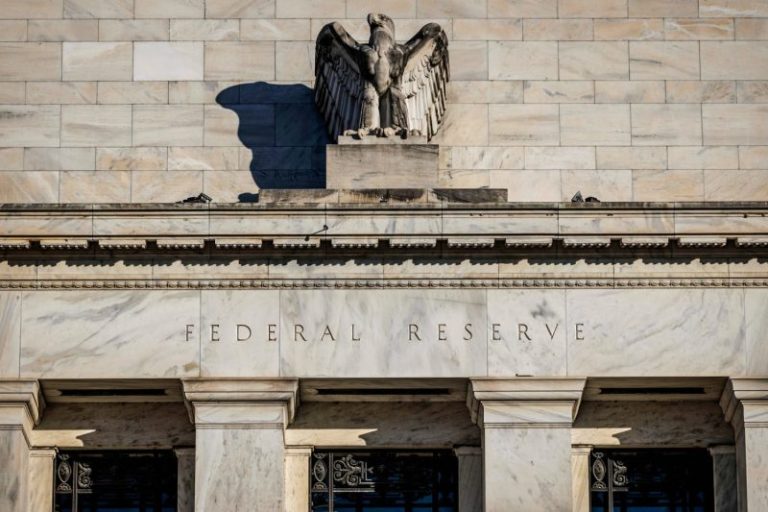
The Federal Reserve on Wednesday proposed easing a key capital rule that banks say has limited their ability to operate, drawing dissent from at least two officials who say the move could undermine important safeguards.

Known as the enhanced supplementary leverage ratio, the measure regulates the quantity and quality of capital banks should be keeping on their balance sheets. The rule emanated from a post-financial crisis effort to ensure the stability of the nation’s largest banks.

However, in recent years as bank reserves have built and concerns have grown over Treasury market liquidity, Wall Street executives and Fed officials have pushed to roll back the requirements. The regulations targeted treat all capital the same.

“This stark increase in the amount of relatively safe and low-risk assets on bank balance sheets over the past decade or so has resulted in the leverage ratio becoming more binding,” Fed Chair Jerome Powell said in a statement. “Based on this experience, it is prudent for us to reconsider our original approach.”

The Fed board put the proposal open for a 60-day public comment window.

In its draft form, the measure would call for reducing the top-tier capital big banks must hold by 1.4%, or some $13 billion, for holding companies. Subsidiaries would see a larger drop, of $210 billion, which would still be held by the parent bank. The standard applies the same rules to so-called globally systemic important banks as well as their subsidiaries.

The rule would lower capital requirements to range of 3.5% to 4.5% from the current 5%, with subsidiaries put in the same range from a previous level of 6%.

Current Vice Chair for Supervision Michelle Bowman and Governor Christopher Waller released statements supporting the changes.

“The proposal will help to build resilience in U.S. Treasury markets, reducing the likelihood of market dysfunction and the need for the Federal Reserve to intervene in a future stress event,” Bowman stated. “We should be proactive in addressing the unintended consequences of bank regulation, including the bindingness of the eSLR, while ensuring the framework continues to promote safety, soundness, and financial stability.”

On the whole, the plan seeks to loosen up banks to take on more lower-risk inventory such as Treasurys, which are now treated essentially the same as high-yield bonds for capital purposes. Fed regulators essentially are looking for the capital requirements to serve as a safety net rather than a bind on activity.

However, Governors Adriana Kugler and Michael Barr, the former vice chair of supervision, said they would oppose the move.

“Even if some further Treasury market intermediation were to occur in normal times, this proposal is unlikely to help in times of stress,” Barr said in a separate statement. “In short, firms will likely use the proposal to distribute capital to shareholders and engage in the highest return activities available to them, rather than to meaningfully increase Treasury intermediation.”

The leverage ratio has come under criticism for essentially penalizing banks for holding Treasurys. Official documents released Wednesday say the new regulations align with so-called Basel standards, which set standards for banks globally.

This post appeared first on NBC NEWS

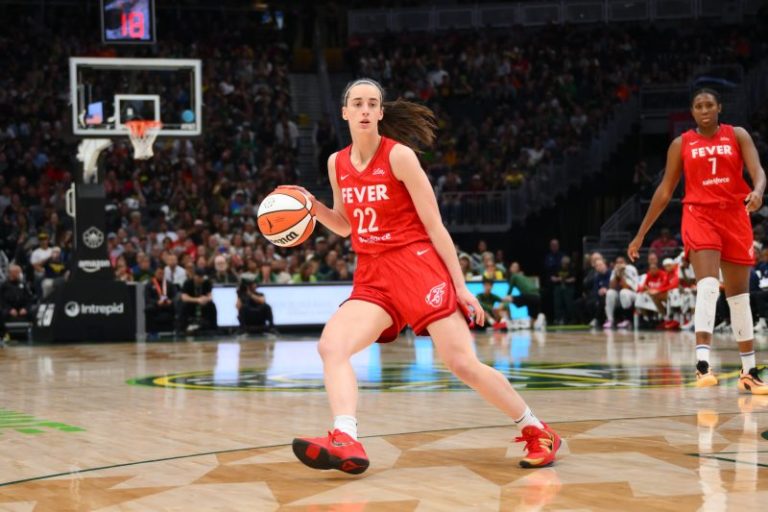
Indiana Fever guard Caitlin Clark will not play in Thursday night’s game against the Los Angeles Sparks because of a groin injury, the team announced.

Clark, the 2024 WNBA Rookie of the Year, previously missed five games due to a quad injury. The Fever posted a 3-2 record without her.

The team did not say if Clark will miss any other games. Fever head coach Stephanie White said Clark was ‘day-to-day’ and received an MRI on her left groin after reporting pain to the medical staff.

The Fever are set to take on the Wings and No. 1 overall pick Paige Bueckers in Dallas on Friday, June 27.

The first-team All-WNBA selection has been in a prolonged slump lately, scoring a season-low six points in a 94-86 win over the Seattle Storm on Tuesday. Clark missed all six of her three-point attempts, shot 3-for-13 overall, and committed eight turnovers in the game.

She is 1-for-23 on three-point attempts in her last three games.

Clark is averaging 18.2 points, 8.9 assists, five rebounds and 1.6 steals in nine games this season for Indiana, which is in eighth place with a 7-7 record.

This post appeared first on USA TODAY

The Dallas Mavericks were destroyed by the often unforgiving court of public opinion after they traded Luka Doncic to the Los Angeles Lakers.

Then, the Mavericks – and general manager Nico Harrison who has been reviled by fans for trading Doncic – got lucky.

With a 1.8% chance to win the draft lottery and the No. 1 pick in the draft, Dallas’ ping pong balls came up winners.

On Wednesday, the Mavericks selected Duke’s Cooper Flagg No. 1, giving the franchise a stunning ability to recover quickly from the Doncic trade.

Dallas is a team with championship aspirations. Harrison made it clear that goal wasn’t possible with Doncic, professing a “defense wins championships” mantra.

With the Flagg pick, Harrison also got a reprieve. Rarely does a team that made the Finals one season (2024) get the No. 1 pick the following year. Mavs ownership has entrusted Harrison’s vision, and he caught a break with the lottery victory.

Dallas made the play-in game but missed the playoffs this season.

How soon can the Mavericks return to contender status? The West remains loaded with excellent teams, and champion Oklahoma City is the favorite to win the West in 2025-26.

All-Star guard Kyrie Irving, who just reached a new three-year, $119 million deal with the Mavs, tore the anterior cruciate ligament in his left knee in early March and will miss a significant portion of next season, and All-Star center-forward Anthony Davis has a notable history of injuries that have sidelined him. Other injuries contributed to a 39-win season.

Even with that, the Mavs have a quality roster with Daniel Gafford, Klay Thompson, Dereck Lively II, Max Christie, P.J. Washington, Caleb Martin, Naji Marshall and Jaden Hardy.

Now, all those players might not be on the roster when the season starts in October. Given the number of big men, lack of shooting and Irving’s injury, Harrison will look for backcourt help.

And the Mavs are focused on developing Flagg. It’s a near-perfect situation for Flagg. He’s not headed to a team that lost 60-plus games last season and is in a painful rebuild.

“My mindset has always been to be a winner, so I’m going to try to win as hard as I can everywhere I go,” Flagg said. “I’m looking forward to being successful and winning a lot of games, for sure.”

As NBA-ready as he is with his maturity, skillset and physical attributes, he’s not going to Dallas as the sole answer on a team that needs massive help. There’s always pressure on the top pick, but this situation alleviates pressure and gives him and the team freedom for growth without a clock ticking and a referendum on his potential game in, game out.

Flagg gets to play for Dallas coach Jason Kidd, one of the game’s all-time great point guards. He knows the game and sees the game and can translate that to players, including superstars. He coached Giannis Antetokounmpo with Milwaukee and Doncic with the Mavs, and he loves being in the gym teaching. That’s going to help Flagg.

He also joins two former Duke players – Irving and Lively – on the roster. Though all three played just one season at Duke, Blue Devils ties run deep and bind.

“I’m really excited,” Flagg said. “I keep saying I’m excited to be a sponge, to get down there and just learn, be surrounded by Hall of Fame-caliber guys and just to be able to learn from them. It’s going to be an incredible experience.”

The Mavs leave behind a turbulent season and move forward with a plan that could convince fans that trading Doncic was the right decision.

This post appeared first on USA TODAY

A change is coming to the construction of regular-season schedules in men’s and women’s college basketball.

On Wednesday, June 25, the NCAA Division I Council approved a rule allowing schools to play a maximum of 32 games before the postseason starting with the 2026-27 season. Teams are currently allowed a maximum of 31 regular-season games.

Though the 32-game model was approved, the NCAA’s news release on June 25 noted teams can play fewer games. The change also ‘does not limit the opportunity for multiple team events to operate or exist,’ the release said.

The adoption of the 32-game regular-season model is the first change to the regular season schedule format in college basketball since the 2006-07 season.

Under the current structure, teams were able to schedule 28 or 29 regular-season games with either an additional two-game or three-game multiple-team event for a maximum of 31 games. Teams also had the option of scheduling 29 regular-season games without a multiple-team event part of their schedule.

‘The opportunity very much exists for teams to continue to play in multiple-team or bracketed events to prepare them for postseason play.’

The NCAA noted that oversight committees determined that the rule change provided greater scheduling flexibility for Division I programs. Teams can now play an additional game at a multi-team event or schedule a late-season marquee non-conference game — perhaps at a neutral site — to help boost their NET ranking and Quad 1 record for the NCAA Tournament.

In a time of college basketball (and college athletics) where more neutral-site non-conference games are taking place and the first NIL-driven multi-team event, The Players’ Era Festival, is now up to 18 teams, the allowance of having that additional regular-season game can be financially beneficial for teams and players.

The 32-game regular season schedule adoption comes a month after the NCAA’s Playing Rules Oversight Panel approved changes to the pace and flow of the game in men’s basketball. These adoptions included a coach’s challenge at any point in a game to review out-of-bounds calls, basket interference/goaltending and whether a secondary defender was in the restricted-area arc. 

The USA TODAY app gets you to the heart of the news — fastDownload for award-winning coverage, crosswords, audio storytelling, the eNewspaper and more.

This post appeared first on USA TODAY

Ben Roethlisberger retired in 2022 and the Pittsburgh Steelers are still trying to replace him.

Next up on the list is Aaron Rodgers, a Super Bowl champion and four-time NFL MVP. The Steelers signed the quarterback to a one-year deal earlier this offseason, for what appears to be one final ride.

The four-time NFL MVP revealed that the upcoming season is likely to be his last, indicating he will retire following a 21-year career. It comes on the heels of two seasons with the New York Jets, but Roethlisberger said he thinks this year will be a better one for Rodgers – since he won’t be worried about the Achilles injury this time around.

‘I think you’ll get a better Aaron this year,’ Roethlisberger said on the ‘Footbahlin with Ben Roethlisberger’ podcast on June 25. ‘Just because the thought process of the Achilles, ‘what can I do, what can I not do?’ I don’t think he’ll think about it at all.’

The former Steeler suggested that fans will flock to the stadium each week in an attempt to see greatness one last time, adding that we’ll see what Rodgers has left in the tank.

Rodgers will have the chance to take on the NFC North in his final year – the division he played in for 18 seasons. While the Green Bay Packers will travel to Pittsburgh, he will have the opportunity to play a game at Soldier Field in Chicago against the Bears. Rodgers has famously suggested he owns the team, as evidenced by his 25-5 record against the Packers’ rivals.

However, Roethlisberger believes Bears fans will have a mixed reaction.

‘I think he comes in, at the beginning of the game, it’s boos,’ Roethlisberger said. ‘At the end of the game, win, lose or draw, I think there’s respect shown. Should be, that’s the way it should be for a player like that. You can hate him, and I’ll say sports hate him, all you want, but you still gotta respect what he’s done and his legacy.’

It’s been a rocky past two seasons for Rodgers, who battled injuries and regression. Regardless, the hope from Pittsburgh is that he will be an upgrade for a team that has been built to win right now in recent years – outside of the quarterback spot.

The Steelers have gone through three seasons since Roethlisberger’s retirement, starting five quarterbacks during that time: Kenny Pickett, Mitchell Trubisky, Mason Rudolph, Russell Wilson and Justin Fields.

Roethlisberger said he also knew that it would be his final season in 2022, adding that his goal was to make every week special.

Rodgers won’t have the same experience as the former Steelers legend since Pittsburgh is his third team; however, winning has a way of fixing things. With a return to form, perhaps the Steelers can make some noise in 2025.

And that could be the best swan song of all.

This post appeared first on USA TODAY

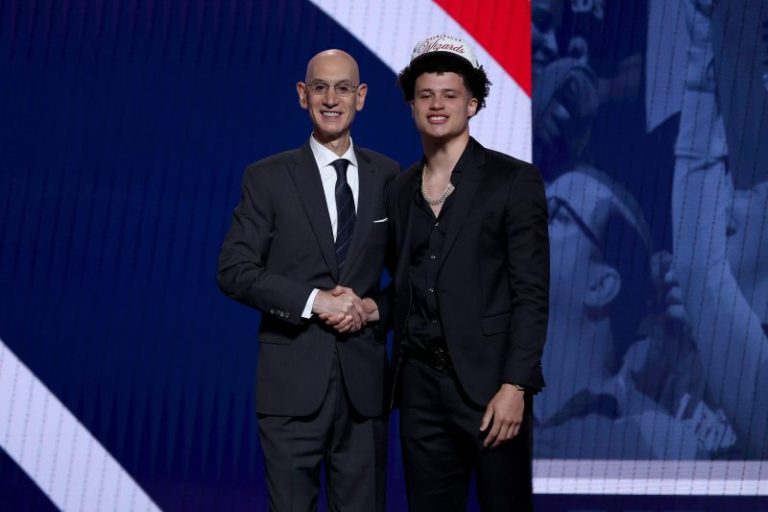
One of the iconic moments of any pro sport’s draft is when a just-picked youngster steps up on stage with the commissioner to pose for a photo with a jersey and hat from his or her new team.

It’s a symbolic start to a new career, one the players can look back on later with a sense of pride.

Except when they know they’ll never play a single game for the team that drafted them.

The NBA has an odd custom where draft-day trades are officially announced by the commissioner after the picks are made. Which can lead to what ESPN anchor Scott Van Pelt calls the league’s uncomfortable ‘hat situation.’

‘The league’s too smart to have the moment that they’ve waited their whole life for be a picture in the wrong hat. It just doesn’t make sense,’ Van Pelt ranted post-draft on SportsCenter.

Awful Announcing picked up on the disdain, which was apparently shared by many other NBA fans.

Of the 30 first-round picks in the 2025 NBA draft, 10 were traded shortly after they donned their original team’s hat – including No. 10 Khaman Maluach (from Houston to Phoenix), No. 11 Cedric Coward (from Portland to Memphis) and No. 13 Derik Queen (from Atlanta to New Orleans).

‘I don’t know why they can’t fix it,’ Van Pelt said.

There’s really no reason the NBA does things this way.

Other sports reveal trades before draft picks are made, though Eli Manning ended up in an awkward situation at the 2004 NFL Draft, posing with a San Diego Chargers jersey when he was selected No. 1 overall – while awaiting an official trade minutes later that sent him to Giants for Philip Rivers, who New York took with the fourth pick.

This post appeared first on USA TODAY

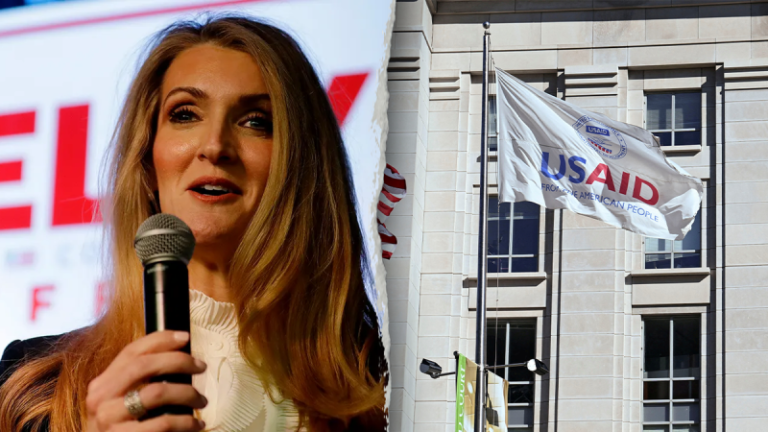
Following the uncovering of a massive bribery scandal at USAID, the Small Business Administration (SBA) is ordering a full audit of all government contracting officers who have exercised grant-awarding authority under the agency’s business development program over the last 15 years.

In a letter obtained by Fox News Digital, SBA Administrator Kelly Loeffler said the scale of the USAID fraud is a ‘damning reflection of systemic failures in oversight and accountability.’ She further said that the fraud ‘was not an isolated incident.’

In response, Loeffler instructed Associate Administrator Tre Pennie, who oversees government contracts awarded by SBA, to ‘act decisively’ to crack down on any potential similar abuses in the agency.

Loeffler instructed Pennie to immediately initiate a full-scale audit of the agency’s awarding officers back to 2010.

‘The role of federal government contracting officers is not ceremonial or self-dealing; rather, it is a position of immense authority and fiduciary responsibility,’ said Loeffler. ‘The contracting process must be transparent and built on merit, not personal gain.’

This comes after USAID, an agency tasked with administering civilian foreign aid, was essentially dismantled by the DOGE waste, fraud and abuse cuts made under Elon Musk and President Donald Trump. The move was met with massive protests from Democrats who claimed that cutting USAID would impoverish and harm recipients across the globe.

Despite claims of how much good the agency was doing, it was recently discovered that an influential contracting officer at USAID named Roderick Watson was able to carry out a massive, long-term bribery scheme dating all the way back to 2013.

Watson, 57, pleaded guilty to ‘bribery of a public official,’ according to a DOJ press release.

According to the DOJ, Watson sold his influence starting in 2013, with contractors Walter Barnes, owner of Vistant, and Darryl Britt, owner of Apprio, funneling payoffs through subcontractor Paul Young to hide their tracks. 

A DOJ press release said that Britt and Barnes ‘regularly funneled bribes to Watson, including cash, laptops, thousands of dollars in tickets to a suite at an NBA game, a country club wedding, downpayments on two residential mortgages, cellular phones, and jobs for relatives. The bribes were also often concealed through electronic bank transfers falsely listing Watson on payroll, incorporated shell companies, and false invoices.’

The statement said that Watson is alleged to have received bribes ‘valued at more than approximately $1 million as part of the scheme.’

Vistant was awarded in November 2023, as part of a joint venture, a contract worth up to $800 million with one of the focuses of that contract being to address ‘a variety of issues affecting the root causes of irregular migration from Central America to the United States,’ an issue that President Joe Biden tasked then-Vice President Kamala Harris with during his presidency.

Several days later, that contract was canceled after USAID published a notice that said Vistant was excluded from government contracting due to ‘evidence of conduct of a lack of business honesty or integrity.’

The joint venture then successfully sued the government over being put on that exclusion list and was re-awarded the contract and given a $10,000 payment in August 2024. 

In her letter, Loeffler said the USAID scandal ‘represents a collapse in the very safeguards that are supposed to protect American taxpayer dollars and ensure fair access for legitimate small businesses.’

She slammed the Biden administration for awarding the $800 million contract to Vistant despite the business being labeled by USAID as lacking ‘honesty and integrity.’

‘The fact that a federal official was able to act as the linchpin of a persistent, large-scale fraud operation speaks to a failure in internal controls and a breakdown in the contracting environment that demands immediate correction,’ said Loeffler.

She said that SBA plays a ‘critical role’ in federal contracting and ‘will no longer stand by while abuses are perpetrated at the expense of taxpayers and deserving small businesses.’

Loeffler said the agency’s audit will begin with high-dollar and limited competition contracts within SBA’s 8(a) business development program. The findings will be referred to the U.S. Office of Inspector General (OIG) and the DOJ.

Any officials or businesses found in violation of the SBA’s ethical standards or who have committed criminal misconduct will be referred to the appropriate authorities and SBA will assist the DOJ in recovering misappropriated funds, Loeffler said.

‘We will not allow public trust to be quietly eroded by backdoor deals and unchecked discretion,’ said Loeffler.

‘We owe it to America’s small businesses to get this right,’ she went on. ‘Your office has the authority, and now the mandate, to act decisively.’ 

This post appeared first on FOX NEWS

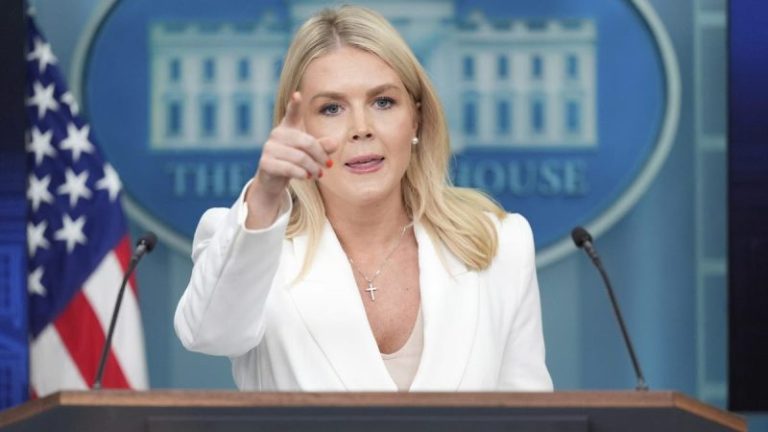
Those who leaked a preliminary assessment — rejected by the White House — on the U.S. strikes on Iranian nuclear facilities will face justice for sharing the document, according to White House Press Secretary Karoline Leavitt. 

President Donald Trump and multiple leaders are saying that the strikes destroyed three Iranian nuclear sites.  

A leaked report from the Defense Intelligence Agency, published by CNN and the New York Times, cast doubt on that though, saying that the strikes only set back Iran’s nuclear program by several months. CNN first reported the assessment’s findings, citing seven people who were briefed on the report. The outlet reported the findings were based on a battle damage assessment from U.S. Central Command. 

Leavitt pushed back on the early assessment’s credibility, claiming the report was ‘flat-out wrong.’ 

‘Everyone knows what happens when you drop 14 30,000-pound bombs perfectly on their targets: total obliteration,’ Leavitt said in a Tuesday statement. 

Secretary of Defense Pete Hegseth said Wednesday that the FBI is conducting an investigation to get to the bottom of the matter and who shared the document with the media. 

Additionally, Leavitt told reporters that leaking classified information is a criminal offense and that those who fail to follow the law ‘need to be held accountable for that crime.’ 

‘This administration wants to ensure that classified intelligence is not ending up in irresponsible hands, and that people who have the privilege of viewing this top secret classified information are being responsible with it,’ Leavitt told reporters Thursday. 

‘Clearly, someone who had their hands on this and it was a very few people, very few number of people in our government who saw this report,’ Leavitt said. ‘That person was irresponsible with it. And we need to get to the bottom of it. And we need to strengthen that process to protect our national security and protect the American public.’ 

Meanwhile, the U.S., Israel and Iran’s Foreign Ministry have all said that the three nuclear sites U.S. forces struck have encountered massive damage. 

Iran’s Foreign Ministry spokesman Ismail Baghaei told Al Jazeera Wednesday that the country’s nuclear facilities were ‘badly damaged,’ and Israel’s Atomic Energy Commission said the U.S. strikes were ‘devastating.’

On Sunday, Chairman of the Joint Chiefs of Staff Gen. Dan Caine said that initial battle damage assessments suggest ‘all three sites sustained extremely severe damage and destruction.’

Trump issued a word of caution to Iran Wednesday, should it attempt to repair its nuclear program once more, and said the U.S. wouldn’t hesitate to launch another strike against Iran. 

Trump personally called for the firing of one of the reporters who authored the story about the initial assessment, claiming in a Wednesday Truth Social post that the reporter should be ‘IMMEDIATELY reprimanded, and then thrown out ‘like a dog.’’

Even so, CNN came to the defense of the reporter, Natasha Bertrand. 

‘We stand 100% behind Natasha Bertrand’s journalism and specifically her and her colleagues’ reporting of the early intelligence assessment of the U.S. attack on Iran’s nuclear facilities,’ CNN said in a Wednesday statement. ‘CNN’s reporting made clear that this was an initial finding that could change with additional intelligence. We have extensively covered President Trump’s own deep skepticism about it.’

Fox News’ Brooke Singman contributed to this report. 

This post appeared first on FOX NEWS