Archive

2025

Browsing

A pair of Republican oversight hawks escalated a complaint on Tuesday about a district court judge who is presiding over one of the Trump administration’s cases, alleging the judge has a financial conflict of interest.

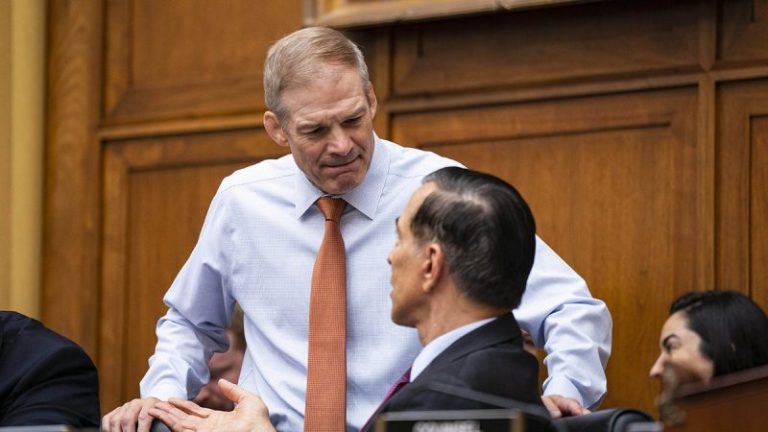
Reps. Jim Jordan, R-Ohio, and Darrell Issa, R-Calif., chairman and member of the House Judiciary Committee, respectively, asked the judicial council for the First Circuit Court of Appeals to investigate Judge John McConnell, according to a letter obtained by Fox News Digital.

McConnell, an Obama appointee, has been presiding over a pivotal funding freeze case in Rhode Island brought by 22 states with Democratic attorneys general. The case centers on the Office of Management and Budget’s order in January that federal agencies implement a multibillion-dollar suspension of federal benefits.

The states’ lawsuit argued the funding freeze was illegal because Congress had already approved the funds for use. McConnell agreed with the states and blocked the administration from suspending the funds, and the case is now sitting before the First Circuit Court of Appeals.

McConnell wrote in an order in March that the Trump administration’s funding suspension ‘fundamentally undermines the distinct constitutional roles of each branch of our government.’ 

The judge said the freeze lacked ‘rationality’ and showed no ‘thoughtful consideration of practical consequences’ because it threatened states’ ‘ability to provide vital services, including but not limited to public safety, health care, education, childcare, and transportation infrastructure.’

Issa and Jordan said McConnell’s long-standing leadership roles with Crossroads Rhode Island, a nonprofit that has received millions of dollars in federal and state grants, raised the possibility of a judicial ethics violation.

‘Given Crossroads’s reliance on federal funds, Judge McConnell’s rulings had the effect of restoring funding to Crossroads, directly benefitting the organization and creating a conflict of interest,’ Jordan and Issa wrote.

Their letter was directed to Judge David Barron, chief judge of the First Circuit and chair of the First Circuit Judicial Council.

McConnell was quick to become one of Trump’s judicial nemeses when he became involved with the funding freeze case. His initial order blocking the freeze and subsequent orders to enforce his injunction and unfreeze FEMA funds fueled criticism from Trump’s allies.

The Trump-aligned group America First Legal has been highlighting McConnell’s ties to Crossroads Rhode Island for months through its own investigation and complaint to the First Circuit.

Rep. Andrew Clyde, R-Ga., filed articles of impeachment against the judge in March, though impeachment as a solution for judges with whom Republicans take issue has not garnered widespread support among the broader Republican conference.

Vocal Trump supporter Laura Loomer targeted the judge’s daughter on social media, and X CEO Elon Musk elevated her grievance on his platform.

One of McConnell’s local newspapers, the Providence Journal, described the judge as a man ‘well-known’ in Democratic political circles and a major donor to Democratic politicians and organizations before he was confirmed to the bench in 2011.

McConnell included Crossroads Rhode Island and his membership as a board member in his recent public annual financial disclosure reports. No parties in the case have actively sought his recusal at this stage.

An aide for the judge did not respond to a request for comment.

This post appeared first on FOX NEWS

Senate Republicans coalesced to pass President Donald Trump’s colossal ‘big, beautiful bill’ early Tuesday morning. 

Senate Republican leaders and the White House have pitched the legislative behemoth as a means to turbocharge the economy, root out waste, fraud and abuse in a slew of federal programs, and to make crucial investments in defense and Trump’s border and immigration priorities. 

Meanwhile, Senate Democrats have bashed the bill as a deficit-ballooning monstrosity that would boot millions of Americans from their healthcare and rollback key Medicaid, food nutrition assistance and green energy provisions ushered in by the Obama and Biden administrations. 

So what’s in Trump’s bill? Below, Fox News Digital breaks down key proposals in Senate Republicans’ ‘big, beautiful bill.’

Tax cuts

The bill seeks to permanently extend Trump’s 2017 Tax Cuts and Jobs Act, which a House GOP memo from earlier this year said would avoid a 22% tax hike for American families at the end of this year.

It also includes tax cuts specifically tailored to the middle and working-class, like allowing people to deduct taxes on up to $25,000 of tipped wages. That deduction would begin to phase out for people making $150,000 per year or $300,000 as a married couple.

The Senate bill would also allow people to deduct up to $12,500 in overtime pay under the same income guidelines. Both the tipped and overtime wage deductions would be available through 2028.

Another temporary tax break through 2028 would allow people to deduct interest paid on their car loans.

For seniors aged 65 and older, the bill would give an additional $6,000 tax deduction through 2028.

SALT

The legislation increases the current cap on state and local tax (SALT) deductions, a benefit primarily geared toward people living in high-cost-of-living areas like New York City, Los Angeles and their surrounding suburbs.

The current SALT deduction cap would be raised to $40,000 for five years, before reverting down to $10,000 – where it stands now – for the subsequent five years.

Blue state Republicans fought for the increase, arguing it’s an existential issue for a bloc of lawmakers whose victories were decisive for the House GOP majority. However, Republicans from redder areas have criticized SALT deductions as giveaways to high-tax states as a reward for their progressive policies.

Medicaid

Medicaid cuts have proven the biggest pain point among Republicans, though many of the changes that have been proposed are widely popular. Cuts to the widely used healthcare program account for roughly $1 trillion, according to recent analyses from the nonpartisan Congressional Budget Office (CBO).

The CBO found that under the Senate GOP’s plan, nearly 12 million Americans could lose their health insurance.

Stricter work requirements have been the crown jewel for the GOP. The bill would require ​​able-bodied, childless adults between the ages of 18 and 64 to work at least 80 hours a month to maintain their benefits, or by ​​participating in community service, going to school or engaging in a work program.

However, there are more divisive changes, like tweaks to the Medicaid provider tax rate. The rate change would, year-by-year, lower the provider tax in Medicaid expansion states from 6% to 3.5%. The plan was tweaked to comport with Senate rules and now starts in fiscal year 2028.

Just ahead of the bill’s passage in the Senate, Republicans doubled a rural hospital stabilization fund pushed for by lawmakers concerned that the changes to the provider rate would shutter rural hospitals around the country. 

That fund was boosted to $50 billion, half of which will be distributed through grants, in chunks of $10 billion each year. 

Republicans also removed a ban on Medicaid benefits funding transgender healthcare, largely because it would not have complied with Senate rules.

SNAP

Senate Republicans’ bill also includes cuts to the supplemental nutrition assistance program (SNAP), formerly known as food stamps.

Like tweaks to Medicaid, Republicans pushed for work requirements for SNAP for able-bodied, working-age adults between the ages of 18 and 64 years old, and for parents with children over the age of 7.  

The bill would also shift some of the cost burden of the program from the federal government to the states.

Currently, the federal government covers the costs of SNAP, but states with a higher payment error rate would cover a greater share of benefit costs.

If the error rate is 6% or higher, states would be subject to a sliding scale that could see their share of allotments rise to a range of between 5% and 15%.

However, in last-minute deal-making, Senate Republicans delayed SNAP work requirements for states that have a payment error rate of 13%, like Alaska, or higher for one whole year. 

Debt limit

The bill raises the borrowing limit on the U.S. government’s $36.2 trillion national debt by $5 trillion.

A failure to raise that limit – also called the debt ceiling – before the U.S. government runs out of cash to pay its obligations could result in a downgrade in the country’s credit rating and potential turmoil in financial markets.

Trump has made it a priority for congressional Republicans to deal with the debt ceiling and avoid a national credit default. A bipartisan agreement struck in 2023 suspended the debt ceiling until January 2025.

Multiple projections show the U.S. is poised to run out of cash to pay its debts by sometime this summer.

Defense and border spending 

While the bill cuts spending on Medicaid and other domestic programs, it includes billions of dollars in new funding for defense programs and federal immigration enforcement.

The bill provides $25 billion to build a Golden Dome missile defense system, similar to Israel’s Iron Dome. It would also include $45.6 billion to complete Trump’s border wall, and $4.1 billion to hire new border agents.

The bill would also surge an additional $45 billion to Immigrations and Customs Enforcement for the detention of illegal immigrants.

An additional $15 billion would be directed toward modernizing the U.S. nuclear triad and $29 billion for shipbuilding and the Maritime Industrial Base.

Immigration fees

Several new provisions were included in the bill that hike, or create, fees for migrants who are seeking asylum, a work permit or are apprehended, among others.

Among the list of new fees is a new, $100 fee for those seeking asylum. That becomes an annual fee for every year that the asylum application remains pending. There is also a new, $1,000 minimum fee for immigrants granted temporary entry into the U.S. on the grounds of ‘humanitarian or significant public interest.’

For migrants caught trying to illegally enter the country through a port of entry, a new minimum $5,000 fee would come into play. There is another new $5,000 fee for migrants that are arrested after being ordered to be removed.

There are also new fees of between $500 and $1,500 for migrants whose immigration status is changed by a judge, or who appeal for a status change.

Then there is a new, $30 Electronic Visa Update System fee for certain Chinese nationals. They also have to maintain biographic and travel information in the country online. 

This post appeared first on FOX NEWS

The House of Representatives is beginning the final legislative sprint of President Donald Trump’s ‘big, beautiful bill’ before the commander in chief signs it into law.

The powerful House panel is the final gatekeeper before most pieces of legislation get a chamber-wide vote.

It comes after the Senate spent more than 24 hours straight considering the bill, eventually passing it along the narrowest of margins around midday Wednesday. Vice President JD Vance was on Capitol Hill to cast the tie-breaking vote.

It’s not clear how long the House Rules Committee meeting will go; when the panel considered the House’s own version of the bill in May, Democrats introduced dozens of amendments to symbolically object to the bill and delay the process.

Meanwhile, two conservatives on the House Rules Committee, Reps. Ralph Norman, R-S.C., and Chip Roy, R-Texas, are among those in the lower chamber raising concerns about the bill.

Their opposition in committee would not be enough to stop it, but the legislation could face serious threats House-wide, where just four GOP ‘no’ votes would be enough to sink the bill.

The House first passed the bill – a mammoth piece of legislation advancing Trump’s agenda on taxes, the border, energy, defense and the national debt – in late May by just one vote.

Modifications made by the Senate in order to pass that chamber’s own razor-thin, three-vote majority must now be approved in the House before getting to Trump’s desk.

Republican leaders have a self-imposed deadline of getting the bill to Trump’s desk by the Fourth of July.

House Majority Leader Steve Scalise, R-La., told Fox News Digital early evening on Monday that he expected his chamber would begin considering the bill as early as 9 a.m. Wednesday.

But two members of the conservative House Freedom Caucus, Norman and Rep. Eric Burlison, R-Mo., told Fox News Digital earlier that same day that they believed the bill would not survive a House-wide procedural vote Wednesday if the Senate’s text did not materially change.

The bill would permanently extend the income tax brackets lowered by Trump’s 2017 Tax Cuts and Jobs Act (TCJA), while temporarily adding new tax deductions to eliminate duties on tipped and overtime wages up to certain caps.

It also includes a new tax deduction for people aged 65 and over.

The legislation also rolls back green energy tax credits implemented under former President Joe Biden’s Inflation Reduction Act, which Trump and his allies have attacked as ‘the Green New Scam.’

The bill would also surge money toward the national defense, and to Immigrations and Customs Enforcement (ICE) in the name of Trump’s crackdown on illegal immigrants in the U.S.

The bill would also raise the debt limit by $5 trillion in order to avoid a potentially economically devastating credit default sometime this summer, if the U.S. runs out of cash to pay its obligations.

This post appeared first on FOX NEWS
Much has been written in recent days about the war of words between Supreme Court justices Amy Coney Barrett and Ketanji Brown-Jackson in the opinions handed down in Trump v. Casa, Inc., the case involving an injunction issued in a case challenging birthright citizenship.

But as I pointed out in a Post on X Friday morning, Barrett’s decision was written on behalf of herself and the five other justices in the majority. The fact that Barrett was assigned this opinion by the chief judge (the chief judge decides who writes the opinion when he votes with the majority) is a signal that the other five justices turned her loose on Jackson. Such an unsparing smackdown of the most junior justice with a vastly different view of the judicial function would have been received much differently had it come from one of the other five justices in the conservative wing of the Court.

But coming from another female justice, one with only two more terms on the Court than Jackson, it was the least harsh way to deliver the rebuke that the majority opinion represented. But the language was anything but gentle, and the point was anything but subtle. 

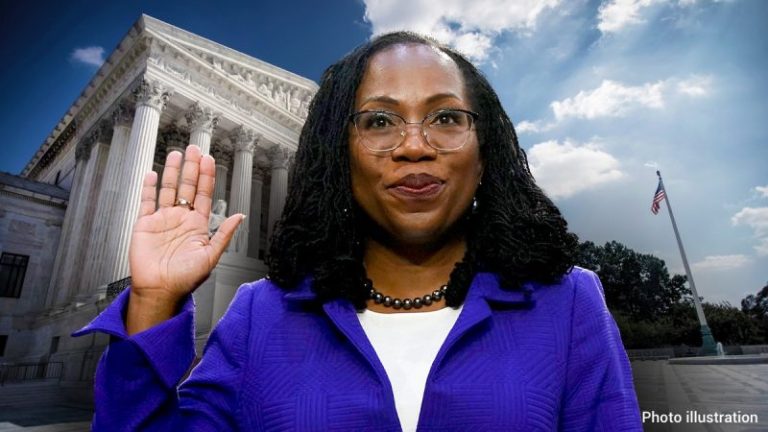
If Jackson seems out of her element, there’s a reason. There have been many career paths followed by justices who have been appointed to the Supreme Court. But it is quite uncommon for someone to be appointed to the Supreme Court without meaningful experience at the level of an appellate court, as is the case with Jackson.

Justice Elena Kagan charted a very different course to the Supreme Court, largely through academia. However, before joining the court she did serve in various DOJ positions in the Clinton administration, and as the solicitor general of the United States under President Obama. The solicitor general argues cases on behalf of the United States before the Supreme Court.  Kagan also wrote extensively on legal issues during the nine years she served as both a professor and dean at Harvard Law School.

Another outlier was Justice Lewis Powell, who joined the Court in 1972 directly out of a large law firm where he had practiced corporate law for 35 years, never having been a judge in any court at any level. 

Jackson did not join the Court with no experience as a judge as was the case with Justices Kagan and Powell. But the judicial experience she had is not necessarily conducive to the largely cerebral approach of judging that happens on the Supreme Court.

Jackson hashad  a distinguished academic career, having graduated from both Harvard College and Harvard Law School with honors. In the 17 years between Harvard Law School and her first judicial appointment, she had several noteworthy positions in various legal enterprises, including five years as a member of the U.S. Sentencing Commission. Jackson also served as an assistant federal defender in the District of Columbia for three years, during which she enjoyed success as a trial lawyer.

Her first judicial appointment was to the United States District Court for the District of Columbia in 2014, where she served as a district judge for seven years. In June of 2021, following President Biden’s nomination, Jackson was confirmed to replace Merrick Garland on the Court of Appeals for the District of Columbia.

But only eight months later, Biden named her to replace the retiring Justice Stephen Breyer on the Supreme Court. In her eight months on the Court of Appeals, Justice Jackson authored only two opinions. 

The practical reality was that Biden nominated a district court judge to a seat on the Supreme Court consisting of nine justices who decide cases by majority vote. 

District court is where federal cases begin – where ‘cases’ and ‘controversies’ are first decided. The district judges are the ‘referees’ between the litigants, and sometimes they serve as the decision-makers on the outcome of the cases. There is a significant amount of trial work where the district judge presides alone over the proceedings. Many quick decisions and judgments are made during a trial, often with little time for research or considered analysis.   

Even where time and research are available, the district judge is still working ‘solo’ with the assistance of one or more law clerks. The final decision on such motions belongs to the judge alone. 

District judges largely operate independent of their peers in the same courthouse. Their decisions are not binding on each other. They preside over their own dockets and make decisions in the cases assigned to them as they see fit.

Under this system, legal mistakes and errors are inevitable. The only requirement for proceedings at the district court level – including trials – is that they be fair. It is not required that they be ‘error-free.’ Only when errors result in unfairness that prejudices one side or the other is the outcome of the case called into doubt.       

Appellate courts sit in review of the outcomes in trial courts. They focus on the errors in the case presented. While broader legal questions are sometimes an issue on appellate review, the focus is primarily on the presence or absence of errors in the case in the district court, and whether any identified errors justify altering the outcome in that court. 

The Supreme Court plays a very different role. While it does make a judgment about the correctness of the outcome of cases, the focus of the Supreme Court is normally on the broader legal implications for hundreds/thousands of other cases in the future from affirming or reversing the case being reviewed.   

The federal district judge often plays the role of interrogator of the attorneys representing each side. Anyone who has been a trial attorney for any substantial period of time in federal district courts understands this. The questioning by that district judge can be hostile, aggressive, condescending, dismissive, humiliating, etc.  But that questioning is focused on the facts and specific legal issues presented in that case, and not the broader implications of how the outcome of that case might impact other cases. Part of the reason is because that district judge’s decisions are not binding on other district judges.

Jackson just completed her third term on the court. This chart, which is from the 2024-2025 term, is highly revealing in terms of one of the issues that stands between her and her colleagues – her conduct as a justice is still influenced by her eight years as a district judge, i.e., she spends much more time examining the attorneys before the court than do her colleagues.

The same source has a similar chart for the 2023-2024 Term of the Court, and the numbers are no different.

Setting aside this quantitative measure, in listening to many oral arguments of the Court this past term, one gets the very familiar vibe from Jackson of a district judge interrogating one counsel or the other to wring out admissions or concessions about the specifics of the case. The focus is on the outcome of the case, and not the broader implications that the outcome might foretell.       

Justice Samuel Alito can often present in the same manner, but he spoke less than half the number of words as Jackson. She separates herself from her colleagues both in terms of how much time she is involved in the dialogue and her sharply partisan tenor that gives away what her likely vote will be in pretty much every case with any political implications.

Her rhetoric in dissenting from the Trump v. Casa – ‘With deep disillusionment, I dissent’ – seems an almost unintended peek behind the curtain of her thinking.  What the majority did was take away one of the most powerful weapons possessed by a district court judge to shape how a case goes forward from the outset. 

The progressive activist inner district judge in her – who seeks only to ‘do right’ – is protesting that loss.

This post appeared first on FOX NEWS

Clean energy stocks fell Monday as President Donald Trump’s spending legislation now includes a tax on wind and solar projects using Chinese components and abruptly phases out key credits.

Shares of NextEra Energy, the largest renewable developer in the U.S., fell 4%. Solar stocks Array Technologies, Enphase and Nextracker were down between 1% and 9%.

The Senate is voting Monday on amendments to the legislation. The current draft ends the two most important tax credits for solar and wind projects placed in service after 2027.

“The latest Senate draft bill will destroy millions of jobs in America and cause immense strategic harm to our country,” Tesla CEO Elon Musk posted on X over the weekend. “Utterly insane and destructive. It gives handouts to industries of the past while severely damaging industries of the future.”

Previous versions of the bill were more flexible, allowing projects that began construction before 2027 to qualify for the investment and electricity production tax credits, according to Monday note from Goldman Sachs.

The change “compresses project timelines and adds significant execution risk,” Bank of America analyst Dimple Gosal told clients in a note Monday. “Developers with large ’25 pipelines, may struggle to meet the new deadlines — potentially delaying or downsizing planned investments.”

The Senate legislation also slaps a tax on solar and wind projects that enter service after 2027 if they use components made in China.

“The latest draft in the Senate has become more restrictive for most renewable players, moving toward a worst case outcome for solar and wind, with a few improvements for subsectors on the margin,” Morgan Stanley analyst Andrew Percoco told clients in a Sunday note.

To be sure, the rooftop solar industry is viewed by Wall Street as a relative winner from the bill, with Sunrun shares up more than 13% and SolarEdge trading more than 6% higher on Monday. The legislation seems to allow tax credits for leased rooftop systems to remain in place through the end of 2027, which was not the case in previous versions, according to Goldman Sachs.

And First Solar is up more than 9% as the legislation seems to allow the manufacturer to claim credits for both components and final products, according to Bank of America.

This post appeared first on NBC NEWS

Who are the top players in college football? EA Sports is giving possible answers.

With College Football 26 set to be released July 10 − July 7 for early access − EA Sports announced the top offensive and defensive players in the game, as well as who is at the top of each position.

It should be no surprise the top of the list include Heisman Trophy contenders, including the cover athletes of the game in Ohio State receiver Jeremiah Smith and Alabama receiver Ryan Williams. Other notable people include the other stars of major programs like Notre Dame, Texas and Clemson. While the rankings don’t mean a team will actually have success in the upcoming season, it does give a good indicator of who are the top College Football Playoff contenders.

Here are the top players in EA Sports College Football 26:

EA Sports College Football 26 top offensive players

Jeremiah Smith, Ohio State, receiver: 98 overall
Ryan Williams, Alabama, receiver: 95 overall
Jeremiyah Love, Notre Dame, running back: 95 overall
Jordyn Tyson, Arizona State, receiver: 94 overall
Kadyn Proctor, Alabama, tackle: 94 overall
Spencer Fano, Utah, tackle: 94 overall
Ar’maj Reed-Adams, Texas A&M, guard: 93 overall
Eli Stowers, Vanderbilt, tight end: 93 overall
Franicis Mauigoa, Miami, tackle: 93 overall
Nicholas Singleton, Penn State, running back: 93 overall

EA Sports College Football 26 top quarterbacks

Cade Klubnik, Clemson: 92 overall
Garrett Nussmeier, LSU: 92 overall
Drew Allar, Penn State: 92 overall
Sam Leavitt, Arizona State: 91 overall
Lanorris Sellers, South Carolina: 91 overall

EA Sports College Football 26 top running backs

Jeremiyah Love, Notre Dame: 95 overall
Nicholas Singleton, Penn State: 93 overall
Isaac Brown, Louisville: 93 overall
Jonah Coleman, Washington: 93 overall
Mahki Hughes, Oregon: 92 overall

EA Sports College Football 26 top receivers

Jeremiah Smith, Ohio State: 98 overall
Ryan Williams, Alabama: 95 overall
Jordyn Tyson, Arizona State: 94 overall
Elijah Sarratt, Indiana: 93 overall
Eric Rivers, Georgia Tech: 92 overall

EA Sports College Football 26 top tight ends

Eli Stowers, Vanderbilt: 93 overall
Tanner Koziol, Houston: 92 overall
Max Klare, Ohio State: 91 overall
Oscar Delp, Georgia: 90 overall
Jack Endries, Texas: 90 overall

EA Sports College Football 26 top offensive lineman

Kadyn Proctor, Alabama: 94 overall
Spencer Fano, Utah: 94 overall
Francis Mauigoa, Miami: 93 overall
Ar’maj Reed-Adams, Texas A&M: 93 overall
Jordan Seaton, Colorado: 92 overall

EA Sports College Football 26 top defensive players

Caleb Downs, Ohio State, safety: 96 overall
Anthony Hill Jr., Texas, linebacker: 95 overall
T.J. Parker, Clemson, edge: 95 overall
Dylan Stewart, South Carolina, edge: 94 overall
Jermod McCoy, Tennessee, cornerback: 94 overall
Peter Woods, Clemson, defensive tackle: 94 overall
Colin Simmons, Texas, edge: 93 overall
Leonard Moore, Notre Dame, cornerback: 93 overall
Keldric Faulk, Auburn, edge: 93 overall
Dillon Thieneman, Oregon, safety: 93 overall

EA Sports College Football 26 top edge rushers

T.J. Parker, Clemson: 95 overall
Dylan Stewart, South Carolina: 94 overall
Colin Simmons, Texas: 93 overall
Keldric Faulk, Auburn: 93 overall
David Bailey, Texas Tech: 93 overall

EA Sports College Football 26 top defensive tackles

Peter Woods, Clemson: 94 overall
Christen Miller, Georgia: 92 overall
Tim Keenan III, Alabama: 92 overall
Dontay Corleone, Cincinnati: 92 overall
Rayshaun Benny, Michigan: 91 overall

EA Sports College Football 26 top linebackers

Anthony Hill Jr., Texas: 95 overall
Kyle Louis, Pittsburgh: 93 overall
Suntarine Perkins, Mississippi: 93 overall
Gabe Jacas, Illinois: 92 overall
Austin Romaine, Kansas State: 92 overall

EA Sports College Football 26 top cornerbacks

Jermod McCoy, Tennessee: 94 overall
Leonard Moore, Notre Dame: 93 overall
Chandler Rivers, Duke: 93 overall
Avieon Terrell, Clemson: 92 overall
Malik Muhammad, Texas: 92 overall

EA Sports College Football 26 top safeties

Caleb Downs, Ohio State: 96 overall
Dillon Thieneman, Oregon: 93 overall
Rod Moore, Michigan: 92 overall
Bud Clark, TCU: 92 overall
Terry Moore, Duke: 92 overall

This post appeared first on USA TODAY

The Cleveland Browns are one step closer to moving to the suburbs. They had already bought the plot of land, and on Monday night, they got the public funding.

Ohio governor Mike DeWine signed a new budget into law on Monday that allocates $600 million in unclaimed funds to partially fund the Browns’ new stadium project in the southeastern Cleveland suburb, according to 92.3 The Fan. The budget decision came three days after the Haslam Sports Group officially purchased a 176-acre plot of land for $76 million, according to Cuyahoga County Fiscal Office via Sportico.

The Browns originally revealed the plans to move to Brook Park in August 2024, at the time calling it ‘a modern, dynamic, world-class venue that would greatly enhance the fan experience and enable the State of Ohio and our region to compete for some of the biggest events in the world 365 days a year.’

The Browns estimate the project to build a new, domed stadium will cost $2.4 billion in total. They’ve now received $600 million from the state of Ohio for the stadium, and the team expects to use an additional $400 million from Brook Park’s income taxes for the new Huntington Bank Stadium.

Haslam Sports Group has also committed $2 billion to mixed-use area development surrounding the stadium.

Though they’ve officially received the public funding, the Browns still have a bit to go before they can begin building the stadium. According to the Columbus Dispatch, former Ohio Attorney General Marc Dann and former state Rep. Jeff Crossman announced they would immediately file a lawsuit if the state budget included funding the Browns’ stadium project with unclaimed funds.

That said, Gov. DeWine already helped the Browns clear another potential road bump by adjusting language in the Modell Law.

The law is nicknamed after infamous former Browns owner Art Modell, who moved the team to Baltimore in 1996. Its actual title is Ohio Revised Code 9.67, which requires any Ohio-based team to give their city six months’ notice to allow ‘political subdivision or any individual or group of individuals who reside in the area the opportunity to purchase the team.’

DeWine passed an amendment that changes language in the Modell Law to only apply to teams attempting to leave the state.

With the Ohio governor backing their project and providing a sizable portion of the state’s budget, the Browns are pushing ahead. Team principal owner Jimmy Haslam says he hopes to break ground in Brook Park by early next year.

‘We respect the firm commitment and leadership that Governor DeWine, and the Ohio Senate and House have shown in their collaborative work to find a responsible way to support such a transformative project, one that will create a generational impact for our region and the State,’ the Haslams said in a statement.

‘Our fans deserve a world-class facility, and we are committed to building a state-of-the-art enclosed stadium that resonates with Cleveland, highlighting our loyal and passionate fans and the Dawg Pound, while also incorporating innovation, bold design, and an immersive experience. The new enclosed Huntington Bank Field will be completely fan-centric, a first-of-its-kind design in the NFL, and a dynamic venue that draws visitors from across Ohio and beyond, for concerts and significant sporting events throughout the year.

‘This premiere facility will anchor a major lifestyle and entertainment development and be a catalyst for one of Northeast Ohio’s largest economic development projects ever and something our community will be proud of and can enjoy for years to come. We appreciate the support of State leaders and their belief in this transformative project.’

This post appeared first on USA TODAY

Bobby Bonilla Day is an annual opportunity to poke fun at the New York Mets, but the club’s infamous deal that pays Bonilla $1.19 million every year until he’s 72, is sort of the reason the team ended up with one of its all-time greats.

Bonilla played just 60 games for the Mets in 1999 and rather than paying him the $5.9 million he was owed for 2000, the club agreed to make yearly payments of $1.19 million for 25 years – with 8% interest – starting in July 2011.

Coming off a trip to the NLCS in 1999, New York had World Series hopes heading into 2000 – and $5.9 million was a big salary back then, with most of the league’s payrolls in the $50 million range. Saving that money in 2000 by dumping Bonilla, the Mets were able to upgrade in the offseason, trading for pitcher Mike Hampton, coming off a 22-4 season with the Houston Astros – with a $5.75 million salary.

The lefty won 15 games with a 3.14 ERA in 2000 and was named NLCS MVP as the Mets reached the World Series for the first time since 1986.

Hampton left the Mets after one season, signing a $121 million deal with the Rockies, citing the state’s school system. (‘I’ve got a son that’s working on his master’s, and my other son’s on the dean’s list … so I guess the school system worked out all right,’ Hampton joked 20 years later.)

But Hampton leaving gave the Mets a compensation pick in the 2001 draft.

With that pick – the 38th overall selection – the Mets selected third baseman David Wright.

Wright went on to become one of the best players in franchise history, trailing only Tom Seaver in WAR and is the club’s career leader in runs, hits, total bases and RBIs. Wright spent his entire career with the Mets, debuting in 2004 and making his final appearance in 2018. He was a seven-time All-Star and won two Gold Glove Awards at the hot corner, but injuries cut his career short.

The Mets will retire his number in July 2025, making him the 10th player to earn the honor and first who spent their entire career with the organization.

Wright debuted on the Baseball Hall of Fame ballot in 2024, receiving 6.1% of the vote to earn another year on the ballot. In 2025, his vote share ticked up to 8.1%, but there’s almost no chance he ever reaches the 75% threshold required for election.

The USA TODAY app gets you to the heart of the news — fastDownload for award-winning coverage, crosswords, audio storytelling, the eNewspaper and more.

This post appeared first on USA TODAY

It can pay handsomely to be a professional athlete, and these days the biggest contracts are going to basketball and baseball players.

Oklahoma City Thunder guard and NBA MVP Shai Gilgeous-Alexander agreed to a four-year, $285 million contract extension on Tuesday, making him the highest-paid player in the league with an average salary of $71.3 million per season when the deal kicks in the 2027-28 season.

By comparison, Dallas Cowboys quarterback Dak Prescott is making $60 million per season, Edmonton Oilers center Leon Draisaitl is making an average of $14 million as the National Hockey League’s highest paid player, and Los Angeles Dodgers superstar Shohei Ohtani makes $70 million a season, but $680 million of that total is being deferred, and scheduled to paid out starting in 2034.

Here are the biggest contracts in NBA history, in terms of value and annual salary:

Highest-paid NBA players, by total contract value

Jayson Tatum, Boston Celtics, five years, $313 million
Shai Gilgeous-Alexander, Oklahoma City Thunder: four years, $285 million
Jaylen Brown, Boston Celtics: five years, $285 million
Nikola Jokic, Denver Nuggets: five years, $276 million
Cade Cunningham, Detroit Pistons: five years, $269 million
Evan Mobley, Cleveland Cavaliers: five years, $269 million
Bradley Beal, Phoenix Suns: five years, $251 million
Anthony Edwards, Minnesota Timberwolves: five years, $244 million
Tyrese Haliburton, Indiana Pacers: five years, $244 million
Giannis Antetokounmpo, Milwaukee Bucks: five years, $228 million

Highest-paid NBA players by annual average salary

Shai Gilgeous-Alexander, Oklahoma City Thunder: $71.3 million
Joel Embiid, Philadelphia 76ers: 64.3 million
Jayson Tatum, Boston Celtics: $62.8 million
Giannis Antetokounmpo, Milwaukee Bucks: $58.4 million
Anthony Davis, Dallas Mavericks: $58.4 million
Jaylen Brown, Boston Celtics: $57 million
Jimmy Butler, Golden State Warriors: $55.4 million
Nikola Jokic, Denver Nuggets: $55.2 million
Bam Adebayo, Miami Heat: $55.116 million
Karl-Anthony Towns, New York Knicks: $55.1 million
Devin Booker, Phoenix Suns: $55.1 million

Richest contracts in North American sports history

Juan Soto, New York Mets: 15 years, $765 million
Shohei Ohtani, Los Angeles Dodgers: 10 years, $700 million
Patrick Mahomes, Kansas City Chiefs: 10 years, $450 million
Mike Trout, Los Angeles Angels: 12 years, $426.5 million 
Mookie Betts, Los Angeles Dodgers: 12 years, $365 million
Aaron Judge, New York Yankees: nine years, $360 million
Manny Machado, San Diego Padres: 11 years, $350 million
Francisco Lindor, New York Mets: 10 years, $341 million
Fernando Tatís Jr., San Diego Padres: 14 years, $340 million
Bryce Harper, Philadelphia Phillies: 13 years, $330 million

This post appeared first on USA TODAY

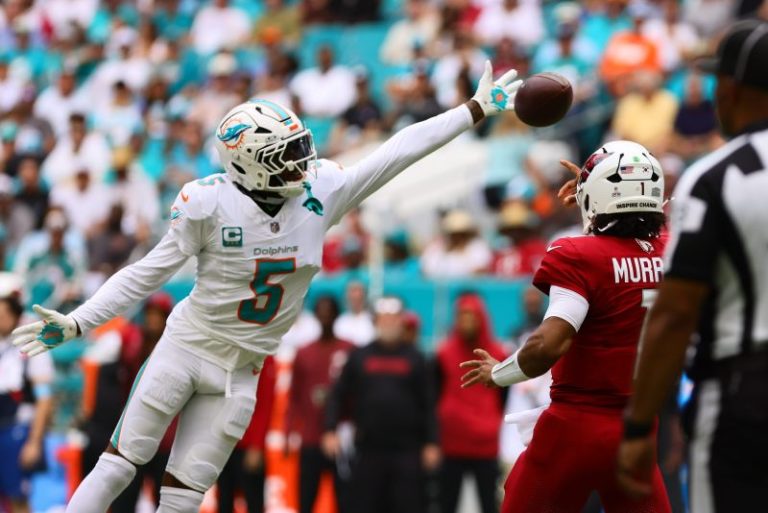
Like most people who had their smartphones or computers in front of them as the Miami Dolphins and Pittsburgh Steelers swung a June 30 trade that sent cornerback Jalen Ramsey (and tight end Jonnu Smith) to the Steel City and safety Minkah Fitzpatrick back to South Beach, Jason McCourty’s reaction changed once the full details became known.

Because at first, the ESPN analyst assumed Ramsey would be fitting into a secondary that included Fitzpatrick. Then McCourty’s twin brother and former NFL teammate Devin texted him with the update that Fitzpatrick was the primary compensation returned to the Dolphins.

Which leaves the Steelers without a three-time All-Pro at free safety but an upgrade at cornerback – and some added flexibility when it comes to lining up against the high-powered offenses in the AFC North.

‘I love this addition for the Steelers, just because it adds a ton of versatility,’ Jason McCourty told USA TODAY Sports.

After Devin’s text update, Jason started to think about where Ramsey – who is receiving a $1.5 million raise and making $26.6 million total in 2025 – would line up for Steelers head coach Mike Tomlin. Free safety is a possibility because of that patented aggressiveness and instincts, along with experience playing inside and outside cornerback.

But the Steelers are losing Fitzpatrick’s experience within the role as the center fielder of the defense and the communication that comes along with it.

‘I think those are big shoes to fill,’ McCourty said. ‘That’s why I’m so curious to see exactly where they see Ramsey to fit – because when you’re paying this much money, I don’t know if you’re going to just stick a guy like that at free safety. You typically want him covering the other team’s best wide receivers.

‘It says a lot about what (the Steelers) felt about Minkah Fitzpatrick. Because you make this trade and you give Jalen Ramsey a bit of a pay bump as well. So if (Ramsey) is playing free safety, that says a lot about it. But I am excited for the Steelers with this move.’

Steelers’ secondary has options after Jalen Ramsey trade

The Fitzpatrick-Ramsey trade was the most recent revamping of the Steelers’ secondary. The team signed cornerback Darius Slay and safety Juan Thornhill this offseason. Joey Porter Jr. is a starting outside corner, while Beanie Bishop Jr. had a nice rookie season in 2024 as the nickel corner.

Even though Slay, 34, and Ramsey, 30 ‘aren’t in the prime of their careers, both are still playing at a high level,’ said McCourty, who posted on social media about the trade and the replies immediately referenced the age of Ramsey and Slay.

‘You’re like, ‘These guys can’t play anymore’ but I think guys like Slay and Ramsey are still playing at a high level,’ he added.

Steelers-Dolphins trade: Who won and lost as Jalen Ramsey, Minkah Fitzpatrick get moved?

Multiple secondary lineups is why a guy like Ramsey can be a ‘chess piece’ for the Steelers’ coaching staff. Slay and Porter Jr. are more entrenched in their roles as sideline corners. Ramsey can be moved anywhere.

‘Now you have the opportunity to do so much with that secondary, especially when you have versatile pieces and guys who can play multiple roles,’ McCourty said.

What direction are Dolphins going?

Under general manager Chris Grier and head coach Mike McDaniel, the Dolphins made it to the postseason in 2022 and 2023 but fell off late in those campaigns. The organization hasn’t won a playoff game since the 2000 season.

Now they’ve parted with Smith, who arguably had the best season of his career in 2024, and Ramsey, who leaves behind a largely unproven secondary (aside from Fitzpatrick).

Jalen Ramsey trade grades: Who won deal between Steelers, Dolphins?

‘They don’t have a lot of guys who have been proven year after year that have had success in this league,’ McCourty said. ‘You look at the trade from their standpoint, and you’re like ‘What direction are they going in as a team?”

But Fitzpatrick is back in the fold – this time without a position change forced on him by the coaching staff as Brian Flores tried to in 2019, which precipitated his trade to the Steelers two games into that season.

‘It worked out for both parties, because Minkah went to Pittsburgh and became a monster,’ McCourty said.

Now the ‘monster’ is back in Miami.

This post appeared first on USA TODAY