Archive

2025

Browsing

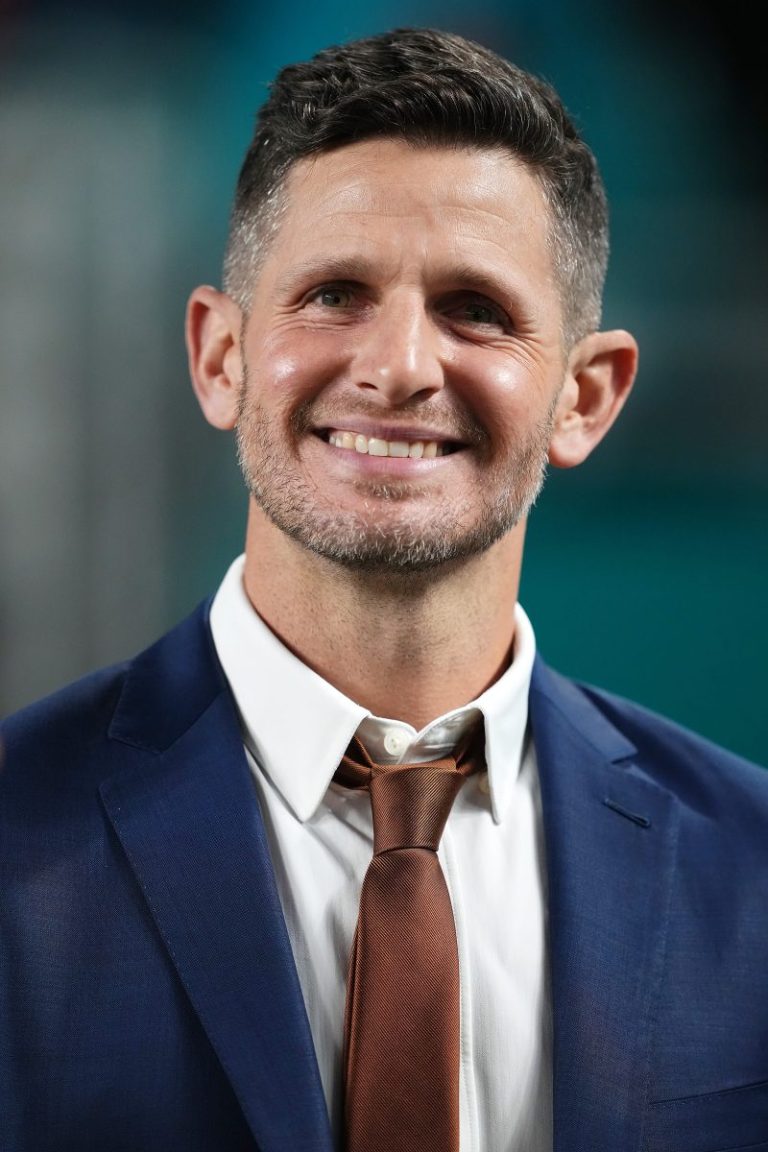
The sidelines will have to wait for Dan Orlovsky.

Despite courtships from the pro and college levels and his own desire to coach, Orlovsky is remaining at ESPN on a long-term contract extension, a person with knowledge of the situation confirmed to USA TODAY Sports.

The person was granted anonymity because the deal is not yet official despite terms being agreed upon.

‘Gotta keep working. Gotta keep proving yourself. Gotta stay hungry. It’s always the journey,’ the 12-year NFL quarterback wrote on social media Monday.

After the Super Bowl in February, Orlovksy caused a stir by saying ‘you never know what the future holds’ before taking a weeks-long break from TV. ESPN insider Adam Schefter later reported on Orlovsky’s desire to be a head coach one day and the options currently in front of him.

Orlovsky joined ESPN in 2018 shortly after his playing career, mostly spent as a backup with the Detroit Lions, ended. He quickly established himself as one of the network’s most relatable football voices with his ability to break down film and also discuss traditional headlines.

In his new deal, Orlovsky will remain a presence on morning shows ‘Get Up’ and ‘First Take’ in addition to his full-time role on ‘NFL Live.’ He first appeared on ‘NFL Live’ in 2019 and became a cast member in 2020. Alongside fellow analysts Marcus Spears, Mina Kimes, Ryan Clark and host Laura Rutledge, ‘NFL Live’ has experienced a viewership increase over recent seasons.

Orlovsky also calls a weekly college football game for ESPN/ABC and is a member of the network’s No. 2 NFL team with play-by-play announcer Chris Fowler, analyst Louis Riddick and Rutledge as the reporter.

The expectation is that Orlovsky will eventually make his way into the coaching profession. But for the next few years, his pupils will be the football-watching public.

This post appeared first on USA TODAY

The rosters for the 2025 MLB All-Star Game have been announced for the July 15 showcase in Atlanta. And for the most part, the fans (voting for the starters) and MLB (filling out the reserves) got things right.

But every year there are some deserving players who don’t get invited to the party, despite putting up numbers that prove they belong.

Should a player’s reputation or a half-season’s worth of stats be the primary measuring stick for All-Star recognition? Or would it be better to use an entire season’s worth of stats to determine which players really deserve to be honored?

That’s why we have our own All-Star tradition: the unveiling of our Full-Season All-Stars.

With some major assistance from BaseballHQ.com, here are the statistical leaders from July 1, 2024 through June 30, 2025. (Players listed at their primary position in 2025 with a minimum of 20 games to qualify. Our selections for AL and NL starters are in bold.)

Catcher

There’s no question who the best catcher in the game is right now. Cal Raleigh leads the majors in home runs this season, but he’s not just swinging for the fences. He’s getting on base, occasionally stealing them and scoring runs too. His numbers over the past calendar year, especially among his positional peers, are eye-popping: 53 home runs, 121 RBI, 103 runs and 11 stolen bases. No one’s even in the same ballpark.

It’s much closer in the National League, where All-Star starter Will Smith and non-star William Contreras are neck-and-neck. (Mask-and-mask?) Smith has a 16-point edge in batting average, but Contreras tops him in the other four major fantasy categories.

First base

Vladimir Guerrero Jr. may not be putting up MVP-type numbers this season, but he’s been incredibly consistent. His scorching second half in 2024 helped put him far above the AL competition in every offensive category except stolen bases. And he’s the only one at the position with more than 100 runs scored over the past calendar year.

Once again, the battle is much closer in the NL. Pete Alonso gets the nod over Matt Olson by the slightest of margins. Alonso leads in homers (35 to 32) and runs (91 to 87), while Olson tops all first basemen with 109 RBI (to Alonso’s 107). ASG starter Freddie Freeman has a higher batting average, but can’t touch either one’s power numbers.

Second base

It’s been pretty clear for a while that Ketel Marte is the best second baseman in the majors. Over the past full season, he leads the position in home runs (36), ranks second in RBI (83) and batting average (.300) and fourth in runs scored (84). Brendan Donovan may be his closest NL competition.

In the AL, Brandon Lowe stands out. Finally healthy (149 games), Lowe leads all AL second basemen in homers (33), RBI (84) and runs (90) over the past year.

Shortstop

AL All-Star starter Jacob Wilson tops all shortstops with a .339 average, but Bobby Witt Jr. is second at .317 – in addition to his league-leading 31 homers, 100 RBI and 106 runs. Witt’s 30 stolen bases complete the package and put him far ahead of everyone else. Honorable mention: Jeremy Peña, who cracks the position’s top 10 in all five categories.

Not much separates Francisco Lindor and Elly De La Cruz in the NL. Lindor has a better average (.281 to .273) and more homers (36 to 29), but De La Cruz is ahead in RBI (96 to 94) and he pulls away with big margins in steals (49 to 27) and runs (117 to 105).

Third base

Even at age 32, Jose Ramirez continues to put up stellar numbers. He very nearly makes it a clean sweep in the AL with a .293 average, 29 homers, 92 runs and a whopping 47 steals. The only category Ramirez doesn’t come out on top is RBI, where he trails Isaac Paredes 83-80. Alex Bregman also makes a strong showing in everything but steals.

In the NL, Manny Machado is a deserving All-Star starter, ranking second overall at the position in average (.288), homers (32) and RBI (107). But look at what Eugenio Suarez has done over the past year. He far outpaces everyone at the hot corner with 50 home runs, 138 RBI and 110 runs. A horrible first half of 2024 obscures what a tremendous offensive force he’s been.

Outfield

Reigning AL MVP Aaron Judge is in a world of his own. Not only does he lead all American Leaguers with 57 home runs 129 RBI and 130 runs scored over the past calendar year, he tops the major leagues with a .343 average over that span as well. But who joins him in the AL outfield? Riley Greene is a deserving starter, ranking highly in average (.287), homers (28) and RBI (96). And Lawrence Butler may have started slowly in 2025, but his full-season numbers (.274, 31 HR, 83 RBI, 100 runs, 27 steals) certainly hold up.

In the NL, Corbin Carroll leads Juan Soto 41-40 in homers and 131-120 in RBI. Carroll’s 31 steals cement him in the top spot, but Soto certainly deserves a place on the All-Star roster. Jackson Chourio is also deserving, ranking in the overall top 12 in all five statistical categories. Sorry, James Wood and Pete Crow-Armstrong. You have to wait your turn.

Also, we can’t forget designated hitter Shohei Ohtani, whose 57 home runs over the past full season are tied with Judge for the most in the majors. Ohtani also leads everyone with 149 runs and 54 stolen bases. And despite batting leadoff, he’s third in RBI with 122.

Pitcher

It’s easy to recognize dominance when it’s displayed so clearly by Tarik Skubal. He’s far and away the best pitcher in the game, and the full-season stats bear that out. Skubal is the only one to reach 19 wins and he leads the majors with 254 strikeouts. Throw in a 2.29 ERA and league-leading 0.87 WHIP and the result is a strong candidate for a second consecutive Cy Young award.

Elsewhere in the AL, Framber Valdez has 18 wins, a 2.30 ERA, 1.04 WHIP and 209 whiffs. While Jacob deGrom might win on ratios (2.04 ERA, 0.91 WHIP), he cedes the third spot to Carlos Rodon who has 226 K’s and 16 wins, despite a slightly higher 3.16 ERA.

Zack Wheeler deserves top billing in the NL. He leads the league with 248 whiffs, plus his ratios are equally impressive (2.32 ERA, 0.91 WHIP). Not even broken ribs can keep Chris Sale from making the cut. He remained healthy until late June, giving him enough time to rack up 221 strikeouts to pair with a stellar 2.23 ERA. Wheeler also has 15 wins to Sale’s 13. Meanwhile, it’s hard to hold Paul Skenes’ paltry 11 wins against hm. He has 210 whiffs and ranks second in the NL to Hunter Greene in both ERA (2.02) and WHIP (0.90).

Among the closers, Emmanuel Clase’s ridiculous finish to 2024 gives him the edge over Josh Hader. Clase trails in saves 45-40, but his 1.91 ERA is nearly a full point lower. In the NL, Ryan Helsley has the best combination of production (8 wins, 35 saves) and effectiveness (2.35 ERA).

This post appeared first on USA TODAY
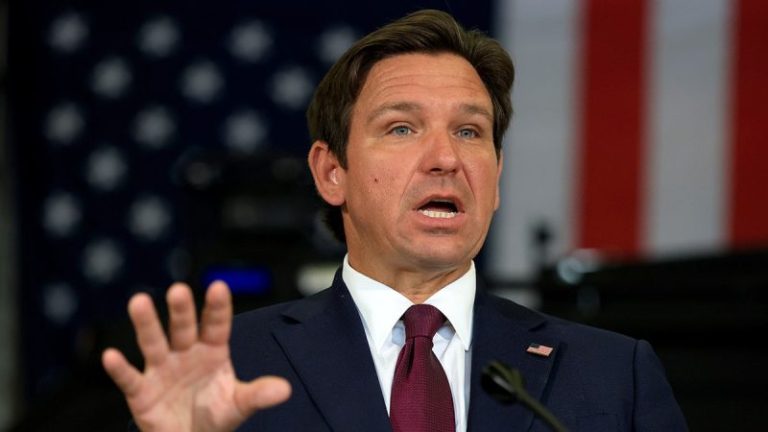
Florida Gov. Ron DeSantis suggested that business magnate Elon Musk push for balanced budget and congressional term limit amendments to the U.S. Constitution, rather than build a new political party.

Musk, who has been beating the drum about the need to rein in government spending, announced that he is launching a new political party called the America Party. 

‘Backing a candidate for president is not out of the question, but the focus for the next 12 months is on the House and the Senate,’ he noted in a post on X.

DeSantis is not on board with the idea. 

The governor suggested that if Musk funds candidates in competitive Senate and House contests, Democrats will likely win.

But DeSantis acknowledged that the GOP has an issue with people running on spending less, but then failing to do so. ‘There’s a gap between the campaign rhetoric, and then the performance,’ he said.

He explained that he does not believe ‘electing a few better people’ will alter the ‘trajectory’ on the debt issue.

DeSantis said that the ‘incentives’ in D.C. will ‘lead to these outcomes, really, regardless of the outcome of elections at this point,’ asserting that a balanced budget amendment to the Constitution is needed.

Musk ‘would have a monumental impact’ if he got involved, DeSantis said, adding that the U.S. also needs term limits for lawmakers.

This post appeared first on FOX NEWS

President Donald Trump on Monday said that his administration would be sending defensive weapons to Ukraine so the war-torn country could defend itself from Russia’s ongoing invasion, an apparent turnaround after the Pentagon said last week it was pausing such deliveries.

His comments came as Russian attacks on Ukraine killed at least 11 civilians and injured more than 80 others, including seven children, officials said Monday.

‘We have to,’ Trump said when questioned at the start of a dinner he was hosting at the White House for Israeli Prime Minister Benjamin Netanyahu. ‘They have to be able to defend themselves. They’re getting hit very hard now. We’re going to send some more weapons — defensive weapons primarily.’

Russia continues to advance and now currently controls just under a fifth of Ukrainian territory, including Crimea, all of Luhansk, the lion’s share of three other regions and slivers of three additional regions.

Trump’s repeated efforts to broker a ceasefire have not been successful, and the president continued to vent his frustration with Russian President Vladimir Putin, who continues to escalate military actions.

‘I’m not happy with President Putin at all,’ Trump said.

The Defense Department later said it would send additional defensive weapons to Ukraine at Trump’s direction, to ensure the Ukrainians can defend themselves while efforts continue to secure a lasting peace. 

‘Our framework for POTUS to evaluate military shipments across the globe remains in effect and is integral to our America First defense priorities,’ Pentagon spokesman Sean Parnell said.

Ukraine has been asking Washington to sell it more Patriot missiles and systems that it sees as key to defending its cities from intensifying Russian air strikes.

Last week the Pentagon froze some shipments of critical weapons to Ukraine, including Patriot missile interceptors and 155 mm artillery shells, at a pivotal moment in Kyiv’s war with Russia, Fox News confirmed. According to U.S. military officials tracking the shipments, the weapons were already staged in Poland before the order came down. 

It came as Russia launched its largest aerial attack of the war, nearly 500 drones and 60 missiles.

In response to Trump’s comments, the Kremlin said it would need time to clarify the specifics of U.S. weapons aid to Ukraine with Kremlin spokesman Dmitry Peskov said there were many contradictory statements about U.S. weapons supplies to Ukraine, though it was clear that European weapons deliveries were continuing.

‘Obviously, supplies are continuing, that’s clear. Obviously, the Europeans are actively involved in pumping Ukraine full of weapons,’ Peskov said, according to Reuters. ‘As for what kind of supplies and in what quantity Ukraine continues to receive from the United States, it will still take time to clarify this definitively,’ he added.

Peskov said that Moscow appreciated Trump’s efforts to initiate direct negotiations between Russia and Ukraine, and that there was significant potential for restarting Russian-U.S. trade and economic relations.

Separately, Russia’s transport minister Roman Starovoit was found dead in what authorities said was an apparent suicide — news that broke hours after the Kremlin announced he had been dismissed by Putin, per The Associated Press. Russian media have reported that his dismissal could have been linked to an investigation into the embezzlement of state funds allocated for building fortifications in the Kursk region, where he served as governor before being appointed transportation minister.

The firing of Starovoit followed a weekend of travel chaos — airports grounded hundreds of flights due to the threat of drone attacks from Ukraine. Russian officials did not give a reason for his dismissal.

Fox News’ Jasmine Baehr and Jennifer Griffin as well as The Associated Press and Reuters contributed to this report.

This post appeared first on FOX NEWS

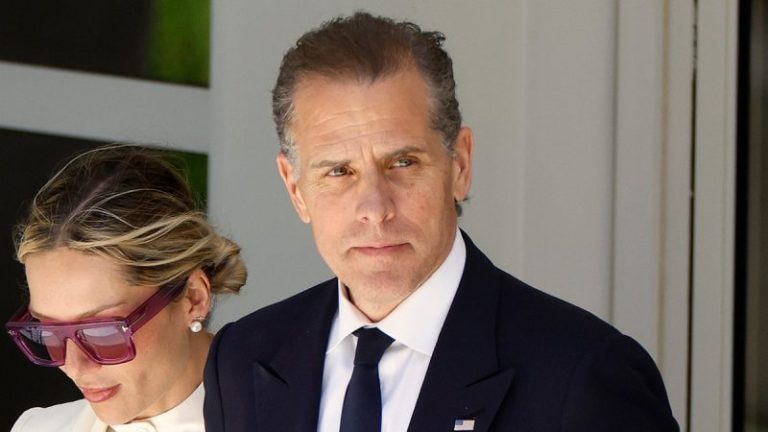
A top advisor to former President Joe Biden reportedly labeled Hunter Biden’s presence on a call about the Supreme Court’s landmark ruling that former presidents have some immunity from prosecution ‘inappropriate,’ according to a new book. 

The book, ‘2024: How Trump Retook the White House and the Democrats Lost America,’ was published Tuesday and chronicles how Biden’s team dismissed concerns about his age during the 2024 election cycle, along with how President Donald Trump secured his victory. 

The book said Biden’s White House chief of staff, Jeff Zients, coordinated a video call with key Biden staffers, including White House Counsel Ed Siskel, communications director Ben LaBolt, senior advisor Mike Donilon and others to discuss whether Biden should provide an on-camera statement to the Supreme Court’s July 2024 decision. 

While Donilon already had drafted a written statement, Biden wanted to speak about the matter on-camera, the book claims. Staffers on the call started to hash out specifics of such an appearance, when Biden’s son started to chime into the call. 

‘Suddenly an unidentified voice piped up from Biden’s screen and recommended an Oval Office address,’ the book said. ‘At first, some aides had no idea who was speaking. It soon became clear the voice belonged to Hunter Biden, who the White House staff had not known was on the call. Siskel expressed some concern about the appearance of using the Oval Office.’

‘Hunter snapped back: ‘This is one of the most consequential decisions the Supreme Court has ever made.’ He said his father had every right to use the powerful imagery of the Oval Office to deliver that message,’ the book said. ‘They later settled on the Cross Hall, the long hallway on the first floor of the White House. After the call ended, Siskel told colleagues. Hunter’s presence was inappropriate.’

Biden ultimately delivered a brief speech responding to the Supreme Court’s ruling and took no questions from the press, per the suggestion of his son, the book claimed.  

Siskel and a spokesperson for Biden did not immediately respond to requests for comment from Fox News Digital. 

On July 1, 2024, the Supreme Court issued a 6–3 ruling in Trump v. United States that former presidents have significant immunity from prosecution for acts they committed in an official capacity. The case made its way to the Supreme Court after Trump faced charges stemming from then-Special Counsel Jack Smith’s investigation into whether Trump was involved in the Jan. 6, 2021, Capitol riot and engaged in any other alleged election interference. 

Trump pleaded not guilty to all charges, and claimed a former president could not face a prosecution without a House impeachment and a Senate conviction. 

The book ‘2024’ is one of several that have been released in this year detailing Biden’s mental deterioration while in office and how Trump won the election. It is authored by Josh Dawsey of the Wall Street Journal, Tyler Pager of the New York Times and Isaac Arnsdorf of the Washington Post. 

Another book covering similar material is ‘Original Sin: President Biden’s Decline, Its Cover-up, and His Disastrous Choice to Run Again,’ released May 20.

Fox News Digital has written extensively dating back to the 2020 presidential campaign about Biden’s cognitive decline and his inner circle’s alleged role in covering it up.

According to Dawsey, Hunter Biden’s involvement in his father’s affairs as president was not out of the ordinary during the former president’s time in office. 

‘What we found out over the course of reporting for our book is, Hunter Biden (was) a major figure in the president’s orbit,’ Dawsey said in a Sunday interview with ABC’s ‘This Week.’ ‘He was often on these calls, he would pipe in to calls, he was helping him make campaign decisions, and the president was very concerned about his son. It was one of the things that was an albatross on him as he tried to run for re-election.’

This post appeared first on FOX NEWS

Former White House physician Kevin O’Connor, who served as doctor to former President Joe Biden, requested a delay to his upcoming testimony before the House Oversight Committee this week.

O’Connor was scheduled to testify on Wednesday, but is now in a disagreement with the committee over the scope of the questions he will be expected to answer during his testimony. The committee, led by Chairman James Comer, R-Ky., is interviewing the doctor as part of its investigation into Biden’s mental fitness and his administration’s use of an autopen.

A lawyer for O’Connor requested the testimony be delayed to July 28 or August 4 in a letter to Comer.

‘Dr. O’Connor has legal and ethical obligations that he must satisfy and for which violations carry serious consequences to him professionally and personally,’ the letter says.

‘We are unaware of any prior occasion on which a Congressional Committee has subpoenaed a physician to testify about the treatment of an individual patient.  And the notion that a Congressional Committee would do so without any regard whatsoever for the confidentiality of the physician-patient relationship is alarming.’

A spokesman for the Oversight Committee replied in a statement that O’Connor and his legal team were merely trying to ‘stonewall’ the process. The committee is planning to move forward with Wednesday’s testimony, which O’Connor faces a subpoena to attend.

The committee said O’Connor is welcome to object to individual questions during his testimony. But O’Connor is not allowed, in the committee’s view, to delay or decline a congressional subpoena due to concerns over questions about potentially privileged information.

The debate over O’Connor’s testimony comes weeks after a former top aide to Biden, Neera Tanden, told the Oversight Committee that she was authorized to direct autopen signatures but was unaware of who in the president’s inner circle was giving her final clearance.

During Tanden’s interview before Congress last month, which lasted more than five hours, she told lawmakers that, in her role as staff secretary and senior advisor to the former president between 2021 and 2023, she was authorized to direct autopen signatures on behalf of Biden, an Oversight Committee official told Fox News.

‘Ms. Tanden testified that she had minimal interaction with President Biden, despite wielding tremendous authority,’ Comer said at the time. ‘She explained that to obtain approval for autopen signatures, she would send decision memos to members of the President’s inner circle and had no visibility of what occurred between sending the memo and receiving it back with approval. Her testimony raises serious questions about who was really calling the shots in the Biden White House amid the President’s obvious decline. We will continue to pursue the truth for the American people.’

Fox News’ Kelly Phares and Madeleine Rivera and the Associated Press contributed to this report.

This post appeared first on FOX NEWS

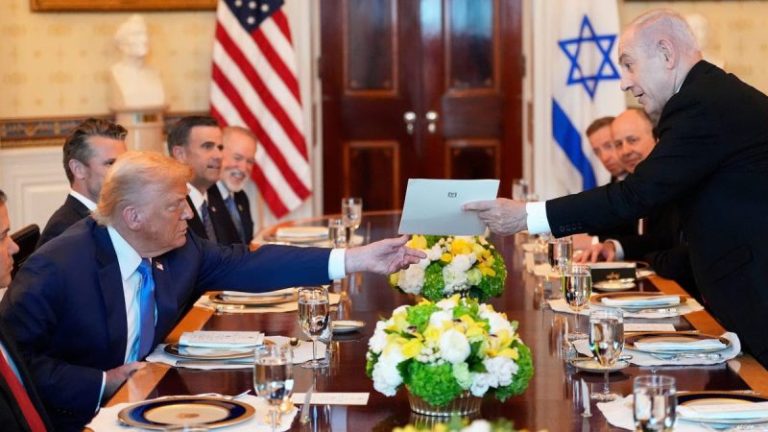
President Donald Trump and Israeli Prime Minister Benjamin Netanyahu met at the White House on Monday evening to cement a shared message: the U.S.-Israel alliance has reshaped the Middle East – and more is coming.

‘We had tremendous success together,’ Trump said during the public portion of their dinner meeting. ‘And I think it will only go on to be even greater success in the future.’

Netanyahu handed Trump a formal letter he sent to the Nobel Peace Prize committee. ‘It’s well-deserved,’ the prime minister said. ‘You’re forging peace as we speak, in one country and one region after the other.’

Trump appeared surprised. ‘Thank you very much,’ he replied. ‘Coming from you in particular, this is very meaningful.’

But behind the symbolism was a serious discussion about Iran, Gaza and what both sides see as an inflection point in regional diplomacy. Trump confirmed that Iran has requested new talks following the joint U.S.-Israeli strikes on its nuclear and missile infrastructure. ‘They want to meet. They want to work something out,’ he said. ‘They’re very different now than they were two weeks ago.’

Netanyahu called the military operation ‘a historic victory,’ adding that it ‘set back the two tumors that were threatening the life of Israel – the nuclear tumor and the ballistic missile tumor.’ But, he warned, ‘just like a tumor, it can grow back…  You have to constantly monitor the situation to make sure that there’s no attempt to bring it back.’

Michael Makovsky, CEO of the Jewish Institute for National Security of America (JINSA), told Fox News Digital that one key goal of the meeting was to define red lines for future action.

‘The war with Iran was ended a little abruptly by Trump,’ Makovsky said. ‘The Israelis wanted to continue it a couple more days, or at least until there was an understanding with the U.S. about what would trigger another response.’

According to a new JINSA memo titled Not Over, those triggers could include Iran rebuilding air defenses, diverting enriched uranium or importing advanced missile technology. ‘We’ve always viewed military action as a campaign, not a one-off,’ Makovsky said. ‘Unfortunately, short of regime collapse in Tehran, this is going to be part of a series.’

Trump, however, emphasized his peacemaking ambitions. ‘I’m stopping wars,’ he said. 

He said the Iran strike ‘turned out… to be obliterated,’ and praised the pilots involved: ‘They flew for 37 hours with zero problem mechanically. The biggest bombs we’ve ever dropped – non-nuclear. And we want to keep it non-nuclear, by the way.’

Turning to Gaza, Trump said he believes a ceasefire deal may be reached soon. ‘They want that ceasefire,’ he said, in reference to Hamas. Netanyahu echoed that desire, but reiterated that ‘certain powers, like overall security, will always remain in our hands. No one in Israel will agree to anything else. We don’t commit suicide. We cherish life.’

When asked whether his Palestinian relocation plan was still on the table, Trump initially deferred to Netanyahu, who responded by praising what he called ‘a brilliant vision.’

‘It’s called free choice,’ Netanyahu said. ‘If people want to stay, they can stay. But if they want to leave, they should be able to leave.’

He added that Israel is working closely with the United States to find countries willing to help realize this approach. ‘We’re getting close to finding several countries,’ Netanyahu said. ‘And I think this will give, again, the freedom to choose. Palestinians should have it. And I hope that we can secure it.’

Makovsky said Trump now sees Gaza and Iran as sequential ‘episodes.’ ‘He sees the war with Iran as a successful episode – it’s time to end that and pivot to peace,’ he said. ‘He wants to move toward expanding the Abraham Accords, particularly with Saudi Arabia.’

The two leaders also touched on Syria. ‘I think there’s an opportunity to explore,’ Netanyahu said, referencing recent shifts after the collapse of the Assad regime. Makovsky said Syrian President Ahmed al-Sharaa may be seeking ‘some sort of arrangement’ with Israel to gain U.S. support. ‘He’s incredibly flexible and practical,’ Makovsky noted.

As Netanyahu put it, ‘This has already changed the face of the Middle East.’ Trump added, ‘We’re on the way to a lot of great results.’

On Tuesday Netanyahu will meet with the speaker of the House, Mike Johnson, R-La.

This post appeared first on FOX NEWS

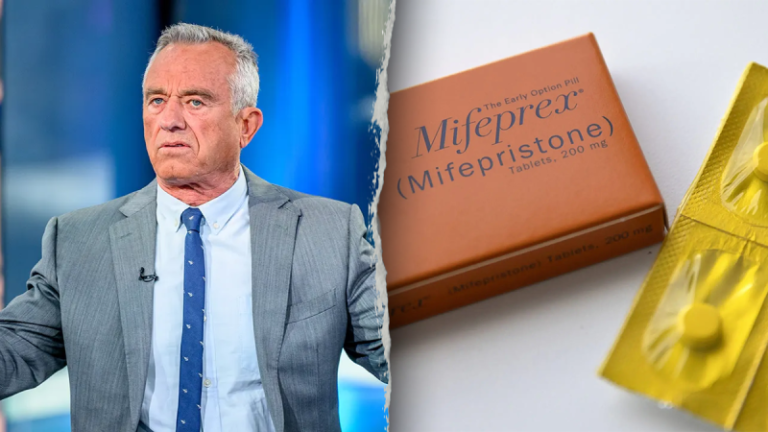
As Planned Parenthood sues the Trump administration for provisions of the ‘big, beautiful bill’ defunding abortion providers, pro-life medical groups are urging Health and Human Services Secretary Robert F. Kennedy Jr. to reexamine the FDA’s broad approval of abortion drugs.

In a letter obtained by Fox News Digital, six anti-abortion medical organizations, representing approximately 30,000 medical professionals, urge Kennedy and FDA Commissioner Martin Makary to reinstate safety guards on the abortion pill mifepristone that have been removed since it was first approved in 2000.

According to the Guttmacher Institute, medication abortion accounts for 63% of all U.S. abortions. The most common form of medication abortion method involves ingesting mifepristone, a pill that cuts off progesterone flow to the womb, essentially starving the fetus of nutrients. A second pill, called misoprostol, is then ingested to expel the dead fetus.

Under the Biden administration, the FDA significantly expanded its approval of mifepristone, allowing the drugs to be obtained via telemedicine, without in-person doctor appointments and to be mailed.  

In the letter, the groups, which include the American Association of Pro-Life OBGYNs, the Alliance for Hippocratic Medicine and the American College of Family Medicine, warn that the latest data on mifepristone ‘strongly suggests’ that hundreds of thousands of women have been harmed by using the drug.

Planned Parenthood states on its website that chemical abortion is ‘safer than many other medicines like penicillin, Tylenol, and Viagra.’ The letter, however, calls mifepristone ‘a high-risk abortion-inducing drug that is known to cause serious adverse effects and medical emergencies, including hemorrhage, sepsis, and incomplete abortions requiring surgical intervention.’

The letter cites two reports released this May, one by the Foundation for the Restoration of America and the other by the Ethics and Public Policy Center, that they say showed as many as one out of every nine women using mifepristone suffered serious adverse events.

The studies claimed that, based on an analysis of health insurance records covering 330 million U.S. patients of 860,000 women receiving mifepristone prescriptions, 10.93% of those women experienced sepsis, infection, hemorrhaging, surgical intervention or another serious adverse event within 45 days following use of the drug.

Based on this, the letter says that real-world data on mifepristone use ‘shows real patients experience very real medical emergencies at an alarming rate – a rate that is consistent with what our members are seeing in their clinical practice.’

‘The data strongly suggest that mifepristone poses a far greater risk of causing harm than previously stated. In fact, the risk of serious complications may be 22 times higher than previously disclosed,’ the letter states.

In light of this, AAPLOG and the other groups signing onto the letter are urging the FDA to conduct its own evaluation of real-world data to determine the overall safety of mifepristone in both the adult and adolescent populations.

The groups also urge Kennedy and Makary to reinstate reporting of all adverse events related to mifepristone use and reinstate the pre-2016 Risk Evaluation and Mitigation Strategies on the drug’s use, including limiting the use of the drug to seven weeks of gestation and requiring in-person dispensing as well as follow-up appointments.

The letter stressed that requiring ultrasounds is also essential to confirm the gestational age of the fetus, which the groups said is ‘crucial to accurately dating a pregnancy and determining the risk of complications.’

 ‘A basic tenet of medical ethics is informed consent – which requires a review of accurate risks and benefits of any proposed intervention that is specific to the patient sitting in front of us which is based on actual data, not ideologically-driven rhetoric,’ the letter states. ‘Women deserve to know the true risk of serious adverse events and medical emergencies after using mifepristone – no matter how politically charged the discussion surrounding this drug.’

‘Americans must be able to trust that no matter what, the FDA will rely on the most robust safety standards before and after approving any drug and that they can have truly informed consent by knowing what the risks to taking FDA-approved drugs are,’ the letter says.

The FDA’s broad approval of mifepristone has been the subject of intense legal debate in recent years, including in the Supreme Court. In 2024, the Supreme Court dismissed a case brought by the Alliance for Hippocratic Medicine challenging the FDA’s abortion pill approval on the grounds that the group lacked standing.

At the time, Dr. Jack Resneck Jr., then president of the American Medical Association, claimed that restricting mifepristone ‘would have devastating health consequences for people living in states where abortion is still legal.’

Resneck claimed that ‘hundreds upon hundreds of peer-reviewed clinical studies and decades of evidence-based research disprove the assertions of the plaintiffs in this case and demonstrate the safety of mifepristone,’ which he said, ‘has a safety profile comparable to ibuprofen.’

After the Ethics and Public Policy report was released, Dr. Céline Gounder, a CBS News medical contributor and editor-at-large for public health at KFF Health News, disputed the findings, accusing the study of lacking transparency and not disclosing its data source, according to CBS. 

Gounder also said the study lacked a comparison group to examine how experiences compare to pregnant women not taking mifepristone. 

A spokesperson for Danco, mifepristone’s manufacturer, also told the outlet that the company ‘stands confidently behind the product’s established safety and efficacy record.’

In a statement emailed to Fox News Digital, Dr. Christina Francis, an OB-GYN and CEO of AAPLOG, said the FDA’s deregulation of mifepristone ‘subjects pregnant women to an unacceptably low standard of care, leaving them vulnerable to life-threatening complications, and empowers abusers and traffickers who wish to force unwanted abortions on their victims.’

‘Our doctors have seen the devastating impact this recklessness has had on patients, which makes clear the dire need for the FDA to reprioritize women and girls by reexamining the drug’s safety and reinstating basic safeguards that should never have been lifted,’ she said.

The other groups that signed onto the letter are the Christian Medical and Dental Association, the American College of Pediatricians and the Coptic Medical Association of North America.

This post appeared first on FOX NEWS

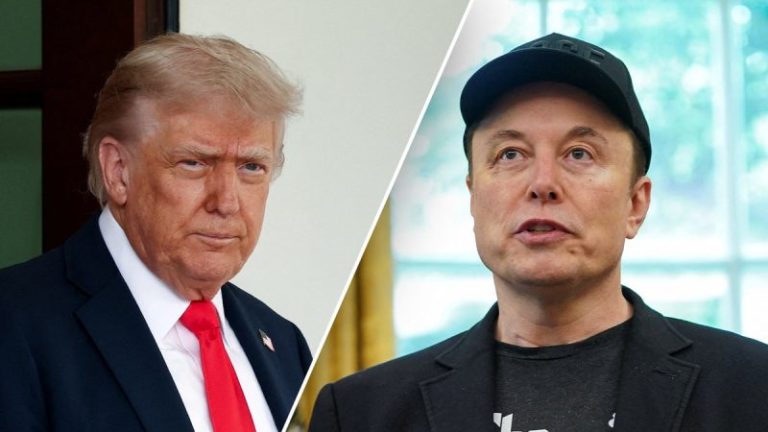
What is Elon Musk trying to do?  

As the founder of Tesla and SpaceX pursues his quixotic effort to launch a new political party – the America Party – you have to wonder – does Musk really care about our government debt or is he very, very angry that President Donald Trump’s big, beautiful bill eliminated tax credits for Teslas and other electric vehicles? After all, ditching the tax breaks for EV helps cut spending. Musk can’t have it both ways. 

After donating hundreds of millions of dollars to help elect Trump, being celebrated as the president’s right-hand man and spearheading the controversial effort to help cut government fraud and waste, Musk is likely irate – understandably– that he is not getting preferential treatment from the White House. Trump’s cavalier disregard of Musk’s concerns must have come as a hurtful shock. 

As a result, Musk is lashing out – as he has done before – by insinuating that Trump had dealings with Jeffrey Epstein, for instance – determined to undermine the president and his agenda. Musk has given a lot to this administration. Tesla came under ruthless attack because Musk volunteered to guide DOGE; dealerships were firebombed and cars vandalized. Worse, customers walked away. 

But launching a new political party is an especially risky way to go. Tesla’s stock sold off sharply on the news, ending up 40% off its 52-week high. The car company’s shareholders have already signaled they want CEO Musk to spend less time on politics and more on reviving Tesla’s mojo. While Musk has indicated that Tesla’s robotaxis are the wave of the future, and they may well be, the company today is not thriving. 

The Wall Street Journal is reporting that Tesla is struggling in China, its second-largest market, losing market share to more advanced and cheaper EVs. In May, sales were down 30% from the year earlier, even as the sector overall grew 28%. In Europe, Tesla is suffering the same Trump-related reputational issues as here in the U.S. It is not a good time for Musk to become distracted.  

It is also not a good idea for Trump to further inflame his former sidekick, as he recently did by calling Musk’s venture ‘ridiculous.’ Musk’s strategy for how he can gain significant political power (and sabotage Republicans) is clever and could damage Republicans. As he posted on X: ‘One way to execute on this would be to laser-focus on just 2 or 3 Senate seats and 8 to 10 House districts. Given the razor-thin legislative margins, that would be enough to serve as the deciding vote on contentious laws, ensuring that they serve the true will of the people.’  

The SpaceX owner explained in yet another post, ‘The way we’re going to crack the uniparty system is by using a variant of how Epaminondas shattered the myth of Spartan invincibility at Leuctra: Extremely concentrated force at a precise location on the battlefield.’   

Musk has the money to influence a few races and, on today’s closely contested political battlefield, a few seats could give the America Party considerable influence. It could also eliminate the slim GOP majority in the House and Senate. 

But … to what end? If edging out some Republicans hands control of Congress over to Democrats, Musk will have enabled even greater deficits. Has he forgotten the spending spree undertaken by Democrats while President Joe Biden was in the Oval Office? Does he remember how they treated him? Because Musk does not employ union labor, the Biden White House shunned him, and launched investigations into his businesses. Surely, he cannot pine for those days. 

Musk’s party may be new, but the idea is not.  Throughout history candidates and policymakers have railed at the inadequacies of our two main political parties, but few third-party ventures have made it out of the starting gate.  

The most successful such effort in modern times was billionaire H. Ross Perot’s 1995 creation of the Reform Party of the United States. Three years earlier, Perot had run for president as an Independent, outspending both major party candidates and winning 19% of the vote. His participation in the race drained votes from the GOP candidate and gave the win to President Bill Clinton, who captured 43% of the vote and defeated incumbent President George H. W. Bush. 

But when Perot ran again in 1996, representing his Reform Party, he attracted only 6% of the vote. The Reform Party’s biggest victory was the election of Jesse Ventura, who became governor of Minnesota in 1998. Its most important legacy was helping to inspire Republican Rep. Newt Gingrich’s Contract with America, which reset the GOP agenda and focused on many of the issues raised by Perot, including excess government spending.  

U.S. debt, as a percentage of GDP, peaked just after World War II at 106%, declined steadily until 1974, when it stood at 23%; between 1974 and 1992, it more than doubled to 47%, a trend that energized Perot’s battle against government deficits and also delivered Gingrich’s call for a balanced budget amendment.  

Today, rising deficits and debt are again driving discontent with our political establishment.  Under President Barack Obama, our debt to GDP rose from 77% to 103%, Under Donald Trump, debt stabilized but then jumped to 133% of GDP when Congress adopted bipartisan bills designed to keep COVID-19 shutdowns from destroying the economy. Unhappily, emergency spending measures that were meant to be temporary were kept in place and even expanded under Joe Biden. Debt as a percentage of GDP has since declined only modestly, and at the end of last year totaled 121%. Musk and Republican deficit hawks are correct that spending must come down. 

President Trump needs to reach out to Musk and settle their differences. Musk has caved before when Trump offered an olive branch; he will do so again. Both men can help each other, but both can also do significant damage – to each other and to the country. 

This post appeared first on FOX NEWS

So, you’re tired of all the transfers in college football? Well, then, you’ll like this. The nation’s top quarterbacks entering the 2025 season signed with their respective program as blue-chip prospects, waited their turn, developed in the system, then seized the starting reins.

The top four quarterbacks in our USA TODAY Sports rankings of the nation’s top 25 quarterbacks each plays for the program with which he signed. How’s that for a throwback?

Oh, sure, there’s some top-tier transfers, too, sprinkled into our top 10. Overall, the quarterback talent runs deep this season, whether homegrown or plucked from the portal.

The Big Ten leads all conferences with seven quarterbacks ranked in our top 25, but the SEC swarmed the top end of the rankings, with five SEC quarterbacks ranked within the top eight.

These rankings reflect an aggregate of the ballots of five USA TODAY sportswriters who each voted for their top 25.

Here are our USA TODAY top 25 college football quarterbacks:

1. Cade Klubnik, Clemson

In his second season at the controls, Klubnik’s progress from his first year restored the explosiveness to the Clemson offense that had been missing since the Tigers were playing for national championships. Now with even more weapons at his disposal, he should be front and center in the Heisman discussion as the team makes another title push.

2. Drew Allar, Penn State

Allar is the face of Penn State’s push for its first national title in nearly 40 years. After ending his junior year with a devastating interception in the team’s playoff semifinal against Notre Dame in the Orange Bowl, Allar enters his second season running offensive coordinator Andy Kotelnicki’s scheme surrounded by a top-notch offensive line and one of the nation’s top collections of skill talent, especially in the backfield.

UNDER RADAR: Five sleeper candidates for Heisman Trophy

QUARTERBACK RANKINGS: Big Ten | SEC | ACC | Big 12

3. Arch Manning, Texas

Finally, it’s Manning’s chance to prove true the hype that’s followed this blue-chip quarterback with one of football’s most famous surnames. He’s the preseason Heisman favorite. Manning looked the part of budding star with a lofty ceiling in two spot starts and backup opportunities last season. He should be ready to break out in his third season playing for Steve Sarkisian, a deft quarterback developer. Manning’s arm is sharp, and his mobility and size are pluses, although he must improve his processing time.

4. Garrett Nussmeier, LSU

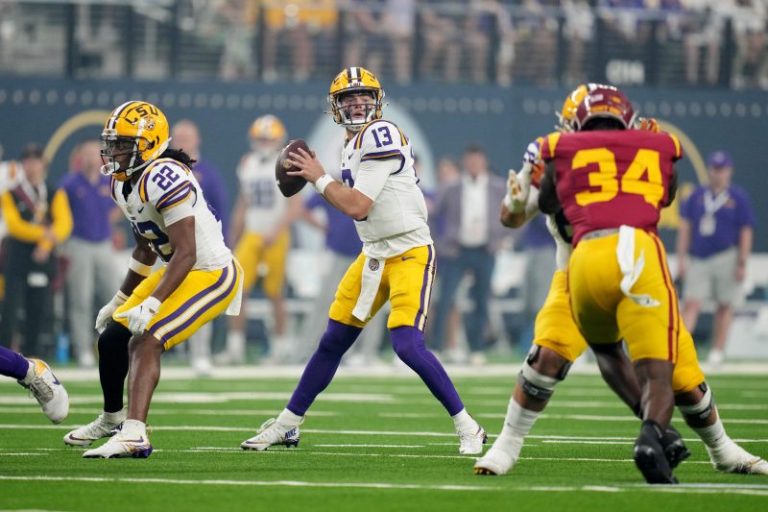
Nussmeier is equipped with a strong arm and the belief that he can make any throw. Watch him zip a pass to the sideline, and you’ll understand why he’s projected as an early first-round NFL Draft pick. He’s the nation’s only returning quarterback who passed for more than 4,000 yards last season, and he’ll be surrounded by a good group of receivers. Reducing his 12 interceptions from 2024 becomes the next stage in his development.

5. Sam Leavitt, Arizona State

What a difference a year can make. Leavitt went from a relatively unknown Michigan State transfer to one of the top arms in the sport after leading Arizona State to the playoff. Cam Skattebo had all the limelight for the Sun Devils, but Leavitt’s production was undeniable; he had 21 touchdowns to just four interceptions in the final nine games. He’s got running capabilities, and he’s shown he can deliver in big games. The offense is primed to be the best in the Big 12 with Leavitt still leading the way. 

6. John Mateer, Oklahoma

Oklahoma failed last season to fix its quarterback void created when Dillon Gabriel transferred to Oregon. Mateer, a Washington State transfer, addresses that need. His playing style even shares some traits to Gabriel’s. He’s a hard-nosed dual threat who’s an efficient passer and an athletic runner. He completes passes from a variety of arm angles. Mateer now must prove himself against a higher caliber of defense than he faced out West.

7. DJ Lagway, Florida

The Gators ignited after Lagway became their starter midway through his true freshman season. We probably haven’t seen the best of him yet. A hamstring injury hampered his dual-threat abilities in 2024. Durability is an issue with Lagway. He’s spent the offseason recovering from a throwing shoulder injury. When healthy, he’s a big play in waiting. He throws an excellent deep ball, connecting on more than 52% of his throws that traveled more than 20 yards.

8. LaNorris Sellers, South Carolina

Sellers showed he could do it all as a redshirt freshman. He passed for 353 yards and five touchdowns in a November win against Missouri. Two weeks later, he rushed for 166 yards and two touchdowns in a takedown of Clemson. That’s the epitome of a dual threat. He’s accurate and efficient, and he can reach speeds of nearly 21 mph on the ground. If he reduces his turnovers – fumbles were a bugaboo – he’ll be the complete package.

9. Carson Beck, Miami

Replacing the top overall draft pick might seem daunting, but Beck is no stranger to lofty expectations. He arrives in Coral Gables with plenty of potential but some baggage as well, as the Georgia offense wasn’t always humming. last season His final numbers from 2024 were solid enough 3,485 passing yards, a 64.7% completion rate and 28 TDs. But many of his 12 interceptions resulted from trying to force the action, a habit he’ll need to break if the Hurricanes hope to be in the playoff picture.

10. Kevin Jennings, SMU

The Mustangs’ appearance in the ACC championship game in their first year in the conference was a surprise. Jennings had a lot to do with that, though the season concluded on a sour note in a playoff drubbing at Penn State. He finished the campaign with 3,245 yards and 23 TDs passing and another 354 yards and five scores by land.

11. Sawyer Robertson, Baylor

Dave Arnada can thank Robertson for keeping his job secure after an impressive second half of the season from the Baylor quarterback. After taking over in the third game, he led the Bears to a 6-0 finish in the regular season, while totaling 1,581 passing yards with 17 touchdowns during the stretch. His 153.1 efficiency rating is the best among returning Big 12 starters. He has the potential to play on Sundays if he lives up to the offseason hype.

12. Josh Hoover, TCU

TCU finally has its guy after Hoover put up a monster 2024 campaign. He set the single-season school record at 3,949 passing yards and his 66.5% completion percentage are the most among returning Big 12 quarterbacks. His pocket presence is among the top echelon of signal-callers and he’s got pinpoint accuracy when he’s on the run. The Horned Frogs are a dangerous team that could be an offensive power with the cannon Hoover has, with 61 completions of at least 20 yards last season. 

13. Luke Altmyer, Illinois

The former Mississippi transfer has found a home with the surging Illini, totaling 26 touchdowns against six picks in a breakout 2024 season. After winning 10 games last fall, Illinois is a trendy contender for an at-large playoff bid in large part to his reliability and command of the offense. Like Allar at PSU, Altmyer is a returning starter at the same program amid a Big Ten quarterback crop that’s otherwise littered with youth and first-year transfers.

14. Haynes King, Georgia Tech

Despite being banged up for significant stretches, King finished 2024 with 2,701 yards of offense and accounted for 25 total touchdowns. His hard-nosed running did contribute to those injuries. The question for the Yellow Jackets’ staff now is whether they’ve assembled enough pieces to take full advantage of King’s considerable skillset. If they have, an uptick in the victory total is likely.

15. Rocco Becht, Iowa State

There may be no more underrated quarterback on this list than Becht. He guided Iowa State to its first 11-win season in program history in 2024 while throwing for 3,505 yards. He enters the season among the most experienced arms with 27 career starts, and it’s evident in his high on-field IQ, consistently frustrating defenses with his ability to extend plays and drives. He’s practically a lock to find the endzone with a touchdown pass in 18 consecutive games.

16. Nico Iamaleava, UCLA

Look for Iamaleava to spend this season in the national spotlight after his dramatic exit from Tennessee. He’ll have a harder time at UCLA, which has made gains under coach DeShaun Foster but won’t surround the third-year sophomore with the same talent level he had with the Volunteers. Still, Iamaleava has led an SEC team to the playoff and could be the missing piece for the Bruins.

17. Dylan Raiola, Nebraska

The former five-star recruit will take the next step as a sophomore thanks to last year’s experience, a much improved receiver group and a full offseason learning the ropes in coordinator Dana Holgorsen’s system. Raiola has all the gifts to match his immense recruiting hype and should tap into that potential beginning in September.

18. Darian Mensah, Duke

Coming off a 2,723-yard season with 22 passing touchdowns at Tulane, Mensah looks to keep the Blue Devils in the ACC’s upper tier. His reportedly lofty NIL price tag indicates the program’s backers are serious about making Duke not just a basketball destination. Now, he’ll have deliver on that investment to push the Blue Devils into title contention.

19. Dante Moore, Oregon

Moore had an up-and-down freshman year at UCLA in 2023 and then spent last season learning the ropes in Oregon’s offense behind Dillon Gabriel. That he has Power Four starting experience and a comfort level in this scheme are two major advantages in his corner. Look for Moore to grab this chance and run with it to become the Ducks’ latest super-productive starter.

20. Fernando Mendoza, Indiana

Mendoza becomes the next to grab the reins for the Hoosiers after last year’s starter, Kurtis Rourke, helped Indiana make a shocking playoff berth. The Cal transfer threw for over 3,000 yards with 16 scores in 2024 and brings along two years of starting experience into coach Curt Cignetti’s explosive offense.

21. Blake Horvath, Navy

In his first season as a starter, Horvath led the Midshipmen to 10 wins, including a defeat of Oklahoma in the Armed Forces Bowl. He does most of his damage on the ground, like most Navy quarterbacks. And while Horvath accumulated 1,353 yards and 13 touchdowns rushing, he also provided a solid throwing threat with 13 passing scores. Expect even better production in 2025 as Navy hopes to contend again in the American Athletic.

22. Avery Johnson, Kansas State

Kansas State put all of its chips into Johnson being the guy after Will Howard, and it now is reaping the benefits of having a quarterback with a tremendous ceiling. He had several shining moments in 2024, particularly in his ability to generate fourth-quarter comebacks. It was evident his confidence rose as the season went on, trusting his arm and letting it work hand-in-hand with his fantastic running ability. With a full year of starting experience under his belt, Johnson will be a much more mature player that will keep Kansas State contenders.

23. Miller Moss, Louisville

It wasn’t all bad for Moss at Southern California as he threw for 2,555 yards and 18 scores, but a three-interception outing in a Nov. 2 loss at Washington led to his demotion an eventual transfer. He should be a good fit at Louisville given Jeff Brohm’s success mentoring QBs, and he’ll have a lot of projected all-league talent around him in the Cardinals offense.

24. Julian Sayin, Ohio State

Sayin grabs the keys to the kingdom as the Buckeyes’ expected starter. After making 12 attempts in a reserve role for the defending national champs, Sayin should be one of the Big Ten’s most efficient passers while playing alongside Jeremiah Smith and other elite receivers. Unlike Moore at Oregon, though, Sayin has limited playing experience and could take a little time to steady himself. Learning how to run the system from Will Howard last year will help ease his transition.

25. Behren Morton, Texas Tech

Stop if you’ve heard this before: there’s a gunslinger that could be dazzling at Texas Tech. Morton enters his final season in Lubbock ready to thrive in the pass-heavy offense the Red Raiders are known for. What’s special is for how much he throws it, he takes care of the ball with only eight interceptions on 466 passing attempts last season. He’s got all the makings of leading the nation in passing yards.

This post appeared first on USA TODAY