Archive

2025

Browsing

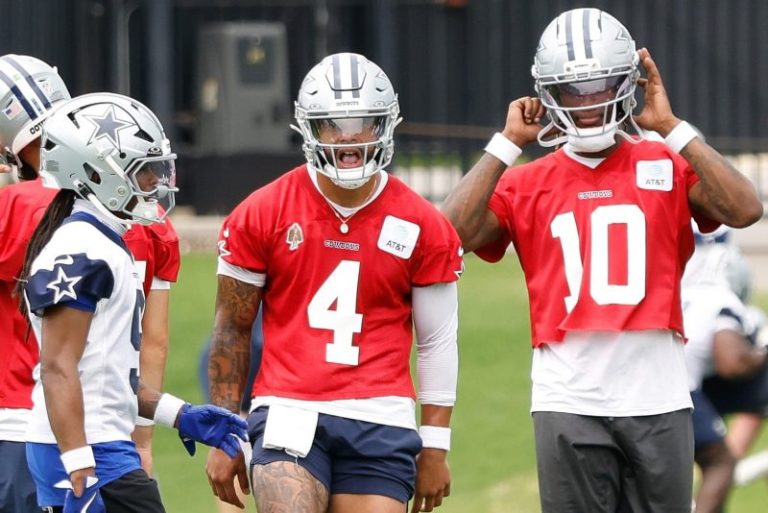
The Dallas Cowboys quarterback told reporters Tuesday, July 8 he is fully recovered from the hamstring surgery he underwent last November. Barring any sudden concerns arising during one last visit with team doctors, Prescott anticipates being a full participant at Cowboys training camp.

Prescott, 31, suffered a partial avulsion to his right hamstring in a Week 9 game against the Atlanta Falcons last year. In more explicit terms, Prescott’s hamstring tendon tore almost completely off of his thigh bone.

He decided to undergo the season-ending surgery to repair his hamstring about one week later.

Prescott’s Tuesday announcement is not a big surprise. The three-time Pro Bowler had participated in all of the Cowboys’ drills during spring practices, so all signs were pointing toward a full participation in training camp.

Thanks to his injury, the 2023 MVP runner-up was unable to build on a season in which he led the league in passing touchdowns. Prescott finished last year with 1,978 yards, 11 touchdowns and eight interceptions on a 64.7% completion rate in his eight games played.

He, along with the rest of Dallas’ veterans and rookies, will report to Oxnard, California for the start of the team’s training camp on July 21.

This post appeared first on USA TODAY

The transfer portal has closed, the NBA draft is complete and the pieces are mostly in place for the coming men’s college basketball season.

We previously did our too-early Top 25 preseason rankings after Florida finished as national champions in April. Now three months later, we revisit whether the Gators and others have moved up or down in our projections.

Unsurprisingly, the list is mostly filled with teams from the Big 12, Big Ten and SEC but the top half of the rankings have a balanced spread across the five major conferences, portending a wide-open race for who will be crowned national champion in Indianapolis at the end of the season. For reference, the previous rankings are in parenthesis.

1. Houston (1)

The defending national runner-up loses stalwarts L.J. Cryer and J’Wan Roberts but is poised to make another run to the title game behind one of the top recruiting classes in the country, led by five-star forward Chris Cenac Jr. and guard Isiah Harwell. Returning contributors include guards Milos Uzan and Emanuel Sharp and frontcourt defensive standout Joseph Tugler.

2. Duke (2)

Cooper Flagg, Kon Knueppel and Khaman Maluach are off to the NBA along with Tyrese Proctor, but Jon Scheyer put together another top recruiting class. Next year’s group will be led by wingers Cameron and Cayden Boozer, the twin sons of former Blue Devils star Carlos Boozer. Also arriving are guards Dame Sarr and Sebastian Wilkins. They’ll join several veterans who opted to return, including Isaiah Evans and Caleb Foster.

3. Connecticut (3)

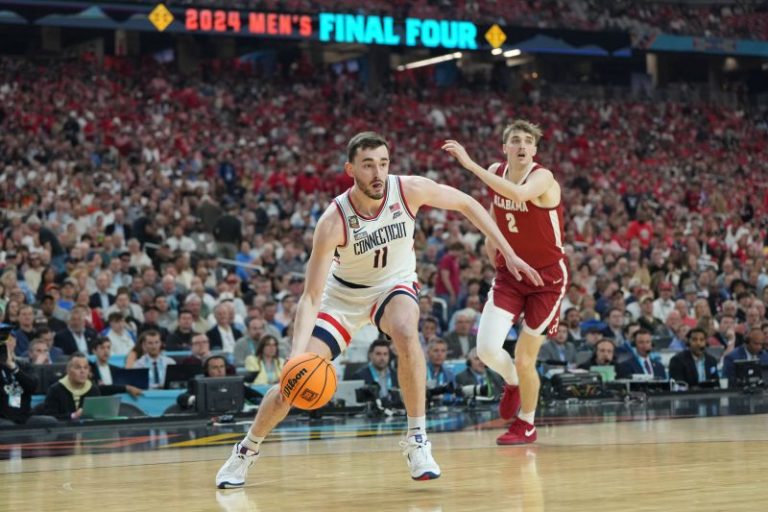
Three in a row wasn’t in the cards, but a third title in four years isn’t out of the question for UConn. Liam McNeeley is gone after just one year in Storrs, but reinforcements are coming for Danny Hurley, whose top-five recruiting class features a pair of McDonald’s All-Americans and an international prospect from Down Under. Post man Eric Reibe and guard Braylon Mullins comprise the domestic talent, and Australian wingman Jacob Furphy will arrive in the States this summer. Georgia transfer Silas Demary will provide even more backcourt depth. In addition, veteran forward Alex Karaban and rising junior Solo Ball return.

4. Purdue (11)

The news that rising seniors Braden Smith and Trey Kaufman-Renn would be back along with sharpshooter Fletcher Loyer vaulted the Boilermakers into the top spot in the Big Ten projections for 2025-26. The veteran-laden team with league title and Final Four potential also returns C.J. Cox and Gicarri Harris, and big man Oscar Cluff (South Dakota State) arrives via the portal to provide the low-post presence that was lacking in 2024-25.

5. Florida (8)

All-America guard and Final Four MVP Walter Clayton will be hard to replace. Backcourt mate Elijah Martin and Will Richard are also gone, but the Gators will defend their title with most of their inside players returning. Thomas Haugh, Micah Handlogten, Alex Condon and Rueben Chinyelu are all back. The arrival of transfers Boogie Fland (Arkansas) and Xaivian Lee (Princeton) means there should be little to no drop-off in perimeter production.

6. Michigan (9)

Despite losing its top three players, things could get even better in year two for coach Dusty May in Ann Arbor thanks to a huge haul in the transfer portal. Yaxel Lendeborg (Alabama-Birmingham) elected to forgo the NBA for another year and should thrive in the Wolverines’ system. The newcomers also include point guard Elliott Cadeau (North Carolina) and frontcourt players Morez Johnson Jr. (Illinois) and Aday Mara (UCLA). Michigan also brings in an impact freshman in combo guard Trey McKenney and another top-100 recruit in Winters Grady.

7. Brigham Young (5)

After making the Sweet 16 for the second time since 1981, BYU is poised for a big year with the arrival of hyped freshman AJ Dybantsa. He’ll join a rotation that lost point guard Egor Demin to the NBA but brings back Dawson Baker and forwards Richie Saunders and Mihailo Boskovic. If Dybantsa is as good as expected, the Cougars could be a serious threat for the Final Four.

8. Alabama (6)

The Crimson Tide should again be among the SEC favorites. Losing catalyst Mark Sears puts pressure on the backcourt to replicate his scoring production and leadership, but the return of guard Lebaron Philon for a sophomore season will help. Aden Holloway should take up much of that slack as well, along with Miami (Fla.) transfer Jalil Bethea. Inside additions Noah Williamson (Bucknell) and Taylor Bol Bowen (Florida State) should take on big roles.

9. St. John’s (13)

Now that Rick Pitino has instilled the work ethic needed to bring the Red Storm program back to prominence, he hopes the shooters he’s brought in via the portal will improve the team’s accuracy. Bryce Hopkins (Providence) should provide an immediate boost in that regard if he can stay healthy, with Joson Sanon (Arizona State) and Ian Jackson (North Carolina) adding back-court depth. Big East player of the year R.J. Luis is gone and Simeon Wilcher transferred out, but Zuby Ejiofor is back to anchor the interior.

10. UCLA (4)

Mick Cronin has put together a transfer class that should make the Bruins one of the best teams in the Big Ten. The biggest addition is point guard Donovan Dent from New Mexico, who led the Mountain West with 20.4 points per game this season and may have been the best overall player in the portal. Another three incoming transfers join a roster headlined by returning starters forwards Eric Dailey Jr. and Tyler Bilodeau.

11. Louisville (10)

While several key pieces behind last year’s rebound under coach Pat Kelsey have been lost to graduation, Louisville was a sought-after destination for a strong transfer class. The impact newcomers include Isaac McKneely from Virginia, Ryan Conwell from Xavier and Adrian Wooley from Kennesaw State. The Cardinals will add another perimeter threat in freshman Mikel Brown and will get a boost from the return of big man Aly Khalifa, who redshirted last season after knee surgery.

12. Texas Tech (7)

Texas Tech’s roster has taken shape after reigning Big 12 Player of the Year JT Toppin and guard Christian Anderson opted to return to Lubbock. This pair will set the pace for another run at the Final Four after coming up one win shy this March. The Red Raiders’ transfer haul includes sharpshooting guards Donovan Atwell (UNC Greensboro) and Tyeree Bryan (Santa Clara) along with forward LeJuan Watts (Washington State) and center Luke Bamgboye (Virginia Commonwealth).

13. Iowa State (14)

A very deep roster took a hit with Eastern Washington transfer Mason Williams needing hip surgery that is likely keeps him out for the season.. But Iowa State has the bodies to replace that projected production and make a March Madness run. Newcomers such as forwards Blake Buchanan (Virginia) and forward Eric Mulder (Purdue-Fort Wayne) and a highly rated recruiting class will join holdovers in Tamin Lipsey, Joshua Jefferson and Milan Momcilovic to make the Cyclones a national player.

14. Kentucky (16)

Getting leading scorer Otega Oweh back in the fold for another year will keep the Wildcats in the mix for the SEC crown under second-year coach Mark Pope. One huge factor that could determine where Kentucky lands is the health of sophomore transfer Jayden Quaintance (Arizona State), one of the top prospects in the nation and a potential difference-maker on the defensive end. Quaintance injured his knee last season but is expected to be ready in the fall. Kentucky also upgraded its backcourt by adding Jaland Lowe (Pittsburgh) and Denzel Aberdeen (Florida).

15. Tennessee (19)

Tennessee is looking at a roster overhaul with just one returning starter in center Felix Okpara. The Volunteers need to land production in increased action from forwards Cade Phillips and J.D. Estrella while blending in point guard Ja’Kobi Gillespie (Maryland), guard Amaree Abram (Louisiana Tech) and forward Jaylen Carey (Vanderbilt). Tennessee will also lean on a really strong traditional recruiting class starring five-star forward Nate Ament.

16. Wisconsin (19)

Wisconsin will build around guard John Blackwell, who took his name out of the draft in favor of another year in Madison. He’ll team with former Florida Atlantic and San Diego State guard Nick Boyd will form one of the top backcourts in the Big Ten. The Badgers also brought in a deep threat in wing Andrew Rohde (Virginia) and a very promising young big man in sophomore Austin Rapp (Portland), the reigning West Coast Conference rookie of the year.

17. Arizona (23)

Guard Jaden Bradley will be one of the best players in the Big 12. Returning role players in forward Tobe Awaka and guard Anthony Dell’Orso add experience and production after last year’s Sweet 16 berth. But the Wildcats are going to be young, with six freshmen among the seven new additions to the roster. Included in this group are prized recruits Dwayne Aristode and Koa Peat.

18. Gonzaga (20)

Even though Mark Few is losing his strong backcourt of Ryan Nembhard, Nolan Hickman and Khalif Battle, the frontcourt is made up of a group of stars. Graham Ike is back and is a conference player of the year contender. He’ll be paired with Braden Huff, but the real key is the addition of Grand Canyon transfer Tyon Grant-Foster, a 25-year-old perennial scorer that could be the playmaker for the Zags. Former Big Sky player of the year Steele Venters will finally suit up after missing back-to-back seasons with injuries, putting the Bulldogs in great position for their final year in the West Coast Conference.

19. Arkansas (12)

The momentum from the Sweet 16 run should continue for John Calipari as he was able to bring back some last year’s core. D.J. Wagner and Karter Knox stayed but the Razorbacks took a hit when Adou Thiero decided to go to the NBA. Still, Calipari brings in another talented recruiting class, headlined by guard Darius Acuff Jr., who has SEC freshman of the year potential. Other incoming freshman Meleek Thomas could provide solid production off the bench.

20. Creighton (21)

Greg McDermott knew replacing Ryan Kalkbrenner and Steven Ashworth was the top priority, and he brought in transfers that should keep the Bluejays among Big East contenders. Iowa transfers Josh Dix and Owen Freeman will assume the leadership, while guard Nik Graves (Charlotte) and forward Blake Harper (Howard) will be X-factors after they each led their previous schools in scoring last season. Plus, you can’t forget the potential from Serbian 7-foot freshman Aleksa Dimitrijevic.

21. Kansas (17)

There were plenty of swings and misses by Bill Self in the transfer portal as he was unable to add a big-time playmaker. He was able to salvage it by bringing Tre White from Illinois and Jayden Dawson of Loyola-Chicago. Still, the Jayhawks await the arrival of top recruit Darryn Peterson. He has top NBA draft pick potential and he will join sophomore forward Flory Bidunga, who saved the offseason by choosing to stay in Kansas. The Jayhawks still feel like a bit of a mystery of whether it’ll be a boom or bust season.

22. Michigan State (15)

The Spartans will have to replace their top production as Jase Richardson’s jump to the NBA means last season’s top three scorers are gone. Michigan State played a deep rotation, so experience isn’t a big issue. Jeremy Fears Jr. will have to assume a bigger role and Carson Cooper will have to be a force down low. They’ll get help in Coen Carr and Jaxon Kohler. The transfer and recruiting haul is promising, but perimeter shooting still appears to be an issue.

23. Illinois (NR)

Illinois jumps into the rankings thanks to the international flair coming to Champaign; Mihailo Petrovic leads the Balkan squad now playing for Brad Underwood. Petrovic is a 22-years-old guard among the best players in the European ABA League. Also joining is Andrej Stojakovic, who had a great freshman season at California, and former Arkansas big man Zvonimir Ivišić, who joins brother Tomislav Ivišić to form a terrifying 7-foot duo. Also in the mix is guard Kylan Boswell after he showed maturity in the move to Illinois after leaving Arizona.

24. Oregon (NR)

Another new addition to the rankings, Oregon is looking to maintain success after an up-and-down season. Back are the top two scorers in Nate Bittle and Jackson Shelstad, who are consistent scorer. But they can’t be the only ones producing, and the Ducks have to replace TJ Bamba. That appears to be answered in the transfer portal. TK Simpkins led Elon in scoring last season and improved his 3-point shooting. Sean Stewart (Ohio State) also could be a breakout player as he finds a more elevated role.

25. Auburn (24)

Experienced stars led Auburn last season, but the entire starting unit is gone following the tough loss of Chad Baker-Mazara to Southern California. Bruce Pearl knew he had to replenish the roster, and he did so with significant recruiting and transfer classes. Keyshawn Hall (Central Florida) and Kevin Overton (Texas Tech) arrive after strong season, and there’s intrigue with the Tigers brining in the top junior college transfer, Abdul Bashir. A new crop of players will join Tahaad Pettiford, the one key returnee that had a big role in the Final Four squad.

Dropped out: Baylor, North Carolina.

Just missed: Texas, North Carolina State and Oklahoma.

This post appeared first on USA TODAY

President Donald Trump will be in attendance for the FIFA Club World Cup final on Sunday, July 13.

Trump told reporters on Tuesday, July 8 that he planned to go to the match at MetLife Stadium in East Rutherford, New Jersey.

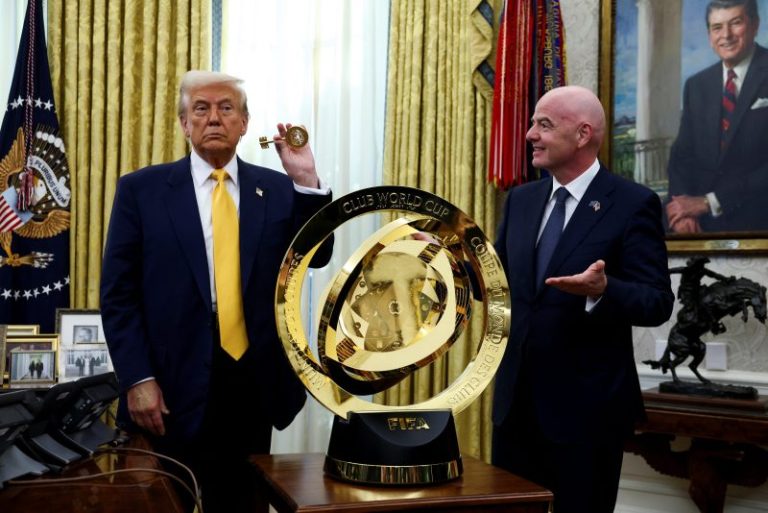
The president was previously invited by FIFA president Gianni Infantino to attend the final during the organization’s visit to the White House in March, where Trump was given a ‘key’ to the tournament’s trophy.

Watch FIFA Club World Cup games for free on DAZN

Trump has been frequently attending sporting events since his term began in January, including the Super Bowl, the Daytona 500 and UFC matches.

Meanwhile, Trump and Infantino have publicized a budding friendship.

Infantino has made several trips to the White House, while FIFA opened a new office inside Trump Tower in New York City this week.

“FIFA (is) a global organization (and) to be global, you have to be local, you have to be everywhere, so we have to be in New York – not just for the FIFA Club World Cup this year and the FIFA World Cup next year – we have to be in New York as well when it comes to where our offices are based,” Infantino said during an event at the New York office on July 7.

This post appeared first on USA TODAY

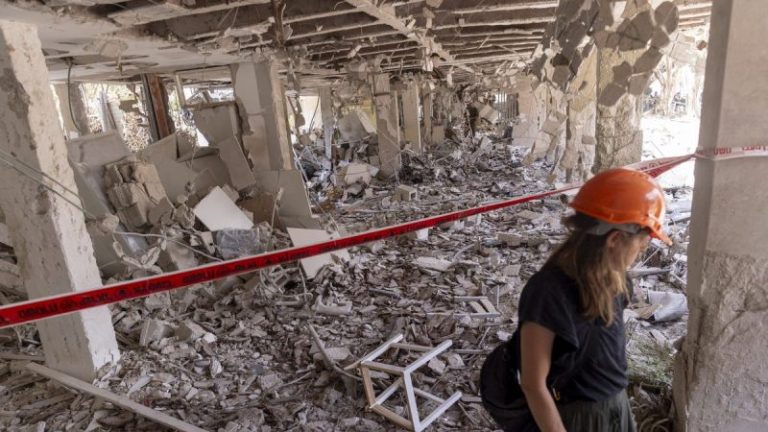
Even amid a fragile ceasefire, Iran continues to warn the United States and Israel that it retains the ability to inflict serious damage if provoked. 

Iranian officials have declared the country can sustain daily missile strikes for two years — a claim drawing increasing scrutiny from military experts and Western intelligence analysts.

‘Our armed forces are at the height of their readiness,’ said Major General Ebrahim Jabbari of the Islamic Revolutionary Guard Corps (IRGC), speaking to the semi-official Mehr News Agency. ‘The warehouses, underground missile bases, and facilities we have are so enormous that we have yet to demonstrate the majority of our defense capabilities and effective missiles.’

‘In case of a war with Israel and the U.S., our facilities will not run out even if we launch missiles at them every day for two years,’ he added.

Maj. Gen. Yahya Rahim Safavi, senior military advisor to Supreme Leader Ayatollah Ali Khamenei, echoed that warning: ‘The Zionists know that some of our forces, such as the Navy and the Quds Force, have not yet entered into battle,’ he said. ‘So far, we have produced several thousand missiles and drones, and their place is secure.’

But intelligence analysis suggests Iran’s claims mask serious losses.

Tehran began the conflict with an arsenal of about 3,000 missiles and 500 missile launchers to 600 missile launchers, according to open-source intelligence. By the end of the so-called ’12-Day War’ — a series of attacks by Israel on its military storage warehouses and production facilities followed by U.S. attacks on nuclear sites and Iran’s counterattacks — it was down to between 1,000 missiles and 1,500 missiles and only 150 launchers to 200 launchers. 

‘The regime has increasingly been forced to choose between using or losing these projectiles as Israel targeted missile launchers,’ said Behnam Ben Taleblu, Iran expert at the Foundation for Defense of Democracies. 

Replacing the missile launchers after Israel degraded their production capabilities will be extremely difficult, according to Danny Citrinowicz, Iran expert at the Institute for National Security Studies. 

‘Israel attacked every place that the Iranians manufacture missiles,’ he told Fox News Digital. 

Iran may have the capacity to attack Israel with its missiles, but ‘not in the hundreds.’ 

Could Iran strike the US homeland?

Iranian rhetoric occasionally has floated the idea of striking the U.S. directly, but analysts agree that the threat is far more limited.

‘The theoretical way they can strike the U.S. is just using their capacity in Venezuela,’ Citrinowicz said, referring to Iran’s growing military cooperation with its capital of Caracas. ‘Strategically, it was one of the main goals that they had — to build their presence in Venezuela. But it’s a long shot. It would be very hard to do so, and I’m not sure the Venezuelan government would like that to happen.’

Instead, any retaliatory strike would likely focus on U.S. assets and personnel in the Middle East.

Can Kasapoglu, a senior fellow at the Hudson Institute and Middle East military affairs expert, said Israel’s war aims went beyond missile factories, targeting Iran’s nuclear infrastructure and advanced weapons development.

‘We are not 100% sure about the damage to centrifuges, so we cannot say the nuclear program is annihilated,’ Kasapoglu said. ‘But we can safely assume the nuclear program had a setback for years.’

He added that Israel focused heavily on Iran’s solid-propellant, medium-range ballistic missiles — many of which have ‘very high terminal velocity, close to Mach 10,’ and are capable of evasive maneuvers. 

‘That makes them even more dangerous,’ he said.

Still, despite the setbacks, Iran ‘is still the largest ballistic missile power in the Middle East,’ he emphasized. ‘We saw that during the war, as Iran was able to penetrate Israeli airspace — even when Israeli and American interceptors were firing interceptor after interceptor to stop a single ballistic missile.’

Comparing ‘magazine depth,’ Kasapoglu noted Iran still maintains a deeper stockpile of missiles than Israel, even with U.S. assistance, and has interceptors.

Proxy forces and Chinese involvement

The regional threat isn’t limited to Iran’s mainland arsenal. Iran’s proxies, particularly the Houthis in Yemen, remain a potent force.

‘The Houthis are the one Iranian proxy I am really concerned about.’ 

Kasapoglu pointed to new intelligence accusing Chinese satellite companies of providing real-time targeting data to the Houthis, who have resumed maritime attacks in the Red Sea. 

‘Two days ago, they attacked a Liberian-flagged Greek merchant vessel,’ he said.

With advanced Chinese satellite support and hardened anti-ship cruise missiles, the Houthis could destabilize shipping lanes and widen the conflict beyond the Israel-Iran front.

‘Iran still has significant asymmetric capabilities in the maritime domain and transnational terrorist apparatus, but it’s hard to see how deploying these assets would not invite further ruin,’ said Taleblu. ‘Bluster and hyperbole have long been elements of Iran’s deterrence strategy.’ 

The so-called ’12-Day War’ ended in a U.S.-brokered ceasefire, but the region remains on edge. Iran’s leaders continue to boast about untapped military capabilities, but battlefield losses, manufacturing disruptions and previous counter-attack measures have limited its options. 

While Tehran retains the power to project force and threaten both Israel and U.S. regional assets, experts agree that its ability to launch sustained, high-volume attacks has been meaningfully curtailed.

Iran may still be dangerous, but its bark, for now, may be louder than its bite.

This post appeared first on FOX NEWS

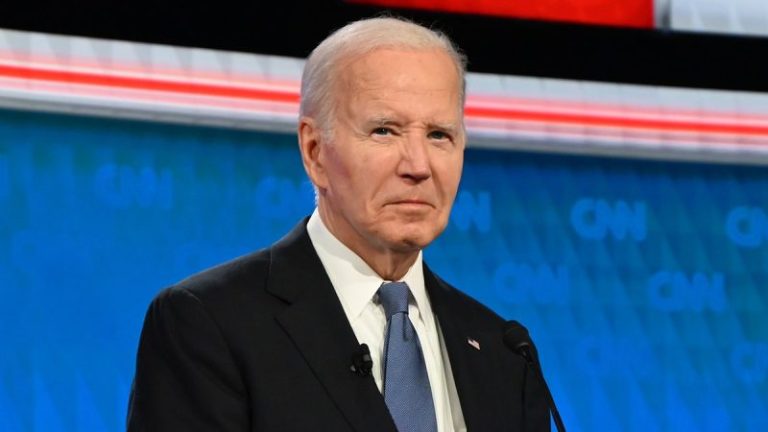
President Joe Biden’s former chief of staff and a fixture of his re-election campaign, Ron Klain, privately announced during Biden’s disastrous debate performance: ‘We’re f—ed.’

‘2024: How Trump Retook the White House and the Democrats Lost America,’ a new book released Tuesday by journalists Josh Dawsey of The Wall Street Journal, Tyler Pager of The New York Times and Isaac Arnsdor of The Washington Post, is the latest analysis of how Biden lost the White House. 

The authors described how, during the June 2024 debate, ‘Biden’s aides winced as the president started answering the first question about the economy and voters who felt they were worse off under his presidency.’ 

And backstage, as Biden stumbled over an answer that questionably ended with, ‘We finally beat Medicare,’ back in the holding room, Klain stood up and announced, ‘We’re f—ed,’ according to the authors. 

Mike Donilon, Bruce Reed and Klain were among those leading Biden’s final prep ahead of the debate, according to the book. 

Despite Klain expressing doubt internally, Klain continued to defend the president amid calls from donors and politicians for Biden to step down. 

On June 30, 2024, Klain reshared an X post that urged Americans to ignore the ‘news reports’ with ‘anonymous sources about Dem donors calling for Biden to withdraw.’

‘We are the Democratic Party! These people don’t get to decide to oust a pro-labor pro-people President,’ Klain said on July 4, 2024, in response to The New York Times reporting about the Democrats’ pressure campaign against Biden. 

According to the book, after the debate, Klain called Jeff Zients, his successor as Biden’s chief of staff, to say he was ‘disturbed that Biden was planning to spend the weekend at Camp David.’

‘We have an emergency,’ Klain told Zients, according to the book. ‘We have a crisis on Capitol Hill, and the crisis is going to accelerate.’

But Zients insisted Biden was going to Camp David to be with his family, instead of Klain’s plan to appease the progressive wing of the party with a bold second-term agenda. 

‘I have no f—ing clue why he’s going to Camp David this weekend,’ Klain said, according to the authors. ‘He needs to be working the phones, day and night.’

Even before the debate, when concerns about the first octogenarian president’s ability to lead the country through a second term came to a boiling point, Klain had concerns, as portrayed in the book. 

Klain had overseen debate prep for every Democratic presidential candidate since 2004, according to the authors. Between Biden’s cold, a shorter prep window than usual and staffers privately expressing concern, debate prep in Camp David did not quite go as planned, the authors claimed.

‘This is going to be really touch and go in Atlanta,’ Klain told Donilon and Reed ahead of the debate, according to the book. 

Fox News Digital has written extensively dating back to the 2020 presidential campaign about Biden’s cognitive decline and his inner circle’s alleged role in covering it up.

When reached for comment, Klain told Fox News Digital, ‘I have nothing to add.’

Biden did not immediately respond to Fox News Digital’s request for comment. 

This post appeared first on FOX NEWS

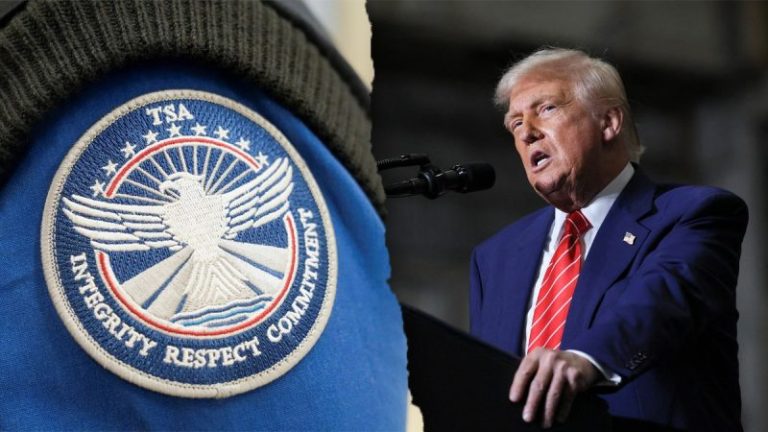
The Department of Homeland Security (DHS) and Transportation Security Administration (TSA) are expected to roll back the ‘shoes-off’ airport security protocol at a Tuesday press conference in Washington.

DHS sources confirmed a 5 p.m. ET announcement at Ronald Reagan Washington National Airport, following widespread reporting that TSA will allow more passengers going through security to remove their shoes.

White House press secretary Karoline Leavitt said ending the protocol is ‘big news from @DHSgov’ in a post to X.

The policy was first implemented in 2006 and was prompted by ‘shoe bomber’ Richard Reid, a British citizen with ties to al-Qaeda, who attempted to detonate explosives he had hidden in his shoes on an American Airlines flight from Paris to Miami in December 2001.

‘TSA and DHS are always exploring new and innovative ways to enhance the passenger experience and our strong security posture,’ a TSA spokesperson said in a statement. ‘Any potential updates to our security process will be issued through official channels.’

TSA PreCheck and partners CLEAR, IDEMIA and Telos have kept passengers from taking their shoes off in security for a number of years, but the latest change would impact everyone traveling through the main security line.

This change comes as the Trump administration’s TSA looks to alleviate some of the hassles of travel, and just last week began rolling out a new security lane exclusively for active-duty service members.

Preston Mizell is a writer with Fox News Digital covering breaking news. Story tips can be sent to Preston.Mizell@fox.com and on X @MizellPreston

This post appeared first on FOX NEWS

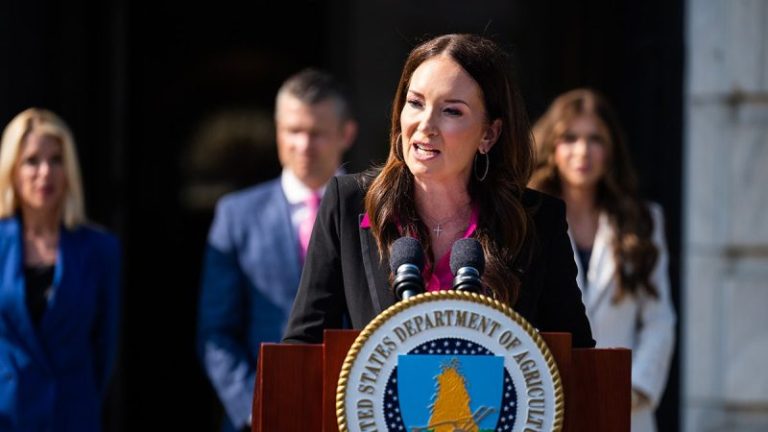
The U.S. Department of Agriculture (USDA) unveiled its National Farm Security Action Plan on Tuesday morning.

The plan is specifically meant to address threats from foreign governments, like China, and how those threats impact American farmers. It presents legislative and executive reforms such as banning Chinese nationals from obtaining farmland in the U.S., as well as assessing who holds land near military bases.

‘The farm’s produce is not just a commodity, it is a way of life that underpins America itself. And that’s exactly why it is under threat from criminals, from political adversaries, and from hostile regimes that understand our way of life as a profound and existential threat to themselves,’ USDA Secretary Brooke Rollins said at a press event in Washington, D.C.

‘For them, agricultural lands and our farms, because they are a previous inheritance, are weapons to be turned against us,’ she continued. ‘We see it again and again, from Chinese communist acquisition of American farmland to criminal exploits of our system of agriculture, to the theft of operational information required to work the land and beyond. All of this takes what is profoundly good and turns it toward evil purposes.’ 

Rollins was joined by Defense Secretary Pete Hegseth, Attorney General Pam Bondi and Homeland Security Secretary Kristi Noem.

‘As someone who’s charged with leading the Defense Department, I want to know who owns the land around our bases and strategic bases and getting an understanding of why foreign entities, foreign companies, foreign individuals might be buying up land around those bases,’ Hegseth said.

Bondi directly referenced how agroterrorism is becoming a top concern for the administration. Two Chinese nationals were arrested in Michigan last month for allegedly smuggling what FBI Director Kash Patel described as a ‘known agroterrorism agent.’

‘A country who cannot feed itself, cannot take care of itself, and cannot provide for itself, is not secure, and we have to be able to feed ourselves to make sure that no other country ever controls us,’ Noem said.

Noem said that during her time as governor of South Dakota she signed a law that banned the governments of China, Iran, Cuba, North Korea, Venezuela and Russia and entities related to them from buying farmland in the state.

‘And I’ve watched for decades as evil foreign governments, including China, have come into this country, and they have stolen our intellectual property. They’ve manipulated their currency, they’ve treated us unfairly in trade deals. They’ve come in and purchased up our processing companies, stolen our genetics,’ she continued.

Numerous states have laws on the books restricting land purchases by those with ties to China and other foreign adversaries. In 2021, over 383,000 acres had ties to China, but the number has dipped in recent years, according to Agriculture Dive. 

This post appeared first on FOX NEWS

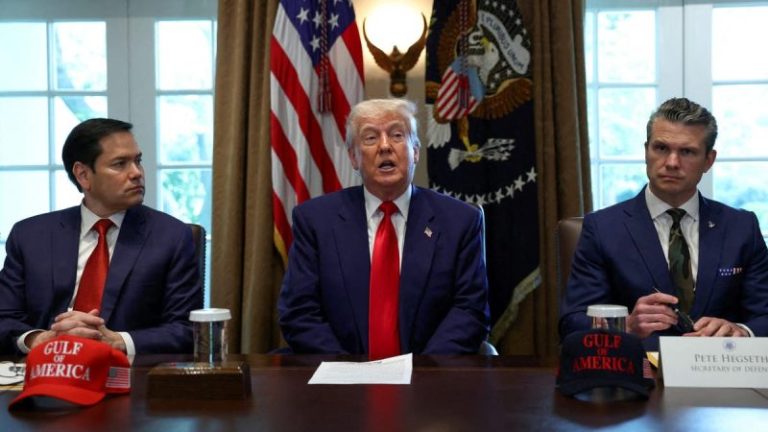
President Donald Trump disclosed he and former Chairman of the Joint Chiefs of Staff Gen. Mark Milley clashed over leaving equipment in Afghanistan as the U.S. withdrew troops in 2021. 

Trump, who historically has pushed to recover billions of dollars’ worth of equipment U.S. troops left in Afghanistan, said Milley argued at the time it was cheaper to leave the equipment there. 

‘That’s when I knew he was an idiot,’ Trump said during a Cabinet meeting Tuesday. ‘Didn’t take long to figure that one out. But they left all that equipment. But they left their dignity behind. It was the most embarrassing moment, in my opinion, in the history of our country. Not that we got out. We should have not been there, but that we got out the way we got out with great embarrassment and death.’ 

Milley, who is now retired, did not immediately respond to a request for comment from Fox News Digital. 

The Taliban seized nearly all of the more than $7 billion worth of equipment U.S. troops left in Afghanistan during the withdrawal process, according to a 2022 Department of Defense report.

While U.S. troops removed or destroyed most of the major equipment, aircraft, ground vehicles and other weapons were left in Afghanistan. The condition of these items remains unknown, but the Pentagon said in the report the equipment likely would fail operationally without maintenance from U.S. contractors. 

In 2021, President Joe Biden signed off on pulling U.S. troops from Afghanistan, following up on existing plans from the first Trump administration in 2020 with Taliban leaders to end the conflict. 

However, Biden bore the brunt of criticism for the withdrawal after the Taliban rapidly took over Afghanistan again, and more than a dozen U.S. service members died supporting evacuation efforts. 

Thirteen U.S. service members were killed during the withdrawal process due to a suicide bombing at Abbey Gate, outside the then-Hamid Karzai International Airport, as the Taliban gained control of Kabul.

Secretary of Defense Pete Hegseth announced in May that he had instructed the Pentagon to launch a comprehensive review of the U.S. withdrawal to provide a more comprehensive evaluation of the event and to hold those responsible accountable. 

‘The Department of Defense has an obligation, both to the American people and to the warfighters who sacrificed their youth in Afghanistan, to get to the facts,’ Hegseth said in a memo in May. ‘This remains an important step toward regaining faith and trust with the American people and all those who wear the uniform and is prudent based on the number of casualties and equipment lost during the execution of this withdrawal operation.’ 

While Trump tapped Milley to serve as the chairman of the Joint Chiefs of Staff in 2019, the relationship between the two unraveled after Milley issued an apology for appearing beside Trump in uniform during a photo-op outside the White House during the 2020 protests following the death of George Floyd at the hands of a police officer.

Milley said in his apology that his appearance ‘created a perception of the military involved in domestic politics.’

‘As a commissioned uniformed officer, it was a mistake that I have learned from, and I sincerely hope we all can learn from it,’ Milley said in the apology. 

Since then, Trump has issued various threats toward Milley, such as appearing to suggest Milley deserved to face execution for actions, including speaking to Chinese officials. Prior to departing office, Biden issued a preemptive pardon to Milley to safeguard the retired general from retributive actions by Trump. 

Hegseth yanked Milley’s security clearance in January. 

Milley told lawmakers on the House Foreign Affairs Committee in March 2024 that he and the commander of U.S. Central Command at the time of the withdrawal, Marine Gen. Kenneth F. McKenzie Jr., both advised Biden to keep some U.S. troops in Afghanistan after pulling most forces. 

‘The outcome in Afghanistan was the result of many decisions from many years of war,’ Milley told lawmakers. ‘Like any complex phenomena, there was no single causal factor that determined the outcome.’

This post appeared first on FOX NEWS

DALLAS — He doesn’t need this. He can walk away right now, and leave the unseemly unraveling of college sports to someone else.

Hop on a plane and escape Washington D.C. and the land of everybody’s got an angle, and be home in the DFW Metroplex in a matter of hours. An amateur sports world of turmoil in his wake.

Or he could do what he has always done. 

Fix the problem.  

“I’ve built and sold $15 billion worth of companies,” Cody Campbell says. “I’m not a dumbass.”

Of all the upheaval, of all the unthinkable moves over the last four years that have drastically changed college sports, none would be more improbable than this. 

A deep-pocket booster, a capital investment savant, saving college football – and by proxy, college sports – from itself.   

He knows what you’re thinking. What does a billionaire businessman, a Texas Tech sports sugar daddy, know about saving college football?

The logical response: what do university presidents know? Because they’re the men and women in charge of it all now — and doing a catastrophically poor job of it.

Cody Campbell part of Donald Trump’s team

Campbell, 43, sees the dichotomy of it all, and at this point, the only thing that matters is the most powerful man in the world believes Campbell has a chance to assess the problems of college sports – with its front porch money-maker, football – and fix it. 

Though the White House hasn’t officially announced it, President Trump and Campbell – a former offensive lineman at Texas Tech in the early 2000s – have spoken at length about how to fix the problems of the last four years of paradigm change within college sports. Change that seems to inevitably lead to the downsize, and in some cases, the elimination, of women’s and Olympic sports.

There won’t be a commission, as had been previously reported. A person close to the process, who spoke on the condition of anonymity, told USA TODAY Sports that it will follow much in the same way Trump deals with other problems: he finds a point person, and that person reports directly to him.

When asked if he were that person, Campbell said, ‘I’ve been in conversations with President Trump for quite some time now, and the one thing I can tell you is he cares very much about preserving and maintaining college sports. Not just football, but women’s sports and Olympic sports, and the opportunities they provide. It’s one of the best things we have culturally in this country.

‘I don’t want to see it die. And we can all see it’s dying.”

Cody Campbell part of problem and solution?

It is here where we address the obvious. The same person who will be charged with finding the fix to a myriad of issues, is the same booster who has been, in the eyes of many, part of the problem.

This time last year, Campbell – through the Texas Tech Matador Club collective – was busy convincing All-America pitcher NiJaree Canady to leave Stanford for a record-breaking million-dollar NIL deal. Leave the history and tradition of Stanford softball, for the great unknown in Lubbock, Texas.  

A deal that quickly became the very definition of college sports losing its way. And soul. 

A year later, Tech advanced to its first Women’s College World Series behind Canady, and lost in the championship series to rival Texas. And that’s only the shallow end of a deep and committed dive for Campbell and a handful of private Texas Tech donors. 

But these are the rules laid out by those currently running college sports. There’s no rhyme or reason, no definitive lines to color between.

So Campbell and his donor group, like many others, take advantage of them. They know the rules, they’re playing the game. 

They’re chasing the Big Ten and SEC, the two super conferences who have seized control of the present and future of college sports. There’s currently only one way for schools in other conferences to reach them and compete at the same level.

With cold, hard cash.

Cody Campbell isn’t just trying to fix Texas Tech

Campbell knows what a win over Texas in the Women’s CWS would’ve meant to Texas Tech, and what a College Football Playoff run this season will mean. He and his donor group have invested more than $300 million in facilities upgrades for the football program, and currently have $55 million in NIL contracts for all Texas Tech athletes for the 2025 season — a number believed to be the largest (by far) in the NCAA.

And that’s the irony of this story. Campbell doesn’t need to jump into the cesspool of D.C. politics, or massage the egos of the big personalities of college sports and their insular nature of self-protection.

He could just keep throwing hundreds of millions at Texas Tech and attempt to buy championships, and avoid all the agita.

But this is much bigger than that. This is about sports and society, and protecting a unique opportunity for all ― not just for the 34 schools in the Big Ten and SEC, or other universities fortunate enough to have deep-pocket boosters to bridge any financial divide.

‘When he dives into something to fix it, there’s no stone left unturned,’ says Texas Tech football coach Joey McGuire. ‘He’s going to find a way.’

There’s a reason officials in the Big Ten and SEC recoil at the mention of Campbell. It’s not just his brash use of existing NIL rules, but his public declarations that college sports is dying with a current caste system of winners and losers.

The winners: the Big Ten and SEC, with their billion-dollar media rights deals separating them from the rest of college sports.

The losers: everyone else, with media rights deals less than half of what the Big Ten and SEC earn.

The reorganization of college sports over the last four years is all about money. Those making it, and those losing it. 

But Campbell has a different idea: share the wealth, increase revenue and watch college sports grow like never before.

What does a billionaire businessman know about saving college sports, you ask? More than you think. 

Cody Campbell is built for job of saving college sports

This story begins two generations ago, where Bill Cagle, Campbell’s maternal grandfather, grew up in hardscrabble Childers, Texas. His family lived through the Dust Bowl in the 1930s, persevering through an ecological disaster in the Texas panhandle despite the barest of necessities.

Cagle made it out because he played football, earning a scholarship to Hardin-Simmons when it played in the old Division I Border Conference. Cagle, a member of the school’s Hall of Fame, was also captain of the baseball and track and field teams. A true Texas legend.  

Campbell’s dad, Cliff, grew up in tiny Haskell, Texas, and was the first on his side of the family to go to college. A mega recruit long before the days of recruiting rankings, if Cliff didn’t play football, he never would’ve seen the inside of a classroom at Texas Tech.

Then there’s Cody, who was part of coach Mike Leach’s first recruiting class at Texas Tech. A four-year letterman at Tech, Campbell had a cup of coffee in the NFL with the Indianapolis Colts before deciding to use the business degree he earned. 

His latest business move this spring with partner John Sellers, another former Texas Tech football player and booster: selling some of their energy company’s assets in the Permian, Texas oil basin for $4 billion. His two deals prior to that: $2.8 billion (2017) and $6.4 billion (2021).

It’s hard to find a better example of the value of a college education and the college sports experience – the very thing Campbell and many others within higher education believe is lost in the reshaping of amateur sports – than the Campbell family tree.

And what’s getting lost, Campbell says, is the hundreds of thousands of stories over the years just like his. Some with significantly more difficult beginnings, and equally inspiring success.

The sea change in college sports

College sports was once a personal investment on and off the field, a grind of four or five difficult but rewarding years that shaped a future. Now it’s monetarily transactional, a way station to the path of least resistance.

“I met my wife, met all of my best friends, and my life is what it is because I had the opportunity to play college football,” Campbell said. “I feel like I owe it to the system, to the institution of college sports, to try to help fix it and make it work again.”

The plan to make it work begins and ends with the Sports Broadcasting Act of 1961, which provides limited antitrust exemptions for sports leagues and allows them to pool media rights to sell collectively.

Campbell believes the four power conferences can pool their collective rights and generate significantly more revenue. The Big Ten and SEC, for numerous reasons – for starters, control of their brands and television windows on their own networks – want no part of it.

Or as one high-ranking SEC official, who spoke to USA TODAY Sports on the condition of anonymity because of the sensitivity of the discussions, said: “Why would we share revenue when we have the product that bears the fruit, and others don’t?”

Currently, the Big Ten, SEC, ACC and Big 12 earn an estimated $3 billion combined annually from media rights. But a high-placed industry official told USA TODAY Sports on the condition of anonymity due to the nature of the subject that a single-payer system (pooled rights) could double the current value of the combined power conference deals.

“But they can’t even agree on how many (conference) games to play,” the industry official said. “Do you really think they can agree on something like single payer?”

They may not have a choice.

The ink on the landmark House case settlement – which has ushered in revenue sharing between schools and players, and the need for increased revenue across college sports to pay for it – wasn’t even dry before multiple appeals were filed, including former athletes claiming Title IX violations in the disbursement of $2.8 billion backpay to former players.

But it’s the lawsuits that haven’t been filed that concern the presidents and chancellors of the power conferences. The House settlement also set the framework for private NIL deals that are not part of the university’s allowed maximum revenue share pool of $20.5 million for all athletes.

An accounting firm will decide “fair market value” for those private NIL deals, which will unquestionably be the difference in many high school and transfer portal signings. The firm has the power to cancel such deals it deems unfit. 

Needless to say, a fair market arbiter in a free market economy is rife with legal pitfalls.

This is where the federal government comes into play — and where Campbell and Trump’s focus on college sports can help sherpa legislation through a deeply divided Congress. But at a price. 

In the simplest of terms, if the SEC and Big Ten want protection from lawsuits and federal antitrust laws – officials from both conferences have had double-digit meetings with Congress over the last four years, begging for help – they’ll listen and negotiate and come to a viable agreement.

At least, in theory.    

Because getting their collective arms around this beast won’t be easy. The threat of antitrust and Title IX lawsuits are one thing, the tentacles from those big picture problems go much deeper. 

There’s employment law, creating a new governance structure for college sports, negotiation of complicated employment issues that pro sports spent decades figuring out — with the help of players as employees and collective bargaining.

College sports, meanwhile, is trying to shove it all through the eye of a needle. With multiple voices and opinions. 

During the SEC spring meetings in May, exasperated SEC commissioner Greg Sankey, admitted, ‘I have people in my room asking, ‘Why are we still in the NCAA?’”

As it currently stands, there are two ways to fix the fallout of the last four years of paradigm change: make players employees and collectively bargain, or find significant revenue streams and reset the financial structure.

University presidents don’t want players as employees, because once down that road, players will collectively bargain and earn significantly more in media rights — and universities will earn significantly less.

But if leaders of college sports don’t want players as employees, and want Congress to implement liability protection from future lawsuits, what will they give in return to avoid an unending wave of litigation aimed at an association that over the years has failed spectacularly in court?

Senators from the states of Idaho, Wyoming, New Mexico and the like – where smaller Bowl Subdivision programs will be at a greater disadvantage with the advent of revenue sharing – aren’t going to for antitrust protection for the power conferences without financial gains that protect their respective universities.

Campbell, for lack of a better explanation, will be the deal-maker — with the power of the presidency, the threat of antitrust law and a growing disdain for the evolving state of college sports behind him.

None of his billion dollar deals of the past will have as much personal impact as this one. And here’s the kicker: he doesn’t need to do it. 

A majority of the holdings for Campbell and a group of private Texas Tech donors in the energy industry are in the Permian Basin, which is expected to account for nearly 50 percent of all U.S. oil production in 2026. 

They may as well be printing money.

The Texas Tech softball team finished national runner up. The basketball team advanced to the Elite Eight of the NCAA men’s tournament, and the football team just signed the No. 1 transfer portal class.   

“The best thing that could happen to Texas Tech is the same system persists,” Campbell said. “We are gaining ground on blue blood programs because we have donor money, and people willing to put it to work. Why would I do anything to fix things long term? I have no reason to do it other than the system, and the opportunity to change the trajectory of student athletes’ lives and preserve the system long-term for more than 500,000 student athletes. This isn’t a hobby, this has become my calling.”

The unsustainable limit

There was a time when BCS and CFP were hot-button acronyms of college football. Now it’s ROI.

Return On Investment. 

There are winners and losers in this new high stakes game of throwing cash at the right players. And boosters who aren’t seeing an agreeable return on their investments – success and/or individual production – are beginning to get out. 

USA TODAY Sports spoke with more than 10 boosters at high profile power conference schools, and only one outside of Campbell would talk on the record about the fluid crapshoot that is NIL and paying players.

Every booster contacted said there’s a limit to the giving — and it’s arriving sooner than later.

“NIL space for boosters is like throwing money into a deep, dark hole with little to no return on the investment,” said Florida booster Gary Condron. “Nobody likes this. Not athletic directors, not coaches, not boosters. The only ones who like it are the players, and the attorneys and agents.”

Condron, 67, like Campbell, is self-made and worked multiple jobs to pay his way through college. He walked on to play baseball at Florida in the mid-1970s, and his career was cut short from a rotator cuff injury.

But he earned his degree in building construction, and not long after founded a construction firm that specializes in light industrial structures. His firm is one of the leading builders for Amazon’s distribution centers around the country. 

It’s that process, Condron says, that grind and perseverance, that gets lost in the immediate satisfaction of pay for play — especially when high school players are paid before ever stepping on the field.    

“I came from a family that didn’t have two nickels to rub together,” Condron said. “If I had an opportunity to eat at the training table (at Florida) it was a blessing for me. If you saw what kids get today, the hair on your neck would stand up. I don’t know how much longer I can (fund NIL) unless we get some guardrails.”

The House settlement already has begun to build some guardrails, by sheer luck or evolution. The settlement allows for private NIL deals, but has no specific language about how those contracts are written. 

So boosters are taking the next move in protecting their investments. They’re using buyouts for players who leave early, and forcing schools who sign those players to pay the full terms of the contract left behind.

That simple fix – as long as a majority of power conference schools use similar contract language – will have a profound impact on controlling costs and player movement. But that’s only part of the problem.

“We have to change the economic model. Ninety percent of the people I talk to agree with that,” Campbell said. “We can easily create a model where the SEC and Big Ten make significantly more money than they do now, and where everybody else is above the poverty line. Where the rising tide lifts all boats.”

Campbell’s argument is simple: if big money and the transfer portal can help struggling programs advance to the college football holy land, why can’t that same big money from a pooled media rights contract and a standalone CFP deal help non-power conference schools save opportunities for all athletes by protecting women’s and Olympic sports?

“Why would we want to diminish opportunity?” Campbell said. ‘The goal is to create it.’ 

Earlier this spring, Campbell stood outside the entrance of a posh Fort Worth, Texas, hotel, trying to find a way to explain the importance of his mission. A valet pulled his late model Chevy Suburban into the half circle drive, a hard-working thorn unapologetically pushing through the beautiful parade of high-dollar European vehicles.

The reality is not lost on the moment. Money changes everything.

If Indiana, the armpit of college football for more than a century, can win 11 games in 2024 – its first double-digit win season in 126 years of the program – and advance to the CFP, why can’t Memphis?

If SMU, which hasn’t been among the college football elite since its rogue Southwest Conference days in the 1980s, hadn’t paid $200 million to join the ACC — would it have still reached the CFP last season as a member of the American Athletic Conference? 

What does a billionaire businessman know about fixing college football, you ask?

“I think some people feel like if they sabotage the White House project that I’m just going to go away. Well, I’m not,” Campbell said. “I have enough money to have my own lobbying effort.”

What does a billionaire businessman know about fixing college football, you ask? Enough to know that change on the field is insignificant compared to the need for future change in all of college sports.  

“I’m very confident the ideas I have are well researched and correct,” he continued. “They’re workable and won’t hurt anyone. And won’t wreak havoc on the system.”

Or the exact opposite of the last four years. 

Matt Hayes is the senior national college football writer for USA TODAY Sports Network. Follow him on X at @MattHayesCFB.

This post appeared first on USA TODAY

The 2025 FIFA Club World Cup semifinals begin Tuesday, with one of the favorites facing an impressive upstart as Chelsea takes on Brazilian side Fluminense at MetLife Stadium in East Rutherford, New Jersey.

Chelsea has seen a lot of what the Brazilian top flight has to offer already at this Club World Cup. One of the group stage’s major upsets saw Flamengo claim a 3-1 win over the Blues in Group D, leaving Chelsea in second place. Since then, Chelsea has been grinding it out, needing extra time to dispatch Benfica and a late own goal to knock off Palmeiras, another of Brazil’s four representatives in the tournament.

Fluminense had a quieter path through the group stage, with a win over Ulsan HD and two scoreless draws enough to seal second place in Group F. It’s in the knockout stage where they’ve made their big splash, shocking Inter Milan 2-0 in the round of 16 before ending Al-Hilal’s run with a 2-1 win in the quarterfinal round.

Here’s what to know ahead of this Club World Cup semifinal between Chelsea and Fluminense, including kickoff time and how to watch:

What time is Chelsea vs. Fluminense?

Tuesday’s Club World Cup semifinal between Chelsea and Fluminense kicks off at 3 p.m. ET.

How to watch Chelsea vs. Fluminense: TV channel, live stream

TV channel: TNT/truTV
Live stream: DAZN

Watch Club World Cup on DAZN

Chelsea vs. Fluminense odds

Odds via BetMGM

To win (regular time):

Chelsea -150
Fluminense +450
Draw +270

To advance:

Chelsea -325
Fluminense +240

This post appeared first on USA TODAY