Archive

2025

Browsing

The Oklahoma City Thunder are supposedly a small-market team, but are spending money and investing in their future like big-market teams.

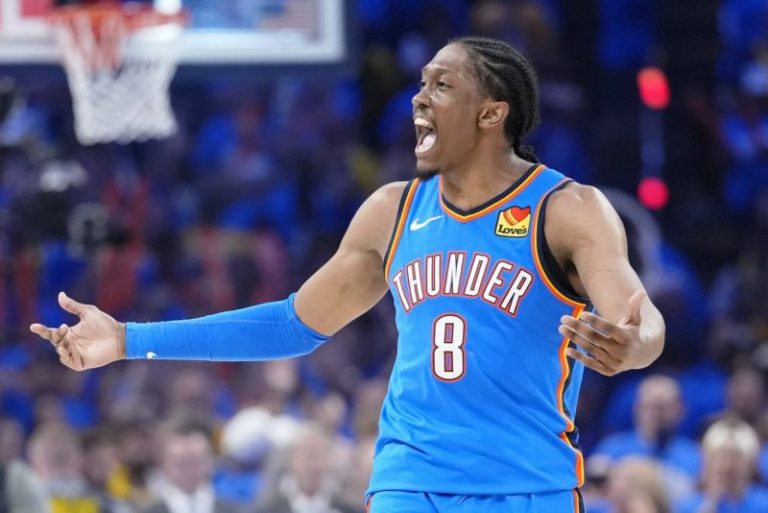
Continuing their busy offseason, the NBA champions and guard Jalen Williams agreed to a five-year maximum rookie contract extension that could reach $287 million. The extension kicks in at the start of the 2026-27 season.

The 24-year-old Williams averaged 21.6 points, 5.3 rebounds, and 5.1 assists this season, earning third-team All-NBA and second-team All-Defensive honors, and played with a torn ligament in his wrist during the last three months of the season, including the team’s seven-game NBA Finals triumph over the Indiana Pacers.

The Thunder’s recent spending spree includes center Chet Holmgren, who signed a five-year extension, fully guaranteed for $239 million, which could have a total value of $250 million and keeps him with the franchise through the 2030-31 season.

The cornerstone of the franchise, guard and NBA MVP Shai Gilgeous-Alexander to a four-year, $285 million contract extension, with an annual value of $71 million, earlier this month.

With the spending spree, Oklahoma City is approaching nearly $250 million in payroll starting in the 2026-27 season, putting them past the first and second apron, which could result in penalties for exceeding the salary cap.

This post appeared first on USA TODAY

After days and weeks of intense speculation, the NCAA men’s and women’s basketball tournaments won’t be expanding — at least not quite yet.

In a statement released on July 10, NCAA senior vice president of basketball Dan Gavitt said that no decision has been made on tournament expansion after it was “discussed at length” this week during meetings for the NCAA Division I men’s and women’s basketball committees.

Gavitt added that expanding the fields to 72 or 76 teams, or sticking with the current 68-team model, remain “viable outcomes” in advance of either the 2026 or 2027 tournaments.

The NCAA men’s basketball tournament last expanded in 2011, when the advent of the First Four stretched the field from 65 to 68 teams. The move had an immediate impact, with VCU advancing all the way to the Final Four after it had been one of the last teams selected for the tournament. The NCAA women’s tournament remained at 64 teams until 2022, when it also made the jump to 68 teams.

Whether it goes to 72 or 76 teams — ESPN reported last month that the latter is the more likely option — it would be the largest increase in tournament teams since 1985, when it went from a 53-team event to a 64-team one.

The discussion around tournament expansion has intensified this year. While speaking with reporters at a Big 12 meeting in May, NCAA president Charlie Baker said the NCAA had been having ‘good conversation’ with its media partners about the possibility of increasing the number of teams in the field.

‘Our goal here is to try to sort of get to either yes or no sometime in the next few months because there’s a lot of logistical work that would be associated with doing this,” Baker said at the time. “If we were to go down this road, you just think about the opening weekends, who has to travel the longest, it gets complicated.’

Though tournament expansion has support from many administrators and coaches — and stands to increase the value of the NCAA’s media-rights deal for the events — it has been a topic of widespread and intense criticism from fans.

Dan Gavitt statement on NCAA tournament expansion

Here’s Gavitt’s statement in full:

“The NCAA Division I Men’s and Women’s Basketball Committees met this week, with the men’s meeting taking place in Savannah and the women’s meeting in Philadelphia. The topic of expanding the field for each championship was discussed at length but no decision or recommendation was made. The still viable outcomes include the tournaments remaining at 68 teams or expanding the fields to either 72 or 76 teams in advance of the 2026 or 2027 championships.”

NCAA tournament expansion history

Though it has been nearly 40 years since there was significant NCAA men’s basketball tournament expansion, the event has grown considerably over the course of its existence.

What began as an eight-team competition in 1939 doubled to 16 teams in 1951. By 1975, it had doubled again, all the way up to 32 teams. It increased to 40 in 1979 — the year that Magic Johnson and Larry Bird famously faced off in Michigan State’s win over Indiana State in the national championship game — and again grew by eight teams in 1980, up to 48. After getting to 53 teams, it became a 64-team tournament in 1985 and remained at that number until 2001, when the formation of the Mountain West created the need for one more automatic bid.

The final round of expansion came in 2011, when three more at-large bids were added to the tournament, making it a 68-team event that included the First Four, a group of four play-in games.

Here’s a look at the history of NCAA tournament expansion:

1951: expands from eight to 16 teams
1953: grows from 16 to 22 teams
1975: expands to 32 teams
1979: grows from 32 to 40 teams
1980: expands from 40 to 48 teams
1983: goes from 48 to 52 teams
1985: expands to 64 teams
2001: adds one team, expanding to 65
2011: First Four implemented, growing field to 68

This post appeared first on USA TODAY

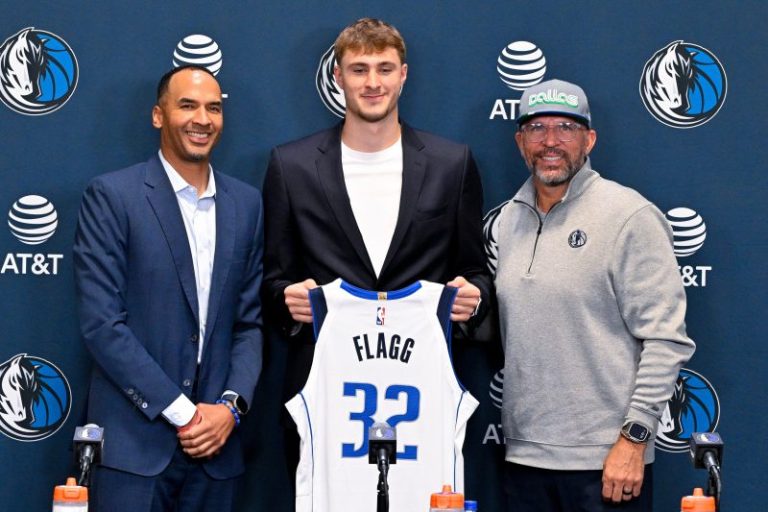
Cooper Flagg is making his debut in a Dallas Mavericks uniform as the team begins NBA Summer League play against the Los Angeles Lakers in Las Vegas.

Flagg was the No. 1 overall pick by the Mavericks on June 25.

All eyes will be on Flagg, especially for fans of the franchise, hoping he is the answer to their future success after the team traded away Luca Doncic to the Lakers last season.

Flagg joins the NBA after spending just one season at Duke. As a freshman, Flagg started all 37 games that he played in and averaged 19.2 points, 7.5 rebounds and 4.2 assists in 30 minutes per game.

He won the Wooden Award and the Naismith Award.

Here’s a breakdown of Flagg’s Thursday night performance:

Cooper Flagg stats tonight vs. Lakers

Stats through first quarter

Points: 6
FG: 3-for-9
Rebounds: 1
Assists: 0
Steals: 1
Blocks: 0
Turnovers: 0
Fouls: 2
Minutes: 9:23

This post appeared first on USA TODAY

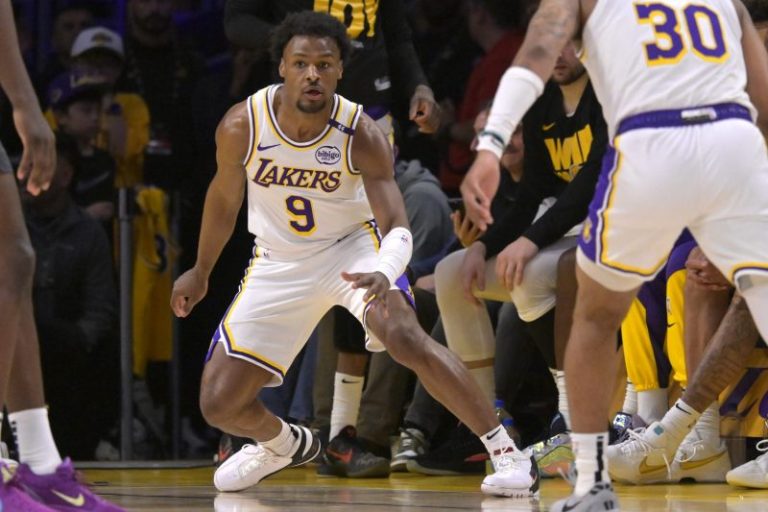
Bronny James is back for his second year with the Los Angeles Lakers and is competing in the NBA’s Summer League.

James is coming off an underwhelming performance in the Lakers’ 89-88 victory against the San Antonio Spurs during the California Classic on Tuesday. He had two points, two steals, a rebound and an assist. He shot 1-for-5 from the field and 0-for-2 from the 3-point line in 15 minutes of play.

All eyes will be on James and the Lakers, who will take on the Dallas Mavericks in Las Vegas on Thursday night.

Here’s a breakdown of James’ latest performance:

Bronny James stats tonight vs. Mavericks

Stats through first quarter

Points: 5
FG: 2-for-2
Rebounds: 1
Assists: 1
Steals: 0
Blocks: 0
Turnovers: 0
Fouls: 0
Minutes: 4:41

This post appeared first on USA TODAY

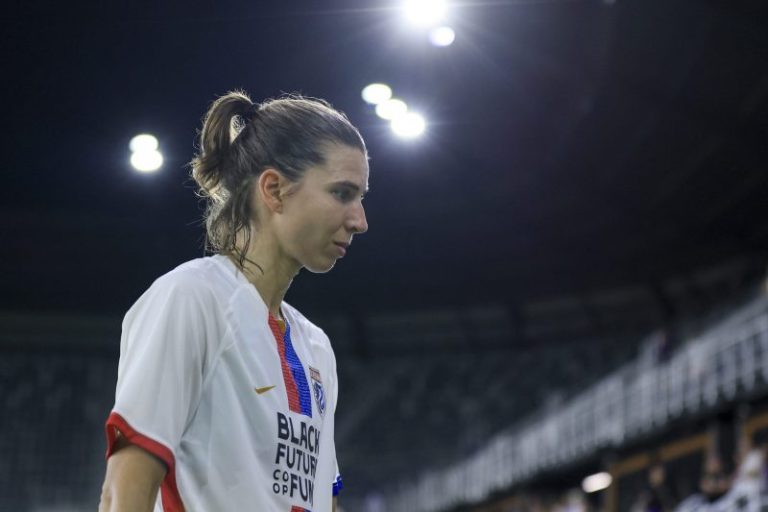
United States women’s national team legend and two-time World Cup and Olympic gold medalist, Tobin Heath, has announced her retirement from professional soccer on her podcast, ‘The RE-CAP Show,’ at the age of 37.

Heath’s decision to retire comes after a series of setbacks, including a knee injury that required multiple surgeries, keeping her out of play since 2022. During her time with the USWNT, Heath made a significant impact, scoring 36 goals and recording 42 assists in 181 appearances for the U.S. since 2008. She was part of the USWNT World Cup teams in 2015 and 2019, and she scored the final goal against Japan in the final match of the 2015 tournament.

In addition to her achievements at the national level, Heath spent some time in France playing for Paris Saint-Germain before returning to the Portland Thorns, where she won two NWSL championships. She then moved to the FA Women’s Super League, playing for Manchester United and Arsenal, until an injury sidelined her. After recovering, she returned to the NWSL and signed with OL Reign, but unfortunately, she faced another season-ending knee injury after playing only a few matches.

Tobin Heath’s life away from soccer

Since Heath has been rehabilitating her left knee, she started a podcast with her former USWNT teammate and current partner, Christen Press, titled ‘The RE-CAP Show.’ This podcast offers an honest, unfiltered, and humorous perspective on global soccer and women’s sports.

Additionally, Heath is the only woman in FIFA’s technical study group, which was formed in preparation for this summer’s Men’s Club World Cup tournament.

This post appeared first on USA TODAY

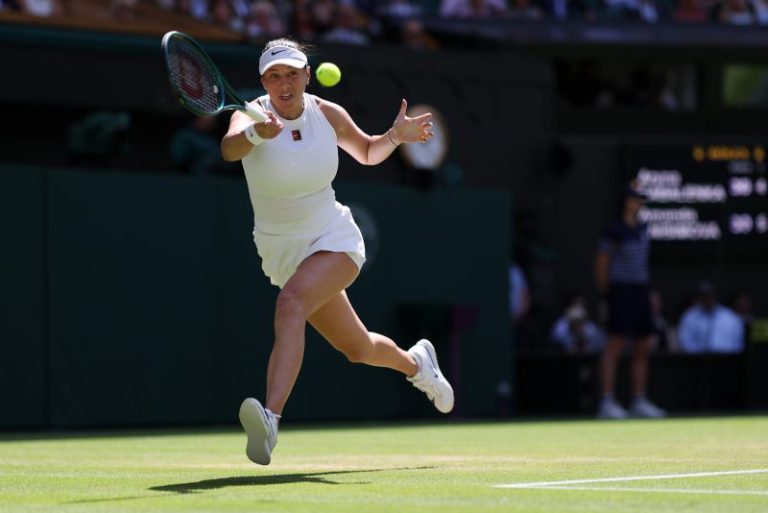
World No. 12 Amanda Anisimova upset top-seeded Aryna Sabalenka 6-4, 4-6, 6-4 in the Wimbledon women’s singles semifinals and will head to her first Grand Slam final.

The match was delayed twice in the first set because of Centre Court fans not feeling well, but both players endured the heat in a match that took two hours and 37 minutes.

Anisimova, a 23-year-old American, will play the winner of the other semifinal between No. 4 Iga Swiatek and No. 35 Belinda Bencic in the final on Saturday. The last time an American woman won Wimbledon was when Serena Williams emerged victorious in 2016.

“This doesn’t feel real right now,” Anisimova said after the match. “I don’t know how I pulled it out.”

The loss by Sabalenka denied her a spot in a third straight Grand Slam final and, for the third straight time, she has been ousted by an American in a Grand Slam this year. She lost to Coco Gauff in the French Open final and to Madison Keys in the Australian Open final. Sabalenka was looking to become the first woman to reach four straight Grand Slam finals since Serena Williams a decade ago.

Anisimova, the last remaining American female in the draw, was broken for the first time in the match after being up 30-love during the seventh game of the second set, giving Sabalenka a 4-3 advantage.

In the first game of the third set, Anisimova was broken again, and broke back in the next game and then charged to win the next three games to take control of the match.

With the victory, Anisimova will at least surge to a career-high No. 7 in the next WTA rankings, while Sabalenka, despite the loss, will hold on to the No. 1 spot for the 39th straight week.

Before this year’s Wimbledon, Anisimova’s best performance in a Grand Slam tournament was reaching the semifinals of the French Open in 2019 at age 17 after upsetting defending champion Simona Halep.

This post appeared first on USA TODAY

The Trump administration repeatedly has assigned additional job roles to Cabinet members and other officials amid government shake-ups as the president solidifies his agenda for the coming years, Fox News Digital found. 

Secretary of Transportation Sean Duffy was the latest Trump official assigned an additional role Wednesday. The Transportation chief and Trump ally now also serves as the administration’s acting NASA administrator after the president pulled a former nominee’s name from consideration to lead NASA. 

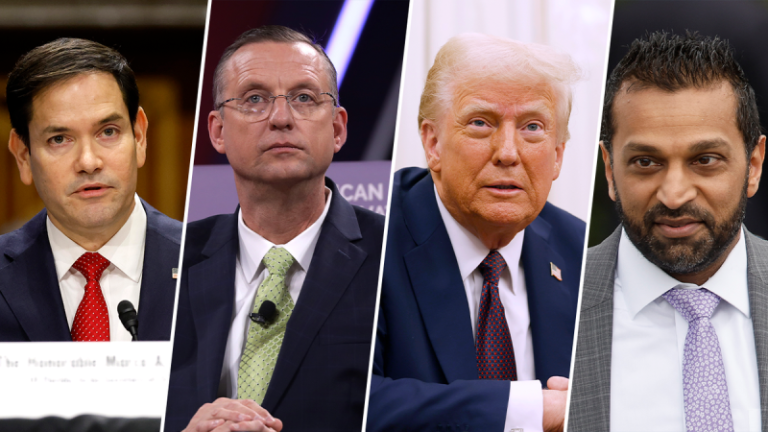
Duffy, however, is not alone in taking on multiple roles within Trump’s second administration. Fox News Digital looked back on the various Trump Cabinet members and officials wearing multiple hats as the president works to realign the federal government with his ‘America First’ policies. 

Sean Duffy 

Duffy, a former Republican congressman from Wisconsin, was tapped to oversee the Department of Transportation and was confirmed by the Senate Jan. 28. Since his confirmation, Duffy has juggled a handful of crises related to tragic plane crashes, including the Potomac River midair collision Jan. 29 and air traffic control issues that plagued New Jersey’s Liberty International Airport earlier in 2025. 

Trump posted to Truth Social Wednesday evening that Duffy would also serve as interim chief of NASA. 

‘I am pleased to announce that I am directing our GREAT Secretary of Transportation, Sean Duffy, to be Interim Administrator of NASA,’ Trump wrote in his announcement. 

‘Sean is doing a TREMENDOUS job in handling our Country’s Transportation Affairs, including creating a state-of-the-art Air Traffic Control systems, while at the same time rebuilding our roads and bridges, making them efficient, and beautiful, again. He will be a fantastic leader of the ever more important Space Agency, even if only for a short period of time. Congratulations, and thank you, Sean!’

Duffy replaced Janet Petro, who has served as acting NASA administrator since Trump’s inauguration. The president had previously nominated an Elon Musk ally named Jared Isaacman to lead NASA but pulled his nomination in June as Trump’s and Musk’s relationship hit the rocks over the ‘big, beautiful bill.’

‘Honored to accept this mission. Time to take over space. Let’s launch,’ Duffy posted to X of the new role. 

Marco Rubio 

Rubio and the Trump administration came under fire from Democrats for the secretary of state holding multiple high-profile roles in the second Trump administration, including Democrats sounding off on the national security council shake-up on Sunday news shows. 

‘There’s no way he can do that and do it well, especially since there’s such incompetence over at DOD with Pete Hegseth being secretary of defense and just the hollowing out of the top leadership,’ Illinois Democratic Sen. Tammy Duckworth told CBS’ ‘Face the Nation.’ ‘There’s no way he can carry all that entire load on his own.’

‘I don’t know how anybody could do these two big jobs,’ Democratic Virginia Sen. Mark Warner said on CNN’s ‘State of the Union.’

Rubio’s roles in the administration include leading the State Department, serving as acting archivist of the United States after Trump ousted a Biden-era appointee, serving as acting administrator of the U.S. Agency for International Development as the administration who works to dissolve the independent agency by September and taking the helm as the interim national security advisor. Rubio’s role overseeing USAID concluded at the start of July when the State Department officially absorbed the agency. 

When asked about the trend of Trump officials wearing multiple work hats in May, the White House reflected in a comment to Fox News Digital on former President Joe Biden’s ‘disaster of a Cabinet.’ 

‘Democrats cheered on Joe Biden’s disaster of a Cabinet as it launched the botched Afghanistan withdrawal, opened the southern border to migrant criminals, weaponized the justice system against political opponents and more,’ White House spokesperson Anna Kelly told Fox News Digital in May. ‘President Trump has filled his administration with many qualified, talented individuals he trusts to manage many responsibilities.’ 

The Trump administration repeatedly has brushed off concerns over Rubio holding multiple roles, most notably juggling both his State Department leadership and serving as acting national security advisor. Similarly, former President Richard Nixon in 1973 named National Security Advisor Henry Kissinger to simultaneously serve as secretary of state. 

‘You need a team player who is very honest with the president and the senior team, not someone trying to build an empire or wield a knife or drive their own agenda,’ an administration official told Politico. ‘He is singularly focused on delivering the president’s agenda.’ 

Despite Democratic rhetoric that Rubio was taking on too many roles, the former Florida senator helped oversee successful U.S. strikes on Iran in June, which destroyed a trio of nuclear sites and decimated the country’s efforts to advance its nuclear program. 

Kash Patel

FBI Director Kash Patel, who railed against the ‘deep state’ and vowed to strip corruption from the federal law enforcement agency ahead of his confirmation, was briefly charged with overseeing the Bureau of Alcohol, Tobacco, Firearms and Explosives (ATF) in February after the Biden-era director resigned in January. 

Patel was later replaced by Secretary of the Army Daniel Driscoll as acting ATF director in a job change that was reported publicly in April. 

‘Director Kash Patel was briefly designated ATF director while awaiting Senate confirmations, a standard, short-term move. Dozens of similar re-designations have occurred across the federal government,’ the White House told Reuters in April. ‘Director Patel is now excelling in his role at the FBI and delivering outstanding results.’

Daniel Driscoll 

Driscoll was sworn in as the 26th secretary of the Army in February. The secretary of the army is a senior-level civilian official charged with overseeing the management of the Army and also acts as an advisor to the secretary of defense in matters related to the Army. 

It was reported in April that Driscoll was named acting ATF director, replacing Patel in that role. 

‘Mr. Driscoll is responsible for the oversight of the agency’s mission to protect communities from violent criminals, criminal organizations, and the illegal trafficking of firearms, explosives, and contraband,’ his ATF biography states. ‘Under his leadership, the ATF works to enforce federal laws, ensure public safety, and provide critical support in the investigation of firearms-related crimes and domestic and international criminal enterprises,’

Ahead of Trump taking office, Republican representatives Eric Burlison of Missouri and Lauren Boebert of Colorado introduced legislation to abolish the ATF, saying the agency has worked to strip Second Amendment rights from U.S. citizens. 

The ATF has been tasked with assisting the Department of Homeland Security in its deportation efforts under the Trump administration. 

Doug Collins 

Former Georgia Republican Rep. Doug Collins was sworn in as the Trump administration’s secretary of Veterans Affairs in February, a Cabinet-level position tasked with overseeing the department and its mission of providing health, education and financial benefits to military veterans. 

Days after his confirmation as VA secretary, Trump tapped Collins to temporarily lead two oversight agencies, the Office of Government Ethics and the Office of Special Counsel. 

The Office of Government Ethics is charged with overseeing the executive branch’s ethics program, including setting ethics standards for the government and monitoring ethics compliance across federal agencies and departments. 

The Office of Special Counsel is charged with overseeing and protecting the federal government’s merit system, most notably ensuring federal whistleblowers don’t face retaliation for sounding the alarm on an issue they’ve experienced. The office also has an established secure channel to allow federal employees to blow the whistle on alleged wrongdoing. 

The Office of Special Counsel also enforces the Hatch Act, which bans executive branch staffers, except the president and vice president, from engaging in certain forms of political activity. 

Jamieson Greer 

Trump’s trade representative, Jamieson Greer, has also been tapped for multiple roles within the administration, in addition to helping lead the administration’s tariff negotiations to bring parity to the chronic U.S. trade deficit with other nations. 

Greer took on Collins’ roles as acting director of the Office of Government Ethics and as acting special counsel of the Office of Special Counsel April 1. 

Trump nominated conservative attorney Paul Ingrassia to lead the Office of Special Counsel in May. 

Russell Vought 

Trump named his former director of the Office of Management and Budget under his first administration, Russell Vought, to the same role in his second administration. Vought was confirmed as the federal government’s budget chief in February. 

Days later, Vought was also named the acting director of the Consumer Financial Protection Bureau (CFPB).  

The CFPB is an independent government agency charged with protecting consumers from unfair financial practices in the private sector. It was created in 2010 under the Obama administration after the financial crash in 2008. Democratic Massachusetts Sen. Elizabeth Warren originally proposed and advocated for the creation of the agency.

The CFPB came under fierce investigation from the Department of Government Efficiency in February, with mass terminations rocking the agency before the reduction in force initiative was tied up in court. 

Ric Grenell 

President Donald Trump’s former ambassador to Germany and acting director of national intelligence under his first term, a pair of roles held at separate times in the first administration, currently serves as president of the Kennedy Center and special presidential envoy for special missions of the United States. 

The John F. Kennedy Center for the Performing Arts serves as the national cultural center of the U.S. Trump notably serves as the center’s chair of the board, and Grenell said the center will see a ‘golden age’ of the arts during Trump’s second administration through productions and concerts that Americans actually want to see after years of the performing arts center running in the red. 

Trump named Grenell as his special presidential envoy for special missions to the United States in December 2024 before his inauguration, saying Grenell will ‘work in some of the hottest spots around the world, including Venezuela and North Korea.’

In this role, Grenell helped lead the administration through its response to the wildfires that tore through Southern California in the last days of the Biden administration through the beginning days of the Trump administration. 

Fox News Digital’s Jasmine Baehr contributed to this report. 

This post appeared first on FOX NEWS

A bipartisan group of lawmakers from the U.S. House of Representatives announced on Thursday, July 10, that they have introduced a bill that would establish a set of national rules for college sports.

The announcement said that the bill is backed by leaders of three House committees, but it follows the basic contours of a discussion draft circulated in June by Reps. Gus Bilirakis, R-Fla., and Brett Guthrie, R-Ky.

Guthrie chairs the Energy and Commerce committee. Bilirakis chairs that panel’s Commerce, Manufacturing, and Trade subcommittee. In a show of Bilirakis’ and Guthrie’s desire to get the bill moving in the Republican-controlled House, Bilrakis’ subcommittee will hold a markup hearing on the measure on Tuesday, July 15, said Matt VanHyfte, the communications director for the full committee.

Dubbed the SCORE Act (Student Compensation And Opportunity Through Rights and Endorsements), the bill includes language that specifically would allow the NCAA, and potentially the new Collegiate Sports Commission, to make operational rules affecting schools and athletes in areas that have come into legal dispute in recent years and in areas that the NCAA wants to shield from future legal dispute.

The Commission, and some of those rules originate from the recent settlement of three athlete-compensation antitrust cases against the NCAA and the Power Five conferences. For example, the bill would put into law the fair-market-value assessment of athletes’ name-image-and-likeness (NIL) deals with entities other than schools provided under the settlement and an annual per-school limit on NIL payments that come directly from the schools. In addition, schools would be allowed to prevent athletes from having NIL deals that conflict with school sponsorship deals.

To back up that authority, the bill has specific language designed to shield the NCAA, the Commission, conferences and schools from antitrust and state-court lawsuits that could come from rules. It states that the adoption and/or enforcement of any rule established in concert with the bill “shall be treated as lawful under the antitrust laws and any similar State law, rule, regulation, requirement, standard, or other provision having the force and effect of law.”

This bill specifically would let the NCAA again set ‘parameters for the manner in which a student athlete may transfer’ as long as athletes get at least one chance to transfer and be immediately eligible to play. It also would let the NCAA set ‘rules with respect to the length of time a student athlete is eligible to compete’. Both of these issues have been the subject of numerous court cases in recent years.

The bill would prevent college athletes from being employees of their schools, conferences or an athletic association. The employment issue is the subject of an ongoing lawsuit in a federal district court in Pennsylvania.

The announcement of the bill included comments from two Democrats: Reps. Janelle Bynum (Ore.) and Shomari C. Figures (Ala.).

It also included a comment attributed to Guthrie; Rep. Tim Walberg (R-Mich), who chairs the Education and Workforce Committee; and Rep. Jim Jordan (R-Ohio), who chairs the Judiciary Committee.

In addition to putting into federal law colleges athletes’ ability to make money from their name, image and likeness, the bill includes a range of other provisions. Several of those have been added to the measure since Bilirakis and Guthrie circulated their discussion draft, and they appear aimed at winning additional support from Democrats. During a hearing of the Bilirakis-chaired subcommittee on June 10, the day the discussion draft was unveiled, numerous Democrats blasted the proposal as written at that point. Among the most strident was Rep. Lori Trahan (Mass.), who has had a longstanding interest in college-sports issues and has focused on athlete welfare.

Among the new provisions:

Any school with a coach making more than $250,000 in base salary annually would be required to establish no later than July 1, 2027 – and then maintain – at least 16 varsity teams. This covers nearly every NCAA Division I school and would be aimed at preventing schools from dropping teams as a result of facing costs associated with paying athletes for their NIL, although over the past two decades, according to NCAA data, Division I schools have sponsored, on average, 19 teams.

Schools would be required to make public information about student athletic fees and how those funds are used. Schools with media rights revenues of at least $50 million in their most recently completed fiscal year would not be allowed to use student-fee money “to support intercollegiate athletic programs.”

In practice, this would apply to top-revenue schools in the Power Four conferences. And some of those schools’ athletics departments annually report significant operating revenue from such fees. Just within the Big Ten and Southeastern conferences, Maryland, Rutgers and Auburn each reported receiving at least $7 million in student athletic fees in fiscal 2024, acccording to data colledted by USA TODAY Sports in conjunction with the Knight-Newhouse College Athletics Database at Syracuse University.

But schools could get around this by replacing student-fee money with more money from their general funds.

As in the discussion draft, the bill has language that would require most Division I schools to provide a series of health and educational benefits for athletes that are currently called for under NCAA and some conferences’ rules, but do not have the force of federal law.

Disagreements about the types of benefits for athletes that would be required under a federal law have stalled college-sports legislative efforts over the past few years in the Senate by Sens. Ted Cruz, R-Texas, Cory Booker, D-N.J. and Richard Blumenthal, D-Conn. Cruz now chairs the Senate Commerce Committee, and he has publicly expressed his interest in getting a bill put together this year that can pass in that chamber.                                                                                                                        

This post appeared first on USA TODAY

Atlanta United president and CEO Garth Lagerwey, one of MLS’s most successful executives, is stepping away from his duties after being diagnosed with cancer.

Atlanta announced the news Thursday, referring to Lagerwey’s leave of absence as ‘indefinite’ and noting that doctors gave the 52-year-old an ‘encouraging’ prognosis for a full recovery.

‘I have made the difficult decision to step back from Atlanta United to tackle my cancer treatment head-on,’ said Lagerwey in a team statement. ‘I would like to express my profound gratitude to Arthur Blank for not only his support, but by doing everything in his power to make this process as painless as possible for me and my family. I could not possibly work for a better organization than [AMB Sports and Entertainment].’

‘On behalf of myself, Atlanta United, and the entire Blank Family of Businesses, we stand fully behind Garth and his family as they navigate this difficult challenge,’ added Atlanta United owner Arthur Blank. ‘Garth’s resilience and optimism are part of what makes him such an exceptional leader, and I know he’ll carry those strengths in the days ahead.

‘I have complete confidence in our leadership team and players as we navigate this transition together. We all look forward to welcoming Garth back in the future and will be praying for him and his family’s continued strength, and a smooth recovery.’

Atlanta announced that in Lagerwey’s absence, Chief Soccer Officer Chris Henderson, Chief Business Officer Skate Noftsinger and Senior Vice President of Strategy Dimitrios Efstathiou will run their respective departments on a day-to-day basis, with Lagerwey and CEO of AMB Sports and Entertainment Rich McKay receiving regular reports.

Lagerwey’s statement expressed ‘full confidence’ in the club’s leadership to thrive during his absence, and concluded with a simple declaration: ‘I shall return.’

Garth Lagerwey: Who is Atlanta United executive?

Lagerwey began his career in MLS as a player in the 1990s, playing for the Kansas City Wiz, Dallas Burn and the now-defunct Miami Fusion. Upon retiring in 2000, Lagerwey got a law degree from Georgetown, but stayed attached to soccer by working as a color commentator for D.C. United and New England Revolution radio and television broadcasts.

However, his rise to prominence in MLS came as an executive. Real Salt Lake named Lagerwey its general manager in 2007, and by the end of its third season the club was lifting MLS Cup. Despite running one of the league’s smallest-market clubs, Lagerwey’s cap management and talent identification kept RSL among the league’s serious contenders. A focus on the long-term also saw the club start an academy in Arizona, and to this day RSL is one of the better MLS teams in terms of developing youngsters into pro-ready players.

Lagerwey left RSL in 2014 for the Seattle Sounders, and his success continued. Seattle won five major trophies during Lagerwey’s tenure, including the 2022 Concacaf Champions Cup (making the Sounders the first MLS club to win that competition in 22 years) and two MLS Cup wins in 2016 and 2019. The Sounders were a model of consistency during Lagerwey’s nine-season run, finishing in first or second place in the Western Conference six times, and only finishing outside of the top 10 in MLS’s overall standings once.

One week after Sounders season-ticket holders voted to retain him in 2022 — a formal process specific to Seattle where the team GM could lose their job should enough fans deliver a vote of no confidence — Atlanta United announced that Lagerwey was its new president and CEO. After missing the playoffs for just the second time ever in 2022, the Five Stripes returned to the postseason in the 2023 and 2024 campaigns, stunning Inter Miami in a major first-round upset last year.

The biggest stories, every morning. Stay up-to-date on all the key sports developments by subscribing to USA TODAY Sports’ newsletter.

This post appeared first on USA TODAY

Minnesota Vikings linebacker Dallas Turner was the victim of a bank fraud scheme that cost him $240,000, according to a police investigation.

A search warrant obtained by USA TODAY from Eagan Police Department details that Turner had received a phone call on Feb. 19 from ‘an individual impersonating a JPMorgan Chase banker. The caller claimed someone was attempting to impersonate [Turner] at a Chase Bank branch in Arizona and presented two copies of ID to execute a wire transfer.’

Turner was advised by the caller to transfer the money into two separate business accounts to prevent the theft, which he did later that afternoon at two different Chase Bank branches.

Records show that the Vikings linebacker transferred $120,000 to ‘Island Vibes Food Truck LLC’ at a Chase in Eagan, Minnesota and another $120,000 to ‘CNL FL LLC’ from a location in West St. Paul.

Turner began to suspect he was a victim of a scam after speaking with a family member.

Police say they have identified several suspects and are moving towards bringing charges. As for Turner’s money, they have recovered $2,457.17, per the warrant.

Investigators have also questioned if JPMorgan Chase has been able to determine how the fraudsters were able to obtain the necessary sensitive information to pull off such an act. Police also questioned if any bank employees played a role in the scheme.

There has been no comment from the Vikings, Turner or his attorney at this time.

Turner is entering his second season in the NFL after posting three sacks and an interception in 16 games during his rookie year. Taken with the 17th pick in the 2024 NFL Draft, Turner inked a four-year, $15.7 million deal that is fully guaranteed with Minnesota.

The 22-year-old is hoping to play a bigger role for the Vikings in 2025 after spending the 2024 season behind Andrew Van Ginkel and Jonathan Greenard on the depth chart.

Defensive coordinator Brian Flores previously called it a learning year for Turner, who has now learned some lessons on and off the field.

This post appeared first on USA TODAY