Archive

2025

Browsing

Thirty years is a long time for anything to evolve, and Major League Soccer has been on a particularly long, sometimes fraught journey in its first three decades.

It’s hard to think about a league that largely lives on a streaming platform existing before home internet was even remotely common, but MLS’s path to this point has taken plenty of turns. A league that started in 1996 with 10 teams, tie-breaking 35-yard shootouts, and some obnoxiously American team names now has 30 franchises largely playing in purpose-built stadiums, trying — sometimes too hard — to offer a simulacrum of elite European norms in the sport.

The standard of play has improved dramatically. It’s not so much the top-level stars — the first wave of MLS’s star signings were also global names with major accomplishments at the top of the sport — but rather the rank-and-file. The difference between what constituted an average MLS role player in the old days and today may be the single biggest area of progress the league has made in these 30 seasons, and the league deserves a lot of credit on that front.

That said, it has in no way been an easy, steady trajectory toward greatness. FC Dallas owner Clark Hunt revealed in 2016 that at least in business terms, MLS flatlined for a couple of days. According to Hunt, his father Lamar rallied investors in 2001 to keep the league alive after an informal decision had been made to shut it down entirely. The party started with major investment, but owners weren’t willing to lay out for the same class of player once the stars that were so critical in the early days started to show their age.

Since then, MLS has improved in fits and starts. The introduction of the Designated Player rule in 2007 was entirely about getting David Beckham into the league, but teams across the league embraced the opening, provoking a step forward in terms of notoriety and quality of play. It seems like an obvious move in retrospect, but it must be said that MLS viewed allowing for a cap-exempt star signing as a risk at the time. With runaway player spending blamed for the collapse of the old NASL in the early 1980s, the DP rule was introduced with a requirement that the league would have to decide in 2009 whether to retain it or return to leaner spending plans.

Further jumps came with successful expansion moves. Between 2007-11, Toronto FC, the Seattle Sounders, and the Portland Timbers all came with different lessons on how to get new teams off the ground successfully, on and off the field. Those clubs brought higher standards and ambitions in terms of player moves and atmosphere at a time when it was unclear what the next steps were. Atlanta United’s entrance in 2017 — with big, diverse crowds supporting a thrilling team built around young South American stars who could have chosen more globally respected leagues — was a similar, needed jolt.

Messi signing spawns Apple TV era

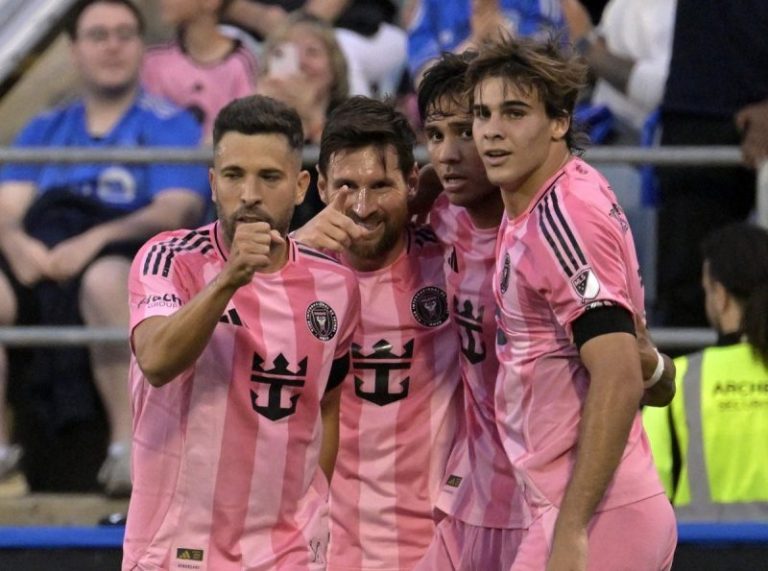
Messi’s contract involves a profit-sharing pact with Apple TV, a key innovation that brought the iconic Argentine to the U.S. just as the Saudi Arabian government dumped hundreds of millions into its own domestic league, leading to Cristiano Ronaldo and a raft of established starters in top European leagues heading there instead. It’s a similar innovation to what got Beckham — now an Inter Miami owner, a privilege he secured at what ended up being a very steep discount when he signed his LA Galaxy contract a generation ago — into MLS. And all things considered, that flexibility has been a strength of MLS.

Messi and that massive deal with Apple are the easy talking points here, and there has been room to wonder just how happy the tech giants might be as the occasional MLS game aired on the Fox family of networks garner ratings that feel more or less unchanged from the old days (never mind that the only entity pulling late 1990s TV ratings these days is the NFL). However, two unrelated developments speak to league health on a day-to-day basis: club infrastructure and the massive expansion of the player pool.

The days when teams regularly play before a few thousand in a hulking concrete bowl designed for the NFL or college football are nearly completely gone. Soccer-specific stadiums built by MLS clubs mean more revenue for the league and its teams and a vastly improved experience for fans and players. Even Inter Miami’s temporary venue at Chase Stadium, which is essentially just old-school bleachers dressed to the nines that the Herons will play in until its permanent home at Miami Freedom Park opens next year, feels like a futuristic utopia compared to MLS’s humble beginnings.

For years, MLS lived in fear that expanding too rapidly would require too much money in the way of transfer fees to supplement a pool of players good enough to maintain or improve on-field standards. These days, the talking point is almost never brought up, as teams are developing their own players with academy systems of varying success. The Philadelphia Union, FC Dallas, and Real Salt Lake regularly churn out players ready to take on first-team minutes before they turn 23, and nearly every club operates an affiliate in MLS Next Pro, a fully professional league (think roughly Double-A in baseball’s farm system) created specifically to create better competition for young prospects.

The early signs are that this new rung on the ladder is an important one. The developmental improvements across MLS are being noticed at a higher level, as 14 players on U.S. men’s national team coach Mauricio Pochettino’s squad for the ongoing Gold Cup followed the intended path from MLS academy to pro contract. Even players who didn’t start as Under-14 prospects are benefitting: USMNT striker Patrick Agyemang was a first-round draft pick, but didn’t really earn serious looks at Charlotte FC until a prolific stint at the club’s affiliate

The history lesson is necessary to understand MLS’s current trajectory, as well as how the league will approach its next challenges. There has always been a tension between a need to innovate and the quest to shed MLS’s ‘plastic’ roots. It’s been confusing at times: how else can you explain so many MLS clubs choosing European-style names — an obviously inauthentic move for these obviously non-European teams — in an attempt to bootstrap their way to a sense of organic history?

MLS and the constant need to grow

Change is a constant in MLS, and there are big ones coming soon. The most well-known of these is a long-mooted change to the league calendar mirroring what is preferred in most of Europe. The oft-cited rationale for moving the start of the season from February to August involves getting deep in the weeds on the timing of transfer windows, with MLS’s current calendar essentially forcing its teams to buy when prices are higher in the winter and sell in the summer, when contenders should be gearing up for the playoffs rather than losing top players.

However, while those issues follow a defensible logic, the degree to which they matter is up for debate. Essentially half of MLS’s teams play in areas where a winter schedule (even with the plan likely to include a break in January) will be a hard sell for fans, and will make regular training sessions difficult without major infrastructure spending on indoor facilities.

However, over the next 30 years, scientists expect climate change to result in higher temperatures and more intense storms. While MLS has shied away from discussing this aspect of the calendar change — they’re not climate scientists, but they do know a thing or two about PR — the reality is that player and fan safety require more than simply hoping for pleasant conditions. The discussion of MLS’s calendar change may center on attracting better players to the league, but in the long term, the climate issue appears more relevant.

Another looming change concerns the league’s longtime commissioner, Don Garber. Garber has inarguably navigated the league to a stronger place, though his choices on behalf of the league’s owners have resulted in plenty of criticism over the years. Garber is mere weeks away from the 26th anniversary of his first day on the job, and while he signed a contract extension running through the 2027 season, the 67-year-old has more than once discussed the idea of stepping down. Perhaps the single best way to answer the thesis question of this piece would be to know the identity of Garber’s successor, but we might be waiting for a couple more years to know who that might be.

MLS has long relied on one revenue stream that might not last for much longer: expansion fees. 2025’s lone newcomer, San Diego FC, paid a reported $500 million fee just to exist as an MLS club, and by league rules that money is dispersed among the existing teams. However, San Diego is also the 30th team in MLS, and that’s almost unheard of anywhere else in the world. MLS and the Argentine Primera División are the lone examples of a country’s top league carrying that many teams, with large nations generally settling on a 20-team circuit.

There are only so many cities left that might be able to find investors who will match or exceed a half-billion-dollar cover charge to get into MLS. Of the 20 largest metropolitan areas in the U.S. without an MLS club to claim, only Phoenix, Detroit, and Tampa Bay are left, and all three have either had a team (the Tampa Bay Mutiny were folded as one of the measures the league used in 2001 to stay afloat) or have received expansion buzz. New York City and Los Angeles have two teams apiece, and there are no current plans to plant a second side in the next-largest metro areas (Chicago and Dallas-Fort Worth).

The method for MLS to replace that income isn’t clear. Increased participation in the global transfer market, where transfer fees can regularly reach the eight-figure range, is surely a part of that, but accounting departments are going to look for stable, planned sources of income.

The league’s sheer size is tied to another hot-button issue that drives so much discussion in American soccer: the concept of promotion and relegation. MLS functions like other major U.S. leagues, where even the most hapless, dismal season comes with no sporting consequence beyond embarrassment. In the substantial majority of leagues worldwide, the idea of being relegated to a lower division drives up standards, and the possibility of battling their way up the ranks regularly sees lower-tier teams invest, giving their fans the hope of a real shot at joining the best of the best.

MLS was initially founded without this source of instability for good reason: too many attempts at professional soccer had failed in the U.S., and convincing people to bankroll the project meant abandoning a tradition in the sport. However, it remains a popular concept, and the United Soccer League (which operates men’s leagues in three tiers, along with two women’s leagues) in March announced a broad outline for adopting ‘pro/rel’ after club owners voted in favor of doing so.

There are examples of a hybrid system, where a broader league system is closed, but within that teams can move up and down based on sporting merit. Japan, where the J.League came online only three years before MLS, has three tiers with promotion and relegation, and a licensing system in place that allows the league to ensure that teams can all clear benchmarks in terms of financial sustainability, infrastructure, and other categories.

With the league’s zeal for expansion (and/or the fees that come with it), there will come a point where MLS simply has too many teams to reasonably resemble any other soccer league, and teams can already go multiple years between matches against foes from outside their conference. Be it a perfect copy of the English pyramid, a model like Japan’s, or following the old baseball process that saw the American and National leagues only play against one another in the World Series, MLS will have to change its competitive structure if it continues to add teams.

There is also a question of ceiling. MLS’s media rights deal with Apple TV runs through to 2033, but though the price was right, there are fair criticisms that the league is less accessible than before (even with 34 nationally-televised games on Fox networks and weekly games that are free to stream).

Those critiques landed just as Messi arrived, and MLS will only get one shot at the dual-stage accelerant that is having the greatest player ever playing on these shores heading into the 2026 men’s World Cup, which will be hosted in the U.S, Mexico, and Canada. While the league has certainly grown in visibility thanks to Messi, those gains have not been particularly noticeable unless you know where to look.

If the World Cup — which in the face of the Trump administration’s position on migrants becomes a far more complicated event in terms of public perception, among many other topics — only offers a small boost as well, MLS could be looking at the kinds of slow, incremental growth that were seen before Beckham’s arrival marked the start of ‘MLS 2.0.’ This league has never looked particularly comfortable without an external source helping popularize soccer, and once FIFA’s traveling roadshow packs up next year, it’s not obvious where the next outside engine for progress will come from.

One potential solution could be a deeper partnership with Liga MX, the top domestic league in Mexico. The two circuits have long had an interest in going beyond sharing best practices, with the Leagues Cup (an ever-changing tournament that in 2025 will involve 18 MLS teams and the same number from Liga MX) the latest evidence of that. There is no quicker path to MLS leveling up in terms of audience than a merger of sorts with what is the most popular and ardently supported men’s league in the U.S., and Liga MX executives surely want more access to media markets in the world’s richest country.

This would be possibly MLS’s least orthodox innovation yet. Outside of the league’s three Canadian sides, a few Welsh teams playing in the English system, AS Monaco’s place in France’s Ligue 1, and a small handful of other examples, this sort of border-crossing doesn’t happen in soccer. FC Luch Vladivostok — located over 4,000 miles from Moscow, just about as far east as you can get in Russia — was much closer to Japan, South Korea, and China geographically, but they nevertheless played in Russia until folding in 2020.

However, both MLS and Liga MX are hugely ambitious and have no clear path to gain ground on the Premier League, Bundesliga, La Liga, and Europe’s other truly elite leagues. Joining forces might be that next jump in terms of gaining ground, rather than catching up inch by inch in the coming decades. No one has quite figured out whether it’s truly possible, but league executives on both sides of the Rio Grande have been thinking about the problem for some time now; don’t expect them to drop it anytime soon.

All of which is to say that MLS’s next 30 years are difficult to predict, precisely because the league operates with a different mentality than any other. There’s no real example to cite, and in any case, MLS hasn’t often followed the lead of its equivalents. Many of the domestic leagues worldwide that MLS has surpassed over the years stick to the normal path: find investment, seek traditional but slightly more lucrative media rights deals, and hopefully over time your teams will be able to sign or develop a higher caliber of player.

Things do shift: Serie A was the dominant spender in the 1990s, with stars like the original Ronaldo, Roberto Baggio, Gabriel Batistuta, and more spread across many different teams. Fast forward a couple of decades and Italy’s top flight trails the global behemoth that is the Premier League, as well as the top Spanish and German leagues. Economic changes and other factors accelerated this process compared to the sport’s norms, but it still took decades.

That’s just not fast enough for MLS’s liking, and the one guarantee is that the league will continue to think up new ideas in an effort to catch up to leagues that have a 70-year head start. When you think of it on that scale, MLS has done an admirable job making early gains, but the next 30 years are the hard part.
This post appeared first on USA TODAY

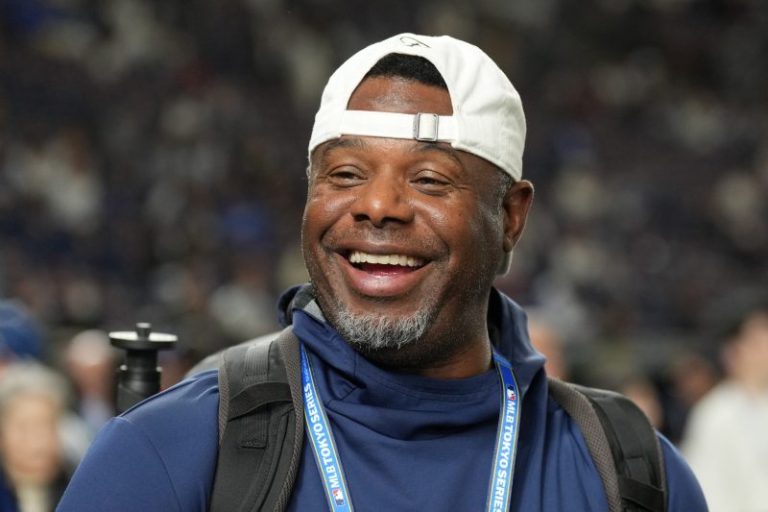
To Ken Griffey Jr., the picture – and the goal – is simple.

“If you look at what’s going on in baseball, (there are) a lot of kids of color who are not playing baseball even though they may love the game of baseball,” Griffey told USA TODAY Sports by phone. “They’re not getting the recognition that they would like to advance to the next level.”

That was the initial motivation to start the HBCU Swingman Classic, which brings together 50 Division I baseball players from Historically Black Colleges and Universities (HBCUs). Now in its third year, the “Swingman” – named after Griffey – is a chance for the athletes to perform on a bigger stage as Major League Baseball begins its All-Star Week celebrations at Truist Park, home of the Atlanta Braves, on Friday, July 11 (7 p.m. ET, MLB Network).

“For me, it’s just an opportunity to give some of these kids an opportunity to be seen,” said Griffey, who hit 630 career home runs and was inducted into the Baseball Hall of Fame in 2016.

Sixteen HBCUs will be represented in the game. There will be a flavor of Black baseball and Atlanta throughout the festivities. Brian Jordan will manage the “National League” squad, while fellow David Justice will lead the “American League” team. Martin Luther King III was scheduled to throw out the first pitch but can no longer attend, while Emily Haydel, the granddaughter of Hank Aaron, will be a sideline reporter on the broadcast.

But the Swingman goes beyond racial lines. Any player who attends a HBCU is eligible to play in the game.

“Because there are plenty of kids who are White and don’t have money and they go to HBCUs and they want to continue to play,” Griffey said. “Yes, you’re going to see a few more Black people playing, but it’s not about the color of your skin. It’s the school that you go to.”

With a more streamlined and tapped-in selection process thanks to expanding relationships with HBCU coaches, the talent pool at Swingman has only improved since its inception. Both MLB employees and MLB Players’ Association officials are part of the selection panel for players who “may have been overlooked.”

Three players from the event were selected in the draft after the inaugural 2023 edition and two players were taken last year.

Griffey thinks baseball has to take a page out of the pre-NIL college football recruiting manual that set up the championship programs such Nick Saban’s Alabama Crimson Tide or Dabo Swinney’s Clemson Tigers.

“I think the sad part is that the scouting department has gone away from trying to find these diamonds in the rough,” Griffey said.

Instead, scouts rely too much on data and other advanced metrics, in Griffey’s opinion. It comes down to manpower and placing the scouts with the proper mindset in the applicable areas. As a senior adviser to commissioner Rob Manfred, it’s a conversation Griffey is having in baseball’s most powerful rooms.

“It has been discussed and it’s getting to a point where it’s coming around,” he said. “It’s just going to take some time. Back when my dad played, people went everywhere. Now, if it’s not on a computer … they can’t understand talent unless they see it. I sat there and watched. That eye test. That hearing test. ‘What does it look like when it comes off the bat? What does it look like when he throws the ball?’”

But the Swingman isn’t about the eye test or advanced analytics. It’s about opportunity, and it’s why the game should be a staple as long as he has a voice in the league office.

“Our kids need to be seen,” Griffey said. “Because they don’t have the facilities where they can go in there and measure exit velo, spin rate. All these things cost money and they just don’t have that type of money.

“You give a kid an opportunity to be successful, and that’s all you ask for.”

This post appeared first on USA TODAY

Only one match remains in the 2025 FIFA Club World Cup, which left many memorable moments during the first edition of the tournament to feature 32 teams, while being played in the United States. 

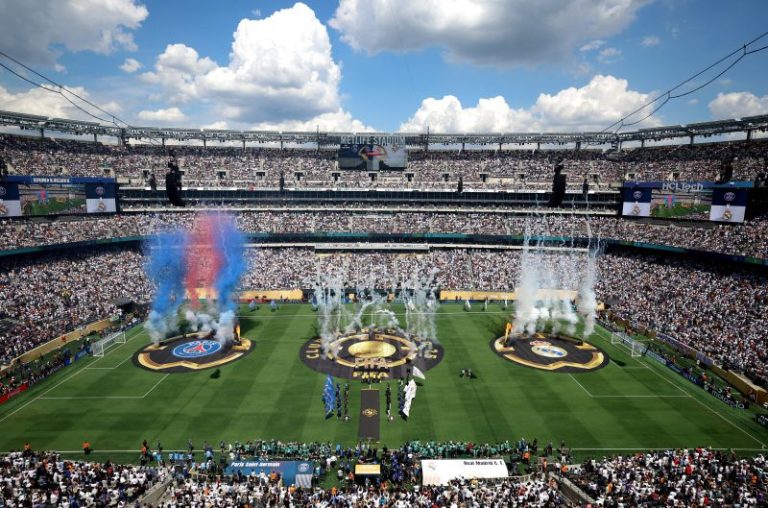
Champions League winners Paris Saint-Germain and English side Chelsea will play in the Club World Cup final on July 13 at MetLife Stadium. 

Before the final, let’s take a look at the 10 best games soccer fans got to enjoy during the Club World Cup. 

Spoiler alert: PSG, Real Madrid and Lionel Messi are featured in several of the following matchups. 

Here’s our Top 10 matches from the FIFA Club World Cup: 

Watch Club World Cup on DAZN

10. Inter Miami 2, Palmerias 2 (group stage) 

Lionel Messi didn’t score in this matchup, but Luis Suarez and Inter Miami celebrated wildly after taking a 2-0 lead against Brazilian side Palmerias, appearing on track to win their group in the Club World Cup – until they allowed two goals in the final 10 minutes to settle for a bittersweet draw. It’s also worth mentioning the eight-goal fiasco that ended in a 4-4 draw between FC Porto and Al Ahly in the same group, forgotten because Inter Miami and Palmerias advanced. 

9. Flamengo 3, Chelsea 1 (group stage)

One day after the biggest upset in the Club World Cup (mentioned here later), Flamengo delivered the second biggest upset of the tournament when they outclassed Chelsea during the group stage on June 20in Philadelphia. Pedro Neto opened the scoring for Chelsea, but Bruno Henrique (62′), Danilo (65′) and Wallace Yan (83’) delivered the shocking result in the second half. 

8. Fluminense 2, Inter Milan 0 (round of 16)

Germán Cano shocked early with a goal in the third minute, Hercules sealed the win three minutes into added time, and Fluminense shocked Inter Milan — the Champions League runner-up — in the second-biggest upset in the Round of 16. A Brazilian side toppled one of Europe’s best clubs, and the Fluminense players surely celebrated like they won the tournament. 

7. Real Madrid 3, Dortmund 2 (quarterfinals)

Kylian Mbappé scored his only goal in this Club World Cup with ideal timing to keep Real Madrid ahead in one of the most thrilling finishes of the tournament against Dortmund on July 5 in New Jersey.  Real Madrid had the match in hand as Gonzalo García (10’) and Fran García (20’) built the early lead they barely sustained. Mbappé scored(90’+4’) to answer a goal by Dortmund’s Maximilian Beier (90’+2’), and before Serhou Guirassy scored a penalty (90’+8’). Real Madrid goalkeeper Thibaut Courtois saved a shot by Dortmund’s Marcel Sabitzer in the closing seconds to secure the victory. 

6. Palmerias 1, Botafogo 0 (round of 16)

Brazilian rivals, added extra time, and a memorable game-winning goal. Paulinho’s score off the bench in the 100th minute helped Palmeiras reach the quarterfinals against Botafogo in thrilling fashion in Philadelphia on June 28. 

5. Inter Miami 2, FC Porto 1 (group stage)

Lionel Messi’s free-kick goal to propel Inter Miami past Portuguese side Porto was the only goal he scored in the tournament, but delivered another historic moment in his legendary career. Inter Miami became the first North American team to beat a European club in a major competition in the 2-1 victory in Atlanta on June 19. 

4. Botafogo 1, PSG 0 (group stage)

Down goes PSG! Brazilian side Botafogo delivered a shocker when Igor Jesus scored in the first half, and hung on to beat the best team in Europe during the group stage on June 19. PSG regained its form after the match, appearing unbeatable in the later stages of the Club World Cup, like they were during their Champions League run. Still, Botafogo’s victory will be remembered as the biggest upset during the 2025 tournament. 

3. Paris Saint-Germain 4, Inter Miami 0 (round of 16)

Lionel Messi faced his former club in PSG, roughly two years after leaving to join Inter Miami and MLS in one of the most enticing matchups of the tournament on June 29 in Atlanta. It didn’t take a rocket scientist to see why the reigning Champions League winners outclassed a MLS club.

2. PSG 4, Real Madrid 0 (semifinal)

PSG planted its flag even further as the best soccer club in the world with its dismantling of Real Madrid in the semifinals on July 9 in New Jersey. They made a surprising statement, shocking former star Kylian Mbappé and Real Madrid with three goals in the first 24 minutes to put them away early. 

 1. Al Hilal 4, Manchester City 3 (round of 16)

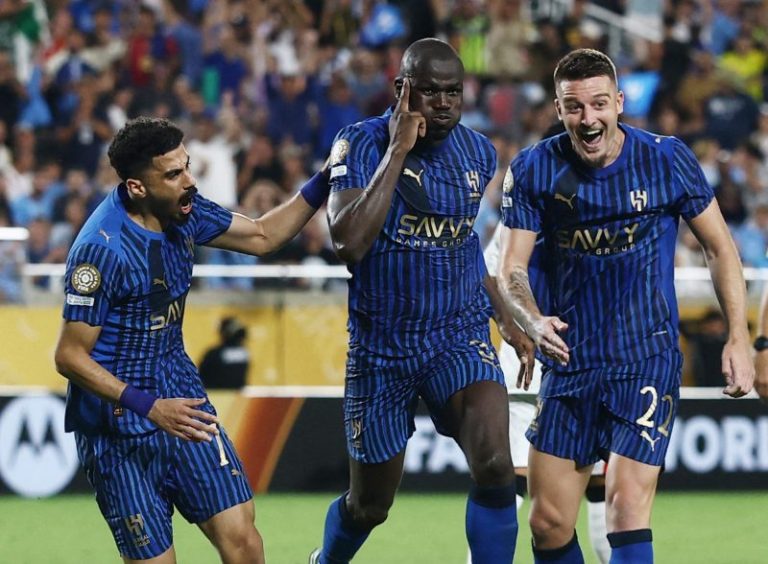
The most entertaining match in the Club World Cup is Al-Hilal’s 4-3 win in extra time against Manchester City on June 30 in Orlando. More than the seven goals, Al-Hilal’s Marcus Leonard delivered the coldest celebration by taking off his jersey, placing on the corner flag, and waving it around after the game winner. But even his celebration was upstaged by an Al-Hilal fan’s choke celebration that will be viral in soccer circles for years to come. 

This post appeared first on USA TODAY

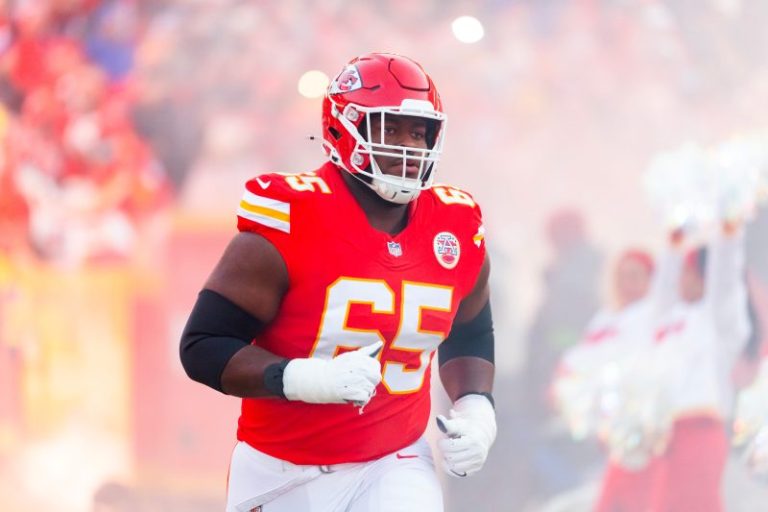
The Kansas City Chiefs made significant changes to their offensive line during the 2025 NFL offseason, but they wanted to make sure star guard Trey Smith remained with the team.

Kansas City slapped Smith with the franchise tag to avoid letting the two-time Super Bowl champion hit the open market as a free agent. As a result, Smith is set to play the 2025 season on a one-year, $23.4 million contract, making him the highest-paid guard in NFL history.

But will the Chiefs sign the 2024 Pro Bowler to a long-term extension? The two parties must agree to one before July 15 – the NFL’s annual deadline by which to agree to an extension with a franchise-tagged player. Otherwise, they may end up doing the same song and dance during the 2026 NFL offseason.

Despite this, Smith doesn’t seem overly worried about his future, as he expressed in an interview on FanDuel TV’s ‘Up and Adams’ Thursday.

‘I leave it to the hands of my agents,’ Smith said of any potential contract negotiations. ‘Obviously, the front office staff of the Chiefs are elite, and you know, at the end of the day, I just let them take care of it. I just have to focus on being the best version of myself, being the best football player and being prepared for training camp because St. Joe’s is around the corner.’

It isn’t clear whether Smith and the Chiefs will agree to an extension before the deadline. However, the 26-year-old has earned an endorsement from quarterback Patrick Mahomes, who called Smith ‘one of the best protectors in the business,’ according to Kay Adams.

‘For him to say that means a lot to me,’ Smith said. ‘Like I said, I lose sleep thinking about protecting Patrick. I know the things that I need to get better in my game to be the best protector that I can and just be an asset for my team and help my team out.’

Kansas City has just under $10.9 million in cap space remaining for the 2025 NFL season. Extending Smith could create more, as the team could try to lower his $23.4 million cap hit for the upcoming campaign.

An extension would also replenish the long-term guard stability the Chiefs lost by trading perennial All-Pro Joe Thuney to the Chicago Bears during the offseason.

However, the Chiefs are projected to be $37.2 million over the cap in 2026, per OverTheCap.com. That could complicate potential extension discussions, or at least force Kansas City to consider restructuring some contracts to give itself better maneuverability in 2026 and beyond.

This post appeared first on USA TODAY

President Donald Trump’s proposed 50% tariff on Brazilian imports is bad news for coffee drinkers.

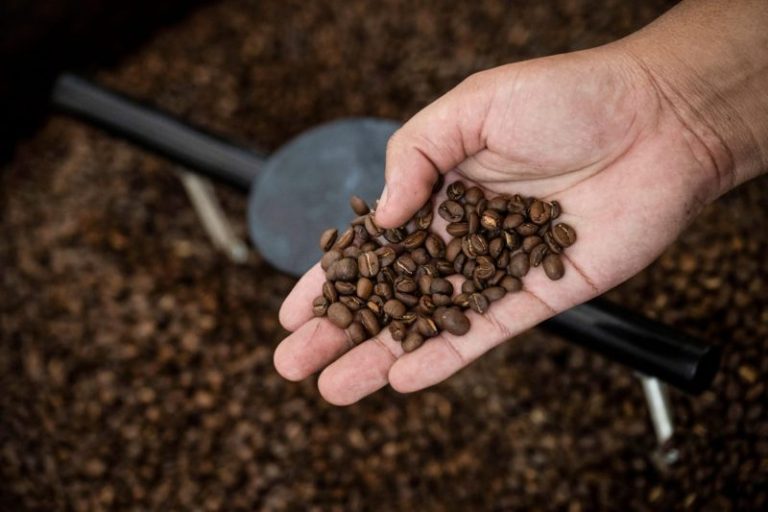
Brazil, the largest U.S. supplier of green coffee beans, accounts for about a third of the country’s total supply, according to data from the U.S. Department of Agriculture.

Coffee beans need to grow in a warm, tropical climate, making Hawaii and Puerto Rico the only suitable places in the United States to farm the crop. But, as the world’s top consumer of coffee, the U.S. requires a massive supply to stay caffeinated. Mintel estimates that the U.S. coffee market reached $19.75 billion last year.

The increase in trade duties could leave consumers with even higher costs after several years of soaring coffee prices. Inflation-weary consumers have seen prices for lattes and cold brew climb as droughts and frost hit the global coffee supply, particularly in Brazil. Earlier this year, coffee bean futures hit all-time highs. They rose 1% on Thursday, although still well below the record set in February.

To be sure, there’s still time for Brazil to strike a deal with the White House before the tariffs go into effect on Aug. 1. Plus, food and beverage makers are hoping that the Trump administration will grant exemptions for key commodities. U.S. Department of Agriculture Secretary Brooke Rollins said in an interview in late June that the White House is considering exemptions for produce that can’t be grown in the U.S. — including coffee.

But if that doesn’t happen, coffee companies like Folgers owner J.M. Smucker, Keurig Dr Pepper, Starbucks and Dutch Bros will face much higher costs for the commodity. Giuseppe Lavazza, chair of Italian roaster Lavazza, said on Bloomberg TV on Thursday morning that the latest tariff could mean “a lot of inflation” for the coffee industry.

Roasters will try to mitigate the impact of the higher tariff, but it won’t be easy.

“Every company is always trying to eke out the next efficiency, to dial into their operations or find the way to minimize inflationary pressures, but a 50% tariff on a commodity that fundamentally is not available in the U.S. — you can’t really do much with that,” Tom Madrecki, vice president of supply chain and logistics for the Consumer Brands Association, a trade group that represents the consumer packaged goods industry.

One mitigation tactic could be to import beans from countries other than Brazil, but companies will likely still be paying more for the commodity.

“A characteristic of tariffs, especially when you have tariffs on multiple countries at once, is that not just the inbound cost rises. It allows the pricing floor to also rise,” Madrecki said. “If you have cheaper coffee in a country different than Brazil, you’re not inclined to sell it at a 30% lower cost. You’re going to try to bump your coffee up a bit more, too.”

At-home coffee brands, like JM Smucker’s Dunkin’ and Kraft Heinz’s Maxwell House, have already been hiking their prices this year in response to spiking commodity costs. More price increases could be on the way for consumers, although retailers may push back.

Keurig Dr Pepper would consider additional price hikes in the latter half of the year to mitigate the impact of tariffs, CEO Tim Cofer said in late April, after Trump introduced his initial round of so-called reciprocal duties.

And Smuckers warned investors on its quarterly conference call in early June that tariffs on coffee were weighing on its profits. Coffee accounts for roughly a third of the company’s revenue.

“Green coffee is an unavailable natural resource that cannot be grown in the continental United States due to its reliance on a tropical climate,” Smuckers CEO Mark Smucker said. “We currently purchase approximately 500 million pounds of green coffee annually, with the majority coming from Brazil and Vietnam, the two largest coffee-producing countries.”

Vietnam, which announced a tentative trade deal with the White House earlier this month, supplies about 8% of the U.S.’s green coffee beans. Under the agreement, the U.S. will impose a 20% duty on Vietnamese imports.

Consumers who prefer a caramel macchiato from Starbucks for their caffeine hit will likely see a more muted impact on their wallets.

After several quarters of sluggish U.S. sales, Starbucks CEO Brian Niccol said in late 2024 that the company wouldn’t raise prices in 2025, in the hopes of winning back customers who had complained about how expensive its drinks had gotten. While it waits for its turnaround to take hold, Starbucks might choose to swallow the higher coffee costs.

The coffee giant also benefits from its diversity — both in suppliers and the breadth of its menu, which now includes the popular Refreshers line. Starbucks imports its coffee from 30 different countries, and roughly 10% of its cost of goods sold in North America comes from coffee.

The new trade duty could mean a 0.5% increase in Starbucks’ North American cost of goods sold, assuming about 22% of its beans come from Brazil, TD Cowen analyst Andrew Charles wrote in a note to clients on Thursday. Starbucks’ packaged drinks, which are distributed by Nestle, could see their cost of goods sold increase 3.5%. Altogether, that represents a 5-cent drag on annual earnings per share, according to Charles.

For rival Dutch Bros, higher coffee costs also wouldn’t hurt its bottom line much. Coffee accounts for less than a tenth of the drive-thru coffee chain’s cost of goods sold. Assuming that Dutch Bros sources more than half of its coffee from Brazil, its cost of goods sold would rise just 1.3%, according to Charles’ estimates.

This post appeared first on NBC NEWS

FIFA has already lowered prices for the Club World Cup final in an effort to attract more fans to attend the match on Sunday, July 13, at MetLife Stadium in East Rutherford, New Jersey. 

The cheapest standard admission ticket, to see reigning Champions League winners Paris Saint-Germain face Premier League standout Chelsea, has dropped from $312.20 to $249.75 two days before the final. 

Some seats in the back of the 100 sections were initially in the $440-$546 range, lowered to $334.50 to $473.90. 

However, premium club seats remained the same prices from Wednesday to Friday. Seats in the East Club remain $1,644.65, while seats in the EY Coaches Club are still $4,348.50. 

Watch Club World Cup free on DAZN

FIFA has been criticized for high initial prices for tickets, but has adjusted pricing, taking supply and demand into account. The cheapest tickets for half of the Club World Cup’s group stage matches (24 of 48 total) were under $36 all-in with fees before taxes before the tournament. The Associated Press reported June 28 that at least 1 million tickets were unsold during the group stage. 

Before the semifinals, FIFA president Gianni Infantino claimed “over 2.26 million fans” attended Club World Cup matches during an event at the organization’s new office at Trump Tower in New York City on Monday, July 7. 

The first semifinal between Chelsea and Brazilian side Fluminense had an announced crowd of 70,556. The Athletic reported tickets for that match lowered from $473.90 to just $13 in a three-day span before the Tuesday, July 8 match. 

The Club World Cup’s semifinal match, which saw PSG dismantle Real Madrid had an announced crowd of 77,542 people at MetLife Stadium on Wednesday, July 9. The vast majority were fans of Real Madrid — arguably the most popular team in the sport globally. Real Madrid’s elimination certainly doesn’t help ticket sales for the final, which could possibly see prices drop further into the weekend. 

However, the most attended Club World Cup match saw PSG beat Atletico Madrid in front of 80,619 fans at the Rose Bowl Stadium outside Los Angeles on June 20. 

This post appeared first on USA TODAY

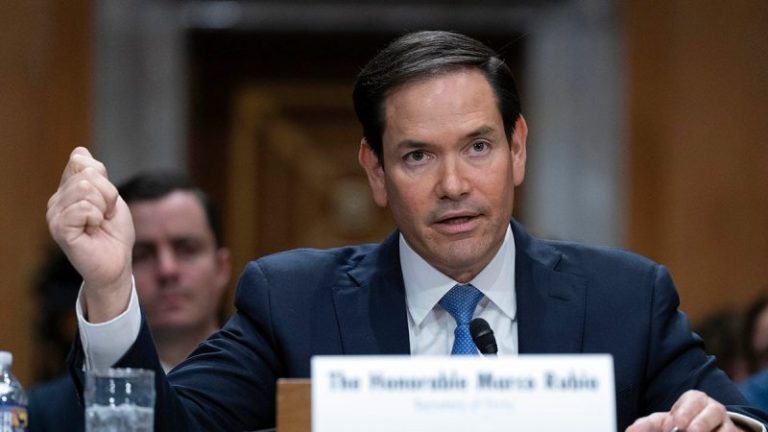
The State Department will move to layoff nearly 2,000 employees on Friday as it begins its reorganization plan. 

An internal memo circulated Thursday evening by Michael Rigas, deputy secretary of management and resources, announced that domestic employees affected by the reduction in force (RIF) would be notified ‘over the coming days.’ 

Approximately 1,800 people will be affected, Fox News has learned. 

The RIF notices plus voluntary departures under the Trump administration amount to a 15% work force reduction. 

‘The departments, bureaus, offices and domestic operations have grown considerably over the last 25 years, and the resulting proliferation of bureaus and offices with unclear, overlapping or duplicative mandates have hobbled the department’s ability to rapidly respond to emerging threats and crises or to effectively advance America’s affirmative interests in the world,’ a senior State Department official said. 

The official added that there are ‘more than 700 domestic offices for 18,000 people.’ 

‘A lot of this, as we said, covers redundant offices and takes some of these cross-cutting functions and moves them to the regional bureaus and to our embassies overseas, to the people who are closest to where diplomacy is happening, to empower them with the resources and authorities they need to be able to carry out the President’s foreign policy.’

State Department spokesperson Tammy Bruce warned on Thursday the agency would move quickly after the Supreme Court stayed the lower court’s injunction blocking the administration from implementing widescale force reductions across federal agencies. 

A senior official said there are currently no plans for overseas closures of embassies and outposts. They added the State Department will work to preserve the dignity of affected workers. 

‘We’re going to work to preserve the dignity of federal workers,’ the official said. ‘We want to be sensitive to that process and make sure people have the resources they need … and make sure everyone is treated with dignity.’

This post appeared first on FOX NEWS

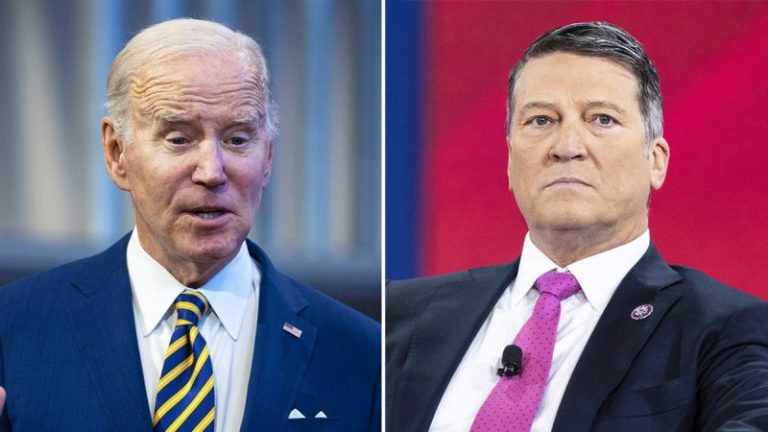
A former White House physician is criticizing Kevin O’Connor after the ex-Biden administration doctor refused to answer questions by House Oversight Committee investigators earlier this week.

Dr. O’Connor, who served as White House physician to former President Joe Biden, sat down for a transcribed interview with committee staff and panel Chair James Comer, R-Ky., on Wednesday. The closed-door meeting lasted roughly 30 minutes, with O’Connor invoking the Fifth Amendment to all questions, save for his name.

His legal team said there were concerns the broad scope of Comer’s probe could force O’Connor into a position of risking doctor-patient confidentiality privileges. 

‘Well, you can’t do both,’ Rep. Ronny Jackson, R-Texas, a former White House doctor himself, told Fox News Digital in an interview afterward.

‘I mean, the Fifth Amendment is designed to keep him from incriminating himself in some type of, you know, criminal or unethical behavior. He’d already addressed the issue of patient-doctor privacy, or confidentiality, with the committee.’

He pointed out that O’Connor’s lawyers had already raised issues with patient-doctor confidentiality in a letter to the committee trying to get the interview delayed, but Comer pressed forward.

‘They had already let him know that in this particular case, because he had been subpoenaed, and it was a legal process, he’d been subpoenaed to testify before Congress in this closed session, that the patient-doctor privilege no longer applied,’ Jackson said. ‘And President Trump had waived presidential privilege. So it left him with nothing. Nothing to stand on except for pleading the Fifth.’

Before being elected to Congress, Jackson served as White House physician to both former President Barack Obama and current President Donald Trump.

Comer told reporters on Wednesday that Jackson played a key role in crafting questions for O’Connor. 

‘We have a lot of questions that we’ve prepared for this. We’ve consulted closely with Ronny Jackson, my colleague, who was the White House physician in the first Trump administration. We’ve consulted with a lot of people in the medical community, so there’s going to be a lot of medical questions that are asked,’ he told reporters before the transcribed interview.

He is investigating accusations that Biden’s former top White House aides covered up signs of his mental and physical decline while in office, and whether any executive actions were commissioned via autopen without the president’s full knowledge. Biden allies have pushed back on those claims.

‘The cover-up could not have happened without the assistance and the help of his personal physician, Kevin O’Connor,’ Jackson said. ‘I think that’s why he pled the Fifth, because he realized he was about to implicate himself as a key player in this cover-up.’

O’Connor’s lawyers have denied any implications of guilt.

Jackson said some of the questions he recommended to the committee would have surrounded any potential neurological concerns or cognitive tests while Biden was in office.

But many of those were left unasked, it appears, after O’Connor’s brief meeting with House investigators.

The doctor’s lawyers said O’Connor’s refusal to answer questions on Fifth Amendment grounds was not an admission of guilt, but rather a response to what they saw as an unprecedented investigatory scope that could have violated the bounds of patient-physician privilege.

‘This Committee has indicated to Dr. O’Connor and his attorneys that it does not intend to honor one of the most well-known privileges in our law – the physician patient privilege. Instead, the Committee has indicated that it will demand that Dr. O’Connor reveal, without any limitations, confidential information regarding his medical examinations, treatment, and care of President Biden,’ the attorney statement said.

‘Revealing confidential patient information would violate the most fundamental ethical duty of a physician, could result in revocation of Dr. O’Connor’s medical license, and would subject Dr. O’Connor to potential civil liability. Dr. O’Connor will not violate his oath of confidentiality to any of his patients, including President Biden.’

Fox News Digital reached out to O’Connor’s lawyers for further comment.

This post appeared first on FOX NEWS

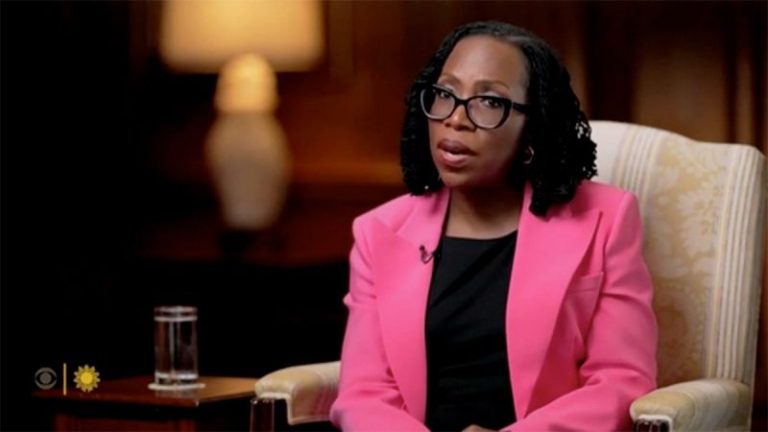
I wrote recently about the chilling jurisprudence of Justice Ketanji Brown Jackson, who has drawn the ire of colleagues in opinions for her rhetoric and extreme positions. Many have expressed alarm over her adherence to what has been described by one as an ‘imperial judiciary’ model of jurisprudence. Now, it appears that Jackson’s increasingly controversial opinions are serving a certain cathartic purpose for the far-left Biden appointee.

‘I just feel that I have a wonderful opportunity to tell people in my opinions how I feel about the issues, and that’s what I try to do,’ Jackson told ABC News.

Her colleagues have not entirely welcomed that sense of license. The histrionic and hyperbolic rhetoric has increased in Jackson’s opinions, which at times portray her colleagues as abandoning not just the Constitution but democracy itself.

Her dissent in the recent ruling on universal injunctions drew the rebuke of Justice Amy Coney Barrett over what was described as ‘a vision of the judicial role that would make even the most ardent defender of judicial supremacy blush.’

‘We will not dwell on Justice Jackson’s argument, which is at odds with more than two centuries’ worth of precedent, not to mention the Constitution itself,’ Barrett wrote. ‘We observe only this: Justice Jackson decries an imperial Executive while embracing an imperial Judiciary.’

Jackson, however, clearly feels that opinions are a way for her to opine on issues of the day. 

She is not alone. Across the country, liberal judges have been adding their own commentary to decisions in order to condemn Trump, his supporters, and his policies.

I previously wrote about this pattern of extrajudicial commentary.

District Court Judge Tanya Chutkan, an Obama appointee who previously presided over Trump’s election interference case, was criticized for failing to recuse herself from that case after she made highly controversial statements about Trump from the bench. Chutkan lashed out at ‘a blind loyalty to one person who, by the way, remains free to this day.’ That ‘one person’ was still under investigation at the time, and when Trump was charged, Chutkan refused to let the case go.

Later, Chutkan again added her own commentary when asked to dismiss a case due to Trump pardoning January 6 defendants. She acknowledged that she could not block the pardons, but proclaimed that the pardons could not change the ‘tragic truth’ and ‘cannot whitewash the blood, feces and terror that the mob left in its wake. And it cannot repair the jagged breach in America’s sacred tradition of peacefully transitioning power.’

One of Chutkan’s colleagues, Judge Beryl Howell, also an Obama appointee, lashed out at Trump’s actions, writing, ‘[T]his Court cannot let stand the revisionist myth relayed in this presidential pronouncement.’

Then there is Judge Amit Mehta, another Obama appointee, who has been criticized for conflicted rulings in Trump cases and his bizarre (and ultimately abandoned) effort to banish January 6 defendants from the Capitol.

Last week, Mehta had a straightforward question of jurisdiction concerning a challenge to the denial of grants by the Trump administration. While correctly dismissing the challenge, Mehta decided to add his own commentary on Trump’s priorities and policies:

‘Defendants’ rescinding of these awards is shameful. It is likely to harm communities and individuals vulnerable to crime and violence. But displeasure and sympathy are not enough in a court of law.’

For Jackson, her opinions have at times left her isolated on the Court. Weeks ago, Jackson and Sotomayor were alone in dissent over the defiance of a district court judge of the Court’s decision on universal injunctions. To her credit, Justice Elena Kagan (who voted with Sotomayor and Jackson in dissent in the earlier case) voted with her conservative colleagues in rebuking Judge Brian Murphy in Boston.

Kagan joined in the reversal of Murphy’s conflicting order and wrote the new order ‘clarifies only one thing: Other litigants must follow the rules, but the administration has the Supreme Court on speed dial.’

This week, Jackson lost even Sotomayor and stood alone in her dissent in support of an injunction over plans to downsize the government. Sotomayor observed that the Trump order only directed agencies to plan for such downsizing and said that the courts could hardly enjoin such policy preparations in the Executive Branch.

However, Jackson could and would. 

The controversial position of Jackson on the Court is not due to her liberal views. We have had many such liberal jurists. The difference is how Jackson views her role as a justice.

The danger is not confined to opinions. For years, justices have yielded to the temptations of public speaking before supportive groups. I have long been a critic of what I called the era of ‘celebrity justices,’ where members seem to maintain political constituencies at public events. 

Such speeches not only undermine the integrity of the Court by discussing matters that may come before it, but they can create a desire to maintain the adoration of supporters. The greatest danger is that justices will consciously or subconsciously pander to their bases with soundbites and inflammatory rhetoric.

Judicial advocacy from the bench has been a concern since the founding. Article III can have a corrosive impact on certain jurists who come to view themselves as anointed rather than appointed. Most judges and justices are acutely aware of that danger and struggle to confine their rulings to the merits of disputes, avoiding political questions or commentary.

The ‘opportunity to tell people how I feel’ can become a slippery slope where opinions become more like judicial op-eds. The Court is not a cable show. The price of the ticket to being ‘one of nine’ is that you should speak only through your opinions and only on the narrow legal matter before you. 

Opinions must remain ‘opportunities’ to do simple justice, not a supreme editorial.

This post appeared first on FOX NEWS

Major League Baseball’s draft finally arrives July 13 from Cobb County’s Roxy Theater, and while it may not light up the Georgia skies like the Home Run Derby and All-Star Game to follow the next two nights, there’s no shortage of intrigue.

This much we know: Eight specific players are almost certain to go in the top 10 picks. Yet in what order and to which teams remains a game of dominos that will have to wait until the clock starts.

And 10 shortstops – from MLB legacies to high school stars to college All-Americas – will consume at least half of the top 20 picks, and while the game’s premier position tends to be a draft premium, this class boasts dudes who will almost assuredly stick on that position – and play at a very high level.

With that, USA TODAY Sports fires some darts one last time with a final mock draft before the pickin’ party commences Sunday:

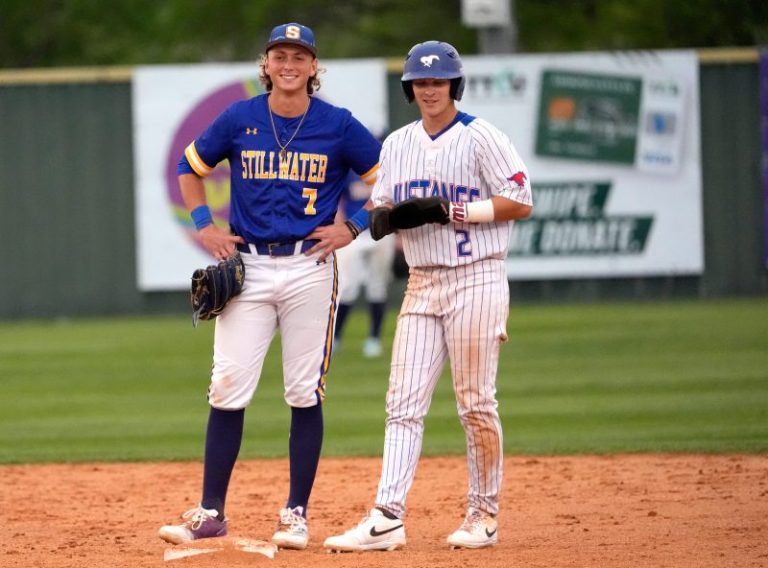
1. Washington Nationals: Ethan Holliday, SS, Stillwater (Okla.) HS

This selection took on an entirely different level of intrigue when the Nationals blew out GM Mike Rizzo and manager Dave Martinez just more than a week before the draft. They wisely left the remaining infrastructure intact, which should make their draft process flow smoothly, even as interim GM Mike DeBartolo is now the ranking voice in the room. We’re sticking to our guns here, even if as many as four guys might lay claim to this spot. Ultimately, the Nationals side with a potential building block rather than a ready-made ace with little present value as the franchise faces a total facelift.

2025 MOCK DRAFT EVOLUTION: First edition (May 6) || Second edition (June 10

2. Los Angeles Angels: Kade Anderson, LHP, LSU

What a finishing kick for Anderson, who pitched a three-hit shutout against Coastal Carolina in the championship round of the College World Series, which followed a three-hit, seven-inning effort to beat Arkansas. Good luck splitting hairs between Anderson, Jamie Arnold and Liam Doyle, but we’ll side with Anderson’s K rate (NCAA-best 180 in 110 innings) and devastating pitch mix (think Max Fried, only firmer) with a rapid promotion in the offing in Anaheim.

3. Seattle Mariners: Aiva Arquette, SS, Oregon State

Perhaps the most impactful pick in the top five, as plucking one of the top college arms or prep right-hander Seth Hernandez here would be a moderate disruption and likely introduce some exotic names into the overall top 10. But let’s stay consistent with this one as the Mariners opt for the physical presence and lineup punch that Arquette would bring up the middle.

4. Colorado Rockies: Eli Willits, SS, Fort Cobb-Broxton (Okla.) HS

What do you get the franchise that needs everything? They drafted Chase Dollander and got him to Coors Field quickly, and doing the same with deluxe lefty and fellow Tennessee product Liam Doyle would be highly tempting. Yet Willits, still just 17, represents the high-end building block the franchise lacks.

5. St. Louis Cardinals: Liam Doyle, LHP, Tennessee

In this scenario, the Cardinals have their choice of remaining elite college lefties and opt for Doyle’s greater swing-and-miss upside over Florida State’s Jamie Arnold, though they may prove us wrong come draft night.

6. Pittsburgh Pirates: Seth Hernandez, RHP, Corona (Calif.) HS

Hernandez represents the draft’s other great wild card and a test case for how high clubs would be willing to draft a prep right-hander. We’ll stop just shy of calling Hernandez’s repertoire “generational,” but his high-90s fastball and pro-caliber changeup give him a significant springboard to move quicker than your average high school arm.

7. Miami Marlins: Billy Carlson, SS, Corona (Calif.) HS

Make it back-to-back Panthers here, with Carlson the last of the elite-elite prep shortstops off the board. Imagine a larger version of Masyn Winn, with a similar hose at shortstop and, at 6-1, potentially greater offensive upside.

8. Toronto Blue Jays: Jamie Arnold, LHP, Florida State

A real coup here for Toronto, getting a mature college arm with a big league-ready fastball-slider mix. Paired with last year’s No. 1, Trey Yesavage, the Blue Jays have the potential to quickly backfill a rotation that could lose Chris Bassitt and Kevin Gausman to free agency in consecutive years.

9. Cincinnati Reds: Kyson Witherspoon, RHP, Oklahoma

The Reds may stray out of their comfort zone and go bat here, but Witherspoon could unlock an even higher level developing in their pitching program as he’ll bring a high-90s fastball and low-90s slider into pro ball.

10. Chicago White Sox: Ike Irish, C/OF, Auburn

The White Sox quandary: Take the best of the next tier of prep shortstops or whichever advanced high-end college prospect almost mathematically certain to fall to them? In this case, it’s Irish, who popped 18 home runs with a .469 OBP for Auburn, and will likely have a permanent home in the outfield.

11. Athletics: Tyler Bremner, RHP, UC Santa Barbara

A nice value for the Athletics, getting a consensus top-five guy before Bremner got off to a slow start for UCSB. But he finished strong and could reach the majors quick enough to try out that much-maligned mound in the A’s temporary Yolo County digs.

12. Texas Rangers: JoJo Parker, SS, Purvis (Miss.) HS

The math makes it highly likely Texas lands a prep shortstop and Parker is still around, high enough to keep him away from a Mississippi State commitment. That’s two years in a row a Mississippi prep shortstop goes in the top dozen picks, joining Konnor Griffin (No. 9, Pittsburgh).

13. San Francisco Giants: Daniel Pierce, SS, Mill Creek (Ga.) HS

Let the run continue. Pierce is already 19, which may make some clubs shy away, but still has significant offensive upside and fits in what will be the first pick under the Buster Posey regime.

 14. Tampa Bay Rays: Steele Hall, SS, Hewitt-Trussville (Ala.) HS

We’ll stick with Hall here, possessing the power upside and versatility the Rays value as the prep shortstop pool thins a bit.

15. Boston Red Sox: Gavin Kilen, INF, Tennessee

A Red Sox draftee out of high school, Kilen will do much better than the 13th round this time, with a strong offensive profile that saw him strike out just 27 times in 245 plate appearances, most of those against SEC pitching.

16. Minnesota Twins: Marek Houston, SS, Wake Forest

The question is whether Houston’s very sturdy defense and developing but incomplete offensive profile slots him higher than the prep stars slated to go before him. It’s hard to see him dropping any further than the Twins.

17. Chicago Cubs: Wehiwa Aloy, SS, Arkansas

We’ll stubbornly keep Aloy ticketed to the Cubs, even as a strong postseason that ended in Omaha further buttressed his profile. He might have smoother actions around the bag than Arquette, even if his offensive punch grades out a notch below the fellow Hawaiian collegiate star.

18. Arizona Diamondbacks: Kayson Cunningham, SS, Johnson (Texas) HS

His offensive profile fits the Diamondbacks’ ethos very nicely: Contact-based and, at 5-10, 180, a compact frame that has the potential to grow into decent power.

19. Baltimore Orioles: OF Ethan Conrad, Wake Forest

The Orioles control three of the next 13 picks and can get creative with their bonus pool, certainly. We stick with Conrad and the classic O’s college hitter profile here.

20. Milwaukee Brewers: Andrew Fischer, INF, Tennessee

Bat first, figure out the position later. Fischer slammed 25 homers with a 1.205 OPS in an exuberant platform season, and is versatile enough defensively to move around some if the power doesn’t support a first base profile.

21. Houston Astros: Jace Laviolette, OF, Texas A&M

He’s going to be a great value somewhere, probably, as Laviolette faded from top three talk after a season slowed by contact issues, slumps and health. Wouldn’t be surprising if someone jumped on him sooner thanks to his elite raw power.

22. Atlanta Braves: Kruz Schoolcraft, LHP, Sunset (Ore.) HS

Quite a talent to land here, as the 6-8 prep lefty with a fastball that reached 97 mph gives them a daunting 1-2 punch with Cam Caminiti, currently thriving in low A one year after going 24h overall.

23. Kansas City Royals: Gavin Fien, INF, Great Oak (Calif.) HS

The prep version of Laviolette, in that someone may jump on him sooner based on equity already banked as opposed to an uneven platform year.

24. Detroit Tigers: Xavier Neyens, INF, Mt. Vernon (Wash.) HS

Big frame and potential big power in a nimble and athletic 6-4 package. In terms of offense, one of the top prep lefty bats available.

25. San Diego Padres: Sean Gamble, INF/OF, IMG (Fla.) Academy

Versatile and projectable, Gamble – at 6-foot-1, 190 – leveled up from Iowa to IMG Academy and is a potential impact player in the middle of the diamond.

26. Philadelphia Phillies: Slater de Brun, OF, Summit (Ore.) HS

The run of late-round high school players takes a few Philly targets off the board but they can still fulfill their prep preference with de Brun, a potential center fielder of the future whose speed will likely always trump his power.  

27. Cleveland Guardians: Caden Bodine, C, Coastal Carolina

The Guardians opt for Contact King, as Bodine finished the season with an absurd 24 strikeouts in 313 plate appearances while churning out a .915 OPS. As the Chanticleers reeled off 26 consecutive wins to reach the College World Series finals, Bodine’s stock rose along with it.

28. Kansas City Royals*: Luke Stevenson, C, North Carolina

Paired with Fien, this should be a bonus pool-friendly pick as the Royals opt for the steady Stevenson, two years after making prep catcher Blake Mitchell the eighth overall pick.

29. Arizona Diamondbacks**: Brendan Summerhill, OF, Arizona

Would be a coup getting Summerhill this late, as he can man all three outfield positions and put up a .343/.459/.556 line to lead Arizona to the College World Series.

30. Baltimore Orioles**: Alex Lodise, SS, Florida State

The Dick Howser Trophy winner and ACC player of the year, Lodise is a solid defender who hit 19 home runs and should develop above-average pro power and likely stick at shortstop.

*- Prospect promotion incentive pick**- Free agent compensation pick

Note: The Mets, Yankees and Dodgers each received a 10-pick penalty on their first picks for exceeding the second surcharge threshold of the competitive balance tax and their first picks will be 38th, 39th and 40th overall, respectively.

The USA TODAY app gets you to the heart of the news — fastDownload for award-winning coverage, crosswords, audio storytelling, the eNewspaper and more.

This post appeared first on USA TODAY