Archive

2025

Browsing

ATLANTA – More than a decade ago, Atlanta Braves officials embarked on a road trip that was far more transformative and industry-altering than any game their team would play.

The destination: Kansas City. The mission: Create a blank slate for the franchise to not only build a new ballpark but create a multi-use revenue-capturing monster that, in the years since, has transformed the sports industry, for better and worse.

And over multiple days consulting with Populous, the global design firm that engineered the ballpark revolution of the 1990s and evolved with the times since, the Braves hatched what would come to be known as The Battery.

“They told a pretty compelling story of what they wanted to accomplish,” says Earl Santee, founder and senior executive of Populous, which has guided the evolution of the modern stadium since 1985. “The idea of The Battery was inspired by their vision.

“It’s really the first time we had a fully integrated ballpark that occurred at one time. That they’re one big community, not one big building.

“I think that’s why almost every pro sports team in America has come by and looked at the ballpark and The Battery to understand how they did it.”

In fact, the parade of club presidents, owners, politicians and imagineers beating a path to the intersection of I-75 and I-285 in suburban Cobb County became so voluminous, the Braves had to tell some of them to take a number. They only had so much time to devote to sports franchises wanting to know how they cultivated such a vast expanse to live, work, play – and generate revenue that didn’t have to be shared with other teams in their leagues.

And just what did they concoct? A 41,000-seat ballpark that flows seamlessly into 2.25 million square feet featuring more than two dozen restaurants and bars, four corporate campuses, two hotels, 531 residences and the Roxy Theater, where MLB staged its draft Sunday night.

And it’s not done growing. The Braves’ real estate interests have expanded with the success of their club, a cosmic bit of timing in which the team on the field has not missed the playoffs since 2017, allowing SunTrust Park – now Truist Park – a year of novelty before the club launched seven consecutive postseason runs, including the 2021 World Series title.

Little wonder franchises from four corners of the map are aiming to recreate this utopia of commerce – with a side of sports – for their own towns.

Yet the manner in which the Braves and Cobb County captured those dollars has proven challenging for teams to replicate – with some municipalities just saying no.

Mapping the journey

Santee, as head of then-HOK Sports, had a far simpler task – and a lower bar – to clear when he set out, perhaps unwittingly, and became the godfather of modern stadia. The grim multi-purpose stadiums of the 1960s and ‘70s eventually gave way to the intimate and objectively beautiful jewels of the 1990s, where a little exposed brick and single-sport sightlines went a long way.

Now, more than three decades after Baltimore’s Camden Yards, Cleveland’s Jacobs Field and Pittsburgh’s PNC Park became the standards by which parks would be measured, Santee must navigate a post-Battery world where “experiential” has become as important to a franchise as a reliable starting pitcher.

 A trip through the turnstiles is merely the first – or third – imagined step in a long day of what Santee calls “journey mapping.”

“We get to make an impact that’s not three hours long. It’s five or six hours long. That’s pretty exciting,” says Santee. “The journey mapping tells us people want two, maybe three unique experiences, either inside or outside the ballpark.

“Years ago, if you asked me the question, what was it like in the ‘80s and ‘90s designing ballparks? We designed maybe 15 to 20 fan experiences inside the ballpark. With this model, we’re designing somewhere between 60 to 80 fan experiences.

“Because it’s driven by the journey mapping, driven by the generational needs.”

And it’s remarkably easy to get caught up in The Battery’s stream of diversions.

Just steps after exiting the right field gate, the fan is greeted with a mind-bending number of options, with Sports & Social and its many blaring TV screens and game play practically begging your party to commune over a plate of $24 nachos.

A splash pad shoots water aloft, allowing parents to toss their kids in to cool off and burn energy on a hot day. A bandshell on Saturday staged a pep rally – “Javy Lopez is in the house!” – as a drumline performed, giving way to a DJ as the evening arrived.

Residences look down on it all, climate-controlled havens where around $2,500 per month can get you a two-bedroom apartment within strolling distance of gourmet ice cream or salmon cake benedict.

After less than five minutes, the right field gate looks almost foreign, a reminder that yes, there is a baseball stadium here.

It is a diverse and truly multi-generational crowd and for a moment, it’s easy to forget the mega-development was – and in some quarters still is – a source of consternation. The Braves’ move from Fulton County’s Turner Field – that stadium was about two decades old – not only removed the club from Atlanta’s urban center but also left a sour taste in the mouth of Cobb County taxpayers who footed two-thirds of the bill.

A stroll to the south end of the complex gives the visitor a reminder of the backlash: The intersection of Battery Avenue and Tim Lee Way.

‘We can’t leave citizens behind’

Lee was chairman of the Cobb County Board of Commissioners from 2010 to 2017 and passed away in 2019 after a yearlong bout with esophageal cancer.

In 2016, he was roundly defeated at the ballot box by an opponent, Mike Boyce, who ran a single-issue campaign – an anti-stadium platform – and prevailed by a nearly two-to-one margin.

In 2013, Lee spearheaded the effort to commit $400 million in taxpayer money to the Braves, the stadium and what became The Battery – without giving taxpayers a say in the matter.

The transparency – or lack thereof – in the process became a significant wedge between stadium proponents and citizens. Lee reportedly dubbed the effort “Operation Intrepid.” And the dispatch with which the project advanced from private negotiations – Braves president John Schuerholz said if they’d been public, citizens “would not want this to happen” – to commission approval remains a sore point.

Lisa Cupid, the lone no vote in a 4-1 approval by county commissioners, now has Lee’s job chairing the commission. While she has come to appreciate The Battery’s merits and remains optimistic it will have staying power as a destination, she also realizes what was lost in its approval.

“Process is always important when it comes to (earning) the trust of citizens,” says Cupid. “That’s something that, even looking back, was at the forefront of my mind. The idea of having something like a stadium, something as nostalgic as that in your community is always appealing. But it can’t circumvent the significance of, and really, our charge to ensure that the public trust is there.

“It’s not just the what that we do as county government, but the how we do it. We just can’t leave citizens behind in the big decisions we’re making.”

From a volume and value standpoint, The Battery has been a significant success. The county reported that in 2024, a record 10.3 million visitors walked its gleaming avenues and alleyways.

And the Braves, the lone MLB franchise owned by a publicly-traded corporation, reported $67.3 million in mixed-use development income, a 14% increase over 2023.

It would seem like a boomtown for all – county, ballclub, those employed within The Battery and any other stakeholders.

Yet economists argue that The Battery and similar developments are classic examples of “extraction” – that new dollars aren’t necessarily being spent but rather moved around, regionally.

Certainly, Cobb County captured the revenue that used to go to Fulton County when the Braves played there. Yet much of the activity – a night at the movies, a mid-range dinner, a round of drinks with the boys or the baddies – simply would have occurred somewhere else minus The Battery’s existence.

“You built a department store,” says JC Bradbury, an economist and associate professor at Kennesaw State. “We already have seven of those in Cobb County. It’s not transformative for development when you look at a county that’s a ($64 billion) economy. It’s a rounding error.

“Even though they’re always touted as a great economic engine, they’re not. And the data bear this out.”

Bradbury is a frequent detractor of stadium economic impact projections, but in this case, he’s not just a critic; he’s a client. A resident of nearby Marietta, he considers himself a Braves fan and has test-driven The Battery on a few occasions.

While ample parking decks have made it a regional destination, the area has not seen a so-called “halo effect” in transforming the area around it, a potential upside stadium proponents frequently cite.

“They like to describe The Battery as, ‘Oh, we’re recreating Wrigleyville,’” Bradbury says of the once-unique Chicago neighborhood since turned into a replacement-level cash cow for the Cubs. “The Battery is more like Main Street USA at Disney World. And not all restaurants and bars have succeeded there.

“It’s easy to find parking. Are there people there? Yeah. But not much more than if I went to Marietta Square.

“It’s certainly not ‘Downtown Cobb.’”

Much of the area remains unchanged from decades earlier. Cumberland Mall was erected in 1973 and faces many of the challenges similar properties do, though redevelopment is in the mix. Fading strip malls and chain restaurants dot the areas around the interchange.

One common opponent: Traffic. It is epic in Atlanta, even in Cobb’s relatively advantageous position on the northwest edge of I-285, or the “perimeter.” Eighty-one Braves home games can choke the grid further, and it’s interesting to note that the area around Turner Field downtown has largely thrived in the Braves’ absence.

When the moon shot falls short

Those narratives will be missing from any franchise pitches for new stadiums and taxpayer dollars needed to fund them. And the real estate piece of it has only become more urgent.

Both the NFL and MLB aim to centralize revenues among all franchises, particularly national TV money in both sports and gameday revenue in the NFL. It ensures the viability of all teams, regardless of market.

Yet revenue from off-site interests – such as The Battery or Arlington’s Texas Live! and areas around the Cowboys’ stadium in Arlington – are not tossed into the common revenue pool in either league. It is essentially pure profit for the home team and one taking on greater urgency as local and national TV revenues remain uncertain.

That’s why teams in every sport are opting for a Battery moon shot rather than simply building a stadium. And the consequences when they fail can be significant.

One year after The Battery opened, the Oakland Athletics announced plans for what would become a $12 billion proposal in the city’s Howard Terminal – a 35,000-seat ballpark and 6 million square feet of mixed-use development, including commercial buildings and high-rise residential units.

It ended up being an all-or-nothing proposition: When the club failed to reach agreement with Oakland, it lowered its sights significantly and set them on Las Vegas, where the team aims to begin play in a 33,000-seat stadium on a parcel of land barely big enough to play ball, let alone add the “live and work” pieces to create the mixed-use holy trinity.

In Kansas City, citizens showed exactly why franchises prefer to do stadium deals without public input: They roundly rejected a sales-tax initiative that would have built a $1 billion downtown stadium project for the Royals and funded significant renovations to the Chiefs’ stadium. The Royals’ proposal included a hotel, a residential development and entertainment venue consuming several downtown blocks.

That’s not to say politicians heed what might be blowing in the wind.

Arizona Gov. Katie Hobbs recently celebrated approval of $500 million in Chase Field renovations by showing up to a news conference in a Diamondbacks jersey.

Washington D.C. Mayor Muriel Bowser has urged the fast-tracking of a new stadium for the Commanders – a massive multi-billion-dollar mixed-use development on the old RFK Stadium site – even as D.C. councilmembers plead for more time to scrutinize a deal she brokered with the team. The city recently approved $500 million in renovations to their downtown arena after Wizards and Capitals owner Ted Leonsis was quickly rejected in a quixotic bid to build a massive development in nearby Virginia.

“Plan B is a term that has been used to explicitly get stadiums built,” says Bradbury. “Circumvent the will of the voters: ‘We have a Plan B, we’re going to get around this.’

“What you saw in Kansas City was voters said, we absolutely do not want tax dollars to go toward renovating a stadium for the Chiefs and a new stadium for the Royals. The Chiefs just won the Super Bowl, they’re a popular team and voters were like, ‘Nah, we’re not doing that.’”

The Braves didn’t take that chance and this week will realize the fringe benefit of a jewel event once stripped from the region. While the modern life cycle of a stadium is roughly two decades – and thus this first Truist Park All-Star Game may be its last – county officials believe the site will have staying power.

Its impact throughout the sports industry certainly will, as everyone chases what’s become the standard in development and revenue generation.

“This site has built a tremendous energy beyond any of our comprehension,” says Cupid, the chair of the county commission. “It looked almost surreal what I saw in the renderings on paper. And they brought it to life. And they did it quickly. And they truly changed the footprint of that area.

“It’s become more than just a business, an economic center. It’s a center of vibrancy not just for Cobb but the region right now.

“And it continues to grow.”
This post appeared first on USA TODAY

SEC media days once were a place where a coach could be served a subpoena, where another coach explained his farm duties as a turkey inseminator, and where Nick Saban said being an agent was akin to being “a pimp.”

To say they were a magical place would overstate their glory. Even in the best of times, SEC media days were a souped-up series of news conferences in a hotel ballroom with the air conditioner blasting. But, they became a highlight of college football’s dog days of summer.

Those days are in the past. SEC media days morphed into glorified infomercial programming for the conference’s television network.

Perhaps because they know their words will be broadcast on the SEC Network across the hinterlands, with clips highlighted on ESPN, or perhaps because coaches simply are more reticent than ever, for fear their words will be tweeted and retweeted, the news conferences became snoozefests.

Also, in this 24/7/365 nature of college football media coverage, fans no longer depend on media days to get a preseason jolt of information and buzz about their team.  

In short, they’re a relic that persisted past the point of utility. They’ll muddle on in their current state on Monday, when the SEC’s four-day talkathon begins in Atlanta.

Media days are sure to revive debates about the future College Football Playoff format, and coaches will update us on how it’s been operating in the aftermath of the House legal settlement, which uncorked revenue-sharing with athletes and instituted an NIL clearinghouse in an attempt to regulate third-party deals.

When it’s all over, we’d have been more entertained and better informed if someone would have reminded us how to properly inseminate a turkey.

While the coaches curtail their remarks on the main stage with the television cameras rolling, here’s what they won’t say – but might be thinking:

Hugh Freeze, Auburn

Ask me about my golf handicap. Have you ever seen a football coach hit a power fade like I do? Speaking of which, I’m due for a tee time.

Kalen DeBoer, Alabama

It would be nice if you guys stopped comparing me to Saban and started comparing me to Hugh Freeze. Oh, and feel free to ask me about our recruiting ranking. It’s better than my golf handicap.

Clark Lea, Vanderbilt

I see Nick Saban seated in the back of the room. Coach, anything else you’d like to say about playing road games in Vanderbilt’s stadium?

Brian Kelly, LSU

If you’re wondering about my $1 million donation to jumpstart a donor drive, check out our roster and see what we bought. And, I’m due a $1 million bonus, plus a hefty raise, when I win my first national championship. Some would call that $1 million donation an investment opportunity.

Sam Pittman, Arkansas

Y’all get a good look, because this is the last time you’ll see me here. My bags are packed for Lake Hamilton. Just waiting on that buyout check, and then I can crack me a col’ beer and leave all this behind, fun as it was.

Mark Stoops, Kentucky

Sheesh, I never thought Kirk Ferentz would last this long at Iowa. Ah, well. Sam, how do you like it down there at Lake Hamilton? Got room for one more? Just as long as you don’t invite John Calipari over.

Josh Heupel, Tennessee

We learned a valuable lesson from our breakup with Nico Iamaleava: No more hitching the Big Orange wagon to quarterbacks clad in pajama pants. We wish him well, as he adjusts to California’s income-tax rate.

Kirby Smart, Georgia

I won two national championships with Stetson Bennett IV. You really think I can’t win one with Gunner Stockton?

Steve Sarkisian, Texas

Let me get this straight: If we win the national championship, that means I screwed up by not starting Arch Manning last season? And if I don’t win the national championship, that means I’m the coach who couldn’t win a national championship with Arch Manning?

Mike Elko, Texas A&M

Imagine what I could have done with that No. 1-ranked recruiting class Jimbo Fisher squandered.

Shane Beamer, South Carolina

I don’t mean to brag, but, I’m thinking a statue is in order after beating Dabo Swinney twice in the past three years.

Eliah Drinkwitz, Missouri

No way Beamer gets a statue before me. Guess how many SEC teams own more wins than Missouri the past two years? Just Georgia and Texas. And they’re lucky they don’t play us this season! Just kidding, we’re happy to play Arkansas, Vanderbilt and Mississippi State.

Jeff Lebby, Mississippi State

I’m just here because someone told me I had to be. Any questions? No? Good.

Brent Venables, Oklahoma

Do I think we could make the playoff this year? Maybe, if only we could play Mississippi’s schedule.

Billy Napier, Florida

Brother, you want to talk about tough schedules? Look at ours, and tell me someone isn’t trying to get me fired.

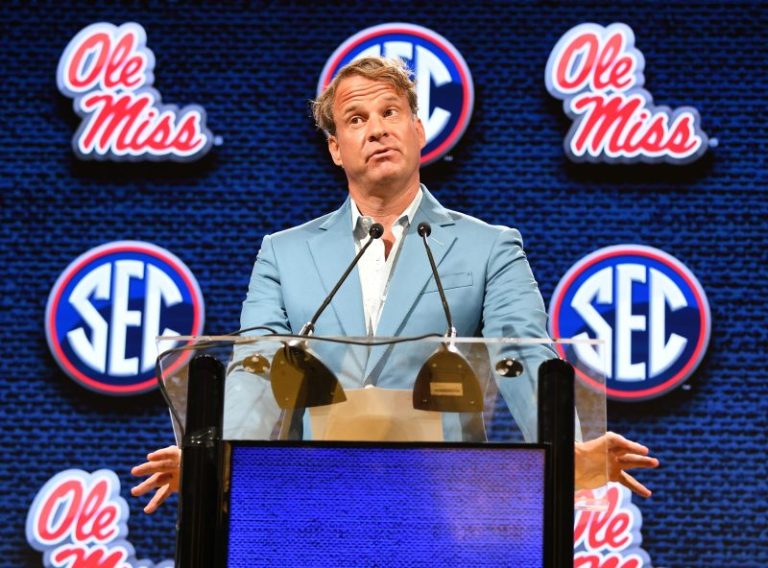
Lane Kiffin, Mississippi

Florida boosters, listen up. My phone number is …

Blake Toppmeyer is the USA TODAY Network’s national college football columnist. Email him at BToppmeyer@gannett.com and follow him on X @btoppmeyer.

This post appeared first on USA TODAY

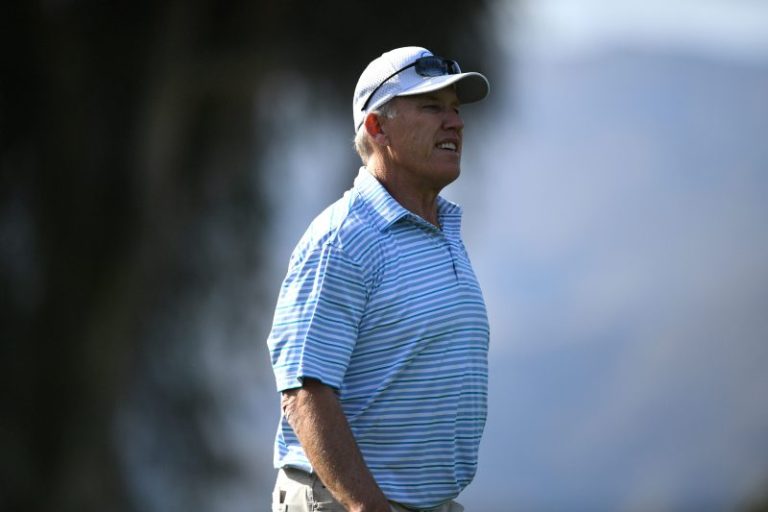
Hall of Fame quarterback John Elway will not face any charges in what authorities have determined was an accidental death of his former agent, who fell from a golf cart Elway was driving.

Riverside County (California) Sheriff Chad Bianco told a Denver television station that its investigation into the April incident that resulted in the death of Elway’s longtime friend and business partner Jeff Sperbeck has concluded.

‘It’s over,’ Bianco told 9News on July 11. ‘We’ve talked to everyone involved and we found nothing new. There was nothing criminal. It was what we’ve been saying all along that this was a tragic accident.’

Bianco has said that Sperbeck, 62, was standing on the back of a golf cart at a course in La Quinta, California, on April 26 when he fell and hit his head. The Riverside County Coroner’s Bureau ruled that his death was caused by ‘blunt force trauma’ and that the manner of his death was ‘an accident.’

Sperbeck represented more than 100 NFL players during his career as an agent and business adviser, according to ESPN. He began managing Elway’s business affairs in 1990, overseeing Elway’s restaurants, car dealerships and winery, among other off-field interests.

Elways played 16 seasons in the NFL with the Denver Broncos, winning a pair of Super Bowl titles. He later served as an executive for the team, including a tenure as general manager and executive vice president.

This post appeared first on USA TODAY

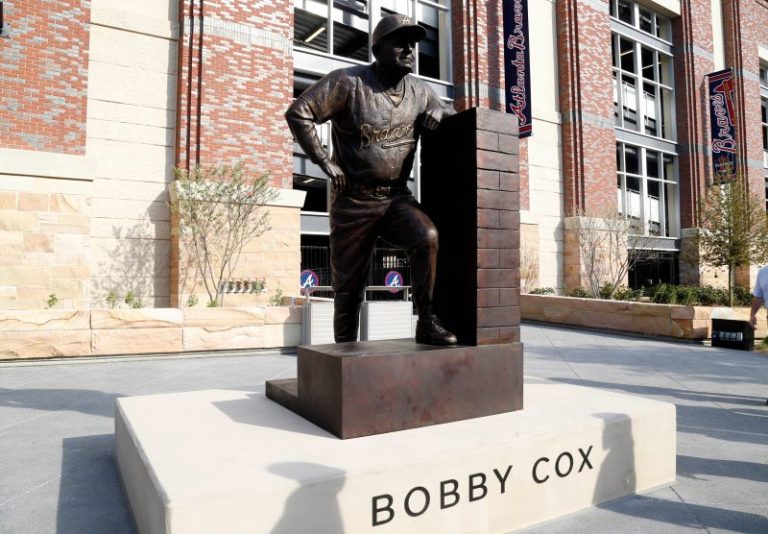
ATLANTA — There is a bronze statue of Bobby Cox outside the first-base gate at Truist Park. There is a plaque and memorabilia inside Monument Garden. There is his retired uniform number on the left-field facade.

Everywhere you look, there are reminders that will be treasured forever of Atlanta’s Hall of Fame manager, the man who turned a downtrodden franchise into a dynasty.

Cox and his wife, Pam, live just a few Hank Aaron blasts from Truist Park, and will take in Tuesday’s Major League All-Star Game from his living room, where he religiously watches every Atlanta game.

There was always hope that Cox could attend the All-Star Game, appearing on the huge scoreboard for the sellout crowd to stand on their feet and cheer, just as they did when he stopped in a year ago last July, watching the game from chairman Terry McGuirk’s suite.

The reality now is that it’s just too difficult to make the journey.

Cox, who suffered a massive stroke six years ago, is confined to a wheelchair, his right side paralyzed. He’s still sharp mentally, and comprehends everything, but has extreme difficulty communicating. He has had a myriad of health issues, including congestive heart failure, but just when it looks like the end is near, he fights back.

“I don’t have any idea how he’s still kicking,’ says Atlanta manager Brian Snitker, who tries to visit Cox about once a homestand. “He’s the toughest, strongest guy I’ve ever been around.’

Snitker, former pitching coach Leo Mazzone, and a few former players like Mark Lemke and Glenn Hubbard, still frequently stop by. But for others, seeing Cox this way is too painful to bear.

“It’s just so tough,’ Hall of Fame third baseman Chipper Jones tells USA TODAY Sports. “I went over to his house a couple of years ago, and he couldn’t talk. It was just awkward being there. I haven’t gone back since that day.

“It’s just that I want to remember Bobby the way he was, not the way he is now.’

Jones is not unique in that sentiment.

“I know a lot of former players think that way,’ Snitker says, “and want to remember him as that guy. That’s fine. I mean, he doesn’t look good honestly.’

Cox, 84, was not only one of the game’s greatest managers, leading Atlanta to 14 consecutive division titles, five pennants and a World Series title, but perhaps the most revered by his players. There wasn’t a player in the game who didn’t want to play for Cox. And there was nobody who played for Cox that didn’t believe they became a better player, and certainly a better person, after playing for him.

“He was the best, the absolute best,’ Hall of Fame first baseman Fred McGriff says. “Every player who played for Bobby, to this day, has never said a bad word about Bobby Cox.

“He wasn’t like these other managers in today’s game when everyone is trying to be nicey-nicey, and take care of players. There was no need for us to have a team captain to tell someone in the clubhouse to do something right. Bobby would do it himself.

“Even when I played on all of those great Braves teams, there were times Bobby would close the door, and just wear us out. But no one would know about it. You knew exactly how he felt without reading about it or hearing about it somewhere else.’

‘Always been a second dad to me’

Andruw Jones, who was a 19-year-old rookie center fielder who hit two homers in his first two at-bats in the 1996 World Series, learned firsthand the consequences of not playing the game right. Atlanta was playing the Chicago Cubs in 1998 when Lance Johnson hit a routine fly ball into shallow center field in the eighth inning. Jones didn’t even bother hustling to make the catch. Jones retrieved the ball on one bounce, nonchalantly flung it into the infield, and when he looked up, Atlanta outfielder Gerald Williams was rushing on to replace him in the field.

Jones ran off the field, entered the dugout and Cox yelled towards him. They went down into the tunnel where no cameras could see them. Cox told him that his effort was inexcusable, and to spend the rest of the game in the clubhouse thinking about how he let down the entire organization.

Andruw Jones became a 10-time Gold Glove winner, hit 434 home runs, and is on the brink of being inducted into Cooperstown.

“To be honest with you, Bobby’s always been a second dad to me from the beginning of my career,’ Andruw Jones tells USA TODAY Sports. “He wanted you to do the right things and grow up the way he’d want. Obviously, we’re not perfect, but we wanted to carry ourselves the way he’d want on and off the field.

“I wouldn’t have been the player I became without Bobby Cox.’

Says Hall of Fame pitcher Greg Maddux: “You can’t think of Atlanta without thinking of Bobby. He was the main reason for all of the success we had.’’

Maddux had just won the 1992 Cy Young award with the Chicago Cubs when he hit free agency at the same time as two-time MVP winner Barry Bonds. Atlanta owner Ted Turner told Cox and the front office that he had the money to spend for one of the two stars in free agency. It was up to them to decide which.

The room was divided between Bonds and Maddux, Mazzone recalls, but Cox had the final call. He chose Maddux, and a month later Maddux was signing a five-year, $28 million contract, winning 355 games in his career, and helping pave the way for Atlanta’s dynasty.

“I’m sure glad he picked me,’ Maddux says. “Bobby built his teams to win, 2-1, 3-2. We always had good pitching and great defense. But I think our defense went overlooked a lot because of our pitching, but the defense, more than the pitching, made the difference.

“Bobby, along with [GM] John Schuerholz, were responsible for that.’

Cox, who managed Atlanta in 1978-1981, and then managed in Toronto, returned to Atlanta in 1986 to be their GM. He spent four years overhauling the organization, scouting and developing players better than any team in baseball, before taking over as manager in 1990.

A dynasty was born.

“Everyone knows he was a Hall of Fame manager,’ says Atlanta GM Alex Anthopoulos, “but what doesn’t get talked about enough is that he was an unbelievable talent evaluator. He’s one of the best I’ve ever been around. His success as a GM, drafting players, trading players, signing players. He was incredible. When you have a elite manager in your dugout who can really evaluate players, that’s pretty incredible.’

Cox is the one who drafted stars Tom Glavine, Steve Avery and Chipper Jones, traded for future Hall of Famer John Smoltz when he was a minor leaguer with the Detroit Tigers, and turned a team that had finished last or next-to-last 12 of 16 seasons into one of the most revered organizations in baseball.

“Bobby is the most important person in franchise history,’ says Leo Mazzone, who spent 15 years with Cox, “right there with Hank Aaron. The Braves aren’t who they are without Bobby Cox. He has meant everything to them.’

If you played for Cox, you looked and acted like a professional ballplayer, on and off the field. You didn’t wear shorts or have your shirt untucked during batting practice. If you wore sunglasses, it better be the flip-down variety, where you don’t cover the “A’ on top of your cap. When traveling, sports jackets, collared shirts and dress pants were required.

Even in the clubhouse, there was no music. If you wanted to listen to your own music, put on headsets. If you wanted to see your kids, they must wait outside. The way Cox figured it, not everyone liked the same genre of music, so why irritate even one person? Not everyone had the best-behaved children, so why let someone’s kids run around annoying players or staff members?

“Even in spring training when we traveled, you had to have slacks on, even if it’s 100 degrees out there,’ former first baseman Ryan Klesko says.

“We were like the old-school Yankees, even with the facial hair. We were allowed to have a trimmed mustache, but if it got a little long, he would come by and say, ‘Hey, clean it up a little bit, it’s getting a little crazy.’ Even the hair.

“I still remember getting traded to San Diego, and the first time we went on the road, there’s Trevor [Hoffman] wearing jeans, a collared shirt, and flip-flops. In spring training, guys were coming in wearing shorts and T-shirts. I said, ‘Man, this San Diego vibe is crazy.’

Playing for Cox, his players will tell you, was like playing for your own father. He always had your back, as his major-league record 162 ejections will tell you. You didn’t want to let him down.

“It was one of those things where you had the ultimate respect for him,’ Klesko says, “and, man, did he fight for his players. He had your back. If you didn’t like a call or something, he’d be the first guy out there to fight for you.

“And if he had a problem with something you were doing, he’d call you into his office, and no one ever knew about it. Players really loved him for that.’

David Justice, whose homer in Game 6 of the 1995 World Series will be cherished forever with the city of Atlanta capturing its first major sports championship, says there’s not a day he steps into Truist Park when he doesn’t think about Cox. He hopes somehow they can be together in August to celebrate the 30-year reunion of their World Series championship.

“Man, I’m always asking about Bobby,’ Justice says. “You know how much I miss him? He was like my grandfather. He’s one of those guys that you just love and you respect. He was one of those lovable guys, man, that allowed you to go out there and play the game, and if you play hard, you’re going to be in his good graces. That’s why everybody wanted to play for Bobby Cox.’

Marquis Grissom, the All-Star outfielder and four-time Gold Glove winner, played only two seasons for Atlanta in his 17-year career – including 1995 – but calls Cox his all-time favorite manager.

“Bobby is one of the greatest managers of all time,’ Grissom says. “Bobby was a man of very few words, but when he spoke, it was always powerful, and it was always what we needed. I never really had a conversation with Bobby longer than five minutes, because I never got in trouble. I was always on time, I always played hard, and that’s all that Bobby demanded.’’

Says Chipper Jones: “Bobby had very few rules. Just basically show up on time, wear the uniform correctly, and play your ass off.’

Cox had the same impact with his staff. Five coaches under Cox’s tutelage become managers. Cito Gaston, Ned Yost and Snitker combined to win four World Series championships, and Jimy Williams and Fredi Gonzalez managed 22 seasons.

“I remember every night game I managed at home,’ Snitker says, “Bobby would come down at 6:20, bring a cup of coffee, and sit at my desk until I walked on the field. We’d sit and talk about everything but baseball.

“What I learned the most from him is patience. The patience that man had is unbelievable. He always kept calm, and the way he handled adversity. Everybody remembers him getting thrown out, but he reminded us that this is a really hard game to play.’

‘We can still make him proud’

Cox retired as manager after the 2010 season, and later became a consultant, but he remained the organization’s biggest fan, making sure that his eight kids and 23 grandchildren rooted for Atlanta’s success. Even though he has difficulty speaking, he still watches and understands the nuances of the game as if he never left the dugout.

“His mind is still sharp, he knows who you are, and what you’re doing,’ Mazzone says. “He just has trouble communicating. It’s been that way for awhile. So I try to get him laughing. That’s the best medicine he can have.’

Cox remains so revered that when Atlanta won the 2021 World Series in Houston, even before the parade, Snitker, Anthopoulos, Schuerholz and McGuirk, drove to Cox’s house. They brought along the World Series trophy, all taking pictures together with Cox euphoric as if he had just won another title.

“I’ll never forget it as long as I live,’ Snitker says. “Here we are, the two managers and GMs that ever won World Series championships in Atlanta. We brought T-shirts, caps, and everything. I know it meant a lot to Bobby. He was happier for us than when he won it.

“It meant everything to be there to share it with him.’

When Mazzone was inducted into the team’s Hall of Fame in 2022, he drove to Cox’s house with his plaque, reminding him that it never would have been possible if not for him.

“It’s the least I could do,’ Mazzone says, “for what that man has done for my career. It’s still fun being with him, talking about how awful pitching staffs are handled. So, we still have that in common.

“His feel for the game, his feel for in the game, his understanding on the importance of getting to know everybody, what makes each player tick, making sure the 25th guy on the team got the same attention as the No. 1 guy, that’s the gift he has.

“That’s what made him one of the greatest managers who ever lived.’

Now, with the 95th All-Star Game in his hometown, just a 10-minute drive away, with Cox unable to attend. While he can’t be there in person, which painfully saddens his former players, his presence still will be felt everywhere.

“I don’t think you can come to a game and be part of this organization without thinking about him,’ says former All-Star pitcher Tim Hudson. ‘You come here, see the stadium, see the statue out there on the concourse, and wish he could be here.

“He meant so much to all of us, and commanded so much respect, that you never wanted to disappoint him.’

Yes, even now.

“We all want everything to go perfect for the All-Star Game,’ Grissom says, “knowing that even though Bobby can’t be here, we can still make him proud.’’

One more time.

Follow Nightengale on X: @Bnightengale

This post appeared first on USA TODAY

Iran on Monday warned that it would retaliate if the United Nations Security Council (UNSC) took steps to impose ‘snapback’ sanctions as nations mull further action to halt Tehran’s nuclear development. 

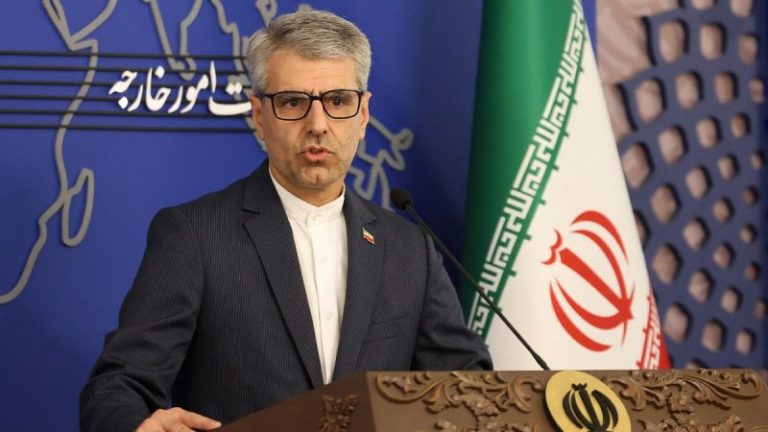
‘The threat to use the snapback mechanism lacks legal and political basis and will be met with an appropriate and proportionate response from the Islamic Republic of Iran,’ Foreign Ministry spokesperson Esmaeil Baghaei claimed during a press conference, according to a Reuters report.

Baghaei did not expand on how Iran would retaliate, but his threats come amid repeated warnings from security experts that time is running out to enforce the sanction mechanism by Oct. 18 under terms dictated by the 2015 nuclear deal. 

The comments coincided with the 10-year anniversary of the Joint Comprehensive Plan of Action (JCPOA), which was originally intended to halt Iran’s nuclear ambitions, but which some have argued was insufficient to adequately deter Tehran. 

Under the terms of the JCPOA, any signatory can unilaterally call up snapback sanctions if Iran is found to have violated the terms of the agreement. 

Though the U.S., which, alongside the U.K., France, Germany, China and Russia, signed the 2015 deal, was deemed by the U.N. and other JCPOA members unable to utilize the mechanism after Washington withdrew from the agreement in 2018 during President Donald Trump’s first term.

Despite repeated calls by the U.S. to enforce snapback – which would legally enforce all 15 U.N. members on the council, including Russia, to reimpose sanctions on Iran – no one on the UNSC or JCPOA has yet taken steps to enforce the sanctions. 

‘I would say one of the few good things about the JCPOA is that it reverse engineers the veto in the sense that you really only need one of the permanent members to be able to do this,’ Behnam Ben Taleblu, senior director of the Foundation for Defense of Democracies’ Iran orogram told Fox News Digital. ‘But why is no one doing it? It’s because it’s a risky move. 

‘I think it’s a worthwhile move, but we have to be honest – it’s a risky move,’ he added. 

Ben Taleblu explained that Iran’s most likely response to the severe sanctions under the snapback mechanism would be its abandonment of the Treaty on the Non-Proliferation of Nuclear Weapons (NPT) – an international agreement that over 190 nations have signed, pledging either not to transfer weapons to another recipient by nuclear-capable nations, or not to develop atomic arms by non-nuclear nations, among other commitments. 

The terms of the agreement are monitored by the U.N.’s International Atomic Energy Agency – which Iran has already suspended cooperation with following U.S. and Israeli strikes against its nuclear program last month. 

‘In a world in which Iran’s most likely response is to leave the NPT, one has to be confident in at least the ability of military threats to deter Iran further, or at least the credibility of America’s and Israel’s, or the international community’s, military options against Iran moving forward,’ Ben Taleblu said. 

‘The problem is the lack of a game plan. Has America provided Europe with a game plan, a road map for post-snapback?’ he added, noting there needs to be a much larger strategy for next steps should sanctions be reinforced.

Though the U.S. assesses that Iran’s nuclear program has been stunted by up to two years, experts remain convinced that Tehran’s atomic ambitions have not been deterred, and its ties to terrorist networks and adversarial nations mean it remains a top security concern.

Trump has said he is still committed to negotiating with Iran on its nuclear program, though questions remain over how long he will continue to allow negotiations to drag out before a European nation like the U.K., France or Germany must step in to enact snapback sanctions not only before the October deadline, but before Russia takes over control of the UNSC presidency that month.

Pushing through the snapback mechanism is expected to be a roughly six-week process. 

Reports on Sunday suggested that German Chancellor Friedrich Merz could call up the snapback measures as soon as Tuesday, and U.S. Ambassador to Israel Mike Huckabee championed the move in a post on X. 

But Fox News Digital could not independently verify these claims and the German Foreign Ministry told Israeli news outlet JNS that the claims were incorrect. 

The chancellor’s office did not immediately respond to Fox News Digital’s questions. 

This post appeared first on FOX NEWS

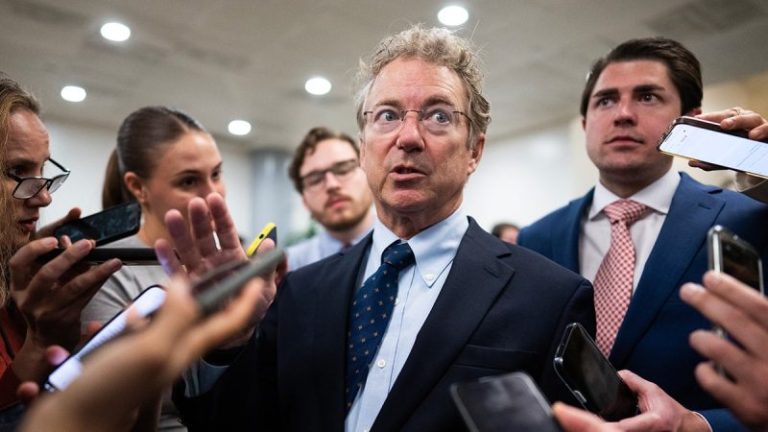
Sen. Rand Paul, R-Ky., on Monday announced that he would revive his criminal referral against Dr. Anthony Fauci, adding yet another wrinkle to the ongoing Biden White House autopen saga.

‘Today I will reissue my criminal referral of Anthony Fauci to Trump DOJ,’ Paul said on X.

It’s not the first time that Paul has issued a criminal referral against Fauci, who is the former director of the National Institute of Allergy and Infectious Diseases (NIAID) and medical adviser to former President Joe Biden.

The first came in 2021, when Paul accused Fauci of lying to Congress about funding gain-of-function research for the COVID-19 virus at the Wuhan Institute of Virology. The next came in 2023, again as part of Paul’s efforts to investigate the origins of the virus.

‘Perjury is a crime,’ Paul said. ‘And Fauci must be held accountable.’

Fox News Digital reached out to Paul’s office for comment.

This time, Paul’s reupping of his criminal referral comes after a new report added another chapter to the ongoing autopen saga, in which President Donald Trump and congressional Republicans have accused Biden of shrugging off his authority to aides and top officials in the White House to authorize his signature on a slew of pardons and documents.

The New York Times reported that emails showed that Biden’s Chief of Staff Jeff Zients gave final approval for the use of the autopen for preemptive pardons for Fauci and former Joint Chiefs of Staff Gen. Mark Milley, two of Trump’s top critics.  

Biden signed the bulk of his over 4,000 clemency documents in the waning months of his presidency, a point that Trump and congressional Republicans have pounced to hammer in the claims that the former president’s cognitive ability was declining and his staff were running the White House.

Trump has gone so far as to request Attorney General Pam Bondi open an investigation into Biden’s usage of the autopen, while Republicans in the Senate and House have all held their own committee hearings on the matter.

And earlier Monday, Trump told reporters that Biden’s alleged use of the autopen amounted to possibly ‘one of the biggest scandals that we’ve had in 50 to 100 years.’

‘I guarantee you he knew nothing about what he was signing, I guarantee you,’ Trump said. 

Diana Stancy contributed to this report. 

This post appeared first on FOX NEWS

It’s time for the prodigious power hitters to take center stage as Major League Baseball celebrates All-Star Week.

Eight feared sluggers will take part in the annual big-fly bonanza, with the winner getting to hoist the trophy and claim the title of Home Run Derby champion.

This year’s Derby is being held at Truist Park in suburban Atlanta, home of the Braves and the site of Tuesday’s All-Star Game. The participants include the major leagues’ home run leader (Cal Raleigh), the player with this season’s highest average exit velocity on batted balls (Oneil Cruz) and a pair of Georgia natives (Matt Olson, Byron Buxton).

Here’s everything you need to know about how to watch tonight’s Home Run Derby:

When is the MLB Home Run Derby?

The 2025 T-Mobile Home Run Derby will begin at 8 p.m. on Monday, July 14, from Truist Park in Atlanta.

How to watch MLB Home Run Derby

The Home Run Derby will be televised live on ESPN and ESPN2, with streaming on ESPN+.

Who is participating in the 2025 Home Run Derby?

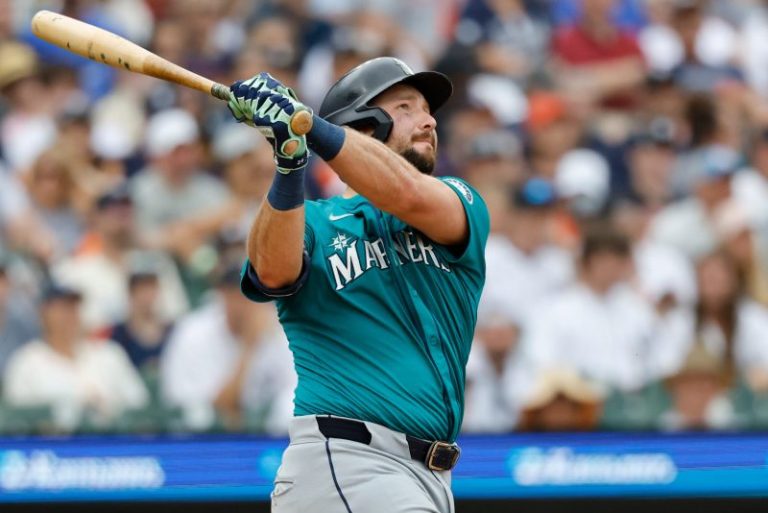
C Cal Raleigh, Seattle Mariners (38 home runs this season)
OF James Wood, Washington Nationals (24 HR)
3B Junior Caminero, Tampa Bay Rays (23 HR)
OF Byron Buxton, Minnesota Twins (21 HR)
DH Brent Rooker, Athletics (20 HR)
1B Matt Olson, Atlanta Braves (17 HR)
2B Jazz Chisholm, New York Yankees (17 HR)
OF Oneil Cruz, Pittsburgh Pirates (16 HR)

What is the Home Run Derby format?

According to MLB, each of the eight participants will hit in the first round for up to three minutes or up to 40 balls, whichever comes first. At the end of the timed round, each hitter will receive a minimum of three bonus outs, and a fourth bonus out may be achieved by hitting a home run of at least 425 feet during the bonus swings.

The top four home run totals will advance to a seeded and bracketed semifinal matchup (3 vs. 2; 4 vs. 1) in which each hitter will bat for up to two minutes or up to 27 balls. The two semifinal winners will meet in the final round, which will also last for up to two minutes or up to 27 balls. The same bonus rules will apply for all three rounds and hitters will also be given one time out per round.

Who won last year’s Home Run Derby?

Dodgers outfielder Teoscar Hernandez was crowned 2024 Home Run Derby champion after defeating Royals shortstop Bobby Witt Jr. in the finals.

Hernandez slugged 14 homers in the final round, one more than Witt, to become the first Dodgers player to win the Derby title.

This post appeared first on USA TODAY

Las Vegas will once again be the place to be during Feast Week this college basketball season.

Coined ‘November Mania,’ the Players Era Men’s Championship announced its schedule for the newly expanded 18-team men’s basketball NIL multi-team event in November in Las Vegas on July 14, and to no surprise, it’s quite loaded.

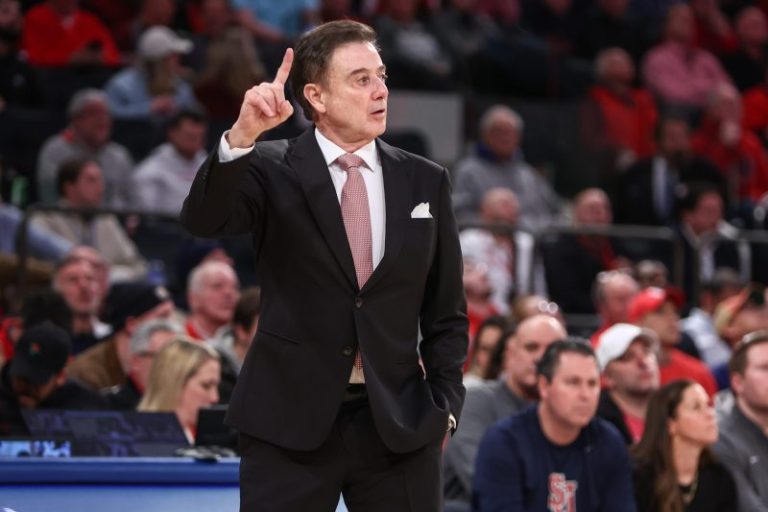
Headlining the first two days of competition in Las Vegas is Gonzaga vs. Alabama on Wednesday, Nov. 25. Preceding the Bulldogs and Crimson Tide on Nov. 25 is St. John’s vs. Iowa State, two teams that are notoriously known for their defense under Rick Pitino and T.J. Otzelberger.

Day 2 of the 2025 Players Era Men’s Championship field is headlined by an Elite Eight rematch of Houston vs. Tennessee and then Iowa State vs. Creighton, two teams that were already scheduled to meet in October for an exhibition.

The 2025 Players Era Men’s Championship field includes 14 teams that made the NCAA Tournament last season, and nine teams — Auburn, Houston, St. John’s, Alabama, Iowa State, Maryland, Oregon and Michigan — that were seeded at least a five seed or higher in the field of 68. Eleven teams that appear in the USA TODAY Sports too-early top 25 poll will also compete in Las Vegas.

The four-day multi-team event will take place in Las Vegas at MGM Grand Garden Arena and Michelob Ultra Arena from Monday, Nov. 24 through Thursday, Nov. 27 with the championship game taking place on Wednesday, Nov. 26.

There will also be a four-team Players Era Women’s Championship featuring South Carolina, UCLA, Texas and Duke that will take place Wednesday, Nov. 26 and Thursday, Nov. 27 in Las Vegas.

Here’s what to know from the July 14 announcement of the 2025 Players Era Men’s Championship:

Players Era Championship bracket 2025

The returning teams to the Players Era Festival include Alabama, Houston, Rutgers, Notre Dame, Oregon, San Diego State and Creighton. The only team that isn’t returning to the Players Era Championship from last year’s field, which Oregon won, is Texas A&M. The Aggies were replaced in the field by Maryland, which hired away Buzz Williams from Texas A&M this offseason.

Here’s a full breakdown of who is competing in the 2025 Players Era Men’s Championship:

Alabama
Auburn
Baylor
Creighton
Gonzaga
Houston
Iowa State
Kansas
Maryland
Michigan
Notre Dame
Oregon
Rutgers
San Diego State
St. John’s
Syracuse
UNLV
Tennessee

Players Era Festival 2025 schedule

Here’s a look at schedule for the 2025 Players Era Men’s Championship, which will take place MGM Grand Garden Arena and Michelob Ultra Arena in Las Vegas:

Monday, Nov. 24

Rutgers vs. Tennessee | 1 p.m. ET
Creighton vs. Baylor | 2 p.m. ET
Kansas vs. Notre Dame | 3:30 p.m. ET
St. John’s vs. Iowa State | 4:30 p.m. ET
Houston vs. Syracuse | 6 p.m. ET
Auburn vs. Oregon | 8 p.m. ET
Gonzaga vs. Alabama | 9:30 p.m. ET
Michigan vs. San Diego State | 10:30 p.m. ET
UNLV vs. Maryland | Midnight ET

Tuesday, Nov. 25

Rutgers vs. Notre Dame | 1 p.m. ET
Iowa State vs. Creighton | 2 p.m. ET
Kansas vs. Syracuse | 3:30 p.m. ET
St. John’s vs. Baylor | 4:30 p.m. ET
Houston vs. Tennessee | 6 p.m. ET
Michigan vs. Auburn | 8:30 p.m. ET
Gonzaga vs. Maryland | 9:30 p.m. ET
Oregon vs. San Diego State | 11 p.m. ET
UNLV vs. Alabama | Midnight ET

Wednesday, Nov. 26

Third Place Game: 7 p.m. ET
Championship Game: 9:30 p.m. ET

Note: For those that didn’t make the championship or third place game on Wednesday, November 26, they will play in consolation games across Wednesday, November 26 and Thursday, November 27 in Las Vegas

What is the Players Era Championshop?

The Players Era Championship is a one-of-a-kind multi-team event that takes place during ‘Feast Week’ of the college basketball season in November, during Thanksgiving week. Debuted during the 2024-25 season with an eight-team field, The Players Era Championship is a NIL-driven multi-team event with some of the best college basketball teams in the country.

Each team will receive $1 million for participating in the event, while players and teams will have the opportunity to earn more NIL while in Las Vegas. The champion of the Players Era Championship will win an additional $1 million in NIL earnings as well. Noted by CBS Sports’ Matt Norlander, the total pot for the 2025 Players Era Championship will be north of $20 million in NIL-related earnings — quite the expensive multi-team event and regular season showcase event.

This post appeared first on USA TODAY

The first mountain stage of the 2025 Tour de France led to a shake up in the race for the yellow jersey at cycling’s most prestigious event.

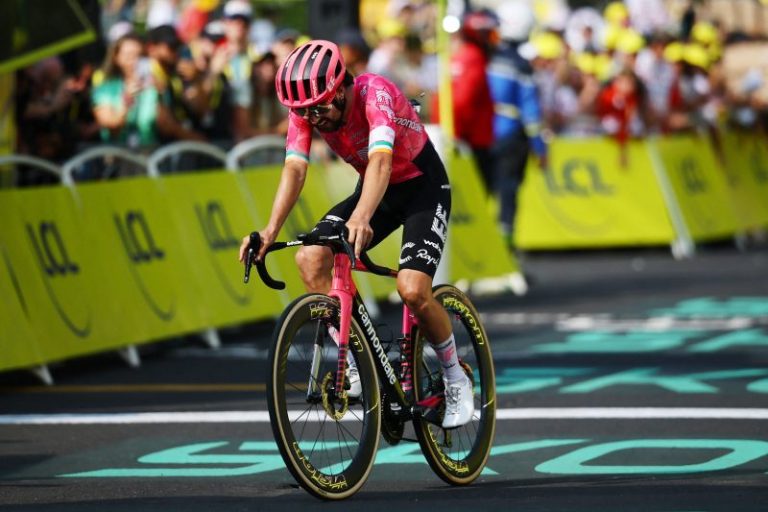
Ben Healy, who represents Ireland and won Stage 6 last week, grabbed the yellow jersey from Tadej Pogačar. Healy finished in third place during the stage, 31 seconds behind Yates but more than 4 minutes, 20 seconds ahead of Pogačar.

Healy started Monday’s race ‒ a 165.3-kilometer course that began in Ennezat and ended on Puy de Sancy mountain ‒ outside of the top 10 in the chase for the yellow jersey. He’ll now keep it for at least two days, with the first rest day of the 2025 Tour de France scheduled for Tuesday, July 15. Pogačar sits in second place in the overall standings and trails Healy by 29 seconds.

Here’s a look at the complete stage 10 results and 2025 Tour de France standings after Monday, July 14, as well as what’s coming up for cycling’s biggest race:

Stage 10 results

Final results of the 165.3-kilometer Stage 10 from Ennezat to Puy de Sancy at the 2025 Tour de France on Monday, July 14.

Tour de France 2025 standings

Ben Healy, Ireland: 37h, 41′ 39”
Tadej Pogačar, Slovenia: 37h 42′ 18” (29 seconds behind)
Remco Evenepoel, Belgium: 37h 43′ 18” (1 minutes, 29 seconds)
Jonas Vingegaard, Denmark: 37h 43′ 35” (1 minute, 46 seconds)
Matteo Jorgenson, USA: 37h 43′ 55” (2 minutes, 6 seconds)
Kevin Vauquelin, France: 37h 44′ 15” (2 minute, 26 seconds)
Oscar Onley, Great Britain: 37h 45′ 13” (3 minutes, 24 seconds)
Florian Lipowitz, Germany: 37h 45′ 23” (3 minutes, 34 seconds)
Primoz Roglic, Slovenia: 37h 45′ 30” (3 minutes, 41 seconds)
Tobias Johannessen, Norway: 37h 46′ 52” (5 minute, 3 seconds)

2025 Tour de France jersey leaders

Yellow (overall race leader): Ben Healy, Ireland
Green (points): Jonathan Milan, Italy
Polka dot (mountains): Lenny Martinez, France
White (young rider): Ben Healy, Ireland

Who’s wearing the rainbow jersey at 2025 Tour de France?

In addition to the four traditional colored jerseys at the Tour de France, the reigning world road race champion wears a rainbow-colored jersey. It’s white with five colored stripes – blue, red, black, yellow and green (same as the colors of the Olympic rings) — and is currently worn by Tadej Pogačar of Slovenia.

2025 Tour de France next stage

Stage 11 is a 156.8-kilometer course on flat terrain through Toulouse on Wednesday, July 16. Tour de France riders have a scheduled rest day in Toulouse on Tuesday, July 15.

This post appeared first on USA TODAY

A run of three consecutive conference championship appearances and two straight NFC West titles all came crashing down last season for the San Francisco 49ers. Which leads to the question: Has the 49ers’ Super Bowl window closed?

The answer to the question might depend on health.

The 49ers were ravaged by injuries a season ago. A total of 16 players ended the year on injured reserve as the team limped to a 6-11 record and last place finish in the NFC West.

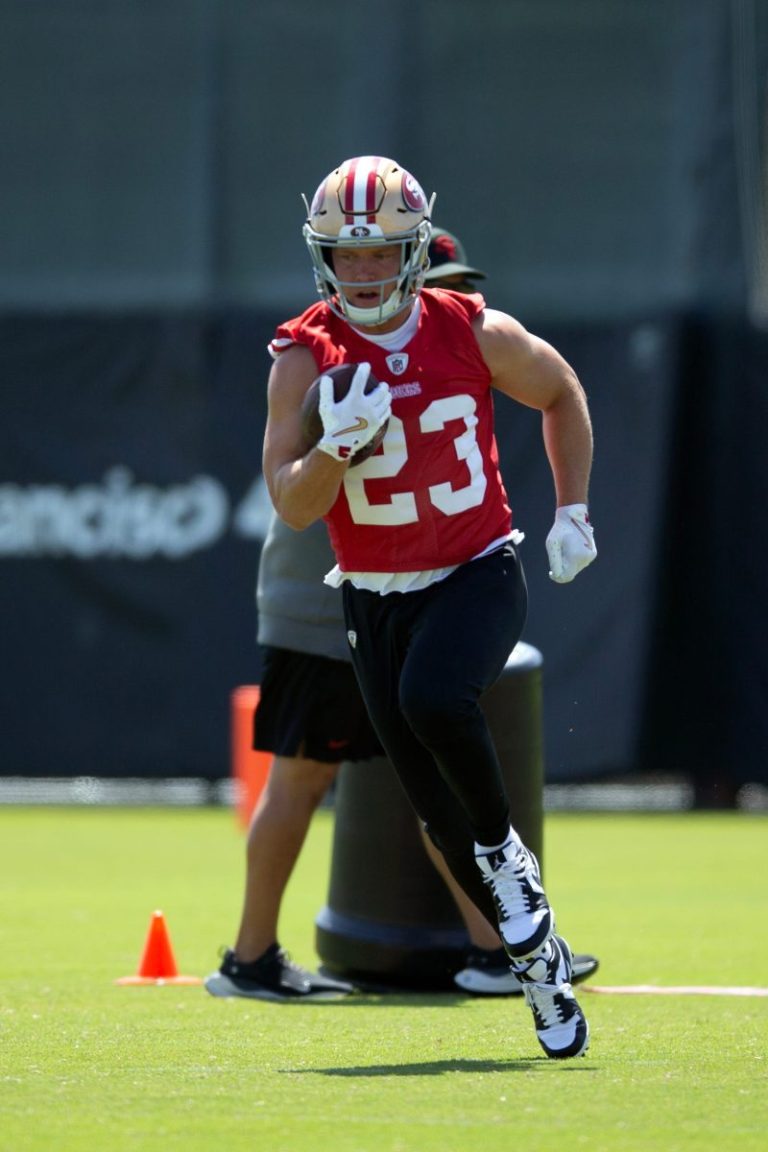
Running back Christian McCaffrey, the 49ers’ best skill position player, was one of the most notable players hurt during San Francisco’s injury plagued season. He missed San Francisco’s first eight games due to calf and Achilles injuries. He returned in November yet sustained a season-ending PCL injury in Week 12.

Injuries aren’t new to McCaffrey. He was limited to only 10 games from 2020-2021 because of injuries when he was on the Carolina Panthers before being traded to San Francisco in 2022.  

McCaffrey is one of the best running backs in the NFL when healthy (and popular fantasy football pick). Can the 29-year-old running back evade the injury bug this season?

As the 49ers prepare for training camp, McCaffrey says he’s healthy.

“I feel great. This offseason, I’ve spent a lot of time building back a base (and) starting from scratch. A lot of it was rehab,” McCaffrey said at 49ers’ minicamp. “I wanted to put myself in a position where I didn’t miss a day of OTAs and I could practice and play football again, be healthy and not miss a day. I did that and now it’s kind of kick back up the training again. I feel great.”

The 49ers need McCaffrey to return to his 2023 form where he led league in rushing yards (1,459), touches (339), yards from scrimmage (2,023) and touchdowns from scrimmage (21) on the way to winning the 2023 NFL Offensive Player of the Year award. San Francisco lost several key players this offseason, a list that includes Dre Greenlaw, Charvarius Ward, Deebo Samuel, Talanoa Hufanga, Javon Hargrave and Leonard Floyd

San Francisco’s roster shakeup puts more of an onus on the team’s star players such as McCaffrey to perform at a high level if the club wants to return to being a playoff contender.  

“You guys saw in 2023 how important he is to what we want to be as an offense. He’s an elite player and we’re going to do everything we can to get him the ball, as much as we can. And yeah, his health is really important. He’s one of our central players on offense,” 49ers offensive coordinator Klay Kubiak said this offseason. “We want to hand him the ball, we want to throw him the ball, how he changes defenses when he’s on the field for how they have to play us in certain coverages, right? Putting more guys in the box to stop the run, it has an effect on the opponents.”

Can the 49ers get vintage McCaffrey in 2025? Head coach Kyle Shanahan is optimistic.

“He is a psycho in a good way and so like he does everything imaginable every single day,” Shanahan said in June. “Last year he couldn’t because he was battling injury all last year. And this year he is healthy, so he is right back to being who he is always been and it’s really fun to watch.”

Is the demise of the 49ers premature? The 49ers have the NFL’s easiest strength of schedule based on their opponents’ winning percentage from 2024. And if McCaffrey and the team’s other core players can stay healthy, it might be too soon to write them off.

Follow USA TODAY Sports’ Tyler Dragon on X @TheTylerDragon.

This post appeared first on USA TODAY