Archive

2025

Browsing

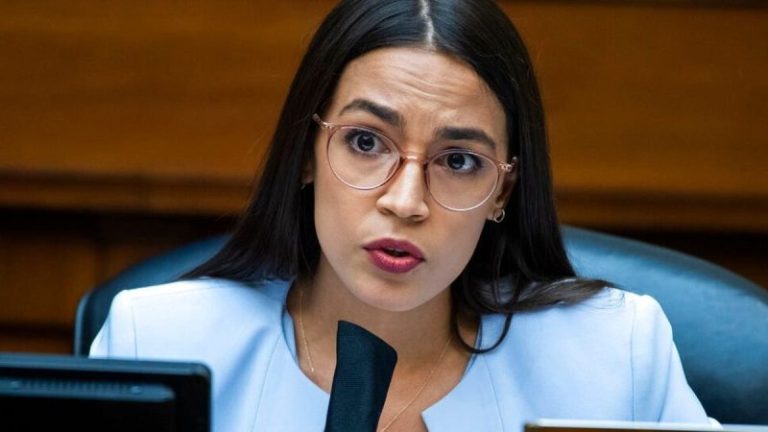
Rep. Alexandria Ocasio-Cortez, D-N.Y., is blasting people within her own party for ‘lying’ about her position during a key round of government funding votes late last week.

‘Google is free. If you’re saying I voted for military funding, you are lying. Receipts attached,’ Ocasio-Cortez wrote alongside several screenshots showing her vote ‘no’ on Republicans’ military funding bill.

‘Drag me for my positions all you want, but lying about them doesn’t make you part of the ‘left.’ If you believe neo-nazis are welcome and operating in good faith, you can have them!’

The New York City Democrat got broadsided from her left over her vote on a specific amendment aimed at blocking U.S. funding for Israel’s Iron Dome, though it did not make it into the final bill – which Ocasio-Cortez voted against.

The Democratic Socialists of America (DSA) criticized the progressive firebrand for voting against an amendment by Rep. Marjorie Taylor Greene, R-Ga., to block $500 million in Congress’ annual defense spending bill that was aimed at helping fund Israeli missile defense systems.

‘An arms embargo means keeping all arms out of the hands of a genocidal military, no exceptions. This is why we oppose Representative Alexandria Ocasio-Cortez’[s] vote against an amendment that would have blocked $500 million in funding for the Israeli military’s Iron Dome program,’ the DSA said over the weekend.

The DSA noted she did vote against the defense funding bill itself, thereby ‘voting against funding for the imperialist military-industrial complex and the Israeli genocide.’

The group added, however, ‘We were further deeply disappointed by her clarifying statement on her position on the Iron Dome.’

‘Along with other US-funded interceptor systems, the Iron Dome has emboldened Israel to invade or bomb no less than five different countries in the past two years,’ the DSA said.

‘The fact that Representative Ocasio-Cortez acknowledges that Israel is carrying out this genocide makes her support for military aid all the more disappointing and incongruous. We urge the representative to continue voting against the Iron Dome, whether it is part of a larger defense spending bill or as a stand-alone bill.’

The DSA commended Reps. Rashida Tlaib, D-Mich.; Ilhan Omar, D-Minn.; Summer Lee, D-Pa., and Al Green, D-Texas, for voting against the amendment.

Fox News Digital reached out to Ocasio-Cortez’s campaign and congressional office for comment.

She posted on X after the vote, ‘Marjorie Taylor Greene’s amendment does nothing to cut off offensive aid to Israel nor end the flow of US munitions being used in Gaza. Of course I voted against it.’

‘What it does do is cut off defensive Iron Dome capacities while allowing the actual bombs killing Palestinians to continue. I have long stated that I do not believe that adding to the death count of innocent victims to this war is constructive to its end,’ she said.

‘That is a simple and clear difference of opinion that has long been established. I remain focused on cutting the flow of US munitions that are being used to perpetuate the genocide in Gaza.’

The clash exemplifies how Israel continues to drive an ideological wedge within the Democratic Party. 

It’s not the first time Ocasio-Cortez caught heat from the progressive base for failing to take a critical enough stance on Israel.

In 2021, the New York Democrat cried on the House floor after voting ‘present’ on funding Israel’s Iron Dome defense system.

‘Yes, I wept,’ she wrote in an open letter to constituents after the incident. ‘I wept at the complete lack of care for the human beings that are impacted by these decisions. I wept at an institution choosing a path of maximum volatility and minimum consideration for its own political convenience.’

The overall bill that passed last week calls for $832 billion in defense funding for fiscal year 2026.

That’s separate from the National Defense Authorization Act (NDAA), another annual bill that sets defense and national security policy each fiscal year – essentially detailing how those funds will be spent.

Greene’s amendment to strip $500 million going toward Israeli missile defense programs lost in a lopsided 6-422 vote.


This post appeared first on FOX NEWS

WASHINGTON — One hundred games into a season is typically long past time a ballclub has its identity firmly established. Yet the San Diego Padres know it’s not too late to show the world exactly how good they are.

And more specifically, to prove to club president A.J. Preller that their squad is worthy of the aggressive moves for which he’s so renowned.

“We need to show him what we’re capable of,” All-Star outfielder Fernando Tatis Jr. tells USA TODAY Sports, “to see what kind of bold move he’ll make.”

For now, the Padres have proven they’re playoff caliber: They hold down the final wild card spot in the National League and lurk just 3 ½ games behind the Los Angeles Dodgers in the NL West.

They began the second half by winning two of three games at Washington, the start of a 10-game humidity tour that will afford them climate-controlled indoor baseball in Miami before four games at St. Louis precede a return to San Diego’s saner dew points.

It was on this almost exact trip last year – also the first after the All-Star break – that the Padres won seven of nine games, going from .500 team to a club that gave the Dodgers the hardest punch of the playoffs before losing a five-game NL Division Series.

And after that post-break burst, Preller juiced up the bullpen, swinging deals to land All-Star relievers Jason Adam and Tanner Scott, a just reward for a club that earned it.

Now, these Padres face something of a last dance. Oh, it’s never over in San Diego, not when veterans like Manny Machado ($350 million through 2033), Xander Bogaerts ($280 million, 2033) and Tatis ($340 million, 2034) are wrapped up well into the next decade, and eight other players locked into multi-year deals through at least 2027.

But a mini-window of sorts is closing: Starting pitchers Dylan Cease and Michael King, the major pieces of their pivot to deal Juan Soto to the New York Yankees, are free agents after this season.

The extent to which San Diego attempts to retain them this winter, or backfill the rotation via free agency, should be telling about the near-term fate of the franchise, which lost its franchise scion when owner Peter Seidler passed away in November 2023.

While overflow crowds at Petco Park and the many long-term commitments ensure the Padres will stay competitive, coming years may suggest a re-tooling or at least easing the foot up on the gas.

For now, though, there’s still a pennant to chase, and a case to make.

“This is the stretch,” says Cease, who shrugged off a first half in which he posted a 4.88 ERA to strike out 10 in his first start after the break. “Obviously all the games are important. But this is really, probably going to define who we’re going to be at the end of the day.”

With a president of baseball operations surely watching closely.

“I don’t think in terms of that,” says Cease, “but the better position we’re in you know the more aggressive he’s probably more willing to be.

“But he’s probably going to be aggressive either way.”

And Preller would be augmenting a club that, despite its 54-45 record, knows there’s a little more in the tank.

‘Didn’t let ’em breathe’

The Padres were hard to miss at the July 15 All-Star Game, what with five representatives led by Tatis and MVP candidate Manny Machado.

Yet the remainder of their reps came from one unit: The bullpen.

They were well-earned nods, with Robert Suárez leading the majors with 28 saves and Adam (2.05 ERA) and lefty Adrian Morejon (1.83 ERA, 0.81 WHIP) dominant almost every time out.

Yet Adam and Morejon have already pitched in 48 games, one less than the major league leaders in that category. Jeremiah Estrada has logged 47 appearances.

And the Padres have played 55 games decided by two runs or less, second-most in the majors.

Fortunately, they’re 34-21 in such games, yet the bullpen has burned a lot of high-leverage fuel to prop them up, and the sustainability questions will swirl if there are any late-inning hiccups.

To put it bluntly: The Padres need to start kicking some teams’ butts.

“Didn’t let ‘em breathe,” an approving manager Mike Shildt said after the Padres jumped the Nationals in an 8-1 victory to claim the series Sunday. “If we continue to do that – we add on – watch out.

“This team will be even more dangerous than it already is.”

That victory was jump-started by Machado and Tatis drawing first-inning walks and Bogaerts jumping All-Star MacKenzie Gore for a first-inning grand slam; it was 5-0 after one inning and 8-0 after three.

And it continued Bogaerts’ tear; he’s raised his batting average 40 points since June 19, his .382 average second in the majors in that stretch.

Bogaerts, who turns 33 Oct. 1, has had an uneven first two years in San Diego, his OPS falling 102 points to .688 last season. Yet he’s back at his familiar shortstop post and exemplifying this Padre group’s ethos: Make good swing decisions, get the ball in play, catch the ball and run the bases aggressively and smartly.

Bogaerts’ 16.2% strikeout rate is his best since 2015, when he was 22 and in his first full season with Boston. The Padres’ 695 strikeouts are fewest in the NL – 68 less than the nearest playoff contender, the Cubs.

“Just trying to swing at strikes,” says Bogaerts, who has stolen 16 bases in 17 attempts. “Keep working and keeping the same routine.”

Shildt is a bit more effusive.

“Just looks under control. Balanced. Everything looks smooth. He’s got a lot of (stolen bases), right there with Tati. And he’s playing as good a shortstop as anybody in baseball. 

“We’re getting an All-Star version of Bogey.”

A division shot, a shot in the arm

As they pass the 100-game mark in Miami, the Padres can feel good in who they are, and what is at stake.

“I know we have a good team,’ says Bogaerts. ‘We have to play some really good baseball. We have a tough stretch coming up and a big second half, so hopefully we can get there.”

Indeed, 29 of their next 35 games are against teams with winning records; the Padres are just 20-32 against teams better than .500 this season.

Things aren’t optimal, but you can see help from here. King, currently on the injured list with a pinched nerve in his right shoulder, is throwing bullpen sessions and hopes for an August return. In his stead, Nick Pivetta – signed when the veteran righty hit a free agent road bump due to the qualifying offer – is pitching better than he has in his nine-year career.

Jackson Merrill, who probably should have won NL Rookie of the Year honors last year, has been slowed by a pair of IL stints yet still has a runway to salvage the rest of his sophomore season. And for better or worse, they’ll be done with the Dodgers by Aug. 24 after playing them six times in a 10-game stretch.

Of their final 27 games, 10 are against the Colorado Rockies and Chicago White Sox, the two worst teams in baseball.

“We have a chance to win the division out here,” says Tatis. “We got a lot of baseball ahead of us. It’s a matter of taking care of business and staying consistent.”

And then there is the deadline. The Padres’ needs are not unlike almost every other contender: A starting pitcher. Another outfield or DH bat, preferably right-handed. And perhaps another reliever, though the Padres are dealing from a position of strength rather than the relief misery many other clubs find themselves in.

“There is great talent in this room,” says catcher Martin Maldonado, the 38-year-old veteran of six Houston Astros playoff runs. “The pitching staff is amazing.”

In fact, the Padres believe, whatever additions arrive can only build upon something solid. Perhaps they will push them to a division title, a round deeper in the playoffs. Point is, the Padres have put themselves in position to reap those rewards.

“Almost every facet of the game we’ve been good,” says Shildt, citing the consistency of the team’s at-bats as the last piece to slide into place.

“I do feel like we’re in a good spot and trending to a great spot.”

This post appeared first on USA TODAY

While the Washington Commanders and Cleveland Guardians have held their current names for a few years now, the teams and their past mascots – the Redskins and Indians, respectively – were thrown back into national conversation by President Donald Trump over the weekend.

Trump said in a social media post on July 20 that the Guardians and the Commanders, each playing their fourth season under their new names in 2025, should revert back to their old names.

‘The Washington ‘Whatever’s’ should IMMEDIATELY change their name back to the Washington Redskins Football Team. There is a big clamoring for this. Likewise, the Cleveland Indians, one of the six original baseball teams, with a storied past. Our great Indian people, in massive numbers, want this to happen,’ Trump’s post on Truth Social said.

‘Their heritage and prestige is systematically being taken away from them. Times are different now than they were three or four years ago. We are a Country of passion and common sense. OWNERS, GET IT DONE!!!’ Trump concluded.

Later Sunday afternoon, July 20, Trump threatened to restrict the Commanders from building on the old RFK Stadium site if the franchise doesn’t change its name.

‘I may put a restriction on them that if they don’t change the name back to the original ‘Washington (name),’ and get rid of the ridiculous moniker, ‘Washington Commanders,’ I won’t make a deal for them to build a Stadium in Washington,’ Trump posted.

The president’s most recent comments come after he previously said on social media in October 2013 that the president should not be telling the Redskins to change their name, because our country has ‘far bigger problems.’

Here’s a timeline of each franchise’s name changes.

Timeline of Washington Commanders name change

Here’s a timeline of key events in the evolution of the Washington Redskins to the Washington Commanders.

May 2013: Former team owner Dan Snyder said in an interview with USA TODAY the Redskins name would never change.
July 2020: The Washington Redskins announced it would undergo a ‘thorough review of the team’s name’ in the wake of nationwide racial injustice protests spurred in part by the death of George Floyd. Later in the month, the franchise announced it would go by the ‘Washington Football Team’ until further notice.
February 2022: Washington’s NFL team revealed it will be the Commanders, a tribute to Washington’s military ties.
July 2023: A partnership led by investor Josh Harris officially acquires the Washington Commanders.
August 2024: Harris reiterates that the team would not return to its old name for ‘obvious reasons.’

Timeline of Cleveland Guardians name change

Here’s a timeline of key events in the evolution of the Cleveland Indians to the Cleveland Guardians.

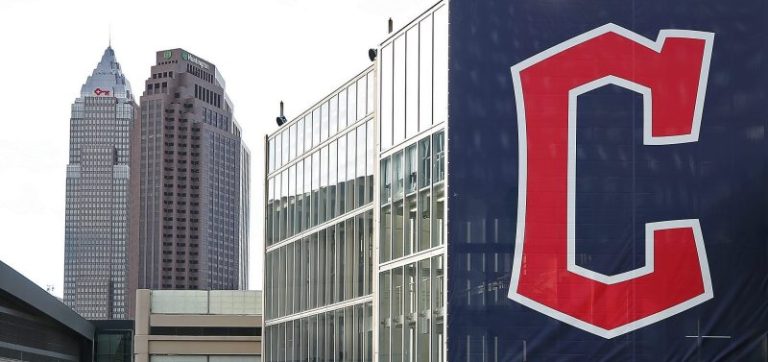
January 2014: Indians change primary logo from Chief Wahoo to the block-C. Chief Wahoo remained on the home cap and sleeves.
January 2018: Major League Baseball announces the Indians will discontinue the use of Chief Wahoo on their uniforms beginning with the 2019 season.
July 2020: Cleveland announces review of its team name in response to racial injustice protests around the U.S.
December 2020: Owner Paul Dolan announces the team will change its name.
July 2021: Cleveland announces plans to change its name to the Guardians at the conclusion of the 2021 season.
November 2021: Progressive Field begins selling Guardians merchandise at the team store.

In a meeting with reporters Sunday, July 20, Guardians’ president of baseball operations Chris Antonetti said that he was unaware of Trump’s statements prior to the meeting and that changing the name back to the ‘Indians’ was ‘not something [he has been] tracking or [has] been paying a lot of attention to.’

‘We’ve gotten the opportunity to build the brand as the Guardians over the last four years and are excited about the future,’ said Antonetti.

Antonetti did not provide any indication that the team plans on reverting to its former name.

Gabe Hauari is a national trending news reporter at USA TODAY. You can follow him on X @GabeHauari or email him at Gdhauari@gannett.com.

This post appeared first on USA TODAY

Senate Judiciary Committee Chairman Chuck Grassley released declassified documents related to the FBI’s investigation into former Secretary of State Hillary Clinton’s private email server when she served in the federal government, revealing the FBI reportedly ‘failed to fully investigate’ the matter. 

‘This document shows an extreme lack of effort and due diligence in the FBI’s investigation of former Secretary Clinton’s email usage and mishandling of highly classified information,’ Grassley said in a Monday press release.

‘Under Comey’s leadership, the FBI failed to perform fundamental investigative work and left key pieces of evidence on the cutting room floor,’ he continued. ‘The Comey FBI’s negligent approach and perhaps intentional lack of effort in the Clinton investigation is a stark contrast to its full-throated investigation of the Trump-Russia collusion hoax, which was based on the uncorroborated and now discredited Steele dossier. Comey’s decision-making process smacks of political infection.’ 

Clinton, who served as former President Barack Obama’s secretary of state from 2009 to 2013, was investigated by the FBI over claims she improperly stored or transmitted classified materials on a private email server. The FBI advised the Department of Justice in 2016, ahead of that year’s massive election that pitted Clinton against future President Donald Trump, that Clinton should not face prosecution over the matter.

‘Although there is evidence of potential violations of the statutes regarding the handling of classified information, our judgment is that no reasonable prosecutor would bring such a case,’ then-FBI director James Comey said in a press release. ‘Prosecutors necessarily weigh a number of factors before bringing charges. There are obvious considerations, like the strength of the evidence, especially regarding intent. Responsible decisions also consider the context of a person’s actions, and how similar situations have been handled in the past.’ 

Grassley specifically released declassified materials from the ‘Clinton annex,’ which is an appendix to the Department of Justice Office of Inspector General’s 2018 report that reviewed the DOJ and FBI’s handling of the Clinton investigation. Attorney General Pam Bondi, and other Trump administration leaders at other agencies, declassified the materials and delivered them to Grassley at his request, his press release reported.

The documents claim that then-FBI Director Comey, as well as other FBI leaders, obtained thumb drives related to their investigation into Clinton, but that the agency failed ‘to perform additional, targeted searches of the drives,’ according to Grassley’s office.

The thumb drives reportedly were never reviewed during the investigation, but ‘contained highly sensitive information exfiltrated from U.S. government agencies, including the Department of State, as well as then-President Barack Obama’s emails and, potentially, congressional information.’

The FBI also obtained intelligence that alleged communications between Florida Democrat Rep. Debbie Wasserman Schultz, who served as Democratic National Committee chair until July 2016 when she resigned, and individuals who worked for the Soros Open Society Foundations, which was founded by left-wing billionaire donor George Soros. 

‘The intelligence reports alleged that the Obama administration took efforts to scuttle the investigation into Clinton and protect her candidacy,’ Grassley’s release reported, but that the FBI at the time did ‘not make serious investigative efforts’ into the intelligence reports. 

Fox News Digital reached out to Clinton’s office, Wasserman Schultz’s office, the Soros Open Society Foundations and the Kettering Foundation, where Comey currently works as a senior fellow, for comment on Grassley’s release, but did not immediately receive replies. 

‘I warned years ago that the Clinton investigation failed to hit the mark, and I’m grateful the American people can finally see the facts for themselves,’ Grassley said in the press release’After nearly a decade in the shadows, this information is now coming to light thanks to Attorney General Pam Bondi and FBI Director Kash Patel’s dedicated efforts to fulfill my congressional request. 

‘I appreciate their ongoing commitment to transparency and strongly urge them to continue to fully review this matter, including its national security impact,’ he said.

Grassley’s release follows Director of National Intelligence Tulsi Gabbard’s bombshell claims that Obama-era officials reportedly ‘manufactured and politicized intelligence’ to create the narrative that Russia was attempting to influence the 2016 presidential election.

Gabbard released unclassified documents Friday that reportedly show ‘overwhelming evidence’ that then-President Obama and his national security team laid the groundwork for what would be the yearslong Trump-Russia collusion probe after Trump’s election win against Clinton in 2016. 

‘Their goal was to usurp President Trump and subvert the will of the American people,’ Gabbard had posted to X on Friday regarding the criminal referral. ‘No matter how powerful, every person involved in this conspiracy must be investigated and prosecuted to the fullest extent of the law. The integrity of our democratic republic depends on it. We are turning over all documents to the DOJ for criminal referral.’ 

Fox News confirmed earlier Monday that the DOJ received Gabbard’s criminal referral related to the matter but did not share additional comment.  

This post appeared first on FOX NEWS

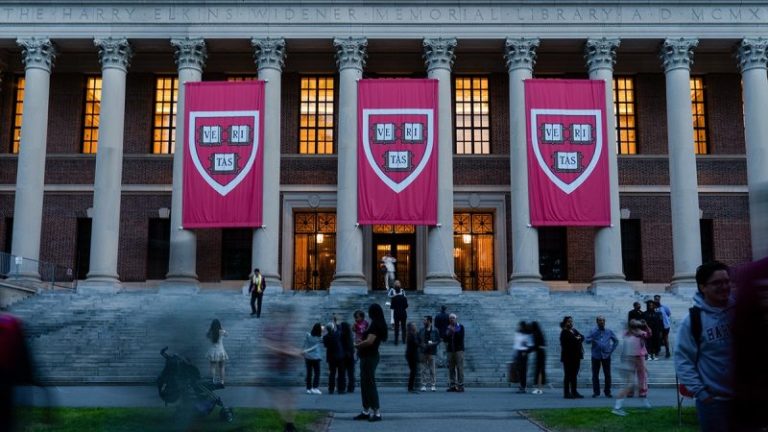
Lawyers for Harvard University and the Trump administration sparred in federal court in Boston on Monday over the administration’s decision to slash roughly $2.6 billion in federal research funding for the university – the latest in a series of high-stakes court clashes that have pitted the Trump administration against the nation’s oldest university. 

Harvard sued the Trump administration in April over the funding freeze, which it described in its lawsuit as an unlawful and unconstitutional effort to assert federal ‘control’ over elite academic institutions, according to a filing submitted to U.S. District Judge Allison Burroughs. 

The Trump administration, for its part, has accused Harvard of ‘fostering violence, antisemitism, and coordinating with the Chinese Communist Party on its campus,’ and refusing to comply with demands from a federal antisemitism task force sent to the university earlier this year.

Both sides have asked Burroughs, an Obama appointee, to issue a summary judgment by early September, which could allow them to avoid a lengthy trial before the start of the new school year.

In court on Monday, Harvard lawyer Steven Lehotsky argued that the funding cuts are an illegal attempt by the Trump administration to coerce the university into complying with the administration’s policies and violate the First Amendment and Title VI protections.

Lawyers for Harvard have argued that the Trump administration’s actions amount to an unconstitutional ‘pressure campaign’ to influence and exert control over its academic programs, which Lehotsky echoed on Monday.

He told Burroughs the funding freeze is an attempt by the Trump administration to control the ‘inner workings’ of the university, and one he argued could cause lasting damage.  

He pointed to earlier claims from Harvard that the administration ‘fails to explain how the termination of funding for research to treat cancer, support veterans, and improve national security addresses antisemitism.’

‘By accepting federal funds, Harvard agreed to abide by the provisions in Title VI and the relevant agencies’ corresponding regulations,’ lawyers for the university said in filing the lawsuit earlier this year.

But Harvard’s agreement, they said, does not constitute a ‘blank check for agencies to impose the government’s recent, unrelated demands as a condition of continued funding.’

Meanwhile, Michael Velchik, a lawyer for the Justice Department, countered that the administration has ‘every right’ to cancel the funding, which they sought to frame as a mere contract issue and one that should be heard in a different court. 

The Justice Department also reiterated that they see Harvard’s actions as violating the administration’s order combating antisemitism. 

‘Harvard claims the government is anti-Harvard. I reject that,’ Velchik said on Monday. ‘The government is pro-Jewish students at Harvard. The government is pro-Jewish faculty at Harvard.’

President Donald Trump signaled dissatisfaction with the hearing on Monday – vowing on social media to appeal any ruling against the administration to a higher court.

He also took aim at Burroughs. ‘How did this Trump-hating Judge get these cases?’ he said on Truth Social, ‘When she rules against us, we will IMMEDIATELY appeal, and WIN,’ 

Trump further took aim at Harvard, accusing the university of being ‘anti-Semitic, anti-Christian, and anti-America,’ despite having ‘$52 billion’ sitting in the bank.

‘Much of this money comes from the U.S.A., all to the detriment of other schools, colleges, and institutions, and we are not going to allow this unfair situation to happen any longer,’ Trump said. 

Burroughs ended Monday’s hearing by saying she would take the case under advisement, and would issue a ruling after she had sufficient time to weigh the matters presented by the administration and the university. 

She did not offer a timeframe for when she planned to rule on the matter.

Still, the judge appeared skeptical during the hearing of some Trump administration claims, including how it could make such wanton cuts to university funding.

At one point, Burroughs noted to Velchik that she had doubts about the government’s so-called ‘ad hoc’ decisions to cut billions in grant money without providing further evidence, documentation or procedure to ‘suss out’ whether the university or its administrators had taken sufficient steps to combat antisemItism or comply with the guidance handed down by the Trump administration.  

‘The consequences of that in terms of constitutional law are staggering,’ she told Velchik at one point during the hearing. 

‘I don’t think you can justify a contract action based on impermissible suppression of speech.’

Since Trump took office in January, the administration has targeted the university with investigations from six separate federal agencies. 

It has also sought to ban Harvard’s ability to host international students by attempting to revoke its certification status under the Student and Exchange Visitor Program (SEVP) – a program led by the Department of Homeland Security that allows universities to sponsor international students for U.S. visas. 

Burroughs in June issued a temporary restraining order blocking the administration from immediately revoking its SEVP credentials, siding with Harvard in ruling that the university would likely suffer ‘immediate and irreparable harm’ if the action was enforced.

Harvard, meanwhile, has signaled no plans to stand down in its fight with the Trump administration.

‘Ultimately, this is about Trump trying to impose his view of the world on everybody else,’ Harvard Law professor Noah Feldman said in a radio interview earlier this summer discussing the administration’s actions.

This post appeared first on FOX NEWS

Congressional Republicans are facing an uphill battle over the next two months to deliver on their promises to cut spending in the next fiscal year – while avoiding a partial government shutdown if no deal is struck.

‘When’s the last time we got 12 appropriations bills actually done, and completed in a couple of weeks? It’s almost impossible to do,’ Rep. Rich McCormick, R-Ga., told Fox News Digital last week.

Passing 12 individual appropriations bills, each funding separate aspects of the federal government, has been Republicans’ goal each time the Sept. 30 fiscal year (FY) deadline nears.

But that has not happened since 1996 — FY1997 — and the partisan environment in Washington has only gotten more polarized since. Recent Republican-backed legislation has all but sidelined the once-powerful appropriations committees in both chambers.

Meanwhile, House Republicans are more broadly eager to adhere to the Trump administration’s request to cut $163 billion from non-defense government spending than their Senate counterparts – which could result in a standoff between the two chambers.

‘It’s looking like it’s going to be higher than what the president’s budget is. And that, I’m not a fan of,’ Rep. Andrew Clyde, R-Ga., a member of the House Appropriations Committee, told Fox News Digital last week.

Another committee Republican, Rep. Riley Moore, R-W.Va., said, ‘I’m really proud of the work the committee has done so far. I do feel like we’re gonna be able to get these bills done. The question is, what’s the Senate going to do?’

Further compounding difficulties between the two sides of the U.S. Capitol is the 60-vote filibuster threshold that most bills in the Senate must ram through. 

That means that any spending bills have to be bipartisan, but after Senate Republicans advanced President Donald Trump’s $9 billion rescissions package, Senate Democrats have warned that they won’t play ball. 

Senate Majority Leader John Thune, R-S.D., said that he would like to go ahead with a regular appropriations process, but that Senate Democrats ‘have signaled that they don’t want one.’

‘The Democrats have been very clear,’ he said. ‘They are already conferencing the idea of a government shutdown — I don’t have any idea, no idea how that is helpful for them or to anyone.’ 

Senate Majority Leader Chuck Schumer, D-N.Y., previously warned that if Republicans were successful in passing the rescissions package — after icing out Democrats during the budget reconciliation process — that there could be trouble down the road in generating enough bipartisan support to pass spending bills, nonetheless avert a partial government shutdown. 

Sen. John Hoeven, chair of the Senate Agriculture, Rural Development, Food and Drug Administration, and Related Agencies appropriations subcommittee, told Fox News Digital that if Democrats planned to block everything, then ‘what would you expect?’

‘By working with us, that’s how they actually will get some of their priorities,’ the North Dakota Republican said. ‘But when they’re going to just block us, then why should their priorities be included?’

A House Appropriations Committee member who spoke with Fox News Digital on the condition of anonymity indicated that Republican lawmakers are beginning to accept the possibility of a short-term continuing resolution (CR), a stopgap measure extending the previous fiscal year’s funding levels in order to keep the government open.

‘You could see a situation where you’re in a short-term CR, and we’ll try to negotiate topline numbers and all that,’ that House lawmaker said.

It’s a situation that House Appropriations Committee Chairman Tom Cole, R-Okla., didn’t rule out to reporters early last week – while agreeing with Senate Republicans’ concerns about Democrats failing to work across the aisle.

‘I’m always worried about a shutdown, because I think the Democrats have a very hard time bargaining with Donald Trump. I mean, that’s why we ended up in a CR,’ Cole said, referring to the last round of government funding talks that resulted in a CR from March through the end of FY2025.

‘We offered them a much better deal than a CR, and they couldn’t do it. So I hope this time they can, but the temperature on the other side is very high, and Democratic voters are punishing their own members for cooperating on things like keeping the government open.’

That could create issue with members of the conservative House Freedom Caucus, however, who have fiercely pushed back against CRs or ‘omnibus’ spending bills in the past – though no such standoffs have led to a shutdown in recent years.

Both House and Senate Republicans are dealing with razor-thin margins of just three votes.

House Republicans scored an important victory last week in passing their $832 billion defense funding bill. That, along with the bill funding military construction and Veterans’ Affairs, make up more than half of the discretionary budget requested by the White House earlier this year.

But they’re not expected to hold House-wide votes on any of the remaining 10 bills before early September, when Congress returns from August recess.

Senate Republicans are also gearing up to consider their first spending bill, one for military construction and the VA, on Tuesday that will likely end up being a test of how the appropriations process, and likely government funding extension, will play out in the coming months. 

Sen. Patty Murray, the top Democrat on the Senate Appropriations Committee, said after the rescissions package passed that she wanted to see the panel return to form, and in doing so, keeping the bipartisan spirit of appropriations alive. 

‘It is unfortunate that many members of this body have voted to make that a whole lot harder,’ the Washington state Democrat said. 

One senior House GOP lawmaker who spoke with Fox News Digital ultimately downplayed concerns of a shutdown, however.

‘The factors of the Senate wanting more money than the House, Democrats wanting more money than Republicans – those have been in place for a generation. And most of the time, shutdowns don’t happen,’ that lawmaker said. 

‘It would seem to me that although the Democrats are big mad about Elon and Trump, and reconciliation, at some point, that temperature’s going to fade and people are going to realize that a shutdown doesn’t really serve our national interests.’

This post appeared first on FOX NEWS

Iran said it will hold talks with Russia and China on Tuesday in an attempt to circumvent U.N. snapback sanctions as the deadline for a nuclear agreement looms. 

‘We are in constant consultation with these two countries to prevent activation of the snapback or to mitigate its consequences,’ Foreign Ministry spokesman Esmail Baghaei said during a Monday press briefing, reported Iran International. ‘We have aligned positions and good relations.’

Both China and Russia are signatories of the 2015 Joint Comprehensive Plan of Action (JCPOA), an agreement that seemingly failed to end Iran’s nuclear ambitions following the U.S. withdrawal from the deal under the first Trump presidency in 2018 and the subsequent nuclear advances Tehran made. 

The news of the impending meeting comes one week after France, Germany and the U.K. announced they would enforce snapback sanctions on Tehran if it fails to enter into a new nuclear agreement by the end of August. 

What would need to be included in a new nuclear deal remains unclear and Iran has not yet renewed nuclear negotiations with the U.S. after Washington levied significant strikes against its top atomic facilities last month in coordination with Israel. 

The snapback mechanism was reserved under the JCPOA and allows any signatory of the agreement to recall stiff international sanctions on Iran to be enforced by all 15 members of the United Nations Security Council – including Russia and China – if Tehran is determined to have violated the terms of the 2015 deal. 

Since the first Trump presidency, the U.S. has threatened the use of snapback sanctions, though Washington can no longer call for the re-implementation of the economic tool as it left the agreement – a decision determined by the U.N. and the other JCPOA signatories. 

But top D.C. officials, like Secretary of State Marco Rubio, have continued to encourage European allies to use this tool to push Iran to cease nuclear development. 

Iran is also set to hold talks with France, Germany and the U.K. – an alliance also known as the E3 – this Friday, though the window to secure a new nuclear deal is closing despite years of repeated attempts.

‘Snapback at the UNSC remains, not just the Trump administration’s, but the international community’s most powerful political and diplomatic tool against the Islamic Republic of Iran’s nuclear program,’ Behnam Ben Taleblu, Iranian expert and senior director of the Foundation for Defense of Democracies’ Iran program, told Fox News Digital.

‘Snapback and a restoration of older, tougher UNSC resolutions that contain arms export prohibitions, missile testing prohibitions, as well as a panel of experts to monitor sanctions compliance, will actually magnify the political and military dividends that the U.S. and Israeli strikes have given,’ he added.

Security experts have been sounding the alarm for months that it will take roughly six weeks for U.N. sanctions to be enforced, largely due to procedural reasons, and the ability to enforce snapback sanctions under JCPOA terms will expire on Oct. 18.

Ben Taleblu also warned that these intense sanctions on Iran could instigate further security threats to the West when it comes to Tehran’s nuclear program, as it could prompt Iran to leave other major international nuclear agreements like the Treaty on the Non-Proliferation of Nuclear Weapons (NPT).

This post appeared first on FOX NEWS

President Donald Trump called on the Cleveland Guardians to restore their former name during the weekend and thrust a decades-long debate about the franchise’s former mascot and identity back into the spotlight. 

Trump wrote in a Truth Social post on Sunday, July 20 there is ‘a big clamoring’ for the Guardians to change the team’s name back to ‘Indians,’ and also for the NFL’s Washington Commanders to change back to the ‘Redskins.’ He requested the teams’ owners ‘get it done.’

‘Our great Indian people, in massive numbers, want this to happen. Their heritage and prestige is systematically being taken away from them. Times are different now than they were three or four years ago. We are a Country of passion and common sense. OWNERS, GET IT DONE!!!’

Here’s a breakdown of how the Guardians elected to change their name beginning with the 2022 MLB season and what led to the decision:

Cleveland MLB name origin, response

Cleveland’s MLB franchise officially changed its name to Guardians in November 2021 after decades of criticism from Native American groups and other activists who viewed the team’s former name and mascot to be culturally insensitive. There were also protests regarding the name outside Cleveland’s stadium, Progressive Field, before several home openers until the franchise elected to rename the team. Guardians is in reference to the Guardians of Traffic statues on the city’s Hope Memorial Bridge near Progressive Field.

The franchise had been under its previous name since 1915, although the original implementation is a bit murky. There are records indicating baseball writers at the time voted on the team name but that it was not intended to remain the name long-term, according to MLB.com.

The team removed its cartoon ‘Chief Wahoo’ mascot and logo from game jerseys before the 2019 MLB season, but retained the trademark and continued to sell merchandise with the logo. Guardians president of baseball operations Chris Antonetti met with reporters Sunday morning after Trump’s post became public and said he was unaware of Trump’s comments. The 2022 MLB season was the franchise’s first using the Guardians moniker.

‘Not something I’m tracking or have been paying a lot of attention to, but I would say generally I understand that there are very different perspectives on the decision we made a few years ago,’ Antonetti said, according to the Akron Beacon Journal, part of the USA TODAY Network. ‘But obviously it’s a decision we’ve made and we’ve gotten the opportunity to build the brand as the Guardians over the last four years and are excited about the future.’

Trump, who had a failed attempt to buy Cleveland’s MLB franchise back in 1983, criticized the team’s decision to change names before it had officially done so. He declared in a December 2020 tweet, ‘This is not good news, even for ‘Indians.’ Cancel culture at work!’

Trump also criticized the team’s name at a political rally in Ohio last year while he was campaigning on behalf of Ohio Senator Bernie Moreno in a Republican primary against Matt Dolan, whose father owns the Guardians. Trump said the franchise’s ownership had been ‘easily pushed around by the woke left-wing lunatics,’ according to Politico.

Why did Cleveland Guardians change their name?

Team owner Paul Dolan confirmed upon announcing the decision to change the team’s name in 2021 that his stance on the matter changed in the aftermath of the social unrest and national reckoning over race and police brutality that emerged following the controversial death of George Floyd.

The move to change the team name emerged after a survey of 40,000 fans and 140 hours of interviews with fans, community leaders and front office personnel. It occurred shortly after the Washington NFL team also elected to change its name.

‘The biggest change was what’s happened this year, starting with George Floyd’s death and the recognition that our world has changed,’ Paul Dolan said in 2021, according to MLB.com. ‘For me, that raised the question of whether we should continue using a name like Indians in this new world and what lies ahead for us. That wasn’t the decision, it was merely the decision to answer the question. We went to answer the question by talking to a wide array of local and national groups. We spoke to our whole community, in one way or another. I think the answer was pretty clear that, while so many of us who have grown up with the name and thought of it as nothing more than the name of our team and that it did not intend to have a negative impact on anybody, in particular Native Americans, it was having a negative impact on those folks.’

‘Our role is to unite the community,’ Dolan added. ‘There is a credible number of people in this community who are upset by our name, are hurt by our name, and there is no reason for our franchise to bear a name that is divisive.’

This post appeared first on USA TODAY

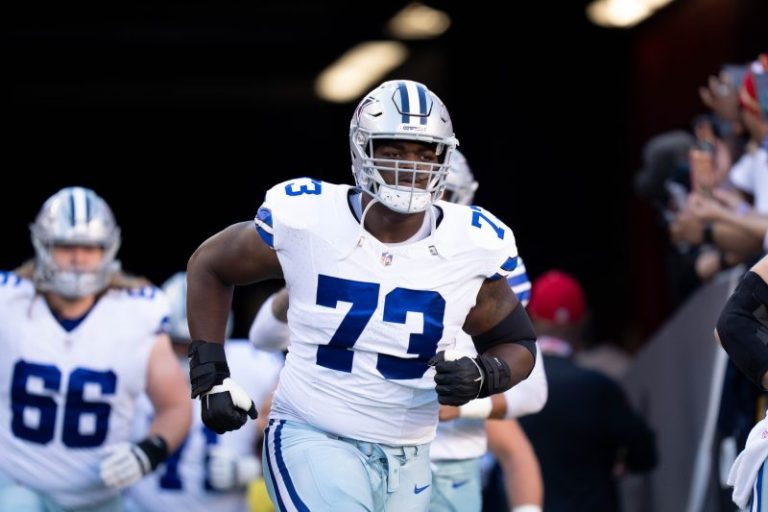
The Dallas Cowboys failed to make the playoffs in 2024, but fourth-year guard Tyler Smith isn’t afraid of setting lofty goals for the 2025 NFL season.

Smith was asked Sunday after the Cowboys arrived in Oxnard, California for training camp what his expectations were for the upcoming campaign.

‘Super Bowl champions,’ Smith replied, per ESPN’s Todd Archer. ‘That’s always the expectation.’

Smith insisted the Cowboys winning a championship for the first time since Super Bowl 30 – which was played in 1996 to put a bow on the 1995 NFL season – is ‘a realistic goal.’ Why?

‘Because we can win a Super Bowl. Why not? Why can’t we win?’ he said. ‘Do you think it’s unrealistic?’

To Smith’s point, the Cowboys made the playoffs in three consecutive seasons before their 7-10 finish last season. They failed to advance past the divisional round in any of those appearances but posted a 12-5 regular-season record each campaign.

Meanwhile, Dallas’ 2024 season was derailed by a midseason five-game losing streak, during which starting quarterback Dak Prescott suffered a season-ending hamstring injury.

Prescott said ahead of training camp he is fully recovered from that injury. His presence should provide the Cowboys with more stability at quarterback after they leaned on Cooper Rush and Trey Lance to close the 2024 campaign.

Smith also believes the additions of wide receiver George Pickens and first-round guard Tyler Booker will bolster an already strong Dallas offense.

‘I think we built a great core on offense; the addition of George and all the other key pieces,’ Smith said. ‘I think drafting Booker, he’s going to be a hell of a guy just to bolster the front line. And we have many guys across the board, but those are some of the guys who are the key pieces on what we do this year.’

This post appeared first on USA TODAY

Everything old is new again.

It’s the cyclical nature of how the world works, where trends come and go, but we always end up back in the same spot at some point.

Fashion is an industry that sees plenty of these examples.

NBA players used to wear shorts that were well above the knee, bordering on dress code violations. After a baggy shorts era, the fabric is, once again, in short supply for many players.

NFL players used to wear shoulder pads that were larger than life and leather helmets that offered little protection. While that equipment isn’t returning anytime soon, the jerseys that were worn with those looks are making a comeback.

The Washington Commanders became the latest franchise to unveil a look that honors their past. Prior to the 2024 season, teams like the New York Jets opted to reinstall their 1980s look entirely.

Here’s a look at some of the jerseys that we think teams should bring back in a continued ode to nostalgia.

NFL throwback jerseys to bring back

New York Giants (1980s)

A historic franchise that has seen many variations of their popular red, white and blue color scheme, arguably the best dressed era of Giants football belongs to the 1980s and 90s. The ‘Giants’ wordmark across the helmet looks cleaner compared to the ‘NY’ logo that currently occupies the space. Better yet, both the home and road jerseys incorporate all three colors – compared to just two for the modern threads.

‘Big Blue’ has donned these throwbacks in recent seasons, using the home and road version. The team could use a rebrand, especially after this recent run of mediocrity.

Rather than attempt a modern redesign like most teams, the Giants could skip that step, dig into the closet and pull these gems back out. As the saying goes: Look good, feel good, play good. It might be exactly what the team needs.

Baltimore Ravens inaugural uniform (1996)

It’s a pipe dream at best and virtually impossible at worst, but the Ravens are slated to celebrate their 30th season in Baltimore for 2026. The Ravens were born in 1996 after Baltimore was without a team for over a decade following the Colts departure in the middle of the night.

Left bruised by the team’s departure for Indianapolis, Baltimore fittingly hatched a team that would sport purple-and-black in an ode to Edgar Allan Poe. The original logo sported a shield with ‘Ravens’ and a stylized ‘B’ for Baltimore with raven wings on both sides. However, the look would not last.

The team lost a battle over copyright infringement – a case that made it all the way to the Supreme Court in 1998. Frederick Bouchat, a security guard from Maryland, told ESPN that he hoped to receive some recognition for his artwork as well as an autographed team helmet. Bouchat received neither and the Ravens eventually changed their logo to the current version they still sport to this day.

While unlikely, the logo combined with the raven spreading its wings on the sleeves is a snazzy look. Perhaps there is still time to right this previous wrong and give Baltimore a true throwback jersey.

Miami Dolphins orange alternate (2003-2010)

In a state known for oranges and a less-than-subtle color scheme, the Dolphins sport neither on game days. The aqua-dominated uniforms are clean and the throwbacks they currently rock are even better, but Miami needs something a little louder in the rotation – orange. Look no further than the team on the opposite coast of Florida. The Buccaneers have made people fall in love with the ‘Creamsicle’ fits they dug up from the archives.

Luckily for the Dolphins, they also have some orange fabric to bring back to life. The team wore these orange-dominated alternates in only a few seasons from 2003-2010. With the iconic Dolphins throwback helmet logo already in the closet, it makes for an easy transition.

Buffalo Bills AFL (1960s)

The Bills’ closet is an exercise in minimalism. It’s primarily the same rotation of jerseys, with a red version mixed in recently, and just one helmet. It’s a fine look, but there is always a room to spice things up. Just because a burger and fries is a good choice, it doesn’t mean you always have to order that at the restaurant.

Buffalo would benefit from throwing it back to the AFL days, honoring the past – even if it wasn’t the most glamorous. With a new Rivalries look set to come from Nike this season, we can only hope that there is some creativity exercised here that couples with the return of the old Buffalo logo.

All the NFL news on and off the field. Sign up for USA TODAY’s 4th and Monday newsletter.

This post appeared first on USA TODAY