Archive

2025

Browsing

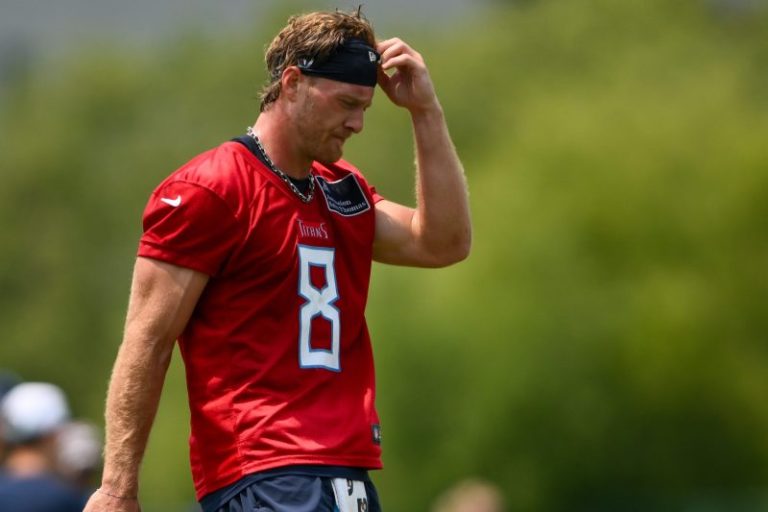
The Tennessee Titans announced Monday quarterback Will Levis is going to miss the 2025 NFL season because of a shoulder injury.

‘After consulting with doctors and his representatives, Will Levis has decided to undergo shoulder surgery that will sideline him for the entire 2025 season,’ the team said in a statement. ‘We support his decision to focus on his long-term health. He approached the offseason with professionalism and showed clear growth as a leader. We remain confident in his full recovery.’

Levis’ surgery will be performed on July 29, according to NFL Network’s Ian Rapoport, and will be to his throwing shoulder.

Levis started 12 games for the Titans during in 2024, his second NFL season. The 2023 second-round pick completed 63.1% of his passes for 2,091 yards and 13 touchdowns but struggled with turnovers, throwing 12 interceptions and recording the third-highest interception percentage (4%) league-wide behind only Anthony Richardson (4.5%) and Jameis Winston (4.1%).

Levis’ injury will give Cam Ward – the No. 1 overall pick in the 2025 NFL Draft – a clearer path to becoming the team’s starter. The 23-year-old rookie hasn’t yet been named Tennessee’s starter, but he should get a majority of the first-team reps with Levis out of the picture.

Titans QB depth chart

Below is a look at the Titans’ current quarterback depth chart, which runs three deep following Levis’ season-ending injury.

Cam Ward
Brandon Allen
Tim Boyle

Allen, 32, spent the 2024 season with the San Francisco 49ers. The Titans are the sixth team of his NFL career, and he has posted a 2-8 record across 10 starts while completing 56.7% of his passes for 1,810 yards, 11 touchdowns and eight interceptions.

Boyle, 30, joins the Titans after spending the 2024 campaign with the Miami Dolphins and New York Giants. Tennessee is his eighth different team since going undrafted in 2018; he has gone 0-5 as a starter while completing 60.5% of his passes for 1,210 yards, five touchdowns and 13 interceptions.

This post appeared first on USA TODAY

From the Horseshoe through Beaver Stadium, jumbo-size Michigan Stadium, the Rose Bowl and three different Memorial Stadiums, Big Ten football venues rank among the most iconic in the Bowl Subdivision.

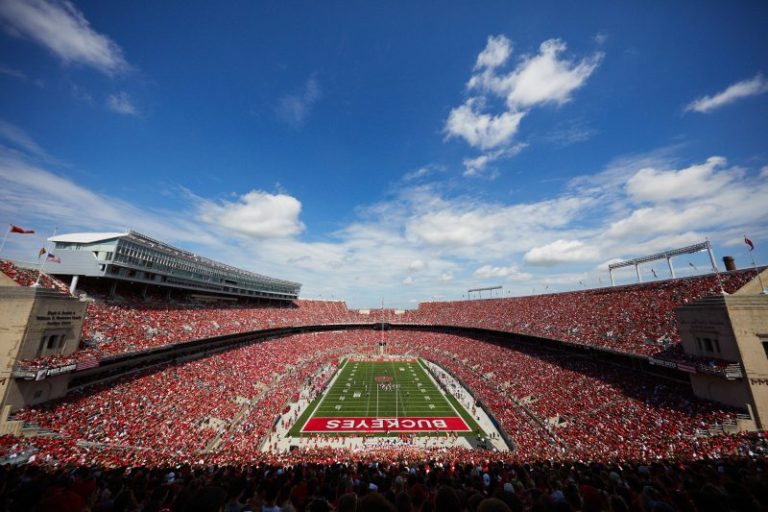
But none are as uninviting as Ohio State’s Ohio Stadium. For decades, the Horseshoe has hosted memorable national champions and helped maintain the Buckeyes’ place among the sport’s most dominant programs.

There’s the annual “White Out” game at Penn State. Michigan’s record-setting capacity. The beauty of Pasadena at dusk. The unforgettable atmospheres at schools such as Wisconsin, Iowa, Nebraska and more.

From top to bottom, it’s hard to top the history and tradition found at these Big Ten venues. In terms of pure intimidation, though, there’s a very clear group at the top (and bottom). Here’s how USA TODAY Sports ranks Big Ten home fields from nastiest to kindest for visitors:

1. Ohio Stadium, Ohio State

Trips to the Horseshoe are basically a guaranteed loss for teams in and out of the Big Ten, unless you’re Michigan. (The Wolverines have taken two in a row at home in the series.) Since the stadium opened in 1922, Ohio State has been dominant at home, including a remarkable 55-3 record (94.9%) since 2016. The Buckeyes have turned the ‘Shoe into maybe the most hostile locale in the sport.

2. Beaver Stadium, Penn State

“White Out” games are among the most unique home-field sights in college football: Nittany Lions faithful across the board dress up in white tops to provide visitors with an unsettling, eye-popping backdrop. Combined with the deafening roar provided by 100,000-plus fans, this makes Beaver Stadium one of the elite settings in the Bowl Subdivision.

3. Autzen Stadium, Oregon

Autzen became a house of horrors for opponents in the late 1990s before reaching a peak during the Chip Kelly era, when the Ducks rolled off a 21-game winning streak before an epic loss to Southern California in 2011. Oregon has lost just once at home since hiring Dan Lanning in 2022 and gone unbeaten the past two years.

4. Michigan Stadium, Michigan

The largest venue by capacity in college sports? Check. But that’s selling Michigan Stadium short: This is the largest stadium by total seating in the Western Hemisphere and the third-largest in the world. It may not be the loudest in the conference, but it might be the most iconic.

5. Husky Stadium, Washington

There are few scenes in college football more aesthetically pleasing than a packed, rocking-and-rolling Husky Stadium with sailboats dotting Lake Washington – what locals call “sailgating.” Historically, Husky Stadium has been seen as maybe the loudest spot in the FBS when things are going right for Washington.

6. Kinnick Stadium, Iowa

In addition to goosing Iowa’s Big Ten chances – the Hawkeyes are 22-6 at home since 2021 – Kinnick is home to the best new tradition in the sport: Since 2017, players and fans turn at the end of the first quarter and wave to the patients at Stead Family Children’s Hospital. “The Hawkeye Wave” is already an indelible part of the college football fabric.

SPECIAL PLACE: Inside the unique Iowa wave tradition

7. Camp Randall Stadium, Wisconsin

At the end of the third quarter, Wisconsin fans will “Jump Around” to the 1992 House of Pain classic of the same name. The tradition started in 1998, took a very brief, highly controversial, one-game hiatus in 2003 and became a rallying cry during the Badgers’ development into a Big Ten powerhouse under former coaches Barry Alvarez and Bret Bielema.

8. Memorial Stadium, Nebraska

A decided lack of success at home in recent years dunks the Cornhuskers down this list. But when Nebraska is playing well, Memorial Stadium provides one of the best home-field advantages in college football. And even when the program is struggling, Memorial Stadium’s deep wealth of history captures your attention and is sure to be sold out.

9. L.A. Memorial Coliseum, Southern California

The Coliseum’s art-deco-influenced design speaks to the venue’s extensive history as the host not just for USC football but also multiple Olympic Games, the Super Bowl, NFL regular-season games and more. While it can be hit or miss, the Coliseum ratches up the intensity for opponents such as Notre Dame or rival UCLA.

10. Spartan Stadium, Michigan State

Spartan Stadium hosted one of the defining matchups of the 20th century during the famous (or infamous) 10-10 tie against Notre Dame in 1966. More recently, Michigan Stadkum turned in a dominant run at home under former coach Mark Dantonio, though that edge has diminished this decade with the program’s downturn.

11. Huntington Bank Stadium, Minnesota

The newest stadium in the Big Ten (for now, as we’ll see), Huntington Bank Stadium’s capacity of just over 50,000 makes it one of the coziest venues in the conference. The open-air site will also turn frigid and occasionally snowy later in the year, though that doesn’t stop locals from enjoying a Dilly Bar in the cold temps.

12. Memorial Stadium, Illinois

After suffering a major dip in attendance during the woebegone days of the late 2010s, Illinois has reestablished a home-field advantage since Bielema was hired in 2021. The Illini averaged almost 55,000 fans per home game last year, the program’s most since 2009. Illinois won six home games last season for the first time since 2001.

13. Ross-Ade Stadium, Purdue

We won’t penalize Purdue for incorrectly calling its oversize bass drum the “World’s Largest Drum.” (There’s nothing wrong with a little hyperbole.) Ross-Ade has been inhospitable at times throughout its history: in the 1930s, the 1960s, the late 1970s and most recently during the Joe Tiller era (1997-2008).

14. Memorial Stadium, Indiana

The home-field edge was alive in 2024, at least, when IU sold out its final four home games in Curt Cignetti’s debut and drew a record single-season total of 386,992 fans. While not the case historically, the Hoosiers showed that Memorial Stadium can bring the noise when the team is competitive.

15. SECU Stadium, Maryland

As a men’s and women’s lacrosse venue, SECU Stadium can be hard to beat. Football? There’s a national title banner hanging inside (1953), and SECU (long known as Byrd Stadium) also hosted Queen Elizabeth II and Prince Phillip for an upset of North Carolina in 1957. But the stadium doesn’t wobble the knees of Big Ten opponents.

16. SHI Stadium, Rutgers

The environment can be intimidating, as Washington found out last September. Back in the program’s Big East days, then-and-now coach Greg Schiano helped Rutgers turn SHI Stadium (then called Rutgers Stadium) into a surprisingly unfriendly host. That hasn’t always been the case in the Big Ten, though.

17. Rose Bowl, UCLA

There’s the Rose Bowl game – one that has long defined college football’s postseason – and there’s the Rose Bowl itself, which shares an address with the bowl game but little of the pageantry and hoopla (or fans). UCLA’s home stadium is at least 30 minutes or so from campus, longer depending on traffic, and while the crowd will show up for rivals such as USC there is little in the way of an obvious home-field advantage.

18. Ryan Field, Northwestern

The Wildcats will play their games in 2025 at Northwestern’s soccer and lacrosse stadium while extensive renovations are completed at Ryan Field. When done, Ryan will be a slightly cozier, much more 21st-century venue “engineered to create a powerful homefield sound advantage at games,” the school said. We’ll have to wait and see where it ranks when complete.

This post appeared first on USA TODAY

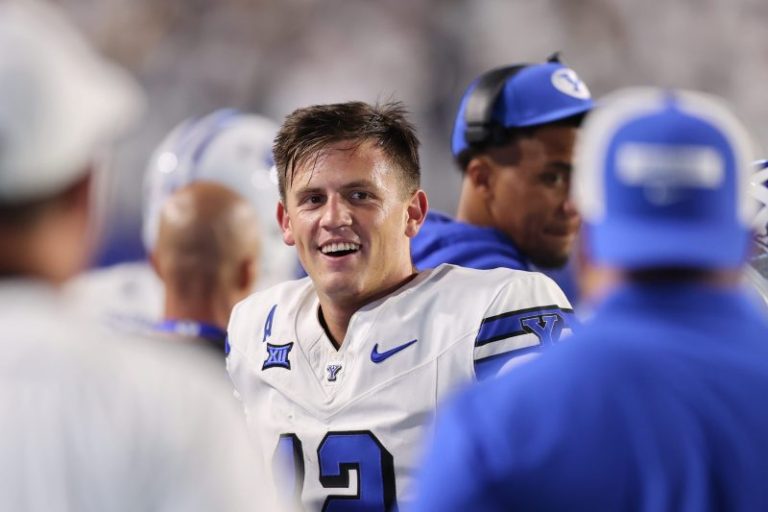
Six weeks before Week 1 of the 2025 college football season, Jake Retzlaff has found a new home.

The former BYU quarterback has committed to Tulane, according to a report from ESPN on July 21.

The move comes 10 days after Retzlaff left BYU rather than sit through a planned seven-game suspension for a violation of the school’s honor code, which prohibits premarital sex.

Retzlaff had been accused in a lawsuit in May of raping a woman in 2023. Retzlaff denied the allegation and the lawsuit was dismissed on June 30, with the parties jointly agreeing to dismiss with prejudice.

Given the severity of the allegations Retzlaff faced, Tulane spent more than a week doing background on the transfer quarterback and had the school’s Title IX office review the move, according to ESPN. The report added that Retzlaff will join the Green Wave as a walk-on, as he was unable to enter the NCAA transfer portal given when he left BYU.

Retzlaff threw for 2,947 yards, 20 touchdowns and 12 interceptions last season and ran for 417 yards and six touchdowns. He helped lead the Cougars to an 11-2 record and a No. 14 ranking in the final US LBM Coaches Poll.

At Tulane, he’ll aim to win the starting job vacated by Darian Mensah, who transferred to Duke after leading the Green Wave to the American Athletic Conference championship game last season. Retzlaff is one of four transfer quarterbacks on the roster, joining Brendan Sullivan (Iowa), Kadin Semonza (Ball State) and Donovan Leary (Illinois). On3 Sports reported that Retzlaff has not been promised the starting job.

Coach Jon Sumrall had originally brought in TJ Finley from Western Kentucky, but the well-traveled quarterback entered the transfer portal in April after he was arrested after police linked the license plate of a truck he was driving to a stolen car in Atlanta (Finley’s attorneys claimed he was victim of a scam after buying a used truck through a social media marketplace).

After going 9-5 in Sumrall’s first season, Tulane is expected to be one of the best teams this season outside the power conference level, which could put it in contention for a designated spot in the College Football Playoff.

This post appeared first on USA TODAY

College basketball’s newest postseason tournament will be significantly shrunk next season.

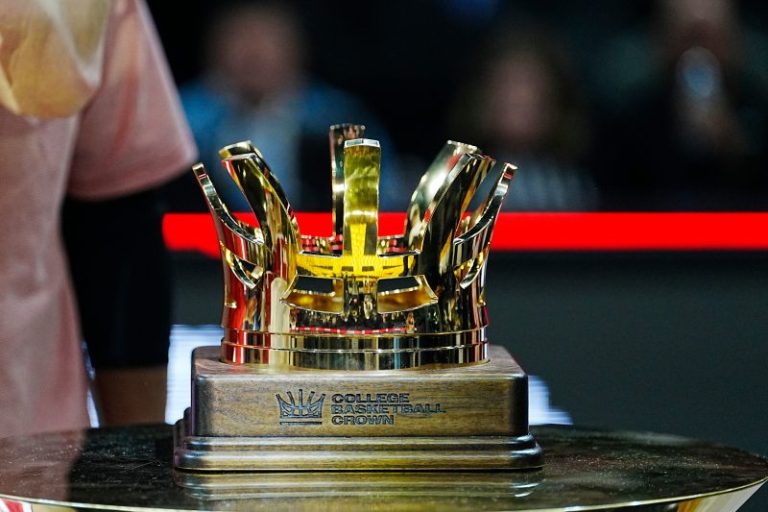
The College Basketball Crown will return for 2026, Fox Sports and AEG announced on Monday, July 21. However, the field will be cut in half from the inaugural edition, going down from 16 teams to eight.

The tournament, which will remain in Las Vegas and be played April 1-5, will feature the top two teams from the big Ten, Big 12 and Big East that didn’t receive an NCAA Tournament bid, as well as two wild card selections determined by its committee.

Name, image and likeness prizes are the big selling point for the tournament. In 2025, champion Nebraska received a $300,000 prize pool for winning the tournament, while Central Florida got $100,000 as the runner-up. Semifinalists Boise State and Villanova each got $50,000 for their respective finishes.

‘We launched the College Basketball Crown to create more opportunities for elite competition during the thrilling college basketball post-season – and we saw an incredible response from fans, conferences, and players for the inaugural tournament,’ Fox Sports executive vice president Jordan Bazant said in a statement.

Why is College Basketball Crown field is smaller?

While it’s a positive sign the tournament will return, it’s notable how the field is cut in half. In the 2025 tournament, 16 teams were in, with guaranteed spots for the Big Ten, Big 12 and Big East.

However, teams like Indiana, Iowa, Ohio State and West Virginia turned down invitations, even though they were the next best teams left in their respective conferences.

It has become an ongoing trend for squads that just miss out on the tournament. When teams don’t hear their names called on Selection Sunday, it usually means players hit the transfer portal, leaving rosters in doubt of whether it will have a suitable lineup to play in. The NIT and other smaller postseason tournaments have dealt with the same issues.

With a smaller field, the College Basketball Crown could have a better field for its bracket, and it comes with possible expansion of the NCAA Tournament in 2026. Still, there is a chance the best teams left in each of conference could decline any postseason invitation, which would leave the College Basketball Crown to go down the conference standings to fill its spots.

Still, the College Basketball Crown was a success in terms of non-NCAA Tournament postseasons. It averaged 260,000 viewers on Fox and FS1, higher than the NIT on ESPN’s platforms at 212,000 viewers. The championship game between the Cornhuskers and Knights − which went against the women’s basketball national championship − averaged 822,000 viewers, the most for a non-NCAA Tournament postseason game.

College Basketball Crown 2026 schedule

The 2026 College Basketball Crown will be played April 1-5 at the MGM Grand Garden Arena and T-Mobile Arena in Las Vegas, and it will air on Fox and FS1.

Quarterfinals: April 1-2 at MGM Grand Garden Arena
Semifinals: April 4 at T-Mobile Arena
Final: April 5 at T-Mobile Arena

This post appeared first on USA TODAY

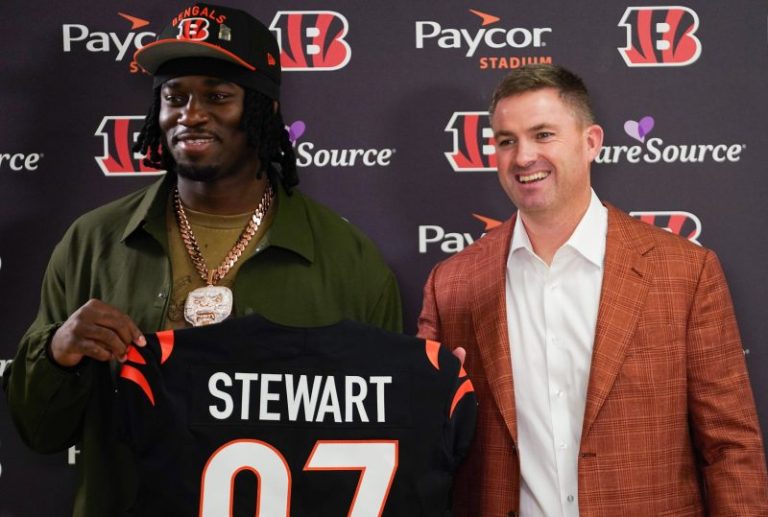
The 2025 NFL Draft saw nine defensive linemen selected in Round 1. This year’s rookie class features many promising talents on the interior and at edge, including former Texas A&M defender Shemar Stewart.

Thanks to an incredible performance at the NFL combine, the Cincinnati Bengals drafted Stewart in the first round at No. 17 overall.

Nearly three months later, Stewart remains the only unsigned pick from the first round of the 2025 NFL Draft. Stewart’s representation and the Bengals front office have yet to agree on a rookie contract due to a dispute in language regarding guarantees.

Cincinnati started training camp for their rookies on July 18 and Stewart was not in attendance as the negotiations continue.

Stewart was a key part of a talented defensive line at Texas A&M last season and still has one year of NCAA eligibility left after three years with the team.

These negotiations could drag on through training camp and that leaves some wondering if Stewart could return to College Station for 2025.

Here’s what to know about Stewart’s future options as training camp gets going for veterans in Cincinnati this week.

Can Shemar Stewart go back to college?

As his contract negotiations continue, Stewart’s been back at Texas A&M to work out with his former teammates but he cannot return to the school this fall.

Because Stewart has been drafted by an NFL team, current NCAA rules prevent him from returning to Texas A&M in 2025. Stewart and his representation could take this to court to change those bylaws.

It’s not fully clear but Cincinnati would very likely still hold Stewart’s rights as the No. 17 overall pick from the 2025 NFL Draft.

Texas A&M coach Mike Elko said July 17 that the team has no intention of having him play for them this season.

‘Shemar has been around,’ Elko told ESPN. ‘He’s very comfortable in our program. Really likes what we do training wise. He’s been training, getting ready for his season this year with the Bengals. We wish him the best.’

Shemar Stewart contract update

Bengals de facto general manager Duke Tobin and owner Mike Brown both provided updates on negotiations with their top pick.

‘I don’t blame Shemar,’ Tobin said. ‘He’s listening to the advice he’s paying for. I don’t understand the advice… We’re treating him fairly.’

The Bengals are trying to change the language of the contract to potentially void future guarantees. Stewart’s representation wants the same contract previous Bengals first-round picks signed.

Brown got more into specifics when asked about the negotiations.

‘I hesitate to get into the details but basically it turns on whether out years are guaranteed if he gets involved in conduct detrimental to football,’ Brown told reporters. ‘Detrimental to football in recent years has been violence to women, that’s the one that comes to mind.

If we get a player who gets involved in something like that or does something that is just unacceptable, guess what? I don’t want to pay him. I really don’t. If he’s sitting in jail, I don’t think I ought to be paying him.’

This post appeared first on USA TODAY

The B1G rig ran out of gas. The SEC drained its fuel.

The Big Ten waged an all-out pursuit to rig the College Football Playoff with a stacked deck of automatic bids. Its plan for playoff evolution stalled after facing resistance from rival conferences.

The Big Ten lacked support from the SEC, a necessary ally, to advance a 16-team playoff that would preassign half the bids to the Big Ten and SEC.

SEC commissioner Greg Sankey extinguished what little life remained for the Big Ten’s auto-bid-laden plan when he put his foot down last week at his conference’s media days. If the SEC doesn’t secure one of the expanded playoff plans it desires, Sankey said, then it’s comfortable sticking with the current 12-team playoff format. And the SEC doesn’t want the Big Ten’s plan.

Well, that’s that then.

Big Ten’s College Football Playoff plan stalls without SEC support

The 12-team playoff will be in place for 2025. The format for 2026 and beyond remains under debate. To expand the playoff, the SEC and Big Ten would need to align behind a plan by a Dec. 1 deadline.

Sankey referenced multiple playoff plans the SEC remains willing to consider. Notable by its omission: The Big Ten’s plan that would earmark 13 of 16 spots as automatic bids preassigned to conferences.

“We’re going to have 5+7, 5+9, (or) 5+11,” Sankey said.

The Big 12 and ACC support the 5+11 plan. The SEC retains interest in it, too.

In the math equations Sankey mentioned, the “5” means five automatic bids – one each going to the five-best conference champions. The second number in the equation means the number of at-large bids.

“We’ll continue to debate whether expansion beyond 12 is appropriate,” Sankey said.

That debate won’t, apparently, include the Big Ten’s favored 4+4+2+2+1+3 plan, which would have awarded four automatic bids to the Big Ten, four more to the SEC, two apiece to the ACC and Big 12, and one to the next-best conference champion, leaving three at-large bids.

The SEC soured on this auto-bid plan in the spring, and, in Sankey’s annual state-of-the-conference address, he offered no sign of retreating toward the Big Ten’s plan.

No individual conference wields the authority to unilaterally push through an expanded playoff. College Football Playoff executive director Rich Clark told reporters last month that playoff expansion would require the SEC and Big Ten to agree upon a plan. What if they can’t agree? That’s a win for the status quo.

“We have a 12-team playoff, (including) five conference champions,” Sankey said. “That could stay if we can’t agree.”

Big Ten commissioner Tony Petitti will get the next word in this debate when his conference’s media days begin this week. But, really, what can he say?

Sankey insists the SEC is comfortable staying at 12 if it can’t achieve one of its preferred playoff expansion plans. If that’s the case, then the Big Ten’s pursuit of a 4+4+2+2+1+3 playoff has died on the vine.

To which I say, good riddance.

The 12-team playoff relies on a committee of subjective and imperfect humans to select most of the field, but subjectivity and imperfection are insufficient grounds to scrap this system in favor of a playoff that would pre-emptively reward conferences based on their history, brand and clout, instead of letting on-field results determine bid allocation.

Big Ten, SEC alliance fizzles amid competing interests

Early last year, the SEC and Big Ten announced a pact to work together to chart college sports’ future. Stakeholders from the two super conferences met multiple times and discussed playoff expansion possibilities. Much like the Big Ten’s previous alliance with the ACC and Pac-12, the bromance between the Big Ten and the SEC fizzled in the face of competing interests.

There’s ‘no rift’ between Sankey and Petitti, the SEC commissioner said on his conference’s television network last week, but they have ‘different views.’

The Big Ten, according to multiple reports, might be willing to compromise in favor of a 5+11 playoff if the SEC and ACC add another conference game and join the Big Ten and Big 12 in playing nine conference games.

That’s a fine wish, but the Big Ten lacks the muscle to force another conference to change its schedule. Sankey would like the SEC add a ninth conference game, but his membership has resisted his preference.

The Big Ten played its playoff hand, but it lacked the cards to win the bet.

“You always want to have a really good set of cards,’ Sankey said. ‘You want to have a good hand to play, right? I think we have the best hand.”

The Big Ten is running out of moves.

Blake Toppmeyer is the USA TODAY Network’s national college football columnist. Email him at BToppmeyer@gannett.com and follow him on X @btoppmeyer.

This post appeared first on USA TODAY

INDIANAPOLIS — Fashion and culture collided with basketball on Friday during the 2025 WNBA All-Star weekend.

USA TODAY’s Studio IX was on site with Wasserman Basketball and Ally for The Collective’s WNBA All-Star VIP party. Throughout the night, several of the biggest names in women’s basketball stopped by to walk the red carpet, take photos and mix and mingle. While in attendance, USA TODAY asked players questions that many people want to know the answers to, such as, ‘What is something you would never be caught dead wearing?’

‘Bootcut leggings,’ Dallas Wings rookie Paige Bueckers said, smiling. ‘Sorry. No offense.’

Indiana Fever guard and All-Star 3-point contest participant Lexie Hull also offered her thoughts. ‘Low-rise jeans,’ Hull revealed, shaking her head and also smiling through clear disdain. ‘I hate them.’

Sending thoughts and condolences to lovers of bootcut leggings, low-rise jeans and shark boots everywhere.

This post appeared first on USA TODAY

Former Obama administration officials named in new revelations surrounding the origins of the Trump-Russia investigation have been silent amid allegations they ‘manufactured’ intelligence that led to the opening of the yearslong probe.

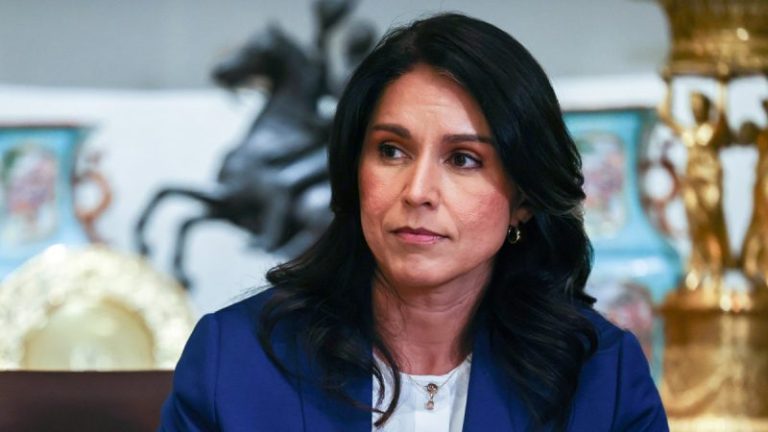
On Friday, Director of National Intelligence Tulsi Gabbard declassified documents revealing ‘overwhelming evidence’ that demonstrated how, after President Donald Trump won the 2016 election against Hillary Clinton, then-President Barack Obama and his national security team laid the groundwork for what would be the yearslong Trump–Russia collusion probe.

Gabbard said the documents revealed that Obama administration officials ‘manufactured and politicized intelligence’ to create the narrative that Russia was attempting to influence the 2016 presidential election, despite information from the intelligence community stating otherwise.

The new documents name former President Barack Obama, top officials in his National Security Council, then-Director of National Intelligence James Clapper, then-CIA Director John Brennan, then-National Security Advisor Susan Rice, then-Secretary of State John Kerry, then-Attorney General Loretta Lynch, and then-Deputy FBI Director Andrew McCabe, among others.

Gabbard, on Monday, sent a criminal referral to the Justice Department related to those findings. DOJ officials did not share further details on whom the criminal referral was for.

Gabbard told Fox News Digital that this ‘is not a partisan issue,’ but one that ‘concerns every American.’

‘The information we are releasing today clearly shows there was a treasonous conspiracy in 2016 committed by officials at the highest level of our government,’ Gabbard told Fox News Digital. ‘Their goal was to subvert the will of the American people and enact what was essentially a years-long coup with the objective of trying to usurp the President from fulfilling the mandate bestowed upon him by the American people.’

Gabbard said the ‘egregious abuse of power and blatant rejection of our Constitution’ by Obama-era officials ‘threatens the very foundation and integrity of our democratic republic.’

‘No matter how powerful, every person involved in this conspiracy must be investigated and prosecuted to the fullest extent of the law, to ensure nothing like this ever happens again,’ Gabbard said. ‘The American people’s faith and trust in our democratic republic, and therefore the future of our nation, depends on it.’

Gabbard added: ‘As such, I am providing all documents to the Department of Justice to deliver the accountability that President Trump, his family, and the American people deserve.’

Gabbard’s criminal referral comes just a week after CIA Director John Ratcliffe sent a criminal referral for Brennan.

FBI Director Kash Patel opened a criminal investigation into Brennan and former FBI Director James Comey for potential wrongdoing related to the Trump-Russia probe, including allegedly making false statements to Congress, Justice Department sources told Fox News Digital.

None of the former Obama-era officials have responded to Fox News Digital’s request for comment.

This post appeared first on FOX NEWS

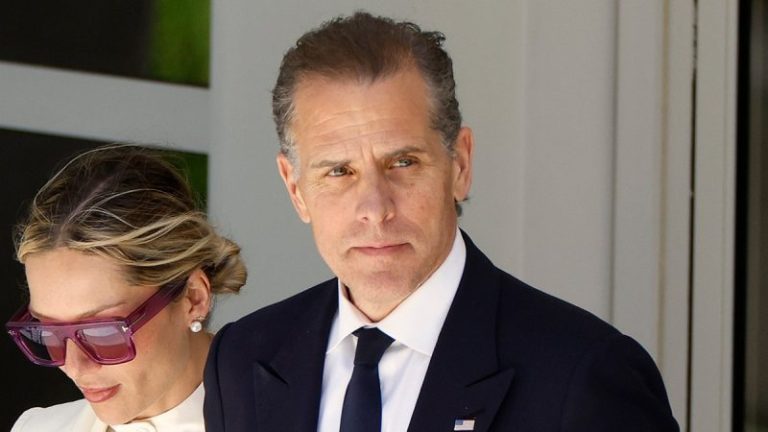
Former special counsel David Weiss got little support from the Department of Justice (DOJ) when he sought lawyers to help prosecute President Joe Biden’s son Hunter, Weiss told Congress during a recent closed-door interview.

Amid delicate plea deal negotiations between Hunter Biden and Weiss in 2023, Weiss said he asked the DOJ deputy attorney general’s office for a team of trial lawyers and received a single resume, according to a transcript of the interview reviewed by Fox News Digital.

‘Actually, as I think about the sequencing, I had started to reach out myself directly to offices or people that I knew and make my own inquiries,’ Weiss told House Judiciary Committee staff of his struggle to hire lawyers for the sensitive job of trying the president’s son.

Weiss appeared on Capitol Hill for the interview in June as part of the committee’s inquiry into the DOJ’s years-long investigation and prosecution of Hunter Biden.

Now no longer a DOJ employee, Weiss spoke candidly for hours with the committee, shedding new light on his interactions with the Biden DOJ and giving fresh insight into why Hunter Biden was never charged with certain violations.

Who is David Weiss?

Weiss was appointed U.S. attorney of Delaware during the first Trump administration and began investigating Hunter Biden at that time. Former Attorney General Merrick Garland made Weiss special counsel in August 2023 after a plea agreement with Hunter Biden fell apart.

Republicans had accused Weiss of offering Hunter Biden a ‘sweetheart’ plea deal that involved only misdemeanors. But in an unusual move, a judge rejected the deal, leading Weiss to instead bring two successful indictments against the then-first son, one for illegal gun possession and another for nine tax charges, including three felonies.

Weiss came under enormous scrutiny by Republicans and Democrats for his handling of the investigation, which had become a hyper-political national news story centered on the salacious behavior and wrongdoings of Hunter Biden, a recovering drug and alcohol addict, and allegations that Joe Biden was complicit in his son’s crimes.

Republicans claimed Weiss was not tough enough on Hunter Biden, while Democrats said he was being treated more harshly than a typical defendant because he was the president’s son. Joe Biden ultimately granted an unconditional pardon to his son, a move widely criticized by members of both parties.

Weiss gets ‘one resume’

Weiss said during the interview that he was ‘fortunate enough to obtain a couple very excellent prosecutors,’ a reference to the two DOJ attorneys who handled trial preparations for Hunter Biden.

But, Weiss also indicated that when he first requested lawyers in the spring of 2023, he had to be self-sufficient in finding them and that the deputy attorney general’s office was unhelpful. Weiss noted he did not deal directly with former Deputy Attorney General Lisa Monaco at all and assumed she was recused from Hunter Biden’s cases.

Weiss said that at one point he ran into the director of the Executive Office for United States Attorneys, which handles recruitment, at an event and asked if any hiring progress had been made.

Weiss did not ‘have a whole lot of success’ during that conversation, he said.

‘What do you mean, you didn’t have success? … They didn’t give you lawyers?’ a committee aide asked.

‘I got one resume,’ Weiss replied.

The aide asked, ‘Nobody wanted to come prosecute Hunter Biden?’

‘I don’t want to say that because I don’t know that they weren’t trying to find people,’ Weiss said. ‘All I know was I didn’t get a whole lot of resumes.’

Weiss eventually gained two attorneys, Leo Wise and Derek Hines, who went on to secure a conviction by a jury in Delaware after a week-long trial on gun possession charges and a guilty plea to all nine of Hunter Biden’s tax charges.

A committee aide pressed Weiss on why he felt there was ‘such a drought’ of help at DOJ headquarters.

‘As I said a moment ago … I did not receive a lot of resumes in response to my initial request,’ Weiss said, noting that eventually the DOJ’s Public Integrity Section assisted him.

Asked if the Public Integrity Section helped him because Weiss proactively reached out, Weiss replied, ‘Probably.’

Burisma tax years and FARA

For his testimony, the Trump DOJ gave Weiss permission in a letter to talk to Congress about Hunter Biden’s cases. The department noted, however, that it could not authorize Weiss to talk about the former first son’s confidential tax information.

Weiss suggested, though, that he would have charged Hunter Biden for the 2014 and 2015 tax years if he could have.

‘To the extent I can put together — and this is general — a case that involves more years than not and allows me to more fully develop allegations about a course of conduct and a scheme, that’s better for the prosecution,’ Weiss said. ‘So it’s not like I’m looking to cut out years generally when you’re pursuing a tax investigation.’

During the years in question, Hunter Biden was raking in $1 million per year as a board member of the Ukrainian energy company Burisma while his father, then vice president, was overseeing foreign policy with Ukraine. The scenario became ripe for questions about conflicts of interest, in part because of suspicious interactions between Hunter Biden and the Obama State Department.

In Weiss’s final special counsel report, he dodged explaining why he brought charges of failure to pay taxes and tax evasion against Hunter Biden only for the tax years after 2015, citing Joe Biden’s pardon. Now, Weiss said, he would be more willing to talk about it if he were legally allowed to do so.

Chairman Jim Jordan, R-Ohio, pressed Weiss, saying the ‘political aspects of Burisma’ raised ‘glaring’ questions about the prosecutorial decisions made for the years for which Hunter Biden avoided charges.

‘I understand,’ Weiss replied. ‘Absolutely. Yes. And I wish that I could address it. But it’s my understanding that, for me to trip into 2014 and ’15 is a violation of [U.S. code].’

Weiss also told the committee his team had no serious discussions about charging Hunter Biden under a foreign lobby law called the Foreign Agents Registration Act.

‘We just couldn’t put together a sufficient case,’ Weiss said.

This post appeared first on FOX NEWS

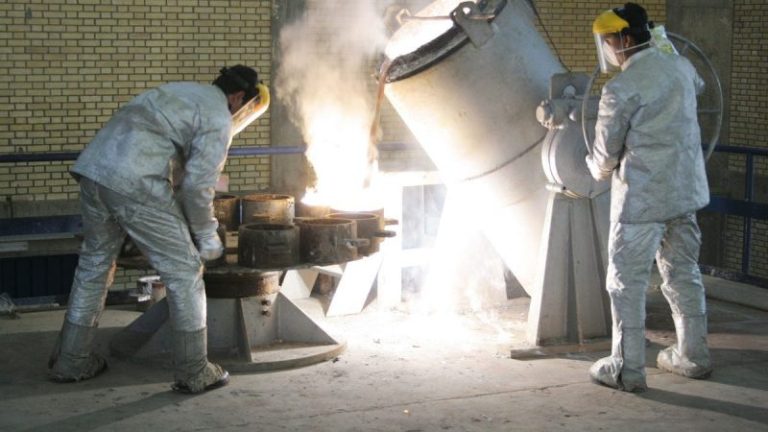
Iran on Monday confirmed it will not give up its nuclear enrichment program in an exclusive interview with Fox News’ Bret Baier and Iranian Foreign Minister Abbas Araghchi, set to air at 6 pm on Monday’s ‘Special Report.’ 

Araghchi confirmed that the U.S.’s top ambition in preventing Tehran from further developing a nuclear weapon by blocking all enrichment capabilities is unlikely to come to fruition, despite threats of intense international sanctions.

‘We cannot give up enrichment because it is an achievement of our own scientists. And now, more than that, it is a question of national pride,’ Araghchi said. ‘Our enrichment is so dear to us,’ he told Bret Baier, anchor and executive editor of Special Report, in a clip released before the full interview airs.

The foreign minister confirmed that the extent of the damage to its nuclear facilities caused by the U.S. strikes last month was ‘serious,’ but he would not comment on whether any enriched uranium survived the strikes.

‘Our facilities have been damaged – seriously damaged,’ Araghchi said. ‘The extent of which is now under evaluation by our atomic energy organization.

‘But as far as I know, they are seriously damaged,’ he added, noting that the damage has also currently ceased all enrichment capabilities for the time being. 

Iran has maintained that it was not seeking a nuclear weapon, but in the lead up to the Israeli and U.S. strikes, security experts were sounding the alarm that Tehran was likely capable of producing at least one nuclear weapon in a matter of days, and several warheads in a matter of weeks. 

While nuclear enrichment is a process needed for nations that also rely on nuclear power, Iran’s nuclear energy usage amounts to less than one percent of the nation’s energy consumption. 

The U.S. has suggested that given the low amounts of nuclear energy which Iran relies on, it should join a consortium that could potentially involve nations like the UAE and Saudi Arabia for its enriched uranium needs for civil nuclear power use. 

But Iran has repeatedly rejected this proposal, with Iranian Supreme Leader Ayatollah Ali Khamenei also referring to Tehran’s capabilities as a source of national pride just last month.

‘The number of countries in the world that have achieved a complete nuclear fuel cycle is perhaps fewer than the number of fingers on a person’s two hands,’ Khamenei said in early June. ‘We’re capable of producing nuclear fuel starting from the mine and all the way to the power plant.’

But Iran also faces immense international sanctions and even greater arms restrictions should it fail to reach a nuclear agreement by the end of August – though it is unclear if that agreement must include the U.S. or just European nations including France, Germany and the U.K., also referred to as the E3.

Iranian officials will not only be meeting with its top allies and chief adversaries to the West, Russia and China, on Tuesday, but Tehran is also set to hold talks on Friday with officials from the E3.

Washington and Tehran have yet to resume talks following the U.S. strikes last month.

This post appeared first on FOX NEWS