Archive

2025

Browsing

Finally, some good news for the New York Giants.

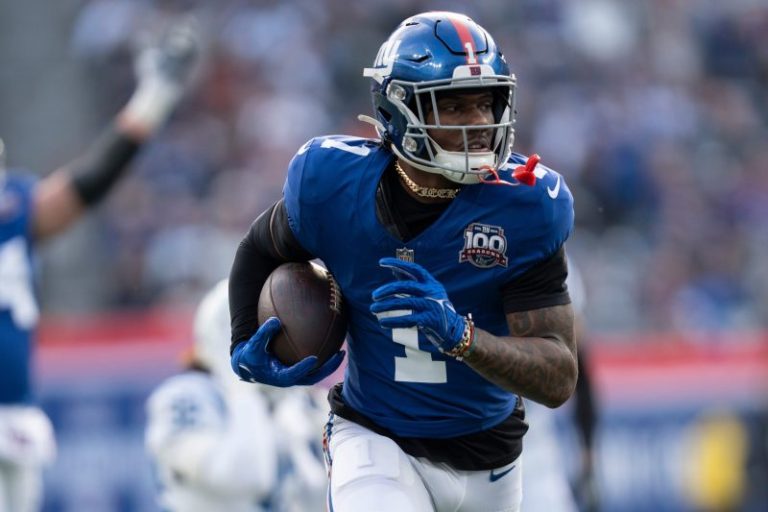
Wide receiver Malik Nabers has been cleared to practice at training camp and is expected to be a full participant, according to head coach Brian Daboll.

Nabers had missed all of the Giants’ spring practices at OTAs and mandatory minicamp while rehabbing a lingering toe injury. The toe issue first arose in college, according to Daboll, but Nabers re-aggravated it last season. The Giants have been particularly cautious with their 2024 first-round pick since then.

Daboll has said multiple times this offseason – throughout OTAs and minicamp – that there wasn’t any concern that Nabers would miss training camp practices, let alone the start of the season. With Wednesday’s announcement making it official, Giants fans can seemingly let out a sigh of relief.

Nabers was one of the lone bright spots for the 3-14 Giants as a rookie last year. His 109 catches for 1,204 yards and seven touchdowns all led the team and were impressive feats amid a chaotic situation at quarterback – Big Blue sent out four different starters under center – that unfolded throughout the season.

The 109 catches Nabers tallied were more than any other wide receiver in 2024, and his yardage total was the second-most of all rookie pass-catchers (tight ends included).

Not only that, but Nabers’ 1,204 yards made him the first Giants player to surpass 800 receiving yards in a season since Odell Beckham Jr. in 2018.

Now that he’s officially been declared healthy and a full go for training camp, Nabers will be the clear No. 1 target for starting quarterback Russell Wilson in New York this year.

This post appeared first on USA TODAY

There’ll be no free hamburgers in Milwaukee.

And it was ‘The Big Dumper’ who spoiled the tasty reward for Brewers fans.

The Seattle Mariners defeated the Brewers, 1-0, on Tuesday, July 22, halting Milwaukee’s winning streak at 11 games. A sixth-inning solo home run by Cal Raleigh was the winning tally for Seattle. It was a league-leading 39th home for ‘The Big Dumper,’ who won the MLB Home Run Derby last week.

The Brewers came tantalizingly close to providing free hamburgers for their fans, courtesy of local restaurant chain George Webb. George Webb has a long-standing promotion that if Milwaukee’s baseball team wins 12 games in a row, the restaurant hands out free burgers. It’s only happened twice previously, in 2018 and 1987.

Cal Raleigh cooks up a dinger

Raleigh — who hit an AL-record 38 home runs before the All-Star break — clobbered his 39th of the season and remained ahead of the New York Yankees’ Aaron Judge, Arizona Diamondbacks’ Eugenio Suárez and Los Angeles Dodgers’ Shohei Ohtani, each with 36.

Jacob Misiorowski strikes out seven

The biggest stories, every morning. Stay up-to-date on all the key sports developments by subscribing to USA TODAY Sports’ newsletter.

This post appeared first on USA TODAY

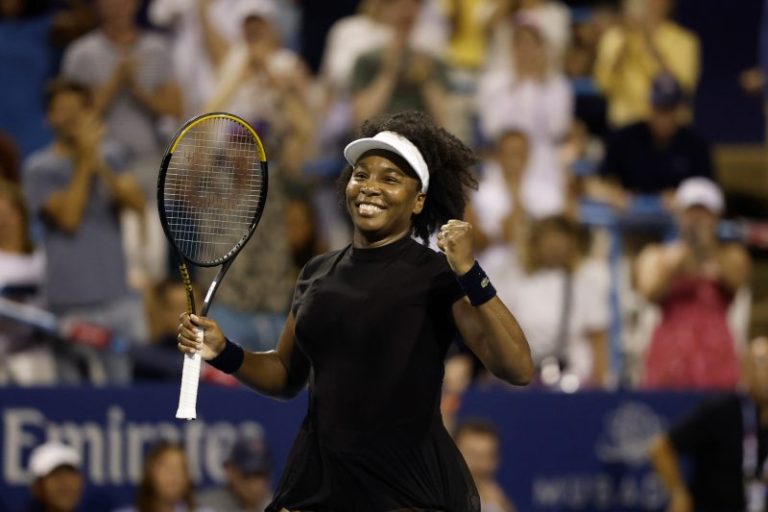
The match was over, the smile was beaming and here was Venus Williams – the seven-time Grand Slam champion, the 45-year-old icon of tennis, the soon-to-be bride – telling jokes about health insurance. 

“I had to come back because they informed me earlier this year I’m on COBRA,” she said, giggling through her on-court interview with Rennae Stubbs after a what-did-we-just-watch 6-3, 6-4 victory over world No. 35 Peyton Stearns at the Mubadala Citi DC Open. “So I was like, ‘I gotta get my benefits!’ You guys know what it’s like. I’m always at the doctor so I need this insurance.” 

It’s a great line. And the funniest part about it is, when Williams entered this tournament as a wild card having not played on the WTA Tour since March 2024 and without winning an official match in 709 days, there was no clear reason why she would play at all.

Williams admits that she holds her cards close to the vest on purpose. She never officially retired. She never closed the door. In her last few years on tour, the results weren’t good. Injuries piled up, as they tend to do for athletes who approach their 40s.

So was entering this tournament out of nowhere a one-off or a comeback? She wouldn’t say.

Who cares. What she produced was magical, even if it’s just for one memorable night. 

“There were so many times I wanted to coast and kind of chill,” Williams said. “Do you know how hard it is to play tennis? You don’t know how much work goes into this. It’s 9-to-5 except you’re running the whole time and then lifting weights and then you’re repeating it the next day.” 

But her support team wanted her to play at least one more time. Her fiancé, the Danish-Italian actor Andrea Preti, had never seen her play. 

And my goodness did she deliver something special, the kind of thing only tennis can provide. 

Williams is not the oldest women’s player to win a match on the WTA Tour. That would be Martina Navratilova winning a first-round match at Wimbledon in 2004. But given how little she had played recently and who she was up against Tuesday – a very good 23-year-old who wasn’t even born when Williams won her fourth major at the 2001 US Open – it’s arguably the most stunning result of the year in any sport. 

How did she do it? She served incredibly well with nine aces, executed an incredibly-aggressive game plan that made Stearns uncomfortable and baited her into too many unforced errors.

Is it sustainable? We’ll see. Williams plays the No. 5 seed, Magdalena Frech, on Thursday. 

The more important question is whether this win will encourage Williams to keep going and perhaps even request a wild card to the US Open, which would very likely be granted given her stature in the history of the sport. 

Had Williams been defeated soundly Tuesday, it might have been controversial to give a 45-year-old a pass into the US Open field. But now, it kind of seems like a no-brainer if that’s what she wants to do.

“I’m just here for now, and who knows?” she said in her pre-tournament press conference. “Maybe there’s more. At the moment, I’m focused just on this. I haven’t played in a year. There is no doubt I can play tennis, but obviously coming back to play matches, it takes time to get in the swing of things. I definitely feel I’ll play well. I’m still the same player. I’m a big hitter. I hit big. This is my brand.” 

Everyone got a good laugh out of that, including Williams. But when she got out on the court, it turned out to be true. She hit big enough to knock the No. 35 player in the world off the court. She’s probably not going to contend for another Grand Slam, but if you can do that, you belong. 

None of us are truly timeless, but Williams made a heck of an argument in the other direction Tuesday. At 45, she looked as fit and powerful as she had in years. Whether it’s the beginning of something or one last hurrah before the end, the fact she was willing to put herself out there at all was a gift to tennis and fans who have watched her play pro tournaments for 31 years. Even if it’s just for the health insurance, Williams’ presence can still elevate a tennis tournament. And even if Tuesday was the last match she ever wins, delivering that moment was something everybody who cares about the sport should be thankful they got to witness.

This post appeared first on USA TODAY

On Day 22 of college sports’ new world, perhaps the people who have been screaming for guardrails will finally get it. 

In this reality, whatever piece of metal a conference commissioner puts in the ground is destined to be bulldozed and blown up by attorneys who have had their number at every step of this embarrassing journey.

There are no guardrails, folks. There aren’t going to be. 

After years of litigation, a $2.8 billion settlement and creation of a fancy new organization called the College Sports Commission, all the power conferences really have left is a faint hope that the Wild West is a little less wild.

(‘Conversations with class counsel remain ongoing regarding guidance around VBP and collectives,’ a CSC spokesperson told USA TODAY Sports in a statement. ‘A formal statement will be issued when the issue has been resolved.’) 

In the first wave of submissions to the CSC clearinghouse for approval of NIL deals, nearly all of those tied to collectives were denied because they did not meet the organization’s standard of a valid business purpose.

Initially, that definition relied on whether an NIL deal was made with an entity whose business purpose was “providing goods or services to the general public for profit.” Most collectives do not meet that standard. 

It’s the difference between Texas’ Quinn Ewers being in a Dr. Pepper commercial and an athlete getting paid to go to a meet-and-greet with fans organized by the collective whose purpose was to raise more money for the collective, which would then be distributed to more players.

It’s also the difference between being able to control booster money flowing to players or a system that is nearly as impossible to control as it has been for the last four years. 

Power conference officials and many university administrators thought that by settling the House case, they were going to put the collectives out of business. But when lead House plaintiff attorney Jeffrey Kessler threw a flag on the CSC and said their interpretation wasn’t in the agreement, it took just a handful of days for schools to back down. 

Why?

Because they don’t want another class-action suit brought by collectives, which was undoubtedly coming. Because they don’t want to lose again, which was highly likely given the track record of trying to control any of this money flowing through the system without a collective bargaining agreement. Because even after everything, they are still desperate to turn a bad hand into a straight flush.

Over and over and over again. 

Oh, sure, the CSC will supposedly be able to deny these booster deals if they don’t fall within a specific range of fair market value – whatever that means. And guess what, they’re going to get sued for that too. Because who can really determine what fair market value is for an NIL deal from a collective? Unlike, say, a traditional ad campaign, collectives only exist within the realm of college sports. The only established value is what someone’s willing to pay. 

So good luck to all of the conference officials trying to argue that one at their next court date. 

And this is all happening during a week when conference commissioners are addressing the media before the football season, using well-established propaganda like “I haven’t had one student-athlete come up to me and say they want to be an employee.”

The ACC’s Jim Phillips rolled that one out Tuesday, and it begs several questions.

First, if college athletes are being sent checks by athletic departments tied to their membership on a football or basketball team, are they not already employees by common sense definition? Second, are we really to believe that football players are randomly approaching the commish, patting him on the back and saying, “Gee, Mr. Phillips, whatever you do please don’t make us employees?” And finally, how many 18-year old athletes even really know the implications of employment and having a players’ union and engaging in collective bargaining in order to form an opinion on the matter? 

Let’s get real here. 

At this point, schools and conferences should be begging for employment and collective bargaining. Obviously, the so-called guardrails they negotiated with Kessler aren’t going to fundamentally bring order to this system, and absent antitrust protection from Congress, they’ll get knocked down one by one.

Until they finally admit that every effort to control the money that boosters are willing to pay players has failed, and that the next one is destined to fail too without collective bargaining, they will continue taking a paddle to the rear end and turning around to ask Kessler for one more swat. 

This post appeared first on USA TODAY

The 2025 Major League Soccer All-Star Game will feature some of the league’s top talents as they face off against Liga MX standouts on Wednesday.

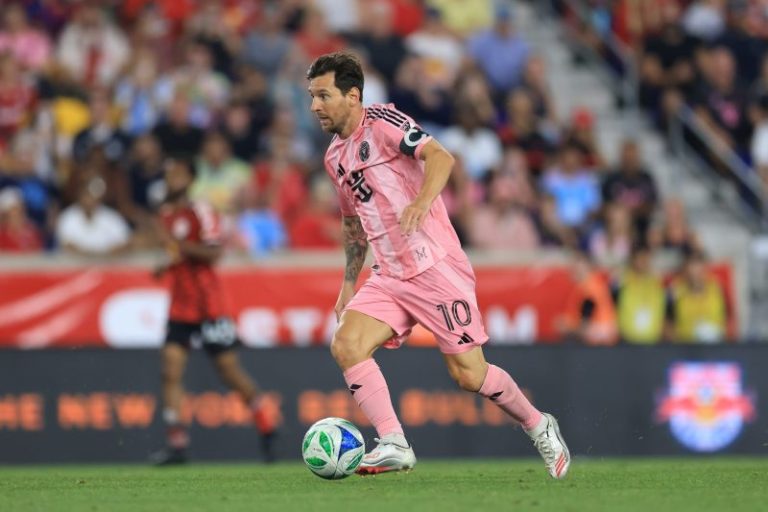
The MLS All-Star team features some of the biggest names in the league, including Inter Miami stars Jordi Alba and Lionel Messi, Nashville SC forward Sam Surridge, and USMNT players Diego Luna, Sebastian Berhalter, and Alex Freeman. The roster also includes MLS MVP candidates Evander, who is recognized as one of the league’s most effective players with 15 goals and eight assists, and San Diego FC attacker Anders Dreyer, known for his consistency on the field.

On the Liga MX side, get ready to witness a star-studded lineup with Mexico national team players Alexis Vega and Luis Ángel Malagón leading the team alongside Colombian star and former Real Madrid players Sergio Ramos and James Rodríguez.

Don’t miss out on the 2025 MLS All-Star Game, here’s how you can catch all the action:

How to watch the MLS All-Star Game

The 2025 MLS All-Star Game is scheduled for Wednesday, July 23, at 9 p.m. ET at Q2 Stadium in Austin, Texas. Fans can catch all the action on MLS Season Pass on Apple TV.

Date: Wednesday, July 23
Time: 9 p.m. ET
Stream:Apple TV
Location: Q2 Stadium in Austin, Texas

Watch MLS All-Star on Apple TV

2025 MLS All-Star roster

Goalkeepers:

Dayne St. Clair (Minnesota United FC / Voted In)
Brad Stuver (Austin FC / Coach’s Selection)
Yohei Takaoka (Vancouver Whitecaps FC / Coach’s Selection)

Defenders:

Jordi Alba (Inter Miami CF / Voted In)
Max Arfsten (Columbus Crew / Coach’s Selection)
Tristan Blackmon (Vancouver Whitecaps FC / Voted In)
Michael Boxall (Minnesota United FC / Voted In)
Alex Freeman (Orlando City SC / Voted In)
Jakob Glesnes (Philadelphia Union / Coach’s Selection)
Andy Najar (Nashville SC / Coach’s Selection)
Miles Robinson (FC Cincinnati / Coach’s Selection)

Midfielders:

Sebastian Berhalter (Vancouver Whitecaps FC / Voted In)
David Da Costa (Portland Timbers / Coach’s Selection)
Cristian Espinoza (San Jose Earthquakes / Coach’s Addition)
Evander (FC Cincinnati / Voted In)
Carles Gil (New England Revolution / Coach’s Addition)
Diego Luna (Real Salt Lake / Voted In)
Hany Mukhtar (Nashville SC / Coach’s Addition) 
Jeppe Tverskov (San Diego FC / Coach’s Selection)
Obed Vargas (Seattle Sounders / Coach’s Addition) 
Philip Zinckernagel (Chicago Fire FC / Coach’s Selection)

Forwards:

Patrick Agyemang (Charlotte FC / Commissioner’s Pick)
Tai Baribo (Philadelphia Union / Voted In)
Denis Bouanga (LAFC / Voted In)
Anders Dreyer (San Diego FC / Coach’s Selection)
Hirving ‘Chucky’ Lozano (San Diego FC / Commissioner’s Pick)
Lionel Messi (Inter Miami CF / Voted In)
Marco Pašalić (Orlando City SC / Coach’s Addition)
Diego Rossi (Columbus Crew / Coach’s Selection)
Sam Surridge (Nashville SC / Coach’s Addition) 
Brandon Vazquez (Austin FC / Coach’s Selection /Injured)
Brian White (Vancouver Whitecaps FC / Voted In)

2025 Liga MX All-Star roster

Goalkeepers:

Luis Malagón (Club América)
Kevin Mier (Cruz Azul)

Defenders:

Sebastián Cáceres (Club América | Coach’s Selection)
Willer Ditta (Cruz Azul | Center Back of the Year)
Luan García (Toluca | Coach’s Selection)
Jesús Gallardo (Toluca | Fullback of the Year)
Joaquim Pereira (Tigres UANL | Balón de Oro nominee)
Sergio Ramos (CF Monterrey | Coach’s Selection)
Israel Reyes (Club América | Coach’s Selection)
Ignacio Rivero (Cruz Azul | Coach’s Selection)
Carlos Rotondi (Cruz Azul | Balón de Oro nominee)

Midfielders:

Roberto Alvarado (Chivas Guadalajara | Coach’s Selection)
Juan Brunetta (Tigres UANL | Coach’s Selection)
Sergio Canales (CF Monterrey | Balón de Oro nominee)
Rodrigo Dourado (Atlético San Luis | Coach’s Selection)
Érik Lira (Cruz Azul | Balón de Oro nominee)
Elías Montiel (CF Pachuca | Coach’s Selection)
Gilberto Mora (Club Tijuana | Balón de Oro nominee)
James Rodríguez (Club León | Coach’s Selection)
Marcel Ruíz (Toluca | Coach’s Selection)
Agustín Palavecino (Necaxa | Defensive Midfielder of the Year)
Alejandro Zendejas (Club América | Coach’s Selection)

Forwards:

Diber Cambindo (Necaxa | Coach’s Selection)
Hugo Camberos (Chivas Guadalajara | Newcomer of the Year)
Uroš Đurđević (Atlas | FMF President Selection)
Henry Martín (Club América | Balón de Oro nominee)
Paulinho (Toluca | Forward of the Year)
Brian Rodríguez (Club América | Coach’s Selection)
Alexis Vega (Toluca | Attacking Midfielder of the Year)

USA TODAY Sports’ 48-page special edition commemorates 30 years of Major League Soccer, from its best players to key milestones and championship dynasties to what exciting steps are next with the World Cup ahead. Order your copy today!

This post appeared first on USA TODAY

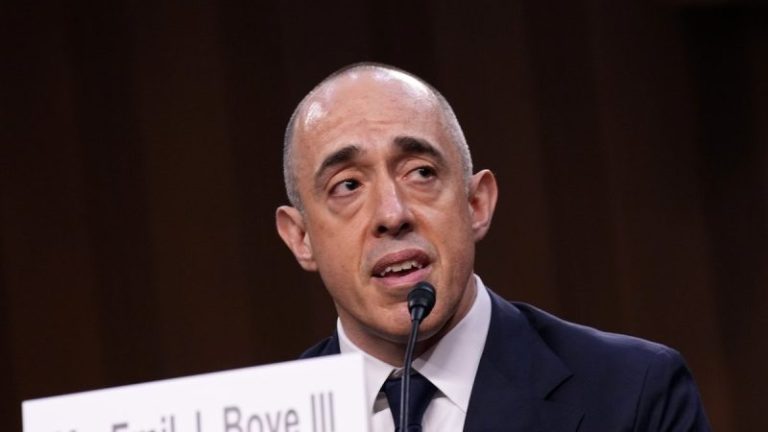
The Senate narrowly voted to move forward with considering the nomination of former Trump lawyer Emil Bove to a federal court of appeals on Tuesday.

The 50-48 vote saw one Republican break ranks and vote against his nomination, while Democrats have done everything in their power to slow down the nomination. Bove, who currently works at the Justice Department, is nominated to serve on the 3rd U.S. Circuit Court of Appeals.

Democrats have argued that Bove, a former defense attorney for President Donald Trump, is unfit for the role, pointing to allegations that he proposed behind closed doors that the Trump administration could simply ignore judicial orders. Bove denies those allegations.

Sen. Susan Collins, R-Maine, voted with Republicans to move forward but said in a statement that she will oppose Bove’s confirmation on a final vote. Alaska Sen. Lisa Murkowski was the lone Republican to vote against moving forward with Bove’s nomination.

‘We have to have judges who will adhere to the rule of law and the Constitution and do so regardless of what their personal views may be,’ Collins said in a statement. ‘Mr. Bove’s political profile and some of the actions he has taken in his leadership roles at the Department of Justice cause me to conclude he would not serve as an impartial jurist.’

Democrats on the Senate Judiciary Committee stormed out of the meeting where the committee approved Bove last week.

Sen. Cory Booker, D-N.J., attempted to push for more debate time, but Chairman Chuck Grassley, R-Iowa, pushed forward with the vote.

‘What are you afraid of?’ Booker erupted, after Grassley tried to speak over him and hold the vote. ‘Debating this [nomination], putting things on the record — Dear God,’ he said, ‘that’s what we are here for.’

 ‘What are they saying to you,’ he said, referring to the Trump administration, ‘that is making you do something to violate the decorum, the decency and the respect of this committee to at least hear each other out?’

Booker ended the sharp exchange with Grassley by saying simply, ‘This is wrong, sir, and I join with my colleagues in leaving,’ before streaming out of the committee room.

It comes as Trump administration officials have taken aim at ‘activist’ judges they argue are blocking the president’s agenda and preventing him from enacting his sweeping policy goals, including the administration’s crackdown on border security and immigration.

Fox News’ Breanne Deppisch and The Associated Press contributed to this report.

This post appeared first on FOX NEWS

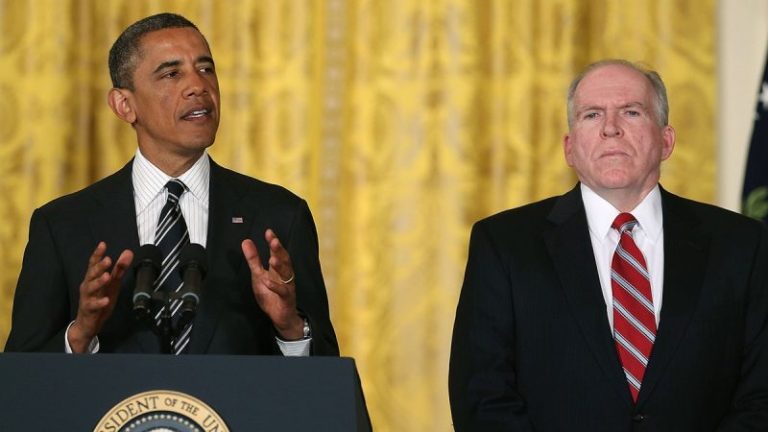
The intelligence community did not have any direct information that Russian President Vladimir Putin wanted to help elect Donald Trump during the 2016 presidential election, but, at the ‘unusual’ direction of then-President Barack Obama, published ‘potentially biased’ or ‘implausible’ intelligence suggesting otherwise, the House Intelligence Committee found.

Director of National Intelligence Tulsi Gabbard declassified a report prepared by the House Permanent Select Committee on Intelligence back in 2020.

The report, which was based on an investigation launched by former House Intelligence Community Chairman Devin Nunes, R-Calif., was dated Sept. 18, 2020. At the time of the publication of the report, Rep. Adam Schiff, D-Calif., was the chairman of the committee.

The report has never before been released to the public, and instead, has remained highly classified within the intelligence community.

Fox News Digital obtained the unredacted and fully-sourced limited-access investigation report that was drafted and stored in a limited-access vault at CIA Headquarters.

The committee focused on the creation of the Intelligence Community Assessment of 2017, in which then-CIA Director John Brennan pushed for the inclusion of the now-discredited anti-Trump dossier, despite knowing it was based largely on ‘internet rumor,’ as Fox News Digital previously reported.

According to the report, the ICA was a ‘high-profile product ordered by the President, directed by senior IC agency heads, and created by just five CIA analysts, using one principal drafter.’

‘Production of the ICA was subject to unusual directives from the President and senior political appointees, and particularly DCIA,’ the report states. ‘The draft was not properly coordinated within CIA or the IC, ensuring it would be published without significant challenges to its conclusions.’

The committee found that the five CIA analysts and drafter ‘rushed’ the ICA’s production ‘in order to publish two weeks before President-elect Trump was sworn-in.’

‘Hurried coordination and limited access to the draft reduced opportunities for the IC to discover misquoting of sources and other tradecraft concerns,’ the report states.

The report states that Brennan ‘ordered the post-election publication of 15 reports containing previously collected but unpublished intelligence, three of which were substandard—containing information that was unclear, of uncertain origin, potentially biased, or implausible—and those became foundational sources for the ICA judgements that Putin preferred Trump over Clinton.’

‘The ICA misrepresented these reports as reliable, without mentioning their significant underlying flaws,’ the committee found.

‘One scant, unclear, and unverifiable fragment of a sentence from one of the substandard reports constitutes the only classified information cited to suggest Putin ‘aspired’ to help Trump win,’ the report states, adding that the ICA ‘ignored or selectively quoted reliable intelligence reports that challenged-and in some cases undermined—judgments that Putin sought to elect Trump.’

The report also states that the ICA ‘failed to consider plausible alternative explanations of Putin’s intentions indicated by reliable intelligence and observed Russian actions.’

The committee also found that two senior CIA officers warned Brennan that ‘we don’t have direct information that Putin wanted to get Trump elected.’

Despite those warnings, the Obama administration moved to publish the ICA.

The ICA ‘did not cite any report where Putin directly indicated helping Trump win was the objective.’

The ICA, according to the report, excluded ‘significant intelligence’ and ‘ignored or selectively quoted’ reliable intelligence in an effort to push the Russia narrative.

The report also includes intelligence from a longtime Putin confidant who explained to investigators that ‘Putin told him he did not care who won the election,’ and that Putin ‘had often outlined the weaknesses of both major candidates.’

The report also states that the ICA committed context showing that the claim that Putin preferred Trump was ‘implausible—if not ridiculous.’

The committee also found that the ICA suppressed intelligence that showed that Russia was actually planning for a Hillary Clinton victory because ‘they knew where [she] stood’ and believed Russia ‘could work with her.’

The committee also noted that the ICA ‘did not address why Putin chose not to leak more discrediting material on Clinton,’ even as polls tightened in the final weeks of the election.’

The committee also found that the ICA suppressed intelligence showing that Putin was ‘not only demonstrating a clear lack of concern for Trump’s election fate,’ but also indicated ‘that he preferred to see Secretary Clinton elected, knowing she would be a more vulnerable President.’

The declassification of the report comes just days after Gabbard declassified and released documents that included ‘overwhelming evidence’ that demonstrated how, after President Donald Trump won the 2016 election against Hillary Clinton, then-President Barack Obama and his national security team laid the groundwork for what would be the yearslong Trump–Russia collusion probe.

Meanwhile, Fox News Digital, in 2020, exclusively obtained the declassified transcripts from Obama-era national security officials’ closed-door testimonies before the House Intelligence Committee, in which those officials testified that they had no ’empirical evidence’ of a conspiracy between the Trump campaign and Russia in the 2016 election, but continued to publicly push the ‘narrative’ of collusion.

The House Intelligence Committee, in 2017, conducted depositions of top Obama intelligence officials, including Director of National Intelligence James Clapper, National Security Advisor Susan Rice and Attorney General Loretta Lynch, among others.

The officials’ responses in the transcripts of those interviews align with the results of former Special Counsel Robert Mueller’s investigation – which found no evidence of criminal coordination between the Trump campaign and Russia in 2016, while not reaching a determination on obstruction of justice.

The transcripts, from 2017 and 2018, revealed top Obama officials were questioned by House Intelligence Committee lawmakers and investigators about whether they had or had seen evidence of such collusion, coordination or conspiracy – the issue that drove the FBI’s initial case and later the special counsel probe.

‘I never saw any direct empirical evidence that the Trump campaign or someone in it was plotting/conspiring with the Russians to meddle with the election,’ Clapper testified in 2017. ‘That’s not to say that there weren’t concerns about the evidence we were seeing, anecdotal evidence…. But I do not recall any instance where I had direct evidence.’

Lynch also said she did ‘not recall that being briefed up to me.’

‘I can’t say that it existed or not,’ Lynch said, referring to evidence of collusion, conspiracy or coordination.

But Clapper and Lynch, and Vice President Joe Biden, were present in the Oval Office on July 28, 2016, when Brennan briefed Obama and Comey on intelligence he’d received from one of Hillary Clinton’s campaign foreign policy advisors ‘to vilify Donald Trump by stirring up a scandal claiming interference by the Russian security service.’ 

‘We’re getting additional insight into Russian activities from (REDACTED),’ Brennan’s handwritten notes, exclusively obtained by Fox News Digital in October 2020, read. ‘CITE (summarizing) alleged approved by Hillary Clinton a proposal from one of her foreign policy advisers to vilify Donald Trump by stirring up a scandal claiming interference by the Russian security service.’

Meanwhile, former U.S. Ambassador to the United Nations Samantha Power, according to the transcript of her interview to the House Intelligence Committee, was asked whether she had or saw any evidence of collusion or conspiracy.

Power replied: ‘I am not in possession of anything – I am not in possession and didn’t read or absorb information that came from out of the intelligence community.’

When asked again, she said: ‘I am not.’

Rice was asked the same question.

‘To the best of my recollection, there wasn’t anything smoking, but there were some things that gave me pause,’ she said, according to her transcribed interview, in response to whether she had any evidence of conspiracy. ‘I don’t recall intelligence that I would consider evidence to that effect that I saw… conspiracy prior to my departure.’

When asked whether she had any evidence of ‘coordination,’ Rice replied: ‘I don’t recall any intelligence or evidence to that effect.’

When asked about collusion, Rice replied: ‘Same answer.’

Former Deputy National Security Advisor Ben Rhodes was asked the same question during his House Intelligence interview.

‘I wouldn’t have received any information on any criminal or counterintelligence investigations into what the Trump campaign was doing, so I would not have seen that information,’ Rhodes said.

When pressed again, he said: ‘I saw indications of potential coordination, but I did not see, you know, the specific evidence of the actions of the Trump campaign.’

Meanwhile, former FBI Deputy Director Andrew McCabe was not asked that specific question but rather questions about the accuracy and legitimacy of the unverified anti-Trump dossier compiled by ex-British intelligence officer Christopher Steele.

McCabe was asked during his interview in 2017 what was the most ‘damning or important piece of evidence in the dossier that’ he ‘now knows is true.’

McCabe replied: ‘We have not been able to prove the accuracy of all the information.’

‘You don’t know if it’s true or not?’ a House investigator asked, to which McCabe replied: ‘That’s correct.’

After Trump’s 2016 victory and during the presidential transition period, Comey briefed Trump on the now-infamous anti-Trump dossier, containing salacious allegations of purported coordination between Trump and the Russian government. Brennan was present for that briefing, which took place at Trump Tower in New York City in January 2017.

The dossier was authored by Steele. It was funded by Clinton’s presidential campaign and the Democratic National Committee through the law firm Perkins Coie.

But Brennan and Comey knew of intelligence suggesting Clinton, during the campaign, was stirring up a plan to tie Trump to Russia, documents claim. It is unclear whether the intelligence community, at the time, knew that the dossier was paid for by Clinton and the DNC.

Brennan and Comey are now under FBI criminal investigation related to their activities connected to the Russia probe, after a criminal referral was sent by CIA Director John Ratcliffe to FBI Director Kash Patel.

Gabbard also sent the DOJ criminal referrals for those involved in the effort to create ‘manufactured’ and ‘politicized’ intelligence that led to the spreading of the Trump-Russia collusion narrative.

The Obama-era officials have been mum on the new revelations, but a spokesman for Obama on Tuesday made a rare public statement.

‘Out of respect for the office of the presidency, our office does not normally dignify the constant nonsense and misinformation flowing out of this White House with a response,’ Obama spokesman Patrick Rodenbush said in a statement. ‘But these claims are outrageous enough to merit one.’ 

‘These bizarre allegations are ridiculous and a weak attempt at distraction,’ Obama’s spokesman continued. ‘Nothing in the document issued last week undercuts the widely accepted conclusion that Russia worked to influence the 2016 presidential election but did not successfully manipulate any votes.’

He added: ‘These findings were affirmed in a 2020 report by the bipartisan Senate Intelligence Committee, led by then-Chairman Marco Rubio.’ 

This post appeared first on FOX NEWS

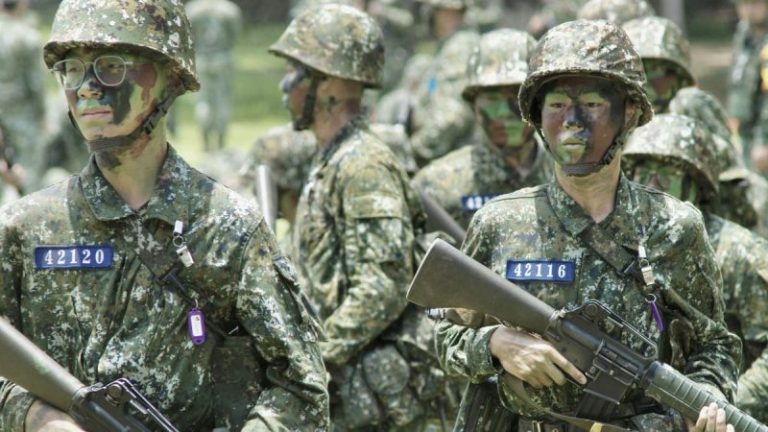
From drone swarms to gene-edited soldiers, the United States and China are racing to integrate artificial intelligence into nearly every facet of their war machines — and a potential conflict over Taiwan may be the world’s first real test of who holds the technological edge.

For millennia, victory in war was determined by manpower, firepower and the grit of battlefield commanders. However, in this ongoing technological revolution, algorithms and autonomy may matter more than conventional arms. 

‘War will come down to who has the best AI,’ said Arnie Bellini, a tech entrepreneur and defense investor, in an interview with Fox News Digital. 

U.S. planners now consider Taiwan the likely locus of a 21st-century great power conflict. Though America doesn’t formally ally with Taiwan, it has steadily armed the island and shifted its forces to focus on the Indo-Pacific. 

The Pentagon is responding with urgency, and nowhere is that transformation more visible than in the U.S. Army’s sweeping AI overhaul. 

The Army goes all-in: $36 billion AI investment

Under Defense Secretary Pete Hegseth’s leadership, the Army has launched a $36 billion modernization initiative aimed directly at countering China in the Indo-Pacific.

By 2026, each of its 10 active combat divisions will be equipped with roughly 1,000 drones, dramatically shifting the battlefield from crewed helicopters to autonomous systems.

Army leaders highlight that legacy weapons and bureaucratic lag are incompatible with future warfare. The new push includes AI-assisted command-and-control, real-world testing under challenging conditions in places like the Philippines and a rapid feedback model to keep doctrine updated.

Stopping wars before they start: Cyber + AI fusion

Beyond hardware, AI may prove most powerful in prevention. Bellini believes U.S. cyber espionage, combined with AI, could strike preemptively. ‘The United States is the very best at cyber espionage and cyber warfare… once you combine [that] with AI, you can stop a war before it even happens.’

This could involve infiltrating Chinese naval systems via cyber-AI tools and neutralizing threats before ships ever set sail.

Biotech on the battlefield: From medics to gene editing

AI isn’t just about machines — it’s changing biology too. The U.S. military is exploring AI-driven trauma care, synthetic blood and regenerative medicine to save lives.

However, China may be pushing the envelope further. ‘China has been one of the more forward-leaning countries in using biotech within its military,’ defense strategist Jack Burnham said. ‘In military hospitals, there is significant research on gene editing … some of this might be dual-use.’

Reports from intelligence chiefs and former DNI John Ratcliffe suggest China may be experimenting with gene-edited soldiers, raising alarms about the ethical gray zone of AI-biotech integration.

Will robots fight battles?

‘The future of warfare is not going to be with people,’ Bellini predicted. ‘It’s going to be robots. It’s going to be drones. And it’s the synchronization.’

Tesla is developing its ‘Optimus’ robot, he noted, complete with an AI-optimized ‘brain’ to complete chores that are ‘dangerous, repetitive and boring’ in warehouses, homes and even hazardous facilities like nuclear plants.

CEO Elon Musk has spoken out against using Optimus as a ‘killer robot,’ but still, foreign adversaries worry about the potential for dual use. 

China has imposed export restrictions on the rare-earth magnets needed for Optimus actuators, specifically requesting assurances that the units won’t be used for military purposes.

War-gaming for tomorrow’s conflict

U.S. forces are already simulating this future in AI-enhanced war games. Through these exercises, commanders learn to operate at AI pace — modeling logistics, battlefield flows, and adversaries at an unprecedented scale.

‘AI is really good at modeling logistics… visualizing and integrating vast quantities of data… [creating] a more immersive experience at a much larger scale,’ Burnham said.

‘These AI opponents are like intelligent enemies you’re playing against in a war game,’ explained Dr. Randall Hill, executive director of the University of Southern California’s Institute for Creative Technologies. ‘It’s important to train not just with AI but also about AI — so soldiers understand where to trust it and where its limits are.’

Hill’s team is developing tools like PAL3, a personalized AI teaching assistant for military trainees that adapts to individual learning speeds. ‘It’s about helping both humans and machines understand each other’s strengths and weaknesses,’ he said.

Ethical concerns: Who keeps a human in the loop?

The U.S. insists on a ‘human-in-the-loop’ for lethal AI decisions — but China may not, experts warn.

‘Here in the U.S., we are focused on ethical and legal decisions on the battlefield… our adversaries… might not be as worried about keeping a human in the loop,’ said RJ Blake, a former defense official.

Hill echoed this concern, emphasizing the need for AI systems to be interpretable and stress-tested rigorously.

‘We need protocols aligned with American values,’ he said. ‘The AI must be explainable and capable of justifying its conclusions — and humans must recognize when those systems are outside their trained boundaries.’

A new era of warfare

As AI redefines warfare — from cyber and command systems to autonomous weapons and biotech — it’s not just a war machine being built. It’s a system of systems, blending digital, physical and biological domains.

Should Beijing move against Taiwan, the battlefield may no longer be measured in tanks or missiles — but in algorithms, networks and gene sequences.

This post appeared first on FOX NEWS
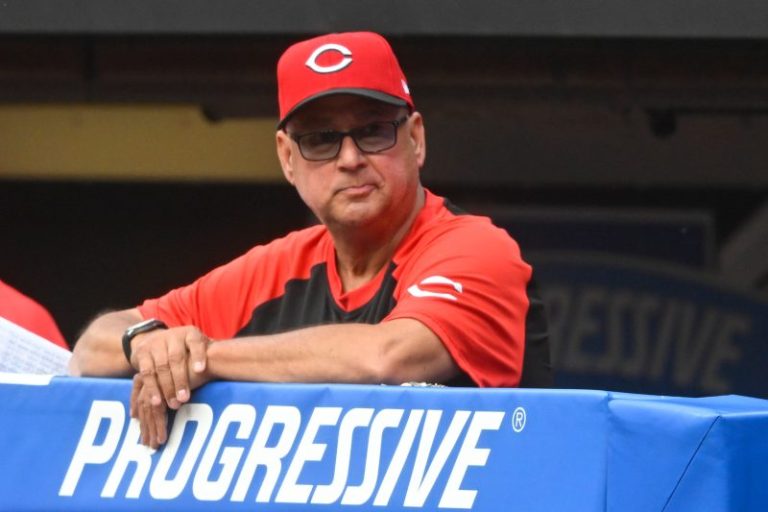
WASHINGTON — Terry Francona did not make the decision to change Cleveland’s franchise name to the Guardians, and he’s no longer their manager, and will be half a state removed from any thoughts of revising it.

But the Cincinnati Reds manager was in the room where it happened before the 2022 season – and remains adamant owner Paul Dolan made the right decision.

Even in the wake of President Donald Trump insisting Cleveland and the Washington football franchise change their names back to their previously offensive monikers.

“I wasn’t the one that had to kind of have the (fortitude) to do it,” Francona said before the Reds’ game against the Washington Nationals. “Paul Dolan ultimately was the one that had to pull the trigger.

“I was really proud of him, because I don’t think it was real popular with a segment of probably the older fans that kind of, I guess like Trump, ‘Why can’t it be like it used to be?’

“And I guess my retort would be, ‘There’s probably a lot of people in this country who don’t want it like it used to be.’ And if you’re white, (you’re) probably just fine.’

“That’s not how it’s supposed to work. Like, I didn’t even care what they made the name in Cleveland. I really didn’t. I just know how I was in on those conversations, and we were trying to be respectful. And for that, I gave those guys a lot of credit.”

After Trump’s social media screed on the team nicknames, Guardians president of baseball operations Chris Antonetti told reporters Sunday that revising the club name was not something he was “paying a lot of attention to.”

“We’ve gotten the opportunity to build the brand as the Guardians over the last four years and are excited about the future,’ says Antonetti.

Francona concurs, and believes the franchise he managed to a 2016 World Series appearance can continue to do what it believes is right.

“Not everybody’s gonna be happy.

‘That’s never gonna be the case,” he said. “But I think as long as what you’re trying to do is respectful, you can go ahead and let people complain.”

This post appeared first on USA TODAY

It’s a rare all-star game that reflects a league’s evolution, but that’s what this year’s MLS showcase offers. On July 23 at 9 p.m. ET, two dozen MLS players will step onto the field at Q2 Stadium in Austin, Texas, and offer a snapshot of the league’s progress.

Though the MLS All-Stars may not defeat their counterparts from Mexico’s Liga MX – broadcast live on MLS Season Pass via Apple TV – the league’s upward trajectory is clear. Since its inaugural season in 1996, just two years after the United States hosted the 1994 World Cup, MLS has steadily grown alongside the nation’s rising interest in soccer.

Over the past three decades, global icons such as Carlos Valderrama, David Beckham, Thierry Henry and Zlatan Ibrahimović have brought star power and credibility to the league, helping shape its identity and elevate its global standing.

But none has been as transformational as Lionel Messi, who is on this year’s all-star roster. In July 2023, he joined Inter Miami, a club that played its first game in 2020. The Argentine World Cup champion not only quickly improved the team’s profile and record, but he also elevated global awareness of the MLS because of his worldwide celebrity.

How much has the MLS grown since its debut in 1996?

Even before Messi’s arrival, MLS had been on the upswing. With 12.2 million fans attending games last year, MLS was the second-highest-attended global soccer league in the world, behind only the English Premier League.

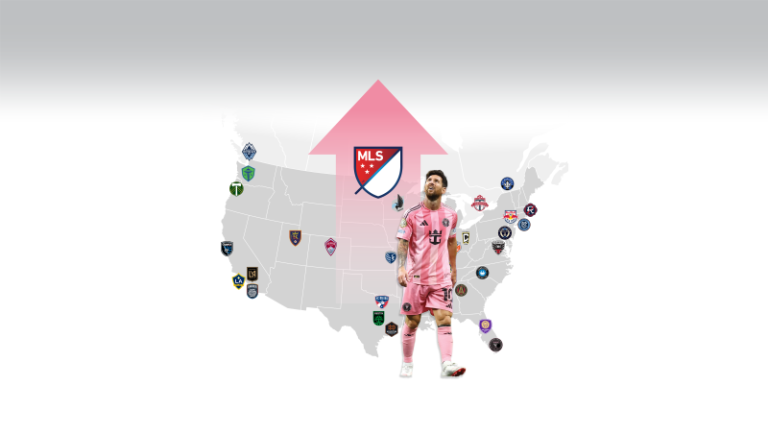
MLS has a far reach with teams across the U.S.

Since 1996, the league has tripled in size. San Diego FC became the 30th MLS club before the 2025 season, compared with just 10 clubs when the league debuted.

The number of soccer-specific MLS stadiums is growing

All 30 MLS clubs have their own facility, and 26 are soccer-specific. Three franchises will open new stadiums in the next three years (Inter Miami 2026, New York City FC 2027 and Chicago Fire 2028). It’s a far cry from 1996, when there were no stadiums and no club training facilities.

Some MLS franchises crack $1 billion mark

Another significant area of growth has been franchise value: Five MLS teams are valued at more than $1 billion, and 14 others are among the top 50 most valuable soccer clubs in the world, according to Sportico.

Los Angeles FC ($1.28 billion), Inter Miami ($1.19 billion), LA Galaxy ($1.11 billion), Atlanta United ($1.08 billion) and New York City FC ($1 billion) are the most valuable MLS franchises.

MLS has succeeded in drawing international talent

When the league made its debuted 1996, most of the 239 active players were American. The majority today are still American, but the league is drawing more international talent.

MLS Cup championships by team

D.C. United won the MLS Cup in the first season; since then, 15 teams have won the title:

“I think our league is going to continue to grow,” Major League Soccer commissioner Don Garber told USA TODAY Sports before the season. “Every time I’m asked that question, and I say, ‘Here’s what it will look like five years from now.’ I underestimate where we’re going to be.

‘At some point we’re going to be celebrating just generations of Major League Soccer for fans here in the United States, Canada and around the world that love our league.’

This post appeared first on USA TODAY