Archive

2025

Browsing

ASHBURN, Va. – The heartbeat of the Washington Commanders won’t be at training camp on the first day of the most-anticipated season in decades. Maybe that sounds and feels more dramatic than it is. That’s what Commanders general manager Adam Peters would say. 

Instead, McLaurin didn’t report to camp on the designated day for veterans (July 22) and won’t be with his teammates as they take the field Wednesday morning. 

McLaurin, entering the final year of his deal, expressed to reporters last week a completely different front portrayed by Peters and head coach Dan Quinn on Tuesday as he plainly stated his dissatisfaction with the state of the negotiations.

“I’ve been pretty frustrated, I’m not gonna lie,’ McLaurin told reporters. ‘Everything that has transpired to this point has been pretty disappointing and frustrating.”

There’s a chance that everything will sort itself out, McLaurin will be paid, the Commanders will be complete, and no love will be lost. But the Commanders letting a fan favorite, a team captain, somebody the franchise could rely upon to provide positivity – and on-field success – in the face of disarray during Dan Snyder’s ownership enter the holdout stage of negotiations is a cloud over what should be an otherwise sunny training camp. 

Drafted in the third round in 2019, McLaurin produced no matter who the quarterback was. Then came quarterback and 2024 Offensive Rookie of the Year Daniels, with whom McLaurin hit it off with immediately. Off the field, the bond over their shared faith. On the field, they bond over their affinity for explosive plays and deep balls. He is an ideal vessel to convey Quinn’s message to the locker room. 

Every day of training camp McLaurin misses will cost him $50,000, according to the collective bargaining agreement. He is set to make $15 million this season and has a $25 million cap hit.

“Without a doubt, I think everybody in this building values Terry very much,” said Peters, entering his second season as the franchise’s general manager. “And we knew that coming in and we knew that even more after spending a year with him. In terms of where we’re at, we’ve had conversations recently and we will look to have some more conversations and we’re going to do everything we can in order to get a deal done.

“Like with really all of our players,” Peters added, “we’re expecting everybody to be here (Tuesday).”

On Tuesday, Quinn did not want to entertain hypotheticals. But he and his staff will probably have confronted McLaurin’s absence by the time most Americans sipped their first hot beverage of Wednesday morning. 

“Better question for next week or (Wednesday) as we get into stuff,” Quinn said. “We’re planning, like Adam said, for everybody to get here and get rocking.”  

Can Jayden Daniels’ second act land the Commanders in the Super Bowl?

McLaurin, who turns 30 in September, has turned in five straight 1,000-yard seasons and was second-team All-Pro in 2024, when he caught a career-best 13 touchdowns during the regular season and three more in the playoffs as the Commanders advanced to the NFC championship game. In the same chat with reporters in which he listed his grievances, McLaurin declared he wanted to spend his entire career with Washington. 

“This has been somewhere where I’ve always wanted to be,” McLaurin said. “And, you know, just to see how things have played out has been disappointing. Obviously, I understand everything is a business, but at the same time, I want to put myself in a position where I’m valued and I feel appreciated and things like that. Unfortunately, that hasn’t transpired the way I wanted it to, so, I’m just trying to take things day by day.”

In 2022, McLaurin signed a three-year deal worth $68.3 million. But his $22.8 million average annual value ranks 17th among wide receivers entering the season, according to Spotrac. The Cincinnati Bengals’ Ja’Marr Chase reset the market with a mega-deal that pays his $40.25 million annually on average.

McLaurin is wise enough to know he won’t reach that echelon of the “WR1” price tag. But he’s not unreasonable to expect better compensation than wideouts such as the Cincinnati Bengals’ Tee Higgins, DJ Moore of the Chicago Bears and the Miami Dolphins’ Jaylen Waddle (the three make between $27.5-28.75 million annually). 

“I don’t think I’ve been a part of a negotiation where it’s been really linear and smooth and everything like that,” Peters said. “But I think understanding where they’re at and understanding where we’re at and trying to close that gap and come into something is really kind of all the nuance of it.

Peters is no stranger to holdouts that nearly last until kickoff of Week 1. As a member of the San Francisco 49ers’ front office, he had a front-row seat to the negotiations general manager John Lynch had with players seeking new deals during the 49ers’ sustained run of success such as Trent Williams, Joey Bosa and Brandon Aiyuk. 

“You obviously would like to get these things done quicker than longer,” Peters said, “but it’s not always going to happen that way.” 

Peters and Quinn constructed this roster with enough emotional intelligence to know that each day without McLaurin isn’t just one without one of their best players. It’s a day in which they are not whole. 

“We’re dealing with a really, in the case of Terry, a really good player and a really good person,” Peters said. “So, really understanding that and never losing sight of that and making sure that, you know, every conversation we have is very straightforward, honest, and in good faith and just keeping that mindset throughout because there’s going to be twists and turns but just having that confidence and just understanding our goal is to get a long-term deal done. 

“Just keeping focused on that. And whatever happens along the way, just understand that he’s a great player and we want to keep him here.”

This post appeared first on USA TODAY

The college football world will be blessed with a premier matchup between Texas and Ohio State to open the 2025 college football season.

But while fans are in for a treat for the matchup between the 2024 defending national champion Buckeyes and the up-and-coming Longhorns led by sensation Arch Manning, more of these marquee matchups could be off the table if there is no change in conference schedules and the format of the current College Football Playoff.

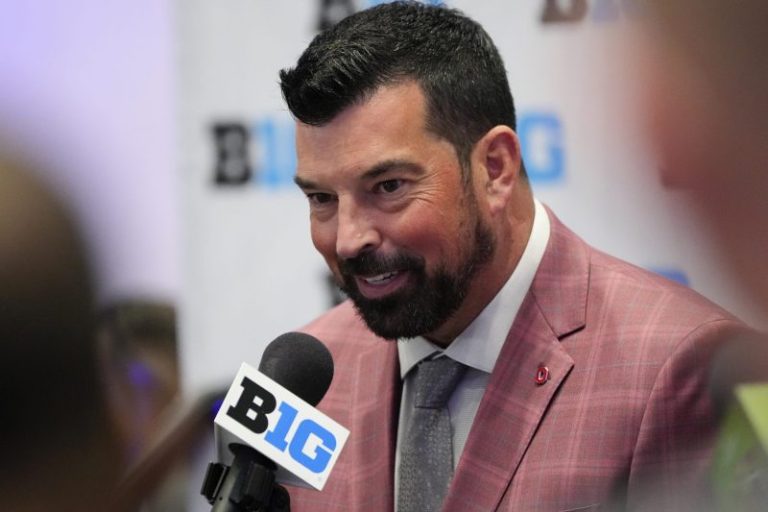
Speaking at Big Ten media days on July 22, Day talked about future scheduling of out-of-conference games and how it could be impacted with a lack of automatic berths in the current 12-team College Football Playoff.

“If we’re not going to do that, I don’t think it makes sense to do that,” Day said. “You have your nine conference games and schedule other nonconference games that aren’t in the Power Four.”

Despite saying that, Ohio State’s upcoming matchups against SEC powerhouses Alabama and Georgia appear to be safe. The Buckeyes are scheduled to play the Crimson Tide in 2027 and 2028, and the Bulldogs in 2030 and 2031. OSU begins a home-and-home with Texas this season.

“What’s scheduled is scheduled,” Day said.

The Buckeyes have recently added games against Navy and Youngstown State ― a Football Championship Subdivision member ― for the 2029 season.

A big reason for the philosophy from Day and the Buckeyes for a ‘softer’ out-of-conference schedule is the number of conference games played by each of the Power 4 conferences. Like the Big Ten, the Big 12 also plays nine conference games; meanwhile, the ACC and SEC have schedules with eight conference games.

“Until there’s continuity between conferences, if you’re in the Big Ten, it would make no sense to have anything other than a case to have four automatic qualifiers and an expanded pool of teams,” Day said, “because when you play nine conference games, it’s not the same as someone who plays eight conference games. If you’re going to be compared against that, it’s just not the same.”

No team ever made the four-team CFP field with more than two losses between 2014 and 2023. In the new 12-team format last season, Alabama became the first team with three losses to make the field over a two-loss team in Miami.

Big Ten commissioner Tony Petitti’s plan for a 16-team bracket that would secure four spots for the Big Ten and another four for the SEC has not gained approval and would need to be implemented before the Dec. 1 deadline to be added for the 2026 season.

“There’s no reason to schedule until you have clarity,” Ohio State athletic director Ross Bjork said. “You could say we’re in a holding pattern.”

This post appeared first on USA TODAY

The world champion Spain women’s national team looks to defeat Germany for the first time in history and reach the Euro 2025 final in the sides’ semifinal showdown in Zurich on Wednesday, July 23.

Spain has never beaten Germany, the eight-time European champions, most recently losing in the bronze-medal match at the 2024 Paris Olympics.

‘Personally I see it more as an opportunity, not so much a revenge or a thorn in my side,’ Spain midfielder Alexia Putellas told reporters a day before the match.

This is already Spain’s deepest run in the women’s European Championship, having lost in the quarterfinals in each of the past three editions. Germany finished runner-up in 2022 and was eliminated in the 2017 quarterfinals after winning the tournament six times in a row from 1995-2013.

‘We have not been able to beat them, but we have been closer and closer to beating them,’ Spain coach Montse Tome said. ‘In the Olympic match, we had a chance to do so, it was good and now we are at another point.

The winner faces reigning champion England in the final in Basel on Sunday.

Spain vs. Germany time: Euro 2025 semifinal

The Euro 2025 semifinal between Spain and Germany kicks off at 3 p.m. ET on Wednesday.

How to watch Spain vs. Germany: TV channel, live stream

TV channel: Fox
Streaming: Fubo

Watch Spain vs. Germany on Fubo

Spain vs. Germany odds: Women’s Euro 2025

Odds via BetMGM

Regular time result: Germany +425 // Draw +350 // Spain -190
To advance: Germany +250 // Spain -375

Germany’s comeback win vs. France provides gameplan

Germany’s gritty win over France has given the team a template for how they should play for the rest of the tournament, defender Rebecca Knaak told reporters on Tuesday ahead of her side’s Women’s Euro semi-final against Spain in Zurich.

The Germans had a player sent off and conceded a penalty early on against the French, but recovered to draw 1-1 after extra time and win the quarter-final shootout, pitting the eight-times champions against Spain on Wednesday.

‘Really, it’s the perfect example for passion, strength, mental strength, all these things that are characteristics that we possess,’ defender Rebecca Knaak told a press conference.

‘Of course, on a tactical basis, we are prepared by the coach and the team, but the basic, fundamental characteristic has been built for the Spanish (game) in the French match.’ – Reuters

Spain ready to finally beat Germany

‘I think they are also another team, they have another coach, but Germany is Germany and they have eight European Championships,’ Spain coach Montse Tome said. ‘Their essence is the same, regardless of who is in charge, and we are very clear about the game we want to play tomorrow, how we want to condition it and where we want to take it.’

Spain won their three group stage games by a combined score of 14-3 before defeating a spirited Swiss side 2-0 in the quarter-finals.

‘My feelings are good, full confidence in what we are creating, in the mentality we have, in the game we have played throughout the European Championship,’ Spain midfielder Alexia Putellas said. ‘It will be a very tough game, like any semi-final of a major tournament, but with maximum enthusiasm and maximum motivation to move forward and make history once again.’ – Reuters

UEFA Women’s Euro champions

2022: England
2017: Netherlands
2013: Germany
2009: Germany
2005: Germany
2001: Germany
1997: Germany
1995: Germany
1993: Norway
1991: Germany
1989: West Germany
1987: Norway
1984: Sweden

This post appeared first on USA TODAY

The matchup between Team Napheesa Collier and Team Caitlin Clark at 2025 WNBA All-Star weekend in Indianapolis was overshadowed by the players’ full-court press for better pay and benefits amid collective bargaining agreement negotiations.

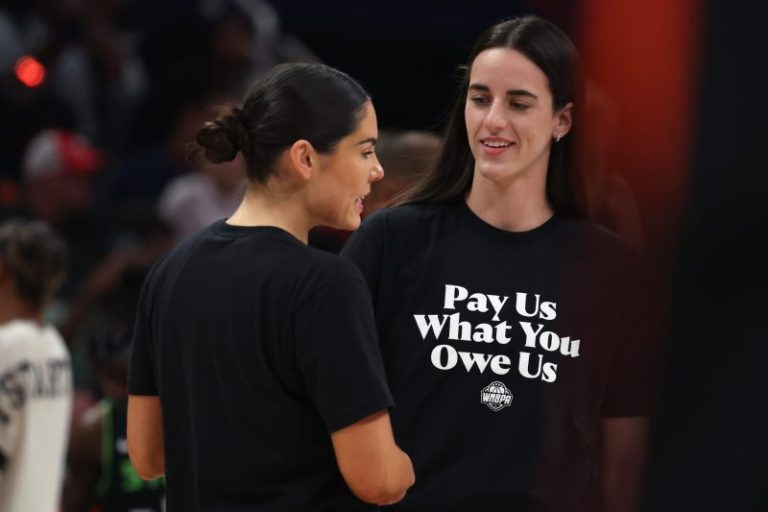
The biggest names in the game made a bold statement in front of an announced crowd of nearly 17,000 fans by wearing black pregame T-shirts that read, ‘Pay Us What You Owe Us.’ The message was clear and remains in the forefront of everyone’s minds as the second half of the WNBA season resumed Tuesday.

“We see the growth in the league and as it stands, the current salary system is not really paying us what we’re owed,’ said Nneka Ogwumike, WNBPA president and Seattle Storm All-Star. ‘We want to be able to have that fair share moving forward, especially as we see all of the investment going in, and we want to be able to have our salaries be reflected in a structure that makes sense for us.”

When is the CBA set to expire? What are the players asking for? Here are five things you need to know about the ongoing CBA negotiations as the current agreement is set to end in less than four months.

When does the current CBA run out?

The current CBA, which was signed into effect in January 2020, shortly after Cathy Engelbert took over as commissioner in 2019, was set to expire after eight seasons in 2027. The WNBPA, however, exercised its right to opt out of the agreement last October amid unprecedented growth in the league, meaning the CBA will now end on October 31, 2025. (The 2025 WNBA Finals will end on October 19 at the latest.)

During the 2025 WNBA All-Star weekend, Engelbert said she has ‘confidence we can get something done by October,’ although she wouldn’t ‘put an exact date on it.’ She added, ‘Would we like to get it done? Yes. Does it have to be done exactly on that date? We’ve got some room to continue negotiations if we’re close at that point.’

What are the players asking for in terms of revenue?

Collier, who serves as the WNBPA Vice President, said the players have prioritized ‘two main points’ of concern amid negotiations increased revenue sharing and salary structures.

The players are holding out for a revenue-sharing model that ensures ‘our salaries grow with the business,’ WNBPA president Nneka Ogwumike said. But Ogwumike, one of the 40 players that attended the CBA meeting with the league this past weekend, said the WNBA offered up a ‘fundamentally different’ revenue model than proposed that features a fixed percentage.

“We were disappointed, for sure, in what they came back with,” WNBPA vice president and Minnesota Lynx forward Napheesa Collier said on Saturday. “It was just nowhere near what we asked for. Or even in the same conversation.” 

What is the revenue share for players right now?

Under the current agreement, WNBA players receive 9.3% of the league’s revenue, according to Market Watch, which includes income generated through ticket sales, TV deals, licensing and merchandise. The WNBA’s revenue share agreement is significantly lower in comparison to other professional leagues. NBA players receive 49-51% of all basketball-related income, while NFL players get 48% of all revenue and NHL players receive 50% of revenue.

How have revenues for the league gone up?

The WNBA has experienced rapid growth and capitalized on the skyrocketing popularity surrounding the 2024 draft class, including phenoms Caitlin Clark and Angel Reese. The league turned in its most-watched regular season in 24 years and recorded its highest attendance in 22 years last season and the WNBA shows no signs of slowing down.

‘National viewership is up 23 percent year over year. Attendance is up 26 percent, the highest in decades. We’re seeing sold-out arenas becoming routine,’ WNBA commissioner Cathy Engelbert said on Saturday. ‘Merch sales have shattered previous records, up 40 percent, driven by rookie sensations coming in this year and veterans.’

The league responded to unprecedented demand with plans to expand to 18 teams by 2030. Following the addition of the Golden State Valkyries this season, the WNBA will also add the Toronto Tempo and Portland Fire (slated to begin play in 2026), in addition to teams in Cleveland (2028), Detroit (2029) and Philadelphia (2030). The last three teams paid a staggering $250 million expansion fee to join the league.

The Valkyries, who paid a $50 million expansion fee in 2023, are already valued at over $500 million, according to a June report from Sportico. The average WNBA team is worth $269 million, with six teams worth at least $250 million, further highlighting the league’s profitability.

The WNBA also announced a new 11-year media rights deal worth a reported $2.2 billion in July, which averages about $200 million a year, beginning the 2026 season.

What role will Unrivaled play in a possible walkout?

Although players have repeatedly stated a lockout is the last resort, Collier said the players are preparing themselves for ‘every outcome.’ On Saturday, she reiterated a message the union has communicated to players: ‘We don’t want (a stoppage), but you have to be prepared. … Make sure you have money squared away.’

Having options doesn’t hurt. The additions of the Unrivaled 3×3 basketball league (founded by Collier and Breanna Stewart) and the Athletes Unlimited Pro Basketball league have provided players alternate avenues to earn money outside of the WNBA while staying in the country.

‘Women’s sports is exploding and rapidly growing and it feels like everyone is benefiting from that except the women in the sports,’ Collier said in April following the first season of Unrivaled. ‘That’s why we are so proud to offer the highest average salary and why having all the players have equity in the league is important to us. Treating women’s athletes how they should be treated.’

The inaugural Unrivaled season, which ran in the offseason from January to March in Miami, saw players earn a median salary of $220,000, according to the Associated Press. In comparison, WNBA salaries for the 2025 season range from a minimum of $66,079 to a maximum of $249,244 under the current CBA.

The USA TODAY app gets you to the heart of the news — fastDownload for award-winning coverage, crosswords, audio storytelling, the eNewspaper and more.

This post appeared first on USA TODAY

The 2025 MLS All-Star Game is Wednesday, July 23 in Austin, Texas, with the best in MLS taking on the Liga MX All-Stars at Q2 Stadium.

It’s the fourth time in five years that MLS has chosen an All-Star team from Mexico’s top flight as its All-Star Game opponent, and it’s not hard to see why. There is a longstanding soccer rivalry between the countries at the national team level, and that extends to club play. MLS vs. Liga MX matches have often been fiery and dramatic, and there’s no more reliable method for each league to test itself than by facing its next-door neighbor.

The links between the two leagues go deeper than that, though, with MLS and Liga MX openly discussing ideas on how the two sides could go closer. The Leagues Cup — a competition invented by MLS and Liga MX involving 18 teams from both — kicks off in six days, and despite gripes on both side of the Rio Grande, it is the most concrete evidence that both sides want to develop this partnership further.

Ahead of the 2025 MLS All-Star Game, here’s what to know about the ties between MLS and Liga MX:

MLS, Liga MX driven together by geography

Wednesday’s All-Star Game is far from the first time MLS and Liga MX have collaborated. Over the last decade, the two biggest leagues in Concacaf (the governing body for soccer in North and Central America and the Caribbean), have actively sought opportunities to work together, whether on or off the field.

There is a long-standing rivalry between U.S. and Mexican soccer dating back to the U.S. men’s national team emerging as a threat to El Tri‘s decades as the region’s lone hegemon in the 1990s. While clashes between MLS and Liga MX clubs in the Concacaf Champions Cup, the now-defunct Superliga, and the Leagues Cup have often come with acrimony, the two leagues have found plenty of common cause.

Generally speaking, each of FIFA’s six confederations has its own competition, with invitees to continental club championships very uncommon. MLS and Liga MX are two of the only leagues to enjoy such treatment, with Mexico most notably granted entries into South America’s Copa Libertadores from 1998-2016. MLS and Liga MX teams were also granted sporadic places in the Copa Sudamericana — CONMEBOL’s second-tier international tournament — in the early 2000s, and in the Copa Merconorte (a forerunner to the Copa Sudamericana) as well.

However, MLS’s last participation in CONMEBOL play came in 2007, and with a clogged schedule and immense travel required, there is no reason to expect that to change. The world’s most prominent club competition, the UEFA Champions League, has at no point shown an inclination towards inviting participants to fly across the Atlantic, with the distances involved making such a move a non-starter.

The realities of economics and population size hampering the attempts of other Concacaf leagues to provide serious competition. This didn’t used to be the case, but in recent years a gap has become clear: in the last four years only four teams from outside MLS and Liga MX have reached the Concacaf Champions Cup quarterfinals, none of whom moved on to the semifinals. In 2025, MLS and Liga MX teams won 11 of 12 total meetings with teams from other leagues.

That leaves MLS and Liga MX in a difficult spot in terms of closing down the financial gaps with the giants of European and South American soccer. While both leagues are seen as offering superior top-to-bottom strength as compared to most leagues worldwide, Europe’s strongest divisions in particular are still a long way off. As long as that’s the case, there is a ceiling in terms of audience and access to sponsors that will hold both MLS and Liga MX back.

Without an on-field competition that could give the kind of economic lift needed to gain ground on Europe’s most powerful leagues — all of which are easily streamed by viewers in the U.S. and Mexico — gaining further ground has proven very difficult.

MLS, Liga MX have long sought closer ties

With circumstances driving the two rival leagues together, both MLS and Liga MX have shown an interest in working together, even when that has required outside-the-box thinking. An All-Star Game is an easy win; it’s an exhibition that requires little in terms of FIFA or Concacaf approval.

It’s on other fronts where things have gotten a bit more interesting. Essentially, MLS looks with envy on Liga MX’s long-standing cultural heft, with the Mexican top flight drawing TV ratings comparable to the Premier League. For MLS, getting the Liga MX audience to regularly watch and attend the top league in the U.S. and Canada is an obvious move.

Liga MX sides, meanwhile, see the financial stability and business practices in MLS as a model to follow. It’s not so much for giants like Club América, Tigres, or Chivas Guadalajara, but rather to lift the league’s floor. Liga MX teams have long been willing to spend big, but there have also been more examples of teams folding, moving, or running into other issues that MLS has largely avoided over the last 20 years.

MLS and Liga MX have both been comfortable enough over the idea of working together that chatter over a possible merger has bubbled up from time to time. While concrete steps haven’t been taken, the two leagues have looked at various ways to work together.

The Leagues Cup — a summer tournament featuring every Liga MX club and a varying number of MLS sides — is the most concrete current example, with the two organizations using that competition to introduce Lionel Messi as an Inter Miami player in 2023.

The tournament has drawn some criticism in both nations, with U.S.-based fans voicing a preference for the domestic U.S. Open Cup after MLS attempted to unilaterally withdraw from that event in part to open space on the calendar. Liga MX fans, meanwhile, have been frustrated that the tournament is played in the U.S. only. Last year, Domè Torrent (who currently coaches Monterrey, but was in charge with Atlético San Luis at the time) called Leagues Cup ‘a joke of a competition’ over the travel and weather conditions Liga MX teams had to endure.

Nevertheless, the Leagues Cup has garnered plenty of media and fan attention in both nations, with the intensity and caliber of play impossible to completely dismiss. MLS and Liga MX executives remain bullish over the competition, even as it was modified in 2025 to only include 18 MLS teams.

‘I think we need more MLS versus Liga MX matches,’ said Garber in December. ‘We’re looking at modifications that will, I think, make it more focused on what it is that we’re trying to achieve, which is this great rivalry between our two leagues.’

In other words, the leagues are very likely going to keep seeking ways to increase their connections.

MLS All-Star Game history vs. Liga MX

Here is a list of times the MLS All-Star Game has paired a selection of Major League Soccer stars against a team of Liga MX All-Stars.

2021: MLS 1, Liga MX 1 (MLS wins 3-2 on penalty kicks)
2022: MLS 2, Liga MX 1
2024: Liga MX 4, MLS 1

MLS All-Star Game: Where have opponents come from?

Once Wednesday’s game kicks off, MLS will have played an All-Star Game in 29 of its 30 seasons, only skipping 2020 due to the Covid-19 pandemic. However, while the format for the game has largely been a straightforward 90-minute game with penalty kicks to break ties, the league has rotated between numerous options in terms of finding two teams to put on the field.

Here is where MLS All-Star Game opponents have come from over the years:

Premier League: 10 times (2005-06, 2008-12, 2015-16, 2023)
Intra-MLS: 7 (1996-2001, 2004)
Liga MX All-Stars: 4 (2021-22, 2024-25)
Serie A: 2 (2013 vs. AS Roma, 2018 vs. Juventus)
La Liga: 2 (2017 vs. Real Madrid, 2019 vs. Atlético Madrid)
USMNT: 1 (2002)
Liga MX club: 1 (2003 vs. Chivas Guadalajara)
Scottish Premiership: 1 (2007 vs. Celtic FC)
Bundesliga: 1 (2014 vs. Bayern Munich)

MLS All-Star Game 2025: Time, TV, streaming, how to watch

The 2025 MLS All-Star Game is set for Wednesday, July 23, with kickoff scheduled for 9 p.m. ET.

Date: Wednesday, July 23
Time: 9 p.m. ET
Location: Q2 Stadium (Austin, Texas)
TV channel: None
Streaming: Apple TV (free), Prime Video, Comcast Xfinity, DirecTV

USA TODAY Sports’ 48-page special edition commemorates 30 years of Major League Soccer, from its best players to key milestones and championship dynasties to what exciting steps are next with the World Cup ahead. Order your copy today!

This post appeared first on USA TODAY

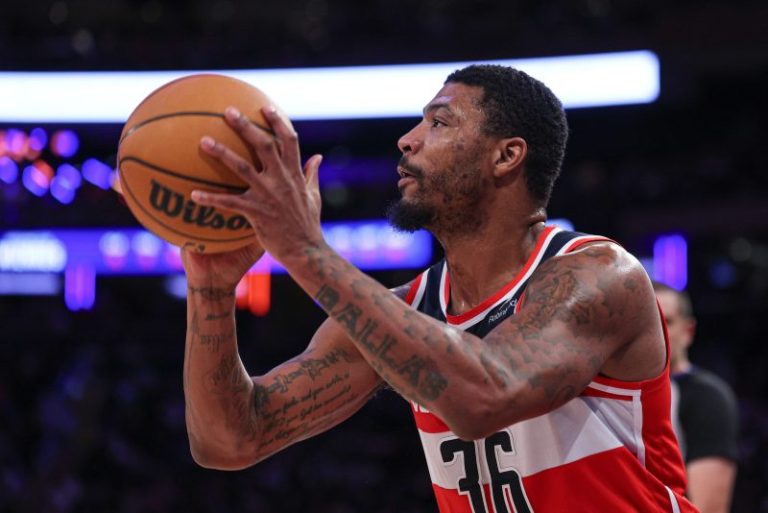
Marcus Smart is the newest member of the Los Angeles Lakers, and it might not have happened if not for the persistence of Luka Dončić.

Smart officially signed a 2-year, $11 million contract with the Lakers on Tuesday after agreeing to a buyout on the final year of his contract with the Washington Wizards. In his first public comments since joining his new team, the 31-year-old guard said the allure of playing alongside Dončić and LeBron James was too good to pass up. But Smart also revealed it was Dončić who helped facilitate this move to Los Angeles.

‘When you get a guy like Luka calling, checking on you, trying to see where you’re at, and to see if you wanted to come and join something special that he’s trying to cook up over here,’ Smart told reporters at the Lakers practice facility, ‘for him to say that he could really use my help, that meant a lot.’

Smart, an 11-year NBA veteran, has endured two injury-riddled seasons since the Boston Celtics traded him to the Memphis Grizzlies ahead of the 2023-24 NBA season. The Grizzlies then dealt Smart to the Wizards at the trade deadline last February. The former NBA defensive player of the year averaged 9 points, 3.2 assists and 2.1 rebounds over 34 games during the 2024-25 season. 

Smart noted that although he and Dončić didn’t have a prior relationship, there was a mutual respect from their battles on the court over the years. Smart is joining a Lakers team that won 50 games and finished third in the Western Conference standings after pulling off the stunning trade that sent Doncic to Los Angeles and former Lakers forward Anthony Davis to the Dallas Mavericks.

But the Lakers lost in five games to the Minnesota Timberwolves in the first round of the 2025 NBA playoffs, and Smart’s addition is seen as one that could potentially benefit Los Angeles most once it gets to the postseason.

‘Adding a player like Marcus Smart to our roster allows us to compete at the highest level,’ Lakers GM Rob Pelinka said in a statement. ‘Marcus epitomizes what it means to prioritize winning above all else – whether that’s making huge plays on the defensive end or hitting critical shots in key moments of the most intense games. He knows and understands playoff winning and will be a key leadership voice in our group. Surrounding our stars with two-way players like Marcus is critical to our overall vision of how we want to play and win next season. This is an exciting player acquisition, for sure.’

Smart played his first nine seasons with the Celtics, becoming a beloved figure in Boston playing alongside Jayson Tatum and Jaylen Brown. He was traded to the Grizzlies before the Celtics won the 2024 NBA championship. He is one of several new additions to the roster, most notably center DeAndre Ayton.

Smart had one year and $21 million remaining on his previous contract extension, which was originally signed with the Celtics. The exact terms of his buyout with the Wizards are unclear, but Smart said he prioritized returning to a contender to prove he can still be the player he used to be.

‘I’m very motivated,’ Smart said. ‘. . . I still have a lot left in the tank.’

This post appeared first on USA TODAY

Congressional Democrats are trying to get on the same page and display a unified front after threatening to derail the government funding process.

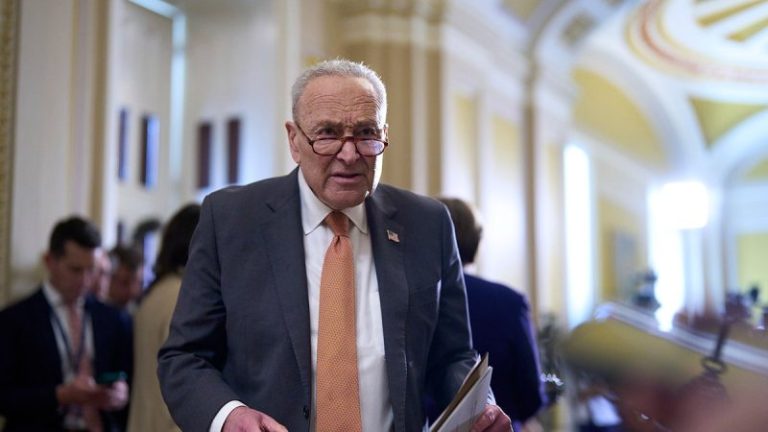
Senate Minority Leader Chuck Schumer, D-N.Y., and House Minority Leader Hakeem Jeffries, D-N.Y., met behind closed doors Tuesday night, along with the top Democrats in the House and Senate Appropriations Committees, to plot a course forward in the forthcoming government funding fight.

The meeting came after Democrats in the upper chamber overwhelmingly supported the first government funding bill to hit the Senate floor, one that would fund military construction and Veterans Affairs. Ahead of the vote, Senate Democrats had signaled they may vote against the bill and further obstruct the appropriations process because of highly partisan legislation rammed through the upper chamber by Senate Republicans.

‘We all want to pursue a bipartisan, bicameral appropriations process,’ Schumer said. ‘That’s how it’s always been done, successfully, and we believe that, however, the Republicans are making it extremely difficult to do that.’

The meeting just off the Senate floor was meant to get congressional Democrats on board with a messaging plan over the next weeks and months ahead of the Sept. 30 deadline to fund the government.

It was also likely designed to prevent a repeat of the Democratic debacle in March, when Schumer broke with Jeffries and threatened to shutter the government before ultimately caving and providing Republicans the votes necessary to advance yet another government funding extension, known as a continuing resolution.

Republicans are quick to point out that when Schumer led the upper chamber, none of the House GOP’s spending bills made it to the floor — in Congress, the spending process begins in the lower chamber.

Since taking over earlier this year, Senate Majority Leader John Thune, R-S.D., has committed to returning to regular order, or passing each of the dozen spending bills to fund the government, and trying to get the appropriations process back to normal.

However, it’s a feat that hasn’t been successfully done in Washington since the late 1990s. 

‘Frankly, I think a lot of us around here think [this] is long overdue,’ Thune said.  

However, Democrats contend that their trust in Republicans is wearing thin after two major partisan bills, one being President Donald Trump’s ‘big, beautiful bill,’ and the other the president’s $9 billion clawback package, were pushed through the chamber without any Democratic input.

Thune argued that Senate Democrats were using the rescissions package to shut down the appropriations process and effectively shut down the government.

In the Senate, most bills that come to the floor require at least 60 votes to smash through the filibuster, meaning that most legislation requires bipartisan support to some extent.

Earlier this year, the House GOP produced a partisan government funding extension that was a tough pill for Senate Democrats to swallow, but they still ultimately opted to vote for it. This time around, they’re demanding more involvement in the process.

Jeffries said that congressional Democrats would play ball if the process was ‘bipartisan and bicameral in nature’ and put the onus of a partial government shutdown at the feet of congressional Republicans.

‘House Republicans are, in fact, marching us toward a possible government shutdown that will hurt the American people,’ he said.

However, House Speaker Mike Johnson, R-La., threw the responsibility on Democrats over whether the government would shutter or stay open come the end of September.

‘They’re gaming out how they can shut the government down,’ Johnson told Bloomberg Government. 

This post appeared first on FOX NEWS

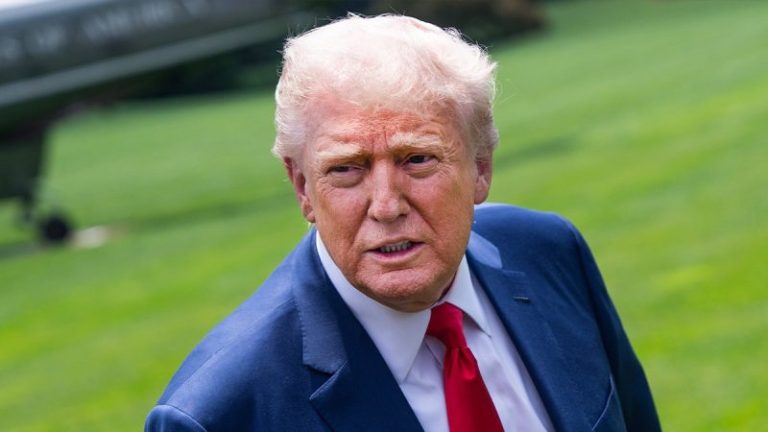
President Donald Trump’s approval rating remains steady at 45% as he closes out the sixth month of his second term. 

Support for the president is split along party lines, as Republicans express strong approval and Democrats disapprove of his policies almost across the board, according to a new Marquette Law School Poll national survey, conducted July 7-16, 2025.

Independent voters remain substantially more negative than positive, disapproving at 62%, which is down seven points since May. Yet, Trump maintains a 55% disapproval rating among all voters. 

Trump’s overwhelming approval among Republicans, at 86%, and disapproval among Democrats, at 93%, have remained consistent since the start of his second term, according to the four Marquette Law School Poll national surveys conducted this year. 

The polling reflects an omnipresent partisan divide on Capitol Hill and across the country, as Republicans celebrate and Democrats protest Trump’s sweeping second-term agenda, including a robust crackdown on illegal immigration and his marquee legislation, the ‘one big, beautiful bill.’

Trump’s megabill includes tax cuts, funding for border security, Medicaid reform and an American energy overhaul, among other fulfillments of Trump’s 2024 campaign promises. A Republican-led Congress passed the bill through the reconciliation process, and Trump signed the bill by a self-imposed July 4 deadline. 

According to the poll, 59% of all adults disapprove of Trump’s ‘one big, beautiful bill.’ Democrats almost unanimously disapprove of the bill, at 94%, while 79% of Republicans said they support it. 

Some conservative fiscal hawks, including Rep. Thomas Massie, R-Ky., who voted against the bill, sounded the alarm on the megabill adding to the federal deficit. The Congressional Budget Office (CBO) dynamic analysis found it would raise budget deficits by an estimated $2.4 trillion over a decade.

Sixty-eight percent of people think the federal deficit will increase, up 52% from the last survey in May. And that number nearly doubled among Republicans from 22% in May to 44% in July. 

Fifty-nine percent of Americans surveyed think Trump’s tariff plans will hurt the U.S. economy. Inflation is the top issue facing the country for 34% of Americans, followed by the economy at 16% in July. Meanwhile, just 28% of Americans think Trump’s policies will bring down inflation, and 60% say his policies will increase inflation. 

Those views on the economy are split along party lines, as a majority of Republicans believe Trump will decrease inflation and majorities of Independents and Democrats think his policies will increase inflation, per the survey. 

Among Trump’s leading issue of deporting illegal immigrants, 57% favor and 43% oppose his deportation rollout, which is lower than in May, when 66% were in favor and 34% were opposed. 

This polling follows a surge in violence against federal immigration authorities and protests rejecting U.S. Immigration and Customs Enforcement (ICE) erupting across the country, particularly in Los Angeles, where Trump authorized the National Guard to disrupt protests that delved into riots last month.

Republicans continue their overwhelming support for deportations, but a majority of Independents are now opposed, following a decline from May to July. Meanwhile, disapproval among Democrats rose 17 percentage points from May to July. 

According to the poll, 55% of Americans believe the United States is mostly deporting immigrants with no criminal record, with most Republicans agreeing, while majorities of Independents and Democrats think deportations mostly involve those without criminal records. 

Trump has aggressively asserted executive authority in his second term, overturning longstanding government policy and aiming to make major cuts to the federal workforce through an avalanche of sweeping and controversial executive orders and actions, with some aimed at addressing grievances he has held since his first term.

The president started his second administration with poll numbers in positive territory, but his poll numbers started to slide soon after his late-January inauguration. 

His approval ratings sank underwater by early March and have remained in negative territory ever since in most national surveys. The president’s approval ratings were underwater in 17 of the 21 national polls conducted so far in July.

Sunday marked six months since Trump started his second tour of duty in the White House.

Former President Joe Biden, whose single term in the White House is sandwiched by Trump’s two terms, enjoyed positive approval ratings in July 2021, six months into his tenure.

However, Biden’s numbers were sinking at the time, and dropped into negative territory in the late summer and autumn of 2021, after his much-criticized handling of the turbulent U.S. exit from Afghanistan and amid soaring inflation and a surge of migrants crossing into the U.S. along the nation’s southern border with Mexico.

Biden’s approval ratings remained underwater for the rest of his presidency.

This post appeared first on FOX NEWS

The Trump administration revealed details of its highly anticipated artificial intelligence plan of action ahead of President Donald Trump’s major speech later on Wednesday, which is expected to also include the president signing at least one executive order related to the U.S.’ artificial intelligence race. 

Administration leaders, including White House Office of Science and Technology policy director Michael Kratsios and AI and crypto czar David Sacks, held a background call with the media Wednesday morning and outlined a three-pillar plan of action for artificial intelligence focused on American workers, free speech and protecting U.S.-built technologies. 

‘We want to center America’s workers, and make sure they benefit from AI,’ Sacks said on the call while describing the three pillars. 

‘The second is that we believe that AI systems should be free of ideological bias and not be designed to pursue socially engineered agendas,’ Sacks said. ‘And so we have a number of proposals there on how to make sure that AI remains truth-seeking and trustworthy. And then the third principle that cuts across the pillars is that we believe we have to prevent our advanced technologies from being misused or stolen by malicious actors. And we also have to monitor for emerging and unforeseen risks from AI.’

Trump is expected to deliver what White House staffers have described as a major address early Wednesday evening outlining his administration’s artificial intelligence efforts, including lifting restrictions on the technology administration officials say will usher in the next ‘industrial revolution.’

Trump ordered his administration in January to develop a plan of action for artificial intelligence in order to ‘solidify our position as the global leader in AI and secure a brighter future for all Americans.’ 

The presidential action ordered administration leaders to craft a plan ‘to sustain and enhance America’s global AI dominance in order to promote human flourishing, economic competitiveness, and national security’ within 180 days, which was Tuesday. 

Kratsios stressed on the call that by cutting federal red tape surrounding AI, American workers will benefit while the U.S. will avoid going down the same AI path as Europe, which is mired in tech regulations, Kratsios said on the call. ‘The action plan calls for freeing American AI innovation from unnecessary bureaucratic red tape, ensuring all Americans reap the benefits of AI technologies and leveraging AI to drive new scientific breakthroughs.’

‘On deregulation, we cannot afford to go down Europe’s innovation-killing regulatory path. Federal agencies will now review their rules on the books and repeal those that hinder AI development and deployment across industries, from financial services and agriculture to health and transportation.’ 

‘At the same time, we’re asking the private sector to recommend regulatory barriers that they face for the administration to consider removing,’ he added. ‘Instead of cultivating skepticism, our policy is to encourage and enable AI adoption across government and the private sector through regulatory sandboxes and sector-specific partnerships.’ 

Trump rescinded a Biden-era executive order hours after taking office in January that put restrictions on artificial intelligence technologies, including requiring tech companies to keep the federal government appraised of the most powerful technology they were building before the programs are made available to the public. 

Trump’s signature rescinded the Biden order, with a White House fact sheet at the time arguing the Biden executive order ‘hinders AI innovation and imposes onerous and unnecessary government control over the development of AI.’

‘American development of AI systems must be free from ideological bias or engineered social agendas,’ the White House said. ‘With the right government policies, the United States can solidify its position as the leader in AI and secure a brighter future for all Americans.’ 

‘The order directs the development of an AI Action Plan to sustain and enhance America’s AI dominance, led by the Assistant to the President for Science & Technology, the White House AI & Crypto Czar, and the National Security Advisor,’ the White House said. 

Trump is expected to sign an executive order Wednesday related to implementing his administration’s artificial intelligence plan, Fox News learned. The background call Wednesday morning focused specifically on the artificial intelligence plan of action crafted across the past 180 days. 

The Trump administration has notched massive wins in the artificial intelligence race, which has pitted the U.S. against China to develop the most high-tech artificial intelligence systems, including Oracle and OpenAI announcing Tuesday the companies will further develop the Stargate project, which is an effort to launch large data centers in the U.S. The two companies’ most recent announcement promises an additional 4.5 gigawatts of Stargate data center capacity, a move expected to create more than 100,000 jobs across operations, construction, and indirect roles such as manufacturing and local services.

The Stargate project includes a commitment from OpenAI, Oracle, SoftBank and MGX to invest $500 billion in U.S.-based artificial intelligence infrastructure throughout the next four years.

Creating the data centers is key to the U.S. artificial intelligence race, according to admin officials who spoke on the background call Wednesday. Sacks explained that the administration wants to see U.S. artificial intelligence infrastructure grow by leaps and bounds in order for the country to ‘lead in data centers and in the energy that powers those data centers.’ 

Earlier in July, Trump traveled to Pittsburgh for an artificial intelligence summit at Carnegie Mellon University while touting the $90 billion in private-sector investments intended to create the Keystone State into an energy and artificial intelligence hub for the country 

Trump also has signed other executive orders focused on artificial intelligence as it relates to increasing America’s energy grid capacity, and an April executive order aimed at preparing America’s next generation to employ artificial intelligence through educational programs. 

Kratsios said during the call that the U.S. winning the artificial intelligence race is ‘non-negotiable,’ citing not only economic and geopolitical considerations. 

‘We’re not alone in recognizing the economic, geopolitical, and national security importance of AI, which is why winning the AI race is non-negotiable,’ he said. ‘The plan presents over 90 federal policy actions across three pillars. As David (Sacks) discussed, those are accelerating innovation, building American AI infrastructure, and leading international AI diplomacy and security. The action plan was crafted with overwhelming input from industry, academia and civil society, informed by over 10,000 responses to the White Houses request for information.’ 

The plan delivered to Trump could be executed in the next six months to a year, according to the background call. 

The Trump administration repeatedly has rallied around how artificial intelligence will be crucial at catapulting America into the next ‘industrial revolution,’ which administration officials say will lead to job creation and a strong tech industry that can trounce other nations in the race. 

Vice President JD Vance has been one of the most vocal admin leaders touting the U.S. strength on artificial intelligence as it cut red tape surrounding the industry. 

‘The Trump administration is troubled by reports that some foreign governments are considering tightening screws on U.S. tech companies with international footprints,’ Vance said in a fiery February speech from Paris. ‘America cannot and will not accept that, and we think it’s a terrible mistake.’ 

‘At this moment, we face the extraordinary prospect of a new industrial revolution… But it will never come to pass if over-regulation deters innovators from taking the risks necessary to advance the ball,’ he said. ‘Nor will it occur if we allow AI to become dominated by massive players looking to use the tech to censor or control users’ thoughts.’

This post appeared first on FOX NEWS

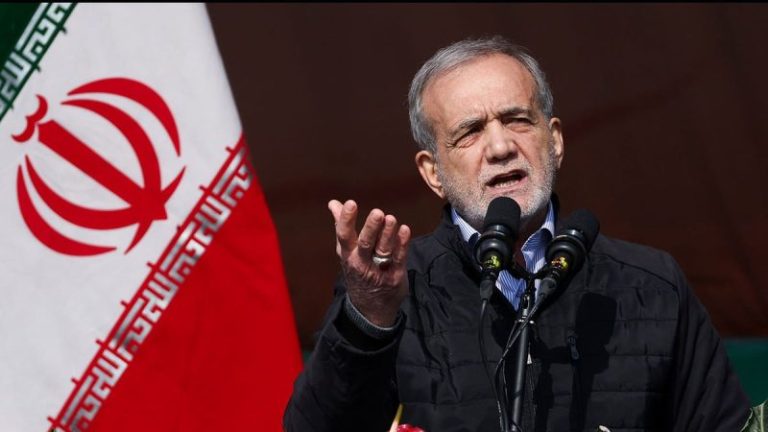
Iran’s President Masoud Pezeshkian on Wednesday doubled down on Tehran’s refusal to abandon its nuclear program and said Iran is ‘fully prepared’ for a renewed fight with Israel. 

The Iranian president’s comments came just two days after Tehran’s foreign minister confirmed to Fox News that Iran will not give up its enrichment program, but continues to claim Tehran is not interested in developing a nuclear weapon. 

‘[US President Donald] Trump says that Iran should not have a nuclear weapon and we accept this because we reject nuclear weapons and this is our political, religious, humanitarian and strategic position,’ Pezeshkian said in an interview with Al Jazeera.

‘We believe in diplomacy, so any future negotiations must be according to a win-win logic, and we will not accept threats and dictates,’ he added. 

Pezeshkian also said Trump’s repeated claims that the U.S. ‘obliterated’ Iran’s nuclear program is ‘just an illusion.’

‘Our nuclear capabilities are in the minds of our scientists and not in the facilities,’ he said.

The U.S. strikes – which came just days after Israel targeted top military figures and nuclear scientists – are believed to have set back Iran’s nuclear program by up to two years. 

But security experts have told Fox News Digital that Iran continues to possess significant military strike capabilities, and questions remain over whether Iran was able to successfully move any enriched uranium off site prior to Washington’s strikes.

Pezeshkian acknowledged the blow that Israel levied against its top officials, but said it ‘completely failed’ to ‘eliminate’ the hierarchy of Iran’s nuclear program.

He further warned that Iran is ready to take on Jerusalem should another conflict break out. 

‘We are fully prepared for any new Israeli military move, and our armed forces are ready to strike deep inside Israel again,’ Pezeshkian said.

Iran and Israel are still operating under a ceasefire brokered by the U.S. and Qatar following last month’s 12-Day War, but the Iranian president said he is not confident this truce will hold. 

‘We are not very optimistic about it,’ Pezeshkian said.

‘That is why we have prepared ourselves for any possible scenario and any potential response. Israel has harmed us, and we have also harmed it,’ he added. ‘It has dealt us powerful blows, and we have struck it hard in its depths, but it is concealing its losses.’

Delegations from France, Germany and the U.K. (E3) are set to travel to Tehran on Friday to discuss nuclear negotiations.

The E3 visit will come just three days after officials from Russia and China, who are also signatories of the 2015 Joint Comprehensive Plan of Action (JCPAO), visited on Tuesday to discuss negotiations and how Iran can avoid sanctions, though details of the talks remain unknown.

Iran began initiating international talks after the E3 last week threatened to employ snapback sanctions – which would see the entire 15-member U.N. Security Council enforce strict economic ramifications – should Iran not enter into a nuclear agreement by the end of August. 

The timeframe is consistent with the time needed for the JCPOA signatories to recall snapback sanctions prior to the Oct. 18 expiration date when the economic tool can no longer be employed en masse per the 2015 terms of the agreement.

This post appeared first on FOX NEWS