Archive

2025

Browsing

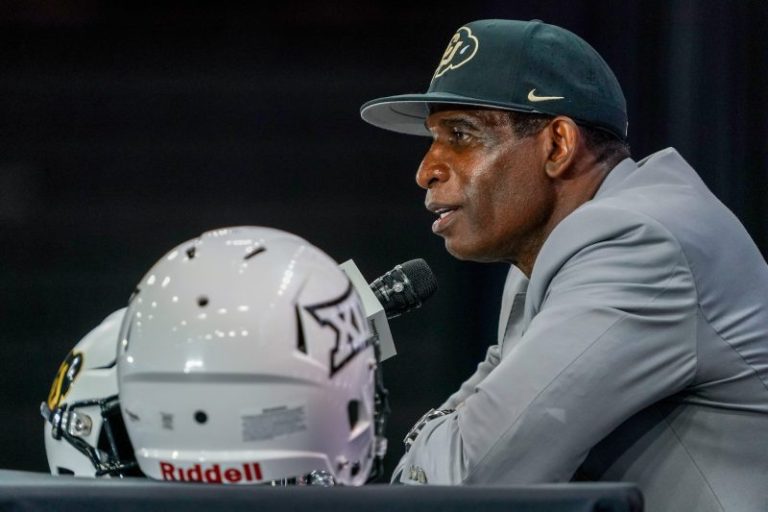
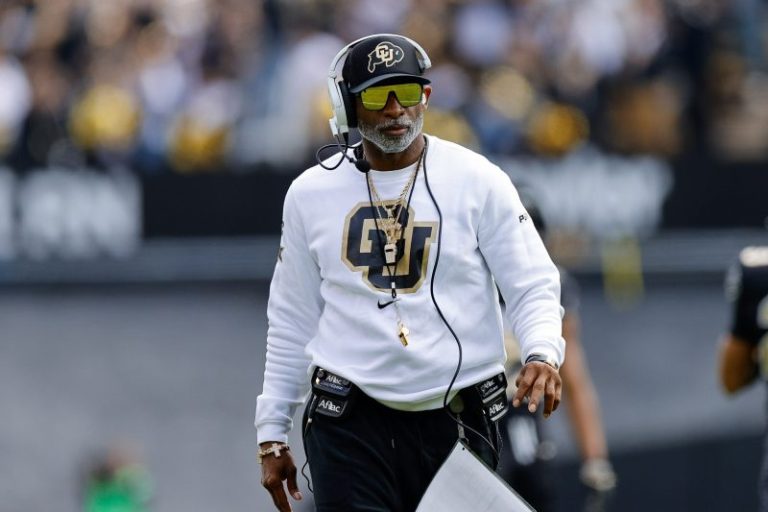
Colorado football coach Deion Sanders once was one of the fastest players in professional sports and even had his own line of Nike footwear to cash in on it.

But after 14 seasons in the NFL — and another nine in Major League Baseball — the mileage eventually caught up with his fleet feet, along with a serious rash of blood clots in his legs. On Monday June 28, Sanders and his medical team also revealed he suffered from bladder cancer before he recovered at his estate in Canton, Texas, in May and June. He elected to have the bladder removed in May and is now planning to begin his third season in Boulder at age 57.

‘I am pleased to report that the results from the surgery are that he is cured from the cancer,’ said Janet Kukreja, the director of urologic oncology at the University of Colorado Anschutz Medical Campus.

Here is a timeline of how his health issues have progressed through years after he got into coaching college football at Jackson State in Mississippi in 2020. They reached their lowest point during a 23-day hospital stay in the fall of 2021, when Sanders said he nearly died. Sanders said he’s had 14 surgeries since 2021.

“I had more surgeries out of the game than I did in the game,’ Sanders said Monday. ‘Like what is going on?”

September 2021: Deion Sanders undergoes foot surgery

As coach at Jackson State, Deion Sanders experienced throbbing pain in his left foot and limped. He had a bunion, an inflamed nerve and a hammertoe, which is a toe bent downward. He has attributed some of these issues to fallout from his playing career.

“My foot is shot, and I can’t take it,” he said as he prepared to undergo surgery on it, as documented by the Barstool Sports documentary series “Coach Prime.”

After surgery, he returned to the field with some help – using crutches, a golf cart and a scooter.

October 2021: Deion Sanders hospitalized for 23 days

Jackson State athletic trainer Lauren Askevold was changing Sanders’ bandages when she notices toes on his left foot had turned dark black. His team was 5-1 at the time, but she encouraged him to get his foot examined. He was admitted to the hospital and spent 23 days there while he endured a crisis over blood clots in his leg. The clots in his arteries were cutting off circulation to his foot. Two toes were amputated – the big one on his left foot and the one next to it. He also suffered from compartment syndrome and had the sides of his left calf removed in surgery.

Sanders has said he nearly died during this time as he underwent eight surgeries during his hospital stay, which stretched into November 2021.

November 2021: Deion Sanders returns in wheelchair

After missing three games while in the hospital, Sanders returned to the sideline in a motorized wheelchair. His team beat Southern Nov. 13, 21-17. Jackson State finished the season 11-2, including the three games Sanders missed, all wins.

March 2022: Deion Sanders details his prior health crisis

A documentary series entitled “Coach Prime” debuts on Barstool Sports. Sanders discusses his health crisis from the previous fall and said blood clots have been an issue in his family, including an uncle who died, another uncle who nearly died and his mother. The series also revealed that he was going to lose his left leg if they didn’t do emergency surgery.

December 2022: Sanders hired at Colorado

Sanders recovered from surgery and helped lead Jackson State to a 12-1 season before getting hired at Colorado in early December 2022. He walked slowly and with a slight limp because of ongoing discomfort in his left foot.

June 2023: Deion Sanders undergoes another surgery

Sanders permitted his doctors to be filmed on video talking to him about his condition. The footage was published on Thee Pregame Show on YouTube, with one doctor saying Sanders “could lose the foot.”

Sanders said he had no feeling in the bottom of the foot. Another doctor said the blood pressure near his ankle has worsened since 2022 and was 66% of the blood pressure measured in his arm.

He underwent surgery later that month to remove blood clots in his left leg.

July 2023: Deion Sanders misses Pac-12 media event

Sanders announced he would undergo his second surgery in the summer of 2023 and would miss his scheduled appearance at the Pac-12 Conference media day event in Las Vegas. He underwent two surgeries – one to remove a clot and another to fix a hammertoe. That added up to 12 surgeries since 2021.

‘Now the blood flow is great,’ Sanders told USA TODAY Sports in August 2023. ‘I was hurting so bad because I wasn’t getting any blood flow down there over the last year. That’s why I was hurting … and walking crazy.’

September 2023: Deion Sanders runs onto the field

Sanders achieved his goal of running onto the field with his team before the season opener at TCU. The Buffaloes stunned the nation by winning 45-42. They started the season 3-0 before finishing the season 4-8.

May/June 2025: Deion Sanders suffers new setback

Sanders went though the 2024 season without any public health interruptions and finished his second season in Boulder with a 9-4 record. But then in late May, he said in a podcast with former NFL cornerback Asanta Samuel that he had suffered a health issue and lost 14 pounds. He didn’t disclose the issue.

He recuperated at his estate in Texas and missed several events, including Colorado’s annual youth and high school football camps in June and a speaking appearance in Florida June 8. Football recruits who visited campus were told he was out sick.

July 2025: Sanders returns to Colorado

Sanders spoke at a Big 12 Conference media days event in Frisco, Texas, July 9 but declined to discuss his health. He was seen there leaning on a chair while standing. He then returned to his estate in east Texas where he said he was “still going through something.” He returned to Colorado July 25, two days before his players were due to report for preseason football camp. He held a news conference to discuss his condition July 28.

He said he ‘depends on Depend’ underwear and has had issues with urination but never considered retiring from coaching.

Follow reporter Brent Schrotenboer @Schrotenboer. Email: bschrotenb@usatoday.com
This post appeared first on USA TODAY

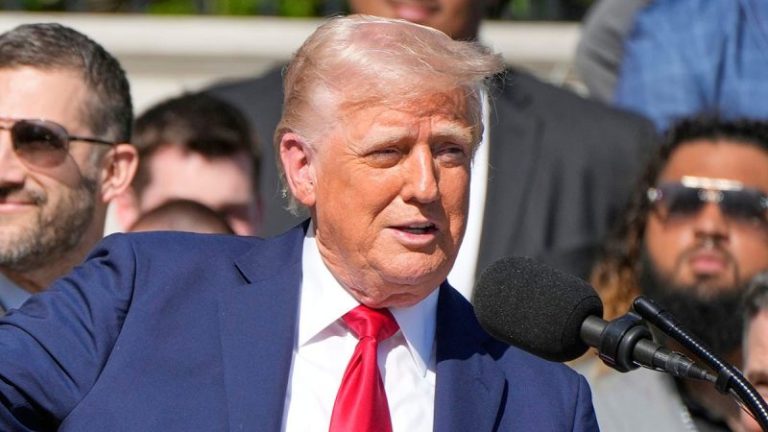
The Senate confirmed its first nominee of the week ahead of what is expected to be a jam-packed schedule to ram through as many of President Donald Trump’s picks as possible.

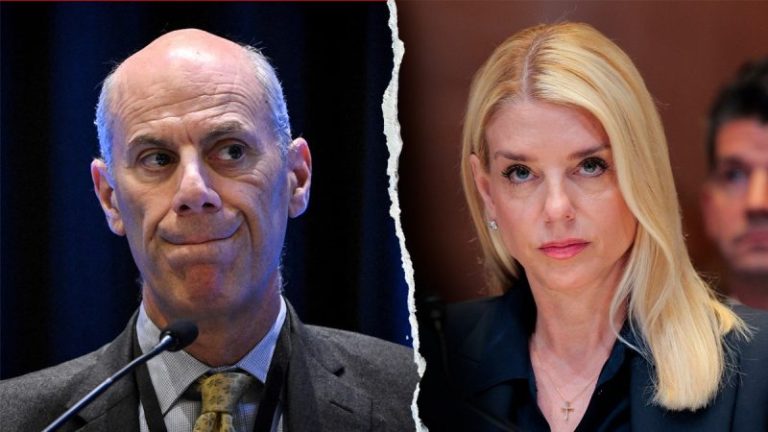
David A. Wright, Trump’s pick to lead the Nuclear Regulatory Commission (NRC) for a five-year term, was confirmed in the upper chamber on a 50to 39 vote on Monday. It’s not Wright’s first time as chair of the commission, having first served in the role beginning in 2020.

Trump had previously tapped Wright during his first term, and again selected him to lead the NRC earlier this year. His new term is set to end in 2030.

The NRC is an independent regulatory agency tasked with regulating commercial nuclear power plants, reactor licensing and renewal and other elements related to protecting public health and safety when it comes to nuclear energy. Wright’s confirmation comes on the heels of Trump’s announcement that the U.S. and European Union were entering a trade deal that would see the bloc purchase $750 billion of U.S. energy over the next three years. 

While the commission is independent from other arms of the government, Senate Democrats have balked at recent attempts to make the regulatory body, in their view, more partisan.

Earlier this year, Trump signed an executive order that demanded the agency consider making its safety standards less stringent, shortening the timelines for environmental reviews and a quadrupling of the nation’s nuclear power capacity by 2050: all part of the president’s quest to ensure America’s energy dominance. 

Senate Environment and Public Works Committee Chair Shelley Moore Capito, R-W.V., argued that over the last seven years that Wright has been a part of the commission, first as a commissioner beginning in 2018 and then as chair, he would fulfill the president’s wishes. 

‘Achieving this will require experienced and highly qualified Commissioners who are empowered to lead the Agency through a period of high expectations,’ she said in a statement. ‘Well, David Wright meets that mark.’

Then Trump fired a Democratic member of the commission last month, and a staffer from the president’s Department of Government Efficiency (DOGE) was reportedly detailed from the Department of Energy to the regulatory agency.  

That prompted Sen. Sheldon Whitehouse, the top Democrat on the Senate Environment and Public Works Committee, to warn of a ‘hostile takeover’ of the commission by the Energy Department.

The move hurt what began as bipartisan support for Wright’s nomination — Whitehouse initially backed him but changed his position.

‘I hoped to see Chairman Wright rise to the occasion, but circumstances right now at the NRC continue to deteriorate,’ he said in a statement. ‘I cannot presently support his renomination.’

Still, Wright’s confirmation is a win for both Senate Republicans and the White House after Trump called on the Senate GOP to ram his nominees through blockades set up by Senate Democrats.

There are now over 140 pending ‘civilian’ nominations for positions across the gauntlet of federal agencies, ambassadorships and judgeships. The Senate has moved at a blistering clip over the last six months to confirm nominees—they’ve clocked nearly 100 so far — the president has called on Senate Republicans to consider canceling the forthcoming August break to get more done. 

Senate Majority Leader John Thune, R-S.D., warned that if his colleagues across the aisle continued to slow walk the process in the upper chamber for the slew of remaining ‘uncontroversial’ nominees, or be prepared to stick around Washington. 

‘Or they can rein in their reflexive anti-Trump sentiment and allow some of his rank-and-file nominees to proceed by unanimous consent or voice vote — just as Republicans did when the roles were reversed,’ he said. ‘And I’d remind my colleagues about the dangerous and ugly precedent that they’re setting here. But the choice is theirs. But whether it’s the slow way or the fast way, we’re getting President Trump’s nominees confirmed.’

This post appeared first on FOX NEWS

The Department of Justice has filed an official complaint alleging misconduct by US District Court Chief Judge James Boasberg. Fox News has reviewed the complaint which was written by Attorney General Pam Bondi’s Chief of Staff Chad Mizelle and addressed to the Chief Judge of the United States Court of Appeals for the District of Columbia Circuit, Sri Srinivasan.

Fox News has learned that the complaint was written and filed at the direction of Attorney General Pam Bondi.

‘The Department of Justice respectfully submits this complaint alleging misconduct by U.S. District Court Chief Judge James E. Boasberg for making improper public comments about President Donald J. Trump to the Chief Justice of the United States and other federal judges that have undermined the integrity and impartiality of the judiciary,’ says Mr. Mizelle.

Judge Boasberg is presiding over a high-profile case involving the deportation of several migrants to El Salvador and has talked about holding DOJ lawyers in contempt because of his assertion that his order to turn airborne planes around was not followed. President Trump has also made critical comments about Judge Boasberg.

The complaint details two occasions on which Judge Boasberg made comments the Justice Department alleges undermine the integrity and impartiality of the judiciary.

‘On March 11, 2025, Judge Boasberg attended a session of the Judicial Conference of the United States, which exists to discuss administrative matters like budgets, security, and facilities. While there, Judge Boasberg attempted to improperly influence Chief Justice Roberts and roughly two dozen other federal judges by straying from the traditional topics to express his belief that the Trump Administration would ‘disregard rulings of federal courts’ and trigger ‘a constitutional crisis.’ Although his comments would be inappropriate even if they had some basis, they were even worse because Judge Boasberg had no basis—the Trump Administration has always complied with all court orders. Nor did Judge Boasberg identify any purported violations of court orders to justify his unprecedented predictions.’

‘Within days of those statements, Judge Boasberg began acting on his preconceived belief that the Trump Administration would not follow court orders. First, although he lacked authority to do so, he issued a temporary restraining order preventing the Government from removing violent Tren de Aragua terrorists, which the Supreme Court summarily vacated.

Taken together, Judge Boasberg’s words and deeds violate Canons of the Code of Conduct for United States Judges, and, erode public confidence in judicial neutrality, and warrant a formal investigation.’ 

The DOJ is asking Chief Judge Srinivasan to refer the complaint to a special investigative committee as an inquiry is essential to determine whether Judge Boasberg’s conduct constitutes ‘conduct prejudicial to the effective and expeditious administration of the business of the courts.’ The complaint also asks that Judge Boasberg be taken off the case involving Venezuelan migrants who were deported to El Salvador, ‘to prevent further erosion of public confidence while the investigation proceeds.’

The case in question is J.G.G. v Trump.

This is the second time the Bondi DOJ has filed an official complaint against a federal judge. In late February, the DOJ filed a complaint about US District Judge Ana Reyes, concerning what the DOJ calls Judge Reyes’ ‘misconduct’ during the proceedings in Nicolas Talbott et al. v. Donald J. Trump et al., which is a case brought by two LGBTQ groups challenging the Trump Administration’s Executive Orders barring transgender individuals from serving in the US military.

News of the complaint comes at a time when the Trump administration has excoriated dozens of so-called ‘activist’ judges who have blocked or paused some of Trump’s sweeping executive orders from taking force in his second White House term.

Judge Boasberg in particular found himself at the center of Trump’s ire and attacks on so-called ‘activist’ judges this year, following his March 15 temporary restraining order that sought to block Trump’s use of the Alien Enemies Act to quickly deport hundreds of Venezuelan nationals to El Salvador.

Boasberg had ordered all planes bound for El Salvador to be ‘immediately’ returned to U.S. soil, which did not happen.

His emergency order touched off a complex legal saga that ultimately spawned dozens of federal court challenges across the country – though the one brought before his court on March 15 was the very first – and later prompted the Supreme Court to rule, on two separate occasions, that the hurried removals had violated migrants’ due process protections under the U.S. Constitution.

Boasberg, as a result, emerged as the man at the center of the legal fallout. 

Trump administration officials have repeatedly excoriated Boasberg both for his order and his attempt to determine whether they acted in good faith to comply with his orders, and Trump himself has floated the idea that Boasberg could be impeached earlier this year – prompting Supreme Court Chief Justice John Roberts to issue a rare public warning. 

The complaint, focused on months-old behavior and allegations surrounding Judge Boasberg— first tapped as a judge by then-President George W. Bush in 2002, comes at a time when he could again have a say in a major class action case brought by lawyers representing the former CECOT migrants. 

Lawyers for the ACLU and others in the class asked Judge Boasberg earlier this month to reopen discovery in the case, citing allegations from a United Nations report regarding custodial status of migrants at CECOT, and the recent decision to remove the 252 migrants sent from the U.S. to El Salvador to Venezuela under the prisoner exchange.

Asked at a status hearing in court last week whether the Justice Department would comply with the court’s orders, DOJ lawyer Tiberius Davis said they would, ‘if it was a lawful order.’

They also said they would likely seek an appeal from a higher court.

In April, Judge Boasberg also ruled that the court had found ‘probable cause’ to hold the Trump administration in contempt for failing to return the planes to U.S. soil, in accordance with his March 15 emergency order, and said the court had determined that the Trump administration demonstrated a ‘willful disregard’ for his order.

The U.S. Court of Appeals for the D.C. Circuit stayed his original motion in April, and has yet to move on the matter.

This post appeared first on FOX NEWS

When the ambulance arrived in the Kensington neighborhood of Philadelphia two years ago, an angry EMT got out and barked at the crowd, ‘Who called this in?’ 

Standing next to my cameraman and above the prone body of a shirtless soul bedecked in boils and not moving, I said, ‘I did.’ He didn’t say a word, he looked at me, then down the street at the dozens of strung out bodies, then back at me as if to say, ‘Look at all this, what do you want me to do?’

I had no answer.

Last week, President Donald Trump did answer that question with a much-welcome executive order (EO) intended to bring back civil commitment, in other words, the ability to put people who are a danger to themselves or others in institutions, even against their will.

Civil libertarians are in a tizzy over the EO. They insist this is an abuse of due process and harkens to the bad old days, when hundreds of thousands of Americans were committed to mental institutions, sometimes for dubious reasons.

But in examining and judging Trump’s proposed policy here, it is important to understand and accept what the status quo on the ground is right now, and it is nothing short of horrific.

I’ve traveled to homeless encampments all over America, from tucked-away Manhattan underpasses to the sprawling chaos of San Francisco’s Tenderloin, a place you literally smell a block before you enter.

In these encampments, your gag reflex is challenged by needles sticking out of necks and mountains of human detritus, but the real soul-crushing, existential sadness comes from knowing that these human beings are just being left to die.

For decades now, Democrats have spent endless dollars on fruitless efforts to fix the homeless problem. In California alone, Gov. Gavin Newsom has spent $20 billion on failing to fix it, and only recently admitted the encampments have to go.

In these encampments, your gag reflex is challenged by needles sticking out of necks and mountains of human detritus, but the real soul-crushing, existential sadness comes from knowing that these human beings are just being left to die.

What the Trump administration realizes is that Democrats refuse to accept is that homelessness is, actually, two very distinct problems. One is financial, the other is a matter of addiction and mental health.

Financial homelessness is fairly easy to address. The evicted mother living in her car can be given temporary housing and job assistance. She really does just need a hand up.

Homelessness related to mental illness and addiction, however, isn’t really a homelessness problem at all, it’s an addiction and mental illness problem, and shockingly, just letting people in tents shoot up in what was once a thriving commercial district doesn’t solve it.

As I have wandered the streets of these hellscapes in city after city, my question hasn’t really been if these people would be better off in an institution, but rather, if they weren’t in a de facto open-air institution already.

What does it matter if these places lack walls and locks? They are cages nonetheless, cruel prisons whether voluntary or not.

As I have wandered the streets of these hellscapes in city after city, my question hasn’t really been if these people would be better off in an institution, but rather, if they weren’t in a de facto open-air institution already.

Opponents of civil commitment insist you cannot take away people’s freedom! But freedom to do what? Shoot fentanyl every day until they die on a curbside, pockets rifled by another desperate junkie?

If it was your child on these broken and brutal streets of death, would you want them to be left in freedom to waste away, or would you want them taken somewhere where they could be protected and helped?

Opponents will say that civil commitment can be abused. They will point to the 1950s when homosexuals were sent to institutions, but it’s not 1950. We aren’t going to institutionalize gay people, and we cannot be paralyzed by a bigoted past when trying to save lives today.

Could there be abuses or mistakes made regarding civil commitment? Sure, but people are dying in the streets right now, and we must trust ourselves to actively help them, without stepping over the line.

Annoyed with me, or not, that day in Kensington, the EMT revived the man at my feet, who, it turns out, wasn’t dead, after all. Instead, he was angry, because the Narcan that woke him up also negated the high he had paid for.

There are really only two sides to be on here: the side that says we are going to do everything we can to save that man’s life, even against his will, or the side that condemns him to an open-air prison of his own making.

President Trump has chosen wisely, and if local governments take heed, it is going to save a lot of lives across America.

This post appeared first on FOX NEWS

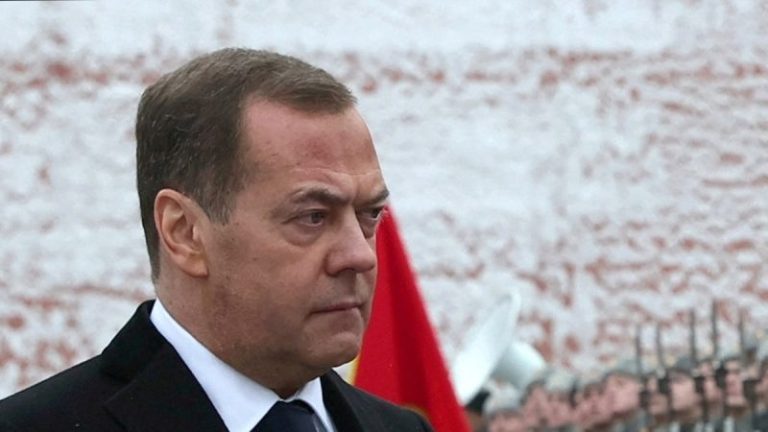
President Donald Trump’s new deadline for Russia to end the conflict with Ukraine is an additional ‘step towards war,’ according to former Russian President Dmitry Medvedev.  

Medvedev, now the deputy chairman of the Security Council of Russia, cautioned that Trump’s announcement Monday that Russia must end the conflict with Ukraine in 10 to 12 days would not end well for the U.S. 

‘Trump’s playing the ultimatum game with Russia: 50 days or 10… He should remember 2 things: 1. Russia isn’t Israel or even Iran. 2. Each new ultimatum is a threat and a step towards war. Not between Russia and Ukraine, but with his own country,’ Medvedev said in a post on X on Monday. ‘Don’t go down the Sleepy Joe road!’

While Trump announced on July 14 that he would sign off on ‘severe tariffs’ against Russia if Moscow failed to agree to a peace deal within 50 days, Trump said Monday that waiting that period of time was futile amid stalled negotiations. 

‘I’m going to make a new deadline, of about 10 — 10 or 12 days from today,’ Trump told reporters from Scotland. ‘There’s no reason for waiting. It was 50 days. I wanted to be generous, but we just don’t see any progress being made.’

Trump’s remarks come as his frustration with Putin has grown in recent weeks amid no progress toward peace between Russia and Ukraine, and just a day after Russia launched more than 300 drones, four cruise missiles and three ballistic missiles into Ukraine, according to the Ukrainian air force.


Trump called out Putin for providing lip service during their discussions while not taking proactive steps to end the war. As a result, Trump said he’s grown ‘disappointed’ in the Russian leader and that he’s ‘not so interested in talking anymore’ with Putin. 

‘He talks — we have such nice conversations, such respectful and nice conversation. And then, people die the following night,’ Trump said Monday. 

Following Trump’s announcement about whittling down the deadline for a peace deal, Ukrainian President Volodymyr Zelenskyy thanked Trump for his ‘clear stance and expressed determination’ to resolve the conflict.

‘I thank President Trump for his focus on saving lives and stopping this horrible war,’ Zelenskyy said in a post on X on Monday. ‘Ukraine remains committed to peace and will work tirelessly with the U.S. to make both our countries safer, stronger, and more prosperous.’

Zelenskyy previously came under scrutiny from Vice President JD Vance in February during an Oval Office meeting for not voicing more gratitude for U.S. support for Kyiv as it battles Moscow.

Although Trump has historically boasted about having a solid relationship with Putin, he has publicly voiced increased frustration with Putin in recent weeks as the war rages on between Russia and Ukraine. 

‘We get a lot of bulls— thrown at us by Putin, if you want to know the truth,’ Trump said during a Cabinet meeting on July 8. ‘He’s very nice to us all the time, but it turns out to be meaningless.’

Fox News Digital’s Caitlin McFall contributed to this report.

This post appeared first on FOX NEWS

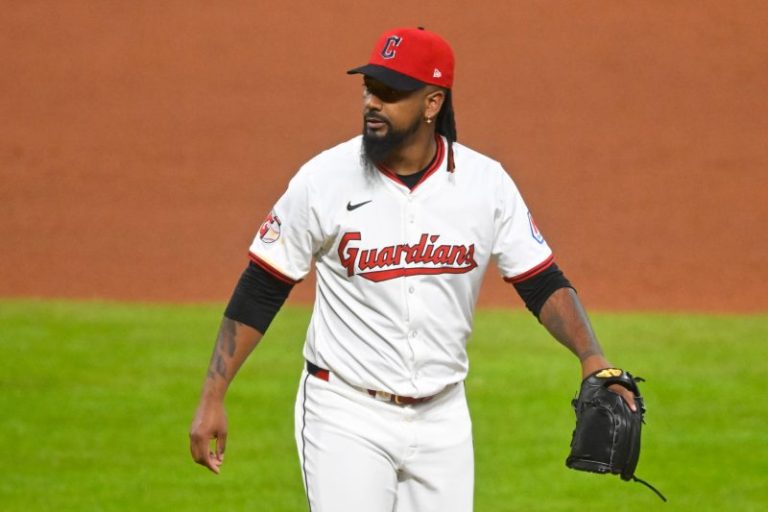
All-Star closer Emmanuel Clase has been put on indefinite paid leave as part of a sports betting investigation by Major League Baseball that has already implicated fellow Cleveland Guardians pitcher Luis L. Ortiz.

ESPN was first to report the move, with the Guardians confirming it in a social media post on Monday, July 28, saying Clase was ‘placed on non-disciplinary paid leave per an agreement with the Players Association.’

The team added that ‘no additional players or Club personnel are expected to be impacted.’

Clase had one of the best seasons by a relief pitcher in baseball history in 2024, converting 47 saves in 50 opportunities and posting a 0.61 ERA in 74 ⅓ innings. He finished third in the AL Cy Young voting behind winner Tarik Skubal and runner-up Seth Lugo.

This season, he’s racked up 24 saves, but with a 3.23 ERA.

Ortiz was put on leave July 3, after ESPN reported that two of his pitches – both sliders far outside the strike zone in games on June 15 and June 27 – received unusual gambling activity.

The league did not specify what the investigation was about, but said in a statement Ortiz ‘has been placed on non-disciplinary paid leave through the end of the All-Star break.’

Although the break has concluded, Ortiz has yet to return to the Guardians’ active roster.

This post appeared first on USA TODAY

Mired in a losing skid, the Detroit Tigers received some more bad news on Monday, July 28.

Detroit, which has lost eight of its 10 games to start the second half of the season, will be without starting pitcher Reese Olson for the remainder of the season due to a shoulder strain, Tigers president of baseball operations Scott Harris told reporters on Monday.

Olson has been a dependable and effective pitcher for the Tigers since debuting in 2023, as he effectively ends his 2025 season with a 3.15 ERA in 68 2/3 innings pitched with 65 strikeouts.

Olson’s injury likely played into Detroit’s decision to trade for Minnesota Twins back-end starter Chris Paddack, who was acquired by the Tigers alongside fellow right-hander Randy Dobnak for minor-league prospect Enrique Jimenez.

What does Olson’s injury mean for the pitcher-needy Tigers? Here’s what to know of where Detroit goes from here:

Reese Olson injury: What it means for Detroit Tigers

The Tigers, who are in first place in the AL Central standings despite their recent skid, were in need of starting pitching even before Olson’s injury. The 25-year-old right-hander going down puts Detroit in a precarious position with the trade deadline looming.

The Tigers used a bullpen-heavy approach in 2024 that led to their Cinderella run to the ALCS, but they’d likely prefer a traditional setup that starts with starting pitchers taking the bulk of the workload.

Detroit’s addition of Paddack gives the Tigers another usable arm, but likely not one it’d prefer to use in a playoff series. Paddack has a 4.95 ERA this season and hasn’t finished with above 1.0 wins-above replacement in a season since his rookie year in 2016 with the San Diego Padres.

The Tigers already are without Jackson Jobe, who’s also out for the season, and Alex Cobb, although the veteran is hoping to return from a hip ailment before the regular season is over. Veteran right-hander Jose Urquidy, who’s also on the 60-day injured list alongside Cobb, is another pitching option for Detroit.

Detroit’s top three starting pitchers of ace Tarik Skubal, along with Jack Flaherty and Casey Mize have been reliable, but the Tigers are almost assuredly in the market for an impact starter before the trade deadline comes at 6 p.m. ET on Thursday, July 31.

This post appeared first on USA TODAY

Baker Mayfield enjoyed the best season of his career with the Tampa Bay Buccaneers in 2024. He completed a career-high 71.4% of his passes for 4,500 yards, 41 touchdowns, 16 interceptions and a 106.8 passer rating while leading the Buccaneers to a fifth consecutive playoff appearance.

Tampa Bay is rewarding the 30-year-old signal caller handsomely for his strong performance.

The Buccaneers are guaranteeing $30 million of the salary owed to Mayfield for the 2026 NFL season, ESPN’s Adam Schefter reports. Previously, none of the $40 million salary owed to Mayfield in 2025 was guaranteed.

How does that restructuring change Mayfield’s contract? Here’s what to know about the terms of his deal with the Buccaneers.

Baker Mayfield contract details

Mayfield inked a three-year, $100 million contract with the Buccaneers ahead of 2024 NFL free agency. The basic structure of that deal – including its term, total value and average annual value (AAV) – will remain unchanged.

However, Mayfield will receive an additional $30 million in guarantees as part of his restructured deal with the Buccaneers. Originally, only $40 million of his deal was fully guaranteed; an additional $10 million became guaranteed on March 16, 2025 as part of a roster bonus.

Below is a complete look at Mayfield’s contract in the wake of his recent restructure:

Term: 3 years
Total value: $100 million
Average annual value (AAV): $33.3 million
Guaranteed money: $80 million

Guaranteeing an extra $30 million to Mayfield won’t necessarily make him any more expensive overall for the Buccaneers. It would simply make it more costly for Tampa Bay to release him following the 2025 NFL season, which is unlikely to happen given his strong first two seasons as a Buccaneer.

Providing Mayfield with additional guarantees is a smart strategy for the Buccaneers, as it can help foster goodwill with the quarterback ahead of his next potential contract extension.

Mayfield’s contract will still expire following the 2026 NFL season. That said, the 30-year-old quarterback has three void years on his deal. As such, he will continue to count against Tampa Bay’s salary cap through the 2029 campaign even if he doesn’t remain with the team beyond 2026.

This post appeared first on USA TODAY

The Denver Broncos are making another long-term commitment to top wide receiver Courtland Sutton.

Denver is signing Sutton to a four-year extension, as was first reported by Fox Sports’ Jordan Schultz.

Sutton has been with the Broncos since being selected in the second round of the 2018 NFL Draft. The 29-year-old enjoyed one of his best seasons in 2024, his first working alongside Bo Nix, generating 1,081 yards and eight touchdowns on a career-best 81 catches.

Sutton’s new contract will tether him to Denver through the 2029 NFL season, his age-34 campaign. Here’s what to know about his new deal and how it compares to other wide receiver contracts around the NFL.

Courtland Sutton contract details

Sutton signed a four-year extension with the Broncos ahead of the 2025 NFL season. Below is a breakdown of the basics of the deal, according to multiple reports:

Term: 4 years
Total value: $92 million
Average annual value (AAV): $23 million

Sutton’s deal will tie him with Tennessee Titans wide-out Calvin Ridley as the NFL’s 11th-highest-paid receiver in total contract value and the 16th-highest-paid in average annual value (AAV). The guarantees included within it were not immediately clarified.

Highest-paid NFL WRs

As mentioned, Sutton doesn’t quite crack the top 10 in either AAV or total contract value. Here’s a look at the top 10 in each category ahead of the 2025 NFL season, per Spotrac.com:

AAV

Ja’Marr Chase, Bengals: $40.25 million
Justin Jefferson, Vikings: $35 million
CeeDee Lamb, Cowboys: $34 million
D.K. Metcalf, Steelers: $33 million
Garrett Wilson, Jets: $32.5 million
A.J. Brown, Eagles: $32 million
Amon-Ra St. Brown, Lions: $30.0025 million
Tyreek Hill, Dolphins: $30 million
Brandon Aiyuk, 49ers: $30 million
Tee Higgins, Bengals: $28.75 million

Total contract value

Ja’Marr Chase, Bengals: $161 million
Justin Jefferson, Vikings: $140 million
CeeDee Lamb, Cowboys: $136 million
D.K. Metcalf, Steelers: $132 million
Garrett Wilson, Jets: $130 million
Amon-Ra St. Brown, Lions: $120.01 million
Brandon Aiyuk, 49ers: $120 million
Tee Higgins, Bengals: $115 million
DJ Moore, Bears: $110 million
A.J. Brown, Eagles: $96 million

Courtland Sutton stats

Below is a look at Sutton’s career stats across his seven seasons with the Broncos to date.

Games played: 98
Targets: 646
Receptions: 379
Receiving yards: 5,340
Receiving TDs: 32
Yards per reception: 14.1

Sutton ranks ninth all-time among Broncos in receptions and 11th overall in both receiving yards and touchdowns.

This post appeared first on USA TODAY

Deion Sanders and Randy Moss have a lot in common. They were both star athletes that helped define a generation of NFL talent, multi-time Pro Bowl and All-Pro honorees, members of their respective teams’ Rings of Honor and members of both the College and Pro Football Hall of Fame.

More recently, they’ve both added another shared experience to their already impressive résumés: cancer survivors.

Sanders, 57, revealed in a Monday press conference with his medical team that he had been diagnosed with – and subsequently had defeated – bladder cancer. As he shared details about his cancer battle, Sanders took the time to thank Moss for his support during the treatment.

‘Randy Moss called me every other day to make sure I was straight,’ he said. ‘Randy Moss prayed for me. He and his wife told me what I needed to be doing. He’s gone through some things very similar.’

Sanders was referring to Moss’s recent battle with bile duct cancer, which led the former Vikings receiver to announce a leave of absence from ESPN’s NFL coverage in early December. Moss announced later that month that he was a cancer survivor and returned to ESPN’s ‘Sunday Night Countdown’ for Super Bowl 59 coverage in February.

The Athletic recently reported Moss would return to ‘Sunday Night Countdown’ full-time for the 2025 season.

‘Randy Moss, man. I love him to life. Love him more than ever,’ Sanders said. ‘He gave me so much strength and so much guidance. And so much love and respect and appreciation.’

The Colorado Buffaloes’ head football coach had been battling his health issue for months – leading him to miss a recruiting event and former Colorado star Travis Hunter’s wedding, among other things – before returning to Boulder on Friday. Monday’s press conference with his medical team was the first time Sanders publicly disclosed his diagnosis and ensuing treatment.

This post appeared first on USA TODAY