Archive

2025

Browsing

The first and second rounds of the 2025 NCAA volleyball tournament are in the books, and the answer to which team will lift the trophy after the national championship match later this month in Kansas City is becoming a bit clearer.

The action in the opening matches of the NCAA tournament included clean sweeps, massive upsets and five-set heavyweight matches that were some of the best played this year. Favorite and overall No. 1 seed Nebraska is still undefeated, boosted by big performances from middle blocker Andi Jackson. However, the lone remining unseeded team, Cal Poly, might have something to say about who makes a deeper tournament run. As we prepare for the NCAA volleyball Sweet 16, let’s take a look back at who’s in and who’s out.

Here are your winners and losers of the first two rounds of the NCAA volleyball tournament:

NCAA volleyball tournament winners

Opening round sweeps

Break out the brooms. There were a staggering 25 sweeps in the opening rounds of the NCAA tournament, including 18 in the first round. Even ranked squads, such as No. 7 Western Kentucky, No. 8 Xavier, and No. 7 Rice, were no match for ‘the broom.’ One of the most head-turning wins was No. 4 Indiana sweeping No. 5 Colorado behind a masterful performance from outside hitters Candela Alonso-Corcelles (16 kills on .556 hitting) and Jaidyn Jager (15 kills on .375 hitting). The Hoosiers move on to the Round of 16 for the second time in program history.

Five-set thrillers

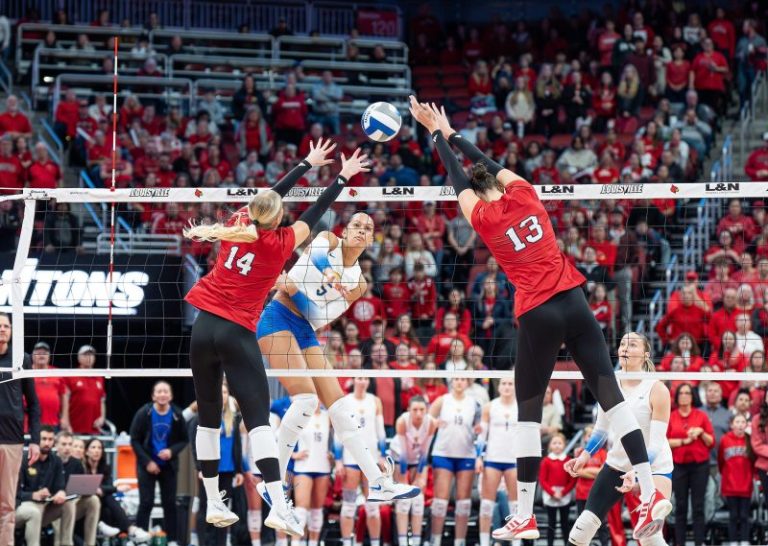
If high-intensity matchups are what fans desire, the NCAA tournament did not disappoint. There were 10 five-set thrillers over the opening days of action, including eight in the first round. While there were likely many head-to-heads that had fans on the edge of their seats, the best of the weekend was the unseeded Marquette Golden Eagles taking the No. 2 Louisville Cardinals to the brink.

The back-and-forth rumble was a sight to behold, but in the end, Louisville that escaped with the win. Outside hitter Chloe Chicoine had a career-high 28 kills on .415 hitting, the most for a Cardinal in the NCAA tournament in 20 years. Outside hitter Payton Petersen added 19 kills on .364 hitting, and middle blocker Cara Cresse assisted on seven of the Cardinals’ 22 team blocks.

Cal Poly bracket-busting skills

Deepest condolences are in order for any bracket that did not survive Cal Poly’s tour of destruction against seeded teams. To open the tournament, the Mustangs took down the No. 5 seed BYU Cougars in a five-set stunner. Outside hitter Kendall Beshear led the way with 20 kills on .383 hitting and 12 digs that helped create 25 points against BYU. What’s more, the Cougars hit .000 in the fifth set against Cal Poly and logged four kills.

In the second round against No. 4 seeded USC, it was outside hitter Emma Frederick who led the Cal Poly with 17 kills and 15 points. Outside hitter Annabelle Thalken and Beshear also added 12 kills. The Trojans had a better overall match, but ran out of steam in the fifth set, recording four kills. After the Mustangs are headed to the Round of 16 for the first time in 18 years.

Big performances

With so many games, it’s hard to keep up with who had stellar performances. One of the best outings of the opening rounds came from the No. 2 seed SMU Mustangs, who hit a blistering .618 as a team against the Central Arkansas Bears on Friday. Outside hitter Jadyn Livings led SMU with 15 kills on .609 hitting and two blocks. Here’s a list of other performances that deserve recognition:

Thursday, December 4

No. 8 seed UCLA Bruins middle blocker Marianna Singletary vs. Georgia Tech Yellow Jackets – 22 kills on .556 hitting and 11 blocks
No. 3 seed Creighton Bluejays outside hitter Ava Martin vs. Northern Colorado Bears – 30 kills
No. 5 seed Miami Hurricanes outside hitter Flormarie Heredia Colon vs. Tulsa Golden Hurricane – 33 kills

Friday, December 5

No. 1 seed Kentucky Wildcats vs. No. 8 seed UCLA Bruins

Kentucky outside hitter Eva Hudson – 27 kills on .463 hitting and 10 digs
Kentucky outside hitter Brooklyn Deleye – 30 kills on .397 hitting

No.1 seed Nebraska Cornhuskers vs. Long Island University Sharks

Nebraska middle blocker Andi Jackson – 10 kills on .833 hitting and five blocks
Nebraska middle blocker Rebekah Allick – 10 kills on .750 hitting and four blocks

No. 3 seed Wisconsin Badgers outside hitter Mimi Colyer vs. North Carolina – 22 kills on .405 hitting, 13 digs and three blocks
No. 5 seed Iowa State Cyclones libero Rachel Van Gorp vs. St. Thomas Tommies – 33 digs

Saturday, December 6

No.1 seed Nebraska middle blocker Andi Jackson vs. Kansas State Wildcats – 10 kills on .533 hitting and three blocks
No. 1 seed Pittsburgh outside hitter Olivia Babcock vs. Michigan Wolverines – 24 kills on .370 hitting, eight digs and three blocks

Losers

Penn State’s repeat bid

Penn State won’t have the chance to win back-to-back championships. The No. 8 seed Nittany Lions and head coach Katie Schumacher-Cawley were swept by the No. 1 seed Texas Longhorns, behind dominant stat lines from outside hitters Torrey Stafford and Cari Spears. Together, the duo had 30 total kills and six total blocks. The Nittany Lions had very few answers offensively and hit .124 against Texas.

Tennessee Volunteers’ tournament dreams

The No. 7 seed Volunteers, who were largely expected to make a deep tournament run, fell flat against Utah State. Ultimately, they could not pull off a reverse sweep after falling behind 2-0. Tennessee ran out of steam in the fifth set, losing it 15-11, handing Utah State its 22nd straight win. Outsider hitter Starr Williams was the bright spot for the Volunteers, logging 15 kills on .387 hitting, seven digs and four blocks.

Ranked team upsets

The seeded losses didn’t stop with Tennessee. Kansas State beat No. 8 seed San Diego in five sets, Michigan swept No. 8 Xavier, and both No. 7 seed Rice (swept by Florida) and No. 7 seed South Dakota State (lost in four sets to Arizona) had first-round exits. Another notable upset was North Carolina unraveling No. 6 UTEP in four sets. The Miners had 35 attacker errors against the Tar Heels, and their hitting percentage was .079 percent.

The floor after Dior Charles dented it

It’s not very often that the floor ends up on the losing end of a volleyball match. However, Purdue Boilermakers middle blocker Dior Charles hit a volleyball so hard during a Thursday matchup against Wright State that it dented the floor.

This post appeared first on USA TODAY

A proposed 16-team playoff would eliminate automatic qualifiers for conferences and special access for Notre Dame.
The selection committee should consist of former coaches and media members, removing athletic directors to avoid bias.

They’ve been arguing about the new College Football Playoff format for nearly a year, bickering back and forth about a bunch of something that really means nothing. 

It’s time for the Big Ten and SEC to straighten out the college football postseason mess by simplifying it: Eat what you kill. 

No more automatic qualifiers. 

No more gifts to the four Power conferences, no more ‘excuse me’ entry for the Group of Six. It’s 16 teams with a selection committee of former coaches and media members, and every single invitation is based on merit. 

Not on conference affiliation or charity.

No more athletic directors on the selection committee with obvious biases and inherent investment in one program or another. No more random Jane and Joes off the street to give the committee an everyman feel. 

I want people who know ball ― and media members keeping coaches from their inherent investment ― and understand the nuances of the game, and aren’t tied to some funky formula of not being able to vote one team over another because the two teams were never in the same quartile to vote on. Or whatever the hell the current committee tried to sell about Notre Dame and Miami. 

You can’t be told one thing by the committee for four weeks — that head-to-head didn’t matter — then be told the exact opposite on the final poll. 

That doesn’t mean the Irish should’ve pulled a temper tantrum and walked away from the bowl season, but it certainly means we have to take a long look at how this thing works and how simply it can be fixed. No matter how Notre Dame and the Group of Six push for access. 

The current memorandum of understanding for the new CFP contract beginning with the 2026 season gives Notre Dame automatic access if it is ranked in the Top 12. And, of course, an automatic access for the highest-ranked Group of Six conference champion.

It’s an MOU, it’s not legally set in stone.  

Ladies and gentlemen, I’m here to tell you the days of pandering to Notre Dame are over. Same with the Group of Six. 

There’s a bit of a hiccup with the Group of Six, because they may start talking about legal action and antitrust laws. But there’s an easy way around it: pay them off. 

Give them more cash from the new 16-team CFP format (which will earn significantly more money than the $1.4 billion annually it does now), and give them the same guarantee as everyone else. If you finish ranked in the top 16, you’re in the CFP.

If you don’t, better luck next year. 

Remember this, everyone: the Big Ten and SEC have the ultimate trump card. If they don’t like the way this thing is set up, they can walk away and have their own playoff — and there’s nothing any enterprising attorney can do about it. 

Then what does the Group of Six have? Bupkis.

And Notre Dame? Same deal: If you finish in the Top 16, you’re in the playoff. No more bending over for the university with its own television contract. 

For years, the Big Ten and SEC didn’t want to rock the Notre Dame boat — just in case the Irish decided to join a conference. The two super-conferences of the sport kept winking at Notre Dame, and allowing this nonsensical favorable entry into the BCS/CFP. 

Not anymore. The idea Notre Dame is a television draw certainly holds merit, but not nearly as much as it once did. Decades ago, Notre Dame dominated the television landscape and built a significant following because of it. 

Now every game — every single FBS game — is televised one way or another. It’s a fall smorgasbord of football every Saturday, and every other day except Sunday. 

Notre Dame isn’t the draw it once was. The Top 10 teams in viewership this season, according to Nielsen, were all SEC and Big Ten teams.

Last year, when Notre Dame advanced to the CFP championship — and pocketed $20 million because of the sweet deal given to it by the CFP — its game against Ohio State drew 22.1 million viewers. It was one of the lowest viewership numbers in the history of BCS/CFP championship games. 

How low, you ask? The fifth-least watched game of the BCS/CFP era.

That’s not narrative or Notre Dame hate, those are facts. There’s no reason to kowtow to Notre Dame other than the Big Ten and SEC hoping the Irish will come to its conference senses and choose them.

They won’t. It would be fiscally reckless for Notre Dame to do so — to say nothing of its outright steadfast determination to remain an independent.

And that’s fine. Just like it’s fine for the Group of Six to decide they’ll take their chances and threaten legal action, and not think the Big Ten and SEC will walk away from the entire process.

You’re not preventing Notre Dame and the Group of Six from playing in the CFP, they’ll have the same access as everyone else. You want to expand the CFP beyond 16? Go ahead, just don’t change the foundation of the new deal. 

Eat what you kill. 

This post appeared first on USA TODAY

President Donald Trump rolled out a $12 billion farm aid package to support farmers, according to the White House. 

The aid package will provide up to $11 billion toward the U.S. Department of Agriculture’s (USDA) new Farmer Bridge Assistance Program, which is designed to provide single payments to row crop farmers, while the remaining $1 billion will go to farmers whose crops do not qualify for the program. 

Further details will be hashed out as the USDA continues to evaluate market conditions, according to the White House. 

The president unveiled the new aid package at a Monday roundtable at the White House. Those who appeared at the event included Treasury Secretary Scott Bessent, Secretary of Agriculture Brooke Rollins, as well as corn, soybean, rice and other types of farmers. 

The announcement comes as the U.S. and China have gone head-to-head on trade negotiations in 2025, and after China reined in its soybean purchases from the U.S. amid ongoing tariff negotiations between Beijing and Washington, D.C. 

However, Trump and Chinese President Xi Jinping met in South Korea in October, where the two hashed out a series of agreements concerning trade. Specifically, Trump said he agreed to cut tariffs on Chinese imports by 10% — reducing the rate from 57% to 47% — because China said it would cooperate with the U.S. on addressing the U.S. fentanyl crisis.

Since those talks, China has started to boost its purchases of soybeans again. China purchased at least 840,000 metric tons of soybeans for delivery in December and January, Reuters reported in November. That purchase marked the largest shipment since at least January, Reuters reported. 

Meanwhile, Bessent said that China so far is upholding its end of the bargain on the trade deal, including provisions to buy 12 million tons of soybeans by the end of February 2026.

‘China is on track to ‍keep every ⁠part of the deal,’ Bessent said at The New ‍York Times Dealbook Summit Wednesday. 

Trump also voiced optimism about China’s soybean purchases, and signaled Beijing may purchase more than the original 12 million tons by February 2026. 

‘I spoke with President Xi recently, very recently,’ Trump said Monday. ‘And I think he’s going to do even more than he promised to do. So I think the relationship is a very good one. I think he’s going to do more than he promised to do. And what he promised to do is a lot. So we’re very happy with that.’

China is the primary foreign purchaser of U.S. soybeans, and bought approximately half of U.S. soybean exports in 2024, totaling approximately $12.6 billion out of $25.8 billion in total U.S. exports, according to the U.S. Census Bureau and USDA. China also imported nearly 27 metric tons of soybeans that year. 

Trump is helping the agriculture industry by ‘negotiating new trade deals to open new export markets for our farmers and boosting the farm safety net for the first time in a decade,’ White House spokeswoman Anna Kelly said in a Monday statement to Fox News Digital.

Trump has previously issued an aid package to farmers. When Trump’s first administration rolled out tariffs, China issued their own retaliatory tariffs that cost the federal government billions of dollars in government aid to farmers.

Bloomberg News first reported the aid package Sunday. 

Fox News’ Olivianna Calmes contributed to this report. 

This post appeared first on FOX NEWS

ORLANDO, FL — The Washington Nationals have aggressively been engaged in trade talks with teams involving All-Star pitcher MacKenzie Gore and shortstop CJ Abrams, with two general managers saying Monday morning that they now fully expect the two players to be traded.

Paul Toboni, the Nationals new president of baseball operations, informed teams weeks ago that they would listen to offers and after receiving heavy interest, now appear much more willing to part with the two players.

Teams, after seeing the high price for pitching on the free-agent market, have reached out to Washington in hopes to acquire Gore. The left-hander. 26, went 5-15 with a 4.17 ERA, striking out 185 batters in 159⅔ innings. He is under team control for two more years.

Abrams, 25, who still has three years of control, would be an option for teams who prefer to go a cheaper route than bidding on free agents Bo Bichette and Ha-Seong Kim. Abrams hit .257 with 19 homers and stole 31 bases last season.

The two players were key pieces in the Juan Soto trade in 2022 with the San Diego Padres, but instead of being part of the Nationals’ future, could be used to help rebuild the Nationals’ farm system. The Nationals traded left-handed reliever Jose Ferrer to the Seattle Mariners last week for prized catching prospect Harry Ford and minor league pitcher Isaac Lyon.

Follow Nightengale on X: @Bnightengale

This post appeared first on USA TODAY
The big story coming out of Sunday’s College Football Playoff bracket reveal wasn’t about any team in the CFP field, but one particular school that didn’t make it.

Notre Dame had consistently been ranked above Miami for weeks — despite the Hurricanes’ head-to-head win over the Irish in Week 1. So naturally, the Fighting Irish figured they were in the playoff field with neither team playing this past weekend and BYU losing in the Big 12 Championship. Well, that didn’t happen. Miami leapfrogged Notre Dame into the field.

So upset with their exclusion from the playoff, Notre Dame announced it wouldn’t play in a bowl game and skip the postseason all together in an act of apparent protest. That decision drew a lot of ire from college football fans and pundits alike, who already have strong thoughts about Notre Dame, likely stemming from its independent status.

ESPN’s Paul Finebaum didn’t hold back — does he ever? — on Monday morning’s ‘Get Up!’

“The crying from Notre Dame is quite frankly embarrassing,’ Finebaum said. ‘Everything Notre Dame has done since the moment this was announced is really beneath a great institution that should stand for principles and they cried, they didn’t get their way, and then they said, ‘We’re going home and taking our ball,’ like a 5-year-old on the playground by not going to a bowl game.

“… Notre Dame had very little to show on its resume. They’re not in a conference, that’s their own fault. They think they’re too good to be in a conference. And had they joined the ACC, which they by the way, they are a member of in every other sport, they would have played for the ACC Championship game, they would be in the playoff today. They wouldn’t be a bunch of sniveling crybabies and really quite frankly in my opinion, the laughing stock of college football.’

Besides being left out of the playoff, a big talking point coming out of South Bend is the weekly CFP rankings, which consistently had Notre Dame ahead of Miami and in the field. CFP committee chairman Hunter Yurachek never really had a good explanation for that, and his explanation for why Miami finally jumped the Irish wasn’t much better — claiming BYU’s heavy loss in the Big 12 Championship tipped the scales in Miami’s favor.

“It’s a legitimate criticism because this committee is not consistent… we’ll save it for some other time about the good or the bad of having these weekly rankings, they are misleading, but ultimately how many times has the committee have to tell us, ‘These will change on the final day of the season,’’ Finebaum said. ‘But we all read into them as Notre Dame did. But there’s precedent for that happening, so I’m sorry about (Notre Dame athletic director) Pete (Bevacqua) getting upset and having a bad morning, but I’ll say it again, and I’m going to say it until someone literally puts a shoe in my mouth: It is Notre Dame’s fault. They think they’re better than everybody, Greeny. And I’m sure Pete Bevacqua will have a press conference today and explain all the reasons why they’re independent, but their independence cost them a bid to the College Football Playoff. That is on them!”

Notre Dame and Bevacqua have a news conference scheduled for Tuesday, Dec. 8. Get your popcorn ready.

This post appeared first on USA TODAY
It might be premature to declare the Chiefs’ dynasty dead, but it could be curtains for Kansas City this season after yet another devastating loss.
Daniel Jones’ Achilles injury blows a hole in the Colts’ plans for this season and beyond.
Mike Tomlin, J.J. McCarthy and Shedeur Sanders were among the figures who bounced back in a big way in NFL Week 14.

Week 14 in the NFL necessitated an acceptance of some challenging conditions.

The December weather forced several teams to adapt, with snow or rain altering game plans in several different matchups. But several other tilts also tested franchises in a different fashion, as some key injuries – none more notable than Indianapolis Colts quarterback Daniel Jones going down with what was later confirmed to be a torn Achilles – and surprising dynamics significantly shifted any emerging sense of order in the playoff picture.

Here are the biggest winners and losers from Sunday’s Week 14 action:

NFL Week 14 winners

Mike Tomlin

Following a week where so many were eager to speculate about his future, the stoic Pittsburgh Steelers coach once again let his team do the talking with a narrative-countering 27-22 win over the Baltimore Ravens. There were plenty of familiar elements for Pittsburgh, including the pass rush delivering in a key spot when Alex Highsmith sacked Lamar Jackson as time expired. But the Steelers also broke through by actually putting together a downfield passing attack, as Aaron Rodgers looked his best in years while completing three passes of more than 20 air yards, according to Next Gen Stats. Some perspective is needed given that the offense went cold down the stretch with four three-and-outs in the fourth quarter, and Pittsburgh was outgained 420-318. But the Steelers still delivered a pointed message, which Rodgers said might mean ‘maybe you guys (the media) will shut the hell up for a week.’ And if his team’s statement wasn’t enough, Tomlin seemed to drive it home by blowing a kiss to the CBS camera right after the conclusion of the game.

Green Bay Packers

Matt LaFleur said there was no personal satisfaction in beating Ben Johnson after the Chicago Bears’ first-year coach said at his introductory news conference in January that he had enjoyed defeating the Packers coach twice a year while with the Detroit Lions. Still, LaFleur’s maneuver in the postgame handshake resembled Micah Parsons dispatching an overmatched offensive lineman with a swim move. The Packers put the overachieving Bears in their place with a 28-21 win that handed back the NFC North lead and affirmed Green Bay’s supremacy in the cutthroat division. An offense that was with its top five receivers for the first time all season showed off its potential, with Christian Watson hauling in two touchdowns from Jordan Love. But where the two teams are most divergent are in their defenses. While Chicago’s group is adept at generating turnovers, Green Bay truly throws opponents off their rhythm, which the unit again managed to do against Caleb Williams. The Bears will have a chance for a response at home in two weeks, but it might be another year before Johnson and Co. can truly measure up.

Buffalo Bills’ late flurries

This is not a reference to the snow that covered the field throughout the close call against the Cincinnati Bengals. Rather, it was the rapid accumulation of fourth-quarter points – 21 in under five minutes – that changed the forecast for Buffalo in a 39-34 win. Games in these conditions can produce some outlier outcomes, so it’s wise not to try to make too much of the outcome. But the Bills pounced on two uncharacteristic interceptions thrown by Joe Burrow in an otherwise outstanding performance by the quarterback, and Josh Allen again carried the offense in the unit’s time of need. There’s no telling what version of Buffalo will show up on a drive-by-drive basis, but this is likely the most dangerous of the AFC wild-card contenders.

Shedeur Sanders

It’s unlikely that the cellar-dweller tilt between the Cleveland Browns and Tennessee Titans will have many more ramifications beyond shaping the top of the 2026 NFL Draft order. But despite his day coming to a confounding end when he was sidelined for the Browns’ game-deciding botched two-point conversion, Sanders made meaningful strides in his third start. There were still several setbacks, including a costly third-quarter interception. And his proclivity for holding onto the ball remains untenable, with his 3.57-second average time to throw representing the second-highest mark for any quarterback this season, according to Next Gen Stats. But for whatever pressure he invites and exacerbates, Sanders also gives the offense and its small collection of promising pieces the chance to grow. With Cleveland squandering the brilliance of Myles Garrett and the defensive end’s pursuit of NFL history, the Browns can at least see this season out while putting up the sort of fight they couldn’t muster in the fall.

Tyler Shough

When the New Orleans Saints handed their offense to Shough for the rest of the season after a 1-7 start, they at least gave their fans a reason to stay invested in a campaign of stalled growth. The second-round rookie quarterback is rewarding the organization with enough sparks to start a conversation about whether he can hold down the role for at least another year. Shough reeled off two impressive touchdown runs – the first coming on a 34-yard designed run, the latter an even more impressive 13-yard scramble – to power a 24-20 upset of the Tampa Bay Buccaneers. Neither play was the sort of outcome the Saints should expect the 6-5, 219-pounder to be able to replicate, but both were vital on a rain-soaked day in which New Orleans was again without running back Alvin Kamara. Consistency is still difficult to come by, but if Shough continues along this trajectory, he will be hard to shunt aside for a first-round rookie passer.

J.J. McCarthy

One isolated performance against an undermanned Washington Commanders defense won’t single-handedly shift the season-long narrative surrounding the struggling quarterback, but McCarthy and the Minnesota Vikings need to cling to any signs of progress given how infrequently they’ve popped up. The second-year signal-caller finally exhibited some composure in a 31-0 rout, throwing for a season-high three touchdowns and averaging just 2.56 seconds to throw, his quickest mark of the year, according to Next Gen Stats. Not plagued by the protection problems that have become more pervasive as the season has dragged on, Minnesota was able to incorporate its tight ends more into the passing attack rather than forcing them to block or chip. The result had all three of McCarthy’s scoring strikes going to players at the position – two to Josh Oliver and another to T.J. Hockenson – on a day when the rushing attack led the way with 162 yards on 34 carries. The Vikings can’t expect things to remain this easy for the young passer, but the next two games against the Cowboys and Giants will provide opportunities to rebuild some confidence and establish a path forward before the degree of difficulty ramps up considerably in the final two weeks with tilts against the Lions and Packers.

NFL Week 14 losers

Kansas City Chiefs

If the Chiefs end up missing the playoffs for the first time since 2014 – three years before Patrick Mahomes was drafted and just the second season under Andy Reid’s watch – Sunday night’s 20-10 loss to the Houston Texans will serve as a fitting encapsulation of all the ways in which this year’s team came up short.

The Texans’ top-ranked defense doesn’t depend on deception or inordinate blitzing. It’s all the more galling, then, for opponents to be subdued by a group that simply comes out and denies almost everything, overwhelming offensive lines with its front four while its secondary locks down things on the back end.

In as close as a Week 14 game can be to a must-win affair, Kansas City wasn’t outfoxed. It was simply overmatched.

The Chiefs once again left Mahomes to try to sling them to victory despite entering the game without three starting offensive linemen and later losing another. Yet time and again, the quarterback’s supporting cast failed to rise to the moment. The most devastating drop came late in the fourth quarter, when Travis Kelce bobbled a pass that would then be intercepted by Texans linebacker Azeez Al-Shaair, extinguishing any shot at a late rally.

Despite his best efforts, Mahomes finished with the worst completion rate (42.4%) and passer rating (19.8) of his career, while his three interceptions also tied a personal low.

Any optimism surrounding Kansas City this season has largely stemmed from the notion that it was only a matter of time before this core flipped a switch and reached its previous heights. But the end of the Chiefs’ nine-year reign atop the AFC West – cemented Sunday with the loss – indicates that this new and undesirable era has really arrived.

There’s still a path to the postseason, but things are stacking up extremely unfavorably for Kansas City, which can’t count on tiebreakers against the Texans, Bills and Jaguars, who all are ahead of them in the AFC pecking order. Whenever the season ends, it might be time for the franchise’s most serious overhaul since the Super Bowl 55 beatdown by the Buccaneers.

A run game that lacks any kind of explosiveness should be completely reconfigured so as to recalibrate an attack that too often pushed everything on Mahomes’ plate. The largely dormant pass rush ranks among the most pressing problems, with the group unable to get home against C.J. Stroud even when it was able to generate pressure. And the longstanding issues in the receiving corps seem as pervasive as ever.

Daniel Jones and the Indianapolis Colts

‘It’s not looking good,’ Colts coach Shane Steichen said of Jones’ Achilles injury that knocked the quarterback out of Sunday’s 36-19 loss to the Jacksonville Jaguars. And while Steichen was speaking strictly about his starting signal-caller’s medical outlook, his words are also applicable to the football prognosis for both Jones and the Colts, both in the short and long term.

With Steichen confirming Monday that Jones suffered a torn Achilles that will end the signl-caller’s season, Indianapolis has a crisis on its hands for the last four weeks of the regular season. Having lost four of their last five games, the Colts now face the prospect of trying to seize a wild-card berth – the AFC South crown all but out of reach – with a sixth-round rookie quarterback in Riley Leonard at the helm. And the schedule brings a final slate of games likely to render Indianapolis the underdog in each contest.

The Colts offense was already coming down from its early-season peak after the unit led the league in scoring en route to a 7-1 mark. But reproducing that efficiency seems even more outlandish with defenses now able to load up even more against Jonathan Taylor in an effort to force Leonard to be a consistent downfield thrower.

The upcoming offseason, however, is where things truly get complicated for Jones and the Colts. The quarterback figured to score a massive payday once his deal expired after this season, with Indianapolis having a strong incentive to bring him back. A torn Achilles, however, would likely leave Jones uncertain for at least the start of next season in even the most optimistic of recovery timelines.

Would Indianapolis still be willing to pay a sizable sum – or use the franchise tag – given the uncertainty? There aren’t many good alternatives for the Colts after they dealt away their first-round draft picks for the next two years in a clear commitment to building around this offense and Jones. But Indianapolis was forging ahead at a time when it looked as though it could capitalize on a wide-open AFC field. Now, if the Colts fall in all of their remaining contests, they’ll end up at 8-9 – the exact same mark they held last year before late owner Jim Irsay gave Steichen and general manager Chris Ballard a one-year reprieve. And if defensive coordinator Lou Anarumo lands a head-coaching gig elsewhere, Indianapolis will almost be back at square one as it commits to recreating magic that dissipated long ago.

Baltimore Ravens

Did everyone panic about the wrong AFC North team? The Ravens’ Thanksgiving stumble was largely overlooked once the Steelers seized the spotlight with their struggles days later, but Baltimore has raised serious concerns as it fell behind Pittsburgh in the divisional pecking order. Yes, Isaiah Likely’s overturned touchdown loomed large in a close game that featured close calls that didn’t go the Ravens’ way. But there’s no need to indulge in conspiracy theories or hypotheticals when the offense simply started slow and went just 2-for-6 in the red zone, settling for three field goals and coming up short on a turnover on downs on the others. Meanwhile, the defense regressed to its decrepit earlier form, with a particularly debilitating coverage breakdown coming on an easy Jaylen Warren screen for a touchdown, among other miscues. Baltimore still might have a chance to reclaim the division so long as Pittsburgh doesn’t wrap things up before the Week 18 rematch. At this rate, however, the Ravens simply don’t look suited for the postseason.

Tampa Bay Buccaneers

The Buccaneers should be thankful that there’s no NFL Playoff Selection Committee. Any such entity would probably try to omit this group from the postseason, regardless of their finish within the division. With Sunday’s setback against New Orleans, Tampa Bay has now lost five of its last seven games and dropped into a tie atop the NFC South with the Carolina Panthers at 7-6. Any sloppiness can’t merely be chalked up to the soggy conditions, as Baker Mayfield again was out of sorts. The Bucs had a distinct scheduling advantage in the final five weeks, but the loss essentially rendered that moot given the looming matchups with Carolina in Weeks 16 and 18. A fifth consecutive division crown is hardly a given.

Washington Commanders

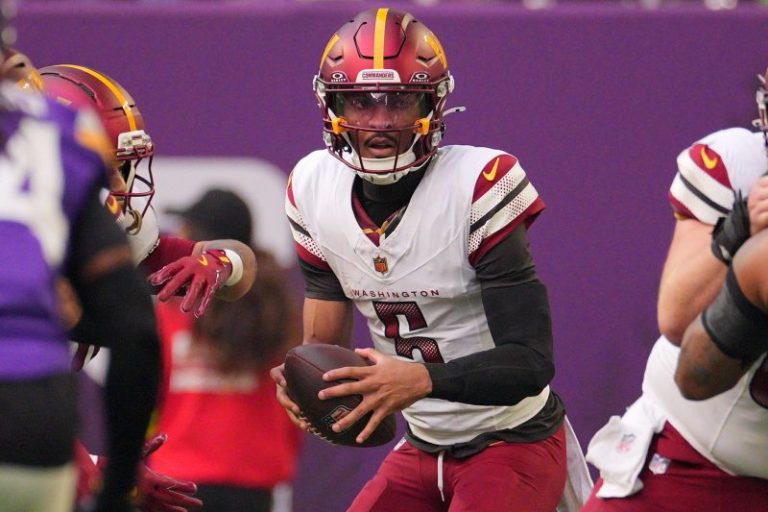
Being eliminated from playoff contention wasn’t a massive letdown in and of itself, as Washington was already starting down a lost season long before Sunday. But the fashion in which the Commanders suffered their shutout loss since 2019 was a sobering reminder of how far the organization has tumbled in a short time. In a meeting of NFC powers from last season that had both come undone in 2025, it was the Commanders who were unable to find any sort of toehold as they dropped their eighth consecutive game. Jayden Daniels’ return from a dislocated elbow figured to invigorate the offense, but Washington had no answers for Brian Flores’ defense, which surrendered just 206 total yards. Daniels exited the game in the third quarter after aggravating his elbow injury, though coach Dan Quinn said the second-year quarterback could have returned. While Quinn maintained he plans to keep playing Daniels for the rest of the year, Washington might soon need to revisit that school of thought to prevent this season’s calamitous run from extending into 2026.

This story has been updated with new information.

This post appeared first on USA TODAY

If you’re reading this, welcome to the 2025 fantasy football playoffs.

With ‘Monday Night Football’ pending, three of the top-10 quarterbacks are Shedeur Sanders, Tyler Shough and J.J. McCarthy. The top eight at running back includes Tony Pollard, Blake Corum and Jaylen Wright. At wideout, Michael Wilson (31.7 half-PPR points) continued his tear, while Ryan Flournoy and Tim Patrick somehow also find themselves in the top 10. Finally, we’ll round it out with tight end, where the top four currently consist of Harold Fannin Jr., Mike Gesicki, Josh Oliver and Dawson Knox.

Here’s a look at Week 15 fantasy football rankings. Toggle between standard, half PPR (point per reception) and full PPR to see where players rank in your league’s format. Scroll to the bottom to view the complete rankings.

Our team at USA TODAY Sports has you covered with plenty of content to help with your Week 14 waiver wire and roster decisions. Looking for up-to-date player news? We’ve got it. Don’t forget to check out the rest of our content:

Waiver wire: 8 players to add in Week 15 

Please note: These rankings will change significantly as the week goes on. Check back on Sunday morning for final updates.

(The risers and sleepers sections will focus on players available in at least half of Yahoo leagues. All snap and target data from PFF.)

Week 15 fantasy football quarterback rankings: Risers and sleepers

Vikings QB J.J. McCarthy (30% rostered) – Starting McCarthy is not for the faint of heart, but he might just be the top streaming option of the week. The 22-year-old is coming off a 20.4-point performance against the Commanders in which he completed 70% of his passes and threw three tuddies. McCarthy has now racked up at least 16.7 fantasy points in four of his seven starts. In Week 15, he’ll face a Cowboys team that’s allowing 3.2 more fantasy points per game to the position than any other team.
Saints QB Tyler Shough (8%) – Don’t look now, but Shough has topped 18 fantasy points in three of his last four games. Week 14 saw him total a career-high 55 rush yards and two scores on the ground. This week, the rookie will face a Panthers defense that he tore up for 282 yards and two touchdowns in Week 10.
Browns QB Shedeur Sanders (8%) – Sanders is the current QB2 on the week, amassing 393 total yards and four touchdowns en route to 34.5 fantasy points. The rookie will have a chance to build on that performance in Week 15, against a Bears squad that’s ceding the ninth-most fantasy points to quarterbacks in 2025.
Other QB streaming options – Steelers QB Aaron Rodgers (24%), Panthers QB Bryce Young (17%), Marcus Mariota (8% – if Jayden Daniels is out), Justin Fields (27% – if active).

Week 15 fantasy football running back rankings: Risers and sleepers

Giants RB Devin Singletary (24%) – From Weeks 10 through 13, Singletary was the overall RB14 in fantasy, averaging 12.1 half-PPR points per game. The veteran averaged 15.3 opportunities in his final three games before the bye, and had reached double-digits in five consecutive games. This week, he’ll take on a Commanders defense that’s surrendering the second-most fantasy points to opposing backfields since Week 4.
Commanders RB Chris Rodriguez Jr. (37%) – On the season, only the Bengals are ceding more fantasy points to running backs than the Giants. New York is also allowing an NFL-high 6.1 yards per attempt. Rodriguez has recorded double-digit carries in four of his last five games, and while he’s a complete zero in the passing game, this defense has given up the second-most rush yards and sixth-most rushing scores to the position.
Cardinals RB Bam Knight (38%) – While Knight lagged behind Michael Carter in snaps (33 to 29) and routes (25 to 17) in Week 14, that was due to a game script that saw the Cardinals fall behind 31-10 with 10:09 left in the third. Despite that, Knight logged a team-best 13 opportunities (seven carries, six targets), which means he’s now reached double-digit touches in seven of his last eight games. The 24-year-old is a decent floor play against a Texans front that’s given up more than 8.0 half-PPR points to 14 backs this season, including nine with at least 11.6.
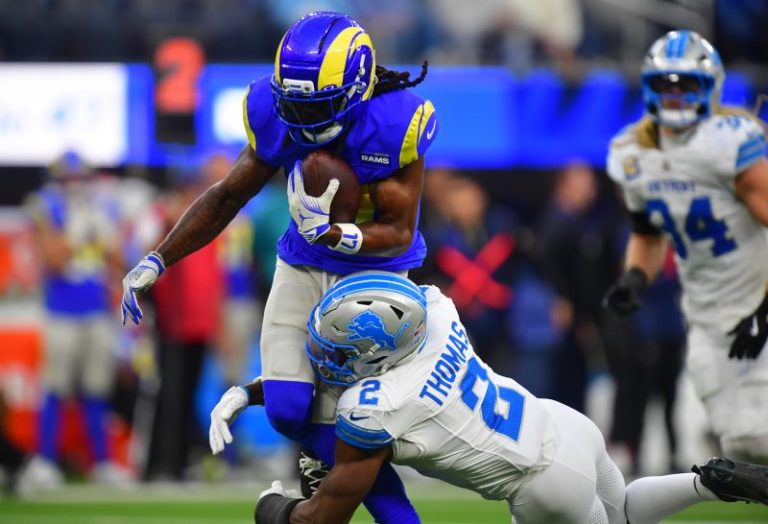
Rams RB Blake Corum (33%) – Corum exploded for 131 yards and two touchdowns on 13 touches in Week 14, but he’s likely fool’s gold as a Week 15 streaming option. For starters, Kyren Williams still had a strong lead in snaps (36 to 22) and routes (18 to 9), and Corum’s 48-yard dash with the team up 38-10 in the fourth made his statline look much better. Additionally, the Rams will be taking on the Lions’ extreme pass-funnel defense this week. On the season, the Lions have ceded the fewest fantasy points to opposing backfields and the second-most to the opposition’s wideouts.
Other RB streaming options – Ravens RB Rasheen Ali (0%), Dolphins RB Jaylen Wright (3%), Browns RB Dylan Sampson (11%)

Week 15 fantasy football wide receiver rankings: Risers and sleepers

Packers WR Jayden Reed (41%) – In just his first game back, Reed returned to his regular role as Green Bay’s slot receiver. Despite playing just 43% of snaps, the 25-year-old finished just two routes behind Romeo Doubs for second on the team (17 to 19), and his six opportunities (four targets, two carries) were the most behind only Josh Jacobs. A tough matchup with the Broncos awaits, but Reed’s ceiling is highest among widely available players at the position.
Panthers WR Jalen Coker (4%) – Before their bye, we saw Coker lead the Panthers with six targets. The 24-year-old has now garnered at least four targets in four consecutive outings. Against a tough Rams secondary, Coker caught four of his six looks for 74 yards and a score. Coker will be an intriguing flex option versus a beatable Saints defense.
Saints WR Devaughn Vele (19%) – Since the Saints returned from their bye, Vele has essentially been the team’s WR1B. This past week, Vele finished tied for the team lead in snaps (54) and targets (5), while finishing with just two fewer routes than Chris Olave (22 to 24). Vele led the team in receiving for a second consecutive week, though his 3-40-0 line was a far cry from his 8-93-1 line in Week 13. The 28-year-old will be a decent dart throw against a Panthers team that’s given up double-digit half-PPR points to 10 wide receivers over their last 10 games.
Titans WR Chimere Dike (15%) – While he finished third among Tennessee wideouts in snaps last week, Dike did lead the team in routes (26) and targets (8). The 24-year-old has totaled at least 10.9 half-PPR points in four of his last seven games, but he’s also had 2.4 and -0.6 in two of his last four. Dike is a deep league-only desperation play in Week 15.
Other WR streaming options – Cowboys WR Ryan Flournoy (1% – if CeeDee Lamb is out), Bears WR Luther Burden III (17%), Texans WR Jayden Higgins (42%), Jaguars Tim Patrick (0%), Broncos WR Pat Bryant (3%), Jets WR John Metchie III (9%)

Week 15 fantasy football tight end rankings: Risers and sleepers

Browns TE Harold Fannin Jr. (40%) – Against a Titans team that hadn’t allowed a single tight end to reach 70 yards against them, Fannin totaled 111 yards and a touchdown on a season-high 11 targets. His 21.4 half-PPR points were the most by a tight end since Week 11. The rookie has not had fewer than five targets since Week 5. Fannin will be a top-12 play against a Bears defense that’s middle of the pack versus tight ends.
Ravens TE Isaiah Likely (6%) – Last season, the Rams gave up a league-leading 15.9 fantasy points per game to tight ends. In 2025, the Bengals are beating that number by an astonishing 8.2 half-PPR points. Cincinnati has ceded 325 more yards and six more touchdowns to the position than any other team in the league. Enter Isaiah Likely. The 25-year-old has out-targeted veteran Mark Andrews over the last two games, and he has outgained him by 64 yards. Likely will be in the TE1 conversation this week.
Other TE streaming options – Giants TE Theo Johnson (42%), Texans TE Dalton Schultz (47%), Jets TE Mason Taylor (24%), Seahawks TE AJ Barner (12%)

Week 15 fantasy football rankings: PPR, half-PPR and standard

This post appeared first on USA TODAY

MILAN, Italy – Olympic organizers and the International Ice Hockey Federation defended the size of the rink to be used in the hockey tournament after reports that it was shorter than the standard used in NHL venues.

The debate about dimensions is the latest cloud over the Santagiulia Arena in Milan. Building delays mean test events won’t be held until Jan. 9-11, less than a month before the Games open.

The Athletic reported last week that the size of the surface rink had fueled concerns about safety as elite NHL players return to the Olympics for the first time since 2014.

According to The Athletic, the IIHF approved a 60-meter (196.85 foot) by 26-meter surface in Milan, which is more than 3 feet shorter than the 200-foot length required by the NHL.

The surface is a fraction wider than NHL specifications but the concern is that is not enough to compensate for the shorter rink in a sport where high-speed collisions are frequent.

‘While these dimensions differ slightly from a typical NHL rink, they are consistent with IIHF regulations, match the rink size used at the Beijing 2022 Olympic Winter Games and are fully consistent with the dimensions the NHL requires as part of its Global Series Game arena specifications,’ the federation said in a statement released by the Milano Cortina Foundation.

NHL players last took part in the Olympics in Sochi, Russia, in 2014. Four years later, the NHL and International Olympic Committee could not agree on who would pay for travel and other agreements for the 2018 Olympics in South Korea, while COVID restrictions kept them from Beijing four years ago.

Progress on the Santagiulia venue has emerged as the main headache in the run-up to the Olympics, which will be co-hosted by Milan and the alpine resort of Cortina d’Ampezzo from Feb. 6-22.

Located in the southeast of Milan, the arena will have around 15,000 seats. It is one of two ice hockey venues and is scheduled to host the gold medal games.

It will be inaugurated in January when it hosts the Final Four events in Italy’s IHL Hockey League Serie A Championship and the 2025/2026 Italian Cup.

Sportsnet’s Elliotte Friedman spoke with NHL Players Association assistant executive director Ron Hainsey during the weekend about the biggest issue involving the Olympic arena.

While the shorter ice surface isn’t ideal, Hainsey and the NHLPA are more concerned about the safety and quality of the ice in Milan.

This post appeared first on USA TODAY
A Senate Republican duo unveiled their vision for expiring Obamacare premium subsidies as the Senate hurtles toward a vote on the credits at the end of this week.

Sens. Susan Collins, R-Maine, and Bernie Moreno, R-Ohio, announced their plan to tackle the subsidies, which are set to expire at the end of this year. Their proposal, made public on Monday, would extend the subsidies for two years.

The upper chamber is set to vote on legislation dealing with the expiring subsidies on Thursday, but so far only Senate Democrats have united behind a proposal from Senate Minority Leader Chuck Schumer, D-N.Y., that would extend the credits for three years.

Schumer’s plan is likely dead on arrival, given that it lacks any of the reforms to the subsidies demanded by the GOP. And Republicans are mulling several options, but have so far not picked legislation to form up behind and put on the floor in a possible side-by-side vote.

Moreno and Collins hope that their legislation, which would also put an income cap onto the subsidies for households making up to $200,000 and eliminate zero-cost premiums as a fraud preventive measure by requiring a $25 minimum monthly payment, gets a shot.

Moreno argued that former President Barack Obama and the Democratic Party ‘created this disaster, lining the pockets of massive insurance companies while healthcare costs for everyday Americans skyrocketed.’

‘But I refuse to let the American people pay the price for the Democrats’ incompetence,’ he said in a statement. ‘I am willing to work with anyone to finally bring down costs for all Americans and hope my colleagues across the aisle will commit to doing the same.’

Collins said that lawmakers needed to ‘pursue practical solutions that increase affordability without creating sudden disruptions in coverage,’ with the expiration deadline looming. Republicans are divided on whether they want to actually extend the subsidies or allow them to sunset and be dealt with early next year.

‘This bill would help prevent unaffordable increases in health insurance premium costs for many families by extending the [Obamacare] enhanced premium tax credits for two years and putting a reasonable income cap on these subsidies to ensure they are going to the individuals who need them,’ Collins said in a statement.

Their proposal joins the ranks of public ideas and legislation floated by Republicans, but strays from the desire many in the GOP have to convert the money that flows into the subsidies directly to Americans through Health Savings Accounts (HSAs).

President Donald Trump has publicly backed converting the premiums to HSAs, but even with his support, Republicans have not nailed down a legislative move that could make it to the floor. 

It’s also unclear if Republicans will line up behind their plan, given that it extends the subsidies without additional action on taxpayer funding flowing to abortion — a key sticking point in bipartisan negotiations on the credits — and lacks the inclusion of HSAs.

This post appeared first on FOX NEWS

In the absence of a Tarik Skubal blockbuster, Major League Baseball’s winter meetings will have to make do with the best of what’s still around.

Can the industry conjure up a more interesting trade than one involving Arizona Diamondbacks infielder Ketel Marte? Alas, a deal involving the 32-year-old whose connection with his current team might be a bit strained looms as the meetings’ potential highlight on the trade market.

In that spirit, let’s examine a handful of Marte trade destinations that may make sense for the acquiring team and the Diamondbacks:

Pittsburgh Pirates

As close to an ideal match as you’ll find. The Pirates have signaled that they’re kinda-sorta open for business, but forays such as their reported offer to Kyle Schwarber will still land in the “lol sure” file of any self-respecting agent.

No, you have to plant a flag and build some credibility before making money moves – the Blue Jays are a fine example of all this – and the Pirates are a long way from that stage, assuming their perpetually penurious ownership group ever reaches it.

Enter Marte. He has six years and $102.5 million remaining on an extension he signed in April, a per annum that certainly fits the Pirates’ model (think if it as a Bryan Reynolds Jr.-type deal).

The Pirates finished last in runs scored but have some pitching to spare; the Diamondbacks lost Merrill Kelly at the trade deadline and are losing Zac Gallen. If Pittsburgh can expand a package beyond simply a salary swap that unloads the $55 million still due Mitch Keller, this one could work.

Seattle Mariners

What’s old is new, eh? The Mariners signed Marte out of the Dominican Republic in 2010 (Julio Rodriguez was just 9 years old at the time) and nurtured him into a big leaguer before dealing him to Arizona in a package headlined by Mitch Haniger and Jean Segura.

Now, the Mariners are in need of infield reinforcements. They could run it back a third time with Jorge Polanco, who came up clutch for them throughout the postseason. Or, they could burn some trade capital and welcome Marte back to the Pacific Northwest.

For one, it’s not like the Mariners have left their offensively deficient ways totally in the rear view. Re-signing Josh Naylor went a long way toward shoring that up, but the loss of Eugenio Suarez – he put up a .956 OPS in a seven-game ALCS – needs to be mitigated.

The Mariners have the pitching depth to deal from without disrupting their consensus top five, and a trove of middle infielders that could be viewed as eventual Marte replacements. We’ve heard baseball ops chief Jerry Dipoto likes to trade every now and then, too.

Detroit Tigers

These guys land in almost every one of these exercises, and that won’t change until they’ve built a World Series-friendly roster. For the same reason they’d be a good fit for Alex Bregman or any number of impact bats, Marte would represent a significant offensive upgrade – an everyday 145 adjusted OPS in the lineup.

In Comerica Park, he might not reach 36-homer heights as he did in 2024, but his 15.9% career strikeout rate would add a nice contact element in a lineup featuring Riley Greene (30.7% K rate in 2025) and Spencer Torkelson (26%). While there’s no obvious major league-ready piece that could come off Detroit’s roster and get shipped to Arizona, the Diamondbacks would be well-positioned to reinvest in the free agent market minus Marte.

Philadelphia Phillies

The kids grow up so fast these days, don’t they?

Believe it or not, Phillies second baseman Bryson Stott is just two seasons from free agency. Third baseman Alec Bohm hits the market after this season and has been a walking trade rumor the past couple years.

Acquiring Marte would help backfill against those losses and adding a switch-hitter to the Phillies lineup would protect against the club leaning too left- or right-handed in the future. It would also give the Phillies a potentially elite infield in the long term, with Bryce Harper at first, Marte at second, and Trea Turner and top prospect Aidan Miller on the left side of the diamond.

It just so happens the Diamondbacks have a vacancy at third base; adding Bohm might be a marriage of temporary convenience. Throw in one of the lefty relievers the Phillies may shop – such as Matt Strahm – and a starting pitching piece from the upper minors, and suddenly it’s a nice present and future deal for Arizona.  

Toronto Blue Jays

Presumably, the Blue Jays’ reported due diligence on Marte revolves around a Bo Bichette departure. Perhaps the Jays are figuring on that, or simply realize it’s a possibility.

We’ll make that assumption for the sake of this exercise, as well. Marte would give the Blue Jays a fairly absurd top of the lineup, sandwiched between George Springer and Vladimir Guerrero Jr., while allowing Ernie Clement and Addison Barger to float between third base and the outfield, respectively.

In short, it’d create admirable depth in the short term and provide a much-needed bat for future seasons should Bichette and Springer depart in consecutive years. Would the Diamondbacks be interested in inheriting Jose Berríos’s contract from the pitching-rich Blue Jays and try to keep him healthy?

With a little financial assistance along with a few other assets, sure.

This post appeared first on USA TODAY