Archive

2025

Browsing

In pro sports, angry fans are vocally demanding regime change.
Oakland Athletics fans organized boycotts two years ago as the team plotted relocation.
“Don’t know how much front offices and owners pay attention. But players, we hear it,’ says a former A’s player.

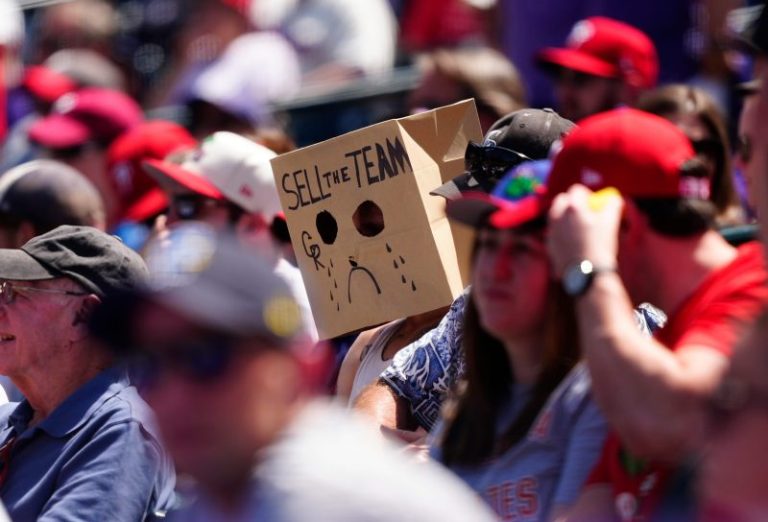
“Sell! The! Team! Sell! The! Team!”

On this August evening, it wasn’t desperate and determined fans of the Oakland Athletics imploring owner John Fisher to sell their beloved franchise in the name of competence and to ensure a future in the Bay Area. That future is gone.

No, this time, it was the opposition: Washington Nationals fans, disgusted with their club giving up 54 runs in four games amid a flailing rebuild and uncertain regime change, voiced their displeasure with the Lerner family’s ownership and their desire for more robust stewardship.

Some fans were even clad in T-shirts with the “Sell The Team” message, the Nationals’ iconic curly W flipped upside down to form the “m” in “team.”

Certainly, ire at the executive branch did not begin with Fisher’s gutting of the A’s, subsequent pit stop in Sacramento and, he hopes, ultimate destination in Las Vegas. Yet in the years since “SELL” T-shirts became de rigueur in the background of live shots from A’s games, fans across baseball and the sporting world seem to have found a louder voice.

A USA TODAY Sports analysis shows that 12 MLB teams have engaged in the chant in varying degrees of organization the past three years, perhaps indicating fans have taken a cue from Oakland’s highly-publicized unrest to demand more from their ownership groups.

The three-word plea can come spontaneously, or after significant planning, or sometimes to simply prove a grander point.

In Denver, it was heard when the woebegone Rockies hit a low point this season, a 21-0 loss to the San Diego Padres that dropped their record to 6-33. (No, they didn’t sell the team, but they did fire the manager a day later.)

On Chicago’s South Side, “Sell the team” has been a refrain at least three years running, with longtime owner Jerry Reinsdorf presiding over 101- and 121-loss seasons and another 100-loss campaign in the offing.

Yet the cries have been most extreme in Pittsburgh.

In many markets, the chant occurs late in games, the score lopsided, the crowd count dwindling and those remaining well-served. Yet after more than three decades of almost uninterrupted futility, Pirates fans save their disgust for owner Bob Nutting for the most high-profile moments.

Like Opening Day, where the season wasn’t even an hour old before a plane flew a banner over the stadium bearing the message and chants rang out before yet another loss.

Or Paul Skenes bobblehead day, when a sellout crowd recited the phrase on a day honoring the franchise player. And the team’s third sellout of the season? That was on Pittsburgh legend Mac Miller’s bobblehead day, when lines to get in stretched back to the Clemente Bridge – and the team’s loss that day incited another chorus of chants.

Heck, the protest even commuted up the road to PPG Paints Arena, when Pittsburgh native Pat McAfee hosted his “Big Night Aht” and McAfee was forced to sidebar with WWE broadcaster Michael Cole to explain exactly what the crowd was chanting.

It’s virtually endemic at this point, to the point the Seattle Mariners, now poised to claim an American League playoff berth, caught the “Sell” stray earlier this year, when a group of fans landed on the big screen in shirts that read, “Go Mariners!” only to turn in unison and reveal the message on the other side: Sell the team.

For the players there at the beginning of this run, it conjures up memories but also a desire for things to be, well, normal.

Business for the owners, personal for the fans

Two years have passed since the “Summer of Sell,” when A’s fans organized a boycott of the team and marked the top of the fifth inning of every game – home and road – to remain silent for one batter before beginning a “Sell the team” chant.

It was an emotional two-year ride, during which the A’s finalized plans to move to Las Vegas, fans staged an emotional “reverse boycott” and finally, spent 2024 bidding farewell to the Coliseum, and Oakland.

“It’s crazy because I enjoyed my time in the Coliseum. It’s such a unique place and it’s sad that they’re not playing there anymore,” says Ryan Noda, the A’s first baseman in 2023 now with the Baltimore Orioles. “Talking to (A’s players), they’re like, ‘I’d never thought I’d miss the Coliseum so much, but I do.’ The last two games there were pretty awesome.

“But in ’23, it was pretty crazy. There’d be games when there was nobody in the stands, save for the true diehards. I feel for the fan base. Because it’s such a storied franchise. And it’s sad to see that happen but at the same time, it’s a business, on both sides, when it comes to location and players.”

It’s business, but always personal with fans. Though the A’s may be laying over for three seasons at a Class AAA park in Sacramento, fans nonetheless fill the Yolo County night with chants of “Let’s Go Oakland,” and “Sell the team.”

Brent Rooker, the A’s two-time All-Star outfielder, committed to the long haul when he signed a $65 million extension through at least 2029, which should ostensibly cover their first two years in Las Vegas.

The “sell” movement was at full tilt in his first All-Star season, when the 2023 All-Star Game featured both the now traditional fifth inning chant as well as a “sell” serenade when Rooker came to bat.

Rooker has appreciated the fans’ fervor. Yet 400 games into his Athletics career, increasingly surrounded by high-achieving teammates, he’d appreciate perhaps a bit more fan focus between the white lines.

“There’s both sides to it, I guess. You respect people’s right to voice their opinion,” says Rooker, on pace for his third consecutive 30-homer season. “At the same time, you kind of wish that energy was directed more toward supporting what’s happening on the field, because we’re giving a lot of effort and work really hard and a lot goes into going out and competing every night.

“So, you see both sides of it. you respect people’s rights to voice their opinions. But there are times we wished that energy was directed more at supporting what we’re doing on the field.”

Freedom of speech – just watch what you say

Yet inept or at least inadequate ownership is the hardest thing in sports to shake; barring high corporate crimes or misdemeanors, the owner is the one piece of a franchise that can’t be eradicated.

And that’s why “sell” has swept through several sports.

In the NFL, it hit at Soldier Field last December, during the Chicago Bears’ particularly desultory 6-3 loss to the Seattle Seahawks. Woody Johnson’s New York Jets heard it in an October game at MetLife Stadium.

It was a staple at Washington Commanders games until owner Daniel Snyder finally did, in fact, sell the team, though not until his wife’s image on the scoreboard was greeted with boos and pleas to sell.

And as his latest training camp superstar staredown unfolded, Dallas Cowboys owner Jerry Jones took a verbal ribbing and fans toted signs urging him to sell on Aug. 2.

Only drastic times seem to inspire the chant in the NBA, such as when the Detroit Pistons lost their 25th consecutive game in December 2023, or New York Knicks fans grew exhausted of owner James Dolan’s decades of mismanagement in March 2020.

Even Major League Soccer got a piece of the action, with Philadelphia Union fans organizing a Coliseum-like period of silence before launching its sell chant.

Yet fan messages that counter team talking points or state-sponsored pablum are often met with suppression.

Commanders fans were directed to remove bags from their face with the sell suggestion on them. A Knicks fan who chanted “sell the team” says he was “interrogated” by security before exiting Madison Square Garden.

During one of the Pirates’ “sell” chants this season, the team broadcast cut the crowd noise until the chanting ceased. And the A’s “reverse boycott” game has been scrubbed from MLB.TV’s June 2023 archives.

That leaves just the public square – arena, stadium, pitch – for the fan to know they’ll be heard – if not by management, then certainly the participants.

“I guess it goes back to freedom of speech and why the United States is so awesome,” says Noda. “I don’t know how much front offices and owners pay attention.

“But players, we hear it. And going through it for a whole year was weird. But we knew they weren’t saying it to us. We knew they still backed us and treated us like we were players. And they knew how hard we worked and how hard we wanted to get a win. At the end of the day, we kind of just blocked it out on our end and waited for them to cheer.”

The USA TODAY app gets you to the heart of the news — fastDownload for award-winning coverage, crosswords, audio storytelling, the eNewspaper and more.
This post appeared first on USA TODAY

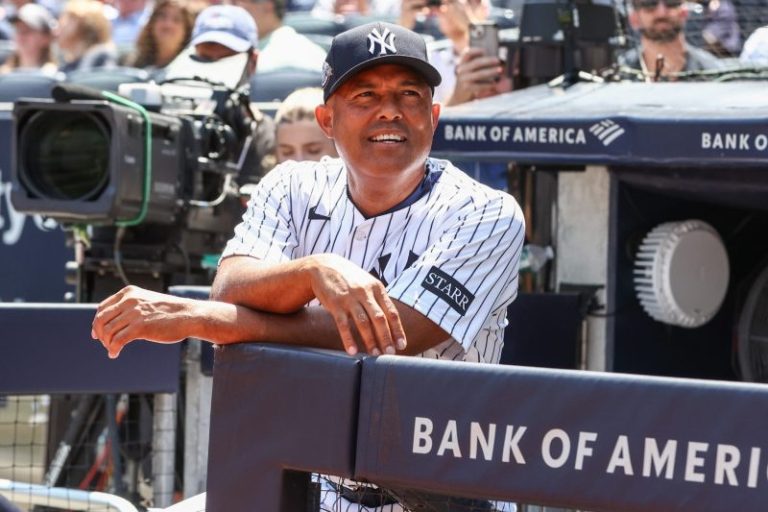
Former New York Yankees closer Mariano Rivera returned to Yankee Stadium in a pinstripe uniform Saturday as a competitor in the franchise’s Old-Timers’ Day game.

It was the first time the Yankees held the actual game since 2019.

The 55-year-old Hall of Famer’s time in the game was cut short, however, due to injury. Rivera’s agent, Fern Cuza, told reporters that the baseball legend tore his Achilles tendon during the game.

He is set to undergo surgery next week. Rivera missed most of the 2012 MLB season, his second-to-last, due to an ACL tear.

What did Mariano Rivera do in Old-Timers’ Day game?

Rivera took to the plate during the game, hitting a single against Andy Pettitte.

Rivera had just four plate appearances during his MLB career and never recorded a hit. He had an RBI, one walk and one strikeout.

This post appeared first on USA TODAY

Like a Lamb to the … referee?

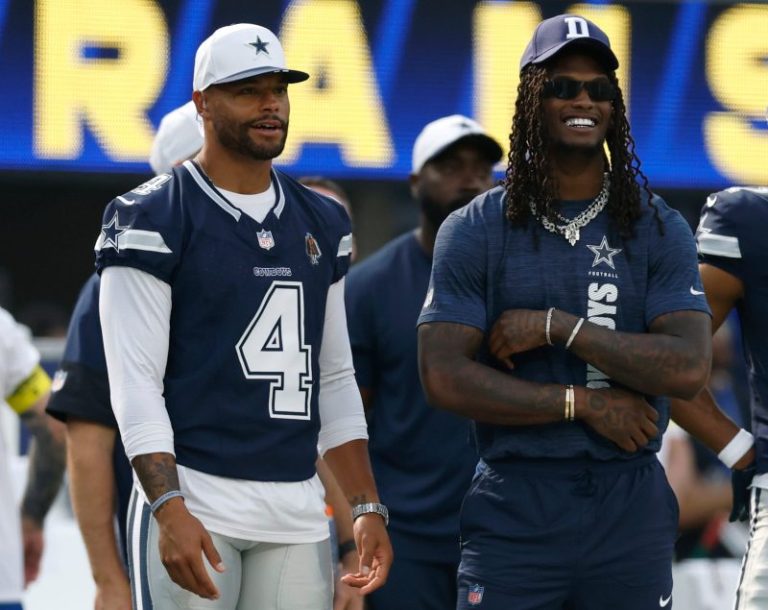
Dallas Cowboys wideout CeeDee Lamb wasn’t dressed for Saturday’s preseason matchup vs. the Los Angeles Rams, but that doesn’t mean he was out of the action entirely.

In the second quarter, on a deep pass from Cowboys backup Joe Milton to wide receiver Jonathan Mingo, Lamb turned his back on the sideline to celebrate Mingo potentially catching a bomb from the passer.

Instead of Mingo catching the ball, Lamb caught a shoulder from the referee directly to the back, wiping out both in the mashup.

Lamb was flagged on the play for interfering with the referee: The thick white out-of-bounds border is strictly ref territory, so any contact with an official in that area results in a flag.

While there was a foul, there was no harm, however. Lamb and the Cowboys sideline had a good laugh about the ordeal. The Cowboys would also salvage the drive, notching a field goal.

It’s preseason for everyone, after all.

This post appeared first on USA TODAY

The tight end position is often the most overlooked and underappreciated in fantasy football, but savvy managers can find a distinct advantage over their league mates by snatching up one of the year’s breakouts at a predominantly slim position in terms of reliability.

Fantasy football managers often struggle to find consistency at tight end if they miss out on the position early in drafts. Still, there’s always a diamond or two who can sneak into relevance each season.

One approach in recent seasons is to draft one of the high-volume target-getters at the position, such as Travis Kelce or George Kittle. However, if you end up missing out or opt to wait on the position, there are plenty of potential sleepers at tight end, so waiting until the mid-to-late rounds of the draft can sometimes pay off.

Below are some of the best sleeper tight ends to target in fantasy football drafts ahead of the 2025 NFL season.

2025 POSITION RANKINGS: QB | RB | WR | TE | K | D/ST | Overall

Fantasy football TE sleepers 2025

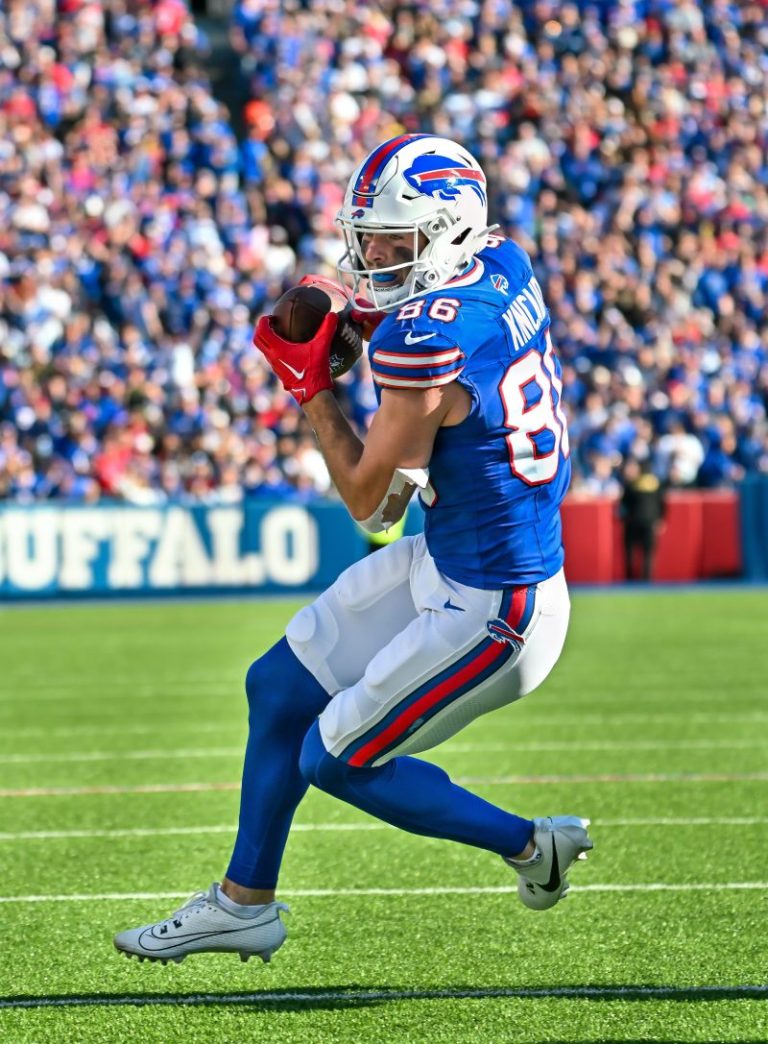
Dalton Kincaid, Buffalo Bills

The 25-year-old is entering his third season in Buffalo. He regressed in many ways during his sophomore season, but injuries and other factors may have contributed to his decline. The Bills scored an astounding 32 of their 62 offensive touchdowns on the ground, which left little room for Kincaid to make a dent in that column. The former first-round draft pick finished second on the team in targets (75) behind Khalil Shakir (100), who is dealing with a high ankle sprain in camp. Kincaid missed four games and time in others due to injuries, but was on pace to exceed 100 targets. Only Brock Bowers, Trey McBride, Travis Kelce and Jonnu Smith reached that mark. While many fantasy managers may feel burned by Kincaid, he’s the type of post-hype sleeper you’ll want on your roster in 2025.

Chigoziem Okonkwo, Tennessee Titans

Chig Okonkwo enters 2025 as the top tight end in Tennessee. The Titans are lacking a clear No. 2 option in the passing game after Calvin Ridley and the offense is expected to improve with No. 1 overall pick Cam Ward under center. Okonkwo has been a victim of subpar quarterback play throughout his first three NFL seasons, and reports from training camp suggest he’s building chemistry with Ward. Okonkwo had an impressive 27% target share down the stretch last season when he was given a full-time role. He is a fast and agile tight end (6-foot-3, 238 pounds) with speed to create mismatches and could become the rookie quarterback’s favorite option. (Not to mention, fantasy managers rostering him have the luxury of creating unique team names.) He’ll go undrafted in most leagues but he’s a worthy late-round flyer.

2025 FANTASY FOOTBALL SLEEPERS: QB | RB | WR | TE | K

Hunter Henry, New England Patriots

The Patriots are entering the second season of the Drake Maye era. In 10 games with Maye last season, the veteran led New England in targets, receiving yards, receptions, and the always-valuable end zone targets. Henry managed a career-high 97 targets in 2024 and the return of offensive coordinator Josh McDaniels, who coached Henry in 2021 in New England, could provide an even bigger boost. That season under McDaniels, Henry posted career highs in red zone targets (17) and touchdowns (9). His 12 end zone targets that season ranked sixth-highest in the NFL. There’s little target competition outside of 31-year-old Stefon Diggs, who is coming off an ACL tear. Henry is currently being drafted as TE20 and he can easily finish inside the top 10 at the position if Maye leans on him.

Tucker Kraft, Green Bay Packers

Kraft ranked 14th in fantasy points per game last season among tight ends, but did so in Green Bay’s run-heavy offense. He posted 50 receptions for 707 yards and seven touchdowns in 2024. Green Bay added wide receiver Matthew Golden in the first round of the 2025 draft, creating more target competition. Still, Kraft led all TEs in yards after the catch (YAC) at 9.6, ahead of George Kittle. He has carved out a reliable role in one of the better offenses in the NFL and is currently being drafted as TE12. At the end of last season, head coach Matt LaFleur expressed his desire to feature Kraft more in the offense.

This post appeared first on USA TODAY

Senate Republicans left Washington this week to sell President Donald Trump’s ‘big, beautiful bill,’ but the road to creating and passing the legislation began just over a year and a half ago. 

Trump’s $3.3 trillion megabill, crammed with his legislative priorities on border security, defense and energy, was a product months in the making. And it was the marquee policy in the bill, which was to extend or make permanent many of the 2017 Tax Cuts and Jobs Act, that was the driving force behind Republicans’ desire to pass it.

But Senate Republicans have had little time to rest on their laurels and celebrate the bill’s passage, spending the month since Trump signed it advancing a $9 billion clawback package and trying to ram through Senate Democrats’ blockade of the president’s nominees.

The journey to pass the bill began well before Republicans had a trifecta in Washington in early 2024, when then-Senate Republican Conference Chair John Barrasso, R-Wyo., hosted a policy retreat with Senate Republicans to hash out what the GOP’s agenda could look like should the win out in November.

And months later, Trump visited with Senate Republicans to discuss the strategy they had been working on behind-the-scenes.

‘With President Trump in the White House, we discussed how Republicans will get America back on track,’ Barrasso said at the time. ‘That starts with helping families escape the pain of Democrat high prices, unleashing American energy, stopping Democrat tax increases, and securing the Southern Border. Republicans are united.’

The real, nitty-gritty work began in January where concepts were taken and fleshed out into legislation.

Senate Majority Leader John Thune, R-S.D., opted to leapfrog the House and move forward with the Senate’s own budget framework, which initially divided the ‘big, beautiful bill’ into two chunks. That added pressure on Republicans in the lower chamber to coalesce behind a plan of their own.

For much of the earlier part of this year, however, the Senate was waiting on the House to fine-tune and pass their own version of the bill. Still, Thune and his leadership team, including Sen. Markwayne Mullin, R-Okla., worked to get a product from one side of the building to the other that the Senate GOP could work with.

And when the bill made its way to the upper chamber in early June, the pressure was on to deliver a finished product to Trump by July 4, an artificial deadline used to help corral lawmakers into finishing work on the bill.

One of the major disagreements in the upper chamber before the bill ever hit the floor was over the nature of cuts to Medicaid, particularly aimed at the provider tax rate. The issue was eventually smoothed over through the creation of a $50 billion rural hospital fund, but lawmakers who sounded the alarm against it vowed to ensure that the changes to the provider would never take effect.

‘I think it was a huge mistake,’ Sen. Josh Hawley, R-Mo., said at the time. ‘I think this has been an unhappy episode here in Congress, this effort to cut Medicaid.’ 

‘And I think, frankly, my party needs to do some soul-searching,’ he continued. ‘If you want to be a working class party, you’ve got to get delivered for working class people. You cannot take away health care from working people.’

And when the bill did finally hit the floor for what would evolve into a multi-day affair of passing through procedural hurdles, Senate Minority Leader Chuck Schumer, D-N.Y., forcing the reading of the entire bill and a marathon vote-a-rama, Senate Republicans were still not entirely on board.

At first, a cohort of fiscal hawks led by Sen. Ron Johnson, R-Wis., and Sen. Rick Scott, R-Fla., appeared to not support the package — they wanted even deeper cuts to Medicaid by tweaking the percentage that the federal government pays for healthcare in states that opted into Obamacare, which they argued would have saved billions extra.

They were offered an amendment that eventually never came to the floor, but was enough for them to back down from tanking the bill. And their resistance began in the first of a handful of huddles inside Thune’s office outside the Senate floor.

Sen. Cynthia Lummis, R-Wyo., joined them for the closed-door conversations, and told Fox News Digital that while her vote was not contingent on getting the change added, she wanted to make the case for why it should be.

‘It saved a lot of money,’ she said. ‘It saved a lot of money, and so I was anxious to see us use the opportunity, since we were able to open up mandatory spending, use the opportunity to really save some money.’

And later on, in the wee hours of the night, Republicans were bouncing from Thune’s office to the Senate floor, hashing out deals as they went to get Sen. Lisa Murkowski, R-Alaska, to support the bill, knowing that Sens. Susan Collins, R-Maine, and Thom Tillis, R-N.C., could vote against it.

‘Sometimes it’s got to be put on a clock, because at some point the argument has to come to an end,’ Mullin told Fox News Digital. ‘And that’s why we had to do some of it on the floor. We had to, we had to force the hand.’

And in the end, only three Republicans, Sens. Rand Paul of Kentucky, Collins and Tillis voted against the bill. From there it went to the House, where Republicans in the lower chamber had their own dramatic rally to pass the legislative behemoth.

And now, as Republicans scatter to their home states to sell the bill to their constituents, Tillis said that the ‘foundational’ piece of information that lawmakers can share is that they averted a nationwide tax hike.

‘The shame of the Medicaid provision is that the vast majority of the bill is supported,’ he told Fox News Digital. ‘I think we have to remind them the problem with the tax bill is they’re not going to see a cut, but if we hadn’t done it, they would have seen a historic increase.’

‘So we need to remind them of what we’re doing is continuing what we started, and the economy that we created, it was able to withstand COVID,’ he continued. ‘And I firmly believe if we hadn’t passed it. We’d have been in a different posture.’

This post appeared first on FOX NEWS

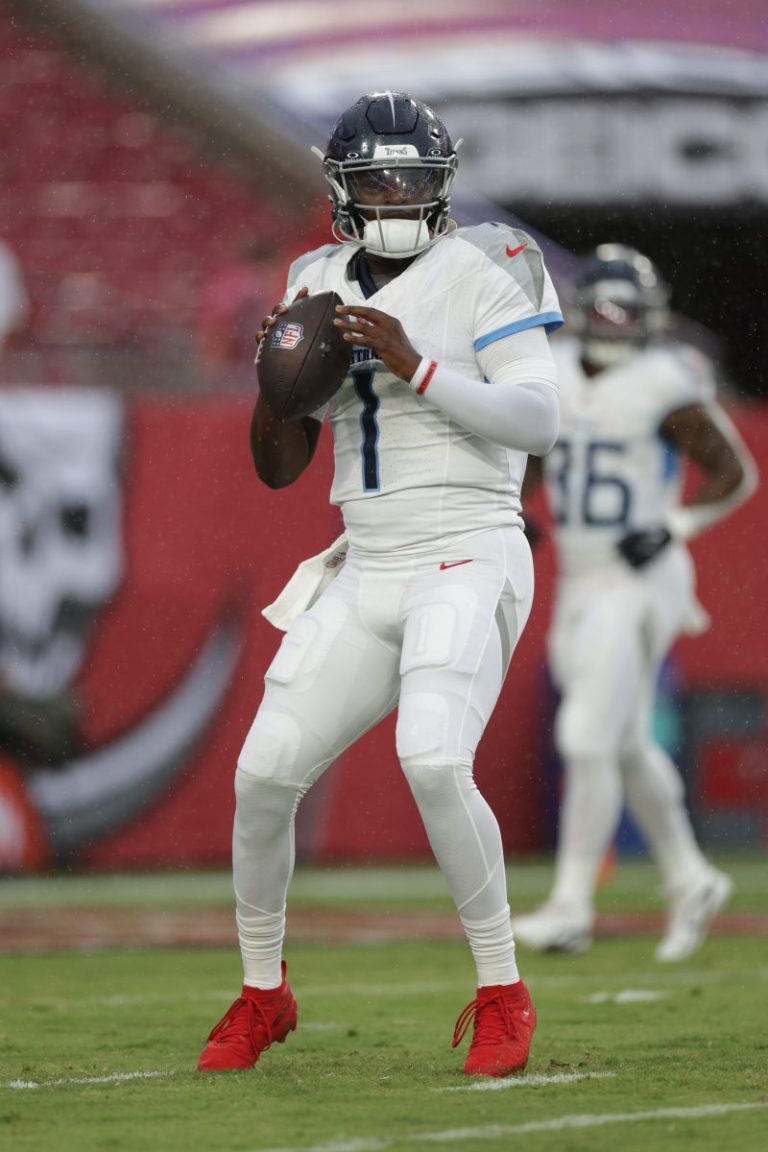
Cam Ward, the Tennessee Titans’ No. 1 overall pick in the 2025 NFL Draft, finally made his pro debut Saturday night. Results were mixed, but mostly solid.

Ward played the first two offensive drives in the Titans’ preseason opener against the Tampa Bay Buccaneers in Tampa and completed five of his eight pass attempts in the game for 67 yards. He threw no touchdowns, no interceptions and did not take a sack.

In such a limited sample size against a Bucs team that kept most of its starters on the bench, it was hard to get a good read on how Ward’s skills will translate to the pro level.

USA TODAY Sports made an evaluation anyway, grading out Ward’s first couple of offensive possessions as a pro.

Here’s how it went:

Cam Ward grades: Titans rookie QB solid in debut

Ward’s pro career got off to an unimpressive start after he took the field for the Titans’ first offensive possession on Saturday evening.

Tennessee went three-and-out in a drive that lasted less than one minute of game clock time. Ward’s first snap was a handoff to running back Tony Pollard for five yards. His second was an incomplete pass to receiver Van Jefferson. And in Ward’s final play of his first drive as a pro, he drifted backwards out of a clean pocket then had to throw the ball away when pressure eventually came.

The Titans went on to punt.

Ward’s second drive went far better than the first. His first throw when he returned to the field was also his first NFL completion: a 27-yard completion to lead receiver Calvin Ridley.

The rookie took advantage of his good protection on the play before delivering the strike to Ridley, who had found an open hole in the Buccaneers’ zone coverage. The wideout turned upfield for about 10 more yards and into Bucs territory before defenders swarmed him for the tackle.

Ward completed his next three pass attempts – though the first was nixed by an offensive pass interference penalty. The two that counted were both to Ridley again, including one well-thrown ball to beat double coverage as the wideout bolted toward the sideline.

The placement on the throw hit Ridley in motion and prevented him from getting lit up by the safety charging in on a pursuit angle. Though Ward didn’t technically give his wideout a chance to turn upfield, he did avoid a dangerous, ‘hospital ball’ play with the throw.

The rest of the drive featured three more attempts and two more completions by the Titans’ rookie.

The lone incompletion was Ward’s worst throw of the game. He tried to slot a back-shoulder throw in to Elic Ayomanor near the left boundary, but he underthrew it. Buccaneers cornerback Josh Hayes had his eyes on the quarterback and undercut the route, nearly coming away with an interception.

Ward did not appear fazed by his near-pick. He went on to convert both third-down opportunities for his team as Tennessee neared and entered the red zone.

Ward’s first conversion was a strong pass to tight end Chig Okonkwo over the middle on a stick route to get 10 yards on third-and-9. His second was a short dump off to newcomer Tyler Lockett, who picked up some yards after catch to get his team to the Buccaneers’ 3-yard line. Pollard took care of the rest, rushing for a touchdown two plays later.

In such a small sample size – two drives, eight pass attempts – it’s hard to come away with any significant takeaways from Ward’s pro debut. It wasn’t horrible, but it also wasn’t mind-blowing.

A three-and-out to start wasn’t great, but leading a 67-yard touchdown drive was. Drifting out of the pocket was a bad habit Ward needs to break, but making well-placed throws to Ridley was a good ‘habit’ to keep building on. The near-interception wasn’t awesome, but Ward’s ability to flush it and make some successful throws for the rest of the drive was impressive.

Grade: B-

This post appeared first on USA TODAY

The Los Angeles Rams are getting their quarterback back.

Head coach Sean McVay told reporters Saturday night that the team plans to have quarterback Matthew Stafford make his training camp debut on Monday. The 37-year-old veteran threw upwards of 60 passes with no limitations on Saturday, McVay said, which has given the Rams enough confidence to reintegrate Stafford back into practice in the coming week.

Stafford had missed all of the Rams’ practices this summer while dealing with a back injury. After the initial prognosis suggesting the quarterback would only miss about a week of practice, McVay announced in late July that Stafford would continue to miss time as the back issues continued.

On Wednesday, NFL Network’s Ian Rapoport reported that Stafford was ‘dealing with an aggravated disc’ in his back and had an epidural shot to relieve the pain. Evidently, the epidural has done enough to move Stafford one step closer to officially making his return.

Backup quarterback Jimmy Garoppolo had been taking the first-team snaps in Stafford’s stead with third-year Stetson Bennett behind him.

Bennett played almost the entirety of the Rams’ 31-21 win over the Dallas Cowboys in the two teams’ preseason opener Saturday, only exiting the game ahead of Los Angeles’ final possession. Fourth-stringer Dresser Winn kneeled the clock out to secure the victory.

This post appeared first on USA TODAY

Connor Zilisch fell awkwardly while celebrating his win in the NASCAR Xfinity Series
He was placed on a backboard, put in an ambulance and eventually taken to a local hospital
He was released Saturday night and says he has a broken collarbone

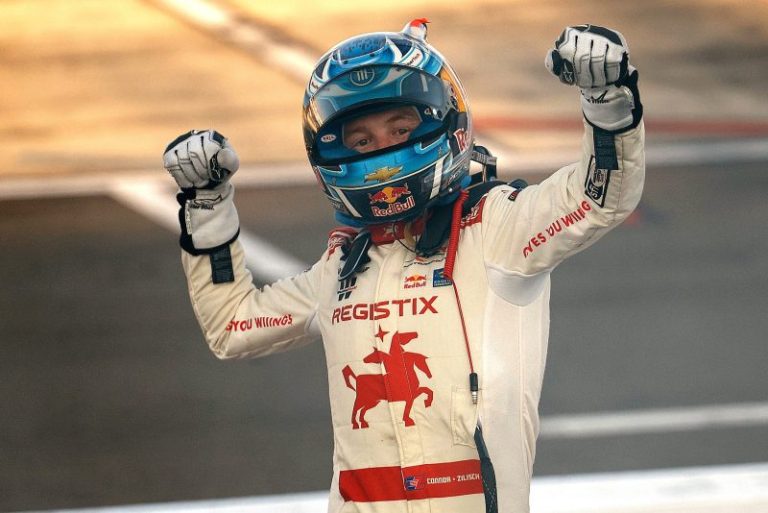
Connor Zilisch took the checkered flag Saturday in the NASCAR Xfinity Series race at Watkins Glen, but his celebration was short-lived after he took a nasty fall that landed him in an ambulance.

Zilisch had climbed out of his car and had his right foot on the roof and the left on the window when he appeared to slip, his feet getting caught in the netting and sending his head hurtling toward the ground. He hit the pavement hard and did not immediately move.

He was placed on a backboard and eventually loaded into an ambulance. The CW broadcast said Zilisch was speaking with medical personnel. NBC Sports’ Dustin Long said Zilisch sat up in the ambulance, which was taking him to the infield care center.

Connor Zilisch injury update

Zilisch, 19, took to social media himself a few minutes after JR Motorsports’ announcement. He said he has a broken collarbone.

‘Thank you everybody for reaching out today,’ Zilisch wrote on X. ‘I’m out of the hospital and getting better already. Thankfully, CT scans for my head are clear, I just have a broken collarbone. Thankful for all the medics for quick attention and grateful it wasn’t any worse.’

Zilisch was slated to take part in Sunday’s Cup Series race at Watkins Glen, but Trackhouse Racing said late Saturday night that the No. 87 would be withdrawn. ‘We wish Connor a speedy recovery,’ Trackhouse said in its statement.

This story has been updated with new information.

This post appeared first on USA TODAY

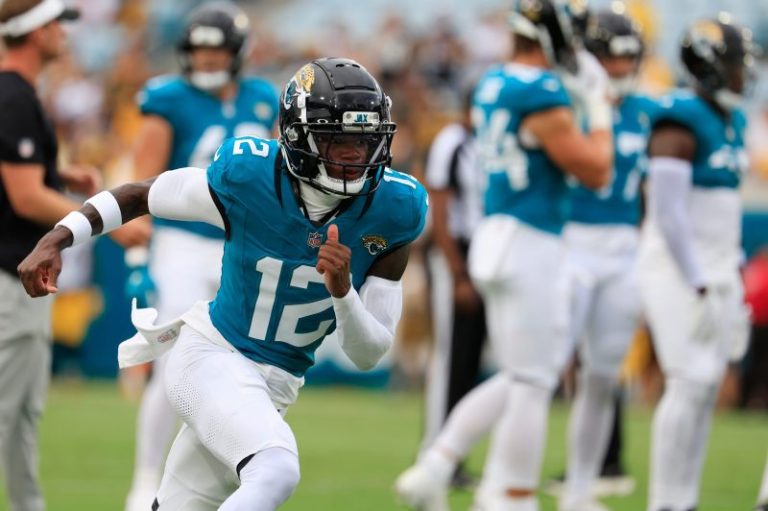
The Jacksonville Jaguars planned to let No. 2 overall pick Travis Hunter to play both of his positions – wide receiver and cornerback – on Saturday. Which position did he play more against the Pittsburgh Steelers?

USA TODAY Sports tracked Hunter’s snap counts on offense and defense throughout Saturday evening’s clash with Pittsburgh. Before the game, play-by-play commentator Brian Sexton said the Jaguars’ plan for Hunter included about 10 snaps on offense and 10 snaps on defense.

That turned out to be about exactly how it happened in the rookie’s pro debut.

Entering Jacksonville’s preseason opener, Hunter was listed as a starting wide receiver on the Jaguars’ unofficial depth chart. On defense, the team listed the rookie as a second-string cornerback.

Here’s how much Hunter played of each position on Saturday:

Travis Hunter snap counts: Jaguars preseason Week 1

Hunter played more offense than defense/defense than offense on Saturday against Pittsburgh.

Offense: 10 snaps
Defense: 8 snaps

On offense, Hunter caught both of his two targets for nine yards. He also had another catch and seven more receiving yards wiped out by an offensive penalty on tackle Walker Little.

Hunter had a mostly uneventful outing on defense according to his box score, but that was largely because of how well he was defending opposing receivers. He played tight coverage in passing situations in both man and zone looks.

His one mistake was a missed tackle coming up to defend against a run that bounced to the outside. Fellow rookie Kaleb Johnson, the Steelers’ running back, put out a stiff arm that shoved Hunter to the ground and kept him from making a play.

Thanks to the Jaguars’ solid offense keeping their first drive a lengthy one and their strong defense keeping the Steelers’ offensive drives short, Hunter ended up playing slightly fewer snaps on defense in his pro debut.

This post appeared first on USA TODAY

We’re inching closer to the NASCAR Cup Series playoffs after another thrilling race last weekend in Iowa.

Championship points leader William Byron saved enough fuel to outlast the rest of the field to win a caution-filled race at Iowa Speedway. Brad Keselowski swept the first two stages of a race for the first time since 2017 but couldn’t get past Byron for the win.

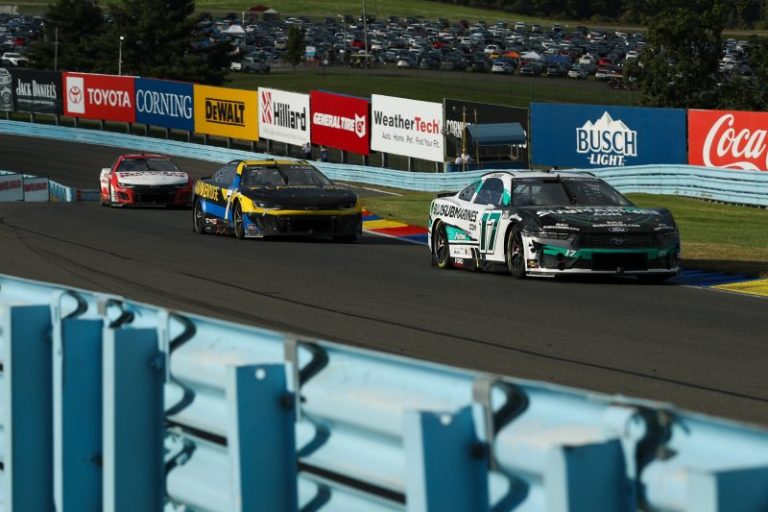
After a three-race stretch of oval running, the Cup Series grid makes its way to a road course once again this weekend at Watkins Glen International. The iconic road course is the fifth of six non-ovals on the schedule this season.

The drivers are very familiar with circuit in the Finger Lakes area of New York; NASCAR’s been racing there since 1986 with one exception in 2020.

Trackhouse racing driver Shane van Gisbergen – who’s won the last three races held on road or street courses – may have some closer competition this weekend thanks to the familiar venue. And at least a few winless drivers have circled this race on their calendars, including past Watkins Glen winners Chris Buescher and AJ Allmendinger.

There are still three playoff spots up for grabs with three races remaining before the 10-race playoffs begin. Thirteen of 16 drivers have already clinched playoff berths with a victory this season.

Will van Gisbergen prevail again at a non-oval race or can another driver get to victory lane? Here’s everything you need to know to get ready for the Go Bowling at The Glen at Watkins Glen International on Sunday, Aug. 10.

What time does the NASCAR Cup race at Watkins Glen start?

The Go Bowling at The Glen is scheduled to start at 2 p.m. ET on Sunday, Aug. 10, at Watkins Glen International in Watkins Glen, New York.

What TV channel is the NASCAR Cup race at Watkins Glen on?

The Go Bowling at The Glen will be broadcast on USA Network, the second time the Cup Series is on the channel this season. Pre-race coverage will start at 1:30 p.m. ET.

Will there be a live stream of the NASCAR Cup race at Watkins Glen?

Yes, the Go Bowling at The Glen will be streamed on HBO Max. The race can also be streamed on Fubo, which is offering a free trial to new subscribers.

Watch NASCAR Cup races on Fubo

How many laps is the NASCAR Cup race at Watkins Glen?

The Go Bowling at The Glen is 90 laps around the 2.450-mile road course for a total of 220.86 miles. The race will have three segments (laps per stage) — Stage 1: 20 laps; Stage 2: 20 laps; Stage 3: 50 laps.

Who won the NASCAR Cup race at Watkins Glen last year?

What is the lineup for the Go Bowling at The Glen?

(Car number in parentheses)

(12) Ryan Blaney, Ford
(88) Shane Van Gisbergen, Chevrolet
(19) Chase Briscoe, Toyota
(1) Ross Chastain, Chevrolet
(8) Kyle Busch, Chevrolet
(71) Michael McDowell, Chevrolet
(48) Alex Bowman, Chevrolet
(77) Carson Hocevar, Chevrolet
(20) Christopher Bell, Toyota
(24) William Byron, Chevrolet
(22) Joey Logano, Ford
(17) Chris Buescher, Ford
(2) Austin Cindric, Ford
(54) Ty Gibbs, Toyota
(23) Bubba Wallace, Toyota
(6) Brad Keselowski, Ford
(60) Ryan Preece, Ford
(16) AJ Allmendinger, Chevrolet
(99) Daniel Suarez, Chevrolet
(9) Chase Elliott, Chevrolet
(45) Tyler Reddick, Toyota
(11) Denny Hamlin, Toyota
(7) Justin Haley, Chevrolet
(21) Josh Berry, Ford
(3) Austin Dillon, Chevrolet
(5) Kyle Larson, Chevrolet
(34) Todd Gilliland, Ford
(35) Riley Herbst, Toyota
(43) Erik Jones, Toyota
(42) John Hunter Nemechek, Toyota
(41) Cole Custer, Ford
(10) Ty Dillon, Chevrolet
(38) Zane Smith, Ford
(47) Ricky Stenhouse Jr., Chevrolet
(4) Noah Gragson, Ford
(51) Cody Ware, Ford
(78) Katherine Legge, Chevrolet
(44) JJ Yeley, Chevrolet
(66) Josh Bilicki, Ford

This post appeared first on USA TODAY