Archive

2025

Browsing

In the span of one week last February, Rick Pitino called his debut season at St. John’s “the most unenjoyable experience” of his career — this coming after a loss to Seton Hall — and then, sitting behind a rickety table inside Madison Square Garden following a loss to eventual national champion Connecticut, matter-of-factly described the Red Storm as “not a great basketball team,” deficient in shooting, defense, rebounding and general athletic ability.

“Outside of that, we’re pretty good,” Pitino said.

Anger, frustration and impatience were bubbling toward the surface — directed at his team, his own recruiting efforts and the new landscape of college basketball, where the frenzy of annual player movement had made it “tough to build a program.’

At Boston University, Providence, Kentucky, Louisville and Iona, the 72-year-old Pitino constructed a case for being counted among the finest coaches in the history of the sport. If not his biggest test, the reconstruction of St. John’s promised to be the most unique project of his career: Could Pitino weather these seismic changes to the NCAA model and return another Division I blueblood to national prominence?

One year later, that question has been answered with authority.

The Red Storm won an unshared Big East regular-season championship for the first time since 1985. Won the Big East tournament for the first time since 2000. Won 30 games for the first time since 1986. Lost four games by a combined seven points. Along the way, St. John’s swept and demoralized the Huskies, highlighting the night-and-day difference from Pitino’s debut.

‘This team will be remembered for a long time at St. John’s,’ he said.

St. John’s has reversed more than just one uneven season. A generation of minimal results had moved the program off the national radar and toward the bottom of the Big East. Once one of college basketball’s trendiest teams, the Red Storm had become easy to forget. Now, with the NCAA Tournament around the corner, they’ve become impossible to ignore.

Pitino “is the mastermind behind all of this,” said junior guard RJ Luis, the team’s top scorer at 18.4 points per game. “I mean, it’s truly special. I’m at a loss for words.”

Transfers drive St. John’s turnaround

The No. 2 seed Red Storm will meet No. 15 Nebraska-Omaha on Thursday in the opening round of the West region as one of the hottest teams in the tournament and a legitimate contender to reach the program’s third Final Four and first in 40 years.

This type of rapid turnaround isn’t foreign for Pitino, who coached Providence to the national semifinals in his second season, had Kentucky in the Elite Eight in the program’s first year off NCAA sanctions and led Louisville to the Final Four in his fourth season.

But the reshaping of the Red Storm has been electrified by the same environment Pitino criticized one year ago: the transfer-portal-driven realm of rampant player movement that has helped to immediately flip a mismatched roster.

Five players from last year’s team exhausted their eligibility, including borderline NBA prospects in guard Daniss Jenkins and forward Joel Soriano. Another three players transferred out of the program. In their place came four freshmen and several hugely impactful transfers, led by former Seton Hall guard Kadary Richmond, whom Pitino called “the best guard in the nation.”

Richmond has transformed the pace and flow of the Red Storm’s offense and defense, averaging a box-score-filling 12.7 points, 6.4 rebounds, 5.4 assists and 2.1 steals per game. Former Mississippi State, Georgia Tech and Utah guard Deivon Smith is averaging 9.4 points and 4.8 rebounds per game. Another key transfer, former North Texas guard Aaron Scott, is scoring 8.5 points per game and averaging 1.5 steals per game.

“He’s a big-time player,” Pitino said of Richmond. “Rebounds, points, steals, he always makes big plays.”

Overall, all but two of the nine players averaging at least seven minutes per game since the start of Big East play — true freshman forward Ruben Prey and sophomore guard Simeon Wilcher are the exceptions — began their college careers elsewhere.

‘Last year we had 14 new players. This year we have four new starters,’ said Pitino. ‘The thing that’s difficult for coaches is to get players connected offensively, defensively and bonded, because it takes time.’

The results of this roster turnover have been remarkable, especially on the defensive end of the court.

St. John’s has soared to 31st nationally and first in the Big East in scoring at 65.9 points per game, a 147-spot leap in the Division I rankings from last season. The Red Storm rank 17th in the country in field-goal defense, 17th in steals per game and 10th in turnovers forced per game. This aggressive defense, long a Pitino hallmark, has helped bolster an offense that averaged 78.2 points per game against opponents in this year’s Big East tournament.

“It’s the defense that turns into offense that makes us go,” Pitino said.

Is Pitino the best coach in NCAA history?

He was the first of two coaches to lead three programs to the Final Four; the other, new Arkansas coach and longtime foil John Calipari, could match up with Pitino and St. John’s in the second round should the No. 10 Razorbacks upend No. 7 Kansas.

Pitino is already the only coach to win national championships at two schools and the only coach to lead six programs to the tournament. He holds a career record of 884-310, including 123 wins and three losses vacated by the NCAA for Louisville’s participation in the pay-for-play scandal involving executives at Adidas. With a mark of 54-21 in tournament action, Pitino’s winning percentage of 72 percent is the third-highest among all active coaches.

This is his ninth 30-win season and his 19th team to crack the top eight of The Associated Press poll, and just the third to do so when entering the regular season unranked, joining Kentucky in 1990-91 and Louisville in 2002-3.

And while a huge chunk of his college success has come at historically elite programs, Pitino has never directly inherited a winner. The six programs Pitino has coached went a combined 76-105 in the year before his arrival. Most notably, Kentucky was burdened with a two-year postseason ban and scholarship restrictions due to NCAA violations that occurred under his predecessor.

While he has pushed back on questions about his legacy and place in the all-time-great conversation, Pitino’s latest turnaround at St. John’s reinforces an incontrovertible fact that had come to be overshadowed by his off-court scandals and failed NBA forays: No coach in college basketball history has won this much at this many different stops.

“Humility is a big part of my life right now,” he said. “It wasn’t always that way. I don’t believe in redemption. I believe in humility. I believe in living what I call the precious present, a gift that we all get.”

Star-studded West region will test St. John’s

To reach the Final Four, St. John’s will have to navigate a deep region topped by No. 1 Florida and several powerhouse programs and teams: Kansas, Arkansas, No. 3 Texas Tech, No. 4 Maryland, No. 5 Memphis and No. 6 Missouri. Also in the West are the No. 8 Huskies, now almost two years removed from the program’s last postseason loss.

That there is still a degree of uncertainty over how the Red Storm will fare against this caliber of competition stems from a weaker regular-season strength of schedule than other prime contenders for the national championship.

St. John’s went 6-4 in games against Quad 1 competition, playing the fewest such games and posting the fewest wins of any team on the tournament’s top four lines. Four of these Quad 1 wins came in the final month of the regular season, two in the Big East tournament.

But these recent wins illustrate why St. John’s could be a difficult matchup for any potential opponent in this year’s bracket.

Trailing Creighton 41-38 with 12:53 to play in the Big East championship, the Red Storm made 14 field goals in a row over the next seven minutes to take a 70-55 lead, eventually connecting on 17 of their final 19 attempts and 23-of-32 overall in the second half.

“They’ve had a remarkable year,” Creighton coach Greg McDermott said. “Dominated our league and pretty much saved their best for this conference tournament. They just wear into you over time.”

One night earlier, in the semifinals against Marquette, St. John’s forced 17 turnovers against the Golden Eagles’ six assists. Down 24-9 early, the Red Storm outscored Marquette 44-26 in the second half to win 79-63.

“I think they’re about as dangerous as anyone,” Marquette coach Shaka Smart said. “What you have seen from their team is they’ve gotten better and better on the offensive end as the year has gone on because they’ve got guys that have really, really bought into their roles.”

But no result from this season speaks to the program’s resurgence more than a pair of flip-the-script takedowns of the two-time defending national champions. The second, an 89-75 win at MSG last month, saw St. John’s go 8 of 16 from 3-point range in the first half to stun the Huskies, who had stuffed the lane and dared the Red Storm to connect from deep.

“You’ve got to pick your poison,” UConn coach Dan Hurley said. “If they shoot the ball like that from the perimeter, they’re going to be a problem for anyone.”

That theory will be put to the test this weekend and beyond, should St. John’s carry over a red-hot close to the regular season. The Red Storm have lost just once this calendar year, by two points at Villanova in early February. Like the teams at each of Pitino’s previous stops, they’re clearly improving with every passing game, every passing week — and like his championship-winning teams at Kentucky and Louisville, the Red Storm are capable of cutting down the nets in San Antonio early next month.

“I think we can win every game,” said Deivon Smith. “Even the games we lost, we’re hard on ourselves because we’re only losing by a point or so. It’s a super-special team, making history almost every single game.”

This post appeared first on USA TODAY

It was never just about Caitlin Clark.

No doubt there are people who thought women’s basketball would fade back to niche sports status without Clark and the white-hot spotlight that follows her. That the boom of the last few years was solely from people who tuned in to watch Clark drain 3s from the logo and break records.

Tiger Woods aside, however, sports booms are rarely driven by only one athlete and the explosion of interest in women’s basketball is no different. The proof is in the numbers:

At least half a dozen games drew 1 million or more viewers this season, led by the 2.23 million who tuned in to watch JuJu Watkins vs. Paige Bueckers, err, USC vs. UConn, in December. That game was the second-most-watched women’s game ever on Fox. There were 15 games just on ESPN that drew 500,000-plus viewers.
ESPN’s ratings for women’s basketball were up 3% from last year – and a whopping 41% from two years ago.
Ratings for the ACC tournament were up 23% from last year, while the Big 12 saw a 126% increase for its tournament.
South Carolina, Iowa and UConn sold out their season tickets, with the Gamecocks and Hawkeyes ranking in the top 15 of all NCAA programs, men’s or women’s, in average attendance.
The average price for a 30-second spot in this year’s NCAA championship game has more than doubled from last year, going for almost $440,000, according to Sports Business Journal. Most ad spots for the entire tournament have sold out.

The tournament began Wednesday night with the First Four. First-round games begin Friday.

‘Women’s sports are a thing now,’ said Jane McManus, author of ‘The Fast Track: Inside the Surging Business of Women’s Sports.’

‘There are hardcore football, baseball or (men’s) basketball fans who are always going to be antagonistic to women’s sports. For those who aren’t antagonistic, there’s a sense women’s sports are now in the pool of sports,’ McManus said. ‘That’s a real change. When you hit that generalized sports interest, more fans are going to encounter. It just becomes part of the sports landscape, and I think that’s what’s happening with women’s sports now.

‘Once people hear about it, it’s hard to un-ring that bell.’

Especially because the recent progress has led to foundational changes that will generate more growth.

For years, teams in the men’s tournament have earned ‘units” for every game they played, money that can eventually be put back into their programs. Last year, each unit was worth about $2 million.

Until this season, women’s teams didn’t get units because the NCAA said their tournament didn’t have a large enough unique revenue stream. (The men’s units are based on the monster media rights deal with CBS.) But the NCAA’s latest media rights deal with ESPN includes a specific valuation for the women’s basketball tournament, $65 million, paving the way for the women to finally get paid like the men do.

The fund is $15 million, so the payouts will be smaller initially. Still, it’s a start. Schools will be able to use that money for facilities, recruiting, coaches’ salaries — all things imperative to the continued growth of the game.

‘It really gives the women a seat at the table,” said Atlantic 10 commissioner Bernadette McGlade, who was on the women’s basketball committee when it first requested units a quarter-century ago.

And it won’t just be that money that schools will have to invest. There are corporate partners and prospective sponsors who now direct their money specifically to women’s sports, because they recognize the return on investment is higher.

‘Money does talk, and it opens doors. It elevates respect,’ McGlade said. ‘I think that women’s sports have turned the corner. Absolutely. And I don’t think there’s any downturn that’s going to happen.”

It doesn’t hurt that the women’s game went right from Clark and Angel Reese to Watkins and Bueckers. The two are commercial stars with solid name recognition — something that can’t be said about many in the men’s tournament beyond Cooper Flagg.

That’s another area that will ensure the women’s game continues to grow. Unlike the men, who can, and often do, leave college after a year, women have to be at least 22 years old and have either exhausted their eligibility, graduated or be four years removed from high school to enter the WNBA draft. That means the public has the time to get to know these players and become invested in them.

Bueckers played in three Final Fours in her first four years at UConn (she missed the 2022-23 season with a torn ACL) and won her first ESPY after her freshman season. Watkins is only a sophomore, and already fans show up to her road games wearing her jersey and sporting her signature ‘JuJu Bun.’

‘That’s a really neat thing. I think it has cultural significance,” USC coach Lindsay Gottlieb said.

‘Caitlin Clark wasn’t the first great player, and she wasn’t the first incredible personality. But she was the first one that got that kind of coverage and galvanized things in a really significant way,’ Gottlieb said. ‘So I do think … to roll right into the players that are in our game now, Juju and the other big stars, the synergy of that has worked well to not have there be a letdown.”

The interest in women’s basketball might not be at the heights it was under Clark. But it continues to grow. There’s no going back now.

Follow USA TODAY Sports columnist Nancy Armour on social media @nrarmour.

This post appeared first on USA TODAY

The NFL loves average.

Just won the Super Bowl? Sorry, you’re going to the very back of the draft line – in every round. Amassing too much talent on that roster? Sorry, but the salary cap will ensure you can’t keep all of it – this ain’t the 1980s. Racking up too many victories? Sorry, but your schedule will very likely be appreciably harder next season – especially as it relates to your divisional foes.

Regression to the mean fosters football chaos – sorry, I meant competitive balance. It’s part of the league’s not-so-secret sauce, offering hope to all 32 fan bases – often beyond the winter solstice for many – and why the playoff field typically changes so significantly year over year.

Yet this is also the very reason to reward teams that manage to remain a standard deviation or two beyond average – and I’m talking about the good ones, not the New York Jets. If you can achieve excellence in the NFL, you should be applauded for it.

This is why I was heartened to see Wednesday that the Detroit Lions, a franchise long relegated (until very recently) to middling if not the Jets’ side of the bell curve, proposed a change to the league’s present postseason format that I’ve thought was long overdue – namely compensating the best teams with better seeds and home playoff games rather than (mindlessly?) rewarding those that merely win divisions.

The Lions are asking the NFL “to amend the current playoff seeding format to allow Wild Card teams to be seeded higher than Division Champions if the Wild Card team has a better regular season record.”

Detroit’s plan further lays out that higher-seeded teams host postseason games, regardless of whether they’re division champions or wild-card entries. The proposal will be voted upon by owners at the March 30 league meeting in Palm Beach, Florida.

Let’s go back to the ‘80s (and ‘90s) again. It was a time when things like network news, landlines and Congress mattered. It’s also when the NFL was constructed of six divisions – RIP, AFC Central and NFC Central – most of them comprised of at least five clubs. That meant fully half of a team’s 16-game regular-season schedule – RIP, 16-game schedule – was spent matching up with divisional foes and rendered a first-place finish a little more consequential and its guaranteed home playoff game perhaps a touch more meaningful.

Nowadays?

The NFL went to eight four-team divisions when it expanded to 32 franchises in 2002 – hello, Houston Texans; RIP, Houston Oilers – which meant clubs only spent 37.5% of the schedule competing against their traditional rivals. That figure dropped to 35.2% when the 17th game was added in 2021 (and we know an 18th isn’t too far off).

The modern math indicates that when a division is consistently ruled by a nine-win team – looking at you, Tampa Bay Buccaneers – it’s actually just a bad division, not a case where a bunch of good squads are beating the [tar] out of one another the way the Dallas Cowboys, New York Giants, Philadelphia Eagles and Washington ________ did … back when such a thing was allowed in the body bag heyday of the 1980s and ‘90s NFC East, which also included the always irrelevant (RIP) St. Louis/Phoenix Cardinals.

Mediocrity in the 21st-century NFL is too easily elevated.

Let’s drill down a bit more on the NFC South. The Bucs have won it each of the past four seasons, meaning they’ve been assured at least one home playoff game all of those years. Should that have been the case, though? Not once in that period has the NFC South produced a wild-card team – its most recent one actually the 2020 Tom Brady-led Bucs who won Super Bowl 55. Over the past three seasons, Tampa Bay’s regular-season record is 27-24 (9-8 its average record). Yet the Bucs have wound up with the third or fourth playoff seed each time, even though their overall conference record has never been better than sixth – and was tied for ninth in 2022.

And this isn’t some recent anomaly.

Remember when the NFC West used to be shaded like the NFC South is now? Cris Collinsworth infamously called the 2008 Arizona Cardinals the “worst playoff team” ever before that postseason, when circumstances ultimately permitted those Cards to host two playoff games on their way to Super Bowl 43, which they lost to the Pittsburgh Steelers. Two years later, the Seattle Seahawks, led by backup QB Charlie Whitehurst on ‘Sunday Night Football,’ won the final game of the 2010 regular season – beating the St. Louis Rams (RIP) to finish with a 7-9 record … which was good enough to win the division. A week later, the ‘Hawks somehow managed to knock off the high-octane New Orleans Saints in the wild-card round, in large part because QB Matt Hasselbeck was healthy enough to play but also because they got to host the game at raucous Qwest Field (RIP) on the day Marshawn Lynch registered his famous “Beast Quake” run.

Those are fun trips down memory lane – the division-winning 2014 Carolina Panthers (7-8-1) and 2020 Washington Football Team (7-9) provided no such nostalgia – but it’s worth wondering if the moments should have ever occurred. With the NFL playoff field now ballooning to 14 games, average postseason qualifiers have become commonplace. And that’s fine. After all, this is the time of year when everyone likes to see the Ohio Valley Conference team go on a bracket-busting run. But let’s make ’em earn it without greasing the skids.

And there’s a flip side to all of this.

Is the arc of the football universe bending toward justice when the Minnesota Vikings finish 14-3 – as they did last year, the most regular-season wins ever by a wild-card team – but are seeded fifth with basically no hope of playing a postseason game in front of their home fans even though they’d tied for the NFC’s second-best record? Unrelated – but related – a similarly wonky seeding system led to unexpected (unfair?) outcomes in the new College Football Playoff earlier this year, when Boise State and Arizona State were slotted third and fourth, respectively, by virtue of winning weak conferences. (Neither team was in the top seven of the final regular season Top 25 poll.)

In each of the last three NFL postseasons, at least one wild-card team in both the AFC and NFC has had a superior record to the division-winning No. 4 seed and, in many cases, multiple clubs have been better. I’m not suggesting winning a division shouldn’t lead to automatic playoff qualification – that ought to remain the case – but those so-called champions should have to earn the higher seed and home dates that come with them. The whole point of seeding is to create the best possible matchups as a bracket reduces, otherwise what’s the point? Furthermore, chasing seeds also makes for more compelling games in Week 18 rather than a bunch of teams resting on their laurels while taking de facto byes rather than earning the real thing.

Which brought me to another realization and belated point.

When I saw this proposal had come from the Lions, my first – naïve – reaction was that they’d felt some sort of compassion for their NFC North brethren Vikings, whom Detroit swept last season to win the division and No. 1 playoff seed. There was also that caught-on-camera moment at Ford Field in Week 18, when the Lions beat the Vikes in the regular-season finale and Detroit coach Dan Campbell told Minnesota counterpart Kevin O’Connell, “I’ll see you in two weeks,” an innocuous but nevertheless highly parsed comment made following the heat of battle – and also one that would have been true had the seeding held to form. (It didn’t. The Vikings lost to the NFC West champion Los Angeles Rams in their playoff opener but would not have faced the Lions a third time in the divisional round anyway given the third-seeded Bucs were upset – at home – by the sixth-seeded the Washington Commanders, who subsequently ambushed Detroit, too. Notably, the Buccaneers and Rams would have been the NFC’s lowest seeds in 2024 based on the Lions’ recommendation.)

Even though the matchups didn’t materialize as they were designed to, it does become apparent that the Lions’ proposal would also generally benefit their self-interests – and No. 1 seeds should be deservedly granted plenty of indulgence, beyond earning a first-round bye and home-field advantage. The NFL’s playoffs dictate that the highest seed always hosts the lowest remaining seed as the rounds progress. But the current set-up would have theoretically meant that Detroit would have played the wild-card Vikings a third time, despite Minnesota’s gaudy record, even though the higher-seeded Rams and Bucs both finished 10-7 and would have been – logically, if not practically in this case – more attractive matchups for a top-seeded host team.

The NFL is nothing if not an organism that constantly evolves in a bid to create a more attractive product. And that includes occasional tweaking of a playoff system that’s generally been the best in professional sports for the last half-century or so given its one-and-done nature. But it’s not always perfect. (Remember, the undefeated ’72 Dolphins somehow had to go on the road to win the AFC championship game back when it was hosted on a rotational basis rather than a merit-based one.)

But when there’s a good reason to embrace excellence and champion meritocracy in a sport largely designed to suppress it, let’s celebrate that. RIP average division winners who don’t deserve more built-in advantages when they matter most.

All NFL news on and off the field. Sign up for USA TODAY’s 4th and Monday newsletter.

This post appeared first on USA TODAY
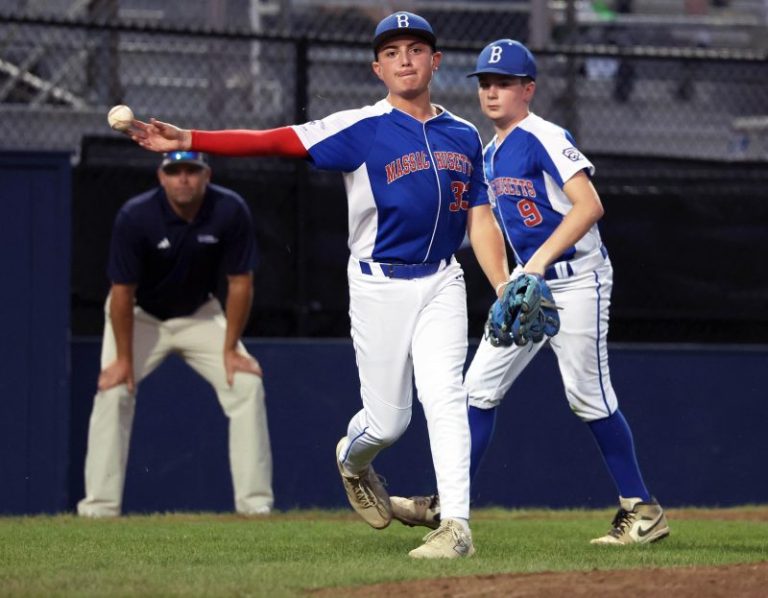
President Donald Trump praised his youngest son, Barron Trump, as a ‘smart guy’ with an affinity for technology ahead of Barron’s 19th birthday on Thursday. 

The president said his teen son has a knack for technology when asked whether Barron had more of a talent for business or politics during an exclusive interview on ‘The Ingraham Angle’ this week.

‘Maybe technology,’ Trump said. ‘He can look at a computer. I try I turn it off. As I turn it off I turn off his laptop. I said, oh good. And I go back. Five minutes later, he’s got his laptop. I say, how did you do that? None of your business, dad. No. He’s got an unbelievable aptitude in technology.’

‘Barron’s a very smart guy,’ the president said.

Barron Trump is a first-year student at New York University (NYU) in the Stern School of Business.

During the inaugural parade at Capital One Arena, Barron Trump was acknowledged by his father for his role in the 2024 presidential election results — as he reportedly guided the president on how to target the youth vote through podcasts hosted by Joe Rogan, Theo Von and others.

The 2024 presidential race was the first election in which Barron Trump was eligible to vote and his mother, First lady Melania Trump, shared a photo of her son on Election Day while he was casting his ballot at the voting booth.

Trump went on to praise all his other four children – Eric, Donald Jr., Tiffany and Ivanka – during the interview, telling Ingraham that they’re ‘very smart’ and were ‘always good students.’

‘I’m lucky,’ the president said. ‘Look, you have to be a little bit lucky, too.

Fox News Digital’s Ashley J. DiMella contributed to this report.

This post appeared first on FOX NEWS

As part of the Trump administration’s efforts to peel back Biden-era diversity, equity and inclusion (DEI) requirements, the National Institutes of Health (NIH) rescinded the agency’s ‘Scientific Integrity Policy’ implemented under President Joe Biden.

A ‘Final Scientific Integrity Policy’ was unveiled by the Biden administration during the last few weeks of its term. The policy posited that DEI was an ‘integral’ part of ‘the entire scientific process,’ and pushed NIH’s chief scientist and top scientific integrity official to ‘promote agency efforts regarding diversity, equity and inclusion.’ It also instituted agency-wide policy directives ordering supervisors at the NIH to ‘support’ scientists and researchers who are ‘asexual’ or ‘intersex,’ while imploring NIH leadership to ‘confer with relevant offices’ when additional DEI expertise is needed.  

In addition to the amended scientific integrity policy, the Biden administration also took other steps to infuse DEI into the scientific process throughout its term. This included compelling scientists seeking to work with the NIH to submit statements expressing their commitment to DEI, including when seeking certain grant funding for research projects.

‘The Biden administration weaponized NIH’s scientific integrity policy to inject harmful DEI and gender ideology into research,’ said Health and Human Services Department spokesperson, Andrew Nixon. ‘Rescinding this [scientific integrity] policy will allow NIH to restore science to its golden standard and protect the integrity of science.’      

According to an HHS source, during the Biden administration, a member of NIH’s DEI office was placed on every search committee for scientists and leadership. The source also noted that under Biden, scientists who submitted work to the NIH’s ‘Board of Scientific Counselors,’ which oversees agency research, were also required to include a statement pledging their commitment to DEI. 

The Biden administration also funded grants related to DEI, such as one for roughly $165,000 that was focused on ‘queering the curriculum’ for family medicine doctors to guide them in their treatment of transgender patients. A similar project sought to use taxpayer funds from NIH to instruct nurses on the standards of care from the World Professional Association of Transgender Health (WPATH). 

WPATH’s standards of care for transgender patients, which support the use of puberty blockers, hormone therapy and gender-reassignment surgery for minors, have been rebuked globally. One controversial part of WPATH’s guidelines is the inclusion of ‘enuch’ as a valid gender-identity. Several European countries, such as the U.K., Sweden and Finland, have taken steps to steer clear of the treatment modalities suggested by WPATH.

Under Biden, the NIH also brought DEI activist Ibram Kendi to speak with more than 1,200 staff members about ‘anti-racism.’ In a recap of the 2022 speech, the NIH pointed out how Kendi ‘states unequivocally’ that ‘policies are either racist or antiracist.’

The Trump administration’s move to rescind the Biden-era scientific integrity policy follows other actions taken to extinguish DEI programs from the public and private sectors, calling such initiatives a civil rights violation.

In addition to slashing DEI programs at the NIH, Trump has also moved to slim down its workforce. Shortly after he took office, the president implemented a funding cap for facilities and administrative fees associated with NIH research to help clear room for additional projects. 

This post appeared first on FOX NEWS

Tesla has become a target of protests and vandalism by critics of its founder Elon Musk over his work at the Department of Government Efficiency (DOGE) under President Donald Trump. Since January, Tesla vehicles, dealerships and factories have been attacked by anti-Musk and anti-Trump activists.

1. Salem, Ore. — Jan. 20 and Feb. 19

On Jan. 20, 2025, hours before Trump took the oath of office, Salem police and firefighters responded to reports of a fire at a Tesla dealership. In a statement issued on the day of the incident, police said that ‘the fire was limited to one vehicle’ and that ‘a window panel on the building was also found broken.’  The Statesman Journal reported that Tesla estimated the cost of the damage to be approximately $500,000.

Almost a month later, on Feb. 19, police were called to the same dealership over reports of damaged windows. Police allegedly found ‘projectiles believed to be spent bullets, bullet fragments and several projectile impacts,’ the outlet reported, citing court documents.

On March 4, Adam Matthew Lansky, 41, was arrested in connection with the incidents. The U.S. Attorney’s Office in Oregon said Lansky was charged by a criminal complaint with illegally possessing an unregistered destructive device, likely Molotov cocktails. Lansky was allegedly seen on the dealership’s surveillance footage throwing Molotov cocktails, according to the U.S. Attorney’s Office of Oregon.

2. Loveland, Col. — Jan. 29-Feb. 24

Police in Loveland, Col., dealt with at least five incidents over the course of approximately a month. The U.S. Attorney’s Office of Colorado detailed each of the incidents in a statement announcing charges against Lucy Grace Nelson, also known as Justin Thomas Nelson, who was charged by complaint with one count of malicious destruction of property for a series of alleged attacks. 

On Jan. 29, police received a report about a fire near a Cybertruck at a Tesla dealership and discovered a Molotov cocktail next to the vehicle. Then, days later, on Feb. 2, a Tesla dealership’s sign was vandalized, the word ‘NAZI’ was spray-painted on it. Additionally, according to the U.S. Attorney’s Office, on Feb. 7, someone reported graffiti and possible arson at a Tesla dealership. The office did not specify if it was the same dealership as the first two incidents, but a report from CBS News seems to indicate that it was.

A few days after that incident, on Feb. 11, a security guard came across someone painting graffiti on the building that, according to the U.S. Attorney’s Office, ‘used an expletive.’ Then, on Feb. 24, police confronted Nelson at the dealership and found a container of gasoline, a box of bottles and ‘wick material’ in Nelson’s car that resembled those recovered after previous incidents.

3. Owings Mills, Md. — March 2

A Tesla dealership in Owings Mills, Md., a suburb of Baltimore, was vandalized with spray paint that read ‘No Musk.’ There was also a symbol that reportedly looked like a swastika, but according to CBS News, police said it may have been an ‘X’ in a circle, likely representing Musk’s ownership of the social media platform formerly known as Twitter.

At this point, there have not been any arrests in connection with this incident.

4. Littleton, Mass. — March 3

Police in Littleton, Mass. are investigating fires at Tesla charging stations at a shopping center that were ‘believed to be suspicious in nature,’ according to the police department. Officers received the report around 1:10 a.m. on March 3 about fires at a charging station. Police say that another charging station caught fire while they were waiting for the Littleton Electric Light and Water Department to arrive.

There were no reported injuries and, so far, police seem to have no leads on who could be behind the fires. The Arson Watch Reward Program has encouraged the public to reach out with any information. The program offers up to $5,000 to for information that prevents, solves or detects arson.

5. Tigard, Ore. — March 6 and 13

Within the span of a week, Tigard Police Department investigated two different reports of shots being fired at Tesla dealerships. The reports do not specify but seem to indicate that the incidents happened at different dealership locations.

The first incident occurred on March 6 when police investigated damage sustained by a Tesla dealership in what appeared to be an overnight shooting. Police believe that the people or person responsible for the shooting began firing at approximately 1:46 a.m. Three vehicles were damaged, and windows were shattered in the incident. Additionally, a bullet hole was found in an office wall and a computer monitor. Police believe at least 7 shots were fired. There have not been any arrests in this incident as of the time of this writing.

In the early hours of March 13, over a dozen shots were fired at a Tesla dealership, damaging cars and showroom windows. Police say there was a security guard on duty at the time, but he was not injured in the incident. There have been no arrests so far.

6. North Charlston, Sc. — March 7

A man allegedly set his clothing on fire accidentally while trying to burn Tesla charging stations, according to reports. He also reportedly spray-painted ‘F*** Trump’ and ‘Long live Ukraine’ near the stations, according to the U.S. Attorney’s Office of South Carolina. He also allegedly threw Molotov cocktails at Tesla chargers.

On March 14, Daniel Clarke-Pounder was arrested on criminal charges relating to the arson attack, the U.S. Attorney’s Office said in a press release. Pounder faces up to 20 years in federal prison.

‘While we will defend the public’s right to peaceful protest, we will not hesitate to act when protest crosses the line into violence and mayhem. These kinds of attacks have no place in our community,’ said Acting U.S. Attorney Brook B. Andrews for the District of South Carolina.

7. Seattle, Wash. — March 9

Four Cybertrucks parked in a Tesla lot in Seattle were damaged in a fire, which is still under investigation. Authorities told the Associated Press that no one was injured and no property other than vehicles was damaged.

So far, no arrests have been made and no injuries have been reported. 

8. Dedham, Mass. — March 11

Police were called to the scene after two Tesla Cybertrucks and a Tesla Model S were damaged in Dedham, Mass. All the tires on the three vehicles were damaged, and the two Cybertrucks were vandalized with spray paint. Some of the wording spray-painted on one of the vehicles reportedly matched graffiti that was reported at the same location on Feb 26. 

Dedham Police are encouraging members of the public with information on the crimes to come forward.

9. Kansas City, Mo. — March 17

A Cybertruck was set on fire in the parking lot of a Tesla dealership in Kansas City on March 17, just before midnight. According to the Kansas City Star, the fire then spread to a second vehicle before firefighters arrived at the scene.

The FBI’s Kansas City field office and the ATF issued a joint statement on the incident on Tuesday. They said it was still ‘too early in the investigation to comment further’ or give more details on what may have occurred. 

10. Las Vegas, Nv. — March 18

Five Tesla vehicles were damaged at a service center in Las Vegas, including two that were set on fire. FBI Las Vegas Special Agent in Charge Spencer Evans told reporters on Tuesday that the incident ‘certainly has some of the hallmarks’ of a terrorist attack, but that it was still too early to say for sure.

Musk condemned the incident, saying it was ‘insane and deeply wrong.’

Attorney General Pam Bondi released a statement Tuesday evening saying, ‘the swarm of violent attacks on Tesla property is nothing short of domestic terrorism.’ She vowed that the DOJ would continue investigating and said that those responsible would face serious consequences.

This post appeared first on FOX NEWS

President Donald Trump has shown interest in a House GOP bill that would block federal judges from issuing nationwide injunctions, two sources familiar with discussions told Fox News Digital.

Top White House aides communicated to senior Capitol Hill staff this week that ‘the president wants this,’ the sources said. They said the White House felt that time was of the essence in the matter and that Trump wanted Congress to move swiftly.

It comes after various U.S. district court judges issued more than a dozen nationwide orders at least temporarily blocking Trump’s executive orders.

The bill by Rep. Darrell Issa, R-Calif., if it passed Congress and was signed into law, would bar such judges in most cases from blocking Trump policies on a national scale.

Issa’s office did not directly confirm whether the exchange occurred but told Fox News Digital, ‘President Trump knows we need a national solution to this major malfunction in the federal judiciary, and we think we have the momentum to get this done.’

A White House official told Fox News Digital they would not get ahead of the president on legislative matters.

However, the idea has appeared to gain traction in the upper levels of the White House. Deputy Chief of Staff Stephen Miller complained on X twice Thursday about federal district judges having the ability to affect policies for the entire country, though he did not mention Issa’s bill specifically.

‘It takes 5 Supreme Court justices to issue a ruling that affects the whole nation. Yet lone District Court judges assume the authority to unilaterally dictate the policies of the entire executive branch of government,’ Miller posted. 

He posted again later, writing, ‘Under what theory of the constitution does a single Marxist judge in San Francisco have the same executive power as the Commander-in-Chief elected by the whole nation to lead the executive branch? No such theory exists. It is merely naked judicial tyranny.’

Issa’s legislation reads, ‘Notwithstanding any other provision of law, no United States district court shall issue any order providing for injunctive relief, except in the case of such an order that is applicable only to limit the actions of a party to the case before such district court with respect to the party seeking injunctive relief from such district court.’

The bill advanced through the House Judiciary Committee earlier this month. Chairman Jim Jordan, R-Ohio, told CNN on Wednesday, ‘We think that’s good. We passed it through the committee. We’ll try to look to pass it on the House floor and move it through the process.’

Jordan told Fox News Digital last month he thought Issa’s bill ‘makes sense,’ and the committee would ‘try to move fairly quick on that bill.’ Fox News Digital reached out to the House Judiciary Committee for comment on Trump’s backing of Issa’s bill but did not hear back by press time.

Senate Judiciary Committee Chairman Chuck Grassley, R-Iowa, meanwhile, did not immediately comment on Issa’s bill, but a spokesperson told Fox News Digital he would be holding hearings on the matter.

‘The recent surge of sweeping decisions by district judges merits serious scrutiny. The Senate Judiciary Committee will be closely examining this topic in a hearing and exploring potential legislative solutions in the weeks ahead,’ a spokesperson for the committee said.

However, it comes amid some disagreements among congressional Republicans about how to heed Trump’s call to deal with ‘activist’ judges.

Rep. Brandon Gill, R-Texas, recently introduced a resolution to impeach U.S. District Judge James Boasberg after he ordered a 14-day emergency stop to Trump’s plans to deport suspected Tren De Aragua gang members to El Salvador.

Gill argued that Boasberg abused his power in doing so, and told Fox News Digital this week that he hoped the resolution would go through the regular committee process – something Jordan seemed open to.

Jordan told multiple outlets he would potentially hold hearings on Gill’s resolution, which is a traditional step in the impeachment inquiry process.

Trump posted on Truth Social earlier this week that he wanted Boasberg impeached as well.

However, multiple sources told Fox News Digital that House GOP leaders are more wary of the impeachment route, given the virtual guarantee that such a move would not get the necessary Democrats to pass the Senate.

‘It’s another intense whipping process for something that won’t move at all in the Senate,’ one senior House GOP aide said. ‘I think the White House is trying to find something easier to do.’

House Speaker Mike Johnson’s office told Fox News Digital that he was looking at all available options when reached for comment on House Republicans’ path forward on Thursday morning.

‘Activist judges with political agendas pose a significant threat to the rule of law, equal justice, and the separation of powers. The Speaker looks forward to working with the Judiciary Committee as they review all available options under the Constitution to address this urgent matter,’ a spokesperson for Johnson, R-La., said.

Fox News Digital’s Andrew Mark Miller contributed to this report.

This post appeared first on FOX NEWS

Darden Restaurants on Thursday reported weaker-than-expected sales as Olive Garden and LongHorn Steakhouse underperformed analysts’ projections.

Shares of the company were up in premarket trading.

Here’s what the company reported compared with what Wall Street was expecting, based on a survey of analysts by LSEG:

Darden reported fiscal third-quarter net income of $323.4 million, or $2.74 per share, up from $312.9 million, or $2.60 per share, a year earlier.

Excluding costs related to its acquisition of Chuy’s, Darden earned $2.80 per share.

Net sales rose 6.2% to $3.16 billion, fueled largely by the addition of Chuy’s restaurants to its portfolio.

Darden’s same-store sales rose 0.7%, less than the 1.7% increase expected by analysts, according to StreetAccount estimates.

Both Olive Garden and LongHorn Steakhouse, which are typically the two standouts of Darden’s portfolio, reported underwhelming same-store sales growth. Olive Garden’s same-store sales rose 0.6%. Analysts were anticipating same-store sales growth of 1.5%. And LongHorn’s same-store sales increased 2.6%, missing analysts’ expectations of 5% growth.

Darden’s fine dining segment, which includes The Capital Grille and Ruth’s Chris Steak House, reported same-store sales declines of 0.8%.

The last segment of Darden’s business, which includes Cheddar’s Scratch Kitchen and Yard House, saw same-store sales shrink 0.4% in the quarter.

For the full year, Darden reiterated its forecast for revenue of $12.1 billion. It narrowed its outlook for adjusted earnings from continuing operations to a range of $9.45 to $9.52 per share. Its prior forecast was $9.40 to $9.60 per share.

Darden’s fiscal 2025 outlook includes Chuy’s results, but the Tex-Mex chain won’t be included in its same-store sales metrics until the fiscal fourth quarter in 2026.

This post appeared first on NBC NEWS

A federal appeals court ruled that art created autonomously by artificial intelligence cannot be copyrighted, saying that at least initial human authorship is required for a copyright.

The ruling Tuesday upheld a decision by the U.S. Copyright Office denying computer scientist Stephen Thaler a copyright for the painting “A Recent Entrance to Paradise.”

The picture was created by Thaler’s AI platform, the “Creativity Machine.”

The “Copyright Office’s longstanding rule requiring a human author … does not prohibit copyrighting work that was made by or with the assistance of artificial intelligence,” a three-judge panel of the U.S. Circuit Court of Appeals for the District of Columbia said in its unanimous ruling.

“The rule requires only that the author of that work be a human being — the person who created, operated, or use artificial intelligence — and not the machine itself,” the panel said.

The panel noted that the Copyright Office “has allowed the registration of works made by human authors who use artificial intelligence.”

Copyright grants intellectual property protection to original works, giving their owners exclusive rights to reproduce the works, sell the works, rent them and display them.

Tuesday’s ruling hinged on the fact that Thaler listed the “Creativity Machine” as the sole “author” of “A Recent Entrance to Paradise” when he submitted a registration application to the Copyright Office in 2018.

Thaler listed himself as the picture’s owner in the application.

Thaler told CNBC in an interview that the Creativity Machine created the painting “on its own” in 2012.

The machine “learned cumulatively, and I was the parent, and I was basically tutoring it,” Thaler said.

“It actually generated [the painting] on its own as it mediated,” said Thaler.

He said his AI machines are “sentients” and “self-determining.”

Thaler’s lawyer, Ryan Abbott, told CNBC in an interview said, “We do strongly disagree with the appeals court decision and plan to appeal it.”

Abbott said he would first ask the full judicial lineup of the Circuit Court of Appeals to rehear the case. If that appeal is unsuccessful, Abbott could ask the U.S. Supreme Court to consider the issue.

The attorney said the case detailed “the first publicized rejection” by the Copyright Office “on the basis” of the claim that a work was created by AI.

That denial and the subsequent court rulings in the office’s favor, “creates a huge shadow on the creative community” he said, because “it’s not clear where the line is” delineating when a work created by or with the help of AI will be denied a copyright.

Despite the ruling, Abbott said he “was very pleased to see that the case has been successful in drawing public attention to these very important public policy issues.”

The Copyright Office first denied Thaler’s application in August 2019, saying, “We cannot register this work because it lacks the human authorship necessary to support a copyright claim.”

“According to your application this work was ’created autonomously by machine,” the office said at the time.

The office cited an 1884 ruling by the Supreme Court, which found that Congress had the right to extend copyright protection to a photograph, in that case one taken of the author Oscar Wilde.

The office later rejected two requests by Thaler for reconsideration of its decision.

After the second denial, in 2022, Thaler sued the office in U.S. District Court in Washington, D.C., seeking to reverse the decision.

District Court Judge Beryl Howell in August 2023 ruled in favor of the Copyright Office, writing, “Defendants are correct that human authorship is an essential part of a valid copyright claim.”

“Human authorship is a bedrock requirement of copyright,” Howell wrote.

Thaler then appealed Howell’s ruling to the D.C. Circuit Court of Appeals.

In its decision Tuesday, the appeals panel wrote, “This case presents a question made salient by recent advances in artificial intelligence: Can a non-human machine be an author under the Copyright Act of 1976?”

“The use of artificial intelligence to produce original work is rapidly increasing across industries and creative fields,” the decision noted.

“Who — or what — the ‘author’ of such work is a question that implicates important property rights undergirding growth and creative innovation.”

The ruling noted that Thaler had argued that the Copyright Office’s human authorship requirement “is unconstitutional and unsupported by either statute or case law.”

Thaler also “claimed that judicial opinions ‘from the Gilded Age’ could not settle the question of whether computer generated works are copyrightable today,” the ruling noted.

But the appeals panel said that “authors are at the center of the Copyright Act,” and that “traditional tools of statutory interpretation show that within the meaning of the Copyright Act, ‘author’ refers only to human beings.”

The panel said that the Copyright Office “formally adopted the human authorship requirement in 1973.”

That was six years after the office noted in its annual report to Congress that, “as computer technology develops and becomes more sophisticated, difficult questions of authorship are emerging.”

Abbott, the attorney who represented Thaler in the appeal, told CNBC that the Copyright Act “never says” that “you need a human author at all for a work … or a named author.”

Abbott noted that corporations are granted copyrights, as are authors who are anonymous or pseudonymous.

Protecting a ‘beautiful picture’

The Copyright Office, in a statement to CNBC, said it “believes the court reached the correct result, affirming the Office’s registration decision and confirming that human authorship is required for copyright.”

Thaler said that he will continue to pursue his bid for a copyright for the painting.

“My personal goal is not to preserve the feeling of machines,” Thaler said. “It’s more to preserve, how should I say, orphaned intellectual property.”

“A machine creates a beautiful picture? There should be some protection for it,” Thaler said.

This post appeared first on NBC NEWS

As women’s sports surge in popularity, professional leagues are increasingly touting the value of female athletes. New professional leagues like SailGP are launching with the advantage of building from the ground up, with gender diversity as part of their DNA.

Noncontact and noncollision sports are leading the way. Formula 1′s F1 Academy has created a pipeline for women into motorsports, with a goal of increasing female participation and representation on and off the racetrack. At the same time, it’s drawing a more diverse fanbase. Roughly 41% of F1 fans now are female, with women aged 16 to 24 years old making up the fastest-growing fan group, according to Nielsen Sports.

Professional male and female athletes are already competing alongside and against each other in the United Pickleball Association’s unified league, the Global Mixed Gender Basketball league and in SailGP, the international sailing league co-founded by Oracle founder Larry Ellison and champion yachtsman Russell Coutts. 

Founded in 2018, the upstart sailing league involves 12 international teams racing on high-speed, 50-foot catamarans known as F50s. At speeds of more than 60 mph, SailGP is gaining a reputation as a sort of Formula 1 on the water.

“The whole goal is to train athletes to be capable of racing on an F50, which is one of the more complex boats in the world — maybe the most difficult boat to race in the world right now,” said Coutts, who is also SailGP’s chief executive officer. 

The league didn’t set out with gender equity goals in mind, Coutts said, but simply sought to create the most compelling competition.  

“We believe that male and female athletes can compete at the top of our sport against each other and with each other, so when we we saw that there was a difference in participation levels — and didn’t really see any logical reason for that — we took some steps to address that and we’ll take further steps in the future,” said Coutts. 

To bridge the experience gap most female sailors face, SailGP created programs to draw and train talent. In December, its Women’s Performance Camp in Dubai, United Arab Emirates, marked its largest on-the-water women’s athlete training camp to date. 

The league also requires each team to have at least one female athlete onboard during races and has set targets to have at least two female athletes per race crew in key positions within the next five years. Those key positions are the driver, who steers the boat; the strategist, who advises on tactics; the wing trimmer, who adjusts the 85- to 90-foot carbon-fiber wing sail; and the flight controller, who dictates how high or low the boat flies over the water.

The next SailGP races take place Saturday and Sunday in San Francisco, the second in back-to-back U.S. weekend races. 

SailGP has embedded inclusivity and sustainability into the competition via an Impact League that runs parallel to the on-the-water championship. Teams earn points for taking action to make sailing more accessible and to protect the environment in order to reach the podium. Winning teams earn cash prize donations to their partners. The Canadian team is in the lead in the Impact League thanks to its work to offer training opportunities, sailing camps and demo days to introduce foiling to new Canadian athletes.

“That changes the mindframe of very competitive people to care, and to compete, in a world of impact and sustainability as well,” said SailGP Chief Marketing Officer Leah Davis. “When you challenge the world’s most competitive people to be good at something else, they will turn their eyes to that pretty quickly, and in a pretty impactful way.”

Off the water, 43% of SailGP’s C-suite is female, up from just 14% in 2021. For comparison, 29% of C-suite roles at Fortune 500 companies are held by women, according to McKinsey’s Women in the Workplace 2024 report. The league last year introduced Apex Group’s accelerator program, aimed at increasing female representation at senior levels of the company. 

It has also introduced initiatives to train more women on the operations, technology and boat-building side of the business. For example, SailGP Technologies based in Southampton, U.K., offers an apprenticeship training scheme — eight participants join the program each year, four male and four female. Today, 33% of directors at SailGP and 52% of heads of departments are female.

The overall business strategy is helping to grow the league’s appeal to a new set of fans. For the first time in its history, more than half of the ticket holders in attendance at last season’s New Zealand Championships in March were female, a trend that has held steady this season.

“This demographic has been underserved in sports,” said SailGP Chief Purpose Officer Fiona Morgan. “A huge part of our headroom in fans is young fans — and actually they’re female fans — who probably didn’t think about sailing, but they like extreme sports or sustainability, or they like sports that have gender equity at the heart.”

In June, Tommy Hilfiger was announced as the United States SailGP team’s official lifestyle apparel partner, joining brands such as Red Bull, Emirates, Mubadala, Rockwool and Deutsche Bank in sponsoring individual teams. In November, SailGP announced it had signed Rolex as its first title sponsor.

“I don’t think many brands nowadays will go into sponsorship that doesn’t have diversity or equity at some point in it,” said Morgan. “Their consumers and their investors will ensure they do that.” 

In September, the league achieved a major milestone, announcing its first female driver. Two-time Olympic sailing champion Martine Grael joined for the 2024-25 season to skipper the new Mubadala Brazil SailGP Team, making history and immediately climbing the leaderboard. 

After championships in Dubai, Auckland, New Zealand, Sydney and Los Angeles, teams from the UK, Australia and New Zealand are leading the league. Grael has steered her team ahead of the Germany SailGP team, and is proving competitive against the more experienced United States team.

“In the past — and still nowadays — you see a lot of people say, ‘Girls shouldn’t do that,’” Grael said. Her response is to call out that old way of thinking: “Shouldn’t do what?”

Grael credits much of her early success to familiarizing herself with the boats using SailGP’s simulator, developing muscle memory before even getting on the water. Unlike traditional boats built with male sailors in mind, SailGP’s modern foiling boats open opportunities for women in roles that do not require as much physical strength, she said. Knowing when to push a button and developing a good feel for the boat are equally important to the more physical functions, said Grael. 

“Some guys have failed to understand that a girl is very much capable of doing the same role they’re doing,” she said.

Grael is among a number of top female athletes competing in key positions in SailGP — including Emirates Great Britain Team’s strategist Hannah Mills and the U.S. team’s Anna Weis — and says though women are still in the minority, things are changing.

Together with women competing in marquee races — like Switzerland’s Justine Mettraux, who took eighth place in the Vendée Globe single-handed, nonstop, nonassisted round-the-world race this year — they are carving a path for a new cohort of women to gain opportunities and make their mark.

“We have been less limited — I grew up never being told I shouldn’t do something,” said Grael. “There’s a big generation of others looking at us, and they’re going to come out strong.”

This post appeared first on NBC NEWS