Archive

2025

Browsing

College football fans have held out hope for an NFL-like RedZone since it was announced ESPN would acquire the NFL Network and the RedZone Channel on Aug. 5.

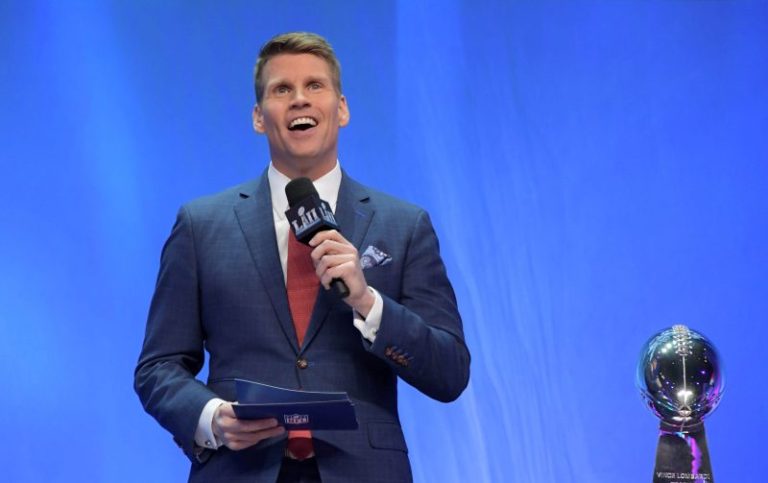
NFL RedZone brings football fans seven hours of uninterrupted coverage of redzone attempts and scores across the NFL every Sunday during the NFL regular season. NFL RedZone has been a wild success for the NFL Network, with Scott Hanson bringing in viewers each week.

Hanson suggested he would be open to hosting a College RedZone.

‘As for College Football RedZone, which is the big one people are talking about, if Bob Iger (Disney CEO), Jimmy Pitaro (ESPN chairman), Burke Magnus (ESPN president of content) want to him me up, I love college,’ Hanson said on the ‘Rich Eisen Show’ on Monday, Aug. 11. ‘I love college every bit much as I love pros.’

While college football fans may drool over what a full day of college football ― usually starting at noon Eastern and ending after midnight on Saturdays ― would look like, Hanson went on to throw water on his idea due to various logistics.

‘There’s a lot of dynamics,’ Hanson said. ‘If you were to do college football redzone, first of all, ESPN doesn’t have rights to every contract. Second of all, the kickoffs are not all synchronized. Yeah, you get a good batch kicking off at noon Eastern, but they are not all synchronized; they come at different times. The games go throughout the day.

‘But here’s the other thing, if your favorite team is the New York Giants, fine, you know the New York Giants. You can probably still name the other 31 starting quarterbacks in the NFL. If your favorite team is the Alabama Crimson Tide, you know the Alabama Crimson Tide, but you cannot name me 30 other quarterbacks in college football.

‘You might be able to name the rest of the SEC, maybe, or some of the bigger opponents. So, college is not as accessible to the frontal lobe of the American sports fans as it is in the NFL.’

This post appeared first on USA TODAY

It’s a bird, it’s a plane, it’s … Violet the raven.

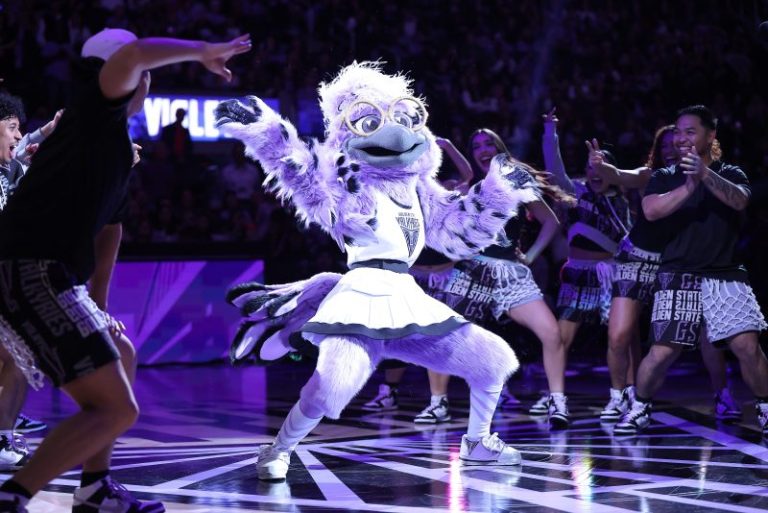
The Golden State Valkyries unveiled (or should we say unhatched) their new mascot on Birdwatchers Night at Chase Center during Monday night’s game against the Connecticut Sun. Violet confidently strutted onto the court in front of a sold-out crowd at halftime to ‘Best Friend’ by Bay-area artist Saweetie.

Violet donned a white and black cheerleader outfit that featured the Valkyries’ logo on the front and her name on the back as she executed a perfect cartwheel to much applause. Violet’s outfit was complete with a pair of yellow glasses, striped socks and a pair of white sneakers.

‘heyyyyy besties,’ Violet wrote on her new social media account.

WHAT IS A VALKYRIE? Everything to know about Golden State Valkyries WNBA expansion team

Violet just so happens to be named after the team’s official color, Valkyrie Violet, which ‘symbolizes power, ambition, nobility, and women’s empowerment, much like purple has been used symbolically in modern history,’ the team previously announced.

‘Something’s hatching’

Golden State hinted at Violet’s arrival and dropped Easter Eggs leading up to Monday’s announcement on Birdwatchers Night. A mysterious violet egg was first spotted outside of the Chase Center on Aug. 7 and a wildlife expert hired by the team predicted there’s a ‘bird species’ inside. Violet feathers also turned up near the egg.

‘I got called by the Valkyries to come and take a look at this big egg that showed up on campus. It’s a violet color which we don’t usually see and it’s got very bright gold speckles on it,’ wildlife management expert Kenny Elvin said in a video shared on social media. ‘It’s far larger than anything else that I’ve seen before. …

‘There are violet feathers. I don’t know any birds that are quite that color. We’ll see as it evolves. This egg could hatch very soon.’

Elvin was on to something. The Valkyries brought the egg inside Chase Center for closer inspection and even built a nest for the egg to feel at home. Each fan in attendance for the Valkyries’ matchup against the Connecticut Sun even received a pair of Valkyries Binoculars to spot the egg’s hatching.

Leading up to tipoff on Monday, the Valkyries released a video showing the mysterious violet feathers all over Chase Center as forward Monique Billings warmed up, another clue hinting at Violet’s color and origin.

Violet is sure to have a cult following. The Valkyries, the league’s first expansion team since 2008, have sold out every game at Chase Center this season.

The USA TODAY app gets you to the heart of the news — fastDownload for award-winning coverage, crosswords, audio storytelling, the eNewspaper and more.

This post appeared first on USA TODAY

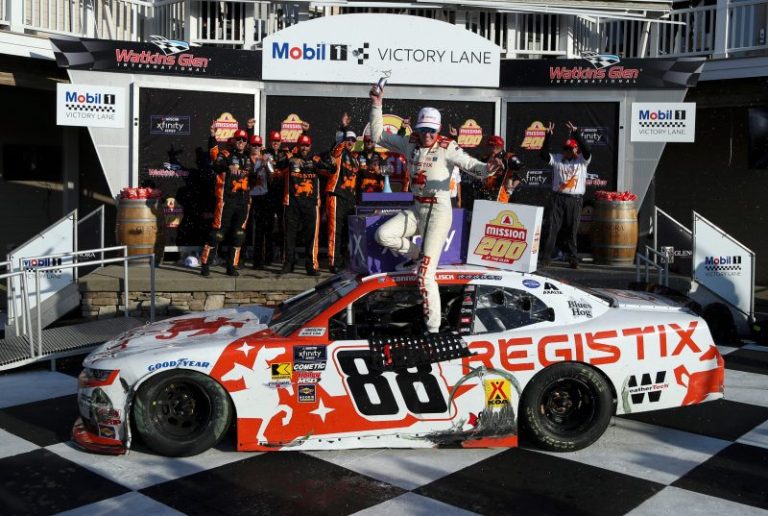
NASCAR driver Connor Zilisch, who broke his collarbone while celebrating his Xfinity Series victory at Watkins Glen International on Saturday, Aug. 9, is “grateful to be walking,” after his scary fall.

The 19-year-old driver had taken the checkered flag in Saturday’s race at the New York road course and was climbing out through the window to celebrate on the roof his car when one foot got caught in the window netting. Zilisch stumbled then took a hard fall to the pavement.

“The last thing I remember is thinking, I don’t know why, but I thought I was going to break my femur,” Zilisch said Monday, Aug. 11, on the Door Bumper Clear podcast. ‘My leg was stuck. I thought I was going to get caught in the headrest and just, I thought I was done.”

Zilisch blacked out momentarily before on-track medical personnel rushed to his aid and whisked him away in an ambulance.

On the podcast, Zilisch revealed the first things he remembered saying to the medical personnel when he came to before they put him on stretcher with a neck brace.

“I was talking to the medics like, ‘I’m good. I’m good. My shoulder hurts a little but that’s it,’” he recalled. “I was like, ‘Why am I on a stretcher right now? I feel fine.’ I didn’t realize what had happened.”

Zilisch was back at Watkins Glen the next day for the NASCAR Cup Series, though only as a spectator. Trackhouse Racing withdrew the car they planned to have him drive in Sunday’s race, which was eventually won by Trackhouse driver Shane Van Gisbergen.

Speaking to NBC Sports reporter Marty Snider during the Cup race, Zilisch expressed his relief and appreciation.

“So, glad it wasn’t any worse, and the collar bone was the extent of the injuries,’ he said. … Hopefully, my young bones will heal fast, and I’ll be able to get back in it as soon as possible.”

What’s next for NASCAR driver Connor Zilisch

Zilisch said surgery might be his best option for a quick return to racing, and he has a window because the Xfinity Series is off Aug. 15-16, while both the Craftsman Truck and Cup series race at Richmond Raceway that weekend.

Zilisch, who drives in the Xfinity Series for JR Motorsports – the team co-owned by siblings Dale Earnhardt Jr. and Kelley Earnhardt Miller – won his sixth race of the season at Watkins Glen and is likely to be one of the favorites for the 2025 Xfinity Series championship. But the first thing on the agenda is healing and recovery.

“I think it might be something that I might have to get surgery for. But in this case, I think surgery is something that speeds up the process, so you can get plates and screws and get it reconstructed back together,’ Zilisch said Monday on the Door Bumper Clear podcast.

“Shane [van Gisbergen] talked about it. He had an injury in 2021 and broke his collarbone — he had plates, screws, everything done and he was racing back the next weekend. Thankfully, the collarbone is a relatively quick bone to fix and heal.”

The Xfinity Series returns to racing on Aug. 22 at Daytona International Speedway, a track known for big crashes. Zilisch is the Xfinity points leader and has already missed one race this season due to a back injury.

This post appeared first on USA TODAY

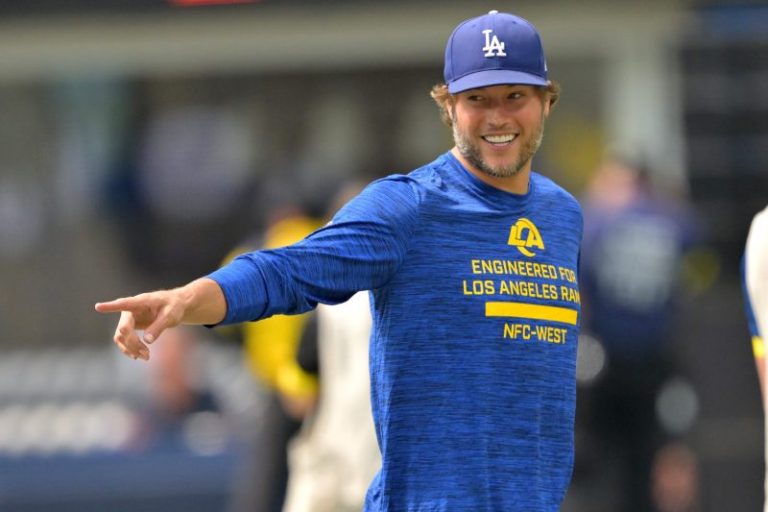
The Los Angeles Rams quarterback has been sidelined for the entirety of training camp thus far with a back injury. Stafford received an epidural to relieve the pain from an aggravated disc in his back, according to NFL Network’s Ian Rapoport on Aug. 6.

Stafford went through a workout on Saturday, throwing 60 passes without limitations. Head coach Sean McVay was optimistic about the 37-year-old quarterback, revealing the team planned to have him in training camp practice on Monday.

That was short-lived, however, as Stafford appeared at practice in street clothes.

McVay said, via the team’s website, that Stafford ‘didn’t feel good enough’ to participate, adding that they would take a cautious approach.

The Rams coach said that Stafford ‘had a great workout’ and ‘felt good’ on Saturday, ‘but then you come into today (Monday), it doesn’t feel great, and so didn’t think it was the right decision to be able to push him.’

With the Rams’ season opener less than a month away, the clock is ticking on Stafford’s ability to be ready in time for Week 1 – even if the veteran figures to require less practice at this stage of his career.

McVay continued to emphasize the importance of being smart in their approach to the injury, stating that they’ll continue to take it one day at a time.

‘More than anything, I feel for a guy that I really care about that wants to be out there more than anything else,’ McVay said. ‘We’re going to be smart. But he didn’t feel good enough, and we didn’t think it was the right thing to do based on how he woke up feeling today.’

As for the possibility of surgery, McVay said that wasn’t a conversation they’ve had, adding that it hasn’t come up. He was also non-committal about Stafford’s status if there was a regular season game this week, saying he didn’t know if the quarterback could play, but added, ‘I think he still probably would be able to play just based on how he feels.’

There are still a few weeks to sort everything out, but for now, it’s Jimmy Garoppolo who continues to get the first-team reps in practice.

As for the Rams, they’ll want Stafford atop the depth chart when they battle the Houston Texans in Week 1. Based on McVay’s comments, however, don’t expect L.A. to rush him back.

This post appeared first on USA TODAY

In a lengthy and beautifully crafted address on Independence Day, July 4, 1821, then-President John Quincy Adams delivered an extraordinarily detailed and learned lesson on the founding of America. It’s one that still deserves repeated and close reading — though much of it will simply not be understood by most Americans today, for it is dense in references to history no longer taught widely in the United States. 

Adams’ most memorable sentences are often quoted:

‘[America] has, in the lapse of nearly half a century, without a single exception, respected the independence of other nations while asserting and maintaining her own. She has abstained from interference in the concerns of others, even when the conflict has been for principles to which she clings, as to the last vital drop that visits the heart. She has seen that probably for centuries to come, all the contests of that Aceldama the European world, will be contests of inveterate power, and emerging right. Wherever the standard of freedom and Independence, has been or shall be unfurled, there will her heart, her benedictions and her prayers be. But she goes not abroad, in search of monsters to destroy. She is the well-wisher to the freedom and independence of all. She is the champion and vindicator only of her own. She will recommend the general cause by the countenance of her voice, and the benignant sympathy of her example.’

The declamation that America ‘goes not abroad in search of monsters to destroy’ is a favorite text of both the pre-World Wars One and Two isolationists in America, but of course both global conflicts reached out and drew the United States into them. 

Now, far, far more than in 1917 and 1941, the assumptions of our sixth president simply no longer apply. 

There is no longer any ‘abroad.’ 

The idea of an ‘abroad’ about which Americans could be either indifferent or at most the subject of a distant approval or remote scorn, is dead.

To repeat: There is no such thing as ‘abroad.’ 

Not even remotely. 

What remained of the concept after Pearl Harbor was shattered by Sputnik in 1957, and then by successive generations of missile technology.  With the rise of hypersonic missiles only fools would believe that there is an ‘abroad’ anywhere on the globe that the United States can disregard. 

Beijing’s hypersonic arsenal can reach Washington, D.C. in two hours or less, and that margin is going to shrink rapidly. Russia’s hypersonic missiles can reach the lower 48 even sooner and Alaska in a blink. 

Other nations will inevitably add to the number of potential adversaries that can change the world via hypersonic missilery and wreck enormous, perhaps Republic-ending damage on the country. 

Of course, America possesses a ‘second strike’ capability deep under the seas in our Ohio-class submarines, and even an enormous fusillade of thousands of hypersonic missiles would be unlikely to cripple all of our B-2s and B-21s or ever missile silo. The United States would take down with it all of the evil powers that combined to strike it first, just as it did from 1941 to 1945. 

But there would be no ‘Marshall Plan’ waiting for anyone or any country on the other side of such an unimaginable catastrophe. Thus it must be deterred. Deterrence is only accomplished by the reality of American military power and the military power of the allies on which it can rely.

To repeat a third time: There is no ‘abroad.’ 

This very dangerous word will only grow more so with the years. President Trump’s decision to destroy the Iranian nuclear weapons program alongside Israel’s blows against that fanatical theocracy’s ballistic missile capability shielded the entire world from the most unstable and terror-addicted regime in the world obtaining the ability to threaten all of the West and beyond with Armageddon. 

For a time, at least, the precise and purposeful application of American military force to the missile and nuclear arsenal of an enemy on the brink of ‘breakout’ kept the number of nuclear powers stable. 

Bravo, President Trump and Prime Minister Benjamin Netanyahu. Whatever criticisms come their way on whatever other subject, the most important mission of their careers is complete. (Though both men may be obliged by the fanatics in Tehran to do it again.)

The West still has enemies, of course, and the most formidable one is the Chinese Communist Party that dominates the People’s Republic of China, and its ruthless leader, Xi Jinping. Xi and the CCP are followed in second place by Xi’s equally ruthless if not quite as powerful ally in Putin’s Russia, not to mention the unstable nuclear powers of North Korea and Pakistan. 

The West’s nuclear arsenal —distributed among our allies Great Britain and France and especially alongside that of Israel and our sometimes friend India— combines with our own prodigious, yet in-need-of-modernization nuclear arsenal to hold the most dangerous enemies at bay. 

There are only four actual superpowers in the world —the quartet of nations that can project nuclear power far beyond their borders and which possess intelligence and espionage capabilities that are unmatched except by each other’s capabilities: The United States and Israel on the side of the West and the PRC and Russia on the side of despotism. All others in the ‘nuclear club’ have limitations imposed by their own chaotic domestic politics or lack of deliverable firepower and the will to use it. 

That’s national security realism in a nutshell. 

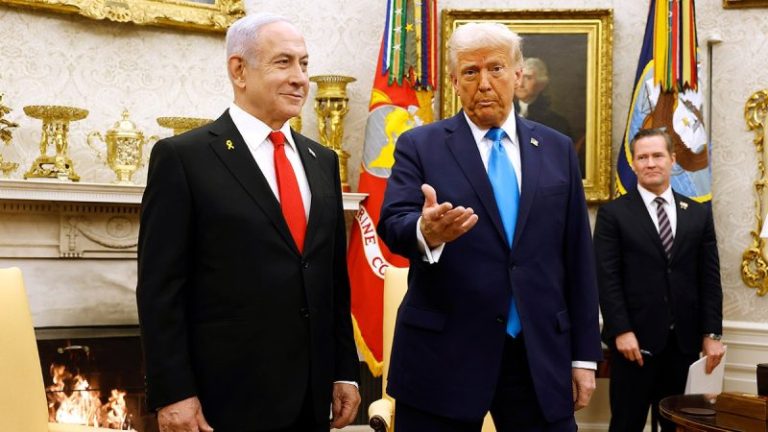
When two of the leaders of any of these four nations meet, it is a significant occasion. It is a very good thing that President Trump and Prime Minister Netanyahu have met three times in 2025 and have spoken far more frequently than that. 

Xi and Putin have only met in person twice in this year, but their ‘partnership’ is very close even though Xi is to Putin as Trump is to Netanyahu: the senior partners to their powerful but not nearly as powerful junior partners. 

This is the basic geopolitical structure of the world and only with that understanding of reality can analysts judge what President Trump gets out of his meeting with the Russian tyrant this week —if anything is even made public afterward. It will take months, if not years, to assess what happens this week. 

Putin has attempted to play every American president since Bill Clinton, sometimes successfully, sometimes fooling them only for a time. The temptation to ‘strike a deal’ with Putin is the same as the apple on the forbidden tree in Genesis. That way lies ruin. But sizing up the tree and the apple at close range can have benefits. 

President Trump has met with Putin six times prior to this week and has spoken with him often. The real estate developer-turned-television force-turned president has as much of the skills set anyone could have to deal with such a stone-cold killer as Putin. Trump survived not just two assassination attempts in 2024 but years of lawfare preceded by the plots of the permanent left embedded in our vast administrative state during his first term. 

Trump is as tough and as resilient as any president since Richard Nixon. There will be no hot mic whisperings of weakness, nor will there be blunt assessments spoken like that of former Vice President Dick Cheney: ‘[W]hat I see [in Putin is] a KGB colonel.’

Trump is a realist, just like his friend of old from New York in the 1980s and early 1990s, RN. Trump is as tough as W standing in the ruins of the Twin Towers, as tough as the genuine war hero H.W., as tough as Reagan, Ford and Ike. 

If Trump can bring an end to the savagery underway in Ukraine on terms acceptable to President Zelensky, it will be an achievement greater than his interventions to stop the hostilities between India and Pakistan, the Democratic Republic of the Congo and Rwanda, Thailand and Cambodia and last week’s peace agreement between Armenia and Azerbaijan.   

Trump’s destruction of the Iranian nuclear program is the biggest building block of his legacy, rivaled only by the Abraham Accords.  If he can bring a ceasefire to Central Europe that is acceptable to our allies and the Ukrainian people, it will be the third pillar of his legacy, with the fourth —the rebuilding of the American military into so potent a force that no one, not even China’s Xi, dares to risk a confrontation with us— as his fourth. On top of those four pillars can rest an era of prosperity and renewed American growth and innovation. 

If anyone is hoping for the president to fail in this endeavor as described, they are not patriots but partisans blind to the realities of the world. There are a lot of those sorts of partisans in the U.S., and increasingly our NATO allies are showing themselves to be unreliable. 

Like it or not, the near-term security prospects of the West rest on Trump, and serious people must prefer that to the infirmities of President Biden or the illusions of President Obama. 

Trump has confidence in his own abilities and serious analysts of realpolitik should too. At this point, after ‘Midnight Hammer’ and the other ceasefires, after all of the decade since he came down the escalator, there is very good reason to believe he can achieve as much as any other American at the table with Putin. Anyone hoping for his failure should assess their own mental health. It is in the interests of everyone on the planet that knows no ‘abroads’ that stability break out everywhere, beginning in Alaska this week. 

This post appeared first on FOX NEWS

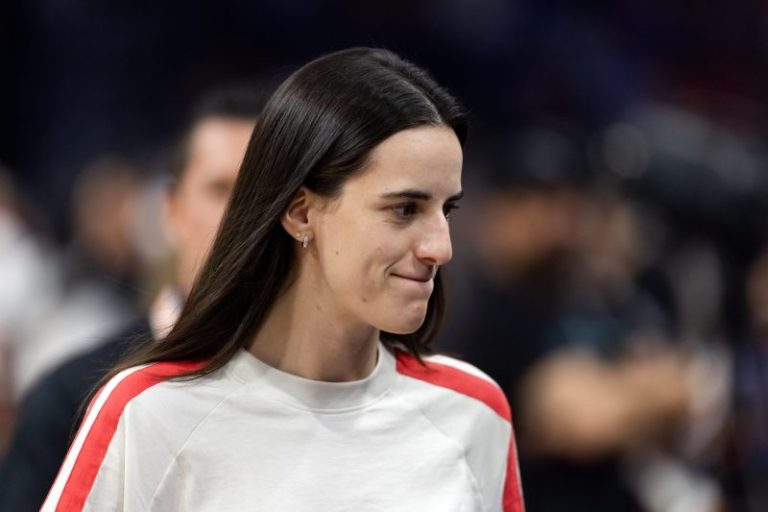
All eyes are on Caitlin Clark’s injury status after the Indiana Fever’s depth chart took yet another hit, but the All-Star won’t be making her highly anticipated return on the court on Tuesday, Aug. 12 against the Dallas Wings.

Fever point guards Sydney Colson (left ACL tear) and Aari McDonald (broken right foot) were both ruled out the remainder of the season after sustaining injuries in the Fever’s loss to the Phoenix Mercury on Aug. 7, further depleting Indiana’s depth at the point guard position amid Clark’s extended absence.

Clark last suited up for the Fever on July 15, when she suffered a right groin injury in Indiana’s 85-77 win over the Connecticut Sun. She subsequently missed 10 games, which will grow after Clark was ruled out of the Fever’s matchup against the Dallas Wings on Tuesday, marking her 11th consecutive missed game.

Head coach Stephanie White said that, although Clark has progressed in her recovery and has started running full court again, she hasn’t returned to practice just yet: an important step in her ramp-up.

‘She’s been able to get a little bit more in her full-court running with all of her body weight,’ White said on Monday, Aug. 11. ‘She’s been able to do a little more on the court in terms of how she moves, but not into practice yet.’

Here’s the latest on Clark’s injury and her expected return to the court:

Is Caitlin Clark playing Tuesday? Injury status for Fever-Wings

Clark was ruled out of the Indiana Fever’s matchup against the Wings in Indianapolis on Tuesday with a right groin injury. There is no timetable for Clark’s return.

The game is scheduled for 7:30 p.m. ET (4:30 p.m. PT) and will be televised on ESPN.

How was Caitlin Clark injured?

Clark suffered a right groin injury in the final minute of the Fever’s 85-77 victory over the Sun at TD Garden in Boston on July 15. With 39.1 seconds remaining in the contest, Clark completed a bounce pass to Kelsey Mitchell to put the Fever up 84-75. After the pass, Clark immediately grabbed for her right groin and grimaced as she gingerly walked over and headbutted the stanchion. She did not return to the game. 

How many games has Caitlin Clark missed this season?

Clark, who previously missed time due to a left quad injury and a left groin injury, has missed 19 of the Fever’s 32 games so far this season. Tuesday’s matchup against the Sparks will mark her 20th total absence. She also missed the Fever’s Commissioner’s Cup win over the Minnesota Lynx on July 1, in addition to the 2025 WNBA All-Star Game and the 3-point competition held in Indianapolis.

Indiana is 8-5 with Clark in the lineup and 10-9 without her on the floor.

Caitlin Clark injury timeline

May 24: Clark suffered a left quad injury during the Fever’s 90-88 loss to the New York Liberty, where she recorded a double-double with 18 points and 10 assists. Clark couldn’t pinpoint the specific play that caused her injury, but noted that it happened early in the contest. Clark said, ‘Adrenaline covers up a lot of stuff when you’re in the heat of battle. After the game, I had some pain, and then we got an MRI, and that kind of gave me the result that I didn’t want to see.’ She missed the Fever’s next five games.
June 14: Clark returned to Indiana’s lineup in the Fever’s 102-88 win over the Liberty and dropped 32 points, nine assists and eight rebounds in her first game back. 
June 24: Clark suffered a left groin injury in the Fever’s 94-86 win over the Seattle Storm, which resulted in Clark missing the team’s next four games. Head coach Stephanie White said she learned of Clark’s groin injury the following night after Clark alerted team trainers of discomfort.
July 1: Clark was ruled out of the Fever’s 2025 Commissioner’s Cup win over the Minnesota Lynx in Minneapolis. That didn’t stop Clark from rightfully celebrating the team’s hardware.
July 9: Clark returned to the Fever’s lineup in the Fever’s 80-61 loss to the Golden State Valkyries. Clark was limited to 10 points, shooting 4 of 12 from the field and 2 of 5 from the 3-point line, in addition to six assists, five rebounds and four turnovers. Following the blowout loss, Clark said it was ‘going to take me a second to get my wind back. … Just trying to get my legs under me.’
July 15: Clark suffered a right groin injury in the final minute of the Fever’s 85-77 victory over the Sun at TD Garden in Boston. White later confirmed Clark ‘felt a little something in her groin.’ This marked the last game for which Clark suited up.
July 18: Clark announced that she would sit out the 2025 WNBA All-Star Game in Indianapolis, where she was named a team captain. Clark was also set to participate in the 3-point contest. She said, ‘I am incredibly sad and disappointed to say I can’t participate … I have to rest my body.’
July 24: The Fever said Clark’s medical evaluations confirmed there’s ‘no additional injuries or damage,’ but the team said it will be cautious with Clark’s rehab and recovery.
August 8: During an appearance on Sue Bird’s podcast, ‘Bird’s Eye View,’ Clark spoke about the frustrations of her injury-filled season: “It’s not like I have a training camp to build up to play in my first game again. It’s like no, you’re tossed into Game 30 — like, ‘Go try to play well.’ It’s hard, it really is.”

Caitlin Clark stats

Clark is averaging 16.5 points, 5.0 rebounds and a career-high 8.8 assists in 13 games this season. Her assists average is the second-highest in the league, behind Phoenix’s Alyssa Thomas (9.0).

The USA TODAY app gets you to the heart of the news — fast. Download for award-winning coverage, crosswords, audio storytelling, the eNewspaper and more.

This post appeared first on USA TODAY

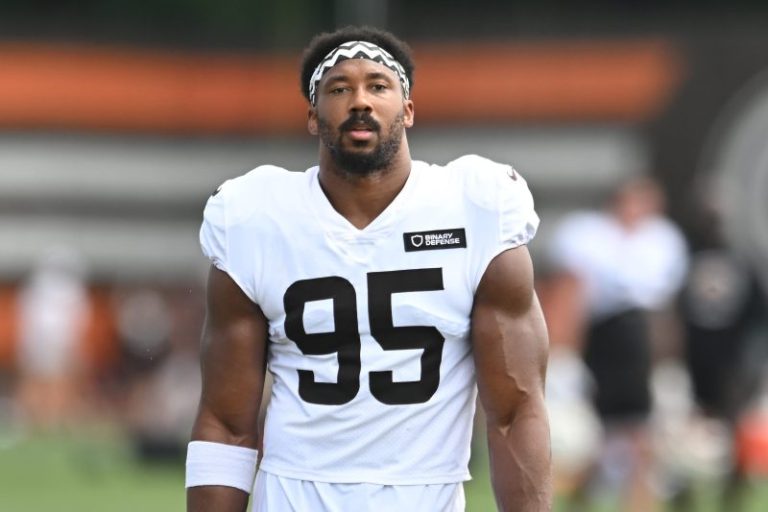
Cleveland Browns star Myles Garrett was cited for speeding early on Saturday morning in Strongsville, Ohio.

Garrett was driving 100 mph in a 60 mph speed limit zone at around 2:01 a.m. ET on Saturday, Aug. 9, according to public police records.

The four-time All-Pro’s speeding incident came after the team played their preseason contest against the Carolina Panthers on Friday night.

It marks the second incident involving a Browns player in Strongsville since June, when Shedeur Sanders was cited for driving 101 mph in the same 60 mph speed limit zone.

Garrett can avoid a court appearance by paying the $250 fine.

As Cabot noted, it’s the eighth speeding ticket for the 29-year-old since he arrived in Cleveland as the first pick in the 2017 NFL Draft.

It has also been three years since Garrett flipped his Porsche while speeding and swerving to avoid an animal in 2022.

Garrett inked a four-year, $160 million contract extension in March, which made him the highest-paid non-quarterback in NFL history at the time.

USA TODAY Sports reached out to the Browns for comment.

This post appeared first on USA TODAY

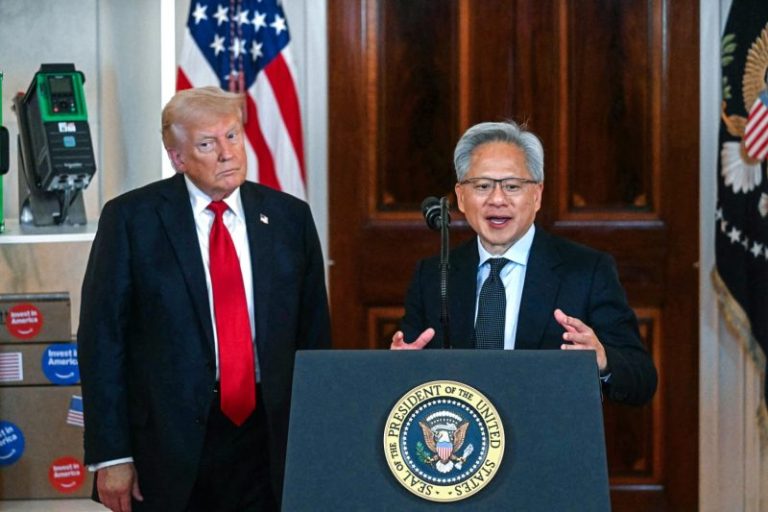
Nvidia and AMD have agreed to share 15% of their revenue from sales to China with the U.S. government, the White House confirmed Monday, sparking debate about whether the move could affect the chip giants’ business and whether Washington might seek similar deals.

In exchange for the revenue cut, the two semiconductor companies will receive export licenses to sell Nvidia’s H20 and AMD’s MI308 chips in China, according to the Financial Times.

“We follow rules the U.S. government sets for our participation in worldwide markets. While we haven’t shipped H20 to China for months, we hope export control rules will let America compete in China and worldwide,” Nvidia said in a statement to NBC News. “America cannot repeat 5G and lose telecommunication leadership. America’s AI tech stack can be the world’s standard if we race.”

AMD said in a statement that its initial license applications to export MI308 chips to China have been approved.

The arrangement crafted by President Donald Trump’s administration is “unusual,” analysts told CNBC, but underscores his transactional nature. Meanwhile, investors see the move as broadly positive for both Nvidia and AMD, which once more secure access to the Chinese market.

Nvidia’s H20 is a chip that has been specifically created to meet export requirements to China. It was previously banned under export curbs, but the company last month said it expected to receive licenses to send the product to China.

Also in July, AMD said it would resume exports of its MI308 chips.

At the time, there was no suggestion that the resumption of sales to China would come with conditions or any kind of revenue forfeiture, and the step was celebrated by markets because of the billions of dollars worth of potential sales to China that were back on the table.

On Monday, Nvidia shares rose modestly, while AMD’s stock was up more than 2%, highlighting how investors believe the latest development is not a major negative for the companies.

“From an investor perspective, it’s still a net positive, 85% of the revenue is better than zero,” Ben Barringer, global technology analyst at Quilter Cheviot, told CNBC.

“The question will be whether Nvidia and AMD adjust their prices by 15% to account for the levy, but ultimately it’s better that they can sell into the market rather than hand the market over entirely to Huawei.”

Huawei is Nvidia and AMD’s closest Chinese rival.

Uncertainty, nevertheless, still looms for both U.S. companies over the longer term.

“In the short term, the deal gives both companies some certainties for their exports to China,’ George Chen, partner and co-chair of the digital practice at The Asia Group, told CNBC. ‘For the long term, we don’t know if the U.S. government may want to take a bigger cut from their China business especially if their sales to China keep growing.’

Multiple analysts told CNBC that the deal is “unusual,” but almost par for the course for Trump.

“It’s a good development, albeit a strange one, and feels like the sort of arrangement you might expect from President Trump, who is a deal-maker at heart. He’s willing to yield, but only if he gets something in return, and this certainly sets an unusual precedent,” Barringer said.

Neil Shah, partner at Counterpoint Research, said the revenue cut is equivalent to an “indirect tariff at source.”

Daniel Newman, CEO of The Futurum Group, also posted Sunday on X that the move is a “sort of ‘tax’ for doing business in China.”

But such deals are unlikely to be cut for other companies.

“I don’t anticipate it extending to other sectors that are just as important to the U.S. economy like software and services,” Nick Patience, practice lead for AI at The Futurum Group, told CNBC.

The U.S. sees semiconductors as a strategic technology, given they underpin so many other tools like artificial intelligence, consumer electronics and even military applications. Washington has therefore put chips under an export control regime unlike that of any other product.

“Semiconductor is a very unique business and the pay-to-play tactic may work for Nvidia and AMD because it’s very much about getting export approval from the U.S. gov,” the Asia Group’s Chen said.

“Other business like Apple and Meta can be more complicated when it comes to their business models and services for China.”

Semiconductors have become a highly sensitive geopolitical topic. Over the last two weeks, China has raised concerns about the security of Nvidia’s chips.

Late last month, Chinese regulators asked Nvidia to “clarify” reports about potential security vulnerabilities and “backdoors.” Nvidia rejected the possibility that its chips have any “backdoors” that would allow anyone to access or control them. On Sunday, Nvidia again denied that its H20 semiconductors have backdoors after accusations from a social media account affiliated with Chinese state media.

China’s state-run newspaper Global Times slammed Washington’s tactics, citing an expert.

“This approach means that the US government has repudiated its original security justification to pressure US chip makers to secure export licenses to China through economic leverage,” the Global Times article said.

The Chinese government is yet to comment on the reported revenue agreement.

Trump’s deal with Nvidia and AMD will likely stir mixed feelings in China. On the one hand, China will be unhappy with the arrangement. On the other hand, Chinese firms will likely want to get their hands on these chips to continue to advance their own AI capabilities.

“For China, it is a conundrum as they need those chips to advance their AI ambitions but also the fee to the US government could make it costlier and there is a doubt of US ‘backdoors’ considering US has agreed for chipmakers to supply,” Counterpoint Research’s Shah said.

— CNBC’s Erin Doherty contributed to this report.

This post appeared first on NBC NEWS

Miami Dolphins running back Alexander Mattison’s promising preseason and 2025 NFL season were cut short on Sunday.

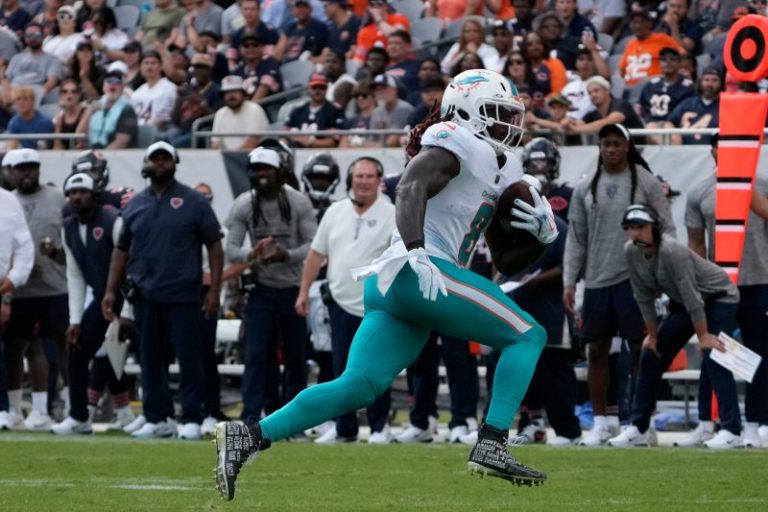
The veteran running back, who was spending his first season with the Dolphins, suffered a neck injury in Miami’s first preseason matchup against the Chicago Bears, which will sideline him for the entirety of the 2025 season.

Mattison was taken to the hospital after suffering the neck injury and subsequently had surgery, according to ESPN.

That ends a promising offseason for Mattison, who was angling to make the roster as a depth running back. He was entering his first season with the Dolphins after signing a one-year deal with the team this offseason, after he spent the 2024 season with the Las Vegas Raiders.

Here’s the latest on Mattison:

Alexander Mattison injury update

The Dolphins running back underwent neck surgery and is out for the entirety of the 2025 NFL season, as confirmed by The Palm Beach Post (part of the USA TODAY Network).

Mattison is expected to make a full recovery and he has full strength and motion.

Mattison injured his neck in Miami’s preseason Week 1 matchup vs. the Bears. Following a catch out of the backfield, Mattison collided with Bears defensive back Alex Cook, and he was thrown to the ground awkwardly.

The running back did walk off the field under his own power and gave a thumbs-up to fans. He was later taken to the hospital by ambulance.

Mattison was a standout in Dolphins camp and entered preseason Week 1 as the second back behind De’Von Achane. Mattison finished his matchup with three rushes for eight yards and one reception for 21 yards.

This story will be updated.

This post appeared first on USA TODAY

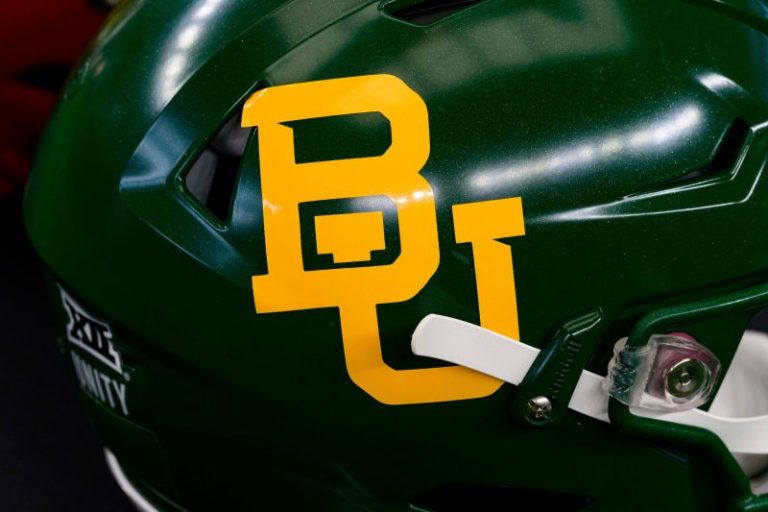
Baylor University has sued Boston University for the private university’s use of the interlocking ‘BU’ logo design.

The lawsuit, which was filed in Texas federal court on Aug. 8, is against the Trustees of Boston University and for federal trademark infringement, federal unfair competition and false designation of origin under the Trademark Act of 1946, Texas statutory trademark infringement and common law trademark infringement.

‘While Baylor does not generally object to Defendant’s use of the initials ‘BU’ in connection with its university, it does object to Defendant’s adoption and use of a specific interlocking BU design that is identical or strikingly similar to Baylor’s federally registered marks,’ states the lawsuit, which was obtained by the USA TODAY Sports Network.

The lawsuit states that Boston University’s interlocking ‘BU’ mark is ‘essentially identical and/or confusingly similar to Baylor’s federally registered Interlocking BU.’

The school is asking the court to require Boston University to ‘destroy all goods, packaging, signage, advertisements, internet postings and advertisements, and any other materials bearing or using an interlocking BU mark’ and for Baylor to recover the costs of this lawsuit, with interest, and to receive any further financial relief that is determined.

The lawsuit mentions that Baylor became aware of a promotion and sale of three hats by Boston University’s campus spirit store in 2018 that used ‘an essentially identical and/or confusingly similar interlocking BU’ logo. It said when Baylor when notified Boston University of this ‘in or around December 2021,’ the school ‘did not cease use’ of the logo.

Looking at Boston University’s website for the acceptable branding logos for the university and the university’s athletic department, the interlocking ‘BU’ logo that the lawsuit is referring to does not appear. The university’s athletic department page does, however, show a ‘BU’ logo with the letters side by side rather than interlocking.

The interlocking logo does appear in several offerings on Boston University’s Campus Store website and another website that sells Boston University-licensed merchandise, as alluded to in the lawsuit. Notably, the lawsuit mentions that the interlocking ‘BU’ logo that Baylor is seeking removal of is used by several of Boston University’s club sports programs, which look to be sponsored by Boston University’s Fitness and Recreation Center and not its athletic department.

This isn’t the first time that both universities have taken up this matter legally.

As noted in the lawsuit, Baylor applied to register the interlocking ‘BU’ logo design with the U.S. Patent and Trademark Office in 1987, but Boston University opposed the application. Both universities would settle a year later, when they signed an agreement that stated both universities ‘must be able to coexist by using the letters ‘BU’ for their respective universities.’

Baylor University, which competes in the Big 12 Conference, was founded in 1849. Boston University, which competes in the Patriot League and Hockey East, was founded in 1839.

USA TODAY Sports’ Scooby Axson contributed to this story

This post appeared first on USA TODAY