Archive

2025

Browsing

We’re talking about practice.

Joint practices are all the rage in the NFL now, with teams weathering the heat and the doldrums of August training camps to work things out with one another on the practice field.

These practices can highlight a lot of issues for a team that’s used to facing off against teammates during scrimmages, 7-on-7, 11-on-11 and more, while also getting one another prepped for forthcoming preseason showdowns.

Starting Aug. 12, joint practices continue with 20 teams facing off against one another this week: The Tennessee Titans travel to the Atlanta Falcons practice facility, while the New York Jets and New York Giants look to establish early New York football supremacy.

The Los Angeles Rams and Los Angeles Chargers were scheduled to meet up in a regional get-together on Wednesday, but canceled due to injury concerns. Meanwhile, the Cleveland Browns travel to the Philadelphia Eagles’ turf to square off ahead of their preseason Week 2 matchup.

USA TODAY Sports will provide updates from joint practices below, including news, highlights, injury updates and maybe even the occasional scuffle. All times are Eastern.

NFL joint practice live updates

Jets injury updates: Tyrod Taylor, Allen Lazard both out

Jets backup quarterback Tyrod Taylor had arthroscopic knee surgery, according to Jets head coach Aaron Glenn. He will be out the remainder of the preseason.

Wide receiver Allen Lazard continues to nurse a shoulder injury.

Giants defense looking good against Justin Fields

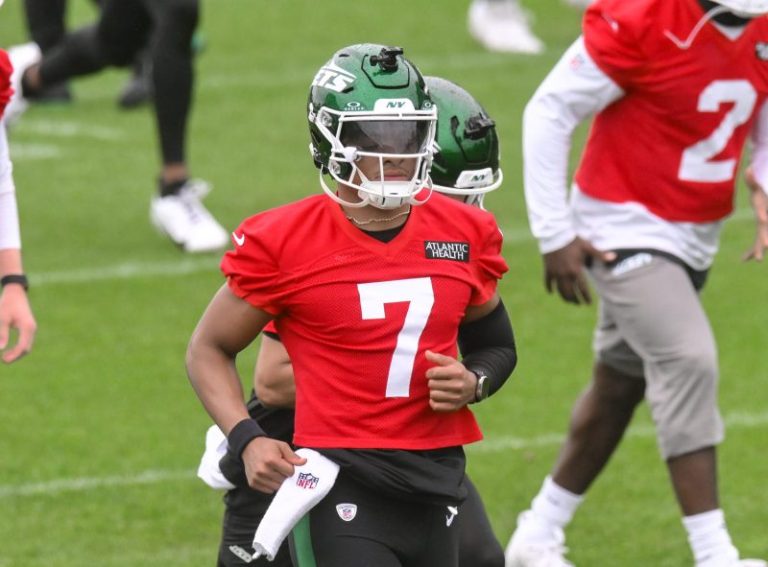
Over on the opposite field, the Giants’ first-team defense is doing well against QB Justin Fields and the Jets.

Titans offense struggles in first team period

Justin Fields, Giants QBs dueling in practice

Russell Wilson and Jaxson Dart went a combined 7-for-7 passing against the Jets’ first- and second-team defense early. Justin Fields started practice 4 for 4 with three consecutive completions to Garrett Wilson.

Giants, Jets won’t go to the ground in practice

Any kind of live tackling will have to wait until Saturday when the Jets and Giants face off.

Giants coach Brian Daboll said the team will avoid doing any tackling during joing practices.

Malik Nabers not practicing for Giants

Darnell Mooney injury update

The Falcons wideout injured his shoulder during the Falcons first practice of training camp on July 25. His timeline for return hasn’t been clarified, with coach Raheem Morris saying ‘I don’t know’ when it comes to his return date.

NFL training camp joint practice schedule

The NFL announced the full schedule of joint practice sessions for this year’s preseason in mid-June. Below is the complete joint practice schedule:

Aug. 5: Indianapolis Colts @ Baltimore Ravens
Aug. 5: Los Angeles Rams @ Dallas Cowboys
Aug. 6: Cleveland Browns @ Carolina Panthers
Aug. 6: Washington Commanders @ New England Patriots
Aug. 7: Denver Broncos @ San Francisco 49ers
Aug. 7: Tennessee Titans @ Tampa Bay Buccaneers
Aug. 8: Miami Dolphins @ Chicago Bears
Aug. 12: New York Giants @ New York Jets
Aug. 12: Tennessee Titans @ Atlanta Falcons
Aug. 13: Cleveland Browns @ Philadelphia Eagles
Aug. 13: Miami Dolphins @ Detroit Lions
Aug. 13: New York Jets @ New York Giants
Aug. 13: New England Patriots @ Minnesota Vikings
Aug. 14: Tampa Bay Buccaneers @ Pittsburgh Steelers
Aug. 14: Arizona Cardinals @ Denver Broncos
Aug. 14: Carolina Panthers @ Houston Texans
Aug. 14: Green Bay Packers @ Indianapolis Colts
Aug. 14: San Francisco 49ers @ Las Vegas Raiders
Aug. 15: Buffalo Bills @ Chicago Bears
Aug. 21: Baltimore Ravens @ Washington Commanders
Aug. 21: Houston Texans @ Detroit Lions
Aug. 21: Jacksonville Jaguars @ Miami Dolphins
Aug. 21: Seattle Seahawks @ Green Bay Packers

This post appeared first on USA TODAY

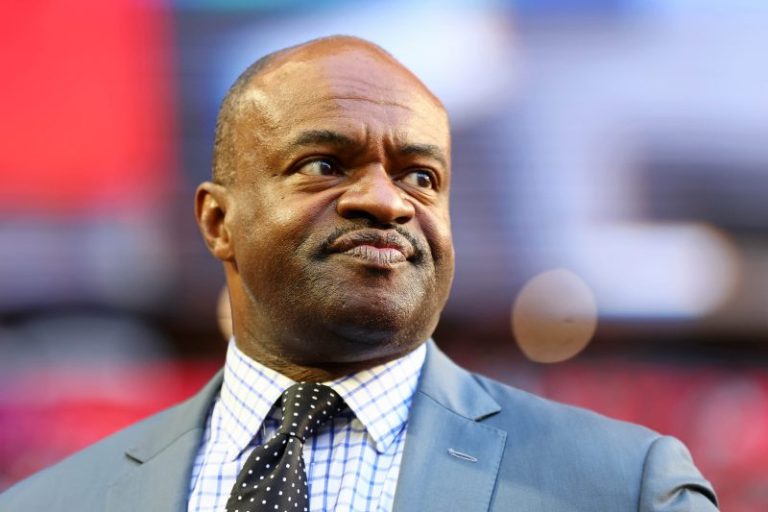
DeMaurice Smith’s book, ‘Turf Wars: The Fight for the Soul of America’s Game,’ was released on Aug. 5.
In his new book, DeMaurice Smith writes about a frosty exchange with Lloyd Howell.
DeMaurice Smith would ‘absolutely not’ return to his former role with the NFLPA on an interim basis.

This might be perfect timing for DeMaurice Smith to promote a book reflecting on his personal journey and tenure as executive director of the NFL Players Association (NFLPA).

Lloyd Howell, the man elected in 2023 to replace Smith, resigned last month in shame. JC Tretter, the former center and union president who gained powerful influence in recent years, stepped down, too, from his role as chief strategy officer.

And with so many questions linked to a lack of transparency, particularly involving the election process and information from arbitration rulings not shared with the membership, the players union is mired in a big mess as David White begins as interim executive director.

Smith’s book, ‘Turf Wars: The Fight for the Soul of America’s Game’ (Random House, 368 pages, $32), was released on Aug. 5 as quite the coincidence. Leadership is a key theme.

“In no small way, we saw that play out over the last two months, in an unfortunate way,” Smith told USA TODAY Sports. “My hope is that the players learn from it and spend time with what I’d call ‘ruthless introspection’ of how did they get here? And with the hope they turn it around. But it has to start and end with the players. It has much less to do with who their leader is.”

That last point is debatable, given turmoil stemming from the damning revelations exposed by Pablo Torre on his podcast, ‘Pablo Torre Finds Out.’ Torre published a 61-page ruling from independent arbitrator Christopher Downey from a 2022 lawsuit filed by the NFLPA alleging collusion by team owners that was kept secret from the union.

He revealed that another ruling determined Tretter encouraged players to fake injuries while engaged in contract talks. And he revealed that Howell was a part-time consultant for The Carlyle Group, a private equity firm approved by the NFL to invest in NFL teams, an apparent conflict of interest.

Then ESPN reported that Howell’s expense reports for visits to strip clubs ignited further scrutiny into his actions as union chief.

Smith, citing a non-disparagement clause in his separation from the union, wouldn’t specifically address the cases that blew up for the NFLPA, but he shared perspective on the role that White (the runner-up when Howell was elected) steps into on an interim basis while the search begins for a permanent executive director.

White, formerly executive director and chief negotiator of the Screen Actors Guild (SAG-AFTRA), was elected by a vote of player representatives from all 32 teams on Aug. 3.

Key issues for White?

“First of all, 2030 is not as far off as you’d want to think,” Smith said, alluding to the expiration of the 11-year collective bargaining agreement between the NFL and NFLPA. “The changing media landscape is interesting. But I think the most pressing issue is how do you come in and take a group of players who haven’t been in a fight and teach them about what a labor union is supposed to do.”

When Smith replaced the late Gene Upshaw and began his 14-year tenure in 2009, surely there was no acclimation period. The fight was already on as NFL owners, on the short end of the last CBA that Upshaw negotiated, had already declared that it would opt out of the labor pact and lock out the players in 2011.

“It made teaching and the role of getting players ready for a war a little bit easier, because one was on the horizon,” Smith said.

Ultimately, Smith led the NFLPA into two long labor pacts, the last one struck in 2020 during the pandemic, which was passed by players by a razor-thin margin, with the key pushback involving the 17th game the union agreed to. Now, the league is going full-steam ahead on desires to eventually expand the schedule to 18 games, which would need to be negotiated as part of the CBA – and perhaps before the current labor pact expires.

That the NFLPA’s leadership is in flux undoubtedly looms as an advantage for the NFL in ramping up for the next CBA. The current labor pact allows players to receive 48% of NFL revenues, which fuels the record $279.2 million salary cap for 2025.

“The biggest job for a labor leader is teaching, and how important it is to focus on the right issues,” Smith said. “Understand you are in labor-management paradigm. That’s always a battle.”

Reflecting on his tenure – which included the COVID-19 crisis, the Colin Kaepernick-ignited player protests and the evolving concussion protocols – Smith said that one of his regrets is that he got away from the hard-core teaching that he stressed from 2009 to 2017.

“Now is that opportunity for players to go back to their roots,” said Smith, mindful of the turnover in membership that comes when the average player career span is roughly three years. He cites key figures from the timeline over several decades on the NFL front and beyond.

“Even the players who are not going to be there for 2030, if they don’t know who Bill Radovich is, if they don’t know who Freeman McNeil is, if they don’t know who Reggie White was, if they don’t understand the significance of Curt Flood or Oscar Robertson, man, you won’t get it right.

“Whether the issues are Commissioner discipline, an 18th game or practice time, if players don’t understand the history and necessity of fighting, you won’t get it right.”

Shortly after the resignations of Howell and Tretter, I reached out and asked Smith if he would consider returning to his former role on an interim basis to help the NFLPA navigate through its adversity. He scoffed.

“Absolutely not,” he said. “This is a challenge the players need to resolve for themselves.”

In his book, Smith recalls a frosty exchange with Howell during the transition. Smith said that he wrote a letter for his successor and planned to leave it in his old desk – in the tradition of U.S. presidents – but had second thoughts after his single interaction with Howell. He folded up the letter and stuffed it in his pocket.

“I wrote that letter in the hope that it would help frame what the job is, if someone were truly curious about getting it right,” Smith said last weekend.

He wanted to be a resource. Especially having never met Upshaw, who died on Aug. 20, 2008, three days after being diagnosed with pancreatic cancer.

“There wasn’t a day on the job where I didn’t wake up and wish that I could talk to Gene,” Smith said. “I kid you not. There wasn’t a frickin’ day.”

He pledged that he’s available for White. It’s unclear how much White might tap that resource. Smith would certainly share thoughts about how players need to absorb how they are impacted by changing NFL business dynamics.

The deal announced last week, with the NFL acquiring 10% equity in ESPN, resonated.

“It reminds you of the scale of this business,” Smith said. “They’re going to do what, $25 billion in revenue next year? This is the competition, and the ruthlessness of this business is far more intense off the field than it is on the field. And it’s pretty intense on the field.

“You would want to know if there’s a change in the rights fee (for ESPN),” he added. “Those are the things the union needs to figure out. But most importantly, once you understand it, you’re going to have to decide how do you fight it for your fair share? If anybody thinks that was just an idle, off-the-cuff comment from Roger (Goodell) – I forget when he said it, maybe a couple months ago – that he thought the players share was too high, you know that’s what they do. They start messaging early.”

Which means NFL players are pressed to reset their union priorities in a hurry and buckle up early for the next labor war that is surely coming.

Contact Jarrett Bell at jbell@usatoday.com or follow on social media: On X: @JarrettBell. On Bluesky: jarrettbell.bsky.social.

This post appeared first on USA TODAY

The art of the call-up has evolved over the decades as the fine print in Major League Baseball’s collective bargaining agreement gets revised every few years.

And now, the date to watch for the semi-coincidental arrival of top prospects is almost upon us: Aug. 15.

That’s the day franchises can summon minor leaguers for their major league debuts, while still maintaining their rookie status for the 2026 season. And if a consensus top 100 prospect either wins Rookie of the Year next year or earns a top-three finish in MVP or Cy Young Award voting in their first three seasons, the club is awarded a prospect promotion incentive draft pick, slotted just after the first round of the following season’s draft.

A bit convoluted, yes, but just know that if a rash of blue chip prospects arrive this week, that’s why. Here’s a look at six of the most prominent potential arrivals:

Samuel Basallo, C, Baltimore Orioles

Orioles GM Mike Elias loves his draft picks and loves it even more when a recent draftee produces an extra pick and bonus pool money thanks to the PPI stipulation. That was the case with Gunnar Henderson, who debuted in August 2022 and earned Rookie of the Year honors in 2023.

Enter Basallo, who turns 21 Aug. 13. The 6-4 Dominican signee largely dominated Class AAA as a 20-year-old, with a .997 OPS, 23 homers and a 13.7% walk rate. While he still needs significant growth behind the plate – as all 20-ish catchers do – it behooves the Orioles to see what the bat can do before laying groundwork for 2026. And Basallo, Baseball America’s No. 7 overall prospect, could be joined by Norfolk teammate Dylan Beavers. The outfielder, who turned 24 Aug. 11, posted a .948 OPS with 18 homers and 22 steals.

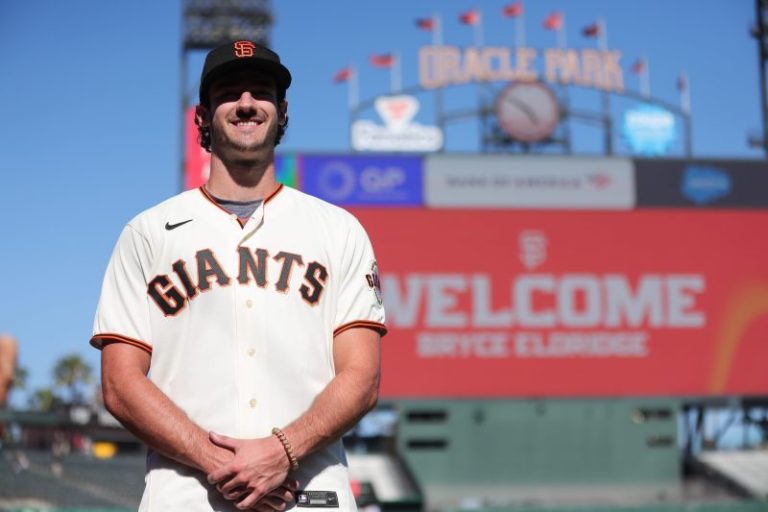
Bryce Eldridge, 1B, San Francisco Giants

At 6-7, 240, Eldridge represents the perennially power-starved Giants’ best shot in years at producing a homegrown slugger. Still just 20, Eldridge was slowed by injury this year but has gotten going at Class AAA Sacramento, where he has 12 homers but also 50 strikeouts in 157 plate appearances.

If recency bias matters, Eldridge should get summoned west on I-80: He’s posted a .298/.388/.667 line his past 15 games, with seven home runs and 24 RBIs. So long as San Francisco can handle an extra gust of wind from some swing-and-miss, no harm in dreaming of Eldridge and Rafael Devers sliding in between right-handers Matt Chapman and Willy Adames in that lineup.

JJ Wetherholt, INF, St. Louis Cardinals

He could’ve been the top pick in the 2024 draft but slid to No. 7 and the Cardinals, who were thrilled to land such talent there. And Wetherholt has not disappointed, reaching Class AAA by July and hardly slowing his roll, with a .298/.414/478 line and 18 steals in 20 chances in 112 professional games.

Now, the age-old quandary: Consistent playing time or a taste of the big leagues? Masyn Winn is entrenched at shortstop and a handful of multi-position types are also vying for at-bats in St. Louis. Wetherholt, a West Virginia product, has adjusted smoothly to every level; it will take a lot to force the issue, but if he’s still unstoppable by the end of this month, it might be pragmatic to keep the ceiling off his ability.  

Owen Caissie, OF, Chicago Cubs

So, just how confident are the Cubs in re-signing Kyle Tucker? The sterling trio of Ian Happ, Pete Crow-Armstrong and Tucker – along with DH Seiya Suzuki – leave no place for Caissie to play in Chicago, but he’s probably scraped his head on the ceiling a few times at Class AAA Iowa.

Caissie has played 218 games and taken 944 plate appearances at AAA the past two seasons, hit 40 homers and posted an .892 OPS. It would probably take an injury to get Caissie to Wrigley Field, but he’s already on the 40-man roster. And Caissie could help both their pennant drive and their winter fortune telling should Tucker find greener pastures.

Trey Yesavage, RHP, Toronto Blue Jays

The Blue Jays have thoughtfully yet urgently nudged Yesavage through four levels this season, and now the 20th overall pick in 2024 has landed at Class AAA Buffalo – just as the big club sees the Boston Red Sox lurking four games out in the AL East.

With Shane Bieber likely to join the rotation after one more rehab appearance, Yesavage may not be needed to start. But the deeper reaches of the Blue Jays’ pen has been a revolving door and the club needs quality innings, regardless of role.

Yesavage struck out an eye-opening 15 batters per nine innings at his three stops; should he keep that up at Buffalo, crossing the Peace Bridge to the Jays’ bullpen is very much in play.

Travis Bazzana, INF, Cleveland Guardians

Like Yesavage, Bazzana just landed at Class AAA, after a promotion from AA Akron. And like Yesavage, Bazzana could provide a specific skill set to boost a team suddenly in the playoff picture.

As a matter of course, we’ll pump the brakes a bit: Bazzana, the No. 1 overall pick a year ago, missed two months with an oblique strain and has just 85 professional games under his belt. On the other hand, the Guardians’ mix-and-match of middle infielders – Gabriel Arias (84 adjusted OPS), Daniel Scheeneman (98), Brayan Rocchio (68) and Angel Martinez (81) are all producing below league average at the plate.

And Bazzana ended his Akron stint on a heater, with a .367 OBP and .779 OPS while reducing his K rate from his previous stint. Bazzana will surely be a favorite for 2026 AL Rookie of the Year. It might make sense to start banging that drum very soon.

This post appeared first on USA TODAY

Travis Kelce is a lot of things: a future Hall of Fame tight end for the Kansas City Chiefs, a holder of 12 NFL records, a ‘New Neights’ podcast co-host and, of course, Taylor Swift’s boyfriend.

In a recent GQ profile of Kelce, his brother, Jason Kelce, added one more identifier to the list.

‘There will be arguments about him versus Gronk, versus Tony Gonzalez, but I don’t think anybody has ever been as unique of a player in that spot,’ Jason said.

To Jason’s point, Travis is truly 1-of-1 in several statistical categories. In the Chiefs’ two most recent playoff runs, the tight end broke three of legendary wide receiver Jerry Rice’s NFL postseason records. He now stands alone as the NFL record-holder for career postseason receptions (172), career postseason 100-yard games (9) and career Super Bowl receptions (35).

Jason and former Chiefs quarterback Alex Smith talked more about Travis’ intelligence and uniqueness as a person and player throughout the article.

The elder Kelce brother spoke about a ‘Travis Moment’ from their childhood, when he put together a full Erector set without reading the instructions while Jason and their father, Ed, were still reading them.

Smith brought up examples of Travis’ ball knowledge from early in the tight end’s career, mentioning how he would add his own improvisational tweaks to routes to get open.

‘Every single pass play, wherever I was going, whatever the concept intended for me to throw, whatever defensive look I was getting, it didn’t matter: Travis was open,’ Smith told GQ. ‘He was supposed to turn out, but on this one he flipped in, and he was open. He always put his little twist on it, and it worked.’

Smith pointed to one specific example of Kelce changing a route from a fake shallow cross with a cut back to a real shallow cross with a hesitation step before carrying on when he saw his defender didn’t buy the fake.

‘This is an NFL game!’ Smith said. ‘We had never talked about this! This was not remotely a possibility for him when we installed this play! It turned into a 35-yard gain. This is the brilliance of Kelce.’

This post appeared first on USA TODAY

Senate Democrats have undergone a steady tonal shift on Israel, with a recent vote to block arms sales to the Jewish State giving a glimpse at the evolution on the Hill.

More Democrats in the upper chamber than ever before voted alongside Sen. Bernie Sanders, I-Vt., to halt the $675 million sale of thousands of bombs and guidance kits for the bombs and to block the sale of automatic rifles to Israel.

Sanders’ push ultimately failed late last month, but over half of all Senate Democrats voted alongside him, with many voting with him for the first time. Meanwhile, all Senate Republicans voted against them.

‘The tide is turning,’ Sanders, who routinely caucuses with Democrats, said in a statement. ‘The American people do not want to spend billions to starve children in Gaza. The Democrats are moving forward on this issue, and I look forward to Republican support in the near future.’

Getting Republicans on board for future attempts, as Sanders hoped would happen, is a stretch at best.

‘Republicans stand with Israel,’ Senate Foreign Relations Committee Chair Jim Risch, R-Idaho, told Fox News Digital in a statement.

‘Senator Sanders’ resolution to block arms sales would have reinstated the failed policies of the Biden administration and would abandon America’s closest ally in the Middle East,’ he continued. ‘We can’t afford to go back there.’

But the change within the Democratic caucus was likely spurred by the release of photos of starving children in the Gaza Strip, which earned shocked reactions from both lawmakers and President Donald Trump.

Many Democrats have pinned the blame on Israel and argued that the Jewish state has put a chokehold on aid that is meant for civilians in Gaza, while Republicans contend that the terrorist organization Hamas is stealing the food.

‘What’s going on is unacceptable, and Israel has the power to fix it,’ Sen. Angus King, I-Maine, told Fox News Digital.

Like Sanders, King typically caucuses with Senate Democrats. But unlike his fellow Independent colleague, he has routinely stood firm in his support of Israel. But the photos and reports of widespread malnutrition prompted him to vote to block arms sales.

‘Israel’s the one that’s not letting the aid get in,’ he said. ‘The humanitarian response is entirely within Israel’s hands, and they’ve been blocking, slowing, starting and stopping, to the point where I just could no longer stand silent.’

And like King, Sen. Jean Shaheen, the top ranking Democrat on the Senate Foreign Relations Committee, changed course and voted in favor of blocking arms sales out of concern that food aid was not making its way to Palestinians.

‘I think it’s important to send the message to Prime Minister [Benjamin] Netanyahu and his government that things need to change,’ the New Hampshire Democrat said in an interview with PBS Newshour.

But Republicans charged that it was not Israeli Prime Minister Benjamin Netanyahu’s fault that food aid was not making its way into Gaza, and instead believed that it was Hamas stealing the food.

Sen. John Kennedy, R-La., said that Israel wants to make sure that the food aid actually makes it to civilians in Hamas.

‘Israel and the US have cut out, cut off most of Hamas’ cash flow,’ Kennedy said. ‘And a lot of their cash flows depends on stealing the food and selling it, sometimes to their own people, absorbing the prices.’

And not every Senate Democrat is on the same page when it comes to their position on the Jewish State.

Sen. John Fetterman, D-Pa., has routinely slammed Democrats for criticizing Israel, and believed that his party was moving further away from his position.

‘What I really fundamentally believe, there’s been a wholesale shift, even within my party, to blame Israel for the situations and the circumstances overall,’ Fetterman told Fox News Digital. ‘And I don’t really understand. It’s like we’ve seen the same pictures and, of course, what’s happened in Gaza is devastating.’

‘But so, for me, I blame Hamas and Iran,’ he continued. ‘And I don’t know why there’s not like a collective global outrage.’

This post appeared first on FOX NEWS

We begin with the first meeting last October, and the eyes. May as well have been a neon billboard screaming for attention. 

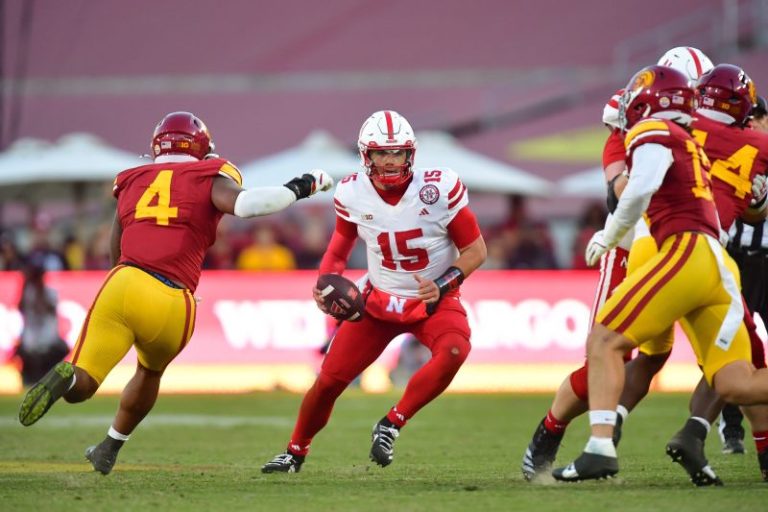
“He was worn out. A little beat up, tired,” Dana Holgorsen says of his first meeting with Nebraska quarterback Dylan Raiola. “His head was spinning.”

This felt all but inevitable with Raiola. Just a matter of when, and who would pick up the pieces when it broke. 

That someone was Holgorsen, who fittingly was in the process of reorganizing his own unraveling as – get this – a defensive analyst at Nebraska. One of college football’s elite offensive minds and a year removed as head coach at Houston, Holgorsen was breaking down defensive game film last season for Cornhuskers coach Matt Rhule when hope in Lincoln began to look a whole lot like the ugly that got Rhule hired in the first place.

Their paths converged in one desperate bye week, after Rhule demoted offensive coordinator and play caller Marcus Satterfield. The coach whose program was spinning its wheels in his second season, and the heralded freshman quarterback who finally hit the wall. 

And Holgorsen, whose quarterbacks have averaged 31 touchdown passes a season since 2016. 

“We just sat there and talked about everything,” Holgorsen said. “Ten days later, I’m calling plays in the Coliseum at USC. It elevated pretty quickly. It was like learning Japanese in a month.”

Fast forward to this summer, and there was Raiola representing Nebraska at Big Ten media days in Las Vegas. Dressed sharply in a black suit with red piping, a pattern of playing cards on the satin lining of his coat.

As smooth as the night is long on The Strip. 

“I’ve never felt more comfortable playing football than I do right now,” Raiola said.

It has been a long road, made more difficult by what he saw coming all along, what he couldn’t see — and frankly, some difficulty of his own making. He knew what he was walking into at Nebraska, and it wasn’t just the idea of rebuilding a lost national power. 

His name was All-America royalty at Nebraska (his dad and uncle starred for the Huskers), and he played hard to get for nearly two years of high school hype before finally signing. He committed to Ohio State, then switched Georgia, and then made Rhule sweat it out before finally committing to Nebraska two days before national signing day. 

And the next thing you know, Nebraska wins five of six to begin his freshman season — before losing three in a row and staring at another season of failing to simply qualify for a bowl game. Imagine that, one of the greatest dynasties in college football history in the 1990s, working on an eighth consecutive season of failing to win six lousy games.

The Huskers eventually got bowl eligible, and a seventh win with a Pinstripe Bowl victory. But the enormity of that weight, the pressure of lifting a program – the hopes of a state – from that abyss, hasn’t subsided.

“This is what I wanted,” Raiola said. “It’s a privilege to be in this situation.”

So he got in better shape in the offseason, dropped his body fat percentage and increased strength and mobility. And he dove into all things Holgorsen, knowing full well what his quarterbacks have accomplished in the past. 

Graham Harrell, Case Keenum, Geno Smith, Will Grier, Clayton Tune. A Who’s Who of mega seasons over the 20 years of college football.

More to the point: four of those quarterbacks had breakout seasons in their second full season as starters. Keenum had 44 touchdown passes, Smith had 42, Grier had 37 and Tune had 30. 

Raiola had 13 touchdown passes in 2024.

But get this: Holgorsen says Raiola’s football IQ is better than any of his previous quarterbacks.

“He’s intelligent and highly competitive,” Holgorsen said. “He understands run checks and coverages, and fronts and protections, better than anyone I’ve been around. One hundred percent, it’s not even close.”

It’s not difficult to see where this is headed, where happenstance arrived and three paths met and the symmetry is undeniable. Rhule needs Raiola, who needs Holgorsen, who needs Nebraska.

Raiola was talking about the College Football Playoff last month, and why couldn’t Nebraska expect to be there? Why wouldn’t that be the goal?

Rhule added some key pieces from the transfer portal to energize the offense, and more than anything, he kept both Raiola and Holgorsen. It wasn’t long after Nebraska beat Boston College for its first bowl win since 2015, that vultures began circling ― for both Raiola and Holgorsen. 

Rhule told Holgorsen he needed a decision quickly, and Holgorsen found himself staring at Raiola once again. 

“I said are you staying? Because if you are, I am,” Holgorsen said. “He said he was, and we’ve been full-go since.”

Want to know how committed Holgorsen is to Nebraska and Raiola? When he started calling plays last November, Holgorsen used the existing offense and terminology — instead of his wildly successful system based on Mike Leach’s Air Raid.

Instead of doing a complete install this offseason, he kept Satterfield’s offense and verbiage, and added some of his Air Raid principles. Better for one guy to learn a new system, he says, than half a team.

How a play is called might be different, Holgorsen insists, but what it looks like is always the same. If it looks anything like the second season for previous Holgorsen quarterbacks, it won’t look anything like the last decade of Nebraska football. 

And that’s the whole point of it all. 

“I know what people are thinking, it’s Nebraska, what have they done,” Raiola said. “We have a chance to change all of that.”

There’s your inevitable. Maybe it’s just a matter of when.

Matt Hayes is the senior national college football writer for USA TODAY Sports Network. Follow him on X at @MattHayesCFB.

This post appeared first on USA TODAY

The NFL preseason: the best time of the NFL calendar for overreactions. Naturally, quarterbacks – and rookie quarterbacks, specifically – are the best targets for these overreactions.

Sixteen rookie quarterbacks made their NFL game debuts in the first week of preseason action over the weekend, and there was plenty of variance in the quality of their performances.

There was also plenty of room for questions as they played differing amounts of time against differing levels of opposing defenses.

In exhibition action, these young gunslingers play limited snap counts and get in reps against defenders that run the full spectrum of opponents’ depth charts. While early projections are possible after preseason action, the best evaluations can’t truly start until the ‘real thing’ – when the regular season starts and games matter more.

Nevertheless, USA TODAY Sports is here to rank the 17 rookie quarterbacks – including Chargers rookie DJ Uiagalelei, who debuted in the Hall of Fame Game July 31 – to throw a pass in the first week of preseason exhibition games in 2025.

Rookie QB rankings after Week 1 of the NFL preseason

Seventeen rookie quarterbacks threw a pass in the first week of the NFL preseason. Sixteen of them were making their pro debut – the aforementioned Uiagalelei played in his team’s Hall of Fame game matchup with the Lions.

Here’s how they all rank after the first week with a full slate of preseason action:

17. Graham Mertz, Houston Texans

An NFL debut to forget for the former Florida Gator.

One play into Mertz’s first NFL appearance, he threw an interception. Rolling out to his left, Mertz appeared to double clutch his first pass attempt before letting it sail over the head of Xavier Johnson an into the arms of a diving Ambry Thomas.

Things didn’t improve from there as Mertz threw two more interceptions – both to Kahlef Hailassie – to end his outing. Every Texans possession in the fourth quarter featured Mertz under center and all three ended with an interception before the team had advanced the ball 15 yards.

16. Quinn Ewers, Miami Dolphins

From his first snap, Ewers looked out of sorts in his NFL debut.

His first pass attempt was air-mailed, intended for a receiver running a quick out to his left. His second pass attempt also ended up too high for his target, who got crunched by a defender on both sides. When Ewers dropped back a third time, his left tackle got pancaked, and the quarterback scrambled out of the pocket as he felt the pressure. The rush eventually got home with a strip sack and another Bears defender recovered to secure the turnover.

For the rest of the game, Ewers’ poor ball placement on his throws left his receivers largely unable to make plays. When he wasn’t throwing too high, defenders were able to break up many of his throws because he’d leave the ball within reach of the defensive back. Even on several of Ewers’ completions, his receivers had to stop to make the catch before a swift tackle rather than catching on the run and turning upfield for extra yardage.

15. Kyle McCord, Philadelphia Eagles

Much like Ewers, McCord appeared unprepared for NFL action in his first game as a pro. The Eagles’ backup only completed one of his five pass attempts, which meant he had as many completions as he had interceptions.

McCord never looked comfortable in the pocket. On most of his dropbacks, his feet were chopping at the turf, preventing him from making a good base to get set and make a throw. Whenever his feet stopped moving, it started to telegraph that he intended to throw. McCord’s long time in the pocket – his time to throw of 3.24 seconds was second-longest of rookie QBs over the weekend, per PFF – allowed defenders to get pressure as well, which didn’t do him any favors.

14. Riley Leonard, Indianapolis Colts

Leonard’s outing was less overtly bad compared to those of Mertz, Ewers and McCord. He played the entire second half for the Colts and showed off some of the tools he has as a passer and runner that made him worthy of a late-round flier pick.

Leonard ran into trouble a few times because he wasn’t able to put enough touch on his passes to avoid getting them batted down – both at the line of scrimmage and downfield. Occasionally, poor ball placement let defenders get in on his receivers and gave them a chance to make a play on the ball.

Leonard’s worst plays came when he was under pressure. Though he sometimes was able to scramble his way out of it for a gain, there were too many times that he panicked, let his eyes drop and was unable to make any play. The worst two instances of this led to an intentional grounding and his interception.

Still, there were a couple of really nice throws, and Leonard made a good showing of what he can do with his legs.

13. Taylor Elgersma, Green Bay Packers

Not a ton to take away from Elgersma’s quick outing with the Packers. He completed three of his four pass attempts for 24 yards and looked decent enough.

One thing that ticks a couple of points off for Elgersma is his tendency to ‘fade away’ on his passes. On a couple of his completions, the Canadian drifted backwards after making a throw, giving the impression that he could add more zip to his throws if he had his momentum driving forward through his passes rather than backward.

12. Connor Bazelak, Tampa Bay Buccaneers

Bazelak looked really nice in his short outing with Tampa Bay. Similar to with Elgersma, it was hard to take too much away from just nine pass attempts – though completing six of them for a 67% completion rate is always a good touch.

There weren’t any deep bombs or highlight-reel plays, but he showed off his quick release on short throws, nice touch on some medium throws to beat zone coverage and some good zip against man coverage to find his open receivers.

11. Tyler Shough, New Orleans Saints

Shough had a couple of ‘welcome to the NFL’ moments but also had some really notable parts of his Sunday performance that indicated he is worthy of being an NFL quarterback.

The Saints and head coach Kellen Moore threw their rookie second-rounder right into the fire with a two-minute drill to close the first half. Shough managed to string together a 10-play, 52-yard drive – with some help on 10 yards of defensive penalties – in just over a minute and a half to get New Orleans into the red zone and in field goal range.

Shough’s performance coming out of the half is best described as ‘up-and-down.’ The Saints’ second half-opening possession was a 3-and-out that ended with a sack. Their second possession, Shough threw a pick-6 after staring down his receiver from the moment he took the snap. On the following drive, Shough completed an impressive, 54-yard touchdown pass. After that, another sack, this one on a play he should have just thrown the ball away on second down.

Shough didn’t quite crack the top 10, but his two-minute drive to end the first half and long touchdown pass were good signs in his debut.

10. Brady Cook, New York Jets

The best word to describe Cook in his debut outing with the Jets is comfortable.

The moment didn’t seem too big for the undrafted free agent, who looked poised in the pocket throughout his outing after coming in on the Jets’ second drive of the game and playing until halftime. He made easy throws with zip on quick passes, made on nice throw on the move to hit a receiver on the boundary despite a bad snap and showed off some nice touch on deeper passes downfield.

His best throw given the situation was a third-down play where he hit a receiver over the middle as the pocket collapsed toward him. Cook got hit shortly after throwing and it would have been a first down if his receiver had gotten enough depth.

Cook also showed off some of his ability with different arm angles on a couple of plays to avoid getting his pass batted at the line of scrimmage.

9. DJ Uiagalelei, Los Angeles Chargers

Uiagalelei threw one pass and completed it for a 51-yard gain. It was slightly underthrown and maybe could have been a touchdown, but it’s hard to knock him too much given the result of the play.

8. Max Brosmer, Minnesota Vikings

Brosmer didn’t play too many snaps for the Vikings in his first preseason game, but there was a lot to love about the plays he made late.

Of his eight attempts, Brosmer had five completions, a few of which showcased excellent anticipation and picture-perfect ball placement to get the ball to his receiver in tight coverage.

He gets knocked down a spot because of his fumbled snap, but it was an overall impressive day for the UDFA out of Minnesota.

7. Jalen Milroe, Seattle Seahawks

Milroe’s legs were the true star of his debut outing with Seattle, but he made several good plays with his arm too.

Milroe was second on the team with his 38 rushing yards on three attempts and had slightly better marks in his completion rate and passer rating than fellow Seahawks quarterback Drew Lock on Thursday night.

The two best throws Milroe made were his zone-beater pass that he got to Ricky White over the hand of a linebacker and just in front of the cornerback, as well as his play-action bootleg throw to Tyrone Broden Jr to get Seattle in the red zone.

Milroe could still learn to trust his arm a bit more than his legs, as there were a few scrambles that felt preemptive and unnecessary, but there’s clear dual-threat potential in his game that the Seahawks may be looking to exploit down the road.

6. Cam Miller, Las Vegas Raiders

Not a whole lot to say on Miller either, given he only attempted seven passes. But he completed six of them, including a really nice touchdown throw off of a pump fake.

He also got the Raiders into Daniel Carlson’s field goal range after starting at Las Vegas’ own 32 with 25 seconds left. Carlson’s 55-yard attempt got blocked, which soured the conclusion of an otherwise great drive for Miller.

5. Cam Ward, Tennessee Titans

The Titans didn’t give fans a long look at Ward, the No. 1 pick who is expected to be the team’s Week 1 starter. But there were flashes of excellence to go with some mistakes in his debut.

The biggest takeaways on Ward’s outing is that he’s already got a great connection with lead receiver Calvin Ridley, but he just needs to polish up some parts of his game. His drifting from empty pockets without pressure got him into trouble on his first drive, and rushing a throw with poor footwork led to a near-interception on his second drive.

The anticipation and good ball placement that made Ward so highly touted were also on display though and should give Tennessee fans a reason to be excited.

4. Shedeur Sanders, Cleveland Browns

Sanders was the only rookie quarterback to throw two touchdown passes in his debut, both of which were really nice passes placed where only his receivers could get them.

He also showed off some skill as a scrambler when he got into trouble, picking up a couple of first downs with his legs when things got dicey.

But Sanders also had more than a few missed opportunities with poor throws to open receivers that hold him back from a higher rank on this list. In addition, he took too much time in the pocket – a rookie quarterback-leading 3.48 seconds to throw, per PFF – which invited pressure and got him into those ‘dicey’ situations. That spin move he loved using to evade pressure at Colorado ended in a near-sack on one fourth down play.

Yet the two touchdown throws really stand out as the type of plays that show Sanders’ high ceiling as a passer with the anticipation he had and placements he made between defenders.

3. Ben Wooldridge, New England Patriots

Wooldridge, an undrafted free agent, completed nine of his 12 passes for the Patriots on Friday and was the team’s leading passer with 132 yards. His three incompletions: a drop and two batted balls.

Unless things go very wrong for New England, Wooldridge won’t have much of a chance to play since he’s firmly behind Drake Maye on the depth chart. But the zip on his throws and poise in the pocket against Washington will definitely make him a consideration to make the roster out of training camp if he keeps his arrow trending up.

2. Seth Henigan, Jacksonville Jaguars

Henigan had the best PFF grade of any rookie passer in the first week of the preseason. He completed 11 of his 14 passes for 78 yards and managed to complete a crazy pass to avoid taking a sack with the help of running back LeQuint Allen.

PFF also listed two of Henigan’s plays as big-time throws, which were tied with Sanders for the lead among all rookie quarterbacks in Week 1 of the preseason.

1. Jaxson Dart, New York Giants

Dart was the rookie quarterback of the week to start the preseason. He was far from perfect, but he did a ton to show why he was worth the Giants’ trade up into the first round to draft him.

The most notable play of Dart’s day was easily his 28-yard touchdown pass to Lil’Jordan Humphrey, executed with perfect touch to hit the receiver on the run despite having a defender crashing down on him. The rookie took a big hit after the throw but was fired up seeing the completion and touchdown.

Dart’s ability to avoid pressure despite occasional chaos in the pocket was what won him the weekend. The touches he added as a scrambler – his 24 rushing yards led the team – only added to his strong performance.

If he hadn’t missed a couple of third-down chances – one of which PFF called a drop – his spot at the top of this list would be even less of a question.

As it stands though, Dart’s poise and execution on Saturday made him the rookie QB king of preseason Week 1.

This post appeared first on USA TODAY

A new Netflix docuseries, ‘America’s Team: The Gambler and His Cowboys,’ chronicles the Jerry Jones era of the Dallas Cowboys.
The series covers Jones’ purchase of the team, the dynasty of the 1990s, and controversies surrounding key figures.

“I don’t like it like that. I like the pain,” Jerry Jones says when he is asked the question of why he doesn’t hire a general manager for his football team, instead of him being in charge of player personnel.

That answer certainly isn’t going to fly with die-hard Dallas Cowboys fans, who for years have implored Jones to turn over those duties to a more seasoned football mind, but instead, the team is ridiculed when it reaches an early end during the NFL playoffs or misses the postseason altogether, like they did in 2024.

Being relevant in the sports world in this day and age, with the saturation of social media, talk radio, and mindless, numbing, bloviating morning shows, is a golden ticket that you can’t buy. Unless your team is the Cowboys, who haven’t sniffed a Super Bowl appearance in three decades but are talked about ad nauseum as if their exploits on the field recently warrant a minute of anyone’s time.

There is one person largely responsible for that: Jerral Wayne Jones Sr., the 82-year-old Hall of Fame owner and general manager of the five-time Super Bowl champions.

Netflix has hopped on the Jerry’s World bandwagon with a fascinating sports series, titled ‘America’s Team: The Gambler and His Cowboys,’ premiering Aug. 19 on the streaming service, because let’s be real, there were cameras nearby and a chance for people to talk and dissect the film before the NFL starts its 106th season next month.

The film is directed with a slow, grinding pace by veteran documentarians Chapman and Maclain Way (‘The Battered Bastards of Baseball,’ ‘Untold: The Race of the Century’), who certainly benefit from getting unfettered cooperation from those intimately involved with the Cowboys.

Jones’ ‘gamble’ has certainly paid off: A $140 million investment in 1989 when he bought the team has turned into the most valuable sports franchise in the world, valued at $10 billion. They added three championships during his ownership, and in turn, have helped turn the NFL into its own money-printing press.

The eight-part series doesn’t skip any of the major contributors of the 1990s Cowboys, who would have set social media on fire if it existed back then.

The dozens of athletes and journalists featured provide context, praise, and biting criticism about Jones and do so with incredible insight, and the series also includes appearances from former President of the United States George W. Bush, Nike co-founder Phil Knight, and former Fox Corporation chairman Rupert Murdoch.

“The Saturday Night Massacre,” the first episode, centers around Jones buying the team from Bum Bright – and jettisoning anything that wasn’t nailed down – telling you all you need to know about what’s coming. It sets the tone for what essentially most documentaries are these days: In this case, a glorified infomercial with just enough tears, Texas-sized egos, downright delusion, and lies (depending on who is answering the questions) to keep even the most skeptical viewers glued to their chosen device.

Jones doesn’t mince his words: His team is the best soap opera this side of “General Hospital”, and he wants the credit for his team’s success, direct or not. Yes, even when his team was losing $1 million a month, because he is the owner, president, and general manager.

The series has time to go through the paces, consistently going from the 1990s back to Jones’ time at the University of Arkansas, just as “The Last Dance” did in telling the story of the Michael Jordan-era Chicago Bulls.

For example, when asked about the infamous White House, a party and drug den near the team’s old headquarters at Valley Ranch, it got the ‘no comment’ treatment, like it was a matter of national security from numerous interviewees – except for wide receiver Michael Irvin, who was gleefully willing to spill the tea about his exploits.

Former head coach Jimmy Johnson gets a healthy amount of play, especially in the first four episodes, as well as the other ‘Triplets,’ fellow Pro Football Hall of Famers Troy Aikman and Emmitt Smith.

“Dictator” and “a–hole” are the terms most commonly used by Cowboys players to describe Johnson, who, with Jones, bickered like a bunch of third graders, debating who deserves credit for building those championship teams. The exchanges were repetitive, long-winded, and exhausting, sometimes slowing down the documentary; there are only so many times you can repeat the phrases ‘500 coaches’ or ‘I’m going to fire that (expletive),’ before it gets tiresome. But, of course, with the recent kumbaya singing, it allowed long-standing hurt feelings to be set aside, culminating with Johnson being inducted into the team’s Ring of Honor in 2023, featured in the final episode.

Perhaps the most emotional part of the documentary is the penultimate episode titled “Cocaine Cowboy,” which focuses on the literal trials and tribulations of Irvin, from his drug possession charge to being the subject of a murder-for-hire plot, to stabbing a teammate with scissors. The raw feelings from those situations, as well as the retirement of the Triplets and the crumbling of the empire, make for a compelling watch, in a ‘Taxicab Confessions’ kind of way, and almost makes you feel sorry for all involved – almost.

While nearly an entire episode is focused on Irvin, Jones skirts by with his only mere, or non-mentions of his controversies over the past 35 years, including a paternity suit, him being captured in a photo showing up at a 1957 protest to prevent six African American students from entering North Little Rock High School, or his stance concerning Cowboys players kneeling before the national anthem.

Jones seems reflective, sometimes through tears, when discussing subjects of his past, but also shines when storytelling, including mentions of Teamsters, the mob, and an interesting Jimmy Hoffa soliloquy when Jones attempted to buy the then-San Diego Chargers.

Jones has no doubt done incredible things for his team and the NFL at large, but the documentary doesn’t need eight episodes, some of which were not necessary to get the point across. It is a formulaic (and sometimes cringy) watch, complete with the cheesy western-style background for the subjects who are interviewed.

Overall, the documentary does its job, satisfying those who love and hate the Cowboys, while telling the story of one of the most fascinating franchises in sports history.

This post appeared first on USA TODAY
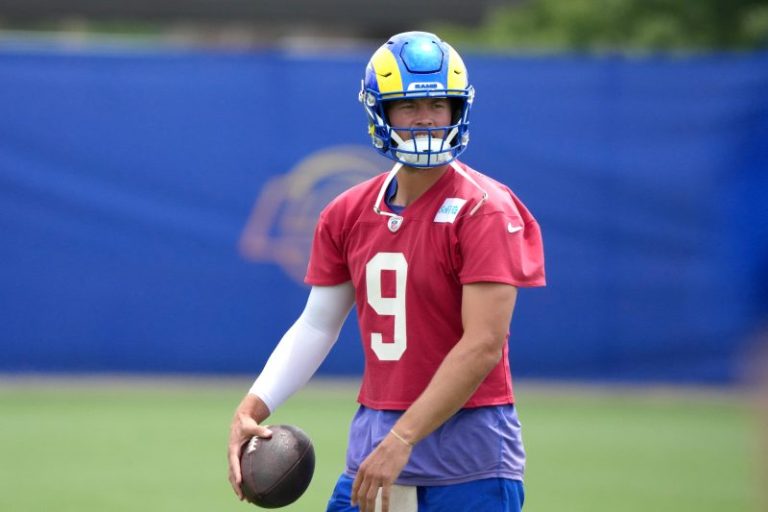
“I think the fair answer is, I’m going to take it a day at a time as well,” Los Angeles Rams coach Sean McVay answered on Monday, Aug. 11 when asked if he was concerned about Stafford’s back ailment. “I can’t be 27 days from now in Houston.”

It’s fair to raise an eyebrow about Stafford’s aggravated disk in his back that’s caused him to miss training camp. The veteran quarterback was supposed to practice in some capacity on Monday after a throwing session on Saturday, but he didn’t “feel great” following the workout.

“I feel for Matthew because of how much he wants to be out there and feel good. Ultimately what ended up happening, had a great workout, felt good, but then come in (Monday), it doesn’t feel great. (I) didn’t think that was the right decision to be able to push him,” McVay said. “We’re going to be smart, but he didn’t feel good enough and we didn’t think it was the right thing to do based on how he woke up feeling today.”

The Rams are “smart” to be cautious with Stafford. He’s a 37-year-old quarterback entering NFL season No. 17. He’s in the fifth year of McVay’s offense and knows the scheme. The Rams have more than three weeks until their 2025 season opener at SoFi Stadium against the Houston Texans.

Twenty-plus days out, it’s not time to be overly concerned. However, the concern meter rises incrementally each passing day Stafford is out of practice. Stafford is missing valuable practice reps with new addition wideout Davante Adams. Plus, there’s natural rust the veteran quarterback will have to work through when he does return.

How many practice reps will Stafford have before Sept. 7? Will Stafford be able to shake off any rust from his absence before it’s time for the real action? Two of the Rams’ first three games are against playoff teams from a season ago, including the defending Super Bowl champion Philadelphia Eagles.

The positive news is the Rams have shown the capability to rebound from a shaky start. They began the 2024 season 1-4 before rallying to win the NFC West title. The bad news is Stafford’s a 37-year-old quarterback with back issues. Stafford was sacked 28 times last year. He was hit 63 times, the most in his four seasons in Los Angeles. What happens when Stafford takes hits this season? Back issues tend to occasionally flare up for an athlete Stafford’s age.

The Rams are right to exercise caution. It’s not time to be concerned. But the situation can change quickly, especially with a veteran quarterback’s back.

“He looked damn good throwing the other day. Nobody’s tougher than him,” McVay said. “We also want to see if we can have him feeling as good as possible. That’s super important.”

This post appeared first on USA TODAY
The NBA announced its four-game slate for Martin Luther King Jr. Day on Jan. 19, 2026.
The games will be broadcast on NBC and Peacock.
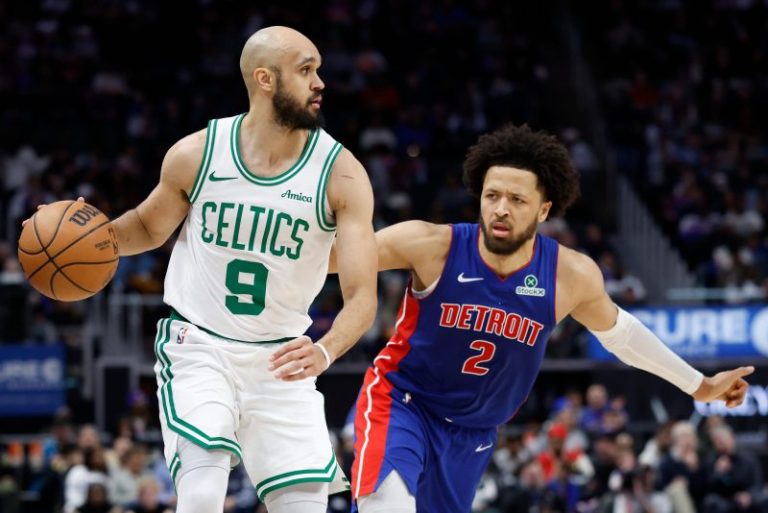
Matchups include Mavericks vs. Hawks, Timberwolves vs. Knicks, Thunder vs. Cavaliers, and Celtics vs. Pistons.

While the NBA may go head-to-head with the NFL on Christmas Day, there’s one national holiday the league can celebrate all by itself: Martin Luther King Jr. Day.

The NBA will have a slate of four nationally televised games on Monday, Jan. 19, the league revealed on Tuesday, Aug. 12.

The full 2025-26 NBA schedule is set for release later this week, but details have already begun to roll out. The opening day doubleheader. The five-game Christmas Day schedule. The two-game slate in Europe.

The latest reveal is the MLK Day quadruple header that will keep hoops fans glued to NBC and Peacock for the entire day.

Martin Luther King Day NBA games

The league announced both the matchups and the game times for the MLK Day slate:

Milwaukee Bucks at Atlanta Hawks , 1 p.m. ET (Peacock)
Oklahoma City Thunder at Cleveland Cavaliers, 2:30 p.m. ET (NBC | Peacock)
Dallas Mavericks at New York Knicks, 5 p.m. ET (NBC | Peacock)
Boston Celtics at Detroit Pistons, 8 p.m. ET (NBC | Peacock)

This post appeared first on USA TODAY