Archive

2025

Browsing

Let me take you to the intersection of dumb and dumber, and the undoing of a once proud conference of legends and leaders.

There, standing proudly in the middle of it all, is Big Ten commissioner Tony Petitti and his reported 28-team College Football Playoff idea.

And by idea, I mean the Big Ten’s postseason desire specifically leaked to gauge the winds of change. 

This is where we are with the oldest conference in college football, the one-time collection of Midwest schools and foundational stability of the sport that not long ago held itself above the fray of the ever-changing whims of public opinion and stayed the course.

PATH TO PLAYOFF: Sign up for our college football newsletter

But legends and leaders, everyone, has become dumb and dumber. 

The metamorphosis began on a dreary, confusing day in the summer of 2020 when the world was coping with something called COVID-19. It was then, on a conference call with the other power conferences commissioners, where the seeds of this strange undoing blossomed. 

The commissioners were attempting to figure out a non-conference schedule for the pandemic season, when then-Big Ten commissioner Kevin Warren interrupted the conversation and declared, “We’re the Big Ten, we lead, we don’t follow” — and hung up. 

From that moment forward, the moves made by the Big Ten – a group of schools former legendary commissioner Jim Delany once called the “conscience of college sports” – fundamentally and profoundly altered amateur sports.

It wasn’t long after the failed conference call that Warren canceled the fall season for the Big Ten, and pitched the idea of spring football and playing two seasons in nine months. Maybe the dumbest idea ever.

Stick a pin in that, people. We’ll get back to the dumbest of dumb. 

In that same pandemic season, after the Big Ten was forced into playing in the fall because everyone else found a way to play through the obstacles, it “returned to play” with the rule that all teams had to play six games to be eligible for the Big Ten championship game (and by proxy, the CFP). 

Until, that is, it became clear that undefeated Ohio State would only play five games. Then the rules were readjusted midstream, and lowly Indiana got jobbed when the path was cleared for the blue blood Buckeyes. 

But it wasn’t until Texas and Oklahoma decided in 2021 to leave the Big 12 for the SEC that dumb officially hit the fan in the Big Ten. That singular move began a cavalcade of dumb that tsunami’ed over more than a century of smart, measured decision-making.

Warren convinced the Pac-12 (which never did anything without big brother’s stamp of approval) and the ACC that the SEC was the death of college sports, and the three power conferences needed to band together in an “Alliance” of like minds and goals for the future. And to stop the SEC at all cost.

Less than a year later, Warren stabbed his “partners” in the back by inviting Southern California and UCLA to join the Big Ten, thereby completely destabilizing the Pac-12 and, after the dominoes of change began to fall, every other conference in college football. 

The ink was barely dry on that dumb when the Big Ten realized two important things: travel was going to be extremely difficult (still is), and USC and UCLA needed partners on the West Coast. So Oregon and Washington were invited, which eventually led to Stanford and California moving to the ACC — a move rivaling all for dumbest of dumb.

Two years later, with Petitti new on the job and the SEC in the middle of yet another championship run, the Big Ten decided to essentially look the other way on Michigan’s illegal advanced scouting scheme.

You want dumb? Check out this dumb: Michigan, already being investigated by the NCAA for illegal contact with players during the pandemic season, had a second NCAA investigation opened in the middle of the 2023 season — this time for the advanced scouting scheme. 

But instead of suspending Michigan coach Jim Harbaugh for the season because he and the program were repeat offenders, Petitti decided a three-game suspension would suffice for a coach and a team that had the talent to win it all.

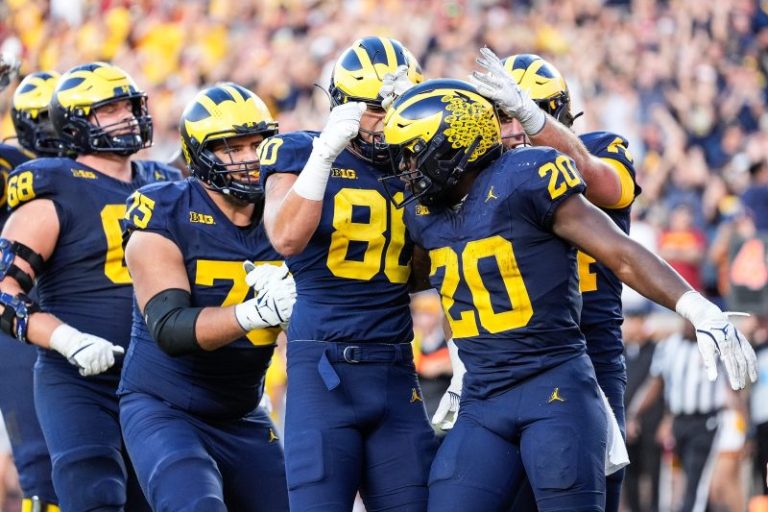
I know this is going to shock you, but Michigan won the whole damn thing. 

Fast forward to last month, and the Big Ten is coming off back-to-back national championship seasons. The conference hasn’t been this strong in decades, and SEC coaches are begging to play non-conference games against Big Ten schools. 

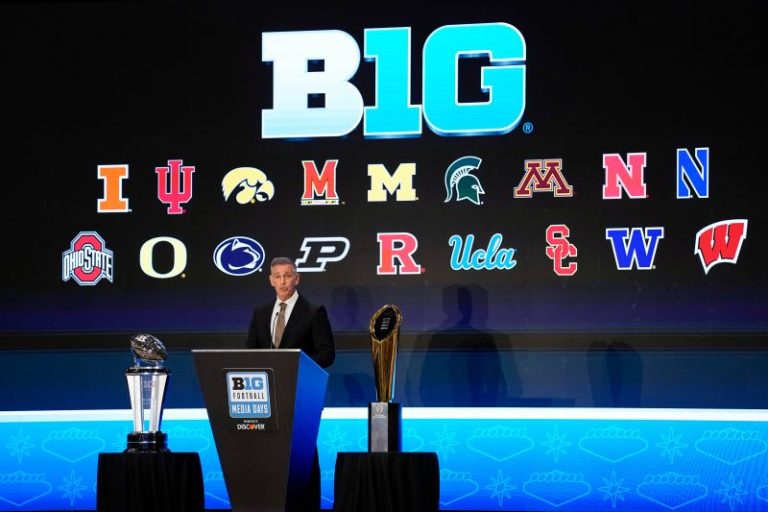
So what does Petitti do? Because of scheduling conflicts in Indianapolis, he moves Big Ten media days to Las Vegas.

Without the swooning Ohio State media hoard and wall-to-wall coverage from the Big Ten Network, it was a barren wasteland of opportunity. What should have been a time for the Big Ten to walk tall, stick out its chest and stand above everyone else in college football, devolved into tumbleweeds in the desert.

There was more energy on the fake beach, a football field away at Mandalay Bay resort.

This leads us all the way back to the dumbest of dumb: the Big Ten’s proposed super duper, extra large CFP. Not to be confused with another dumb idea: the 4-2-1-3 CFP model that the Big Ten, and only the Big Ten, wants for the new CFP contract in 2026.

You remember that one: the Big Ten and SEC get four automatic spots in the 16-team field, and get the opportunity to earn one or more of the three at-large selections. 

In a 28-team model, the Big Ten and SEC would each get seven automatic bids, and the ACC and Big 12 five. Because nothing says battling for the postseason quite like eight-win Louisville and Baylor reaching the dance.

Or more to the point: five-loss Michigan with an automatic pass to the CFP.

“Formats that increase the discretion and role of the CFP Selection Committee,” Petitti said last month at Big Ten media days, “Will have a difficult time getting support from the Big Ten.”

We’re the Big Ten. We lead, we don’t follow. 

All the way to the intersection of dumb and dumber. 

Matt Hayes is the senior national college football writer for USA TODAY Sports Network. Follow him on X at @MattHayesCFB.
This post appeared first on USA TODAY

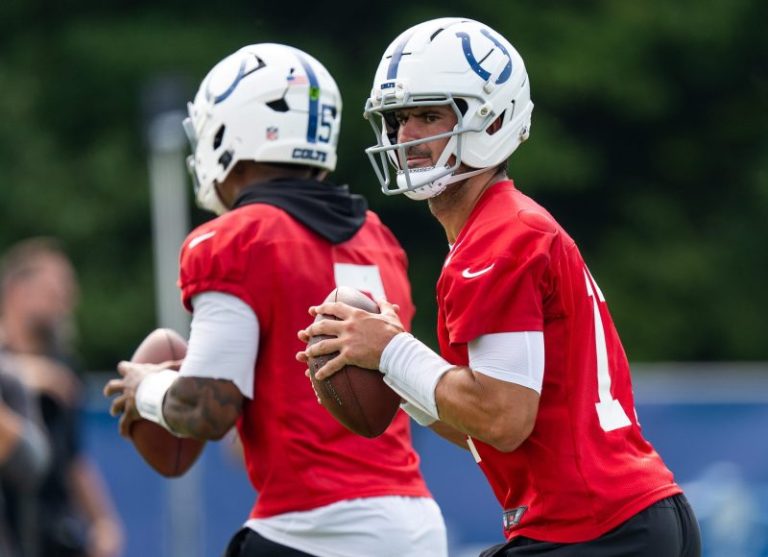
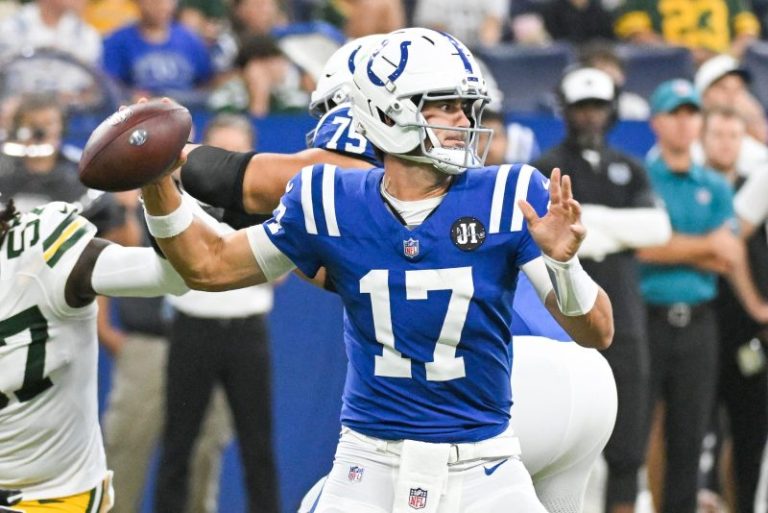
The former No. 6 overall pick in the 2019 NFL Draft by the New York Giants, Jones will be the Indianapolis Colts’ starting quarterback to open the 2025 NFL season. Jones was competing with Anthony Richardson, the Colts’ top pick in the 2023 NFL Draft, for the starting job in training camp.

It’s been an uneven road to this opportunity for Jones. New York benched him mid-season last year amid a five-game losing streak before releasing him Nov. 22. New York closed the season out by starting Drew Lock and Tommy DeVito. That duo went a combined 1-6 to close the season; the lone win came in a 45-33 shootout over the Colts in Week 17.

The Minnesota Vikings came calling for Jones’ services and signed him off waivers for the rest of the season at $375,000. He spent time on the practice squad and was behind starter Sam Darnold and backup Nick Mullens by the start of the playoffs. When free agency opened, the Colts signed Jones to a one-year, $14 million deal.

Now that he’s the starter, Minnesota could be the team that benefits from it instead of New York. Here’s why.

How Daniel Jones starting helps Vikings

Because Jones was most recently on the Vikings’ roster ahead of free agency, they are entitled to a compensatory draft pick in the 2026 NFL Draft regardless of how many snaps he takes as the Colts’ starter.

Jones being named the starter means he will likely take more snaps than if he started the season as the backup. The more snaps he plays, the earlier the compensatory pick will be.

It’s hard to predict with perfect accuracy which round the compensatory pick will fall in but OverTheCap has a formula and projections for each team based on contract value, free agents added versus free agents lost and playing time. OverTheCap predicts the Vikings will get a Round 4 compensatory pick for Jones signing in Indianapolis. Jones earning the starting job all but secures that.

That’ll be the second compensatory pick the Vikings will receive for losing a free agent quarterback this offseason. They’re projected to receive a Round 3 pick for Darnold signing with Seattle.

This post appeared first on USA TODAY

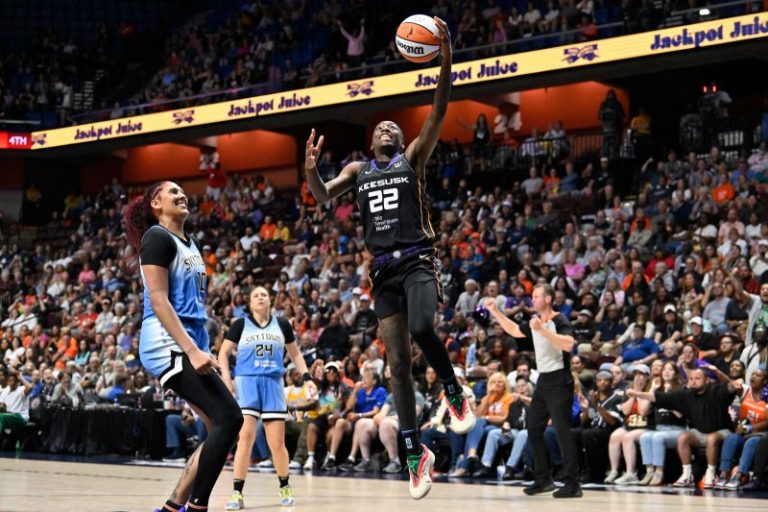
The owners of the Connecticut Sun, who had tentatively reached an agreement to sell the WNBA franchise, are now assessing their options to salvage the deal, according to an ESPN report, after the WNBA balked at a planned move of the franchise to Boston.

The Mohegan tribe, which bought the former Orlando Miracle and moved it to Connecticut in 2003, struck a deal earlier this month in which Boston Celtics minority owner Steve Pagliuca agreed to buy the club for a WNBA-record $325 million.

Pagliuca hoped to move the Sun’s home games from Mohegan Sun Arena in Uncasville, Connecticut, to Boston’s TD Garden, where the Celtics also play.

However, the league quickly stepped in and issued a statement emphasizing that ‘relocation decisions are made by the WNBA Board of Governors and not by individual teams,’ and pointing out that other cities bid for WNBA expansion franchises at the beginning that would take priority over putting a team in Boston.

Sources tell ESPN the tribe intends to present multiple options to the league to facilitate the sale.

Those options reportedly include a full sale to Pagliuca’s group, a sale to a group fronted by former Milwaukee Bucks owner Marc Lasry, selling only a minority stake in the franchise or allowing the WNBA to purchase the club for that same $325 million price tag.

Sources also tell ESPN that the WNBA has offered to buy the Sun for $250 million so it could then steer the franchise toward an ownership group in one of its preferred expansion cities.

In the last three rounds of bidding for WNBA expansion franchises — which resulted in new teams in Cleveland (in 2028), Detroit (2029) and Philadelphia (2030) joining the league — Boston never submitted a proposal.

This post appeared first on USA TODAY

The Indianapolis Colts have made their choice at quarterback.

Daniel Jones has been named the starter ahead of incumbent first-stringer Anthony Richardson Sr., coach Shane Steichen announced Tuesday.

‘He’s our starting quarterback for the season,’ Steichen said of Jones. ‘I don’t want to have a quick leash on that. I feel confident in his abilities.’

The Colts signed Jones to a one-year, $14 million contract this offseason amid continued turbulence with Richardson, the No. 4 overall pick in the 2023 NFL draft who was benched last season for Joe Flacco amid a series of struggles and a request to exit a game due to fatigue. Richardson later returned to the lineup but has started just 15 games in two years and his 47.7% completion percentage in 2024 ranked last among all regular starters in the NFL.

Throughout the offseason, Steichen harped on consistency as the key factor for the eventual winner of the competition. He returned to that theme Tuesday in explaining his decision-making process.

‘You guys heard me talk about the consistency, and that’s really what I was looking for,’ Steichen said. ‘Really the operation at the line of scrimmage, the checks, the protection, the ball placement, the completion percentage – I think all that played a factor in it. Daniel did a great job doing it, and (Richardson) made strides in that area, but I do feel like he needs to continue to develop in those areas.’

Jones, meanwhile, returns to the starting ranks after he was benched and subsequently released by the Giants last November during his sixth season with the team.

Despite Jones’ struggles the last two seasons, during which he threw 13 interceptions in 16 games, Steichen said the Colts had ample reason to believe the quarterback could helm an efficient offense.

‘Well, I think that he’s proven that he’s played good football in that 2022 season,’ Steichen said. ‘He had a hell of a year that year. I think that the highest completion rate in Giants franchise history that season. I know he’s had his ups and downs, but everyone’s journey is different, and I feel confident in his abilities.’

This post appeared first on USA TODAY

FORT LAUDERDALE, FL – If Inter Miami plans to keep its Leagues Cup title hopes alive, they may have to do so without Lionel Messi this week.

Messi, the Argentine World Cup champion, was not seen during the open portion of practice open to media on Tuesday, Aug. 19 – one day before the club’s Leagues Cup quarterfinal against Liga MX side Tigres UANL.

Inter Miami coach Javier Mascherano did not divulge whether Messi would be sidelined or play in the match set for 8 p.m. on Wednesday, Aug. 20. However, the coach said Messi trained separately from the club.

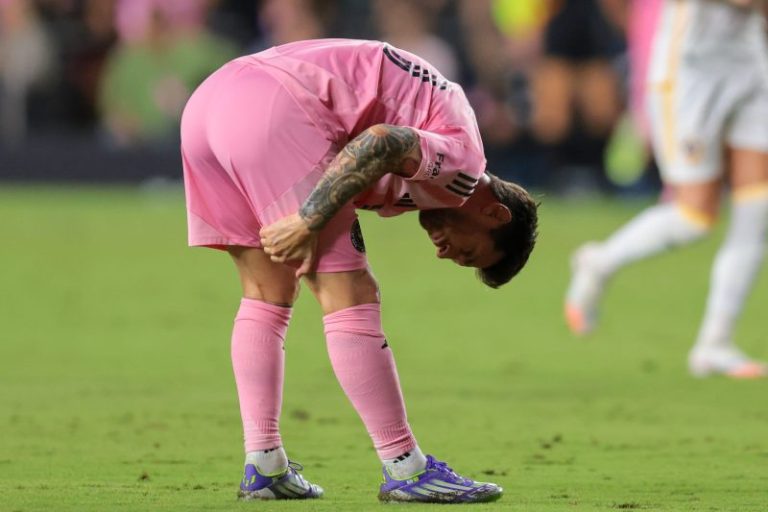
Messi has been dealing with a nagging right hamstring injury, which he appeared to reaggravate in an Aug. 16 MLS match against the L.A. Galaxy.

“We’ll see how he feels during the day [Wednesday], but he’s not ruled out of playing. I can’t tell you today whether he’ll play or not, because it depends a lot on how he feels,” Mascherano said.

Messi returned after a two-week layoff between games with three training sessions with teammates before facing the Galaxy. However, it’s clear his return was premature.

Messi played the second half of the match, but was quickly seen bending over and stretching his right leg at multiple points despite scoring a goal and delivering an assist to Luis Suarez in the 3-1 win.

In the final seconds of the match, Messi waited by the closest part of the pitch near the locker room area and walked immediately inside the stadium when the match concluded.

Messi initially suffered the injury during a Leagues Cup match on Aug. 2.

It caused him to miss two matches: Inter Miami advanced to the Leagues Cup knockout stage with a 3-1 win against Pumas on Aug. 6, then lost 4-1 to Orlando City in a regular-season match on Aug. 10. 

Messi – on Monday, Aug. 18 – was named to Argentina’s preliminary roster for two World Cup qualifying matches in early September.

Messi could potentially play his final match in his home country when Argentina hosts Venezuela on Sept. 4 in Buenos Aires.

Argentina has already qualified for the World Cup, while Messi has yet to declare he will play in the tournament. Messi will be 39 during the World Cup next summer.

Is Messi playing tomorrow?

It’s unclear whether Messi will play with Inter Miami vs. Tigres in the Leagues Cup quarterfinal on Aug. 20.

When is the Inter Miami vs. Tigres UANL match in Leagues Cup?

The match is Aug. 20 at 8 p.m. ET (9 p.m. in Argentina).

How to watch Inter Miami vs. Tigres UANL Leagues Cup match on TV?

The match will be available on FS1 in English, and UniMás in Spanish.

How to watch Inter Miami vs. Tigres UANL match on live stream?

The match will be available to live stream on MLS Season Pass via Apple TV, and the Apple TV+ channel.

Messi upcoming schedule with Inter Miami, Argentina

Aug. 20: Inter Miami vs. Tigres UANL (Leagues Cup quarterfinals) 
Aug. 23: D.C. United vs. Inter Miami, 7:30 p.m. ET (MLS regular season)
Aug. 26 or 27: Leagues Cup semifinals (if applicable)
Aug. 30: Inter Miami vs. Chicago Fire, 7:30 p.m. ET (MLS regular season)
Aug. 31: Leagues Cup final and third-place match (if applicable)
Sept. 4: Argentina vs. Venezuela (World Cup qualifying)
Sept. 9: Ecuador vs. Argentina (World Cup qualifying)
Sept. 13: Charlotte FC vs. Inter Miami, 7:30 p.m. (MLS regular season)

This post appeared first on USA TODAY

House GOP allies of President Donald Trump are nominating him for the Nobel Peace Prize amid his ongoing efforts to stop the war between Russia and Ukraine.

Rep. Andy Ogles, R-Tenn., is spearheading a letter to the Nobel Committee on Tuesday alongside Rep. Marlin Stutzman, R-Ind. 

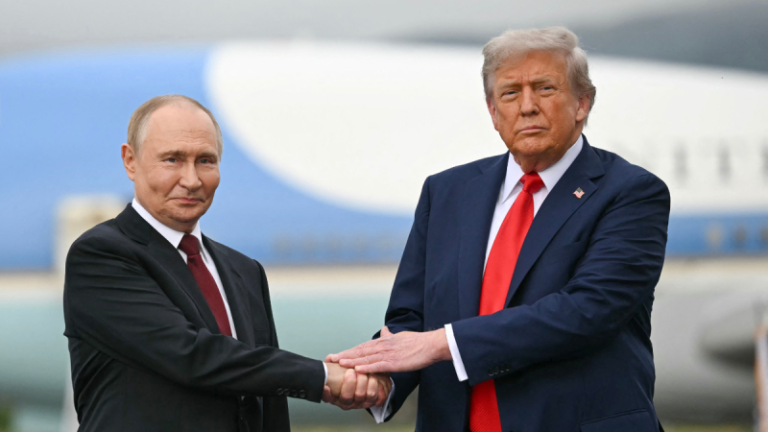
Their nomination hails Trump as a peacemaker on several fronts, the most recent being his summit with Russian President Vladimir Putin and subsequent meeting with European leaders, including Ukrainian President Volodymyr Zelenskyy.

‘We respectfully submit this nomination of President Donald J. Trump for the Nobel Peace Prize, in recognition of his concrete contributions to international fraternity, his leadership in reducing conflict and the risk of war, and his commitment to fostering dialogue as a path toward reconciliation,’ Ogles and Stutzman wrote. 

‘His decisive leadership in securing landmark diplomatic agreements, de-escalating global conflicts, and actively pursuing peaceful resolutions to some of the world’s most entrenched disputes has led and continues to lead to a more peaceful world.’

Trump met with Putin in Alaska on Friday, the first time the Russian Federation leader spoke face-to-face with a U.S. president since the pair previously sat down together during Trump’s first term. Both sides described the meeting in positive terms.

It was followed by an extraordinary gathering at the White House on Monday with Zelenskyy and other leaders, where Trump pledged Ukraine would have ‘a lot of help’ for security, while specifying that Europe would be Kyiv’s ‘first line of defense.’

Trump said on Truth Social later that he spoke with Putin at the conclusion of that meeting and ‘began arrangements for a meeting, at a location to be determined, between President Putin and President Zelenskyy.’

House Republicans’ nominating letter noted Trump’s move in ‘hosting a high-stakes summit with President Vladimir Putin in Alaska on August 15, 2025, focused on establishing a path towards a Ukraine ceasefire, prisoner exchanges, humanitarian corridors, and future security arrangements—a significant step in reopening direct, constructive dialogue.’

It also lauded him for ‘hosting a meeting with President Volodymyr Zelenskyy and numerous other European leaders on August 18, 2025, to discuss security guarantees for Ukraine and facilitating a discussion between Presidents Zelenskyy and Putin to bring about a just and lasting peace in the region.’

Russia invaded Ukraine in a bid to take over the ex-Soviet territory-turned-sovereign state in February 2022. 

Both countries have been locked in a bloody war that has taken thousands of lives, including heavy civilian casualties in Ukraine from Russia’s attacks on non-military targets.

Trump has argued multiple times that Moscow would not have invaded if he were president at the time.

Putin, along similar but not identical lines, said Friday that he believed there would have been no war if Trump was president at the time.

In addition to dealing with his efforts to resolve the Eastern European conflict, Ogles and Stutzman’s letter also lauded Trump for brokering a historic peace agreement between Armenia and Azerbaijan, ‘engaging directly with regional leaders on the Gaza conflict,’ along with peace agreements struck during his first term, such as the Abraham Accords.

‘Because of President Trump’s leadership, more people are alive today, and there are fewer wars in the world than before,’ Ogles told Fox News Digital.

‘He is a champion of America First statesmanship, proving that strength and prudence—not globalism—are the keys to lasting U.S. foreign policy. No other world leader can claim to have halted wars and begun resolving centuries-old disputes.’

Stutzman, calling Trump ‘the president of peace,’ added, ‘There is no one on the planet more deserving of this year’s Nobel Prize and multiple world leaders have recognized that.’

This post appeared first on FOX NEWS

A ticket-reselling operation used a network of fake accounts to bypass Ticketmaster’s security protocols to grab hundreds of thousands of tickets to hugely popular tours for artists like Taylor Swift and Bruce Springsteen and then re-sold them for millions, federal regulators said Monday.

The Federal Trade Commission alleges the operation used illicit software that masked IP addresses, as well as repurposed credit cards and SIM phone cards, as part of the scheme. It was run through various guises, like TotalTickets.com, TotallyTix and Front Rose Tix, but was run by three key individuals, the agency said.

In total, the group is accused of buying 321,286 tickets to 3,261 live performances from June 2022 to December 2023, in bunches of 15 or more tickets to each event at a total cost of approximately $46.7 million and then reselling them for $52.4 million, netting approximately $5.7 million.

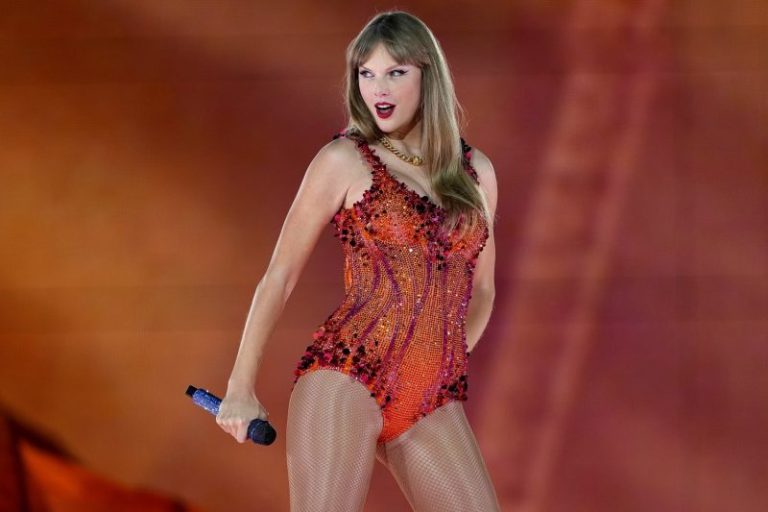
Taylor Swift.Lewis Joly / AP file

That includes $1.2 million from reselling tickets in 2023 for Taylor Swift’s record-breaking “The Eras Tour.” In one instance, the suspects used 49 different accounts to purchase 273 tickets for Swift’s March 2023 tour stop in Las Vegas, vastly exceeding Ticketmaster’s six-ticket limit, which they then sold for $120,000, the FTC alleges.

Another part of the alleged scheme involved using friends, family and paid strangers to open Ticketmaster accounts. The FTC says the defendants at one point printed up flyers in places like Baltimore claiming that participants could “make money doing verified van sign ups” in just “3 easy steps,” earning $5 for the account creation and $5 to $20 each time they received a Verified Fan presale code.

Ticketmaster came in for heavy criticism after fans complained of faulty technology and eye-watering prices for 2022 sales for Taylor Swift and Bruce Springsteen’s tours. The Verified Fan pre-sale for Swift’s tour crashed its site, which it blamed on “bot attacks” and bot fans who didn’t have invite codes. It was subsequently forced to postpone the sale date for the general public seeking tickets to Swift’s tour “due to demands on ticketing systems and insufficient remaining ticket inventory.”

In response, Swift alluded to broken “trust” with Ticketmaster, though she didn’t name it directly.

“It’s really difficult for me to trust an outside entity with these relationships and loyalties, and excruciating for me to just watch mistakes happen with no recourse,” she wrote in an Instagram message in 2022, adding: “I’m not going to make excuses for anyone because we asked them multiple times if they could handle this kind of demand and we were assured they could.”

Springsteen said in a statement at the time that “ticket buying has gotten very confusing, not just for the fans, but for the artists also” but that most of his tickets are “totally affordable.”

In March, President Donald Trump signed an executive order focused on curbing exploitative ticket reselling practices that raise costs for fans.

On Monday, FTC Chairman Andrew N. Ferguson said Trump’s order made clear ‘that unscrupulous middlemen who harm fans and jack up prices through anticompetitive methods will hear from us.”

“Today’s action puts brokers on notice that the Trump-Vance FTC will police operations that unlawfully circumvent ticket sellers’ purchase limits, ensuring that consumers have an opportunity to buy tickets at fair prices,” he said in a statement.

Ticketmaster itself has remained under federal scrutiny for violating a prior agreement to curb what regulators said was anti-competitive behavior. In 2024, the Justice Department and FTC under President Joe Biden opened a lawsuit against Ticketmaster’s parent company, LiveNation, that accused it of monopolizing the live events industry.

It was not immediately clear whether that suit is still active. In July, the parent company of the alleged operation charged Monday by the FTC, Key Investment Group, sued the agency to block its pending investigation into its sales practices, saying that ticket purchases on its site did not use automated software, or bots, and did not violate the 2016 Better Online Ticket Sales (BOTS) Act.

Representatives for the FTC and Justice Department did not respond to a request for comment. Ticketmaster is not accused of wrongdoing in the latest suit. It did not respond to a request for comment.

Strangely, in the latest complaint, the FTC includes a slide from an internal Ticketmaster presentation from 2018 that suggests the company was weighing the economic impact of imposing stricter purchasing caps that would curb bots but potentially hurt its finances. On a page labeled “evaluating potential actions” a data table is shown under the heading “serious negative economic impact if we move to 8 ticket limit across the board.”

It also includes an email from one of the defendants in which he “owns up” to having exceeded the ticket-purchase limit for a May 2024 Bad Bunny show in Miami and offers to have the orders canceled, to which a Ticketmaster rep simply responds that “as long as the purchases were made using different accounts and cards, it’s within the guidelines.”

Efforts to reach the three defendants — Taylor Kurth, Elan Rozmaryn and Yair Rozmaryn — named in the suit announced Monday were unsuccessful. In 2018, Kurth signed a deal, or consent decree, with regulators in the state of Washington that committed him to not use software designed to circumvent companies’ security policies.

The FTC is seeking unspecified damages and civil penalties against the defendants.

CORRECTION (Aug. 19, 2025, 11:41 a.m. ET): An earlier version of this article incorrectly named a party suing the FTC and which investigation it was suing over. Key Investment Group, the parent of the alleged operation cited in the suit filed Monday by the FTC, sued the agency in July to halt an investigation into its practices. Ticketmaster and its parent, Live Nation, are not directly involved in that investigation or Key’s suit against the agency.

This post appeared first on NBC NEWS

Rich Eisen returned to the SportsCenter desk for the first time in 22 years, paying tribute to his late friend and former co-anchor Stuart Scott.
The broadcast featured throwback graphics and a montage of memorable Scott-Eisen moments.
Eisen reflected on what Scott might think of current sports news, including LeBron James’ continued career and Bill Belichick coaching at UNC.

Come for the nostalgia. Stay for the feels.

Longtime viewers of ESPN’s SportsCenter likely have fond memories of Rich Eisen and Stuart Scott teaming up on the nightly broadcasts decades ago.

The pair had undeniable chemistry together, and that chemistry was reflected in their friendship both on- and off-camera.

So when Eisen made his return to the SportsCenter desk for the first time in 22 years on Monday, Aug. 18, he made sure the viewers felt Scott’s presence as much as he did.

Along with some throwback graphics, the broadcast included a montage of Scott-Eisen moments from their past broadcasts and ESPN commercials.

Scott died January 4, 2015, at the age of 49 following a seven-year battle with appendiceal cancer.

‘I frequently think of Stuart — a lot — and what he might think of the sports headlines of the day. Like say, Bill Belichick being the head coach of his beloved school,’ Eisen noted, referencing Scott’s alma mater, North Carolina.

‘We used to host SportsCenters after LeBron’s high school games, so what would Stuart think of James still playing at age 40?’ he continued.

And he mused what it might be like if Scott were still around to join the ‘Inside the NBA’ crew of Ernie Johnson, Kenny Smith, Snaquille O’Neal and Charles Barkley when they move to ESPN this fall.

‘I miss Stuart so very much,’ Eisen concluded. ‘He should be in that chair with me, with us, tonight.’

This post appeared first on USA TODAY

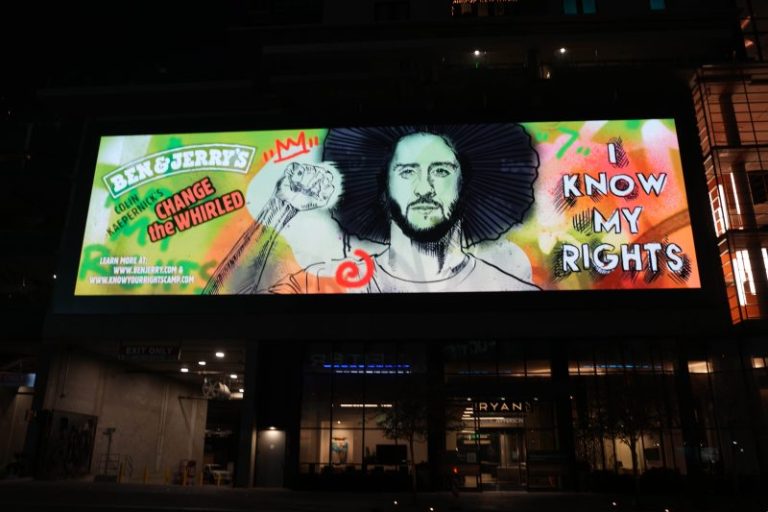
It’s quite possible the NFL had nothing to do with the shelving of ESPN’s long-planned docuseries about Colin Kaepernick.

It’s also quite possible that Santa Claus, the Tooth Fairy and unicorns exist.

When news broke that the NFL and ESPN were getting in bed together, with the league eventually owning 10% of the network, concerns immediately arose about the deal’s impact on ESPN’s journalistic independence. A media outlet being owned, even slightly, by an entity it covers. What could possibly go wrong!

Even NFL commissioner Roger Goodell’s promise to ESPN employees that the league wouldn’t interfere with the network’s journalism wasn’t enough to satisfy concerns.

Why? Because the league has shown over and over again that it can’t be trusted.

Its long-standing denials that the game could cause traumatic brain injuries. Its bait-and-switch on health care for retirees. Its abysmal treatment of Black players. I could go on. The only constant in the NFL, besides Jerry Jones’ inability to see his shortcomings as a GM, is that the NFL is going to do what’s best for the NFL.

And a documentary on Colin Kaepernick would be the opposite of what’s best for the NFL.

The NFL has largely moved on from the firestorm that surrounded Kaepernick’s protests of racist policing of people of color. Kaepernick hasn’t been on an NFL roster in eight years, and the other players who were prominent in their support of him or active in the Players Coalition are no longer in the league.

The fans who claimed they’d never watch the NFL again because of the protests by Kaepernick and other players are, predictably, watching the NFL again. Donald Trump, who did as much as anyone to fan the fury over the player protests, has long since turned his attention to demonizing other protestors and people of color.

A Kaepernick documentary puts it all — the reasons for the protests, Kaepernick’s collusion lawsuit, Goodell’s 2020 apology to the former quarterback — back in the spotlight, and the NFL would prefer just about anything but that.

Especially given the merger with ESPN is expected to require approval from, among others, the Justice Department and the Federal Trade Commission.  

Fear that Trump would put his thumb on the scale of a major merger cowed CBS into paying an eight-figure sum to settle a winnable lawsuit the President filed against the network. Canning a documentary probably seems like a pittance by comparison, a couple of days of unflattering stories preferable to another season of manufactured outrage.

‘ESPN, Colin Kaepernick and Spike Lee have collectively decided to no longer proceed with this project as a result of certain creative differences,’ ESPN said in a statement to Reuters, which broke the news Saturday that the documentary has been shelved.

OK. Sure.

‘The NFL played no role in this decision,’ NFL spokesman Brian McCarthy told USA TODAY Sports.

OK. Sure. Again.

Merger aside, the NFL and ESPN have been here before. And by here, I mean having a “change of heart” about the network airing something that would make the NFL look bad.

Back in 2013, ESPN was collaborating with PBS’ Frontline on “League of Denial,” an investigation into how the NFL had handled the growing crisis of former players developing chronic traumatic encephalopathy and other trauma-related brain diseases. But on Aug. 22 of that year, PBS released a statement saying ESPN was no longer involved in the documentary.

“We don’t normally comment on investigative projects in progress, but we regret ESPN’s decision to end a collaboration that has spanned the last 15 months and is based on the work of ESPN reporters Mark Fainaru-Wada and Steve Fainaru, as well as FRONTLINE’s own original journalism,” Frontline executives said.

Unsurprisingly, the NFL denied pressuring ESPN. A day after Frontline’s announcement, however, the New York Times reported that ESPN’s decision came after Goodell and then-NFL Network president Steve Bornstein had expressed their displeasure with “League of Denial” during a lunch with network executives.

The NFL succeeded in blackballing Kaepernick once. Why did anyone think it would be different this time around?

The NFL has a vested interest in avoiding stories that could tarnish its image and put any of its multibillion-dollar revenues at risk. ESPN has a vested interest in keeping the league happy — now more than ever.

If that means journalistic independence has to take a back seat every once in a while, so be it. When there’s money to be made and bills to pay, integrity is expendable.

Follow USA TODAY Sports columnist Nancy Armour on social media @nrarmour.

This post appeared first on USA TODAY

The NCAA cited a failure “to create a culture of compliance” in disciplining Michigan for the controversial sign-stealing scandal that occurred under former coach Jim Harbaugh, assigning probation, a new form of recruiting restrictions and a substantial fine tied to the program’s overall budget and future postseason revenue.

“However, the true scope and scale of the scheme — including the competitive advantage it conferred — will never be known due to individuals’ intentional destruction and withholding of materials and information,” the NCAA Division I Committee on Infractions wrote. “That said, this case and the decision that follows are limited to the information ultimately demonstrated through the NCAA enforcement staff’s investigation.”

Harbaugh, now the head coach of the Los Angeles Chargers, was given a 10-year show-cause ban by the NCAA that effectively ends his college coaching career. (This new penalty won’t even begin until 2028, when Harbaugh completes a current four-year ban stemming from another NCAA investigation.) Former off-field assistant coach Connor Stalions was handed an eight-year ban.

PATH TO PLAYOFF: Sign up for our college football newsletter

Current coach Sherrone Moore, now entering his second season, was given a two-year show-cause order and was suspended for one game in 2026, joining the self-imposed two-game suspension Moore will serve this September.

The monetary penalty features a $50,000 fine plus 10% of the program’s operating budget, an additional fine “equivalent to the anticipated loss of all postseason competition revenue sharing associated with the 2025-26 and 2026-27 football seasons” and another fine equal to 10% “of the scholarships awarded in Michigan’s football program for the 2025-26 academic year.” The total cost could be upwards of $30 million.

There is no questioning the seriousness of the NCAA investigation and resulting penalties: Michigan committed a cardinal sin in embracing an unfair competition advantage, the infractions committee found. It also did another major no-no in concealing information from investigators.

What’s missing from Michigan’s sanctions from NCAA

But the penalties assessed by the NCAA are notable for what’s missing. For two, the Wolverines were not handed a postseason ban or forced to vacate any wins — meaning that 2023 championship banner will continue to hang without any asterisks and the program will remain the winningest in Bowl Subdivision history.

That represents the latest significant deviation from the NCAA’s traditional stance on systemic rule violations, especially for repeat offenders. Historically, programs who strayed this far outside of NCAA rules were assigned three specific types of penalties.

One was a postseason ban, in many cases spanning multiple seasons. The most recent examples in the FBS are one-year bans handed to Central Florida and North Carolina in 2012 and Ohio State in 2011. The most stringent postseason penalties in FBS history were four-year bans handed to Indiana in 1960 and North Carolina State in 1959 for “improper recruiting inducements.” These don’t include the NCAA shutting down SMU’s football program in the 1980s for ineligible payments to players.

In the case of Michigan, the Committee on Infractions ruled that a postseason ban would “unfairly penalize student-athletes for the actions of coaches and staff who are no longer associated with the Michigan football program.”

The second traditional penalty would vacate wins. Last year, Arizona State was forced to vacate eight wins that occurred under former coach Herm Edwards due to violations that occurred during the COVID-19 pandemic. Tennessee had to vacate 11 wins from the 2019 and 2020 seasons for violations that came under former coach Jeremy Pruitt.

Most famously, the NCAA vacated all of Penn State’s 111 wins that occurred from 1998-2011 as part of the fallout from the Jerry Sandusky scandal. The NCAA restored those wins in a 2015 settlement with the university, restoring Joe Paterno as the winningest coach in FBS history.

The Wolverines escaped any lost wins because vacating records “is only in play when there is ineligible competition,” meaning players who are used despite being ineligible for participation, said Norman Bay, the chief hearing officer for the Committee on Infractions.

“That was not a factor present in this case, so it was not a penalty, in other words, that could be considered. And we did not impose it.”

Third, programs that committed similar recruiting violations, especially as repeat violators, have historically been levied with scholarship reductions or restrictions. That Michigan was not reflects on the rapidly shifting world of college sports related to name, image and likeness legislation that went into effect earlier this decade.

The recent House settlement will cap football roster limits to 105 athletes, though schools can keep all 105 players on scholarship; there was previously no set-in-stone cap on roster size, but schools could only have 85 players on scholarship, with the rest of the team filled out by walk-ons.

Instead of having an indefinite number of scholarships officially taken away, Michigan will face that 10% ban on football scholarships for the 2025-26 season.

“The NCAA membership has not yet determined whether roster reductions will replace scholarship reductions as a core penalty, and the panel did not want to prematurely make that decision on behalf of the membership,” the committee ruled. Rather than a straightforward reduction, the committee “converted the penalty to the financial equivalent of what would have been scholarship reductions.”

What will future NCAA sanctions look like?

That will very likely be the standard moving forward, as rule violations and the subsequent assessment of penalties will fall in large part to the College Sports Commission, which was created established by the Power Four conferences in the wake of the House settlement. Led by former Major League Baseball executive and assistant U.S. attorney Bryan Seeley, the commission will supervise the approval of all NIL deals.

This makes the Michigan case a primer for how college football plans to police the new landscape. Postseason bans are out. Player-focused penalties, such as those reducing scholarships, are also out. Vacating wins also seems more like a relic of earlier attempts to curtail rule-breaking behavior among repeat offenders.

Coaches will continue to own breaches that occur under their watch, however. And as conferences and programs are chasing increased revenue streams to fulfill athletics-department obligations, penalties are more likely to include significant financial consequences.

The near future will tell whether this is an effective deterrent. If a program was willing to commit serious violations to capture a national championship — knowing that the banner would not be taken away and that wins would not be vacated — would everyone involved be willing to accept an eight-figure fine as the fallout?

If the answer is yes, the NCAA and this newly formed commission would have to reimagine the enforcement process and penalties necessary to create an equitable, fair-play environment for the top level of college football.

This post appeared first on USA TODAY