Archive

2025

Browsing

President Donald Trump has the golden touch — and nowhere is that more evident than in the Oval Office, where gilded accents now adorn the nation’s most famous workspace, reflecting his signature style.

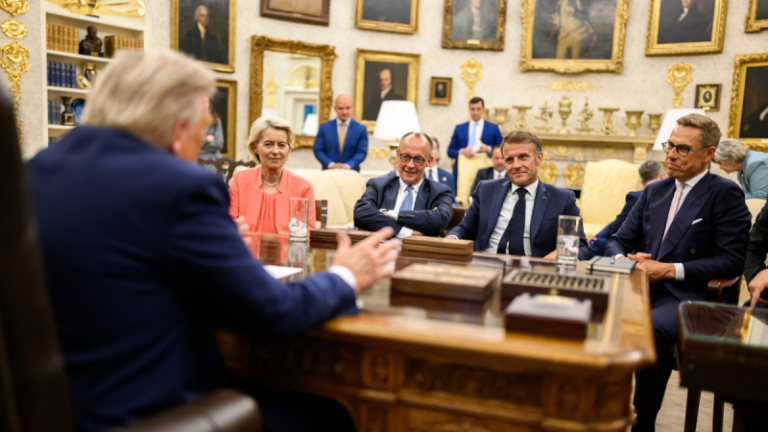
The gold additions throughout the Oval Office were on full display last week as global leaders met with Trump to discuss a path to ending Russia’s war in Ukraine. 

A White House spokesperson told Fox News Digital that the gold Trump added to the Oval Office ‘is of the highest quality,’ declining to provide further details. The spokesperson also said that Trump personally covered the cost of the gold accents, though did not specify how much gold was added or how much Trump spent.

In March, Trump told Fox News host Laura Ingraham during a tour of the Oval Office that the room ‘needed a little life’ when asked about the gold details. 

‘Throughout the years, people have tried to come up with a gold paint that would look like gold, and they’ve never been able to do it,’ Trump told Ingraham. ‘You’ve never been able to match gold with gold paint, that’s why it’s gold,’ Trump added.

Since then, Trump has added gold accents throughout the Oval Office to include the room’s 18-foot-6-inch ceiling. Below is a picture of the presidential seal that overlooks the Resolute Desk, shown in 2008 and after the addition of all the gold.

Behind the Resolute Desk, Trump added gold curtains and a display of flags, including those representing the U.S. military’s sister services.

Meanwhile, gold trim was added to details along the ceiling and doorways. Even the cherubs inside the door frames were given a golden makeover.

In March, Trump said he had installed a copy of the Declaration of Independence in the Oval Office. He told Fox News host Laura Ingraham that the document must be kept behind heavy curtains to protect it from light damage. 

The signed Declaration of Independence is on permanent display at the National Archives on Constitution Avenue in Washington, D.C., where it has been housed since 1952.

The framed document is seen on the wall behind Trump in the photograph below:

Presidents traditionally choose the portraits displayed in the Oval Office, with special attention given to the one above the fireplace.

Former President Joe Biden chose a portrait of Franklin Delano Roosevelt above the fireplace, accompanied by additional portraits of George Washington, Abraham Lincoln, Alexander Hamilton and Thomas Jefferson.

Above the fireplace, Trump chose to display a portrait of George Washington in military uniform, accompanied by several other prominent portraits.

Gold accents were applied to the white marble fireplace mantel, enhancing its neoclassical details.

Here’s a closer view of the details added to the fireplace:

Trump also placed gold trinkets on the fireplace mantel, though their arrangement has changed frequently.

In the Oval Office, Trump added gold coasters bearing his last name and the number 47, marking his position as the 47th president.

The gold details added to the Oval Office come as Trump undertakes broader renovations across the White House grounds.

Last month, the White House announced that Trump, together with private donors, will fund an estimated $200 million project to build a new ballroom. Intended to host official events, state dinners, and large ceremonial gatherings, the 90,000-square-foot addition will accommodate about 650 seated guests and maintain the White House’s classical design.

The announcement followed a similar move earlier this year, when Trump personally financed the installation of two 88-foot American flags flanking the White House, each reportedly costing around $50,000. 

This post appeared first on FOX NEWS

When President Donald Trump returned to the White House in 2025, he faced the same formidable adversary that defined much of his first term: China. This time the stakes were even higher. The trade deficit with China had ballooned to roughly $300 billion, while IP protection, currency manipulation and predatory industrial and international development practices remained significant issues. And Beijing doubled down — weaponizing its control of rare earth minerals, tightening its grip on semiconductors and wielding economic coercion against U.S. allies from Australia to Lithuania. 

Against this backdrop, Trump 47 adopted a two-pronged approach. On offense, the administration has kept maximum pressure on Beijing, staying firm on negotiation positions and refusing to trade away leverage until real concessions emerge. On defense, it has wielded tariffs not only as bargaining chips but as engines of industrial revival — reshoring supply chains, rebuilding America’s manufacturing base and hardening strategic alliances to reduce dependence on China. 

These were not easy calls. Tariffs rattled markets. Pressure campaigns risked alienating partners. Yet the strategy has been to hold the line, play a long game and push forward until the U.S. secured fairer, reciprocal trade terms. In a world where semiconductors and rare earths are the new oil, this is about nothing less than U.S. national security. 

I have seen firsthand how high-stakes these negotiations can be. As I recount in my forthcoming book, ‘A Seat at the Table,’ Chinese officials have long relied on psychological tactics, slow-walking responses through layers of bureaucracy, handing us last-minute drafts in Chinese —  even removing chairs at negotiating tables. These are not trivial gestures. They are meant to unnerve, unsettle and push the U.S. team toward compromise. 

The Trump response was simple but powerful: don’t flinch. In Beijing, when presented with a Chinese draft that ignored our work, Secretary Steven Mnuchin waved it away and insisted the talks proceed on the American document. When a chair was removed to show disrespect, we calmly got it back—without ever conceding authority. 

That posture of confidence — staying the course under pressure — continues today in Trump 47. Tariffs are sharper, more targeted and higher than before; allied trade deals (Japan, South Korea, the EU) allow us to focus resources on China; and deadlines are extended when useful, but only on U.S. terms. 

Critics say tariffs raise consumer prices. In the short term, they can. But the broader truth is that tariffs are tools to rewire incentives, drive investment back home, and ensure the United States does not remain vulnerable in sectors critical to survival. Already, the tariffs of Trump 47 are accelerating investment in domestic chip foundries, battery plants and energy infrastructure. They are also forcing hard conversations with allies about aligning supply chains — from rare earth processing in Australia to semiconductor alliances with Japan and the Netherlands. 

When Beijing weaponized exports of gallium and graphite, vital for defense and electronics, Trump invoked the Defense Production Act and doubled down on Indo-Pacific partnerships. The message is clear: America will not be held hostage to coercion. Strategic autonomy requires resilience, even if it comes with short-term discomfort. 

How do you stay steady when the stakes are so high, when the pressure is relentless? Stand aside Hans Morgenthau. For me, the source I found was the timeless wisdom of ‘Kedushas Levi,’ an 18th-century Chassidic work by Rabbi Levi Yitzchok of Berditchev.  

The ‘Kedushas Levi’ teaches that challenges — no matter how overwhelming — are never insurmountable. ‘If you encounter an obstacle that is bigger than you, do not be fearful or frightened. With simple faith, what you fear will not harm you,’ it states. That teaching, echoing the Talmudic reality that the good Lord gives trials in proportion to a person’s strength, gave me composure when sprinting to translate a Chinese draft in a Beijing motorcade, or when facing off with officials determined to stall and delay. 

It also teaches that truth, even when inconvenient, carries divine weight. When Chinese officials resisted opening their financial markets, I pointed out the obvious but often ignored truth: Chinese banks in the U.S. had seen double- and triple-digit growth, while U.S. banks in China struggled for even single digits. That argument broke through where posturing could not.  

Negotiations with China will not be wrapped up overnight. But this is a contest of wills as much as economics. And here, the lessons of faith matter most. Facing giants, the Jewish tradition teaches, you do not shrink back. You lift your head high, stand on truth, and trust that what feels impossible can indeed be achieved. 

That is how we approached China in Trump 45. That is how we are approaching China in Trump 47. And that is how America, with faith and fortitude, can win. 

This post appeared first on FOX NEWS

Wheeler had a successful right upper extremity blood clot removed on Aug. 18, and during the evaluation and second opinions, it was recommended that he undergo surgery, which will take place at a later date.

According to the Mayo Clinic, venous thoracic outlet syndrome is a group of conditions in which there’s pressure on blood vessels or nerves in the area between the neck and shoulder, which can cause numbness in the fingers.

The team said that the recovery from the injury will likely take six to eight months.

Wheeler, a three-time All-Star, was placed on the injured list earlier in the week and last took the mound last Friday, throwing 97 pitches against the Washington Nationals.

The 35-year-old Wheeler was having an outstanding season for the first-place Phillies, going 10-5 with a 2.71 ERA in 24 starts over 149 2/3 innings with 195 strikeouts.

This post appeared first on USA TODAY

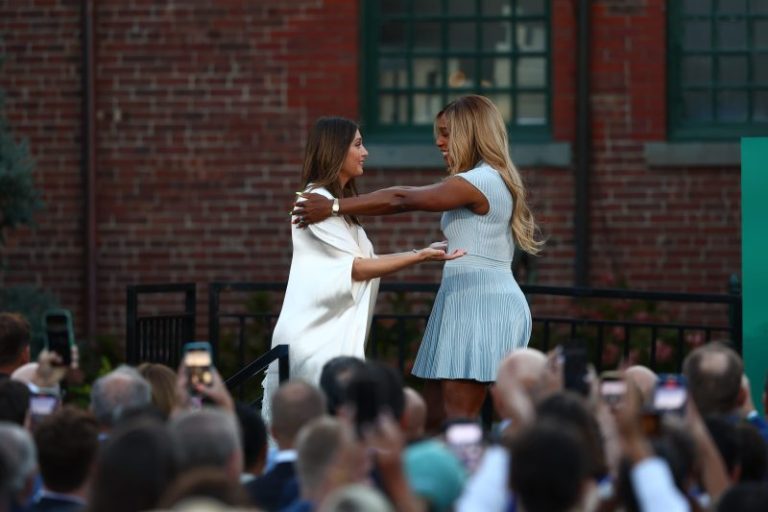
Maria Sharapova was inducted into the Tennis Hall of Fame in Newport, R.I., on Saturday, Aug. 23. 

Sharapova amassed a 645-171 record during her career and won 36 singles titles. She’s earned close to $39 million.

The Russian started her professional career at the age of 14 in 2001, just a few years shy of her epic rivalry with Serena Williams.

Williams appeared as a surprise inductee for Sharapova.

“There are only a few players in my career who challenged me to be the very best, every single time we stepped out on the court,” Williams said of Sharapova. “Maria Sharapova was one of them. Whenever I saw her name next to mine in the draw, I made sure I practiced harder.”

The women were at the top of their game together for several years and had played 22 matches against each other since 2004. 

Their last match was in 2019. Williams has managed to get the best of Sharapova with a 20-2 record. Williams also holds an 8-1 record in major events against Sharapova, including a 3-1 record in major finals.

Sharapova’s only two victories against Williams came in the Wimbledon finals and the WTA Championships final in 2004.

This post appeared first on USA TODAY

The Minnesota Vikings are preparing to start J.J. McCarthy at quarterback to begin the 2025 NFL season. The order of the quarterback depth chart may be in flux behind him.

Case in point, the Vikings worked out veteran quarterback Carson Wentz on Saturday, ESPN’s Lindsey Thiry reports.

Wentz spent the 2024 NFL season backing up Patrick Mahomes with the Kansas City Chiefs. The 32-year-old didn’t play much, making just one start in Kansas City’s Week 18 loss to the Denver Broncos. He completed 12 of 19 passes for 118 yards and an 80.6 passer rating across his limited action.

The Chiefs replaced Wentz with Gardner Minshew during the 2025 offseason. The No. 2 overall pick in the 2016 NFL Draft has remained unsigned as he looks to play for a sixth different team over the last six seasons, but he hadn’t drawn much interest before his workout with the Vikings.

Could Wentz be a fit with the Vikings? Here’s what to know about Minnesota’s current quarterback depth chart:

Will the Vikings sign Carson Wentz?

Wentz’s workout with the Vikings doesn’t necessarily mean the team is interested in signing him imminently. NFL teams host workouts throughout the year to keep tabs on players in whom they might have interest should injuries ravage their roster.

As such, Wentz’s workout could have been a typical due diligence move by Kevin O’Connell and Co.

That said, there are two points of interest in Wentz’s workout. Notably, the veteran spent the 2023 NFL season with Sean McVay and the Los Angeles Rams. O’Connell worked as McVay’s offensive coordinator during the 2020 and 2021 seasons and runs a similar offense to his former mentor. That should allow Wentz to seamlessly ingratiate himself into O’Connell’s offense were he to sign.

Additionally, the Vikings could use some veteran quarterback depth on their roster behind the inexperienced McCarthy. Wentz has made just two starts over the last couple of seasons, but he has made 94 starts dating back to his rookie season in 2016.

Comparatively, the entire four-man Vikings quarterback room has combined to make 22 total NFL starts, with McCarthy and undrafted rookie Max Brosmer each sporting zero to their names.

So, a logical case could be made for Minnesota to add another quarterback to the fray, especially if it is seeking a veteran to help mentor McCarthy. Wentz could fit the bill, whether it’s as a backup on the 53-man roster or as a veteran presence with upside on the practice squad.

Vikings QB depth chart

Below is a look at the current pecking order in Minnesota’s quarterback room, according to the Vikings’ official website.

J.J. McCarthy
Sam Howell
Brett Rypien
Max Brosmer

Minnesota spent a first-round pick in the 2024 NFL Draft on McCarthy. The Vikings also let Sam Darnold walk in free agency to clear the path for the Michigan product to start in 2025.

The Vikings traded a fifth-round pick to the Seattle Seahawks for Howell and a later fifth-round pick during the offseason with the expectation of making the 24-year-old their backup quarterback. Howell likely remains ahead in the race for that role but endured a disappointing preseason, completing 12 of 18 passes for 118 yards, one interception and a 61.8 passer rating.

Meanwhile, Rypien is listed third on Minnesota’s depth chart but may be in danger of missing the cut. The 29-year-old completed just 15 of 29 passes for 151 yards, an interception and a 52.5 passer rating during the preseason.

Brosmer, 24, was the best of Minnesota’s backup signal-callers during the preseason. The undrafted rookie completed 35 of 58 passes for 364 yards, two touchdowns, one interception and an 82.8 passer rating in extensive action.

That may be enough to make Brosmer the team’s third-string quarterback over Rypien. Still, it isn’t clear whether the Vikings will be willing to consider the inexperienced signal-caller as their primary backup to McCarthy.

Carson Wentz stats

Wentz has posted a 47-46-1 record across his 94 career starts with a respectable 89.3 passer rating. Below is a full look at his stats from his 9-year NFL career to date:

Completion %: 62.7%
Passing yards: 22,410
Passing TDs: 153
INTs: 67
Passer rating: 89.3
Yards per attempt: 6.7
Carries: 357
Rushing yards: 1,418
Rushing TDs: 11

Wentz also finished third in the NFL MVP voting during the 2017 season. He played in just 13 games that season before suffering a season-ending torn ACL.

Carson Wentz teams

Wentz began his career with the Philadelphia Eagles but has played for six teams in total. Below is a look at his career timeline:

Philadelphia Eagles (2016-20)
Indianapolis Colts (2021)
Washington Commanders (2022)
Los Angeles Rams (2023)
Kansas City Chiefs (2024)

Wentz won Super Bowl 52 as a member of the Eagles. He did not play in that game while recovering from a torn ACL.

This post appeared first on USA TODAY

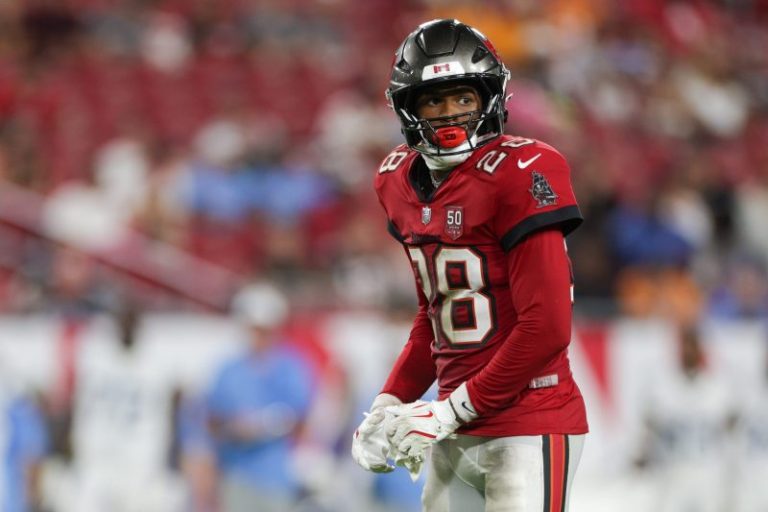
Tampa Bay Buccaneers safety Shilo Sanders was ejected from the team’s preseason finale against the Buffalo Bills after throwing a punch at Bills tight end Zach Davidson.

Sanders’ ejection occurred at the end of a play that saw Bills quarterback Shane Buechele throw a 1-yard pass to Elijah Moore. Sanders was engaged with Davidson, who was blocking him and continued to push the rookie safety down the field after Moore had already been tackled.

After Davidson delivered a final push to Sanders, the Colorado product took a swing at the 6-7 tight end. He landed a blow to the left side of Davidson’s helmet, prompting an immediate flag from the officials.

Sanders was quickly disqualified from the contest, bringing to an end his first NFL preseason. The Bills scored an 11-yard touchdown one play after his exit from the game.

Buccaneers coach Todd Bowles was asked during a postgame news conference about his message to Sanders after the play.

‘You can’t throw punches in this league. I mean, that’s inexcusable,’ Bowles said. ‘They’re gonna get you every time. Gotta grow from that.’

Sanders racked up three total tackles across his three preseason games with the Buccaneers, as he battled for a spot on Tampa Bay’s 53-man roster. He was listed as a third-string safety behind Antonie Winfield Jr., Tykee Smith, Kaevon Merriweather and Christian Izien on the Buccaneers’ most recent depth chart update.

Now, the 25-year-old rookie’s wait to see if he made Tampa Bay’s 53-man roster will begin in earnest.

All the NFL news on and off the field. Sign up for USA TODAY’s 4th and Monday newsletter.

This post appeared first on USA TODAY

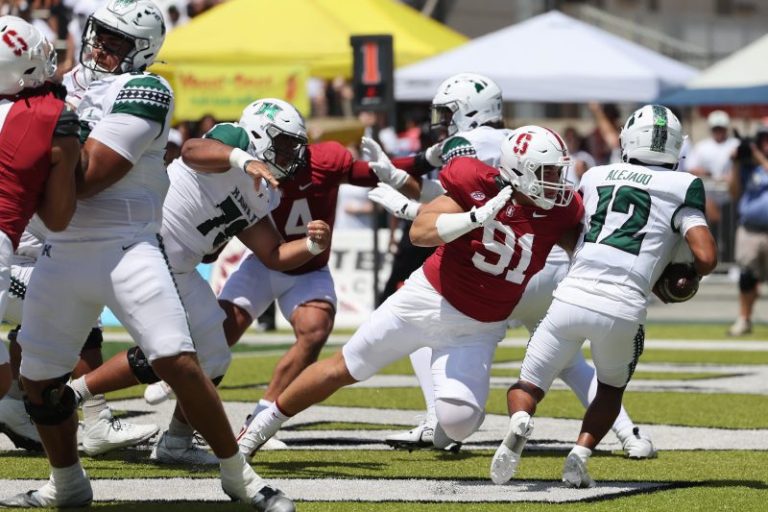
Stanford football’s Clay Patterson made quite the play against Hawai’i on Saturday, Aug. 23, blowing up an attempted trick play for a 12-yard loss late in the second half.

Then his celebration came.

The seventh-year senior broke out a hilarious celebration, busting out a TikTok dance on the field after the sack. However, the celebration was penalized, resulting in an automatic first down for the Rainbow Warriors.

‘Clay Patterson aura farming right now,’ said CBS color commentator Logan Ryan, a former NFL defensive back.

“Hawaii goes with the trickeration,” Logan added. “Clay Patterson has been in college seven years. You can’t fool him. But then he does the foolish TikTok dance that looks like it’s gonna be a taunting call. Welcome to Week 0 football, people.

‘Clay Patterson, trying to get trending real quick, cost his team. That might get you a seat next to the coach on the bench … and then you get the infamous hand on the head. ‘Oh, doy. What did I do?’”

While Patterson’s dance moves might have been elite, it was a substantial blunder for Stanford. Hawai’i avoided the negative play and later scored on the drive, taking a 14-13 lead into halftime after quarterback Micah Alejado found Jackson Harris for a 19-yard score.

Patterson had already impacted the game in a strong way before the penalty, though, as he strip sacked Alejado in the end zone in the first quarter before linebacker Wilfredo Aybar recovered the ball for a touchdown.

Patterson has two sacks against Hawai’i through three quarters, although he’d have three if it wasn’t for the penalty.

The 6-foot-3, 280-pound defensive tackle is making his presence felt against the Rainbow Warriors, but he should probably leave the TikTok dances on the internet rather than the gridiron.

This post appeared first on USA TODAY

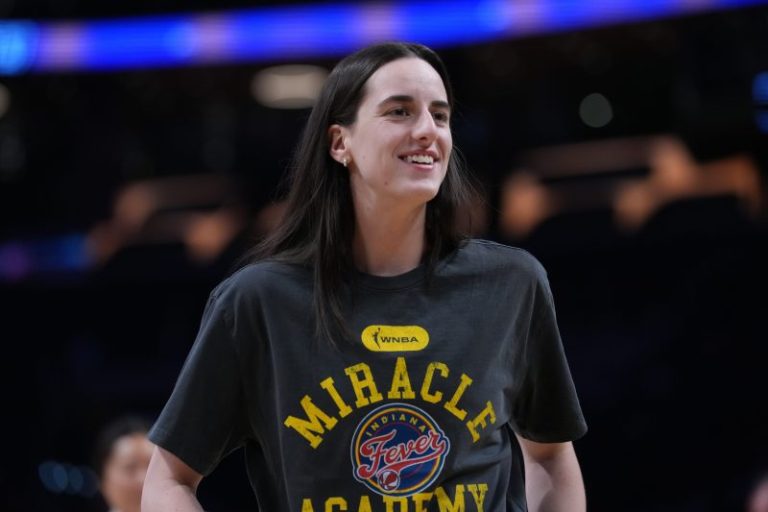
Caitlin Clark and the Indiana Fever have battled the injury bug all season long.

The 2024 Rookie of the Year has missed 23 of the Fever’s 36 games this season due to various injuries, including a right groin injury that has sidelined her 14 consecutive games. And that number will grow as Clark will the Fever’s matchup against the league-leading Minnesota Lynx on Sunday in Minneapolis.

Clark last played for the Fever on July 15, when she suffered a right groin injury in Indiana’s 85-77 win over the Connecticut Sun. She subsequently tweaked her ankle during recovery on Aug. 7, adding another hurdle to her return.

The Fever (19-17) have stumbled upon hard times and dropped five of their last seven games.

Here’s the latest on Clark’s status:

Is Caitlin Clark playing Sunday? Injury status for Fever-Lynx

Clark (right groin injury) has been ruled out of the Fever’s matchup against the Minnesota Lynx on Sunday in Minneapolis, which is set to tip off at 7 p.m. ET on ION. There is not timetable for her return.

How was Caitlin Clark injured?

Clark suffered a right groin injury in the final minute of the Fever’s 85-77 victory over the Sun at TD Garden in Boston on July 15. With 39.1 seconds remaining in the contest, Clark completed a bounce pass to Kelsey Mitchell to put the Fever up 84-75. After the pass, Clark immediately grabbed for her right groin and grimaced as she gingerly walked over and headbutted the stanchion. She did not return. 

Caitlin Clark injury timeline

May 24: Clark suffered a left quad injury during the Fever’s 90-88 loss to the New York Liberty, where she recorded a double-double with 18 points and 10 assists. Clark couldn’t pinpoint the specific play that caused her injury, but noted that it happened early in the contest. Clark said, ‘Adrenaline covers up a lot of stuff when you’re in the heat of battle. After the game, I had some pain, and then we got an MRI, and that kind of gave me the result that I didn’t want to see.’ She missed the Fever’s next five games.
June 14: Clark returned to Indiana’s lineup in the Fever’s 102-88 win over the Liberty and dropped 32 points, nine assists and eight rebounds in her first game back. 
June 24: Clark suffered a left groin injury in the Fever’s 94-86 win over the Seattle Storm, which resulted in Clark missing the team’s next four games. Fever coach Stephanie White said she learned of Clark’s groin injury the following night after Clark alerted team trainers of discomfort.
July 1: Clark was ruled out of the Fever’s 2025 Commissioner’s Cup win over the Minnesota Lynx in Minneapolis. That didn’t stop Clark from rightfully celebrating the team’s hardware.
July 9: Clark returned to the Fever’s lineup in the Fever’s 80-61 loss to the Golden State Valkyries. Clark was limited to 10 points, shooting 4 of 12 from the field and 2 of 5 from the 3-point line, in addition to six assists, five rebounds and four turnovers. Following the blowout loss, Clark said it was ‘going to take me a second to get my wind back. … Just trying to get my legs under me.’
July 15: Clark suffered a right groin injury in the final minute of the Fever’s 85-77 victory over the Sun at TD Garden in Boston. White later confirmed Clark ‘felt a little something in her groin.’ This marked the last game for which Clark suited up.
July 18: Clark announced that she would sit out the 2025 WNBA All-Star Game in Indianapolis, where she was named a team captain. Clark was also set to participate in the 3-point contest. She said, ‘I am incredibly sad and disappointed to say I can’t participate … I have to rest my body.’
July 24: The Fever said Clark’s medical evaluations confirmed there’s ‘no additional injuries or damage,’ but the team said it will be cautious with Clark’s rehab and recovery.
August 7: Clark reportedly suffered a mild bone bruise in her left ankle while during an individual workout session in Phoenix on Aug. 7, according to The Indianapolis Star, part of the USA TODAY Network.
August 8: During an appearance on Sue Bird’s podcast, ‘Bird’s Eye View,’ Clark spoke about the frustrations of her injury-filled season: “It’s not like I have a training camp to build up to play in my first game again. It’s like no, you’re tossed into Game 30 — like, ‘Go try to play well.’ It’s hard, it really is.”
August 10: Fever coach Stephanie White said Clark has progressed in her recovery and has started running full court again, but Clark hasn’t returned to practice just yet: an important step in her ramp-up. ‘She’s been able to get a little bit more in her full-court running with all of her body weight… She’s been able to do a little more on the court in terms of how she moves, but not into practice yet,’ White said.
August 20: White confirmed that Clark has not returned to practice yet.

Caitlin Clark stats

Clark is averaging 16.5 points, 5.0 rebounds and a career-high 8.8 assists in 13 games this season. Her assists average is the second-highest in the league, behind Phoenix’s Alyssa Thomas (9.0).

The USA TODAY app gets you to the heart of the news — fast. Download for award-winning coverage, crosswords, audio storytelling, the eNewspaper and more.

This post appeared first on USA TODAY

On Saturday, Israeli tanks and troops began maneuvering ever closer to Gaza City’s outskirts in preparation for a full-scale offensive. Eyewitness accounts reported intensified shelling as Israel is moving toward what could be the defining battle of its war against Hamas terrorists: the capture of Gaza City.

Israel’s security cabinet approved the operation, known as Gideon’s Chariots B, and has deployed up to five IDF divisions toward the city’s outskirts—a highly significant mobilization. Thousands of reservists—some 60,000—have been called up.

John Spencer, chair of urban warfare studies at the Madison Policy Forum and executive director of the Urban Warfare Institute, told Fox News Digital the scale of this operation is unprecedented. ‘This will be a bigger challenge than anything the IDF has faced, arguably ever. It is the densest location in Gaza, the heart of Hamas’s stronghold. And you don’t really know what the tunnels are until you get into them.’

Spencer said that ‘Hamas built semi-circles of defenses oriented at Israel. But the IDF has shown creativity in maneuvering around obstacles.’ Israel plans to send more combat power into Gaza City than it has deployed across the entire Strip thus far. ‘If your goal is to clear Gaza City of Hamas’s military capabilities and search for hostages, you need that scale,’ he said.

Gadi Shamni, former commander of the Gaza Division and ex-head of IDF Central Command, told Fox News Digital, ‘It is a crowded city with refugee camps, dense neighborhoods, high-rises and a highly developed underground. People say the IDF controls above and below ground, but in the last campaign we saw that wasn’t always true. Even when you destroy tunnels, Hamas can rebuild them quickly. The longer you stay with more forces, the more opportunities you create for the other side to attack.’

A former senior Israeli security official, speaking on the condition of anonymity, told Fox News Digital, ‘The IDF can militarily conquer Gaza, but the costs will be immense on both sides. The IDF will fight with a method of ‘destroy everything first’—air force bombs, massive charges, detonating streets from afar, wiping out entire areas and advancing slowly.

‘The IDF has gained enormous experience over the past two years and will use those tactics in this battle. … You are strong, the enemy is weak, and you have patience. Even the weather is on Israel’s side, with winter not arriving until January.’

The tunnels remain the most formidable element of Hamas’s defense. Unlike ISIS terrorists in Mosul, Spencer said, Hamas has built an underground tunnel network that allows commanders and fighters to move between positions avoid strikes, and conceal hostages. ‘The IDF that will go into Gaza City is not the IDF of 2023,’ Spencer said, pointing to rapid adaptations in the use of drones, robots, and specialized units for tunnel warfare. ‘They’ve learned so much. But this will still be slow, very careful, and costly.’

To illustrate the scale, Spencer pointed to the 2004 battle for Fallujah in Iraq. ‘It took the Marine Corps about two weeks to clear Fallujah—every single home, building, shop. About 68,000 structures were cleared, as if somebody physically looked in them,’ he said. ‘If all five of these [IDF] divisions were doing that, absolutely, you could get it done in a few months. But the enemy always gets a vote. You can’t rush to failure.’

The former Israeli senior security official described the operation as ‘telescopic—very slow, with pistons working one by one. This pace also gives Hamas the chance at every stage to try to cut a deal.’

On the fate of hostages possibly held in Gaza City, the official was blunt: ‘Some of the hostages will die. I wouldn’t be surprised if more brigades are brought in—the IDF is using immense ground power to seize urban terrain.’

Shamni also warned Hamas may relocate hostages, 50 hostages, of whom 20 are still believed to be alive, into combat zones to deter strikes—a tactic he said the IDF would be reluctant to engage for fear of harming captives, a conflict between military necessity and core values.

Shamni highlighted a particularly fraught dilemma: evacuating civilians. ‘You don’t know who will leave, how many will leave, how they’ll react—or whether Hamas will even allow them to leave,’ he said. ‘I assume many will not evacuate, and then you face the hard dilemma of fighting in a place full of noncombatants.’

Spencer added that history shows around 10% of civilians stay behind. ‘Even 10% of a million is 100,000 people,’ he said.

Shamni forecast a protracted operation: ‘It could take months. Two months might seize the surface, but then you still have to clear tunnels. It will cost many lives—including civilians. The worst-case scenario is that no hostages are found alive or dead because of the destruction.’

Shamni, who also served as Israel’s military attaché in Washington, warned that the dual goals of defeating Hamas and returning hostages are contradictory, risking years of drawn-out fighting. 

Spencer, however, called the decision to press forward a ‘calculated risk,’ explaining that while military action carries dangers, ‘you weigh the risk of Hamas killing the hostages against the certainty that they’re being starved and tortured. Military pressure is the last resort. Without conquering Gaza City, Hamas will continue to hold a sanctuary.’


This post appeared first on FOX NEWS

EXCLUSIVE – New Republican National Committee (RNC) chair Joe Gruters outlined his mission as he took over steering the GOP’s national party committee.

‘The midterms are ahead, where we must expand our major majority in the House, in the Senate, and continue electing Republicans nationwide,’ Gruters said as he addressed committee members moments after being unanimously elected chair at the RNC’s summer meeting, held this year in Atlanta, Georgia.

Gruters, a state senator and RNC committee member from Florida, who, until his election as chair on Friday, briefly served as the national party committee’s treasurer, is a longtime ally of President Donald Trump. His move to the RNC chairmanship cements Trump’s dominance over the GOP as it prepares for midterm battles next year.

And a month ago, Trump endorsed Gruters to succeed now-former RNC chair Michael Whatley, who stepped down as he runs for the Senate in battleground North Carolina in the blockbuster race to succeed retiring GOP Sen. Thom Tillis.

The ascension of Gruters to RNC chair is the latest sign of Trump’s complete control over the national party committee.

‘This is the president’s party. This is the president’s vision, overall. The party fully embraces the president,’ Gruters said as he and Whatley stood for an exclusive interview with Fox News Digital.

Whatley, who Trump picked to steer the RNC a year and a half ago, noted that ‘we have transformed the RNC, basically the way that President Trump has transformed the Republican Party.’

Gruters has been a major Trump supporter dating back to the president’s first campaign for the White House. Gruters served as Florida co-chair Trump’s 2016 campaign.

The Democratic National Committee, taking aim at Gruters following his election as chair, claimed that ‘Gruters and Trump will have a lot to bond over while they turn the Republican Party into even more of a personal propaganda machine for Trump.’

Republicans swept back to power last November, with Trump winning the White House, the GOP retaking control of the Senate and holding onto their fragile majority in the House.

But looking ahead to next year’s midterms, when the party in power traditionally faces political headwinds and loses House and Senate seats, the GOP will be defending their congressional majorities.

A key part of the RNC’s strategy going forward is Trump.

‘We’re gonna ride the president all the way to victory in the midterms, and we are going to win big,’ Gruters emphasized.

Asked about the top three items on his to-do list as he takes over as RNC chair, Gruters said, ‘number one, it’s still election integrity. That’s the most important thing, protecting the vote. And it’s about winning the midterms.’

‘It’s about going back to the fundamentals of registering voters and turning our voters out,’ the new chair added.

Gruters also highlighted Trump’s sweeping GOP-crafted domestic policy bill, which the Republican majorities in Congress passed this summer along near-party lines.

‘It’s our agenda,’ Whatley said in a Fox News Digital interview last month, as he pointed to the massive tax cuts and spending bill that Trump signed into law on July 4.

The measure is stuffed full of Trump’s 2024 campaign trail promises and second-term priorities on tax cuts, immigration, defense, energy and the debt limit. 

It includes extending the president’s signature 2017 tax cuts and eliminating taxes on tips and overtime pay. 

By making his first-term tax rates permanent – they were set to expire later this year – the bill will cut taxes by nearly $4.4 trillion over the next decade, according to analysis by the Congressional Budget Office and the Committee for a Responsible Federal Budget. 

The measure also provides billions for border security and codifies the president’s controversial immigration crackdown.

And the new law also restructures Medicaid – the almost 60-year-old federal program that provides health coverage to roughly 71 million low-income Americans. 

The changes to Medicaid, as well as cuts to food stamps, another one of the nation’s major safety net programs, were drafted in part as an offset to pay for extending Trump’s tax cuts. The measure includes a slew of new rules and regulations, including work requirements for many of those seeking Medicaid coverage.

Democrats, for months, have repeatedly blasted Republicans over the social safety net changes. And they’ve spotlighted a slew of national polls conducted both  before and after the measure was passed into law, that indicate the bill’s popularity in negative territory.

But Gruters sees the new law as campaign ammunition.

‘Every single Democrat in Congress voted for a tax increase on average everyday Americans,’ Gruters argued. ‘And that big, beautiful bill has something for every single American, whether you’re working class, whether you’re a small business owner, everybody benefits, and we’re going to be able to ride that bill all the way to victory.’

This post appeared first on FOX NEWS