Archive

2025

Browsing

The big business of youth sports has reached the U.S. Congress. A House subcommittee says it has created a “crisis” for kids and their parents.

“The youth sports industry generates more than $40 billion in annual revenue,” Rep. Kevin Kiley (R-CA), the chair of the subcommittee on Early Childhood, Elementary, and Secondary Education, said to open a hearing on Tuesday, Dec. 16, entitled “Benched: The Crisis in American Youth Sports and Its cost to Our Future.”

“But this revenue comes at a steep cost to families,” Kiley said. “Parents are told that only year-round travel teams, private coaching and early specialization will keep their child competitive and maybe even earn them a scholarship. That false promise has created a spending surge that prices out the average family while pushing kids as young as eight into high-cost, high-pressure programs that simply aren’t necessary for long term development.”

Kiley said more than 60 million kids participate in youth sports in the U.S., and he doubled down on the 63% participation target set through the Healthy People 2030 program administered by the government.

We are somewhere around 55 percent of kids ages 6 to 17, a participation rate that lags behind the pre-pandemic level of 2019 (61%).

“Public funding absolutely is crucial to making sure that we have community-based, nonprofit-based and school-based programs,” said Katherine Van Dyck, a senior legal fellow for the American Economics Liberties Project and a witness at Tuesday’s hearing. “Because when we don’t have those, what we have left is these really high-cost monopolistic entities that aren’t interested in growing their programs to make them affordable and accessible to everybody.

“They’re interested in protecting their monopoly and driving cost up. That’s why we see a $40 billion industry that is growing according to investment firms, but it’s growing as participation is going down. What does that tell us? It tells us that they are jacking up prices and that they are solely focused on profit. …

“Our children deserve better than a childhood for sale to the highest bidder.”

While experts and Congressmembers pushed to the national forefront many of the issues that consume sports parents, they also offered potential changes to the system. Here are some highlights of the hearing:

Why is a Congressional subcommittee saying we have a youth sports ‘crisis’?

Several statistics used by Kiley, other members of the House subcommittee on Early Childhood, Elementary, and Secondary Education, and witnesses at the hearing have been mentioned in this space.

Seventy percent of kids quit organized sports by age 13.
The average U.S. sports family spent more than $1,000 on its child’s primary sport in 2024. [Travel sports can cost families upwards of $3,000 per year or more.]
Private equity firms are helping to fuel spending, along with a feeling of pressure among parents that playing for select teams and specializing early leads to playing in college.
An increasingly fewer number of kids have access to affordable opportunities to learn important life skills and to try new things, leading to obesity and excessive screen time.

“What we are witnessing is more than a drop in sports participation,” Kiley said. “It is the loss of one of the most effective tools we have to combat rising isolation and mental health challenges in our children. When children lose regular in-person team activities, they lose daily opportunities to build confidence, belonging, and real world social connection.”

How can kids and their parents better navigate youth sports?

My personal experience with travel and club teams at the high school level is that they don’t promise you the chance to play in college as much as give the opportunity to play in front of college coaches.

While we can look at sports as an outlet for getting a scholarship and helping us to get into a college or university, we need to understand the odds and can be more realistic about our kids’ chances.

“I think parents need to begin at the end,” says John O’Sullivan, chief executive officer of the Changing the Game Project, which helps use sports as a recreational but life developmental tool.  “What do you want out of sport? They want a healthy, functioning, high-character human being. Sign up for sporting programs, and find coaches and find leagues that support that mission. The purpose is to develop a great human being, and then maybe if you have the luck and the genetics, you do well. And you get a scholarship. Maybe you play it the next level, but it’s really about human development first.”

According to 2024 NCAA data, supplemented by data from the National Federation of State High School Associations, about 6% of high school athletes play collegiately (a lower percentage play Division 1), while less than 1% of NCAA athletes are drafted into a professional sport.

Perhaps filling the disconnect of perception requires us to reprioritize why we play sports. 

“A kid standing over a putt, a kid about to take a penalty kick, a kid about to take a free throw that matters, those are life skills you can teach in real time,” Steve Boyle, the co-founder and executive director of 2-4-1 Sports, an organization that helps kids try out multiple sports, testified Tuesday. “I was a school counselor, and so I would always be told, ‘Hey, you gotta go in and do a lesson on anxiety, or anger management, or conflict resolution.’

“It was a heck of a lesson. You know how much impact it had? None. The next day, it was gone. We wouldn’t teach piano once and say, ‘Good luck, have at it. Now you’re good at it.’ You have to continue to teach these skills and use the opportunity of sports when those emotions are happening in real time, to say, ‘All right, this is how you can deal with this right here in a safe and fun place, so that when you’re about to road rage or lose it on somebody, you’ve developed those skills in such ways.’ Sports is the best opportunity to do that, and we miss out on so many kids if we don’t give them access to sports.”

Boyle and his wife, Kerry, started 2-4-1 Sports in 2006 after their 9-year-old daughter was told trying other sports wasn’t an option if she wanted to play for a local travel team. Still, many parents fear of missing out on such opportunities.

Kiley, the subcommittee’s chair, says he played basketball and soccer growing up. He didn’t make his high school freshman basketball team or varsity soccer team (though he played tennis) and spoke of an “inherent winnowing process in a lot of sports.”

He asked O’Sullivan, who has spent five decades as an athlete or coach to youth and collegiate athletes, how we maintain opportunities for young people of different skill levels?

“I think it’s, again, this education around what is the purpose of sport,” O’Sullivan replied. “Parents ask me all the time, ‘How does my kid make the elite team? And I think that’s the worst word in sports is ‘elite’ for little kids. We have to keep as many kids as possible, as long as possible, in the best environment possible. The countries that do it best in sport development, they keep those kids. They’re not making cuts at six or seven years old. They’re not forming competitive teams.”

STATE OF PLAY REPORT: Do immigration raids threaten the rise of youth sports?

What are some solutions to the youth sports ‘crisis?’

Van Dyck, an anti-monopoly and consumer advocate, said the 2008 financial crisis and the recession that followed proved devastating to parks and recreation budgets while COVID-19 delivered another crushing blow.

“Parks and Rec budgets were slashed, and that really did leave a void, where private equity firms came in and filled it with high cost, flashy, elite club teams,” she says. “And by filling that void, they were then able to continue to build their flywheel, where they gained control of the venues, and the governing bodies, and the apparel companies, and that flywheel also builds a moat that the community groups that my colleagues here are talking about can’t compete with. They can’t penetrate it because these private equity companies aren’t just capturing the teams and the leagues, they’re capturing the players.”

Robert “Bobby” Scott (D-VA), the ranking member of the House’s Committee on Education & Workforce – under which Kiley’s Childhood, Elementary, and Secondary Education is a subcommittee – then responded to her: “Well, it seems to me that we gotta get Parks and Rec and the public schools back involved so those opportunities are gonna be there.”

Fewer P.E. classes are being offered in U.S. schools due to budget cuts, according to Aspen Sports & Society Program’s State of Play 2025. 

“My P.E. colleagues would say there’s more to physical education than just sport,” says Boyle, who played Division 1 basketball at Manhattan College. “I don’t think it has to be either/or. I think that schools can work in a way that teach fundamental sports skills so that kids have some confidence to perhaps do some sports outside of school time. I think there’s an opportunity here to create some consistency around how it’s being delivered and to recognize the value of sport.”

Tom Farrey, executive director of Aspen Sports & Society, testified Tuesday that we need to take a more deliberate look at the structure of school-based sports.

“One of the problems we have here is there’ll be 80 kids who try out for the boys’ basketball team,” he said. “And 15 will make it, and nine will get playing time, and we structurally push aside kids because of our traditional structure of school-based sports.

“But there are models out there where they’re creating multiple teams. You might have two freshman teams, or three J.V. teams. We need to move to an environment where the supply of experiences meets the demand for them. And that’s partly a function of schools rethinking their model.”

Farrey also suggested we can require all youth sports organizations to register with the U.S. Center for SafeSport and get their coaches trained in abuse prevention and pass background checks.

He also suggested redirecting federal sports betting taxes to close youth sports gaps, especially for low income youth, and educating states on ways to prioritize access to community sports.

What does the hearing mean for American sports families?

It appealed to several members of the House subcommittee, both about their own childhoods and the needs of constituents.

“In the district I represent, I have a lot of urban areas – Portland and Beaverton areas – but I also have a lot of very rural areas as well,” said Suzanne Bonamici (D-OR), the subcommittee’s ranking member. “So even with something like school bus drivers, if there’s a bus, it’s gonna take students somewhere. School bus driver employment is down 10%. What’s gonna happen for students who are hoping to engage in these extracurricular activities if they don’t have that vital transportation, especially in rural areas? Many kids are going to be left out.”

Kiley, the subcommittee chair from California, said he hoped the hearing would amplify the work within youth sports the witnesses are doing, and even institute change.

He identified a few areas “where we could see improvement.”

“One is just programmatic in terms of having more offerings for students to continue to be involved, regardless of skill level, having maybe more robust P.E. programs in schools,” he said. “The second is financial, removing the barriers to entry that have gotten just exorbitant in many communities across the country.

“The third, I think, is cultural, just trying to re-establish a culture that is supportive of play and competition, and giving kids these opportunities from an early age. I do have to say, a few witnesses mentioned the experience of COVID, where we took this opportunity away from many kids. In my state, we were the last to allow youth sports to continue again. I took part in what we called ‘let them play rallies’ with kids across our state. And that was a period where the interests of young people were not the highest priority when it came to policy, and this was one manifestation of it, and we really must never make that mistake again.

“That’s a broader issue, but on this specific issue of youth sports, I think we’ve had a lot of bipartisan agreement.”

Borelli, aka Coach Steve, has been an editor and writer with USA TODAY since 1999. He spent 10 years coaching his two sons’ baseball and basketball teams. He and his wife, Colleen, are now sports parents for two high schoolers. His Coach Steve column is posted weekly. For his past columns, click here.

This post appeared first on USA TODAY

Oba Femi thinks he sucks.

Sounds harsh, but that’s just how he approaches his work. He doesn’t buy into any of his stock.

“I never want to think I’m bigger than I am. I always want to believe I suck,” Femi told USA TODAY Sports. “I think you have to be your greatest critic. You have to tell yourself you suck all the time.”

For as negative as it sounds, Femi admits you should give yourself some flowers once in a while. Even if he barely does, there are plenty around the WWE world that are throwing full-on bouquets at him.

There probably is no young talent in WWE with more superstar potential than Femi. The former college athlete debuted in November 2022 and has skyrocketed to the top of NXT, becoming a dominant force in a way rarely seen. He is in his second reign as NXT Champion and just had his first main roster match, against Undisputed WWE Champion Cody Rhodes no less.

In the biggest match of his young career, Femi shined, even though the match ended in a no contest. Even better, the crowd was fully invested into Femi, proving that it won’t be long before “The Ruler” of NXT becomes “The Ruler” of WWE.

How Oba Femi rose in WWE

Real name Isaac Odugbesan, Femi is from Lagos, Nigeria, where he said the groundwork was framed for the success he has today. He recalled the long days of school and having to work for everything instilled lifelong values and habits.

“Coming up in a third-world country is definitely difficult,” he said. “The work ethic is just different.”

While going through the “utmost grind” back home, Femi became a star in the shot put at the University of Lagos. Through a coach connection, he got a spot to move to the United States to compete at Middle Tennessee State in 2017. After a season there, he transferred to Alabama, where he won back-to-back SEC indoor shot put titles in 2021 and 2022.

Before graduating, Femi was part of WWE’s inaugural “Next In Line” class that gave a path for college stars to transition to wrestling. It’s become a popular avenue for the company to find its next crop of talent with now several people coming from non-traditional wrestling backgrounds.

It can be tough to adjust to wrestling – both physically and psychology – and not everyone pans out. Yet Femi said his roots and college athlete background helped him find a way to thrive.

“You have to be coachable and teachable, because that’s one of the biggest determining factors to success in the athletic world. You can be as talented as you want all day, but talent is only going to get you so far,” Femi said. “We need to let go of all those old habits that have worked for you in the past, for us to reach greater heights.”

So far, Femi keeps reaching those heights. He became the longest-reigning NXT North American Championship in 2024 and has had a bigger 2025, becoming the NXT Champion in January. After losing the title to Ricky Saints in September, he reclaimed it on Dec. 6.

His rise to the top of WWE’s developmental brand is a result of Femi having every tool needed to succeed. Billed at 6-foot-6-inch and 310 pounds, he possesses great power, the ability to throw anyone around like they’re a shot put ball. He’s not just strong, able to move swiftly in matches. 

Then there’s the charisma. His promos are impactful, wording them with incredible precision to make you feel the intensity, passion and confidence in his voice. 

You also can’t forget the entrance. At a time where most WWE fans aren’t thrilled with talent music, Femi is already in the upper echelon of entrances. The drums, the crowd chanting “ooh” and his dominant silhouette staring down the ring ooze aura. It’s all capped off with his signature strut down the ramp.

“I feel like Oba Femi is an experience at this point,” he said. “You get to feel everything the character feels.”

Femi is destined for stardom, and with that comes a passionate fan group. The name? The Oba Feminists, which he is very aware of. He believes it’s cool to be a meme because it adds a bit of light-heartedness to a character that is so serious. 

“Just know for the feminist out there, Oba Femi loves it,” he added.

‘He is a star’

The entire WWE universe got to see the Oba Feminist movement in full force at Saturday Night’s Main Event on Dec. 13. After delivering a great promo the night before, he and Rhodes opened the show and Femi displayed all the power and finesse that makes him a guy with unlimited potential. 

Even though there wasn’t a result due to interference by Drew McIntyre, it’s not crazy to say Femi won and officially put everyone on notice.

“He is a star,” WWE chief content officer Paul “Triple H” Levesque said in the event postshow. “He is a bona fide, charismatic X-factor-having star that will be on top of this business when he gets there, and will stay there for a long time.

“I don’t know how anybody stops this kid. I really don’t.”

The opportunity came thanks to John Cena, who wanted to showcase the up-and-coming talent on the show dedicated to the final match of his career. Femi called it a huge favor for Cena to give him and other NXT talent a chance to shine on the biggest stage of their young careers.

Now with a bigger audience witnessing the rise of Femi, he wants the rest of the world to know there’s a new crop of NXT talent ready to challenge the older veterans holding it down on the main roster.

And he’s accepting the responsibility to lead the charge.

Femi talks a lot about destiny, and that may have been what happened at Saturday Night’s Main Event. As WWE’s greatest star of all-time closed his career, another made a statement to put themselves on the same trajectory.

“It’s symbolic that John’s final is my beginning,” Femi said.

This post appeared first on USA TODAY

The New York Knicks are the new NBA Cup champions, and their players just got a nice little bump in the bank.

Behind a decisive effort to crash the offensive glass in the fourth quarter, the Knicks built a lead, pulled away and toppled the San Antonio Spurs, 124-113, Tuesday, Dec. 16 in the 2025 NBA Cup final in Las Vegas.

OG Anunoby recorded an efficient night, leading all players with 28 points on a clean 10-of-17 shooting night. He was also impactful on the boards, hauling in 9.

Knicks guard Jalen Brunson poured in 25 points on 11-of-27 shooting, though San Antonio limited his effectiveness from the free throw stripe, as Brunson shot just 4 attempts from there, making only 2.

Though the Spurs had seven players score in double figures, Victor Wembanyama’s minutes restriction as he continues his recovery from a calf strain limited his impact down the stretch; as New York mounted a 15-3 run early in the fourth, Wembanyama spent much of that stretch on the bench.

The Knicks outrebounded the Spurs 59-42 and took a massive 56-44 edge in points in the paint. San Antonio shot just 5-of-18 in the fourth quarter.

This is New York’s first NBA Cup championship, after the Lakers won the inaugural event in 2023, followed by the Bucks in 2024.

Knicks vs. Spurs NBA Cup final highlights

San Antonio is starting to crumble

The Spurs are getting worked on the offensive glass and have struggled to hit shots in the fourth. The Knicks, meanwhile, extended their run to 15-3 and opened a 104-97 lead with 7:40 left to play. The Spurs missed their first 3 field goal attempts of the period, while the Knicks took 14 over the same period.

Knicks come alive to start the fourth

New York is not going away quietly. The Knicks raced out to a quick 8-0 in the first minute-and-a-half of the fourth quarter to reclaim the lead. This should be a tight finish. Buckle up.

End Q3: Spurs 94, Knicks 89

Victor Wembanyama took over the third quarter. And the San Antonio Spurs, coincidentally, built a solid lead headed into the final quarter of the 2025 NBA Cup.

Wembanyama drained a couple of 3s, hit a mid-range jumper and impacted the defense. He now has a team-high 16 points on 7-of-13 shooting.

Both teams have been pushing pace, looking to catch the opposing defense in a compromised position. And while the Spurs opened an 11-point lead in the third, New York had its answers to close the gap headed into the final frame.

OG Anunoby continues to lead the Knicks with 22 points, while the Spurs guards have done a tremendous job on Jalen Brunson, limiting him to 19.

One thing to watch for New York: Karl-Anthony Towns appeared to hurt his knee and was seen on the bench, favoring the area.

Spurs open lead behind Wemby highlight dunk

The Knicks started the third just 2-of-8 from the floor, allowing the Spurs to open a double-digit lead. New York would bring it back down to single digits, but the highlight was this Victor Wembanyama reverse alley-oop slam.

End Q2: Spurs 61, Knicks 59

The battle for the NBA Cup is intensifying.

The Knicks have cooled off from 3, but OG Anunoby has been active from all three levels of the floor, dropping a game-high 20 points on 8-of-10 shooting, including 3-of-5 from beyond the arc. Jalen Brunson has added 15 points, though San Antonio has done a solid job of keeping him off the line; he has attempted just 3 free throws but is shooting 6-of-15 overall.

Both squads are attacking the paint, and both are protecting the ball, but it’s San Antonio’s bench that has an early edge; the Spurs’ bench has chipped in 18 points, compared to New York’s 5.

Stephon Castle has been dynamic for the Spurs, slashing into the paint to compromise the New York defense and either getting high-percentage looks or feeding his teammates. Castle has scored 6 points and has dished 7 assists. Yet, he’s not the team’s leader in assists, as De’Aaron Fox has collected 8 to go with his 9 points.

The Spurs are shooting 47.1% from the floor, while the Knicks are shooting 45.3%.

Spurs go on a run

San Antonio has launched a modest 7-3 run, culminated by a pair of dunks, to take a 50-43 lead. The seven-point margin marks the largest Spurs lead of the game.

The first slam came off an offensive rebound, when Stephon Castle found a streaking Devin Vassell who soared over OG Anunoby for the dunk. The second came after a Victor Wembanyama steal. After ripping the ball away from Josh Hart, Wembanyama tossed it ahead to Castle on the fast break for the uncontested slam.

KAT dishes the pass of the night (so far)

End Q1: Spurs 30, Knicks 28

In what has been a back-and-forth first quarter, it was the Spurs who gained an early edge by clamping down on defense down the stretch.

San Antonio forced New York to miss 4 of their last 5 attempts to end the quarter.

The Spurs had several starters contribute. Devin Vassell (7 points) led the way, while De’Aaron Fox (6) and Harrison Barnes (6) also made timely shots.

Interestingly, and unlike his performance in Saturday’s semifinal upset against the Thunder, Spurs phenom Victor Wembanyama didn’t have quite the impact off the bench against the Knicks. Playing 5:13, Wembanyama shot just 1-of-4 for 2 points, struggling to find a rhythm. After posting a +21 in 20:39 against Oklahoma City, Wembanyama was -6 in his first stint on the floor.

For the Knicks, it has been Jalen Brunson and OG Anunoby who have sparked the offense. The two have combined for 19 points and 5 assists.

The Knicks are shooting 48% from the floor, including going 4-of-10 from 3-point range.

The NBA Cup final is underway

Watch NBA Cup games with Amazon Prime Video

Just because Victor Wembanyama is coming off the bench doesn’t mean the Spurs are planning to start slowly.

San Antonio opened the game shooting 7-of-11 from the floor (63.6%) to open a small, 17-12 lead at the first media timeout. Though the Knicks entered Tuesday ranked fourth in the NBA in rebounds per game (45.9), it’s San Antonio that has taken an early edge on the glass, outrebounding New York, 8-3.

The Spurs have also taken advantage of a pair of offensive rebounds, and picked up 4 second-chance points early in the game.

How to watch Spurs vs. Knicks NBA Cup final: TV, live streaming

The 2025 NBA Cup Final between the San Antonio Spurs and New York Knicks will stream exclusively on Amazon Prime Video.

Date: Tuesday, Dec. 16
Time: 8:30 p.m. ET (5:30 p.m. PT)
Location: T-Mobile Arena in Las Vegas
TV: N/A
Streaming: Amazon Prime Video

What time is Spurs vs. Knicks NBA Cup final today?

The San Antonio Spurs and New York Knicks will compete for the third annual NBA Cup title on Tuesday, Dec. 10 at 8:30 p.m. ET (5:30 p.m. local) at T-Mobile Arena in Las Vegas.

Knicks starting five

Jalen Brunson
OG Anunoby
Mikal Bridges
Josh Hart
Karl-Anthony Towns

Spurs starting five

The San Antonio Spurs will once again bring Victor Wembanyama off the bench. Here’s their starting five:

De’Aaron Fox
Stephon Castle
Devin Vassell
Harrison Barnes
Luke Kornet

Spurs, Knicks injury updates for NBA Cup final

The San Antonio Spurs will have their full complement of players for tonight’s game.

The New York Knicks, meanwhile, will be without guard Miles McBride, who is out with a left ankle sprain, and guard Landry Shamet, who is out with right shoulder sprain.

NBA Cup odds for Spurs vs. Knicks

The New York Knicks are considered favorites over the San Antonio Spurs in the NBA Cup championship game.

Odds according to BetMGM as of December 16:

Spread: Knicks (-2.5)
Moneyline: Knicks (-140); Spurs (+115)
Over/under: 233.5

NBA Cup final predictions

Three USA TODAY Sports NBA experts picked the winners of the game between the Spurs and the Knicks. To read each of their break downs, click here.

Lorenzo Reyes: Spurs 111, Knicks 106
Mark Giannotto: Knicks 125, Spurs 121
Jon Hoefling: Knicks 118, Spurs 110

This post appeared first on USA TODAY

Notre Dame running back Jeremiyah Love is off to the NFL.

The Heisman Trophy finalist announced in a post on his personal Instagram page on Tuesday, Dec. 16 that, after three seasons in South Bend with the Fighting Irish, he is declaring for the 2026 NFL Draft.

‘Those who know me best know I’m very direct, so I am going to get straight to the point and share that I have made the decision to declare for the NFL draft,’ Love wrote. ‘… It is with a wealth of gratitude, I will take the many experiences Notre Dame has given me and apply those lessons learned as I move onto the next level. I look forward to representing my family and Notre Dame in the NFL.’

Love is coming off one of the all-time great seasons by a Notre Dame running back, as he finished with 1,372 rushing yards, which ranks fourth among all Division I FBS players. He also broke Jerome Bettis’ single-season team record for most touchdowns in a season this year, with 21.

His production on the field earned him an invite to the Heisman Trophy ceremony in New York this past weekend, the first Notre Dame player to be sent to The Big Apple since Manti Te’o in 2012. Love finished third in the Heisman Trophy voting with 719 points, 1,643 votes behind Indiana’s Fernando Mendoza, who took home the trophy.

The 2025 Doak Walker Award winner finishes his career at Notre Dame with 2,882 rushing yards and 36 rushing touchdowns in 41 career games. Notre Dame opted out of playing in the Pop-Tarts Bowl against BYU after the Fighting Irish were left out of the College Football Playoff.

Love is expected to be one of the first, if not the first, running backs off the board in the NFL draft. USA TODAY’s Aytron Ostly currently has Love projected eighth overall to the Arizona Cardinals in his latest NFL mock draft.

‘Heading off to college, there are many uncertainties, but I knew Notre Dame was the perfect home for me. When I think about all the people who have impacted me at Notre Dame, it is endless. I am especially grateful to my coaches for pushing me outside of my comfort zone, while also allowing me to be me,’ Love wrote.

‘… Making the decision to attend Notre Dame was easy because of the people. From the amazing football staff, to my fellow students — I could not have picked a better place for me to grow into the man I am today.’

The NFL draft is set for April 23 through April 25 in Pittsburgh.

The USA TODAY app gets you to the heart of the news — fastDownload for award-winning coverage, crosswords, audio storytelling, the eNewspaper and more.

This post appeared first on USA TODAY

Gutting the filibuster was once a taboo notion among Senate Republicans, but the idea is gaining traction thanks to President Donald Trump’s repeated calls to throw out the longstanding procedure.

The Senate filibuster is the 60-vote threshold that applies to most bills in the upper chamber, and given the nature of the thin majorities that either party has commanded in recent years, that means legislation typically has to be bipartisan to advance.

It proved a key barrier to reopening the government and advancing several other Republican priorities in recent weeks, like the GOP’s Obamacare fix that was torpedoed by Senate Democrats.

For years, it’s been viewed as a tool of the minority party in the Senate meant to prevent majorities from ramming through partisan legislation that both Republicans and Democrats have taken advantage of.

But near-monthly prodding from Trump and recent frustration with the 43-day government shutdown has some Republicans rethinking their position on the filibuster.

‘It’s something I’m giving serious consideration to now,’ Sen. Roger Marshall, R-Kan., told Fox News Digital.

Marshall previously told Fox News Digital, ‘Never, never, ever, never, none,’ when asked if he would consider changing the rules after Trump called on Republicans to nuke the filibuster in October.

Just a few months later, Marshall is reconsidering his position.

‘I think between the last government shutdown and the threat of this one, it makes me pause,’ he said. ‘It seems like the appropriations process is being slowed down. It feels like, with healthcare, that the Democrats, really the Democratic Party, doesn’t want to get anything done. So eliminating the filibuster ends all that.’

He echoed Trump, who on Monday told reporters that he wanted Senate Republicans to ‘knock out’ the filibuster.

‘You wouldn’t have January 30th looming, because you have the 30th of January looming, you know that, right? And if we knocked out the filibuster it would be just a simple approval,’ he said. ‘But you have some Republicans — they’re unable to explain why, you know if you ask them why they’re unable to explain, they cannot win the debate, but they should knock out the filibuster.’

The likelihood that such a change crosses the floor in the Senate is low, given that Senate Majority Leader John Thune, R-S.D., has routinely remained rooted in his position that the filibuster shouldn’t be touched.

Still, Sen. Markwayne Mullin, R-Okla., a member of Thune’s leadership team, said that his position had also changed on the filibuster.

Mullin told Fox News’ Will Cain that during a recent meeting with Senate GOP leadership, he asked the room if they truly believed that Senate Democrats wouldn’t try to get rid of the procedural safeguard when they regained a majority again.

‘If we believe that they’re going to do it, then why don’t we just go ahead and get it done,’ he said.

Other Republicans are more skeptical about the odds of the filibuster getting axed. Some, like Mullin, think it could be narrowly tailored to only apply to spending bills, while others see the move as fantasy. 

‘That’s not gonna happen,’ Sen. Bernie Moreno, R-Ohio, told Fox News Digital.

And Sen. John Kennedy, R-La., said that lawmakers weren’t even ‘using the tools we have right now’ to pass Republicans’ agenda.

Kennedy has pushed for another round of budget reconciliation, given that Republicans have two more attempts at the grueling process, to tackle the growing affordability issues in the country.

He argued that’s how Republicans passed Trump’s signature legislation, the ‘one, big beautiful bill,’ earlier this year.

‘Yes, you can’t do everything, but you can do a lot, and that’s what I would be concentrating my energies on,’ Kennedy said. ‘And I’ve said respectfully to the president that I don’t think the United States Senate is going to give up the filibuster or the blue slip. He obviously disagrees, and I respect that reasonable people disagree sometimes, but I’m a pragmatist. I deal with the world as it is, not as I want it to be.’

This post appeared first on FOX NEWS

First lady Melania Trump is giving Fox News an exclusive first look at her upcoming film, ‘MELANIA,’ set to hit theaters worldwide next month.

The 104-minute film is set to hit theaters globally on Jan. 30, 2026, appearing in theaters across North America, South America, Asia, Europe, Israel, the United Arab Emirates and more. Amazon will also launch a documentary series in the coming months. 

‘History is set in motion during the 20 days of my life prior to the U.S. Presidential Inauguration,’ the first lady told Fox News. ‘For the first time, global audiences are invited into theaters to witness this pivotal chapter unfold—a private, unfiltered look as I navigate family, business, and philanthropy on my remarkable journey to becoming First Lady of the United States of America.’

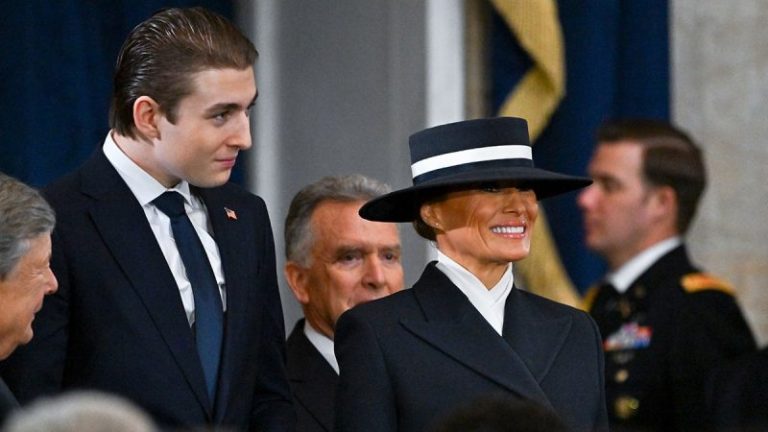
Fox News exclusively obtained the trailer, which opens with the first lady walking into the U.S. Capitol rotunda ahead of her husband’s second inauguration. She looks to the camera in her now-iconic inauguration outfit, and says: ‘Here we go again.’

The trailer jumps from the first lady and president at the inauguration; to standing together outside of Mar-a-Lago; behind-the-scenes of the inauguration showing Baron Trump and Mrs. Trump’s father; to a series of images of the first lady; Air Force One; the presidential seal and more.

The infamous Metro Goldwyn Mayer (MGM) lion roars and takes over the screen. 

The trailer then shows Mrs. Trump entering a room where President Trump stands at a podium during a meeting and is rehearsing a speech.

‘My proudest legacy will be that of peacemaker,’ Trump said. 

The first lady breaks in and says: ‘Peacemaker and unifier.’ 

The trailer shows the first lady getting out of a vehicle, sporting a pair of black stiletto boots, and jumping to the East Wing residence, where she stands in her stunning white and black inaugural ball gown, and smiles at the camera. 

The trailer invites the audience to ‘witness history in the making.’ 

The trailer also shows the first lady reviewing materials with staff and more. 

It cuts to a scene of Mrs. Trump asking a security detail ‘is it safe?’ and the agent confirming ‘it is safe,’ before the film cuts to sirens and the motorcade driving through a city. 

’20 days to become first lady of the United States,’ the trailer says. 

‘Everyone wants to know,’ Melania Trump says. ‘So here it is.’ 

The trailer ends with Mrs. Trump calling ‘Mr. President’ to say ‘congratulations.’ 

‘Did you watch it?’ President Trump says through the phone. 

‘I did not.  Yeah, I will see it on the news,’ Mrs. Trump says. 

The film is set to hit theaters around the globe on January 30. 

The first lady said that the story ‘has never been told, and because the subject matter is historically consequential, it was imperative for me to produce a film of the highest cinematic standard, suitable exclusively in theaters worldwide.’

‘The 20 days of my life, preceding the U.S. Presidential inauguration, constitutes a rare and defining moment—one that warrants meticulous care, integrity, and uncompromising craftsmanship,’ she said. ‘I am proud to share this very specific moment of my life—20 days of intense transition and planning—with moviegoers and fans across the globe.’

Fox News Digital has learned that the first lady was involved ‘in every aspect’ of the film — from her ‘creative vision,’ to working as a producer on the film and to ensuring the post-production marketing is executed properly. Fox News Digital has learned that the first lady has been very ‘hands on’ from start to finish. 

‘She is giving the audience unprecedented access to her life — and to any first lady’s life — during this 20-day period,’ a source familiar with the planning of the film told Fox News Digital. 

The film takes the audience through the first lady’s life leading up to the inauguration — from her home in Trump Tower in New York City, to Mar-a-Lago in Palm Beach, and behind-the-scenes access in Washington D.C. 

Mrs. Trump first had the idea for the film in November 2024, after President Trump won the election. 

Marc Beckman, Mrs. Trump’s agent and exclusive senior advisor, led negotiations on her behalf with Amazon, specifically with Amazon CEO Andy Jassy, beginning on Nov. 18, 2024. 

Fox News Digital has learned that Disney sought to obtain the exclusive rights to the film, as well as Netflix and Paramount. Amazon and MGM had the highest bid, purchasing the license for the film for $40 million — the largest documentary deal in history.

‘I’m honored to be working with Amazon — they’ve been great partners from the minute we started to negotiate the deal, through production and now as we gear up for the film’s release,’ Beckman told Fox News Digital.

‘Speaking of the deal, there has been so much speculation in the press on the bidding and how we ended up with Amazon, that we’re at a point where it’s worth clarifying a few things,’ Beckman said.

First, Beckman told Fox News Digital that some bidders were ‘interested only in a film, and others only in a series.’

‘Amazon ended up bidding on both, and checked all the boxes we were looking for, as they could also deliver a theatrical film release,’ Beckman explained.

Beckman stressed that he negotiated the deal on behalf of the first lady while dealing with ‘all the studios directly.’

‘I’ve seen reporting that Amazon paid nearly three times the nearest other bid, and that’s just false,’ Beckman said. ‘It was an incredibly competitive bidding process with multiple rounds of bids.’

Beckman added: ‘Yes, Amazon had the highest bid, but they also bid on the most product — series and film.’

Filming began in December 2024. The film is executive produced by Trump and Fernando Sulichin of New Element Media, with Brett Ratner of RatPac Entertainment serving as director. 

The film itself is produced in a ‘highly cinematic’ way. Sources familiar with the production told Fox News Digital that the first lady did not want the film to look like a documentary, but rather an ‘elevated film.’ 

The launch of the film comes a year after the release of her first-ever book, ‘Melania.’ The memoir presents an intimate portrait of Melania Trump and includes personal stories and family photos she had not previously shared with the public. 

‘Melania’ has been at the top of the New York Times’ best-selling list since its release to the public. 

Upon the release of the memoir last year, the first lady told Fox News Digital that writing her story was ‘an amazing journey filled with emotional highs and lows.’

‘Each story shaped me into who I am today,’ she said. ‘Although daunting at times, the process has been incredibly rewarding, reminding me of my strength, and the beauty of sharing my truth.’ 

‘Melania’ is the first lady’s first book. She released the original book along with a special collector’s edition that includes photos hand-selected by the first lady, many of which she photographed herself of her home and of various trips she has taken around the world. 

This post appeared first on FOX NEWS

A new report released Wednesday from Polaris National Security details what the group says are 100 foreign policy achievements from President Donald Trump’s second term. The document is organized chronologically, starting with his return to office in January and tracking each major foreign policy move through the present day.

The report, titled ‘100 Trump Foreign Policy Wins From 2025 the Media Wants You to Miss,’ is an advocacy and policy analysis document that reflects the authors’ evaluation of U.S. foreign policy developments over the past year. 

‘Since January, the Trump administration has moved with historic pace to restore America’s strength and security,’ the report states, arguing that the administration has emphasized deterrence, alliance burden-sharing and direct engagement with adversaries.

Venezuela and Western Hemisphere strategy

The report groups several Venezuela-related actions into what it describes as a broader U.S. policy shift in the Western Hemisphere. It highlights expanded counter-narcotics operations off Venezuela’s coast, including airstrikes on maritime vessels linked to organizations such as Tren de Aragua and the National Liberation Army. The campaign, called Operation Southern Spear, is described as underscoring a commitment to ‘defending the homeland from the influx of fentanyl and other illicit drugs ravaging American communities.’

The administration also raised the U.S. reward for information leading to the arrest of Venezuelan President Nicolás Maduro to $50 million, citing a public announcement from Attorney General Pam Bondi accusing Maduro of central involvement in narcotics trafficking. Venezuela has rejected the allegations. Polaris links these actions to the 2025 National Security Strategy, calling it ‘the most significant hemispheric reorientation of U.S. foreign policy in decades.’ 

Cale Brown, chair of Polaris National Security and former State Department principal deputy spokesperson, said the administration’s posture marks a reset on the global stage. ‘President Trump has taken the world stage by storm, reasserting American strength after four years of weakness,’ he said.

Gaza ceasefire and hostage releases

A substantial section of the Polaris report focuses on the October Gaza ceasefire, which it calls a central diplomatic breakthrough involving the United States, Israel and Hamas. According to the document, the agreement ‘secured an immediate ceasefire and the return of all surviving hostages,’ including Americans, with one hostage still unaccounted for. It also outlines plans for prisoner exchanges, Gaza’s demilitarization, an international stabilization force, transitional governance and large-scale reconstruction.

The report also highlights a November U.N. Security Council vote in which a U.S.-led Gaza resolution passed 13–0, with Russia and China abstaining. The resolution is described as providing ‘an international legal framework for the next phase of the Israel-Hamas ceasefire.’

Additionally, the administration’s prohibition on U.S. taxpayer funding for UNRWA is noted, citing U.S. concerns over alleged ties between some personnel and Hamas. UNRWA denies institutional involvement in terrorism, while U.S. officials say the move was based on national security considerations.

Iran nuclear strikes 

The report cites U.S. military strikes carried out in June against Iranian nuclear facilities using B-2 bombers and bunker-buster munitions, framing the mission as proof that the United States ‘will not tolerate a nuclear-armed Iran.’ Iran denies pursuing a military nuclear program.

Nathan Sales, a distinguished fellow at the Atlantic Council and former State Department counterterrorism coordinator, said the administration views regional diplomacy primarily through the lens of countering Tehran. ‘The Trump administration gets that the Iranian regime is the fundamental source of violence and instability across the Middle East,’ Sales said.

However, some analysts say the administration’s record presents sharp contrasts. Foreign policy analyst and editor-in-chief of the Foreign Desk Lisa Daftari said that while Trump has delivered on several strategic priorities — including strong support for Israel, terrorist redesignations, aggressive action against drug cartels and renewed momentum behind the Abraham Accords — other moves warrant closer scrutiny.

‘This record is tempered by concerning diplomatic overtures that urge caution. The characterization of Syria’s president as ‘young, attractive tough guy’ appears premature given unverified claims about severing ties with terrorist organizations—particularly troubling in light of recent attacks on U.S. servicemen. Similarly, the administration’s approach to Turkey and Saudi Arabia suggests a willingness to extend trust and strategic concessions that may exceed what these relationships warrant, potentially squandering leverage on critical issues like the Abraham Accords. Whether these calculated diplomatic gambles yield strategic gains or prove costly remains an open question. The true measure of this foreign policy doctrine will ultimately depend on how these relationships and decisions unfold in 2026.’

NATO defense spending commitments

The report also points to commitments made at the NATO summit in The Hague, where alliance members pledged to raise defense spending to 5% of GDP by 2035, far above the longstanding 2% benchmark. The document says the pledge followed sustained U.S. pressure for ‘fairer burden-sharing among allied nations.’

Armenia–Azerbaijan peace pledge

The report highlights an August agreement signed at the White House by the leaders of Armenia and Azerbaijan aimed at ending the Nagorno-Karabakh conflict. The declaration includes commitments on border security, regional transit routes and economic cooperation involving the United States.

This post appeared first on FOX NEWS

For months, Brooke Wilfley raised concerns that the president of her local youth hockey governing board was using his position for profit. 

The Denver-area hockey mom discovered that the president, Randy Kanai, was secretly routing the Colorado Amateur Hockey Association’s money through his private company. 

She reported his conflicts of interest and mismanagement to everyone she could: board members, club directors, coaches and four USA Hockey leaders who oversee the nonprofit. Little was done. 

Then in January 2023, Wilfley received a letter from the Colorado Amateur Hockey Association’s attorney. The board, it said, was launching an investigation. 

Into her. 

Seeking evidence of “libelous and slanderous statements,” the letter demanded Wilfley hand over two years of her emails, texts, calendars, phone logs and any other records of her conversations about the Colorado Amateur Hockey Association’s finances. It gave her 21 days to turn in her cellphones, computers and iPads for a forensic review. 

“This is an important legal duty,” the letter said, “and failure to follow these instructions may subject you to discipline.”  

Whistleblower retaliation occurs in every industry. But in few sectors is the threat more personal than in youth sports, where parents who speak up about corruption and financial exploitation risk repercussions not just for themselves, but for their children.  

Those fears are acute in youth hockey, where across the country, powerful rink operators, club directors and local governing body officials control the pathways by which kids advance to the sport’s highest stages. Many parents who suspect wrongdoing stay quiet out of fear of jeopardizing their kids’ opportunities. What some view as lax oversight from USA Hockey enables bad actors to flourish.

For Wilfley, the ramifications of the Colorado Amateur Hockey Association’s threats extended beyond her family. As the head of a Denver hockey academy and Tier I club – the top level of youth competition – dozens of parents entrusted her with their kids’ futures. Formal discipline against her club or a libel and slander lawsuit could affect those kids’ ability to play.  

In the face of the Colorado Amateur Hockey Association’s threats, Wilfley didn’t back down. But it cost her: reputational damage, more than $100,000 in legal bills and three years she can’t get back. 

“This is what happens when you speak up,” Wilfley told USA TODAY. “You get bullied. You get threatened. They’ll hurt your kids.  

“I would never wish this on anybody.” 

Conflicts of interest

Wilfley had never been a hockey fan. She became immersed in the sport when her five kids fell in love with it.  

A law school grad who specialized in child advocacy, she saw how high costs and limited opportunities caused kids to quit the sport or leave the state for better options. She looked for ways to keep kids playing close to home. 

She started a program that partnered with high schools to offer low-cost hockey lessons. 

When the COVID-19 pandemic shut down in-person learning in many schools, she opened Aces Sports Academy, an accredited school where third to eighth graders spend the mornings on ice and the rest of their days in class.  

In early 2022, she partnered with Okanagan Hockey Group, a Canadian youth hockey program, to start a recreational team in Colorado.  

The Colorado Amateur Hockey Association, the regional USA Hockey governing body that regulates the sport in her state, sanctioned her programs. Kanai, its president since 2012, supported them – until they became Tier I.  

Around the same time that Wilfley started her rec team, the Colorado Amateur Hockey Association announced its intent to strip the Colorado Springs Tigers, another local youth hockey club, of its Tier I status unless it fielded two more teams. So in April 2022, Brian Copeland, the Tigers’ president, approached Wilfley about merging their clubs. 

Wilfley jumped at the opportunity. Before ever playing a game, her club ascended to the most coveted echelon of youth hockey. That didn’t sit well with Kanai and some other board members. 

“They never went through the process to formally apply. They just made it happen,’ Kanai said. “We didn’t like that she had found the back door.’ 

Kanai responded with a series of requirements that Wilfley felt unfairly targeted her club. He announced audits of a ‘sampling” of clubs, including hers. He made her restructure parts of her businesses. He said the association would honor her club’s Tier I designation only if her players wear Tigers jerseys and play games in Colorado Springs – an hour drive from Denver.

Wilfley spent thousands of dollars on new uniforms and legal expenses, only for Kanai to announce the board’s intent to eliminate one of the state’s four Tier I licenses. Wilfley felt her club was on the chopping block.  

Suspecting a personal or financial motive for his actions, Wilfley scoured the nonprofit’s tax returns, bylaws and individual board members’ business filings, searching for conflicts of interest. 

She didn’t find the motive she was looking for. What she found was even more troubling. 

She discovered a dozen for-profit companies and trade names registered to Kanai that matched the names of Colorado Amateur Hockey Association programs. One called “Team Colorado” shared the same name as the association’s girls’ hockey teams. Others, like “CO Hockey” and “Rocky Mountain Sport Testing,” she recognized from the association’s website and payments she had made for her son’s hockey camps.  

Wilfley also found that the association had not filed tax returns or held annual board elections in three years. 

Concerned that Kanai was profiting off his volunteer position, Wilfley in September 2022 reported her findings to USA Hockey general counsel Casey Jorgensen and other top officials, emails show. But months passed, and little action was taken. 

That December, with a board vote to potentially eliminate her Tier I status looming, Wilfley hired an attorney to formally request the Colorado Amateur Hockey Association’s meeting minutes and internal accounting records – as is her right under state law – including all its transactions with Kanai’s companies. She also demanded proper board elections be held.  

That’s when Wilfley received the letter from the Colorado Amateur Hockey Association’s general counsel, Peter Schaffer. Its title: “Notice of Spoliation and Investigation.”

Hockey mom fights retaliation

Wilfley knew the demand for her private data was likely unlawful. But waiting for the legal system to play out was a luxury she didn’t have.  

With the state championships weeks away, even interim disciplinary action against her club could result in her players’ disqualification. Defending herself from a libel or slander lawsuit – even a frivolous one – could cripple her businesses’ and family’s finances. 

Days before the 21-day deadline to turn over her electronic devices for a “forensic accounting,” Wilfley had not yet responded. Schaffer ratcheted up the pressure. By refusing to comply, he wrote in a Feb. 9, 2023, email, her programs were now “in violation” of their USA Hockey member agreements. 

“We will have no alternative,” his email said, “but to commence disciplinary procedures.” 

Wilfley called a meeting to brief parents on the situation.  

“I had to stand in front of those families and say, ‘I’m so sorry. Your kids have been amazing this season, but I don’t know if they’re going to be allowed to compete in the state championships,’” Wilfley said.  

Meanwhile, she fought back.  

She hired an outside accounting firm to scrutinize the Colorado Amateur Hockey Association’s finances, based on the limited records Schaffer provided in response to her requests. The firm’s report – which she sent to USA Hockey – found six-figure discrepancies and previously undisclosed transactions with Kanai’s companies. 

The day of the deadline, her attorney sent a lengthy response to Schaffer, the association’s board members and Jorgensen, USA Hockey’s legal counsel. It accused Kanai and Schaffer of whistleblower retaliation and violating the association’s bylaws. Wilfley reiterated her concerns about Kanai’s conflicts of interests and failures to hold annual elections or file tax returns since 2019. 

Finally, five months after she first reported her concerns to USA Hockey, the national governing body intervened. 

“USA Hockey is very concerned with the ongoing governance and operational issues within the Colorado Amateur Hockey Association,” Jorgensen wrote in a Feb. 14, 2023, letter to Kanai.  

USA Hockey would launch its own investigation into the association’s finances and compliance with whistleblower and conflict-of-interest policies, Jorgensen’s letter said. It ordered Kanai and Schaffer to “immediately cease” any disciplinary action against Wilfley’s program, adding that they had no legal authority to demand her records. 

Two months later, USA Hockey hired its own outside accounting firm to forensically audit the Colorado Amateur Hockey Association’s finances, based in part on Wilfley’s outside firm’s report. USA Hockey President Mike Trimboli appointed three USA Hockey representatives to oversee its annual board election, which Kanai had postponed with less than a day’s notice.  

The association’s members voted Kanai out of office at the rescheduled meeting in May 2023 after more than a decade as president. His successor, Brian Smith – whose son plays for Wilfley’s club – and the board moved to fire Schaffer days later.  

USA Hockey in July 2023 suspended Kanai from all hockey activities for refusing to comply with its audit. The Colorado Amateur Hockey Association sued him that October, accusing him of stealing at least $180,000 of the nonprofit’s money by routing it through one of his private companies – the one Wilfley discovered. 

‘Crazy hockey mom’

Kanai and Schaffer were gone from Colorado youth hockey. But their attacks on Wilfley continued.  

They both subpoenaed Wilfley as part of defamation lawsuits they filed against the Colorado Amateur Hockey Association and two of its new board members: Smith and Bill Brierly, its executive vice president. Schaffer filed a motion to hold Wilfley in contempt of court for refusing to comply. 

Judges ultimately quashed the subpoenas. But Wilfley spent tens of thousands of dollars fighting them, she said – money she hasn’t gotten back, even after Schaffer dropped his case, and Kanai lost his. 

The Colorado Amateur Hockey Association’s lawsuit against Kanai went to a civil trial in April 2025 in Jefferson County District Court. In his testimony, Kanai didn’t deny profiting off his position as president. He argued he was allowed to do so.  

He portrayed himself as the victim of a “smear campaign” by Wilfley. In his testimony and subsequent interviews with USA TODAY, he painted her as a parent so hellbent on getting a Tier I team for her kids that she orchestrated a plot to take him down.  

“They weren’t happy with our decision on Tier I, so ‘Hey, let’s figure out what we can do to get these guys voted out,’” Kanai said. “It was all to influence the board vote, and they got what they wanted.” 

He acknowledged in court having “no direct evidence” of that. Of the 10 people called to testify, she wasn’t one of them. His other witnesses, however, spent much of their time on the stand supporting his version of events.  

“She wanted Tier I now, and that’s when the attacks came,” said Jason Schofield, Kanai’s business partner and a fellow board member who also admitted profiting $180,000 from Kanai’s company, in an interview with USA TODAY after the trial.  

Testified Schaffer: “Never before the Brooke Wilfley situation were there any issues about the Colorado Amateur Hockey Association and finances.” 

Judge Chantel Contiguglia didn’t buy it. Her October 2025 ruling found Kanai liable for civil theft, unjust enrichment, conversion and breach of fiduciary duty. She ordered him to repay the nonprofit $579,000 – triple the amount he stole, plus interest – and cover its court costs and attorney’s fees. 

The ruling – which Kanai appealed in November – vindicated Wilfley. Yet many in the Colorado hockey community still accept Kanai’s version of events.  The recent success of her teams – now among the top-ranked in the country – and the election of Smith, one of her player’s fathers, as Kanai’s successor as president only fueled those rumors.   

“’Crazy hockey mom’ is a really easy narrative,” Wilfley said. “It’s been three years of that. It just does not stop.” 

Better oversight needed

Wilfley is grateful to USA Hockey for intervening and to the Colorado Amateur Hockey Association’s new leadership for pursuing the lawsuit against Kanai. But better oversight by both organizations’ boards, she believes, could have saved her many sleepless nights. 

“The hardest thing for me is the toll it has taken on my family and the time,” Wilfley said. “I would go home and stay up at night worrying about all these other kids, just feeling like the rug was constantly being pulled out from under me.” 

Conflicts of interest and financial exploitation are rampant in youth hockey, said Brierly, the Colorado Amateur Hockey Association’s executive vice president whom Schaffer sued for defamation – a lawsuit Schaffer later dropped. Examining business affiliations of people who serve on the sport’s regional governing bodies should fall on USA Hockey, Brierly said – not individual parents. 

Brierly said USA Hockey should enact better standards and controls to identify mismanagement and abuses of power in the sport long before they become issues. 

“It’s expensive enough to play hockey,” Brierly said. “It’s more expensive when you’re also paying opportunistic individuals who are trying to make a dollar. That’s something USA Hockey should protect people against, but they obviously don’t care about protecting parents from financial abuse.” 

USA Hockey did not respond to requests for comment for this story.

After the trial, Schaffer told USA TODAY that he truly believed he had the legal authority to demand access to Wilfley’s private records and electronic devices. Sending her a notice of spoliation and investigation, he said, “is the least level of aggression you can do.” 

“If they’re not guilty, they would have sent it to us,” Schaffer said. “But they fought us. As much as they fought, it just made me know that they were guilty because they wouldn’t give it to us.” 

Kanai, for his part, acknowledged after the trial that Wilfley’s concerns about his financial entanglements with the association were “legitimate.” Still, he said he and other board members, including his business partner, Schofield, felt they had to take action to protect their reputations as rumors swirled. 

‘We were pretty sure there were slanderous and defamation comments in texts and emails going around, so we were trying to put a stop to it and get evidence that that was truly going on,” Kanai told USA TODAY.  

“Did we go too far? It’s debatable.” 

He maintained that every decision he made as president was guided by what’s best for the kids.  

Kenny Jacoby is an investigative reporter for USA TODAY who covers issues in sports, higher education and law enforcement. Contact him by email at kjacoby@usatoday.com. Follow him on X @kennyjacoby or Bluesky @kennyjacoby.bsky.social.

This post appeared first on USA TODAY

The NHL draft is full of players with supremely talented skill sets. 

The tools these players have are evident nearly every time they step on the ice. It’s truly remarkable to watch these 17- and 18-year-old kids play hockey and realize they are the future of the sport.

Each player has a standout trait. It’s the primary reason they find themselves near the top of NHL draft lists publicly and privately. In this week’s update of the 2026 NHL Draft board, we’re looking at those standout skills or traits that make each of the top-end players so special. That way, we can begin to understand how they can help an NHL team in the future.

Top 10 NHL draft prospects

1. Frolunda (Sweden) left wing Ivar Stenberg

One of the biggest reasons Stenberg has remained atop the list is his incredible intelligence and versatile game. When Stenberg’s A-game isn’t working, he’s quick to pivot to his B-game and remain an effective player. His capability as a playmaker, a shooter, a defensive winger or a transition-focused forward makes him hard to shut down completely. One game, he’s a skilled and speedy forechecker, and the next, he is a center-driven scorer.

2. Muskegon (USHL) center Tynan Lawrence

Lawrence’s ability to attack head-on and get downhill with and without the puck is truly a marvel to watch. Lawrence can drive the middle of the ice, taking on defenders with his speed and aggressive pace, unlike almost anyone else in the draft class. With and without the puck, Lawrence is a man on a mission. He’s not necessarily a power forward, but he plays a powerful game. 

3. Penn State (NCAA) left wing Gavin McKenna

There is no denying that the pure skill as a puckhandler and playmaking vision that Gavin McKenna possesses are elite. There are things he can do with the puck that most hockey players are simply not capable of. He can stickhandle in a phone booth and find his way out of trouble in open ice so often. His pure offensive skill is more impressive than anyone else’s in the draft class. 

4. North Dakota (NCAA) defenseman Keaton Verhoeff

The most intriguing thing about Verhoeff might just be what he could be. He has all of the traits to be a true all-situations defenseman who can control play on the power play, eat minutes at even strength and shut opponents down on the penalty kill. His mobility, escapability and, most importantly, his poise, make him the most well-rounded blueliner in the class. 

5. Spokane (WHL) right wing Mathis Preston

Preston hasn’t produced at the rate most had hoped, but there is so much to like about his game. He can put the team on his back for a shift or two and create offensive chances with his speed and skill, the way few can. No matter who is on the ice, when Preston decides it’s time to be the guy to create something, it’s hard to stop him from at least generating a high-end chance. 

6. Blainville-Boisbriand (QMJHL) defenseman Xavier Villeneuve

Although undersized, the elite on-puck game Villeneuve possesses gives shades of Quinn Hughes at times. He’s agile and powerful while being skilled and controlled as a playmaker. The kind of skill and play-creation Villeneuve brings as a defender is reminiscent of what McKenna brings as a forward. There is so much offensive juice in his game that it’s hard to deny just how special he could be. 

7. Djurgarden (Sweden) right wing Viggo Bjorck

Bjorck’s elite hands and dirty dangles make him so much fun to watch at the junior level, and he’ll be an important player at the World Junior Championship in just over a week. But his ability to work his tail off and diversify his game at Sweden’s pro level has been such a welcome sight. He’s always been skillful and cerebral enough, but adding the motor has made him much more effective this season. 

8. Jukurit (Finland) defenseman Alberts Smits

NHL teams love a player they can mold like a ball of clay, so long as that ball of clay is a 6-foot-3, 200-pounder who can skate like the wind. Alberts Smits has the kind of raw upside that could make him one of the best players in this draft class. He’s already playing big minutes against pros in Finland, allowing him to develop his game at both ends of the ice.

9. Windsor (OHL) left wing Ethan Belchetz

Belchetz’s combination of size and skill intrigues NHL teams more than anything. Not many players can bowl over a defender along the wall and then dangle the goalie from in tight the way Belchetz can. His developing skating has made him all the more dangerous, but it’s the size/skill combo that has scouts drooling. 

10. Tappara (Finland) center Oliver Suvanto

A two-way center is often underappreciated because they may not have the offensive punch of the elite skill guys, even though they can shut down the opposing team’s top players. Suvanto is that kind of player. He’s a massive center who plays down the middle of the ice at both ends, clogging up the middle defensively before getting on his horse and driving the center lane offensively.

This post appeared first on USA TODAY

Is Travis Kelce going to retire after this year?

It’s one of the biggest questions surrounding the Kansas City Chiefs after they were eliminated from playoff contention in their Week 15 loss to the Los Angeles Chargers.

Kelce’s brother, former Philadelphia Eagles center Jason Kelce, shared his perspective on Travis’ decision on Dec. 15 during a pregame segment for ESPN’s ‘Monday Night Football’ broadcast.

‘In my opinion, to nail that decision, you gotta step away from the game for a little bit,’ he said. ‘Play these last three games, enjoy them with your teammates, enjoy them with your coaches. The team’s going to be different no matter whether you come back or not next year. So enjoy these last three games.’

‘And then let it sink in. It will come to you with time. There’s so many emotions with this game, right after a season. Especially with the way this one’s been – it’s been so up-and-down … Right now, it’s just too fresh. You gotta step away from it, you gotta think about it, and then it’ll come to you.’

Travis is 36 years old, the same age that Jason was when he decided to retire after the 2023 season. The Chiefs had a tumultuous season that will ultimately end in some disappointment, much like the Eagles did in Jason’s final season in 2023.

In addition, Travis’ contract with the Chiefs is up after 2025 – as Jason’s deal with the Eagles was after 2023 – and his team will need to make some tough decisions as it misses the playoffs for just the second time in his career.

Travis and Jason Kelce are due to release the next episode of their podcast – the first since the Chiefs were eliminated from playoff contention – on Dec. 17.

Travis Kelce stats

Despite averaging the lowest receptions per game he has had in a single season since 2015, Kelce’s yards per game so far this year have been slightly higher than his average total throughout 2024. The Chiefs’ tight end is also the second-highest-scoring player at his position in fantasy football through 15 weeks.

Here’s how Kelce’s numbers look so far in his 13th season:

Targets: 92
Receptions: 67
Receiving yards: 797
Yards per reception: 11.9
Touchdowns: 7

Kelce will be vying for his 11th straight Pro Bowl nod in 2025, though he is not in a position to earn a fourth Super Bowl ring since the Chiefs were eliminated from playoff contention in Week 15.

Travis Kelce contract

Length: Two years
Value: $34.25 million
AAV: $17.13 million

Kelce is playing on the second and final season of the two-year re-negotiated contract extension he signed in April 2024. The restructured deal bumped the average annual value of his contract from $14.3 million – as it was in the original, four-year deal he signed in 2020 – to $17.125 million.

The 13-year NFL veteran was the highest-paid tight end in history at the time of signing his 2024 extension. Kelce currently ranks third on the list by AAV, behind George Kittle and Trey McBride.

Travis Kelce net worth

There are no reputable sources listing Kelce’s net worth for 2025.

However, Kelce has earned over $111 million during his 13 years with the Chiefs.

This post appeared first on USA TODAY