Archive

2025

Browsing

The best time for fantasy football drafting is as close as possible to the start of the regular season.

That way, no one gets blindsided by freak injuries and unexpected trades that always seem to happen late in the preseason. But in order to take advantage of all that knowledge, your draft prep materials must also be just as up-to-date.

That’s why we at USA TODAY Sports have our consensus fantasy rankings automatically updated whenever there’s a new development. Through the magic of FantasyPros, we’re able to provide those updates to you automatically in a handy new widget. Check out the full rankings below our latest Top 100.

USA TODAY consensus 2025 fantasy football top 100 rankings:

Here are the combined rankings for standard and PPR leagues from USA TODAY Sports’ team of fantasy football analysts. (More sets of rankings to be added in the future.)

Ja’Marr Chase (CIN – WR1)
Bijan Robinson (ATL – RB1)
Saquon Barkley (PHI – RB2)
Justin Jefferson (MIN – WR2)
Jahmyr Gibbs (DET – RB3)
CeeDee Lamb (DAL – WR3)
Malik Nabers (NYG – WR4)
Puka Nacua (LAR – WR5)
Nico Collins (HOU – WR6)
Amon-Ra St. Brown (DET – WR7)
Derrick Henry (BAL – RB4)
Ashton Jeanty (LV – RB5)
De’Von Achane (MIA – RB6)
Brian Thomas Jr. (JAC – WR8)
Christian McCaffrey (SF – RB7)
Brock Bowers (LV – TE1)
A.J. Brown (PHI – WR8)
Ladd McConkey (LAC – WR10)
Chase Brown (CIN – RB8)
Jonathan Taylor (IND – RB9)
Drake London (ATL – WR11)
Bucky Irving (TB – RB10)
Josh Jacobs (GB – RB11)
Jaxon Smith-Njigba (SEA – WR12)
Lamar Jackson (BAL – QB1)
Kyren Williams (LAR – RB12)
Trey McBride (ARI – TE2)
George Kittle (SF – TE3)
Josh Allen (BUF – QB2)
Jayden Daniels (WAS – QB3)
Tyreek Hill (MIA – WR13)
Jalen Hurts (PHI – QB4)
Tee Higgins (CIN – WR14)
Davante Adams (LAR – WR15)
Breece Hall (NYJ – RB13)
Terry McLaurin (WAS – WR16)
Kenneth Walker III (SEA – RB14)
Garrett Wilson (NYJ – WR17)
Mike Evans (TB – WR18)
James Cook (BUF – RB15)
Marvin Harrison Jr. (ARI – WR19)
Alvin Kamara (NO – RB16)
DJ Moore (CHI – WR20)
DeVonta Smith (PHI – WR21)
James Conner (ARI – RB17)
DK Metcalf (PIT – WR22)
Courtland Sutton (DEN – WR23)
Omarion Hampton (LAC – RB18)
Chuba Hubbard (CAR – RB19)
Zay Flowers (BAL – WR24)
Xavier Worthy (KC – WR25)
Joe Burrow (CIN – QB5)
Jameson Williams (DET – WR26)
D’Andre Swift (CHI – RB20)
David Montgomery (DET – RB21)
Sam LaPorta (DET – TE4)
RJ Harvey (DEN – RB22)
Tetairoa McMillan (CAR – WR27)
Aaron Jones Sr. (MIN – RB23)
Patrick Mahomes II (KC – QB6)
Kaleb Johnson (PIT – RB24)
TreVeyon Henderson (NE – RB25)
Tony Pollard (TEN – RB26)
Jaylen Waddle (MIA – WR28)
George Pickens (DAL – WR29)
Isiah Pacheco (KC – RB27)
Baker Mayfield (TB – QB7)
Jerry Jeudy (CLE – WR30)
T.J. Hockenson (MIN – TE5)
Rome Odunze (CHI – WR31)
Rashee Rice (KC – WR32)
Chris Olave (NO – WR33)
Joe Mixon (HOU – RB28)
Kyler Murray (ARI – QB8)
Mark Andrews (BAL – TE6)
Tyrone Tracy Jr. (NYG – RB29)
Calvin Ridley (TEN – WR34)
Jaylen Warren (PIT – RB30)
Travis Kelce (KC – TE7)
Brock Purdy (SF – QB9)
Chris Godwin Jr. (TB – WR35)
Brian Robinson Jr. (SF – RB31)
Bo Nix (DEN – QB10)
Travis Hunter (JAC – CB, WR36)
Jakobi Meyers (LV – WR37)
Justin Fields (NYJ – QB11)
Travis Etienne Jr. (JAC – RB32)
Evan Engram (DEN – TE8)
David Njoku (CLE – TE9)
Jauan Jennings (SF – WR38)
Jayden Reed (GB – WR39)
Javonte Williams (DAL – RB33)
Dak Prescott (DAL – QB12)
Jared Goff (DET – QB13)
Najee Harris (LAC – RB34)
Ricky Pearsall (SF – WR40)
Khalil Shakir (BUF – WR41)
Jordan Addison (MIN – WR42)
Deebo Samuel Sr. (WAS – WR43)
Zach Charbonnet (SEA – RB35)

Complete 2025 fantasy football rankings by position

This post appeared first on USA TODAY

No NFL players were suspended for violating the league’s gambling policy during the 2024 season, a decrease from the ten who were handed suspensions for doing so the season prior, the league said on Monday.

During training camp, the league said it told its teams: No betting on the NFL and no gambling of any kind when they are on the clock (at the team facility or traveling with the team, for example).

Every team had its head coach kick off the training session this year, with former players also making trips for the education sessions, the NFL said. The policy, which bars all NFL personnel from playing daily fantasy football, or sharing inside information with anyone, remained unchanged heading into the 2025 season.

The legalization of sports betting has also opened up an entirely new avenue for athletes to be harassed, both in person and online, the league said. NFL security is constantly monitoring threats, including over social media, executive vice president for player health and safety Jeff Miller said, and engages with either local law enforcement or the team’s security apparatus to pursue any leads. The harasser is banned from NFL stadiums and is subject to prosecution depending on the nature of the act.

‘It’s a very real-world issue,’ Miller said, ‘and it’s one we take with the most seriousness.’

NFL says prediction markets Kalshi, Polymarket ‘mimic’ sports betting

Prediction markets – such as Kalshi – are the next frontier for the league to assess, according to David Highhill, the NFL’s vice president of sports betting. Highhill went so far to say the prediction markets ‘mimic’ sports betting. Sportsbooks are subject to a robust set of regulations, such as using official league data and responsible betting tools, which do not yet pertain to those products. Players are prohibited from using those platforms.

‘For us, we’re concerned that if these markets aren’t properly regulated, they could be susceptible to manipulation,’ he said.

Kalshi has been subject to cease-and-desist orders from several states where sports betting is legal.

This post appeared first on USA TODAY

If the 2024 season is any indication, the College Football Playoff will be unpredictable again this season.
The College Football Playoff likely will be dominated by Big Ten and SEC teams.
Three teams received more than 10 first-place votes in the preseason US LBM Coaches Poll for the first time since 2012.

Forecasting the future can be intimidating when the world is chaotic and uncertain. Thankfully, making successful college football bowl predictions aren’t as important as some of the biggest issues in the world.

But that doesn’t make the exercise any easier.

This season shapes up to be one of the more balanced in recent history. Three teams received more than 10 first-place votes in the preseason US LBM Coaches Poll for the first time since 2012. Many of the top contenders are still sorting out their quarterback situations and will have unproven starters. There’s also the matter of imbalanced schedules among the top contenders.

PATH TO PLAYOFF: Sign up for our college football newsletter

Most importantly, however, is the unpredictability of a 12-team playoff. We learned a lot about that in the first one last season. The four top seeds were all eliminated in the quarterfinals. Ohio State entered as the No. 8 seed and were clearly the best team. The change to seeding without preference to conference champions this season is another wrinkle to sort out.

One thing that seems likely is that the field will be dominated by SEC and Big Ten teams. But which ones? Georgia, Alabama and LSU from the SEC all start in the top 10. But there’s probably 10 or so teams capable of emerging. From the Big Ten, there’s Ohio State, Penn State and Oregon near the top with Illinois and Michigan in the mix. Could a surprise team from the league emerge as Indiana did last season?

The answers to these questions and more will revealed in December. For now, here’s our best guesses.

Note: Legacy Pac-12 schools in other conferences will fulfill existing Pac-12 bowl agreements through the 2025 season.

This post appeared first on USA TODAY

Las Vegas Raiders wide receiver Jakobi Meyers wants out of the desert.

According to multiple reports, Meyers has requested the Raiders trade him after contract extension talks stalled.

NFL Network’s Ian Rapoport added that Las Vegas has already stated it does not intend to trade Meyers, who led all Raiders wide receivers with 87 catches for 1,027 yards and four touchdowns.

Meyers is due to enter the final season of the three-year, $33 million contract he signed with Las Vegas ahead of the 2023 season. In the first two years of the deal, the wideout has been one of the team’s top targets, finishing second in the metric behind star receiver Davante Adams in 2023 and second again behind rookie tight end Brock Bowers in 2024.

This post appeared first on USA TODAY

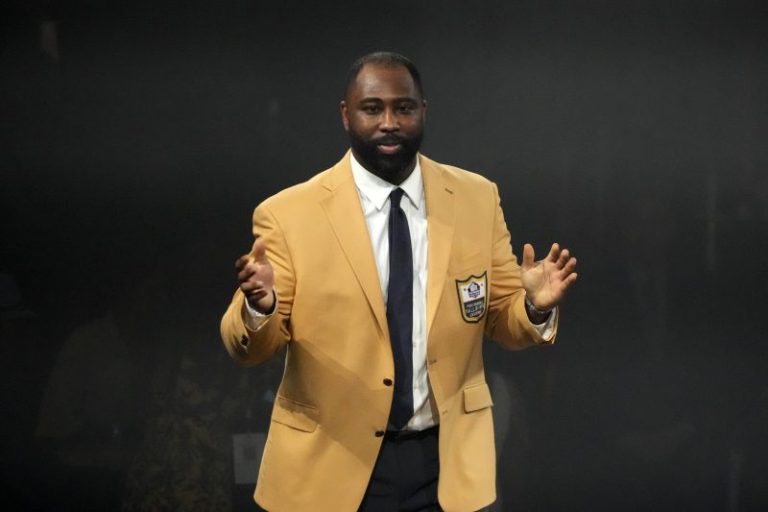
Hall of Fame cornerback Darrelle Revis criticized Dallas Cowboys owner Jerry Jones for directly negotiating with Micah Parsons.
Revis called on the NFLPA to take action against Jones, who should instead be speaking with Parsons’ representatives.
Revis, a candidate for the NFLPA’s executive director job, believes the union’s inaction could embolden owners in future CBA negotiations.

The contract standoff between Micah Parsons and the Dallas Cowboys has now pitted a Hall of Fame player against a Hall of Fame owner.

Former NFL cornerback Darrelle Revis, considered a potential candidate to become the executive director of the NFL Players’ Association, called for the union to take action against Cowboys owner Jerry Jones.

‘Doing nothing is not an option,’ Revis wrote in a statement he posted on social media. ‘At the very least, the NFLPA should be saying it does not condone what Jerry is doing.’

Jones has revealed that he negotiated directly with Parsons, who is currently seeking a lucrative contract extension as he enters the final year of his rookie deal. Parsons, however, requested to be traded and said that the Cowboys have neglected to engage with his representation. That could be viewed as a violation of the collective bargaining agreement (CBA) between the NFL and the union, although nothing explicitly states an owner cannot talk to a player about compensation.

‘The bigger issue is respect,’ Revis wrote. ‘Jerry’s actions show that owners have no problem taking advantage of us, and when our union fails to respond, it sends the message that they’ll be able to do the same in the next CBA negotiations if the current leadership remains in place.’

A five-time first-team All-Pro corner, Revis has been vocal about union matters recently. After ESPN reported the union placed an in-house lawyer on administrative leave, he wrote on social media ‘What’s going on here?’ and tagged the official NFLPA account.

Former NFL quarterback Matt Schaub is another former player candidate for the union’s executive director role. Previous NFLPA executive director Lloyd Howell Jr. resigned last month amid controversy regarding several issues, from a collusion acknowledgement that was buried to his spending union money at strip clubs.

David White, the former executive director of SAG-AFTRA who finished second to Howell in the 2023 election, is the interim executive director.

This post appeared first on USA TODAY

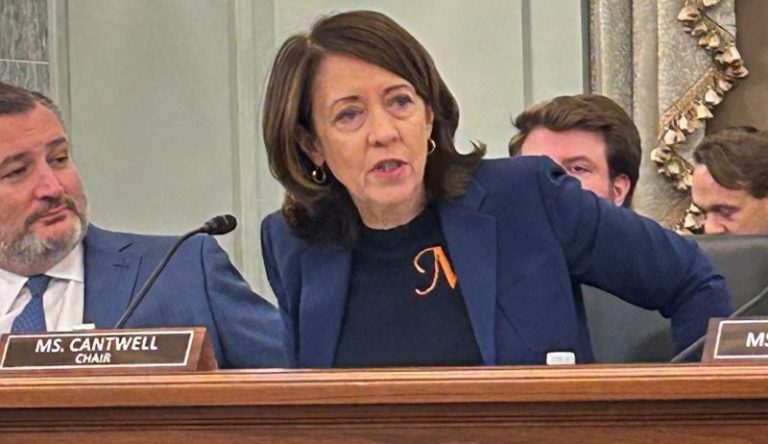
Sen. Maria Cantwell, Wash., the top Democrat on the U.S. Senate Commerce Committee, on Monday, Aug. 25 sent a letter to NCAA Division I school chief executive officers and governing boards to “express my deep concerns” about a Republican-authored college-sports bill that has passed two House of Representatives committees and is set for a floor vote that could occur in September.

If the bill passes the House, the focus likely would turn to the Senate Commerce Committee. Its chair, Ted Cruz, R-Texas, has been working on a discussion draft of a separate college-sports bill — and advocating for such a measure — for more than two years. Not long after Republicans re-claimed a Senate majority last November, Cruz said such legislation would be a priority for him and the committee.

Titled the SCORE Act (Student Compensation And Opportunity Through Rights and Endorsements), the bill would establish a variety of national rules concerning how college sports operate. It includes antitrust-exemption language that specifically would allow the NCAA, and potentially the new College Sports Commission, to make operational rules affecting schools and athletes in areas that have come into legal dispute in recent years. That would include rules about transfers and the number of seasons for which athletes can compete.

PATH TO PLAYOFF: Sign up for our college football newsletter

NCAA President Charlie Baker said recently he would be “fine” if the bill’s antitrust protection for NCAA rules would last for only two or three years before being subject to Congressional review.

The bill also would put into federal law college athletes’ name-image-and-likeness activities, basically following the terms of the recent settlement of three athlete-compensation antitrust cases against the NCAA and the Power Five conferences that is generally known as the House settlement. In addition, the bill would require most Division I schools to provide a series of health and educational benefits for athletes that are currently called for under NCAA and some conferences’ rules, but do not have the force of law.

Her new five-page letter amplifies those criticisms and adds others. The letter appears to be an effort to counter extensive lobbying efforts by the NCAA and the Power Four conferences, who have been encouraging school officials to express support for the bill to their respective elected officials. While Congress has been on its August recess, two Democratic members of the House from Texas — Henry Cuellar and Vicente Gonzalez — have added their names to the bill’s list of co-sponsors.

Cantwell wrote in her letter that the bill “will incentivize a Power 2 conference system that will create inequities for other conferences and leave behind small to mid-sized schools,” and that she wants to “work with you” to find alternatives and that she is inviting these school officials “to provide input on legislation that will protect the college athletics system and its athletes and set up universities and their programs to thrive in the future.”

Cantwell did not set a deadline for responses. However, she believes that the more university leaders know about the bill, the more they will be concerned about it, a Commerce Committee aide to Cantwell told USA TODAY Sports. The aide added that Cantwell is hoping to hear initial thoughts before the House considers the bill. The aide requested anonymity because they are not authorized to speak publicly on the matter.

Cantwell specifically claimed that the bill’s language would allow the NCAA to alter the House settlement’s basic metric for determining the amount of money athletes would be able to receive in so-called revenue-sharing payments from schools so that it could increase from the 22% of certain revenues of the association’s power-conference schools.

At issue for Cantwell is a provision that says the NCAA would be able to create a cap that is ‘at least’ 22%. Given that many schools are struggling to find the money to pay the athletes, whether NCAA Division I governance groups would authorize payments above 22% – which would favor schools in bigger conferences – is an open question.

She also claimed that the bill would put into law recent changes in the NCAA Division I governance structure that broaden the voting power of the Power Four conferences in the division’s top rules-making groups, the Division I Board of Directors and newly created Division I Administrative Group.

“We do not need a federal law that would entrench the advantages the biggest conferences already have … ” Cantwell wrote.

But with Cuellar adding his name to the bill on Aug. 19 and Gonzalez doing so on Aug. 22, there are now four Democrats who have backed the legislation. It originated with Rep. Gus Bilirakis, R-Fla., and gained co-sponsorship from four prominent Republican members of the House who are committee chairs and/or part of GOP leadership in the chamber: Jim Jordan, Ohio; Brett Guthrie, Ky.; Tim Walberg, Mich; and Lisa McClain, Mich.

With Republicans holding a 219-212 majority in the House, all of this strongly indicates that the bill would have enough votes to pass if House Speaker Mike Johnson (La.) and Majority Leader Steve Scalise (La.) want to bring it to the floor.

This post appeared first on USA TODAY

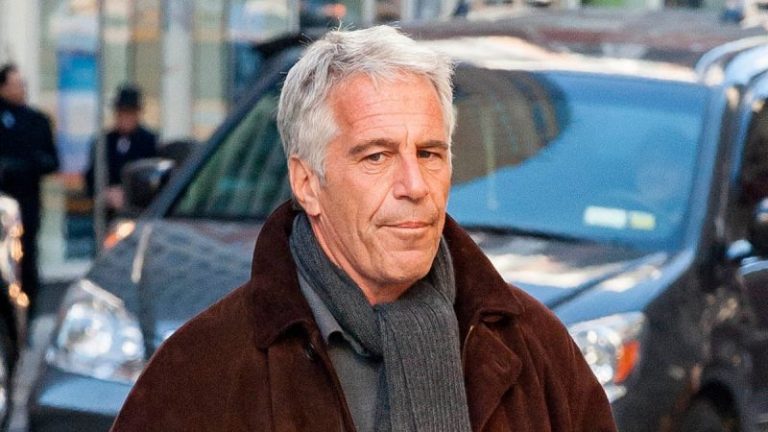
The House Oversight Committee took significant steps to widen its probe into Jeffrey Epstein on Monday, including subpoenaing the late pedophile’s estate.

Committee Chair James Comer, R-Ky., sent a letter to attorneys representing Epstein’s estate, requesting a slew of documents by Sept. 8.

‘The Committee on Oversight and Government Reform is reviewing the possible mismanagement of the federal government’s investigation of Mr. Jeffrey Epstein and Ms. Ghislaine Maxwell, the circumstances and subsequent investigations of Mr. Epstein’s death, the operation of sex-trafficking rings and ways for the federal government to effectively combat them, and potential violations of ethics rules related to elected officials,’ Comer wrote.

‘It is our understanding that the Estate of Jeffrey Epstein is in custody and control of documents that may further the Committee’s investigation and legislative goals. Further, it is our understanding the Estate is ready and willing to provide these documents to the Committee pursuant to a subpoena.’

Comer also announced that the committee would hear from Alexander Acosta, a former Trump administration labor secretary who also served as U.S. attorney for the Southern District of Florida when Epstein entered into a non-prosecution agreement with the federal government in 2008.

Acosta is appearing before the committee for a closed-door transcribed interview on Sept. 19. He was not compelled via subpoena. 

The controversial agreement, which Acosta signed off on, was concealed from more than 30 of Epstein’s underaged victims, according to The Miami Herald.

Epstein pleaded guilty in 2008 to two state charges in Florida of soliciting and procuring a minor for prostitution, avoiding more severe federal charges. He ended up serving 13 months in county jail with the benefit of a work-release program, made confidential settlements with some victims, and registered as a sex offender. 

It also allowed co-conspirators to avoid charges – a major point of contention during his accomplice Ghislaine Maxwell’s federal trial in late 2021. It’s also the basis of Maxwell’s appeal to the Supreme Court to overturn her guilty verdict.

Documents subpoenaed by Comer include all entries in a book compiled by Maxwell for Epstein’s 50th birthday, Epstein’s will, and information on the non-prosecution agreement.

Information is being sought on Epstein’s financial transactions, call and visitor logs, and ‘any document or record that could reasonably be construed to be a potential list of clients involved in sex, sex acts, or sex trafficking facilitated by Mr. Jeffrey Epstein,’ according to a copy of the subpoena viewed by Fox News Digital.

An attorney for the executors of Epstein’s estate told Fox News Digital they were reviewing the subpoena. ‘As the Co-Executors have always said, they will comply with all lawful process in this matter, and that includes the Committee’s subpoena,’ the attorney said.

The House Oversight Committee sent a flurry of subpoenas regarding Epstein earlier this month, kicking off a bipartisan investigation into the late pedophile.

Comer sought depositions from former FBI directors Robert Mueller and James Comey, ex-attorneys general Bill Barr and Loretta Lynch, as well as former President Bill Clinton and former Secretary of State Hillary Clinton. Barr testified last week.

The subpoenas were directed via a bipartisan vote during an unrelated House Oversight subcommittee hearing on illegal immigrant children in late July.

Renewed interest in Epstein’s case has gripped Capitol Hill after the DOJ’s handling of the matter spurred a GOP revolt by far-right figures.

The DOJ effectively declared the case closed after an ‘exhaustive review,’ revealing Epstein had no ‘client list,’ did not blackmail ‘prominent individuals,’ and confirmed he did die by suicide in a New York City jail while awaiting prosecution.

Democrats seized on the discord with newfound calls for transparency in Epstein’s case, spurring accusations of hypocrisy from their Republican colleagues.

Indeed, the bipartisan unity that the investigation was kicked off with quickly disintegrated after the first witness, Barr, was deposed last week.

Reps. Suhas Subramanyam, D-Va., and Jasmine Crockett, D-Texas, who attended part of Barr’s deposition, left the room roughly halfway through the sit-down and accused Republicans of insufficiently probing questions during their allotted time to depose Barr.

Comer, who argued those accusations were baseless, implored Democrats not to politicize a bipartisan investigation.

Divisions deepened after Comer said Barr had no knowledge of, nor did he believe, any implications of wrongdoing on President Donald Trump’s part related to Epstein.

House Oversight Committee ranking member Rep. Robert Garcia, D-Calif., who was not in the room, released a statement after the deposition, claiming Barr did not clear Trump.

This post appeared first on FOX NEWS

College football teams score less often from the 1-yard line using the shotgun formation compared to under-center plays.
Despite lower success rates, the shotgun is used more frequently than under-center plays at the 1-yard line.
Coaches cite fear of fumbled snaps as a reason for favoring the shotgun, despite data showing no fumbles on under-center snaps from the 1-yard line in the study.
The shotgun formation leads to more negative-yardage plays and penalties near the goal line.

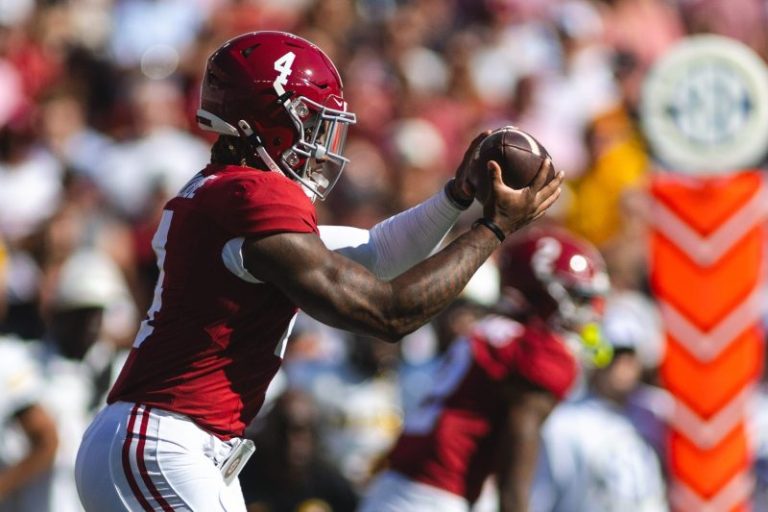
Midway through the second quarter of Alabama’s 2023 home defeat of Mississippi, Ja’Corey Brooks blocked a punt that gave the Crimson Tide offense a first-and-goal from the Rebels 1-yard line. But instead of plowing ahead with a quarterback sneak or calling for a running back to plunge over the top, Alabama took a loss of 13 yards when an errant shotgun snap got away from Jalen Milroe, and Alabama was forced to kick a field goal. Two days later, legendary coach Nick Saban was asked whether the shotgun formation was a wise alignment in that situation.

‘It was not smart on our part to do what we did, and we get a bad snap after all that,’ Saban said. ‘… I agree with you that, at a time when it’s first-and-goal on the 1, why do we need to be in shotgun?’

A more profound question: from the opponent’s goal line, why would any offensive coordinator ever employ the shotgun?

PATH TO PLAYOFF: Sign up for our college football newsletter

USA TODAY Sports reviewed every goal-line offensive play last season for 15 of the top programs in college football, spanning all four power conferences, and found that the shotgun formation resulted in significantly fewer touchdowns than plays called with the quarterback taking the snap from under center. From the opponent’s 1-yard line, those teams scored on just 56% of shotgun snaps, compared to a 73% touchdown rate from under center. Yet despite that disparity, offensive coordinators called the shotgun formation more often: 90 shotgun looks versus 72.

Teams researched were Alabama, Arizona State, Boise State, Clemson, Georgia, Indiana, LSU, Miami, Michigan, Missouri, Nebraska, Notre Dame, Ole Miss, Penn State and Texas. And while 15 is a far cry from the entirety of 134 FBS schools that played last year, it is a strong representation of the sport’s elite. Twelve of the 15 made the College Football Playoff’s final rankings, and eight qualified for the 12-team playoff field.

David Cutcliffe, for one, was unsurprised by the findings.

Across a 40-year coaching career from 1982-2021 at Tennessee, Ole Miss and Duke, Cutcliffe witnessed under-center play lose its grip as the foundation of college offenses everywhere, slowly giving way to the shotgun formation as the modern play-starter. Cutcliffe noted that the shotgun has so overtaken the sport that most quarterbacks know nothing else at the youth level, particularly with the proliferation of 7-on-7 passing tournaments. Meanwhile, in the coaching profession, there is a progressively shrinking understanding of how to teach under-center play. An entire generation of coaches grew up on the shotgun, and many view under-center play as little more than a relic.

‘It’s easy to sit in the nickel seat I’m in now and sound like I’m criticizing coaches − I’m not. Because I’d tell any of them, ‘Teach what you know’. If you don’t know it, you can’t just look at a film and say, ‘Let’s do this,” Cutcliffe said. ‘At the same time, I’m not sure that offensive coordinators as a group fully understand all the idiosyncrasies of under-center goal-line offense anymore. It’s taught at some places. It’s not taught everywhere.’

Shotgun formation is 5-yard giveaway

The fundamental argument against the shotgun formation at the goal line is simple enough: the snap moves the ball from the 1-yard line to the 6-yard line to begin the play, even more if a pass is called and the quarterback retreats another step or two.

That gives defensive penetration a better opportunity to not only prevent a score but make a stop for negative yardage, whereas defenses have no such advantage in defending a direct run from under center. The benefits of operating from the shotgun make for a different calculation elsewhere on the field. But on the goal line, with seven points staked on a very short gain, old-school football delivers more touchdowns and settles for fewer field goals than the shotgun.

Just ask defensive coordinators what they’d rather face.

‘I love for the quarterback to be 5 yards deeper taking the snap,’ said Indiana defensive coordinator Bryant Haines. ‘As a defense, we’re fighting for every single inch in that area of the field. The deeper I can get him, the further away from the center, that play is better for me.’

Illustrating the point last season were some very high-profile goal-line failures from the shotgun. Most notable among them came in Texas’ loss to Ohio State in a College Football Playoff semifinal. The Longhorns were on the Buckeyes 1-yard line with 3:16 remaining, a yard away from tying the score at 21. On second-and-goal, Texas ran a sweep from a shotgun formation that was smothered for a 7-yard loss. Two plays later, Ohio State linebacker Jack Sawyer sacked Quinn Ewers and returned a fumble 83 yards for a game-clinching score in a 28-14 win.

Texas benefitted from shotgun madness just two weeks earlier in its first-round playoff win over Clemson. The Tigers blew two fourth-quarter shots from the Texas 1-yard line with back-to-back shotgun calls. Results: run for no gain, run for a loss of 1, turnover on downs.

College football coordinators scared to go under center

So why are offensive coordinators so shotgun-stubborn at the goal line? Because they’re scared to go under center.

Multiple coaches cited the risk of a fumbled snap exchange as the reason they remain beholden to the shotgun. With freshman centers and quarterbacks entering college largely untrained in the under-center exchange, and offensive coordinators dedicating most practice reps to the shotgun, fumbles on under-center snaps can be commonplace in practice. And what coaches see in practice shapes game plans.

One head coach said the under-center exchange, especially in spring practice, can be ‘a disaster.’ But is it such a big risk that play callers should abandon the under-center plays that scored 17% more often than the shotgun? When it comes to fumbles, the data says they shouldn’t be so fearful of putting their quarterbacks under center. In 72 under-center snaps from the 1-yard line last year, the 15 teams examined by USA TODAY Sports didn’t fumble once.

Alabama coach Kalen DeBoer agreed that practice fumbles can deter play-callers away from going under center on Saturdays. While neither Alabama nor any other team researched by USA TODAY Sports fumbled from the 1-yard line, the Crimson Tide lost an under-center fumble from the 2-yard line against South Florida last September. DeBoer said that while Alabama became more comfortable operating from under center over the course of his first season at the the school, that turnover ‘remained fresh in our minds.’

Still, however frequent under-center fumbles might’ve been in practice, they didn’t manifest on Saturdays. The shotgun not only failed to provide better ball security in game action, it also resulted in more negative-yardage plays, as well as a disproportionately high number of penalties: 14 from the 3-yard line or closer, while there was only one penalty from under center. And that’s no coincidence, either.

‘The shotgun is more risky for false starts at the goal line,’ Cutcliffe said. ‘Everything is closer. The DBs are closer. The fans are closer, the noise is closer. It’s already a very difficult time to communicate, and when the quarterback backs up 5 yards, it’s that much more difficult for him to be heard.’

And that much more difficult to score.

Old-school approach at Arizona State

While most of the 15 schools showed a propensity for sticking with the shotgun from the goal line, there were exceptions. Arizona State was under center for 11 of 12 snaps from the opponent’s 1-yard line. And while the powerful style of All-America running back Cam Skattebo might’ve made that more sensible, Skattebo’s short-yardage effectiveness wasn’t the only reason. Sun Devils offensive coordinator Marcus Arroyo believes in under-center play like few others.

He said the quarterback is under center on about half of the team’s run-game reps in practice, much more than most.

‘It’s about your identity on offense as a whole. Do you believe in under-center play? If you don’t, you’re not going to practice it. We believe in it. I’m from a pro tree, not a spread tree,’ Arroyo said. ‘If I’m on the 1-yard line, we’re under center with direct runs. But at the same time, I can understand coaches who don’t practice it saying, ‘Wait, we practice this three snaps a day, we’re not going to run it on the most expensive part of the field.”

USA TODAY’s research extended to the 2- and 3-yard lines as well. From the 2-yard line, plays from under center and the shotgun converted a touchdown at the same rate, 57%. From the 3, the shotgun was more effective (44% vs. 35.7%), although in the aggregate of all three distances, under-center calls scored more often (61.7%) than shotgun calls (51%).

What stood out in research from the 2- and 3-yard lines was a more staunch unwillingness by play-callers to go under center. From the 2, teams ran 93 snaps from shotgun and just 28 under center. From the 3, inclusive of 2-point conversion attempts, the disparity was 150 to 28.

But the shotgun price was paid from the longer distances, too.

In Penn State’s 20-13 loss to Ohio State, the Nittany Lions had a first-and-goal from the Buckeyes’ 3-yard line, ran four consecutive plays from the shotgun, and failed to punch in what would’ve been a game-tying score. For the season, including 2-point tries, Penn State ran 13 plays from the 3-yard line, all from the shotgun, and failed to score on 12 of them.

Play-action Peyton Manning

Displayed in Cutcliffe’s home is a framed photo of Peyton Manning crossing the goal line with an easy 1-yard touchdown run on a naked bootleg in Tennessee’s 41-14 win over rival Alabama in 1995.

For Cutcliffe, the play illustrates another key weakness of the shotgun formation: the play-action fake. From the shotgun, run fakes are perfunctory at best; defenses never lose sight of the ball and linebackers aren’t fooled, leaving them in better position to defend a pass. From under center, a well-executed fake hides the ball from the view of the defense, compelling linebackers to crash gaps to stop the run, which opens passing lanes.

The story behind Cutcliffe’s photo, however, is priceless.

On the team bus en route to Birmingham’s Legion Field to play Alabama, Cutcliffe sat beside Manning and hatched an idea for a goal-line, play-action fake that would fool not only the Crimson Tide but the Volunteers as well. Cutcliffe told Manning that if Tennessee found itself on the 1-yard line, he would call an under-center play known as 2-power, on which running back Jay Graham would take a handoff and leap over the top for the score.

But only Cutcliffe and Manning knew it would be faked.

‘I didn’t even tell our coaches,’ Cutcliffe said. ‘I told Peyton to call 2-power in the huddle, put that ball right in his belly, pull it out and take the bootleg to the weak side. I said, ‘Trust me on this, you’ll walk into the end zone.”

Manning indeed scored with ease as the Crimson Tide defense sold out to stop Graham. In Cutcliffe’s photo, Manning is crossing the goal line with no defender within 10 yards of him. In the background, offensive lineman Jason Layman, thinking Graham had the ball, has his arms raised to signal touchdown while watching the running back land in the end zone.

‘Rarely do you get to call your shot on the bus on the way to the stadium, but it happened exactly like that,’ Cutcliffe said.

Manning signed the photo with the inscription: ‘Coach Cut, thanks for the points.’

Tuscaloosa News columnist Chase Goodbread is also the weekly co-host of Crimson Cover TV on WVUA-23. Reach him at cgoodbread@gannett.com. Follow on X.com @chasegoodbread.

This post appeared first on USA TODAY

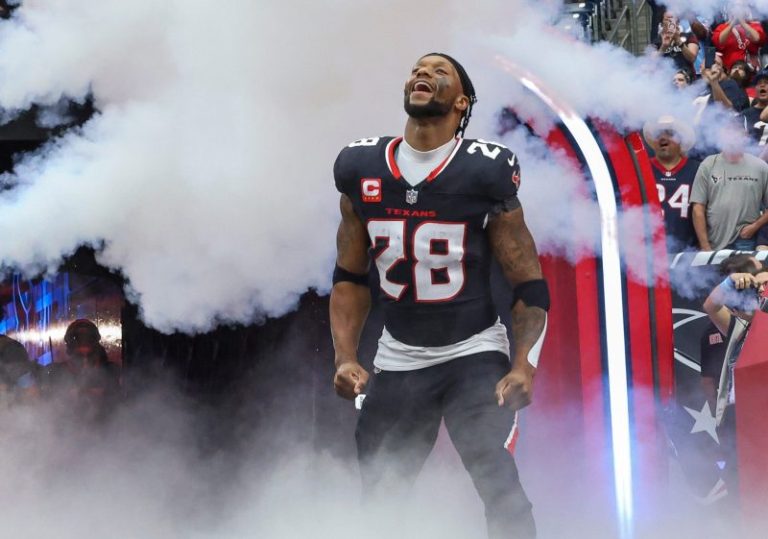
Where in the world is Joe Mixon?

It’s a question that no one seems capable of answering as the regular season looms for the Houston Texans. Before that, however, is fantasy draft season and it’ll only pick up with the preseason in the rearview.

Mixon hasn’t participated in any offseason activities for Houston, instead landing on the non-football injury (NFI) list ahead of training camp. As it turns out, Mixon won’t see the field for the first four games of the season.

Houston officially moved Mixon to IR on Monday, keeping the running back out of the team’s first four contests of the 2025 regular season.

Head coach DeMeco Ryans was previously mum on Mixon, saying there was no news on the Mixon front ahead of the NFL’s roster cutdown deadline at 4 p.m. ET on Tuesday, Aug. 25.

‘Most of our decision roster-wise will be made tomorrow, so no update on those decisions,’ Ryans said, via SportsTalk790’s Adam Wexler.

ESPN’s Adam Schefter gave something of a murky prognosis on ‘Get Up!’ on Monday morning.

“The silence from Houston is deafening regarding Joe Mixon’s injury,’ Schefter said. ‘There’s been zero update. There are lots of questions about when, or if, he’ll be back. We’ll continue to await an update. They’re required to provide one by tomorrow.’

With a key deadline approaching for Houston, it begs the question – is Mixon someone you want to be drafting in fantasy?

Should you draft Joe Mixon in fantasy?

The uncertainty surrounding the Mixon situation, or when he will return, makes him a player to avoid in drafts.

It’s not known when and how this injury occurred, leaving everyone in the dark about those key details. With Mixon out for the Texans’ first four games of the season, you can probably pass on him when you’re on the proverbial clock.

“He hasn’t practiced all year, hasn’t been seen much, hasn’t been heard from at all,’ Schefter added. ‘There’s a lot going on with Joe Mixon’s ankle that hasn’t been addressed, and it hangs over this franchise – leaving a major question mark at the running back position.’

Mixon missed three games and finished as RB17 in 2024, per FantasyPros, but was on his way to a top-10 finish if the ankle injury didn’t sideline him – evidenced by his RB8 finish in fantasy points per game. Mixon fell off quickly towards the end of the 2024 season, however, as he was held to under 30 rushing yards in three of the last four games. He eclipsed 10 PPR points just once in that span.

It’s unclear if he was injured at that time, but durability remains a concern regardless.

As if the injury wasn’t enough, there are multiple team factors to consider as well – like a downgraded offensive line and a crowded running back room.

Houston added Nick Chubb and Woody Marks this offseason to a backfield group that already includes Dameon Pierce and Dare Ogunbowale before roster cuts.

Then there is the issue of Nick Caley. Houston’s new offensive coordinator hasn’t been given the chance to see Mixon in practice, leaving the 29-year-old’s role unclear. It wouldn’t be the first time an injury hurt an NFL player’s role with a team.

There are ultimately too many factors that impact Mixon here – and none of them are working in his favor for fantasy purposes.

Verdict: While we can downplay the severity of De’Von Achane’s injury and dismiss Ashton Jeanty’s preseason struggles, we can’t do that with Mixon. With Mixon not having practiced with this mysterious foot injury – and that doesn’t even factor in the team’s already poor offensive line – even the most daring fantasy managers would be wise to steer clear.

This post appeared first on USA TODAY
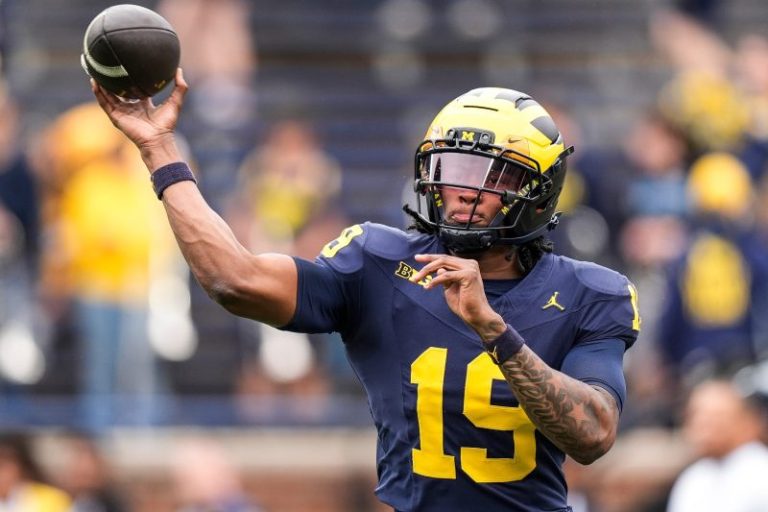
Michigan’s Bryce Underwood was named starting QB
Underwood is Michigan’s second highest-ranked signee ever, per 247Sports
The Wolverines open their season vs. New Mexico in Week 1

Five-star true freshman Bryce Underwood, the unanimous No. 1-ranked player of the 2025 recruiting class, has been named the team’s starter, winning the team’s competition over Jadyn Davis and transfers Mikey Keene and Jake Garcia. Last season’s starter, Davis Warren, is still recovering from a torn ACL from the Wolverines’ bowl win.

The No. 14-ranked Wolverines open their season at home in Week 1 against New Mexico on Saturday, Aug. 30.

Underwood was the odds-on favorite to win the job after Michigan didn’t pursue options at the position in the transfer portal. The Belleville, Michigan, native was originally committed to LSU before flipping to the Wolverines as a high school senior.

Underwood represents a major recruiting win for Michigan, who had plenty of struggles at the position in 2024 among Warren, Alex Orji and Jack Tuttle, who were all ineffective in their respective starts. It won’t be easy for the true freshman, though, as he faces Oklahoma in his first road game before taking on a tough Big Ten slate.

The four-year starter at Belleville High School finished 50-4 for his career, winning two state titles. He finished high school with 11,488 passing yards and a whopping 179 total touchdowns, winning the 2023-24 National Gatorade Player of Year award as a junior.

Underwood is already becoming a future face of college football, having already appeared on the deluxe edition cover of EA Sports’ College Football 26 video game before playing in a game.

This post appeared first on USA TODAY