Archive

2025

Browsing

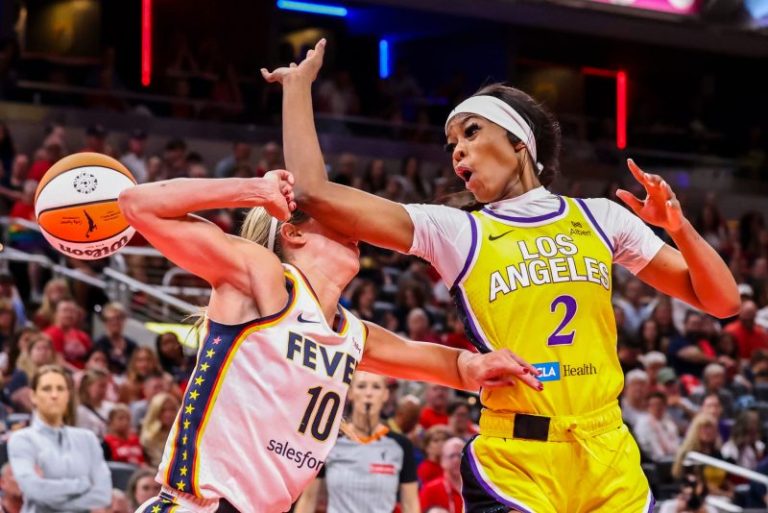
Friday’s matchup between the Indiana Fever and Los Angeles Sparks has huge playoff implications. As Fever head coach Stephanie White put it, ‘Every game is like a playoff game at this point.’

The injury-riddled Fever (20-18) are currently in sixth place in the WNBA standings with six games remaining in the regular season, while the Sparks (17-19) are in ninth place with eight games remaining. If the regular season ended today, Indiana would advance to the postseason in back-to-back seasons for the first time since 2015-16, while the Sparks would miss the playoffs yet again. (The Sparks haven’t made the playoffs since 2020.)

There’s still time for the Fever and Sparks to move up (or down) the leaderboard as teams jockey for playoff positioning during the final stretch of the season. The top eight teams advance to the playoffs and only four games separate sixth place from 10th place.

The Fever are 10.5 games behind the league-leading Minnesota Lynx, followed by the Golden State Valkyries (11 games behind Lynx), Seattle Storm (11), Sparks (12.5) and Washington Mystics (14.5). The Connecticut Sun, Dallas Wings and Chicago Sky have all been eliminated from playoff contention.

The Fever have dropped six of their last nine games while navigating a series of season-ending injuries amid Caitlin Clark’s extended absence, while the Sparks have lost three of their last five, meaning Friday’s game is all the more important.

‘We can’t get caught watching the standings. We can’t get caught looking too far ahead,’ White said on Tuesday. ‘It is one game at a time.’

Here’s everything you need to know about Tuesday’s game between the Fever and Sparks:

What time is Indiana Fever vs. Los Angeles Sparks?

The Los Angeles Sparks will host the Indiana Fever at 10 p.m. ET (7 p.m. PT) on Friday, Aug. 29, at crypto.com Arena in Los Angeles. The game will be broadcast nationally on ION.

Halftime: Sparks 47, Fever 44

Kelsey Plum had 12 points in the first half to lead the Sparks against the Fever. Azura Stevens and Rickea Jackson added eight points in the first half.

The Sparks compiled nine assists in the first quarter but just one in the second quarter.

Kelsey Mitchell and Aliyah Boston each scored 12 points for the Fever.

1Q: Sparks 31, Fever 24

The Sparks finished out the opening period with the lead against Indiana at home. Azura Stevens had eight points and two assists for the Sparks in the first quarter. Dearica Hamby added six points and two assists. Kelsey Mitchell led the Fever with seven points. Aliyah Boston had six points, three rebounds and two assists against L.A.

Sparks starting lineup vs. Fever

Rickea Jackson, Dearica Hamby, Azura Stevens, Kelsey Plum and Julie Allemand started for the Sparks at home against the Fever on Friday.

Fever starting lineup vs. Sparks

Odyssey Sims, Kelsey Mitchell, Lexie Hull, Natasha Howard and Aliyah Boston make up the Fever’s starting lineup for Friday’s game against the Sparks.

How to watch Indiana Fever vs. Los Angeles Sparks: TV, stream

Time: 10 p.m. ET (7 p.m. PT)
Location: Crypto.com Arena (Los Angeles)
TV channel: ION
Streaming: Fubo (free trial to new subscribers)

The USA TODAY app gets you to the heart of the news — fastDownload for award-winning coverage, crosswords, audio storytelling, the eNewspaper and more.

This post appeared first on USA TODAY

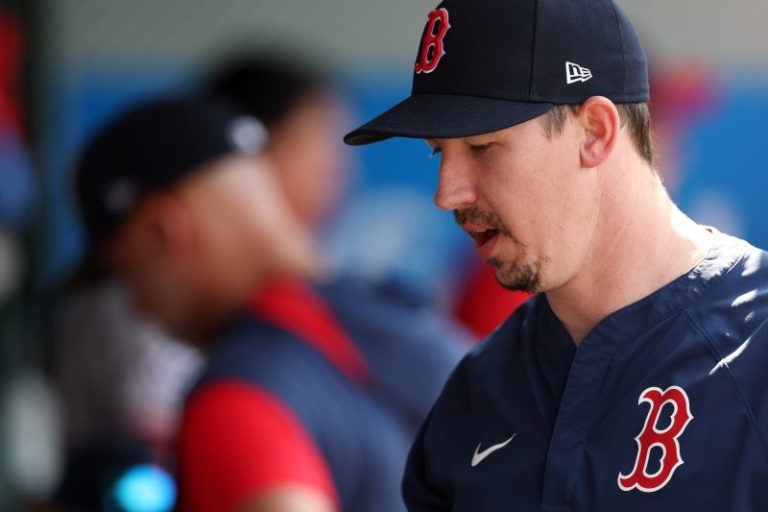
Walker Buehler, signed by the Boston Red Sox to lengthen their rotation and hopefully provide the big-game playoff heroics that marked his career, was released by the club Aug. 29 as they aim to rework their rotation down the stretch in the American League playoff chase.

Buehler, 31, was signed to a one-year, $21.05 million contract but never found his footing pitching for the Red Sox, failing to complete five innings in nine of his 22 starts and giving up four or more runs in eight of them. Boston recently demoted Buehler to the bullpen, where he made one appearance, and the club has ridden the dominant trio of Cy Young candidate Garrett Crochet, Brayan Bello and Lucas Giolito to the top of the AL wild card standings.

But with swingman Richard Fitts on the injured list and no off day relief until Sept. 4, the club opted to release Buehler now and promote their top pitching prospect, Payton Tolle, who makes his debut at Fenway Park against Pittsburgh ace Paul Skenes. Tolle, 22, struck out 13 batters per nine innings over three minor league stops in this, his first professional season. He was picked in the second round of the 2024 draft.

Buehler won his second World Series title with the Los Angeles Dodgers last season, starting and winning Game 3 of the World Series at Yankee Stadium and then coming back two nights later to earn the save in the clinching Game 5. He has a 0.47 ERA in four World Series games from 2018, 2020 and 2024.

Walker Buehler contract

Buehler’s contract signed with the Red Sox guaranteed him $21.05 million in 2025. That includes a $3 million buyout on the $25 million option for 2026.

Walker Buehler stats

Walker Buehler had a 5.45 ERA in 112.1 innings with the Red Sox, making 22 starts before being demoted to the bullpen. His 6.7 strikeouts per nine is the lowest mark of his career, entering the season at 9.5 in eight years with the Dodgers.

This post appeared first on USA TODAY

For fantasy football fans, Labor Day weekend has an entirely different meaning. It means beer, wings, fantasy drafts, and more beer.

Whether you’re playing in full-PPR, half-PPR, or standard leagues, our staff has you covered. Scroll below our top-150 list and you’ll see our complete rankings for every format. If you’re looking for downloadable or printable rankings, we have you covered as well.

We also have no shortage of content at USA TODAY Sports to help you build your teams from start to finish. Looking for the best fantasy team names? Here are 213 of the best options. Need to know who the top sleepers are? We have you covered for quarterbacks, running backs, wide receivers, tight ends, kickers, defenses and late rounds. Head over to our fantasy football hub for much more.

Here are our rankings for 2025 fantasy football drafts.

USA TODAY Sports consensus top 150 fantasy football draft rankings

Ja’Marr Chase, CIN (WR1)
Bijan Robinson, ATL (RB1)
Justin Jefferson, MIN (WR2)
Saquon Barkley, PHI (RB2)
Jahmyr Gibbs, DET (RB3)
CeeDee Lamb, DAL (WR3)
Amon-Ra St. Brown, DET (WR4)
Puka Nacua, LAR (WR5)
Malik Nabers, NYG (WR6)
Derrick Henry, BAL (RB4)
Nico Collins, HOU (WR7)
Brian Thomas Jr., JAC (WR8)
Christian McCaffrey, SF (RB5)
Ashton Jeanty, LV (RB6)
Bucky Irving, TB (RB7)
A.J. Brown, PHI (WR9)
Chase Brown, CIN (RB8)
Brock Bowers, LV (TE1)
Drake London, ATL (WR10)
Jonathan Taylor, IND (RB9)
Josh Jacobs, GB (RB10)
De’Von Achane, MIA (RB11)
Ladd McConkey, LAC (WR11)
Kyren Williams, LAR (RB12)
Trey McBride, ARI (TE2)
James Cook, BUF (RB13)
Jaxon Smith-Njigba, SEA (WR12)
Lamar Jackson, BAL (QB1)
Tee Higgins, CIN (WR13)
Josh Allen, BUF (QB2)
Tyreek Hill, MIA (WR14)
George Kittle, SF (TE3)
Mike Evans, TB (WR15)
Terry McLaurin, WAS (WR16)
Davante Adams, LAR (WR17)
Jalen Hurts, PHI (QB3)
Jayden Daniels, WAS (QB4)
Garrett Wilson, NYJ (WR18)
Kenneth Walker III, SEA (RB14)
DK Metcalf, PIT (WR19)
Marvin Harrison Jr., ARI (WR20)
Omarion Hampton, LAC (RB15)
DJ Moore, CHI (WR21)
Courtland Sutton, DEN (WR22)
DeVonta Smith, PHI (WR23)
Breece Hall, NYJ (RB16)
Joe Burrow, CIN (QB5)
Alvin Kamara, NO (RB17)
D’Andre Swift, CHI (RB18)
Chuba Hubbard, CAR (RB19)
TreVeyon Henderson, NE (RB20)
Jameson Williams, DET (WR24)
Tetairoa McMillan, CAR (WR25)
James Conner, ARI (RB21)
Xavier Worthy, KC (WR26)
Calvin Ridley, TEN (WR27)
Zay Flowers, BAL (WR28)
Isiah Pacheco, KC (RB22)
David Montgomery, DET (RB23)
Tony Pollard, TEN (RB24)
Sam LaPorta, DET (TE4)
Patrick Mahomes II, KC (QB6)
Aaron Jones Sr., MIN (RB25)
Travis Kelce, KC (TE5)
RJ Harvey, DEN (RB26)
George Pickens, DAL (WR29)
Jaylen Waddle, MIA (WR30)
Jerry Jeudy, CLE (WR31)
Rome Odunze, CHI (WR32)
Tyrone Tracy Jr., NYG (RB27)
Travis Hunter, JAC (WR33)
Kaleb Johnson, PIT (RB28)
Jaylen Warren, PIT (RB29)
Ricky Pearsall, SF (WR34)
T.J. Hockenson, MIN (TE6)
Baker Mayfield, TB (QB7)
Bo Nix, DEN (QB8)
Mark Andrews, BAL (TE7)
Jakobi Meyers, LV (WR35)
Rashee Rice, KC (WR36)
Chris Olave, NO (WR37)
Javonte Williams, DAL (RB30)
Kyler Murray, ARI (QB9)
Emeka Egbuka, TB (WR38)
Travis Etienne Jr., JAC (RB31)
Matthew Golden, GB (WR39)
Dak Prescott, DAL (QB10)
Evan Engram, DEN (TE8)
Deebo Samuel Sr., WAS (WR40)
Brock Purdy, SF (QB11)
Tank Bigsby, JAC (RB32)
Jordan Mason, MIN (RB33)
David Njoku, CLE (TE9)
Chris Godwin Jr., TB (WR41)
Stefon Diggs, NE (WR42)
Najee Harris, LAC (RB34)
J.K. Dobbins, DEN (RB35)
Tucker Kraft, GB (TE10)
Justin Fields, NYJ (QB12)
Jauan Jennings, SF (WR43)
Khalil Shakir, BUF (WR44)
Drake Maye, NE (QB13)
Jordan Addison, MIN (WR45)
Justin Herbert, LAC (QB14)
Caleb Williams, CHI (QB15)
Josh Downs, IND (WR46)
Jordan Love, GB (QB16)
Zach Charbonnet, SEA (RB36)
Jayden Reed, GB (WR47)
Tyler Warren, IND (TE11)
Jared Goff, DET (QB17)
Jake Ferguson, DAL (TE12)
Austin Ekeler, WAS (RB37)
Dalton Kincaid, BUF (TE13)
Trevor Lawrence, JAC (QB18)
Jerome Ford, CLE (RB38)
Cooper Kupp, SEA (WR48)
Joe Mixon, HOU (RB39)
Cam Skattebo, NYG (RB40)
Michael Pittman Jr., IND (WR49)
Jacory Croskey-Merritt, WAS (RB41)
Darnell Mooney, ATL (WR50)
Rhamondre Stevenson, NE (RB42)
Nick Chubb, HOU (RB43)
Rashid Shaheed, NO (WR51)
Kyle Pitts Sr., ATL (TE14)
Rachaad White, TB (RB44)
Dallas Goedert, PHI (TE15)
Quinshon Judkins, CLE (RB45)
C.J. Stroud, HOU (QB19)
Brian Robinson Jr., SF (RB46)
Brandon Aiyuk, SF (WR52)
Rashod Bateman, BAL (WR53)
J.J. McCarthy, MIN (QB20)
Jaydon Blue, DAL (RB47)
Tua Tagovailoa, MIA (QB21)
Christian Kirk, HOU (WR54)
Hunter Henry, NE (TE16)
Trey Benson, ARI (RB48)
Bryce Young, CAR (QB22)
Marvin Mims Jr., DEN (WR55)
Colston Loveland, CHI (TE17)
Keon Coleman, BUF (WR56)
Cedric Tillman, CLE (WR57)
Ollie Gordon II, MIA (RB49)
Rico Dowdle, CAR (RB50)
Tyjae Spears, TEN (RB51)
Braelon Allen, NYJ (RB52)
Ray Davis, BUF (RB53)
Jayden Higgins, HOU (WR58)

Complete 2025 fantasy football staff draft rankings

This post appeared first on USA TODAY

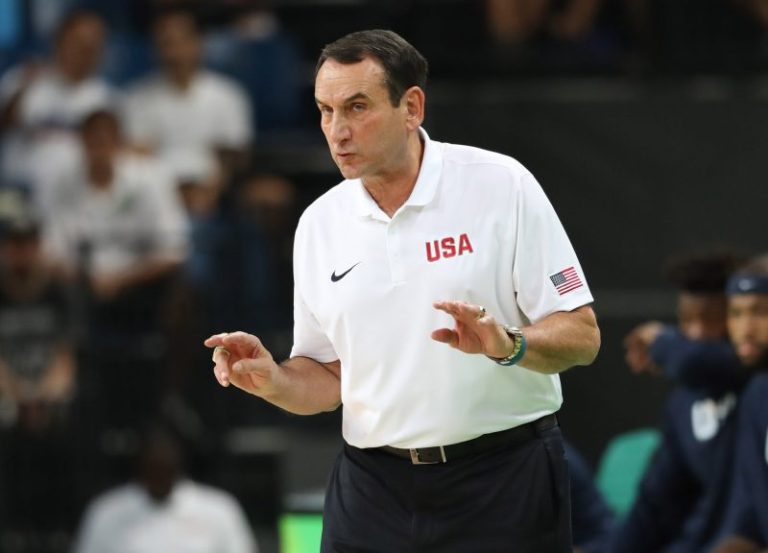
Former Duke coach Mike Krzyzewski is leading an NBA committee to improve youth basketball in the U.S.
The committee aims to address overuse, player health and wellness, and inconsistent coaching in youth basketball.
Part of the plan includes incorporating elements of the European model, which emphasizes team play and skill development within a 5-on-5 setting.

The state of elite basketball in the United States is not in shambles. Far from it.

The U.S. men’s and women’s senior national teams extended gold-medal streaks at the 2024 Paris Olympics, and the U.S. men’s and women’s under-19 teams won gold at the FIBA World Cup this summer.

However, the state of elite basketball in the United States is not perfect. Work is required.

Enter former Duke Blue Devils men’s basketball coach and former U.S. Olympic men’s coach Mike Krzyzewski.

‘The game in our country is undertaught and probably overplayed, if that makes sense,’ Krzyzewski told USA TODAY Sports.

Krzyzewski is a special advisor to NBA commissioner Adam Silver and the chairman of the NBA’s Global Basketball Committee, a carefully curated group focused on examining the state of elite youth U.S. basketball and developing recommendations to address shortcomings and opportunities.

‘The NBA is fully committed to helping youth basketball and college basketball,’ Krzyzewski said. ‘Adam, the board of governors, everyone understands our responsibility in taking care of our game. The NBA should take care of our game, and they want to.’

Three years ago, Silver called his good friend who a year earlier had stepped aside as the Duke men’s basketball coach after 42 Hall of Fame seasons. Silver, a Duke alum, wanted to know if Krzyzewski had interest in chairing a committee that examined the state of youth basketball in the USA and implement changes to address issues, strengthen programs and improve the overall quality of a U.S.-based player’s game.

‘I can’t think of anything that is more important to basketball than the development of the next generation of players,’ Silver told USA TODAY Sports. ‘What we’ve noticed as a trend is that while we get spectacular athletes who are incredibly skilled, they haven’t played as much team basketball on a consistent basis than some of the players from the generation before them.

‘The opportunity presented itself to work directly with one of the greatest coaches of all-time, and somebody who is passionate about teaching the game of basketball and passionate about youth basketball.’

Also on the committee: New Orleans Pelicans executive vice president of basketball operations Joe Dumars, who was a co-chair before leaving the league office to join the Pelicans; Minnesota Timberwolves president of basketball operations Tim Connelly, Dallas Mavericks general manager Nico Harrison, NBA great and Los Angeles Clippers guard Chris Paul; Milwaukee Bucks coach Doc Rivers; Boston Celtics star Jayson Tatum; and Pelicans general manager Troy Weaver.

While the committee’s primary focus is on the men’s side, Las Vegas Aces star A’ja Wilson is a strategic advisor for the Jr. NBA/Jr. WNBA Court of Leaders program and WNBA and head of WNBA league operations Bethany Donaphin is involved in youth development programs.

Krzyzewski and the global basketball committee have been tasked with reshaping the direction of elite youth U.S. basketball and creating a holistic approach that addresses player development with a focus on team play, off-court leadership skills, player wellness and enhanced collaboration with college basketball and AAU programs.

It is a massive and ambitious undertaking. Change at that scale is not easy, but Krzyzewski and the NBA seek a transformation they believe is necessary.

Krzyzewski remains committed to basketball – just in a different capacity. ‘I want to be involved with the game I love and the game that I spent my life loving and coaching,’ he said.

At the first NBA meeting Krzyzewski attended, he said, ‘Our country, it’s on a scholastic model. Most kids play more basketball outside of that scholastic model. And how can we make that better? How can we educate coaches and help them become better? How can we teach kids the game?’

Some ideas are as basic as learning to play with a shot clock. Not every state high school association employs a shot clock, though the National Federation of High School Athletic Associations 31 states plus the District of Columbia will have a shot clock by 2026-27. However, several players reach the college game with no prior experience playing with a shot clock. He also wondered why men’s college basketball is the only elite level in the world that plays two halves instead of four quarters.

‘We need to unify (and) modernize the game,’ Krzyzewski said. ‘There should be some time in coaching where you prepare for a game, you play the game, and then you give feedback about the game. And then you have some level of practice or instruction where you talk about a few of the points you didn’t do well. And so just like a college coach would learn during the season, you bring your team along and the game is actually what you’re getting prepared for. And then after the game, ‘let’s analyze what we did. Why didn’t we do this?”

The youth basketball landscape in the U.S. has changed dramatically in the past few years with NIL and alternative paths to the NBA that didn’t exist or weren’t as popular such as the G League, international leagues and Overtime Elite.

Youth basketball in the U.S. is a massive operation, from youth leagues to high school to AAU to elite tournaments sponsored by athletic apparel companies. The committee has received buy-in from major backers, including Nike which runs the prominent Elite Youth Basketball League (EYBL) comprised of travel AAU teams, some sponsored by NBA players such as Bradley Beal, Kevin Durant and Chris Paul. The EYBL has limited the number of games played at each event and implemented a day off for rest for each team at its Peach Jam event.

‘One of the biggest deficiencies in our grassroots system is overuse,’ NBA senior vice president/head of youth basketball development David Krichavsky said.

The NBA began surveying top high school players about six years ago and found the average elite youth basketball player plays between 80 and 110 games per year. Half of the respondents said they did not have time off from organized basketball activities in a 12-month span, and 50% responded that they had played four games in a day and seven games in a weekend.

The Global Basketball Committee also wants to inject portions of the European coaching and training model into the U.S. That means teaching and coaching that operate within a 5-on-5 game while still developing individual skills.

‘The U.S. player is very skilled with the ball, can shoot and has the athleticism,’ Krzyzewski said. ‘The international player is skilled in 5-on-5. They understand better than the American player movement off the ball, the total concept.’

The NBA also is focused on player health and wellness and has created guidelines.

‘Those guidelines recommended multi-sport participation, age-appropriate limit on the number of games, both in a day and in a week, specific durations of time off for rest and recovery,’ Krichavsky said. ‘And that’s all age- and stage-based to promote healthy development. The first piece is making sure that you’ve documented what the science is to promote healthy development in the sport.’

The NBA/WNBA Jr. Court of Leaders program assembled in July some of the best boys and girls high school players in the country for a week of on- and off-court seminars. In attendance: Alex Constanza, Jason Crowe, Caleb Gaskins, Caleb Holt, Cayden Daughtry, Jaxon Richardson, C.J. Rosser, Autumn Fleary, Sanai Green, Jordyn Jackson, Haylen Ayers, Ryan Carter, Lauren Hassell and Ivanna Wilson-Manyacka.

The group went through sessions on mental health and wellness, film study, media training, social impact, financial education, contracts and agents; and skill sessions from experts in those fields.

‘We want,’ Krzyzewski said, ‘to be able to help teach that boy or girl along the path of becoming, maybe a WNBA player, maybe an NBA player, the total game of basketball.’

This post appeared first on USA TODAY

Arch Manning faces immense expectations as Texas’ starting quarterback, fueled by his family legacy and the team’s No. 1 ranking.
Despite limited starting experience, Manning is considered a Heisman Trophy front-runner, a testament to the Manning name.
Unlike his grandfather and uncles, Manning enters a program with sky-high expectations and a roster primed for immediate success.

There’s this old Sylvia Plath quote that says if you expect nothing from anybody, you are never disappointed.

If the inverse of that is true, if you expect everything from somebody, you’re sure to be disappointed.

And that brings us to the incomparable proposition for Arch Manning. The bar for this 21-year-old quarterback with two career starts to his name (neither start occurred against a competent team) has been set so impossibly high, he’d need to be Superman in a football uniform to meet the hopelessly high expectations.  

Or, alternatively, just be a Manning. That’d probably work, too.

Therein lies the rub. If this quarterback possessed any other surname, we’d all find it more than a tad ridiculous that the preseason Heisman Trophy front-runner has thrown all of 95 passes in his career, and more than a tad hyperbolic when prominent ESPN commentator Paul Finebaum dubbed Manning the greatest thing since Tim Tebow.

But those seven letters stitched across the back of his burnt orange jersey signify that this Texas quarterback is the latest in the line of the first family of college football.

And, so, we wonder: Maybe, the bar isn’t hopelessly high. Maybe, the expectations are reasonable. His grandfather became a Southern icon, and his uncles cemented the family’s legacy as football royalty.

He’s a Manning. That gives him a chance.

Arch Manning has pedigree to meet expectations

Manning’s coach, Steve Sarkisian, told reporters that he said this to his quarterback: We are not asking any superhuman efforts of you to do anything that is extraordinary.

Who is ‘we’ in that sentence? Because, there are plenty who do expect the extraordinary from this former five-star recruit who will start for the nation’s No. 1-ranked team when Texas plays Saturday at No. 2 Ohio State, the defending national champions.

‘This is what I’ve been waiting for,’ Manning told reporters this week. ‘I spent two years not playing (as a backup behind Quinn Ewers), so I might as well go have some fun.’

Might as well accept that he’s facing expectations that supersede even those for the Mannings who came before him.

Texas, despite losing twice to Georgia last season, and after falling in the College Football Playoff semifinals for the second straight year, and despite losing 12 players to the NFL Draft, was ranked preseason No. 1 in the US LBM Coaches Poll for the first time ever.

Which means that, for Manning to meet expectations, he’d have to win the Heisman and deliver to Texas its first national championship since the 2005 season.

Manning does not come off as one to seek fanfare. He chose to play his college ball in a metropolis of nearly a million people, inside a city that prides itself on being weird and where he might stand a chance of blending in, something he’d have had no hope of doing in Oxford, Mississippi, or Tuscaloosa, Alabama, or Athens, Georgia.

But, then, when you’re Arch Manning, what hope do you really have of blending in? When Manning went on a Walmart run this summer in Thibodaux, Louisiana, with LSU’s talented quarterback, Garrett Nussmeier, while they roomed together at the Manning Passing Academy, shoppers recognized Arch and wanted photos with him. LSU’s starting quarterback faded into the background, apparently undetected.

There’s starting quarterback fame, and then there’s Manning fame. The latter is on another level.

Arch Manning faces unique pressure compared to relatives

If Manning needs advice, he can call his grandpa Archie or uncles Peyton or Eli. Each won SEC offensive player of the year accolades. They navigated fanfare and ascended to the moment.

None of those three Mannings, though, could speak to facing demands on par to these, in their first seasons as starter.

Mississippi was unranked in the 1968 preseason ahead of Archie Manning’s first season starting, his sophomore season. Ole Miss had gone 10-0 in 1962, but, by 1968, the Rebels were on the backslope from the summit of the John Vaught era. Archie Manning rekindled some good times, especially during a special 1969 season that culminated in a Sugar Bowl triumph.

Uncle Peyton was a coveted recruit, with the notebook to prove it. He kept meticulous records of the coaches who called him during his recruitment. One Sunday before his senior season of high school, his records show he fielded calls from 23 coaches, from Steve Spurrier to Phillip Fulmer. He chose Tennessee.

In 1994, he was supposed to be third string. Tennessee had big expectations, but not No. 1 expectations. Injuries to Todd Helton and Jerry Colquitt forced Manning into the starting role. The Vols nursed a 1-3 record at the time of his first start. The season had become a lost cause, until Manning became the savior and rallied Tennessee to an 8-4 finish.

Eli Manning became Ole Miss’ starter as a redshirt sophomore, mirroring the timeline his nephew is on at Texas. Just as when Archie Manning became the Rebels’ starter, Ole Miss was not ranked in the preseason when Eli took the reins.

Arch’s dad, Cooper, was set to play wide receiver at Ole Miss before a spinal stenosis diagnosis halted his career.

Texas hoping Arch Manning can deliver title

Archie, Peyton and Eli delivered nothing but winning seasons while starting in college. Though none of them won a national championship or a Heisman – Tennessee fans will tell you all about how Peyton got robbed in 1997 – they were hailed major successes.

A simple winning record in Arch Manning’s first season starting wouldn’t be remembered the same way. The expectations are so far beyond that, heightened by his surname and also a well-stocked Texas roster backed by an NIL war chest.

This program seems like it sits on the precipice of greatness, and here’s a Manning to deliver it.

And if you expect that Manning deliver the world, maybe that’s unfair, and maybe that’s a recipe for disappointment. Or, perhaps, he’ll deliver the world. He’s a Manning, after all.

Blake Toppmeyer is the USA TODAY Network’s national college football columnist. Email him at BToppmeyer@gannett.com and follow him on X @btoppmeyer.

This post appeared first on USA TODAY

The Green Bay Packers traded for star linebacker Micah Parsons, significantly boosting their Super Bowl chances.
Green Bay paid a hefty price, including two first-round picks and defensive tackle Kenny Clark, but secured Parsons on a record-breaking contract.
Without Parsons, the Pack still generated 45 sacks in 2024.

The Green Bay Packers elevated themselves into the NFC’s premier tier – if not all the way to the top – following Thursday’s blockbuster trade with the Dallas Cowboys for edge rusher and linebacker Micah Parsons, one of the game’s best defensive players.

One news cycle is all it took for Packers fans from Kenosha to Eau Claire to start having Super Bowl dreams. Rightfully so.

In the playoffs, rushing attacks and defense travel. Quarterback Jordan Love has played better in the second halves of back-to-back seasons and, should he be healthy, the list of teams capable of knocking off the Packers is short. Like, Eagles, Lions (maybe?), end-of-list short. And I know who I’ll now be picking to represent the NFC in California at Super Bowl 60.

You might laugh at the idea of Parsons making the Packers even more of a Super Bowl contender. I laughed at the idea of Parsons playing for any team outside of the greater Dallas metro area. Comedy can precede reality.

Green Bay secured Parsons for an additional four years on a deal worth $188 million with $136 million guaranteed, making him the highest-paid non-quarterback in NFL history. Sacrificing two first-round picks and defensive tackle Kenny Clark for a two-time All-Pro who has recorded at least 12 sacks in a season? Clark will be missed in the middle of the defensive line, but if Green Bay can realize its postseason potential, the picks in the 20s could be less consequential.

At 26, the Packers will have the pleasure of employing Parsons through the rest of his 20s. I’m no GM, but acquiring a player of Parson’s caliber on the right side of his expected prime can only be a good thing.

The circumstances of arrival aren’t the same, but Reggie White’s signing with the Packers before the 1993 season is similar to the Parsons trade. White was second in Defensive Player of the Year voting his first season in Green Bay. Four seasons after he signed, the Packers were Super Bowl champions. The Packers are hoping for a more immediate return on investment this time, with the NFL’s latest dynasty, the Kansas City Chiefs, playing in the AFC. Gone are the NFC powerhouse dynasties of the 1990s in the San Francisco 49ers and Cowboys.

Green Bay made six consecutive postseasons following White’s arrival. But getting into the dance hasn’t been the issue for the Pack since Aaron Rodgers led them to a victory in Super Bowl 45 over the Pittsburgh Steelers after the 2010 season. Making it to the final game of the season has been the challenge, and Parsons’ presence raises their chance of making it through the NFC gauntlet.

The production won’t happen immediately, since Parsons is apparently nursing some sort of back ailment – a negotiating tactic with Dallas, perhaps – and sat out training camp. The Week 2 ‘Thursday Night Football’ game between the Packers and Commanders is now that much juicier.

Famously, the Packers do not have a singular owner (or ownership group), which may be a welcome development for Parsons and his representation in the wake of his contract dispute with Jerry Jones and the Cowboys’ front office that played out publicly and, clearly, didn’t end well.

Kudos to Packers general manager Brian Gutenkust for pulling off the deal amid the scrutiny of social-media narratives and a franchise legend openly messing around online (turns out manifestation is a powerful tool). Ed Policy, the franchise’s new CEO who took over for Mark Murphy last month, deserves credit for allowing Gutenkust to spend that type of resources – surrendering quarterback-level compensation in the process.

Love is on a mega-extension, offensive lineman Zach Tom signed a big deal this offseason and Josh Jacobs and Xavier McKinney were brought in as a free agents prior to last season. The front office has identified a window and is going for it. Ask a Cowboys fan (or a Mavericks fan, sorry Dallas) – that’s not always the case.

If Parsons can replicate his production over the next four seasons (52.5 sacks), he’d be 10th on the all-time Green Bay sack list. Defensive coordinator Jeff Hafley, entering his second season in Green Bay, should be doing backflips on the tarmac at Austin Strabel International Airport to greet Parsons and thank him for the immediate augmentation he provides to the Packers’ pass rush.

The Packers tied for eighth in sacks as a team last season with 45. They were middle-of-the-pack with 94 quarterback hits and toward the bottom of the league in sack percentage (7.4). But Parsons joining up with Rashan Gary, Edgerrin Cooper and Lukas Van Ness is problematic for playcallers in the stacked NFC North and beyond.

Compared to the Packers, the Eagles still have the better roster. Repeating as champions is no easy task, however. Winning both games last season against Green Bay, the Lions have the recent momentum. The Commanders (run game, defense) and Rams (Matthew Stafford’s back) have question marks.

If pre-Week 1 thoughts are meant to be intrusive, let this one float in the cranial membrane for a moment: the Packers are going to the Super Bowl.

This post appeared first on USA TODAY

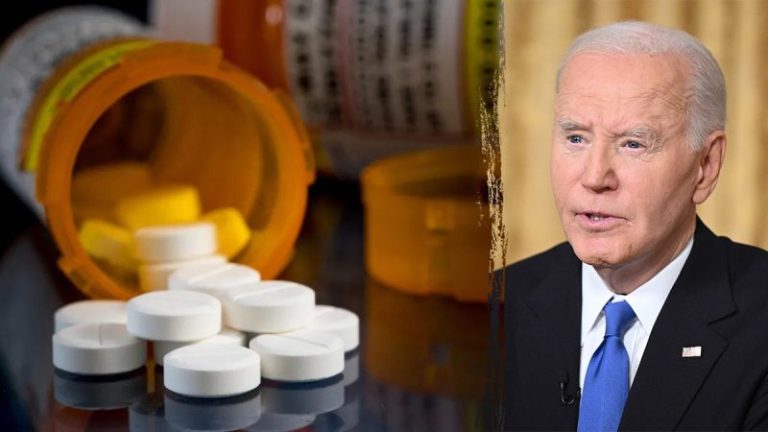
America First Legal (AFL) sued the Food and Drug Administration on Friday to obtain Biden-era records related to the government’s internal guidance for the recommended use of puberty blockers for kids.  

The Trump-aligned legal group previously uncovered communications from the former administration through a Freedom of Information Act (FOIA) request, which reportedly showed the FDA knew that these drugs increased mental health risk but still recommended approving them for kids.

Following those uncovered communications, AFL followed up with a separate FOIA requesting documents specifically pertaining to the FDA’s internal guidance for the off-label use of these drugs. Despite acknowledging the federal information request, the FDA has not cooperated, and the deadline to produce documents is up.


‘The Biden administration pushed gender-denying treatments on American kids. Now, it’s time to expose what officials really knew,’ AFL counsel Will Scolinos, said. 

Similar to AFL’s current FOIA request, the group was required to engage in litigation to compel the release of the first set of documents. 

But, eventually, documents were released that seemed to show the Biden-era Division of General Endocrinology at the FDA recommended the agency approve puberty blockers for children despite the knowledge that there were negative impacts associated with them, such as increased depression, suicidality and seizure risks.

‘There is definitely a need for these drugs to be approved for gender transition,’ an FDA official from the agency’s endocrinology division stated in an email uncovered by AFL. In the same communications, the FDA official also explicitly states that studies found ‘increased risk of depression and suicidality, as well as increased seizure risk.’

Such findings have been confirmed by other studies as well.

Researchers at the University of Texas sampled 107,583 patients 18 and older who had gender dysphoria, including some who underwent gender surgery, and concluded that ‘gender-sensitive mental health support … to address post-surgical psychological risks’ is a ‘necessity.’


Males who received surgery had depression rates of 25% compared to males without surgery, who had rates slightly below 12%. Anxiety rates among that group were 12.8% compared to 2.6%.

The same differences were seen among females as well. Those with surgery had 22.9% depression rates compared to 14.6% in the non-surgical group. Females who did get surgery also had a rate of anxiety of 10.5% compared to 7.1% for girls who had not gotten surgery.

Fox News Digital reached out to the FDA for comment but did not immediately receive a response. 

Fox News’ Melissa Rudy and Michael Dorgan contributed to this report

This post appeared first on FOX NEWS

The de minimis exemption, an obscure trade law provision that has simultaneously fueled and eroded businesses across the globe, officially came to an end on Friday following an executive order by President Donald Trump.

For nearly a decade, shipments valued under $800 were allowed to enter the country virtually duty free and with less oversight. Now, those shipments from the likes of Tapestry, Lululemon and just about any other retailer with an online presence will be tariffed and processed in the same way that larger packages are handled.

In May, Trump ended the exemption for goods coming from China and Hong Kong, and on July 30 he expanded the rollback to all countries, calling it a “catastrophic loophole” that’s been used to evade tariffs and get “unsafe or below-market” products into the U.S.

The de minimis exemption had previously been slated to end in July 2027 as part of sweeping legislation passed by Congress, but Trump’s executive order eliminated the provision much sooner, giving businesses, customs officials and postal services less time to prepare.

“The ending of that under-$800-per-person-per-day rule, from a global perspective, is about to probably cause a bit of pandemonium,” said Lynlee Brown, a partner in the global trade division at accounting firm EY. “There’s a financial implication, there’s an operational implication, and then there’s pure compliance, right? Like, these have all been informal entries. No one’s really looked at them.”

Already, the sudden change has snarled supply chains from France to Singapore and led post offices across the world to temporarily suspend shipments to the U.S. so they can ensure their systems are updated and able to comply with the new regulations.

It’s forced businesses both large and small to rethink not just their supply chains, but their overall business models, because of the impact the change could have on their bottom lines — setting off a panic in board rooms across the country, logistics experts said.

“Obviously it’s a big change for operating models for companies, not just the Sheins and the Temus, but for companies that have historically had e-com and brick-and-mortar stores,” Brown said.

The change also means consumers, already are under pressure from persistent inflation and high interest rates, could now see even higher prices on a wide range of goods, from Colombian bathing suits to specialty ramen subscription boxes shipped straight from Japan.

The end of de minimis could cost U.S. consumers at least $10.9 billion, or $136 per family, according to a 2025 paper by Pablo Fajgelbaum and Amit Khandelwal for the National Bureau of Economic Research. The research found low-income and minority consumers would feeling the biggest impact as they rely more on the cheaper, imported purchases.

Popularized by Chinese e-tailers Shein and Temu, use of the de minimis exemption has exploded in the last decade, ballooning from 134 million shipments in 2015 to over 1.36 billion in 2024. Prior to the recent change to limit its use, U.S. Customs and Border Protection said it was processing over 4 million de minimis shipments into the country each day.

A 2023 House report found more than 60% of de minimis shipments in 2021 came from China, but because the packages require less information than larger containers, very little information is known about their origins and the types of goods they contain. That opacity is one of the key reasons why both former President Joe Biden and Trump sought to curtail or end the exemption.

Both administrations have said the exemption was overused and abused and that it’s made it difficult for CBP officials to target and block illegal or unsafe shipments coming into the U.S. because the packages aren’t subject to the same level of scrutiny as larger containers.

“We didn’t have any compliance information … on those shipments, and then that is where the danger of drugs and whatnot being in those shipments” comes in, said Irina Vaysfeld, a principal in KPMG’s trade and customs practice.

The Biden administration particularly focused on how the exemption allowed goods made with forced labor to make it into the country in violation of the Uyghur Forced Labor Protection Act. Meanwhile, Trump has said the exemption has been used to ship fentanyl and other synthetic opioids into the U.S. In a fact sheet published on July 30, the White House said 90% of all cargo seizures in fiscal 2024, including 98% of narcotics seizures and 97% of intellectual property rights seizures, originated as de minimis shipments.

Across the globe, it’s common for countries to allow low-value shipments to be imported duty-free as a means to streamline and facilitate global trade, but typically, it’s for packages valued around $200, not $800, said EY’s Brown.

Until 2016, the U.S.’s threshold for low-value shipments was also $200, but it was changed to $800 when Congress passed the Trade Facilitation and Trade Enforcement Act, which sought to benefit businesses, U.S. consumers and the overall U.S. economy, according to the Congressional Research Service. It said higher thresholds provide a “significant economic benefit” to both business and shoppers and thus, the overall economy.

While well-intentioned, the law came with unintended consequences, said Brown.

The “rise in value, from $200 to $800, just made it kind of like a free for all to say, OK, everything come in,” she said.

Eventually companies designed supply chains around the exemption: They set up bonded warehouses, where duties can be deferred prior to export, in places like Canada and Mexico and then imported goods in bulk to those regions before sending them across the border one by one, duty free, as customer orders rolled in, said Brown.

“Companies have really laid out their supply chain in a very specific way [around de minimis] and that’s really the crux of the issue,” said KPMG’s Vaysfeld. “The way that the supply chain has been laid out now may need to change.”

Until the rise of Shein and Temu, the de minimis exemption was rarely discussed in retail circles. Soon, the e-commerce behemoths began facing widespread criticism for their use of what many called a loophole.

In 2023, the House Select Committee on the Chinese Communist Party released a report on Shein and Temu and said the two companies were “likely responsible for more than 30 percent of all packages shipped to the United States daily under the de minimis provision, and likely nearly half of all de minimis shipments to the U.S. from China.”

The revelation sparked widespread consternation among retail executives, lobbyists and government officials who said the companies’ use of the exemption was unfair competition.

However, behind closed doors, companies large and small began mimicking the same model after realizing how it could reduce the steep costs that come along with selling goods online.

Direct-to-consumer companies that only have online presences have relied on it more heavily, so much so that their businesses may not work without it, said Vaysfeld.

“Some of the companies we’ve spoken to, they’ve modeled out, if the tariffs continue for one year, for two years, how does that impact their profitability, and they know how long they can last,” said Vaysfeld. “These aren’t the huge companies, right? These are the smaller companies … Depending on what country they’re sourcing from or where they’re manufacturing, it could really impact their profitability that they can’t stay in business for the long term.”

While smaller, digital companies are more exposed, “pretty much most companies that you can think of” had been using the exemption in some form before it ended, said Vaysfeld.

Take Coach and Kate Spade’s parent company Tapestry: About 13% to 14% of the company’s sales were previously covered under de minimis and will now be subject to a 30% tariff, according to an estimate by equity research firm Barclays.

On the company’s earnings call earlier this month, Chief Financial Officer Scott Roe said tariffs will hit its profits by a total of $160 million this year, including the impact of the end of de minimis. That amounts to about 2.3% of margin headwind, he said.

Shares of the company fell nearly 16% the day that Tapestry reported the profit hit.

In a statement, Roe said Tapestry used de minimis to help support its strong online business, adding it is a practice that “many companies with sophisticated supply chains have been doing for years.”

To help offset its termination, he said Tapestry is looking for ways to reduce costs and is leaning on its manufacturing footprint across many different countries.

Canadian retailer Lululemon is another company that uses de minimis, according to Wells Fargo. Last week, the bank cut its price target on the company’s stock from $225 to $205, citing the end of de minimis. In the note, Wells Fargo analyst Ike Boruchow said the equity research firm sees a potential 90 cent to $1.10 headwind to Lululemon’s earnings per share from the de minimis elimination.

Lululemon declined to comment, citing the company’s quiet period ahead of its reporting earnings.

The National Retail Federation, the industry’s largest trade organization, has not taken a position in favor of or against the exemption. It has members who both supported and opposed the policy, said Jonathan Gold, vice president of supply chain and customs policy at NRF.

Retailers of all sizes, including independent sellers with digital storefronts, have used the approach as “a convenient way to get products to the consumer” for less, Gold said.

“Their costs are going to go up and those costs could be passed on to the consumer at the end of the day,” Gold said.

The most acute impact of the end of de minimis is expected to be felt on online marketplaces where millions of small businesses sell goods like Etsy, eBay and Shopify and used de minimis to defray costs when sending online orders from other parts of the globe to the U.S.

American shoppers have gotten used to buying artwork, coffee mugs, T-shirts and other items from merchants outside the country without paying duties. With that tariff exemption gone, consumers could face higher costs and a more limited selection of items to choose from.

Etsy, eBay and some other retailers sought to defend the loophole prior to its removal, submitting public comments on proposed de minimis regulation by the CBP. An eBay public policy executive said the company was concerned that restrictions to de minimis “would impose significant burdens on American consumers and importers.”

Etsy’s head of public policy, Jeffrey Zubricki, said the artisan marketplace supports “smart U.S. de minimis reform,” but that it was wary of changes that could “disproportionately affect small American sellers.”

“These exemptions are a powerful tool that help small creators, artisans and makers participate in and navigate cross-border trade,” Zubricki wrote in a March letter to CBP.

An Etsy spokesperson declined to comment on the policy change. Etsy CFO Lanny Baker said at a Bernstein conference in May that transactions between U.S. buyers and European sellers comprise about 25% of the company’s gross merchandise sales.

EBay didn’t immediately provide a comment in response to a request from CNBC. The company warned in its latest earnings report that the end of de minimis outside of China could impact its guidance, though CEO Jamie Iannone told CNBC in July that he believes eBay is generally “well suited” to navigate the shifting trade environment.

Some eBay and Etsy sellers based in the UK, Canada and other countries are temporarily closing off their businesses to the U.S. as they work out a plan to navigate the higher tariffs. Blair Nadeau, who owns a Canadian bridal accessories company, was forced to take that step this week.

“This is devastating on so many levels and millions of small businesses worldwide are now having their careers, passions and livelihoods threatened,” Nadeau wrote in an Instagram post on Tuesday. “Just this past hour I have had to turn away two U.S. customers and it broke my heart.”

Nadeau sells her bespoke wedding veils, jewelry and hair adornments through her own website and on Etsy, where 70% of her customer base is in the U.S. The de minimis provision had been a “lifeline” for many Canadian businesses to get their products in the hands of American consumers, Nadeau said in an interview.

“This is really hitting me,” Nadeau said. “It’s like all of a sudden 70% of your salary has been removed overnight.”

In the absence of de minimis, online merchants are faced with either paying import charges upfront and potentially passing those costs on to shoppers through price hikes, or shipping products “delivery duty unpaid,” in which case it’s the customer’s responsibility to pay any duties upon arrival.

Alexandra Birchmore, an artist based in the Cotswolds region of England, said she expects to raise the price of her oil paintings on Etsy by 10% as a result of paying the duties upfront.

“At the moment every small business forum I am on is in chaos about this,” Birchmore said. “It looks to me to be a disaster where no one benefits.”

The disruption could end up being a boon for the likes of Amazon and Walmart. U.S. consumers may turn to major retailers if they face steeper prices elsewhere, as well as potential shipping delays due to backlogs or other issues at the border.

Amazon, in particular, has already proven resilient after the U.S. axed the de minimis provision for shipments from China and Hong Kong in May. The company’s sales increased 13% in the three-month period that ended June 30, compared with 10% growth in the prior quarter. Amazon’s unit sales grew 12%, an acceleration from the first quarter.

Both Amazon and Walmart have fulfillment operations in the U.S. that allow overseas businesses to ship items in bulk and store them in the companies’ warehouses before they’re dispatched to shoppers. Shein and Temu largely eschewed the model in the past in favor of the de minimis exception, but they’ve since moved to open more warehouses in the U.S. in the wake of rising tariffs.

Since the exemption ended on Chinese imports in May, the impact on Shein and Temu has been swift. Temu was forced to change its business model in the U.S. and stop shipping products to American consumers from Chinese factories.

The end of de minimis, as well as Trump’s new tariffs on Chinese imports, also forced Temu to raise prices, reign in its aggressive online advertising push and adjust which goods were available to American shoppers.

The Financial Times reported on Tuesday that Temu has resumed shipping goods to the U.S. from Chinese factories and will also increase its advertising spend following what it called a “truce” between Washington and Beijing.

Temu didn’t return a request for comment.

Meanwhile, Shein has been forced to raise prices and daily active users on both platforms in the U.S. have fallen since the de minimis loophole was closed, CNBC previously reported. Temu’s U.S. daily active users plunged 52% in May versus March, while Shein’s were down 25%, according to data shared with CNBC by market intelligence firm Sensor Tower.

This post appeared first on NBC NEWS

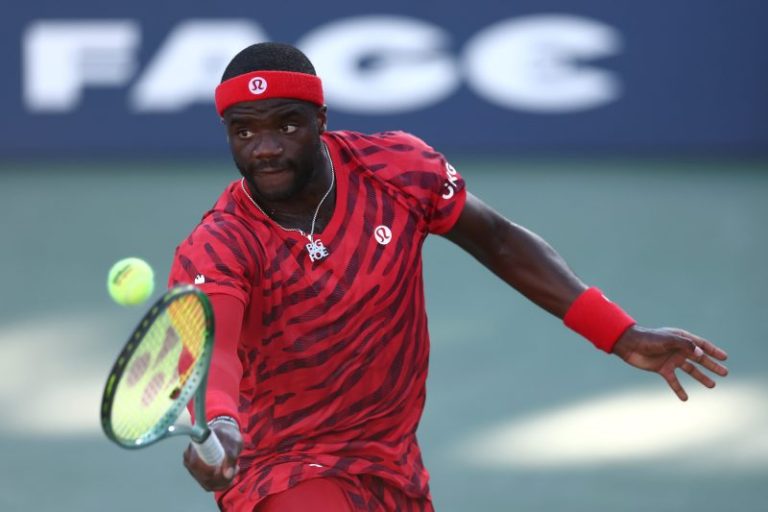
NEW YORK — The day went from bad to worse for some of the American men vying for their first Grand Slam championship after No. 17 seed Frances Tiafoe was stunned in straight sets by qualifier Jan-Lennard Struff of Germany, 7-6, 6-3, 7-6 (9-7) in the third round of the US Open.

Minutes earlier, No. 6 seed Ben Shelton lost in the third round after he was forced to retire with a left shoulder injury against Adrian Mannarino.

Only two Americans remain in contention at the final Grand Slam tournament of 2025: No. 4 seed Taylor Fritz and No. 14 seed Tommy Paul. Fritz plays in primetime in Louis Armstrong Stadium on Friday, Aug. 29.

Tiafoe, a fan favorite and a US Open semifinalist in 2022 and 2024, had his earliest elimination at the U.S. Open since 2019.

The 35-year-old Struff began the tournament ranked No. 144 and had to win three qualifying matches just to make the US Open.

The USA TODAY app gets you to the heart of the news — fastDownload for award-winning coverage, crosswords, audio storytelling, the eNewspaper and more.

This post appeared first on USA TODAY

Colorado’s football team might be better this year due to quarterback Kaidon Salter’s dual-threat abilities, improved offensive line size, and emerging talents like DeKalon Taylor.
However, the team could also struggle due to potential NIL funding disparities with competitors, past inconsistency issues stemming from roster turnover, and the significant loss of NFL-caliber players like Travis Hunter and Shedeur Sanders.
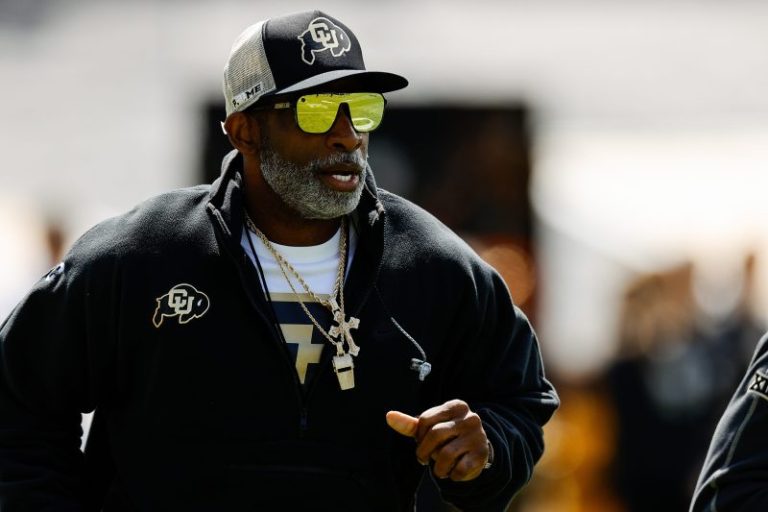
Coach Deion Sanders believes this is his best team yet as they open the season against Georgia Tech.

BOULDER, CO – Colorado football coach Deion Sanders has been trying to tell everybody about this for months.

His team this year in Boulder is “better” than before, he said in March.

He took it a step further on Wednesday, Aug. 27.  

“I think this is the best team we’ve ever assembled,” Sanders said on the Colorado Football Coaches Show.

How is that even possible after the Buffaloes finished 9-4 last year but since have lost a Heisman Trophy winner and arguably the best quarterback in school history?

He actually could be right. Or dead wrong.

With the Buffs set to open the season Friday at home against Georgia Tech, here are three reasons his third season at Colorado will be his best yet, along with three reasons it won’t.

No. 1 reason Colorado is better: Kaidon Salter

The transfer quarterback from Liberty isn’t necessarily better than last year’s quarterback, Shedeur Sanders. He’s just different. And different can be really good when you have a play-action QB who is as big of a threat to run or throw on any play.

Salter led Liberty to a 13-1 season in 2023, when he passed for 2,876 yards and 32 touchdowns and also ran for 1,089 yards and 12 touchdowns.

This is his final year of eligibility, and he might split some time with heralded freshman quarterback Julian Lewis. But if Salter has a season like 2023, the Buffaloes will compete for the Big 12 Conference title.

No. 2 reason Colorado is better: Hulks in the trenches

This team added weight where it matters. Last year, Colorado had 15 players appear in games who weighed at least 300 pounds, ranking 46th among teams in the Football Bowl Subdivision, according to Stats Perform. This season, the Buffaloes have 22 active players listed at that weight, tied for 25th in the FBS.

The list includes the entire projected starting offensive line, highlighted by two monster bookends at tackle: returning star Jordan Seaton (6-foot-5, 330 pounds) and Tennessee transfer Larry Johnson III (6-7, 350).

“He’s a mauler,” offensive line coach Gunnar White said of Johnson.

This will help Salter and a running game that ranked last in the nation in yards per game the past two seasons.

No. 3 reason Colorado is better: ‘TrackHawk’ and more

The Buffs have new depth and emerging stars who will have more room to shine this season after the departure of four NFL draft picks, including two whose NFL jerseys are now on sale on campus for $149.99: Shedeur Sanders and Heisman winner Travis Hunter.

On defense, cornerback DJ McKinney has NFL skills and was the “other” cornerback last year, overshadowed by Hunter even though he played the most snaps on defense (840).

On offense, a new speed demon called “TrackHawk” has turned heads in the preseason. His real name is DeKalon Taylor, a transfer from Incarnate Word. Taylor is the fastest player on the team and will catch and run with the ball much like his position coach once did: Marshall Faulk, a Pro Football Hall of Famer.

“If you blink, you might miss it,” Taylor said after practice in August. “That’s how I describe my offensive play.”

No. 1 reason Colorado is worse: Underfunded roster?

It’s harder to win when other teams have so much more money to pay players. Colorado is expected to pay its players up to the $20.5 million limit for their names, images and likenesses (NIL). Some Colorado players also have attracted additional endorsement deals with Taco Bell and others.

But Colorado also is among some schools that cut ties with its NIL donor collective to streamline fundraising in-house. By contrast, the collective that supports Big 12 foe Texas Tech has raised $63.3 million since it was formed in 2022, as reported in the Lubbock Avalanche-Journal.

‘It’s a staggering sum of money,” Texas Tech donor Cody Campbell said recently. Such collectives can pay players in addition to what the school pays them out of its $20.5 million limit.

No. 2 reason Colorado is worse: Inconsistency

Deion Sanders’ last two teams could look good for a week or two before laying a big egg the next. Sometimes their personality varied from one half to the next. Remember that time in 2023 when they led Stanford 29-0 at halftime but lost in double overtime, 46-43?

This kind of inconsistency is arguably a function of having so much roster turnover. With so many new players, they’re searching for their identity without much prior chemistry. In 2023, they brought in 68 new scholarship players out of an overall roster limit of 85. In 2024, they started the year with 50 new scholarship players. This year Sanders said his roster of 105 includes 49 newcomers, including non-scholarship players. To his credit, Sanders improved on this since 2023, when the Buffs finished 4-8.

No. 3 reason Colorado is worse: Still no Travis or Shedeur

New stars may emerge, but let’s be real. In Hunter’s case, he was the team’s leading receiver, best cornerback and the No. 2 pick in the NFL draft. In Shedeur Sanders’ case, he accounted for 82% of the team’s total yards last season.

That kind of weaponry is hard to restock without transitional hiccups. If Deion Sanders does as well or better without those players, he should be in the mix for coach of the year.

Follow reporter Brent Schrotenboer @Schrotenboer. Email: bschrotenb@usatoday.com

This post appeared first on USA TODAY