Archive

2025

Browsing

The 12-team College Football Playoff has been a gift for the sport – just not for its postseason. The regular season got better.
Expanding playoff to 12 teams increased access while retaining exclusivity. It strikes the right balance.
College football season peaks from September through November. Maybe, that’s OK.

The 12-team College Football Playoff has been a gift for the sport — just not for its postseason.

The expanded playoff improved the regular season. More games matter.

As for the playoff? Well, if we’re willing to be frank about this, these first-round matchups mostly stink.

Two games will feature over-matched Group of Five teams as three-score underdogs. Add in a rematch of the Oklahoma-Alabama game we saw a month ago, and this lineup won’t threaten to put the NFL out of business.

To put it bluntly, this first round is set to serve one of the lamer offerings of games of this entire season.

Can we return to Week 5? Here were some of the scores involving top-25 teams that weekend:

Virginia 46, Florida State 38 (double overtime)
Arizona State 27, TCU 24
Oregon 30, Penn State 24 (OT)
Mississippi 24, LSU 19
Alabama 24, Georgia 21
Texas A&M 16, Auburn 10
Indiana 20, Iowa 15
Tennessee 41, Mississippi State 34 (OT)
Illinois 34, Southern California 32
Brigham Young 24, Colorado 21

That’s 10 games involving at least one ranked team that were decided by a single possession. The playoff’s first round will be a snoozer, by comparison.

College football’s regular season rules, while playoff lags behind

So, why do I consider the 12-team playoff a gift? Because, this playoff has proven to be an ideal size and shape to elevate the regular season. This bigger playoff makes conference championship weekend worse, but it made September through November better. That’s a worthy tradeoff.

As CFP stakeholders continue to debate playoff expansion formats, I have one request: Don’t ruin the regular season in the process. Don’t bloat the playoff to such an extent that USC falling at Illinois loses significance or that the outcome of BYU-Texas Tech becomes irrelevant.

Fall Saturdays filled with high-stakes tussles, that’s college football’s beauty. If improving the playoff means degrading September Saturdays, that’s simply not worth it.

I’m up for playoff formats that enhance December and January, but only if they won’t dilute October.

College football has the greatest regular season in all of sports, accompanied by an underwhelming postseason. The season peaks in November, two months before its conclusion. It’s the opposite of college basketball or the NHL, where, if you just watched the postseason, you saw what you needed to see.

In college football, if you missed the regular season, then you missed the magic.

The conference clashes, the firings and the hirings, the debates of “my conference is better than your conference,” the rankings rat race, the rivalry games consumed alongside Thanksgiving leftovers, therein resides college football’s heartbeat.

The playoff? Well, James Madison at Oregon is like being served a plastic-wrapped snack cake after a five-star meal. It’s the underwhelming dessert you’re not sure you want. Empty calories. Another bite of the main course, please.

12-team CFP bracket balances access with exclusivity

The playoff matchups should get better in the quarterfinals, and the semifinals could be a couple of doozies, but, the fact remains, we’ve been on the season’s downslope since watching rivalry games on full bellies while waiting for Lane Kiffin to award his rose.

Concerns that the playoff going from four to 12 teams would devalue the regular season were misguided. This 12-team bracket amplifies the regular season’s splendor.

The 12-team playoff increased accessibility while maintaining exclusivity. Dozens of teams enter November with a shot at the playoff, but the playoff remains selective enough that regular-season results matter greatly.

A field goal in August in Miami can be the difference between making the playoff versus howling about being snubbed.

A September trip to Champaign, Illinois, can deliver a gut punch that reverberates throughout your entire season. Ask USC.

An October loss to UCLA can be the day the canary dies in the coal mine, informing Penn State it’s not going to the playoff — instead, it’s a week away form firing its coach.

November brought together a tremendous collision of firings, hirings and playoff jockeying. Conference championship weekend was a letdown, outside of the Big Ten, but we revived to get all hot and bothered about the playoff snubs, and now … pfft, here comes a whimpering lineup of first-round games.

We’ll always have November.

This 12-team playoff didn’t solve college football’s postseason problem, but it further glorified the Saturdays that come before the unsatisfying finish.

Blake Toppmeyer is the USA TODAY Network’s senior national college football columnist. Email him at BToppmeyer@gannett.com and follow him on X @btoppmeyer.

This post appeared first on USA TODAY

Shaboozey, Ludacris and CORTIS will make up the NBA All-Star Weekend music lineup in Los Angeles in mid-February.

The performances will take place at the Los Angeles Convention Center from Feb. 12 to 14.

The artists will all perform on different days and serve as part of the NBA Crossover postgame concert after a day of NBA All-Star-related festivities. All concerts are included with an NBA Crossover ticket.

All-Star Weekend brings the NBA community together, with the All-Star Game serving as the focal point, with some of the league’s best players competing against each other.

The game will take place at the Intuit Dome in Inglewood, California.

When will Shaboozey perform at NBA All-Star Weekend?

Shaboozey, the multi-time Grammy singer-songwriter, is scheduled to perform on Saturday, Feb. 14.

Shaboozey had his breakout year in 2024 with his hit song ‘A Bar Song (Tipsy).’

“This year has been quite a ride, and closing out NBA All-Star Weekend in L.A. really feels special,” Shaboozey said in a press release provided to USA TODAY Sports. “I’m a big fan of the NBA and I can’t wait to bring my energy to such a legendary city and event.”

Shaboozey participated in the 2025 All-Star Weekend festivities, competing in the NBA All-Star Celebrity Game in February at the Oakland Arena in Oakland, California.

When will Ludacris perform at NBA All-Star Weekend?

Ludacris will perform on Feb. 13. The multi-time Grammy award winner has sold more than 24 million albums worldwide during his career and appeared in the “Fast & the Furious” movie franchise.

When will CORTIS perform at NBA All-Star Weekend?

CORTIS is a South Korean boy band that consists of five members. The K-pop band made its official debut on Aug. 18 with the single ‘What You Want.’

The group will perform on Thursday, Feb. 12.

‘It’s a huge moment for us to be the first K-pop group to perform at NBA Crossover, kicking off All-Star Weekend,” CORTIS said in a statement. “We’re grateful for the opportunity and excited to hit the stage, connect with fans up close, and officially tip off this incredible weekend.’

This post appeared first on USA TODAY

Several top college football quarterbacks are expected to enter the transfer portal.
Brendan Sorsby of Cincinnati and Sam Leavitt of Arizona State are among the top quarterbacks available.
Major programs like Oregon, Texas Tech, and Miami are searching for new starting quarterbacks.

Every quarterback in the Bowl Subdivision is essentially working on the equivalent of a one-year contract.

Some of the biggest names among underclassmen have already announced their intent to enter the transfer portal, with many, many more set to join by the time the portal officially opens early next month.

There will be several big-name programs on the hunt for new starters, including College Football Playoff teams Indiana, Oregon, Texas Tech and Miami.

Currently, the top quarterbacks that appear headed for the transfer portal include Brendan Sorsby of Cincinnati and Sam Leavitt of Arizona State. Another established starter on the market is former Nebraska quarterback Dylan Raiola.

Let’s try and connect the dots and find a new home for the top transfer options, starting with Sorsby returning to his home state for the defending Big 12 champions:

Brendan Sorsby: Texas Tech

Sorsby could stay in the NFL draft given that he should do very well during the evaluation process, though it’s unknown what the bar would need to be – landing in the first round, second, third – for the former Cincinnati starter to opt out of his senior season. Sorsby is the top dual-threat option currently on the market and should have a long list of Power Four suitors.

The Denton, Texas, native began his career at Indiana, which seems to take the Hoosiers out of the equation. (Never say never, though.) Orange Bowl-bound Texas Tech will lose starter Behren Morton to graduation and lost potential 2026 starter Will Hammond to an ACL tear that could sideline him until next August. Sorsby looks to be the answer for Joey McGuire and the Red Raiders.

Sam Leavitt: Oregon

This was a lost year for Leavitt, who went into September as a top Heisman Trophy contender but played in only seven games due to injury before being shut down in November. In 2024, Leavitt threw for 2,885 yards and ran for another 443 yards in leading the Sun Devils to the playoff. His balanced skill set and ability to deliver in the pocket would make the Oregon native a great match for the Ducks should starter Dante Moore opt for the NFL draft. If Moore stays, Leavitt would be one of the top options for Curt Cignetti and Indiana.

DJ Lagway: Baylor

Lagway should get interest from LSU and new coach Lane Kiffin. If the opportunity is there, taking the reins of Kiffin’s system could be difficult to turn down. But Lagway’s hit-or-miss two years at Florida and high penchant for turnovers could scare off the Tigers and send him off to Baylor, which is about two hours northwest of his hometown of Willis, Texas. Baylor has a very quarterback-friendly scheme that helped turn former starter Sawyer Robertson into one of the nation’s most prolific passers.

Dylan Raiola: Louisville

The former five-star recruit has an NFL-ready arm and enough of a track record through two seasons to receive interest from virtually every Power Four program in the market for a new starter. But he’s not a fit across the board: Raiola needs to be protected because of his lack of mobility, and would work best in a tempo- and timing-based scheme that maximizes his ability to diagnose coverages. He’s also likely to stay with an Adidas-branded school, though offers from Miami or Oregon could lead to a change of heart. Playing for a quarterback guru in Cardinals coach Jeff Brohm would help Raiola unlock his potential.

Drew Mestemaker: Oklahoma State

There’s always a chance a school such as Florida or LSU gets involved with Mestemaker, which could derail the rising sophomore’s expected reunion with his former North Texas coach Eric Morris at Oklahoma State. But the odds point to a quick drive north to Stillwater and the chance to stay in the system that turned the former walk-on into one of this year’s great success stories.

Kenny Minchey: Florida

This would be a big leap for Minchey, who has the potential to be a Power Four starter but made just 29 attempts in three years at Notre Dame. He was very much in the offseason mix for the starting job that went to CJ Carr, though, missing out after Marcus Freeman went with the more traditional pocket passer. The Gators badly need help under center and would give their quarterback room a big upgrade by adding Minchey.

Colton Joseph: Florida State

The rising junior exploded in 2025 for Old Dominion, throwing for 2,624 yards and 21 touchdowns with another 1,007 yards and 13 scores on the ground. He was one of just three non-service academy quarterbacks to run for 1,000 yards during the regular season. While he’ll need to continue developing as a thrower, Joseph’s talents match Florida State coach Mike Norvell’s scheme. There’s a question of whether the Seminoles would be comfortable handing the keys to a Group of Five transfer during a make-or-break 2026 season, however.

Aidan Chiles: Arizona State

Chiles’ athleticism and ability to stretch defenses as a runner will give him a heavy market of interest heading into his final season, especially for programs looking harder at one-year rentals rather than a longer-term fix. Arizona State coach Kenny Dillingham offered Chiles as an assistant at Oregon and could be intrigued by his two years of Power Four starting experience.

This post appeared first on USA TODAY

The Chicago Bears of… Northwest Indiana? According to Bears team president Kevin Warren, that’s a real possibility.

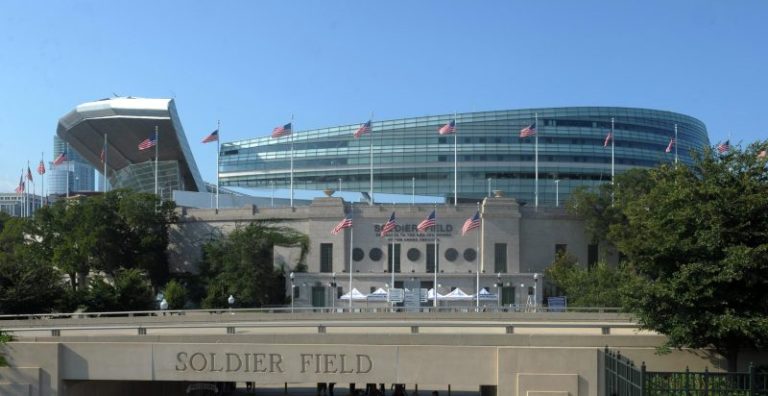
In an open letter to Bears season-ticket holders, Warren announced that the team plans to explore an expanded search for a new stadium site after hitting a roadblock in negotiations with the state of Illinois over their current plan. That expanded search includes the 326-acre property the franchise already owns in Arlington Heights, Illinois – a 32-mile drive from Soldier Field – but it also includes ‘opportunities throughout the wider Chicagoland region,’ Warren wrote, ‘including Northwest Indiana.’

According to ESPN’s Courtney Cronin, the main issue in the Bears’ plans for Arlington Heights was over taxes and the use of taxpayer money. The Bears were seeking tax breaks and $855 million in public funds to help build the new stadium, which state lawmakers balked at, Cronin wrote.

In his letter sent on Dec. 17, Warren wrote: ‘We have not asked for state taxpayer dollars to build the stadium at Arlington Park. We asked only for a commitment to essential local infrastructure (roads, utilities, and site improvements) which is more than typical for projects of this size. Additionally, we sought reasonable property tax certainty to secure financing. We listened to state leadership and relied on their direction and guidance, yet our efforts have been met with no legislative partnership.

‘We have been told directly by State leadership, our project will not be a priority in 2026.’

Matt Hill, a spokesperson for Illinois Governor J.B. Pritzker, said in a statement, ‘Suggesting the Bears would move to Indiana is a startling slap in the face to all the beloved and loyal fans who have been rallying around the team during this strong season. The Governor’s a Bears fan who has always wanted them to stay in Chicago. He has also said that ultimately they are a private business.’

The expanded search is only the latest twist in the team’s quest to build a new stadium.

The Bears initially purchased the site in Arlington Heights – the former home of the Arlington International Racecourse – in 2023 with the intention of building a new, 60,000-seat stadium on the property. In early 2024, those plans shifted when ‘negotiations over property taxes reached a $100 million impasse,’ according to ESPN.

The team revealed a new solution when it announced a $2 billion planned investment to build a new stadium on the Lake Michigan lakeshore, south of Soldier Field, with some of that cost dedicated to developing the area around it. That plan, which would have kept the Bears in Chicago proper, was scrapped ahead of the 2025 regular season as the team was unable to alleviate concerns about the ‘burden placed on taxpayers to fund the infrastructure,’ Cronin wrote.

As a result, the Bears pivoted back to their Arlington Heights plan, as Warren announced in April and doubled down on in a letter to fans ahead of the team’s first game in September. The Bears president’s more recent letter from Dec. 17 suggests that even that option could be in jeopardy.

Chicago is coming off a 31-3 win over the Cleveland Browns at home in Week 15. It’s due to play one of the franchise’s biggest games in years on Saturday, Dec. 20, when it hosts the Green Bay Packers for Week 16.

The Bears currently lead the NFC North and hold the NFC’s No. 2 seed with their 10-4 record. A win over Green Bay would push the Bears to a 1½-game lead over the Packers with two weeks to play, leaving them one win – or a Green Bay loss – away from clinching the division title for the first time since 2018.

This post appeared first on USA TODAY

A pair of conservative lawmakers is launching a new group in the House of Representatives to ‘protect Western civilization in the United States,’ according to one of its founders.

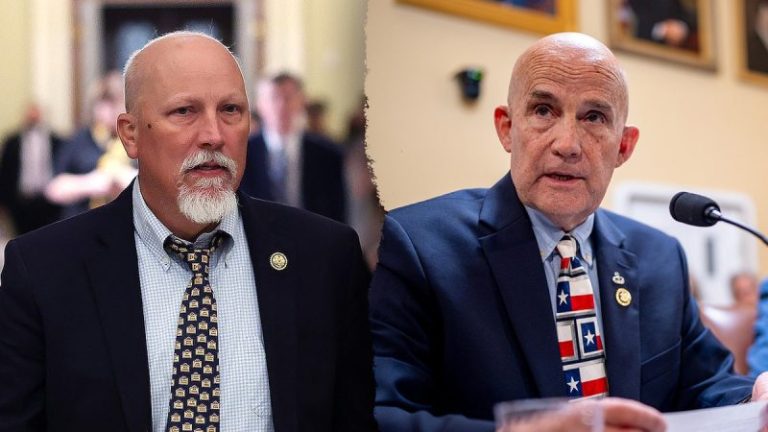
Reps. Keith Self, R-Texas, and Chip Roy, R-Texas, are starting the ‘Sharia Free America Caucus,’ Fox News Digital learned first.

‘Anytime you go to a fight, you bring as many friends with you as you can. I’m a military guy,’ Self told Fox News Digital. ‘So what we need to do is build this caucus now so that we can start educating the American people to the dangers of Sharia in the United States.’

Self said it was ‘fundamentally incompatible with the U.S. Constitution.’

The caucus also has support in the Senate from Sen. Tommy Tuberville, R-Ala., who Self said he hoped could help push some of its legislative goals forward through both chambers.

Among the bills they’re hoping to push is a ban on foreign nationals who ‘adhere to Sharia’ from entering the U.S., and a measure that would designate the Muslim Brotherhood as a terrorist organization.

‘America is facing a threat that directly attacks our Constitution and our Western values: the spread of Sharia law,’ Roy said in a statement. ‘From Texas to every state in this constitutional republic, instances of Sharia adherents masquerading as ‘refugees’ — and in many cases, sleeper cells connected to terrorist organizations — are threatening the American way of life.’

Sharia broadly refers to a code of ethics and conduct used by devout Muslims. Sharia law more specifically often refers to the criminal code used in non-secular Islamic countries, like Iran.

In its most extreme cases, such as when ISIS-controlled parts of the Middle East, charges like blasphemy could carry the death penalty.

But guarantees of religious freedom in the Constitution mean that Sharia law can not be carried out on any governmental level in the U.S.

The Republicans’ caucus appears largely symbolic in nature, but it’s evidence of the continued culture war raging in the country.

Self also pointed to countries like the U.K. and France, where growing unrest between Muslim refugees and the current populace has dominated headlines in recent years.

This post appeared first on FOX NEWS

KANSAS CITY, MO ― With No. 1 overall seed Nebraska out of the 2025 NCAA volleyball tournament, which one of the Final Four teams is in the driver’s seat? Actually, it’s anyone’s title for the taking.

For the first time in nearly 15 years, none of women’s college volleyball’s traditional blue blood programs (Nebraska, Texas, Stanford and Penn State) are in the Final Four. The Cornhuskers and Longhorns both lost in the Elite Eight, while the Cardinal failed to advance past the Sweet 16. The reigning champion Nittany Lions had an early second-round exit.

On Thursday, No. 3 Texas A&M plays No. 1 Pitt in the first of two semifinal matchups (6:30 p.m., ESPN). Both programs are seeking their first national championship. Following the Aggies-Panthers showdown, No. 3 Wisconsin takes on No. 1 Kentucky (9 p.m. ET). The Badgers and Wildcats have one national title apiece.With the pressure on to win a championship, let’s dig into the one question each team needs answered before their Final Four journey begins.

Will Pitt finally get over its Final Four blues?

It’s the elephant in the room for Pitt: Will the Panthers finally make it to a national championship? This year is Pitt’s fifth straight Final Four, and with every previous trip, the team has come up empty. Last season, the Panthers were the No. 1 overall seed and eliminated in the semifinals, 3-1, by the Louisville Cardinals. On Wednesday, head coach Dan Fisher and the team addressed their late postseason woes, but remained confident the experience would help them.

‘Since so many people have been here before, we were able to prepare the newer players coming into this experience what to expect,’ Pitt right side hitter Olivia Babcock said. ‘We’re also able to just remind them constantly … [to] stay locked in at the goal at hand. It is very easy to get distracted. I think those players are going to help our newer players be able to hone in on the task.’

Can Texas A&M shock the volleyball world again?

Over one million fans watched Texas A&M take down volleyball powerhouse Nebraska in the Elite Eight. The five-set thriller included a 10-0 Aggies run the first set, 10 Cornhuskers set points and three Texas A&M match points in the fourth set, plus two more Aggies match points in set five. Despite Nebraska throwing everything it had at Texas A&M, the Aggies dominated from the beginning. They slowed down Nebraska middle blocker Andi Jackson, leaned into their service pressure and blocking and forced the Cornhuskers to try beating them with anyone else.

Texas A&M’s arrival at the Final Four now begs the question: Can it pull off another massive upset against No. 1 Pitt? Aggies opposite Logan Lednicky shared the message she’s gave her team to keep them focused. ‘I think not letting all the cool stuff that is this Final Four kind of distract us,’ Lednicky said.’ I think [Texas A&M coach] Jamie [Morrison] has talked about a lot like, we’re here to play. That’s our job. So honing in, focusing in practice, tuning up all the things we need to get ready for the match [Thursday], then [the] match Sunday.’

Will Wisconsin’s win streak end?

Wisconsin has a 13-match winning streak coming into the Final Four. The Badgers’ streak, which dates back to the regular season, includes NCAA tournament wins against No. 2 Stanford and No. 1 Texas. After its 3-1 upset win over the Longhorns, middle blocker Carter Booth, who is the only player on the team with Final Four experience, said, ‘I refuse to f—— lose.’ Booth’s viral quote has become a rallying cry for the Badgers, propelling their confidence leading into the Final Four. However, will Wisconsin’s inexperience at this level end be an issue? Booth doesn’t appear to think so.

‘I’ve always been fiercely competitive … it just comes from a determination that this team has found to prove to people who we are, the work that we’ve put in this entire season,’ Booth said. ‘Coming into this tournament, we talked about the second you think something is owed to you is the second you lose ― the second your season is over. The other side of that is nothing is owed to anyone, which means anytime you step out there, it’s anyone’s game. It does have to be an active refusal or active search for a win, for a championship, as you move through this because it’s not just going to fall into anybody’s lap.’

Will Kentucky melt under the pressure?

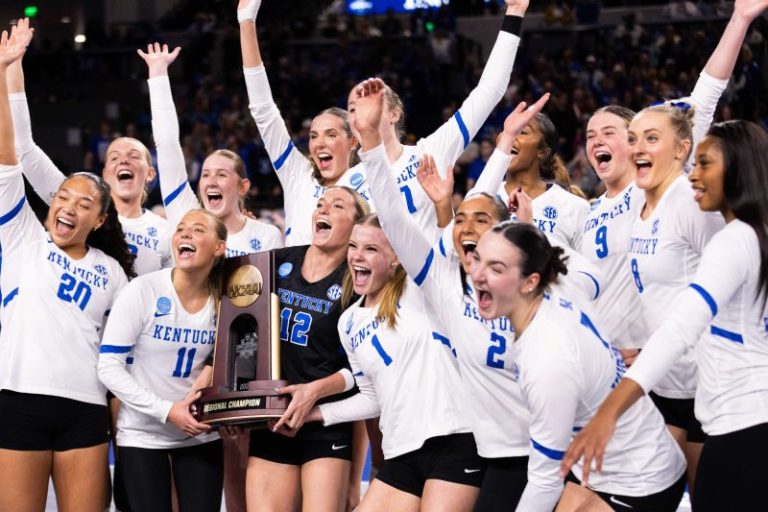
The Wildcats have 10 straight wins, dating back to the regular season, over ranked opponents, including No. 8 UCLA and No. 3 Creighton during the NCAA tournament. The pressure to continue knocking off the best teams in volleyball becomes much more intense during the Final Four, begging the question: How will the Wildcats handle this environment?

‘The trust that we have in each other, ‘ Kentucky outside hitter Brooklyn DeLeye said. ‘We all have been talking all year-round about our why: Why we continue to play, why we just love what we’re doing. I think that just has carried out through those big matches because there is so much pressure in those matches. I think just bouncing off one another has truly helped. It’s just fun.’

This post appeared first on USA TODAY

Despite televising the least-watched bowl game last year, The CW Network is interested in acquiring more.
Disney, through ESPN and ABC, will televise 38 of the 41 major college bowl games and is heavily invested in them.
Even with low attendance, bowl games often draw higher television ratings than other live sports programming.

The television network that televised the least-watched college football bowl game last season is still so bullish on bowl games that it might want to buy the rights to televise more of them.

So don’t tell The CW Network there are too many bowl games even if some teams don’t want to play in them.

The CW Network has broadcasted only two bowl games in its history – the Arizona Bowl in 2023 and 2024. Last year’s game attracted 567,000 viewers on average, which ranked last among all bowl games but is still such a good audience that the network confirmed to USA TODAY Sports this month that yes, it is interested in adding more bowl games to its programming.

“The bowl system has always been a market-driven system,” said Nick Carparelli, executive director of Bowl Season, which promotes bowl games. “No one’s telling anybody they have to host a bowl game. No one’s telling schools they have to play in bowl games. The number of bowl games that exist today are a function of the marketplace.”

This year, that marketplace features 41 major college football bowl games, including six that are part of the College Football Playoff. That’s up from 18 bowl games in the 1995-96 season and 28 in the 2005-06 schedule. All but three of those 41 bowl games will be televised by ESPN or ABC, both owned by The Walt Disney Company.

But there are reasons for concern – or not, depending on the viewpoint and the business model of the game. For example, the Holiday Bowl in San Diego this year looked into moving its game to Saudi Arabia for more money. The LA Bowl opened the major college bowl season on Dec. 13 but told USA TODAY Sports this week it hasn’t decided yet if it will continue.

“With college football postseason in flux, we are continuing to evaluate our options,” the game said in a statement.

More bowl game disruptions on the way

The bowl system endured some jolting disturbances this year, with more likely to come as college football evolves to a more professional model with changing rules. Notre Dame decided not to play in a bowl game after getting left out of the 12-team playoff with a 10-2 record. The Big 12 Conference issued a $500,000 fine to Iowa State and Kansas State after they also decided not to play in bowl games.

Star players have been opting not to play in them for years to reduce their injury risk before the NFL draft or entering the transfer portal. Now the playoff might expand beyond 12 teams, further reducing the stature of bowl games that aren’t included in the format that decides a national champion.

All of which raises the question that some have been asking for the last 30 years.

 Are there finally too many bowl games?

The answer to that is generally no if the television audience for even the least-watched game is big enough for ESPN or another network to want to pay for them.

The supply of teams remains steady, too, even though some bowls had to scramble to fill spots more than usual. For every team declining an invitation, there were others willing to replace them. Mississippi State, Appalachian State and Rice all had 5-7 records but accepted bowl invitations to make up for the teams that opted out.

Mississippi State coach Jeff Lebby called it a “no-brainer” to accept a surprise bowl bid for his team.

“There’s a ton of positives,” he said, citing more practice time for his team and a trip to the Duke’s Mayo Bowl to play Wake Forest on Jan. 2.

ESPN will televise that game in prime time on a Friday night – illustrating another reason why Disney will keep bowl games in bountiful supply even if 11 of the 82 bowl teams this year have 6-6 records and three are 5-7.

Disney loves bowl games

ESPN and ABC have made postseason bowl games a signature part of their holiday programming during the final two weeks of the year and beyond. The only three bowl games not televised by Disney channels this year will be on Fox (Holiday Bowl), The CW (Arizona Bowl) and CBS (Sun Bowl).

ESPN Events, a division of ESPN, also owns 16 major college bowl games, including the Myrtle Beach Bowl, New Mexico Bowl and Hawaii Bowl. All ESPN-owned bowls are lower-tier games that might not sell many tickets but still get big audiences on television or streaming to help bring in advertising revenue and subscriber fees for the company during the holiday season

ESPN started buying bowl games in 2001 when it purchased the Las Vegas Bowl. By 2006, it increased its portfolio to five bowl games.

The company kept buying them for a reason: It’s good business for them.

‘Better than endless college basketball’

For example, ESPN Events owned the Bahamas Bowl in the Bahamas, which drew only 4,610 fans in person for its last game on Jan. 4, 2025, when Buffalo beat Liberty 26-7.

That was the lowest attendance in Bahamas Bowl history, but it still got an average audience on ESPN of 1.14 million, according to Nielsen.

By contrast, a college basketball game that night between Michigan and Southern California on Fox got an average audience of 540,000.

“It’s probably not the business it used to be, but still, for a network like ESPN it is better than endless college basketball,” former Fox Sports Networks president Bob Thompson told USA TODAY Sports. “Given ESPN owns the bulk of these games, as long as they want a bridge to the playoff games, bowls will exist.”

Playoff expansion last year from four to 12 teams also didn’t hurt this part of their business. Bowl game viewership on Disney channels actually got bigger last year. Their 33 non-playoff bowl games averaged 2.7 million viewers, marking a 14% increase from the year before and their largest audience since 2019-20, according to ESPN, which declined an interview for this story.

In addition to the bowl games, ESPN also will televise two of the four first-round playoff games on Dec. 19 and 20, plus the national championship Jan. 19.

That doesn’t mean every bowl game will survive, however

College football bowl games have come and gone throughout history. The San Francisco Bowl and Poinsettia Bowl in San Diego have ceased operations in the last decade. ESPN recently replaced the Bahamas Bowl with another another bowl game in Frisco, Texas, where there are now two bowl games in a stadium that seats only 12,000, both owned by ESPN Events – the Xbox Bowl on Dec. 18 and the Scooter’s Coffee Frisco Bowl on Dec. 23.

That reinforces the notion that bowl ticket sales aren’t that important to ESPN’s business model, which instead generates revenue from television advertising and subscriber fees.

But the bowl games that aren’t owned by ESPN have a different business model and do rely on revenue from ticket sales, sponsorships and television rights fees, which usually come from Disney. They don’t have the financial backing of a massive media company like Disney and don’t generate revenue from television advertising or subscriber fees like Disney.

There are 25 bowl games not owned by ESPN

Of those, 22 are owned by local nonprofit organizations, including the Rose Bowl, Sugar Bowl, Fiesta Bowl, Holiday Bowl, Independence Bowl and Arizona Bowl.  The other three are owned by pro sports teams or their ownership groups: the GameAbove Sports Bowl in Detroit (owned by the Detroit Lions), the Pinstripe Bowl in New York (New York Yankees) and LA Bowl.

Those games might not be in business very long if they only drew 5,000 in the Bahamas or 12,000 in Frisco like those ESPN-owned games have.

“The combination of an expanded playoff, top players opting out, and now teams opting out, have seriously diminished the bowl industry,” said Gary Cavalli, former executive director of the now-defunct bowl game in San Francisco. “If the playoff expands further, say to 16 teams with no first-round byes, it’ll get even worse. Bowl crowds have been falling in recent years because of those factors, resulting in a situation where bowl games are now primarily television inventory.”

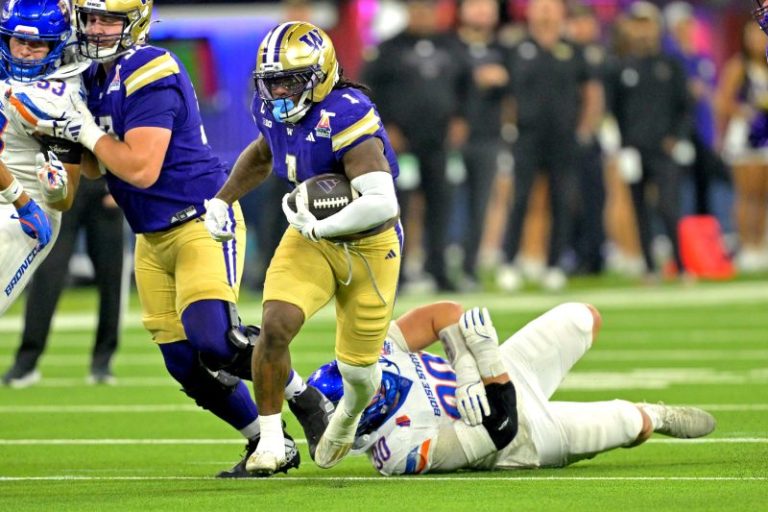
It’s one reason the LA Bowl is considering its future after drawing another sparse crowd at SoFi Stadium Dec. 13, when Washington beat Boise State, 38-10. The announced attendance was 23,269, but some estimated it to be much lower in a stadium that seats about 70,000.

The Holiday Bowl example

In another example, the Holiday Bowl is owned by a local nonprofit.  It reported a budget deficit of $34,000 in the fiscal year ending in 2024, down from the $663,000 budget deficit it had in 2023, according to tax records.

It had to cancel two games in 2020 and 2021 for reasons related to the COVID-19 pandemic, hurting the organization financially. The announced attendance for last year’s game was 23,920, the smallest attendance in its history dating to 1978.

This year, the Holiday Bowl even explored moving the game to Saudi Arabia to get more funding. It didn’t work out, but the game had to wait a few hours to fill one of its slots after Notre Dame bowed out of consideration. It also didn’t land title sponsor Trust & Will until Dec. 7, the same day bowl selections were made..

The Holiday Bowl is set for Jan. 2, when SMU faces Arizona in a stadium that seats 35,000. The game’s executive director, Mark Neville, wasn’t available for comment this week.

“The system’s not perfect,” Carparelli said. “But there’s still a lot of value and a lot of interest.”

The Sugar Bowl example

That’s especially true for the bigger bowl games that are part of the playoff, whose broadcast rights are owned by ESPN at a price of $7.8 billion from 2026 through 2031-32.

Take the Sugar Bowl in New Orleans, which will be played as a playoff quarterfinal Jan. 1 and also is owned by a local nonprofit. It had a budget surplus of $6.4 million in fiscal 2024, when Washington beat Texas in a playoff semifinal, according to tax records. The game’s executive director, Jeff Hundley, earned $983,000 in compensation that year, the most recent year available.

“The top games that can get great matchups … will probably be OK,” Cavalli said. “It’s the middle guys that make the high payouts to the conferences (for teams) and don’t get the elite teams that will probably be in trouble.”

Even then, there are certain TV companies out there that might be interested in bailing them out or buying them as long as viewership numbers make it worthwhile.

Follow reporter Brent Schrotenboer @Schrotenboer. Email: bschrotenb@usatoday.com

This post appeared first on USA TODAY

Wind gusts near Boulder reached an estimated 96 mph, causing power outages and dangerous road conditions.
The Colorado Buffaloes defeated Portland State 84-73 in the empty arena.
Coach Tad Boyle jokingly said he would petition the NCAA to count the game as a neutral-site contest.

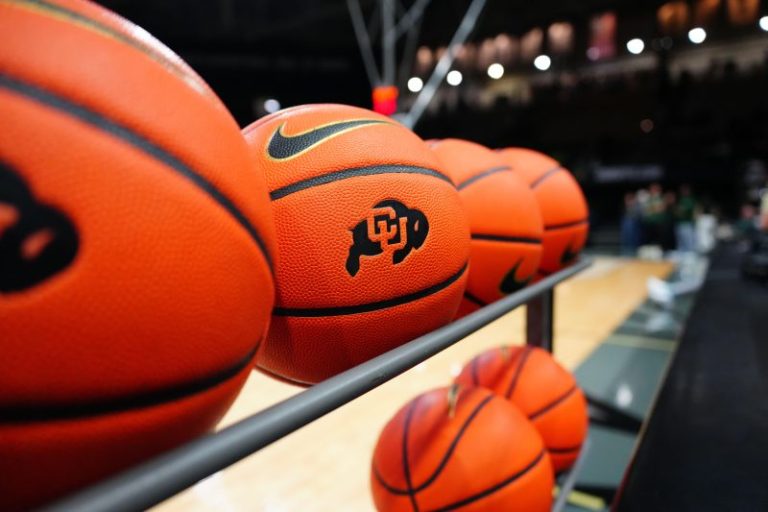
University of Colorado officials closed their basketball arena to the public Wednesday night because of weather-related hazards, forcing its men’s basketball team to play in an empty building during an 84-73 win Dec. 17 against Portland State.

Colorado made the announcement before the game as wind gusts reached an estimated 96 mph near Boulder, whipping up debris, snapping trees and endangering travelers.  

“Due to high winds, power outages around Boulder, and potentially hazardous road conditions, tonight’s men’s basketball game against Portland State will be played without fans,” the announcement stated. “The CU Events Center will be closed to the public.”

The Buffaloes proceeded to improve to 10-1 by generating their own energy in what felt like a closed scrimmage or throwback to the 2020-21 season, when fans weren’t allowed at games because of the COVID-19 pandemic. Freshman guard Isaiah Johnson came off the bench to score 20 points.

“Kind of a weird night tonight for the Buffaloes,” Colorado coach Tad Boyle said afterward.

Boyle jokingly added that he’d like to petition the NCAA to rule the game as a neutral-site contest instead of a home game.

“I doubt if I’ll win that, but it might help our NET ranking,” he said.

The university said fans with paid tickets to the game would be issued a single-use promo code for tickets to the next home game against Northern Colorado on Dec. 28.

Follow reporter Brent Schrotenboer @Schrotenboer. Email: bschrotenb@usatoday.com

This post appeared first on USA TODAY
On Thursday, Dec. 18, the women’s professional indoor volleyball league announced it’s expanding to the Bay Area with the LOVB San Francisco franchise, bringing the total number of teams in the league to nine by 2027.

LOVB San Francisco has a women-led ownership group that features several Olympians, including three-time Olympic volleyball medalist Kelsey Robinson Cook. Cook was the first player to commit to LOVB and led Atlanta to a league-best 13-3 record in its inaugural season.

‘Being part of the founding of LOVB has been one of the great honors of my career,’ Cook said in a statement shared with USA TODAY Sports. ‘Helping launch LOVB San Francisco feels like the next chapter in that same purpose-driven journey.’

LOVB (pronounced ‘love’) hosted its inaugural season earlier this year with six teams: LOVB Atlanta, LOVB Austin, LOVB Houston, LOVB Madison, LOVB Nebraska (formerly LOVB Omaha) and LOVB Salt Lake. LOVB Austin swept LOVB Nebraska (25-19, 25-22, 25-23) in the 2025 LOVB Finals and opposite hitter Madisen Skinner was named Finals MVP.

The second season will begin on Jan. 7, 2026, but the field of teams will expand from six to nine in 2027 during the league’s third season, with the addition of LOVB Los Angeles, LOVB Minnesota and LOVB San Francisco.

‘We built LOVB to reshape what’s possible for volleyball players in this country, and bringing a pro team to one of the sport’s strongest and most passionate communities is a dream come true,’ Cook said. ‘I can’t wait to help cultivate a home where athletes, fans and future Olympians feel seen, supported, and inspired – and where volleyball is celebrated at the highest level.”

LOVB San Francisco’s ownership group is made up of a mix of athletes – Abby Wambach, Natalie Coughlin, Leslie Osborne, Brandi Chastain, Danielle Slaton, Lindsey Napela Berg, Alix Klineman, Alysia Montaño, Julia Falk O’Leary, Meghan O’Leary, Adlee Kass, Brianna Salvatore Dueck and Ricky Lewis – as well as creatives (Glennon Doyle and Arielle Chambers) and entrepreneurs (Jes Wolfe, Chantell Preston, Amy Banse, Julie Smith, Sheila Tran, Kate Johnson, Rebecca Van Dyke, Janell Fischer and Zack Kass).

‘This ownership group represents everything LOVB stands for – women leading with vision, intention, and a deep belief in what’s possible when we invest in each other,’ LOVB Pro president Rosie Spaulding said in a statement. ‘These leaders have broken barriers in boardrooms, on the court, and across culture. Their commitment to LOVB San Francisco reflects our mission to build a new model for women’s sports – one powered by community, opportunity, and a pipeline that elevates athletes from their very first serve to the pro stage.’

The USA TODAY app gets you to the heart of the news — fastDownload for award-winning coverage, crosswords, audio storytelling, the eNewspaper and more.

This post appeared first on USA TODAY
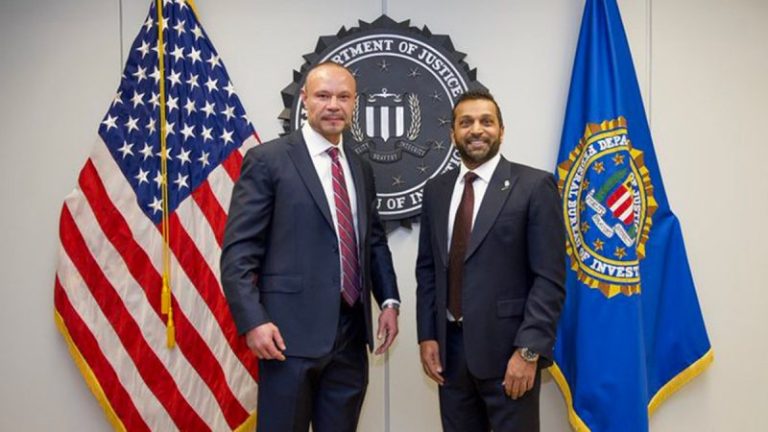
Deputy FBI Director Dan Bongino, who announced on Wednesday that he will be departing from his role in January, later replied to FBI Director Kash Patel, who gave him a glowing review.

‘Dan is the best partner I could’ve asked for in helping restore this FBI. He brought critical reforms to make the organization more efficient, led the successful Summer Heat op, served as the people’s voice for transparency, and delivered major breakthroughs in long unsolved cases like the pipe bomb investigation. And that’s only a small part of the work he went about every single day delivering for America,’ Patel said in a post on X.

‘He not only completed his mission – he far exceeded it. We will miss him but I’m thankful he accepted the call to serve. Our country is better and safer for it,’ Patel added.

Bongino replied, thanking Patel.

‘Thank you my friend, it’s been the honor of a lifetime to serve beside you,’ he wrote.

Bongino, a former Secret Service agent who stepped aside from his work hosting a popular show as a conservative commentator to join the FBI, will depart the federal law enforcement agency less than a year after his swearing-in ceremony, which occurred in March 2025.

Prior to Bongino’s announcement on Wednesday, President Donald Trump said, ‘Dan did a great job,’ noting that he thinks Bongino wants to return to his show.

Attorney General Pam Bondi shared Bongino’s announcement post, commenting, ‘Americans are safer because of @FBIDDBongino’s service. Thank you, Dan.’

This post appeared first on FOX NEWS