Archive

2025

Browsing

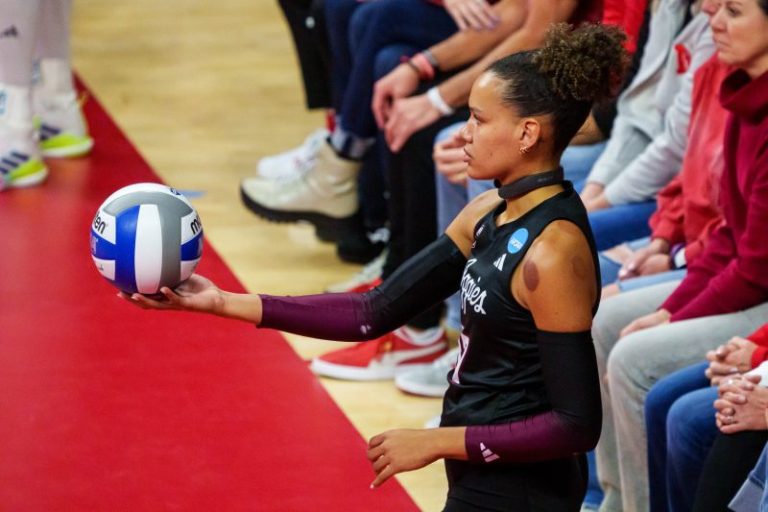
KANSAS CITY, MO ― On any given day, Texas A&M outside hitter Kyndal Stowers brings three different versions of herself to the court.

One version is very relaxed. The goal is simple: get out on the court, win and leave. Another version of Stowers is more stealthy, unsuspecting. She wins, but the opponents never see it coming. Then, there’s the version that boldly claims victory and lets the opponent know all about it. Every version of Stowers has been seemingly influenced by her journey back to the volleyball court. The sophomore outside hitter was forced to medically retire after her freshman season with the Baylor Bears. In a matter of months, she unexpectedly suffered four concussions, forcing a very frustrated Stowers to rethink whether she’d ever play volleyball again.

‘I think I was … just really emotional about the whole thing, and so part of me was like, ‘Hmm, maybe I could be done. Maybe I could medically retire, go to school, be a normal human being and not like have to go to practice every day,’ ‘ Stowers told USA TODAY Sports.

‘But, after a few months, (I) talked to a lot of people, talked to my family, friends, mentors … I prayed a lot about it. My faith is a big part of my life. I truly just felt like the Lord had another plan for me, and I prayed that I would know that. My heart always was just leading me back to the court. I wanted to keep playing.’

Stowers dropped out of college and went home to train. She eventually entered the transfer portal, joining head coach Jamie Morrison and the Aggies in College Station, Texas. Stowers was happy to have a chance at playing volleyball again, but she knew the concerns about her concussions would surface. That’s when she decided to bring in reinforcement, as part of a re-envisioned approach to her health and recovery. While practicing and in games, Stowers wears a Q-Collar.

It’s an FDA-cleared device designed to protect the brain from repetitive head impacts. The collar lightly presses on the neck, increasing blood volume and reducing brain slosh (movement that occurs when the brain bounces inside a skull). Wearing the Q-Collar gives Stowers the support she needs to continue elevating her game, and it was there for the biggest game of her career.

The Aggies outside hitter and her team upset the title favorite Nebraska Cornhuskers in a monumental five-set chess match during the Elite Eight. Stowers had a career-high day with 25 kills on .327 hitting and 16 digs. Texas A&M’s stunning win shocked the volleyball world, but if you ask Stowers and the Aggies, they expected to be in the Final Four all along. The team has chosen to describe their roster and season with one word: ‘grit.’

‘We have hats that say ‘grit’ on it in four different colorways. Grit is our thing. It’s our theme. I feel like those days where you aren’t feeling that, it’s a goal,’ Stowers said. ‘Throughout the tournament, throughout this season, where you’re playing, and you’re performing, and it’s like, ‘No, that is who we are.’ That is who we are branded to be, and that’s what we’re gonna show every time we step out onto the court.’

Stowers says she thinks much of Texas A&M’s ‘grit’ comes from the confidence the team has in knowing who they are and how much work they’ve put in to get to the Final Four. She shared that the Aggies know what needs to be done to win their first national championship, it’s just a matter of doing it, and being, well, ‘gritty’ in their approach.

Delivering a championship to Texas A&M and its faithful fans, known as the 12th Man, would mean everything to the program. There’s history on the line, and the Aggies aren’t backing down from the chance to add their name to the record books. For Stowers, it would be a huge blessing.

‘It’s one of the things you’ve worked so hard for, and you know that you have earned it and that you deserve it,’ Stowers said. ‘It would just kind of make all of that come full circle, show us that everything that we’ve done is paid off and that it’s worth it. Winning a national championship is, I feel, every little girl’s dream, so (it’s) just making those dreams come true.’

Stowers and Texas A&M take on No. 1 Pitt during the 2025 NCAA volleyball Final Four at 6:30 p.m. ET Thursday on ESPN.

This post appeared first on USA TODAY

Unlike most other countries, Americans deal in absolutes.

There are no ties, just winners and losers. It might sound harsh, but that is the reality in a nation that aims to be definitive – at least when it comes to sports. That’s why when the Los Angeles Rams and Seattle Seahawks meet in a pivotal ‘Thursday Night Football’ matchup in Week 16, those tiebreakers are seen as a last resort.

Both squads are currently in a tie atop the NFC West and their current standing promises to affect more than just a division of teams on the West Coast.

The winner will have the inside track at claiming the NFC’s top seed, giving them home-field advantage throughout the playoffs. The loser will have to start checking out potential flights and hotels for the wild-card round.

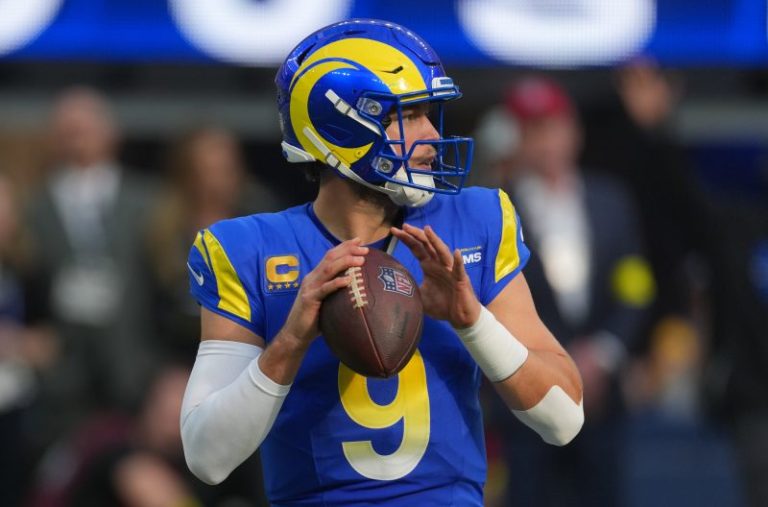
This clash will break the tie for at least one week, but that doesn’t mean chaos can’t spoil the party down the road with two weeks to go. As it stands, Matthew Stafford’s Rams have the head-to-head advantage over Sam Darnold’s Seahawks entering Week 16. It’s anyone’s guess who will have that edge when the dust settles.

Here’s a look at the NFC West standings, the NFC playoff picture overall and how tiebreakers work in the NFL.

NFC West standings

The NFC West is a tight race heading into the final three games. Here’s how the standings look entering Week 16:

Los Angeles Rams: 11-3 (3-1 in NFC West)
Seattle Seahawks: 11-3 (2-2)
San Francisco 49ers: 10-4 (4-1)
Arizona Cardinals: 3-11 (0-5)

NFC West division winner odds

The Rams are the favorites to win the NFC West entering a crucial ‘Thursday Night Football’ matchup against the Seahawks, according to the latest odds from BetMGM Sportsbook:

Rams: -160
Seahawks: +210
49ers: +700

NFC playoff picture

Los Angeles Rams (11-3; NFC West leaders)*
Chicago Bears (10-4; NFC North leaders)
Philadelphia Eagles (9-5; NFC East leaders)
Tampa Bay Buccaneers (7-7; NFC South leaders)
Seattle Seahawks (11-3, wild card No. 1)
San Francisco 49ers (10-4, wild card No. 2)
Green Bay Packers (9-4-1; wild card No. 3)

In the hunt: Detroit Lions (8-6); Carolina Panthers (7-7); Dallas Cowboys (6-7-1)

Eliminated: Minnesota Vikings (6-8); Atlanta Falcons (5-9); New Orleans Saints (4-10); Washington Commanders (4-10); Arizona Cardinals (3-11); New York Giants (2-12)

An asterisk (*) denotes teams that have clinched a playoff spot. Teams that have clinched division titles are noted accordingly.

NFL playoff tiebreakers

The Rams enter Week 16 with the head-to-head tiebreaker over the Seahawks after their Week 11 win. As a result, the team is in a good spot to win the division, but a Seattle victory in Week 16 could make for a chaotic race to the finish, since they would have a one-game lead with just two games to go.

Since both teams come from the same division, there are no wild-card tiebreakers to worry about in this case. Here’s a look at what could ultimately determine the NFC West standings and, as a result, the NFC playoff picture:

Division tiebreakers

Head-to-head results
Division record
Win percentage against common opponents
Win percentage against conference opponents
Strength of victory in all games
Strength of schedule in all games
Best combined ranking among conference teams in points scored and points allowed in all games
Best combined ranking among all teams in points scored and points allowed in all games
Best net points against common opponents
Best net points in all games
Best net touchdowns in all games
A coin flip.

This post appeared first on USA TODAY

White House press secretary Karoline Leavitt said Thursday that the Kennedy Center’s board voted unanimously to rename the institution to the ‘Trump-Kennedy Center’ in recognition of what she described as President Donald Trump’s efforts to save the building over the past year.

‘Congratulations to President Donald J. Trump, and likewise, congratulations to President Kennedy, because this will be a truly great team long into the future! The building will no doubt attain new levels of success and grandeur,’ said Levitt.

During a visit to the Kennedy Center in early December, Trump was asked whether he believed the performing arts center would eventually bear his name. 

‘I don’t know. I hear that, but I don’t know,’ he said, adding that any such decision would be made by the center’s ‘very prestigious’ board.

The current Kennedy Center board includes numerous figures closely aligned with Trump, from current administration officials to media personalities and political advisers, according to the center’s website.

‘The Kennedy Center Board of Trustees voted unanimously today to name the institution The Donald J. Trump and The John F. Kennedy Memorial Center for the Performing Arts. The unanimous vote recognizes that the current Chairman saved the institution from financial ruin and physical destruction,’ Vice President of public relations Roma Daravi told Fox News Digital on Thursday.

‘The new Trump Kennedy Center reflects the unequivocal bipartisan support for America’s cultural center for generations to come,’ she added.

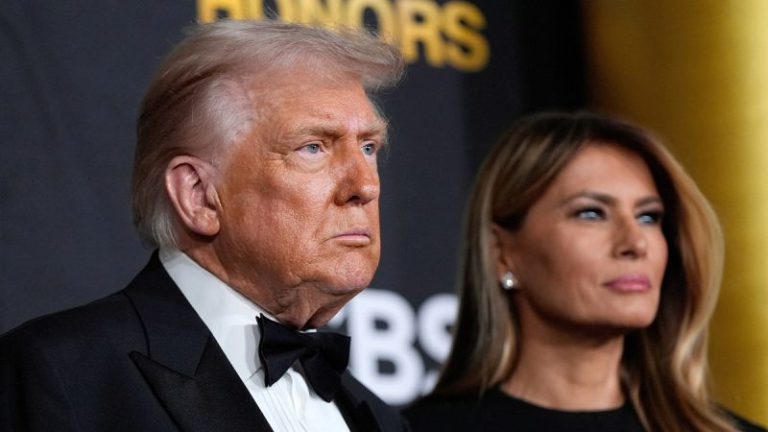
Trump and first lady Melania Trump attended an event at the Kennedy Center on December 7, highlighting the work of stars like Sylvester Stallone, Gloria Gaynor, George Strait, Michael Crawford and KISS band members Gene Simmons, Paul Stanley and Peter Criss.

An official with the center told Fox News Digital the name change follows recent precedent, pointing to the State Department’s decision earlier in December to add Trump’s name to the U.S. Institute of Peace and to past presidential administrations that have renamed military bases.

The official also pointed to Trump’s record on arts policy, noting that during his first term he signed the Music Modernization Act, supported emergency funding to help venues through Save Our Stages,as well as more recent measures to crack down on ticket scalping, and his backing of the American Music Fairness Act.

This post appeared first on FOX NEWS

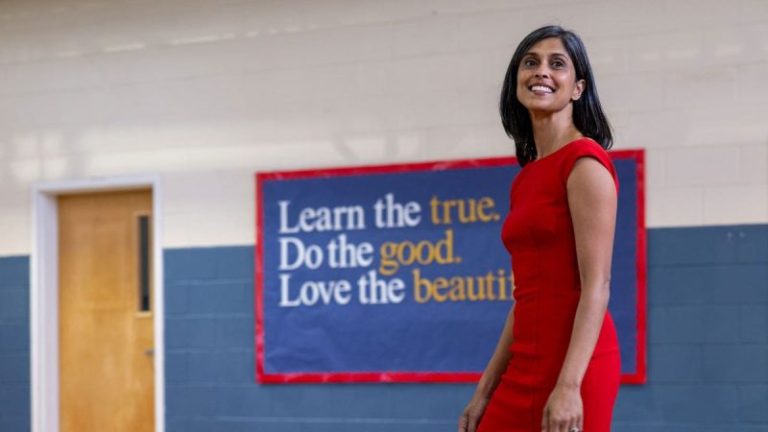
Second lady Usha Vance worked to ensure a provision limiting the use of cellphones in Department of Defense Education Activity (DoDEA) classrooms was included in the National Defense Authorization Act, Fox News Digital has learned. 

The Senate passed the NDAA Wednesday — a bill that authorizes $901 billion for the Department of Defense, provides a pay raise for U.S. troops, and more.

‘Education is foundational to a child’s future, and the Second Lady has long believed that classrooms should be places of focus, curiosity, and meaningful connection,’ a spokesperson for Vance told Fox News Digital.

‘She was proud to support efforts to ensure the National Defense Authorization Act included provisions that limit cellphone use in DoDEA classrooms, recognizing that reducing distractions is essential for young learners,’ the spokesperson said. ‘This issue reflects her deep passion for early education and her commitment to giving children the best possible environment to learn, grow, and thrive.’

DoDEA schools were created by the U.S. military after the end of World War II for the children of service men and women.

DoDEA is one of the only two federally operated school systems and is responsible for planning, directing, coordinating and managing pre-K through 12th grade educational programs on behalf of the Department of Defense. DoDEA serves more than 67,000 children of active duty military and DoD civilian families.

Vance worked with Sen. Jim Banks, R-Ind., and Sen. Elissa Slotkin, D-Mich., to have the provision included. The two senators had introduced a bipartisan measure that was aimed at prohibiting smartphone use during instructional hours in DoDEA schools.

Vance collaborated and worked with Banks’ team, the White House Office of Legislative Affairs, and the House and Senate Armed Services Committees to ensure the provision would be included in the final NDAA.

With the addition of the provision in the final NDAA, DoDEA schools will update and standardize cellphone policies to ensure that mobile devices are used in a limited capacity during school hours.

During her time in the Trump administration, the second lady has spearheaded a number of projects — like her Summer Reading Challenge — to focus directly on improving early childhood literacy.

Fox News Digital has learned that the second lady plans to continue championing child literacy by expanding efforts that help young learners build strong reading foundations early in life.

The second lady is expected to work closely with educators, families and community partners to support innovative programs and collaborations that improve literacy outcomes for children across the country.

This post appeared first on FOX NEWS

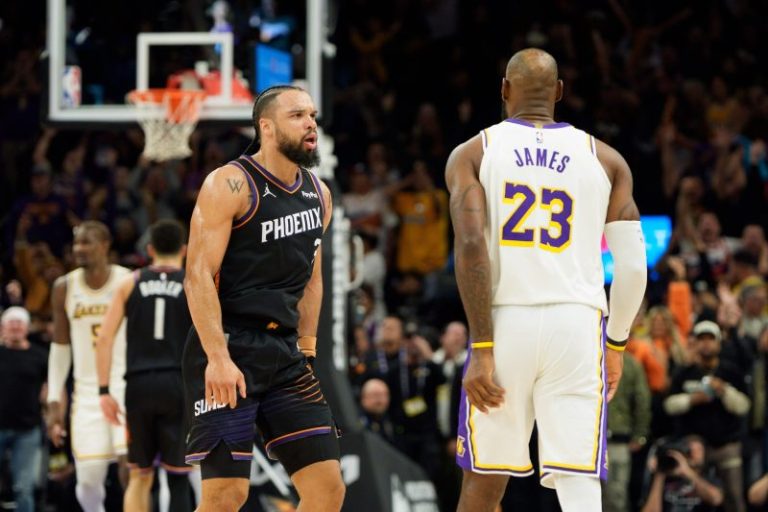
Phoenix Suns forward Dillon Brooks added another chapter in his rivalry with LeBron James when he was tossed for chest-bumping LeBron in the final seconds in a 116-114 loss to the Los Angeles Lakers on Sunday, Dec. 14.

Brooks has long been known as an NBA pest, trying to get into opponents’ heads in order to elicit a reaction or throw them off their game. He certainly applies that approach to James.

‘I guess he’s a social-media junkie,’ Brooks said Wednesday, Dec. 17, during his the first public comments since the ejection. ‘He be all over the socials, so he be seeing I guess what I’m saying. … Like I’ve (said) he thinks that people should think a way about him or not say nothing about him or play a certain way, and I’m not going to play that way. He gets in his moods or in his modes or whatever it is. I’m all for that.’

Brooks, who is averaging a career-high 21.6 points a game this season, also said he will learn from the ejection and try to control his emotions so he can stay on the floor at the end of critical games.

‘That’s my problem through my whole career, is I let those things happen and then I’m off the floor,’ Brooks said. ‘Then at the end of the day, how much people hate on me and say I’m not a good player and all that, but when I’m on the floor it changes the whole game.’

In Sunday’s game, Brooks had given Phoenix its final lead with his 3-pointer with 12.2 seconds left, and after falling to the ground, he got up and chest-bumped James, earning him a second technical foul and the ejection.

This post appeared first on USA TODAY

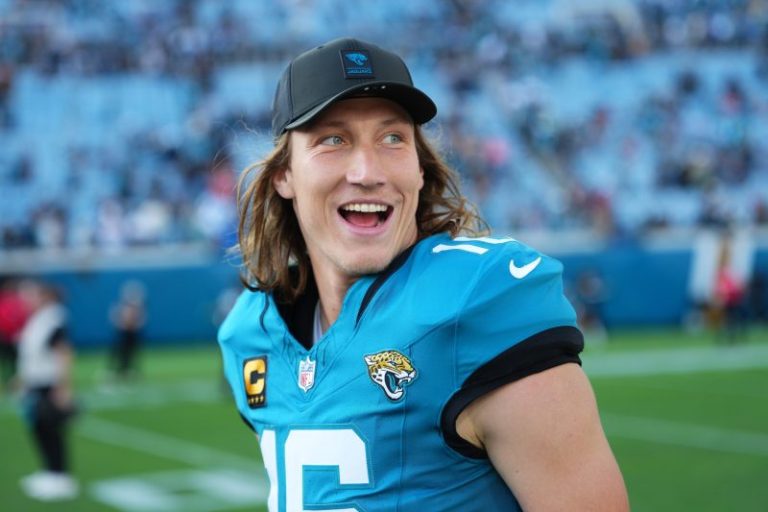
They’ve been playing NFL football for 106 years now and no one – not even Patrick Mahomes, Josh Allen, Lamar Jackson or Roger Staubach – has ever achieved in a game what Trevor Lawrence pulled off last weekend.

Do the math. Go back to the Papa Bear origins, when the league began in 1920 as the American Professional Football Association (APFA), and there’s been something like 88 million games, give or take a few.

Yet never until now has a player passed for 300 yards and 5 TDs, plus rushed for 50 yards with another touchdown in the same game. Sure, it was against the New York Jets. But it still counts.

No, this doesn’t mean the sizzling Jacksonville Jaguars quarterback is a “generational talent” fit to be cloned.

Generational. That’s what they called Lawrence when he came out of Clemson as the No. 1 pick overall in 2021 and, well, that description didn’t quite work out. It turned out to be the term that symbolized the prolific over-hype for Lawrence, who proceeded to take so many lumps like other human quarterbacks on the NFL learning curve.

If there’s a term that fits about now, just call him hot. Lawrence, 26, is playing the best football of his pro career. The past three games, the lanky, 6-6 thrower has tossed nine touchdowns and for the first time has gone three games in a row without a turnover. And he’s put up triple-digit passer ratings in three straight games for the first time.

Of course, it’s not just Lawrence. The Jaguars (10-4) have won 10 games for the first time since 2017 and ride into Denver with a five-game winning streak. While the defense leads the league against the run and has produced more takeaways than any team besides those pesky Chicago Bears, Trevor and Co. have gone seven consecutive games with at least 25 points.

And they’re in first place in the AFC South. Who knew?

When I visited the Jaguars in training camp, energetic new coach Liam Coen – who lasted just one season as the Bucs offensive coordinator until some people (Shad Khan, Tony Boselli) plucked him away and handed him the keys – stood on the practice field and demonstrated to me some of the mechanics key to his agenda for Lawrence. Stuff about footwork, torque and motion. I remember thinking: If nothing else, this dude will get his point across.

“Very intentional with how he talks to the staff, the players, all of us as a team,” Lawrence, named AFC Offensive Player of the Week, said during his Wednesday press fest. “You can tell it’s very directed. He knows what he wants to say and the message he wants to get across, and there’s no gray area.

“And then I’ve talked about the way he expresses himself and the passion and you can feel it coming from him, and I think that’s something that guys have really latched onto. That makes guys want to follow him because you can see it.”

Something is clearly working. In the case of Lawrence, who previously worked with Urban Meyer and Doug Pederson, the connection with Coen is increasingly showing up, too, with the nuances for managing the game at the line of scrimmage.

Coen said, “I think he’s more comfortable doing it and we’re able to attack people a little bit differently than maybe we were early on.”

Said Lawrence: “I feel like I’m seeing it really well…Guys are making plays, we’re trusting each other and it’s been fun. So, we should keep it rolling.”

The milestone game allowed fresh examples of Lawrence’s growth. Now comes perhaps the stiffest test yet as Lawrence gets set for his 75th NFL start on Sunday at Empower Field. What a reward after such a banner performance. The Broncos lead the NFL with 58 sacks, on pace to threaten the NFL record (72) set by the magnificent 1985 Bears. This underscores just how much of a hunted man Lawrence will be amid all of that noise and altitude in the Mile High City.

Jacksonville, though, comes off back-to-back games without allowing a sack and has had an NFL-high five sackless games this season.

That protection, too, is about to get a major litmus test.

“It’s not just the group up front, it’s the whole defense, every level,” Lawrence said of Denver’s unit.

Lawrence hasn’t played much meaningful football this time of year since arriving in the NFL. He won a playoff game under Pederson in his second season, but last year the Jaguars finished 4-13. His rookie year, they were 3-14.

Now the division title is in sight, with the Jaguars engaged in a three-way battle with the Texans (9-5) and Colts (8-6). Meanwhile, the Broncos (12-2) are carrying an NFL-best 11-game winning streak while trying to nail down the AFC West crown and No. 1 seed.

“Yeah, it’s a big game,” Lawrence said. “When you put yourself in position like we have and obviously like the Broncos have…every game is huge at the end of the year, which is where you want to be.”

Survive Denver and maybe another term will apply for Lawrence: street cred.

Contact Jarrett Bell at jbell@usatoday.com or follow on X: @JarrettBell

This post appeared first on USA TODAY

As the former winds down one process at the same time the latter gets another going, players are often left to evaluate the actual payoff from participating in the capper to the season. Opt-outs that once sparked controversy have now become commonplace, with those competing in ceremonial contests now routinely bowing out without much fanfare.

The College Football Playoff, however, provides an exception to the rule.

The expanded 12-team field has given NFL teams and fans an additional look at some of the most promising prospects for the upcoming draft. And while a sample size of anywhere from one to three additional matchups shouldn’t override a more robust body of work, the games can be important platforms for players to make a lasting impression against elite competition.

This year’s field features many of the names bound to be called on the first day of the draft. But who’s the best of the best when it comes to players eligible for the 2026 class? With the opening first-round game kicking off Friday, here’s our ranking of the top 25 draft-eligible prospects in the CFP:

Ranking top 2026 NFL draft prospects playing in CFP

1. Arvell Reese, LB/DE, Ohio State

This might have seemed like a potential reach at midseason, when Reese’s meteoric ascension was well underway. By now, the 6-foot-4, 243-pound linebacker can be classified as the top 2026 draft prospect – and the most promising one in the CFP – without raising any suspicions. Of course, he likely would need to be viewed as a full-time pass rusher rather than an off-ball linebacker to justify this ranking. But that switch is no stretch for a wrecking ball who does his best work hunting down ball carriers. The Micah Parsons comparisons are lofty but not without merit.

2. Caleb Downs, S, Ohio State

There’s nothing left to prove at this level for the Jim Thorpe Award winner, who was also a unanimous All-American as a sophomore after transferring from Alabama. Downs is one of the most complete and accomplished players in all of college football, with his sharp instincts and stellar athleticism consistently putting him in the perfect spot to stuff the run or make plays in coverage as the heartbeat of the Buckeyes’ lockdown defense. Positional value considerations might keep him out of the top five on draft day, but the best safety prospect this decade can continue to put on a showcase of what he can bring to the pros.

3. Fernando Mendoza, QB, Indiana

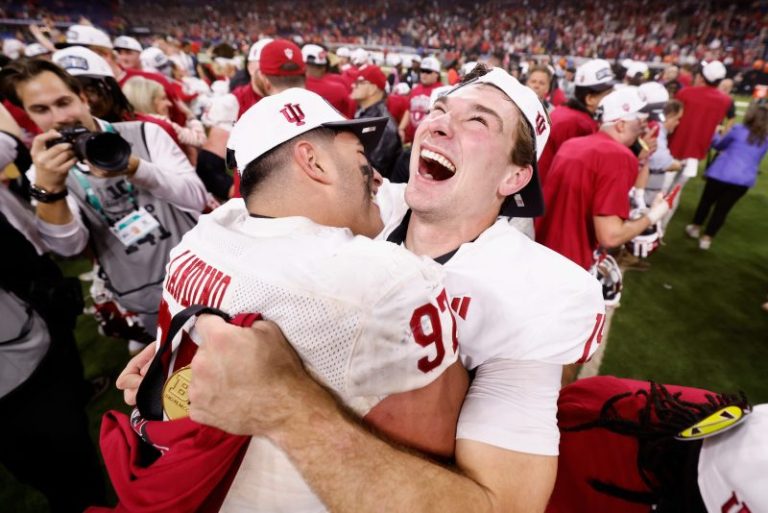
A somewhat muddled early-season outlook for quarterbacks in the 2026 class was resolved by Mendoza’s ascension from Cal transfer to Heisman Trophy winner. The 6-foot-5, 225-pound passer looked at ease throughout the season, comfortably picking apart defenses with poise and precision (71.5% completion rate). Yet he also passed two serious tests when he managed to pull things together late when facing more challenging starts against Penn State and Ohio State in the Big Ten championship game. Arm strength that falls well short of top tier and athleticism that’s merely passable prevent Mendoza from reaching a stratospheric level of pre-draft hype, but he still boasts a strong case to be the No. 1 overall selection.

4. Dante Moore, QB, Oregon

After a rocky freshman season at UCLA in which he completed just 53.5% of his passes, the former five-star recruit needed a reboot. Moore found it at Oregon, where he’s blossomed after sitting behind Dillon Gabriel last season. The 6-foot-3, 206-pounder comfortably attacked every level of the field for the Ducks, displaying an impressive command of the offense and comfort extending plays. Still only 20, the redshirt sophomore has said he’s yet to decide whether to declare for the upcoming draft. While Moore could return to school and position himself to be a contender for the No. 1 selection in 2027, he also might find it hard to pass up the opportunity to be an early selection given the shortage of first-round signal-callers in this class.

5. Rueben Bain Jr., DE, Miami (Fla.)

It was no sure thing that Bain would end up on this list after a letdown of a sophomore season, during which he was hampered by a calf injury. His junior season, however, left no doubt about his capabilities after he carved out his place as college football’s most consistent disruptor. His sack total (4½) doesn’t fully capture his contributions, as he routinely jolted linemen backward and short-circuited plays before they could truly progress. Listed at 6-foot-3 and 275 pounds, he lacks the rangy build that front offices tend to prefer on the edge. That could prove to be a sticking point for some in the pre-draft process, but it’s hard to look past his extensive production, sheer power and knack for winning leverage battles.

6. Carnell Tate, WR, Ohio State

Only at Ohio State’s receiver factory could a former five-star recruit never fully command the spotlight yet end up as an early first-round draft pick. Tate never generated the headlines on a level comparable to fellow Buckeye wideouts Marvin Harrison Jr. and Jeremiah Smith, but he still showed this season how much he could offer any offense as he racked up 838 receiving yards and nine touchdowns despite not being a go-to threat. Between the ease with which he creates separation and his penchant for operating in close quarters – particularly along the sidelines – the 6-foot-3, 195-pounder figures to make himself a trusted target for an NFL quarterback in short order.

7. David Bailey, OLB, Texas Tech

The Stanford transfer was one of the keys to the Red Raiders’ roster reinvention this offseason. Bailey was one of the cornerstones of Texas Tech’s defense, racking up a Power Four-best 13½ sacks. His initial burst off the edge might be unparalleled in the class, yet he can win on more than pure speed alone thanks to an impressive arsenal of moves. His 6-foot-3, 250-pound frame might leave some teams uneasy, but he’s proven to be a surprisingly stout run defender for a player his size.

8. Sonny Styles, LB, Ohio State

The 6-foot-4, 243-pound do-it-all defender has long been a tantalizing prospect thanks to athleticism that suggests he could break the bounds of typical positional work. But what set the former safety apart in 2025 was the comfort level he exhibited operating at linebacker. The son of former NFL linebacker Lorenzo Styles was seldom out of place, as his instincts and recognition skills allowed him to fully unleash his rare speed and knack for dispatching would-be blockers. He could use a little more polish in coverage in order to comfortably handle one-on-one matchups with tight ends, but he has all the tools to do so.

9. Francis Mauigoa, OT, Miami (Fla.)

With Utah’s Spencer Fano and Caleb Lomu not in the playoff, Mauigoa stands above the competition as the premier protector on this stage. The 6-foot-6, 335-pound blocker has made substantial progress – particularly in safeguarding the quarterback – since being installed as a freshman starter at right tackle. While a move inside might alleviate any concerns about his length and range, he has the tools to be an upper-echelon starter at either guard or tackle.

10. Kenyon Sadiq, TE, Oregon

The numbers might fool you when trying to assess Sadiq. Yes, he caught just 40 passes for 490 yards, which makes for a pedestrian 12.3 yards per catch average. But the tight end can be a major seam threat and rack up yards after the catch in addition to being a weapon in the red zone (eight touchdown catches). And at 6-foot-3 and 245 pounds, he might come across to some as merely a supersized receiver. That notion should be summarily dismissed, however, when one sees his impressive body of work as a mauling blocker.

11. CJ Allen, LB, Georgia

From Jalon Walker to Nakobe Dean and Roquan Smith, the Bulldogs are on a tear when it comes to producing highly productive linebackers who don’t tower over opponents. Allen hasn’t received quite the same billing as some of his predecessors, but he should find himself plenty in demand in a league that has a serious shortage of second-level defenders capable of stopping the run and holding up in coverage. While the 6-foot-1, 235-pounder isn’t quite as accomplished in the latter area as he is in the former, he’s a quick study who has all the physical tools to make a significant leap when matching up with tight ends and running backs.

12. Ty Simpson, QB, Alabama

Of all the players considered for this exercise, Simpson was the hardest to peg. Had he continued along his sizzling early trajectory, he would have been a natural candidate for the top five. But his persistent struggles in the last month – with just five touchdowns and four interceptions in his last four games – have raised serious concerns for a player who already presents a difficult profile given his lack of extensive experience. He might be better off returning to school and working on the deep passing that’s lagged so far behind his stellar play in the short and intermediate areas, but it might be tempting to seize the opportunity afforded by a thin quarterback class.

13. KC Concepcion, WR, Texas A&M

Transferring from North Carolina State served Concepcion extremely well. After averaging just 8.7 yards per catch as a sophomore for the Wolfpack, the 5-foot-11, 190-pounder was able to better display his explosiveness in the Aggies’ offense, hauling in 57 receptions for 886 yards and nine touchdowns. His additional work as a returner and all-purpose threat helped him earn the Paul Hornung Award for college football’s most versatile player. Concepcion’s limited wingspan and slight build will put him under more pressure to consistently pull away from defenders, but he looks up to the task.

14. Kayden McDonald, DT, Ohio State

In a class replete with run-stuffing nose tackles, McDonald looks to be the best. The 6-foot-3, 326-pounder has been the driving force for a Buckeyes defensive line that has given up just 84.5 rushing yards per game and 2.8 yards per carry. You won’t find him chasing down quarterbacks regularly, and he still has lapses with his pad level and hand usage that mitigate his disruption. Still, teams might place a premium on his ability to command the line of scrimmage and potentially enable them to play with lighter boxes.

15. A’Mauri Washington, DT, Oregon

After biding his time as a backup for two seasons behind a bevy of talented linemen, Washington announced his presence in a big way in 2025, setting the tone up front for the Ducks’ defense. He’ll be expected to do the same at the next level as a premier run stuffer who can also push the pocket. Washington might still be a tick behind McDonald as a truly transcendent force in stopping rushing attacks, and he similarly doesn’t offer much as a pass rusher at this stage. But the 6-foot-3, 330-pounder could become even more adept at blowing up plays in the backfield given that he has yet to fully harness considerable athleticism for a player his size.

16. Kadyn Proctor, OT, Alabama

It should come as no surprise that every element of the 6-foot-7, 360-pound blocker’s game is outsized. When things are clicking for Proctor, that means devastating blocks in the run game and erasing any threats off the edge. But his lapses also tend to be amplified, as issues with leverage and overextending can lead to big whiffs. He shook off a turbulent start to the season and was named the co-winner of the Southeastern Conference’s Jacobs Blocking Trophy. Still, regardless of how the CFP pans out, he figures to be one of the more polarizing prospects in the first-round mix.

17. Emmanuel Pregnon, G, Oregon

A two-time transfer from Wyoming and USC, Pregnon truly found his stride with the Ducks. Whether it’s paving openings in the run game or warding off interior pressure for his quarterback, the 6-foot-5, 318-pounder has proven to be a well-rounded and reliable fixture at guard, earning first-team USA TODAY Sports All-American honors. Any team in search of a punishing presence along the front could gravitate toward him, potentially in the first two rounds.

18. Cashius Howell, OLB, Texas A&M

A heightened level of competition didn’t stifle the Bowling Green State transfer, who led the SEC with 11½ sacks. Listed at just 6-foot-2 and 248 pounds with questions about his length, however, Howell might still encounter a good number of skeptics as he tries to show he can handle the next transition. He checks almost every other box as a pass rusher, though, as his quickness, fluidity and ability to take a variety of routes to reach the quarterback help compensate for his size.

19. Germie Bernard, WR, Alabama

Bernard could be this year’s Emeka Egbuka lite: a savvy receiver who wins by getting open consistently thanks to crafty route-running rather than pure speed. The 6-foot-1, 209-pounder is more imposing than the former Ohio State standout at the catch point and in the open field, though he’s not as fluid of an athlete as the Tampa Bay Buccaneers rookie. If given the opportunity, he can own the middle of the field and be a major asset to a young quarterback as a short-to-intermediate target and on jump balls.

20. Christen Miller, DT, Georgia

Whether due to lack of opportunity stemming from the Bulldogs’ rigid scheme or his own underdevelopment, Miller never broke out as a pass rusher, recording just four sacks in three years. But his work deconstructing blocks and finding his way to the ball carrier should be enough to earn him a spot in the first two rounds. The 6-foot-4, 310-pounder can be an asset on stunts while he rounds out his game by adding more moves.

21. R Mason Thomas, OLB, Oklahoma

At 6-foot-2 and 249 pounds along with arm length that will fall short of some front offices’ thresholds, he likely will only be a fit for teams running a 3-4 scheme. Still, the ascension of similarly built former Sooner product Nik Bonitto should serve as a reminder that there’s a place in the league for atypically built pass rushers with plenty of explosiveness. Thomas’ pure speed off the edge gives him an excellent starting point, but his comfort getting physical with blockers and redirecting past them makes him more than a one-note threat.

22. Monroe Freeling, OT, Georgia

Freeling hasn’t received the same level of attention as the offensive tackle prospects who have been in the first-round conversation since the spring, but he might not be far behind them. At 6-foot-7 and 315 pounds, he regularly engulfed pass rushers to help Bulldogs quarterback Gunner Stockton settle in this season. His towering frame can work against him, however, as crafty pass rushers at the next level could take advantage of his problems with change of direction. Still a junior with just 17 starts in his career, he could stand to benefit by returning to school. The CFP stage will no doubt be important for his standing after his rough outing last season in a loss to Notre Dame.

23. Matayo Uiagalelei, DE, Oregon

The 6-foot-5, 272-pounder certainly looks the part of a starting NFL defensive end. Uiagalelei moves well for a player his size and has the skill set to finish off plays in the backfield. But he might top out as a complementary piece along the defensive line rather than a focal point.

24. Carter Smith, OT, Indiana

The Hoosiers aren’t lacking for draft-worthy talent, with receivers Elijah Sarratt and Omar Cooper Jr. among those who narrowly missed this list. Still, Smith is only the second Indiana player who made the cut. The Big Ten Offensive Lineman of the Year has been a rock at left tackle, surrendering just five pressures without yielding a sack, according to Pro Football Focus. Suboptimal length and questionable recovery tools might cap the 6-foot-5, 313-pound blocker’s draft stock, but he might still be an attractive option for a team seeking stability up front.

25. Kenyatta Jackson Jr., DE, Ohio State

At 6-foot-6 and 265 pounds, Jackson challenges opposing offensive tackles to match his physicality and tenacity throughout a game – and he often wears them down. He’s not the twitchiest or most fluid threat off the edge, so his pass-rush impact will most likely be felt via hustle and clean-up work rather than quick pressures. But he’s a stout and well-rounded option for any front seeking a rugged presence.

This post appeared first on USA TODAY

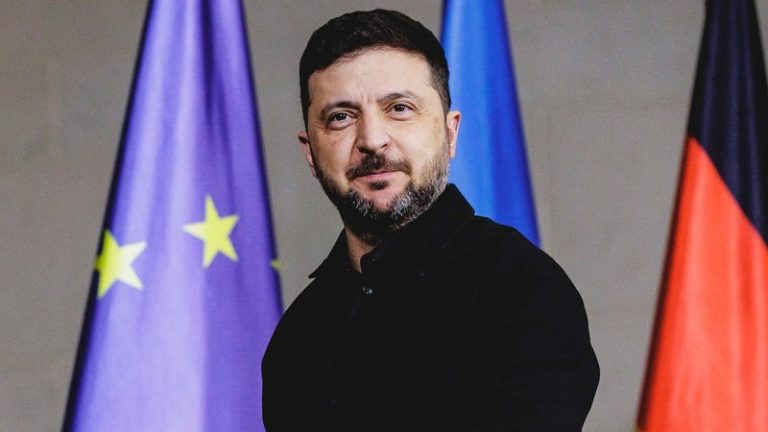
Ukrainian President Volodymyr Zelenskyy on Wednesday called for the U.S. and other allies to respond to bellicose ‘signals’ from Russia.

‘Today, we again heard signals from Moscow that they are preparing to make next year a year of war. These signals are not only for us. It is crucial that our partners see them, and not only see them but also respond — especially partners in the United States, who often say that Russia wants to end the war,’ Zelenskyy asserted in a post on X.

Fox News Digital reached out to the White House for comment.

‘Yet the signals coming from Russia are the exact opposite, taking the form of official orders to their army. This Russian mindset must be recognized — and acted upon. When Russia is in this mindset, it will also undermine diplomacy — seeking, through diplomatic language and pressure over specific points in documents — to merely mask its desire to destroy Ukraine and Ukrainians, and the desire to legitimize Russia’s theft of our land. And then come other countries in Europe, which someone in Russia might one day label their so‑called ‘historical lands,” he asserted in the post.

‘Real protection is needed against this Russian case history of madness, and we will continue working with all partners to ensure that protection is in place. Security measures are needed, financial measures are needed — including actions on Russian assets — political measures are needed. And the courage of all partners is required: to see the truth, acknowledge the truth, and act accordingly. I want to thank everyone who supports Ukraine,’ his post concluded.

Zelenskyy also conveyed the message in a Ukrainian-language video.

Russian President Vladimir Putin declared during a Defense Ministry board meeting on Wednesday that Russia will accomplish its goals, either through diplomacy or military force.

‘The goals of the special military operation will undoubtedly be achieved. We would prefer to accomplish this and address the root causes of the conflict through diplomatic means. However, if the opposing side and its foreign patrons refuse to engage in substantive dialogue, Russia will achieve the liberation of its historical lands by military means. The task of creating and expanding a security buffer zone will also be carried out consistently,’ Putin said, according to a Kremlin transcript.

Rep. Don Bacon, R-Neb., a staunch proponent of U.S. support for Ukraine, asserted in a post on X, ‘Again… the U.S. should send 200 long-range and extremely accurate cruise missiles to Ukraine. Maybe then, Putin will get serious and seek peace. Putin started this war, and he’ll stop this war once he realizes he cannot win and that the cost of war is too high.’

President Donald Trump’s administration has been attempting to help broker peace between Russia and Ukraine.

This post appeared first on FOX NEWS

Congress may be winding down for the year, but senators are making one last push for the Trump administration to follow the law and release its trove of files and documents related to the late pedophile Jeffrey Epstein.

Lawmakers last month passed legislation that compels the Department of Justice (DOJ) to release all materials related to Epstein, and the deadline is Friday. Senate Democrats are already prepared to act in case the DOJ doesn’t follow through.

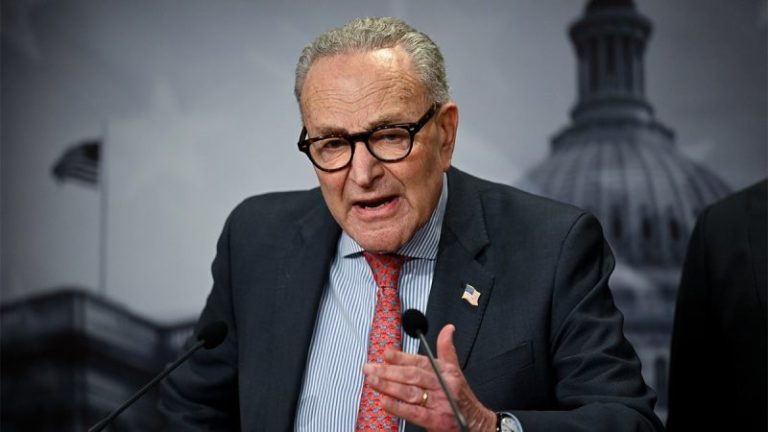
Senate Minority Leader Chuck Schumer, D-N.Y., warned that if the administration withholds documents, or abuses ‘narrow exemptions to hide the truth,’ there would be legal and political consequences.

‘Stop hiding, stop delaying,’ Schumer said. ‘Come clean with the American people. And if you don’t, the question will only get louder and louder and louder. Trump, ‘What the hell are you trying to hide?’’

Trump signed the bill shortly after it passed unanimously in the Senate — at Schumer’s behest — and it easily glided through the House.

Prior to the vote, Trump shifted his position to backing the release of the documents after a firestorm erupted in Congress, particularly the House, for several months after the FBI announced that it ‘is the determination of the Department of Justice and the Federal Bureau of Investigation that no further disclosure would be appropriate or warranted,’ of materials related to the late financier after reviewing troves of documents in the DOJ’s possession.

The bill requires that the DOJ release all unclassified records related to Epstein, his accomplice Ghislaine Maxwell, known associates and entities linked to Epstein and Maxwell, internal DOJ decision-making on the Epstein case, records on destroying or tampering with documents, and all documents on his detention and death.

There are some instances where the DOJ could choose to withhold certain documents, including materials that reveal victims’ identities or medical files, child sex abuse materials, information that could jeopardize active investigations, images of graphic death or injury, or classified national security information.

But the law lacks an actual enforcement mechanism to force Attorney General Pam Bondi to release the desired documents. Still, Republicans are confident that the DOJ will follow through.

Sen. Josh Hawley, R-Mo., told Fox News Digital that he ‘voted to release the Epstein files every single time that we’ve had an opportunity to do it across administrations.’

‘I think I presume good faith on the part of the DOJ,’ he said. ‘I mean, listen, the president signed the law. I mean, he’s called on them to be released. So I think I will be shocked if they didn’t release them. We’ll find out pretty soon.’

Sen. Eric Schmitt, R-Mo., told Fox News Digital that he believed Congress had been clear about its demands for the files and had ‘no reason to believe that they wouldn’t submit or provide the information.’

When asked about Schumer’s legal threats, he called the top Senate Democrat a ‘liar.’

‘That’s my response to anything Chuck Schumer says,’ Schmitt said. ‘He’s one of the worst senators in the history of the country.’

Other Republicans are more apathetic about the files’ expected release but are still intrigued by what new information they could hold.

‘I don’t really care. I’m as curious as anybody else,’ Sen. Ron Johnson, R-Wis., told Fox News Digital. ‘Do I think there are going to be bombshells? We’ll see what we’re going to get. It’s not my issue. It’s not my top priority. It’s way down there on the list.’

This post appeared first on FOX NEWS

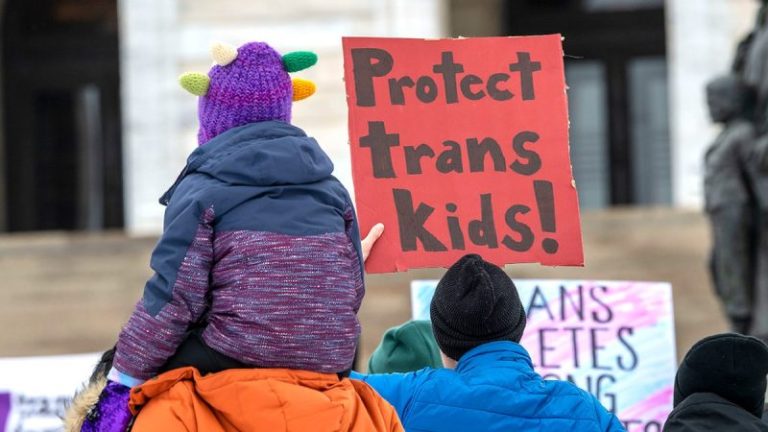
The U.S. Department of Health and Human Services (HHS) announced a sweeping package of proposed regulatory actions Thursday to end ‘sex-rejecting procedures’ on minors as part of President Donald Trump’s January executive order calling on the department to protect children from ‘chemical and surgical mutilation.’

‘Today, we are taking six decisive actions guided by gold standard science and the week one executive order from President Trump to protect children from chemical and surgical mutilation,’ HHS Secretary Robert F. Kennedy Jr. said during a press conference Thursday afternoon announcing the proposed actions.

HHS is rolling out a series of policy updates and regulatory actions that effectively would defund hospitals that provide gender transition procedures, according to an HHS official. 

The Centers for Medicare & Medicaid Services rolled out policy proposals that would bar hospitals from carrying out performing puberty blockers, cross-sex hormones and certain surgeries on patients under 18 as a ‘condition of participation in Medicare and Medicaid programs.’ The majority of U.S. hospitals participate in Medicare and Medicaid, according to HHS. 

The Centers for Medicare & Medicaid Services released another proposed rule that would block federal Medicaid funding for procedures aimed at altering the sex of a child under the age of 18, which HHS said also will apply to federal funding to the Children’s Health Insurance Program (CHIP) for the same procedures on individuals under the age of 19. 

Collectively, according to the HHS official, the actions would ensure no federal funds directly support gender transition procedures on children.

‘On my watch, HHS will stand for radical transparency and informed consent,’ said Kennedy. ‘We follow the evidence. We employ gold standard science. We honor the moral obligation to do no harm. There is divine worth in every person. It shines most brightly in our children that was commanded us to protect them.’ 

The announcement comes after HHS released a peer-reviewed report in November that found medical procedures to alter a child’s biological sex pose serious long-term dangers to children.

The report was released through the Office of the Assistant Secretary for Health and found that operations working to reject a child’s biological sex — including the use of puberty blockers, cross-sex hormones and surgical operations — ‘are significant, long term, and too often ignored or inadequately tracked.’

The November report was an update to HHS’ May report that reviewed the evidence and best practices for children with gender dysphoria, which was criticized by a handful of medical groups for not identifying the study’s authors and allegedly misrepresenting a medical consensus on the matter. 

In another Thursday crackdown, Kennedy signed a declaration that such procedures on children do not meet professional medical standards, based on the study, which warns ‘practitioners who perform sex-rejecting procedures on minors would be deemed out of compliance with those standards.’

‘They betrayed their Hippocratic Oath to do no harm,’ Kennedy said Thursday. ‘So-called gender-affirming care has inflicted lasting physical and psychological damage on vulnerable young people. This is not medicine. It is malpractice. We’re done with junk science driven by ideological pursuits, not the well-being of children.’ 

The Food and Drug Administration additionally announced Thursday, as part of the crackdown on trans medical issues for minors, that it sent warning letters to 12 manufacturers and retailers behind the ‘illegal marketing of breast binders to children.’ 

At the civil rights level, HHS is moving to undo a Biden-era effort to treat gender dysphoria as a disability under federal law. A newly proposed revision to Section 504 of the Rehabilitation Act of 1973 would clarify that the definitions of ‘disability’ and ‘individual with a disability’ exclude ‘gender dysphoria’ that is not the result of a physical impairment. 

‘The Biden-era amendment is designated gender dysphoria as a disability, serve the commercial interests of a predatory, multibillion dollar industry that betrayed the original intention of those laws engendered widespread public resentment against those laws among the American people, and discredit the statutes in the public mind,’ Kennedy said during the press conference Thursday. 

The announcement is expected to be met with pushback from left-wing Democrats, who have continued championing ‘gender-affirming care’ for kids. 

Transgender issues became a political football toward the end of Trump’s first administration and into the Biden administration, which repeatedly declared support for the trans community and trans youth. In November, 130 Members of Congress, for example, filed an amicus brief at the Supreme Court in November for a pair of cases focused on transgender students playing on a school sports team opposite their biological sex.  

Supporters of medical procedures aimed at altering a child’s sex argue preventing such medical care can lead to depression and anxiety, and even suicide and must be protected. 

President Donald Trump has repeatedly railed against trans procedures for children as an ‘act of abuse’ since before his reelection in 2024. 

The president and the Make America Healthy Commission he established earlier in 2025 have doubled down that there are only two biological sexes, including Trump signing an executive order declaring the U.S. only recognizes male and female sexes while also ending a ‘radical and wasteful’ diversity, equity and inclusion program within the government. 

This post appeared first on FOX NEWS