Archive

2025

Browsing

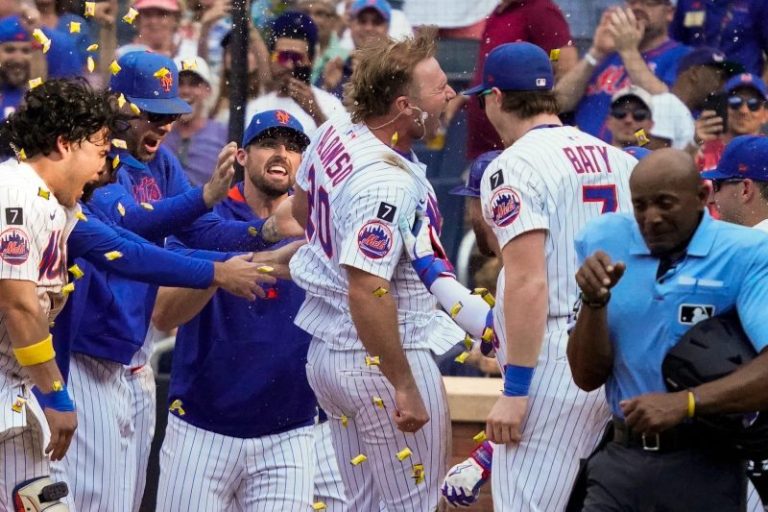
Just as they seemed to be throwing away the final playoff berth in the NL, the New York Mets righted themselves just enough Sept. 14, getting a three-run, walk-off home run from Pete Alonso to salvage the final game of a Citi Field series against the Texas Rangers.

It was a bold strategy – losing eight consecutive games in the middle of an ever-tightening National League wild-card race – and somehow it just might work out for the Mets.

And after the sunflower seeds hit the dirt and the Gatorade bath dried up and the Mets rubbed their eyes and looked up, they somehow had a 1 ½-game lead for the final wild-card spot

We should all be so lucky.

See, the Mets’ streak started with two losses to their direct wild card pursuer, the Cincinnati Reds, before thoroughly folding their tent against the division-leading Phillies, losing four at Philadelphia. And they further galvanized the Rangers’ AL playoff hopes by losing the first two games against them.

How ugly was it? Well, it was their longest losing streak since 2018, when they lost 11 in a row, and their pitchers posted a 6.27 ERA as they got outscored 47-20.

Yet the Reds and San Francisco Giants had mercy on them. Cincinnati could have passed the Mets this weekend, but instead got swept by the Athletics in Yolo County, while the Giants’ hot streak of nine wins in 13 games finally cooled with a pair of weekend losses to the Dodgers. The Giants now lurk 1 ½ games back, while Arizona is two out and the Reds 2½ games back.

Still, the damage was done – the Mets have fallen three spots to No. 14 in USA TODAY Sports’ power rankings. But Citi Field is somehow still standing.

A look at our updated rankings:

1. Milwaukee Brewers (-)

‘PECOTA had us at 80 wins,’ Pat Murphy says after clinching playoff spot. (Hey Murph: We had you at 83).

2. Philadelphia Phillies (-)

Injury ends Jose Alvarado’s season. Might as well get used to life without him before the playoffs hit.

3. Toronto Blue Jays (-)

Surprise, surprise: Top prospect Trey Yesavage recalled, will start Monday’s game.

4. Chicago Cubs (-)

Nico Hoerner batting .362 with runners in scoring position.

5. Detroit Tigers (-)

What a relief: Tarik Skubal expected to make next start after side scare.

6. Los Angeles Dodgers (+1)

Mookie Betts and Teoscar Hernández combine for 10 extra-base hits as Dodgers win five of six.

7. New York Yankees (-1)

‘We’re the best team in the league,’ says Jazz Chisholm. About time to find out.

8. San Diego Padres (+1)

Win five of seven in 10-game stretch against Rockies to solidify playoff prospects.

9. Boston Red Sox (-1)

‘I think we should stop talking about October, to be honest with you,’ says Alex Cora.

10. Seattle Mariners (+2)

A nine-game winning streak to take control of first place? That’s the way you do it.

11. Houston Astros (-1)

Week of reckoning arrives: Final homestand welcomes Rangers, Mariners to the 713.

12. Texas Rangers (+1)

Sweeping Brewers, taking series against Mets a heck of a way to get back in it.

13. Cleveland Guardians (+2)

Cade Smith up to 15 saves as he fills in for Emmanuel Clase.

14. New York Mets (-3)

They own almost all the relevant tiebreakers against their wild-card pursuers.

15. San Francisco Giants (+1)

Willy Adames two away from Giants’ first 30-homer season since Barry Bonds.

16. Kansas City Royals (-2)

Might just be curtains on their playoff hopes.

17. Cincinnati Reds (-)

Terry Francona convenes team meeting after untimely sweep: ‘When it’s hardest to believe, that’s when you gotta dig deep.’

18. Arizona Diamondbacks (-)

Wait, what’s this? A playoff race?

19. St. Louis Cardinals (-)

Masyn Winn shuts it down for the season due to knee injury.

20. Tampa Bay Rays (-)

Junior Caminero, 22, has 43 home runs.

21. Miami Marlins (+1)

Ryan Weathers returns from 60-day IL with five scoreless innings.

22. Baltimore Orioles (+1)

Probably should’ve announced the title inflation for their GM before embarking on such a rough season.

23. Athletics (+2)

Go figure: Yolo County’s bullpen is best in MLB (2.94 ERA) since trading Mason Miller.

24. Los Angeles Angels (-3)

Christian Moore returns after two-week minor league reset.

25. Atlanta Braves (-1)

Brian Snitker reaches 800 wins as possible retirement looms.

26. Minnesota Twins (+1)

Kody Clemens’ three-homer night gives him 19 longballs with Twins.

27. Pittsburgh Pirates (-1)

Bubba Chandler bounces back from brutal start to take perfect game into sixth inning.

28. Washington Nationals (-)

Strained back ends Cole Henry’s promising rookie campaign out of bullpen.

29. Chicago White Sox (-)

A mildly encouraging 25-28 since All-Star break.

30. Colorado Rockies (-)

Will need an 0-12 season-ending finish to match White Sox’s record 121 losses.
This post appeared first on USA TODAY

Joe Burrow’s injury was the biggest fantasy football news from Week 2, impacting the entire Cincinnati Bengals offense.
Quarterback Jared Goff and the Miami Dolphins offense were among the top fantasy performers of the week.
Quarterbacks Justin Fields and J.J. McCarthy struggled, landing them on the list of fantasy losers.

Obviously, the biggest fantasy football news from Week 2 was the unfortunate injury to Cincinnati Bengals quarterback Joe Burrow – and the impact it will have on the team’s offense for what could be several months.

Backup Jake Browning was able to step in and competently keep the chains moving by completing 21-of-32 passes for 241 yards and three touchdowns (and also score on a 1-yard sneak). But he’s no Joe Cool.

While Ja’Marr Chase led all receivers with 16 targets and 14 catches, the other Cincinnati skill players were not as effective. And they won’t have the Jaguars defense to push around every week.

Meanwhile, the other major development was the … major development from Week 1 to Week 2 of several rookie running backs. Fantasy managers went in pretty heavy in drafts this year on the plentiful crop of young RBs. And the dividends are already starting to pay off.

Fantasy football winners for Week 2

Rookie RBs Quinshon Judkins, Cam Skattebo, Bhayshul Tuten

While the collective output from rookie running backs was disappointing in Week 1, several of them saw their workloads increase Sunday.

Judkins signed his rookie contract, practiced with the Browns for the first time and led the team in rushing – all in the space of one week. He was drafted to be the lead back and was on Sunday, rushing 10 times for 61 yards.

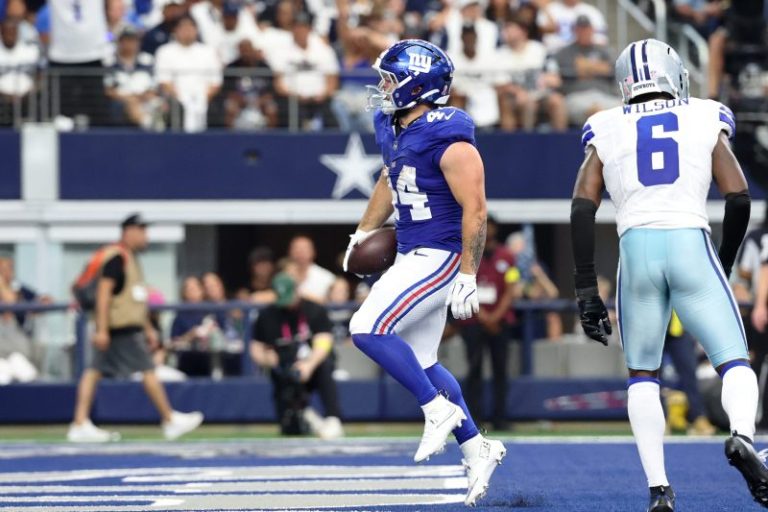
The Giants’ Skattebo outsnapped Tyrone Tracy 33-27 against Dallas and scored his first NFL touchdown.

And Tuten saw far more work in the wake of the Jaguars trading Tank Bigsby, carrying eight times for 42 yards and catching a touchdown pass.

QB Jared Goff

There were some concerns in the preseason about how effective the Detroit Lions offense would be without offensive coordinator Ben Johnson. Maybe not with star RB Jahmyr Gibbs and WR Amon-Ra St. Brown, but moreso with Goff.

But the veteran was deadly efficient against the Bears, completing 23-of-28 passes for 334 yards and five touchdowns – three of them to St. Brown. At the same time both Gibbs and David Montgomery scored rushing TDs. Just because Johnson has moved to Chicago, Goff (QB5 through two games) hasn’t forgotten how to use his many weapons.

Miami Dolphins offense

After a pitiful performance on both sides of the ball in their opener, the Dolphins offense looked much more like themselves at home against the Patriots. The still-horrible defense forced Tua Tagovailoa to throw 32 times, which opened the door for a 100-yard receiving day for Tyreek Hill, a touchdown for Jaylen Waddle and a team-high eight receptions (for 92 yards and a score) for De’Von Achane.

WRs Rome Odunze and Wan’Dale Robinson

Playing second fiddle to much more high-profile wide receivers on their own teams, both Odunze and Robinson turned double-digit targets into top-5 performances for the week. The Bears had to throw a ton in a blowout loss to Goff and the Lions. That opened the door for Odunze to catch a pair of TD passes among his seven receptions and 128 yards. Meanwhile, the Giants’ Robinson managed to get beyond the Cowboys secondary for some big-gainers in racking up 142 yards and a score.

Fantasy football losers for Week 2

QB Justin Fields

Burrow wasn’t the only starting quarterback to leave early in Week 2. Fields was just 3-for-11 for 27 yards when he was hit hard and left with a possible concussion. He was the No. 2 fantasy quarterback in the season opener, thanks in part to his two rushing touchdowns. Even if Fields is able to return soon, a head injury is a bad omen for someone who relies more on his legs than his arm for fantasy value.

RB Kaleb Johnson

Johnson is perhaps the biggest disappointment among the rookie running back crop. He was drafted as someone who could ascend to the lead back role in Pittsburgh, but instead he’s hardly seen the field on offense during the first two weeks. Given a chance in the return game to show off his elusiveness, Johnson committed a boneheaded play Sunday of not fielding a kickoff against Seattle and having it recovered in the end zone for a Seahawks touchdown. That won’t help his case.

TE Mark Andrews

While the Baltimore Ravens continue to generate yardage and points (a league-leading 81 through two games), Andrews has been silent. He’s had exactly one catch in each of the first two weeks – and fellow tight end Isiah Likely could be back from injury next week to cut into his value even more. After being drafted in the top eight at the position, Andrews is looking more like a drop.

QB J.J. McCarthy

Yes, McCarthy did redeem himself with a furious fourth quarter in the opener, but that momentum didn’t carry over into his second consecutive appearance in prime time. He was bad for all four quarters Sunday night vs. the Falcons, hitting on just 11-of-21 passes for 158 yards and turning the ball over three times. Even worse, he’s not getting the ball to his best weapons. WR Justin Jefferson had just three receptions for 81 yards and TE T.J. Hockenson has seemed to disappear with four catches in two games.

This post appeared first on USA TODAY

No matter the sport, a top draft pick’s rookie season is usually a rough go.

Your team most likely had that pick for a reason (they were bad) and you are expected to help right away. You’re getting used to a new league, and you may or may not have veteran players to ease the learning curve.

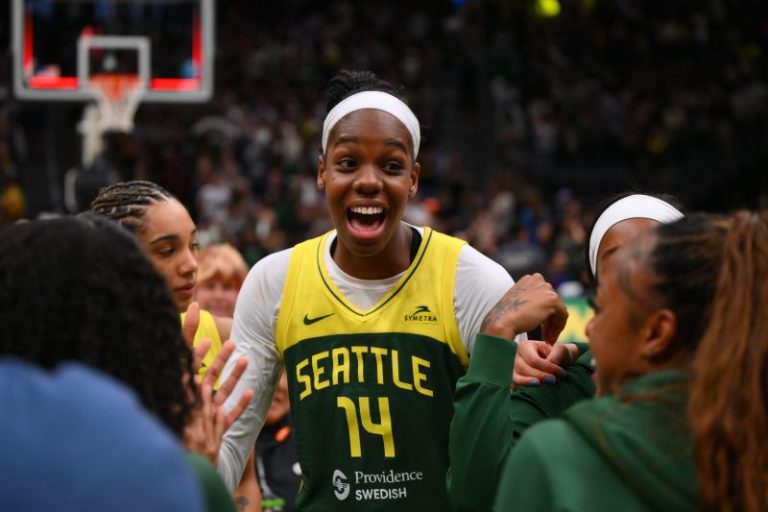
For Dominique Malonga, the No. 2 pick in this year’s draft by the Seattle Storm, it’s been the opposite experience.

She got to play behind, and learn from, veterans Nneka Ogwumike, Skylar Diggins, Gabby Williams and Ezi Magbegor. She didn’t have to absorb a full load of the WNBA’s physicality every game. She was allowed the time and space to see how her game fit in the W rather than figuring it out on the fly.

All of which will make Malonga, and the Storm, who lost Game 1 of their best-of-3 series against the Las Vegas Aces 102-77 on Sunday, even better down the road.

“I knew I wouldn’t be starting because of the players we already had here,” Malonga, who had a double-double in her playoff debut with 12 points and 11 rebounds, told USA TODAY Sports. “I would have amazing vets in front of me, and it would be a good place to learn and grow up.

“My coaching staff, Seattle, had no expectations for me,” she added. “That helped. In terms of basketball, it was just about coming and playing hard.”

Malonga did more than that, however. The 19-year-old from France made a case to be Sixth Player of the Year.

Malonga set a WNBA record with 262 points in the paint off the bench, and led all reserves in six statistical categories. That included field goal percentage (.551), rebounds (195), blocks (28) and double-doubles (four).

Malonga played just over 14 minutes a game and averaged 7.7 points and 4.6 rebounds for the Storm, who are the seventh seed in the WNBA playoffs.

“This season is going to benefit me so much,” said Malonga, who was named to the Associated Press’ All-Rookie team on Friday. “This year was about discovering and growing. A first year with no pressure, now I can go to year two and three and I’m comfortable and I can just play.”

This is not to say Malonga wouldn’t have thrived if she’d gone to a different team.

The hype around her has been intense since she was 15, when Tony Parker called her the female Victor Wembanyama. It grew last summer, when Malonga was the youngest member of the France team that took the U.S. women down to the last second of the gold-medal game at the Paris Olympics.

And it grew again last fall, when the 6-foot-6 Malonga dunked in EuroCup play.

“I’ve been watching film of her and I can’t wait to get my eyes on her in person,” ESPN analyst Rebecca Lobo gushed before the draft. “A 6-6 player with the versatility that she has and the ability to come off flare screens and hit 3s at her size and length, … the way she can move in space, she’s an incredible talent.”

But the Storm put Malonga in a position to thrive, and that’s exactly what she’s done.

Malonga had been the focal point of her teams in Europe, so coming off the bench was an adjustment. It’s a different mindset, Malonga said, and it forced her to be patient. The physicality of the WNBA also took some getting used to.

“I won’t lie, the first game was really shocking to me for the physicality and how fast the game was,” she said.

Malonga quickly settled in, however. Her playing time increased as the season went on and so did her production. She gave a glimpse of just how formidable she will be in the years to come last month, when she had 22 points and 12 rebounds in a close loss to the Las Vegas Aces.

“It was about being comfortable on the court and the game has slowed down for me. I wasn’t discovering anymore,” Malonga said.

Malonga’s adjustment to the WNBA has also been helped by Williams, one of her teammates on France’s national team.

Though Malonga is fluent in English, being able to speak French with Williams is a comfort. She also knows she can ask Williams about anything, be it basketball or whether there’s a good French bakery in Seattle. (There is.)

“She made everything way easier for me,” Malonga said.

The priority for Malonga now is the playoffs, where the Storm are facing the Aces. But she acknowledges it’s nice to hear her name in conversation for Sixth Player, because it means people outside Seattle have recognized her game and how it’s grown throughout the season.

“It would be amazing (to win), especially when it’s something I didn’t expect or put pressure on myself,” she said. “It would just be a reward for all the work I put in this season and the path we went through.

“But if not, it’s going to be fine.”

Follow USA TODAY Sports columnist Nancy Armour on social media @nrarmour.

This post appeared first on USA TODAY

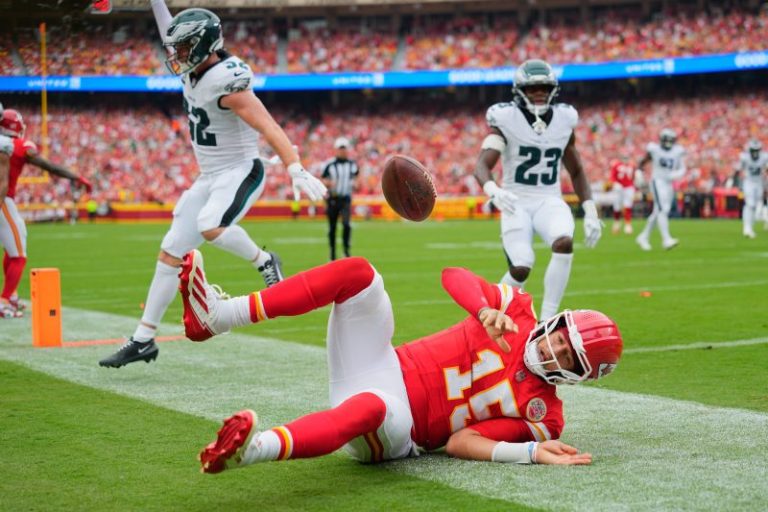
The Kansas City Chiefs lost 20-17 to the Philadelphia Eagles, marking their third consecutive loss including last season’s Super Bowl.
For the first time in the Patrick Mahomes era, the Chiefs have lost three straight games and started the season 0-2.
Key moments included a costly interception thrown by Mahomes in the red zone and a failed fourth-down gamble by coach Andy Reid.

KANSAS CITY, MO – This is what a Super Bowl Hangover looks like.

Missed opportunities. A costly turnover. A risky fourth-down gamble that backfired. Burned by a blitz in crunch time. A missed field goal.

New territory in the Patrick Mahomes Era.

No, the Kansas City Chiefs didn’t get blown out again in the Super Bowl 59 rematch on Sunday at Arrowhead Stadium. This time, it was a would’ve, could’ve, should’ve type of outcome in falling 20-17 to the Philadelphia Eagles.

And suddenly the Chiefs are attached to a different kind of three-peat. For the first time since Mahomes began setting the NFL ablaze, the Chiefs have lost three consecutive games with the star quarterback, dating back to the Super Bowl loss.

Let the record show, too, that the Chiefs are 0-2 for the first time since 2014, and just the second time under Andy Reid. And while it’s early, it’s also worth noting that the staggering Chiefs – winners of nine consecutive division titles – are all alone in last place in the AFC West.

“Obviously, this isn’t how we wanted to start and how we’re going to respond,” Mahomes said afterward.

He knows. Kansas City had so many chances to swing the outcome and blew it.

You’d think your chances of toppling the champs would be decent by holding reigning NFL rushing champ Saquon Barkley under 100 yards (88, on 22 carries) and allowing Jalen Hurts to pass for a grand total of 101 yards. Done and done. The Chiefs defense held the Eagles to 216 yards but that still wasn’t good enough.

Leave it to the resilient Eagles (2-0) to reveal the holes. Take the vaunted “Tush Push” short-yardage package. Philadelphia called on it seven times, including the case when they drew a penalty for a conversion. The Chiefs stopped the Eagles twice, but in both cases they were unable to stop back-to-back “Tush Push” encounters, including the fourth-quarter case that Hurts barreled in for a one-yard touchdown.

Even worse than the pain of conversions by inches, though, was the 28-yard catch by DeVonta Smith on a third-and-10 in the fourth quarter that set up the Hurts TD that extended the lead to 20-10. It was Philadelphia’s longest play of the day and one of just two completions that went for more than 10 yards. Chiefs defensive coordinator Steve Spagnuolo, as he did repeatedly in the game, dialed up a “zero blitz” to pressure Hurts, but the Eagles quarterback hung in to find Smith – who burned the Chiefs with a 46-yard TD catch in Super Bowl 59 – in single coverage against Trent McDuffie. And Smith adjusted to haul in the throw on a jump ball.

This, after Smith was shaken up early in the third quarter after landing hard on his back on a third-and-long incompletion that was influenced by another all-out blitz.

“He came down on his back, he came up in the clutch,” Hurts waxed poetically of Smith. “What more can you ask for?”

One team had the knack for clutch plays on Sunday, while the other didn’t. Smith’s big play was set up by a big gaffe on Kansas City’s previous drive, when it appeared the Chiefs were on the verge of taking the lead. But on a third-and-goal from the Eagles’ 6, Mahomes’ pass to his usually-reliable go-to target, Travis Kelce, popped off the tight end’s hands and into the arms of rookie safety Andrew Mukuba at the goal line. Mukuba returned the interception 41 yards, the potential pick-six prevented by the hustle of first-round tackle Josh Simmons, who chased down the play for a sideline tackle.

Eagles’ Jalen Carter, after spitting incident, is now poster child for NFL discipline

Mahomes, whose 187-yard passing day included a 49-yard TD throw to Tyquan Thornton late in the fourth quarter, blamed himself for the interception. That was debatable, given the tight window to squeeze the pass into.

“I think if I can put it more on his body and not so far in front of him, he can catch it, take the hit and get into the end zone,” Mahomes said.

The disconnect illustrated some of the issues for a Chiefs offense saddled by the loss of two deep-threat receivers – Rashee Rice is serving a six-game suspension, Xavier Worthy is nursing a dislocated shoulder suffered on the first drive of the season-opening loss to the Los Angeles Chargers – and had such a spotty ground attack that Mahomes was the team’s leading rusher with 66 yards.

“It’s not like we’re missing by much,” said Mahomes, who also lamented missed chances for big plays early to tight end Noah Gray and late to Thornton. “I know it sucks to hear for the fans, but I think we’re close. All we can do is continue to work, continue to get after it.”

It’s too early to write the Chiefs off, as tempting as that is. But they resemble the dazed boxer trying to find a way after taking a few body blows. And this early-season sputtering comes against the trend of teams routinely falling flat in the season after losing a Super Bowl. Yet it’s a long season. It’s not time to panic. Some of their issues can be fixed, others will improve with health and time. Conceivably.

Reid summed up his postgame locker room message as follows: “Keep playing hard. I’ll take this one. Stick together.”

It’s typical for Reid to take the onus when adversity strikes. In this case, he took ownership of the interception, regretting the play-call.

Yet it was another decision by the veteran coach that deserves much more scrutiny.

On the opening drive of the second half, Reid went for it on a fourth-and-one from the Chiefs’ 36-yard line. The game was tied, 10-10, with nearly an entire half to play.

On his own end of the field, he clearly played with fire. And Reid hardly had an answer that was similar to Philadelphia’s “Tush Push” with a Jumbo formation and full-house backfield. Kareem Hunt was stuffed by Noah Smith for a one-yard loss.

But why? Reid is not Dan Campbell and typically doesn’t take such risks.

NFL sends mixed message with moment of silence for Charlie Kirk | Opinion

“They were going to stay aggressive,” Reid explained, referencing the Eagles. “I thought it was important against that crew to just stay aggressive.”

Reid went for it on fourth-and-one later in the game, but the field position was completely different from the Eagles 13. He opted not to try tying the game with a chip-shot field goal early in the fourth quarter. Hunt converted with a three-yard run. Then disaster stuck with Mahomes’ interception.

On the fourth-and-one that didn’t work earlier, the Eagles converted the gift field position into a 51-yard Jake Elliott field goal, which turned out to be so monumental in a three-point game.

Mahomes, though, had no qualms with Reid’s gamble.

“I always want to go for it,” he said. “That’s who I am. I want to be aggressive. You always second-guess it when it doesn’t work. When it works, it’s a good thing. When it doesn’t, it’s a bad thing. I’d rather be on the aggressive side of history.”

Which just might beat the history associated with a certain type of hangover.

Contact Jarrett Bell at jbell@usatoday.com or follow on social media: On X: @JarrettBell

On Bluesky: jarrettbell.bsky.social

This post appeared first on USA TODAY

The House Republicans’ campaign arm is launching a pressure campaign against vulnerable Democrats as the deadline for a government shutdown looms on Capitol Hill.

The National Republican Congressional Committee (NRCC) is rolling out an ad campaign on Monday targeting 25 House Democrats in battleground districts, urging voters there to pressure their representatives to vote in favor of whatever government funding plan the GOP unveils.

The House and Senate have just seven planned working days left together before the end of fiscal 2025 comes on Sept. 30. If a deal is not struck on federal funding by then, both Republicans and Democrats could face the political backlash of a partial government shutdown.

‘Democrats are threatening a government shutdown to stop President Trump’s policies – like Trump’s crackdown on MS-13 and violent criminals,’ a voice-over said in the short clip. ‘Democrats want to abolish ICE, allowing violent criminal illegal aliens roaming our streets. And to do it? They’re putting veterans’ care at risk while risking military pay, police and Border Patrol.’

The clip ended with a message to voters: ‘Tell Democrats: Don’t hold the government hostage to put illegals before us.’

Republican leaders are expected to unveil a short-term extension of FY 2025 government funding levels, called a continuing resolution, or CR, this week.

Democrats have warned for weeks that they will not accept a government funding deal that was written without their input. They’ve also threatened to oppose any spending measure without guarantees that the Trump administration will not seek to cut back those funds down the line.

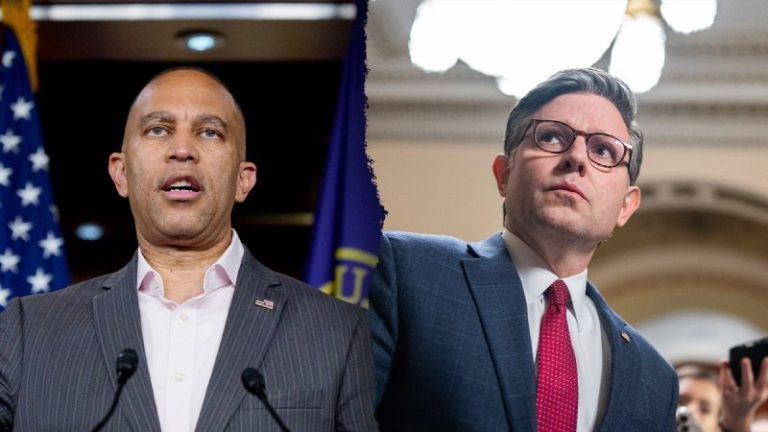
‘The American people are hurting because of how they have decimated healthcare. We need a bipartisan negotiation to undo that damage,’ Senate Minority Leader Chuck Schumer, D-N.Y., said during an appearance alongside House Minority Leader Hakeem Jeffries, D-N.Y., on Thursday.

‘If they try to jam something down our throats without any compromise, without any bipartisan or real bipartisan discussion, they ain’t going to get the votes. Plain and simple.’

President Donald Trump, meanwhile, told Republicans on Friday not to work with Democrats on the issue, accusing them of making impossible demands.

‘They want to give away money to this or that and destroy the country. If you gave them every dream, they would not vote for it,’ Trump said on ‘Fox & Friends.’ ‘Don’t even bother dealing with them.’

But Republican leaders are hoping that a ‘clean’ CR, free of any additional partisan measures, will be enough to sway enough Democrats into voting to avert a shutdown. 

‘Democrats currently are playing games with this government funding idea. They’re trying to bring in extraneous issues,’ Speaker Mike Johnson, R-La., said on ‘Fox News Sunday.’ ‘We may need a stopgap funding measure, a CR, for a short period of time to allow [funding] negotiations to continue. But it will be clean in its scope, and I surely hope the Democrats will not try to make this a big partisan fight.’

Congress passed a CR lasting from March through September 2025, with just one Democratic vote from Rep. Jared Golden, D-Maine.

Meanwhile, Schumer is under pressure from progressives to reject any GOP-led funding deal without compromises for the left after his vote was key to averting a shutdown in March.

‘Out of touch House Democrats would rather grind our government to a halt than let President Trump crack down on violent criminals and secure our border,’ NRCC spokesman Mike Marinella told Fox News Digital. ‘They’ll risk veterans’ care, military pay and public safety just to appease their radical base.’

This post appeared first on FOX NEWS

Fast-food restaurants are losing breakfast customers to convenience stores.

Morning meal traffic to fast-food chains rose 1% in the three months ended in July, while visits to food-forward convenience stores climbed 9% in the same period, according to market research firm Circana.

“Over the long run, convenience stores have taken share, really at foodservice overall, but the morning meal has been their strong suit,” David Portalatin, Circana senior vice president and foodservice industry advisor, told CNBC, noting the trend has largely been driven by what the group calls “food-forward convenience stores.”

For decades, McDonald’s and its rivals have tried to lure consumers away from home to eat their early morning offerings, betting that convenience and unique items will win over diners.

While fast-food chains have made some inroads, 87% of what consumers eat and drink in the morning comes from their own refrigerators or pantries, according to Portalatin. That leaves plenty of opportunity for fast-food chains — and anyone else who wants a slice of the breakfast pie.

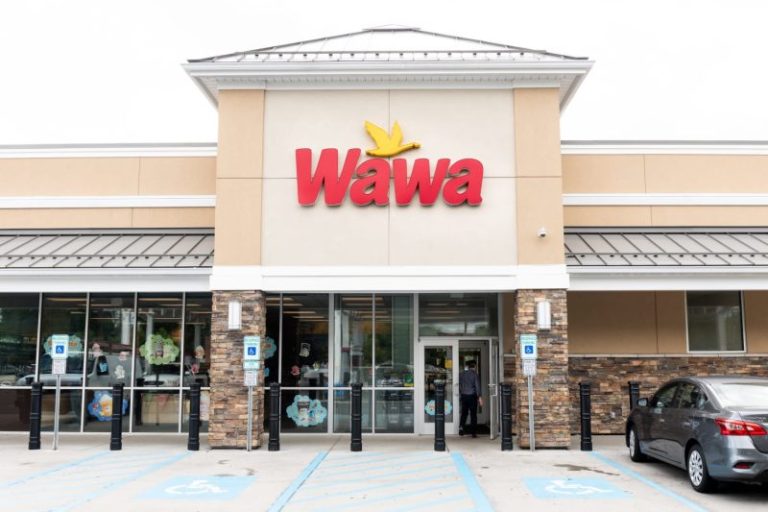
Before the pandemic, fast-food chains started seeing a new rival for their breakfast customers: convenience stores. Regional chains like Wawa in the Northeast and Casey’s General Store in the Midwest were expanding their reach and investing in their foodservice options, taking pages from the fast-food companies’ own playbooks.

For a time, lockdowns and the shift to hybrid work reversed those market share gains. But in the three months ended in July, food-forward convenience stores once again gained the upper hand in the battle to serve consumers breakfast, according to Portalatin.

Circana separates food-forward convenience stores like Buc-ee’s and Sheetz from the broader industry, although more chains may soon fit under that umbrella. 7-Eleven, the biggest convenience, or c-store, in the U.S., is planning to invest more in its prepared foods business, inspired by the success of its Japanese business. C-store chain RaceTrac on Wednesday announced that it’s buying Potbelly for about $566 million, although it’s unclear what its plans for the sandwich chain include beyond expanding its footprint.

In recent years, more diners have been watching their budgets, conscious of rising menu prices and a tight job market.

Year-over-year morning traffic to fast-food chains has fallen every quarter for the last three years, according to data from Revenue Management Solutions, which advises restaurants on how to increase sales and profits. In the second quarter, fast-food breakfast visits fell 8.7%.

To see the struggles, look no further than McDonald’s, which dominates the quick-service breakfast category.

″The breakfast daypart is the most economically sensitive daypart, because it’s the easiest daypart of a stressed consumer to either skip breakfast or choose to eat breakfast at home,” McDonald’s CEO Chris Kempczinski said on the company’s earnings call in late July. “And we, as well as the rest of the industry, are seeing that the breakfast daypart is absolutely the weakest daypart in the day.”

McDonald’s morning visits accounted for 33.5% of its traffic in the first half of 2019 but fell to 29.9% in the first half of 2025, according to Placer.ai data. To try to drum up traffic, the chain has included breakfast items in its new Extra Value Meals, including a deal for a Sausage McMuffin with Egg with a hash brown and a small coffee for $5.

To reverse breakfast’s slide, fast-food chains are taking hints from their competition. After years of convenience stores looking to fast-food chains for ideas on how to grow prepared food sales, from installing ordering kiosks to new menu items, the dynamic has flipped.

″[Quick-service restaurants] are looking at late-night sales and early morning sales, and they are directly looking at convenience stores and saying, ‘What is working? How can we bring that to our stores?’” National Association of Convenience Stores spokesperson Jeff Lenard told CNBC.

Prepared foods have offered a lifeline for convenience stores as demand for gasoline, tobacco and lottery tickets has fallen over time. The industry’s overall foodservice sales reached $121 billion in 2024, according to data from the NACS.

Most customers visit the gas pump during the morning and evening rush hours, on their way to and from work, presenting the perfect opportunity for c-stores to sell them breakfast or dinner. This year, 72% of consumers surveyed by InTouch Insight said they saw c-stores as a real alternative to fast-food chains, up from 56% a year ago and 45% two years ago.

Broadly, the c-stores that have focused on fresh food have been winning over more customers.

For example, Wawa has seen its customer base grow by 11.5% since 2022, while fast-food chains McDonald’s, Burger King and Wendy’s have seen their combined customer base shrink 3.5% in the same time, according to data from Indagari, a transaction data analytics firm.

The majority of 1,170 respondents to an InTouch Insight survey for CNBC said that they have purchased made-to-order breakfast from a c-store in the morning in the past three months. Forty-eight percent of respondents said that when they choose breakfast from a convenience store, they are replacing a visit that they might otherwise make to a fast-food restaurant like McDonald’s or Dunkin’.

Buying coffee and breakfast from a c-store likely won’t be cheaper than making it at home. But consumers perceive it as “good bang for their buck,” according to Sarah Beckett, vice president of sales and marketing for InTouch Insight.

Plus, c-store customers get a wider breadth of options. In addition to coffee, gas stations sell energy drinks, protein shakes and yogurt smoothies. And customers can pick up a granola bar or banana to accompany their breakfast sandwich. Fast-food chains lack that kind of variety.

But above all, what matters to consumers is the food itself.

“While [a] convenience store broadly does have some tailwind from being a lower price point, the ultimate differentiator, and what’s really going to set apart the winners from losers, is that quality aspect of it,” Circana’s Portalatin said.

Brady Caviness, a 33-year-old account executive at Bailiwick who lives in Minneapolis, told CNBC that he indulges in a breakfast pizza from Casey’s General Store when he’s traveling. If he’s back home, where there isn’t a Casey’s nearby, he’ll stop by McDonald’s, Dunkin’ or Starbucks if he’s in the mood to buy his breakfast.

The Iowa-based chain is the country’s third-largest c-store chain and claims to be the fifth-largest pizza concept based on its number of locations. Casey’s reported same-store sales growth of 5.6% for its prepared food and dispensed beverages for the three months ended July 31.

Like Taco Bell’s Mexican Pizza, Casey’s breakfast pizza, topped with cheese, scrambled eggs and a choice of bacon, sausage or vegetables, has grown a cult following since its launch in 2001.

“I think Casey’s is kind of a unique thing,” Caviness said. “My whole life, I’ve had the Egg McMuffins.”

This post appeared first on NBC NEWS

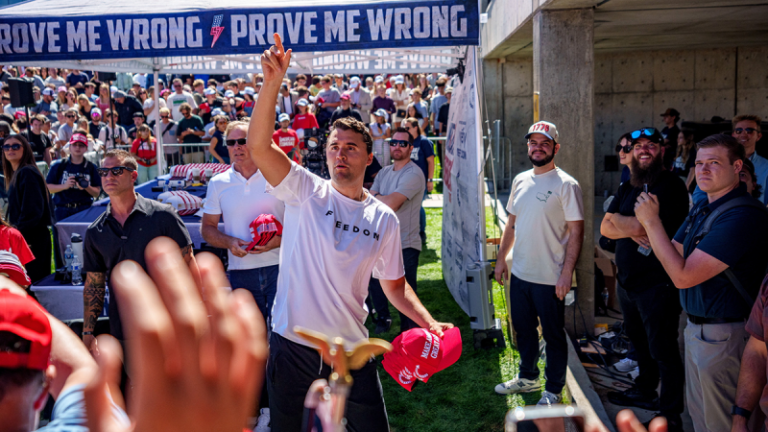
Turning Point USA has seen a massive surge in inquiries for new college chapters as the organization works to advance Charlie Kirk’s vision following his assassination last week.

Andrew Kolvet, executive producer of ‘The Charlie Kirk Show,’ said that Turning Point USA (TPUSA) has received more than 37,000 inquiries from people wanting to start new campus chapters. Kolvet said that TPUSA currently has 900 official college chapters and approximately 1,200 high school chapters.

Kolvet, who is also a spokesman for TPUSA, also said the organization has seen an increase in job applications. 

‘I have personally received hundreds of offers to work for us, or to work for free, or to just help however,’ Kolvet told Fox News Digital.

‘Charlie’s vision to have a Club America chapter (our high school brand) in every high school in America (around 23,000) will come true much, much faster than he could have ever possibly imagined,’ Kolvet wrote on X on Sunday, calling the response to expand Kirk’s mission ‘truly incredible.’

In a separate post, Kolvet wrote, ‘This is the Turning Point.’

Kirk was assassinated during an outdoor event at Utah Valley University on Wednesday afternoon. The event was the first in what was supposed to be a series called ‘American Comeback Tour.’

Kirk, the charismatic 31-year-old founder of the conservative youth activist group, gained recognition for his signature political debates on college campuses. 

On Thursday evening, the second family escorted Kirk’s casket and family from Utah to their home state of Arizona on Air Force Two. A video of the moment showed his wife, Erika Kirk, visibly emotional on the tarmac as the casket passed before her. The couple have two young children.

Kirk’s celebration of life ceremony is scheduled for next Sunday at State Farm Stadium in Glendale, Ariz. President Donald Trump said he will attend Kirk’s funeral. 

On Friday evening, Kirk’s widow galvanized the TPUSA movement and vowed to carry on her husband’s mission.

‘To everyone listening tonight across America, the movement my husband built will not die,’ Kirk said. ‘I refuse to let that happen. No one will ever forget my husband’s name. And I will make sure of it. It will become stronger. Bolder. Louder and greater than ever,’ Kirk said.

She also said that TPUSA’s annual ‘AmericaFest’ conference in Phoenix this December will continue as scheduled.

Judah Waxelbaum, a former campus activist at Arizona State University for Republican causes, said that the assassination likely awoke a ‘sleeping giant’ and will likely see an increase in members.

Turning Point’s not going anywhere. Turning Point, I think, will probably actually get significantly larger in the wake of what happened to Charlie,’ he told Fox News Digital in an interview on Saturday. ‘You couldn’t do youth politics in Arizona, really anywhere in the United States without coming across Charlie Kirk.

‘I wouldn’t be surprised if they’ve woken up a sleeping giant.’

Fox News Digital’s Cameron Arcand contributed to this report.

This post appeared first on FOX NEWS

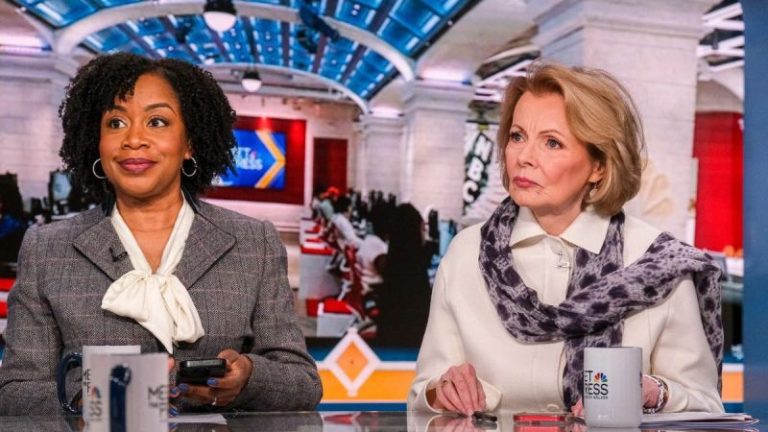
The assassination of conservative activist Charlie Kirk signals a troubling new chapter in America’s political violence, former Reagan speechwriter Peggy Noonan said.

Kirk, 31, died after he was shot in the neck during his ‘American Comeback Tour’ at Utah Valley University on Wednesday. The assassination comes a year after two attempts to take the president’s life. 

‘We like to say that something happened gradually and then suddenly,’ Noonan wrote in the Wall Street Journal on Thursday. ‘It’s from Ernest Hemingway’s ‘The Sun Also Rises’: A character, asked how he went bankrupt, says, ‘Two ways, gradually and then suddenly.’ That’s how political violence in America has been growing in this century. I would say the 2024 assassination attempts on Donald Trump, and now the assassination of Kirk, are the ‘suddenly’ moments. The reality continues while the dark tempo is picking up.’

‘We know this can’t continue and we don’t know how to stop it,’ Noonan wrote. ‘That is our predicament.’

Noonan, now a columnist for the Wall Street Journal, previously served as former Presdient Ronald Reagan’s head speechwriter from 1984 to 1986. 

Kirk’s assassination is one of multiple examples of political violence – or attempted political violence. 

For example, 20-year-old gunman Thomas Matthew Crooks opened fire on Trump from a rooftop during a campaign rally in July 2024, and one of the eight bullets shot grazed Trump’s ear. The gunman also shot and killed Corey Comperatore, a 50-year-old firefighter, father and husband attending the rally, and injured two others.

Likewise, Ryan Routh was apprehended and charged with attempting to assassinate Trump at his Trump International Golf Club in West Palm Beach, Florida, in September 2024. Routh was charged with attempted assassination of a major presidential candidate, among other things, and his trial is currently underway. 

Other instances include an assassination plot against Supreme Court Justice Brett Kavanaugh. Nicholas John Roske, 29, pleaded guilty in April to attempting to kill Kavanaugh in June 2022, according to the Justice Department. 

Trump said Friday on ‘Fox & Friends’ that an arrest had been made in Kirk’s assassination, and Utah officials confirmed the suspect as 22-year-old Tyler Robinson.

‘I hope he’s going to be found guilty, I would imagine. And I hope he gets the death penalty,’ Trump said Friday. ‘What he did, Charlie Kirk was the finest person, he didn’t deserve this. He worked so hard and so well. Everybody liked him.’

This post appeared first on FOX NEWS

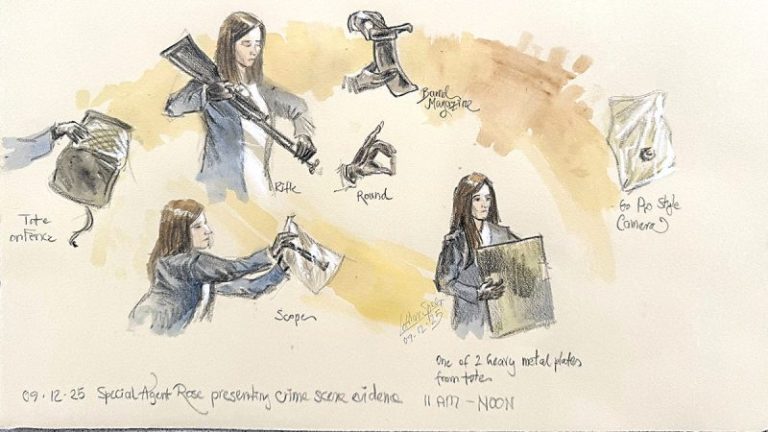
The federal trial of Ryan Routh, accused of attempting to assassinate former President Donald Trump during a round of golf in September 2024, resumes Monday after a week that saw jurors seated, opening statements delivered and a flurry of early testimony.

In just two days of testimony last week, prosecutors called 13 witnesses — mostly FBI and Secret Service agents — to walk jurors through the investigation and security response to the alleged attack.

Prosecutors opened Thursday by reading Ryan Routh’s own words — ‘Trump cannot be elected’ and ‘I need Trump to go away’ — to argue he plotted for months, traveled from Hawaii, and positioned himself at Trump International Golf Club with a rifle chambered and ready to fire. 

Routh, representing himself, delivered a seven-minute opening statement that Trump-appointed Judge Aileen Cannon cut short after he veered into rambling remarks about Adolf Hitler and the Wright brothers, at one point telling jurors, ‘This case means absolutely nothing. A life has been lived to the fullest.’

The week’s witnesses included a Secret Service agent who testified Routh smiled at him while pointing a rifle ‘directly at my face,’ a civilian who identified Routh fleeing in a black Nissan Xterra, and bomb squad and FBI agents who described the alleged sniper’s hideout — backpacks clipped to a fence, a camera zip-tied to it, and Vienna sausages on the ground. 

Jurors were also shown photos prosecutors said linked Routh’s clothing to the scene, including pants with a red stain prosecutors compared to red paint on a bag recovered from the brush. Routh’s cross-examinations were brief and sometimes bizarre, from asking witnesses ‘Is it good to be alive?‘ to quizzing them on AK-47 mechanics.

Judge Aileen Cannon, a Trump appointee, told jurors to expect the trial to go until 5:30 p.m. daily. More FBI agents and law enforcement witnesses are expected to take the stand Monday as the government continues presenting evidence.

This post appeared first on FOX NEWS

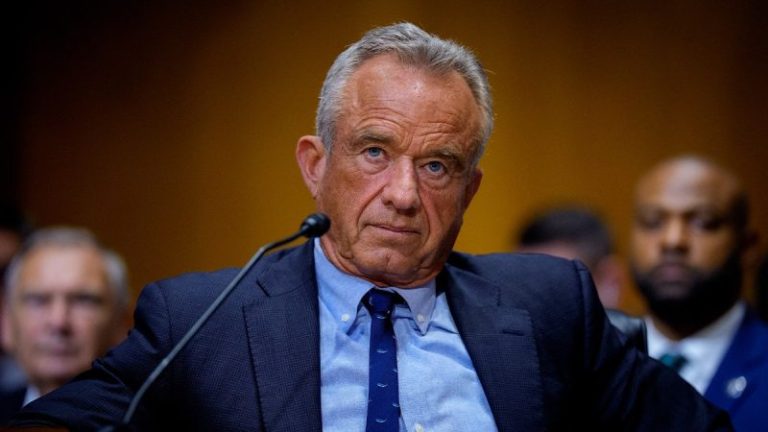
There are moments in American politics when the ground shifts beneath our feet — when something that seemed fringe, even laughable, suddenly becomes the center of gravity. Today, that something is the MAHA movement: ‘Make America Healthy Again.’ And if you think this is just another Trumpian sideshow, you’re missing the tectonic plates moving under your feet. 

Let’s be clear: dismissing MAHA is not just shortsighted — it’s dangerous. Because what’s happening here isn’t just a rebranding of MAGA. It’s a recalibration of the American political compass, and it’s drawing in people who, until recently, wouldn’t have been caught dead at a President Donald Trump rally. 

A new American coalition — and it’s not who you think 

For years, the political class has comforted itself with the idea that Trump’s appeal is limited to a certain kind of voter: the angry, the disaffected, the left-behind. But look closer at the MAHA movement, and you’ll see something different — something unsettling for the status quo. 

Libertarians who once rolled their eyes at Trump’s bravado are now nodding along, drawn by his full-throated defense of medical freedom and parental rights. Moms who used to vote blue without a second thought are suddenly asking hard questions about what’s being injected into their kids’ bodies — and they’re not satisfied with the answers from the CDC or the FDA. Even some on the left, those perennial skeptics of Big Pharma and government mandates, are finding themselves, almost in spite of themselves, in Trump’s corner. 

This isn’t just a coalition — it’s a realignment. And it’s happening in real time. 

Trump, the maestro of the moment 

Say what you will about Trump — his flaws are legion, his style abrasive, his rhetoric often incendiary — but no one, and I mean no one, has a better instinct for the symbolic gesture. He doesn’t just talk about problems; he embodies them, dramatizes them, makes them impossible to ignore. 

Remember the wall? It wasn’t just about immigration — it was about drawing a line, literally and figuratively, between ‘us’ and ‘them.’ It was about making a promise that was as much emotional as it was practical. Today, with MAHA, Trump is doing it again. But this time, the stakes are even higher. 

This isn’t some sleepy task force or blue-ribbon panel. This is the Oval Office, the Resolute Desk, the full weight of the presidency brought to bear on a single, electrifying issue: the health of America’s children. Trump isn’t just asking questions — he’s making commitments. He’s turning parental anxiety into political power, and he’s doing it with the kind of showmanship that only he can pull off. 

The political class is missing the point — again 

Here’s the thing: the political establishment, in both parties, is still stuck in the old paradigm. They see MAHA as a distraction, a sideshow, a way for Trump to gin up his base. But they’re wrong. This is bigger than Trump. This is about trust — about who gets to decide what goes into our bodies and our children’s bodies. It’s about the creeping sense that the institutions we once trusted have failed us, and that no one in power is willing to say so out loud. 

Dismiss this movement at your own peril. Because what’s happening here is a revolt — not just against the medical establishment, but against the entire political class that has grown fat and complacent while ordinary Americans worry about the health of their kids. 

A moment that could redefine 2028 — and beyond 

If you’re rolling your eyes right now, ask yourself: when was the last time you saw a political movement that could unite libertarians, disaffected Democrats and suburban moms? When was the last time you saw Donald Trump not just riding a wave, but creating one? 

This isn’t just a coalition — it’s a realignment. And it’s happening in real time. 

The MAHA movement is not a blip. It’s not a meme. It’s a warning shot across the bow of American politics. And if you think it’s going away, you haven’t been paying attention. 

Trump has always been a master of the moment. But with MAHA, he’s doing something even more audacious: he’s building a new coalition, one that could upend everything we thought we knew about American politics. Ignore it if you want. But don’t say you weren’t warned. 

This post appeared first on FOX NEWS