Archive

2025

Browsing

While Israel’s war in Gaza and Russia’s war in Ukraine are dominating headlines at the United Nations General Assembly (UNGA), quiet but urgent concerns about North Korea and its nuclear program are being discussed behind closed doors. 

It’s an issue that is being ‘continuously brought up,’ according to a senior State Department official. It was a particular concern in Secretary of State Marco Rubio’s meetings with his Japanese and South Korean counterparts and in President Donald Trump’s recent meeting with South Korean President Lee Jae-myung.

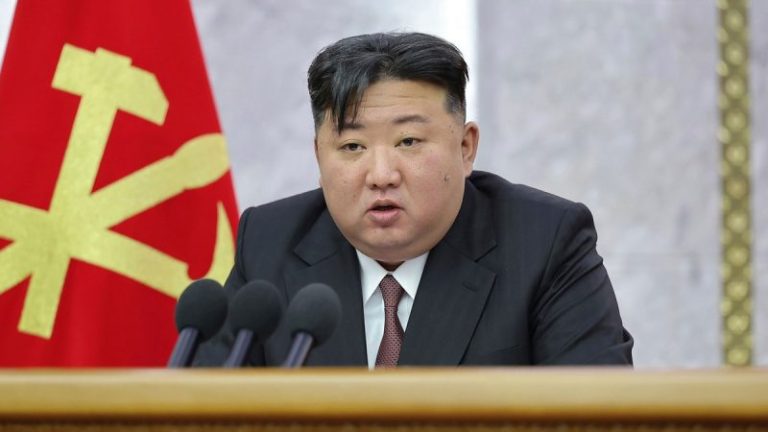
And while the lead-up to two Trump-Kim summits dominated the president’s first term, no such meeting is on the books for his second term, according to the official. Trump will travel to South Korea in October, but he currently has no plans to stop at the Demilitarized Zone (DMZ) to meet with North Korean leader Kim Jong Un.

‘Our policy remains a complete denuclearization of North Korea,’ the official said. Kim has said he’s only open to talks if the U.S. drops the denuclearization demand. 

‘If the United States drops the absurd obsession with denuclearizing us and accepts reality, and wants genuine peaceful coexistence, there is no reason for us not to sit down with the United States,’ Kim was quoted as saying by state news agency KCNA.

Trump has also signaled an intent to sit down with Russian and Chinese leaders to come to an agreement on scaling back nuclear weapons arsenals. It’s a top priority for the administration, according to the official, but the ball is in China’s court to start being honest about its nuclear arsenal. 

‘The first thing that would need to happen is for the Chinese to acknowledge and be more transparent about its own programs, in order to understand what direction within the discussion, what objectives, could be obtained.’

The Defense Department has assessed that China has around 600 nuclear warheads as of mid-2024, but is rapidly increasing its supplies and may have over 1,000 by 2030. 

Open source estimates place North Korea’s arsenal at about 50 warheads, with fissile material for 70–90 warheads total. 

The official also confirmed that reviews of the AUKUS (Australia-United Kingdom-U.S.) submarine pact are under way across all partner governments, with updates expected this fall. Those talks, along with the October summits President Trump plans to attend in Asia, are expected to set the tone for the next phase of U.S. engagement in the region.

With North Korea showing no sign of returning to talks and China stonewalling on transparency, U.S. officials say the administration is leaning on allies and doubling down on deterrence. 

This post appeared first on FOX NEWS

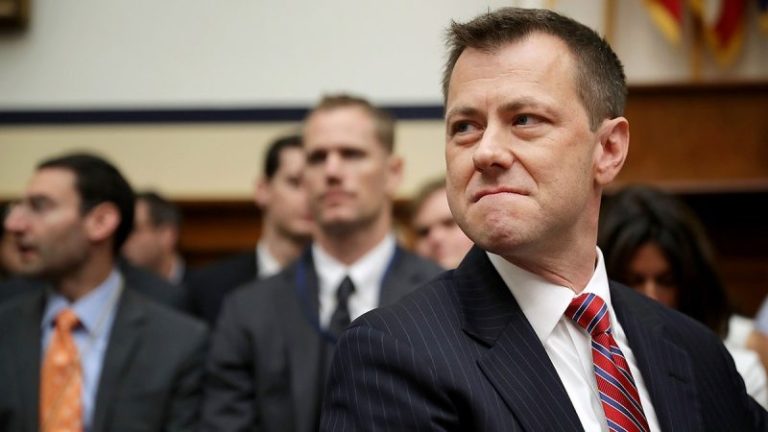
A federal judge rejected former FBI agent Peter Strzok’s claims that his termination from the federal law enforcement agency ran afoul of the U.S. Constitution.

Strzok was fired during President Donald Trump’s first term.

He sent anti-Trump text messages while leading the Crossfire Hurricane investigation into Trump’s campaign and Russia.

‘At this point, only two issues remain to be resolved: did plaintiff’s termination violate the First Amendment, and did his termination violate the Fifth Amendment guarantee against the deprivation of property without due process of law?’ an order signed by Judge Amy Berman Jackson explained.

Jackson was nominated to the U.S. District Court for the District of Columbia by President Barack Obama.

The court found that Strzok’s ‘interest in expressing his opinions about political candidates on his FBI phone at that time was outweighed by the FBI’s interest in avoiding the appearance of bias in its ongoing investigations of those very people, and in protecting against the disruption of its law enforcement operations under then-Director Wray’s leadership.’

‘As to Count Two, the due process claim is predicated on a misrepresentation of the facts and distortion of the chronology,’ the document declares. 

‘Once one gets past the rhetoric and considers the undisputed factual record, it becomes clear that there is no evidence to support a finding that plaintiff entered into a contract … that gave him a property interest in his tenure before the Deputy Director exercised his authority to terminate him, or that plaintiff lacked notice and an opportunity to be heard before his fate was decided,’ the document notes.

‘The full Memorandum Opinion has been docketed under seal,’ the order notes, adding that in the court’s perspective, ‘nothing in the Memorandum Opinion needs to remain sealed, and therefore, the parties must inform the Court by September 30, 2025 of whether they have any objection to the Court’s unsealing the Memorandum Opinion in its entirety, and if so, specifying what portions they believe should remain under seal and why.’

This post appeared first on FOX NEWS

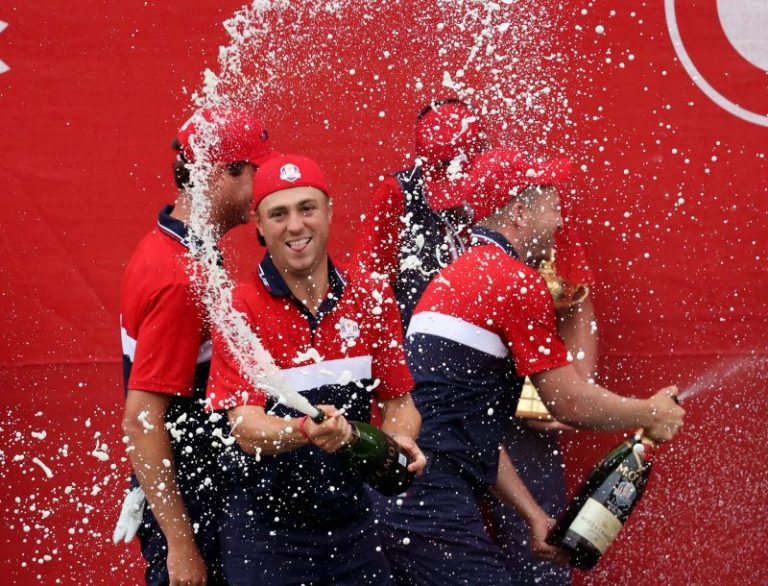
The U.S. team staged a major comeback in 1999, winning 8.5 of the 12 possible points on the final day.
In 2017, the U.S. team achieved a record-setting 19-9 victory, the most points scored since the format changed in 1979.
Europe secured a dramatic win in 2012 after overcoming a 10-6 deficit on the final day of singles matches.

Ranking Ryder Cups is like wishing you walked into a candy store with more money. You want to include a little bit of everything by the time you walk out, but it’s not possible. Especially when the task at hand is a top-five list within the past 40 years. But lines have to be drawn somewhere, and the Ryder Cup has existed since 1927.

Plus, there’s an argument that 1985 is the start of the modern Ryder Cup era (a point to be explained later).

In no particular order, the top five Ryder Cups since 1985:

1999, The Country Club, Brookline, Massachusetts (U.S. 14.5-13.5)

With 12 points up for grabs on Sunday, the U.S. grabbed 8.5 in the singles matches and won the first six matches of the final day. Hal Sutton finished with a team-best 3.5 points, and a 23-year-old Tiger Woods went 2-3 on the weekend.

2021, Whistling Straits, Kohler, Wisconsin (U.S. 19-9)

An absolute rout by the home country. The Americans won the first three sessions 3-1 and also took down eight of the 12 singles matches on the final day. No team had ever reached 19 points since the format of the tournament changed in 1979.

1991, Kiawah Island, South Carolina (U.S. 14.5-13.5)

A duel from start to finish that included some on-course trash talking from both sides. The U.S. hadn’t won since 1983. Seve Ballesteros and José María Olazábal, the Spanish super-pair, won three matches and halved another in the four they played together. It was also the first Ryder Cup televised live.

2012, Medinah Country Club, Medinah, Illinois (Europe 14.5-13.5)

The European team honored the recently deceased Ballesteros with images of him on their sleeves and his silhouette embroidered on their bags. Olazábal was the captain who saw his team surge on Sunday and overcome a 10-6 deficit. Francesco Molinari tied Woods in the final match for the halve, tipping the difference in favor of Europe.

1985 and (bonus) 1989, Belfry, Sutton Coldfield, England (Europe 16.5-11.5, 1985; Halved 14-14, 1989)

Taking the liberty to group these two together since both tournaments took place at the Belfry. The 1985 European victory was that side’s first in 28 years. The trans-Atlantic rivalry finally had some juice to it, and the trophy has passed hands back and forth for the past four decades. Craig Stadler’s missed two-footer that Saturday on the 18th hole in 1985 proved demoralizing, and Ballesteros led Europe with 3.5 points.

In 1989, the second tie in Ryder Cup history occurred. Europe’s Christy O’Connor Jr. upset Fred Couples, 1 up.  

This post appeared first on USA TODAY

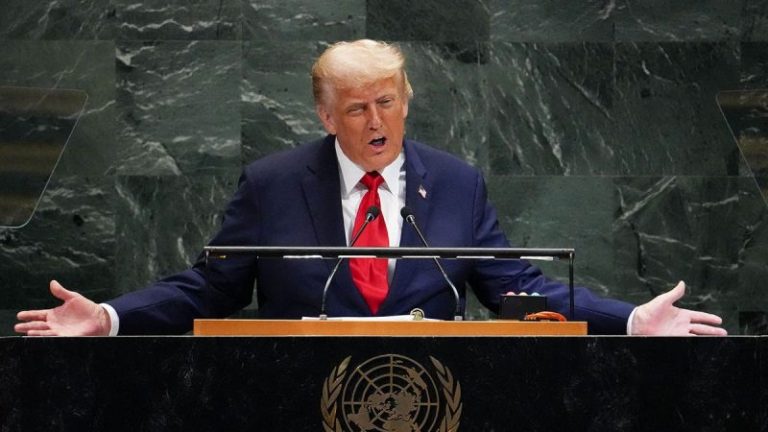
When President Donald Trump took the stage at the United Nations General Assembly (UNGA), the teleprompter didn’t work. But no matter — he was about to deliver a series of points he knew well, and one that shattered the typical U.N. script.

At times, world leaders shifted uncomfortably in their seats, particularly when he charged that the U.N. had failed to help the U.S. end wars and joked that all he ever got from the institution was being stuck on an escalator and a broken teleprompter. Yet in his trademark style, Trump also drew laughter from the room, managing to be both affable and scolding at the same time.

‘What is the purpose of the United Nations?’ Trump asked, after recounting how he — not the U.N. — had ended seven wars. 

From there, he launched into a wide-ranging address that touched on every one of the U.N.’s modern priorities — climate change, Ukraine, refugee resettlement and Palestinian statehood—and rejected each of them outright, unsettling many in attendance.

Latvian Foreign Minister Baiba Braže told Fox News Digital world leaders took note of Trump’s blunt style and sweeping agenda. She emphasized that his remarks spanned ‘a whole set of international issues,’ from Ukraine to Gaza. She highlighted his criticism of Russia, saying it was clear he wanted the war to end and was openly disappointed in President Vladimir Putin.

Former U.S. diplomat Hugh Dugan noted that while Trump hammered the U.N., he did not press the case for reform as forcefully as expected. 

‘As for U.N. reform and criticizing and guiding it through financial crises and endemic dysfunctionality, surprisingly he left a vacuum instead of a narrative,’ Dugan said. ‘He neither validated nor criticized the U.N. as expected, except pointing out the obvious views of its administrative and diplomatic passivity shared widely.’

Climate change

For the U.N., climate change is an existential threat requiring global action. Trump mocked the entire concept as ‘the greatest con job ever perpetrated on the world,’ deriding green energy as ‘all bankrupt’ and declaring the carbon footprint ‘a hoax.’ Dismissing decades of climate change work at the U.N., he said: ‘No more global warming, no more global cooling, whatever the hell happens, it’s climate change.’

Braže noted that European nations still see the U.N. as the central forum for tackling global problems, even if reforms are overdue. ‘We might differ in our opinion where we still think the U.N. is a valuable organization and the U.N. charter is a basis of [the] international system,’ she said, adding: ‘Of course it needs change… stepping up efficiencies.’

Ukraine

Trump and the international body are largely aligned on wanting the war in Ukraine to come to an end, but Trump criticized its European members sharply for continued reliance on Russian oil.

Trump argued the war ‘would never have started if I were president’ and accused NATO allies of hypocrisy and said some NATO allies were ‘funding the war against themselves’ by buying Russian oil.

‘They’re buying oil and gas from Russia while they’re fighting Russia. It’s embarrassing to them… they have to immediately, immediately cease all energy purchases from Russia.’

He threatened tariffs unless Europe cut off energy purchases from Moscow, but blamed India and China as the ‘primary funders of the war’ through Russian fuel purchases. The president also once again promised a ‘very strong round of powerful tariffs’ if Russia refuses peace.

Braže said Latvia welcomed Trump’s commitment to ending the war, even as she underscored Europe’s reliance on the U.N. system. ‘He also explained, of course, his efforts to achieve peace in various regions which we welcome,’ she said.

Estonian Foreign Minister Margus Tsahkna echoed Trump’s point that Russia’s war effort is not unstoppable. ‘As for the president’s speech, it was good to hear that Trump is dedicated to peace in Ukraine, and he also hinted that Russia is defeatable. We believe that as well,’ Tsahkna said. ‘Estonia has long said that Russia’s energy exports are its main source of revenue, and the engine behind its war in Ukraine. That’s why we must do more to cut off this funding.’

Migration

Where the U.N. sees migration as a shared humanitarian challenge, Trump painted it as an ‘invasion.’ He accused the U.N. of bankrolling illegal immigration into the U.S., citing U.N. cash and food assistance for migrants, and warned that uncontrolled migration was ‘ruining’ Europe.

‘The U.N. is supposed to stop invasions, not create them and not finance them,’ Trump said. ‘Your countries are being ruined. Europe is in serious trouble. They’ve been invaded by a force of illegal aliens like nobody’s ever seen before.’

He claimed migrants in London want to impose ‘Sharia law.’

‘I look at London where you have a terrible mayor, terrible, terrible mayor. And it’s been so changed, so changed. Now they want to go to Sharia law, but you’re in a different country. You can’t do that.’

Braže said the Baltic States share skepticism about uncontrolled migration, rooted in their history under Soviet rule. ‘In some European countries, political correctness overcame the need to limit immigration. For us in the Baltics, immigration has always been something that we are quite skeptical about,’ she said. ‘That is due to the fact when the Soviet Union occupied us for 50 years we were not able to define our own rules… so today we are very clear that our borders are our borders, we control them.’

Palestinian statehood

While the U.N. pushes for recognition of Palestinian statehood as part of a two-state solution, Trump blasted such efforts as ‘a reward for Hamas.’ He argued it would encourage terrorism and instead demanded the immediate release of Israeli hostages — and made calls for peace. 

Dugan said the White House calculated carefully how to handle the Palestinian issue. ‘He denied added publicity for the Palestinian statehood matter, while robbing his critics of a snarky quotable they depend upon. His team would say that they opted not to throw more gas on that fire, I suppose.’

‘We have to stop the war in Gaza immediately. We have to immediately negotiate peace,’ Trump said.

But French President Emmanuel Macron said that if Trump really wants peace, he has to put pressure on Israel to end the war. 

‘There is one person who can do something about it, and that is the U.S. president. And the reason he can do more than us, is because we do not supply weapons that allow the war in Gaza to be waged. We do not supply equipment that allows war to be waged in Gaza. The United States of America does,’ Macron told France’s BFM TV after the speech. 

Macron went on: ‘I see an American president who is involved, who reiterated this morning from the podium: ‘I want peace. I have resolved seven conflicts’, who wants the Nobel Peace Prize. The Nobel Peace Prize is only possible if you stop this conflict.’

Behnam Taleblu of the Foundation for Defense of Democracies said Trump’s handling of Iran, where the president touted the U.S.’s offensive strikes on Iran’s nuclear program, in particular stood out. ‘The calmness and even casualness with which President Trump spoke about the elimination of the Islamic Republic’s military leaders at the UNGA today shows an understanding and willingness to embrace America’s superpower status against its adversaries not often seen,’ Taleblu said.

The broader UN message

Beyond individual issues, Trump’s message was that the U.N. itself was failing. He ridiculed its reliance on ‘strongly worded letters’ and its expensive renovation projects, portraying the body as corrupt and ineffective.

‘I’ve attended UNGA a few times. Never have I heard a speech like this. Trump was right on one thing: the UN is paralyzed,’ Tobias Ellwood, a former British member of Parliament, shared on X. But he warned major conflict is ‘likely to follow’ if the UN dissolves like the League of Nations did.

But Dugan suggested Trump stopped short of offering a roadmap. ‘He went to tier-2 topics (immigration and green energy) because they are tier-1 with MAGA,’ he said. ‘Given the teleprompter and the escalator, he seems resigned to the fact that the place is not teachable when it comes to organization turnaround — certainly not while [Secretary General Antonio] Guterres continues.’

Trump launched a review of the U.N. six months ago, and Dugan said he’d hoped to hear more about its findings in the speech. It’s ‘not evident’ that the review was ‘deep, good or even completed.’ 

Looking ahead, Dugan warned that Trump’s silence on deeper U.N. reform left space for rivals. ‘Next: let’s see if China is editing its speech now to swoop down to fill the missing narrative vacuum,’ he said.

Behnam Taleblu of the Foundation for Defense of Democracies said Trump was also making a point about the U.N.’s lack of engagement. ‘The President also foot-stomped the fact that he has received relative silence from the U.N. system and its leaders in the face of numerous ceasefires and deconfliction agreements he helped broker in warzones around the world. For an organization aimed at stemming or resolving conflict, the silence is deafening.’

This post appeared first on FOX NEWS

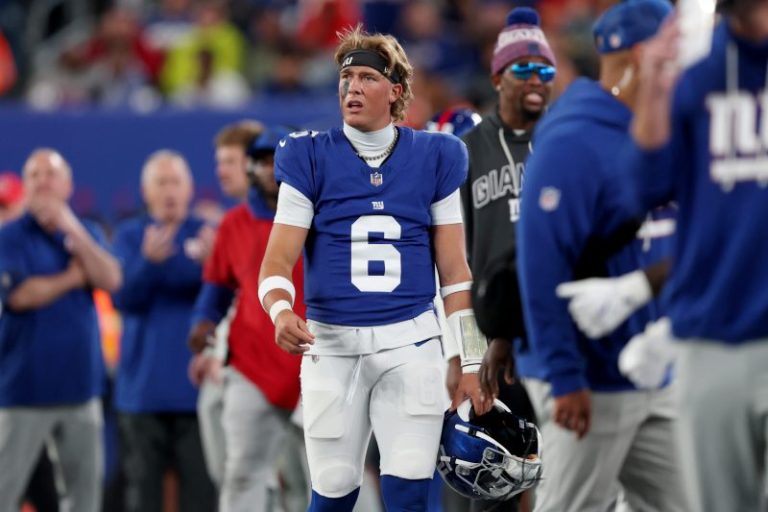
The New York Giants have benched veteran quarterback Russell Wilson for rookie Jaxson Dart after an 0-3 start.
Dart faces a difficult upcoming schedule, including four games against 2024 playoff teams in his next five matchups.
The Giants’ coaching staff and front office are under pressure, with their job security potentially tied to the rookie’s development.

The New York Giants made the inevitable decision to start rookie quarterback Jaxson Dart.

Should we be surprised? No. Is the timing questionable? Yes.

Russell Wilson cemented his status as the Giants’ bridge quarterback when he signed a one-year contract in March. Wilson’s subpar performance through three weeks combined with New York’s 0-3 start expedited the process.

Wilson’s 59% completion percentage ranks 27th among quarterbacks with at least 60 dropbacks and his 78.5 passer rating is last among NFC East starting quarterbacks. The 14-year veteran’s mystifying choice to throw the football away on fourth-and-goal in the fourth quarter during the Giants’ 22-9 loss to the Kansas City Chiefs might have sealed his fate.

‘We’re working through all the personnel decisions,’ Giants coach Brian Daboll answered when asked if Wilson would remain the starter after the team’s Week 3 defeat. ‘I’m not saying who’s starting or who’s not starting. I’m just saying we’re evaluating everything right now.’

Daboll and the Giants’ evaluation lasted less than 48 hours after the Giants’ Week 3 loss.

Word out of the Giants’ team facility is Dart’s been impressive in practice. He had some highlight throws during the preseason, and he played in six total snaps through the first three weeks of the season.

That’s enough of sample size for the Giants to hand the quarterback keys over to Dart.

However, don’t expect the Giants offense to catch fire with Dart under center.

The Giants entered the regular season with the NFL’s toughest strength of schedule.

Dart and the Giants host the 3-0 Los Angeles Chargers in Week 4. The Chargers have a top 10 total defense and rank fourth in points allowed. New York’s Week 5 opponent is against a winless New Orleans Saints team, who might consider starting their own rookie QB in Tyler Shough. But then the Giants return home to face the defending Super Bowl champion Philadelphia Eagles in Week 6, travel to Denver to play a Broncos club that’s tied for a league-high in sacks in Week 7 and have another meeting versus the Eagles in Philly in Week 8.

Four of Dart’s next five games are against playoff teams from a season ago.

Tough sledding for a rookie quarterback. That’s not even mentioning the fact that the Giants have the NFL’s 21st ranked pass blocking grade (56.1), per Pro Football Focus.

The Giants had to start Dart at some point, though. Daboll owns an 18-35-1 record at the helm and general manager Joe Schoen is infamously known as the guy who let running back Saquon Barkley walk in free agency. Daboll and Schoen’s jobs are likely contingent upon Dart’s success and the team’s ability to make tangible improvement this season.

Both of which, though, will be difficult considering the state of the Giants’ roster and regular-season schedule.

Follow USA TODAY Sports’ Tyler Dragon on X @TheTylerDragon.

This post appeared first on USA TODAY

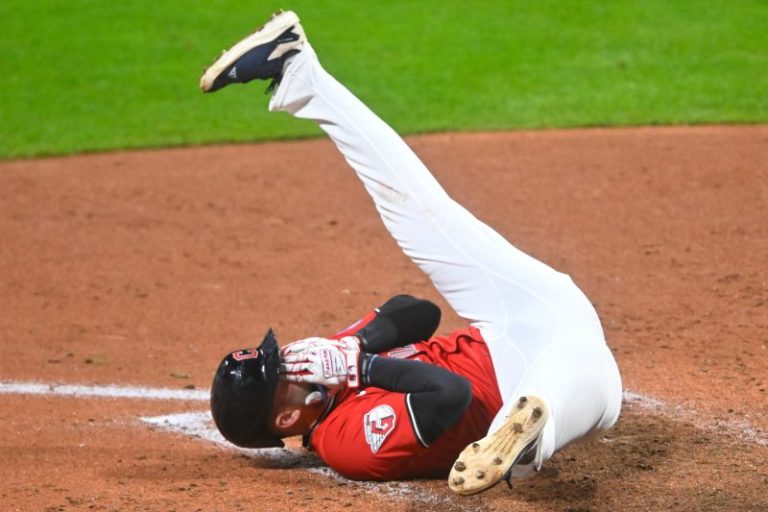
In the middle of a pennant race, and in the middle of a game-changing inning Tuesday, the Cleveland Guardians endured a horrific injury against the Detroit Tigers.

During the sixth inning, with runners at first and second and no one out, Guardians designated hitter David Fry squared to bunt on a 2-2 pitch from Tigers starter Tarik Skubal. The ball missed Fry’s bat entirely and struck him in the face. Fry immediately held his face and went to the ground.

A deafening silence fell over the crowd, which had just waken up when the Guardians scored their first run of the game one batter earlier. Seemingly distraught, Skubal threw his glove, turned away and tossed his hat. Jose Ramirez, Fry’s teammate who was on first base, put his hands on his head in obvious concern.

Fry was eventually able to stand on his own, but he was carted off the field to a rousing ovaction from the Cleveland crowd. Skubal, along with the entire Tigers infield, clapped, and Fry acknowledge his teammates in the third-base dugout with a wave.

The Guardians went on to score two more runs off Skubal and win the series opener 5-2.

Guardians manager Stephen Vogt said after the game that Fry took the pitch ‘straight to the face,’ but that he never lost consciousness.’ Vogt said Fry will have some testing done and there would be an update on his condition Wednesday.

This post appeared first on USA TODAY

On Tuesday, the SEC officially announced the matchups and pairings for each member with the newly updated nine-game conference schedule through the 2029 season, including who will be each program’s three protected annual rivalry games.

The SEC announced in August that it was moving to a nine-game conference schedule starting next season, a decision that put them in line with the Big Ten and Big 12 and later had the ACC follow suit. Each SEC program will have three permanent rivals and six rotating opponents for the next four years, after which the SEC will revisit the schedule pairings and make potential changes to the three annual rivalry games.

Here’s what to know about the SEC’s schedule release through the 2028 college football season:

SEC football annual opponents

The SEC officially announced Tuesday the pairings of the three teams that each SEC team will face annually through 2029. The annual opponents for each team were determined with the following factors, according to the SEC: traditional rivalries, competitive fairness, geography and alignment with non-Conference home and away commitments.

Here’s the pairings for each SEC team:

Alabama: Auburn, Mississippi State, Tennessee
Arkansas: LSU, Missouri, Texas
Auburn: Alabama, Georgia, Vanderbilt
Florida: Georgia, Kentucky, South Carolina
Georgia: Auburn, Florida, South Carolina
Kentucky: Florida, South Carolina, Tennessee
LSU: Arkansas, Ole Miss, Texas A&M
Mississippi: LSU, Mississippi State, Oklahoma
Mississippi State: Alabama, Ole Miss, Vanderbilt
Missouri: Arkansas, Oklahoma, Texas A&M
Oklahoma: Ole Miss, Missouri, Texas
South Carolina: Florida, Georgia, Kentucky
Tennessee: Alabama, Kentucky, Vanderbilt
Texas: Arkansas, Oklahoma, Texas A&M
Texas A&M: LSU, Missouri, Texas
Vanderbilt: Auburn, Mississippi State, Tennessee

SEC football 9-game schedules from 2026-29

Alabama

Arkansas

Auburn

Florida

Georgia

Kentucky

LSU

Mississippi State

Missouri

Oklahoma

Ole Miss

South Carolina

Tennessee

Texas A&M

Here is Texas A&M’s SEC schedule through the 2029 season:

Texas

Vanderbilt

Here is Vanderbilt’s SEC schedule through the 2029 season:

SEC 9-game schedule format

On top of the three annual opponents that each SEC will play, the remaining six conference games each season will be comprised of a rotating schedule among the remaining conference schools. In other words, each team will face the remaining 12 teams in the conference once in a two-year span. Over a four-year span, every team will host and visit every SEC stadium (except in the case of neutral-site rivalries).

Additionally, another key component in the SEC’s nine-game schedule is that each SEC team must annually schedule at least one additional high-quality non-conference game from the Atlantic Coast Conference, Big Ten Conference, Big 12 Conference or Notre Dame.

This post appeared first on USA TODAY

Weeks of successes by the Cleveland Guardians coupled with struggles by the Detroit Tigers have come down to this final week of the season, with the division rivals clashing with the American League Central division at stake.

And now the race is dead even.

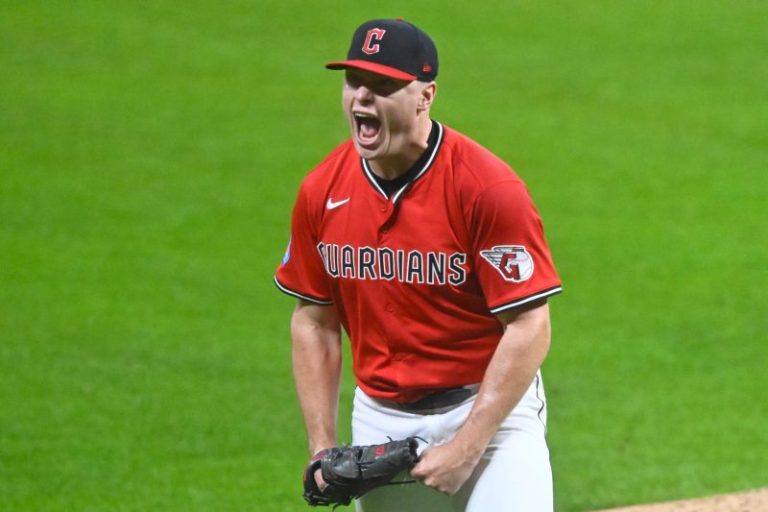
The Guardians wiped away a two-run deficit and turned the tables on the Tigers and their ace Tarik Skubal with an action-packed three-run sixth inning en route to a 5-2 win.

Cleveland starter Gavin Williams arguably matched Skubal’s dominance, throwing six innings, allowing two runs on four hits and two walks while tying a career-high with 12 strikeouts. Skubal was the hard-luck loser, going six innings with one earned run on four hits, three walks and eight strikeouts.

The Guardians and Tigers are now tied at 85-72, but Cleveland’s win gives them the season series and tiebreaker.

Here’s how it all went down:

Final: Guardians 5, Tigers 2

Cleveland wins the series opener, which allows the Guardians to seize the season series against their AL Central rival. And that’s especially important considering the Guards and Tigers are tied in the standings.

Tigers ninth inning

Cade Smith on to pitch for Guardians.

Riley Greene struck out swinging. 1 out.
Dillon Dingler struck out looking. 2 outs.
Zach McKinstry lined out to third base. 3 outs.

Guardians eighth inning

Cleveland got a two-out single from speedy Petey Halpin but left him stranded. That brings the Tigers up with one last chance at romance, and it will come against closer Cade Smith. Score: Guardians 5, Tigers 2.

Tigers eighth inning

Hunter Gaddis struck out the first two batters he saw before allowing a two-out single to Kerry Carpenter. But Gaddis struck out Spencer Torkelson after that to give Guardians pitchers 17 strikeouts on the night. Score: Guardians 5, Tigers 2.

Guardians add on in seventh

Cleveland has opened up a 5-2 lead after scoring twice more in the seventh. And the whole rally came with two outs.

With Skubal out of the game, reliever Tommy Kahnle struck out the first two batters he faced before walking Austin Hedges. Kahnle was then relieved by Kyle Finnegan, who promptly allowed an opposite-field double to Steve Kwan before pinch-hitter Daniel Schneemann roped a two-run single to left. Finnegan retired Jose Ramirez on a well-struck fly ball to left center. Score: Guardians 5, Tigers 2.

Tigers seventh inning

On for Gavin Williams, Erik Sabrowski nearly had an immaculate inning, striking out Zach McKinstry and Wenceel Perez on six pitches. Pinch-hitter Andy Ibanez ended the inning with a flyout to left. Score: Guardians 3, Tigers 2.

David Fry hit in face

During the sixth inning, with runners at first and second and no one out, Guardians designated hitter David Fry squared to bunt on a 2-2 pitch from Tigers starter Tarik Skubal. The ball missed Fry’s bat entirely and struck him in the face. Fry immediately held his face and went to the ground.

A deafening silence fell over the crowd. Fry was eventually able to stand on his own, but he was carted off the field to a rousing ovaction from the Cleveland crowd.

Guards Ball strikes again

The Guardians aren’t only on the scoreboard, but now they have a 3-2 lead. And they did so without ever hitting the ball out of the infield.

Steven Kwan started the sixth with a perfect bunt single off the plate. Angel Martinez followed with a bunt of his own, pushed down the first-base line. Rather than field the ball and eat it, Tarik Skubal tried to toss the ball to first through his legs, granny style. The ball sailed over Spencer Torkelson’s head and allowed Kwan to go to third and Martinez to second. Jose Ramirez followed with a tapper to third baseman Zach McKinstry, who could do nothing but pocket it. The infield single scored Kwan and got Martinez to third.

After a lengthy delay following a horrific injury to Guardians DH David Fry, Skubal uncorked a wild pitch that scored Martinez and put Ramirez at second. After Fry’s replacement, George Valera, struck out, Skubal balked Ramirez to third base before Gabriel Arias got him home with a groundout.

Just an amazing turn of events. Score: Guardians 3, Tigers 2.

Tigers sixth inning

Gavin Williams struck out the side in the sixth, but Riley Greene’s homer was wedged in there to give Detroit a 2-0 lead. Williams has 12 strikeouts in six innings. Score: Tigers 2, Guardians 0.

Riley Greene home run

The Tigers have increased their lead to 2-0 in the sixth inning after Riley Greene ripped his 35th homer of the season. Score: Tigers 2, Guardians 0.

Guardians fifth inning

Cleveland threatened in the fifth, breaking Tarik Skubal’s string of setting down nine consecutive batters when Kyle Manzardo hit a one-out double. Jhonkensy Noel followed with a walk, but Skubal settled in and struck out Brayan Rocchio on four pitches before getting Austin Hedges to ground into an inning-ended fielder’s choice. Score: Tigers 1, Guardians 0.

Tigers fifth inning

Gavin Williams had a much-needed bounceback inning, setting down the Tigers in order on eight pitches.

Trey Sweeney grounded out to first base on the first pitch he saw and Parker Meadows followed with a groundout to short. Then Williams made Gleyber Torres his ninth strikeout victim. Score: Tigers 1, Guardians 0.

Guardians fourth inning

It seems safe to say that Tarik Skubal has found his rhythm.

Skubal made quick work of the Guardians in the fourth, setting down Angel Martinez, Jose Ramirez and David Fry in order. Since allowing a walk to start the second inning, Skubal has retired eight in a row. Score: Tigers 1, Guardians 0.

Tigers fourth inning

The Tigers were threatening to break this one open in the fourth, but Gavin Williams worked out of it.

After striking out Kerry Carpenter to lead off the inning, Williams loaded the bases by walking Spencer Torkelson on five pitches, allowing an infield single to Riley Greene and then walking Dillon Dingler. That brought up Zach McKinstry, who doubled and scored in the second inning. McKinstry worked the count full before striking out swinging, then Wenceel Perez struck out swinging on a curveball in the dirt.

Williams has eight strikeouts, but Detroit drove his pitch count up to 69.

Guardians third inning

Tarik Skubal had his first clean inning in the third, retiring Brayan Rocchio on a groundout, Austin Hedges on a broken-bat flyout and he struck out Steven Kwan on three consecutive pitches. Score: Tigers 1, Guardians 0.

Tigers third inning

Detroit could only muster one run despite opening the inning with back-to-back doubles. Gavin Williams bounced back to strike out Trey Sweeney, get Parker Meadows to fly out to deep center and Gleyber Torres to fly out to right. Score: Tigers 1, Guardians 0.

Tigers score first

After retiring the first six batters in order, Gavin Williams allowed back-to-back doubles to Zach McKinstry and Wenceel Perez to get Detroit on the scoreboard first. Tigers are up 1-0 with a runner at second and no one out.

Guardians second inning

Gabriel Arias led off the bottom of the second with a seven-pitch walk, but he was then promptly picked off first base by catcher Dillon Dingler. Tarik Skubal then struck out Kyle Manzardo and Jhonkensy Noel (aka Big Christmas) to finish the second inning. Score: Guardians 0, Tigers 0.

Tigers second inning

Gavin Williams had another 1-2-3 inning, getting Spencer Torkelson on strikes, Riley Greene on a ground out to second, and Dillon Dingler to strikeout for his fourth K of the game. Score: Tigers 0, Guardians 0.

Guardians first inning

After a leadoff fly out by Steve Kwan, Angel Martinez reached on a bloop infield single to short and Jose Ramirez walked on four pitches to put Cleveland runners on first and second. But then Tarik Skubal got DH David Fry to roll into a 5-4-3 double play to end the threat. Score: Guardians 0, Tigers 0.

Tigers first inning

Gavin Williams had a 1-2-3 top of the first for the Guardians, getting Parker Meadows to open with a fly out to left field, and then striking out Gleyber Torres and Kerry Carpenter. Score: Tigers 0, Guardians coming to bat.

How to watch Tigers vs Guardians

Date: Tuesday, Sept. 23, 2025
Time: 6:40 p.m. ET
Where: Progressive Field in Cleveland
TV: FOX Sports Detroit, CLEGuardians.TV
Stream: Fubo

Stream Tigers vs. Guardians with Fubo

Cleveland weather

The game time temperature is 72 degrees with clear skies at Progressive Field in downtown Cleveland.

Tigers vs Guardians season series

Fresh off its three-game sweep last week in Comerica Park, Cleveland owns a 6-4 record against Detroit in 2025. That means one more victory will ensure the Guardians win the season series, and thus the head-to-head tiebreaker.

Gavin Williams stats

In his first full season in the Guardians’ rotation, Gavin Williams has emerged as the team’s ace with an 11-5 record and 3.06 ERA in 161⅔ innings pitched. He does, however, lead the league with 81 walks.

Williams has only allowed more than two earned runs once in six starts dating back to Aug. 14. He’s faced the Tigers twice this season and has not yielded a run in 11 innings with 17 strikeouts.

Tigers’ Javier Baez scratched

Flashy shortstop Javier Baez was originally in Detroit’s starting lineup, playing shortstop and batting ninth. But the team announced Baez has been scratched with neck stiffness, and Trey Sweeney will take his place.

Baez, 32, has enjoyed a bounceback season that included an appearance at the All-Star Game in Atlanta. He’s hitting .252 with 11 homers and 52 RBI, and his .670 OPS is his best since 2022, his first season in Motown.

Tarik Skubal stats

The Tigers’ ace and reigning American League Cy Young Award winner is having another steller season, posting a 13-5 record with a 2.23 ERA and 0.88 WHIP, both AL bests.

In three starts this season against the Guardians, Skubal has gone 1-0 with a 0.41 ERA and 32 strikeouts with only two walks in 22 innings pitched.

September has been the worst month of his season, as Skubal has posted a 2.76 ERA in three starts.

Tigers vs Guardians starting pitchers

Detroit — LHP, Tarik Skubal: 13-5, 2.23 ERA in 30 starts (189⅓ innings pitched)
Cleveland — RHP, Gavin Williams: 11-5, 3.06 ERA in 30 starts (161⅔ innings pitched)

Tigers vs Guardians starting lineups

Detroit Tigers starting lineup

Parker Meadows, CF
Gleyber Torres, 2B
Kerry Carpenter, DH
Spencer Torkelson, 1B
Riley Greene, LF
Dillon Dingler, C
Wenceel Perez, RF
Zach McKinstry, 3B
Javier Baez, SS

Cleveland Guardians starting lineup

Steven Kwan, LF
Angel Martinez, CF
Jose Ramirez, 3B
David Fry, DH
Gabriel Arias, SS
Kyle Manzardo, 1B
Jhonkensy Noel, RF
Brayan Rocchio, 2B
Austin Hedges, C

Tigers, Guardians remaining schedules

Detroit Tigers

Sep. 23: @ Cleveland, 6:40 p.m. ET
Sep. 24: @ Cleveland, 6:40 p.m. ET
Sep. 25: @ Cleveland, 6:40 p.m. ET
Sep. 26: @ Boston, 7:10 p.m. ET
Sep. 27: @ Boston, 4:10 p.m. ET
Sep. 28: @ Boston, 3:05 p.m. ET

Cleveland Guardians

Sep. 23: vs. Detroit, 6:40 p.m. ET
Sep. 24: vs. Detroit, 6:40 p.m. ET
Sep. 25: vs. Detroit, 6:40 p.m. ET
Sep. 26: vs. Texas, 7:10 p.m. ET
Sep. 27: vs. Texas, 7:15 p.m. ET
Sep. 28: vs. Texas, 3:10 p.m. ET

MLB playoff picture

If the season ended today, this would be the playoff seeding (* – clinched playoff berth):

American League

*Toronto Blue Jays (90-66)
Seattle Mariners (87-69)
Detroit Tigers (85-71)
New York Yankees (88-68)
Boston Red Sox (84-72)
Cleveland Guardians (84-72) – tiebreaker over Houston Astros

National League

*Milwaukee Brewers (95-62)
*Philadelphia Phillies (92-64)
*Los Angeles Dodgers (88-68)
*Chicago Cubs (88-68)
*San Diego Padres (86-71)
Cincinnati Reds (90-76) – tiebreaker over New York Mets

This post appeared first on USA TODAY

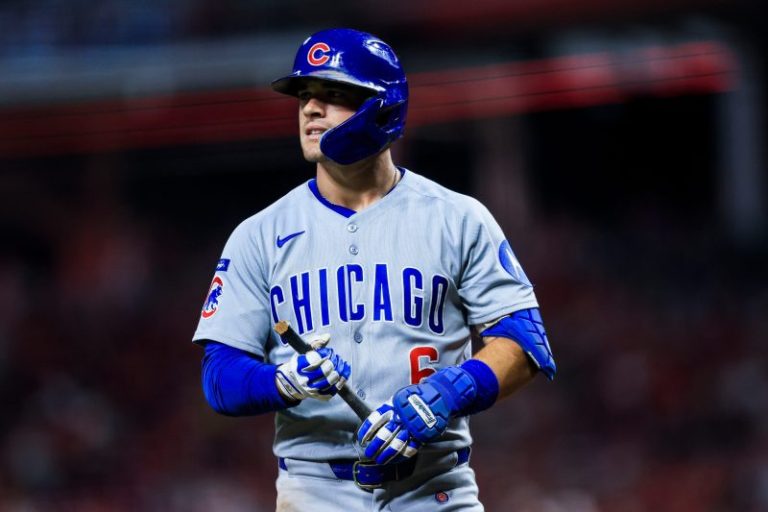
Chicago Cubs third baseman Matt Shaw said he skipped a key late-season game to attend a memorial service for conservative influencer Charlie Kirk after Kirk’s widow Erika invited him.

Shaw told reporters in Chicago that he sought the counsel of Cubs veterans as well as manager Craig Counsell and club president Jed Hoyer before opting to attend the Sept. 21 event near Phoenix.

The Cubs played at the Cincinnati Reds that day and opted to play a man down rather than place Shaw on the restricted list. He was ineligible for placement on Major League Baseball’s bereavement list because Kirk was not a family member.

‘I made sure everybody I talked to I had their support, that they knew why I was going, that I wasn’t leaving just to leave, that it was something that was really important to my faith,” Shaw said, per the Chicago Tribune.

Shaw typically plays against left-handed starters and the Reds started a lefty, Andrew Abbott, that day. While the Cubs’ playoff spot was assured at that time, they were still faintly alive for the NL Central title, and seeding ramifications remain for both the NL playoffs and, potentially, a World Series appearance.

The outcome had greater significance for the Reds and New York Mets, who are now in a virtual tie for the final wild card berth.

Minus Shaw, the Cubs started 40-year-old DH Justin Turner at third and lost to the Reds, 1-0, bringing pulling Cincinnati even for the last playoff spot.

Shaw told reporters that he and Kirk met in the offseason living at the same Arizona apartment complex, bonded over “faith” and that Kirk, a suburban Chicago native, frequently texted him after games

Shaw and Cubs infielder Michael Busch posed for a photograph with Kirk on the Wrigley Field turf after a game in August.

This post appeared first on USA TODAY
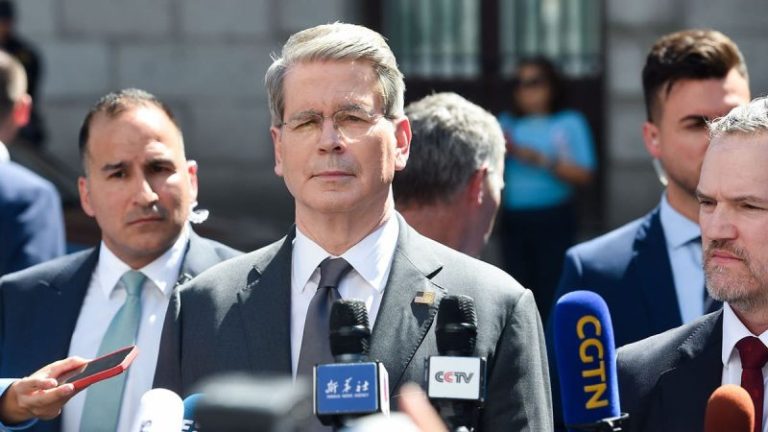
Treasury Secretary Scott Bessent and U.S. Trade Representative Jamieson Greer met with Chinese Vice Premier He Lifeng and Commerce Minister Li Chenggang in Madrid last week. They announced a ‘framework agreement’ over TikTok, the Chinese-owned app used by millions of Americans. 

But the story isn’t only about TikTok. It’s also about how America uses TikTok as a lever – and why that lever is more necessary than ever.

TikTok is an important issue in and of itself: control over data, algorithmic influence, foreign ownership – all of which are critical for national security. In addition, however, TikTok is a tool the U.S. can and should use in ongoing trade engagement, as well as to counter China’s growing leverage in rare earths, critical minerals and semiconductors.

When I served in President Donald Trump’s first administration (‘Trump 45’), the core issues we confronted included a massive trade imbalance, intellectual property theft, cyber-theft and China’s Belt and Road infrastructure expansion. These were predatory practices in trade, tech and finance. Today, in ‘Trump 47,’ the battlefront has broadened – but one thing that hasn’t changed is the psychological warfare the Chinese employ any time negotiations are underway.

I was at the center of one of the most dramatic examples of this during Trump 45… 

After an exhausting month of prep work, I boarded my flight to Beijing in March 2018 with wary optimism. I had worked intensively leading up to this trip, drafting a comprehensive framework document outlining a new trade deal with China, a proposal that would overhaul virtually every aspect of the U.S.-China economic relationship.

We’d sent the proposal to our Chinese counterparts several days earlier, and now our high-level trade delegation was en route to Beijing to negotiate the largest change to trade relations in at least 10 years. The cast of characters illustrates just how significant this trade deal could be. It included Secretary Steven Mnuchin (head of the delegation), Under Secretary David Malpass and me (Treasury), Secretary Wilbur Ross (Commerce), U.S. Trade Representative Robert Lighthizer and several of his deputies, NEC Director Larry Kudlow, Under Secretary Ted McKinney (Agriculture), and Peter Navarro (special assistant to the president and director of trade and manufacturing policy).

We arrived at the U.S. Embassy in Beijing with about an hour to review our plans one more time before we had to depart for Diaoyutai – the state guest house where Mao and every leader since has entertained foreign dignitaries. But there was a surprise waiting for us at our embassy:a brand-new proposal, drafted by the Chinese, which they were putting forth at the eleventh hour, and which we had never seen. It was about 15 pages long – and completely in Chinese!

I was one of the few people in the room who could read it. After a quick scan, I told the group: ‘This is wholly unacceptable. This document doesn’t say anything – they’re just messing with us.’ A heated debate ensued over how to respond, and how the Chinese were likely to react. But there was no time to reach a consensus; it was time to leave for Diaoyutai.

There was a mass exit from the secure room where we met at the embassy, and, almost like a well-choreographed ballet with a hundred moving parts, we all shuffled to our designated cars. As Secretary Mnuchin stepped into the limousine to take us to the meeting, Malpass insisted that I ride with the secretary and pushed me into the seat next to Mnuchin, saying, ‘We need to know exactly what this says – can you translate it on the way?’

As we sped through the streets of Beijing, I sat in the back seat, literally shvitzing as a technical term in Chinese got the better of me, and furiously translated as I read out loud, in English, what the Chinese had dropped in our laps.

Even as we climbed the stairs into the building and entered the meeting room, none of us was quite sure how Mnuchin was going to handle this hot potato. After Vice Premier Liu He’s flowing stream of diplomatic pleasantries welcoming us to China, the secretary calmly stated in response, ‘We received your draft. Thanks for sending it over – but we’re going to use our draft for today.’ It wasn’t the preamble they expected. But it was entirely consistent with the new tone that President Trump had set from the day he took office.

Today, China has moved from using tariffs and IP theft to controlling choke points – especially in rare earth elements, critical minerals, semiconductors and advanced manufacturing capacity. The numbers are clear indicators of China’s leverage. 

China accounts for about 70 % of global rare earth mining and about 90 % of the world’s rare earth refining and separation capacity. In 2023, China controlled 61 % of global mining of rare earth magnet elements and 92 % of refining capacity for those magnets. 

On semiconductors: while U.S. companies remain strong in chip design and advanced R&D, China’s share of the semiconductor industry’s value-added has surged (from about 8 % in 2001 to over 30 % by 2016), and China is pushing aggressively to become self-sufficient in mature node production.

These are not passive metrics. They are active levers China already uses in the trade negotiations through export restrictions, licensing controls or by threatening disruptions. For example, in April 2025 China – clearly in response to President Trump’s bold tariff moves – added export licenses and restrictions for seven heavy rare earth elements, including dysprosium, terbium, samarium, plus rare earth magnets—materials critical to EV motors, wind turbines, electronics and defense systems.

The challenges faced in Trump’s first term have only evolved – not eased. The trade deficit is large, IP and tech theft are growing more dangerous, predatory development finance practices continue and China’s leverage in rare earths, semiconductors and control over supply chains threatens global development and American autonomy.

TikTok is a headline issue impacting critical issues of data, influence and national security. But it is also an essential lever to counter the new pressure points China is pressing. Madrid and Friday’s Trump–Xi call offer a chance to reshape this broader contest. 

As I demonstrate in ‘A Seat at the Table,’ President Trump’s strategy and policies during his first administration allowed us to exert maximum pressure on our counterparts and to stay the course with firm negotiating positions and clear red lines. Last week’s dialogues demonstrate that Trump will continue to insist on substance over symbolism, an approach critical to our national interest. 

This post appeared first on FOX NEWS