Archive

2025

Browsing

FBI Director Kash Patel is cutting ties with the Anti-Defamation League that the bureau forged under its former boss James Comey.

‘James Comey disgraced the FBI by writing ‘love letters’ to the ADL and embedding agents with an extreme group functioning like a terrorist organization and the disgraceful operation they ran spying on Americans. That was not law enforcement, it was activism dressed up as counterterrorism, and it put Americans in danger,’ Patel told Fox News Digital.

‘That era is finished. This FBI formally rejects Comey’s policies and any partnership with the ADL,’ he added.

On May 8, 2017, Comey addressed the Anti-Defamation League National Leadership Summit in Washington, D.C. and declared his and the FBI’s ‘love’ for the organization. He began by referencing a 2014 speech which he called a ‘love letter to the ADL,’ adding, ‘Three years later I can say, from the perspective of the FBI, we’re still in love with you.’

‘We are not only educating ourselves, we are working with the ADL to build bridges in the communities we serve,’ Comey said in his 2017 speech. 

‘For more than 100 years, you have advocated for fairness and equality… And for all of that, we are grateful. As a law enforcement and national security agency, yes. But also as Americans. As humans,’ Comey said.

He concluded his speech with the words, ‘Love, the FBI.’

The ADL has recently faced backlash from Elon Musk and Republican lawmakers for listing Turning Point USA (TPUSA), Charlie Kirk’s organization, as an extremist group. As a result, the group removed its entire ‘Glossary of Extremism and Hate’ on Tuesday.

‘With over 1,000 entries written over many years, the ADL Glossary of Extremism has served as a source of high-level information on a wide range of topics for years. At the same time, an increasing number of entries in the Glossary were outdated,’ the ADL wrote on X regarding the glossary. ‘We also saw a number of entries intentionally misrepresented and misused.’

The organization also said that retiring the glossary would allow it ‘to explore new strategies and creative approaches to deliver our data and present our research more effectively.’

‘It will keep us focused on ensuring we do what we do best: fighting antisemitism and hate in the most impactful ways possible.’

The outrage comes nearly three weeks after Kirk was assassinated during an event at Utah Valley University.

‘The FBI was taking their ‘hate group’ definitions from ADL, which is why FBI was investigating Charlie Kirk [and] Turning Point, instead of his murderers,’ Musk wrote in a post on X. In a separate post, Musk referred to the ADL as ‘a hate group.’

Rep. Anna Paulina Luna, R-Fla., said the organization needed to explain its categorization of TPUSA.

‘Seems to me like if they don’t agree with you, they will label you a ‘hate group,’’ Luna wrote on X.

TPUSA’s backgrounder page on the ADL website falls under the ‘Center of Extremism’ tag and describes the conservative group as having ties to ‘a range of right-wing extremists and has generated support from anti-Muslim bigots, alt-lite activists and some corners of the white supremacist alt-right.’

Fox News Digital contacted the ADL for comment but did not immediately receive a response.

Fox News Digital’s Elizabeth Pritchett contributed to this report.

This post appeared first on FOX NEWS

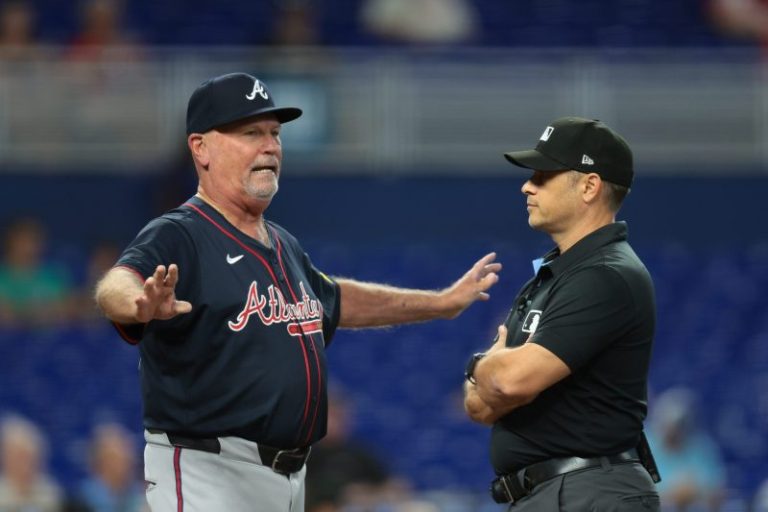
Brian Snitker will not return as the Atlanta Braves manager next season.
Snitker is moving into an advisory role with the organization in 2026.
He managed the team for 10 seasons, winning a World Series in 2021.

Brian Snitker, who spent the last 10 of his 49 years in the Atlanta Braves organization as the team’s manager, will not continue in that role next season.

The Braves announced on Wednesday, Oct. 1, that Snitker is moving into an advisory role in 2026, and the club will have a new leader in the dugout next season.

Snitker, 69, led the Braves to six division titles and seven playoff berths during his 10 seasons as manager – capped off by World Series championship in 2021. His 811 career victories trail only Hall of Famers Bobby Cox (2,149) and Frank Selee (1,004) on the all-time list of Braves managers.

Snitker took over as interim manager on May 17, 2016, when Fredi Gonzalez was fired. By 2018, he turned the Braves into NL East division champions – beginning a run of seven consecutive playoff appearances that was finally snapped this season, when his injury-ravaged squad finished 76-86.

This post appeared first on USA TODAY

After winning their MLB postseason opener, the Chicago Cubs can advance to the National League Division Series with a victory over the San Diego Padres at Wrigley Field on Wednesday, Oct. 1.

The Cubs took Game 1 of the wild card series by a 3-1 score, going ahead with back-to-back home runs from Seiya Suzuki and Carson Kelly and never looking back.

‘I don’t think it’s much different than yesterday,’ Cubs manager Craig Counsell told reporters before Game 2. ‘You’ve got to do everything right to win a baseball game. That’s all that you think about. Nothing else really comes into your head because it’s a tall task to win playoff games.’

Dylan Cease (8-12, 4.55 ERA) starts for the Padres, while the Cubs will opt for a bullpen game opened by right-hander Andrew Kittredge.

Follow for live updates:

What time is Cubs vs Padres game today?

First pitch is scheduled for 3:08 p.m. ET at Wrigley Field.

How to watch Cubs vs Padres: TV channel, stream

Tuesday’s game will air on ABC and can be streamed with Fubo.

Watch Cubs vs. Padres MLB playoffs on Fubo

Cubs vs Padres betting odds

Game 1 summary

The Cubs got the win by a 3-1 final yesterday, putting them just one win away from reaching the division series. However, Game 1 could have very easily gotten out of hand early for Chicago if not for a few key pitches and defensive plays.

In both the second and fourth innings, San Diego threatened, putting runners on third base with one or fewer outs. However, two terrific defensive efforts from Cubs’ shortstop Dansby Swanson kept the runs from scoring. Paired with timely pitching, resulting popouts and strikeouts from starter Matthew Boyd, the Padres were unable to do much with runners in scoring position.

The fifth inning is where the Cubs started to turn it around. After Padres’ starter Nick Pivetta set down 11 straight Cubs entering the frame, Seiya Suzuki took Pivetta deep. The very next batter, Cubs’ catcher Carson Kelly did the same, giving the Cubs the lead.

From then on, the Cubs bullpen dominated, rarely allowing the Padres to reach base. In the end, the Cubs ended up with more hits and more baserunners, but for a moment near the start of the game, there was concern that the Padres would leave Chicago in the dust.

Padres vs. Cubs, Game 2 pitching matchup

Padres: Dylan Cease (8-12, 4.55 ERA)

After finishing fourth in Cy Young voting a year ago, Cease did not live up to lofty expectations coming into 2025. Albeit he has still been serviceable.

His only start against the Cubs this year didn’t exactly go according to plan though. Cease surrenedered seven hits and three runs (only two earned) across just 5.2 innings. Fortunately, the Padres would go on to win that game 10-4. For his career, Cease holds a 4-2 record with a 2.47 ERA and 61 strikeouts in eight games against the Cubs.

Cubs: Andrew Kittredge (4-3, 3.40 ERA)

Cubs manager Craig Counsell had been very shy about revealing his Game 2 starter. Now we know it’s because he was planning on using an opener all along. Kittredge is a reliable veteran, with a track record of success in the postseason. In fact, he’s never allowed a run in the postseason, albeit only across 5.1 innings.

He was also fantastic in Game 1, pitching a scoreless eighth inning. Instead of vying for one of his starters to take the bump, it’s clear Counsell is trying to win Game 2 outright, using his team’s strong suit to do so and hopefully giving his bullpen some much needed rest should they win.

Cubs lineup today

Michael Busch (L) 1B
Nico Hoerner (R) 2B
Ian Happ (S) LF
Kyle Tucker (L) DH
Seiya Suzuki (R) RF
Carson Kelly (R) C
Pete Crow-Armstrong (L) CF
Dansby Swanson (R) SS
Matt Shaw (R) 3B

Padres lineup today vs Cubs

Fernando Tatis Jr. (R) RF
Luis Arraez (L) 1B
Manny Machado (R) 3B
Jackson Merrill (L) CF
Xander Bogaerts (R) SS
Ryan O’Hearn (L) DH
Gavin Sheets (L) LF
Jake Cronenworth (L) 2B
Freddy Fermin (R) C

This post appeared first on USA TODAY

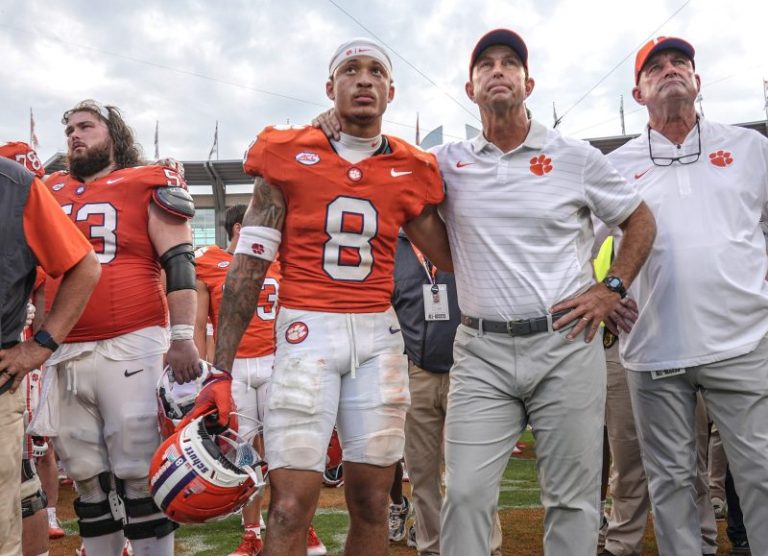
Once ranked sixth, Clemson has fallen to a 1-3 record, largely due to a struggling offense.
South Carolina’s season outlook is grim after a lopsided loss to Vanderbilt and with five top-13 opponents ahead.
Florida’s high preseason hopes have faded after a three-game losing streak, pointing toward another losing season.

Inevitably whenever college football speculation meets reality, the teams that overperform will be balanced by those that don’t live up to their billing, fair or not. This piece focuses on the latter group with the first month of the campaign officially in the books.

To clarify, this list of September’s biggest disappointments will not include teams that lost one of the month’s marquee contests. In other words, the likes of Texas, Penn State, Michigan and others that are currently below their preseason US LBM Coaches Poll ranking will not be included here. We’ll also give twice-beaten Notre Dame a pass for now, even if those close defeats have complicated their at-large playoff case.

No, these are the teams whose season’s might already be lost, with a long two months still to come. Here are the five biggest busts of September.

Clemson

Preseason ranking: 6. Current record: 1-3.

There can be no other choice to top this list. A one-score loss to LSU wasn’t cause for panic, but fans started to hear alarm bells when the Tigers needed a furious second-half rally to beat Sun Belt member Troy a week later. A walk-off loss at Georgia Tech followed by a listless outing against Syracuse has now all but eliminated Clemson from the ACC race. A punchless offense that was supposed to be improved is the main culprit, but the defense that is averaging just 2½ sacks a game and has just five takeaways through four games isn’t entirely blameless.

South Carolina

Preseason ranking: 13. Current record: 3-2.

There were warning signs when the return game helped mask a spluttering offense in wins against Virginia Tech and Championship Subdivision member South Carolina State. Even so, the 38-7 pummeling on the Gamecocks’ home field by Vanderbilt was sobering. Things didn’t get much better a week later at unbeaten Missouri. South Carolina did get off the SEC schneid against likely cellar dweller Kentucky, but the Gamecocks’ next five opponents are all ranked in the top 13, and the line’s inability to keep quarterback LaNorris Sellers from getting pounded doesn’t bode well.

SMU

Preseason ranking: 16. Current record: 2-2.

The good news for SMU is it is not a member of the Big 12. The Mustangs haven’t played an ACC contest yet, so things might still be salvageable given that league’s declining reputation. But SMU’s inability to get defensive stops against former Southwest Conference foes Baylor and TCU, the only two power-four teams faced to date, is a strong indicator that last year’s playoff appearance was a mirage.

Florida

Preseason ranking: 17. Current record: 1-3.

Like South Carolina, Florida’s preseason projection was based on the perception that last season’s promising finish was a sign that the offense, and quarterback D.J. Lagway in particular, would continue to make strides. A plethora of miscues and a three-game losing streak later, and the Gators are staring at another sub-.500 campaign. The defense, still statistically among the best in the SEC despite constantly being put in untenable positions, will at least make future opponents take notice.

Kansas State

Preseason ranking: 20. Current record: 2-3.

Maybe the Dublin curse is real. A three-point loss to Iowa State didn’t raise red flags on its own, but then a narrow escape against North Dakota portended setbacks against Army and Arizona. The Wildcats did right the ship a bit by beating Central Florida for their first Big 12 win, so things might not be 2024 Florida State level bleak. But September was a tough reality check for a team with conference title aspirations.

This post appeared first on USA TODAY

The 2025-26 UEFA Champions League brings together two of global soccer’s biggest clubs, Barcelona and Paris Saint-Germain, together for a high-profile match on Wednesday.

Two weeks ago, both sides opened their respective Champions League campaigns with a win. PSG steamrolled Italian side Atalanta, 4-0, throwing down the gauntlet to the rest of Europe’s top sides. Barcelona, meanwhile, got a 2-1 away win over Newcastle United thanks to two goals from England forward Marcus Rashford.

PSG enters this match sitting atop the Ligue 1 table, having won five of their first six games, but injuries have complicated the picture for manager Luis Enrique (who appeared over 200 times for Barça as a player, and managed the club from 2014-17). Starting forwards Ousmane Dembélé, Désiré Doué, and Khvicha Kvaratskhelia have all been ruled out, along with center back and captain Marquinhos.

The issue is nearly as bad for Barcelona boss Hansi Flick, who will have to make due without starting goalkeeper Joan García and midfielders Gavi and Fermín López. The club’s issues completing construction at their home stadium, Camp Nou, have necessitated that this match be played at Estadi Olímpic Lluís Companys.

Here’s what to know for Wednesday’s UEFA Champions League clash between Barcelona and PSG, including how to watch:

Barcelona vs. Paris Saint-Germain: Time, TV channel and how to watch Champions League

Time: 3 p.m. ET
Location: Estadi Olímpic Lluís Companys (Barcelona, Spain)
TV: None
Stream: Paramount+

Watch Barcelona vs. PSG on Paramount+

PSG lineup today vs. Barcelona

Barcelona lineup today vs. PSG

Champions League schedule today

All times Eastern. Home teams listed first.

Qarabag vs. FC Copenhagen: 12:45 p.m.
Union Saint-Gilloise vs. Newcastle United: 12:45 p.m.
Barcelona vs. Paris Saint-Germain: 3 p.m.
Villarreal vs. Juventus: 3 p.m.
Bayer Leverkusen vs. PSV: 3 p.m.
Napoli vs. Sporting Clube: 3 p.m.
Arsenal vs. Olympiacos: 3 p.m.
Monaco vs. Manchester City: 3 p.m.
Borussia Dortmund vs. Athletic Bilbao: 3 p.m.

Watch Wednesday’s Champions League matches on Paramount+

Champions League standings

After Tuesday’s UEFA Champions League matches, here are the latest standings in the tournament:

Bayern Munich — 6 points
Real Madrid — 6
Inter Milan — 6
Tottenham Hotspur — 4
Paris Saint-Germain — 3*
Atlético Madrid — 3
Marseille — 3
Sporting Clube — 3*
Club Brugge — 3
Union Saint-Gilloise — 3*
Arsenal — 3*
Manchester City — 3*
Qarabag — 3*
Barcelona — 3*
Eintracht Frankfurt — 3
Liverpool — 3
Chelsea — 3
Galatasaray — 3
Atalanta — 3
Bodø/Glimt — 2
Borussia Dortmund — 1*
Juventus — 1*
Bayer Leverkusen — 1*
FC Copenhagen — 1*
Olympiacos — 1*
Slavia Prague — 1
Pafos FC — 1
Newcastle United — 0*
Villarreal — 0*
Benfica — 0
PSV — 0*
Athletic Bilbao — 0*
Napoli — 0*
AS Monaco — 0*
Ajax — 0
FC Kairat — 0

Where tied, teams are listed in order of Champions League tiebreakers. Teams marked with an asterisk (*) have only played one game thus far.

This post appeared first on USA TODAY

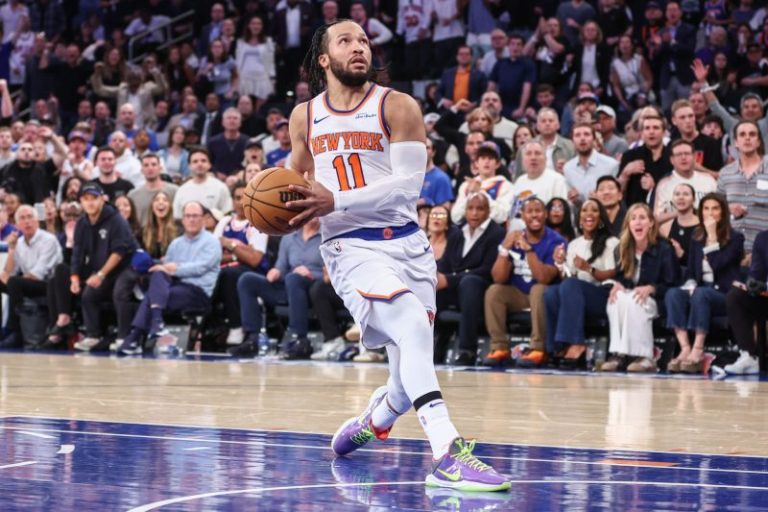
All-Star guard Jalen Brunson is fully healed from an ankle injury and is motivated by the New York Knicks’ playoff loss to the Indiana Pacers.
New coach Mike Brown plans to implement a more up-tempo style with more three-point shooting, centered around Brunson.
Brunson is all for doing whatever it takes to bring the Knicks their first championship in 1973.

NEW YORK — The NBA offseason can mean different things to different players. For the non-playoff teams, it was an early trip to the oft-joked-about sandy beaches of Cancun.

And for teams like the New York Knicks, the moment they were eliminated in the Eastern Conference Finals by the Indiana Pacers, it has been a painful four months of what ifs, what should have beens, and a surprising change at head coach.

Never mind that the Knicks made the NBA’s final four for the first time in a quarter of a century; the scapegoat for that success – or failure – to some, was Tom Thibodeau, who was let go after five years at the helm.

‘It’s sad to see a man I’ve known for a long time part ways with this organization, but he’s meant a lot to me. I’ve expressed that to him, publicly and personally. But yeah, he’s meant a lot to my career to this point.’ All-Star guard Jalen Brunson said about Thibodeau during the team’s media day.

Thibodeau was replaced by two-time NBA Coach of the Year Mike Brown, who has also coached the Cleveland Cavaliers twice, the Los Angeles Lakers, and the Sacramento Kings, and served as an assistant coach for the Golden State Warriors, winning three NBA Championships.

Brown brings a different philosophy than Thibodeau, who maximized his players’ minutes, sometimes to the point of league-wide snickers about their usage.

Last season’s starting lineup – Brunson, Karl-Anthony Towns, Mikal Bridges, Josh Hart and OG Anunoby – is back for another run, though that may not be the lineup you see when New York opens its season on Oct. 22 at home against the Cleveland Cavaliers. It will be up to Brown to put his stamp on the team, which might see the team hoisting more three-pointers and embracing a more up-tempo style than in years before.

Fully-healed Brunson motivated by playoff loss

Brunson is the team’s unquestioned leader, with the accolades to back it up: a second-team All-NBA selection, who was also named the league’s Clutch Player of the Year.

Don’t let his listed height of 6-2 fool you, because Brunson, who says there are no setbacks and he is fully healed from a late-season ankle injury, can bang inside with the best of them, while getting his own shot anytime he wants.

However, it was the six-game defeat to the Pacers, who also eliminated New York in the 2024 playoffs, that has bothered Brunson and serves as extra motivation and a renewed focus for the new season. The Eastern Conference has suddenly become up for grabs, with no clear favorite, as Achilles injuries have sidelined Indiana’s Tyrese Haliburton and Boston’s Jayson Tatum.

“I think for me personally, just nothing is going to be out of your mind. You got to think about it.” Brunson told USA TODAY Sports last month, while he was promoting BodyArmor, a sports hydration drink. “You’re gonna think about the good. It’s all about how you use that to kind of prepare yourself for. You’ve got to have short-term memory.”

The 29-year-old Brunson, who averaged 26 points, a career-high 7.3 assists, and 2.9 rebounds in 65 games last season, said his summer was uneventful, mainly concentrating on injury prevention, conditioning, and podcasting “The Roommates Show” with co-host Hart.

“For me. I don’t like to take too much time off away from the game,” Brunson said. “If I‘m, like, working or doing anything to kind of improve myself. But, I think having a slow ramp-up into the offseason, for whenever you start, kind of helps build up physically and mentally. And so, just understanding where you ‘re at, where your body’s at.

“I just try to make sure that I have my best foot forward and do what I can to ensure I’m putting my body in the best position to withstand a long season. I tried not to put that (injury concern) in my mind at all there are too many things that are unpredictable.’

Knicks’ new philosophy starts and ends with Brunson

It is evident by the looks of him that Brunson comes into the season looking lighter, although he declined to say if he lost any weight at all.

“I’m not that much lighter, definitely more toned, and like that, but it’s just important for me to get my body in the best shape possible I can, and go from there,” he said.

What Brunson is saying could be the key to a different-looking Knicks, especially since Brown revealed his plans for his star, which might mean less wear and tear as he enters his eighth NBA season.

The Knicks, almost to a fault, did not rely heavily on the three-point shot, averaging only 34.1 attempts per game last season, but when they did shoot them, they made them at a 37% rate, ranking eighth in the league. What hurt them in some games, especially in the Indiana series, was keeping their opponents off the three-point line.

Brown said the new philosophy in winning games starts and ends with Brunson.

“The biggest thing I want to do for him is get easy shots. One of the easiest shots is a spray three. I’m a big proponent of touching the paint and spraying that basketball for a catch-and-shoot three,” Brown said.

Brunson is all for doing whatever it takes to bring the Knicks their first championship in 1973.

“My personal goals align with my team’s goals,” he said. “I don’t think in my life I’ve ever had a personal goal where I needed to average a certain amount of points. It’s not my style of basketball. And I don’t think that’s a winning style play either. I think of ‘how can I affect my team’s ability to win? And I can be the best version of myself.’ ‘

This post appeared first on USA TODAY

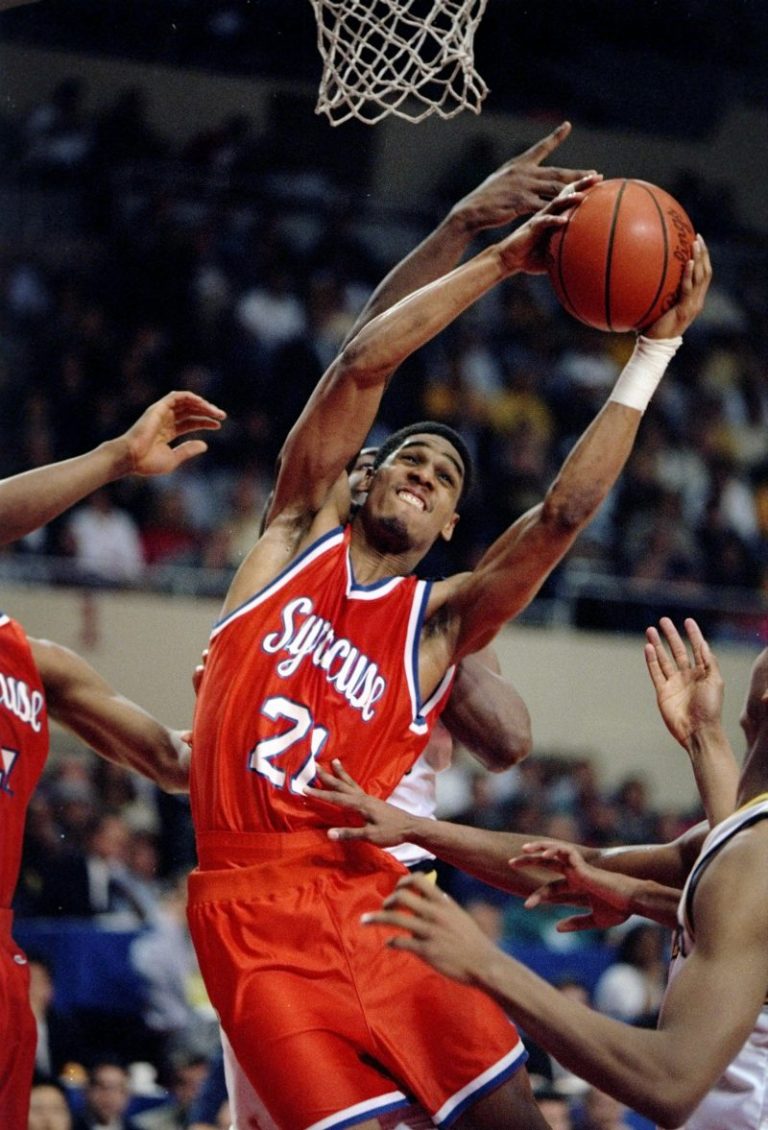
Syracuse basketball’s all-time leading scorer, Lawrence Moten, has died at the age of 53.
Moten scored a school-record 2,334 career points and was a second-team All-American as a senior.
Former coach Jim Boeheim called Moten one of the most underrated college basketball players of all time.

Lawrence Moten, a Syracuse basketball star in the early 1990s and still the school’s all-time leading scorer, died Tuesday, Sept. 30, at his home in Washington, D.C., family members confirmed.

He was 53.

Moten was a lightly recruited 6-5 guard when he arrived on campus in 1991, but he became an immediate starter as a freshman and averaged 18.2 points per game in leading the Orange to the first of three appearances in the NCAA Tournament during his college career.

Nicknamed ‘Poetry in Moten,’ he went on to set a school record with 2,334 career points, averaging 19.3 points per game over four years and gaining second-team All-America honors as a senior.

‘Lawrence’s passing is such a sudden thing; it’s very hard to take,’ former Syracuse coach Jim Boeheim said. ‘He was one of the most underrated college basketball players of all time. I believe some people took his ability for granted because he made it look so easy. Lawrence was one of our greatest players and one of the best in the history of the Big East Conference.’

Moten had his No. 21 jersey retired in a pregame ceremony at the Carrier Dome in 2018.

Aftre leaving Syracuse, Moten was a second-round pick of the Vancouver Grizzlies in the 1995 NBA draft. He played two seasons with them and an additional eight games with his hometown Washington Wizards in 1998.

His cause of death was not announced.

This post appeared first on USA TODAY

With a government shutdown in effect, both sides of the aisle are looking to place blame on the other. House Speaker Mike Johnson pointed out that while Democrats expressed outrage over the proposed legislation, it is similar to several continuing resolutions that passed under the Biden administration.

‘The nonpartisan clean CR only appears ‘partisan’ because 212 House Democrats and 46 Senate Democrats chose to make it that way. This CR is the same short-term funding extension that virtually all Democrats voted to pass 13 times during the Biden Administration. Despite this voting history, nearly every Democrat has refused to support the current clean, nonpartisan funding extension to keep the government open and operational,’ Johnson said in a statement.

During the Biden administration, there were 13 instances in which Congress enacted short-term funding measures, also known as continuing resolutions.

1. September 2021

On Sept. 30, 2021, Congress passed H.R. 5305, also known as the Extending Government Funding and Delivering Emergency Assistance Act. This legislation gave the government nine weeks of funding and averted a shutdown.

The act not only extended funding levels, but also added allocations for natural disaster relief and the influx of evacuees from Afghanistan following the Biden administration’s botched withdrawal.

Additionally, it extended programs and authorities such as the National Flood Insurance Program, the Temporary Assistance for Needy Families (TANF) program, the National Advisory Committee on Institutional Quality and Integrity and the United States Advisory Commission on Public Diplomacy, among others.

2. December 2021

Following the previous short-term funding measure, on Dec. 2, 2021, Congress enacted H.R. 6119, the Further Extending Government Funding Act, providing FY2022 appropriations through Feb. 18, 2022.

Like the act before it, this legislation also provided appropriations for several federal agencies for activities related to Afghanistan evacuees. This included what was then called the Department of Defense (now, the Department of War), the Department of Homeland Security, the Department of Health and Human Services, and the Department of State.

The resolution also extended several authorities, including the authority for HHS to make appointments for the National Disaster Medical System. There was also an extension of the pay freeze for certain senior officials and political appointees in the executive branch.

3. February 2022

The Further Additional Extending Government Funding Act, H.R. 6617, went into effect on Feb. 18, 2022, as its predecessor expired. The legislation continued to fund most programs at FY2021 levels with some exceptions that provided what Congress referred to as ‘funding flexibility.’

The continuing resolution also included provisions on then-President Joe Biden’s authority ‘draw down defense articles and services to respond to unforeseen emergencies’ and the Department of the Interior’s implementation of cybersecurity safeguards.

H.R. 6617 gave the government just under a month — until March 11, 2022 — to avoid a shutdown.

4. March 2022

Unlike previous continuing resolutions that gave the government weeks to avert a shutdown, the Extension of Continuing Appropriations Act, 2022, also known as H.J.Res. 75, was set to expire days after it was enacted.

Just before this legislation was set to expire on March 15, 2022, Biden signed the Consolidated Appropriations Act, 2022, which served as the omnibus appropriations package for FY2022.

5. September 2022

Congress enacted H.R. 6833, the Continuing Appropriations Act, 2023, which provided FY2023 appropriations to federal agencies through Dec. 16, 2022. It also provided supplemental appropriations that allowed the U.S. to help Ukraine and established a compensation program for victims of the Hermit’s Peak/Calf Canyon fire in New Mexico.

The legislation also extended several immigration-related programs and provided additional funding for the Administration for Children and Families to carry out the Unaccompanied Children Program, a federal program aimed at helping unaccompanied minors encountered at the border.

6. December 2022

The Further Continuing Appropriations and Extensions Act, 2023, H.R. 1437, provided several extensions, though most of them were set to expire on Dec. 23, 2022.

One of the extensions that the act provided was for the FCC to continue auctions for electromagnetic spectrum licenses. The legislation also provided for the payment to the family of the late Rep. Donald McEachin, D-Va., who died in office.

Additionally, the act required the National Oceanic and Atmospheric Administration (NOAA) to update precipitation estimates.

7. December 2022

The Further Additional Continuing Appropriations and Extensions Act, 2023, H.R. 4373, extended FY2023 appropriations to several federal agencies through Dec. 30, 2022. Additionally, it extended expiring programs and authorities.

H.R. 4373 was the final stopgap legislation of FY2023. On Dec. 29, 2022, an omnibus bill known as the Consolidated Appropriations Act, 2023, was signed into law. The $1.7 trillion spending bill funded the government through Sept. 30, 2023.

8. September 2023

H.R. 5860, also known as the Continuing Appropriations Act, 2024 and Other Extensions Act, provided extensions of FY2024 appropriations for federal agencies through Nov. 17, 2023 and provided emergency funding for disaster relief.

The legislation also gave extensions for Federal Aviation Administration programs, such as the Airport Improvement Program and the Unmanned Aircraft Systems (UAS) Test Site Program. Additionally, the bill reauthorized the FDA to collect fees for generic animal drug applications through FY2028.

9. November 2023

The Further Continuing Appropriations and Other Extensions Act, 2024, H.R. 6363, provided continuing FY2024 appropriations for federal agencies.

The legislation was laddered, meaning it contained various expiration dates for different provisions. Some of the funding was set to be provided through Jan. 19, 2024, while other parts expired on Feb. 2, 2024.

Additionally, it provided for a payment to the family of the late Sen. Dianne Feinstein, D-Calif., who died in office.

10.  January 2024

The Further Additional Continuing Appropriations and Other Extensions Act, 2024, P.L. 118-35, was signed on Jan 19. 2024, averting a government shutdown. It was also laddered, giving some programs an expiration date of March 1, 2024, and others March 8, 2024.

The legislation itself gave Congress more time to negotiate by making technical adjustments rather than sweeping policy changes.

11.  March 2024

H.R. 7463, also known as the Extension of Continuing Appropriations and Other Matters Act, 2024, modified requirements for determining eligibility for federal student aid, provided continuing FY2024 appropriations for federal agencies as well as additional funding for Federal Pell Grants.

This acted as a continuation of the Further Additional Continuing Appropriations and Other Extensions Act, 2024, and moved the March 1, 2024, expiration date to March 8. Additionally, the March 8 expiration date was extended to March 22, 2024.

Biden then signed the Consolidated Appropriations Act, 2024, on March 9, 2024, which provided the government with funding through Sept. 30, 2024. It included several appropriations bills, such as the Military Construction, Veterans Affairs, and Related Agencies Appropriations Act, 2024; the Agriculture, Rural Development, Food and Drug Administration, and Related Agencies Appropriations Act, 2024; and
the Commerce, Justice, Science, and Related Agencies Appropriations Act, 2024, among others.

12.  September 2024

Continuing Appropriations and Extensions Act, 2025, also known as H.R. 9747, which provided continuing FY2025 appropriations to federal agencies through Dec. 20, 2024.

The legislation provided additional funding for the U.S. Secret Service and extended several expiring programs and authorities. Some of the miscellaneous extensions were given to the DHS Joint Task Forces, the Chesapeake and Ohio Canal National Historical Park Commission and others.

13.  December 2024

H.R. 10545, the American Relief Act, 2025, provided continuing FY2025 appropriations to federal agencies through March 14, 2025. It also provided supplemental appropriations for disaster relief and assistance related to hurricanes, wildfires, severe storms, flooding, tornadoes and other natural disasters.

The legislation also included public health funding extensions through March 31, 2025.

This post appeared first on FOX NEWS

The White House doubled down in a new memo on its messaging against the Democrats’ shutdown position and claimed that if the Democrats’ demands are met, nearly $200 billion would flow to healthcare for illegal immigrants.

The memo, first obtained by Fox News Digital, argued that congressional Democrats’ desire to repeal the healthcare title of President Donald Trump’s ‘big, beautiful bill,’ now dubbed the Working Families Tax Cut Act, could see just over $192 billion in spending on healthcare for illegal immigrants.

‘Democrats are demanding these reforms be repealed as a condition of keeping the government open for four weeks,’ the memo read. ‘This would result in the federal government spending nearly $200 billion on healthcare for illegal immigrants and non-citizens over the next decade — nearly enough to fund the entire Children’s Health Insurance Program over the same period— all while repealing reforms that strengthen care for the most vulnerable Americans.’

Senate Democrats have so far blocked three attempts by Republicans in the upper chamber to pass the House GOP’s short-term funding extension, which would keep the government open until Nov. 21 while lawmakers work to fund the government with appropriations bills.

For now, there is no clear path forward to end the shutdown, which began on midnight Wednesday.

Democrats also have their own plan that Republicans have similarly blocked that would keep the government open until Oct. 31, and it would claw back canceled funding for NPR and PBS and repeal the healthcare section of the president’s signature piece of legislation.

Trump and Republicans have accused Democrats of shutting down the government in a bid to provide healthcare for illegal immigrants, rather than their desire to extend expiring Obamacare tax credits.

‘That is a damn lie,’ Senate Minority Leader Chuck Schumer, D-N.Y., said on the Senate floor. ‘Not $1 of Medicare, Medicaid or [Obamacare] is allowed to go to undocumented immigrants, not a dollar. So why do they keep saying this? This seems to be their theme because they’re afraid to talk about the real issue. It’s typical that the Republican response is to have a diversion, try to scare people emotionally.’

However, the White House lays six provisions within the ‘big, beautiful bill’ that, if repealed, would see funding once again flow to provide healthcare for illegal immigrants.

Among the changes brought on by the megabill are provisions that would end Medicaid funding for most non-citizens, end the enhanced Federal Medical Assistance Percentage (FMAP) for emergency care for illegal immigrants, end Medicare funding for most non-citizens and end Obamacare funding for most non-citizens.

There are also provisions that close the ‘California loophole,’ which the White House charged other states abused to draw in more funding for illegal immigrants, and a ‘special rule’ that subverts language within Obamacare that prevents most immigrants from receiving Medicaid for five years by allowing immigrants earning below the poverty line to get Obamacare premium subsidies.

‘Democrats’ funding proposal would put American Patients Last by undoing critical [Working Families Tax Cut Act] reforms, thereby spending nearly $200 billion in taxpayer money on healthcare benefits for illegal immigrants and other non-citizens,’ the memo read. 

This post appeared first on FOX NEWS
The start of the 2025-26 NHL season is around the corner and there are trades to be made as teams get their rosters in order.

The latest trade was the Edmonton Oilers acquiring goalie Connor Ingram from the Utah Mammoth on Wednesday, Oct. 1.

There had been a lull in trades after an early rush, but that should pick up again.

The New York Rangers and Carolina Hurricanes pulled off the biggest offseason trade on July 1 with Carolina acquiring defenseman K’Andre Miller and signing him to an eight-year contract.

Here is analysis on NHL trades that have been made during the offseason heading into the season opener:

Oct. 1: Oilers acquire Connor Ingram from Mammoth

The Mammoth had signed Vitek Vanecek as backup this summer so when Ingram was cleared to return from the NHL/NHLPA player assistance program, Utah agreed to find him a new home. He wasn’t claimed when recently placed on waivers and the Oilers landed him for future considerations.

Edmonton is returning with the netminding tandem of Stuart Skinner and Calvin Pickard. Ingram provides potential competition, but he’ll report to the Oilers’ American Hockey League affiliate for now. He had a league-best six shutouts in the 2023-24 season. Utah will retain $800,000 of Ingram’s $1.95 million cap hit for the final year of his contract.

Sept. 14: Blue Jackets acquire Ivan Fedotov from Flyers

The Flyers receive a 2026 sixth-round pick. They had signed Dan Vladar to back up Samuel Ersson, so this trade allows them to get something for a player who was no longer in their plans. He’ll provide depth for the Blue Jackets.

July 17: Maple Leafs acquire Dakota Joshua from Canucks

Vancouver receives a 2028 fourth-round pick. Joshua will likely slot in the Maple Leafs’ bottom six forwards. He had a career-best 18 goals and 32 points in 2023-24 but missed the beginning of last season after having surgery for testicular cancer. He finished with 14 points in 57 games. He originally was drafted by the Maple Leafs but never played for them.

July 13: Penguins acquire Arturs Silovs from Canucks

The deal gives the Penguins a promising young goalie who just led Abbotsford to the American Hockey League championship and was named playoff MVP. Vancouver receives forward prospect Chase Stillman and a 2027 fourth-round pick. Silovs, 24, had five shutouts during his AHL run and he also helped Vancouver win a playoff round in 2024. He led Latvia to a bronze medal in the 2023 world championships, being voted tournament MVP, and has been named to that country’s Olympic team. The Penguins needed a goalie after trading Alex Nedeljkovic to the Sharks. The Canucks didn’t have an opening in net because Thatcher Demko and Kevin Lankinen recently signed contract extensions.

July 10: Maple Leafs trade Ryan Reaves to Sharks

Reaves, 38, has 1,100 career penalty minutes but he had been used less and less by the Maple Leafs. He appeared in only 35 games last season and was waived and sent to the American Hockey League in March, playing three games with the Marlies.

“He will bring energy, personality, physical play and toughness to our group,’ Sharks general manager Mike Grier said in a statement. ‘He has been a part of many winning teams, and I witnessed firsthand the positive impact he can bring to a group when I was with the Rangers.”

Defenseman Henry Thrun, 24, is heading to Toronto in the trade after recording 12 points in 60 games last season.

July 10: Stars trade Matt Dumba to Penguins

This deal helps the Stars’ cap situation because Dumba makes $3.75 million and is in the final year of his contract. They also send a 2028 second-round pick to Pittsburgh. According to PuckPedia, the Stars now have about $2 million in cap space. Dumba, 30, had only 10 points last season, but did have 70 hits and 60 penalty minutes. Kolyachonok, 24, who makes $775,000, had seven points in 35 games between the Penguins and Mammoth last season.

July 8: Oilers acquire Hobey Baker winner Isaac Howard

The Oilers acquired the rights to Michigan State forward Isaac Howard from the Lightning and signed him to a three-year entry-level contract in a trade of prospects.

Howard was the No. 31 overall pick of the 2022 NHL Draft. He had 26 goals and 26 assists in 37 games last season to win the Hobey Baker Award as top men’s college hockey player. He’s considered NHL-ready and could play alongside Connor McDavid or Leon Draisaitl.

Edmonton sent forward Sam O’Reilly, the 32nd overall pick in the 2024 NHL Draft, to the Lightning in the trade. He helped the London (Ontario) Knights win the 2025 Memorial Cup title and reach the final in 2024.

July 1: Hurricanes acquire K’Andre Miller from Rangers

The Hurricanes landed 25-year-old defenseman Miller and gave up defenseman Scott Morrow, 22, a conditional first-round pick and a 2026 second-rounder. Carolina signed Miller to an eight-year deal with a $7.5 million cap hit.

Trading Miller gave the Rangers the cap space to sign Vladislav Gavrikov, the top defenseman in the free agent class. The Hurricanes were changing up their blue line with veterans Dmitry Orlov and Brent Burns hitting free agency. The Hurricanes also signed free agent defenseman Mike Reilly.

July 1: Sharks acquire Alex Nedeljkovic from Penguins

Nedeljkovic is entering the final year of his contract and he struggled this past season with a 3.12 goals-against average and .894 save percentage. He and Yaroslav Askarov could split time in San Jose.

July 1: Blackhawks acquire Sam Lafferty from Sabres

The forward is returning after previously playing in Chicago for parts of two seasons. He struggled in Buffalo with seven points in 60 games. The Sabres get a 2026 sixth-round pick in return.

July 1: Bruins acquire Viktor Arvidsson from Oilers

The Bruins acquire forward Viktor Arvidsson from the Oilers for a 2027 fifth-round draft pick, Arvidsson had signed a two-year deal with Edmonton last season and did not work out. He was in and out of the lineup in the playoffs. But he did score 26 goals two seasons ago and could fill a middle-six role in Boston. Edmonton saves $4 million in cap space.

July 1: Canadiens-Blues trade

The Canadiens acquire forward Zachary Bolduc for defenseman Logan Mailloux. Bolduc adds secondary scoring after scoring 19 goals and 36 points in his first full season. Mailloux, who was taken in the first round of the 2021 draft despite asking not to be drafted, has played eight NHL games. The Canadiens recently acquired Noah Dobson, who fills the role of offensive defenseman.

June 30: Golden Knights acquire Mitch Marner from Maple Leafs

The sign-and-trade deal allows Marner to sign an eight-year deal and lands them the top free agent in the 2025 class. Toronto was going to lose Marner for nothing in free agency, so they did well to get a roster player. Roy is signed through 2027 at a $3 million cap hit.

June 30: Red Wings trade Vladimir Tarasenko to Wild

Tarasenko has won two Stanley Cup titles, but he disappointed with 33 points in his lone season in Detroit, while averaging less than 15 minutes a game. He has another year on his contract at $4.75 million, so the Wild get secondary scoring at a reasonable price. Detroit gets future considerations in the deal.

June 30: Maple Leafs acquire Matias Maccelli from Mammoth

The Mammoth get a conditional 2027 third round pick in return. Maccelli, 24, gets a fresh start after dropping to 18 points in 55 games this past season. But he can provide secondary scoring for Toronto after totaling 106 points over the two seasons before that. If he gets 51 points this season and the Maple Leafs make the playoffs, the third rounder becomes a 2029 second-round pick.

June 30: Predators-Golden Knights trade

The Nashville Predators acquire defenseman Nicolas Hague and a conditional third-round pick from the Golden Knights in exchange for forward Colton Sissons and defenseman Jeremy Lauzon. Nashville will retain 50% of Sissons’ salary. If Vegas wins two rounds in the 2026 playoffs, the Golden Knights will move a second-round pick instead.

June 28: Red Wings acquire John Gibson from Ducks

The Detroit Red Wings acquire goalie John Gibson from the Anaheim Ducks for goalie Petr Mrazek, a 2027 second- round pick and a 2026 fourth-round pick. Gibson had been mentioned in trade rumors for years and the Red Wings have needed better goaltending for years. Lukas Dostal has emerged as a No. 1 goalie in Anaheim and needs a new contract as a restricted free agent. Mrazek is a better fit financially at $4.25 million than Gibson at $6.4 million. Gibson, who will get more playing time in Detroit, had a solid season with a 2.77 goals-against average and .911 save percentage, a little better than how Cam Talbot and Alex Lyon performed.

June 28: Senators acquire Jordan Spence from Kings

Spence’s ice time had dropped, particularly in the playoffs, so the trade gives him more opportunity. The defenseman is only 24. Los Angeles had drafted a defenseman, London’s Henry Brzustewicz, in the first round. The Kings receive a 2025 third round pick and a 2026 sixth-rounder.

June 28: Sabres, Penguins swap defensemen

The Buffalo Sabres acquire defensemen Conor Timmins and Isaac Belliveau from the Pittsburgh Penguins for defenseman Connor Clifton and a 2025 second-round pick.. The Sabres are changing up their defense after earlier acquiring Michael Kesselring. Clifton is entering the final year of his contract. Timmins is four years younger.

Also: The Washington Capitals acquire defenseman Declan Chisholm and a 2025 sixth-round pick from the Minnesota Wild for defenseman Chase Priskie and a 2025 third-rounder.

June 27: Blue Jackets acquire Charlie Coyle, Miles Wood from Avalanche

The Avalanche get back 20-year-old forward Gavin Brindley, a third-round selection (77th overall) in the 2025 NHL Draft and a conditional 2027 second-rounder. This move helps the Blue Jackets’ depth. Wood has a lot of speed and kills penalties. Coyle, acquired by the Avalanche at the trade deadline, had 25 goals two seasons ago. The Avalanche clear cap space.

June 27: Canadiens acquire Noah Dobson from Islanders

Dobson, a restricted free agent, signed an eight-year, $76 million extension as part of the deal, according to Friedman. Dobson, a skilled offensive defenseman, had 70 points two seasons ago and joins a Montreal blue line that features rookie of the year Lane Hutson. Islanders general manager Mathieu Darche gets two picks in the middle of the first round. Could he use the 16th and 17th picks as part of a package to move up in the draft? He didn’t, drafting Victor Eklund and Kashawn Aitcheson. Heineman, whom the Islanders acquired from the Canadiens as part of the deal, is known for his speed and two-way ability.

June 26: Mammoth acquire JJ Peterka from Sabres

The Utah Mammoth will be aggressive this offseason as they head into their second season in Salt Lake City. Peterka is coming off a career-best 68 points and totaled 55 goals the past two seasons. The 23-year-old was a restricted free agent and signed a five-year deal with the Mammoth after the trade.

The Sabres, who need to adjust their roster to try to end a 14-season playoff drought, get back defenseman Michael Kesselring and forward Josh Doan. Kesselring, 25, had a career-best 29 points as he got more ice time because of injuries on the Utah blue line. Doan, 23, is the son of former Arizona Coyotes captain Shane Doan. He has another year left on his contract.

June 26: Panthers acquire Daniil Tarasov from the Blue Jackets

The Panthers give up a 2025 fifth-round pick for Tarasov, 26, a restricted free agent who became available with Jet Greaves emerging in Columbus. Current backup Vitek Vanecek is a pending unrestricted free agent. Tarasov has a career 3.44 goals-against average but those numbers should come down while playing behind a better Panthers defense. Sergei Bobrovsky will be 37 next season and has a year left on his contract. General Bill Zito potentially has found his future No. 1 goalie.

Also: The Seattle Kraken acquired two-way center Frederick Gaudreau from the Minnesota Wild for a 2025 fourth-round pick. … In a free agency move, the Dallas Stars re-signed captain Jamie Benn for one year at $1 million, plus an additional $3 million in potential performance bonuses

June 25: Oilers trade Evander Kane to Canucks

This was a salary cap move, saving more than $5 million with the Oilers needing to re-sign defenseman Evan Bouchard. The Oilers get back a fourth-round pick. Kane, a Vancouver native, adds help on the wing with the Canucks expected to lose Brock Boeser to free agency.

June 25: Oilers trade Evander Kane to Canucks

This was a salary cap move, saving more than $5 million with the Oilers needing to re-sign defenseman Evan Bouchard. The Oilers get back a fourth-round pick. Kane, a Vancouver native, adds help on the wing with the Canucks expected to lose Brock Boeser to free agency.

June 23: Flyers acquire Trevor Zegras from Ducks

Zegras wanted to play center and the Ducks didn’t have room for him there in their top six. The Flyers land a creative forward who has scored several lacrosse-style goals but also has dealt recently with injuries. The Ducks get back center Ryan Poehling, who wins faceoffs and kills penalties, two areas where Anaheim needed improvement. They also receive a 2025 second-round pick and a 2026 fourth-rounder.

Also: The Seattle Kraken acquired two-way center Frederick Gaudreau from the Minnesota Wild for a 2025 fourth-round pick.

This post appeared first on USA TODAY