Archive

2025

Browsing

Millions of Americans who rely on federal food benefits could be among the next casualties of the ongoing government shutdown. 

Approximately 42 million people in the U.S. who use the Supplemental Nutrition Assistance Program (SNAP) are in danger of not receiving aid come Nov. 1, when the program’s funds are expected to run dry, the U.S. Department of Agriculture (USDA) warned state agencies in a memo obtained by Fox News Digital on Thursday.

More than two dozen states have alerted residents to possible lapses in funding. Virginia Gov. Glenn Youngkin declared a state of emergency over SNAP benefits on Thursday.

‘It requires about $8 billion each month to fund SNAP benefits nationwide. When there’s no funding it impacts not just pockets of people, but it’s going to impact people all around the country,’ said Rev. Eugene Cho, president and CEO of Bread for the World, a nonprofit hunger advocacy group that works with local partners to educate recipients about access to food.

Cho explained to Fox News Digital that some states will feel the drying up government funding more than others.

‘Yes, funding comes from the federal government, but the administration of it happens through local states,’ he said. ‘And so, when it comes to SNAP, states are on a little bit of a different rhythm in terms of how they’re conveying the reduction or the elimination of SNAP benefits. It is playing out a little bit differently from state to state.’ 

The longer the shutdown goes on, the less funding also becomes available for the Women, Infants and Children (WIC) nutrition program, which helps nearly 7 million vulnerable pregnant women and children under age 5.

It could pose a political headache for Democrats who have resisted agreeing to Republicans’ federal funding plan for over a month, demanding significant concessions on healthcare in exchange for their support.

‘We are approaching an inflection point for Senate Democrats. Continue to hold out for healthcare for illegals or reopen the government so mothers, babies, and the most vulnerable among us can receive timely WIC and SNAP allotments,’ a USDA spokesperson told Fox News Digital.

The House passed a seven-week extension of FY2025 funding largely along partisan lines on Sept. 19. The measure, a continuing resolution (CR), is aimed at giving lawmakers more time to strike a longer-term deal for FY2026.

But in the Senate, where several more Democrats are needed to break a filibuster than have been voting for it, progress has stalled, with the legislation having failed 12 times already.

Democrats are demanding that any spending plan be paired with an extension of enhanced Obamacare subsidies that are set to expire at the end of 2025.

They have also called for Republicans to repeal the Medicaid cuts made in their One Big, Beautiful Bill Act (OBBBA) earlier this year.

‘Millions of American families are about to lose access to food assistance because Democrats are openly admitting to being afraid of their far-left base and refuse to reopen the government,’ House Agriculture Committee Chair Glenn Thompson, R-Pa., told Fox News Digital.

Thompson’s panel has jurisdiction over SNAP in the House.

‘We need to reopen the government, so we can put Americans first by making sure families can put food on the table and our farmers are supported,’ he said.

Democrats could also be faced with the political quagmire of having previously railed against Republicans moving to expand SNAP work requirements in the OBBBA, to now be blamed by the right for federal food benefits drying up.

The Trump administration does have some power to move existing funding around to help cover shortages during the shutdown. The White House moved research and development funding at the Pentagon to cover active duty military paychecks on Oct. 15 and reallocated some $300 million from tariff revenues for WIC earlier this month.

But any such fix would be temporary, as the two aforementioned adjustments have been.

When reached for comment about the administration’s SNAP warning, the top Democrat on the House Agriculture Committee told Fox News Digital that USDA needed to tap into the government’s emergency SNAP reserves.

‘It’s time the administration do right by seniors, children and veterans and utilize the SNAP contingency fund to ensure benefits can be provided for November,’ ranking member Rep. Angie Craig, D-Minn., said.

The SNAP contingency fund currently has some $5 billion — not enough for an entire month’s worth of service.

House Minority Leader Hakeem Jeffries, D-N.Y., told reporters Thursday that he believed the White House would tap into that funding, however.

‘As has been the case in prior government shutdowns, the money can be found by the administration if they chose to do so. In fact, there’s about $5 billion available in a contingency fund for emergency circumstances just like this,’ Jeffries said. ‘But the administration refuses to agree to use it. Why? Because they want to starve the American people as part of their continuing effort to visit cruelty on everyday Americans.’

This post appeared first on FOX NEWS

Democrats blocked a Republican-led attempt to provide essential government workers with paychecks amid an ongoing, 23-day shutdown, calling the bill overly selective and incomplete.

That bill, proposed by Sens. Ron Johnson, R-Wis., and Todd Young, R-Ind., failed in a 54-45 vote, where 60 votes were needed to advance the bill over the threat of a filibuster.

Only three Democrats, John Fetterman of Pennsylvania, and Raphael Warnock and Jon Ossoff of Georgia, voted with Republicans. 

In addition to compensating federal employees and military personnel during the current shutdown, the bill would also extend relief to future instances where funding bills aren’t in effect. 

‘For fiscal year 2026, and any fiscal year thereafter, there are appropriated such sums as are necessary to provide standard rates of pay, allowances, pay differentials, benefits, and other payments on a regular basis to excepted employees,’ the bill reads.

Johnson had pitched his bill as a long-term solution.

‘I just hope, on a nonpartisan basis, we do something that makes sense around here for once,’ Johnson said ahead of the bill’s consideration. 

‘With Democrats continuing the Schumer Shutdown, they should at least agree to pay all the federal employees that are forced to continue working. The 2025 Shutdown Fairness Act is a permanent fix that will ensure excepted workers and our troops are paid during a shutdown,’ Johnson said.

Other Republicans blasted Democrats for voting against the bill.

‘It means Democrats don’t care,’ Sen. John Cornyn, R-Texas, said. ‘We know this is going to end sometime. The question is when. I guess it will depend on how much carnage the Democrats want to create. To me, they are in a box canyon, and they can’t figure out how to get out.’ 

Essential federal employees have been asked to continue working since the government entered a shutdown on Oct. 1 after lawmakers failed to pass spending legislation to begin the 2026 fiscal year. Republicans have advanced a short-term spending extension that would open the government through Nov. 21. Democrats have repeatedly rejected that proposal though, demanding that Congress first consider an extension to expiring COVID-19-era supplemental funding for Obamacare health insurance subsidies. 

Republicans, who maintain that the health insurance subsidies are unrelated to the government’s short-term funding needs, have rejected those demands out of hand.

Democrats in the Senate have voted 12 times to defeat the stopgap bill. 

The shutdown looks poised to continue with no resolution in sight, prompting lawmakers to worry about key areas that are feeling the shutdown’s effects more acutely. The Johnson-Young supplemental package was the most recent attempt to provide a limited basis for relieving some of that pain.

Ahead of Thursday’s vote, Republicans in the House of Representatives appeared open to considering the Johnson-Young bill.

House Speaker Mike Johnson, R-La., told House Republicans during a lawmaker-only call on Tuesday that his chamber would be ‘prepared to act’ if the bill passed the Senate, Fox News Digital was told. Johnson has repeatedly said he would give lawmakers 48 hours’ notice to return to Washington before any votes but has largely signaled he will keep the House out of session until Senate Democrats pass the GOP’s funding bill.

Johnson also said on the call that he was skeptical the bill would get enough Senate Democratic support to pass.

‘If they oppose the Ron Johnson bill in the Senate, it will be absolutely clear that they are simply using the military and air traffic control and law enforcement and all these other personnel as pawns for their political efforts,’ Johnson said, Fox News Digital was told.

But other lawmakers had hesitations about partially reopening the government, offering relief to some workers and not others. That was the concern of Sen. Richard Blumenthal, D-Conn., ahead of Thursday’s vote.

‘I have a concern about picking and choosing among all the federal workers,’ Blumenthal said.

‘I’m fine to support it. I think we need to pay our military, but I want to define and limit it in a way that provides pay to essential workers who serve our public safety and our national defense,’ Blumenthal said.

Blumenthal voted against the measure.

Democrats in the House of Representatives signaled similar lines of opposition to the idea behind the Johnson-Young bill. 

‘It’s not legislation that I support, because it appears to be more like a political ploy to pick and choose, giving Donald Trump discretion [over] which employees should be compensated, and which employees should not be compensated. All employees should be compensated and that will happen when we reopen the government,’ House Minority Leader Hakeem Jeffries, D-N.Y., told reporters on Monday.

Senate Democrats also defeated other pieces of legislation that would open portions of the government. Last week, Democrats in the Senate voted against a 2026 defense spending bill ­— one of the 12 year-long bills normally used to fund the government.

Aside from the Johnson-Young bill, the Senate will not consider other pieces of spending legislation on Thursday. Senators are scheduled to leave Washington, D.C., on Thursday and will return at the beginning of next week.

This post appeared first on FOX NEWS

While New York City Democratic mayoral nominee Zohran Mamdani admitted he would rank his Republican opponent Curtis Sliwa second if the general election used ranked-choice voting, Sliwa said Mamdani is going to ‘regret ever knowing the name Curtis Sliwa’ if the socialist candidate is elected. 

After Mamdani admitted he would rank Sliwa second in the spin room following Wednesday’s debate, Fox News Digital asked Sliwa if he would be willing to collaborate with Mamdani and help his administration if the 34-year-old assemblyman is elected mayor in less than two weeks. 

‘The only thing I would do if, God forbid, Zohran Mandami was the choice of the people, and we will leave it up to them, is I will organize resistance because I will improve. I will not move. Zohran Mamdani could bet that I will be his worst nightmare,’ Sliwa said. 

Sliwa said that unlike former Gov. Andrew Cuomo, who is running as an independent candidate after losing the Democratic primary to Mamdani in June, the founder and CEO of the Guardian Angels, isn’t going anywhere. 

‘Because, unlike Andrew Cuomo with his billionaire friends in the Hamptons, who said, ‘Oh, if Zohran’s elected, I’m fleeing to Florida,’ I’m not going anywhere. I was born in New York. They tried to kill me in New York. I’ll die in New York. I’ll be buried in New York,’ Sliwa confirmed.

‘If somehow Zohran Mandami is elected by the people, boy, he is gonna regret ever knowing the name of Curtis Sliwa because I’m gonna be on his case 24 hours a day,’ Sliwa said.

Sliwa also compared Mamdani to Pinocchio, but instead of his nose growing, ‘his smile just gets bigger and bigger and bigger.’

‘That’s how you know that Zohran Mamdani is telling another lie, another whopper, fantasy, rather than reality,’ Sliwa said, referencing Mamdani’s near-constant smile. 

When asked if Mamdani regretted his answer about ranking Sliwa second if the general election had ranked-choice voting, the Democratic socialist doubled down on his response. 

‘I believe it’s important to rank those who actually love New York City, and there was only one other candidate on that stage who seems to love this city,’ Mamdani said, in an apparent jab at Cuomo. 

With less than two weeks until Election Day, Mamdani and Sliwa have landed on unlikely common ground by rejecting billionaire influence in the New York City mayoral election.

Two billionaires, Red Apple Media CEO John Catsimatidis and hedge fund CEO Bill Ackman, have called on Sliwa to drop out of the mayoral race in order to clear a pathway to victory for Cuomo. 

‘The billionaires can conspire to pick their candidate,’ Sliwa said during a press conference in Manhattan on Monday. ‘I trust the people. They will make the decision. I will not drop out.’

Several blocks downtown at his own press conference Monday morning, Mamdani admitted his surprise at agreeing with Sliwa. 

‘I never thought I would say this, but here we are, where the only candidates who agree that billionaires shouldn’t control the future of this city are the Republican nominee and the Democratic nominee,’ Mamdani said. 

A recent Fox News survey of the mayoral race, conducted Oct. 10–14, asked voters about their second-choice candidate. If both Adams and Sliwa are out, the results show Mamdani keeping a significant lead, even as support for Cuomo increases. 

With Sliwa out, the poll found Mamdani would pick up 50% compared to 37% for Cuomo. But Sliwa has maintained for weeks that he has no intention of ending his mayoral campaign.

New York City mayoral contenders relentlessly criticized their opponents as they made their final pitch to voters Wednesday night in the last debate at LaGuardia Community College in Long Island City before early voting starts Saturday. 

Election Day is coming up on Nov. 4, and with Mayor Eric Adams suspending his re-election campaign last month, New Yorkers are set to elect a new mayor to lead the city. 

This post appeared first on FOX NEWS

Leanne Wong made sure the U.S. women’s all-around medal streak remains intact.

Wong won the silver medal at the world gymnastics championships Thursday, finishing just 0.10 behind Angelina Melnikova. It’s Wong’s second all-around silver at worlds – she was runner-up to Melnikova in 2021, also – and extended the U.S. women’s streak of winning an all-around medal at every worlds and Olympics since 2003.

It also is the fifth world medal for Wong, who claimed a bronze on floor exercise in 2021 and was part of the U.S. teams that won gold in 2022 and 2023.

Fellow American Dulcy Caylor, who is making her worlds debut, finished 13th after falls on uneven bars and balance beam. Caylor still has a chance to win an individual medal, having qualified for the beam and floor exercise finals.

Wong came very close to pulling off the upset over Melnikova, who was competing at her first major international event since 2021 because of Russia’s ban from most sports following its unprovoked invasion of Ukraine.

Melnikova had taken a solid lead after the first two events, only to fall on balance beam. That opened the door for Wong, who was steady all night.

Trailing by more than a point going into the final rotation, Wong needed a big score on vault to give herself a realistic shot at gold, and she got it. Her Cheng – a roundoff onto the takeoff board followed by a half-twist onto the vaulting table and then a somersault with 1½ twists – had great height and power, and her only real flaw was the two steps she took to secure her landing.

Wong’s score of 14.466 moved her into first place and put pressure on Melnikova, who was finishing on floor as the last competitor of the event.

Melnikova went out of bounds on her first tumbling pass, and it appeared from some camera angles as if both of her feet were over the line, which would mean a larger deduction. Going out of bounds with one foot is a 0.1 deduction. Going out with two feet is a 0.3 deduction.

The rest of Melnikova’s routine was solid, with lovely leaps and turns. When she finished, it was clear it was going to be close, with the out-of-bounds deduction likely to be the determining factor.

It was.

Melnikova got the smaller deduction, 0.10 points. That gave her an overall score of 55.066 points, 0.10 points better than Wong.

The U.S. women can add to their medal count in the event finals. In addition to Caylor on beam and floor, Josc Roberson qualified on vault and Skye Blakely made the uneven bars final.

This post appeared first on USA TODAY
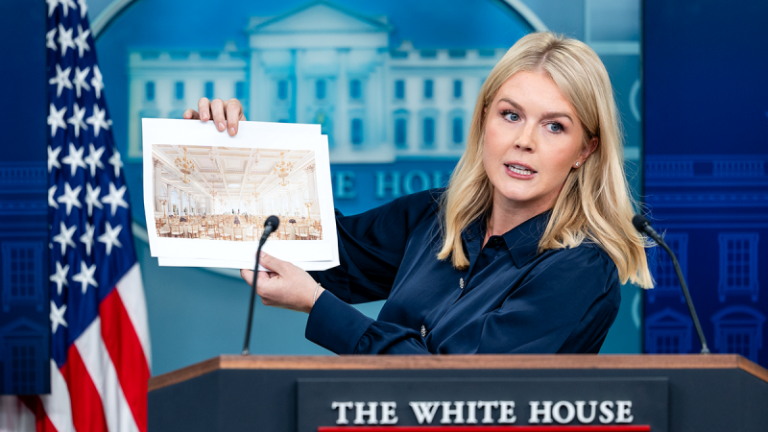
Following comments by Michigan State’s Tom Izzo and Kansas’ Bill Self on G-League players in college basketball, Houston coach Kelvin Sampson became the latest coach to call out leaders of the sport, with the transfer portal at the center of his rant.

‘At some point, someone has to step up and say this is wrong,’ Sampson told reporters on Wednesday, Oct. 22. ‘This is not what we signed up for. This is not what they signed up for. It’s not fair to them. It’s not fair to their parents. We’re still an educational institution, but there is nothing educational about college basketball right now. It’s all transactional. And we all put our heads in the sand, thinking that it will change eventually.

‘This is going to outlast all of us. That toothpaste is out of the tube, and you ain’t putting it back in.’

Sampson continued, even offering up a solution to the transfer portal:

‘You can control that transfer portal, and I am adamant that we are positively impacting lives if we tell a kid he has to sit out for a year,’ Sampson said. ‘You get one transfer, anywhere you want, with no penalties. Transfer and play right away. But you cannot do that every year. We’ve made a mockery of college basketball, to some degree.’

Izzo and Self called out the NCAA’s recent changes to player eligibility guidelines, which allow two G-League players to commit to college programs. This includes Louisville landing a commitment from guard London Johnson.

This post appeared first on USA TODAY
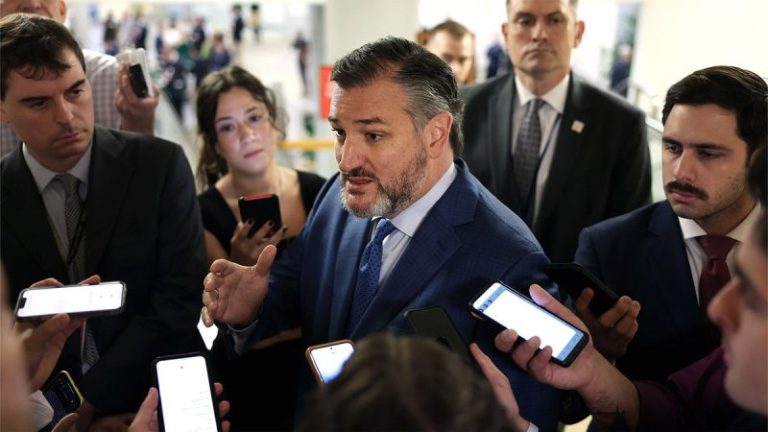
The Pack’s visit to Pittsburgh is clearly the marquee game on a light Week 8 slate.
Six teams will be on their bye this weekend.
Another potentially fun matchup? Cowboys at Broncos, pitting Dallas’ explosive offense against Denver’s elite D.

The NFL’s upcoming slate of Week 8 games is a light one. Six teams (Cardinals, Lions, Jaguars, Raiders, Rams, Seahawks) will be on bye, that mass absence dovetailing at a point of the season when the league is pausing its International Series and moving away from its recent Monday night doubleheaders.

None of that is to say it won’t be an eventful weekend.

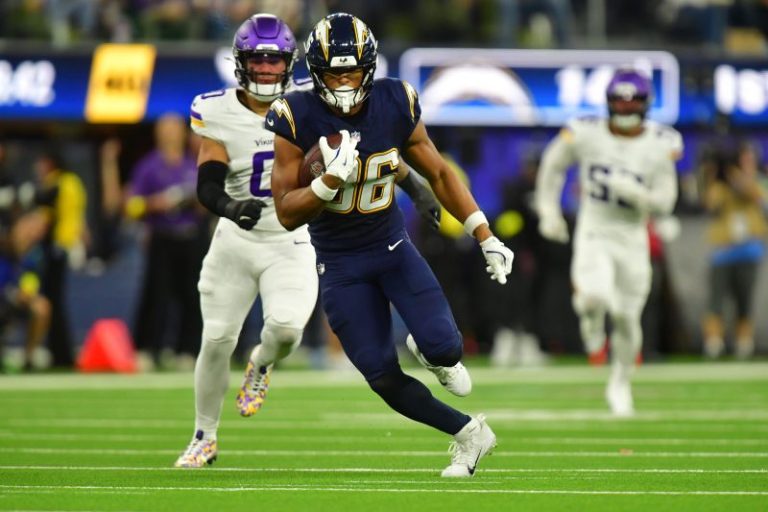
Thursday night kicks off with a pair of 2024 playoff teams struggling to get back to the postseason, the Minnesota Vikings visiting the Los Angeles Chargers at a time when both teams are working through significant injury setbacks.

What projects as a fairly ho-hum Sunday afternoon slate will feature the Denver Broncos hosting another NFC East team, the Dallas Cowboys, in what’s hopefully as entertaining a contest as last Sunday’s Broncos-Giants affair.

But Week 8’s pièce de resistance involves Pittsburgh Steelers QB Aaron Rodgers facing his original team, the Green Bay Packers − they famously chose the eventual four-time MVP late in Round 1 of the 2005 draft − for the first time Sunday night at Acrisure Stadium. No revenge required.

Does Rodgers win? What about everyone else? USA TODAY’s consortium of NFL experts weighs in:

(Odds provided by BetMGM)

NFL Week 8 picks, predictions and odds

Minnesota Vikings at Los Angeles Chargers
Miami Dolphins at Atlanta Falcons
Chicago Bears at Baltimore Ravens
Cleveland Browns at New England Patriots
New York Giants at Philadelphia Eagles
San Francisco 49ers at Houston Texans
Buffalo Bills at Carolina Panthers
New York Jets at Cincinnati Bengals
Tampa Bay Buccaneers at New Orleans Saints
Tennessee Titans at Indianapolis Colts
Dallas Cowboys at Denver Broncos
Green Bay Packers at Pittsburgh Steelers
Washington Commanders at Kansas City Chiefs

This post appeared first on USA TODAY
College football programs are increasingly hiring general managers to navigate the new era of NIL and revenue sharing.
Schools are bringing in executives from the NFL, business world, and other sports to build out their front offices.
Virginia Tech initially considered hiring a general manager before a head coach but ultimately reversed course.
Some coaches, like Indiana’s Curt Cignetti, prefer to act as both head coach and general manager.

Bruce Arians, the former NFL coach advising Virginia Tech since it fired former coach Brent Pry last month, went on ‘The Pat McAfee Show’ and suggested the school had a plan that would have been seen as radical just a few years ago.

The Hokies would hire a general manager before conducting their head coaching search, Arians said, because ‘the whole thing has changed. It’s all business now and you’ve got to find a businessman.’

Only 10 days later, current Virginia Tech athletics director Whit Babcock announced the university had switched course and would take the more traditional approach of forming a search committee to help identify a new coach first. Virginia Tech had found having a general manager in place first could limit the school’s head coach candidate pool, according to Babcock.

‘We want to be cutting edge, but not leading edge,’ Babcock explained on a Virginia Tech athletics department podcast.

Neither idea resembles the more unconventional response another public school and in-state ACC rival implemented over the past year to confront the financial and competitive complexities introduced to college sports in recent years by NIL and revenue sharing.

Virginia football is back in the national polls for the first time since 2019 with the help of Tyler Jones, an athletic department administrator elevated into the role of general manager for football and women’s basketball. Once a potential player is identified by coaches as an option for either roster, it’s Jones who serves as a recruiter, ‘just explaining to folks what UVA is about, our roster situation and detailing out what our financial package could look like,’ he said on the Inside Virginia Athletics podcast with athletics director Carla Williams in July.

The Virginia athletic department also hired former New England Patriots executive Scott Pioli to help construct its new model, and he remains a paid consultant for the department with an 11-month contract worth $330,000 through June 30, 2026, according to documents obtained by USA TODAY Sports via open records request.

“We didn’t want to be the first school to just jump out there and hire people,’ Williams said on the podcast.

College football is still very much in the feeling-out process of how to best capitalize on the strange, new world born from the once-forbidden concept of having to pay players. It’s perhaps best reflected in the lack of consensus to this point about the best way to build out a front office equipped to handle this professionalized version of the sport.

As part of its annual survey of college football coaches compensation, USA TODAY Sports also obtained contracts and 2025 salary information for Power Four conference general managers at public schools this year — or in lieu of that exact title, the staff member identified as the top front-office member at each school. The growing range in salary, structure and responsibilities revealed in these documents offer a glimpse into the resources and rapid evolution transpiring behind the scenes.

Many schools are bringing in personnel from the NFL, business world and beyond to spearhead a program transformation off the field. Here’s a look at some of the most elaborate and interesting front-office structures in college football during the 2025 season:

California turns to Ron Rivera

After Cal football’s first season in the ACC, and four months following rival Stanford’s splashy hiring of Andrew Luck as its football general manager, Cal chancellor Rich Lyons lured alum Ron Rivera back to campus as the Bears’ first general manager last March. The former Washington Commanders and Carolina Panthers coach took on a wide-ranging role with personnel responsibilities and hiring power within the football program similar to an NFL general manager, as well as more traditional fundraising duties tied to the university’s NIL and revenue-sharing programs.

Rivera’s job also includes, it appears, the ability to determine the future of current Cal coach Justin Wilcox. The school’s announcement of Rivera’s hiring noted he reported only to the university chancellor. When asked who had ‘ultimate authority’ within the football program, Rivera told reporters last April, ‘I do have that, other than the chancellor.’

‘One thing everybody has to understand,’ Rivera explained, ‘is I do have the opportunity working with the chancellor to make decisions on what is best for Cal football, because my hands are in every facet of Cal football.’

Oklahoma calls on former AT&T, Senior Bowl executives

Oklahoma made significant changes to its football infrastructure over the past year in an effort to fuse some of the best practices from the NFL, college football and corporate world together within the dynamic landscape created by the implementation of NIL and revenue sharing. The university’s unorthodox move was to hire former AT&T chairman and CEO Randall Stephenson as a special advisor to the president and athletics director. His role has expanded since the Sooners made an intriguing general manager hire to spearhead their front office build-out.

Stephenson currently carries the title chair of football and provides day-to-day oversight of new Oklahoma general manager Jim Nagy and Sooners football coach Brent Venables. Stephenson also offers ‘oversight and expertise of the budgeting, strategic planning and business planning functions during this unique time of change in college athletics,’ according to the university.

Nagy is the former executive director of the Senior Bowl and a longtime NFL scout who now leads Oklahoma’s roster management and player acquisition. He also manages issues related to NIL, the transfer portal, revenue sharing, scholarship limits and eligibility requirements. The Sooners also previously created a partnership with former Philadelphia Eagles vice president of football administration Jake Rosenberg when it elected to change the structure of its football program.

Washington consults sports agent, former NFL GM

Washington football doesn’t have anyone with the title of general manager on coach Jedd Fisch’s 2025 staff, and Matt Doherty serves as the program’s senior director of player personnel. But the athletic department has been aggressive trying to address its NIL and revenue-sharing needs.

Last February, athletics director Pat Chun hired Cameron Foster as the school’s senior director of contracts and cap management. Foster, a longtime sports agent primarily focused on NFL clients, serves as Washington’s lead negotiator on revenue-share agreements, according to the university. He is also still actively working for Reign Sports Management and signed a one-year contract with Washington through February 2026. The employment agreement includes a salary of $150,000 and a clause that states his ‘primary obligations lie with the University and its students.’

Fisch also previously brought in The 33rd Team, an NFL think tank led by former New York Jets general manager Mike Tannenbaum, as an outside consultant. Washington has paid Tannenbaum’s company more than $155,000 since Sept. 1, 2024, according to documents obtained by USA TODAY Sports, but the current contract expires at the end of October.

‘We wanted to bring in somebody that had no real motives, nobody really connected to our program substantially,’ Fisch said in December 2024, ‘but also somebody that can help guide (Doherty) and myself in making some critical financial decisions as we’re now budgeting close to $15 million or more to take care of players.’

Matt Rhule brings familiar GM to Nebraska

Matt Rhule came to Nebraska in 2023 after an unsuccessful stint as Carolina Panthers coach, but those NFL ties are coming in handy with the annual negotiations necessary in player acquisition and retention in college football.

Rhule made Pat Stewart one of the highest-paid public school general managers in a P4 conference when he hired Stewart last March at Nebraska, according to USA TODAY’s compensation survey. He was the vice president of player personnel for the Panthers under Rhule and has been dubbed ‘a key part of a re-organization of the Huskers’ front-office staff’ by Nebraska officials.

Stewart signed a three-year deal and will earn a base salary of $800,000 in 2025, with the opportunity to make an additional $200,000 in performance incentives according to a copy of his contract obtained through an open records request.

Louisville poaches from in-state rival

Vince Marrow made waves last June when he left his job as an assistant coach at Kentucky after 12 years to become Louisville’s executive director of football personnel and recruiting under coach Jeff Brohm, his friend and former XFL teammate. Marrow’s new bosses got a little creative in order to lure him away and make the money work.

Marrow signed a three-year, $2.4 million contract with Louisville that begins with a $700,000 base salary this season and includes an annual $100,000 salary increase. But the agreement also stipulates he ‘is entitled to receive additional compensation from private entities outside the University.’ Marrow told The Louisville Courier Journal the outside income would come from one entity, which he declined to name, and increases his annual financial package to more than $1 million. He was set to earn $1.3 million had he remained at Kentucky this season.

Marrow left an on-field role after 20 years as a coach to become Louisville’s de facto general manager, overseeing roster construction through high school recruiting and the transfer portal. Louisville is also paying $150,000 to former NFL executive and sports agent Andrew Brandt to help the athletic department develop and negotiate revenue share contracts for its student-athletes as part of a consulting contract with the school through the end of 2025.

‘I really believe this is where college football is going,” Marrow said at his introductory news conference. ‘You don’t have enough time to really find out what’s the background of these guys. … I really believe the time now that I don’t have to spend in coaching, I can just spend a lot of time evaluating guys and then getting that background stuff.”

Arkansas football leans on NBA scouting director

Though Arkansas is the midst of a coaching change after firing Sam Pittman last month, athletics director Hunter Yurachek had already made an unorthodox hire last March that will factor into the hiring process. Arkansas tabbed Boston Celtics executive and director of scouting Remy Cofield as a deputy athletics director and its general manager for Razorbacks athletics. He serves as lead negotiator for revenue-share agreements and collaborates with coaches to develop strategic roster plans, with the goal to eventually hire a football-specific assistant general manager as part of the athletic department’s front office.

Cofield’s contract includes a provision in which he can earn up to $100,000 per year in bonus compensation based on the performance of the football, men’s basketball, women’s basketball, baseball, softball and gymnastics programs at Arkansas.

Curt Cignetti is ‘GM and head coach’ at Indiana

Indiana coach Curt Cignetti made it clear at Big Ten football media days this year the Hoosiers will not be changing their approach to roster-building simply because others are building out more elaborate front offices. Cignetti declared ‘I’m the GM and head coach’ when asked in July about how Indiana planned to handle revenue sharing moving forward.

‘I’m a control freak,’ Cignetti added. ‘I’m organized, I’m good with numbers. My name is on this. I spent a lot of years getting to this point, I’m the best one to do it.’

Louisville Courier Journal sports reporter Payton Titus contributed to this story

This post appeared first on USA TODAY
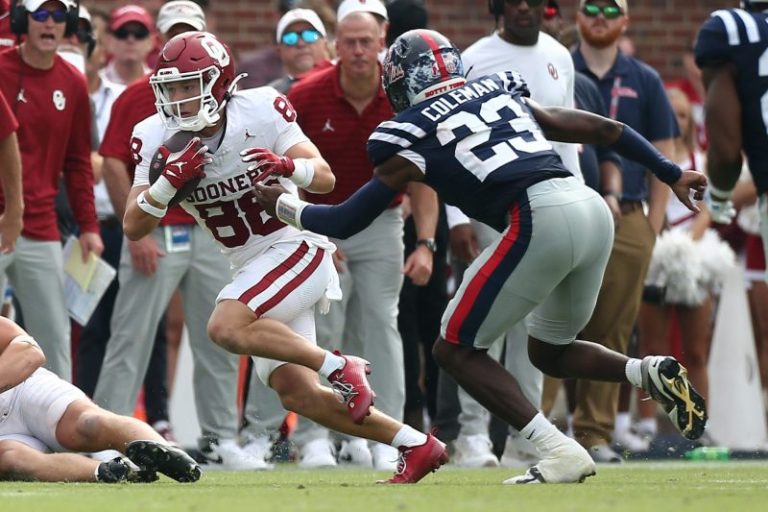
The NFL trade deadline is approaching, but there could be a shortage of sellers as well as stars on the trade block.
Chris Olave and Jakobi Meyers rank among the most intriguing options if made available, as the receivers could significantly boost a passing attack.
Jaelan Phillips and Jermaine Johnson could jolt a pass rush, but it’s unclear whether either the struggling Dolphins or Jets would part with a key defensive piece.

With 12 days left until the 2025 NFL trade deadline, the league’s annual cutoff might be defined more by the players that aren’t available than those who are on the market.

A steady early churn of moves has come to a standstill, with no swaps completed in the last two weeks. The action figures to pick back up at some point, but the biggest rumor of the past few days – in which Las Vegas Raiders defensive end Maxx Crosby was linked to the Dallas Cowboys – was summarily shot down by multiple reports. Meanwhile, the resurgent Cincinnati Bengals are shaping up to be a long shot to move reigning NFL sack king Trey Hendrickson, while there appears to be little momentum for marquee figures like Kirk Cousins, Alvin Kamara and Mark Andrews to be sent packing by their respective teams.

So, amid a potential shortage of sellers, which players actually remain in the conversation to be dealt?

Here’s USA TODAY Sports’ ranking of the best players who realistically could be moved ahead of the Nov. 4 trade deadline.

Ranking NFL 2025 trade candidates

1. Chris Olave, WR, New Orleans Saints

He’s peaking at the right time with his first multi-touchdown game in a 98-yard outing against the Chicago Bears. Now, it’s up to the Saints to decide whether they want to focus on locking him down as a key asset for a rebuild or flipping him for draft capital that could accelerate that process. Olave confirmed Sunday that he and the team had been engaged in extension talks since ‘the beginning of the year,’ and it might be a difficult move to deprive first-year coach Kellen Moore of a legitimate weapon at a time when the future of the offense looks to be in flux. Yet even with his four documented concussions in his NFL career, he’s one of just a handful of obtainable players at the deadline capable of altering a team’s offensive fortunes.

2. Jaelan Phillips, DE/OLB, Miami Dolphins

Miami has resisted hitting the panic button despite plenty of early turbulence, and the organization’s steady hand might hold at the trade deadline. But there’s probably a decision to be made here in the coming weeks, and two more losses should prompt some serious self-reflection for a team with vanishingly small odds of reclaiming any relevance this season. While veteran pass rusher Bradley Chubb and speedy wideout Jaylen Waddle might drive some interest, the simplest move for the Dolphins is to open the bidding for Phillips, who’s set to be a free agent in 2026. Even though season-ending injuries in each of the last two campaigns have taken a toll on him, the 6-foot-5, 263-pounder has come on strong in October, notching two sacks and 13 pressures in his last three games.

3. Jermaine Johnson, DE/OLB, New York Jets

His return from an ankle injury that sidelined him for three games coincided with the Jets defense pulling out of a tailspin. It stands to reason that it would be difficult to pry one of the unit’s top performers and established leaders from a regime desperate to grab some sort of toehold amid an 0-7 start. Yet selling off Johnson would give Aaron Glenn and Darren Mougey their best chance before this offseason to reshape Gang Green’s long-term future. Signed at a reasonable rate through 2026, he’d carry special appeal as an impact player at a critical position who would be more than a mere rental.

4. Breece Hall, RB, New York Jets

Glenn last week dismissed rumblings about the Jets potentially shipping out their lead ball carrier, whose importance to a moribund offense is only growing with backup Braelon Allen out for the foreseeable future. Still, that might not mean much in the way of a firm commitment given the way Gang Green’s season is trending. Hall had said he wanted to stick around but seemed more ambivalent last week when he gave something of a non-answer regarding his future. The fourth-year ball carrier is averaging the most yards per game (64) since he became the team’s regular starter in 2023, and he could be an every-down contributor to an offense that has actual hopes of playing deep into January.

5. Jakobi Meyers, WR, Las Vegas Raiders

Before the start of the season, the seventh-year receiver succinctly summed up how his trade request was received by the Raiders: ‘I asked. They said no.’ With Las Vegas stalling out at 2-5 and showing no signs of being even somewhat competitive in the AFC West, it might be time to revisit that stance. Meyers on Tuesday said he ‘for sure’ still wants to be dealt, and the Raiders have plenty of reason to move on from a player in the final year of his deal, with rookies Dont’e Thornton Jr. and Jack Bech figuring to be the future of the receiving corps anyway. Meyers might not be the leading target for a playoff-caliber team in the way he is for the Silver and Black, but he can still help an offense chug along.

6. Riq Woolen, CB, Seattle Seahawks

He’s long been an outlier as a trade block candidate, with the Seahawks standing alone as the only winning team with a player on this list. But there’s no denying that he’s been a bit of an oil-and-water fit in coach Mike Macdonald’s defense. Seattle might not be inclined to toy with a unit that had 12 passes defensed in Monday’s win over the Houston Texans. But the demand for a 6-foot-4, 210-pound playmaker figures to be high, with a number of teams that lean on man coverage sure to be interested.

7. David Njoku, TE, Cleveland Browns

The Browns emerged as a major player on the trade front early in the season, bringing aboard Cam Robinson before dealing away Joe Flacco and executing a cornerback swap with Tyson Campbell coming in for Greg Newsome II. Kevin Stefanski has been a big backer of his ninth-year tight end, saying last week that Njoku ‘is a big part of this football team on and off the field, and the energy that he brings.’ But plans shifted quickly with Flacco once a suitable offer emerged, and who’s to say a similar outcome won’t materialize with Njoku? Cleveland has lived in two-tight-end sets, so breaking up the veteran and standout rookie Harold Fannin Jr. would require a bit of an adjustment. But the Browns have essentially turned the offense over to the rookie class, and Njoku could be an intriguing piece for a more prolific passing attack.

8. Cam Taylor-Britt, CB, Cincinnati Bengals

Even after the cornerback was a surprise healthy scratch in last Thursday’s win over the Pittsburgh Steelers, parting with Taylor-Britt would be a decidedly uncharacteristic move for a franchise known for dragging out conflicts with players rather than seeking clean breaks. Coach Zac Taylor later said he needs to see more consistency from the fourth-year veteran, but both sides might benefit from seeking a different solution. If Cincinnati is amenable to a move, it shouldn’t have trouble drumming up interest in a talented cover man with the straight-line speed and ball skills to deter deep balls.

9. Rashid Shaheed, WR, New Orleans Saints

If the Saints retain Olave, might they part with another speedy receiver in Shaheed? Doing so would certainly align more with the organization’s intent to split the difference between a full-scale teardown and staying the course in the way it did in previous years. The fourth-year pass catcher has a legitimate calling card in his ability to pull away from defenders downfield, so any passing attack in search of a midseason pick-me-up might gravitate toward him.

10. Chig Okonkwo, TE, Tennessee Titans

The reset is on in Tennessee, with Brian Callahan’s firing setting the table for the team to part with other potential figures not deemed essential to the organization’s future. Calvin Ridley is the more high-profile figure in the receiving corps who has been floated as a possibility to be moved, but the potential financial commitment for a player who will turn 31 could tank his market. Okonkwo, who leads the Titans in receptions with 23, would be a more straightforward acquisition as a tight end who can create matchup problems and rack up yards after the catch.

11. Roger McCreary, CB, Tennessee Titans

The former second-round pick has been a mostly reliable coverage presence, albeit not a particularly dynamic one. That profile might be sufficient to catch the eye of a buyer, however, as several contenders have leaks on the back end that need plugging. McCreary, 25, should have broad appeal thanks to his versatility and sure tackling. Tennessee has reason to be active here given that the pending free agent’s place with the team hardly seems settled beyond this year.

12. Arden Key, DE/OLB, Tennessee Titans

Demand always outpaces supply when it comes to edge rushers. That dynamic might be even more heightened at the trade deadline if the likes of Hendrickson, Phillips and Johnson prove untouchable. Key would serve as a possible consolation prize for a contender that would settle for rounding out its pass rush rather than revolutionizing it. He was inactive for the Week 7 loss to the New England Patriots with a thigh injury, but the 6-foot-5, 240-pound pass rusher has shown impressive flashes with his athleticism, even though it hasn’t translated into any form of consistency.

This post appeared first on USA TODAY
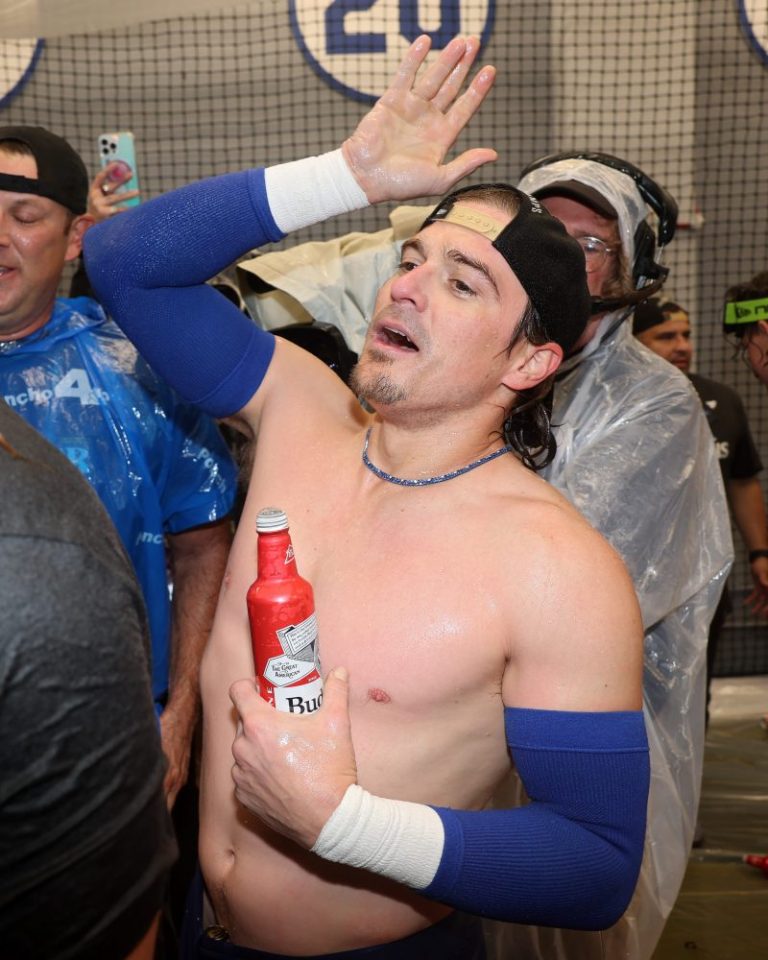
Nine coaches have been fired since start of 2025 season, most notably Penn State’s James Franklin.
Nick Saban raises idea that pay-to-play is influencing coach firings. Interesting theory, but it lacks support.
The surest way for a coach to be fired is the same as it ever was: Lose repeatedly.

ESPN hosted a pity party for James Franklin on “College GameDay,” and none other than NickSabandelivered the main address.

Saban, forever a great sympathizer for the plight of mega-millionaire coaches, called Franklin’s firing at Penn State “unfair as hell” and a byproduct of Penn State not showing “enough appreciation and gratitude” for Franklin’s achievements.

Penn State’s apparently inadequate gratitude includes a $49 million buyout for Franklin.

Saban later was quoted by ESPN as saying he believes donors paying for players has given those financial backers more authority to influence coach firings.

“Everybody’s raising money to pay players. So, the people that are giving the money think they have a voice, and they’re just like a bunch of fans,” Saban told ESPN. “When they get frustrated and disappointed, they put pressure on the (athletic directors) to take action.”

Already, nine Bowl Subdivision coaches have been fired this season. Several more roast on a hot seat.

Is Saban right that these coach firings are an attributable byproduct of pay-for-play and ADs are more susceptible than ever to the whims of donors?

In theory, that makes sense. Upon examination, though, there’s insufficient evidence to support Saban’s idea.

Consider that 13 coaches were fired during or shortly after the 2020 season, the final season before NIL arrived. Those firings occurred in the midst of a cash-strapping pandemic some industry insiders had incorrectly theorized would encourage athletic departments to operate with more financial caution toward coaching changes.

A year ago, inside the nation’s top two conferences, only one Big Ten coach was fired, and no SEC coaches got the boot. Conventional wisdom says that after a quiet year of firings comes a bloodletting the following season. That’s now unfolding in real time.

Losses more to blame for firings than donors

Let’s examine the six Power Four coaches fired this season and see if we detect pay-to-play is to blame:

Mike Gundy (Oklahoma State): Don’t blame pay-for-play. Gundy went 3-9 last season, then lost by 66 points to Oregon this September and got toppled by Tulsa. Gundy’s 4-11 record in his final 15 games would have been enough to oust him in the pre-NIL era.

DeShaun Foster (UCLA): Don’t blame pay-for-play. Blame Foster’s 5-10 record, including losses this season to UNLV and New Mexico. The Bruins have surged under interim coach Tim Skipper, providing support for UCLA’s decision to make a change.

Brent Pry (Virginia Tech): Don’t blame pay-for-play. Virginia Tech gave Pry more than three seasons to figure it out. He couldn’t. His 16-24 record marked the worst Hokies tenure since Charlie Coffey coached in the early 1970s. Standard firing.

Sam Pittman (Arkansas): Don’t blame pay-for-play. Pin this on Pittman’s momentum regressing in a conference where that’s not tolerated. Pittman went 20-23 in the final four seasons of his six-year tenure. Yep, that’s a textbook firing.

Billy Napier (Florida): Don’t blame pay-for-play. In fact, pay-for-play helped buy Napier an extra season. Boosters raised the funds to fire him last year but held off and opted to give it one more go while choosing to invest in the roster. Napier’s performance rates him as Florida’s worst coach since Raymond Wolf in the late 1940s. Napier lasted too long.

James Franklin (Penn State): Here, finally, we detect perhaps some influence of pay-for-play on the outcome after Franklin delivered inadequate return on donors’ investment.

After Penn State reached the playoff semifinals last season, it pushed its chips in on what was supposed to be a run at the program’s first national championship since 1986. The Nittany Lions plundered Jim Knowles from Ohio State by making him the nation’s top-paid defensive coordinator. Penn State didn’t cheap out on its roster, either.

Between players and staff, Franklin called this “the best combined personnel” he’d had in 12 seasons at Penn State, and a No. 3 preseason ranking in the US LBM Coaches Poll followed. The team flopped, and Franklin was out in a flash after consecutive losses to Oregon, UCLA and Northwestern.

The mood soured quickly on Franklin and not just within the donor ranks. In Penn State’s home loss to Northwestern, chants of “Fire Franklin!” reached a fever pitch. Athletic directors are susceptible to vibes, and the vibes were in the toilet, just nine months after Franklin’s peak moment.

Saban’s opinion that pay-for-play likely influenced Franklin’s fate isn’t out of bounds, but he also got derailed by the time-honored tradition of a coach elevating the standard and then failing to meet his own bar.

I think back to Auburn firing Gus Malzahn in 2020. Malzahn delivered eight consecutive winning seasons on the Plains, and he beat Saban three times. But, Malzahn delivered a national runner-up finish in his first season and never replicated that success. He got fired despite a .660 Auburn winning percentage that compares to Franklin’s at Penn State (.698).

LSU fired Ed Orgeron two seasons after he won a national championship. Auburn did the same to Gene Chizik, years before (permitted) pay-for-play.

More college football firings are coming

Auburn’s Hugh Freeze, Wisconsin’s Luke Fickell and Florida State’s Mike Norvell sit on three of the hottest seats. Don’t blame the donors in these cases.

Freeze has lost four straight and has never delivered a winning season. Fickell’s Badgers, in his third season, have lost five straight. They’re perhaps the worst team in the 18-team Big Ten. Norvell joins Freeze with a four-game losing streak. He’s 1-11 in his past 12 ACC games.

Job security hinges on performance.

It’s fair to say the voice of donors and fans carries as far as ever. Within an ecosystem where their dollars help fund the roster and the operation, they function almost like a company’s shareholders.

But, there’s insufficient proof pay-for-play makes coaches more vulnerable. The surest way for a coach to be fired is the same as it ever was: By losing repeatedly, coaches invite the hot seat.

Blake Toppmeyer is the USA TODAY Network’s senior national college football columnist. Email him at BToppmeyer@gannett.com and follow him on X @btoppmeyer.

This post appeared first on USA TODAY
Former Boise State University and NFL running back Doug Martin died over the weekend.

The details regarding his unexpected death, which occurred while he was in police custody, and what led up to it have continued to emerge, with Martin’s family and the Oakland Police Department shedding some light on that information over the past few days.

But a more complete picture of the former All-Pro’s troubles and his post-retirement circumstances has incrementally come into sharper view even as further questions about him continue to percolate.

Here’s what we currently know – and also what we don’t – about Martin prior to his sudden passing:

Did Doug Martin have mental health issues?

The agency Athletes First and its CEO, Brian Murphy, who represented Martin during his NFL career, released a statement Monday evening on behalf of Martin’s family.

‘Privately, Doug battled mental health challenges that profoundly impacted his personal and professional life. Ultimately, mental illness proved to be the one opponent from which Doug could not run,’ read the release.

‘Following recent media reports about Doug’s untimely passing, the family wishes to clarify the circumstances. Doug’s parents were actively seeking medical assistance for him and had contacted local authorities for support. Feeling overwhelmed and disoriented, Doug fled his home during the night and entered a neighbor’s residence two doors down, where he was taken into custody by police. An investigation into what transpired as he was detained is underway.’

According to a police report obtained by the San Francisco Chronicle, Martin descended into a psychotic episode while at a Northern California rehabilitation center in August. He was placed on a 72-hour psychiatric hold after jumping out of a second-story window at the facility.

How did police characterize Martin’s death?

‘Prior to his death, Martin was involved in a break-in at a residence in Oakland,’ the Oakland Police Department revealed Monday. ‘While responding officers were attempting to detain him, a brief struggle occurred. After being taken into custody, Martin became unresponsive.’

He died thereafter, approximately 4:15 a.m. local time Saturday.

Did Doug Martin use drugs?

He tested positive for cocaine and methamphetamine after checking into the rehab center two months ago, per the Chronicle’s report, which also stated Martin was in possession of fentanyl and a hunting knife at the time. Martin apparently left the center multiple times without permission but returned shortly thereafter and tested positive for cocaine again.

No toxicology report has become available since Martin died.

Did Doug Martin have CTE?

Currently, Chronic Traumatic Encephalopathy, a condition caused by repeated head trauma, can only be diagnosed post-mortem once a brain autopsy takes place. Countless former football players have suffered from CTE, which can dramatically impact a person’s moods and behavior. Martin’s brain is being preserved for study, according to The Mercury News.

What was Doug Martin’s cause of death?

The reason he died has not yet been publicly disclosed.

What did former Pro Bowl teammate say about Doug Martin?

“Doug loved to dance. He loved to tell jokes. He loved to have a great time,” former Pro Bowl defensive tackle Gerald McCoy, a teammate of Martin’s with the Tampa Bay Buccaneers, told The Athletic while expounding on the challenges NFL players face following their careers.

“Your identity has been tied to this game, and you find out after you’re done playing, you don’t even know who you are as a person. You get lost. That’s where you see the depression, that’s where you see the substance abuse, that’s where you see people start making all these bad decisions.

“I just want people to understand it’s tougher on us when we’re done playing than you guys think,” continued McCoy, now an NFL Network analyst. “It may seem like it’s all glamorous. ‘Look at the life you got to live.’ Yeah, but mental illness is a real thing, and people struggle mentally after playing this game. It ain’t just football, it’s pro sports, period.

“Nothing can give you that high. So when it’s gone, the cheers are gone, the competition is gone, the routine is gone. You get in this lost space, and it happens to a lot of athletes, man, and I just hope that that wasn’t what happened to Doug.”

How old was Doug Martin?

He was 36 at the time of his death.

Which teams did Doug Martin play for?

A first-round draft pick out of Boise State in 2012, Martin, dubbed the ‘Muscle Hamster’ (a nickname he hated), played most of his NFL career with the Bucs. A two-time Pro Bowler, he rushed for more than 1,400 yards in 2012 and 2015. He spent his final professional campaign in 2018 with the Oakland Raiders, who cut him before the 2019 season.

This post appeared first on USA TODAY