Archive

2025

Browsing

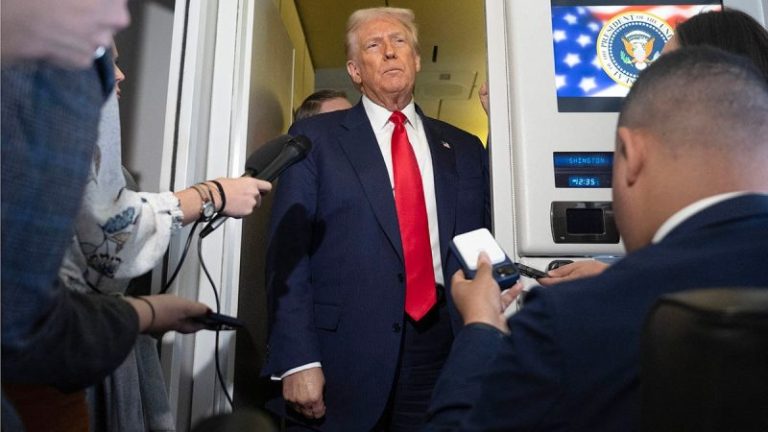
The Senate once again rejected President Donald Trump’s tariffs, this time on a global scale.

Lawmakers in the upper chamber went three for three with resolutions meant to terminate Trump’s use of emergency powers to enact steep tariffs on foreign countries. While the previous two were geared toward specific tariffs on Brazil and Canada, the latest would end tariffs on countries around the world.

Earlier this year, Trump declared through the International Emergency Economic Powers Act that he would enact a base 10% tariff on countries across the world. He argued in his executive order at the time that ‘national emergency arising from conditions reflected in large and persistent annual U.S. goods trade deficits’ as a reason to pull the trigger on the tariffs.

Since then, senators have grumbled about the tariffs and made moves to terminate his usage of emergency powers throughout the year.

And it’s the second time that this particular resolution from Sen. Ron Wyden, D-Ore., has been considered in the Senate.

The first go-round saw the resolution narrowly defeated 49-49, not because of partisan will but because of absences on the day of the vote. At the time, Sens. Mitch McConnell, R-Ky., and Sheldon Whitehouse, D-R.I., were expected to vote for the resolution but missed their chance.

Fast-forward to October, and McConnell joined a foursome of Republicans, including himself and Sens. Lisa Murkowski, R-Alaska, Susan Collins, R-Maine, and Rand Paul, R-Ky., to strike down Trump’s global tariffs. Those same lawmakers all voted against the previous two resolutions, too.

The other tariff-minded legislation would end Trump’s emergency powers to enact 50% tariffs on Brazilian goods and 35% tariffs on Canadian goods.

But they likely won’t go anywhere in the House, which previously voted to reject undermining Trump’s tariff policy until next year.

Meanwhile, Trump announced that after a ‘truly great’ meeting with Chinese President Xi Jinping that he would lower his fentanyl tariffs on China by 10%. That brings the total level of duties on the country down to 47% from 57%.

The reduction comes after China agreed to help stymie the flow of chemicals into the U.S. that are used to create the dangerous narcotic and to ease export controls on rare earth minerals, which manufacturers in the U.S. rely on to create a variety of goods and electronics.

‘There is enormous respect between our two countries, and that will only be enhanced with what just took place,’ Trump said on Truth Social. ‘We agreed on many things, with others, even of high importance, being very close to resolved.’

This post appeared first on FOX NEWS

LOS ANGELES — Trey Yesavage has provided a wonderful little reminder to the global baseball community: It’s possible that something special, so historic, so dominant, can remain a secret.

Make no mistake: Word is out now.

Tens of millions of fans from Canada to Tokyo to Sunset Boulevard now know plenty about Yesavage, about the 22-year-old’s crazy arm angle and audacious splitter, his preternatural calm and this historic postseason run that has put the Toronto Blue Jays on the verge of a World Series championship.

A few million more found out Oct. 29, when Yesavage walked into Dodger Stadium and in Game 5 of the World Series brought a lineup filled with Hall of Famers, a roster of defending World Series champions and more than 52,000 fans to their knees with a suffocating performance.

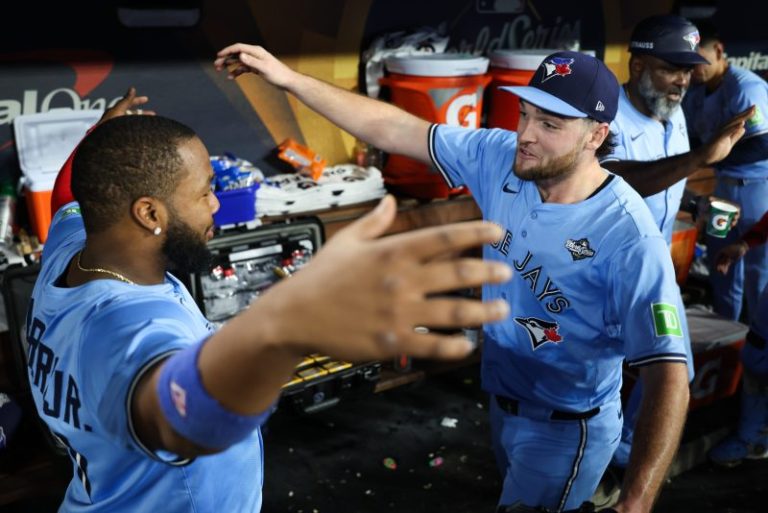
Across seven innings, he struck out a dozen batters, held the great Shohei Ohtani, Mookie Betts and Freddie Freeman hitless in 11 at-bats, and pitched the Toronto Blue Jays within one win of their first World Series title since 1993 with a 6-1 victory over the Dodgers.

The Blue Jays can win it all with a victory in either Game 6 or Game 7 this weekend in Canada.

And stunningly enough, arguably the most important figure in their playoff run not named Vladimir Guerrero Jr. was just a rumor to his veteran teammates a few months ago.

That’s what happens when you don’t get invited to big league camp. When your platform season in college gets disrupted by a partially collapsed lung. And when your first professional pitch, even as an advanced college draftee, is thrown in low Class A Dunedin, where the Blue Jays’ Florida training facility commences the organizational process of separating the no-ways from the maybes.

Yet there’s one guy who saw this coming.

Perhaps not that Yesavage would climb four rungs of the organizational ladder and reach the big leagues in September. Nor that he’d be their stealth No. 2 playoff starter and smash the postseason record for strikeouts by a rookie, with 39 in 26 often electric innings.

But when center fielder Daulton Varsho commenced a rehab assignment at Dunedin to begin his own climb back from rotator cuff surgery, he saw it.

No, it was not like Game 5 of the World Series. The opponent way back on April 19 was the Lakeland Flying Tigers, not the Los Angeles Dodgers, and the top of the lineup was comprised of Hadeen, Montilla and Fana, not Ohtani, Betts and Freeman.

But stuff is stuff. And dudes are dudes. And Yesavage was definitely both for both.

“It was right away. I knew he was just different,” says Varsho, who had a great view of Yesavage’s Game 5 dominance from his center field perch. “Just by the way he carried himself. His mentality. Just one of those kids you don’t really run into very often.

“And you can tell he’s just different from the get-go.”

Still, despite omnipresent prospect rankings and live streaming and advanced pitch data, to most of the Blue Jays, Yesavage’s exploits were snippets of information crackling across ham radio.  

Max Scherzer, the Blue Jays’ 41-year-old starter, knew the name. Heard right around midseason that he was “striking out everyone in the minors.” Thought Yesavage might be trade deadline fodder, as veterans greedy for late-season reinforcements often believe.

Chris Bassitt, Scherzer’s buddy in Toronto’s rotation, knew the club had drafted Yesavage 20th overall out of East Carolina a year ago. Didn’t see him in spring training – the kid hadn’t yet been invited to varsity camp. And like most 36-year-old veterans, defaulted to skepticism.

“You’re in the minor leagues until you’re not,” says Bassitt. “And then it’s like, how do big league hitters approach you?”

And that’s where the puzzle started to come together: Because big league hitters looked downright stupid against him.

Uptown funk

Yesavage debuted Sept. 15 against the Tampa Bay Rays, made three regular season starts, and eyebrows started to arch.

The stuff was legit. And with Scherzer and Bassitt both on the rebound from injuries, the Blue Jays thought the kid could hold down the fort at least partially due to opponent unfamiliarity.

And then came Oct. 5, AL Division Series Game 2, and perhaps the moment that forever changed Toronto’s franchise.

“When you see MVPs and top players in the league take some of the swings they take at his stuff, that’s a really positive sign,” says closer Jeff Hoffman, who finished Game 5 with a scoreless ninth inning.

“You don’t get these guys to look like that, if your stuff’s not real. He got to see, the stuff is real. You’re playing against the Yankees. And they’re still taking those bad swings.”

And when Yesavage struck out seven of the first 10 Yankees, Rogers Centre roared. This thing was real.

Yet in the Blue Jays dugout, Shane Bieber needed to see one more trip around the lineup to make sure he could believe what he was seeing. Bieber, the former Cy Young Award winner who saved the Blue Jays by winning World Series Game 4, knew the Aaron Judges and Cody Bellingers of the world could be made to look silly. Maybe once.

“He’s got some funk to him,” says Bieber. “A different arm angle and pitch repertoire, but seeing how experienced big league hitters will adapt from at-bat to at-bat is a pretty good indicator how your stuff’s playing, from any given situation day to day.

“Second time through the order against a team, a lineup like that Yankees, the swings he was inducing, definitely inspired some confidence in our club.”

And so Yesavage went out for the fourth inning that day, and struck out Aaron Judge, Cody Bellinger and Ben Rice swinging. The Blue Jays had their ace.

Fast forward 24 days, and here was another perennial MVP, Ohtani, swinging so foolishly at a Yesavage splitter in the third inning, his helmet flew off.

And Max Muncy, gifted with one of the greatest batting eyes and plate discipline skills of his era, taking three steps toward first before he was told, come back, catcher Alejandro Kirk held that full-count slider just inside the bottom of the strike zone.

He punched out both Hernandezes, Teoscar and Kiké. Got spot starter Alex Call to offer just enough at a slider in the dirt that the first base umpire punched him out.

He got ‘em all: Twelve strikeouts in all, just the 11th in history to do so and the first since Orlando “El Duque” Hernandez punched out a dozen New York Mets in 2000.

“I think he was extremely convicted tonight,” says Bieber. “Has been through most of his starts. Credit where credit’s due: Kirky called an incredible game tonight, caught the ball extremely well. Got those low pitches, those high pitches for Trey.

“With a guy coming from that arm angle, it’s paramount to get those borderline pitches.”

‘He gets it’

Now, Yesavage has probably thrown his last pitch of 2025. Sure, the Dodgers could win Game 6, and Game 7 could go sideways, and maybe manager John Schneider might call on the kid for an out or two.

But it’s likelier that postseason line will be locked in: 39 strikeouts in 26 innings, a 1.04 WHIP, a .187 batting average.

And, absurdly, five playoff games under his belt, two more than he’s pitched so far in the regular season.

It’s been something of a running joke that Yesavage, in a clubhouse full of well-minted superstars, has hardly received any big league scratch. Just the pro-rated minimum for the two weeks he was up.

Yet the Blue Jays will see to it his playoff share is fair.

“I mean, this playoff paycheck is going to be nice whenever it hits,” says Yesavage.

All kidding aside, the symbiotic relationship between the Blue Jays’ veteran (and oft salty) pitching staff and the newbie who will still be a rookie throughout 2026 can’t be underestimated.

The vets laugh off his occasional rookie obliviousness. The kid appreciates it, and rewards them with ice cold performances on the mound.

 “They have treated me the best I could have ever asked for,” says Yesavage. “So going forward with other rookies that come up, I’m going to remember how I was treated when I got here.

“The poise part, I don’t know, you got to thank my parents.”

Perhaps it’s the water in Boyertown, Pa. Nature, nurture or otherwise, the Blue Jays don’t hesitate to trot out the “built different” trope around Yesavage.

Bassitt has seen plenty in his 11-year career. He recognizes that Dodger Stadium is not the typical environment. The sound system thunders, there’s an MVP in every crevice of the lineup, and a Magic Johnson or a Jason Bateman or a Sandy Koufax might catch the corner of your eye if you look around enough.

And yet Yesavage stood up to it all.

“He’s just completely composed. Which is crazy for how young he is,” says Bassitt. “Hats off to those who coached him, who raised him. Because he’s very, very calm under pressure.”

And Bassitt rejects any notion that Yesavage simply is too young, too inexperienced to realize what he’s doing.

“He’s pretty smart. He gets it,” he says “Some guys are just built different. Mentally built different.

“The fact he has the utmost confidence walking into this place? You come into this place and all of a sudden it’s like, damn, wow.”

In an era when World Series starters are lionized for five-inning bursts, Yesavage did not give up the ball until he completed seven innings. The last time he did that was also his last college start, a 7 1/3-inning gut check against Wake Forest in an NCAA regional, Yesavage just sufficiently recovered from a collapsed lung to make his post.

Sure, that Demon Deacons lineup had three future first-round picks in it, including slam dunk AL Rookie of the Year Nick Kurtz. Barely more than a year later, he put another seven innings in the books, under far different circumstances.

It bears mentioning again: Ohtani, Betts, Freeman. The defending champions, gunning for their third title in six years, pushed to the brink by a 22-year-old.

“When it’s on,” says Scherzer, “he can make anybody in the game look stupid.

“He went out tonight and really showed it.”

And now, there’s no need for second-hand reports, for buzz about the kid punching out wannabes in Dunedin or New Hampshire or Buffalo.

This was the biggest stage. Yesavage owned it. And while he knows exactly what it is he’s done, he’s not yet ready to put it in proper context.

I’m waiting for life to slow down in this off-season,” he says, “and just be able to collect my thoughts and my feelings on this crazy year.

“It’s a crazy world. Crazy world. Hollywood couldn’t have made it this good.”

This post appeared first on USA TODAY

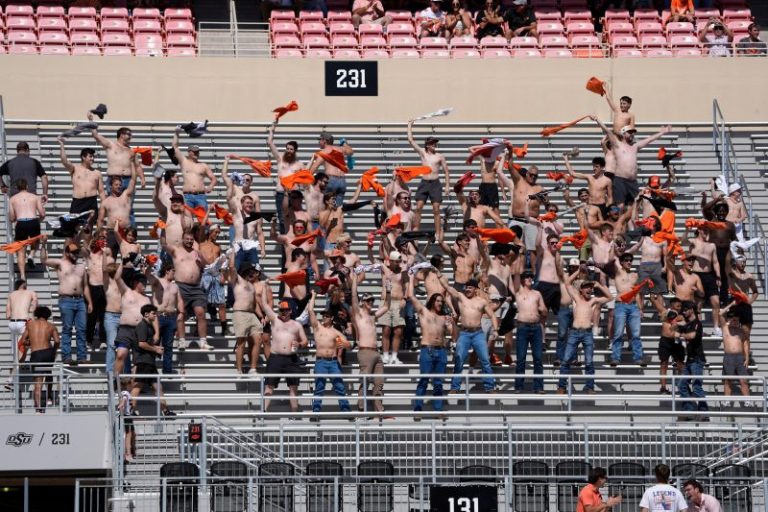
A trend of fans taking off their shirts and waving them in the air has spread across college football.
The movement began when an Oklahoma State fan was dared by his sister to wave his shirt in an empty section of the stadium.
The trend has served as reminder for people to have fun at college football games, regardless of the result.

Viruses are terrifying. Once it finds a host, it can spread rapidly and infecting all victims anywhere in its path. 

There’s a new virus spreading through college football. In just a few weeks, it’s gone from one stadium to stretching across the country, contaminating nearly every cathedral that houses the sport. The symptoms?

Fans taking off their shirts and waving them in the air in the masses. 

Like most infectious diseases, it can be traced to a starting point. A dare between siblings on Oct. 11 in Stillwater, Oklahoma, led to its birth. In a matter of weeks, it’s taken over college football to produce one of the most mesmerizing sights to behold.  

“It’s not what you expected to happen,” Trent Eaton told USA TODAY Sports.

Is it really an illness? No, even if it appears to be making people mad. 

Is it bad? Far from it, as it has reminded those that started it what college football is all about: having fun. 

How viral Oklahoma State trend began

It’s no secret 2025 has been a bad one for Oklahoma State. Entering that Oct. 11 afternoon, the Cowboys were 1-4 and had fired longtime coach Mike Gundy. Oklahoma State student Luke Schneberger recalled the vibes inside Boone Pickens Stadium “were just not there.”

Through three quarters against Houston, the Cowboys were down 36-10 and headed toward a fifth consecutive loss. The stadium was emptying when Eaton, a lifelong Cowboys fan, was dared by his sister Callista Bradford, a season ticket holder, to go to a lifeless section, take off his shirt and wave it for $10. 

Not ashamed, Eaton walked around the stadium to section 231 and by himself, waved his shirt for the crowd to see. Patient No. 0. 

It takes more than one for a virus to thrive. Luckily, Schneberger’s friends saw Eaton on the jumbotron. They said he should go join him. Schneberger thought it was a good idea.

So, Schneberger walked up to section 231. He and Eaton didn’t know each other, but only a few words were said to connect them.

“Hey man. Mind if I join you?” Schneberger said.

“Yeah, c’mon,” Eaton responded.

Patient No. 1. The two strangers stood together, laughing and waving their shirts as the sun beamed on their torsos. While attempting to boost the mood, neither weren’t sure how long they would last. 

Call it dramatic or silly, but it can get pretty tiring swinging your arm. Eaton said he had enough juice until the end of the third quarter, while Schneberger didn’t know how long he could go.

That’s when a group of guys walked by and Schneberger encouraged them to join. They did, and the group grew.

Before they realized it, the entire section and nearby ones were filled with guys enthusiastically waving their shirts. 

“I didn’t expect as many people as ended up coming up to happen,” Eaton said.

Call it an outbreak. 

The scene went viral as Oklahoma State and college football fans watched in amazement of the “tarps off” scene. There is no real way to describe it other than just guys being dudes. 

“If you looked up guys being dudes in the dictionary, the tarps off sections would probably be in there,” Schneberger said.

Waving shirts spread

Eaton became an instant celebrity in Stillwater, taking photos with admirers when he and his sister went to get food after the game. While it was a cool moment that brought joy to a miserable fan base, Eaton and Bradford figured it would be a one game thing.

That was until later in the week when someone sent Bradford a video from a local high school volleyball game, where a group of boys replicated her brother.

The movement spread out of Boone Pickens Stadium. Next thing they knew, it found its way to other college football stadiums. One week later, it was done at Wisconsin’s Camp Randall Stadium. Also at the Rose Bowl for UCLA’s home game. 

A week later, the virus continued to grow to Virginia Tech, North Carolina and several others. It even made its way to Eugene, Oregon, where even the Oregon Duck mascot did it. Section 231 at Oklahoma State became known as 2-no shirty-1.

“I saw videos all across the states of several college teams doing it,” Bradford said. “I was like, ‘oh man, we started a trend.’”

Why has shirtless movement become popular?

Other than believing it’s some viral infection, there’s no way to explain why this trend has caught on.

“It was just shocking to me how fast it spread,” Schneberger said. “Something that I was a small part in getting that big is just very surreal for me.”

Eaton wasn’t the first person to ever wave their shirt at a sporting event, but it has clearly resonated. He pointed to where this movement took shape. Oklahoma State is in the midst of a struggling season. So are UCLA, Wisconsin and North Carolina. It became a big thing by the time it caught on to good teams like Oregon.

“Most fans realize that their team’s not always going to be great, but they can still go support them and have fun and make something out of not a great season,” Eaton said. 

Schneberger agreed, adding that fans can’t just feel down the entire time and make some fun in even the worst situations. Even though Oklahoma State lost that Houston game by 22 points, it brought some joy to campus. Bradford also noted going to games is about more than the result; the atmosphere and fun are what makes the experience so unique.

“It’s that perfect recipe for it to be for college football,” Schneberger said. “It’s such a fun thing to do. Just get up there with your buddies and, you know, swing your shirt around.”

There’s no telling how long this virus will last. Eaton and Bradford have both been invited back for Oklahoma State’s next home game on Nov. 15 to be recognized, where the shirtless fun can very well continue in Stillwater. We will also have to see if the virus can survive the winter conditions that are on the horizon for the rest of the country.

“You’re not always on top,” Bradford said. “But you can also always have a good time.”

This post appeared first on USA TODAY
This money madness in college football, the frenzy of firing and hiring coaches no matter the cost, is just the tip of financial stupidity. 

As crazy as it sounds, the first step of money management in college football isn’t for future coaching contracts. It’s aimed at the very group that missed out on the money for the first 150 years: the players.

And it will be a financial bloodbath.

Because one thing is clear in the big money era of college football: Coaches can fail, players can’t. While universities have no problem throwing millions in buyouts at coaches who can’t win, they’re increasing performance-based deals for players in case they don’t meet expectations.

“It’s not just that the sport is changing,” Missouri coach Eli Drinkwitz told me this summer. “It’s that it’s changing every day, in every way possible.”

But the inevitable very few saw coming is the once hallowed ground of player accountability.

Forget about the $50 million Penn State paid James Franklin to not coach, or the $53 million LSU just swallowed to make Brian Kelly go away. Or any other coaching buyout that has sucked the very life from the sport over the past month of a wildly competitive (and overlooked) season.

This is about the players, and how a majority of them ― despite the narratives told ― are again at the short end of the financial game. It’s not as simple as sharing media rights revenue with universities, and signing large private NIL deals.

There’s the fine print few see, and all will soon realize. While many players are making significant financial gains, the majority aren’t.

Hundreds are making more annually than the NFL player minimum of $840,000, and all (more than 13,000 FBS players alone) are officially being paid to play. Some ridiculous amounts as single-season mercenary hires (hello, Carson Beck), others paid hundreds of thousands of dollars before they even step on a college field (every blue-chip high school recruit).

For everyone else, it’s a crapshoot of sorts. Those who perform at a high level are paid, those who don’t, aren’t paid for long.

There was a time when the idea of player accountability in the new era of pay-for-play meant dealing with unruly fans stalking them with social media muscles. But the more impactful consequence is universities and boosters clawing back money in performance-based NIL deals. 

Nearly all revenue sharing deals with schools, and private NIL deals, are one-year contracts. If you think patience with coaches is wearing thin among universities and boosters, it’s only a matter of time before it moves to players.

We’re not even a year into the new world of revenue sharing and private NIL deals, and already schools and boosters have moved into preservation mode, structuring as many performance-based deals as possible. The elite of the game — current star players and five-star high school recruits — can demand guaranteed deals.

For everyone else, it’s performance-based earnings. And once it goes bad, universities and booster-backed NIL collectives simply throw money at the next high school recruit, or transfer portal addition.

Or as one college football general manager told USA Today Sports: “Do you realize how much lost money is in the transfer portal every single season?”

That leaves the sport with cyclical turnover sickness, players annually moving (or threatening to move) from team to team, and contract to contract. Some to get a raise, some to make up for lost cash from a previous performance-based deal. Some to get paid for the first time.

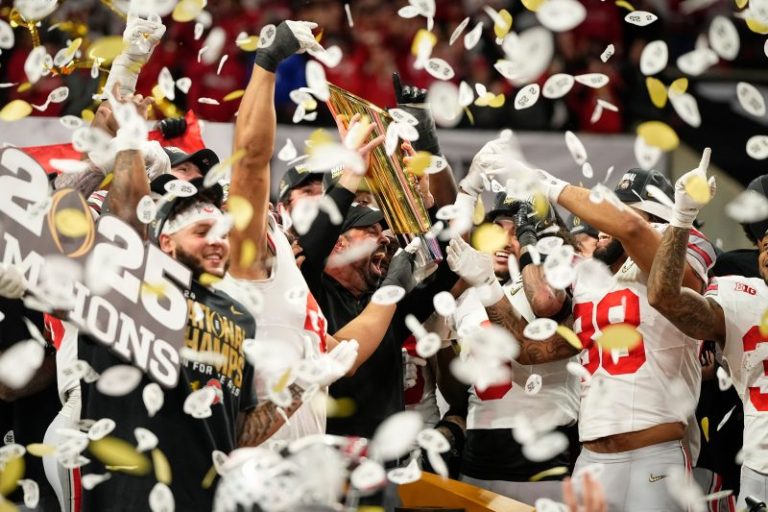
When Ohio State spent nearly $20 million on last year’s national championship roster, the majority was spent to retain current players. Giving them enough money in NIL deals to either turn down the NFL, or turn down other schools. 

The advent of revenue sharing this season added another layer to the season-by-season transactional monster. Now it’s not just paying players, but paying by positional, previous and predicted values.

Produce and get paid another season. Struggle, and your number decreases through clawbacks.

It’s impossible to predict how much money annually is spent — and/or promised with performance-based incentives — on player salaries, because deals aren’t public knowledge. But it’s not hard to find the ballpark.

Most schools spend 75% of the available $23 million revenue share money on football. That 75% is $17.25 million, and if 80% of the 68 Power conference schools (54 schools) spend that $17.25 million, that’s nearly a billion dollars annually in player revenue share salaries. 

Just from the Power conferences. 

That number also doesn’t take into account private, performance-based NIL deals, which pushes player salaries to an unthinkable number — with the majority performance-based in one form or another. 

One final dose of fiscal reality: more than 3,400 FBS players entered the 2024-25 transfer portal.

That’s a lot of dead money.  

“There’s no denying it anymore, it’s a business. A big business,” said Maryland coach Mike Locksley.  

And we’ve only reached the tip of overcoming financial stupidity. 

Matt Hayes is the senior national college football writer for USA TODAY Sports Network. Follow him on X at @MattHayesCFB.

This post appeared first on USA TODAY
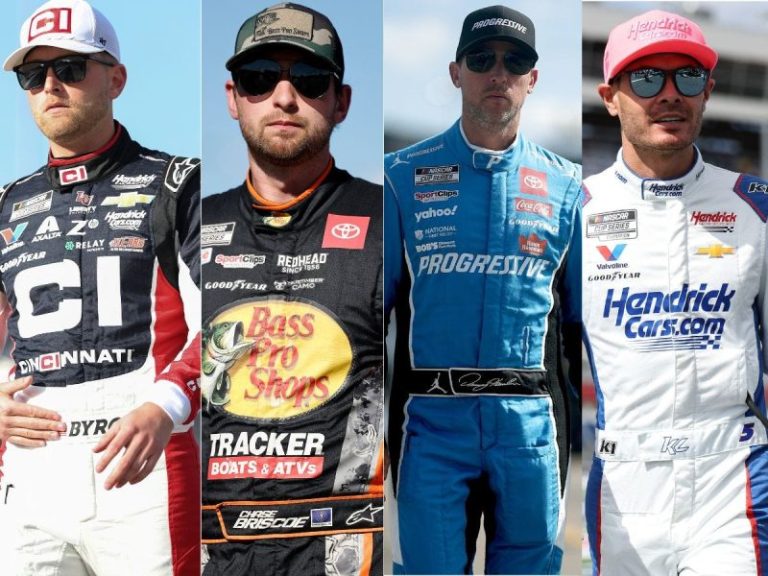
Four drivers from two teams, Joe Gibbs Racing and Hendrick Motorsports, will compete for the NASCAR Cup Series title.
The championship contenders are Denny Hamlin, Chase Briscoe, Kyle Larson, and William Byron.
This season finale could be the last to use the current one-race, winner-take-all playoff format.

Four drivers, two teams, one championship.

Following 35 races, the NASCAR Cup Series is set to crown a champion in the season finale Nov. 2 in Avondale, Arizona, when Phoenix Raceway hosts the 2025 championship race in what could be the final iteration of the current playoff format.

Two drivers from Joe Gibbs Racing – Denny Hamlin and Chase Briscoe – and two drivers from Hendrick Motorsports – Kyle Larson and William Byron – will race against each other and a full field of cars with one goal in mind: finish better than the other three contenders and celebrate with the championship trophy.

It’s a format and a situation that is unique to NASCAR. On the one hand, you have two titans of the sport – team owners Joe Gibbs and Rick Hendrick – each with a 50% chance of claiming a title. The owners also happen to be good friends.

‘To get to the Final 4 is just so hard. So now we got one race,’ Gibbs said this week. ‘We know what we’re up against, somebody that’s really, really good. Two cars in there for them. Two for us.’

The drivers, on the other hand, not only have to compete against two racers from another team but also against a teammate to realize their championship dreams.

‘It’s going to be an epic battle,’ said vice chairman of Hendrick Motorsports Jeff Gordon, who won four NASCAR championships as a driver. ‘You got four cars, two organizations, that are going to give it everything. It’s going to be (a) fascinating week of preparation, seeing how it unfolds at the racetrack in Phoenix.’

Final four worthy

The four championship contenders enter the finale with impressive season statistics. Hamlin has the most wins in 2025, Briscoe the most pole positions and top-five finishes, Byron the most laps led and Larson the second-most top 10s and the second-most laps led.

‘Denny, Chase, Kyle are amazing competitors. We’re going to have to do everything we can do (at Phoenix) to win that one, too,’ Byron said after his victory at Martinsville Speedway to clinch his berth in the Championship 4.

Each of the four also brings a unique storyline to the finale.

Larson, 33, is the only driver among the four to have won a Cup Series championship (2021), and a second would put him in elite company. He could join Hall of Famers Gordon (four championships) and Jimmie Johnson (seven) as the third driver to win multiple Cup titles for Hendrick.

The 27-year-old Byron, who drives the No. 24 Chevrolet made famous by Gordon, could become just the sixth driver and the first since Johnson in 2013 to win the Daytona 500 and the NASCAR Cup Series championship in the same year. The others: Hall of Famers Lee Petty, Richard Petty, Cale Yarborough and Gordon.

Briscoe, 30, made the championship in his first year at Joe Gibbs Racing after taking over the No. 19 Toyota following the retirement of 2017 Cup Series champion Martin Truex Jr. Briscoe had an up-and-down first half of the season as he adjusted to a new car and team, but he was arguably the best driver in the second half, recording three wins and 10 top-five finishes and capturing six of his series-high seven poles.

And then there is the veteran, Denny Hamlin, who is seeking to add the one thing missing from his Hall-of-Fame resume: a NASCAR championship. The 44-year-old has won 60 races during his Cup career – tied for 10th on the all-time list – and, despite the fact that he is more than a decade older than any of the other final four drivers, he led the series with six victories in 2025.

Yet, it’s fair to wonder if this is Hamlin’s best and final chance to remove the moniker, ‘Best driver to never win a championship.’

‘Is this my last chance to do it? Maybe it is, maybe it isn’t,’ Hamlin expressed after earning win No. 60 at Las Vegas Motor Speedway. ‘I just know I’m going to do the work, and I hope it works out. If it doesn’t, I’m going to be OK with it. I’ve had a season that far exceeded what I thought it would.’

Change on the horizon?

This also might be the end of the one-race championship and possibly the 10-race playoffs. NASCAR has formed a committee with its stakeholders to examine the current format and explore changes or perhaps a massive overhaul of the system following complaints for years from both drivers and fans.

NASCAR’s goal when it introduced the current format in 2014 was to provide ‘Game 7’ moments comparable to the big team sports. And while there has certainly been plenty of on-track excitement in the past decade as four drivers duked it out for a title each year, the counterargument has been that a winner-take-all race not only dilutes the full 35 races that came before it but even the nine playoff races that precede the championship race.

So, as these drivers seek to etch their name in history with a Cup Series title, one could make history in another way: the last driver to win a championship in this format.

‘A lot of real bright people are thinking about our playoffs and is this the right format for us going forward,’ Gibbs said this week. ‘The one thing I would say, one race, man, it is tough because things can happen to you that are out of your control in that one race.

‘We got two cars in it. This is a thrill when we get here because it is exciting. You got one race to make it happen. That’s the way I look at it, so we got to find a way. I’m sure Rick (Hendrick) is thinking the same thing.’

This post appeared first on USA TODAY
Israel said Thursday that the Red Cross provided information indicating ‘two coffins of deceased hostages have been transferred into their custody and are on their way to IDF troops in the Gaza Strip.’

In its announcement, the Israel Defense Forces (IDF) repeated its demand that Hamas hand over the remains of all the deceased hostages.

Israel said earlier Thursday that it had received information indicating that the Red Cross is on its way to a meeting point in the central Gaza Strip to retrieve coffins containing the remains of deceased hostages from Hamas. 

Prime Minister Benjamin Netanyahu’s office confirmed that the coffins were on their way to Israel saying that ‘All of the hostages’ families have been updated accordingly, and our hearts are with them in this difficult hour. The effort to return our hostages is ongoing and will not cease until the last hostage is returned.’

Netanyahu’s office said it would continue to provide updates ‘as necessary.’

On Tuesday, Fox News learned that a coffin handed over to Israel was assessed to contain the remains of a hostage whose body was already brought back to Israel for burial. The remains were later determined to be those of Ofir Tzarfati, whose body was first recovered in 2023.

The Hostages and Missing Families Forum said that some of Tzarfati’s remains were returned in March 2024 and that in August 2024, Hamas published a photo of his body.

‘This is the third time we have been forced to open Ofir’s grave and rebury our son,’ Tzarfati’s family said in a statement. ‘The circle supposedly ‘closed’ back in December 2023, but it never truly closes. Since then, we have lived with a wound that constantly reopens, between memory and longing, between bereavement and mission.’

If the two coffins are confirmed to remain deceased hostages, there will still be another 11 whose remains are still in Gaza, possibly including two U.S. citizens, Itay Chen and Omer Neutra. So far, Israel has received the remains of 15 of the 28 deceased hostages.

The hostages whose remains have been returned include Aryeh Zalmanovich, Master Sergeant (Res.) Tamir Adar, Staff Sgt. Tal Haimi, Suntaya Akrasi, Ronen Tommy Engel, Eliyahu Margalit, Uriel Baruch, Staff Sgt. Tamir Nimrodi, Eitan Levi, Daniel Peretz, Yossi Sharabi, Guy Illuz, Bipin Joshi, Inbar Hayman and Sergeant Major Muhammad Al-Atresh.

This is a developing story. Please check back for updates.

This post appeared first on FOX NEWS

A virtual confirmation hearing for President Donald Trump’s surgeon general pick Dr. Casey Means has been postponed because she went into labor.

Means, 38, was appearing remotely because she was nine months pregnant with her first child.

Her opening remarks for the hearing expected on Thursday had been prewritten.

‘Our nation is angry, exhausted, and hurting from preventable disease. Rates of high blood pressure, many cancers, autoimmune conditions, type 2 diabetes, mental health disorders, dementia, neurodevelopmental challenges, and youth suicide have all increased in the past two decades,’ the prepared remarks, obtained by Fox News, said.

‘This public-health crisis is touching every American family. It is robbing our children of possibility, our workforce of productivity, and our nation of security. It strains our federal budget and dims hope for millions,’ she planned to say.

As the nation’s doctor, the surgeon general is a leader for Americans and health officials on public health issues. If confirmed, Means will represent an administration that has already transformed the public health landscape by calling for increased scrutiny of vaccines, the nation’s food supply, pesticides and prescription drugs.

Means, a Stanford-educated physician who rose to popularity as a wellness influencer after becoming disillusioned with traditional medicine, was expected to share a vision for ending chronic disease by targeting its root causes, an idea that aligns with the Make America Healthy Again message of her close ally Health and Human Services Secretary Robert F. Kennedy Jr.

She has no government experience, and her license to practice as a physician is inactive, The Associated Press reported, adding that it was not immediately clear when the hearing would be rescheduled.

‘Everyone’s happy for Dr. Means and her family,’ said Emily Hilliard, deputy press secretary for the Health and Human Services Department. ‘This is one of the few times in life it’s easy to ask to move a Senate hearing.’

The Associated Press contributed to this report. 

This post appeared first on FOX NEWS

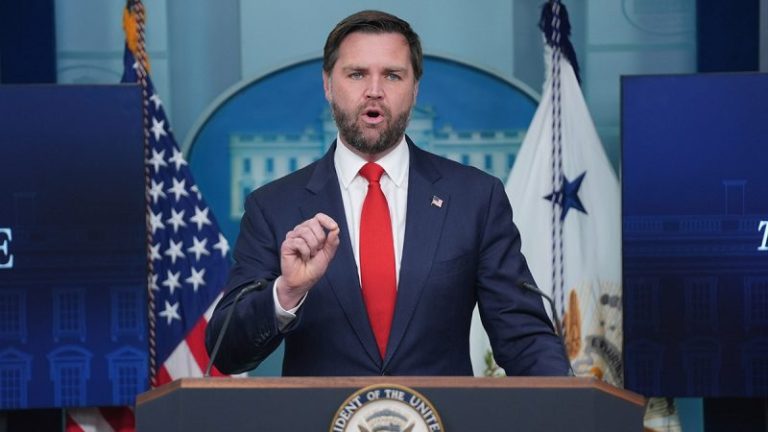
Another aviation-related union is demanding lawmakers reopen the government as Vice President JD Vance prepares to hold a roundtable with Transportation Secretary Sean Duffy and airline industry leaders Thursday as shutdown woes mount, Fox News Digital learned. 

The roundtable will be held at the White House Thursday afternoon, and will include Airlines for America CEO and former New Hampshire Governor Chris Sununu and other airline leaders, a White House official told Fox News Digital. 

The roundtable comes as the ‘Democrat Shutdown’ has ‘gravely’ impacted the aviation industry, according to the White House official, including air traffic controllers officially missing their first full paycheck, and unions calling on lawmakers to pass a clean continuing resolution. 

Aircraft Mechanics Fraternal Association, an independent union representing aircraft maintenance technicians and other related employees, called on lawmakers on Wednesday to pass a ‘clean continuing resolution’ and reopen the government. 

‘On behalf of the Aircraft Mechanics Fraternal Association (AMFA) and our 4,400 members in the Unites States representing the aircraft maintenance technicians at Alaska Airlines, Southwest Airlines, Horizon Air, Spirit Airlines, and Sun Country Airlines, we urge Congress to end the government shutdown by passing a clean Continuing Resolution,’ AMFA National President Bret Oestreich said in a press release published Wednesday. 

‘We stand with our brothers and sisters in air traffic control and TSA who continue to ensure the safety of the flying public while working for no pay,’ he continued. ‘It’s time for Congress to reconvene in a bipartisan manner to pass a clean CR and support all the men and women in aviation who contribute to the safest National Airspace System for us all to travel.’ 

The government shutdown has persisted since Oct. 1, when Senate lawmakers failed to reach a funding agreement before a midnight deadline. The Trump administration and Republicans have since pinned blame for the shutdown on Democrats, claiming they worked to include taxpayer-funded medical benefits for illegal immigrants. Democrats have denied the claims and argue that Republicans refused to negotiate on healthcare demands. 

‘We need to end this shutdown as soon as possible,’ Senate Minority Leader Chuck Schumer, D-N.Y., said in floor remarks Oct. 9. ‘Every day that Republicans refuse to negotiate to end this shutdown the worse it gets for Americans, and the clearer it becomes who’s fighting for them.’ 

Vance has hammered the argument that Democrats are to blame for the shutdown, including during his remarks at a Turning Point USA event Wednesday at the University of Mississippi. 

‘The reality here is that there’s a very simple bill that just reopens the government,’ he said. ‘It does it through pretty much the end of the year. That got every single Republican in the House of Representatives to support it, and then it got 52 Republicans in the Senate and three Democrats in the Senate to support it. But because of weird Senate procedural rules, it requires a 60 vote threshold.’ 

‘When you have every single Republican with like two exceptions in both houses of Congress, I feel pretty confident. I know that I’m partisan,’ he added. ‘I know I have an R next to my name, but I feel pretty damn good saying the shutdown is the Democrats’ fault because we voted again and again to open.’ 

The shutdown comes as Americans prepare to travel for the Thanksgiving and Christmas holidays, with the White House previously telling Fox News Digital that as the shutdown continues it ‘threatens to ruin the holidays.’

The Air Line Pilots Association, the world’s largest airline pilot union, called on lawmakers to reopen the government earlier in October. The Southwest Airlines Pilots Association issued a similar statement later in October, urging lawmakers to pass a ‘clean Continuing Resolution’ and reopen the federal government while pointing to the state of air traffic controllers during a shutdown. 

The shutdown has rocked families as they prepare to temporarily lose federal food assistance, while small business owners are losing out on billions in Small Business Administration-backed funding, and an estimated 750,000 federal employees have been furloughed. 

As for air travel, massive hubs such as Atlanta, Chicago, Dallas and Newark, New Jersey, have seen delays in recent weeks, as air traffic controllers, who are employed by the Federal Aviation Administration, cope with staffing shortages. 

Air traffic controllers lost their first full paychecks beginning Tuesday. 

‘I’ve made clear to our air traffic controllers: they need to show up for work. They do really important work for our country, and they need to show up. But I’m not going to lie to anybody to not say that they’re not feeling the stress,’ Transportation chief Duffy said during a press conference at LaGuardia Airport in New York City Tuesday. ‘The fact that they are working, and oftentimes, they are head of households, they’re the only income earners in their homes, and they have families, and they’re having a hard time paying their bills.’

This post appeared first on FOX NEWS

On the heels of President Donald Trump’s meeting with Chinese leader Xi Jinping, Beijing has agreed to restart its purchases of U.S. soybeans, a $30 billion cornerstone of American agriculture that was once wielded as a weapon in the battle for global trade leverage.

Once a quiet export success story, America’s humble soybean became a political flashpoint after Beijing halted imports in retaliation for Trump’s tariffs on Chinese goods. China’s shift to suppliers in Brazil and Argentina exposed how quickly global trade flows can realign and how vulnerable U.S. farmers remain to diplomatic friction.

Treasury Secretary Scott Bessent said Thursday that China will buy 12 million metric tons of American soybeans during the current season through January and has committed to buying another 25 million tons annually for the next three years as part of a larger trade deal.

In an interview with Fox Business’ ‘Mornings with Maria,’ Bessent added that several Southeast Asian nations have also agreed to buy a combined 19 million tons of U.S. soybeans, though he did not specify a timeframe for those purchases.

‘So our great soybean farmers, who the Chinese used as political pawns, that’s off the table, and they should prosper in the years to come,’ Bessent said.

What began as tit-for-tat posturing between the world’s two largest economies evolved into both a symbolic and economic gut punch for Trump’s rural base, whose livelihoods depend on the very trade ties now caught in the crossfire.

According to the American Soybean Association, the U.S. has traditionally served as China’s leading soybean source. Prior to the 2018 trade conflict, roughly 28% of U.S. soybean production was exported to China. Those crop exports fell sharply to 11% in 2018 and 2019, recovered to 31% by 2021 amid pandemic-era demand and eased back to 22% in 2024.

But some policy experts argue that China’s shift away from U.S. soybeans was already underway.

‘China was always going to reduce its reliance on the United States for food security,’ Bryan Burack, a senior policy advisor for China and the Indo-Pacific at the Heritage Foundation told Fox News Digital. ‘China started signing purchase agreements with other countries for soybeans well before President Trump took office.’ 

He added that Beijing has ‘been decoupling from the U.S. for a long time.’

‘Unfortunately, the only way for us to respond is to do the same, and that process is painful and excruciating,’ Burack said.

But for farmers thousands of miles from Washington and Beijing, those policy shifts translate into shrinking markets and tighter margins.

‘We rely on trade with other countries, specifically China, to buy our soybeans,’ Brad Arnold, a multigenerational soybean farmer in southwestern Missouri, told FOX Business ahead of Trump’s bilateral meeting with Xi. He said China’s decision to boycott U.S. soybean purchases ‘has huge impacts on our business and our bottom line.’

‘There are domestic uses for soybeans, looking at renewable diesel, biodiesel specifically produced from soybeans,’ Arnold said. 

‘In the grand scheme of things, that’s such a small percentage currently, you know it’s going to take a customer like China to buy beans to make a noticeable impact. You can’t take our No. 1 customer, shut them off and just overnight find a replacement.’

Whether China’s new purchases signal a genuine thaw in U.S.–China trade relations or just a temporary reprieve, the deal underscores how closely diplomacy and agriculture remain intertwined.

Fox Business’ Eric Revell contributed to this report.

This post appeared first on FOX NEWS

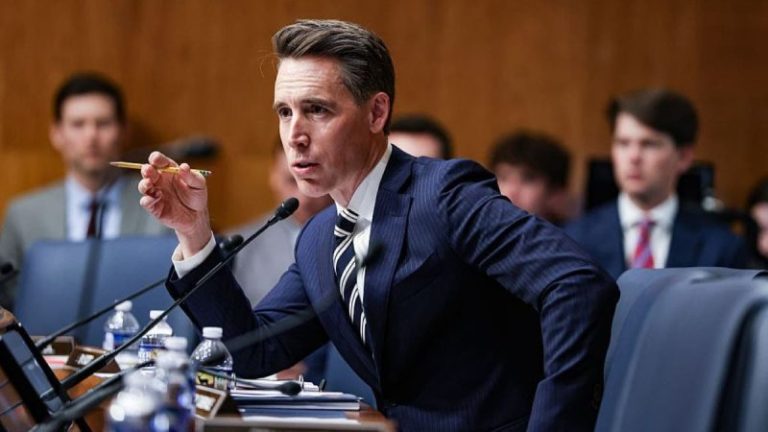
Republican senators on Wednesday urged the Food and Drug Administration (FDA) to tighten safety standards and reconsider partnerships tied to abortion pills, accusing the agency of expanding access without adequate oversight.

On the call, Sen. Josh Hawley, R-Mo, and Sen. Bill Cassidy, R-La., expressed frustration that the agency hadn’t already overhauled safety parameters around abortion pills — and that it had instead expanded its partnerships with producers of the drugs that make chemical abortions available.

‘My plea to the FDA is to follow the science to put back safety guardrails,’ Hawley said. ‘I’ve called on the director of the FDA to take these steps. The public deserves to have answers.’

The press conference held by the senators indicates that abortion policy is still a mainstay priority for some Republican lawmakers — even as President Donald Trump has previously signaled contentment with leaving questions about abortion policy at the state level. Hawley and Cassidy both questioned the safety of chemical abortions and their proliferation.

Notably, Republicans passed a short-term prohibition of Medicaid funding from going to nonprofit organizations that provide abortions as part of its One, Big Beautiful Bill Act that became law earlier this year.

But that change hasn’t stopped Hawley and other lawmakers from torching the FDA for announcing a partnership with Evita Solutions, looking to create a new version of the key abortion drug, mifepristone.

‘When I heard the FDA approved another generic form of misoprostol, I was upset,’ Sen. Cassidy said, referring to the drug often used in conjunction with mifepristone. ‘I call them up, ‘Why are you doing this?’’ 

Cassidy joined 17 other Republican senators in sending a letter to the FDA earlier this month, demanding to know why the agency had approved a new form of the abortion drug. They asked for an answer by Oct. 30.

Cassidy said the group has not received anything from the agency.

‘They have not responded, but the government’s been shut down, and so I’m sure they would say, ‘Well, we can’t respond,’ but we will have the FDA commissioner to come in and speak to FDA issues.’ 

Without mifepristone and misoprostol, most of the country’s abortions would be impossible. 

The pair of compounds undermine the vitality of a pregnancy and prompt the body to expel pregnancy tissue. According to the Guttmacher Institute, a sexual health and reproductive rights organization, mifepristone was used to induce 63% of all U.S. abortions in 2023. 

‘This is shocking,’ Hawley said in a post to X earlier this month. ‘FDA just approved ANOTHER chemical abortion drug, when evidence shows chemical abortion drugs are dangerous and even deadly for the mother. And of course, 100% lethal to the child.’

Hawley claimed on Wednesday that 11% of women who use a chemical abortion experience some sort of adverse health event.

‘The science is really quite significant. We’ve just had one of the largest studies ever performed of claims relating to chemical abortions based on insurance data. It came out this summer — 865,000 insurance claims that were made and analyzed,’ Hawley said. 

The Ethics & Public Policy Center published findings in April that evaluated 865,000 medical abortions prescribed between 2017–2023. It concluded that the rate of serious side effects was 22 times higher than indicated by the FDA label.  

‘That’s a sanitized way of saying they’re in very serious danger,’ Hawley said.

Critics of the study have said it lacks context and may overlook unrelated, complicating factors. 

Marjorie Dannenfelser, the president of Susan B. Anthony Pro-Life America, an anti-abortion advocacy group, shares Hawley’s concern about the pill’s safety. She also believes abortion pills are an easy way for women to access abortion — even in states that have passed restrictions on them.

‘This abortion pill is an instrument of beating back [state] sovereignty. State laws are being undermined. The abortion rate overall in this nation has gone up since Dobbs because of the abortion pill,’ Dannenfelser said, referring to the landmark 2022 case Dobbs v. Jackson that overturned a federal right to an abortion.

Susan B. Anthony Pro-Life America was one of the key groups calling on Republicans to cut Medicaid funding for abortions through Trump’s One, Big Beautiful Bill Act.

Anti-abortion advocates have zeroed in on access to mifepristone as a way to continue pushing back against abortion access — especially since the FDA approved remote prescriptions of the drug in the wake of COVID-19.

In June, the Supreme Court rejected a challenge brought by the Alliance for Hippocratic Medicine (AHM), arguing that the FDA had improperly approved mifepristone for use back in 2001, skirting safety requirements. 

Since then, mifepristone has remained widely available, but the Supreme Court’s ruling left the door open to future challenges to the FDA’s certification of the drug.

Like other critics of chemical abortions, Hawley has urged the FDA to undergo its own evaluation of whether abortion pills are safe, reliable products — a priority shared with HHS Secretary Robert F. Kennedy Jr.

‘We need to have a full and thorough review of the data related to mifepristone [and] the health risks related to mifepristone. We need to see the reinstatement of safety guardrails that have historically accompanied this drug,’ Hawley said.

The FDA did not immediately respond to Fox News Digital’s request for comment.

This post appeared first on FOX NEWS