Archive

2025

Browsing

Ravens quarterback Lamar Jackson returned from a hamstring injury, throwing for 204 yards and four touchdowns.
The loss increases pressure on Dolphins coach Mike McDaniel, whose job security is reportedly in question.
Baltimore’s victory narrows the gap with the AFC North-leading Pittsburgh Steelers.

The Baltimore Ravens provided further evidence that they’re on the way back – if not quite yet all the way back – by putting a 28-6 beatdown on the sinking Miami Dolphins on Thursday night in the first game of Week 9.

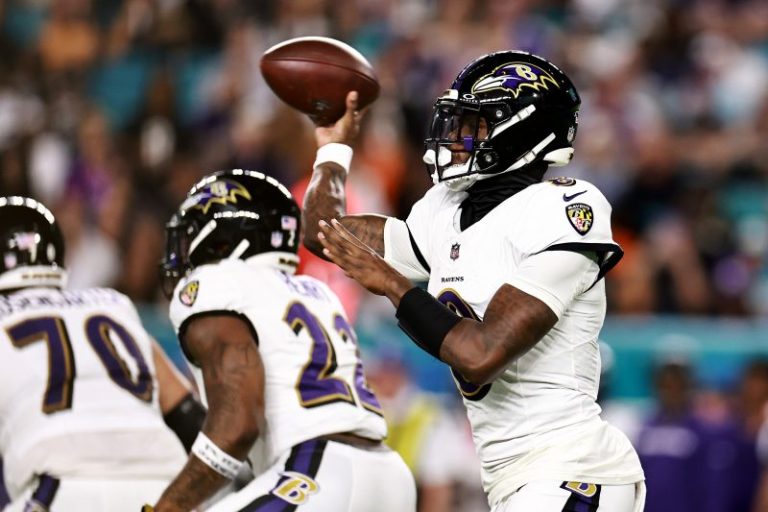
Baltimore QB Lamar Jackson certainly appeared to be restored to full strength, playing for the first time in more than a month since he injured a hamstring in Week 4 at Kansas City. His presence and incomparable ability seemed to further stabilize a team that finally seems to be recovered from what had been a season-long tailspin.

As for the Fins? Yep, per usual, the winners and losers extended well beyond what was evident on the scoreboard, so let’s unpack the subsets:

WINNERS

Lamar Jackson

After he was surprisingly inactive Sunday against the Chicago Bears, the two-time league MVP and South Florida native was predictably dominant against the Dolphins, a team he historically shreds. Jackson passed for 204 yards, connecting on nine consecutive throws in the second half at one point, and four touchdowns and looked plenty spry while doing it even if he didn’t have to leave the pocket much. With a 143.2 passer rating Thursday, Jackson has gone 140+ in four of his five outings against Miami.

Ravens tight ends

Mark Andrews, Isaiah Likely and Charlie Kolar combined for seven receptions, 105 yards and three TD grabs, Andrews collecting two of them. It’s a dangerous group when they and Jackson are firing on all cylinders – and you can officially dispense with the notion that Andrews might be moved ahead of Tuesday’s trade deadline.

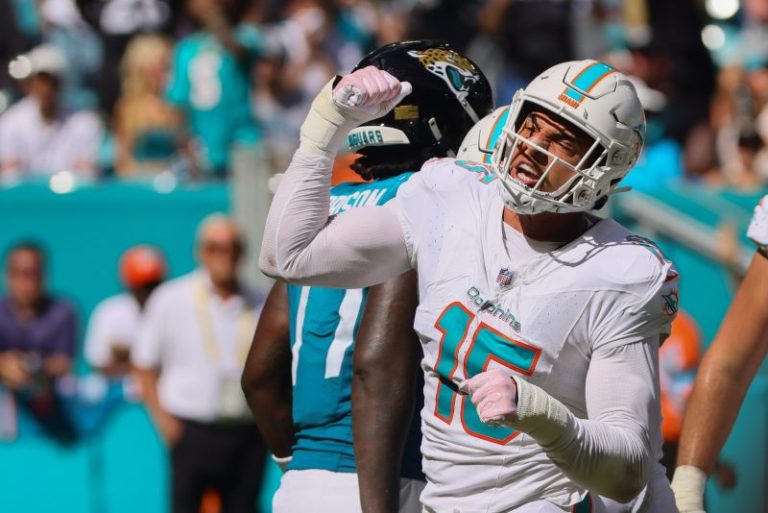
Jaelan Phillips

With four tackles and a sack of the ever-elusive Jackson, he made a nice closing argument to contending teams looking to acquire a first-rate pass rusher ahead of the 4 p.m. ET trade cutoff on Nov. 4. Set to be a free agent after the season, Phillips could be poised to further jack up his asking price over the next few weeks if he lands with a better team, one that could further showcase his talents, in the coming days.

Derrick Henry

It helps having Jackson back, and Henry rushed for 119 yards − much of it in big chunks (four of his 19 carries generating 81 yards). It was actually the second time he’s reached the century mark in the past three games, yet another positive sign amid Baltimore’s swelling surge.

LOSERS

Mike McDaniel

The Miami coach, along with GM Chris Grier, are on seats as hot as any in the league when it comes to their employment status. Just four days after an inspired performance during a 34-10 win at Atlanta provided something of a reprieve, the Dolphins again looked lifeless in front of a clearly disenchanted fan base at Hard Rock Stadium.

‘I think we came to play,’ McDaniel said afterward, though his tone belied that assertion to some degree, especially after his team’s uninspired second half.

Want to sum this game up? Miami turned the ball over three times while Baltimore didn’t once. The Dolphins couldn’t convert any of their three red-zone opportunities while the Ravens nailed all three of theirs. Game, set and match.

Normally, it might make sense to fire a dead coach walking after a Thursday night game, but it seems equally likely McDaniel will at least make it to Week 11, when the team plays in Madrid, after which Stephen Ross could more logically pull the trigger during the team’s full bye week. Still, the owner did leave his box early on a night when his team wasn’t competitive and when the fans who did show up were vocal (whether or not they wore bags over their heads) before heading for the exits well before the final gun.

Tua Tagovailoa

It was all downhill after he drove Prime Video analyst and former teammate Ryan Fitzpatrick to work. Tagovailoa looked swagged out in his visor – his teammates at least vocally supported that in the days prior to the game − but apparently it exhausted all of its luck in Atlanta after shielding his swollen eye. Eyes wide open Thursday, Tua passed his way to 261 inefficient yards and a pick that did nothing to suggest he or his coach are long-term answers for this franchise.

Pittsburgh Steelers

The Ravens have made up a game-and-a-half on the AFC North leaders in the span of four days. The gap could continue to close if the Steelers can’t handle the explosive Indianapolis Colts and their league-best 7-1 record at Acrisure Stadium on Sunday. Factor in Baltimore getting a mini bye and facing four more teams in succession with losing records before hosting Pittsburgh on Dec. 7, and it’s becoming apparent why the Ravens are favored by the oddsmakers to retain the divisional crown despite their 3-5 start.

Al Michaels and Kirk Herbstreit

Slips of the tongue can certainly be forgiven in the midst of a dog game. Maybe that’s why Michaels conflated the “Miracle at the Meadowlands” with the “Monday Night Miracle” and why Herbstreit invoked the “push tush.” Carson Wentz absolves you, fellas – better luck next week in Denver.

Derrick Henry

Why do the Ravens keep running that, uh, ‘push tush’ with Andrews given it’s so ugly looking and quite predictable? Apparently because it’s a better option than giving the ball to Henry in short-yardage situations, whether due to his lengthy build-up speed or blocking deficiencies.

World Series

Generally, a good strategy − one of the few seemingly employed by Major League Baseball − to avoid going head to head with the NFL in prime time, which explains why the Toronto Blue Jays and Los Angeles Dodgers traveled on Sunday and Thursday. But Shohei Ohtani, Vlad Guerrero Jr. and Co. probably could have taken the NFL to the woodshed on this night … but they’re instead relegated to trying to command the eyeballs of the highly coveted 18-to-34-year-old demographic on Friday and, they hope, Saturday nights.
This post appeared first on USA TODAY

There has been a noticeable shift in the Senate over the last week, with lawmakers on either side of the aisle talking more about how to get out of the government shutdown.

But it’s not blanket optimism and neither side is ready to announce that an off-ramp to the 31-day shutdown has been finalized. And ultimately, how well the bipartisan talks are going depends on who you ask.

Republican and Democrat rank-and-file members, particularly members of the Senate Appropriations Committee, have started talking more as the week has progressed. There are talks of extending the House-passed continuing resolution (CR) to allow time to finish appropriations bills, and Senate Democrats are socializing a package of funding bills among their members.

However, the reality is that Senate Democrats again blocked the GOP’s CR for a 13th time, and lawmakers only got one chance to vote on the bill before leaving Washington, D.C., on Thursday.

And Senate Democrats are still largely entrenched in their position that expiring Obamacare subsidies must be dealt with before the government reopens, even with the offer of a vote on the matter after the CR is passed.

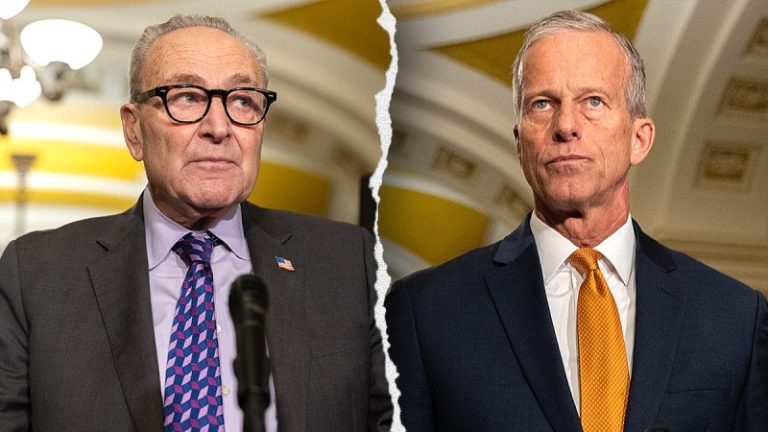
Senate Majority Leader John Thune, R-S.D., was encouraged by Senate Democrats socializing spending bills on their side of the aisle, but he still contended that given the amount of time it takes to process funding bills on the floor, the best option was to reopen the government.

‘Unfortunately, doing all that takes a while,’ Thune said. ‘Even if you got consent, it still, it’d take a while to move those bills across the floor. So we’ve got to reopen the government.’

Sen. John Hoeven, R-N.D., said that his Democratic counterparts were beginning to realize that time was running out to actually fund the government through the appropriations process, which is a generally bipartisan affair in the upper chamber given the 60-vote filibuster threshold.

When asked if he felt closer to an end to the shutdown now than a month ago, he said, ‘Yes.’

‘I was hoping we’d break the logjam this week, and if we don’t get it done this week,’ Hoeven said, ‘I’m sure hoping it gets done next week.’

However, the conversations have not yet evolved into high-level talks with Republican and Democratic leadership, nor have they made their way into the Oval Office.

Thune noted earlier in the week that President Donald Trump offered to speak with Senate Minority Leader Chuck Schumer, D-N.Y., and House Minority Leader Hakeem Jeffries, D-N.Y., next week — only after the government reopens.

‘They always say, ‘Do it later, do it later,’’ Schumer said. ‘Later, to quote Martin Luther King Jr., and his letter from the Birmingham Jail, means never.’

And Trump, for many Senate Democrats, will be a key player in how the shutdown ends. They argue that his input is inevitably the end-all-be-all for an agreement Republicans might concoct on the Hill.

‘Ultimately, you need him,’ Sen. Chris Murphy, D-Conn., said. ‘I mean, this is — they’re not going to move until Trump tells them to move. So until you hear something real from Donald Trump, it doesn’t feel like anything is real.’

And Republicans view that the only true way that the shutdown ends is if Schumer unlocks the votes needed to break the filibuster threshold in the Senate, or if a handful of Senate Democrats defect.

‘Well, I don’t know what else to do,’ Sen. John Kennedy, R-La., said. ‘I voted 13 times to open the government up. Most of my colleagues have, I think probably the shutdown is not going to end until my friend, Senator Schumer, takes his ego out back and shoots it.’

Still, lawmakers believe that talks are good and need to continue in order for the off-ramp out of the shutdown to be finished.

That, plus the added pressure of food benefits running dry for millions, federal workers going without pay and flights getting delayed or canceled, could see both sides move closer toward the middle.

‘There’s talks about talks,’ Sen. Lisa Murkowski, R-Alaska, said. ‘But we need talks to yield results, right?’

When asked if there had been any progress, Murkowski said, ‘I’ll go check,’ before the senators-only elevator door slid shut. Lawmakers left town for the weekend shortly after.

This post appeared first on FOX NEWS

Speaker Mike Johnson is hiking pressure on Senate Democrats by keeping the House out of session for a sixth straight week.

The ongoing government shutdown is the second-longest in history and less than a week out from shattering another record, with the 2018-2019 shutdown lasting nearly 35 days.

Senate Democrats have shot down the GOP’s short-term federal funding plan 13 times, and while some glimmers of hope for compromise are beginning to show, leaders on both sides of the aisle have not signaled any wiggle room from their positions.

Meanwhile, funding for critical programs that millions of American families rely on is expected to run dry this weekend, with the Senate leaving Washington until Monday after failing to pass the funding bill yet again.

Federal dollars for the Supplemental Nutrition Assistance Program (SNAP) are expected to run dry starting Saturday, meaning some 42 million Americans who depend on food stamps may begin to see their benefits temporarily disappear.

Funding for the Women, Infants, and Children program (WIC), which provides support for pregnant mothers and children under age 5, is also in danger of running dry even despite the Trump administration moving funding around to accommodate it earlier this month.

The Head Start program, which funds childcare for low-income families with young children, is also likely to run out of money this weekend.

Republicans’ measure, called a continuing resolution (CR), is a mostly flat seven-week extension of current federal funding levels. It also includes $88 million in security funding for lawmakers, the White House and the judicial branch — which has bipartisan support.

But Democrats in the House and Senate were infuriated by being sidelined in federal funding talks. 

They have been pushing for an extension of Obamacare subsidies enhanced during the COVID-19 pandemic. Those enhancements would expire by the end of 2025 without congressional action.

Republican leaders have signaled openness to discussions about reforming and enhancing those healthcare credits but are rejecting Democrats’ demand to include them in the CR.

Democrats have been hoping that the looming open enrollment start date, also coming Saturday, could pressure Republicans into making concessions. 

Johnson has kept the House out of session since passing the bill on Sept. 19. Democrats have criticized the move almost daily, accusing the GOP leader of keeping Republicans ‘on vacation’ while the government is shut down.

But Johnson has maintained that the House cannot resume its work until Democrats end the shutdown. He’s instead directed Republicans to remain in their districts to communicate the effects of the shutdown and help their constituents better navigate it.

The vast majority of House Republicans have remained united on the strategy, but cracks have started to show as the shutdown drags on.

Reps. Marjorie Taylor Greene, R-Ga., Kevin Kiley, R-Calif., and Dan Crenshaw, R-Texas, all heaped doubt on the plan with varying degrees of frustration during a House GOP lawmaker-only call on Tuesday, Fox News Digital was told.

Greene and Kiley have been making their criticisms of Johnson’s strategy clear for weeks, but Crenshaw appears to be the newest GOP lawmaker to express doubts.

‘I’m no longer convinced that staying out of session has benefits that outweigh the costs,’ Crenshaw said, Fox News Digital was told.

This post appeared first on FOX NEWS

A new report revealed that five foreign charities have donated just shy of $2 billion into various American nonprofits and policy advocacy groups focused on climate change and political activism.

Americans for Public Trust released a detailed, 31-page report with receipts tracking money from foreign charities to U.S. groups. It notes that while contributing directly to political candidates is not permitted under federal law, election-related activities like ‘get-out-and-vote’ campaigns, some lobbying efforts, issue advertising and other politically-charged activities, are in play for foreign dollars.

‘There’s not a question about where it’s going and where it is coming from,’ Americans for Public Trust executive director Caitlin Sutherland told Fox News Digital. ‘We know that it’s foreign money coming into our U.S. policy fights, climate litigation, research, protests, lobbying, you name it.’

‘Foreign money is coming in, and it’s trying to erode our democracy,’ Sutherland added.

The groups that contributed to the near $2 billion in foreign money include the Quadrature Climate Foundation (U.K.), the KR Foundation (Denmark), the Oak Foundation (Switzerland), the Laudes Foundation (Switzerland/Netherlands), and the Children’s Investment Fund Foundation (U.K.).

The most sizable, the Quadrature Climate Foundation, has awarded roughly $520 million to 41 U.S. groups since 2020, according to the report.

‘The most surprising place that the foreign money has ended up is into a group called the Environmental Law Institute [ELI],’ Sutherland explained to Fox News Digital. ‘They are well known for running a group called the Climate Judiciary Project. They work to educate judges on climate litigation.’

‘So the fact that a group that is so-called educating judges on climate is the beneficiary of foreign money is a huge problem,’ Sutherland added.

ELI received a grant of $650,000 from the Oak Foundation, based out of Switzerland, in separate grants since 2018.

‘The Environmental Law Institute received a $300,000 grant from the Oak Foundation in 2018 to support the drafting of a toolkit for sustainable small-scale fisheries,’ ELI spokesperson Nick Collins told Fox News Digital. ‘Building on successful examples from around the world, the toolkit offers guidance on how to strengthen small scale fisheries through law.’

‘ELI is an independent, nonpartisan organization, and any grant funding we receive is contingent on protecting this independence,’ Collins continued. ‘No funder dictates our work, and our grants are administered in compliance with IRS rules and regulations.’

The Environmental Law Institute has also received federal grants from the U.S. government in the past, most recently under the Biden administration’s EPA and State Department in 2022.

In August of this year, 23 state attorneys general sent a letter to EPA Administrator Lee Zeldin that called for the halting of federal funding.

Zeldin and President Donald Trump’s EPA subsequently axed funding to ELI.

Fox News Digital reached out to ELI for comment, but did not receive a response in time for publication.

‘We were also able to trace that $1.6 million in foreign money has come from the Oak Foundation into a group called Community Change,’ Sutherland continued. ‘They are the front group that has led the charge against Trump’s crackdown on crime. So again, we’re seeing where foreign money coming in to protest, litigation, training is ending up.’

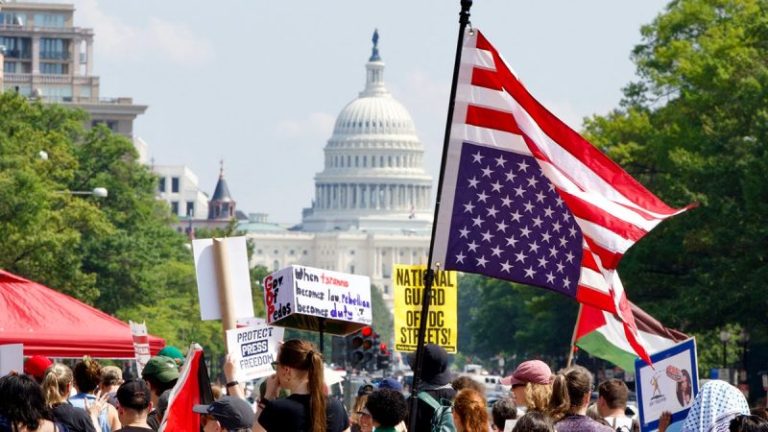
According to the report, $1.6 million from the Oak Foundation has been funneled into Community Change, the organization recognized as the ‘fiscal sponsor’ behind Free DC, which was responsible for the anti-Trump protests in Washington D.C.

Fox News Digital sent inquiries to the various foreign charities about the potential reasoning behind funneling money into American organizations that lobby and campaign for specific policy issues, but did not receive responses.

Sutherland surmised that, based on the report, implementing an extreme European agenda into the U.S. is the most likely driving factor for the multi-billion dollar grants and donations.

‘It seems clear to me that this foreign money is coming into the United States because they want to implement their extremist European vision for America,’ Sutherland concluded. ‘A lot of these groups want to ban gas stoves, very, very extremist positions. And it seems to me that when you take a look at the money, they just want to have a more extreme United States that is radicalized and further left than what we want.’

Fox News Digital reached out to the Quadrature Climate Foundation, the KR Foundation, the Oak Foundation, the Laudes Foundation, the Children’s Investment Fund Foundation, and Community Change, but did not receive responses by the time of publication.

Preston Mizell is a writer with Fox News Digital covering breaking news. Story tips can be sent to Preston.Mizell@fox.com and on X @MizellPreston

This post appeared first on FOX NEWS

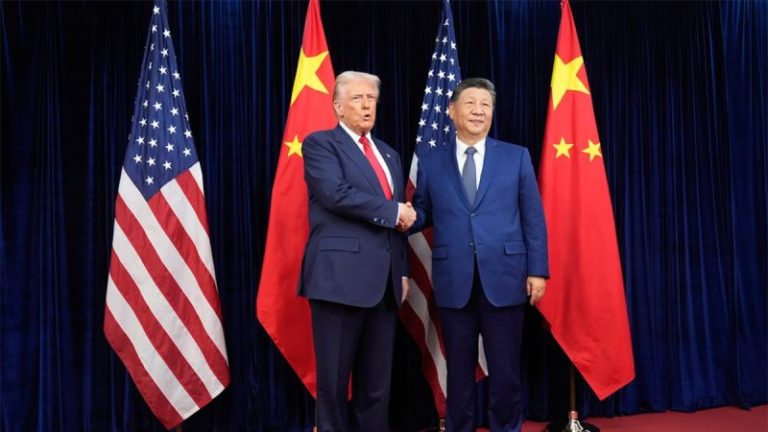
When President Donald Trump met with Chinese President Xi Jinping on Thursday, the two leaders talked about trade and drug trafficking — but avoided the one issue that could most likely draw their nations into war: Taiwan.

Both sides have reasons to keep tensions low. Trump’s administration is seeking Chinese cooperation on border enforcement and drug trafficking, while Xi faces growing economic pressures at home. Yet even as diplomacy aims for calm, U.S. defense planners have long prepared for potential conflict in the Indo-Pacific.

Tensions have only deepened in recent years. Washington has approved high-profile arms sales to Taiwan, U.S. lawmakers such as then–House Speaker Nancy Pelosi have made high-profile visits, and former President Joe Biden repeatedly pledged to defend the island — only for aides to later clarify that the United States still adheres to its long-standing ‘One China’ policy.

Meanwhile, China has dramatically increased military pressure on Taiwan through large-scale drills that simulate a blockade and invasion. The People’s Liberation Army now conducts near-constant air and naval operations encircling the island — exercises that have become larger, more complex, and more frequent. What once served as symbolic shows of force now resemble rehearsals for cutting off Taiwan’s access to the outside world.

The silence from Trump and Xi contrasted sharply with the noise of those military preparations on both sides of the Pacific.

Taiwan watchers have been left guessing about just how much the United States would come to the island’s defense if China invaded — an intentional policy known as strategic ambiguity that Trump has taken to a new level.

The president earlier this month predicted optimistically that China would not invade Taiwan.

‘I think we’ll be just fine with China. China doesn’t want to do that,’ he said. ‘As it pertains to Taiwan — and that doesn’t mean it’s not the apple of his eye, because probably it is — but I don’t see anything happening.’

Compared with other conflict zones, Trump has said little about the prospect of war in the Indo-Pacific, leaving allies and adversaries alike uncertain about how far he would go to defend Taiwan.

Some analysts who favor strong U.S. support for Taiwan were relieved the issue didn’t surface, given concerns Trump might trade the island’s interests for economic concessions — such as looser Chinese mineral export restrictions, larger agricultural purchases or cooperation on curbing the precursor chemicals fueling America’s fentanyl crisis.

‘I think it’s a good thing that Taiwan didn’t come up,’ said Raymond Kuo, a senior political scientist at the RAND Corporation. ‘There’s been a lot of concern in Taiwan, especially recently, that it would be sold out for some kind of U.S.–China grand bargain.’

Matthew Kroenig, vice president of the Atlantic Council’s Scowcroft Center for Strategy and Security, said he viewed the omission as ‘neutral,’ though he would have preferred the president restate the ‘One China’ policy while warning Beijing to ‘knock off its almost daily military coercion and gray-zone activities against Taiwan.’

Kuo noted that Taiwan has sharply increased its defense spending as tensions rise, boosting its budget by roughly 75% in the past two years and now allocating a greater share of government funds to defense than the U.S. does proportionally. Still, he warned that production delays in U.S. weapons deliveries — including a backlog that exceeded $20 billion at the start of this year — could weaken Taiwan’s ability to keep pace with China’s military modernization.

Jennifer Kavanagh, director of military analysis at Defense Priorities, said she wasn’t surprised Taiwan stayed off the formal agenda. ‘There were so many trade issues that were really top of mind for both sides,’ she said. ‘Concerns about a ‘grand bargain’ over Taiwan always seemed far-fetched.’

But Kavanagh cautioned that the United States and China cannot indefinitely avoid the subject. ‘Things have escalated significantly in recent years, and the long-time understandings around the ‘One China’ policy and strategic ambiguity have started to erode,’ she said. ‘It’s important for both sides to reaffirm their commitment to peaceful means of resolving their differences.’

She added that the military balance in the region has shifted ‘rather quickly in China’s favor,’ making U.S. deterrence less credible if tensions continue to climb. ‘The time to pivot to Asia has probably passed,’ Kavanagh said, suggesting Washington must now focus on managing competition rather than reversing it.

Inside Trump’s administration, analysts say those competing instincts are visible. ‘There are really two China policies,’ Kroenig said. ‘The trade folks are looking for deals, while the defense and national-security professionals are focused on the China threat — especially the threat to Taiwan.’ That divide mirrors Washington’s broader struggle to reconcile economic engagement with military deterrence.

Kroenig added that Trump’s unpredictability may itself be part of his deterrent strategy. ‘It keeps our adversaries guessing and worried,’ he said. ‘It may be unlikely that China would attack Taiwan under his watch.’

Still, Trump’s meeting with Xi offered little clarity on where the president ultimately stands on Taiwan — or how he would respond if Beijing tested the limits of U.S. commitment to the island’s security. For now, both leaders appear content to keep the most volatile issue in their relationship unspoken. The quiet may help avert confrontation in the short term — but it leaves one of the world’s most dangerous flashpoints lingering just beneath the surface.

This post appeared first on FOX NEWS

The White House pushed back on media reports suggesting that President Donald Trump’s administration had identified, and was imminently poised to strike, military targets within Venezuela. 

Although Trump has signaled for weeks he’s prepared to launch land operations against Venezuela, the White House cast doubt on the new media reports.

‘Unnamed sources don’t know what they’re talking about,’ White House spokeswoman Anna Kelly said in a Friday statement to Fox News Digital. ‘Any announcements regarding Venezuela policy would come directly from the President.’

The Wall Street Journal reported Thursday that the Trump administration had identified military targets within Venezuela that are being used to transport drugs, although the news outlet said that Trump hadn’t formalized a decision on whether he would launch land strikes against these targets.

Trump told reporters Friday on Air Force One a decision hadn’t been made about whether he would strike military targets within Venezuela, Bloomberg News reported. 

Additionally, the Miami Herald reported Friday that the administration had decided to conduct strikes against these military installations within Venezuela that could come ‘in a matter of days or even hours.’

Both the Journal and the Miami Herald cited anonymous sources familiar with the plans. 

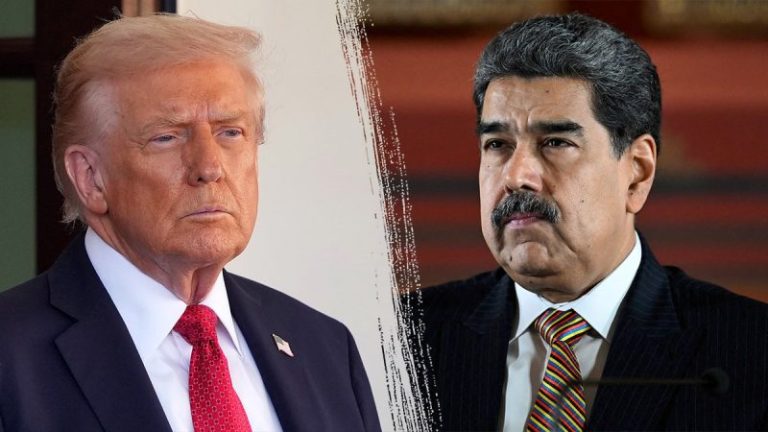
The Herald reported that the pending strikes were part of a larger effort the Trump administration is initiating to crack down on the Cartel de los Soles, which Attorney General Pam Bondi has said Venezuela’s President Nicolás Maduro heads up.

The Trump administration does not recognize Maduro as a legitimate head of state, and the administration beefed up the reward for information leading to Maduro’s arrest to $50 million, claiming he is ‘one of the largest narco-traffickers in the world.’

Meanwhile, the U.S. military has ramped up its attacks against alleged drug boats in Latin America — totaling at least 14 strikes since the beginning of September. Additionally, Trump has instructed the U.S. Navy’s newest aircraft carrier, the USS Gerald R. Ford, to head to the region.

Brent Sadler, a senior fellow for naval warfare and advanced technology at The Heritage Foundation, a conservative think tank in Washington, said that the carrier’s presence means Trump has additional resources to conduct more strikes against cartels. Meanwhile, Trump has routinely said for weeks he may move ahead with land operations against Venezuela next, in addition to his sea strikes.

‘The Ford’s arrival in SOUTHCOM area is not unprecedented but given the ongoing attacks on Cartel boats significant. I see this move as intended to deter Venezuela from escalating the crisis and providing the President extra options should he want to increase the attacks on the Cartels,’ Sadler said in an email to Fox News Digital Monday. ‘That said, I would anticipate the Ford’s air wing being very active in air surveillance and defense.’

After news broke that the Ford would head to the region, Maduro accused Trump of ‘fabricating a new eternal war.’

‘They promised they would never again get involved in a war, and they are fabricating a war,’ Maduro said in a national broadcast on Friday.

Even so, not all lawmakers are on board with Trump’s strikes in Latin America. Sens. Adam Schiff, D-Calif., Tim Kaine, D-Va., and Rand Paul, R-Ky., introduced a war powers resolution in October to bar U.S. armed forces from engaging in ‘hostilities’ against Venezuela.

‘The Trump administration has made it clear they may launch military action inside Venezuela’s borders and won’t stop at boat strikes in the Caribbean,’ Schiff said in an Oct. 17 statement.

Fox News Digital reached out to the Department of War and has not yet received a response. 

This is a breaking news story and will be updated. 

This post appeared first on FOX NEWS

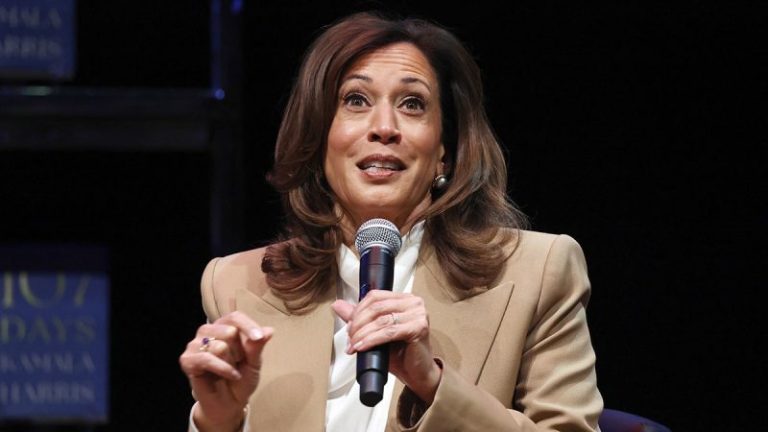
Former Vice President Kamala Harris advocated for decreasing the minimum voting age to 16.

In an interview posted on ‘The Diary Of A CEO’ YouTube channel, Harris declared that she thought ‘we should reduce voting age to 16.’

‘I’ll tell you why. So, Gen Z, they’re age about 13 through 27, they’ve only known the climate crisis,’ she said.

‘If they’re in high school or college, especially in college, it is very likely that whatever they’ve chosen as their major for study may not result in an affordable wage. They’ve coined the term climate anxiety…’ she said.

Florida Gov. Ron DeSantis responded to Harris’ comments by rejecting her proposal.

‘No. Also, suffering from ‘climate anxiety’ is not exactly an argument *for* lowering the voting age,’ he asserted in a post on X.

While Harris wants to let younger Americans vote, she has previously advocated for raising the minimum age to purchase a gun to 21 years old.

‘We can’t fail the American people on gun violence anymore. It’s time for the Senate to do something. Ban assault weapons and high-capacity magazines. Raise the age to purchase guns from 18 to 21. Strengthen background checks. Let’s get this done,’ a 2022 post on the ‘Vice President Kamala Harris Archived’ X account reads.

This post appeared first on FOX NEWS

How will this year’s World Series play out? Using the Dynasty League Baseball online simulation, USA TODAY Sports’ Steve Gardner and DLB designer Mike Cieslinski will pre-play each game to provide some insight into the key matchups and strategy fans can expect to see in the Fall Classic.

The Toronto Blue Jays return home to Rogers Centre needing only one win in two potential games to wrap up the 2025 World Series championship. That’s the same situation in USA TODAY Sports annual Simulated World Series as Jays ace Kevin Gausman takes the mound against Yoshinobu Yamamoto of the Los Angeles Dodgers.

The two teams are well-rested after a travel day so expect both managers to use every weapon at their disposal.

Dodgers vs Blue Jays Game 6 simulation

All of the excitement from the virtual home crowd got an immediate jolt of reality when the Dodgers wasted no time teeing off against Gausman in the top of the first inning — the same way the Blue Jays did in the actual Game 5 at Dodger Stadium.

Shohei Ohtani led off the game with a booming double to right field and came around to score on a Mookie Betts double to left. And that was only the beginning. Freddie Freeman singled in a run. Will Smith singled. Teoscar Hernandez doubled both of them home. Tommy Edman added another RBI single to give the Dodgers a 5-0 lead after a half inning.

In the top of the second, Ohtani struck again with a 423-foot solo homer to the opposite field and Gausman was out of the game shortly thereafter after recording only five outs.

But these Jays are relentless on offense. And after George Springer led off the third with a home run, they began an improbable comeback against Yamamoto — the winning pitcher in Game 2. In the bottom of the fourth, the Jays scored four times, aided by a Mookie Betts throwing error, to cut the deficit to one.

Springer struck again to tie the game at 7 with another solo homer. And in the bottom of the eighth, Springer doubled in Bo Bichette to give the Jays a one-run lead. Now, all that was left was to close things out in the ninth … against the heart of the Dodger lineup.

After getting Ohtani for the final out of the eighth, lefty Brendon Little remained on the mound for Toronto to start the ninth. Max Muncy roped a left-on-left double the other way and — with closer Jeff Hoffman warm in the bullpen — Little remained in the game to face Teoscar Hernandez, who doubled Muncy home to tie the score.

After the Jays failed to walk it off in the bottom of the ninth, Ohtani came to the plate in the 10th against right-hander Louis Varland and delivered a signature moment in this Sim Series — hitting a mammoth 503-foot moonshot to the second deck in right field to put the Dodgers ahead.

BOX SCORE: Dodgers 9, Blue Jays 8 (10 innings)

FULL PLAY-BY-PLAY: Ohtani’s mammoth blast lifts Dodgers in extras

The Blue Jays still had a chance to come back in the bottom of the 10th, with Dodger lefty Jack Dreyer on the mound. With the Jays down to their final out, Springer came through one more time with a clean single to left. Daulton Varsho followed with a line single to right … but as Springer headed to third, Varsho took too wide a turn at first base and was picked off for the final out of the game. A brutal ending with Vladimir Guerrero Jr. left waiting in the on-deck circle.

Blue Jays vs Dodgers Game 6 projections, analysis

So what does our simulation tell us about what we can expect when the real Game 6 takes place?

Sho-time: Ohtani had yet another unbelievable game when it mattered most. He also had a triple in addition to his double and two homers to finish the game 4-for-6 with three runs scored and two RBI. And yes, he capped things off with the 500-foot game-winning blast.
Fresh bullpens: The Jays had to go to their bullpen much earlier than they would have liked in Game 6 when Gausman didn’t have his best stuff. However, they were able to match up against the Dodgers’ left-handed bats by deploying Mason Fluharty and Brendon Little when Ohtani, Freeman and Muncy came up.
Unlikely outcomes: Even when the odds seem to be slightly favorable, the unexpected sometimes happens. Muncy’s double in the ninth came against Little, who had held left-handed batters to a .195/.304/.297 slash line during the regular season. In addition, Muncy hit just .157/.250/.314 against southpaws. But he got the big hit and scored the tying run. It wouldn’t be a surprise to see something totally unexpected play a key role in the real Game 6.

Dodgers vs Blue Jays Game 7 simulation

With the Dodgers pulling out a wild win in extra innings, it sets up a winner-take-all showdown in Game 7 with Tyler Glasnow on the mound for the Dodgers and Shane Bieber (not Max Scherzer) starting for the Jays. However, the starters may not matter with no more games left to play.

Once again, the Dodgers bats came out smoking — though this time it was in the second inning and not the first. Teoscar Hernandez got things going once again with a two-run double off Bieber as L.A. took an early 4-0 lead.

The Jays got two runs back on a Vladimir Guerrero Jr. homer, but that was essentially the only mistake Glasnow made.

Toronto had no answer for the lanky right-hander as he kept putting up zeroes on the scoreboard. Into the seventh … eighth … and even the ninth. Glasnow retired 18 of the final 19 Blue Jays hitters in tossing a complete game, 5-2 win.

BOX SCORE: Dodgers 5, Blue Jays 2

FULL PLAY-BY-PLAY: Glasnow overpowers Jays to secure title

Glasnow’s final line: 9 IP, 3 H, 2 ER, 4 BB, 8 K.

Blue Jays vs Dodgers Game 7 projections, analysis

So what does our simulation tell us about what we can expect when the real Game 7 takes place?

Here and ‘Now: Glasnow gives the Dodgers a clear advantage in starting pitching in Game 7, whether he faces Bieber or Scherzer. However, if he doesn’t throw a complete game, the Dodgers could bring in Ohtani as a reliever — something he’s never done as a major leaguer, but memorably did in closing out the 2023 World Baseball Classic for Japan when he struck out Team USA’s Mike Trout for the final out.
Ohtani wins MVP: Ohtani earned Sim Series MVP honors by hitting .280 with two homers and an 1.135 OPS over the seven game series. In addition, he pitched 6 1/3 scoreless innings during his Game 4 start. And he was warming up in the bottom of the ninth in Game 7, just in case Glasnow got into any trouble.
Springer’s value: George Springer’s health may be the key to the Blue Jays being able to capture the title in real life. He’s been dealing with an injury to his side that kept him from playing in Game 5. However, his totals for the Sim Series underscore his importance to the Jays’ offense. Springer hit .379/.438/.690 with two homers and seven RBI for the simulated Jays.

2025 Sim Series results

Game 1: Blue Jays 9, Dodgers 1
Game 2: Dodgers 12, Blue Jays 3
Game 3: Blue Jays 5, Dodgers 4
Game 4: Blue Jays 3, Dodgers 1
Game 5: Dodgers 5, Blue Jays 4
Game 6: Dodgers 9, Blue Jays 8 (10 innings)
Game 7: Dodgers 5, Blue Jays 2

This post appeared first on USA TODAY

Auburn is debating whether to fire coach Hugh Freeze after three underperforming seasons.
Florida’s decision to retain its coach, Billy Napier, for an extra year serves as a cautionary tale.
Freeze’s record at Auburn is 15-18, and his offense is among the SEC’s worst.

Florida showed Auburn the price for retaining a lame-duck coach.

The next season becomes a waste. Is that a price Auburn’s willing to pay to avoid this crowded coaching carousel?

Florida contemplated firing Billy Napier a year ago, with the writing on the wall after three seasons of tire spinning and some flat-out bad coaching.

Former Gators athletic director Jeremy Foley used to say what must be done eventually should be done immediately. Florida’s administration didn’t heed that old wisdom. It retained Napier for a fourth season, a year that will be remembered for a spitwad and chants of “Fire Billy!”

Now here’s Auburn, debating whether to retain sunken coach Hugh Freeze for a fourth season. Freeze has given them no reason to keep him.

Does Auburn want to hire in same cycle as LSU, Florida, Penn State?

He came to the Plains with a reputation for being a sharp offensive mind and a capable quarterback developer. In three seasons at Auburn, he has failed to develop a quarterback. His latest offense ranks among the SEC’s worst. He’s not recruiting well.

Even after a comeback win against Arkansas, Freeze’s 15-18 record puts him just a smidge ahead of Bryan Harsin in the quest to avoid being Auburn’s worst coach since it fired Earl Brown after the 1950 season.

“Is the program better than when I got here on the roster? Yes,” Freeze said this week.

Technically, he’s right. The program is a touch better than it was under Harsin, but barely clearing Harsin’s bar of incompetence surely isn’t what Auburn had in mind when it hired Freeze.

“Are we close? Yes,” Freeze continued.

Also true. If they awarded medals for close losses, Auburn would capture the gold. Each of its losses this season came by 10 points or fewer.

“I’ve won everywhere I’ve been,” Freeze said, “and I believe with all my heart we’re going to win big here.”

Correction: He won everywhere, until he got to Auburn. The Tigers’ last winning season occurred under Gus Malzahn.

Freeze’s greatest success came while his Mississippi staff trampled the NCAA rule book. Now that everybody’s paying players, Freeze has lost his fastball. Coincidence?

Unless Freeze goes 4-0 in November and wins the Iron Bowl, his resumé would be wholly undeserving of a fourth season.

But, wait!

Maybe, there’s a reason to retain Freeze. Mind you, it has nothing to do with his performance or his 2026 recruiting class and everything to do with Penn State, Florida and LSU firing their coaches before Auburn made a move.

At least Auburn doesn’t need to stress about Lane Kiffin sweepstakes

The carousel has gotten awfully crowded. If Auburn joins the fray, it could need to wait in line while bigger fish made their moves.

Perhaps a candidate like Tulane’s Jon Sumrall would trickle down to Auburn. If Auburn wants Sumrall, by all means fire Freeze and enter the hiring sweepstakes.

But if it wants a chance at the catbird seat in a hiring cycle, then it must wait.

That’s what made the Gators’ decision to retain Napier especially foolish. Florida would have been the top job available in 2024. Lane Kiffin was free for the taking, unburdened from coaching in the playoff after a 9-3 finish.

By waiting, Florida now encounters competition for Kiffin. Plus, his potential exit from Mississippi could be complicated by the Rebels qualifying for the playoff.

Auburn wouldn’t need to fret about missing the Kiffin sweepstakes. We learned in 2022 AU can’t corral the Lane Train. That year, Auburn had the best job on the market, and it wound up with Freeze.

Does Auburn want to join a carousel in which it would be, by my count, the fourth-best job on the market? That’s the question Auburn must weigh these next few weeks as it considers action on a lame-duck coach.

Blake Toppmeyer is the USA TODAY Network’s senior national college football columnist. Email him at BToppmeyer@gannett.com and follow him on X @btoppmeyer.

This post appeared first on USA TODAY

With the NFL’s Nov. 4 trade deadline looming, the outcome of Week 9 games will definitively sort the league’s buyers from its sellers.

Playoff-bound teams looking to shore up roster holes for the season’s stretch run have limited options to upgrade their rosters this late in the season, so at least a few deadline deals with teams falling outside the playoff picture are likely.

Here’s a look at the trades USA TODAY’s NFL insiders want to see. If they’re any indication, expect the Los Angeles Chargers to be trade deadline buyers.

Indianapolis Colts trade for Miami Dolphins OLB Jaelan Phillips

Chris Ballard had to break from his established ways to position the 7-1 Colts to become the NFL’s surprise resurgence story. Why not continue that effort and turn Indianapolis into a legitimate buyer at the trade deadline? No need to go ‘all-in’ here, as there’s no truly transcendent talent for whom it’d be worth forking over a top pick.

But if the Colts hope to stand a chance against the likes of Patrick Mahomes and Josh Allen in the playoffs, they’ll need to ramp up their pass rush. Indianapolis ranks second in the NFL in pressure rate (39.9%) but is merely average in sack rate (6.57%) while it has the fourth-highest time to throw (2.90 seconds) of any defense. Translation: Indianapolis isn’t truly forcing opposing quarterbacks into bad spots, as evidenced by a defensive success rate (46.38%) that ranks just 26th. Two consecutive season-ending injuries have stood in the way of Phillips becoming a true force off the edge, but he’d provide a jolt opposite Laiatu Latu.

Phillips would also give defensive coordinator Lou Anarumo the kind of rush end capable of dropping into coverage and keeping opposing attacks off balance. Miami likely will be reticent to part with a player so critical to its hopes of a second-half surge, but Ballard could still muster an offer worth mulling without completely draining his own draft capital.

–Michael Middlehurst-Schwartz

Carolina Panthers trade RB Rico Dowdle to the Los Angeles Chargers

It’s no secret the Chargers need running back depth. Kimani Vidal has filled in admirably with Najee Harris (Achilles) and Omarion Hampton (ankle) out of the lineup, but Los Angeles hasn’t gotten much out of the other backs on its roster.

Hampton’s timeline to return from his ankle injury remains murky, and the Chargers aren’t likely to rush the rookie back into action. As such, coach Jim Harbaugh and offensive coordinator Greg Roman could be interested in adding a secure, long-term partner for Vidal ahead of the deadline.

Dowdle, 27, has solid size (5-11, 215 pounds), contact balance skills and power. He would take some pressure off the 5-8 Vidal as an every-down option and would allow the Troy product, who has shown well in pass protection, to take on the bulk of the third-down snaps.

Dowdle has racked up an impressive 605 yards and two touchdowns on 106 carries this season. The Panthers may not be willing to give him up given their 4-4 record and his superior performance compared to Chuba Hubbard’s, but with Dowdle playing on an expiring one-year deal, a trade cannot be ruled out.

–Jacob Camenker

New York Giants trade QB Russell Wilson to the Los Angeles Chargers

Given the costly body blows they’ve already taken this season at offensive tackle and running back, you’d think the Bolts would better position themselves with a Justin Herbert insurance policy – particularly given the barrage of hits he’s already taken this season behind his patchwork blocking. And yet it’s difficult to find a supposed contender with a more uninspiring QB2 plan than the Chargers, who continue to roll with long-on-potential-short-on-proof backups Trey Lance and undrafted rookie DJ Uiagalelei, a former five-star recruit who never panned out at any of his three college stops.

And while “Mr. Unlimited” is clearly limited at this point of his 14-year career, acquiring the remainder of Wilson’s contract is basically a $1 million proposition for 2025 and allows Lance and Uiagalelei, who’s on the practice squad, to continue their development under quarterback guru Jim Harbaugh. As for the Giants? How much more is Jaxson Dart going to glean from Russ at this point? And given veteran Jameis Winston is under contract through the 2026 season, New York is nicely set up as Dart continues to progress – even more so if the G-Men can rake in even a low-level pick swap for their erstwhile starter.

Is Wilson, 36, going to win a Lombardi Trophy at this point? Nah. Could he enable a team like the Chargers to survive a 4-6 week injury to their QB1? Quite probably.

–Nate Davis

New York Jets trade RB Breece Hall to the Kansas City Chiefs

If you look at before and after pictures of every U.S. president, you can see the weight of the job. Turns out, the same is true for players associated with the Jets. Hall entered the league with great promise, but you can see the weight of losing and why a change of scenery seems to be coming sooner than later.

‘Teams shoot themselves in the foot then we come back and shoot ourselves in the head,’ Hall said after a loss to the Dolphins in Week 4. The Jets have the league’s longest playoff drought and are heading for yet another rebuild – with a star running back who doesn’t fit that timeline.

Hall is set to become a free agent after the season and his days with “Gang Green” are likely numbered. He just tossed the game-winning touchdown pass and added two more on the ground against the Bengals. It might’ve been a showcase game and Kansas City would be smart to make the call. The Chiefs need a running back and are right in the middle of an AFC West arms race. Hall’s legs may be able to take Andy Reid’s team to another level.

–Nick Brinkerhoff

This post appeared first on USA TODAY