Archive

2025

Browsing

I don’t want to be the guy who has to point this out, but the good, well-intended folks on the College Football Playoff selection committee have a Michigan problem. 

Check that, an Ohio State and Michigan problem after the first week of the CFP rankings. 

Because the Buckeyes haven’t beaten Michigan since 2019, and frankly, Ohio State looks lost in the bitter rivalry. The Buckeyes, though, are only a secondary part of the problem — and only because of their part in the process. 

The whopper of a problem is Michigan, currently ranked No. 21 with three games to play. Two of those games are against two of the lower-tier of the Big Ten (at Northwestern, at Maryland) and the last is against You Know Who. 

Again, I hate to be the guy who has to say this, but what in blue blazes happens if Michigan wins out and reaches the Big Ten championship game — and then loses to Indiana?

We could have quite the dicey situation of 10-3 Michigan vs. 9-3 Oklahoma for a CFP spot. And Oklahoma beat Michigan by 11 in September.

I don’t need to tell you a win over No. 1 Ohio State would trump all, including an 11-point win head-to-head. Why? Because, well, who the hell really knows? 

But you better believe it will.

When you’ve got the head of the selection committee talking about how fortunate it is to have three former coaches — Chris Ault, Mark Dantonio, Mike Riley — within the 13-member committee, you can see where this is headed. 

Mack Rhoades, athletic director at Baylor and the guy tasked with herding the cats, was talking about “lines of scrimmage” when explaining the difference between Ohio State and Indiana and Texas A&M. I literally laughed out loud. 

Why do I have this vision of Dantonio, one of the toughest dudes in the coaching fraternity, pounding his fist about the lines of scrimmage while staring down all? But I digress. 

It’s only Week 1. How bad could it get?

The fortunate

No. 1 Ohio State

The defense sure looks elite, but has faced these quarterbacks: Arch Manning (in the first road start of his career), C’zavian Teasett, Parker Navarro, Desmond Williams, Drake Lindsey, Luke Altmyer, Hunter Simmons and Ethan Grunkemeyer. 

Riveting. And you could make an argument November gets easier.

But, you know, lines of scrimmage.

No. 7 BYU

The classic “they’re unbeaten, so what else are we going to do’ choice. The schedule: Portland State, Stanford, ECU, Colorado, West Virginia, Arizona, Utah, Iowa State.

Let’s see what Kalani Sitake’s group has for Texas Tech this weekend. Deal with the tortillas — and the Red Raiders’ lines of scrimmage — and then I’m a believer. 

No. 10 Notre Dame

If this were Iowa State playing this schedule, the Cyclones would be ranked in the 20s. 

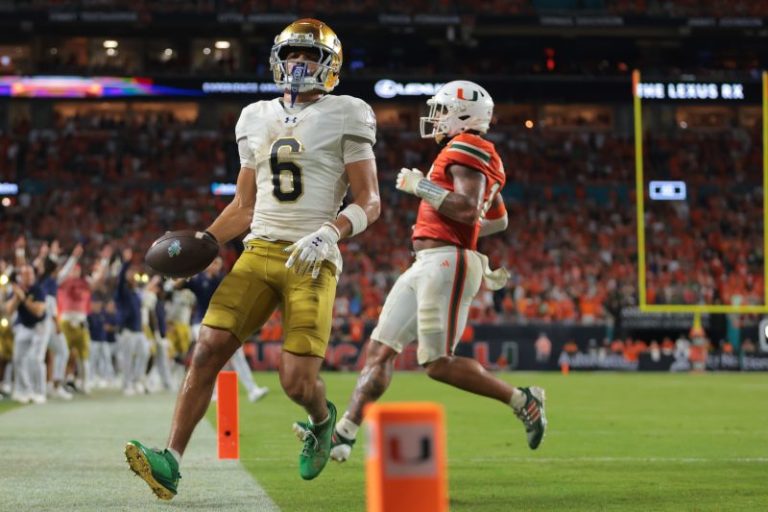
The Irish blew a late lead at home to Texas A&M, and never really threatened Miami in the season opener — despite the one possession game. Outside of that, there are these six wins:

Purdue hasn’t won a Big Ten game, Arkansas hasn’t won an SEC game, Boston College hasn’t won an ACC game, and home wins against USC, NC State and Boise State.

I’m gonna puke.

The frantic

No. 2 Indiana

It’s clear the committee was using eye test for Ohio State (lines of scrimmage!), yet the far and away eye test team of the field is Indiana. 

The Hoosiers blew the doors off Illinois and physically manhandled Oregon in their two ranked games, and then annihilated everyone else (with the exception of Phil Parker’s defense at Iowa). Like Ohio State, Indiana is ranked in the top five in the nation in scoring offense and defense ― against a more difficult schedule.

Eye, meet test.

No. 6 Ole Miss

No matter what the Rebels do, they’re not moving ahead of Georgia (where they lost and blew a two possession lead in the fourth quarter) and Alabama (which beat Georgia). Unless, of course, Georgia or Alabama lose. 

If Georgia and Alabama continue winning, the Ole Miss ceiling is more than likely No. 5 — and a spot in the first round playing host to dangerous South Florida (of course the Bulls are beating Memphis in Round 2). 

No. 18 Miami

Barring a collapse in front of them, the Canes are done. That win over Notre Dame in the season opener? Means nothing.

The Canes could win out (including a difficult roadie at Pitt), finish 10-2 and still be behind the Irish. As long as the Irish keep winning, there’s no chance Miami is making up ground. 

I mean, unless their lines of scrimmage start dominating games.  

Matt Hayes is the senior national college football writer for USA TODAY Sports Network. Follow him on X at @MattHayesCFB.

This post appeared first on USA TODAY

The Nashville Predators lost 3-2 in overtime to the Minnesota Wild on Nov. 4 at Grand Casino Arena.
Marcus Johansson’s overtime goal was allowed after officials ruled that Predators goalie Justus Annunen intentionally dislodged the net.

The NashvillePredators’ loss to the Minnesota Wild had one of the strangest endings to a hockey game you’ll ever witness.

At the 3:38 mark of overtime, forward Marcus Johansson scored to clinch a 3-2 win for the Wild on Tuesday, Nov. 4. Except, the puck never entered the net.

‘I feel like we got screwed tonight,’ Predators forward Michael McCarron told reporters at Grand Casino Arena after the loss.

On the play, seconds before Johansson touched the puck, Predators goaltender Justus Annunen slid hard into the left post. His skate dislodged the net from its moorings while the Wild had possession of the puck. When the puck found Johansson on the right post, his initial shot hit the outside of the net, then a second shot was ruled a goal by the officials, though it never went in the net.

The officials ruled that Annunen intentionally dislodged the net during an ‘imminent scoring opportunity’ as per NHL rule 63.7. The call was confirmed after a video review from Toronto.

‘The explanation was (the officials) were anticipating it was a goal,’ Predators coach Andrew Brunette said. ‘I disagree with his opinion. That’s the way it is.’

After the game, the NHL released an explanation, saying ‘the actions of Nashville’s Justus Annunen caused the net to be displaced prior to the puck crossing the goal line. Therefore, the referees awarded Minnesota’s Marcus Johansson with a goal.’

But on replay, it’s clear that Johansson’s initial shot would not have gone into the net were it in place. The shot hit the outside of the net, bouncing back to him for a second shot only because the net was dislodged.

‘I don’t know how the ref can stand there with a straight face and call it a goal,’ McCarron said. ‘Then they call Toronto and they still decide it’s a goal. I’m dumbfounded.’

Steven Stamkos befuddled at overtime goal decision

The bizarre conclusion punctuated a fantastic game, including some late heroics from Predators forward Steven Stamkos.

With the Wild holding a 2-1 lead late in the third period, Stamkos scored on a one-time shot from the left circle with 0.3 seconds remaining to tie the game.

‘It was hell of a shot,’ Brunette said. ‘Only a few players in the history of the NHL can make that shot.’

That goal clinched at least a point for the Predators (5-6-4, 14 points).

‘One of our better games of the season,’ he said. ‘We dictated play for most of the night.’

Like Brunette, Stamkos disagreed with the call, shocked that officials would make that ruling given what happened.

‘The confusing part for us was why it was so emphatically called a goal,’ Stamkos said. ‘I get it, the net came off. If the puck goes in right away, no problem if the net’s off. But he missed the net. And the puck actually bounced back to him because the net was sideways and hit the side and it popped back. My interpretation of the rule is if the net wasn’t off, the puck wouldn’t have come back to him and have an open net.’

Nashville now has four overtime losses on the season, including three straight.

The Predators host the Philadelphia Flyers on Nov. 6 (7 p.m. CT, FanDuel Sports Network).

Alex Daugherty is the Predators beat writer for The Tennessean, part of the USA TODAY Network.

This post appeared first on USA TODAY

The NFL regular season is halfway over and the trade deadline is behind us.

Big names were moved in the final hours of deadline day. New York Jets stars Sauce Gardner and Quinnen Williams were dealt to Indianapolis and Dallas, respectively, as the team goes for an overhaul. Smaller deals saw wide receivers Rashid Shaheed and Jakobi Meyers sent to Seattle and Jacksonville, respectively.

Those were the last moves teams could make for the regular season. The biggest moves from here on out have to wait until the offseason – including the NFL Draft.

The 2026 NFL Draft features a mix of talent at positions, namely linebacker, wide receiver and defensive line. The quarterback class isn’t as good as hoped but still offers multiple first-round talents, including at the top of Round 1.

As the dust settles from the trade deadline, how have things changed in our latest mock draft? Here’s a new prediction for the first round with the order from Tankathon:

2026 NFL mock draft

1. New Orleans Saints: QB Fernando Mendoza, Indiana

The Saints drafted a quarterback in 2024 and 2025 but when you have the No. 1 overall pick, you take a shot on the best passer available. Mendoza’s surprisingly fast release for his size (6-foot-5, 225 pounds) maximizes his processing abilities. He’s also a solid scrambler who can extend plays with an understanding of pocket pressure.

2. Tennessee Titans: Edge Rueben Bain Jr., Miami

With a No. 1 overall quarterback already on the roster, Tennessee opts for one of the best players in the class at a valuable position. Bain has improved his play in 2025 with physicality at the point of attack, which should fit right in at the NFL level. His bull rush and bend provide a solid foundation to being a consistent edge rusher and his strength means he can set the edge in run defense as well.

3. New York Jets: QB Ty Simpson, Alabama

Simpson may be in the conversation for QB1 in the class by the time the 2025 college football season is over. He waited behind Bryce Young and Jalen Milroe for his opportunity and he’s made the most of it. Simpson offers an impressive combination of mobility and accuracy; he can quickly feel pressure in the pocket, identify his man, adjust and reset before making a quick throw. If not for his lack of starting experience, Simpson would be well in the conversation for the No. 1 pick.

4. Miami Dolphins: S Caleb Downs, Ohio State

Miami needs impact starters on both sides of the ball and it may be hard to find a more impactful player on defense than Downs. The Buckeyes defensive back can play all over the formation with the athleticism, size, and football IQ to cover wide receivers, tight ends or running backs. He’s our top prospect in the class and only falls this far because of positional value.

5. New York Giants: WR Jordan Tyson, Arizona State

The Giants could go either skill position or offensive line at No. 5 here. Looking at the board, we went with the former and gave New York the top wideout in the class. Tyson has an NFL-ready skillset that should provide instant impact across from Malik Nabers. He’s a stellar route runner for his age with the suddenness to create separation at will. At 6-foot-2 and 200 pounds with impressive verticality, he can high-point deeper passes to win in contested catch situations.

6. Cleveland Browns: QB Dante Moore, Oregon

From one Oregon passer to another. Moore took over the reins in Eugene in 2025 and has made plays with his strong arm and legs this season. His layering, as well as short and intermediate accuracy, have taken a step this year, which boosts his stock ahead of the draft. His mobility will be an asset as well at the next level and can provide Cleveland with an option for the future at quarterback.

7. Las Vegas Raiders: LB Arvell Reese, Ohio State

Reese is one of the biggest risers in the draft class this season. The Buckeyes’ linebacker has outlier size (6-foot-4, 243 pounds) with elite athleticism. What makes him different is his versatility and football IQ. He can effectively rush the passer, read and react correctly in run defense to force a tackle for loss and cover a tight end, sometimes all within the same drive. Las Vegas needs someone to help Maxx Crosby on defense and Reese’s versatility fits the bill.

8. Cincinnati Bengals: Edge Keldric Faulk, Auburn

The Bengals defense needs all the help it can get. They’re last in yards and points allowed league-wide. Between help in the secondary and help up front, we went with the latter. Faulk’s movement skills and elite size for an edge (6-foot-6, 285 pounds) should make him an impact starter as a rookie. He’s a high-motor rusher who’s played at multiple spots on the defensive line. He’s also one of the youngest players in the class, which gives Cincinnati a player to build around going forward.

9. Washington Commanders: RB Jeremiyah Love, Notre Dame

Washington needs impact players at skill positions on offense. With Tyson off the board, they take the No. 1 running back in the class. Love is the ideal archetype of the modern running back. At 6-foot and 214 pounds, he has NFL size with sprinter speed to be a game-breaking back whenever he touches the ball. The former track star boasts route-running abilities and solid hands to be a three-down back immediately.

10. Baltimore Ravens: DT Peter Woods, Clemson

Baltimore’s slowly working its way farther down the order but still sits in a position to get a high-potential player. Woods was the No. 1 prospect for many analysts entering the 2025 college football season but he’s yet to fully maximize his impressive toolkit of traits. At his best, he shows shades of Jalen Carter. But can he get there consistently? The Ravens would be the right staff to find out.

11. Los Angeles Rams (via Atlanta Falcons): CB Jermod McCoy, Tennessee

The Rams have one of the best young fronts in the NFL but could use more star power on the back end to complete the unit. Unfortunately, McCoy hasn’t played in the 2025 college football season due to an ACL injury, but when he’s on the field, he’s one of the best in the country. He has prototypical size and athleticism with the ability to fit in multiple schemes.

12. Arizona Cardinals: Edge T.J. Parker, Clemson

Parker is one of the better run defenders at the position in the class with a 6-foot-3, 265-pound frame. He’d be another young piece for the future of the defensive line alongside Walter Nolen and Darius Robinson. Running back and safety were also in consideration but the positional value gives Parker the nod.

13. Houston Texans: OT Spencer Fano, Utah

Houston’s offensive line desperately needs help. They get it here with one of the best tackle prospects in the class. There are some concerns about Fano’s lean build at 6-foot-6 and 305 pounds but you can’t argue with his movement skills, balance and hand usage. He’s a sure-handed pass protector already and would be a welcome sight for C.J. Stroud.

14. Dallas Cowboys: CB Aveion Terrell, Clemson

Dallas has paid DaRon Bland and Trevon Diggs handsomely, yet still has one of the worst pass defenses per play in the league. Terrell may be slightly undersized at 5-foot-11 and 180 pounds but excels in zone coverage. He’s the younger brother of Falcons cornerback A.J. Terrell and brings athleticism and a tenacious attitude to the position.

15. Minnesota Vikings: OT Francis Mauigoa, Miami

Minnesota’s offense has sputtered with injuries along the offensive line. Quarterback J.J. McCarthy is in his first full season as a starter and could use more help in front of him. Mauigoa plays right tackle and may end up as the long-term heir to Brian O’Neill at that spot or he could kick inside to guard earlier than later. It may seem like a frivolous pick but considering how things have looked for the Vikings, insurance could go a long way.

16. Carolina Panthers: WR Carnell Tate, Ohio State

Carolina’s properly in playoff contention thanks to one of the top rushing attacks in the league. With this pick, Carolina looks to improve its passing offense as well. Tate has taken on a larger role in 2025 in Columbus and thrived as a big-play wide receiver. His reliable hands and route-running would complement 2025 first-round pick Tetairoa McMillan on the outside.

17. Kansas City Chiefs: TE Kenyon Sadiq, Oregon

Like Baltimore, Kansas City continues falling down the order as it stacks up wins. They still get a contributor on offense with this pick as Sadiq could be a tight end of the future. He’s the top player at the position in the class as a proper mismatch at 6-foot-3 and 245 pounds. He’s a willing blocker and vertical threat at the position who could be a versatile player for this offense.

18. Chicago Bears: CB Mansoor Delane, LSU

This may be recency bias, considering the Bears just let Joe Flacco drop 470 passing yards on them in Week 9. Delane would be a welcome addition for the pass defense. He’s not an outlier athlete and there are concerns about his leaner frame at 6-foot-1 and 187 pounds. But he’s a shutdown cornerback in college who opposing quarterbacks avoid entirely. He’s sticky in man coverage with ideal technique and has the football I.Q. to thrive in zone as well.

19. Cleveland Browns (via Jacksonville Jaguars): OT Kadyn Proctor, Alabama

Cleveland’s offensive line is years removed from its dominant heights under Kevin Stefanski. Now, the unit could use some help. It’s hard to find a more outlier athlete at the position in this class than Proctor. He needs some work with his consistency but when he’s on, there are few tackles more terrifying than him.

20. Pittsburgh Steelers: Edge David Bailey, Texas Tech

At this point, the top cornerbacks are off the board. It’s between wide receiver or edge rusher at this spot. We went with Bailey, one of the most productive edge rushers in college football. Like Derrick Harmon in 2025, Bailey is a safe bet to continue his production in the NFL. He’s a bit undersized (6-foot-3, 250 pounds) to set the edge in run defense but offers you so much as a designated pass rusher immediately.

21. Detroit Lions: Edge LT Overton, Alabama

Detroit’s done well to avoid injuries on the defensive line this season compared to last and get another long, tall edge rusher to deploy opposite Aidan Hutchinson. Overton can set the edge in run defense with a physical style of play. At 6-foot-5 and 278 pounds, he could line up at multiple spots on the defensive line as well.

22. Los Angeles Chargers: Edge Cashius Howell, Texas A&M

Howell is another undersized edge rusher at 6-foot-4 and 245 pounds with the speed to get after the quarterback regularly. He’s already deploying speed to power, spin and cross-chop moves in college that should stick at the NFL level. The Chargers could use more help off the edge and Howell could be a versatile piece to use in coverage as well.

23. San Francisco 49ers: OT Caleb Lomu, Utah

San Francisco’s barrage of injuries makes it hard to get a proper picture of the starters but the 49ers could use help on the offensive line. Lomu is still raw in his development but has impressive athletic traits. He’s played left tackle at Utah and could end up there for the 49ers or at right tackle.

24. Dallas Cowboys (via Green Bay Packers): LB Sonny Styles, Ohio State

Linebacker’s been a weak spot for the Cowboys this season and DeMarvion Overshown can only do so much to paper over that. Styles was initially viewed as the top linebacker in Columbus before Arvell Reese’s rise. He’s similarly sized (6-foot-4, 238 pounds) with impressive movement skills. He’d be a welcome fit in the middle as an athletic, reliable tackler.

25. Buffalo Bills: WR Chris Brazzell II, Tennessee

Buffalo’s rushing attack is one of the best in the league once again this year. They opt to get Josh Allen another weapon in the passing game here with the 6-foot-5, 200-pound Brazzell. The Volunteers wideout offers elite burst off the line with verticality to win contested catches. He’s operated well underneath in 2025 to show some development in his game.

26. Seattle Seahawks: OG Olaivavega Ioane, Penn State

Seattle addressed wide receiver at the trade deadline by acquiring Rashid Shaheed, moving that need down the priorities. Instead, they’ll continue to upgrade the offensive line with one of the safest picks in the round. Ioane is the top pure-guard prospect with a mix of size, strength and mobility. He’ll need some development technically but the foundation is there for a long-term starter.

27. Los Angeles Rams: QB LaNorris Sellers, South Carolina

In a curveball late in the round, Los Angeles plans for the future with one of the most physically impressive quarterbacks in recent draft history. Sellers’ background as a soccer player comes through in his scrambling ability at 6-foot-3, 240 pounds. He has plenty of elite tools but needs time to refine his game. He could sit behind Matthew Stafford for a year and get up to speed before eventually taking over.

28. Denver Broncos: QB John Mateer, Oklahoma

Mateer had first-round potential to start the season before suffering a hand injury. He’s been spotty since returning from that injury in a matter of weeks and should improve as the season wears on. At his best, Mateer has solid mobility, good processing and a strong arm that operates out of multiple angles. Quarterback, Denver has one of the best rosters in the NFL. They need an upgrade at the position to maximize it.

29. Tampa Bay Buccaneers: Edge Zion Young, Missouri

Young’s been one of the most productive edge rushers in the country with 30 pressures and five sacks through eight games. At 6-foot-5 and 262 pounds, he has the kind of size that the Buccaneers like at the position with an attitude that’ll endear him to the coaching staff. His hand usage and size will help him stick at the next level.

30. New England Patriots: WR Chris Bell, Louisville

Drake Maye’s taken a step forward in year two, and the offense needs to take a step up in personnel around him. It’s between offensive line and wide receiver at this spot. We go with the latter and pick Bell, the linebacker-sized wideout with speed. His physicality against press coverage will offer something different to the Patriots’ wide receiver room.

31. Philadelphia Eagles: CB AJ Harris, Penn State

Philadelphia’s trade for Jaire Alexander to potentially play outside cornerback opposite Quinyon Mitchell shows they need help at the position. If Alexander or the other options at the position don’t work out, Harris could be the right call here. The Penn State cornerback has NFL size at 6-foot-1 and 191 pounds with an aggressive mentality and athleticism to stick at the position.

32. New York Jets (via Indianapolis Colts): Edge Matayo Uiagalelei, Oregon

New York dealt cornerback Sauce Gardner to Indianapolis for two first-round picks and wideout Adonai Mitchell at the trade deadline. Now the Jets are looking for building blocks for the future. Coach Aaron Glenn and general manager Darren Mougey both come from teams that built up the trenches to some of the most dominant units in the league. Uiagalelei has NFL size at 6-foot-5 and 272 pounds with the right mix of strength and athleticism to line up in multiple spots on the defensive line.

This post appeared first on USA TODAY

President Donald Trump compared Democrats to Japanese kamikaze pilots who conducted suicide missions during World War II, amid the ongoing government shutdown.

Trump’s remarks come on the heels of his Asia trip, where he visited Japan, as the government shutdown has lasted for 36 days – marking the longest one in U.S. history.

‘I think they’re kamikaze pilots,’ Trump told Republican senators at a breakfast at the White House on Wednesday. ‘I just got back from Japan and talked about the kamikaze pilots. I think these guys are kamikaze. They’ll take down the country if they have to.’

Additionally, Trump said he didn’t think Democrats were taking enough of the blame for their role in the shutdown.

‘It is Democrat-created, but I don’t think they’re getting really the blame that they should,’ Trump said, adding that the government must open soon.

The government ran out of funding that prompted the partial shutdown on Oct. 1, due to gridlock between Senate Republicans and Democrats over a short-term funding bill to fund the government through Nov. 21.

The stalemate between Republicans and Democrats stems from healthcare provisions in a potential funding measure. Trump and Republicans claim Democrats want to provide illegal immigrants healthcare, and have cited a provision that would repeal part of Trump’s tax and domestic policy bill known as the ‘big, beautiful bill’ that reduced Medicaid eligibility for non-U.S. citizens.

But Democrats say this isn’t the case and have said they want to permanently extend certain Affordable Care Act subsidies that are set to expire at the end of 2025.

Trump also stated that the shutdown was the reason that Republicans lost several key races – including the Virginia and New Jersey gubernatorial elections – on Tuesday.

‘Exactly one year ago, we had that big, beautiful victory,’ Trump said. ‘But I thought we’d have a discussion after the press leaves about what last night represented and what we should do about it. And also about the shutdown and how that relates to last night.’

‘I think if you read the pollsters, the shutdown was a big factor. Negative for the Republicans, and that was a big factor,’ Trump said.

Meanwhile, Senate Democrats refused to back Republican’s stopgap funding bill on Tuesday to reopen the government. Senate Minority Leader Chuck Schumer, D-N.Y., said that his party remains firm that it will not support a measure that doesn’t include extensions for the Affordable Care Act subsidies.

‘The only plan Republicans have for healthcare seems to be to eliminate it, and then to tell working people to go figure it out on their own,’ Schumer said Tuesday. ‘That’s not a healthcare plan. That’s cruel.’

This post appeared first on FOX NEWS

President Donald Trump said on Wednesday morning that the ongoing government shutdown was partly to blame for Republican losses on Election Day.

Trump told reporters during a breakfast with GOP lawmakers at the White House that election night on Tuesday ‘was not expected to be a victory,’ saying the 36-day government shutdown was one of two possible reasons.

‘I think, if you read the pollsters, the shutdown was a big factor,’ Trump said. ‘Negative for the Republicans, and that was a big factor.’

Trump added: ‘And they say that I wasn’t on the ballot and was the biggest factor. But I don’t know about that. But I was honored that they said that.’

His remarks come after Democrats won resoundingly in multiple states on Tuesday, with exit polls showing economic worries were very much on the minds of voters.

‘I don’t think it was good for Republicans,’ Trump said of the election results. ‘I don’t think it’s good. I’m not sure it was good for anybody.’

Some major losses for Republicans included the New York City mayoral race, and contests for governor in New Jersey and Virginia. Democrats also secured another expected win in California, where voters approved a new congressional map that is designed to help their party win five more U.S. House seats in next year’s midterm elections.

On the morning following the defeats, Trump called on lawmakers to bring the 36-day government shutdown, now the longest on record, to an end. 

‘We must get the government open,’ Trump said, going on to push Republican senators to end the filibuster.

‘It’s time for Republicans to do what they have to do,’ he said. ‘Terminate the filibuster.’

The Associated Press contributed to this report.

This post appeared first on FOX NEWS

There’s movement, already, in the NBA’s balance of power.

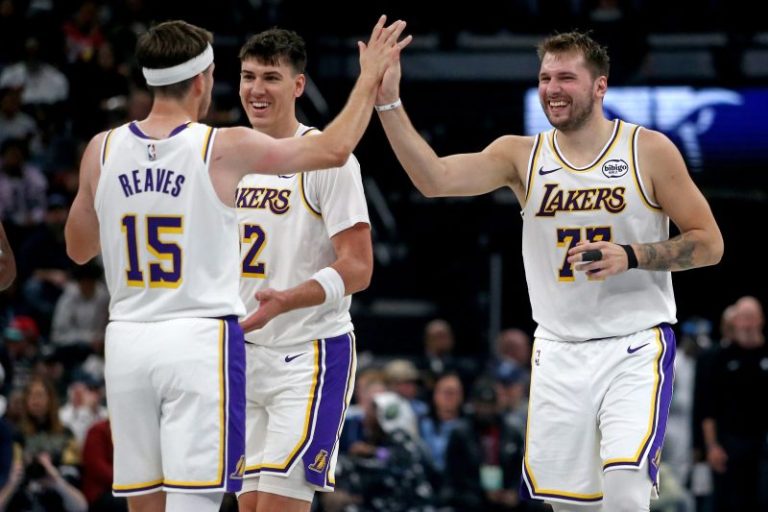
That’s particularly the case in the Western Conference, where the Los Angeles Lakers have withstood injuries to LeBron James (sciatica) and Luka Dončić, though he has come off the injury report. Austin Reaves even missed a game, but no matter; the Lakers have answered most early tests this season, which does raise the question of how the team will look once James returns.

Atop the East, however, there was a surprise battle for first place on Tuesday, Nov. 4, with the Chicago Bulls topping the Philadelphia 76ers.

It’s still very early in the season, but there’s nonetheless plenty to sort through.

Here are USA TODAY Sports’ NBA power rankings after Week 2 of the 2025-26 regular season:

* Parentheses show movement from last week’s rankings

USA TODAY Sports NBA power rankings — Week 2

1. Oklahoma City Thunder, 8-0 (—)

Only undefeated team, and they’ve done it without All-Star Jalen Williams.

2. Los Angeles Lakers, 6-2 (+9)

On a four-game winning streak, and two of those were without Luka Dončić.

3. San Antonio Spurs, 5-1 (+3)

Victor Wembanyama blocks more shots per game (4.7) than 14 teams do.

4. Houston Rockets, 4-2 (+3)

Only two losses have been against Thunder and Pistons, and Kevin Durant is leading the NBA’s top-rated offense (123.2).

5. Chicago Bulls, 6-1 (+9)

Biggest surprise of the season, Bulls lead the NBA in assists per game (30.2).

6. Denver Nuggets, 4-2 (-3)

The league’s best assist-to-turnover ratio (2.13), but only victory against a team with winning record is against the Timberwolves.

7. Cleveland Cavaliers, 4-3 (-4)

They ranked first in offensive rating (121.0) last year. So far this season, they’re 26th (111.3).

8. New York Knicks, 4-3 (-3)

One year after ranking last in bench points per game (12.7), Mike Brown’s Knicks are better … but not by much (27.1; 28th)

9. Golden State Warriors, 5-3 (-7)

Dubs, not surprisingly, lead the league in made 3s per game (16.4).

10. Philadelphia 76ers, 5-2 (+3)

Blown 24-point lead against the Bulls spoils what had been an excellent start.

11. Detroit Pistons, 5-2 (+1)

Cade Cunningham’s development as a playmaker continues; he ranks third in assists per game (9.6).

12. Minnesota Timberwolves, 4-3 (-4)

Losses against Lakers and Nuggets prove Minnesota needs to beat better opponents. Knicks up next on Wednesday.

13. Milwaukee Bucks, 5-3 (-4)

Giannis Antetokounmpo is accounting for 26.9% of Milwaukee’s points in the games he plays in.

14. Miami Heat, 4-3 (+1)

A one-point win at the Clippers showed Miami will keep running — leading all teams in pace (106.43) — and defending.

15. Los Angeles Clippers, 3-4 (-5)

Too many turnovers, 18.0 per game, which ranks last in the league.

16. Boston Celtics, 3-5 (+1)

Very few turnovers, an NBA-best 11.4 per game.

17. Atlanta Hawks, 4-4 (+1)

Could’ve been worse, but Trae Young missing a month continues a string of bad luck with injuries to start the season.

18. Toronto Raptors, 4-4 (+3)

Wins against Cavs, Bucks and Hawks were indicative of how Toronto, which leads the NBA in assist ratio (20.8), spreads the ball.

19. Portland Trail Blazers, 4-3 (+4)

Credit Tiago Splitter for getting young Blazers to buy in on defense in the face of tumult. Portland leads league in steals per game (12.1) by wide margin.

20. Orlando Magic, 3-5 (—)

New season, same problems; Magic tied for 28th with just 10.4 made 3 pointers per game.

21. Utah Jazz, 3-4 (+3)

They clean up the glass and lead the NBA in rebounds per game (49.6), none bigger than the putback that beat Boston.

22. Memphis Grizzlies, 3-5 (-6)

Things are getting ugly with disgruntled Ja Morant, making eventual trade seemingly inevitable.

23. Phoenix Suns, 3-5 (+3)

Devin Booker averages 31.0 points per game. The next closest Sun, Dillon Brooks is at only 19.3.

24. Indiana Pacers, 1-6 (-2)

Sometimes, you just have bad luck. The Pacers have had very (very) bad injury luck.

25. Dallas Mavericks, 2-5 (-6)

The offense, now without Kyrie Irving and Anthony Davis, lacks punch and ranks last in rating (103.6).

26. Charlotte Hornets, 3-5 (-2)

Losing to previously winless Pelicans hurts, the Brandon Miller (left shoulder) injury is even worse.

27. Sacramento Kings, 2-5 (+1)

Zach LaVine has led the team in scoring in all but one game; Russell Westbrook did so in the other. They need more from Domantas Sabonis.

28. Washington Wizards, 1-6 (+1)

Offensive rating now a grim 105.5, ranked 29th.

29. New Orleans Pelicans, 1-6 (-2)

They won their first game, but now face a new injury to Zion Williamson.

30. Brooklyn Nets, 0-7 (—)

Sole winless team in NBA, ranked dead last in net rating with an abysmal -15.5.

This post appeared first on USA TODAY

The debut College Football Playoff rankings are a roadmap we can use to evaluate how the selection committee compares Power Four conferences, and specifically how the committee initially assesses teams with similar résumés in the SEC and Big Ten.

Based on Tuesday night’s release, the committee is impressed with the best of the best in the Big Ten — No. 1 Ohio State and No. 2 Indiana — but even more taken with the depth in the SEC, which follows with No. 3 Texas A&M, No. 4 Alabama, No. 5 Georgia and No. 6 Mississippi. Overall, the SEC has nine teams in the top 25 to the Big Ten’s seven.

Another sign the committee has a higher opinion of the SEC is No. 9 Oregon, which came in behind three one-loss SEC teams despite losing only to Indiana. Penn State’s implosion has been costly for the Ducks, whose best win to date is against Northwestern.

While the committee is rightfully taken with the Buckeyes and Hoosiers, it’s clear the SEC wins the head-to-head comparison with the Big Ten. That’s one key factor to keep in mind as the committee weighs late-season results from these Power Four heavyweights and eventual picks between teams with identical records hailing from different conferences.

The SEC and the ACC lead the winners and losers from the debut playoff rankings:

Winners

Ohio State and Indiana

Being No. 1 in the playoff rankings is nothing new for Ohio State, which has now spent six weeks in the top spot, tied with Oregon for the fourth-most by any team in the playoff era. To land at No. 2 in these rankings is new ground for Indiana, of course, reflecting the program’s intense growth in two seasons under coach Curt Cignetti. Importantly, the debut rankings serve as confirmation: Ohio State and Indiana are the surest bets to make the playoff from the Power Four, with wiggle room to lose once and still finish in the top four and earn an opening-round bye.

The SEC

For the SEC, four playoff spots could be sealed before the conference championship game should A&M, Alabama, Georgia and Ole Miss go unbeaten in November. At a minimum, the wealth of ranked SEC teams should leave the conference feeling extremely confident about sending four teams into the bracket for the second year in a row. Admittedly, the league’s overall depth could be trimmed beginning this weekend: No. 22 Missouri would be virtually eliminated with a loss to A&M, as would No. 16 Vanderbilt with a loss to Auburn. Next week’s slate sends Oklahoma to Tuscaloosa and Texas to Athens.

Notre Dame

The No. 10 Fighting Irish will spend the rest of November in win-and-in mode after squeezing in ahead of a pair of two-loss SEC teams in No. 11 Texas and No. 12 Oklahoma. This specific ranking is important: Notre Dame can only make the playoff as an at-large selection and one of the 12 spots in the bracket is reserved for the Group of Five, so coming in at No. 10 despite losses to A&M and No. 18 Miami means a clean sweep of the regular season will almost certainly send the defending national runner-up back to the playoff.

Brigham Young and Texas Tech

Take a picture, because this won’t last long: No. 7 BYU and No. 8 Texas Tech meet this weekend in Lubbock, giving the winner more ammunition to climb in next week’s rankings but sending the loser tumbling down — especially if that’s the Red Raiders, who previously lost to Arizona State. Having a pair of teams in the top eight is a big development for the Big 12, which did not have two teams simultaneously in top 15 at any point last season.

Losers

The Group of Five

That there were no Group of Five teams in the top 25 doesn’t really matter in the big picture, since the committee will eventually have to choose the best conference champion from outside the four major leagues to round out the bracket. This is more of a perception issue, reflecting the committee’s lack of admiration for the specific teams consideration, such as Memphis and North Texas, and the lack of a Boise State-like national brand in the mix.

The ACC

The highest-ranked team from the ACC is No. 14 Virginia, one of three one-loss teams from the conference to crack the rankings, joining No. 15 Louisville and No. 17 Georgia Tech, and one of five ACC teams in the overall top 25. This can be framed as a positive, since while the conference lacks a top-notch playoff contender the conference could have multiple teams with two or fewer losses at the end of the season. But to have nine combined teams from the Big Ten and SEC in front of the Cavaliers speaks to the increasingly low odds the ACC has of sending more than two teams into the field and the non-zero chance the league sends only the conference champion.

Miami and Georgia Tech

A good chunk of the blame for this predicament can be placed on No. 18 Miami, which has dropped two of three to erase the goodwill stemming from non-conference wins against Notre Dame and South Florida. To be eight spots behind the Fighting Irish spells curtains for the Hurricanes’ at-large hopes. Meanwhile, losing to North Carolina State damaged Georgia Tech’s credibility with the selection committee, which placed the Yellow Jackets last among the nine one-loss teams in the rankings. The reasoning is simple: Wake Forest and Duke are the only two victories against Power Four opponents with a winning record and Tech no longer draws any major positives from early-season victories against Colorado and Clemson. But the Jackets do draw No. 24 Pittsburgh and Georgia at home to end the regular season, so an at-large bid could still be in play before heading to Charlotte for the ACC championship game.

This post appeared first on USA TODAY

Deion Sanders has removed play-calling duties from offensive coordinator Pat Shurmur.
The change occurred after Colorado’s loss to Utah on October 25.
Passing game coordinator Brett Bartolone has taken over as the new play-caller.

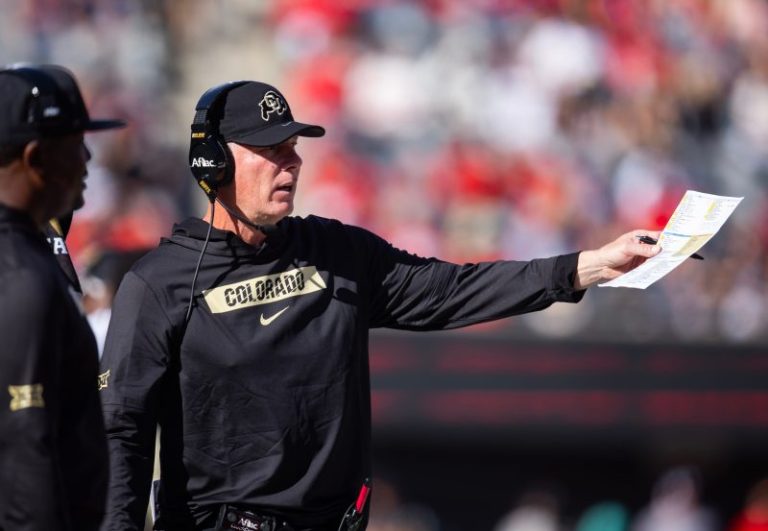
Colorado football coach Deion Sanders stripped play-calling duties from offensive coordinator Pat Shurmur after the Buffaloes lost at Utah Oct. 25, demoting him to quarterbacks coach before the team got beat again last week against Arizona, a person with knowledge of the situation told USA TODAY Sports.

The person didn’t want to be named because of the sensitivity of the situation. The person said Colorado tight ends coach and passing game coordinator Brett Bartolone has called plays instead of Shurmur since the Utah game.

Colorado didn’t immediately return a message seeking comment. But Sanders hinted at coaching staff changes Tuesday during his weekly news conference in Boulder. His team is 3-6 this season and has struggled with quarterback play this year since losing Sanders’ son Shedeur to the NFL.

“I might have already changed it, and you don’t know,” Sanders said. “I don’t do stuff and blow the whistles and make major announcements.”

Deion Sanders has demoted his play-caller before

It marks the second time in three seasons Sanders has demoted his offensive play-caller during the season. In 2023, he promoted Shurmur to co-offensive coordinator to call plays while taking away play-calling duties from offensive coordinator Sean Lewis. The Buffs were 4-4 at the time after starting the season 3-0. They finished the season at 4-8, and Lewis left to become head coach of San Diego State, where his team is now 7-1.

Shurmur joined the Colorado staff in 2023 as analyst after previously serving as head coach of the NFL’s New York Giants and Cleveland Browns. He served as Colorado’s offensive coordinator and play-caller since then and helped lead the team to a 9-4 record in 2024.

In his place as play-caller last week, Bartolone took over against Arizona, a game the Buffs lost 52-17. Bartolone played college football under offensive mastermind Mike Leach at Washington State and went on to work for Sanders as his offensive coordinator when Sanders was head coach at Jackson State.

Both Shurmur and Bartolone will try to break the Buffs’ skid at West Virginia on Saturday, Nov. 8 with a new starting quarterback — freshman Julian “JuJu” Lewis, who will be making his first college start.

Follow reporter Brent Schrotenboer @Schrotenboer. Email: bschrotenb@usatoday.com

This post appeared first on USA TODAY

With Week 9 in the books, the 2025 NFL regular season is halfway over. There are nine weeks left for the league’s playoff picture to round into shape, and quarterback play will be a big part in determining postseason spots.

Last week’s action featured one of the biggest matchups of the regular season, as reigning MVP Josh Allen and the Buffalo Bills took down Patrick Mahomes and the Kansas City Chiefs.

Week 9 also included Baltimore Ravens quarterback Lamar Jackson’s long-awaited return from a hamstring injury on ‘Thursday Night Football’ and New Orleans Saints rookie Tyler Shough’s first career start.

Also in Week 9: more injuries to quarterbacks, creating big implications for playoff battles (and weekly power rankings).

Here’s how the starting QBs for all 32 teams rank entering Week 10:

NFL quarterback power rankings: Week 10

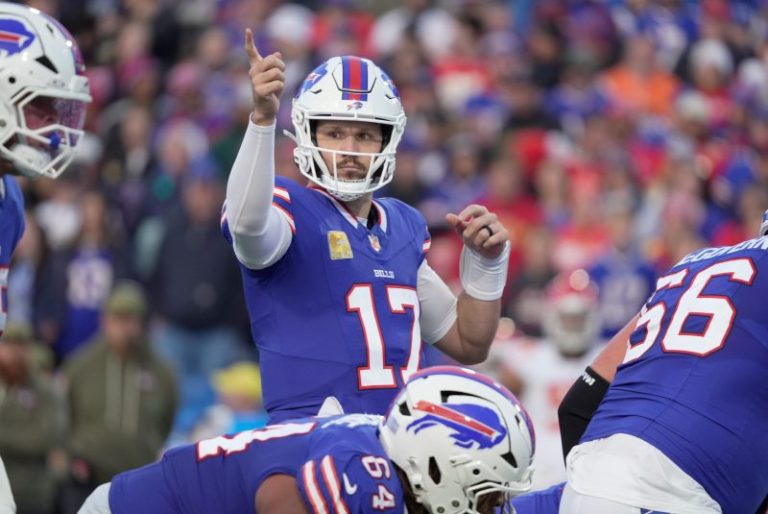
1. Josh Allen, Buffalo Bills

Last week: 3

Allen completed 88.5% of his passes for 273 yards and a touchdown in the Bills’ win over the Chiefs. He also rushed for two more scores.

2. Patrick Mahomes, Kansas City Chiefs

Last week: 1

Mahomes completed fewer than 50% of his passes in a game for the first time in his career in Week 9. He’s also got the third-most passing yards (2,349) and tied for the third-most touchdowns (17) at the midway point of the season.

3. Drake Maye, New England Patriots

Last week: 2

Despite a completion rate of 65.5% – his second-lowest of the season – and an interception, Maye had an eighth straight game with 200+ passing yards and a passer rating over 100. He leads the NFL with a 74.1% completion rate at the halfway point.

4. Lamar Jackson, Baltimore Ravens

Last week: 5

Jackson’s return from his hamstring injury included four touchdown passes against the Miami Dolphins, and he leads the NFL in passer rating (136.7) and QBR (78.9) through nine weeks.

5. Matthew Stafford, Los Angeles Rams

Last week: 6

Stafford’s 21 touchdown passes are three more than any other NFL quarterback at the halfway point of the regular season. He also leads the league with 268.4 passing yards per game.

6. Sam Darnold, Seattle Seahawks

Last week: 11

Darnold leads the NFL in yards per attempt (9.6) and yards per completion (13.7). His four-touchdown outing in Week 9 was his second such game in a five-week span.

7. Justin Herbert, Los Angeles Chargers

Last week: 4

Herbert had his second pass attempt intercepted and returned for a touchdown in Week 9, and he took six sacks behind a banged-up offensive line. But he still managed 250 yards and two touchdown passes and led the Chargers in rushing (nine carries, 57 yards, one touchdown) in a 27-20 win.

8. Baker Mayfield, Tampa Bay Buccaneers

Last week: 7

Mayfield and the Buccaneers had Week 9 off with a bye, but he is still tied for the NFL lead with four fourth-quarter comebacks and four game-winning drives.

9. Jared Goff, Detroit Lions

Last week: 10

Goff’s 284 passing yards in Week 9 were his second-most this season. His 67.6% completion rate was also his second-worst of the season. The Lions lost their third game – and second divisional game – of the year.

10. Jalen Hurts, Philadelphia Eagles

Last week: 12

Hurts and the Eagles had a bye in Week 9. His rate of throwing touchdowns on 7% of his throws and interceptions on 0.5% of his attempts are both among the league’s best.

11. Jordan Love, Green Bay Packers

Last week: 9

Love had his sixth game of the season with a completion rate over 70% in Week 9, but he threw an interception and should have had a second in the Packers’ loss to the Panthers.

12. Trevor Lawrence, Jacksonville Jaguars

Last week: 13

13. Daniel Jones, Indianapolis Colts

Last week: 8

Jones has now gone back-to-back weeks taking at least three sacks after never taking more than two in a game. He also threw three interceptions on Nov. 2, matching his total for the season before Week 9 and tying a career high. His two lost fumbles against the Steelers also tied a career high.

14. Dak Prescott, Dallas Cowboys

Last week: 15

Prescott leads the NFL with 228 completions at the midway point of the season, but he’s also second in the league with 329 pass attempts. The Cowboys have the third-most total yards of offense per game (378.4) through Week 9, but they’re 3-5-1.

15. Mac Jones, San Francisco 49ers

Last week: 18

Jones completed a season-high 79.2% of his pass attempts while throwing for 235 yards and two touchdowns in the 49ers’ win over the Giants. Despite starting the season as a backup, Jones is now 5-2 in seven starts.

16. Jaxson Dart, New York Giants

Last week: 17

Dart’s career-high 72.7% completion rate – with two big-time throws and zero turnover-worthy plays, per PFF – were little solace for the Giants’ quarterback in a third straight loss and fourth in five games.

17. Caleb Williams, Chicago Bears

Last week: 21

Williams had a 114.8 passer rating against the Bengals, the fifth-best of his career and second-highest of the season. In addition to throwing for three touchdown passes, he also caught one.

18. Michael Penix Jr., Atlanta Falcons

Last week: N/A

Penix’s career-high three touchdown passes helped push him to the third-best QBR of the week (89.6) but weren’t enough to help the Falcons overcome a missed extra point in a loss to the Patriots in Week 9.

19. Bo Nix, Denver Broncos

Last week: 16

At one point early in Week 9’s win over the Texans, Nix had completed just three of his 12 pass attempts. He didn’t complete more than 50% of his passes for the second time in his career, but he did manage four big-time throws, per PFF, which tied with Mahomes and Joe Flacco for the most of the week.

20. Aaron Rodgers, Pittsburgh Steelers

Last week: 20

Battling a jammed finger he suffered in pre-game warmups, Rodgers still threw for over 200 yards with a touchdown while completing 25 of his 35 pass attempts (71.4%).

21. Joe Flacco, Cincinnati Bengals

Last week: 23

Flacco had never thrown for more than 390 yards in his 18-year career. He threw for 470 yards on Nov. 2, which was almost enough for the Bengals to pull off an improbable comeback win over the Bears.

22. Jacoby Brissett, Arizona Cardinals

Last week: N/A

Making his third start in relief of an injured Kyler Murray, Brissett threw for more than 260 yards for a third straight game. He threw for two touchdowns and rushed for one more in the Cardinals’ 27-17 ‘Monday Night Football’ win.

23. J.J. McCarthy, Minnesota Vikings

Last week: 25

McCarthy’s 143 passing yards were the fewest of any Week 9 starter with at least 25 dropbacks. But he threw for two touchdowns and rushed for another in the Vikings’ 27-24 win over the Lions on the road in his first game back from a high ankle sprain.

24. Bryce Young, Carolina Panthers

Last week: N/A

Young’s 102 passing yards were the fewest of any Week 9 starter besides C.J. Stroud, who left his game early with a concussion. He also threw an interception and fumbled once when taking a hit while throwing. Still, the Panthers upset the Packers, 16-13, in Young’s return from an ankle sprain.

25. Geno Smith, Las Vegas Raiders

Last week: 28

Smith still is tied for the NFL lead in interceptions after throwing his 11th on Nov. 2. But he also tied a career high with four touchdown passes and nearly led the Raiders to an upset win against the Jaguars in overtime. Smith’s final pass attempt was batted down at the line of scrimmage for a failed two-point conversion that ended the game.

26. Cam Ward, Tennessee Titans

Last week: 24

The Titans’ No. 1 overall pick ends the first half of his rookie season with more interceptions (6) than touchdowns (5), but he did not throw any of either in Tennessee’s Week 9 loss to the Chargers.

27. Marcus Mariota, Washington Commanders

Last week: N/A

Mariota is back in the starting role for the Commanders indefinitely after starter Jayden Daniels dislocated his left (non-throwing) elbow.

28. Tyler Shough, New Orleans Saints

Last week: 28

Shough’s first career NFL start featured his first passing touchdown but also his second interception. The second interception of Shough’s career – a desperate throw on fourth down while avoiding pressure – was more deserved than his first – a tipped throw off of Chris Olave’s hands.

29. Dillon Gabriel, Cleveland Browns

Last week: 25

Gabriel and the Browns had a Week 9 bye. As other quarterbacks returned from injury, he dropped in this week’s power rankings.

30. Justin Fields, New York Jets

Last week: 27

Fields and the Jets had a Week 9 bye. As other quarterbacks returned from injury, he dropped in this week’s power rankings.

31. Davis Mills, Houston Texans

Last week: N/A

Mills entered the Texans’ Week 9 game after C.J. Stroud entered concussion protocol. His 137 passing yards were the fewest of any quarterback with at least 25 dropbacks.

32. Tua Tagovailoa, Miami Dolphins

Last week: 26

Tagovailoa looked out of sorts throughout the Dolphins’ Week 9 loss to the Ravens on ‘Thursday Night Football.’ He threw his 11th interception of the year to tie him for the league lead, took a bad intentional grounding penalty against no pressure, called a third-quarter timeout to avoid a delay of game despite Miami facing a large deficit. Perhaps worst of all, he tried to throw a goal-line fade to his 5-foot-9 running back, who was being defended by a 6-foot-4 safety.

All the NFL news on and off the field. Sign up for USA TODAY’s 4th and Monday newsletter.

This post appeared first on USA TODAY

Oregon’s in potential trouble. So is the Big Ten’s quest to stockpile CFP bids. That’s the message sent in these first rankings.
Oregon beat Penn State. Big deal. Metrics are lacking for No. 9 Ducks.
Could Big 12 get as many bids as Big Ten? Not off the table.

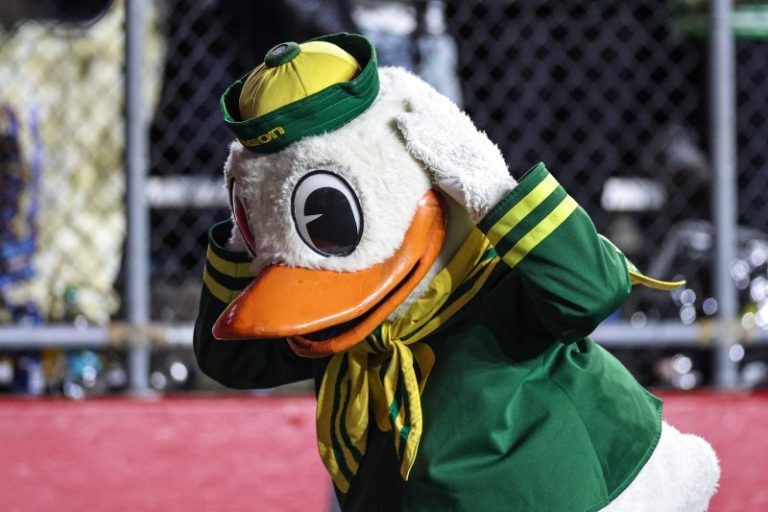
The Ducks might be a quack, wearing fancy jerseys with a swoosh.

That’s the message the College Football Playoff committee sent by stiffing Oregon with the No. 9 spot in its initial rankings.

Or, at least, the committee paid attention to strength of record and strength of schedule metrics that say Oregon possesses flimsier credentials than any of the SEC’s one-loss teams.

The committee nailed it.

What’s Oregon done? Beat Penn State. Get in line. So did Northwestern and UCLA.

Thanks for nothing, Big Game James. The Ducks own no wins against teams currently ranked.

“When you looked at Oregon, great players at the skill position,” CFP committee chairman Mack Rhoades said on ESPN, “felt that they’re really, really good up front, both sides of the ball, their one loss is to our 2-ranked team” Indiana.

Blah, blah, blah, that loosely translates to: Oregon might be a good ballclub, has some talent, but, sorry, the resume’s flimsy.

Zoom out from Oregon’s ranking, and behold the broader message baked into these rankings. Let this warning blare like a tornado siren all across the North and down into SoCal: The almighty Big Ten, producer of the past two national champions, is in danger of being limited to two bids.

No wonder commissioner Tony Petitti desperately wanted to rig the playoff bracket.

The committee sees the Big Ten for what it is — and that’s a league headed up by two teams that look spectacular, and behind Ohio State and Indiana, it’s a bowl of cold porridge. Just a lumpy, flavorless glob.

CFP rankings introduce idea of a two-bid Big Ten, if Oregon falters

You say the Big Ten’s got the nation’s top two teams. I say those could be its only teams in a 12-team bracket.

Oregon plays at Iowa this weekend, and they’re calling for a rainy, chilly day. Think it might be just a bit breezy, too? That’s Hawkeye weather. If the Ducks lose, that’ll send them tumbling, putting the Big Ten in danger of having just two teams in the updated bracket when our TV show we love to hate but can’t look away from returns next week.

Look, Oregon’s still got plenty of runway to shoot up the rankings. Its defense is stingy, albeit not as stingy as Ohio State’s or Indiana’s and no stingier than Iowa’s. Its offense posts gains in 20-yard chunks.

Along with Iowa, Oregon’s November schedule includes Southern California and Washington. That totals three ranked opponents, with two on the road. Unranked Minnesota is no gimme putt.

Make? Or, break?

Soggy Big Ten works just fine for Ohio State, Indiana

What a difference a year (and a new committee chair) makes.

Michigan’s Warde Manuel, an athletic director from B1G country, chaired the previous committee. Rhoades, the newest chairman, is Baylor’s athletic director. And, would you look at that? The Big 12 is suddenly getting some respect, after last year’s committee treated it like the Mountain West’s cousin.

Three Big 12 teams are ranked within the top 13 spots, including one-loss Texas Tech being a spot ahead of Oregon.

Tired: Nike money.

Wired: Big oil money! And a billionaire booster who keeps hogging your airwaves!

Aside from Cody Campbell’s checkbook, the Red Raiders’ case gets helped by their loss coming while their starting quarterback was out injured.

The brass tacks add up to Oregon potentially being vulnerable if it finished 10-2, especially if Notre Dame keeps winning and the Big 12 snags two bids, as it’s positioned to do.

In defense of Oregon, it suffered some bad strength of schedule luck. Unlike some Big Ten brethren, the Ducks scheduled a Power Four opponent. It’s just that Oklahoma State stinks, reducing Oregon’s credit for a 66-point victory. No boost for beating woebegone Oregon State, either.

Oregon’s not the Big Ten’s only hope for a third qualifier. Iowa and USC remain playoff contenders. They’ll all play each other, in a three-team battle royale that could amount to an elimination-fest for the Big Ten. Ohio State will snuff out Michigan’s hopes, so long as Ryan Day doesn’t fall into old habits.

Ohio State and Indiana must be loving this. The Big Ten’s soggy secondary and tertiary tiers are a feature, not a bug, to their quest to lock up the playoff’s top seeds.

Back at Big Ten HQ, Petitti must be wondering if there’s still a way to rig this thing.

Blake Toppmeyer is the USA TODAY Network’s senior national college football columnist. Email him at BToppmeyer@gannett.com and follow him on X @btoppmeyer.

This post appeared first on USA TODAY