Archive

2025

Browsing

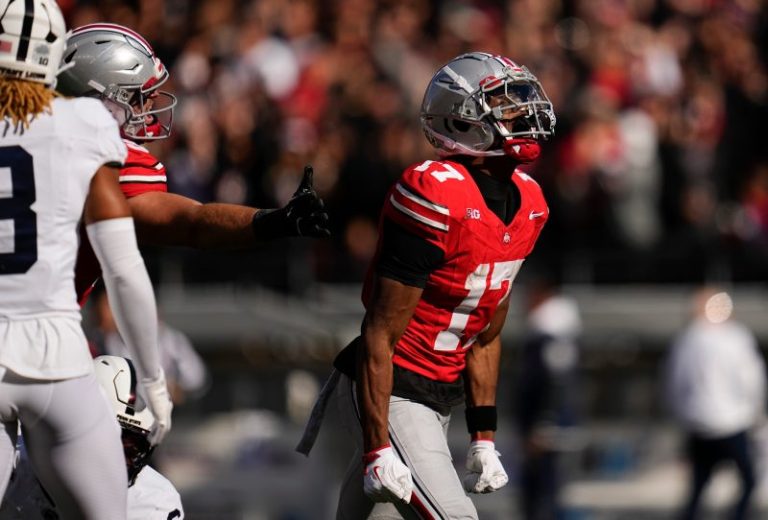
As Ohio State football picked up its ninth win of the season against Purdue on Saturday, Nov. 8, the top-ranked Buckeyes did so without one of their top wide receivers in Carnell Tate.

After not playing a single first-half snap against Purdue, the Buckeyes’ wide receiver, who has been one of quarterback Julian Sayin’s go-to targets this season, was held out for the remainder of the game in a 34-10 victory over the Boilermakers.

Tate entered Ohio State’s Week 11 road game second among Buckeye receivers in receiving yards, with only Heisman Trophy candidate Jeremiah Smith leading the way by 14 more yards. The 6-foot-3 wide receiver has already set a new career-high for touchdown receptions at seven this season and is 22 receiving yards short of tying his career-high for receiving yards in a single season.

Here’s what to know on Tate’s absence against Purdue on Saturday:

Why is Carnell Tate not playing? Latest updates on Ohio State WR absence vs Purdue

It appears that Tate is injured, though it remains unclear as to when that injury occurred and what type of injury he has.

Tate stood on the Buckeyes’ sideline for the entirety of the game in uniform.

Ryan Day comments on Carnell Tate not playing vs Purdue

Following the Buckeyes’ win over the Boilermakers, Ohio State coach Ryan Day told reporters in West Lafayette that the Buckeyes wanted to be ‘really careful’ with Tate after he felt something in warmups.

‘Carnell, we felt like he was gonna be OK to play, but when he went through warmups, he just felt something there, so we just wanted to be really careful. Could he have played? Yeah, probably. But we’re just gonna rest him to make sure,’ Day said in his postgame news conference of Tate’s absence from Ohio State’s win over Purdue.

Day’s postgame comments were similar to the ones he made on the Big Ten Network going into halftime, though they did omit the implication Tate would have been good to go:

‘He’s not gonna play. We’re gonna hold him,’ Day said. ‘It was kind of a thing before the game — we just didn’t feel comfortable putting him out there, so you won’t see him in the second half.’

The USA TODAY app gets you to the heart of the news — fastDownload for award-winning coverage, crosswords, audio storytelling, the eNewspaper and more.

This post appeared first on USA TODAY

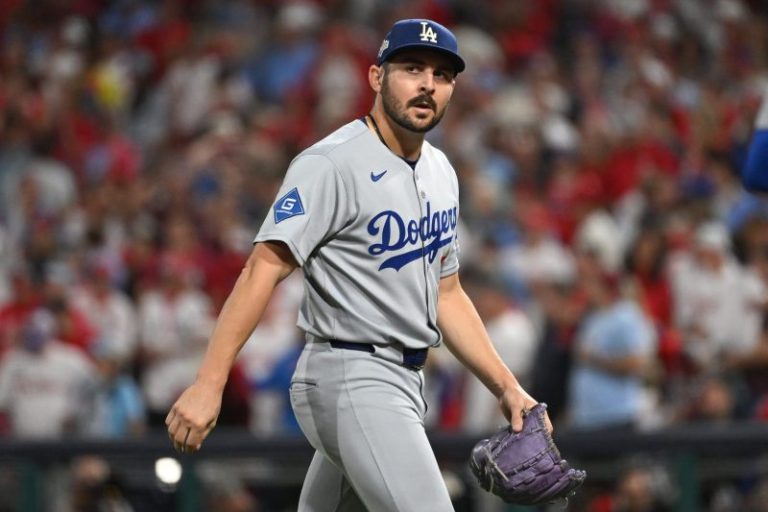
Los Angeles Dodgers pitcher Alex Vesia was one of the most trusted relievers in the bullpen this past season and earned two postseason wins for the team in 2025.

Vesia did not finish out the postseason, missing the World Series against the Toronto Blue Jays due to the death of his daughter, Sterling Sol Vesia.

The veteran pitcher and his wife, Kayla, announced the sad news on Instagram on Friday, Nov. 7. 

“Our beautiful daughter went to heaven Sunday, October 26th,” the Vesias’ post said. “There are no words to describe the pain we’re going through, but we hold her in our hearts and cherish every second we had with her.”

The couple was seen on the field after the Dodgers won the National League Division Series.

Alex Vesia made two appearances in the National League Championship Series against the Milwaukee Brewers in Los Angeles on Oct. 16th and 17th. Kayla was expected to be close to her delivery date.

On Oct. 23, the Dodgers announced that Vesia would not be with the team due to a ‘deeply personal family matter.’

“Thank you Dodger Nation, Blue Jays organization and all baseball fans for your love and support,” the Vesias said in their post. “We have seen ALL your messages, comments and posts. It’s brought us so much comfort.”

During the World Series, members of the Dodgers’ and Blue Jays’ pitching staffs were seen with the No. 51 on their hats, in a show of support for Vesia.

Will Alex Vesia return to the Dodgers?

The Dodgers exercised Vesia’s $3.55 million club option for the 2026 season on Thursday, according to Fabian Ardaya of The Athletic.

This post appeared first on USA TODAY

Kyle Shanahan’s starting quarterback, Brock Purdy, was struck by a turf toe injury that has limited him to two starts.

The stud pass-rusher? Nick Bosa’s season was wrecked in Week 3 by a torn ACL.

Fred Warner, the heart and soul of the San Francisco 49ers defense, went down in Week 6 with a broken and dislocated ankle.

Dynamic wide receiver Brandon Aiyuk still hasn’t made it back yet from the devasting knee injury suffered last season. Meanwhile, Ricky Pearsall, rising star of a receiver, could miss his fifth consecutive game on Sunday as he recovers from a knee injury.

Last weekend, first-round rookie Mykel Williams, who replaced Bosa in the starting lineup at left defensive end, suffered torn knee ligaments that finished him for the season.

Sure, an NFL season is always a war of attrition. Every team in the league has its share of injury setbacks that test their depth, resilience and ability to adapt.

Yet no team this season has been stung quite like the 49ers, with a heavy presence on the All-IR Team underscoring the challenge.

And through it all, San Francisco has already won six games – matching its total from last year’s injury-ravaged campaign – to keep afloat in the NFC playoff race.

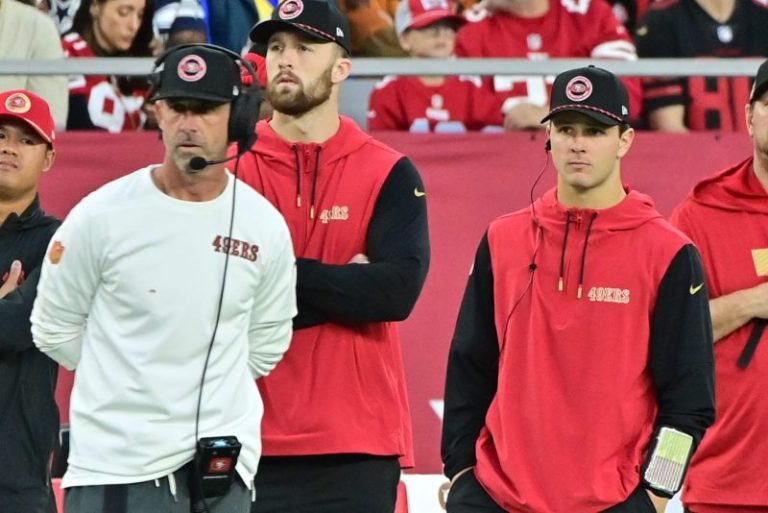
For Shanahan, whose resume includes three NFC West titles and two Super Bowl appearances in eight seasons as 49ers coach, this has the look of his best coaching job yet.

At least to this point.

That’s why Shanahan, rolling with revived quarterback Mac Jones, gets my nod as the NFL’s midseason coach of the year. It’s the resourcefulness amid the extreme degree of difficulty. You can certainly make a strong argument for Mike Vrabel in his first year back in Foxborough, leading the New England Patriots (7-2) to the pole position in the AFC East. Ditto for Shane Steichen, who has the Indianapolis Colts (7-2) humming, bolstered by another revived quarterback, Daniel Jones. And at least a half-dozen others may be in the mix for the honor by season’s end, pending performance down the stretch.

Shanahan, though, is the one you might think would be halfway through a lost season, given the setbacks with so many key players. Talk about overachieving.

“I wouldn’t say ‘overachieved’ because we believed we could do this,” Shanahan said during a press conference this week, ramping up for another big test against the division-rival Los Angeles Rams on Sunday. “I think always when you have injuries it’s much more of a challenge, definitely.

“But, I think some of the key positions we have had key injuries, we’ve had some good guys step up. I mean, I’m thinking all these positions, it’s just a total backup. I think we’ve had some guys come in and play like starters. I also know other teams in the League have some of these issues, too. So, we’re 6-3, and we’ve got a chance here. We’re in the hunt, but we’ll see how we finish the rest of this half out.”

Will the injuries catch up with the 49ers? That’s a fair question. Yet Shanahan is hardly wired to wave a white flag.

His offense, which runs through multi-tasking running back Christian McCaffrey (NFL-high 1,222 yards from scrimmage), didn’t fold when Jones stepped in. The front is still anchored by arguably the best lineman in the game, Trent Williams. The boost that came with star tight end George Kittle’s return from missing five games with a hamstring injury, is poised to get more fuel for the passing game with Pearsall and Purdy apparently progressing. And a major bonus looms if Aiyuk comes back at some point … with his explosive playmaking skill intact.

Shanahan winning with a revived Mac Jones

In the meantime, Jones, who fizzled as a Patriots first-round pick and was merely an emergency option during his Jacksonville stopover, has illustrated why keen coaching is critical to the development of young quarterbacks. He’s put up a pair of 300-yard games and demonstrated much grit in leading the 49ers to five victories. When San Francisco stunned the Rams in Week 5, he was nearly knocked out of the game with a knee injury.

On Sunday, he added to his street cred by completing his first 14 passes against the Giants. And by the way, he has publicly doused any chatter about a QB controversy.

During his postgame remarks after the victory at New York, Jones underscored why he’s been a good fit within a culture undeniably established by Shanahan, with “the guys just letting me be myself, which is kind of different from what I’ve had in the past.”

Strikingly, during the buildup to the NFL draft in 2021, many projected the former Alabama quarterback as a target to land with the 49ers. San Francisco, though, traded up to draft since-busted Trey Lance with the third pick overall, leaving Jones to be drafted by the Patriots with the 15th pick. Now Jones is connected after all with Shanahan, whose free agent signing of the quarterback has paid off remarkably.

“When you lose your starting quarterback, it’s always tough on a team,” Shanahan said after the win against the Giants. “The way Mac stepped in there, going back to New Orleans (in Week 2) and how he was that first game, how he’s been in practice, how he was in the offseason, Mac’s been great.”

A much taller order exists for the 49ers defense to absorb the absences of Warner, Bosa and now Williams. But another of Shanahan’s key offseason moves gives them a better chance. He brought back Robert Saleh to coordinate the defense – the fourth coordinator in as many years for the unit – and restore the standard.

It’s worth noting that Warner’s sub at mike linebacker, second-year pro Tatum Bethune, has tallied an NFL-high 50 tackles since stepping up in Week 6.  

Yes, it takes players to win in the NFL. Yet culture and coaching talent matters immensely, too, to get the best out of the available players, which is why Shanahan’s 49ers are still firmly in the playoff mix.

My other midseason plaudits:

NFL Midseason MVP: Jalen Hurts

Amid much fuss about A.J. Brown’s targets, Saquon Barkley’s touches and the morality of the Tush Push, if the playoffs began today the Eagles (6-2) would be the No. 1 seed behind their steady, old soul of a quarterback. Hurts seems oblivious to the noise, evidenced by his 15-1 TD-to-INT ratio and 114.4 passer rating on pace to be the best in his career. No, the defending Super Bowl champs don’t need him to pass for 5,000 yards, which is why a 25th-ranked passing game must be put into context. It’s about efficiency. Philadelphia has the fewest turnovers in the NFL (3) and best red-zone TD rate (85%), while Hurts has completed 70.2% of his passes. And he can run when needed, plow when pushed, while apparently remaining unfazed by potential distractions.

Defensive Stud: Myles Garrett

Remember when the NFL’s best defensive player, frustrated by the Cleveland Browns’ lack of winning, asked for a trade last offseason? Well, he changed his tune with the massive contract averaging $40 million per year. And he’s given the Browns so much bang for their buck, already notching his eighth-consecutive double-digit sack season (10) for the NFL’s second-ranked defense. The winning, though, is still hard to come by as the Browns (2-6) still wallow at the bottom of the A-North.

Offensive Megastar: Jonathan Taylor.

At this rate, Taylor, the NFL’s leading rusher (895 yards, 5.7 per carry), doesn’t merely threaten to propel the Colts to the playoffs. With 14 touchdowns (12 rushing, 2 receiving), he might also make a run at the NFL single-season record that LaDainian Tomlinson set in 2006.

Don’t call it a comeback: Matthew Stafford

There was a lot of drama all offseason, and into the summer, about the availability of Rams quarterback Matthew Stafford as he dealt with a back injury. Well, he’s fine. Stafford, 37, has been on fire, firmly in the MVP conversation with his NFL-high 21 touchdown passes.

A Star, Emerging: Drake Maye

The second-year Patriots quarterback leads the NFL with a 116.9 passer rating, his team is in first place and what a sterling streak: 8 consecutive games with at least 200 passing yards and a 100-or-better passer rating. They haven’t seen that in New England since Tom Brady’s era. Mike Vrabel knows better than to compare, but this is trending, as they say.

Golden Oldie: Aaron Rodgers

Look who’s in first place again? Rodgers, 41, might not have the MVP flair that he possessed in his heyday, but his (ultimate) free agent move to the Steelers could make him relevant in January again. His arm, like his football IQ, is still sharp.

How Ya Like Me Now? Sam Darnold

Darnold is the quarterback that Jets owner Woody Johnson might wish he had about now. But that was three NFL stops ago for Darnold, who is everything the Seahawks could have hoped for with their free agency signing. It certainly helps to have a target such as star receiver Jaxson Smith-Njigba, but somebody must throw the rock.

New Kid on Block: Emeka Egbuka

Another Ohio State receiver making a distinct mark in the NFL. It figures. Egbuka, drafted 19th overall, has been a offensive rookie of the year-type necessity for Baker Mayfield and the Bucs, who have lost Mike Evans for the season and been without Chris Godwin since Week 5. Egbuka leads all rookies with 562 receiving yards on 34 catches, with 5 TDs. And they’ve loved his maturity since he arrived.

Double Trouble: Micah Parsons and Rashan Gary

When the Packers obtained Parsons from Dallas in the blockbuster trade, they envisioned him as a missing piece to a Super Bowl pursuit. Parsons’ impact is evident. Not only does he rank second in the league with 44 quarterback pressures, his presence has helped Gary take advantage of matchups and collect 7 ½ sacks.

Back to the Future: Chicago Bears

Finally, the Bears have an offense that doesn’t resemble the scheme the franchise started with when the NFL was formed in 1920. A modern-day offense was the promise that came with new coach Ben Johnson, lo and behold, the creative whiz brought along some of the trick plays that made him special in Detroit. Suddenly, Caleb Williams looks like a potential star and the Bears (5-3) have a winning record. If I’m dreaming this, wake me up now.

Contact Jarrett Bell at jbell@usatoday.com or follow on  X: @JarrettBell

This post appeared first on USA TODAY

In HBO’s ‘Alex vs. ARod’ (Part one streaming now, new episodes Thursdays, 9 p.m. ET/PT), sports talk radio icon Mike Francesa calls former Major League Baseball star Alex Rodriguez ‘a Shakespearian figure’ and a flawed man.

The person Francesa was talking about couldn’t agree more, saying that the media personality’s observation is, ‘the line of the documentary.’

‘I think that flawed man and the suspension, led to a man that needed help,’ Rodriguez, 50, tells USA TODAY over Zoom. ‘I went into therapy with Dr. David and he saved my life in many ways.’

The suspension Rodriguez refers to came in 2013, when MLB banned A-Rod for an entire season over the use of performance-enhancing drugs. As for ‘Dr. David,’ that’s Dr. David Schnarch who Rodriguez reveals was his therapist from 2009 until the psychologist’s death in 2020. In the final installment of the series, A-Rod returns to Schnarch’s Colorado home and reflects on his journey to ‘rewire my brain.’

‘He helped me really understand some of the issues that I survived from being a younger kid,’ Rodriguez says. ‘And he taught me some incredible lessons.’

A-Rod gets personal in new HBO docuseries, on his terms

If you’re looking for a ‘kiss-and-tell’ documentary, ‘Alex vs. ARod’ isn’t it. The docuseries covers Rodriguez’s upbringing and his professional career, from 1993 when he was the first overall draft pick to his last game in 2016. In between, there’s his rise with the Seattle Mariners, a record-breaking deal with the Texas Rangers and then the headline-making trade that sent him to the New York Yankees. But there’s no talk or mention of Jennifer Lopez, who dated the baseball star from 2017 until they called off their engagement in 2021.

The only partner that Rodriguez speaks of over the three episodes is his ex-wife Cynthia Nicolas; she also appears in the docuseries. They were married for six years from 2002 to 2008. Archival footage and past headlines fill in some of the rest of the picture: Rodriguez at one point or another was romantically linked to Madonna, Cameron Diaz and Kate Hudson over the time period covered in the doc. He even signed with Madonna’s manager, Guy Oseary, after opting out of his Yankees contract in 2007 and leaving agent Scott Boras. But none of that was talked about in the series.

‘I made it a habit not to talk about my personal life, as far as that part of it,’ Rodriguez says, while noting that Oseary is still a ‘very close friend’ of his. ‘(The docuseries) was more a story that was based around baseball, my fall and my lessons learned.’

Rodriguez’s unwillingness to ‘go there’ on certain topics was something also felt at times by filmmakers Gotham Chopra and Erik LeDrew. The duo would change questions, locations and recording methods in an attempt to break A-Rod off familiar responses.

‘Especially when you’re dealing with really complicated subject matter, you want a lot of bites of the apple, and a lot of really different approaches to the apple,’ LeDrew, who directed, wrote and co-executive produced the piece, says.

The process worked. Rodriguez became so comfortable with the team that he gave them his cell phone number for additional access.

‘Look, it’s not like the first time he’s ever been asked any of these questions or dealt with the PED stuff,’ Chopra, who directed with LeDrew and was an executive producer, says. His company Religion of Sports, which Chopra co-founded with Tom Brady and Michael Strahan, produced the series. ‘You realize early on (that) there’s a level of perspective that this guy has now. Time has passed. There’s been a lot of other stuff going on in his life, and mostly for the good.’

Both Strahan and Brady appeared at the New York City premiere of the documentary. All three athletes played at an elite level and went on to have successful media careers. But besides A-Rod’s link to PEDs, Chopra points out one big difference between at least two of the men.

‘Every conversation Tom talks about how much his father is a part of his success,’ Chopra says. ‘And you know, Alex does the same thing, but he talks about the absence of his father.’

One of the bigger personal revelations in ‘Alex vs. ARod’ is the strained relationship between Rodriguez and his father Victor, who he inherited his love for baseball from. Victor left their family when Alex was 10 years old. They wouldn’t see each other again until 2000, when at the urging of his then-wife, Rodriguez and his father met in Minneapolis. The Mariners were in town for a four-game series against the Twins. After the final game, the two never saw each other again.

Over the four games, Rodriguez batted .412 with 6 RBI.

A-Rod on his infamous 2013 WFAN interview: ‘I wasn’t thinking’

There is a steady set of voices heard throughout the three-part series, from A-Rod’s inner circle to former teammates Derek Jeter and Ken Griffey Jr. Rodriguez’s daughters Natasha, 20, and Ella, 17, also appear and speak about their father’s work ethic and willingness to help them through any situation. Rodriguez calls their participation in the series ‘a highlight.’

Joe Tacopina, the attorney who became a media star in his own right and represented Rodriguez during the 2013 scandal that led to his 2014 suspension, only appears via archival footage. Tacopina accompanied Rodriguez to a grievance hearing on Nov. 20, 2013. During the proceeding, it was ruled that MLB commissioner Bud Selig would not have to testify about the then-211 game suspension. According to the Associated Press, Rodriguez became so irate over the ruling that slammed his hand on a table, cursed at then-MLB Chief Operating Officer Rob Manfred and stormed out of the building. He went directly to WFAN, where afternoon host Mike Francesa’s program was not only on the radio, but also simulcasting on the Yankees’ cable television network YES.

In a compelling and unscheduled live interview, Rodriguez spent 40 minutes in front of a microphone proclaiming his innocence and claiming there was a ‘witch hunt’ against him. In hindsight, he has some regrets.

‘I wasn’t thinking,’ Rodriguez admits. ‘The whole process was very frustrating at that time. If you have a do-over, obviously you don’t make the mistake (of PEDs) in the first place.’

But Rodriguez still sounds frustrated with the way in which Selig and MLB investigated him, including purchasing stolen documents that were used as evidence against the former slugger.

‘I wish I had the tools to be able to articulate and say, ‘Some of the things they’re saying are true, but like 90% of the things they’re reaching for is not true,” Rodriguez says. ‘That would’ve been a more accurate story.’

As for Manfred, who became baseball’s commissioner in 2015, he also did not sit down for the documentary. But Rodriguez calls their relationship, ‘strong,’ citing a private meeting they had after he took over for Selig.

‘(Manfred) said, ‘Look Alex, I can promise you this: you serve your suspension, keep your head down, come back once you’re done and you’ll have no scarlet letter,’ A-Rod recalls. ‘And to this day, we bonded over him being a man of his word.’

This is the one question A-Rod won’t ask himself

Another revelation in the docuseries is a secret meeting Alex Rodriguez had after the 2003 season with Theo Epstein and Jed Hoyer of the Boston Red Sox. The meeting, which MLB allowed, took place at the Four Seasons hotel in New York City. The Red Sox would eventually work out a deal with the Texas Rangers to trade for Rodriguez, with the MVP giving up around $40 million of his record 10-year, $252 million contract.

MLBPA head Donald Fehr vetoed the deal, citing the precedent it could set for players giving up money. But A-Rod wasn’t stuck on the Rangers for good. Aaron Boone, the Yankees third baseman, tore his ACL during a pickup basketball game the following month. At the Baseball Writers’ Association of America awards dinner, A-Rod was seated next to Yankees general manager Brian Cashman. The GM floated an idea to Rodriguez that if he would entertain the idea of moving from shortstop to third base, there could be room for him on the Yankees. After a few cocktails, A-Rod agreed and the rest is history.

But, what if Boone had never played that pickup basketball game during the offseason? Rodriguez isn’t a fan of asking ‘what if?’ joking that if you did that throughout the twists and turns of his career, he might end up in Tokyo or even the NFL.

‘There’s so many stories that are not true, so many stories that are true,’ he says of his career, noting it was important for him to use the docuseries ‘to set the record straight. For the next generation of athletes and young people, there’s some great lessons to be learned and hardships to avoid.’

This post appeared first on USA TODAY

The Senate is in for a rare weekend session as the chamber remains in limbo while lawmakers try to find a way out of the government shutdown.

Behind the scenes, appropriators are cooking up a trio of spending bills to attach to the House-passed continuing resolution (CR), along with an extension to the bill that would, if passed, reopen government until December or January.

Whether a vote on the revamped CR and spending package happens Saturday is still up in the air. Senate Democrats, as they’ve done 14 times previously, are likely to block it. It all comes as the upper chamber is scheduled for a week-long recess to coincide with Veterans’ Day.

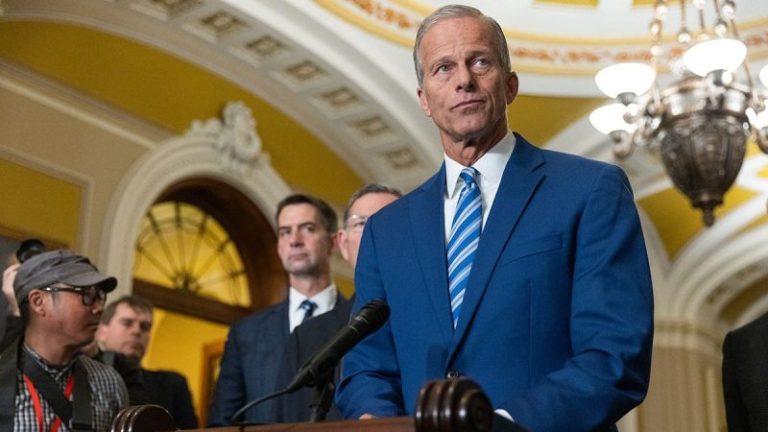
But Senate Majority Leader John Thune, R-S.D., now wants to keep lawmakers in town until the shutdown ends.

When asked if there would be a vote on the plan, Thune said it would be ideal to have the package on the floor, but that ‘we’ve got to have votes to actually pass it.’ Republicans are reticent to putting the CR out again just to see it fail.

‘I’ve been talking all morning with some of the folks that are involved with the meeting, and I think we’re getting close to having it ready,’ Thune said. ‘We just need to get the text out there.’

Senate Minority Leader Chuck Schumer, D-N.Y., and his caucus, freshly emboldened by sweeping Election Day victories earlier in the week, are sticking by their newly released plan that would extend the expiring Obamacare subsidies by one year, and create a bipartisan working group to negotiate next steps after the government reopens.

But Senate Republicans immediately rejected the idea; Thune called it a ‘non-starter,’ while others in the GOP were angered by the proposal.

Sen. Eric Schmitt, R-Mo., charged that he would appeal to President Donald Trump and his administration to slash funding from ‘pet projects’ in blue states and cities to pay federal workers as the shutdown drags on.

‘The idea that you’ve got a bunch of kamikaze pilots trying to burn this whole place down because they’re emboldened by an election where Democrats won in Democrat areas is totally insane,’ he said.

Senate Democrats were largely unsurprised that Republicans rejected the offer, however.

‘I know many Republicans stormed out of the gate to dismiss this offer, but that’s a terrible mistake,’ Schumer said.

Thune and his conference have, throughout the course of the 39-day shutdown, said that they would only deal with the subsidies after the government reopened, and have offered Schumer and Senate Democrats a vote on a bill addressing the healthcare issue once the closure ends.

‘I’m not surprised,’ Sen. Mark Kelly, D-Ariz., said. ‘They don’t want to help people with their health care.’

But Republicans countered that a simple extension of the enhanced subsidies, which were modified under former President Joe Biden during the COVID-19 pandemic, would funnel money straight to insurers.

Sen. Katie Britt, R-Ala., has been in talks with Senate Democrats on a path forward, particularly through jump-starting government funding with the impending trio of spending bills.

After Schumer unveiled Democrats’ plan, she charged that ‘since Obamacare came into effect, look, who’s gotten rich? It’s not the people.’

‘They’re talking about the people’s premiums and have … they taken it to the companies that are actually making the money off of it? They’re not,’ Britt said. ‘So I look forward to hearing why in the world they want to continue these profits and not actually help the people they serve.’

Senate Democrats, however, contend that their offer was fair.

Sen. Chris Murphy, D-Conn., argued that there were some in the caucus that wanted to do a multi-year extension, while others wanted to go beyond just the enhanced subsidies. He reiterated his frustration that the core of the issue, from his perspective, was that neither Schumer nor Thune would sit down and negotiate.

‘We made a really simple, really scaled-down offer that could get the government up and operating and [is] really good for them politically,’ he said. ‘I just still don’t understand why they won’t accept the offer.’

This post appeared first on FOX NEWS

The NFL season has reached its midway point, and it’s time to hand out team grades.
The Colts, Patriots and Seahawks have all greatly outpaced expectations and deserve an ‘A.’
The Titans are the only team to receive an ‘F,’ but several others aren’t far off.

The NFL season has officially reached its halfway point, and it’s time to hand out some midterm grades.

The 2025 campaign has underscored the parity running rampant throughout the league, with every team already having suffered at least two losses. That’s made it even harder to assess each franchise, as a group that looks like a leading contender one week might suffer a serious setback the following Sunday. Yet despite the inconsistent trajectories, the sample size is now large enough that teams can be fairly judged against their preseason expectations.

Here are our grades for all 32 teams after the first half of the season:

A

Indianapolis Colts: If not for a six-turnover unraveling against the Pittsburgh Steelers, Indianapolis would have stood alone as the only team with an A-plus. But don’t let that outlier meltdown color the view of what’s otherwise been a stunningly impressive start. The Daniel Jones-helmed offense has been a model of efficiency, pacing the league with a 50% success rate. Meanwhile, the surprising midseason trade for cornerback Sauce Gardner could take Lou Anarumo’s defense to new levels with all of the coverage possibilities unlocked by the two-time All-Pro’s arrival.

New England Patriots: Mike Vrabel’s instant turnaround has exceeded even the most optimistic projections. In Drake Maye, New England has a legitimate MVP candidate capable of elevating the team’s attack for years to come. The revamped run game remains a disappointment, and the Patriots seized the AFC East lead in part by beating up on lesser squads thanks to a highly favorable early schedule. But it seems likely that Robert Kraft’s long-awaited return to the playoffs is imminent.

A-

Los Angeles Rams: Puka Nacua is back, and Matthew Stafford has answered offseason questions about his balky back by once again slinging this team to the top tier of NFC contenders. Still, with Los Angeles having issues at cornerback and in the kicking game, this season could go sideways like a Joshua Karty knuckleball. But a defense that has given up 20 points in the last three games looks poised to entrench itself as one of the league’s top units down the stretch.

Philadelphia Eagles: After all that discontent, the defending champions stand as the NFC’s No. 1 seed at midseason. Some reshuffling in the secondary and the trade for edge rusher Jaelan Phillips should help the defense sort out its most pressing issues, even if the group doesn’t rediscover its downright dominance. Oft-criticized first-year offensive coordinator Kevin Patullo has done a laudable job of navigating the early-season turbulence to give the attack a smoother ride, thanks in large part to a revitalized run game and more prosperous play-action approach. If Philadelphia can stay healthy, this group could soar down the stretch.

San Francisco 49ers: By season’s end, San Francisco could be staring down an ‘incomplete’ mark given the incessant injury hits, which have sidelined the likes of Nick Bosa, Fred Warner, Brock Purdy, George Kittle and more. For now, though, let’s give Kyle Shanahan and defensive coordinator Robert Saleh their flowers for doing more than merely keeping this group afloat. Most teams suffering the level of attrition San Francisco has wouldn’t find themselves in the thick of the divisional race and the hunt for a playoff berth. Hard to say with confidence that the trajectory can hold given everything working against the 49ers, but this is a model of organizational resilience.

B+

Detroit Lions: When the offensive line falters and the run game flatlines, things can get concerning. For the most part, though, Detroit has demonstrated that it has more than enough in the tank to keep things together offensively, and the resilient defense is a point of pride. A bit of a midseason wake-up call might be required, but Dan Campbell’s crew has shown it won’t stay down for long.

Denver Broncos: Call them slow starters or immaculate finishers, with their plus-60 point differential in the fourth quarter almost double the margin of the next closest team. Either way, the Broncos are carving out a reputation as a team that puts everything into place late after feeling through things in the early going. Sean Payton surely would like his group to stop living on the edge, but it bodes well for Denver that the team is comfortable winning in a variety of ways.

Carolina Panthers: Maybe ending a playoff drought that spans seven seasons is a stretch, but notching the first winning season during that same time frame isn’t. An organization that has been perpetually resetting in recent years finally appears to have reached stable ground. Rico Dowdle and a rugged run game have eased the pressure on Bryce Young, and the bend-but-don’t-break defense is getting the job done despite accumulating few style points.

B

Pittsburgh Steelers: Aaron Rodgers has given Mike Tomlin all the coach could reasonably expect from a 41-year-old quarterback. If only that stability extended to a defense giving up the most passing yards per game (278.3) in the NFL. How Pittsburgh follows up its extremely encouraging shutdown of the Colts could shape the rest of the season, but the Steelers can continue on to an AFC North crown if they can merely stay the course.

Los Angeles Chargers: Sure looks like there’s only so far that the Bolts can go with their injury-ravaged front, which has lost stalwart offensive tackles Joe Alt and Rashawn Slater for the season. Yet the Chargers still deserve some recognition for getting to the point where they would hold the No. 6 seed if the season ended today. Justin Herbert’s weekly pummelings, however, only figure to worsen down the stretch that features a more difficult schedule.

Jacksonville Jaguars: It’s fair to be skeptical of a team that’s 5-3 despite being outscored and has enjoyed a massive swing in turnover fortune, going from a minus-15 differential last year to plus-8 so far this season. The passing attack might be stuck in purgatory until Year 2 under Liam Coen, but the new regime clearly has things headed in the right direction.

Chicago Bears: Time to zoom out from the weekly dissections of Caleb Williams and acknowledge that Ben Johnson’s offensive vision is coming to life. Dennis Allen’s defense, however, is almost entirely reliant on generating takeaways – boasting a league-best 19 – to stop opponents. Breaking through in the loaded NFC North will be a tall order, but Chicago at least has a chance to finish as something other than distant fourth for the first time in four years.

B-

Kansas City Chiefs: Doubling their loss total from last season a little more than halfway through the 2025 campaign might be serious cause for consternation for some. Kansas City can’t be content with an initial run that as of now leaves them out of the playoff picture, but the three-game win streak that preceded the setback at Buffalo demonstrated that the Chiefs are still immensely dangerous. The margin for error might have thinned considerably, but an offense that ranks fourth in expected points added per play won’t run out of gas anytime soon.

Green Bay Packers: There’s an awful lot of angst encircling a team that’s leading the NFL’s most competitive division race at 5-2-1. That’s partially a reflection of the high standards in Green Bay that skyrocketed after the Micah Parsons trade, but Matt LaFleur hasn’t exactly made life easy on himself or his charges with his game management decisions in 2025. With star tight end Tucker Kraft now out for the season, the volatile offense will have to establish some level of consistency to avoid igniting further frustration.

C+

Minnesota Vikings: The instability at quarterback, which included J.J. McCarthy being shelved for five starts and Carson Wentz succumbing to a season-ending shoulder injury, has been a serious hit to a franchise that let Darnold walk. Yet a roster that was supposed to rank as one of the league’s strongest from top to bottom has been wholly disappointing, especially along revamped lines designed to better set the tone up front. A win against the Lions in McCarthy’s return provided some semblance of hope, but it seems clear Minnesota is going to have to rely on its young signal-caller a bit more than it expected in key situations.

C

Arizona Cardinals: Steady growth and an offseason spending spree had plenty of people preparing for a leap in Year 3 under Jonathan Gannon and Monti Ossenfort. Instead, Arizona has been left behind in the NFC West as it grapples with many of the same shortcomings that have dogged it in recent years. Whether it’s facing the possibility of a leadership change or a shift behind center with Jacoby Brissett set to take over for the injured Kyler Murray for the foreseeable future, this looks like an inflection point for the organization.

C-

Atlanta Falcons: At least they’ve sorted out the pass rush, sort of – defensive coordinator Jeff Ulbrich would clearly prefer to generate pressure without resorting to a league-high blitz rate. Yet the story of the Falcons’ lackluster season has unquestionably been the massive letdown that is the offense. Not only has Atlanta not managed to clear the way for Bijan Robinson – whom coach Raheem Morris has repeatedly called ‘the best player in football’ – but the passing game has repeatedly needed to be bailed out by Drake London. Unless something clicks, the Falcons look more prone to ending the season with Morris on the hot seat than earning their first playoff berth since 2017.

Houston Texans: When the Texans repeatedly employed their jumbo package in a Week 8 win over the San Francisco 49ers, it seemed as though they might finally have a path forward for dealing with their longstanding offensive line problems. Then C.J. Stroud suffered a concussion a week later. Sure seems like this sublimely talented and disruptive defense is going to waste, though getting to the periphery of the playoff picture isn’t out of the question.

Dallas Cowboys: It would take something truly calamitous to mar what first-year coach Brian Schottenheimer and Dak Prescott have put together for an offense that ranks fourth in scoring. Somehow, though, Dallas’ defense has repeatedly discovered new levels of discord, from stalled rushes to coverage breakdowns. Maybe Micah Parsons alone wouldn’t rescue this unit, but Jerry Jones will have plenty to answer for this offseason given the faulty construction at play here.

D+

Cleveland Browns: At least most of the rookies have hit, with linebacker Carson Schwesinger, running back Quinshon Judkins and tight end Harold Fannin Jr. all positioning themselves as potential franchise fixtures for years to come. Sure would be easier to feel confident about Cleveland’s trajectory if quarterback Dillon Gabriel were among the first-year standouts, though. The Browns’ true relaunch should begin in earnest this offseason, when the team will have two first-round draft picks. But the losing has gotten bad enough that it’s taken a discernible toll on cornerstone Myles Garrett.

New York Giants: The only salvation here is Jaxson Dart, whose star turn has given this wayward franchise some sense of direction. But Big Blue has only done so much to support its rookie quarterback, and a defense that many figured would inspire fear with its pass rush has given up 105 points in the last three games. What else could be expected, though, after New York decided to stick with this regime for another year?

D

Las Vegas Raiders: Between the arrivals of Pete Carroll and Geno Smith, Las Vegas looked bound to establish a baseline level of competence that had eluded the organization for years. Instead, the Silver and Black have prompted questions of whether the 74-year-old coach and 35-year-old quarterback are the right figures to be leading a group that still looks to be a couple years off at minimum. Between the limited returns from the rookie class and the defense looking as dilapidated as ever, there aren’t many encouraging signs that the Raiders can make up ground on the rest of the AFC West anytime soon.

Washington Commanders: Regression hit in the worst way for the Commanders, who learned what life was like on the other extreme of injury luck after good health helped spur last season’s run to the NFC championship game. But Dan Quinn acknowledged he bears plenty of responsibility for Jayden Daniels’ gruesome elbow injury, and it sure seems as though many of Washington’s other woes are self-inflicted. Given the way things are trending and the matchups awaiting the Commanders in the final two months, there’s real potential for the bottom to fall out for a team already stuck in a four-game skid.

D-

Miami Dolphins: At least there was some acknowledgement that change is needed, with the split from general manager Chris Grier marking an overdue change of direction. That’s pretty much the only thing that elevates the Dolphins from a failing mark to a ‘gentleman’s F,’ though. This season has served as a fitting denouement for a franchise that has repeatedly doubled down on a flawed approach to building a contender. Until Miami makes any determination on its future with coach Mike McDaniel and quarterback Tua Tagovailoa, there’s not much reason to tune in.

New York Jets: It seemed as though finally scoring a win might give Gang Green some sorely needed relief. Turns out that the real reprieve came in the form of punting on this season at the trade deadline and loading up for 2026 and beyond. The Jets’ decisions to move on from two of their most accomplished young players in cornerback Sauce Gardner and defensive tackle Quinnen Williams were entirely reasonable given the returns. But Aaron Glenn and Darren Mougey sure look to have made several miscalculations in their first offseason when determining just what this franchise needed to get its rebuild going.

Tennessee Titans: Brian Callahan was fired before Halloween. Cam Ward’s development looks to have been stunted. Outside of Jeffery Simmons, almost no building blocks are in place. In all, there’s no solace to be taken from a season that amounts to little more than a waste of time.

This post appeared first on USA TODAY

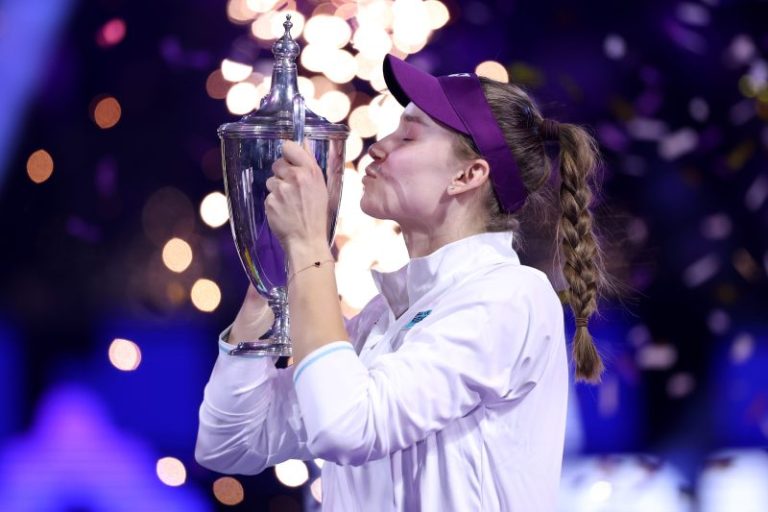
Elena Rybakina won the WTA Finals in Riyadh, Saudi Arabia, after beating top-ranked Aryna Sabalenka 6-3, 7-6 (0) on Saturday.

It’s the tenth straight year that the WTA Finals has a first-time winner, as Coco Gauff won the event last year. The last player to win the WTA Finals in consecutive years was Serena Williams from 2012 to 2014.

The match was tightly contested, with only one break point converted in the entire match, which Rybakina won by utilizing her powerful service game to put pressure on Sabalenka.

Sabalenka, a four-time Grand Slam winner, also lost the WTA Finals in 2022, when she was beaten by Carlone Garcia in Fort Worth, Texas.  Sabalenka came into the finals with a 22–2 record in tie-breakers and was bageled during the second set.

Rybakina, the 2022 Wimbledon champion and the last player to qualify for a spot in the round-robin tournament, went undefeated, with a 5-0 record. She will receive a payday of $5.23 million, which the WTA says is the largest payout in the history of women’s sports.

Sabalenka will receive $2.695 million as runner-up and maintain the world’s No. 1 ranking despite the loss.

This post appeared first on USA TODAY

After the season opener, Anthony Edwards was impressed.

“If you coming to play Portland, it ain’t no more nights off, it ain’t no more gimme wins against Portland, man,” he said Wednesday, Oct. 22 after his Minnesota Timberwolves narrowly escaped with a win. “I’m not gonna lie, I love their team.”

The following day, however, everything would change for the Trail Blazers.

Coach Chauncey Billups was arrested and indicted on charges of wire fraud and money laundering for his alleged role in an illegal poker scheme with ties to the mafia. Billups was placed on immediate unpaid leave, and the man who would take over for him, Tiago Splitter, learned the news the way everyone else did.

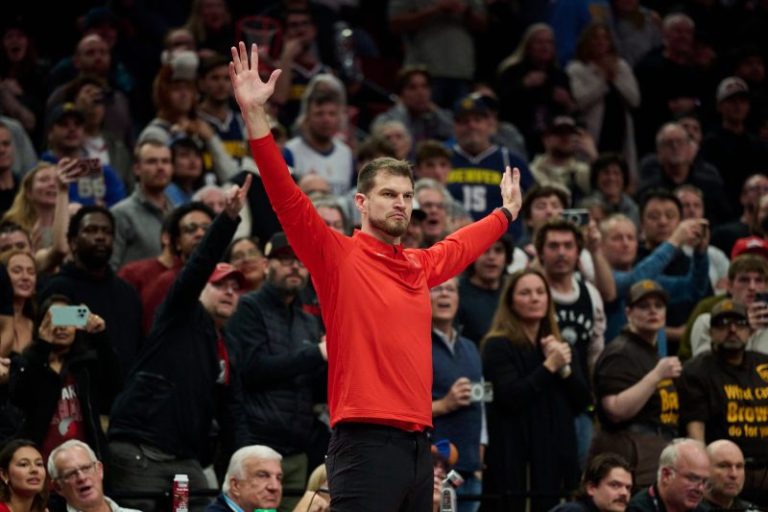
“I was sleeping and my phone was buzzing, so I just woke up to the whole thing,” Splitter, Portland’s interim coach, told USA TODAY Sports Friday, Nov. 7 in a phone interview. “Of course I didn’t expect anything like that to happen. Slowly just getting the news and getting to the facility, talked to my agent. And then a couple hours later, I’m the head coach. It was a strange situation.”

Once he became the interim coach, Splitter addressed the team and tried to convey transparency. His message was that life is tough, but he reminded them that they had each been through adversity. He encouraged them to think of this as a challenge.

Then, he made himself available to have lunch or coffee with his players on an individual basis so that he could hear any thoughts or concerns. It appears to have worked.

“He definitely has maturity to him and the demeanor to balance us out,” veteran guard Jrue Holiday said recently, according to The Oregonian. “I think the way that he carries himself is very stoic. So coming in here, we definitely have confidence when he talks and everybody listens.”

Splitter, 40, isn’t just keeping the Trail Blazers afloat; they are thriving.

Portland, which finished 12th last season in the West, is 5-3, with wins against the Golden State Warriors, Los Angeles Lakers, Denver Nuggets and the reigning NBA champion Thunder — four of the top contenders in the conference.

In many ways, its victory against Oklahoma City Wednesday, Nov. 5, was the most impressive; the Trail Blazers became the first team to hand the Thunder a loss, and they did so after falling into a 22-point hole. It was also Portland’s first win against the Thunder since April 2021.

The Trail Blazers are doing it on defense and with pace. They lead the NBA in turnovers forced (20.8 per game) and goaded the Thunder into committing 15, tying OKC’s season high. They held the Thunder to just 25.9% shooting in the third quarter – the Thunder’s second-lowest output in a period all season long.

Over the offseason, Billups had hired Splitter, who was the head coach of Paris Basketball in the LNB Élite. Splitter had a seven-year career in the NBA as a center and power forward and was an eventual champion with the San Antonio Spurs in 2014. He served as an assistant coach with the Brooklyn Nets and Houston Rockets before taking the Paris Basketball gig.

While there, he helped revolutionize the offense, focusing on pace and speed, and led the team to its first-ever qualification for the EuroLeague playoffs.

Interestingly, the coach Splitter replaced in Paris was Tuomas Iisalo, who went to the Memphis Grizzlies and eventually became their head coach. One of the assistants who had worked alongside Iisalo was Patrick St. Andrews, whom Billups also hired this offseason to be an assistant in Portland.

Together, Splitter has incorporated some of the concepts of pace and speed that he used with Paris Basketball with the off-ball movement that St. Andrews helped install in Memphis to create a free-flowing offense that thrives on fast breaks and paint touches.

“We sat down in the summer before the season even started and (discussed) how are we even going to play as a team,” Splitter said. “It was a coaching staff team effort to make this team play well because we don’t have a pick-and-roll-dominant player.

“So what are we going to do? We’re going to drive, we’re going to cut, we’re going to shoot the ball. We’ve got to play fast. That was the idea behind the whole thing.”

With that, key veterans like Holiday, Deni Avdija and Jerami Grant – who is Portland’s sixth man – have shined.

Avdija is averaging 24.4 points per game (7.5 more than last season), 6.5 rebounds and 4.5 assists. Holiday is chipping in 17.4 points per game, but he anchors the defense alongside 3-and-D stopper Toumani Camara. Grant has wholly bought in on the offense after he expressed frustrations with last season’s scheme.

Above all, Splitter and his assistants have molded Portland’s philosophies around his players.

“When you see your roster and you see your players, slowly you see them in practices and where they like to excel,” Splitter said. “That’s how we put together our offense and our defense.

“You know, it’s not hard, to be honest. It’s just like you put 1+1 = 2. You have Deni, he loves to play with speed and drive; okay, how can we start an offense that way? We need to give them the tools so they can perform the best they can.”

The Trail Blazers are in Miami preparing for a game Saturday, Nov. 8 against a team that runs a similar offense. The Heat rank first in pace (106.38) and the Trail Blazers (105.25) are second. It will be another interesting barometer for Portland, arguably the surprise team thus far this year.

But the season is young, and Portland has to contend with a loaded Western Conference. Splitter, however, stressed that he won’t waver. He wants the Trail Blazers to play true to their identity.

“We just have to stick with our plan and our vision,” he said. “We have confidence in our plan.”

This post appeared first on USA TODAY

There was nothing he could do.

Writhing on the court in circles, Jayson Tatum clutched his lower left leg. He begged for a timeout. He buried his head in his hands before a Boston Celtics staffer rushed over and hid his face behind a towel. Tatum shook his head, he thumped it lightly on the floor.

For the six-time All-Star, a new reality had already started to set in.

“I remember grabbing my calf and I knew – I knew right away what had just happened,” Tatum told USA TODAY Sports recently. “My body went into shock, and I was squirming on the ground and all these things went through my mind. It was just like, ‘No way. No way did this just happen to me.’ ”

There was a time when Achilles tendon ruptures were considered career-ending injuries in the NBA. Modern medicine has made reparative surgery and its recovery more tolerable, but – because the injury robs players of entire seasons, the rehab is intensely grueling and slow-motion replays often reveal the exact moment when the tendon snaps – it remains the most devastating injury in the NBA.

Most concerning for the league is that ruptures are surging.

There have been 63 known Achilles tendon ruptures in the 55 NBA seasons since 1970, excluding the one that began two weeks ago. Yet, 29 of those ruptures – or 46% – have occurred over the most recent 13 seasons, at a rate of 2.23 ruptures per season.

Those data are skewed by last season’s record-high seven ruptures, but they nonetheless represent a significant increase over the previous 42 seasons, which yielded a rupture rate of 0.81 per season.

So what, exactly, is causing this spike?

USA TODAY Sports interviewed Tatum and nearly a dozen doctors, surgeons, epidemiologists and performance coaches, seeking to pinpoint factors driving the surge, and – most crucially – what can be done to prevent them.

According to experts, ruptures are multi-factorial and case dependent, though three potential causes for the increase predominated: the unprecedented explosion of youth basketball, insufficient time to heal from precursory lower leg injuries and the ubiquity of the false step, a rarely-discussed but widely used on-court maneuver.

“Trust me, I’ve asked a thousand questions to a thousand different people,” Tatum continued. “ ‘What could I have done to prevent this? What more could I have done?’

“My body felt great. It’s just kind of tough with this injury. They haven’t really been able to figure out why it happens to certain people.”

What is the Achilles tendon?

The Achilles tendon is a collection of fibrous cords that entwine to connect calf muscles to the heel bone. Think of it as a mop whose strands are tightly wrung.

The largest and thickest tendon in the body, the Achilles is made of collagen and elastin, a pair of proteins. Collagen is structural and provides strength for skin, muscles, ligaments, tendons and bones. Elastin, as the name implies, supplies elasticity and stretchiness.

Together, the proteins make the Achilles the strongest tendon in the body, one capable of incredible power and explosive propulsion.

Yet, the biomechanic traits that make the Achilles such a powerful structure also make it prone to injury, particularly near the middle of the tendon, where it is thinnest, often subject to the most tension and receives poorest blood flow.

Over time, the fibers twist and grind on each other, especially during intense athletic competition, when the cords are subject to repetitive microdamage or microtears. If not given time to heal and recover, the tendon’s health could be compromised, which may eventually lead to ruptures.

For NBA players, a rupture often becomes the worst-case scenario; studies have shown that, by and large, players who do return from the grueling rehab often aren’t quite the same, impacting future earnings. Teams, meanwhile, are forced to scramble and adjust.

“The level of concern is extraordinarily high when we’ve got an injury that causes a player to miss an entire season,” NBA senior vice president of player health Drew Galbraith told USA TODAY Sports. “It’s massive for those teams, particularly, when there are star players involved. We’re taking it very seriously.”

Over the summer, the NBA convened a panel of more than 30 experts from across the globe, giving them the platform to share their intel, but one aspect puzzled doctors, however: the ages of players suffering ruptures. Previously, the injury was thought to be exclusive to older players. Yet, ruptures have occurred from players aged 21 to 35.

In fact, the average age of players sustaining the injury is 27 – hardly that of an athlete in decline – and skewing younger. A 2013 study found the average age of players suffering an Achilles rupture to be 29.7 years old.

Youth sports give rise to ‘unhealthy tendons’

Amateur Athletic Union (AAU) basketball exploded in the late 2000s and early 2010s when it became a college basketball feeder system. A recent study surveyed a group of 590 active NBA players ahead of the 2023-24 season and found that a staggering 84.7% had played AAU basketball.

That added wear and tear, however, may be producing a cumulative effect on the lower legs of players entering the NBA. Through pre-draft screening and ultrasound imaging on joints and tendons, team physicians, in recent seasons, have encountered players entering the NBA already exhibiting signs of what could be clinically described as unhealthy tendons.

This spike of Achilles ruptures appears to coincide with the explosion of AAU hoops; the players profiting from that growth are now the stars of the NBA.

Indeed, Tatum (St. Louis Eagles), Tyrese Haliburton (Wisconsin Flight) and Damian Lillard (Oakland Rebels) – the three stars who suffered ruptures in the postseason – each played AAU hoops as teens.

“Think about the lifetime accumulation on these tendons,” Dr. Claire D. Eliasberg, an orthopedic surgeon with the Hospital for Special Surgery, told USA TODAY Sports. “With this early, early sports specialization, which has changed in recent years, by the time these athletes are in their late 20s and 30s, it’s almost like they’ve played entire seasons before they even enter the pros.”

It’s essential to note that youth basketball participation is merely one variable, one that’s not a definitive or conclusive precursor to injury; there are far more AAU alumni in the NBA who have never ruptured their Achilles than there are who have.

What is the false step?

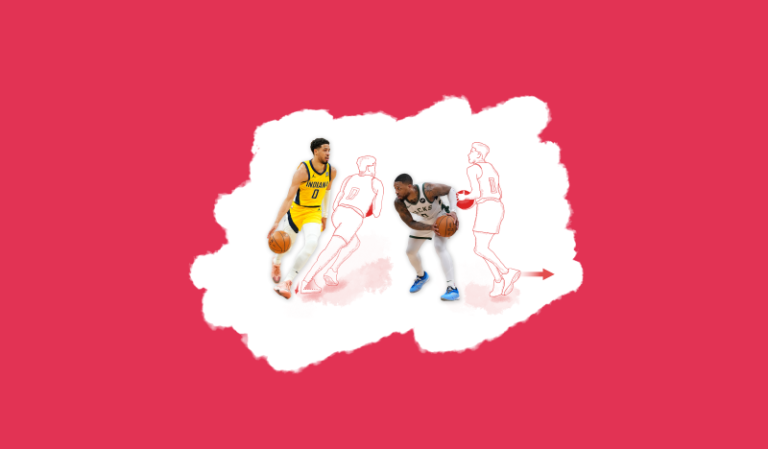
The false step is a common movement athletes make – most often subconsciously – to generate explosive speed. It occurs when a player takes a quick step backward that shifts weight and momentum to the trail foot before launching forward.

The step creates powerful propulsion, but it can also inflict massive strain on the Achilles tendon. This is most notable when the trail foot extends far behind the athlete’s center of mass, often leading to a straightened knee and acutely dorsiflexed ankle. This, in effect, loads the Achilles like a spring.

If the player’s heel makes contact with the floor, the results can be devastating. Additionally, there can often be rotational forces that twist the tendon, putting further stress on it.

Also known as the negative step or rock step, the false step is the mechanism that overwhelmingly triggers Achilles tendon ruptures in basketball.

Film review of each of the seven ruptures from the 2024-25 season showed that each occurred after the player engaged in a clear false step.

In fact, the false step is also responsible for many of the ruptures observed in the NFL.

Adam Petway, an assistant professor and director of biomechanics for University of Louisville, has published several papers on Achilles ruptures in the NBA. Petway has served on the strength and conditioning staffs of the Washington Wizards and Philadelphia 76ers, and his most recent paper, published in March, examined minor and moderate lower leg injuries and their effect on Achilles ruptures.

Petway found that two injuries in particular, calf strains and plantar fasciitis, could be precursors to Achilles ruptures, especially when players returned to the floor quicker from those ailments than the general NBA population did.

“Our hypothesis is that there’s probably some sort of degradation or microdamage to the Achilles tendon prior to rupture, and that false step mechanism or negative step – whatever you want to call it – is the straw that broke the camel’s back, so to speak,” Petway told USA TODAY Sports.

The obvious question then becomes: why don’t teams coach the technique out of their players? The answer is that’s close to impossible.

The NBA studied its frequency, determining that it occurs around 90 times per game – a rough approximation totaling 118,800 false steps taken last season. Accounting for practices and warmups, this number is presumably far larger.

And, since, there were seven Achilles tears last season that came out of the false step, that puts the incidence of rupture from the mechanism at a miniscule 0.000059% – if not lower.

But it’s even more complicated than that.

The men’s high school basketball coach at Imagine Schools in North Port, Florida, Taft is also a performance coach who has consulted for dozens of pro and college teams and has presented workshops with seven NBA squads.

As an athlete in college, Taft recalled his coaches trying to get him to stop the maneuver, saying it was wasted movement before forward propulsion. Taft, however, began studying it once he started his career in strength and conditioning.

He realized the false step goes far beyond sport and is a remnant of our most basic instincts. Taft cross-referenced footage of animals being suddenly startled by predators and saw similar acts of them repositioning their feet.

“It falls under our fight or flight reflexes,” Taft told USA TODAY Sports. “So anytime we’re scared or we need to take off really quickly – something frightens us and we take off – this is a natural reaction to reposition your feet so you can escape harm very quickly or attack.”

Put another way: it’s extremely difficult to train something out of people when it’s instinctual.

A hypothesis raised by some experts suggested that a rise in pace in the NBA may be a contributing factor to the increase in ruptures. And while possessions per season have steadily increased in recent seasons, pace today is nowhere near the record highs from the 1960s.

An examination of vintage game footage shows how players relied on handoffs and focused on creating space for jump shots. Today, with the emphasis of the 3-point shot, teams are embracing speed to create mismatches, sucking defenses into the low block.

“The obsession around paint touches, particularly direct-line drives, just to create spacing for perimeter shooting and shots at the rim – there’s a huge uptick in maneuvers where you have to false step,” Petway said.

The future of Achilles tendon rupture prevention

The NBA is continuing its work with the panel of experts and plans to present findings to all 30 teams. As part of that initiative, the league is consulting specific teams that are proactive with their imaging and methods to measure elastography – or tendon stiffness. The NBA will also continue to track the false step and look into whether specific players are using it more often than others.

Essentially, the NBA is trying to amass all the data points it can to create a common denominator

Players and coaches, meanwhile, can embrace exercises like controlled heel drops and other plyometric exercises to improve tendon strength and stiffness. Deep tissue massages also can support circulation and improve blood flow and tissue health. Maintaining flexibility, experts said, is also key.

Above all, however, the NBA is stressing caution with any interventions they’re considering.

“We don’t want to chase down something that has a negative consequence for the players or introduce something that could actually increase injuries,” Dr. John DiFiori, the league’s director of sports medicine, told USA TODAY Sports. “If we make a change with something around the ankle or the foot, we may or may not be solving Achilles ruptures, but then are we creating a problem somewhere else in the kinetic chain? We need to be very thoughtful about it.”

This post appeared first on USA TODAY

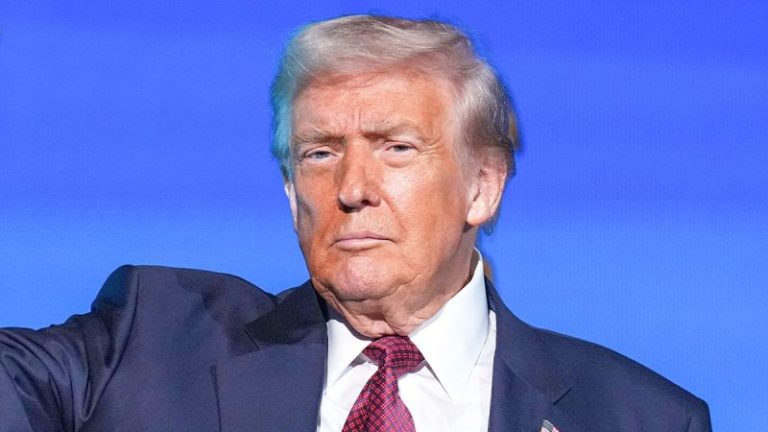
President Donald Trump has urged Senate Republicans to abolish Obamacare and reroute federal health care spending directly to individual Americans.

In a Truth Social post Saturday morning, Trump wrote: ‘I am recommending to Senate Republicans that the Hundreds of Billions of Dollars currently being sent to money sucking Insurance Companies in order to save the bad Healthcare provided by ObamaCare, BE SENT DIRECTLY TO THE PEOPLE SO THAT THEY CAN PURCHASE THEIR OWN, MUCH BETTER, HEALTHCARE, and have money left over.’

‘In other words, take from the BIG, BAD Insurance Companies, give it to the people, and terminate, per Dollar spent, the worst Healthcare anywhere in the World, ObamaCare.’

‘Unrelated, we must still terminate the Filibuster!’

This is a developing story. Please check back for updates.

This post appeared first on FOX NEWS