Archive

2025

Browsing

The debut College Football Playoff rankings are a roadmap we can use to evaluate how the selection committee compares Power Four conferences, and specifically how the committee initially assesses teams with similar résumés in the SEC and Big Ten.

Based on Tuesday night’s release, the committee is impressed with the best of the best in the Big Ten — No. 1 Ohio State and No. 2 Indiana — but even more taken with the depth in the SEC, which follows with No. 3 Texas A&M, No. 4 Alabama, No. 5 Georgia and No. 6 Mississippi. Overall, the SEC has nine teams in the top 25 to the Big Ten’s seven.

Another sign the committee has a higher opinion of the SEC is No. 9 Oregon, which came in behind three one-loss SEC teams despite losing only to Indiana. Penn State’s implosion has been costly for the Ducks, whose best win to date is against Northwestern.

While the committee is rightfully taken with the Buckeyes and Hoosiers, it’s clear the SEC wins the head-to-head comparison with the Big Ten. That’s one key factor to keep in mind as the committee weighs late-season results from these Power Four heavyweights and eventual picks between teams with identical records hailing from different conferences.

The SEC and the ACC lead the winners and losers from the debut playoff rankings:

Winners

Ohio State and Indiana

Being No. 1 in the playoff rankings is nothing new for Ohio State, which has now spent six weeks in the top spot, tied with Oregon for the fourth-most by any team in the playoff era. To land at No. 2 in these rankings is new ground for Indiana, of course, reflecting the program’s intense growth in two seasons under coach Curt Cignetti. Importantly, the debut rankings serve as confirmation: Ohio State and Indiana are the surest bets to make the playoff from the Power Four, with wiggle room to lose once and still finish in the top four and earn an opening-round bye.

The SEC

For the SEC, four playoff spots could be sealed before the conference championship game should A&M, Alabama, Georgia and Ole Miss go unbeaten in November. At a minimum, the wealth of ranked SEC teams should leave the conference feeling extremely confident about sending four teams into the bracket for the second year in a row. Admittedly, the league’s overall depth could be trimmed beginning this weekend: No. 22 Missouri would be virtually eliminated with a loss to A&M, as would No. 16 Vanderbilt with a loss to Auburn. Next week’s slate sends Oklahoma to Tuscaloosa and Texas to Athens.

Notre Dame

The No. 10 Fighting Irish will spend the rest of November in win-and-in mode after squeezing in ahead of a pair of two-loss SEC teams in No. 11 Texas and No. 12 Oklahoma. This specific ranking is important: Notre Dame can only make the playoff as an at-large selection and one of the 12 spots in the bracket is reserved for the Group of Five, so coming in at No. 10 despite losses to A&M and No. 18 Miami means a clean sweep of the regular season will almost certainly send the defending national runner-up back to the playoff.

Brigham Young and Texas Tech

Take a picture, because this won’t last long: No. 7 BYU and No. 8 Texas Tech meet this weekend in Lubbock, giving the winner more ammunition to climb in next week’s rankings but sending the loser tumbling down — especially if that’s the Red Raiders, who previously lost to Arizona State. Having a pair of teams in the top eight is a big development for the Big 12, which did not have two teams simultaneously in top 15 at any point last season.

Losers

The Group of Five

That there were no Group of Five teams in the top 25 doesn’t really matter in the big picture, since the committee will eventually have to choose the best conference champion from outside the four major leagues to round out the bracket. This is more of a perception issue, reflecting the committee’s lack of admiration for the specific teams consideration, such as Memphis and North Texas, and the lack of a Boise State-like national brand in the mix.

The ACC

The highest-ranked team from the ACC is No. 14 Virginia, one of three one-loss teams from the conference to crack the rankings, joining No. 15 Louisville and No. 17 Georgia Tech, and one of five ACC teams in the overall top 25. This can be framed as a positive, since while the conference lacks a top-notch playoff contender the conference could have multiple teams with two or fewer losses at the end of the season. But to have nine combined teams from the Big Ten and SEC in front of the Cavaliers speaks to the increasingly low odds the ACC has of sending more than two teams into the field and the non-zero chance the league sends only the conference champion.

Miami and Georgia Tech

A good chunk of the blame for this predicament can be placed on No. 18 Miami, which has dropped two of three to erase the goodwill stemming from non-conference wins against Notre Dame and South Florida. To be eight spots behind the Fighting Irish spells curtains for the Hurricanes’ at-large hopes. Meanwhile, losing to North Carolina State damaged Georgia Tech’s credibility with the selection committee, which placed the Yellow Jackets last among the nine one-loss teams in the rankings. The reasoning is simple: Wake Forest and Duke are the only two victories against Power Four opponents with a winning record and Tech no longer draws any major positives from early-season victories against Colorado and Clemson. But the Jackets do draw No. 24 Pittsburgh and Georgia at home to end the regular season, so an at-large bid could still be in play before heading to Charlotte for the ACC championship game.

This post appeared first on USA TODAY

Deion Sanders has removed play-calling duties from offensive coordinator Pat Shurmur.
The change occurred after Colorado’s loss to Utah on October 25.
Passing game coordinator Brett Bartolone has taken over as the new play-caller.

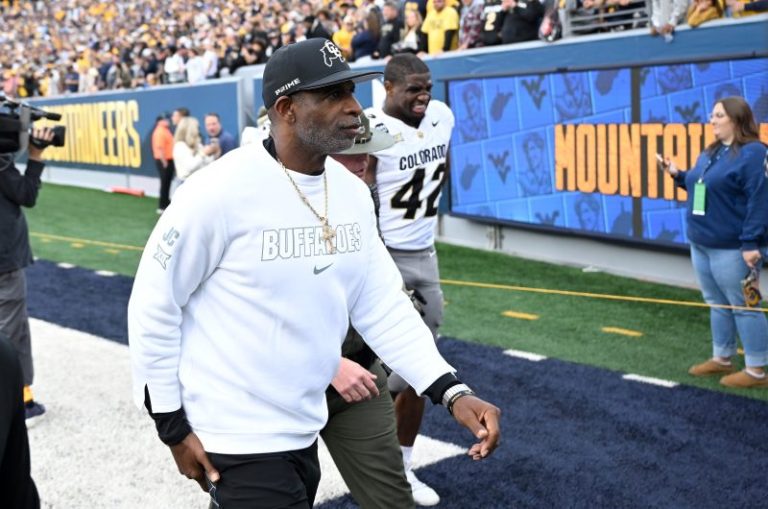
Colorado football coach Deion Sanders stripped play-calling duties from offensive coordinator Pat Shurmur after the Buffaloes lost at Utah Oct. 25, demoting him to quarterbacks coach before the team got beat again last week against Arizona, a person with knowledge of the situation told USA TODAY Sports.

The person didn’t want to be named because of the sensitivity of the situation. The person said Colorado tight ends coach and passing game coordinator Brett Bartolone has called plays instead of Shurmur since the Utah game.

Colorado didn’t immediately return a message seeking comment. But Sanders hinted at coaching staff changes Tuesday during his weekly news conference in Boulder. His team is 3-6 this season and has struggled with quarterback play this year since losing Sanders’ son Shedeur to the NFL.

“I might have already changed it, and you don’t know,” Sanders said. “I don’t do stuff and blow the whistles and make major announcements.”

Deion Sanders has demoted his play-caller before

It marks the second time in three seasons Sanders has demoted his offensive play-caller during the season. In 2023, he promoted Shurmur to co-offensive coordinator to call plays while taking away play-calling duties from offensive coordinator Sean Lewis. The Buffs were 4-4 at the time after starting the season 3-0. They finished the season at 4-8, and Lewis left to become head coach of San Diego State, where his team is now 7-1.

Shurmur joined the Colorado staff in 2023 as analyst after previously serving as head coach of the NFL’s New York Giants and Cleveland Browns. He served as Colorado’s offensive coordinator and play-caller since then and helped lead the team to a 9-4 record in 2024.

In his place as play-caller last week, Bartolone took over against Arizona, a game the Buffs lost 52-17. Bartolone played college football under offensive mastermind Mike Leach at Washington State and went on to work for Sanders as his offensive coordinator when Sanders was head coach at Jackson State.

Both Shurmur and Bartolone will try to break the Buffs’ skid at West Virginia on Saturday, Nov. 8 with a new starting quarterback — freshman Julian “JuJu” Lewis, who will be making his first college start.

Follow reporter Brent Schrotenboer @Schrotenboer. Email: bschrotenb@usatoday.com

This post appeared first on USA TODAY

With Week 9 in the books, the 2025 NFL regular season is halfway over. There are nine weeks left for the league’s playoff picture to round into shape, and quarterback play will be a big part in determining postseason spots.

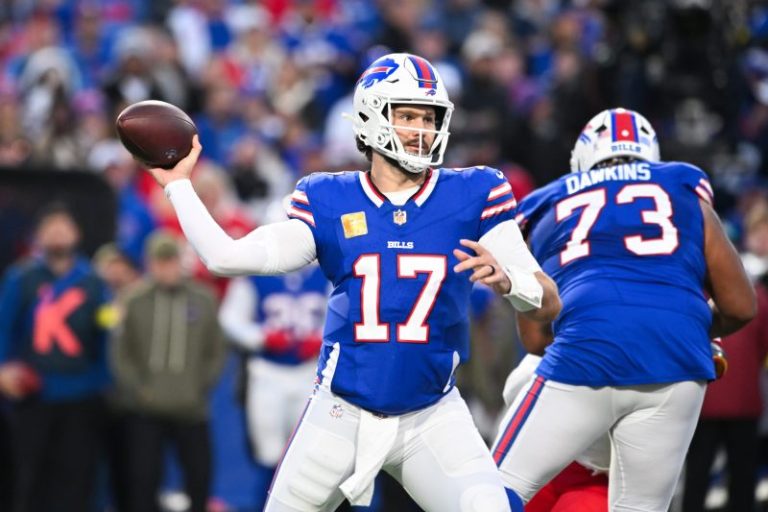
Last week’s action featured one of the biggest matchups of the regular season, as reigning MVP Josh Allen and the Buffalo Bills took down Patrick Mahomes and the Kansas City Chiefs.

Week 9 also included Baltimore Ravens quarterback Lamar Jackson’s long-awaited return from a hamstring injury on ‘Thursday Night Football’ and New Orleans Saints rookie Tyler Shough’s first career start.

Also in Week 9: more injuries to quarterbacks, creating big implications for playoff battles (and weekly power rankings).

Here’s how the starting QBs for all 32 teams rank entering Week 10:

NFL quarterback power rankings: Week 10

1. Josh Allen, Buffalo Bills

Last week: 3

Allen completed 88.5% of his passes for 273 yards and a touchdown in the Bills’ win over the Chiefs. He also rushed for two more scores.

2. Patrick Mahomes, Kansas City Chiefs

Last week: 1

Mahomes completed fewer than 50% of his passes in a game for the first time in his career in Week 9. He’s also got the third-most passing yards (2,349) and tied for the third-most touchdowns (17) at the midway point of the season.

3. Drake Maye, New England Patriots

Last week: 2

Despite a completion rate of 65.5% – his second-lowest of the season – and an interception, Maye had an eighth straight game with 200+ passing yards and a passer rating over 100. He leads the NFL with a 74.1% completion rate at the halfway point.

4. Lamar Jackson, Baltimore Ravens

Last week: 5

Jackson’s return from his hamstring injury included four touchdown passes against the Miami Dolphins, and he leads the NFL in passer rating (136.7) and QBR (78.9) through nine weeks.

5. Matthew Stafford, Los Angeles Rams

Last week: 6

Stafford’s 21 touchdown passes are three more than any other NFL quarterback at the halfway point of the regular season. He also leads the league with 268.4 passing yards per game.

6. Sam Darnold, Seattle Seahawks

Last week: 11

Darnold leads the NFL in yards per attempt (9.6) and yards per completion (13.7). His four-touchdown outing in Week 9 was his second such game in a five-week span.

7. Justin Herbert, Los Angeles Chargers

Last week: 4

Herbert had his second pass attempt intercepted and returned for a touchdown in Week 9, and he took six sacks behind a banged-up offensive line. But he still managed 250 yards and two touchdown passes and led the Chargers in rushing (nine carries, 57 yards, one touchdown) in a 27-20 win.

8. Baker Mayfield, Tampa Bay Buccaneers

Last week: 7

Mayfield and the Buccaneers had Week 9 off with a bye, but he is still tied for the NFL lead with four fourth-quarter comebacks and four game-winning drives.

9. Jared Goff, Detroit Lions

Last week: 10

Goff’s 284 passing yards in Week 9 were his second-most this season. His 67.6% completion rate was also his second-worst of the season. The Lions lost their third game – and second divisional game – of the year.

10. Jalen Hurts, Philadelphia Eagles

Last week: 12

Hurts and the Eagles had a bye in Week 9. His rate of throwing touchdowns on 7% of his throws and interceptions on 0.5% of his attempts are both among the league’s best.

11. Jordan Love, Green Bay Packers

Last week: 9

Love had his sixth game of the season with a completion rate over 70% in Week 9, but he threw an interception and should have had a second in the Packers’ loss to the Panthers.

12. Trevor Lawrence, Jacksonville Jaguars

Last week: 13

13. Daniel Jones, Indianapolis Colts

Last week: 8

Jones has now gone back-to-back weeks taking at least three sacks after never taking more than two in a game. He also threw three interceptions on Nov. 2, matching his total for the season before Week 9 and tying a career high. His two lost fumbles against the Steelers also tied a career high.

14. Dak Prescott, Dallas Cowboys

Last week: 15

Prescott leads the NFL with 228 completions at the midway point of the season, but he’s also second in the league with 329 pass attempts. The Cowboys have the third-most total yards of offense per game (378.4) through Week 9, but they’re 3-5-1.

15. Mac Jones, San Francisco 49ers

Last week: 18

Jones completed a season-high 79.2% of his pass attempts while throwing for 235 yards and two touchdowns in the 49ers’ win over the Giants. Despite starting the season as a backup, Jones is now 5-2 in seven starts.

16. Jaxson Dart, New York Giants

Last week: 17

Dart’s career-high 72.7% completion rate – with two big-time throws and zero turnover-worthy plays, per PFF – were little solace for the Giants’ quarterback in a third straight loss and fourth in five games.

17. Caleb Williams, Chicago Bears

Last week: 21

Williams had a 114.8 passer rating against the Bengals, the fifth-best of his career and second-highest of the season. In addition to throwing for three touchdown passes, he also caught one.

18. Michael Penix Jr., Atlanta Falcons

Last week: N/A

Penix’s career-high three touchdown passes helped push him to the third-best QBR of the week (89.6) but weren’t enough to help the Falcons overcome a missed extra point in a loss to the Patriots in Week 9.

19. Bo Nix, Denver Broncos

Last week: 16

At one point early in Week 9’s win over the Texans, Nix had completed just three of his 12 pass attempts. He didn’t complete more than 50% of his passes for the second time in his career, but he did manage four big-time throws, per PFF, which tied with Mahomes and Joe Flacco for the most of the week.

20. Aaron Rodgers, Pittsburgh Steelers

Last week: 20

Battling a jammed finger he suffered in pre-game warmups, Rodgers still threw for over 200 yards with a touchdown while completing 25 of his 35 pass attempts (71.4%).

21. Joe Flacco, Cincinnati Bengals

Last week: 23

Flacco had never thrown for more than 390 yards in his 18-year career. He threw for 470 yards on Nov. 2, which was almost enough for the Bengals to pull off an improbable comeback win over the Bears.

22. Jacoby Brissett, Arizona Cardinals

Last week: N/A

Making his third start in relief of an injured Kyler Murray, Brissett threw for more than 260 yards for a third straight game. He threw for two touchdowns and rushed for one more in the Cardinals’ 27-17 ‘Monday Night Football’ win.

23. J.J. McCarthy, Minnesota Vikings

Last week: 25

McCarthy’s 143 passing yards were the fewest of any Week 9 starter with at least 25 dropbacks. But he threw for two touchdowns and rushed for another in the Vikings’ 27-24 win over the Lions on the road in his first game back from a high ankle sprain.

24. Bryce Young, Carolina Panthers

Last week: N/A

Young’s 102 passing yards were the fewest of any Week 9 starter besides C.J. Stroud, who left his game early with a concussion. He also threw an interception and fumbled once when taking a hit while throwing. Still, the Panthers upset the Packers, 16-13, in Young’s return from an ankle sprain.

25. Geno Smith, Las Vegas Raiders

Last week: 28

Smith still is tied for the NFL lead in interceptions after throwing his 11th on Nov. 2. But he also tied a career high with four touchdown passes and nearly led the Raiders to an upset win against the Jaguars in overtime. Smith’s final pass attempt was batted down at the line of scrimmage for a failed two-point conversion that ended the game.

26. Cam Ward, Tennessee Titans

Last week: 24

The Titans’ No. 1 overall pick ends the first half of his rookie season with more interceptions (6) than touchdowns (5), but he did not throw any of either in Tennessee’s Week 9 loss to the Chargers.

27. Marcus Mariota, Washington Commanders

Last week: N/A

Mariota is back in the starting role for the Commanders indefinitely after starter Jayden Daniels dislocated his left (non-throwing) elbow.

28. Tyler Shough, New Orleans Saints

Last week: 28

Shough’s first career NFL start featured his first passing touchdown but also his second interception. The second interception of Shough’s career – a desperate throw on fourth down while avoiding pressure – was more deserved than his first – a tipped throw off of Chris Olave’s hands.

29. Dillon Gabriel, Cleveland Browns

Last week: 25

Gabriel and the Browns had a Week 9 bye. As other quarterbacks returned from injury, he dropped in this week’s power rankings.

30. Justin Fields, New York Jets

Last week: 27

Fields and the Jets had a Week 9 bye. As other quarterbacks returned from injury, he dropped in this week’s power rankings.

31. Davis Mills, Houston Texans

Last week: N/A

Mills entered the Texans’ Week 9 game after C.J. Stroud entered concussion protocol. His 137 passing yards were the fewest of any quarterback with at least 25 dropbacks.

32. Tua Tagovailoa, Miami Dolphins

Last week: 26

Tagovailoa looked out of sorts throughout the Dolphins’ Week 9 loss to the Ravens on ‘Thursday Night Football.’ He threw his 11th interception of the year to tie him for the league lead, took a bad intentional grounding penalty against no pressure, called a third-quarter timeout to avoid a delay of game despite Miami facing a large deficit. Perhaps worst of all, he tried to throw a goal-line fade to his 5-foot-9 running back, who was being defended by a 6-foot-4 safety.

All the NFL news on and off the field. Sign up for USA TODAY’s 4th and Monday newsletter.

This post appeared first on USA TODAY

Oregon’s in potential trouble. So is the Big Ten’s quest to stockpile CFP bids. That’s the message sent in these first rankings.
Oregon beat Penn State. Big deal. Metrics are lacking for No. 9 Ducks.
Could Big 12 get as many bids as Big Ten? Not off the table.

The Ducks might be a quack, wearing fancy jerseys with a swoosh.

That’s the message the College Football Playoff committee sent by stiffing Oregon with the No. 9 spot in its initial rankings.

Or, at least, the committee paid attention to strength of record and strength of schedule metrics that say Oregon possesses flimsier credentials than any of the SEC’s one-loss teams.

The committee nailed it.

What’s Oregon done? Beat Penn State. Get in line. So did Northwestern and UCLA.

Thanks for nothing, Big Game James. The Ducks own no wins against teams currently ranked.

“When you looked at Oregon, great players at the skill position,” CFP committee chairman Mack Rhoades said on ESPN, “felt that they’re really, really good up front, both sides of the ball, their one loss is to our 2-ranked team” Indiana.

Blah, blah, blah, that loosely translates to: Oregon might be a good ballclub, has some talent, but, sorry, the resume’s flimsy.

Zoom out from Oregon’s ranking, and behold the broader message baked into these rankings. Let this warning blare like a tornado siren all across the North and down into SoCal: The almighty Big Ten, producer of the past two national champions, is in danger of being limited to two bids.

No wonder commissioner Tony Petitti desperately wanted to rig the playoff bracket.

The committee sees the Big Ten for what it is — and that’s a league headed up by two teams that look spectacular, and behind Ohio State and Indiana, it’s a bowl of cold porridge. Just a lumpy, flavorless glob.

CFP rankings introduce idea of a two-bid Big Ten, if Oregon falters

You say the Big Ten’s got the nation’s top two teams. I say those could be its only teams in a 12-team bracket.

Oregon plays at Iowa this weekend, and they’re calling for a rainy, chilly day. Think it might be just a bit breezy, too? That’s Hawkeye weather. If the Ducks lose, that’ll send them tumbling, putting the Big Ten in danger of having just two teams in the updated bracket when our TV show we love to hate but can’t look away from returns next week.

Look, Oregon’s still got plenty of runway to shoot up the rankings. Its defense is stingy, albeit not as stingy as Ohio State’s or Indiana’s and no stingier than Iowa’s. Its offense posts gains in 20-yard chunks.

Along with Iowa, Oregon’s November schedule includes Southern California and Washington. That totals three ranked opponents, with two on the road. Unranked Minnesota is no gimme putt.

Make? Or, break?

Soggy Big Ten works just fine for Ohio State, Indiana

What a difference a year (and a new committee chair) makes.

Michigan’s Warde Manuel, an athletic director from B1G country, chaired the previous committee. Rhoades, the newest chairman, is Baylor’s athletic director. And, would you look at that? The Big 12 is suddenly getting some respect, after last year’s committee treated it like the Mountain West’s cousin.

Three Big 12 teams are ranked within the top 13 spots, including one-loss Texas Tech being a spot ahead of Oregon.

Tired: Nike money.

Wired: Big oil money! And a billionaire booster who keeps hogging your airwaves!

Aside from Cody Campbell’s checkbook, the Red Raiders’ case gets helped by their loss coming while their starting quarterback was out injured.

The brass tacks add up to Oregon potentially being vulnerable if it finished 10-2, especially if Notre Dame keeps winning and the Big 12 snags two bids, as it’s positioned to do.

In defense of Oregon, it suffered some bad strength of schedule luck. Unlike some Big Ten brethren, the Ducks scheduled a Power Four opponent. It’s just that Oklahoma State stinks, reducing Oregon’s credit for a 66-point victory. No boost for beating woebegone Oregon State, either.

Oregon’s not the Big Ten’s only hope for a third qualifier. Iowa and USC remain playoff contenders. They’ll all play each other, in a three-team battle royale that could amount to an elimination-fest for the Big Ten. Ohio State will snuff out Michigan’s hopes, so long as Ryan Day doesn’t fall into old habits.

Ohio State and Indiana must be loving this. The Big Ten’s soggy secondary and tertiary tiers are a feature, not a bug, to their quest to lock up the playoff’s top seeds.

Back at Big Ten HQ, Petitti must be wondering if there’s still a way to rig this thing.

Blake Toppmeyer is the USA TODAY Network’s senior national college football columnist. Email him at BToppmeyer@gannett.com and follow him on X @btoppmeyer.

This post appeared first on USA TODAY

Cameron and Cayden Boozer headlined another stellar recruiting class for No. 5 Duke, but their debut didn’t exactly live up to the hype. 

The twin brothers had a rough first half but responded in the second half to help the Blue Devils avoid the upset and beat Texas, 75-60, in the season-opening Dick Vitale Invitational. 

The sons of former Blue Devil and former NBA veteran Carlos Boozer followed in their father’s footsteps, and their arrival to Durham came to much acclaim. Both were highly ranked recruits, with Cameron the No. 3 prospect in 2025 that led Duke’s No. 1 recruiting class, according to 247Sports.

Cameron Boozer had great showings in the two exhibition games played against Central Florida and Tennessee, but it was far from that out of the gate on Tuesday, Nov. 4.

He struggled to find a rhythm in the first half against the Longhorns, getting hounded by the defense and unable to find good shot selections. He missed every single shot attempt he took with an 0-for-7 mark from the field and missed his lone free throw attempt. The same went for Cayden, who came off the bench and missed his one shot attempt in the first 20 minutes.

‘It wasn’t easy in the first half. He wasn’t happy with how he was playing,’ Duke coach Jon Scheyer said postgame.

It was no surprise Texas led by one point at the half, capitalizing on an inconsistent Blue Devil offense besides Isaiah Evans. The Blue Devils had a legitimate chance of suffering its first season-opening loss this century, with the last one occurring in 1999.

Luckily, the halftime break was just what the Boozers and Duke needed.

Cameron Boozer came out of the locker room with determination. He scored the first official points of his career with a pair of free throws, and his first made bucket came on a driving dunk. From that point on, Boozer made life difficult for the Texas defense.

He was driving to the bucket and drawing fouls, accounting for the first six points of the second half that gave Duke a lead it didn’t let go off for the remainder of the game.

The Longhorns put Duke into the bonus just eight minutes into the second half, and Boozer was constantly finding himself at the free throw line. Seeing the ball go in the hope gave him confidence to put his mark on the game, crashing the boards to run the offense and get the ball near the bucket.

Cameron Boozer finished with 15 points – all of which came in the second half – with nine of them coming from the charity stripe. He also added a game-high 13 rebounds to become the fifth Duke freshman in the last 30 seasons with a double-double in their debut game. He was 3-for-12 from the field.

‘My team did a great job picking me up at halftime. Scheyer did a great job drawing us a place for me to get going and my teammates found me,’ Boozer said.

Cayden Boozer had a much quieter game off the bench, finishing with two points, three rebounds and two assists in 14 minutes of action.

What helped the Boozer twins’ struggles was the play of Evans. He accounted for 14 of the first 23 points for the Blue Devils, and he finished with a game-high 21 points. 

Texas’ offense was unable to keep up with Duke, getting it to a three-point game with nine minutes left before the Blue Devils responded with an 8-0 run that put it out of reach. Duke has now won 26 consecutive season openers.

This post appeared first on USA TODAY

Did you believe him?

Jerry Jones teased the NFL universe for several days before the league’s trade deadline Tuesday at 4 p.m. ET in classic, look-at-me fashion that captivated the masses.

Armed with draft capital acquired a few weeks ago in dealing star pass-rusher Micah Parsons to the Packers, the Dallas Cowboys owner pledged to be aggressive on the market.

Typical Jerry. Fan the flames of NFL hype. Give the people what they want.

Then Jones, bullish on the prospects of tapping into an estimated $100 billion in natural gas reserves, essentially told The Wall Street Journal how fixing the woeful Cowboys defense took a back seat to his prolific oil and gas exploration venture.

Typical Jerry. He knew how that would sound – and sell! – as something cute-outlandish to a segment of that loyal Cowboys fan base. And it would generate attention. Never mind that it wasn’t either-or, efforts towards both objectives were possible. Regardless, his quote went viral as headlines and social media posts screamed.

Jones then told Stephen A. Smith that a trade was essentially done. No details. More headlines. Then he met with the media throng after Monday night’s loss against Arizona and walked back his trade-is-imminent posture. More buzz.

Turns out that Jones was hardly bluffing. The Cowboys (3-5-1) made a huge deal with the New York Jets Tuesday and landed all-pro defensive tackle Quinnen Williams shortly after obtaining linebacker Logan Wilson from the Bengals.

Typical Jerry. He managed to make a splash, although it’s not-so-typical, too, because usually Jerry The GM doesn’t cash in at the trade deadline.

Yet Jones, going on three decades since Dallas’ last Super Bowl berth, is surely flowing with style points this time. Williams, 27, is absolutely one of the NFL’s emerging defensive stars, and Jones got him for a 2027 first-round pick, a second-round pick next spring and, as a bonus, managed to unload a first-round bust, defensive tackle Mazi Smith, on the Jets.

Maybe Williams turns out to be the game-changer that defensive end Charles Haley was for the Cowboys teams in the 1990s that won three Super Bowl. Until it happens, though, it’s TBD, while adding more hope to the hype.

The Jets, with a first-year GM in Darren Mougey aligned with first-year coach Aaron Glenn, deserve some second-guessing after trading Williams and Sauce Gardner, the all-pro cornerback. Most teams try to build with premium players at premium positions, but the Jets just traded two away to stockpile premium picks – with no guarantees they will pick similar impact players – for a rebuild.

Hey, Jones can relate. He traded Parsons, whom the Cheeseheads envision as the missing piece to a Super Bowl.

Wilson, meanwhile, obtained for a seventh-round pick, fell out of favor and was benched in Cincinnati. A change of scenery can’t hurt. He goes from one pitiful defense to another, enlisted to help shore up a 29th-ranked run defense.

It was fitting that Jones – a proud wheeler-dealer flanked by his son, Stephen, the team’s COO, and Will McClay, VP-Personnel – got into the action amid the flurry of activity on the market. It used to be that nothing-to-very-little happened when the earlier NFL trade deadline approached. In 2023, though, team owners voted to push the deadline beyond Week 9, the midseason mark. It’s no coincidence that 25 players were traded in-season this year, reportedly the most in 25 years.

Still, how Jones does it is such a contrast to the methods of the league’s most accomplished full-time GMs. Although speculation about suitors and trade targets has persisted for weeks, Chris Ballard (Colts), John Schneider (Seahawks), Mickey Loomis (Saints) and Howie Roseman (Eagles), among others, saw no need to hype the deadline.

Of course, Jones would take that as a compliment. He’s different. And he generates buzz.

I’m reminded of this by a flashback: It’s Week 2 and I’m sitting on an airplane getting ready to fly to Kansas City. There are way too many Eagles fans on the flight, and they are trash-talking people wearing Chiefs paraphernalia.

Then one of the Philly fans blurts out: “Jerry Jones is the best GM in Eagles history!”

Talk about creating buzz. Jones’ name came up out of the blue, the reference apparently having more to do with how his decision to trade Parsons helped the defending Super Bowl champs by dealing away an impact player from the Cowboys.

Still, Roseman’s value to the Eagles is immense, which is not only reflected by the two Super Bowl championship teams he assembled. Roseman has been on a tear over the past week, swinging three trades in six days to address critical needs.

Jaelan Phillips, the edge rusher from the Dolphins, could be an answer to bolster the pass rush, while cornerbacks Jaire Alexander (Ravens) and Michael Carter (Jets) are needed to shore up the back end. Alexander is particularly interesting when considering that it wasn’t too long ago that he was considered one of the NFL’s best cornerbacks.

Typically, Roseman was aggressive in addressing issues with his team. And typically, he saw no need to go full blast with his intentions. Different folks, different strokes.

No, Jerry never spilled the tea on the specific players he was poised to obtain in the trades. But he sure made it good theatre.

And after his drilling for championships has resulted in so many dry holes the past three decades, imagine the buzz if Jerry hits on a gusher.

Contact Jarrett Bell at jbell@usatoday.com or follow on  X: @JarrettBell

This post appeared first on USA TODAY

It’s why his return to calling games meant so much for college basketball fans, including legendary Duke coach Mike Krzyzewski.

Vitale, who’s aiming to return to regularly calling games after a battle with cancer, made his first appearance of the college basketball season for the inaugural Dick Vitale Invitational between Texas and No. 5 Duke.

Vitale was emotional as the video board at the Spectrum Center in Charlotte, North Carolina played a tribute — narrated by Krzyzewski — in his honor.

‘I’m in awe of all the love everybody’s giving me out here,’ Vitale said on the broadcast. ‘It’s just unbelievable. Coach K, his words bring me to tears. Jay (Bilas) you played for the man. I’ve certainly learned to admire him so much, I think he’s the greatest coach ever in college basketball.’

Coach K’s kind message in the four-plus-minute tribute video by ESPN clearly meant a lot to Vitale.

‘During my over half-century in college basketball, I have only come across one person who is undefeated when it comes to touching the human spirit,’ Krzyzewski said. ‘His name is Dick Vitale.’

Vitale, a college basketball broadcaster for ESPN since 1979, is calling the first-ever Dick Vitale Invitational, a matchup that bears his name, to open the college basketball season. He signed a two-year extension with ESPN in May.

His enthusiasm was missed by the college basketball world, who’s glad he’s back to broadcasting the sport in a semi-regular fashion.

This post appeared first on USA TODAY

New York City socialist candidate Zohran Mamdani cruised to victory on Tuesday night, defying the laundry list of critics who railed against him over several high-profile controversial stances and statements.

Communist label

Mamdani dismissed the ‘communist’ label throughout the campaign, maintaining that he is a democratic socialist.

His past comments promoting the abolition of private property, seizing the means of production, claiming billionaires shouldn’t exist, and calling for free government programs earned him the communist label from some, including President Donald Trump. 

Mike Gonzalez, the Angeles T. Arredondo E Pluribus Unum Senior Fellow at The Heritage Foundation, told Fox News Digital earlier this year that Mamdani is ‘absolutely a communist’ who ‘repeats lines out of the ‘Communist Manifesto’ and other writings by Karl Marx.’

‘When Marxists today say they are socialists, they usually want to convey the impression that they believe in elections and not just in shooting your way into power,’ Gonzalez added. ‘Of course, that election often ends up being the last free and fair one. Witness Venezuela.’

Anti-Israel positions

Days before the election, an antisemitism research institute released a comprehensive report that summarized its concerns about Mamdani’s stances on Israel and concluded he shouldn’t become the next mayor of New York City.

Mamdani faced heated criticism on the campaign trail, including hundreds of rabbis signing a letter opposing him for positions dating back to his time in college co-founding his school’s Students for Justice in Palestine chapter all the way up to this year when he was hesitant to definitively condemn the term ‘globalize the intifada.’

Mamdani sparked a political firestorm last month, drawing outrage from the law enforcement community after posting a smiling photo with Imam Siraj Wahhaj, a Brooklyn cleric who served as a character witness for the mastermind of the 1993 World Trade Center bombing and has been a longtime defender of convicted terrorists, raising funds for their legal defenses.

Mamdani, a 34-year-old New York state assembly member, has been an outspoken critic of Israel and has even vowed to have Israeli Prime Minister Benjamin Netanyahu arrested if he visits New York City. 

‘I call Zohran Mamdani a jihadist because he is. Zohran Mamdani is a raging anti-Semite,’ New York GOP Rep. Elise Stefanik said in August. 

‘Mamdani is the definition of a jihadist as he supports Hamas terrorists which he did as recently as yesterday, when he refused to call for Hamas terrorists to put down their arms — the same Hamas terrorist group that slaughtered civilians including New Yorkers on October 7, 2023.’

In July, a Jewish advocacy group blasted Mamdani for sharing a video mocking Hanukkah Jewish traditions on social media.

Mamdani also faced criticism over the anti-Israel positions of his Columbia University professor father, Mahmood, who previously compared Abraham Lincoln to Adolf Hitler and appeared sympathetic to suicide bombers in a book he authored.

‘I think critiques of the state of Israel are critiques of a government, as opposed to critiques of a people and of a faith,’ Mamdani told MSNBC this week. ‘And my job is to represent every single New Yorker, and I will do so no matter their thoughts and opinions on Israel and Palestine, of which millions of New Yorkers have very strong views — and I’m one of them.’ 

Defunding the police

Public safety was one of the most talked about issues on the campaign trail, resulting in a constant debate about Mamdani’s calls in 2020 to ‘defund the police.’

Before his mayoral campaign, Mamdani called the New York Police Department ‘racist’ and said in 2023, ‘We have to make clear that when the boot of the NYPD is on your neck, it’s been laced by the IDF.’

‘I think what scares a lot of New Yorkers about the policy positions taken by Zohran Mamdani over the years is that he has exhibited not just a lack of appreciation for the men and women that stand on that [police] line, but a visceral disdain for them, which has led him to push for things like defunding and dismantling the police,’ Rafael A. Mangual, senior fellow and head of research for policing and public safety at the Manhattan Institute, told Fox News Digital in August, shortly after a gunman killed four people in midtown Manhattan, including a NYPD police officer. 

‘It’s not so much as just that he said, well, I wanna allocate some of this money to other places. He has gone so far as to say that we should dismantle the entire department.’

Mamdani attempted to distance himself from his previous positions on the campaign trail and apologized to them in a Fox News interview in October.

‘Will you do that right now?’ Fox News anchor Martha MacCallum asked. 

‘Absolutely,’ Mamdani said, turning to face the camera directly. ‘I’ll apologize to police officers right here because this is the apology that I’ve been sharing with many rank-and-file officers. And I apologize because of the fact that I’m looking to work with these officers, and I know that these officers, these men and women who serve in the NYPD, they put their lives on the line every single day. And I will be a mayor.’

Columbus Day incident

In July, Mamdani sparked a social media firestorm after a post resurfaced of him giving the middle finger to a statue of Christopher Columbus.

‘Take it down,’ Mamdani posted in June 2020, along with a photo showing what is presumably his gloved hand raising the middle finger toward a statue of the famed Italian explorer in Astoria, New York.

In a post around the same time, Mamdani asked his followers in a poll who should be honored instead of Columbus with options that included, ‘Tony Bennett (Astoria native, music icon) Walter Audisio (Communist partisan, killed Mussolini) Sacco & Vanzetti (Executed due to anti-Italian sentiment).’

The winners of the poll were Sacco and Vanzetti, two anarcho-communists executed in 1927.

Some in the Italian community took offense to the post, according to a New York Post report, including Columbus Heritage Coalition President Angelo Vivolo.

‘We will defend Columbus Day and Columbus statues,’ Vivolo said. 

‘He is being disrespectful to the Italian American community.’ Vivolo added. ‘If you offend one community, you offend all communities.’

Despite the criticisms and opposition from high-profile lawmakers across the country, Mamdani’s campaign focused on affordability, pushing back against Trump, and taxing the rich guided him to a commanding victory on Tuesday night.

Mamdani’s victory is expected to be a rallying cry for Republicans as they look to paint him and his socialist agenda as the face of the Democratic Party heading into next year’s midterms. 

‘The Democrat Party has surrendered to radical socialist Zohran Mamdani and the far-left mob who are now running the show,’ National Republican Committee Spokesman Mike Marinella told Fox News Digital on Tuesday night. 

‘They’ve proudly embraced defunding the police, abolishing ICE, taxing hard-working Americans to death, and replacing common sense with chaos. Every House Democrat is foolishly complicit in their party’s collapse, and voters will make them pay in 2026.’ 

Fox News Digital’s Deirdre Heavey contributed to this report.

This post appeared first on FOX NEWS

Senate Democrats are trying to figure out their exit strategy from the ongoing government shutdown as lawmakers on both sides remain cautiously optimistic that the end is near.

At hand are offers Senate Republicans have made since nearly the beginning of the shutdown, which crept into record-breaking territory Tuesday night.

Among the options Senate Minority Leader Chuck Schumer, D-N.Y., and his caucus mulled were a vote on expiring Obamacare subsidies, attaching a host of spending bills to the government funding extension and likely extending the House-passed continuing resolution (CR) until December or January.

Following a nearly three-hour, closed-door lunch, Schumer gave little indication as to what Democrats’ move would be. He noted that the longer-than-usual caucus lunch went well, and that Senate Democrats were ‘exploring all the options.’

If enough Senate Democrats join Republicans to reopen the government and take up the GOP’s offer, they’d effectively be caving after spending 36 days entrenched in their position that they needed an ironclad deal on the expiring Obamacare premium subsidies.

Like Schumer, many Democratic lawmakers were tight-lipped about their discussions.

‘It’s still a work in progress,’ Sen. Gary Peters, D-Mich., said.

One part of the equation is tacking on a trio of spending bills, known as a minibus, that would fund military construction and the Department of Veterans Affairs, the legislative branch, and agriculture and the Food and Drug Administration.

Senate appropriators, who have been the main protagonists of increased bipartisan talks, believe that jump-starting the government funding process could be the key to ending the shutdown.

‘The reason we’re in this position is that we have not passed appropriations bills,’ Sen. Katie Britt, R-Ala., said. ‘So beginning to break the logjam through doing that, we think would be incredibly effective.’

The other part of the equation is a guarantee from Senate Majority Leader John Thune, R-S.D., that Senate Democrats would get a vote on a bill that dealt with the expiring Obamacare subsidies.

But that attempt is almost certain to fail, given that Senate Republicans want to see major reforms made to the program.

‘It’s a universe that I think is pretty well-defined and established,’ Thune said. ‘I’ve said this before, but the question is whether or not we’ll take ‘yes’ for an answer.’

That’s where the deep-seated lack of trust that Senate Democrats have for their counterparts across the aisle and of President Donald Trump comes in that has underscored much of the shutdown. One of their demands is to have the healthcare bill voted on by a simple, 50-vote majority, which Thune and Republicans scoffed at.

Still, Senate Democrats are eyeing more of a solution to the healthcare issue rather than the promise of a process, which Thune has given.

‘I’m interested in negotiation, but a negotiation that ends up — that ends in a piece of legislation being passed,’ Sen. Chris Murphy, D-Conn., said. ‘An agreement to take a vote that Republicans are guaranteeing will fail doesn’t sound like an outcome that helps regular Americans.’

Others, particularly progressives in the Senate Democratic caucus, don’t want to see Schumer or their colleagues back down, even as federal workers and air traffic controllers go unpaid, and as the administration has wavered on funding federal food benefits despite a court order to do so.

‘If the Democrats cave on this, I think it will be a betrayal to millions and millions of working families who want them to stand up and protect their healthcare benefits,’ Sen. Bernie Sanders, I-Vt., said.

Despite promises of a vote, Republicans argue they can’t predetermine the future outcome nor guarantee that a Democratic proposal would pass.

‘[Thune] has said from Day 1 that he would provide them with a vote,’ Sen. Mike Rounds, R-S.D., said. ‘What he can’t do is provide them with an outcome.’

Rounds is one of a handful of Senate Republicans who has engaged in bipartisan talks throughout the shutdown and was hopeful that over a dozen Democrats would cross the aisle to reopen the government.

‘I think they’re tired of this,’ Rounds said.

This post appeared first on FOX NEWS

The most consequential moments of the Trump–Xi summit last week did not occur at South Korea’s Gimhae International Airport. Statements about ‘stabilizing relations’ and ‘reducing tensions’ were predictable, almost perfunctory. 

The real story unfolded in the weeks leading up to the summit – in the choreography, the pageantry and the unmistakable assertion of American power across the Indo-Pacific. By the time Xi Jinping sat across from Donald Trump, he was meeting a U.S. president who had already recommitted to America’s military preeminence in the region, reaffirmed its alliances, and reminded Beijing that the United States remains the indispensable Pacific power.

In the days before the summit, Trump delivered a series of moves that together amounted to a strategic message. When reporters aboard Air Force One asked about Taiwan, he replied simply, ‘There’s not that much to ask about it. Taiwan is Taiwan.’ 

The remark – off-the-cuff but unmistakable in meaning – pushed back against speculation that his administration might soften on the issue in pursuit of a grand bargain with Beijing. Trump’s statement told Xi that the United States would not barter away the foundation of East Asian stability for a better trade deal. Since 1979, American policy toward Taiwan has relied on strategic ambiguity – but Trump’s phrasing underscored deterrence, not doubt. 

Then came a tangible demonstration of alliance power. The Trump administration announced a new partnership with a leading South Korean shipbuilder to co-produce nuclear-powered submarines and expand U.S. shipyard capacity – a deal expected to bring billions of dollars in investment and jobs to American facilities, including in Philadelphia and along the Gulf Coast. 

For all the rhetoric about ‘America First,’ this was alliance diplomacy in practice: fusing allied industrial bases to strengthen deterrence. At a time when China is out-building the U.S. Navy at a breathtaking pace, the U.S.–ROK shipbuilding initiative signals that Washington is no longer content to outsource maritime capacity to its competitors.

Equally deliberate was Trump’s decision to post on Truth Social about nuclear-weapons testing – announcing that the United States would resume limited tests to ensure readiness. The statement came in direct response to China’s accelerated nuclear expansion. 

The Pentagon’s 2024 China Military Power Report estimated that Beijing had surpassed 600 operational nuclear warheads and was rapidly expanding its missile forces and fissile-material production capacity. In recent years, satellite imagery and open-source reporting have also suggested that China may be preparing renewed activity at its Lop Nur nuclear test site, reinforcing concerns that Beijing is edging toward a more aggressive testing posture.

In that context, Trump’s post was less provocation than deterrent signaling – a reminder that the U.S. will not allow the balance of nuclear credibility to tilt unchallenged. The move ignited controversy but achieved its purpose: it reassured allies and warned adversaries that American nuclear deterrence is not theoretical.

Perhaps the clearest articulation of this posture came aboard the USS George Washington two days before the summit. Standing on the carrier’s deck alongside Japan’s prime minister, President Trump declared that ‘the U.S. military will win – every time.’ The audience was not voters in the United States. The message was directed at Xi Jinping, the People’s Liberation Army, and America’s allies watching across the Indo-Pacific. 

With the Japanese prime minister by his side – who described the carrier as a ‘symbol of protecting freedom and peace in this region’ – the moment projected allied unity and deterrent resolve. It was as much a visual message as a verbal one: the United States and its partners were back in the business of winning, and Beijing would have to recalibrate its assumptions accordingly.

Taken together – the Taiwan statement, the South Korea shipbuilding accord, the nuclear-testing post, and the carrier speech – the president’s actions framed the summit before it even began. 

These were not the actions of a president declaring detente with Beijing. They told Xi that the United States would not arrive as a supplicant seeking stability at any price, nor should America First to be interpreted as ‘America Alone,’ retreating to the Western Hemisphere.

Instead, President Trump positioned himself at the helm of an American-led order in the Indo-Pacific in which its two most important allies–Japan and South Korea– play leading roles. His message was not isolation but orchestration: America’s strength is amplified through partnership.

This approach marks an evolution from President Trump’s first term, when ‘burden-sharing’ often meant brow-beating allies. Now his focus is on empowerment — accelerating allied shipbuilding, missile defense and joint exercises. 

The summit’s scripted pleasantries – calls for dialogue and vows to ‘manage competition responsibly’ – mattered less than the backdrop: a U.S. president reinforcing alliances, expanding shipbuilding and projecting confidence from ‘100,000 tons of diplomacy’–the deck of an aircraft carrier.

President Trump will return to Beijing in April for a follow-up summit with Xi – a test of whether his current posture endures. As any student of ‘The Art of the Deal’ knows, Trump’s instinct is to maximize leverage before negotiation. 

The handshake between Trump and Xi captured that dynamic: a confident Trump leaning into Xi knowing weeks of U.S. maneuvers had strengthened America’s hand in its competition with China. Whether that grip represents a lasting commitment to Indo-Pacific leadership or merely a pause before the next deal remains to be seen.

This post appeared first on FOX NEWS