Archive

2025

Browsing

Red Panda, a well-known halftime performer, returned to the court on Tuesday for a performance during the Chicago Bulls-Philadelphia 76ers game. This was her first NBA halftime performance after recovering from a broken left wrist that she sustained during a performance over the summer.

Red Panda, whose real name is Rong Niu and who comes from a family of performing acrobats, fell during a halftime performance on July 1 at the WNBA Commissioner’s Cup final between the Indiana Fever and the Minnesota Lynx. She lost her balance while riding her unicycle and crashed onto the court. As a result, she was unable to complete her performance and was assisted off the floor in a wheelchair. Later, she revealed that she had broken her wrist during the incident.

Red Panda is famous for riding her unicycle, which is approximately 8 feet tall, while balancing custom-made bowls on her lower leg before flipping them onto the top of her head. She has been the star of many halftime performances, including during Game 5 of the NBA Finals in Oklahoma City.

The USA TODAY app gets you to the heart of the news — fast.Download for award-winning coverage, crosswords, audio storytelling, the eNewspaper and more.

This post appeared first on USA TODAY

The ACC is guaranteed one spot in the College Football Playoff but is vying for a second.
No. 6 Oregon faces a crucial game against Iowa to keep its at-large playoff hopes alive.
Colorado coach Deion Sanders is under pressure as his team struggles through a difficult season.

That’s guaranteed, of course, since the playoff grants automatic bids to the five highest-rated conference champions — the ACC is better than every Group of Five league, though the SEC, Big Ten and even the Big 12 are on a different level.

Every weekend until the end of the regular season, including the ACC championship game, will serve as a referendum on whether the conference warrants multiple teams in the tournament. A year ago, the ACC placed conference champion Clemson and runner-up SMU.

The drama begins on Saturday, when No. 11 Virginia hosts Wake Forest, No. 15 Louisville takes on California and No. 18 Miami hosts Syracuse. The one-loss Cavaliers are the only unbeaten team in ACC play and own the tiebreaker over the Cardinals, giving them some wiggle room in the race for Charlotte. But Virginia has just one other victory against a Power Four opponent with a winning record and would have slim odds of landing an at-large spot with a second loss. On the other hand, the Cardinals have wins against James Madison, Pittsburgh and Miami, giving them the foundation for an at-large run.

The Hurricanes are in dire straits after coming in eight spots behind No. 10 Notre Dame in the debut playoff rankings. League losses to Louisville and SMU have already doomed their shot at the conference crown, leaving only a single path to the playoff: Miami has to win out — and win out in style — while getting buckets of help from other Power Four leagues.

The ACC leads the USA TODAY Sports preview of the team, game, coach and quarterback facing the most pressure in Week 11 of the regular season:

Team: No. 6 Oregon

Landing at No. 9 in the debut playoff rankings should be a wake-up call for the Ducks, who might have to run the table from here, earning key wins against No. 24 Iowa, No. 21 Southern California and Washington along the way, to lock down a place as the second Big Ten team to earn an at-large berth. Looking ahead to Saturday, a loss in Iowa City would move the Hawkeyes into third among Big Ten teams in the playoff rankings.

A loss could even drop Oregon behind USC, which hosts Northwestern on Friday night. For now, the Wildcats are the Ducks’ best win, which justifies the three-spot difference between where Oregon falls in the US LBM Coaches Poll and in the playoff rankings.

Whether the Ducks can snap Iowa’s three-game winning streak is another question. The Hawkeyes’ two losses came by a combined eight points to Iowa State and No. 2 Indiana. In terms of shared opponents, both teams were competitive against the Hoosiers and both narrowly escaped against Penn State, while the Ducks were more dominant against Rutgers and the Hawkeyes much more impressive against Wisconsin.

The stakes are clear for Oregon. While the selection committee is impressed by what the Ducks bring to the table, chairman Mack Rhodes said on Tuesday night, a second loss in as many games against ranked competition could put their playoff hopes on life support.

Game: No. 8 Brigham Young at No. 9 Texas Tech

This is a highly meaningful matchup for the Big 12 that reflects the league’s increased strength compared to last season, when conference champion Arizona State was the only team to make the playoff. At no point last year did the Big 12 have more than one team inside the top 15 of the playoff rankings.

The best-case scenario has Texas Tech winning a well-played, close game that moves the Red Raiders inside the top eight of next week’s top 25 while not causing too much of a drop for the Cougars. But the opposite wouldn’t be bad, either, making BYU an even firmer playoff contender even at the expense of nearly erasing Tech’s at-large chances.

The two share the same ranked win, against No. 19 Utah, but the Red Raiders have been much more dominant in league play despite an October loss to the Sun Devils. Tech has won every other game by at least 24 points, including recent wins against Oklahoma State and Kansas State by a combined 65 points.

Coach: Deion Sanders, Colorado

Colorado won four games in Sanders’ debut, climbed to nine wins last year but may be capped at three wins this season with a loss on Saturday at West Virginia. Bowl eligibility is a pipe dream; the Buffaloes aren’t good enough, to be blunt, and will be pretty heavy underdogs in games against Arizona State and Kansas State to end the year.

It’s just been a rough year, period, raising concerns that last year’s breakthrough was an aberration. The Buffaloes have cycled through multiple quarterbacks, eventually landing on true freshman Julian Lewis against the Mountaineers. Sanders has also changed offensive coordinators, demoting Pat Shurmur in the wake of a loss to Utah in late October in favor of tight ends coach and passing game coordinator Brett Bartolone.

And things have gotten worse. Since beating Iowa State on Oct. 11, Colorado has been outscored 81-7 in the first half by the Utes and Arizona and lost by a combined score of 105-24. The lack of competitiveness is concerning.

Even WVU might be too much for the Buffaloes to handle. While the Mountaineers have struggled in Rich Rodriguez’s first year back on the sidelines, they did beat Pittsburgh earlier in the year and are fresh off an upset of Houston.

Quarterback: Matt Zollers, Missouri

No. 17 Missouri’s playoff chances hinge on the right arm of backup quarterback Matt Zollers, who will replace an injured Beau Pribula against No. 3 Texas A&M and become the first freshman to start for the Tigers since Drew Lock in 2015.

A four-star recruit and one of the top prospects in Pennsylvania, Zollers has played in five games and made 29 attempts, nearly all coming as Pribula’s replacement in a 17-10 loss against No. 16 Vanderbilt to end October. Zollers played well enough against the Commodores to justify the praise he’s drawn from coach Eli Drinkwitz since spring practices.

The extra week of preparation should help Missouri build a scheme and game plan to match Zollers’ skill set. The Aggies’ pass defense ranks fourth in the SEC in yards allowed per attempt but has allowed 13 touchdowns against just two interceptions, the fewest in the conference. A&M has also given up at least 218 yards in the air in each of the past three games.

A loss would drop Missouri out of the playoff conversation and inch A&M one step closer to locking down an at-large berth before meeting No. 13 Texas on Black Friday. But a win would move the Tigers closer to the Longhorns and No. 12 Oklahoma in next Tuesday’s playoff rankings.

This post appeared first on USA TODAY
There’s no rationale for it, no sense of trying to explain this unique and unreasonable partnership between Notre Dame and the College Football Playoff.

Each needs the other, and has done everything to make sure the relationship works. Anyone trying to explain it any other way looks utterly foolish. 

But that was CFP selection committee chairman Mack Rhoades doing just that Tuesday night, making the case for Notre Dame — the sport’s biggest television property and lighting rod of controversy — in the Top 10 of the first playoff poll.

“We refer to it as art and science,” said Rhoades said, and wait until you see what comes next. 

“The art is watching the team on film and tape and how good they are, how physical they are up front, offensive line, defensive line play, how good they are up the middle, their quarterback play, their skill players, and then certain contemplating and looking at metrics,” he added.

Holy Touchdown Jesus. What in the world was that? 

Because it’s not science, but it’s one heckuva an artful dodge of the unavoidable truth.  

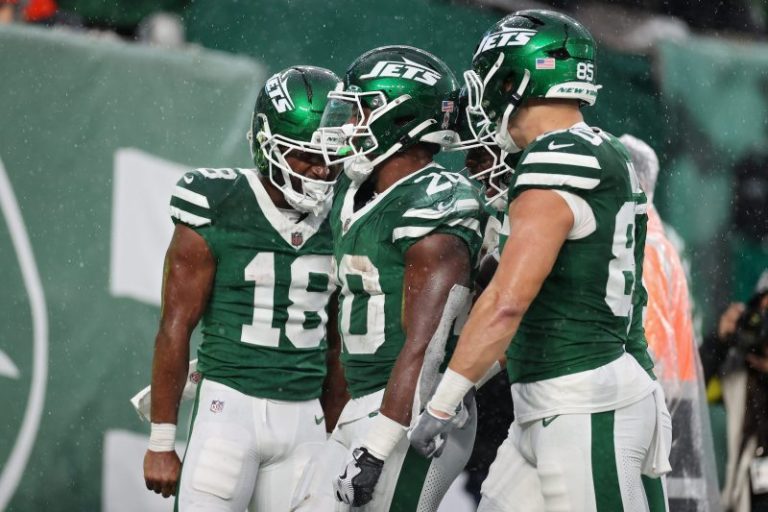
Notre Dame has played two difficult games. Notre Dame has lost two difficult games — one at home to No. 3 Texas A&M after giving up a touchdown in the final minute, and the other a one-possession loss to Miami that was anything but a close game.

In addition to those, you know, losses in games that matter, Notre Dame has this spectacular resume: 

A win over Boston College, which hasn’t won an ACC game. 
A win over Purdue, which hasn’t won a Big Ten game. 
A win over Arkansas, which hasn’t won an SEC game. 
And home wins over USC, Boise State and NC State. 

That No. 10 ranking, everyone, is deference to the largest television property in the sport. And nothing else. 

This is about name recognition, blue-blood status and three coaches on the committee steering the vote to their X’s and O’s narrative. Instead of, you know, what happened on the field. 

If you don’t think that’s the case, scroll back to that Rhoades quote again. Hall of Fame coaches and committee members Chris Ault and Mark Dantonio may as well have been feeding lines to Rhoades. 

It’s absurd to sell it any other way.

But if you really want to blame someone (or in Notre Dame’s case, thank someone) for the Irish question season after season, look no further than former Notre Dame athletic director Jack Swarbrick.

It wasn’t that long ago when he pulled off the swindle of all swindles. 

Let me take you back a handful of years to the birth of the expanded CFP, and the nexus of it all. While everyone was interested in more teams, no sane person on the executive committee wanted any part of figuring out the mess. 

But when SEC commissioner Greg Sankey, former Big 12 commissioner Bob Bowlsby, former Mountain West commissioner Craig Thompson and Swarbrick got to work constructing the 12-team format — the foundation of which is still used today — three of the four men couldn’t have imagined the impact it had on the future of Notre Dame football.

One did, and Swarbrick played the role of peacemaker or negotiator ― or whatever everyone wanted ― near perfectly. Then got everything Notre Dame needed. 

Despite Notre Dame’s independent status, it received the opportunity to compete for seven at-large bids. Favorable financial terms soon followed.

It didn’t take long for Notre Dame to take advantage of the situation with a deep run in the CFP. The Irish earned $20 million from last year’s national championship game run, a huge lump sum it didn’t have to share with any other team because ― wait for it ― it’s not a member of any FBS conference.

The breakdown: $4 million for being selected to the CFP, $4 million for a quarterfinal win, $6 million for a semifinal victory and $6 million for playing in the national championship game. 

Add that payout to the exclusive extension Swarbrick signed in 2023 with NBC to televise Irish home games through 2029 (approximately $50 million annually), and Notre Dame in 2024 earned as much media rights money as any program in college football.

Then there’s the gem of a scheduling move Swarbrick made in 2014, in conjunction with the first year of the CFP — all while banking on the format not staying at four teams. 

Swarbrick made a deal with the ACC — not with the geographically-friendly Big Ten, where it had existing rivalries — to get the easiest road to the playoff. The move to playing five games a season against the ACC was seen by many university presidents across the sport as a possible nose under the conference tent moment. 

Nothing could’ve been further from the truth.

To finish off the spectacular shell game, Swarbrick got the ACC to save Notre Dame’s pandemic season in 2020 by doubling the number of ACC games to 10. 

I know this is going to shock you, but Notre Dame advanced to the four-team CFP in 2020 despite losing by 24 to Clemson in the ACC championship game. 

Then got drilled by Alabama in the semifinals.

So yeah, there’s history here, but it has nothing to do with recent history on the field — and everything to do with preferential treatment for college football’s biggest television property.

Anyone trying to explain it any other way is foolish. 

Matt Hayes is the senior national college football writer for USA TODAY Sports Network. Follow him on X at @MattHayesCFB. 

This post appeared first on USA TODAY
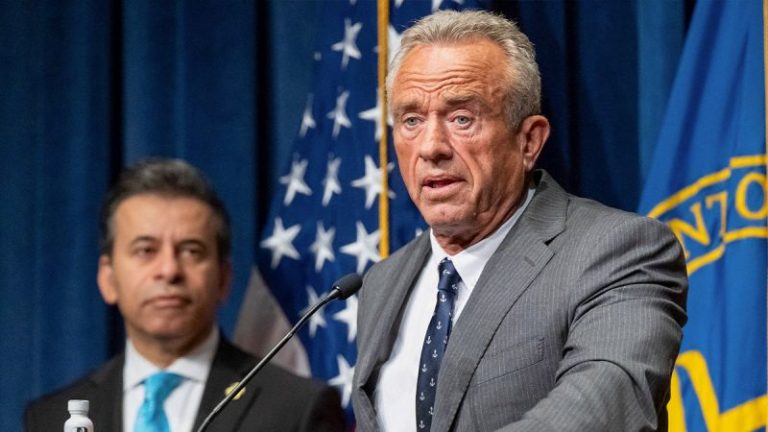
Leaders of a 189-member group that acts as the House GOP’s de facto conservative think tank are formally endorsing a new short-term federal funding bill.

With just over two weeks until the deadline for Republicans’ initial Nov. 21 plan and the threat of more government shutdown chaos, the Republican Study Committee (RSC) Steering Committee is calling for an extension into ‘at least’ January 2026.

‘Democrats are responsible for the longest government shutdown in U.S. history — paralyzing our country and deepening the healthcare crisis sparked by Obamacare,’ reads a statement first obtained by Fox News Digital.

‘House conservatives support a return to regular order accomplished only by a continuing resolution that funds the government at least into January 2026.’

A debate is already brewing within the GOP about how long another extension should last, with some conservatives even demanding a bill carrying last year’s federal spending levels through at least November 2026.

The House passed a short-term measure called a continuing resolution (CR) on Sept. 19, aimed at extending fiscal year (FY) 2025 funding levels for seven weeks to give lawmakers more time to strike a deal on FY 2026 federal spending.

But progress has been stalled in the Senate for weeks, where Democrats are demanding any spending bill be paired with an extension of COVID-19 pandemic-era Obamacare subsidies set to expire at the end of this year.

Senate Majority Leader Thune, R-S.D., has floated the idea of holding a vote on extending the subsidies if Democrats agree to Republicans’ CR, which is currently free of partisan policy riders.

It’s not clear if there’s an appetite for such a vote in the House, RSC leaders’ new statement suggests.

‘We are also committed to delivering a healthcare system that is truly accessible, affordable, and spurs innovation. Congress should reject any extension of the wasteful COVID-era subsidies that fuel fraud and drive up costs,’ they said.

The latest position by the RSC, led by Rep. August Pfluger, R-Texas, is likely an accurate indication of where most House Republicans’ feelings on both the CR and the Obamacare subsidies are.

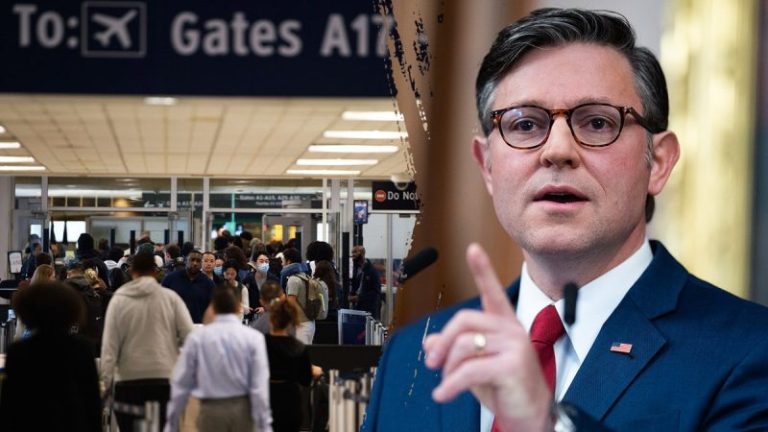
Speaker Mike Johnson, R-La., signaled support for a January CR on a private call with House GOP lawmakers on Tuesday, Fox News Digital was told earlier this week.

House Appropriations Committee Chairman Tom Cole, R-Okla., told Fox News Digital last month that he and others on his committee could support an extension into January.

But both issues are likely to see debate within the House GOP, not to mention the chamber as a whole.

Just over a dozen Republicans led by Rep. Jen Kiggans, R-Va., are supportive of extending the enhanced Obamacare subsidies by a year as a cushion to give the GOP more time to reform the flawed U.S. healthcare system.

Without it, some members of that coalition have argued, millions of Americans could be faced with a fiscal cliff leaving them to pay significantly more per month for their healthcare.

And on the CR debate, the House Freedom Caucus led by Rep. Andy Harris, R-Md., recently released a statement calling for a CR that extends at least into November 2026.

Their reasoning is that such a measure is the most effective way of keeping federal spending low and avoids another messy government funding fight until after the midterm elections.

But appropriators are against such a move, arguing that Congress must follow its constitutional duty in setting a yearly budget rather than relying on spending levels first passed under former President Joe Biden for another year.

It’s also not clear that Democrats, at least several of whom are needed to break a filibuster in the Senate, would accept a year-long CR.

Meanwhile, the government shutdown is in its 37th day, already having made history as the longest fiscal standoff in U.S. history.

This post appeared first on FOX NEWS

A federal judge criticized the Justice Department for allegedly being too quick to indict in high-profile cases on Wednesday.

Magistrate Judge William Fitzpatrick of the Eastern District of Virginia made the comments during a brief hearing regarding the case against former FBI Director James Comey.

‘Right now, we are in a bit of a feeling of indict first, investigate later,’ Fitzpatrick said in the hearing, which lasted less than an hour.

Fitzpatrick questioned prosecutors about their handling of data acquired from a number of search warrants between 2019 and 2020, information which is now being used in Comey’s case. The judge pressed prosecutors on whether they may have viewed information that may be protected by attorney-client privilege.

Fitzpatrick also noted the size of the trove of documents, saying Comey’s defense team has been placed at a disadvantage with a limited time to view the set.

‘The government has had this for five and a half years … this is an unfair burden the government is placing on the defense, but I don’t see another path forward,’ the judge said.

Comey’s team has sought to have his case dismissed, arguing he is the victim of selective prosecution by President Donald Trump.

The DOJ denied in a 48-page filing that Trump’s September Truth Social post calling on U.S. Attorney General Pam Bondi to prosecute prominent political adversaries, including Comey, Sen. Adam Schiff, D-Calif., and New York Attorney General Letitia James, had any influence on the decision to bring charges.

‘These posts reflect the President’s view that the defendant has committed crimes that should be met with prosecution. They may even suggest that the President disfavors the defendant. But they are not direct evidence of a vindictive motive,’ prosecutors argued.

‘The defendant spins a tale that requires leaps of logic and a big dose of cynicism, then he calls the President’s post a direct admission,’ they continued. ‘There is no direct admission of discriminatory purpose. To the contrary, the only direct admission from the President is that DOJ officials decided whether to prosecute, not him.’

Fox News’ Ashley Carnahan contributed to this report.

This post appeared first on FOX NEWS

There’s no rationale for it, no sense of trying to explain this unique and unreasonable partnership between Notre Dame and the College Football Playoff.

Each needs the other, and has done everything to make sure the relationship works. Anyone trying to explain it any other way looks utterly foolish. 

But that was CFP selection committee chairman Mack Rhoades doing just that Tuesday night, making the case for Notre Dame — the sport’s biggest television property and lighting rod of controversy — in the Top 10 of the first playoff poll.

“We refer to it as art and science,” said Rhoades said, and wait until you see what comes next. 

“The art is watching the team on film and tape and how good they are, how physical they are up front, offensive line, defensive line play, how good they are up the middle, their quarterback play, their skill players, and then certain contemplating and looking at metrics,” he added.

Holy Touchdown Jesus. What in the world was that? 

Because it’s not science, but it’s one heckuva an artful dodge of the unavoidable truth.  

Notre Dame has played two difficult games. Notre Dame has lost two difficult games — one at home to No. 3 Texas A&M after giving up a touchdown in the final minute, and the other a one-possession loss to Miami that was anything but a close game.

In addition to those, you know, losses in games that matter, Notre Dame has this spectacular resume: 

A win over Boston College, which hasn’t won an ACC game. 
A win over Purdue, which hasn’t won a Big Ten game. 
A win over Arkansas, which hasn’t won an SEC game. 
And home wins over USC, Boise State and NC State. 

That No. 10 ranking, everyone, is deference to the largest television property in the sport. And nothing else. 

This is about name recognition, blue-blood status and three coaches on the committee steering the vote to their X’s and O’s narrative. Instead of, you know, what happened on the field. 

If you don’t think that’s the case, scroll back to that Rhoades quote again. Hall of Fame coaches and committee members Chris Ault and Mark Dantonio may as well have been feeding lines to Rhoades. 

It’s absurd to sell it any other way.

But if you really want to blame someone (or in Notre Dame’s case, thank someone) for the Irish question season after season, look no further than former Notre Dame athletic director Jack Swarbrick.

It wasn’t that long ago when he pulled off the swindle of all swindles. 

Let me take you back a handful of years to the birth of the expanded CFP, and the nexus of it all. While everyone was interested in more teams, no sane person on the executive committee wanted any part of figuring out the mess. 

But when SEC commissioner Greg Sankey, former Big 12 commissioner Bob Bowlsby, former Mountain West commissioner Craig Thompson and Swarbrick got to work constructing the 12-team format — the foundation of which is still used today — three of the four men couldn’t have imagined the impact it had on the future of Notre Dame football.

One did, and Swarbrick played the role of peacemaker or negotiator ― or whatever everyone wanted ― near perfectly. Then got everything Notre Dame needed. 

Despite Notre Dame’s independent status, it received the opportunity to compete for seven at-large bids. Favorable financial terms soon followed.

It didn’t take long for Notre Dame to take advantage of the situation with a deep run in the CFP. The Irish earned $20 million from last year’s national championship game run, a huge lump sum it didn’t have to share with any other team because ― wait for it ― it’s not a member of any FBS conference.

The breakdown: $4 million for being selected to the CFP, $4 million for a quarterfinal win, $6 million for a semifinal victory and $6 million for playing in the national championship game. 

Add that payout to the exclusive extension Swarbrick signed in 2023 with NBC to televise Irish home games through 2029 (approximately $50 million annually), and Notre Dame in 2024 earned as much media rights money as any program in college football.

Then there’s the gem of a scheduling move Swarbrick made in 2014, in conjunction with the first year of the CFP — all while banking on the format not staying at four teams. 

Swarbrick made a deal with the ACC — not with the geographically-friendly Big Ten, where it had existing rivalries — to get the easiest road to the playoff. The move to playing five games a season against the ACC was seen by many university presidents across the sport as a possible nose under the conference tent moment. 

Nothing could’ve been further from the truth.

To finish off the spectacular shell game, Swarbrick got the ACC to save Notre Dame’s pandemic season in 2020 by doubling the number of ACC games to 10. 

I know this is going to shock you, but Notre Dame advanced to the four-team CFP in 2020 despite losing by 24 to Clemson in the ACC championship game. 

Then got drilled by Alabama in the semifinals.

So yeah, there’s history here, but it has nothing to do with recent history on the field — and everything to do with preferential treatment for college football’s biggest television property.

Anyone trying to explain it any other way is foolish. 

Matt Hayes is the senior national college football writer for USA TODAY Sports Network. Follow him on X at @MattHayesCFB. 

This post appeared first on USA TODAY
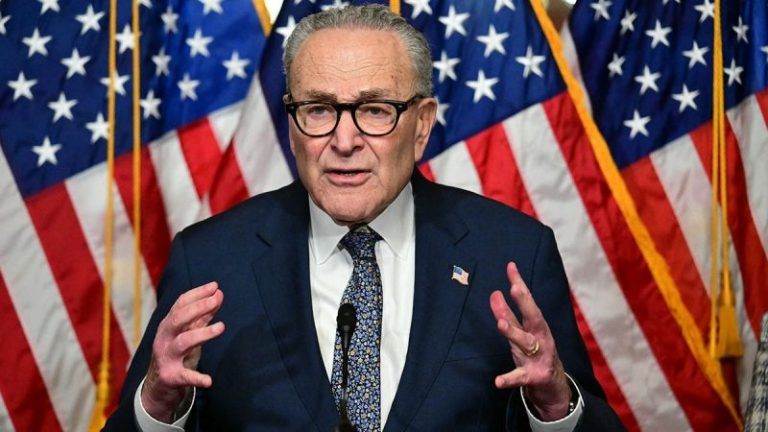
Washington Capitals star Alex Ovechkin scored his 900th career on Nov. 5, the first NHL player to reach that milestone.
He scored in the second period against Blues goalie Jordan Binnington.
The Capitals will honor Ovechkin on Nov. 26 with a pregame ceremony for reaching 900 goals and 1,500 games.

The NHL’s greatest goal scorer has another big round number to go with his record total.

Washington Capitals star Alex Ovechkin scored in the second period against the St. Louis Blues on Wednesday, Nov. 5, to become the first NHL player with 900 career regular-season goals.

He backhanded the puck into a wide-open net from the right faceoff circle at 2:39 after a Jakob Chychrun shot. Ovechkin had started the play by intercepting a clearing attempt by Blues goalie Jordan Binnington.

‘It’s a huge number and no one ever did it in NHL history and to be the first player to do it is a special moment,’ Ovechkin told reporters.

Teammates poured onto the ice to congratulate him. His goal ended up as the game-winner in the 6-1 victory.

‘What an amazing athlete and just a tremendous individual for the game of hockey,’ Blues coach Jim Montgomery told reporters. ‘He’s made the game great.’

The Capitals’ 2004 No. 1 overall pick had scored No. 895 on April 6 to pass Hall of Famer Wayne Gretzky and become the NHL’s all-time leading goal scorer. He finished last season with 897 goals and needed three this season to reach 900.

Goals aren’t coming as quickly this season after he dealt with an injury that limited his participation in training camp. He hit the milestone in his 13th game of the season and 1,504th of his career.

Ovechkin, 40, said this week he was trying not to think about his slow start.

‘As soon as you think you haven’t scored or you scored two goals in 12 games, you just put pressure on yourself,’ he told reporters on Nov. 3. ‘You have to go out there and do the best you can for your team.’

Now that Ovechkin has connected, the Capitals will hold a pregame ceremony on Nov. 26 to honor him for reaching 900 goals and 1,500 games, also achieved this season.

‘900 goals. A number only Alex Ovechkin could make feel inevitable,’ Capitals team owner Ted Leonsis posted on social media. ‘A generational talent, a loyal leader and the heartbeat of DC hockey. Congratulations, @ovi8. What an incredible moment for you, the @Capitals and fans everywhere.’

Ovechkin has a chance to break another Gretzky record: most combined regular season and playoffs goals. Gretzky had 1,016 and Ovechkin is at 977 after Wednesday. He would need 40 more to pass Gretzky but will need to pick up his pace.

He has been known to score in bunches, though. Last year, he had two goals in his first seven games, then 15 goals in his next 13.

Ovechkin is in the final year of his contract and hasn’t announced his plans for next season.

‘I still enjoy the moment, everyday coming to the locker room, not (so) much practice, but I still love the game,’ he told TNT after Wednesday’s game.

In the meantime, he continues to add to his career total, making him harder to catch.

Here’s a breakdown of his 900 goals:

Alex Ovechkin career goals breakdown

Total goals: 900, first overall
Even strength: 569, second overall
Power play: 326, a record
Short-handed: 5
Empty net: 65, a record
Game winners: 138, a record
Overtime goals: 27, a record
Multi-goal games: 179, second overall
Goalies scored against: 183, a record
20-goal seasons: 20, tied for second
30-goal seasons: 19, a record
40-goal seasons: 14, a record

Alex Ovechkin goals by season

Season: Goals, career total

(* denotes he led the league)

2005-06: 52, 52
2006-07: 46, 98
2007-08: 65*, 163
2008-09: 56*, 219
2009-10: 50, 269
2010-11: 32, 301
2011-12: 38, 339
2012-13: 32*, 371
2013-14: 51*, 422
2014-15: 53*, 475
2015-16: 50*, 525
2016-17: 33, 558
2017-18: 49*, 607
2018-19: 51*, 658
2019-20: 48*, 706
2020-21: 24, 730
2021-22: 50, 780
2022-23: 42, 822
2023-24: 31, 853
2024-25: 44, 897
2025-26: 3, 900

Dates of Alex Ovechkin’s milestone goals

1: Oct. 5, 2005
100: Oct. 12, 2007
200: Feb. 5, 2009
300: April 5, 2011
400: Dec. 20, 2013
500: Jan. 10, 2016
600: March 12, 2018
700: Feb. 22, 2020
800: Dec. 13, 2022
895 (breaks Gretzky’s record): April 6, 2025
900: Nov. 5, 2025

This post appeared first on USA TODAY
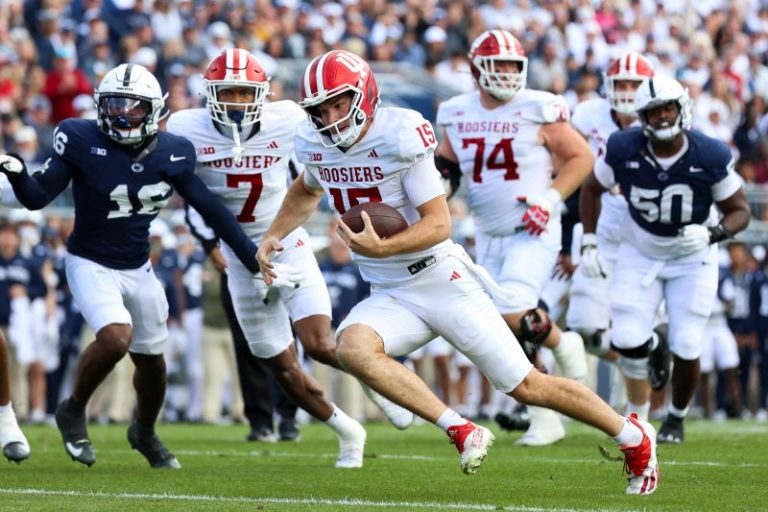
The Texas Attorney General’s antitrust division is investigating anticompetitive business practices in youth hockey, USA TODAY has learned. 

The Dallas Stars, the $2 billion National Hockey League team that seized control of youth hockey in the state, are a focus of the investigation. 

The state probe, which is in its early, information-gathering stages, comes on the heels of a USA TODAY investigation in August that revealed how the professional sports franchise monopolized every level of amateur hockey in Texas from preschoolers to adults.  

‘The Dallas Stars have not been contacted by the Texas Attorney General’s office,’ Joe Calvillo, the NHL team’s director of communications, said in an emailed statement to USA TODAY. ‘The Dallas Stars are committed to providing the best possible experience for all players, teams and families who participate in our leagues and tournaments through long-standing partnerships with cities across the DFW Metroplex.’

Reached by phone, assistant attorney general Paige Etherington, who is working on the case, told USA TODAY that the office does not comment on confidential investigations. 

It’s the second investigation a state agency has launched into a youth hockey organization in response to USA TODAY’s reporting. The Colorado Secretary of State’s office in October opened an investigation into the Colorado Amateur Hockey Association’s mismanagement of a charity 50/50 raffle held at professional sporting events that was supposed to benefit youth hockey families. 

As part of the Texas probe, Etherington and investigator Stephen Craig of the Texas Office of the Attorney General’s antitrust division spoke to Lisa Bry, a Dallas-area hockey mom who went public about her experience with the Stars for USA TODAY’s series. 

Etherington and Craig asked Bry about the Stars’ dominance in the youth hockey market, pricing power and the experiences of rinks that try to compete with the NHL team. They discussed Stars-run youth leagues, tournaments, private lessons and stay-to-play hotel requirements – a practice detailed by USA TODAY in March. 

The state’s investigation, Bry said, gives hope to hockey parents across the country who feel stuck in a system in which corporate interests exploit families and kids’ passions for profit.  

“I hope the Stars are shaking in their boots right now,” Bry said of the state investigation to USA TODAY. “I think this could be huge.” 

USA TODAY’s investigation detailed how the Stars used tens of millions of taxpayer dollars to build an ice rink empire, crush competition and regularly raise prices while diminishing the quality of their services. Knowing most families have nowhere else to go, the Stars impose their will by reminding parents that they can block the pathway for any kid trying to advance to the sport’s highest stages. 

The reporting documented multiple examples of the Stars retaliating against people they perceive as threats, from coaches who defect to other rinks to parents who criticize them on Facebook. The Stars also stacked the Texas Amateur Hockey Association – the nonprofit USA Hockey governing body that regulates the sport in the region – with their own executives, all but ensuring no one would stand in their way. 

A USA TODAY investigation in March revealed how three now-former Stars executives profited off their positions with the NHL team and Texas Amateur Hockey Association by forcing participants at Stars-run tournaments to book minimum three-night hotel stays they did not always want or need. At the same time, those executives ran a business that took a cut of the revenue from each hotel booking. 

Stay-to-play requirements, which are common across youth sports, are perhaps the clearest example of the Stars’ anticompetitive business practices, Luke Hasskamp, an antitrust attorney with Bona Law, told USA TODAY in July.  

Threatening and retaliating against parents and coaches who use non-Stars-run rinks and locking cities into 20- to 30-year leases to manage taxpayer-funded rinks, Hasskamp said, could also run afoul of antitrust laws, which require firms to compete for business solely on the merits of their products and services. 

Stay-to-play requirements were one focus of a 2020 antitrust lawsuit against Varsity Brands, a company that required participants at its youth cheerleading competitions to stay at specific hotels from which it received kickbacks. Varsity agreed to limit its stay-to-play policies as part of its $82.5 million settlement of that lawsuit.  

Stars spokesperson Dan Stuchal said in July that the NHL team would “loosen” its stay-to-play requirements in response to USA TODAY’s reporting. Two current and former Stars employees who served on the Texas Amateur Hockey Association board also resigned from their seats and one did not seek reelection. 

Etherington and Craig asked Bry for names and contact information of others in the Texas hockey community to potentially interview for the state investigation. They also told Bry they planned to issue her a civil investigative demand – a discovery tool that government agencies use to compel information before filing a lawsuit – for her Stars-related documents and correspondence. 

Bry said she is more than willing to comply. 

“My hope is to deter other markets from following this model that the Stars have created and that the Stars look internally and maybe do some better business decisions,” Bry said. “It shouldn’t be the way it is. Kids aren’t dollar signs.” 

Kenny Jacoby is an investigative reporter for USA TODAY who covers issues in sports, higher education and law enforcement. Contact him by email at kjacoby@usatoday.com. Follow him on X @kennyjacoby or Bluesky @kennyjacoby.bsky.social.

This post appeared first on USA TODAY
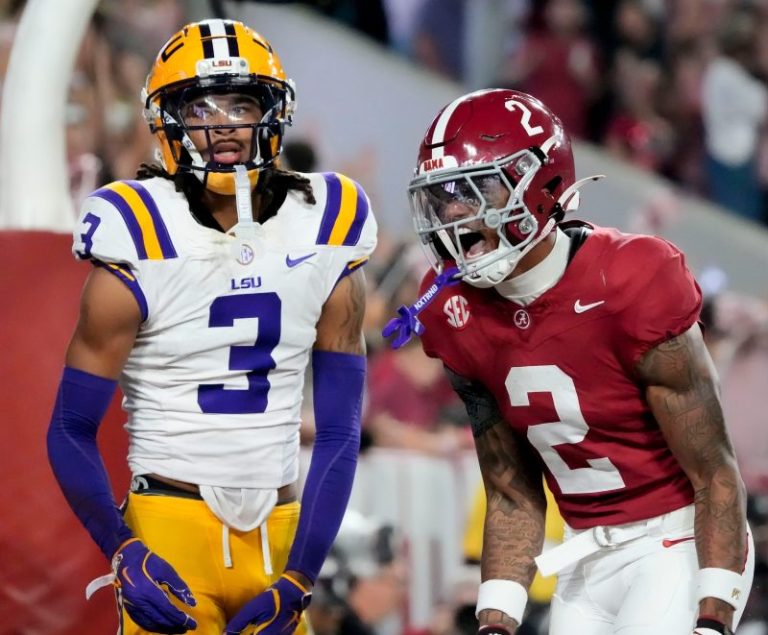
Colorado football coach Deion Sanders believes coaches should prevent players from wearing ‘short shorts’ during games.
While NCAA rules require pants to cover the knees, the rule is often not enforced.
Sanders said he shows his players photos of former NFL players on his staff to demonstrate how to dress properly.

Colorado football coach Deion Sanders is questioning why other college football coaches don’t step in to prevent players from wearing short shorts on the field during games, saying that this fashion issue is a matter of “respect for the game.”

Sanders said this on Wednesday, Nov. 5, during his weekly ‘Colorado Football Coaches Show’ as his team prepares to play at West Virginia Saturday. Such short shorts have gotten widespread attention recently, with some kickers wearing short pants that don’t cover their knees.

“I don’t understand how us coaches allow it,” Sanders said on the show. “How do we allow that? I have too much respect for the game. I really do.”

NCAA football rules require players to wear pants covering the knees, but it’s generally not enforced, leaving Sanders to enforce it on his own.

Sanders made it clear that “our guys don’t do that” and if they did, the message would be to “get back in the locker room.”

He brought it up as he spoke about the need for attention to detail in preparing players. With several former NFL players on his coaching staff, Sanders said he puts pictures of them during their playing days on screen in team meetings. It’s a way for him to show his players how to dress properly.

“Did you see that with any of those?” Sanders said he asks his players. “And we made it to the mountaintop.”

Sanders spoke out against “biker shorts” in football before, in July, at Big 12 Conference media days in Texas.

He said then it makes him “sick” because “I’m a football guy.”

The issue got more attention on Saturday, Nov. 1, when ESPN showed Oklahoma kicker Tate Sandell wearing “Daisy Dukes,” as described by ESPN analyst Kirk Herbstreit.

“Dressing like that should be a penalty,” Herbstreit said on the broadcast.

Follow reporter Brent Schrotenboer @Schrotenboer. Email: bschroten@usatoday.com

This post appeared first on USA TODAY
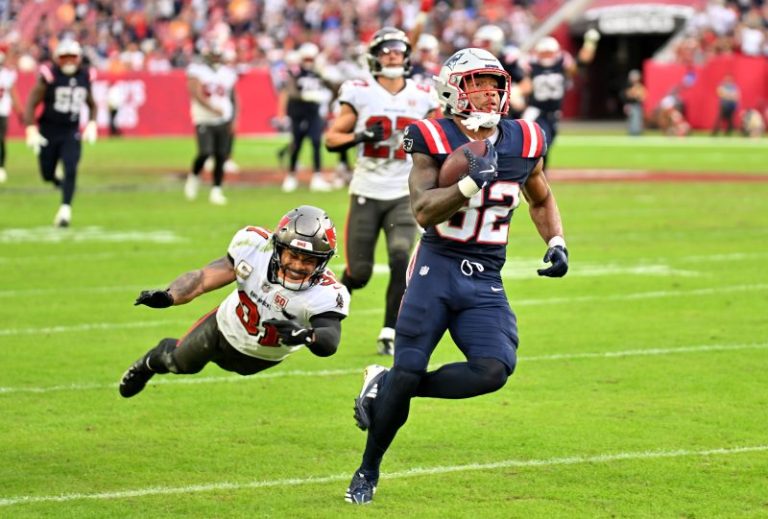
Washington Capitals star Alex Ovechkin scored his 900th career goal on Nov. 5.
St. Louis Blues goalie Jordan Binnington picked up the milestone puck and tucked it in his pants.
A linesman spotted the move and made Binnington return the puck.

Washington Capitals players poured onto the ice to mob Alex Ovechkin after he scored his 900th career goal during the second period on Wednesday, Nov. 5.

They weren’t paying attention to where the milestone puck was.

But St. Louis Blues goaltender Jordan Binnington knew its location. The feisty netminder, who had given up the goal on an Ovechkin backhander, picked up the puck and tucked it inside his pants.

But he didn’t get away with it.

Linesman Michel Cormier had spotted the move. He talked to the goalie in his crease and Binnington reached into his pants and gave the puck to the on-ice official.

Ovechkin laughed when asked by reporters after the game about the incident.

‘Yeah, I just saw it,’ he said. ‘I’m not going to comment.’

Ovechkin’s goal had given the Capitals a 2-0 lead at 2:39 of the second period.

Anthony Beauvillier and John Carlson scored within the next seven minutes, and Binnington was pulled in favor of Joel Hofer.

Binnington, the 4 Nations Face-Off-winning goalie, fell to 3-5-2 with a 3.34 goals-against average and .859 save percentage.

The USA TODAY app gets you to the heart of the news — fast.Download for award-winning coverage, crosswords, audio storytelling, the eNewspaper and more.

This post appeared first on USA TODAY