Archive

2025

Browsing

On Tuesday night, for the third time, there will be a new NBA Cup champion.

The San Antonio Spurs will take on the New York Knicks on Tuesday, Dec. 16 in Las Vegas to culminate the third playing of the event. But, now that it has become a staple of the NBA calendar, is it actually working?

By many metrics, the NBA Cup has been a resounding success.

More than 40 million viewers tuned in for group stage games, a 90% year-over-year increase. It was the most-watched group stage in the Cup’s three seasons. Headed into the quarterfinals, the international audience for NBA Cup games had also jumped, by 10%. Factoring in the high-profile Spurs-Thunder semifinal matchup over the weekend, that number is presumably even higher.

“It’s growing,” Hall of Fame guard and current Amazon Prime analyst Steve Nash told USA TODAY Sports in a phone interview. “The importance to the players and coaches is growing. That is, I think, the genesis of the success we’re going to see as it continues to grow.”

Those gains are evident through the league’s social channels, too.

Through the quarterfinals, content from NBA Cup games garnered 2.6 billion views across the NBA’s social and digital platforms, a 38% growth from last season. Content from NBA Cup days, on average, yielded 24% more views than non-Cup days.

The event has infused an element of competition that would otherwise be lacking during a stretch of the calendar when fans might be distracted by college football and the NFL.

And for the players, it’s no surprise that the financial incentive to win carries weight.

Each player on the NBA Cup championship team Tuesday night will claim an additional $530,933.

“When I see the court, I’m like, it’s just time to win the money,” Timberwolves forward Jaden McDaniels said Nov. 7, according to the Star Tribune. “We ain’t been to Vegas one time. At least come in first, second, or third, we get a little bit of money. So, whichever one we come in, I’m cool — we get a little wire transfer.”

It’s not just the players; the NBA Cup is also making the league money. Marketing partnerships have increased successively each season of the event, and the number of partners this year, 14, is double what it was during the inaugural playing in 2023.

It has also helped that, this year, premier NBA Cup games have been packaged on a new broadcast partner that has drawn positive reviews. In its first full season broadcasting NBA games, Amazon Prime has been a solid addition to the portfolio. Alongside Nash, former players like Dirk Nowitzki, Blake Griffin, Dwyane Wade and John Wall (among others) have treated pre- and post-game content as opportunities to educate fans about the inner workings of the game. Rejecting hot take and debate culture, the Amazon broadcasts have become appointment viewing.

Yet, there’s still work to be done.

Although audience, engagement and attendance are all up since the introduction of the event, the league will continue to monitor ways it can improve the NBA Cup, and might incorporate changes in the coming season to maximize reach and profit.

“It’s not perfect,” Nash continued. “Change is difficult. Trying to build something new is never straightforward, so there’s going to be bumps in the road. But, overall, I see how it’s gaining importance — from players and coaches, but how that all trickles down to the fans, too.”

‘Change the courts, please’

To market the tournament, the NBA contracted artist Victor Solomon the past two seasons to design custom alternate courts for each team to be used during Cup games. This is not new; the league also used alternate courts in the first iteration of the event in 2023, which was then known as the NBA In-Season Tournament. But the alternate floors, at best, have drawn mixed reviews.

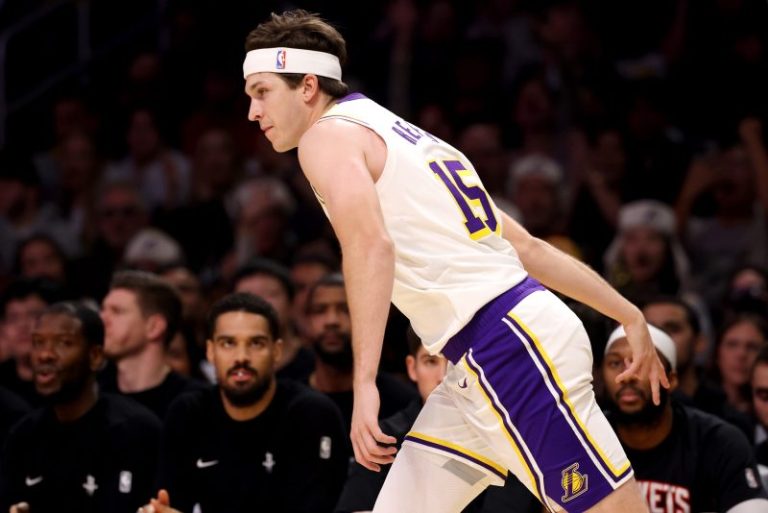
Safety concerns emerged this season, after Los Angeles Lakers guards Luka Dončić and Austin Reaves complained about the surface at Crypto.com Arena being slick.

“Change the courts, please,” Dončić told reporters Nov. 25 after the Lakers beat the Clippers on their alternate NBA Cup floor. “It’s just slippery. It’s dangerous.”

Dončić’s concerns reached the Lakers front office, which elevated the matter. Eventually, prior to the team’s following home NBA Cup game, Wednesday, Dec. 11 against the Spurs, the alternate court had been returned to the vendor for repairs, according to ESPN. The Lakers played on their primary floor instead. The move, ESPN reported, was made out of an abundance of caution.

The night prior, during an NBA Cup East Quarterfinal game against the Miami Heat, the Orlando Magic also played on their primary court, though that was because their NBA Cup court was damaged while held in storage.

Fans are engaging with the NBA Cup because of the product atop the floor, not the paint on it. If anything, the unconventional — if not dizzying — colors and designs can detract from the viewing experience.

This season, the most controversial court was Minnesota’s, which drew widespread disapproval Nov. 7, when the Timberwolves first played on it, against the Utah Jazz.

The court was overwhelmingly fluorescent, almost like a giant green screen. It was so bright that, when cameras zoomed in on players’ faces during the broadcast, they were underlit in a hazy, green glow.

“It’s an honor to step on an NBA court,” Jazz coach Will Hardy said after the game, “no matter how ugly that court is.’

This is a case where subtlety might make more sense. The NBA should distinguish its NBA Cup courts to further heighten the stakes of the event, but it can do so in a more understated way. Perhaps, the league could incorporate a smaller decal or image of the NBA Cup trophy, or signage similar to the popular NBA Finals text that used to be visible near midcourt during the championship series.

The NBA Cup spawns questions about dense scheduling

John Hollinger of the Athletic conjectured in a recent article that the NBA Cup’s schedule has imposed further strain on the bodies of NBA players. The 2025-26 season has seen various soft-tissue injuries to some of the game’s biggest stars like Wembanyama and Giannis Antetokounmpo. Hollinger hypothesized that road travel for Cup games might in part be contributing to early fatigue.

NBA chief communications officer Mike Bass pushed back against that claim in a statement posted Thursday, Dec. 11 on social media. In the message, Bass cited data and said “The Cup has objectively not led to a denser league-wide schedule in the early part of the season.”

Injuries across the NBA are almost certainly multi-factorial, from the steady increasing of pace and average velocity across the league this season, to the extension of the basketball calendar with EuroBasket and international competition. There simply isn’t enough data to determine the impact of the NBA Cup on injuries.

Spreading travel days over a longer period, however, would be an easy step to ease any potential exhaustion players might be feeling.

Where does the NBA Cup go from here?

Players, by and large, thrive on competition. Initially, back in the inaugural year of the event, there was some confusion about the merits of the tournament.

“It’s weird, because the energy, you can tell is like something is happening,” then-Bucks player Damian Lillard said in November 2023 during a post-game interview. “But it’s new so I’m not really sure what the hell is going on. It seems like a moment — the court, the uniforms, TV game and all that, but I don’t think nobody really knows what’s going on. We just trying to get to Vegas.”

As players have had more experience in Cup games, however, that sentiment has largely faded.

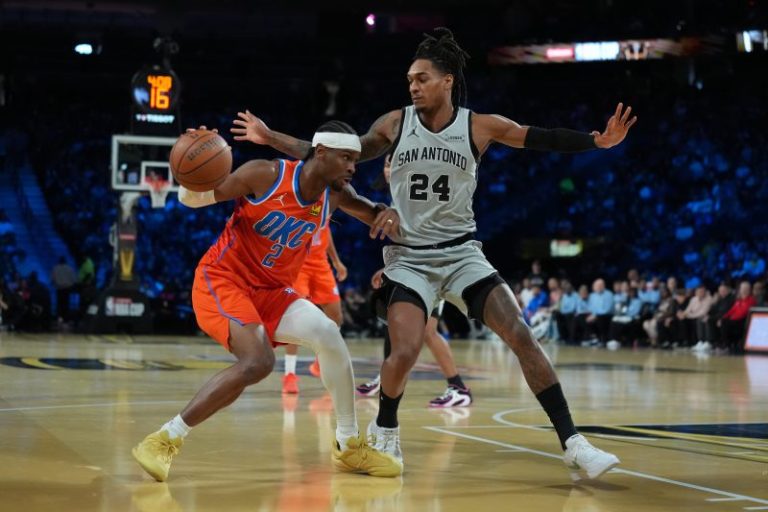
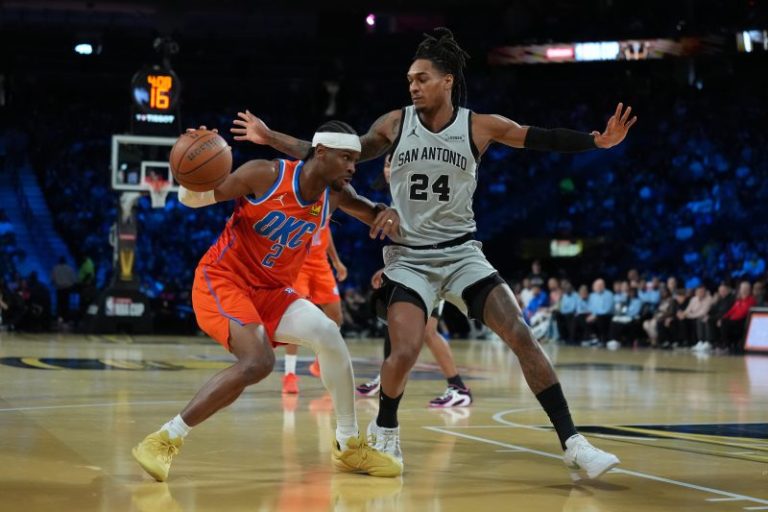
The quality of matchups and storylines, however, will determine the success of the NBA Cup. The West semifinal upset on Saturday, Dec. 12, when the Spurs toppled the Oklahoma City Thunder in Wembanyama’s return from a 12-game, calf-strain absence flashed the potential of what the Cup can be: the established power, the defending NBA champion Thunder were challenged by upstarts. Some of the game’s brightest stars — Wembanyama and reigning NBA Most Valuable Player Shai Gilgeous-Alexander — had to will their teams.

If the Cup can become a playoff-lite, a precursor to the drama of May and June, the event will thrive.

The buy-in has already started. Sustaining it will be imperative.

“As competitors, we want to win every game,” Wembanyama told reporters Dec. 15. “And this one brings something new to the table, so we want to win it even more.”

This post appeared first on USA TODAY

The Pittsburgh Steelers remain on top of the AFC North.

On a cold Monday night in Pittsburgh, the Steelers (8-6) defeated the Miami Dolphins (6-8), 28-15.

The Dolphins scored the game’s first points on a field goal in what was a defensive battle for most of the first half. The Steelers put together a 12-play, 60-yard touchdown drive at the end of the second period, which was part of 28 unanswered points between three quarters.

It’s Pittsburgh’s second straight win.

The Dolphins’ loss snapped their four-game winning streak and they are now mathematically eliminated from the playoff contention.

USA TODAY Sports examines the winners and losers from the Week 15 AFC matchup on ‘Monday Night Football’:

WINNERS

Steelers defense without T.J. Watt

The Steelers defense was stout even without their best player, T.J. Watt, who underwent lung surgery last week. Watt suffered a partially collapsed lung during a dry needling treatment at the team facility on Dec. 10. The Steelers defense played well without the 2021 NFL Defensive Player of the Year.

Pittsburgh held Miami to just three points and had a takeaway in the first half.

The Steelers defense erased Miami’s offense in the third quarter; the Dolphins had minus-20 yards in the period.

The Steeles defense sacked Tua Tagovailoa four times and intercepted him once. They did give up two touchdowns during garbage time in the fourth quarter, which made the game appear more competitive than it was.

Dolphins running back De’Von Achane was held to 60 rushing yards.

Steelers offense

The Steelers were ranked in the bottom half of the NFL in total offense (284.5), pass offense (195.2) and run offense (89.2) entering Week 15. In the first half it showed. However, Pittsburgh turned it up in the second half.

The Steelers scored 21 points after halftime and gained 220 total yards.

Kenneth Gainwell tallied 126 yards from scrimmage.

DK Metcalf had a strong touchdown catch. He finished with three catches for 55 yards and a touchdown.

The Steelers gained 336 yards of total offense, passing for 201 and rushing for 135 yards. Those numbers represent improvements from their averages.

Aaron Rodgers

Rodgers was efficient in the win. He completed 23-of-27 passes for 224 yards and two touchdowns. He now has multiple touchdown passes in 166 career games.

Mike Tomlin’s .500 record streak

Remember those “fire Mike Tomlin” chants? Those calls seem to be a thing of the past.

Tomlin’s closing in on a 19th consecutive season with a .500-or-better record, the longest such streak to begin a head coaching tenure in NFL history.

LOSERS

Dolphins’ playoff hopes

The loss eliminated Miami from the AFC playoff race. The Dolphins had entered Week 15 riding a four-game winning streak.

Tua Tagovailoa in cold weather

Tagovailoa is 0-6 when the temperature is 40 degrees or colder.

Tagovailoa threw his league-leading 15th interception. The interception happened on an underthrown deep pass to Jaylen Waddle in the first quarter. The underthrown pass won’t quiet critics about his arm strength.

The Dolphins quarterback finished with 254 passing yards, two touchdowns and one interception. Most of his positive plays happened when the game was out of reach. He had a few passes that could’ve been intercepted.

Miami’s third quarter

The Dolphins didn’t show up after halftime.

The Dolphins defense gave up 14 points and 163 total yards in the third quarter. The offense was worse.

Miami’s offense had an abysmal minus-20 yards of total offense in the third quarter. The Dolphins ran six total plays in the period and nothing worked.

First half offense

Both defenses won the first half. The first two quarters resembled a Pirates vs. Marlins baseball game. The Steelers entered halftime with a 7-3 lead, but it was a struggle offensively for both squads.

The Dolphins went 1-4 on third downs and Tua Tagovailoa underthrew Jaylen Waddle on a deep pass that was picked off by Steelers CB Asante Samuel Jr.

Pittsburgh punted on its first three possessions. The Steelers put together a 60-yard touchdown drive on their final offensive series in the first half.

Follow USA TODAY Sports’ Tyler Dragon on X @TheTylerDragon.

This post appeared first on USA TODAY

Senior Israeli intelligence officials say warnings delivered to Australia ahead of a deadly attack at a Hanukkah celebration on Sydney’s Bondi Beach were part of a much broader alert: an accelerating global rise in attempts to execute terror attacks across Western countries, increasingly aimed not only at Jewish targets, but also at Christians and large gatherings especially during religious holidays.

According to a senior Israeli intelligence official, Israel’s foreign intelligence service has been tracking a sharp increase in attempted attacks worldwide, many of them low-tech, quickly mobilized and designed to exploit open societies and crowded public events.

‘We stopped a few ticking bombs, the target was on people’s heads,’ the senior official told Fox News Digital.

Israeli intelligence officials say Australia is not an outlier. From their perspective, recent months have revealed a pattern of attempted and disrupted plots across Europe, North America and beyond, pointing to a sustained global threat rather than sporadic violence.

‘If you knew how many terror attacks we exposed and prevented,’ the senior official said, ‘your jaw would drop.’

Israeli intelligence officials say the rise in attempted attacks is driven in part by how extremist and state-linked networks build terror infrastructure globally while deliberately masking their origins.

Officials say the networks frequently rely on non-Iranian nationals to carry out different roles along the operational chain, including logistics, intelligence gathering, financing and execution, in order to blur any connection to Tehran. In some cases, operatives are recruited from migrant or refugee backgrounds, while in others criminal elements or hired proxies are used to carry out acts of violence.

To avoid detection, officials say the networks rely on encrypted communications and clandestine in-person meetings, sometimes conducted outside the country where an attack is planned. In other cases, instructions are delivered remotely through secure channels that bypass standard telecommunications monitoring.

According to Israeli assessments, extremist networks are increasingly overlapping: jihadist ideology, lone-actor violence and state-linked activity now exist in the same ecosystem, fueled by online radicalization and geopolitical instability. Many plots, officials say, are unsophisticated, making them harder to detect early while still capable of causing mass casualties.

Israeli intelligence officials and foreign diplomatic sources warn that the threat is not limited to Jewish targets and is global. ‘We exposed terror cells in Germany, Greece, Austria — but not only Europe — also in South America, India and Thailand.’ The senior official said he cannot elaborate further.

A senior foreign diplomatic source said the current environment is being shaped by what they described as a global contagion effect, in which attacks are amplified online, celebrated across extremist networks and rapidly imitated elsewhere.

According to the source, attacks are increasingly attractive to extremists because they are relatively easy to carry out while producing outsized psychological and political impact.

The source cautioned that Christian communities and broader civilian gatherings are also vulnerable, particularly during religious holidays and symbolic events that attract large crowds.

This concern has been reflected across Europe in recent weeks, when authorities sharply increased security at Christmas markets and holiday celebrations amid warnings that seasonal events present prime targets for extremist violence. Armed patrols, barriers and surveillance were expanded in multiple cities as officials assessed elevated risks tied to jihadist-inspired attacks and lone actors.

On Monday, federal authorities announced they foiled a New Year’s Eve terror plot, arresting suspects accused of planning coordinated attacks involving improvised explosive devices, according to the Department of Justice. Prosecutors said the plot was disrupted before explosives were fully assembled, underscoring both the scale of the threat and the importance of early intelligence intervention.

A second senior Israeli intelligence source said the broader threat environment has deteriorated after two years of war in the Middle East, which they said has energized radical Islamist movements globally.

According to the source, instability in Syria is of particular concern, creating conditions that could allow ISIS to regroup and once again project influence beyond the region.

‘I’m worried about Syria and that ISIS will return,’ the source said, warning that renewed activity there could inspire further attacks in Europe, Australia and North America.

The source said the growing prevalence of lone actors and sleeper cells poses a significant challenge to Western security services, as individuals with minimal resources can still carry out deadly attacks and trigger copycat violence.

While Australian authorities have not linked the Bondi Beach attack to foreign intelligence direction, Israeli officials say the case fits into a wider global picture: a sustained rise in attempted terror attacks, many of which never become public because they are disrupted early.

‘We see it everywhere,’ the senior intelligence official said. ‘And most of what we stop, the public never hears about.’

This post appeared first on FOX NEWS

Mexican lawmakers were filmed shoving each other and pulling hair on the floor of Congress in Mexico City on Monday.

The viral video shows women lawmakers of rival parties jostling for position at a podium in the front of the chamber. The women’s argument escalates from shouts to pushing and ultimately to pulling each other’s hair as other lawmakers try to intervene.

The scene took place during debate over reforms to Mexico City’s transparency oversight agency. Members of the right-leaning National Action Party (PAN) were protesting conduct by the left-leaning Moreno Party, which is the controlling power.

PAN representatives were holding their position at the podium as members of the Moreno Party tried to remove them, leading to the scuffle. Both parties condemned the violence after the incident, but blamed their opponents for starting it.

‘We took the podium peacefully, without touching anyone, and the decision made by the majority legislative group and its allies was to try and regain control of the board through violence,’ PAN aide Andres Atayde said at a press conference following the incident, according to a translation from the Economic Times.

‘Not only is it vulgar, not only is it aggressive, but it is lamentable that this is the majority governing party for this city,’ PAN lawmaker Daniela Alvarez added.

Morena spokesman Paulo Garcia made similar claims about conduct by PAN lawmakers.

‘What worries us a lot is how the opposition is systematically resorting to violence instead of arguments, in the absence of being able to debate,’ Garcia later said in an interview with Mexican media.

This post appeared first on FOX NEWS

House Oversight Committee Chairman James Comer, R-Ky., is delaying Bill and Hillary Clinton’s depositions before Congress until January.

In a letter sent to their attorney on Monday evening, Comer warned that a failure to appear for their new dates would result in immediate contempt of Congress proceedings.

‘They’re saying now that he’s going to a funeral on that day, so we’ve been going back and forth with the lawyer,’ Comer told Fox News Digital the same evening. ‘We’re going to hold him in contempt if he doesn’t show up for his deposition.’

The letter said, however, that they failed to provide ‘alternative dates’ for their testimonies.

‘Therefore, the Committee has chosen the date of January 13, 2026, for the deposition of President Clinton and January 14, 2026, for the deposition of Secretary Clinton. If your clients do not comply with these new dates, the Committee will move immediately to contempt proceedings,’ the letter said.

The Clintons were originally subpoenaed over the summer to testify in the House Oversight Committee’s probe into Jeffrey Epstein.

They were part of a long list of former presidential administration officials called in for closed-door meetings with the panel’s lawyers.

To date, just two people have shown up in person — former Trump administration Attorney General Bill Barr and former Trump administration Labor Secretary Alex Acosta.

Others have deferred their subpoena dates or opted to send in written statements due to various personal matters, but it appears Comer is not allowing the Clintons to sidestep an in-person grilling.

In his letter, the Republican leader even went so far as to criticize the Clintons’ lawyer for asking for the same treatment.

‘Your correspondence with the Committee continues to ignore the Committee’s arguments, misstates relevant facts, and seeks information about the Committee’s investigation to which neither you nor your clients are entitled,’ the letter said.

‘As the Committee stated clearly in its November 21, 2025, letter to you, the Committee’s decision to forego in-person depositions for certain other individuals was because those individuals ‘lacked any relevant information to the Committee’s investigation or otherwise had serious health issues that prevented their testimony.’’

Comer said the former president and former secretary of state ‘are not similarly situated and therefore your argument that they are receiving unfair treatment — which you continue to repeat — is baseless.’

‘For example, unlike these other individuals, President Clinton and Secretary Clinton had a personal relationship with Jeffrey Epstein and Ghislaine Maxwell,’ he wrote.

Photos and other documents released by the committee so far have shown Bill Clinton and other powerful figures, including President Donald Trump, socializing with Epstein to varying degrees.

Both Bill Clinton and Trump were shown to have handwritten entries in a book compiled for Epstein’s 50th birthday, though until then much of the media scrutiny had been focused on Trump’s entry alone.

Neither of the Clintons have been implicated in any wrongdoing related to Epstein, however, and their social engagements with him appear to have ended long before his 2019 federal indictment on sex trafficking charges and subsequent suicide.

This post appeared first on FOX NEWS

The GOP majority on the House Oversight Committee is at war with their Democratic counterparts over what they say is a false narrative being crafted about President Donald Trump and Jeffrey Epstein.

Republican committee staff authored a new talking points memo sent to GOP lawmakers on Tuesday morning that is aimed at discounting Democrats’ recent leaks of information on Epstein, accusing them of releasing information on a selective basis to paint a picture that is not there.

‘Throughout the Oversight Committee’s review of the federal government’s handling of the Epstein and Maxwell criminal investigations, Democrats have demonstrated a sustained pattern of misconduct — misrepresenting witness testimony, selectively leaking cherry-picked documents, and manipulating emails and images — to fabricate yet another politically motivated hoax targeting President Trump,’ the memo, obtained by Fox News Digital, said.

‘As a result, nothing Democrats post or leak on this matter can be taken at face value.’

The memo also encourages Oversight Republicans to take aim at ‘Legacy Media,’ which it says ‘uncritically amplified these falsehoods, acting as a willing conduit rather than performing basic due diligence.’

‘This reckless combination of partisan distortion and media malpractice undermines the Committee’s work, misleads the public, and distracts from the serious responsibility of ensuring accountability, transparency, and justice for the American people,’ the memo said.

What had initially begun as a bipartisan investigation quickly devolved into partisan infighting.

Democrats have argued that Republicans are using the probe to give Trump cover, while the GOP said the left is distorting facts to create a false narrative that Trump participated in Epstein’s crimes.

The pair were known to have a close friendship decades ago but had a falling out in the early 2000s before accusations of sexual contact with minors first surfaced. To date, the president has denied involvement — and not been implicated — in any of Epstein’s crimes.

Among the memo’s highlights are Oversight Democrats releasing three emails sent to the committee by Epstein’s estate which appear to suggest that Trump ‘knew about’ various illicit activities of Epstein’s, including one which refers to him as ‘that dog that hasn’t barked.’

Republicans said they selectively released three emails out of a tranche of 20,000 pages of documents at the time.

‘When CNN questioned the redactions, Democrat Committee members falsely claimed Republicans were responsible. After Republicans released more than 20,000 pages, Democrats then claimed this transparency was intended to ‘disorient’ and ‘distract’ from their fabricated narrative,’ the memo said.

In a later release of photos from Epstein’s estate, Republicans accused Democrats of having ‘censored adult women’s faces to smear President Trump.’

For example, one of the photos censored, they said, ‘shows President Trump standing next to adult Hawaiian Tropic women models.’

Democrats have not always mentioned Trump directly in their releases, but he has been a regular feature of the emails and photos they have made public.

‘It is time to end this White House cover-up and bring justice to the survivors of Jeffrey Epstein and his powerful friends,’ Rep. Robert Garcia, D-Calif., the top Democrat on the committee, said in a statement on one of the releases.

‘These disturbing photos raise even more questions about Epstein and his relationships with some of the most powerful men in the world. We will not rest until the American people get the truth. The Department of Justice must release all the files, NOW.’

Meanwhile, the Trump administration is facing a Dec. 19 deadline to release its files related to Epstein, pursuant to a near-unanimous vote in the House and a unanimous vote in the Senate.

Fox News Digital reached out to Oversight Committee Democrats for a response to the memo.

This post appeared first on FOX NEWS

Want to hit a slam dunk with your holiday presents this year? Look no further than our gift guide for women sports lovers and fans of women’s sports.

Whether you’re shopping for a fashionable fan that turns any stadium into a runway or a homebody that loves to show their support from the comfy confines of their house, USA TODAY Sports has carefully-curated a list of gifts that feature something for everyone. We even included ideas for Caitlin Clark and Taylor Swift superfans.

You won’t drop the ball with our gift guide as your playbook. Here’s a wide-range of presents that any sports fan would love to unwrap for the upcoming holidays with links and prices included:

For the fashionista

Elevated game day apparel

The legendary Deion Sanders once said, ‘If you look good, you feel good. If you feel good, you play good. If you play good, they pay good.’ While sports fans won’t be stepping on the field or court, the motto still applies to spectators cheering on their favorites from the stands. Jerseys are great, but here are some other options:

Nike by TOGETHXR’s ‘Everyone Watches Women’s Sports’ Tee is a classic staple. If you want to switch it up, check out the WNBPA’s ‘Pay Us What You Owe Us’ shirts Caitlin Clark, Angel Reese and other players wore during the 2025 WNBA All-Star Game in Indianapolis or stand out in Playa Society’s bold looks. For everyday clothes you can wear outside of game day, check out Abercrombie or Lululemon’s NFL collections. Offseason by Kristin Juszczyk also offers upcycled women’s merch apparel that’s not boring.

Stylish clear stadium bag

Nothing beats seeing your favorite team in person, but stadium bag guidelines can seriously cramp your style if you aren’t prepared. Most stadiums require clear bags no larger than 12 ‘x 6′ x 12’. Avoid taking an extra trip to the car with a stylish stadium bag. Coach and Stoney Clover have effortlessly chic options that come with a much-needed cross body strap, while Beis and Target offer cheaper alternatives that are equally nice.

Coach’s Stadium Swinger Bag: $150
Stoney Clover’s Clear Curved Crossbody Bag: $78
Beis The Stadium Crossbody in Black: $58
Target’s Game Day Clear Crossbody Bag: $15

*Pro tip: Attach a cute bag charm (like this one from Amazon) or a lipgloss keychain.

Taylor-swift inspired jewelry

Taylor Swift sent social media buzzing after she donned a Kansas City Chiefs necklace from Baublebar in honor of her now-fiancé Travis Kelce. For fans (or Swifties) looking for a more subtle sign of support, try Baublebar’s NFL Bracelet Set ($52) that can seamlessly merges with everyday jewelry. The Varsity Number Custom Bracelet would be perfect for a mom to showcase their child’s jersey number. Baublebar’s NFL Beaded Phone Charm ($48) is also the perfect accessory you didn’t know you need.

For the homebody

For the fan that likes to support their team from the couch look for every day luxury items that people typically hesitate to buy for themselves, but would elevate their everyday routine. FOCO’s slipper collections can keep you warm on game day (in addition to robes and pajamas). MLB Sundae Slugger Ceramic Ice Cream Bowl Set or a playful mug from Uncommon Goods elevates any snack or beverage. Or pull on the heartstrings by framing a favorite game day memory. (Bonus points if you add the ticket stub to the frame).

For the Caitlin Clark fanatic

The WNBA is currently in the offseason, but fans can still get their dose of all things Caitlin Clark this holiday season with these finds. Clark’s signature shoe and signature collection won’t drop until next year, but fans can still get their hands on her logo collection, which includes T-shirts, hoodies, shorts and pants for all ages. A Caitlin Clark Funko Pop ($14.99) can jazz up any office or desk, while Clark trading cards are more popular than ever and a Clark basketball never goes out of style.

The USA TODAY app gets you to the heart of the news — fastDownload for award-winning coverage, crosswords, audio storytelling, the eNewspaper and more.

This post appeared first on USA TODAY
The 2025 NCAA volleyball tournament intensifies as the Final Four begins with two matches in at T-Mobile Center in Kansas City on Thursday and the national championship on Sunday.

All four No. 1 seeds (Kentucky, Pitt, Texas and Nebraska) swept their opponents in the Sweet 16. In the Elite Eight, it was a different story. Kentucky swept No. 3 Creighton, and Pitt topped No. 3 Purdue, earning a trip to its fifth consecutive Final Four. Texas A&M stunned undefeated Nebraska, and Wisconsin upset Texas to punch their tickets.

The best high-level volleyball of the year is days away. Here’s a preview of the Final Four, including matchups, lineups and X-factors to keep an eye on.

(Number before team name represents its tournament seed)

No. 1 Pitt vs. No. 3 Texas A&M

Thursday, Dec. 18: 6:30 p.m. ET (ESPN)

Pittsburgh Panthers starting lineup

Head coach: Dan Fisher

3 Emery Dupes | L/DS 5-6 – Redshirt Senior
5 Olivia Babcock | RS 6-4 – Junior
8 Blaire Bayless | OH 6-2 – Junior
10 Marina Pezelj | OH 6-1 – Freshman
13 Mallorie Meyer | L/DS 5-7 – Sophomore
17 Brook Mosher | S 6-0 – Redshirt Senior
20 Abbey Emch | MB 6-4 – Freshman
21 Bre Kelley | MB 6-4 – Redshirt Senior

X-factor: Brooke Mosher, setter

Mosher’s development throughout the season and into the NCAA tournament has been on full display. The Illinois transfer is an outstanding setter with a vicious serve that showed up when the Panthers needed it most. With a fifth consecutive trip to the Final Four on the line, Mosher rattled off back-to-back service aces against Purdue to send Pitt to Kansas City. She finished her superb Elite Eight match with four kills on .500 hitting, an incredible 47 assists, three service aces, seven digs and four blocks. Don’t sleep on Mosher.

Texas A&M Aggies starting lineup

Head coach: Jamie Morrison

37 Kyndal Stowers | OH 5-11 – Sophomore
1 Ifenna Cos-Okpalla | MB 6-2 – Senior
2 Addi Applegate | L/DS 5-5 – Freshman
9 Logan Lednicky | OPP 6-3 – Senior
12 Ava Underwood | L/DS 5-7 – Senior
16 Maddie Waak | S 5-10 – Senior

X-factor: Emily Hellmuth, outside hitter

Coming off the bench, outside hitter Emily Hellmuth helps the Aggies keep a balanced attack on offense, and when she gets going, she’s hard to stop. She’s third on the team in total kills and her powerful swing is her secret weapon. Hellmuth’s ability to shine in big moments is what has helped the Aggies make the Final Four. She was critical to the Aggies’ success against No. 1 Nebraska during the Elite Eight, providing 13 kills, two aces and four blocks. Her best tournament outing came against Campbell. She finished with 10 kills on 15 swings and a .667 hitting percentage.

No. 1 Kentucky vs. No. 3 Wisconsin

Thursday, Dec. 18: Time TBD (ESPN)

Kentucky Wildcats starting lineup

Head coach: Craig Skinner

6 Kassie O’Brien | S 6-1 – Freshman
7 Eva Hudson | OH 6-1 – Senior
10 Kennedy Washington | MB 6-0 – Sophomore
11 Molly Berezowitz | DS 5-5 – Junior
12 Molly Tuozzo | L 5-7 – Junior
15 Lizzie Carr | MB 6-6 – Redshirt Junior
17 Brooklyn DeLeye | OH 6-2 – Junior

X factor: Lizzie Carr, middle blocker

Outside hitter duo Brooklyn DeLeye and Eva Hudson rightfully garner a lot of attention. Still, for Kentucky to make a push for a national championship, one of the keys may be middle blocker Lizzie Carr. The redshirt junior is a glue player who quietly gets the job done. She’s had multiple efficient performances during the NCAA tournament. Her best day came during a magnificent outing against Cal Poly in the Sweet 16, where she finished with 11 kills on 15 swings (with a .667 hitting percentage) and six crucial blocks.

Wisconsin Badgers starting lineup

Head coach: Kelly Sheffield

1 Una Vajagic | OH 6-0 – Redshirt Sophomore
7 Kristen Simon | L 5-8 – Freshman
15 Mimi Colyer | OH 6-3 – Senior
17 Alicia Andrew | MB 6-3 – Redshirt Senior
24 Charlie Fuerbringer | S 5-11 – Sophomore
32 Grace Egan | RS 6-1 – Redshirt Sophomore
52 Carter Booth | MB 6-7 – Senior

X-factor: Una Vajagic, outside hitter

Mimi Colyer and Carter Booth garner a lot of attention, but it’s Una Vajagic who is the unsung hero for the Badgers. She quietly works in the background and has had double-digit kills in each of her last three NCAA tournament matches, including 13 kills on .444 hitting and 11 digs against Stanford. The Badgers’ outside hitter also helps the team’s passing game, which they’ll need in the Final Four.

This post appeared first on USA TODAY
The Chiefs have an extensive list of offseason concerns after being eliminated from the playoff race.
Reworking Patrick Mahomes’ contract and finding a suitable fill-in should be atop the priorities for Kansas City after the quarterback suffered a torn ACL.
Kansas City also will be under pressure to find a successor to Travis Kelce and reconfigure an ineffective rushing attack.

“Ding Dong! The Witch Is Dead.”

It’s a jingle the fine people of Kansas (and Missouri) are quite familiar with. And maybe it’s a touch apropos now that a Kansas City Chiefs season has died short of the playoffs for the first time in 11 years, though that’s likely not exactly an unwelcome development for the legions of hardcore and casual NFL fans that have developed K.C. fatigue over the past decade.

But let’s be clear, there’s no body to bury here. Not yet.

These Chiefs remain a living, breathing dynasty, one that’s won three Lombardi Trophies and appeared in five Super Bowls since the start of the 2019 campaign. This postseason will mark the first since 2017’s that Kansas City is absent from the AFC championship game. An organization that has already shown the ability to reimagine itself on the fly can’t and shouldn’t be discounted simply based on one disappointing chapter.

“Every year is a journey. Success is rented every year. Every year you get to rent success, and sometimes it doesn’t go the way you plan for it to go,” All-Pro DT Chris Jones said after Sunday’s loss to the Los Angeles Chargers, the defeat that officially staked the Chiefs.

“I think we learned a lot this year and we understand the fact that in order to be successful, it’s an everyday thing. It’s not one week you put in and next week, no. It’s a consistent thing and we have a lot of guys coming back and they know that it’s rented every year. Just because last year’s team made the Super Bowl, that doesn’t guarantee success.

“(W)e’re going to keep on going. Something to build off of and looking forward to next year.”

Right on.

That being said, as they would after any season – but especially so while being armed with unfamiliar (and welcome, in its own way) extra time in the coming months – the Kansas City brain trust of head coach Andy Reid, GM Brett Veach and even owner Clark Hunt will have to take a close look at the overarching operation as they assess their next moves going into 2026.

Here are seven steps the Chiefs should take if they want to restore themselves to championship relevance a year from now:

1. Address Patrick Mahomes’ contract

The three-time Super Bowl MVP’s pact – the famous 10-year, $450 million extension he signed in 2020 – runs through the 2031 season. But he’s due for an adjustment. Mahomes doesn’t make a stink about his paychecks but it is notable that his average annual salary ($45 million) is now tied for 14th (with Kirk Cousins) among NFL quarterbacks.

Moving forward, a restructure is needed not only to compensate Mahomes fairly but because his deal is about to affect the team’s ability to maneuver at large. His base salary balloons to more than $45 million in both 2026 and 2027 – it was $1.3 million in 2025 – and his salary cap hit will exceed $74 million in each of the next two years. In a word: untenable. That’s especially true given the team is overspent by nearly $44 million next year, per Over The Cap.

History suggests the parties will find a happy medium that rewards Mahomes but also allows Veach and Reid to maintain the competitive roster he demands.

2. Find the right backup quarterback

It probably wouldn’t shock anyone if Mahomes is behind center on opening day of the 2026 season. But in case you missed it, he did suffer a torn ACL at the end of Sunday’s loss to the Bolts and consequently – once surgery is performed – Mahomes is going to be rehabbing the joint pretty much right up to Week 1 next year, if not beyond. And the Chiefs need to operate as if he won’t be ready, to say nothing of the fact that they need someone trustworthy to take the bulk of the first-string snaps in the offseason.

The next three weeks should be a nice sample size to see if current QB2 Gardner Minshew II, something of a diet Mahomes (very low-calorie) given his ability to capture a locker room and sling it on the field, is the right fit. Barring that, Carson Wentz, who backed up Mahomes in 2024, could be an option. Blaine Gabbert, who held the job in 2023, hasn’t played since. Other potential fill-in alternatives scheduled to be on the free agent market include Teddy Bridgewater, Joe Flacco, Jimmy Garoppolo, Marcus Mariota, Kenny Pickett, Tyrod Taylor and Russell Wilson.

3. Target a replacement for Travis Kelce

This doesn’t necessarily mean a divorce from Kelce, who’s generally been more consistent and productive than he was in 2024 – and he was a Pro Bowler then despite his statistical dip. But these are the facts: He’d be 37 next season, his contract is about to expire, he’s set to marry pop superstar Taylor Swift and enter into a new phase of life, and it’s not clear whether or not he’s ready to retire anyway – though he did reference playing next year during the Chiefs’ spring workouts.

Regardless, it’s time to lay the groundwork for a successor − particularly considering how reliant Mahomes has historically been on his tight end. Backup Noah Gray, 26, has made an impact in previous seasons but has been used sparingly in the pass game this year. Ohio State’s Max Klare or Oregon’s Kenyon Sadiq could be compelling options at draft time, but neither would come cheaply. There will likely also be free agents worthy of close consideration – Kyle Pitts, David Njoku, Cade Otton and Isaiah Likely among them – and none might cost the $17.1 million Kelce has averaged on his current deal … though gifted Pitts’ market could potentially take off after the performance he just put on display.

Kelce is close with Mahomes, and his teammates have long raved about his work ethic and personality. But even if Kelce and the team decide they want to make one more Lombardi run together in 2026, the returns from a fading star had already begun diminishing.

4. Upgrade at running back

The Chiefs have generally been middling at best on the ground during their dynastic era, and that tends to track with Reid’s historic approach to running the ball. They currently rank 20th in the league with 113.9 rushing yards per game – yet Mahomes’ career-high 422 in 2025 is a significant component. Unideal.

It might have been an overdue move anyway, but given Mahomes will be coming back from the knee injury, this seems like the right time to invest more in the backfield. That doesn’t mean Reid has to use a first-round pick on the next Jamaal Charles. Yet his best backs with the Philadelphia Eagles, Brian Westbrook and LeSean McCoy, didn’t require a Round 1 expenditure – but certainly proved worthy of the third- and second-rounders spent on them, respectively. Barring that, it could make sense to target a multi-purpose back like Breece Hall or Travis Etienne in free agency as either could not only reduce the load on Mahomes in the short term but could elevate this offense as a whole over a longer period. But biding time with the likes of Isiah Pacheco and Kareem Hunt, who are unsigned beyond this season anyway, doesn’t seem viable.

5. Tweak the offensive line

Mahomes has been sacked 70 times over the past two seasons – not including a career-high six in Kansas City’s Super Bowl 59 loss to Philadelphia – and would likely have set a new career high for a season in 2025 if he was available for the final three weeks. And, to be sure, his propensity to extend plays contributes on that front.

Injuries have plagued Kansas City’s front five this year and, by extension, Mahomes and the offense at large. C Creed Humphrey and Gs Trey Smith and Kingsley Suamataia are probably the league’s premier interior trio when they’re all on the field together … but they haven’t been in recent weeks due to Smith’s bum ankle. Rookie LT Josh Simmons got rave reviews this year, but a wrist injury plus a family matter disrupted his season. The first-rounder should be fine moving forward.

But it’s time to move on from RT Jawaan Taylor. He’s too inconsistent, incurs too many penalties and isn’t worth another $19.5 million next season, when he won’t have any guarantees on the final year of his contract. Better to turn that job over to Jaylon Moore and find better overall depth on the market and in the draft.

6. Reassess the defense

Coordinator Steve Spagnuolo’s crew remains a top-10 unit and has allowed the fifth-fewest points (19.1) per game this season. But it might be time to re-examine things for the greater good. The Chiefs can’t realistically replicate their 2022 trade of WR Tyreek Hill, a maneuver that reshaped the organization and widened the championship window given the draft assets he returned from the Miami Dolphins. But it could be time to consider offloading players like Jones and/or Trent McDuffie in a renewed bid at maintaining this organization at or near the top of the league’s food chain.

Jones, 31, didn’t play well early on this season but has reclaimed his Pro Bowl form lately. Elite interior disruptors are hard to come by, and he might be the missing piece for a team like the Detroit Lions or New England Patriots, for example. And this might be the point to offer him a fresh start with a strong squad while divesting the final three seasons of his five-year, $159 million deal.

McDuffie, 25, is set to earn $13.6 million in 2026, the final season on the rookie deal of a player drafted in the aftermath of Hill’s departure. There’s certainly a solid case to keep one of the league’s best and most versatile defensive backs. But given his age, ability and contractual control (at present), McDuffie is the kind of chip that could elicit a valuable return – likely more than what Jones would fetch.

Spagnuolo’s D already faces key offseason decisions. But every good team has to make choices, and − given his tactical abilities − it seems to make more sense to make concessions here given what the offense is facing.

7. Take a cultural checkup

This isn’t to suggest that the Chiefs are going off the rails or have suddenly become complacent. Tom Brady tore his ACL in the 2008 opener – against Kansas City ironically – in the first game after the Patriots’ 16-0 regular season in 2007. He returned the next year, but the team also transformed around him and didn’t win another Super Bowl until the end of the 2014 season – ending a 10-year Lombardi drought while also sparking the second half of the two-decade Patriot reign.

Next season would be Reid’s 14th in Kansas City, matching the number of years he coached in Philadelphia. Ten years often marks the expiration date for many coaches and their messages. But Reid, 67, is beloved by his players, loves a challenge and has shown no signs of wanting to wind his career down. And Mahomes is the rare luxury who’s a coaching extension on the field, a fierce competitor who pulls his teammates up to his level, and an unselfish player committed to literally sharing the wealth in order to have a topflight roster around him.

“(Y)ou’ve got to stay ahead of the game as a coach. And that’s every offseason. That’s the challenge,’ Reid said Monday.

There will be turnover in Kansas City. Players like WR Hollywood Brown, S Bryan Cook, CB Jaylen Watson and maybe even Kelce – all of them pending free agents – could exit. OC Matt Nagy might get a second shot as a head coach. Change is a constant in the NFL.

But this franchise has been run as well as any in league history. Maybe the Chiefs can’t simply click their ruby and gold slippers and return to the Super Bowl. But the guys behind the curtain − and in front of it − shouldn’t suddenly require a sweeping overhaul to make this team great and powerful once again.

This post appeared first on USA TODAY

While at least 55% of youth ages 6-17 appear to be playing sports, a potential threat to the rising rate hovers over it, according to the Aspen Institute’s national State of Play 2025 report.

The percentage, according to the latest available data, pushes youth sports participation toward the 63% target set through the Healthy People 2030 program administered by the government and championed by Aspen’s Project Play.

However, as Aspen writes in its 2025 report of trends across the landscape, government raids of parks where immigrant children play, as well as other developments, have created an environment that suggests a reshaping of youth sports. Perhaps it even threatens the target goal of 63%.

“People will have different views about immigration and enforcement actions – and that’s understandable,” Oregon Youth Soccer Association executive director Simon Date wrote to parents this fall. “But wherever you stand on the politics, we stand unapologetically with kids not being scared to be at our events. Every child deserves to play soccer without fear, and that will always be our north star.”

The OYSA had announced that as many as 16 teams withdrew from competition in Portland after people reported Immigration and Customs Enforcement (ICE) activity in community parks.

Overall, the Aspen Institute concludes, through assessment of government and industry data and its national sports parent survey, American youth sports has effectively recovered from the COVID 19 pandemic, with participation rates continuing to rebound.

But the cost of youth sports has risen 46% since 2019, and significant access gaps remain among youth from upper- and lower-income households.

Youth Sports Business Report predicts that by 2030 only two distinct tiers of sports offerings will be available for families as the growing influence of private equity continues to affect sports families.

Here are highlights of the Aspen report, which was provided to USA TODAY Sports before its release this week, and what youth and adolescent athletes and their parents can learn from it.

Latino youth sports participation is up, with a caveat

Sixty-five percent of Latino youth ages 6-17 tried sports at least one day in 2024 over the previous 12 months – a higher rate than Black and white youth, according to data from the Sports & Fitness Industry Association (SFIA).

Participation among Latina girls rose from 39.5% in 2019 to 48.4% in 2024, according to “Unlocking the growing power of Latino fans,” research published by the McKinsey Institute for Economic Mobility. The report attributes this rise to organizations such as ELLA Sports Foundation, Girls on the Run, Sports 4 Life and the Women’s Sports Foundation that have launched programs targeting underrepresented groups. 

Latino youth still regularly play sports at lower rates than white youth based on SFIA’s core participation statistic. Research by McKinsey and the U.S. Soccer Federation also found that Latino and Black children are three times more likely than white children to stop playing soccer because they feel unwelcome.

Aspen raises the issue of whether current immigration raids will have an adverse effect on Latino sports participation rates that appear in future analysis.

“It’s affecting our community-based (sports) programs and parks programs. It’s not a surprise,” said Renata Simril, president & CEO of LA84 Foundation, which ensures children have access to sports.

The State of Play report also cites 2025 media accounts in New York, California and Oregon that document fears due to immigration raids. According to a story posted at Today.com in July, Youman Wilder, the founder of Harlem Baseball Hitting Academy, said a group of ICE agents approached members of his team while they were practicing in a park.

‘I heard them saying, ‘Where are you from? Where are your parents from?” Wilder told MSNBC’s Nicolle Wallace. ‘And I just stepped in and said this is very inappropriate to ask these kids anything … I’m just going to have them implement their Fifth Amendment right, and not say anything to you.’ ”

The Aspen Institute’s Project Play has developed a Children’s Bill of Rights in Sports with a working group of human rights and sports policy experts. It offers eight rights recognizing that all youth should have the opportunity to develop as people in safe and healthy environment through sports.

The first right: “To play sports. Organizations should make every effort to accommodate children’s interests to participate, and to help them play with peers from diverse backgrounds.”

Municipalities in Tacoma, Washington; Akron, Ohio; Alexandria, Virginia; Perris, California; and Chapel Hill, North Carolina endorsed the Bill of Rights in 2025.

Casual organized sports play is a hot trend

About 55.4% of youth ages 6-17 were playing sports as of 2023, according to the federal government. Seventeen states and the District of Columbia were within a percentage point of or greater than the 63% mark.

Also, 6% more children ages 6-17 played a team sport at least once in 2024 compared to 2023, according to SFIA data.

“The rebound in participation since the pandemic is a credit to all who have innovated to improve access to quality sport programs,” said Tom Farrey, executive director of Aspen’s Sports & Society Program. “But we’re going to need leadership to ensure that as more money flows into the space, the needs of children – all children – are prioritized in the development of policies, practices and partnerships shaping what is still a disjointed landscape.”

Teenagers ages 13-17 continued to regularly play sports at lower rates, with their participation dropping by 3% in 2024.

Girls and boys play rises; non-traditional sports are thriving

Boys 6-17 regularly played sports in 2024, marking a 2% increase over one year, but boys participation has resided at 42% or lower for nine straight years. Girls participation, while still trailing boys, increased for the third straight year (to 37%).

Coach Steve: Why are boys’ sports on the decline? A former NBA star looks at solutions

From 2019 to 2024, according to the State of Play report, flag football was the only team sport tracked by SFIA that experienced growth in regular participation among kids ages 6-17. However, Tennis and golf increased as individual sports through separate data shared with Aspen.

Flag football was up 14% while baseball was down 19%, tackle football down 7%, soccer down 3% and basketball was down 2%.

Among youth ages 13-17, tackle (6.4% participation) is still much more popular than flag (2.8%).

Flag’s growth, according to Aspen, is largely attributed to the NFL, which has invested more in the sport as some parents delayed or walked away from tackle due to the risk of brain injuries and shifting U.S. demographics.

The NFL has also campaigned to bring flag football to high schools for girls, and 28 states either sanction girls’ high school flag or are in stages of pilot programs.

“There are so many young boys and young girls, you look at them the first time that they go out there to a practice, and then by the end of the season, it’s almost like they’re a totally different little kid,” former Notre Dame and NFL cornerback Bobby Taylor, an important figure in developing programs for the sport, told USA TODAY Sports in 2024. “You see that progression.’

Volleyball participation is growing faster than any other high school boys sport (a 13% increase in 2024-25, according to National Federation and State High School Associations.) Volleyball is nearing the top 10 of the most-played boys high school sports, while over the past six years, nine states have added varsity boys volleyball: Oregon, Kentucky, Indiana, Utah, Colorado, Michigan, Minnesota, South Carolina and Missouri.

Meanwhile, the number of children ages 6-12 who played another wildly popular sport – pickleball – at least once in the past year doubled over a two-year period, getting to 2.2 million in 2024.

Teenagers 13-17 increased their pickleball participation by 157% over two years.

More Coach Steve: Why pickleball is the perfect sport for everyone

Youth sports still cost too much, and it’s cutting families out of the picture

The average U.S. sports family spent $1,016 on their child’s primary sport in 2024, a 46% increase since 2019, according to Aspen’s parent survey in partnership with Utah State University and Louisiana Tech University.

According to Aspen, that’s twice the rate of price inflation in the U.S. economy during the same period. Baseball ($1,113) was the most expensive of the three most popular sports, costing more on average than soccer ($910) and basketball ($876).

The Aspen parent study came before President Trump’s tariffs and the federal government shutdown, and the organization says both could impact the economy and how families view their child’s sports costs. According to ESPN, $6.27 billion worth of sporting goods imported into the U.S. came from China, accounting for 61% of these imports.

Sports & Fitness Industry Association CEO Todd Smith told ESPN that tariffs may slow sports participation and physical activity for households earning less than $25,000 a year.

Thirteen years ago, 35.5% of kids ages 6-17 in homes with incomes under $25,000 regularly played sports vs. 49.1% who played from homes earning $100,000 or more. In 2024, the gap was 20.2 percentage points, according to SFIA data.

Mega-facilities (and mega-bucks) are becoming a permanent fixture

Aspen’s sports parent survey found that children from homes earning $100,000 or more are two times more likely to play travel sports than those in homes making under $50,000.

Project Play’s youth surveys in communities across the country show more children saying that what they dislike most about sports is that it’s too expensive, while, perhaps increasingly, they are feeling they can’t let down their parents.

“When kids or adults get emotional talking about their sports career almost always has something to do with their parents,” Linda Martindale, a boys high school basketball and mental fitness coach in the Boston area who also hosts the GameChangers podcast, recently told USA TODAY Sports. “It’s amazing how kids say, ‘I feel bad when I didn’t get to play or I didn’t perform, I feel bad for my parents.’ It’s like, ‘Wait, what?’ And a lot of times they say, ‘Well, my parents put so much into my playing career.’ ”

Commercial real estate and local economic development officials continue to capitalize on youth sports. This year, Ocoee, Florida approved development of a 159-acre youth sports and hotel complex (called The Dynasty project) valued at up to $1 billion.

While Project Play pushes for 63% participation by 2030, Youth Sports Business Report predicts that by that year, only two tiers of sports offerings will be available for families – premium destination experiences like Dynasty and community-based recreational programs.

More coaches are getting trained

A cohort of partners, including Little League International, the Positive Coaching Alliance, the U.S. Soccer Foundation and many others, has trained 1 million youth coaches in evidence-based youth development practices. The milestone was reached in 2025.

The Million Coaches Challenge also offers coaching strategies and a vision for making youth-centered coaching the standard nationwide.

Aspen created a 63X30 roundtable of 20 organizations that trained more than 263,000 coaches and administrators in 2025.

However, according to Aspen, coaches who were trained at least once in the previous 12 months dropped over a five-year period. For instance, in 2024, 26% of coaches had recent training in general safety and injury prevention, down from 34% in 2019.

The U.S. Tennis Association, Aspen says, has taken an unprecedented step for a National Governing Body (NGB) of sport, with USTA Coaching. It provides anyone who delivers tennis (parents, volunteers, high school coaches, staff pros, directors of tennis and certified professionals) access to resources and benefits such as liability insurance, telehealth, equipment discounts, coaching tools and a peer community.

Parents are much more about playing time than winning

According to Aspen’s parent survey, the most important coaching philosophy to parents (out of a choice of 10) was “supporting athletes in being healthy and fit.” “Winning games or competitions” was No. 8, but “distributing playing time in a fair manner” was No. 2.

Among parents with kids ages 6-10, only 23% say equal playing time is the right policy for their child’s age and competitive level. That’s nearly the same rate as parents of children ages 11-14 (19%) and 15-18 (17%).

About half of all surveyed sports parents believe every child on a team should receive some playing time.

NIL and AI are influencing the youth sports landscape

Forty-four states and Washington, D.C., allow name, image and likeness (NIL) agreements for high school students. There are even signs that NIL, in some cases, is changing the non-scholastic sports experience for middle schoolers (and younge)r.

The New York Times, for example, profiled an eighth-grade football player in Washington D.C. who signed sponsorship deals with a local fashion brand and hired an agent for future deals. “The goal is for him to reach a million dollars his freshman year of high school,” his mom said.

Elliot Hopkins, director of student services for the National Federation of State High School Associations (NFHS), told USA TODAY Sports in May he doesn’t see the system as sustainable. Hopkins played on the defensive line at Wake Forest from 1975 to 1979.

‘You just can’t keep doing this long term, because what happens is you and I are teammates and you get a bigger deal than I am, but I’m blocking for you,’ he says. ‘I’m like, ‘What the heck? You wouldn’t be getting any money if I didn’t block for you. I need more money so you can do your job,’ and the whole locker room becomes frazzled, and then no one trusts each other, no one wants to work for each other. They’re out for themselves.’

Meanwhile, artificial intelligence-powered video analysis, wearable sensors and analytics platforms potentially offer youth sports families a more personalized and engaging experience.

According to the State of Play Report, AI-powered platforms can analyze individual player performance and biometric data to create customized training programs and provide coaches with statistics to evaluate players that were previously unavailable. The advanced training, safety and administrative tools could help injury prevention.

But, according to Aspen, AI also carries concerns about costs, data privacy, balancing technology with personal coaching, and time commitment for younger children.

One New York soccer club offers parents the option of paying $300 annually for their child’s analytics.

“Reluctantly, the ecosystem has forced us to start younger and younger to stay in the game,” FC Westchester President George Gjokaj told NBC News.  “I’d prefer to let them just have fun and support them without taking it too seriously at that young an age.”

This post appeared first on USA TODAY