Archive

2025

Browsing

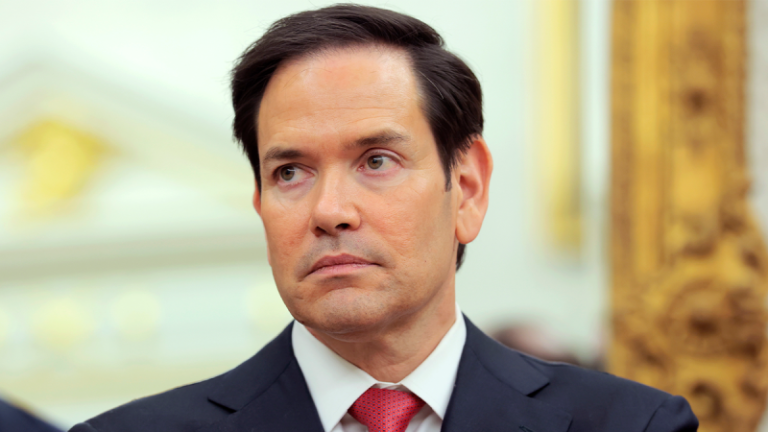
Hundreds of State Department employees will receive restitution after an internal review under Secretary Marco Rubio found they were denied promotions during the Biden administration for not meeting new diversity, equity and inclusion standards.

In addition to removing the diversity, equity, inclusion and accessibility (DEIA) precept from the State Department’s promotion process, officials said roughly 295 employees who were marked down for not showing they would ‘seek diversity in staff’ will now receive pay increases, administrative promotions and letters of commendation.

‘The Trump administration is providing restitution to State Department employees who were adversely impacted by the previous administration’s ideological agenda,’ a State Department official said.

The department conducted an internal review of 7,319 employees who competed for promotion in 2024. Those employees were judged on five precepts: communication, leadership, management, knowledge and DEIA. Under President Donald Trump, the DEIA precept was replaced with a new criterion: ‘fidelity,’ Fox News Digital previously reported.

Promotion board members were instructed to low-rank employees who exhibited a ‘lack of sensitivity to the importance of diversity, equity, inclusion, and accessibility (DEIA),’ according to a State Department official.

The DEIA promotion precept was damaging to those who displayed ‘little indication of seeking diversity in staff,’ the official claimed.

‘The Biden administration imposed ideological litmus tests on civil servants, penalizing competent and deserving government employees in the process,’ principal deputy spokesperson Tommy Pigott said.

‘Under President Donald Trump and Secretary of State Marco Rubio, the State Department rewards excellence, which is the right thing to do for our workforce, for our country, and for the American people.’

The Trump administration’s restitution plan marks a broader rollback of DEI-based policies across federal agencies, part of Trump’s pledge to restore merit-based advancement in government service.

The State Department’s previous hiring guide for 2022–2025 required foreign service employees to ‘demonstrate impact in diversity, equity, inclusion and accessibility,’ according to the internal documents.

Entry-level applicants were expected to proactively seek to ‘improve one’s own self-awareness with respect to promoting inclusivity.’ Mid- and senior-level supervisors were told to recruit and retain diverse teams, respond immediately to noninclusive workplace behaviors and ‘consult with impacted staff before finalizing decisions.

On his first day in office in 2021, President Joe Biden signed an executive order directing federal agencies to pursue policies that advance ‘equity.’ 

‘Affirmatively advancing equity, civil rights, racial justice, and equal opportunity is the responsibility of the whole of our Government,’ he stated. 

‘It is therefore the policy of my Administration that the Federal Government should pursue a comprehensive approach to advancing equity for all, including people of color and others who have been historically underserved, marginalized, and adversely affected by persistent poverty and inequality.’ 

Fox News Digital reached out to Biden’s office for comment and has not yet received a reply. 

This post appeared first on FOX NEWS

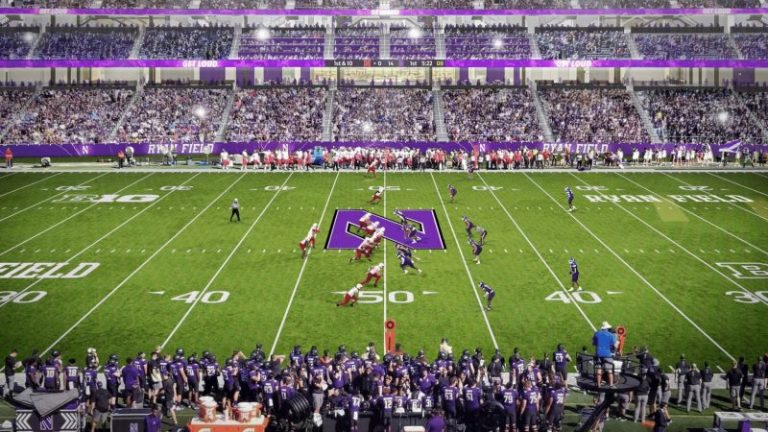
Northwestern University is building a new Ryan Field, set to open in 2026, with a focus on an enhanced fan experience.
The new stadium will cost $862 million, largely funded by the Ryan family, and will have a reduced capacity of 35,000.
The stadium will include a canopy covering 100% of the seats to protect fans from weather and amplify crowd noise.

EVANSTON, IL – Pat Ryan Jr. has a vision for Northwestern football fans when the school completes its construction of Ryan Field, and the Wildcats can begin playing games in a permanent home starting in the 2026 season.

Ryan, an alum and President and CEO of Ryan Sports Development, whose family ties to Northwestern span generations ― and whose father’s name the brand-new stadium will bear ― has sought to improve the fan experience for college football games by eliminating the worst seat in the stadium.

‘The death of the nosebleeds, ‘the most expensive seat to build, the hardest seat to sell and has the lowest satisfaction,’ Ryan told USA TODAY Sports.

Northwestern is looking to the future when it comes to the fan experience, and the elimination of the nosebleeds is just the beginning.

‘So that is unique, a premium experience for everybody involved,’ Northwestern athletic director Mark Jackson told USA TODAY Sports. ‘Not only is it the most accessible stadium for those dealing with physical disabilities, but we also wanted to make it accessible from a price standpoint, too, and to make it affordable so that our young alums can take part in this or younger people that are just starting their careers, to come in, have a premium experience, have a chair back on every seat, have a covered canopy that protects everybody from the elements.

‘Those kinds of opportunities that, comprehensively throughout an entire stadium, we haven’t seen quite like this.’

The Wildcats played the first five home games of this season at Martin Stadium — a re-imagined lacrosse field — and will play the final two home games of the season at Wrigley Field (a 24-22 loss to Michigan on Nov. 15 and again on Nov. 22 vs. Minnesota).

Last season, the Wildcats played two games at Wrigley Field against Ohio State and Illinois. Here’s what you need to know about the new Ryan Field, which is estimated to be the largest college football stadium project in history:

How much did Northwestern’s new stadium cost?

When renderings for Ryan Field were first unveiled on Nov. 18, 2024, the price tag for its construction was listed at $850 million. Ryan said the final approved budget for the new Ryan Field comes in at $862 million, a number Ryan says would have ballooned by nearly 50% had the university waited.

‘I’ve been told by more than one person that if we bid it out now, it probably costs $1.2 billion,’ Ryan said.

Who is paying for Northwestern’s Ryan Field?

The majority of the cost to complete Ryan Field comes from the Ryan family itself. However, the university is also chipping in for the cost, which it had already raised through donors to initially renovate the stadium.

Starting over with a new stadium made more sense for Ryan and Northwestern than renovation. The old Ryan Field was originally opened on Oct. 2, 1926 and expanded in 1949 and 1952 before undergoing renovations in 1996. Northwestern’s former home was demolished in 2024.

‘The reason we didn’t renovate the old stadium is because we would have spent all that money, and frankly, all it would have done is shore up the old building structurally,’ Ryan said.

‘The building did not have a lot that was preservable at the time. It’s 100 years old next year. … We did not want to spend $300 million on propping up a building that did not improve anything. It didn’t make sense. So, the university had a commitment to how much money it was going to put into renovating the stadium. We said we would finance the balance of that.’

The Ryan family company ― Ryan Sports Development ― is in charge of the design and development of the new Ryan Field. The Ryan family is a minority owner of the Chicago Bears and owns a stake in the English Premier League club AFC Bournemouth.

‘I want to be really clear on this is that it’s just not your typical donation. This is an investment, not only of resources from the Ryan families at an incredibly generous amount, but it’s they’re also intimately involved in the design and development and management of the project,’ Jackson said.

When will the Northwestern’s new Ryan Field open?

Ryan told USA TODAY Sports that Ryan Field is on target to open in the fall of 2026. When Northwestern will play its first game, however, is to be determined.

The Wildcats have three games already scheduled for 2026, two of which are good options early in the season: on Saturday, Sept. 12 vs. South Dakota State and Saturday, Sept. 19 vs. Colorado.

Ryan Field capacity

New Ryan Field capacity: 35,000
Old Ryan Field capacity: 47,130

One thing fans will notice about the new Ryan Field will be a reduced capacity. The 35,000-seat venue will easily be the smallest in the Big Ten Conference. The former Ryan Field’s capacity was 47,130 — already the smallest in the conference, behind Minnesota’s Huntington Bank Stadium capacity of 50,805.

‘We didn’t just reduce the number of seats. We actually reduced the numbers,’ Ryan said. ‘We did that so that we could put every seat on top of the action by not having to put another 20,000 seats behind. It meant that you don’t have to worry about blocking those other seats. So you can put everybody in. So when you come through the stadium, we’ll get to give you a point.’

The removal of the nosebleeds is part of the reason for the reduction in the number of seats. But it sets up an opportunity for the new Ryan Field to give a different experience to fans.

Better sightlines are a major selling point of the brand-new stadium.

‘When you go through the stadium, you will see that the sightlines in our stadium, the worst seat in the house, are 136 feet from the sideline,’ Ryan said. ‘The most expensive seat at Notre Dame is 235 feet away. So, what we’ve done is we put people right on top of the action in a way that feels like it’s better than TV because you’re so close.

‘It’s like you’re watching on TV, but you can see everything at the same time. So it’s better than the sightlines. This death of the nosebleed is the first thing.’

Canopy covers most of Ryan Field

Ryan Field will take a decidedly NFL approach when it comes to canopy coverage.

In the NFL, the Buffalo Bills have a canopy that covers 64% of the stands at Highmark Stadium, getting the majority of the fans away from the harsh conditions in Buffalo during the winter. The Miami Dolphins’ Hard Rock Stadium offers 92% canopy coverage to protect fans from the harsh South Florida heat.

In Illinois, the average high temperatures are 49 and 36 degrees, respectively, in November and December. The threat of cold rain or snow is always prevalent in those months near Lake Michigan. That’s why at the new Ryan Field, 100% of the fans will be covered by a canopy.

‘Most people look at it and say, well, that’s a soccer thing? Do you think that the reason there’s a roof canopy over the seats is because of the shape of the ball? Of course not,’ Ryan said.

‘It’s because soccer is played in the UK, which is played in England in January, where it’s cold and rainy. In Chicago in November, it gets cold and rainy. So the idea of leaving, we try to take the best of both, leave the game out in the elements, but protect the fans from adverse weather, creates more of that experience.’

Ryan added that creating 100% coverage eliminates the distinction of ‘haves and have-nots.’

‘We’re a college, we’re a university, it’s everybody, we should, we’re a community,’ Ryan said. ‘The community should all be having experience together, not that there are people in the skyboxes and the people on the benches. It should be the same for everybody. So this premium for everybody; nobody’s done that in football before.’

Another unique aspect that canopy will bring is amplifying crowd noise, despite the smaller capacity, giving Northwestern a different home-field advantage at games.

‘The canopy just doesn’t protect you from the weather, but it also reverberates sound,’ Ryan said. ‘It will allow our might Wildcat Nation to be loud and intimidating in a way that’s hard in a big open-air stadium, because the noise dissipates out.’

Fan experience outside of Ryan Field

For Ryan, the experience of a college football Saturday does not start and end with the football game. For a fan who has to travel to watch a Northwestern game, the experience should start from the time the fans arrive at the stadium and end when they exit.

That’s why part of the construction of the stadium also includes a Wildcat Plaza ― four festival grounds wrapping around the stadium ― for fans to tailgate and get the entire experience of a college football game.

‘We’ve created like the Super Bowl, we created like a campus around it,’ Ryan said. ‘So you enter, you don’t enter the building with your ticket. You enter the festival grounds that surround the building, and then you have a choice. You can go to any of these festivals. Students have the student one, but you can go to a festival where you can tailgate yourself or you can go to a community tailgate.

‘You can go to some of the best pop-up restaurants in town, like a street festival type of feel, or you can take kids and go to something where it’s like the, where you can like do all the cool drills like you’re at the NFL experience at the Super Bowl.’

This post appeared first on USA TODAY

Antonio Brown’s otherwise clear-cut case for the Pro Fooball Hall of Fame could be complicated by his legal issues, including an attempted murder charge.
Hall of Fame voters are instructed to only consider what a candidate accomplished on the field when weighing whether candidates are worthy of making the cut.
But the case of Jim Tyrer, who killed his wife, demonstrated that other factors come into consideration during votes.

One look at the football resume and there’s no debate that Antonio Brown produced so many of the credentials that should land him a bust in the Pro Football Hall of Fame.

On top of sterling stats and a collection of Pittsburgh Steelers franchise records, Brown made the All-Decade Team for the 2010s – chosen by Hall of Fame voters – and was the only wide receiver during that decade with four first-team All-Pro selections. It should be noted that Calvin Johnson, Julio Jones and Larry Fitzgerald played in that decade, too.

But this debate runs way deeper than football.

One whiff of the enormous legal matter facing Brown – arraigned Monday in Florida on an attempted murder charge, he pleaded not guilty – and it’s apparent that the repercussions will likely weigh heavily on his projected Hall of Fame status.

No, Brown, 37, isn’t in the mix for the next Hall of Fame class that is now under consideration, to be revealed during the week of Super Bowl 60. He won’t be eligible until the Class of 2027, which means he’ll be on the ballot at this time next year.

By then, perhaps there will be resolution of Brown’s criminal case. The prosecutor has said that Brown faces up to a 30-year prison sentence because a firearm was allegedly used. Brown has maintained that he acted in self-defense during an incident in May that followed an amateur boxing match in Miami. Let the legal system play out.

The Hall of Fame process?

Technically, whatever transpires with Brown off the field – and that includes multiple allegations of varying degrees of misconduct in recent years – is not supposed to be considered as part of his Hall of Fame candidacy.

It’s in the bylaws. As a member of the Hall’s selection committee for nearly 30 years, I’ve seen it in writing, heard it, wondered about it and discussed it. We’re instructed as voters to only consider what a candidate does on the field.

That sounds so cut and dried.

Until it isn’t.

The selection committee, remember, involves human beings casting votes. That’s where conscience comes in. It can be hard enough to distinguish between worthy candidates at any given position with no sorts of off-the-field issues – the current slate of receivers, for instance, includes holdovers Torry Holt, Reggie Wayne, Steve Smith, Sr. and Anquan Boldin, with first-ballot Fitzgerald now in the running – because the competition is so thick.

Throw in a criminal case, conviction or other forms of drama, and bylaws or not, the swing factor happens. Unlike the Baseball Hall of Fame, there’s no “morality clause” in the mix for the NFL version. At least not on paper.

Brown, who caught 928 passes for 12,291 yards (ranked 25th and 28th, respectively, on the NFL’s all-time list) over a 12-year career, undoubtedly has issues right now that are much bigger to deal with than his potential Hall call.

Yet it’s fair to wonder about the ripple effect of his case, especially in the wake of a candidacy last time around that tested the boundaries of the Hall’s voters limits.

In January, the selection committee considered Jim Tyrer as a seniors finalist. Tyrer, who played 13 of his 14 pro seasons with the Kansas City Chiefs in the 1960s and ‘70s, is arguably the most decorated eligible candidate not in the Hall of Fame. A dominating left tackle, he earned eight All-Pro selections and nine Pro Bowl bids. He won a Super Bowl, is in the Chiefs’ Hall of Fame and is on the AFL’s All-Time Team.

Tyrer, though, killed his wife, Martha, and died by suicide in 1980.

Never mind his football credentials. Tyrer was never seriously considered for the Hall until advancing in the last process as one of the three seniors finalists.

It ignited some of the most passionate debate during my decades on the committee. Supporters of Tyrer’s candidacy argued that his condition before the tragedy – including depression, paranoia and severe headaches – reflected symptoms of chronic traumatic encephalopathy (CTE), the brain disease linked to repetitive head trauma.

Of course, CTE wasn’t discovered until 2002, when Dr. Bennet Omalu performed an autopsy of former Steelers center Mike Webster. So, Tyrer’s case, despite apparent symptoms, wasn’t definitively proven to be CTE.

Beyond that, however, some, if not many, voters struggled with Tyrer’s candidacy as a moral issue and demonstrated a clear line they wouldn’t cross. It is doubtful that Tyrer will advance to the final round of seniors candidates this time.

That is certainly an extreme case. Yet it is part of the package that voters must consider as real human beings charged to do their due diligence.

Similar to the Tyrer candidacy that was dormant, Darren Sharper had legit credentials. The former NFL safety picked off 63 passes, tied for eighth all-time, twice led the league in interceptions and was named to the All-Decade Team for the 2000s. Sharper, who played for the Packers, Vikings and Saints over a 14-year career, became eligible for the Hall in 2015.

In 2014, he pleaded guilty to rape and drug charges, resulting in a 20-year prison sentence. So much for the Hall. Sharper has technically remained on the initial ballot of modern-day candidates but is essentially an invisible candidate who hasn’t advanced.

It’s notable, too, that Sharper was removed from the Hall of Fame at his alma mater, William & Mary. That prompts a flashback of the heat on the Hall in 1994, after O.J. Simpson was charged in the double murders of Nicole Brown Simpson and Ron Goldman. Amid intense demands to have Simpson (Class of ’85) and his bust ousted, the Hall of Fame stuck to the bylaws that stipulate an enshrinee can never be removed.

Yeah, those bylaws.

Brown is innocent until proven guilty, and thankfully no lives were lost in the incident that led to his charges. After being extradited from Dubai, he was released on $25,000 bond with the stipulation he wear a GPS ankle monitor.

The bylaws tell us that regardless of what happens with Brown’s criminal case, we as voters are only to consider what happens on the field.

I guess that makes the bizarre incident in Brown’s final NFL game fair game. Brown, traded by the Steelers to the Raiders in 2019, never played with Oakland. He was cut after an incident with then-GM Mike Mayock. He then played just one game with the New England Patriots that year after allegations of misconduct were followed by threatening text messages that became public. After serving an eight-game NFL suspension, he played his final two (partial) seasons with the Tampa Bay Buccaneers.

Brown, reunited with his former Steelers coordinator, Bruce Arians, won a Super Bowl with the Tom Brady-inspired Bucs. And then the next season there was that last game. After refusing to go in the game against the Jets (later contending that he had an injury issue), Brown removed his jersey, shoulder pads, under shirt and ran his bare-chested self out of MetLife Stadium in a dramatic scene.

Hey, it happened on a field.

The bylaws provide pointed guidelines for the voting. But history suggests that Brown’s pending criminal case may also serve as the first potential cutdown for his Hall of Fame candidacy.

All the NFL news on and off the field. Sign up for USA TODAY’s 4th and Monday newsletter.

This post appeared first on USA TODAY
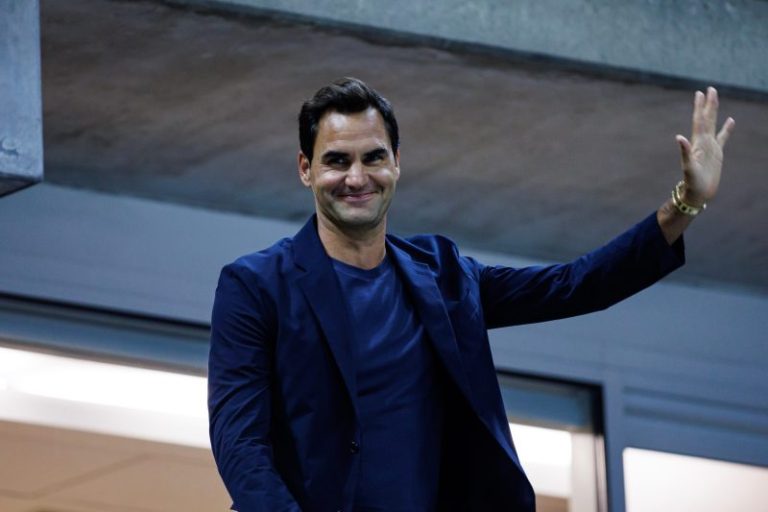
Roger Federer was elected to the International Tennis Hall of Fame in his first year of eligibility, the Hall announced on Wednesday, Nov. 19.

Federer won 20 Grand Slam singles titles, the first male player to achieve that mark.

He was also ranked for a record 237 consecutive weeks, spent 310 total weeks at the top of the ATP rankings, and finished five different years at No. 1. During his career, Federer won 103 singles tournaments and 1,251 matches.

TV announcer and journalist Mary Carillo was elected in the contributor category. As a correspondent for HBO’s ‘Real Sports,’ Carillo won six Emmy Awards and also has three Peabody Awards. She was inducted into the Sports Broadcasting Hall of Fame in 2018.

Both will be inducted at the International Tennis Hall of Fame celebration in Newport, Rhode Island, Aug. 27-29, 2026.

‘It’s a tremendous honor to be inducted into the International Tennis Hall of Fame and to stand alongside so many of the game’s great champions,’ said Federer. ‘Throughout my career, I’ve always valued the history of tennis and the example set by those who came before me. It was very special to receive the news at Swiss Tennis, surrounded by the next generation of players – the place where my own journey first began. To be recognized in this way by the sport and by my peers is deeply humbling. I look forward to visiting Newport next August to celebrate this special moment with the tennis community.’

Next year’s ballot will include Serena Williams, who won 23 Grand Slam singles titles, 14 in women’s doubles, and two in mixed doubles, and Ashleigh Barty, a three-time Grand Slam winner.

This post appeared first on USA TODAY
The race is on for a top-four finish and a bye through the opening round of this year’s College Football Playoff.

Based on the third playoff rankings of the year, at least half of the top four will be come from the Big Ten and SEC. The Big Ten has the top two in No. 1 Ohio State and No. 2 Indiana, followed by the SEC with No. 3 Texas A&M and No. 4 Georgia.

One team that’s ready to pounce is No. 5 Texas Tech, which will have the chance to add a second win against No. 11 Brigham Young in the conference championship game if the Cougars can beat Cincinnati and Central Florida to end the regular season with just one loss.

But with the Hoosiers and Buckeyes poised to face off in the Big Ten championship and the Aggies and Bulldogs on track to meet in the SEC, the latest rankings suggest the runner-up in one of these two powerhouse leagues may still manage a soft landing in the top four.

Oklahoma, Tulane and Alabama lead the winners and losers from the third playoff rankings of the season:

Winners

Oklahoma

As expected, Oklahoma climbed three spots from last week and landed at No. 8 after a huge win against now-No. 10 Alabama. The Sooners also own wins against No. 18 Michigan and No. 20 Tennessee, giving them the deepest résumé of any current two-loss contender. To be this high in the rankings at this point of the season essentially guarantees that OU earns an at-large berth with wins at home against Missouri and LSU. In this case, having no path to the SEC championship game is a very good thing for the Sooners, who are better off closing the door on the regular season with just two losses.

Tulane

No. 24 Tulane came in as the only ranked team from the Group of Five, giving the Green Wave a clear edge in the race for an automatic playoff berth with games against Temple and Charlotte to end November. Importantly, James Madison was not ranked out of the Sun Belt. Looking ahead, there’s no realistic way for the Dukes to make up ground with games against Washington State, Coastal Carolina and the winner of the Sun Belt West division. In short, the American has to come out of these rankings feeling very positive about sending its champion to the playoff as the No. 12 seed.

Notre Dame

Oklahoma’s climb didn’t impact Notre Dame, which hung on at No. 9 after Saturday’s impressive win against Pittsburgh. The story has been the same for the Fighting Irish for weeks: Beat everyone left on the schedule, make the playoff. Even after being leapfrogged by the Sooners, that’s very likely still the case ahead of games against Syracuse and Stanford to end the year. Avoiding a drop to No. 10 allows the Irish to breathe a little easier given that two teams lower in the rankings — the ACC champion and the Group of Five representative — will eventually climb into the bracket with the final rankings.

Losers

Alabama

The six-spot drop from last week is more symbolic than anything, given that the Crimson Tide can still book a spot in the SEC championship game with a win against Auburn. But the drop also indicates that Alabama is out of the tournament entirely with a loss in the Iron Bowl. Based on this new ranking, what’s more interesting to consider is whether the Tide can lose in the conference championship and still make the playoff. Beating Eastern Illinois and the Tigers won’t do much for Alabama’s résumé. If the Tide are 10-2 and ranked No. 10 but are blown out by No. 3 Texas A&M or No. 4 Georgia, will they remain inside the top 10 in the final rankings?

The ACC

Another week, another dismal showing for the ACC. No. 13 Miami is the league’s highest-ranked team — and one of the winners of the night — despite having a slim path to the conference championship, followed by No. 16 Georgia Tech and No. 19 Virginia. These rankings continue to suggest the ACC will be a one-bid league. But the ACC could thread the needle and add a second team under very specific circumstances, notably a clean finish from the Hurricanes, a Georgia Tech upset of Georgia — this result would do wonders for the league’s national credibility — and a shocking loss by the Irish or Tide down the stretch.

This post appeared first on USA TODAY

No. 24 Tulane was there. James Madison was not.

The takeaway is clear: While the class of the Sun Belt, the Dukes are virtually guaranteed to fall short of the Group of Five’s automatic bid to the College Football Playoff.

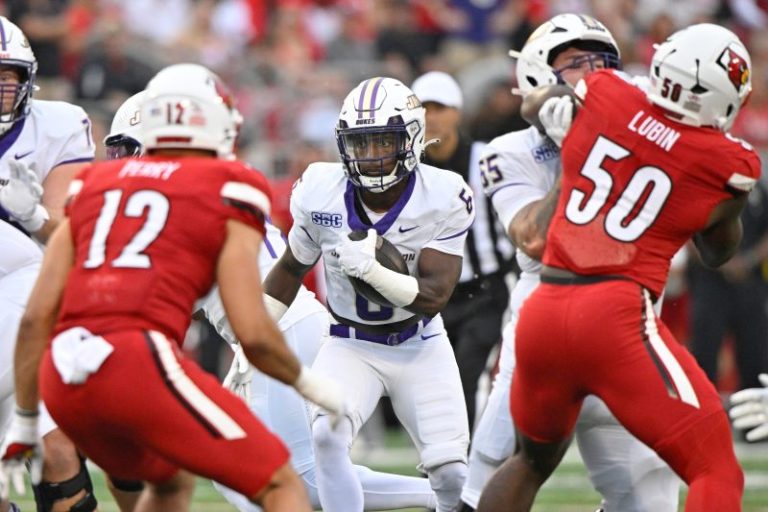
Based on the third rankings of the season, James Madison could sweep through the rest of the regular season, finishing 12-1 with only a loss to Louisville, but still miss the bracket.

In the end, the difference will be in the résumé the Dukes will bring to the table in the final playoff rankings. Even if they win out, there’s no realistic avenue to the bracket barring a chaotic close to the American season that results in a three-loss conference champion.

Why James Madison won’t make the playoff

The reasoning is simple: JMU won’t have the wins to come in ahead of a one- or two-loss American champion.

The one loss is a good one, even if the Cardinals have dropped two in a row and are no longer in contention for the ACC crown or an at-large playoff bid.

But with Sun Belt lacking it usual quality, James Madison lacks the type of wins that tend to impress the selection committee. The Dukes’ best win, against Old Dominion, doubles as their only victory against an opponent currently holding a winning record.

They have another two wins against teams with non-losing records in Georgia Southern and Marshall, but the Dukes’ remaining six wins are meaningless: Weber State, Liberty, Georgia State, Louisiana-Lafayette, Texas State and Appalachian State. Weber State is tied for last place in the Big Sky Conference and the five Bowl Subdivision opponents are a combined 17-33.

Compare this to the résumés of the four American teams with just one league loss.

Navy has a win against South Florida and can add another marquee win next Friday against Memphis. East Carolina beat Memphis and routed Coastal Carolina, the second-place team behind James Madison in the Sun Belt East division.

Tulane has wins against Northwestern, Duke, East Carolina and Memphis. Even North Texas, which has the weakest résumé of this group, owns a win against Navy and scored a 59-10 win against Washington State, the next opponent for the Dukes.

Remember that one of these teams will hold the ultimate trump card: a win against one of the top two teams in the American for the conference championship. In comparison, JMU is poised to play for the Sun Belt crown against Southern Mississippi, which just lost by 27 points to a Texas State team that was previously winless in league play.

How does James Madison make the playoff?

There’s a path for JMU to earn the Group of Five’s automatic bid to the tournament.

First, run the table against Washington State, Coastal Carolina and the winner of the West division — and do so with some style, too.

Next, have the American front-runners bellyflop through the finish of the regular season. If we’re being realistic, that would entail some combination of the following:

Navy loses to Memphis for a second conference loss and third overall.
Tulane is stunned by Temple for a second conference loss and third overall.
North Texas also loses to the Owls, joining an earlier loss to South Florida.
East Carolina beats Texas-San Antonio and Florida Atlantic to head into December at 9-3 overall and 7-1 in the American.

In this scenario, ECU would meet one of South Florida, Navy, North Texas or Tulane, with the Pirates’ opponent likely determined by composite computer rankings.

Come the first Sunday of December, JMU would be sitting pretty at 12-1 while the American champion would have two conference losses and could have three losses overall. That would give the Dukes the best chance of getting into the field as the No. 12 seed. It would be a tough needle to thread, but it is a chance.

This post appeared first on USA TODAY
Georgia wouldn’t be in the SEC Championship game if the season ended today. Third place is a great spot for Kirby Smart’s team.
Kirby Smart: ‘I want to win every game.’ Of course he didn’t try to lose, but there are upsides to a weekend of recovery before CFP.
SEC Championship took a toll on Georgia last season, and Bulldogs lost in playoff quarterfinals.

Third place is the utopia of the SEC standings. Maybe as good as first. Way better than second.

Third place equals good positioning in the College Football Playoff. It also means a conference championship weekend of rest and recovery, while knowing there’s no risk of missing the playoff.

And, because CFP stakeholders changed the bye rules before this season, the SEC’s third-place team has a chance to skip the first round entirely and advance straight into the quarterfinals.

Heck of a deal, right?

That’s the situation No. 4 Georgia finds itself in.

If the regular season ended tomorrow, Georgia would not qualify for the SEC Championship, courtesy of its head-to-head loss with Alabama. Instead, it would advance right to the playoff. Based on the latest CFP rankings, the Bulldogs would get a bye.

Kirby Smart: ‘I want to win every game.’

There’s still work to be done. To have a shot at that bye, Georgia must beat lowly Charlotte and survive Georgia Tech. And, if either Alabama loses the Iron Bowl or Texas A&M loses to Texas on Black Friday, the Bulldogs will wind up stuck in Atlanta playing for the conference championship.

And, yes, I do mean stuck, because the juice of a potential conference championship that might produce a tiny seeding bump is not worth the squeeze of an extra grueling game.

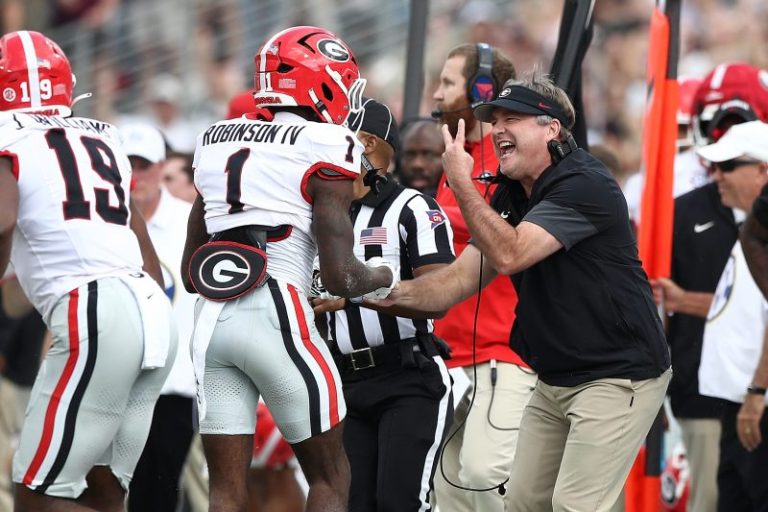
When a reporter asked Smart this week whether the 12-team playoff has affected how he views reaching the SEC Championship, the Georgia coach put on a theatrical production that sounded as if he really wants to play in that game.

“I want to win every game that we possibly play. So, what does that mean?” Smart said. “My objective is to win every game we play. So, where does that put us? It puts us in that (conference championship) game, right?

“So, there would be no way I would ever look at not playing in that game.”

Smart wants you to hear that as him saying he badly wants to play in the SEC Championship. But, here’s what I heard: He wants to go undefeated every season.

What coach doesn’t want to be undefeated every season?

Georgia isn’t going to finish undefeated because it already lost to Alabama, and I simply don’t buy that Smart will be rooting for Auburn to win the Iron Bowl so his team can strap it up in an extra game in Atlanta against a playoff-bound team.

Of course Smart isn’t going to say out loud he loves finishing in third place. Only Lane Kiffin would say that. And of course Georgia didn’t lose to Alabama on purpose. Smart wants to win ’em all.

Privately, though, don’t you think he’s savvy enough to recognize the upsides of not slugging it out in Atlanta, a day before the CFP bracket reveal?

SEC Championship took a toll on Georgia in 2024

And, in fact, those of us who can remember past this week recall Smart explaining in May how playing in last year’s SEC Championship game exacted a toll on his team.

“To win the SEC in the way we won it (in 2024), I think Texas and us were both really beat up from the grueling season,” Smart said on the SEC Network during the conference’s spring meetings “… It took a lot out of both our teams to play in that (SEC Championship) game.”

Those Bulldogs entered the playoff as a wounded and drained bunch. They needed seven overtimes to survive Georgia Tech, and then Carson Beck injured his elbow against Texas. That meant Gunner Stockton made his first career start against Notre Dame in the CFP quarterfinals.

The Irish ended Georgia’s season, but give Georgia Tech and Texas the assist.

Commissioner Greg Sankey said recently he’s never awarded the SEC championship trophy to a team wearing frowns.

That’s true, but imagine the smile from the coach whose team gets a weekend of rest, plus a first-round playoff bye. That comes with no trophy, but it’s still a sweet prize.

Blake Toppmeyer is the USA TODAY Network’s senior national college football columnist. Email him at BToppmeyer@gannett.com and follow him on X @btoppmeyer.

This post appeared first on USA TODAY

The Senate has officially passed a bill that would force the Department of Justice to release all materials related to Jeffrey Epstein, marking an end to a saga that consumed Congress for several months. 

The House sent over the bill early Tuesday morning, which triggered immediate passage of the legislation after no Senate Republican blocked an attempt by Senate Minority Leader Chuck Schumer, D-N.Y., to fast track the bill through the upper chamber. 

It now heads to president Donald Trump’s desk. 

Schumer argued on the floor that the Senate ‘should pass this bill as soon as possible, as written and without a hint of delay.’ 

‘Republicans must not try to change this bill or bury it in committee, or slow walk it in any way,’ he said. ‘Any amendment to this bill would force it back to the House and risk further delay. Who knows what would happen over there?’

The resolution from Reps. Thomas Massie, R-Ky., and Ro Khanna, D-Calif., would require that the Department of Justice (DOJ) release all unclassified records, documents, communications and investigative materials ‘publicly available in a searchable and downloadable format’ related to the late financier and convicted pedophile and his accomplice Ghislaine Maxwell within 30 days of the bill being signed into law. 

The Epstein fervor has not had nearly the impact in the Senate as the House, which was thrust into chaos by the bipartisan push to see the release of the files. Earlier this year, House Speaker Mike Johnson, R-La., put the House into recess to quell the Epstein drama and has since been accused of running from a vote on the issue.

The drama that roiled through the House, and sidelined lawmakers for several weeks came and went through the Senate in a matter of minutes Tuesday night. 

Senate Majority Leader John Thune, R-S.D., said that Republicans were already mulling the bill through the hotline process, which is where legislation is considered among lawmakers before making it to the floor. Thune said the plan, if the bill clears the hotline, would be to have it on the floor before lawmakers leave for Thanksgiving recess at the end of this week. 

‘We’ll see what the Democrats have to say,’ he said. ‘But it’s the kind of thing, probably, that could perhaps move by unanimous consent.’

That ended up not being necessary, with bill making its way through the upper chamber without a full vote. 

The calculus surrounding the Epstein bill changed in the Senate, too, given that President Donald Trump, who for months railed against attempts to release the files, threw his support behind Massie and Khanna’s legislation over the weekend.

He charged that it was a ‘Democrat Hoax perpetrated by Radical Left Lunatics in order to deflect from the Great Success of the Republican Party.’

‘Nobody cared about Jeffrey Epstein when he was alive and, if the Democrats had anything, they would have released it before our Landslide Election Victory,’ he said in a post on Truth Social.

Senate Republicans, like their counterparts in the House, wanted more transparency on the issue when the Epstein saga resurfaced over the summer but cautioned that no materials should be released until the names or identifying traits of victims are combed through and kept safe.

But, despite calls from Johnson to amend the bill to include those kinds of guardrails in the legislation, it’s unlikely to happen in the Senate. 

‘I think when a bill comes out of the House 427 to one, and the president said he’d sign it, I’m not sure that amending it is in the cards,’ Thune said. 

This post appeared first on FOX NEWS

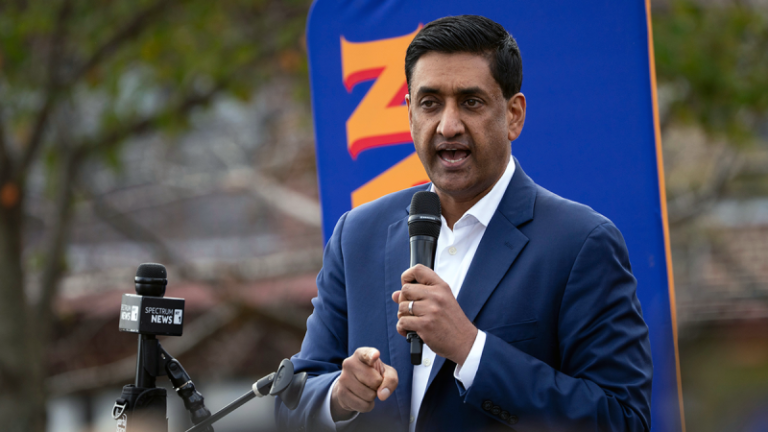
Ro Khanna, D-Calif., is a man in a rush. On Tuesday, he was at the center of the vote to release the Epstein files, and when I saw him, on the way to his office in the Cannon building, he asked if I could walk and talk, as he had a few stops to make. 

‘Sure thing,’ I said, and we were off.

I wasn’t there for Epstein. I wanted to know about the future of his Democratic Party. So I started by asking if he and it have moved the goal of the social safety net from hand up to handout.

‘That’s not my vision,’ Khanna said. ‘My vision is an FDR-like vision where we need to have wealth generation across this country. We need production and manufacturing and making things across America.’

He pointed out that Roosevelt did not only have handouts, he also helped industrialize America.

I pressed him on his call for $10-a-day childcare for all Americans. Isn’t this, along with his Medicare for all policy, a free giant payout from the state? Again he pivoted to FDR.

‘It’s the New Deal,’ he said. ‘I believe in an economic bill of rights, in national healthcare. That’s what FDR believed in: universal childcare. Under FDR, we had war nurseries, do you know why?’

I could have guessed, but it was because somebody had to watch Rosie the Riveter’s kids as she built planes and tanks.

FDR and the New Deal really do seem to be at the heart of Khanna’s economic vision, and while conservatives, especially the old guard, tend to hate the New Deal, they’d likely take FDR over Karl Marx, who seems to be the inspiration for others in his party these days.

By the time I shifted my questions to immigration, we had reached an elevator, the only one the congressman took in our 25 minute traipse. ‘The stairs are faster,’ he told me.

This was a chance to bring the road, where I live, to the halls of power in D.C., where I’ll only go as a reluctant tourist.

‘People say to me all the time, ‘Democrats let 20 million illegal immigrants in with little to no process, now they say every one of them has to go through due process.’ What do you say to them?’

For emphasis, I added that if you give 20 million people each a one-hour hearing, the total time it would take is over 2,000 years.

Khanna launched into something of a filibuster, telling stories of his own immigrant parents, how his mother stressed learning English and learning our nation’s history and values. And, that he had won the lottery and, as an American, should focus on his responsibilities more than his rights.

The congressman was ducking the question, but it was notable that this pride in and gratitude to America stands in opposition to the rhetoric of his party’s ascendant socialist wing.

At this point, Khanna had to duck into a meeting. He motioned to me to join, but a polite guard informed us my Adidas Gazelles and white sweater were not proper attire. In my defense, it’s a nice sweater.

When he came out, I took another shot at the question of the 20 million illegal immigrants.

‘You’re asking about the millions already here. I believe that if you committed a crime, a violent crime, then there needs to be a deportation after due process. But for many people who are here, giving childcare and working in hospitality, or construction and paying taxes, I do believe there needs to be a path to legalization.’

And there it was. They get to stay.

As the elevator door opened to the crowded, bright white subterranean pathways we had already come through, I told Khanna, ‘Here’s exactly the people on the road will say to that: ‘If Democrats let 20 million in last time, why won’t they do it again if given power?”

It seemed to land.

‘That’s a very good point, that’s a very good question, because we don’t want to lose elections,’ Khanna said, suggesting the open border was to blame for recent GOP gains.

Two takeaways here, one is that Khanna and the Democrats think the vast majority of the 20 million Biden illegals get to stay. The other is that they may plan to run, at least nominally, in favor of Trump’s border security measures.

As we made our circuitous route back to his office, I asked the congressman about Israel. He agreed that even 10 years ago, his party was far friendlier towards the Jewish state.

‘What changed?’ I asked.

He didn’t miss a beat, ‘Netanyahu.’ Khanna had initially supported Bibi’s efforts to hit Hamas after the massacre of Oct. 7, but after several months, felt they were going too far.

If there is a silver lining for Zionists, it is that, unlike New York City Mayor-elect and Socialist wunderkind Zohran Mamdani, Khanna does support the right for Israel to exist as a Jewish State.

We both agreed that if President Donald Trump’s peace effort holds, the Israel question may soon fade to the background.

Finally, back in Khanna’s office for a few minutes, I asked him about Sen. John Fetterman, D-Pa., who has argued fervently that his party is moving too far left.

‘I like John,’ Khanna said. ‘Maybe I shouldn’t say it. We have drinks, but I’m a progressive Democrat, so we have disagreements.’

It was that moment when I realized that this was the third or fourth time Khanna had referred to himself as a ‘progressive Democrat,’ and for the very first time, this phrase I’d known for decades had a new meaning. It meant, ‘not socialist.’

This is an incredibly important distinction and will be the major skirmish line for the soul of the party. ‘Progressive Democrat,’ until about 10 minutes ago, meant those farthest to the left. It included Sen. Bernie Sanders, I-Vt., and Rep. Alexandria Ocasio Cortez, D-N.Y. and her squad. Now it is beginning to mean, ‘a bit to the right of the socialists.’

As the midterms approach, this jockeying in what was once the party of Jefferson and Jackson will grow more intense. A lean and hungry Ro Khanna is racing to be at the forefront of the fight.

This post appeared first on FOX NEWS

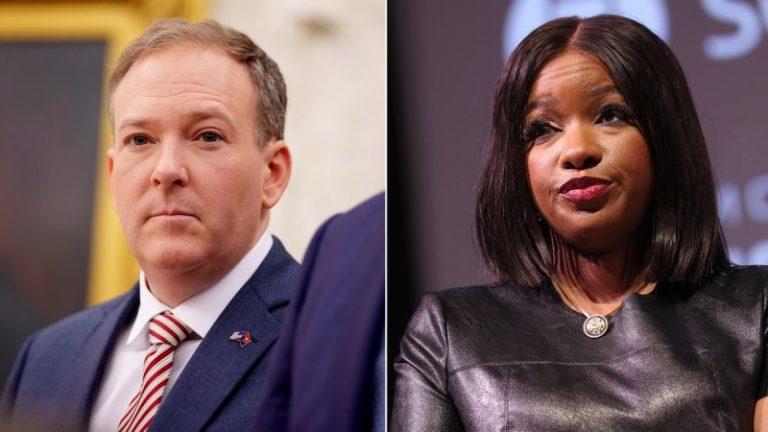
U.S. Environmental Protection Agency Administrator Lee Zeldin clapped back after Rep. Jasmine Crockett, D-Texas, said he had taken money from someone named Jeffrey Epstein.

The congresswoman dropped Zeldin’s name while listing figures and entities she said had taken money from ‘somebody’ by the name of Jeffrey Epstein. Noting that she had her ‘team dig in very quickly,’ she rattled off the following list: ‘Mitt Romney, the NRCC, Lee Zeldin, George Bush, WinRed, McCain-Palin, Rick Lazio.’

Zeldin fired back in a post to X, noting that the donation to one of his former campaigns had nothing to do with the notorious late convicted sex offender Jeffrey Epstein.

‘Yes, Crockett, a physician named Dr. Jeffrey Epstein (who is a totally different person than the other Jeffrey Epstein) donated to a prior campaign of mine,’ Zeldin wrote, reposting another person’s post that featured footage of Crockett’s comments.

Zeldin then exclaimed in all caps, ‘NO [clap emoji] FREAKIN [clap emoji] RELATION [clap emoji] YOU [clap emoji] GENIUS!!!’

Fox News Digital reached out to Crockett’s office for comment.

Zeldin, a Republican, lost the 2022 New York gubernatorial contest to Democratic Gov. Kathy Hochul. He served in the U.S. House of Representatives from early 2015 through early 2023, and he had previously served in the New York state Senate.

President Donald Trump has previously called Crockett ‘a very low-IQ person.’

This post appeared first on FOX NEWS