Archive

2025

Browsing

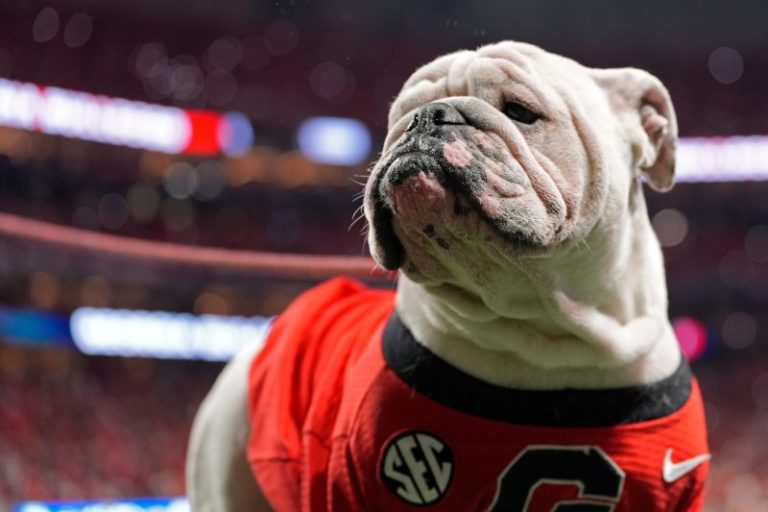
There has never been a better time in history to be a college athlete. Many of the football and basketball players you watch on television are getting six- and seven-figure windfalls in name, image and likeness deals. Pretty soon, even the athletes you never see will earn something through revenue sharing. And all of them are perpetual free agents, able to change schools with little or no restriction should a better deal come along. 

And now, at least in the state of Georgia where I call home, there may be another perk available in the near future: Tax breaks!

A new bill proposed in the Georgia legislature aims to eliminate the state’s 5.49 percent income tax for college athletes on their NIL deals. Essentially, this means that a Georgia Bulldogs quarterback making $1 million per year would get to keep an extra $55,000. It also means, if a football team is collectively earning $20 million through NIL, the state is losing out on about $1 million in revenue that funds stuff like healthcare, education and transportation, which the rest of us working schlubs who live here are obligated to pay for. 

As a sports columnist, this is a phenomenal idea. We need as much offseason college football content as possible, and any time you can bring the politics of taxation into sports, that’s a guaranteed outrage-generator. As a few administrators texted since news of this bill came out earlier this week, you couldn’t possibly come up with a better plan to get the public to turn on college athletes. 

So as someone in the business of sports takes, I’m all for having that debate. But as a citizen and resident and taxpayer? 

Uh, no thank you. 

So on Wednesday, I called Brandon Beach, a Republican state senator representing the Alpharetta area just outside of Atlanta. He’s the one who came up with this idea, and I asked him a simple question: Why should exempting highly-paid college athletes from income tax be an important priority for lawmakers in the state of Georgia? 

“Well, I think it’s a priority,” he said. “Listen, college sports generates millions of dollars for our universities, our local businesses, and it really helps our state economy. And if you have a winning program, it further develops a, you know, economic engine. And for us to be competitive, we need to do that. 

“We’re only talking about while you’re in an NIL deal and while you’re an athlete. It’s not for the rest of their life. So three to four years at (most), and we want to make sure that (Georgia coach) Kirby (Smart) can — whether any of our universities can — be able to recruit that talent.” 

To be perfectly honest, most of this sounds like nonsense. I don’t believe that a single win in any sport at Georgia, Georgia Tech, Georgia State, Georgia Southern or any other program in the state hinges on whether a player’s NIL income is being taxed at the state level. 

But politicians being politicians, and the SEC mentality being the SEC mentality, I can certainly understand why mitigating any perceived disadvantage Georgia might have — as insignificant as it might be — seems like important work that will be popular with his constituents. 

And I’ll give credit to Beach for this much: He doesn’t pretend that this is about anything other than making sure those Dawgs have a completely level playing field when they’re recruiting against Coach Sark at Texas.

“It helps us compete with Texas, Florida and Tennessee,” he said. “(The athletes) all have these agents or managers or whatever, and these guys will go to the kids and say, ‘Hey, Texas is willing to pay you a million. You’re only making $750,000 at Georgia, and by the way, you won’t have to pay any state income tax.’

‘I mean, just look at (former Georgia quarterback) Carson Beck. He just did a $4 million deal at Miami, and Florida has no state income tax. If he had that same deal in Athens, he’d have to pay about $200,000.” 

It’s hard to refute the point. In a theoretical world where all NIL deals and other circumstances are equal for every program, there might be a few athletes who make career-defining choices based on roughly 5 percent of their income. 

I just question whether that world exists, and whether the politics of this proposal are as good as Beach thinks they are.

Yes, eliminating the state tax on NIL will put a few more dollars in the pockets of hundreds of athletes across the state who get small deals. But make no mistake: This proposal is aimed at making sure Georgia’s football program doesn’t lose any of those six- and seven-figure recruiting battles, which are making scores of young people across the country rich because of their athletic skills. 

And there’s absolutely nothing wrong with that. I advocated for it before it was popular because college athletes are crucial to the economic success of a multi-billion dollar industry. But even for me, changing a law to give college athletes — and only college athletes — relief from the civic responsibility the rest of us have feels unseemly.

Do we really need to do this much coddling to sell the Georgia football program to recruits? And if this stuff really matters — like, at all — why not do a similar bill for the Atlanta Falcons, Atlanta Braves and Atlanta Hawks that might help them get a couple more free agents? Does their success not contribute to the state economy too?

“One of my colleagues said that he got a couple calls like, ‘Why are you rewarding these athletes like this? They’re already making money,’ ‘ Beach said. “But you know what? If we want to get the best that’s out there, we’ve got to make sure we have an even playing field with those three states that have very good football programs.”

After I hung up the phone with Beach — which happened to be on National Signing Day — I went to the popular recruiting sites to see whether the teams in my state were as bad off as one might think based on the urgency of this bill.

As it turns out, they seem to be doing OK. At Rivals, Georgia’s recruiting class was No. 2 while Georgia Tech was No. 23. The folks at 247 had it ranked similarly — with Georgia State’s and Georgia Southern’s recruiting classes clocking in at No. 1 and No. 3 in the Sun Belt, respectively. If any Georgia schools are losing recruits because of a state tax on NIL, it’s not showing up in metrics that track the acquisition of talent.

So let’s be blunt: Georgia doesn’t need the help. Neither does Smart, who makes $13 million a year because he’s been the best recruiter in college football for the last decade. 

But if you’re trying to predict whether this bill is going to pass, state legislatures in the South trying to one-up each other for the sake of SEC football seems like a pretty safe bet — especially when it involves a tax cut for people who don’t really need it. 

Just one question, though: When will it be my turn? 

“That’s what we really want to do,” Beach said, “is eliminate the state income tax. That’s our main goal down the road. But until we do that, I think this is a great tool in the toolbox — from a recruiting standpoint.” 

After all, what could be more important? 
This post appeared first on USA TODAY

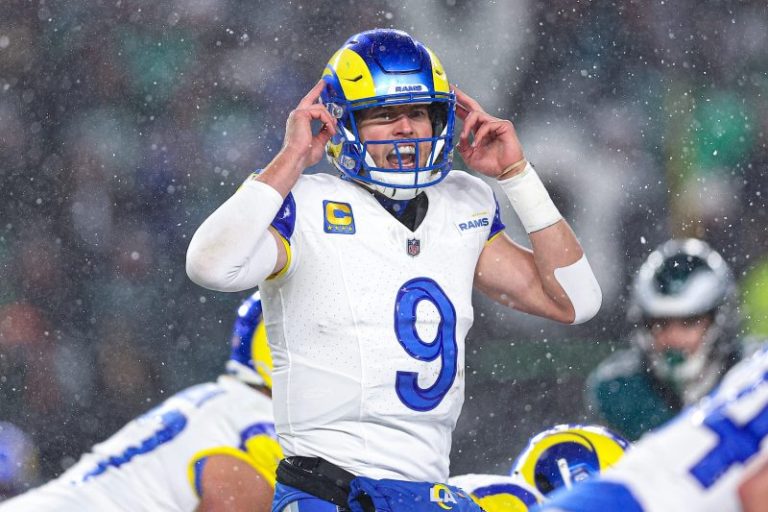
The Los Angeles Rams were one touchdown away from appearing in the NFC Championship Game this year. Although they haven’t reached the postseason every season with quarterback Matthew Stafford under center, they’ve certainly elevated their franchise and are consistently one of the most potent offenses in the league.

That may be changing soon though. Stafford’s wife, Kelly Stafford, expressed discontent with the Rams’ organization, specifically how they are handling the Cooper Kupp trade situation on her podcast ‘The Morning After.’

‘I will say the trading away of Cooper, I guess I’m just a little, I’m confused. Because we were one play away from going to the NFC Championship, and I think if we go, we win,’ Stafford said.

It’s unclear whether or not a potential Kupp trade would be the final straw for the Stafford family or if there had been other instances building up Stafford’s unhappiness. It is clear, however, that at least Kelly Stafford is unhappy with the direction the Rams’ franchise is going.

‘I love the city of L.A. With that being said, I love an adventure,’ Stafford continued.

All things Rams: Latest Los Angeles Rams news, schedule, roster, stats, injury updates and more.

Why would a Kupp trade impact Stafford?

Kupp and Stafford are reportedly very close friends. Both players are very aware that the divisional round was likely their last game together. In fact, Kupp has been informed that the Rams plan on trading him.

However, Kupp’s impact is greater than just his quarterback’s morale. Their connection on the field is obviously incredible. It has to be for a pair to accomplish what they did in 2021 when Kupp won the NFL’s receiving triple crown – led the league in yards, receptions, and touchdowns – and nearly broke the all-time single-season receiving record. However, Stafford has been a significantly worse quarterback without Kupp during his time in Los Angeles.

Stafford has only played nine games without his star wideout since being traded, and in those games, he’s put up only seven touchdowns while throwing eight interceptions. For reference, Stafford played 16 games this year and threw eight interceptions total.

Will the Rams really trade Kupp?

It seems so, and it makes sense after Kupp endured an injury-riddled 2024 season. Furthermore, this was Kupp’s least productive season since Stafford joined the Rams. With the emergence of young wideout Puka Nacua, Kupp is not as dire a necessity for the Rams anymore, and his large contract could possibly be better spent elsewhere.

Of course, if trading Kupp means getting rid of Stafford as well, as Kelly Stafford implies, then the Rams may think twice. However, it seems unlikely that Stafford would go anywhere even if Kupp was sent away. Stafford is approaching his age-37 season and will hold a nearly $50 million cap hit in 2025.

This post appeared first on USA TODAY

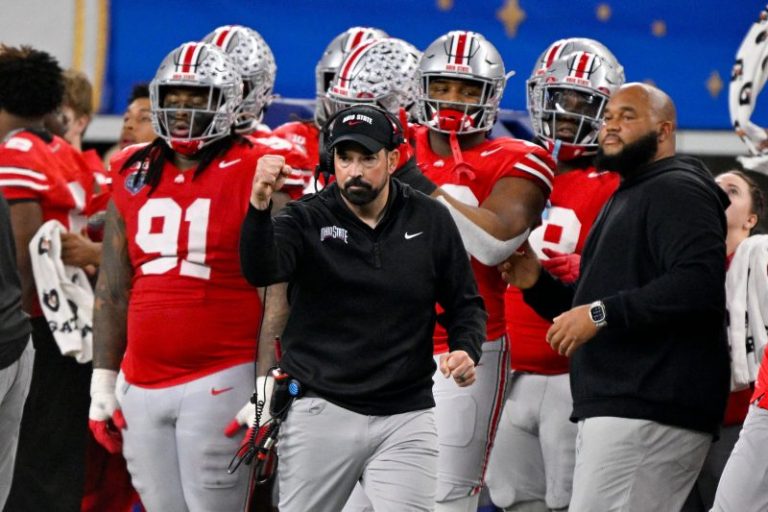
Winning a national title bring more than just satisfaction and acclaim. It also bring monetary gain and job security. Ohio State announced a new contract for football coach Ryan Day two weeks after the Buckeyes defeated Notre Dame in the College Football Playoff championship game in Atlanta.

The seven-year agreement running through the 2031 season increases Day’s annual compensation to $12.5 million, putting him behind only Georgia coach Kirby Smart among coaches in the Bowl Subdivision. Day, whose deal for the 2024 season was worth just under $10 million, was the No. 6 highest-paid coach in last season’s USA TODAY Sports annual salary survey.

“Ohio State Football has long been defined by excellence and, under Ryan Day’s leadership, that tradition has not only continued, but thrived,” Ohio State athletic director Ross Bjork said in a statement announcing the deal. “His leadership has maintained our position of national prominence each year and winning the 2024 national championship validated his program’s culture of excellence, integrity, and perseverance.’

Day has compiled a 70-10 record in his six seasons as Ohio State coach. His winning percentage (.875) is the highest among active FBS coaches and No. 3 among coaches in history.

BEST MOVE: Ohio State keeping Ryan Day more critical than loss of coordinators

LOOKING AHEAD: Our way-too-early college football Top 25 for 2025

“I want to thank President Ted Carter, Director of Athletics Ross Bjork and the Board of Trustees for the confidence and trust they have in me to oversee this program,” Day said. “My family and I are incredibly grateful to be a part of the Ohio State community, this football program and Buckeye Nation.’

The new contract for Day comes after a season where there was speculation about this future with the program. Ohio State lost to Michigan for the fourth consecutive time and missed the Big Ten championship game. The Buckeyes, who made the first expanded College Football Playoff as a No. 8 seed, then had one of the great postseason runs in college football history.

The won four games by double figures, starting with a defeat of Tennessee followed by wins against No. 1 Oregon in the Rose Bowl, Texas in the Sugar Bowl and Notre Dame in the championship game.

“Ryan has not only kept Buckeye football as the preeminent program, but he also guides young men into leaders, instilling values that extend far beyond the game,’ Bjork said. ‘Stability at the head coaching position is crucial in today’s evolving college football landscape, and this new contract guarantees continued momentum in recruiting, player development, and overall program success.’

This post appeared first on USA TODAY

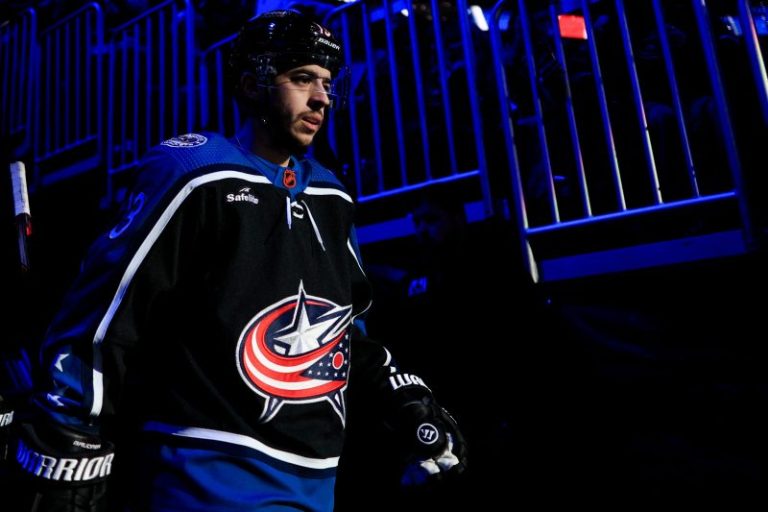
The defense attorneys for the man accused of driving drunk and killing Columbus Blue Jackets player Johnny Gaudreau and his brother allege in new court filings that the brothers were also legally drunk at the time of the accident.

In a defense motion for additional discovery related to blood testing filed this week and obtained by USA TODAY Sports, documents say that Johnny Gaudreau had a blood alcohol level of .129 and his brother Matthew had a BAC of .134. The legal blood alcohol content limit for non-commercial drivers in New Jersey, where the accident occurred, is 0.08.

Authorities say that Sean Higgins was driving a Jeep in Oldmans Township, New Jersey, on Aug. 29 when he struck the Gaudreaus from behind as they were riding on bicycles. The brothers were in town for their sister’s wedding, which was scheduled for the next day.

Athlete stories on and off the field: Sign up for USA TODAY’s Sports newsletter.

Higgins, who is charged with vehicular homicide and aggravated manslaughter, said that he drank beers before the accident and while operating his vehicle and also had a blood alcohol level above the legal limit at .087.

In the court filings, Higgins’ attorney, who also filed a motion to have the case dismissed, wants to know how the investigator got the information about Gaudreaus’ blood alcohol level, but also doesn’t explicitly say that it played any part in the accident.

Last month, Higgins rejected a 35-year jail sentence (15 years each for two counts of aggravated manslaughter and five years for leaving the scene of a fatal accident) from prosecutors and instead pled not guilty to the charges. His next court appearance is scheduled for March 26.

The USA TODAY app gets you to the heart of the news — fastDownload for award-winning coverage, crosswords, audio storytelling, the eNewspaper and more.

This post appeared first on USA TODAY

Two dozen House Republicans from across the political spectrum are backing a resolution to formally recognize Taiwan – a break from current U.S. policy that would rankle leaders in Beijing.

The resolution, put forth by Reps. Tom Tiffany, R-Wis., and Scott Perry, R-Pa., would encourage President Donald Trump to abandon the U.S.’s long-standing ‘One China’ policy and formally recognize Taiwan as autonomous. 

‘Taiwan has never been under the control of the People’s Republic of China – not even for a single day. It is a free, democratic, and independent nation, and it is past time for U.S. policy to reflect this undeniable objective truth,’ Tiffany said in a statement. 

The resolution implores Trump to support Taiwan’s entry into international trade organizations and negotiate a bilateral U.S.-Taiwan Free Trade Agreement.

The U.S. had established diplomatic relations with Taiwan until 1979, when President Jimmy Carter cut off formal ties with Taipei and recognized the Communist regime in Beijing.

Congress then passed the Taiwan Relations Act, which created legal authority for unofficial relations with Taiwan and continued military aid. 

Currently, only 12 independent countries recognize the Taipei government. A change in U.S. policy would likely be viewed as a threat by Beijing. When the U.S. sent a military aid package to Taiwan in December, China’s foreign ministry warned Washington was ‘playing with fire’ and called for a stop to ‘dangerous moves that undermine peace and stability in the Taiwan Strait.’

U.S. military analysts have projected 2027 as the year by which China would be fully equipped for a military invasion of Taiwan. And the U.S. has long followed a policy of refusing to say whether it would come to the island’s defense under such a scenario. 

Trump slapped an additional 10% tariff on all Chinese goods last week, and China responded in kind with its own export levies. At the same time, Trump has demanded the U.S. take over the Panama Canal to counter Chinese influence. 

READ THE HOUSE RESOLUTION BELOW. APP USERS: CLICK HERE

But Trump’s comments on the campaign trail suggest that he would not be willing to put boots on the ground to face another global superpower in defense of the island democracy. 

‘I think Taiwan should pay us for defense,’ Trump told Bloomberg Businessweek in June. 

‘You know, we’re no different than an insurance company. Taiwan doesn’t give us anything,’ he added.

Taiwan and China separated amid civil war in 1949 and China says it is determined to bring the island under its control by force if necessary. China is increasingly encroaching in the region in recent days with military activity in the Taiwan Strait. 

The legislation has both interventionist and America First cosponsors, including Reps. Lauren Boebert of Colorado, Carlos Gimenez of Florida, Andy Ogles of Tennessee, and Kat Cammack of Florida.

This post appeared first on FOX NEWS

Even if no more deals are completed before the NBA trade deadline comes and goes Thursday afternoon, this will go down as perhaps the most memorable trade deadline since this arbitrary date became a popular mid-season event on the calendar.

Teams have until 3 p.m. ET to complete trades, but already some of the biggest names in basketball have been dealt in recent days. The action began over the weekend, of course, when the Dallas Mavericks stunned the sports world by trading Luka Doncic to the Los Angeles Lakers in exchange for Anthony Davis. Then the Sacramento Kings traded De’Aaron Fox to the San Antonio Spurs in a three-team trade that also sent Zack LaVine from the Chicago Bulls to Sacramento to reunite with former Bulls teammate DeMar DeRozan.

Another wave of significant trades occurred Wednesday. Jimmy Butler finally found a new home after the Miami Heat executed a complicated four-team trade that sent Butler to the Golden State Warriors and Andrew Wiggins to the Heat. The Milwaukee Bucks traded guard Khris Middleton to the Washington Wizards in exchange for a package revolving around forward Kyle Kuzma. The New Orleans Pelicans dealt Brandon Ingram to the Toronto Raptors and the Lakers traded for Charlotte Hornets center Mark Williams.

But there’s still time for more trades and the rumors are flying around league circles that another flurry of deals could arrive soon. Contenders are looking to add to their rotations for the stretch run and bottom dwellers are looking to offload contracts for draft assets.

USA TODAY Sports is keeping track of all the latest here:

Kevin Durant will remain with the Suns

As the deadline passes, Shams Charania announced on ESPN that Kevin Durant is not expected to be moved. For the moment, the other momentous trades the NBA supplied this week will have to do.

NBA teams ‘making aggressive calls on Kevin Durant’

Kevin Durant turned down Golden State Warriors reunion

Th behind-the-scenes maneuvering that preceded and eventually facilitated the trade of Butler from the Heat to the Warriors on Wednesday is beginning to trickle out. As had been hinted in recent days, conversations surrounding Butler and Phoenix Suns star Kevin Durant became interconnected once it became clear Suns guard Bradley Beal was not going to waive his no-trade clause. And Steph Curry even got involved.

ESPN’s Brian Windhorst reported on ‘Get Up’ Thursday morning that ‘this was close to being Jimmy Butler in Phoenix, Kevin Durant in Golden State.’ But Durant, according to Windhorst, ‘stepped up and made it known he did not want a reunion and once that deal fell apart, Golden State pivoted.’

The Warriors then got Butler from Miami in a four-team trade that also included the Detroit Pistons and Utah Jazz. Butler also signed a 2-year, $121-million contract extension with the Warriors as part of the deal. But this was never straightforward, not once Butler made his trade request with the Heat and Pat Riley and not towards the end when the Warriors tried to get Durant.

The Athletic’s Anthony Slater led his analysis piece about Butler’s addition to Golden State with this fascinating nugget:’At some point in the last several days, Stephen Curry had a conversation with Kevin Durant that convinced him a reunion was extremely unlikely, no matter how much the Golden State Warriors ownership group and front office collectively ‘underestimated’ Durant’s coldness toward a return, as one team source put it.’

Golden State Warriors, Chicago Bulls discussing Nikola Vucevic

The Warriors might not be done adding to their roster after the Butler trade.

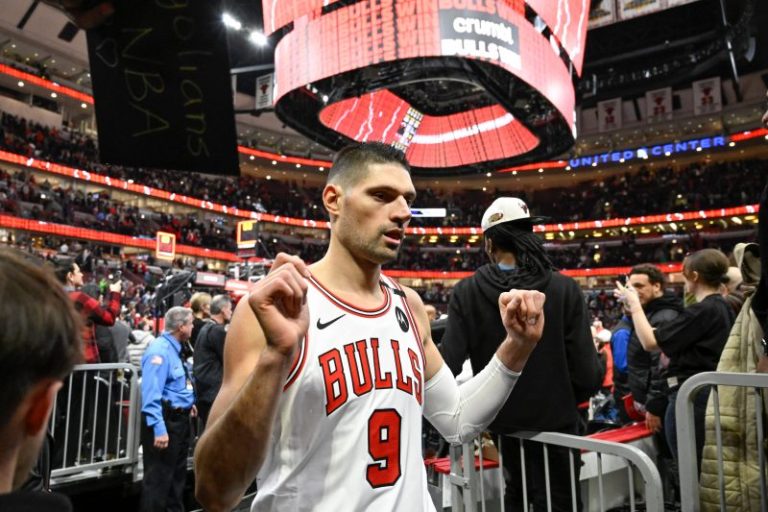
Though Chicago Bulls center Nikola Vucevic told reporters after Wednesday’s 127-108 loss to the Minnesota Timberwolves that he didn’t expect much to happen ahead of the trade deadline, reports Thursday suggest otherwise. Longtime Bulls insider K.C. Johnson of Chicago Sports Network reports trade discussions surrounding Vucevic between the Bulls and Warriors are ongoing.

Memphis Grizzlies are talking to teams about Marcus Smart

NBA insider Ian Begley at SNY reports several teams have spoken with the Memphis Grizzlies about a trade involving guard Marcus Smart. Memphis was also mentioned as a potential suitor for guard Lonzo Ball before he signed a two-year contract extension with the Chicago Bulls on Wednesday.

Smart returned Wednesday from a finger injury that had sidelined him for more than a month. He’s averaging 8.7 points and 3.7 assists per game while shooting 35.8% from the field in a bench role for Memphis. The 30-year-old has played in just 39 of 133 games since joining the Grizzlies via trade in June 2023 due to a variety of ailments. Smart has one year left on his contract after this season with a salary cap hit of more than $21.5 million.

Atlanta Hawks could trade De’Andre Hunter

A name to watch the next few hours is Hawks wing De’Andre Hunter, according to Chris Mannix of Sports Illustrated, with the Cleveland Cavaliers emerging as a potential front-runner to get him.

Hunter has emerged as a Sixth Man of the Year candidate coming off the bench for the Hawks. He’s averaging a career-best 19.0 points and shooting 39.3% from 3-point range. The 6-8 forward has two years left on his contract after this season with salary cap hits of $23.3 million and $24.9 million.

This post appeared first on USA TODAY

New Orleans may be tempting fate.

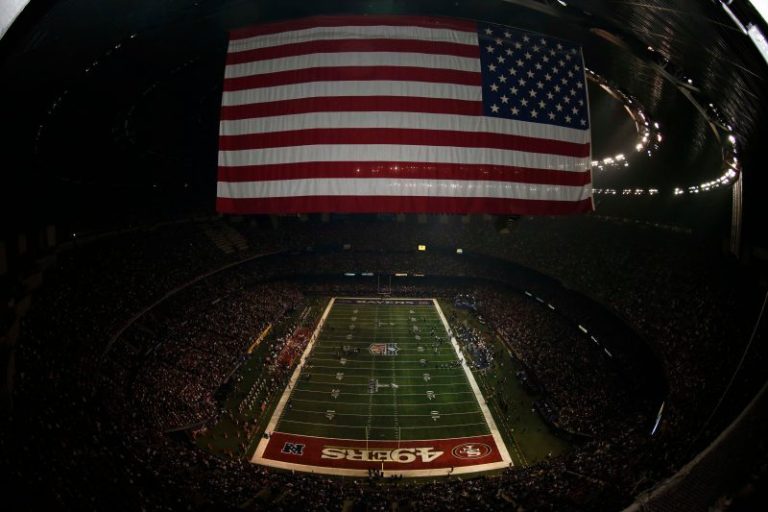
Entergy, the power company based in New Orleans and at least partly responsible for the incident, is not hiding in shame. In fact, Entergy is a founding partner of the New Orleans Super Bowl Host Committee.

“The issue that caused the partial power outage at the beginning of the second half of Super Bowl XLVII was addressed in 2013 and the necessary repairs and upgrades were made at that time,’’ Entergy said in a statement recently provided to USA TODAY Sports. ”We discontinued using the protection relay equipment that led to the partial outage.’’

The whereabouts of the offending relay equipment is not publicly known and it is not available for public inspection. It was ‘decommissioned and taken out of service in 2013,” Entergy told USA TODAY Sports. Could that be fodder for Ray Lewis, the Hall of Fame linebacker?

NFL STATS CENTRAL: The latest NFL scores, schedules, odds, stats and more.

At the 2013 Super Bowl, Lewis helped the Baltimore Ravens stave off the San Francisco 49ers, who rallied after power was restored before the Ravens prevailed 34-31.

‘I’m not gonna accuse nobody of nothing — because I don’t know facts,’ Lewis said after that game, his second Super Bowl win. ‘But you’re a zillion-dollar company, and your lights go out? No. (Laughs). No way.’’

Lewis did not respond to USA TODAY Sports’ request for comment before Super Bowl 59.

Ray Lewis conspiracy theory: Does anyone believe him?

After the 2013 Super Bowl, Lewis expounded on his theory about why the power went out with 13:22 left in the third quarter and the Ravens leading, 28-6.

‘Now listen, if you grew up like I grew up — and you grew up in a household like I grew up — then sometimes your lights might go out, because times get hard. I understand that,’’ he said. “But you cannot tell me somebody wasn’t sitting there and when they say, ‘The Ravens (are) about to blow them out. Man, we better do something.’ … That’s a huge shift in any game, in all seriousness. And as you see how huge it was because it let them right back in the game.’

But Torrey Smith, a retired receiver who had two catches for 35 yards for the Ravens that night, said beliefs among NFL players are not always grounded in fact.

“You think about guys on the team, some of the guys believe the earth is flat,’’ Smith told USA TODAY Sports. “So I mean, you’re going to hear some crazy things at all times, especially when it happens in that type of moment.’’

On second thought, the power went out less than two minutes after Ravens speedster Jacoby Jones opened the second half with a 108-yard kickoff return.

Said Smith, “I mean, no one had been in a stadium where the power went out and then you have this crazy momentum and literally Beyoncé just performed (during the halftime show). And the thing that I always remember was Jacoby saying, man, this place didn’t even lose power when (Hurricane) Katrina hit. And that stuff was, I was like, oh, you do have a point.’’

And the 49ers?

‘We weren’t tripping,” said Frank Gore, who had 110 yards rushing and a touchdown for San Francisco that night.

What does Entergy say about the power outage?

ASM Global, the company that manages the SuperDome, and the Super Bowl Host Committee referred questions about the power outage to Entergy, which provided written statements.

One says, “Entergy New Orleans has worked closely with Caesars Superdome officials to install significant upgrades and additional redundancy to the stadium’s electrical and lighting systems.’’

In 2013, Entergy and other officials blamed the power outage on ‘an abnormality” that resulted in an automatic shutdown, partially cutting power. The lights went out on the side of the stadium where the San Francisco 49ers bench, TV and radio booths and press box are located. Backup generators kicked in before the power was restored, leaving some light in the stadium.

Later, Entergy announced a third party would be hired to conduct an assessment of the cause of the power outage.

As evidence of success, Entergy cited high-profile events held at the Superdome during a 12-year run without power outages. Those include the College Football Playoff, the men’s Final Four, WrestleMania, three nights of Taylor Swift concerts and, interestingly enough, a Beyoncé concert.

Beyoncé’s performance, coupled with Destiny’s Child members Kelly Rowland and Michelle Williams at halftime of the 2013 Super Bowl, at the time fueled speculation that her powerful production resulted in the power outage.

Entergy has given no credence to that theory – or to any fear that a power outage could disrupt Super Bowl 59, where Kendrick Lamar is scheduled to perform.

“Entergy is prepared to deliver power to the Superdome and the entire city of New Orleans during Super Bowl LIX weekend,’’ the company said in a statement. “Entergy’s Executive Vice President and General Counsel Marcus Brown is the chair of the New Orleans Super Bowl LIX Host Committee, and Entergy’s teams have been working closely with the Host Committee, Caesars Superdome officials and city officials for over a year now.’’

Power outage sparked fear

On the radio broadcast for the 2013 Super Bowl, Kevin Harlan was doing the play-by-play and Boomer Esiason, the former Cincinnati Bengals quarterback, was doing the color commentary.

“He had this look on his face when the lights went out,’’ Harlan told USA TODAY Sports in a recent interview.

According to Harlan, Esiason’s concern stemmed from the terrorist attacks on Sept. 11, 2001. An office for The Boomer Esiason Foundation on the 101st floor of the Trade Center’s North Tower was empty when the two airplanes hijacked by terrorists crashed into the twin towers.

The possibility that a terrorist attack caused the power outage also was a concern in the NFL control room, according to Frank Supovitz, then the NFL’s senior vice president of events.

“The law enforcement team that was up there, the security team that was up there, we’re looking after that question,’’ Supovitz said. “Did we have a terror attack? Was it a cyber terror attack? Was there a fire? Was there any danger to public safety?

“And happily, the answer to that was very quickly determined to be no.’’

Thanks to backup landline phones, Harlan said, he and Esiason were able to deliver the news to the radio audience.

“Now that I’m going over it, in my mind, I wouldn’t be lying if I said I wasn’t shaken by his reaction,’’ Harlan said of Esiason.

What happened on the Superdome field?

Steve Stelljes, the head linesman on the officiating crew at the 2013 Super Bowl, said he was on the Ravens sideline when the power went out. He recalled an exchange with head coach John Harbaugh.

“He comes over to me and he says, ‘What are you going to do about this?’ ” Stelljes said. “And I go, ‘Well, John, it’s real simple. I’m going to sit down and let the experts take care of it.’ ”

Whereupon Stelljes sat down, according to the linesman.

Solomon Wilcots, a sideline reporter for the TV broadcast, also said he interacted with Harbaugh as the players tried to stay loose. He said he pointed across the field at Harbaugh’s brother, Jim, then the head coach for the 49ers.

“I said, ‘Look at him. He’s got his guys over there, man. You better get your guys together and talk to ’em about what to anticipate when this game resumes,’ “ Wilcots said.

It was too late.

When the game resumed, the 49ers were rolling.

“I look back on it from a sports science standpoint now, for what I know now and didn’t know then,” John Harbaugh told USA TODAY Sports. “We didn’t get our guys ready the right way. We did some static stretching, rather than dynamic stretching. Now I’ve learned since then because the science has gotten better. But we didn’t warm our guys up the right way. And I think it hurt us. I don’t know if that’s why we sucked for the next 15 minutes.”

The 49ers pulled within two points in the fourth quarter, and the Ravens weren’t the only ones on edge.

Up in the NFL control room, Supovitz said, he braced for another possible power outage.

“It was like, ‘Clock, tick as fast as possible so we don’t experience this again,’ “ Supovitz said.

As Super Bowl 59 approaches, the clock is ticking again.

This post appeared first on USA TODAY

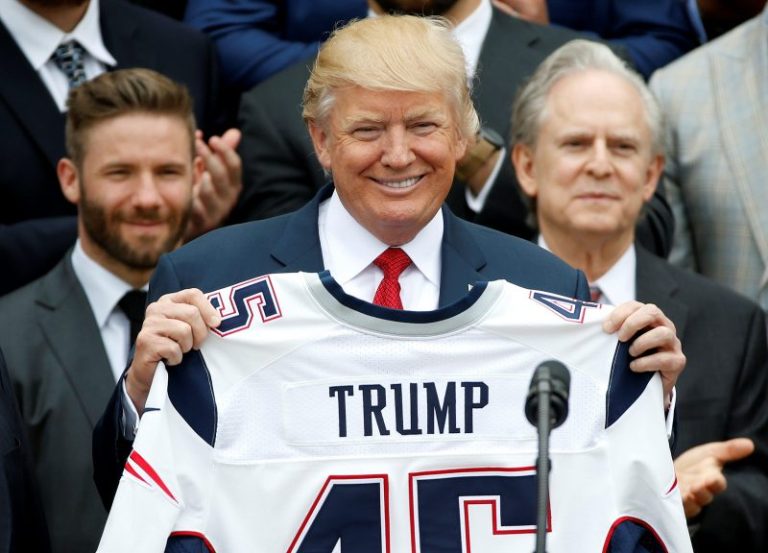
President Donald Trump’s appearance at Sunday’s Super Bowl 59 in New Orleans will go down in history as the first sitting commander-in-chief to attend the National Football League’s title game, in which the Kansas City Chiefs will go for an unprecedented “three-peat” against the Philadelphia Eagles.What isn’t historic is his on-again/off-again decades-long feud with the NFL and its players since the 1980s.

While Trump and the NFL seem to be on the same page now, their relationship has been rocky over the decades. Here is a breakdown of Trump’s long and complicated history with the league.

Trump, the NFL and DEI

Trump will attend the big game on Sunday following the NFL’s recent decision to remove the “End Racism” message from the end zones for the first time since 2021. Instead, the league will use phrases like “Choose Love” and “It Takes All of Us.” NFL spokesman Brian McCarthy told USA TODAY Sports that the change is in response to deadly tragedies throughout the U.S. so far this year.

The NFL’s phrase change comes after Trump signed an executive order last month “terminating radical DEI” to “protect the civil rights of all Americans and expand individual opportunity,” according to the White House.

NFL STATS CENTRAL: The latest NFL scores, schedules, odds, stats and more.

“Our policies have been designed to be well within the law, well within the practice,” Goodell said on Monday. “There are no quotas in our system. This is about opening that funnel and bringing the best talent into the NFL.”

Donald Trump criticized NFL players over national anthem protests

When former San Francisco 49ers quarterback Colin Kaepernick began a controversial social movement by kneeling during the national anthem before games, other NFL players followed suit, causing an outcry from Trump and several conservatives. Kaepernick said he was protesting racial inequality and the oppression of Black people in the U.S.

In September 2017, during Trump’s initial term, he made a speech in Alabama criticizing the NFL players who were kneeling during the anthem.

“Wouldn’t you love to see one of these NFL owners, when somebody disrespects our flag, to say, ‘Get that son of a (expletive) off the field right now? Out! He’s fired. He’s fired!’” Trump said at a rally for former Republican Sen. Luther Strange of Alabama.

During his speech, Trump also attributed the NFL’s dip in ratings at the time to several rule changes that were implemented to make the game less violent and limit concussions and other head injuries.

“The NFL ratings are down massively,” Trump said. “Now the No. 1 reason happens to be they like watching what’s happening … with yours truly. They like what’s happening because, you know today, if you hit too hard, 15 yards! Throw him out of the game!”

Donald Trump tried to purchase the Buffalo Bills in 2014

Trump tried to buy the Buffalo Bills football team in 2014, but he may not have even had the funds to do so at the time, the president’s former attorney, Michael Cohen, testified in 2019 before the House Oversight Committee.

Cohen said Trump inflated his net worth by $4 billion in financial documents, raising it from $4.26 billion to $8.66 billion from 2011 to 2013.

“Mr. Trump is a cheat,” Cohen said. “It was my experience that Mr. Trump inflated his total assets when it served his purposes, such as trying to be listed among the wealthiest people in Forbes, and deflated his assets to reduce his real estate taxes.”

After Cohen’s testimony in 2019, Trump described his former attorney’s words as ‘shameful’ and accused him of lying frequently.

Ultimately, Trump was outbid by Terry Pegula, a billionaire businessman and petroleum engineer, and his wife, Kim. The Pegulas’ $1.4 billion bid beat out Trump’s and a group led by singer Jon Bon Jovi.

NFL players receive backlash for supporting Trump, MAGA

Several NFL players who have openly supported Trump and his MAGA (Make America Great Again) campaign have received backlash over the years, including San Francisco 49ers defensive end Nick Bosa.

Bosa disregarded the NFL’s rule against wearing or messaging political slogans when he crashed an NBC postgame interview last year and pointed to his “Make America Great Again” cap.

The NFL fined Bosa $11,255 for violating the uniform and equipment rules policy by “wearing a hat that contained a personal message.”

According to NFL rules: “Throughout the period on game-day that a player is visible to the stadium and television audience (including in pregame warm-ups, in the bench area, and during postgame interviews in the locker room or on the field), players are prohibited from wearing, displaying, or otherwise conveying personal messages either in writing or illustration, unless such message has been approved in advance by the League office.”

In response to the fine, Bosa, who agreed to a five-year $170 million contract extension in September 2023 with the 49ers, said: “It was well worth it,” the Associated Press reported.

Other former and current NFL players and owners have supported Trump’s presidency over the years, including his longtime friend Herschel Walker, now-retired NFL quarterback Tom Brady, former NFL offensive lineman Richie Incognito, New England Patriots owner Robert Kraft, former Patriots head coach Bill Belichick, former NFL head coach Rex Ryan, legendary New York Jets center Nick Mangold, former Pittsburgh Steelers wide receiver Antonio Brown, former NFL quarterback Brett Favre and former NFL coach Mike Ditka.

Donald Trump’s dance takes the NFL by storm

Throughout Trump’s second presidential campaign, he often did a dance that became quite popular among NFL players.

“I’ve seen everyone do it,” Bowers told USA TODAY Sports in November. “I watched the UFC fight [Saturday] night, and Jon Jones did it. I like watching UFC, so I saw it and thought it was cool.”

The dance is simple: It involves bending one’s elbows, closing one’s fists, and moving one’s arms back and forth, as Trump did during his campaign rallies. Head-tilting and facial expressions can be added for some extra oomph.

Aside from Bosa, the other players who did the Trump dance did not openly support Trump. The president did shout out to Bosa for his performance of the dance in a Truth Social post in November, calling him “A GREAT PLAYER!”

“I think you know the answer to that question,” Bosa told the San Francisco Chronicle in November about his inspiration for the Trump dance. “All the guys wanted me to do it. I wasn’t even going to do it, but the boys reminded me. And it was fun.”

Donald Trump led USFL’s anti-trust lawsuit against NFL

In the mid-1980s, Trump spent less than $10 million to become the owner of the New Jersey Generals in the United States Football League (USFL), CNBC reported.

“I don’t know about the rest of you people, and I don’t know how much money you guys have, but I have the money to get into the NFL. And that’s where I plan on being,” Trump told his fellow USFL owners at a meeting in 1984, the outlet said, citing the book “Football for a Buck: The Crazy Rise and Crazier Demise of the USFL.”

Instead, Trump spent $6 million in 1983 to buy New Jersey Generals as part of the new United States Football League and led a lawsuit against the NFL to attempt to force a merger. According to ESPN, it was “widely considered” Trump’s strategy for the league that led to its demise in 1985.

This post appeared first on USA TODAY

As the Trump administration’s Department of Government Efficiency (DOGE) works to slash government waste, a bipartisan bill in Congress is aiming to bring the federal government’s computer systems ‘out of the Stone Age.’ 

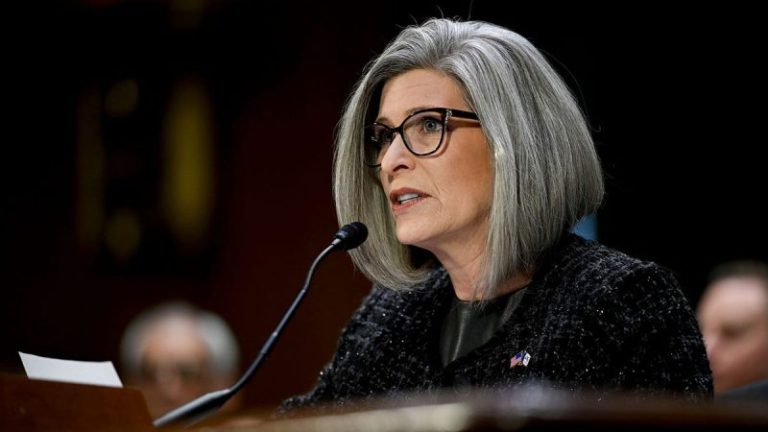
ThebipartisanStrengthening Agency Management And Oversight Of Software Assets (SAMOSA) Act passed the House in December, and Sen. Joni Ernset, R-Iowa, is leading efforts to get it passed in the upper chamber. 

Ernst, the chair of the Senate DOGE Caucus, said the SAMOSA Act will ‘bring Washington out of the Stone Age and into the 21st century.’ 

Fox News Digital is told the bill could potentially save $750 million annually for taxpayers by consolidating federal agencies’ cloud computing software licenses. A source close to the proposal said ‘fixing federal IT procurement will be a key part of her sweeping efforts as chair of the Senate DOGE Caucus to downsize government and eliminate more than $2 trillion in waste.’ 

‘If the government allowed meaningful competition in bidding for software, taxpayers could save up to $750 million a year,’ Ernst said in a statement to Fox News Digital. ‘Let’s pass my bill to force federal agencies to take commonsense steps when purchasing software, instead of throwing away taxpayer dollars like monopoly money.’

The legislative proposal has the support of industry groups. 

‘The SAMOSA Act is a vital step toward modernizing the federal IT infrastructure, ensuring fair software licensing practices in its procurement and saving money for taxpayers,’ Ryan Triplette, Executive Director of the Coalition for Fair Software Licensing, said in a statement to Fox News Digital. ‘There aren’t many areas in Congress where we see bipartisan support, but ensuring our IT infrastructure is as efficient, secure and cost-effective as possible is one of them. The Coalition for Fair Software Licensing will continue working with partners in Congress to get the SAMOSA Act across the finish line and signed into law.’

The bill gives the Chief Information Officer of every government agency no more than 18 months to organize a ‘comprehensive assessment’ of the software paid for or deployed throughout the agency. The review should include an inventory of all the current software, identify contracts for the use of the software and their expiration dates and list additional fees or costs, including fees or costs for the use of cloud services, not included in the initial costs of the contract. The review should then give each agency the information necessary to ‘consolidate software entitlements of each agency,’ reduce unnecessary costs and ‘develop criteria and procedures for how the agency will adopt cost-effective acquisition strategies.’ 

On the House side, the SAMOSA Act was introduced by Rep. Matt Cartwright, D-Pa., and co-sponsored by a bipartisan group of 20 members of Congress.  

Ernst penned a letter in November to Elon Musk and Vivek Ramaswamy (who has since exited DOGE while reportedly weighing a potential Ohio gubernatorial bid), outlining ‘a trillion dollars’ worth of ideas for trimming the fat and reducing red ink.’ 

Among the options, Ernst said ‘consolidating agencies’ cloud computing software licenses could save $750 million every year.’ 

She cited a study by Michael Garland,software and government procurement industry expert, that found Microsoft and Oracle, the world’s two largest software companies, received 25% to 30% of their contracts ‘without meaningful competition.’ 

Citing one example of ‘vendor-lock,’ the study found the government spent $112 million more to buy Microsoft Office than Google Workspace ‘in order to avoid perceived costs to switch.’

‘A five percent improvement in price performance, due to enhanced software competition, could produce savings up to $750 million annually,’ the report said. 

It also described how the U.S government spent almost $2 trillion on Information Technology (IT) since 1994, and about $300 billion of that expenditure has been on commercial off-the-shelf (COTS) software. 

‘On an annual basis, the government collectively spends $10 to $15 billion on new software and for the maintenance and support of previously purchased software. Unfortunately, the majority of the COTS software spend has been destined for only a limited set of software companies who have managed to create a largely vendor-locked COTS software estate,’ Garland wrote. ‘Until now, the government has had little visibility into how resoundingly its incumbent software estate has been captured by so few. As a result, an oligarchy of software companies has been free to use fear, uncertainty, and sometimes questionable business practices to make authentic competitions against incumbent software applications relatively rare.’ 

Ernst’s letter also pointed to how the U.S. Government Accountability Office (GAO) identified 10 critical federal IT legacy systems – or systems that are outdated or obsolete – that were most in need of modernization in 2019. The legacy systems were said to provide ‘vital support to agencies’ missions’ but ranged from about eight to 51 years old and ‘collectively cost about $337 million annually to operate and maintain.’ 

Several of the systems used older languages, such as Common Business Oriented Language (COBOL). 

‘The government runs on ancient computers & software. Needs an upgrade!’ Musk wrote on X in November.

This post appeared first on FOX NEWS

The White House is opening its artificial intelligence plan up to Americans to contribute policy ideas to the Trump administration to ensure that the United States is ‘the undeniable leader’ in AI technology. 

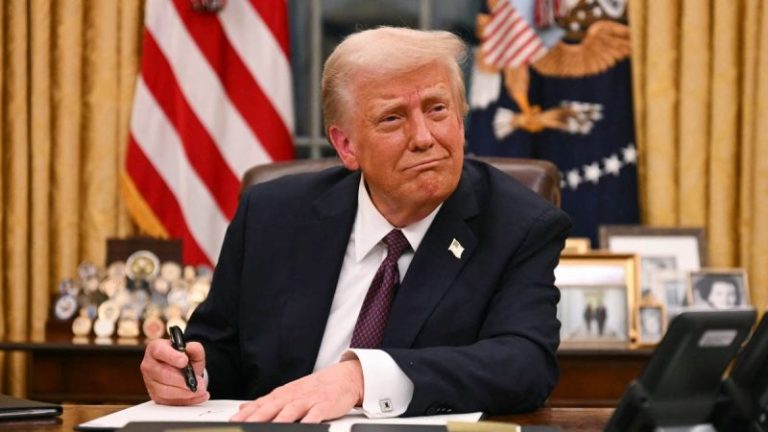
President Donald Trump signed an executive order at the end of January on artificial intelligence, which White House officials say shows that he is ‘dedicated to America’s global leadership in AI technology innovation.’ 

That order directed the development of an AI Action Plan. 

On Thursday, the White House’s Office of Science and Technology Policy encouraged the American people to share policy ideas for the AI Action Plan by March 15. 

‘The Trump Administration is committed to ensuring the United States is the undeniable leader in AI technology,’ Principal Deputy Director of the Office of Science and Technology Policy Lynne Parker said in a statement. ‘This AI Action Plan is the first step in securing and advancing American AI dominance, and we look forward to incorporating the public’s comments and innovative ideas.’ 

Americans can share their proposals on the Federal Register’s website through the middle of March.  

White House officials said they are seeking input from interested public parties, including academia, industry groups, private sector organizations, state, local and tribal governments, and others. 

Officials said the AI Action Plan will ‘define priority policy actions to enhance America’s position as an AI powerhouse and prevent unnecessarily burdensome requirements from hindering private sector innovation.’

‘With the right governmental policies, continued U.S. AI leadership will promote human flourishing, economic competitiveness, and national security,’ the White House said in a statement. 

The Trump administration says its focus on AI was a campaign promise of the president’s, after vowing to revoke former President Joe Biden’s executive order that they said hindered AI innovation and imposed ‘unnecessary government control’ over AI development. Under Trump’s executive order, AI in the U.S. ‘must be free from ideological bias or engineered social agendas.’ 

The order and focus on AI is not new for Trump. 

During his first administration, in 2019, Trump signed the first-ever executive order on artificial intelligence, recognizing the importance of American leadership in the space and for the economic and national security of the U.S. 

Trump also took executive action in 2020 to establish the first-ever guidance for federal agency adoption of AI to deliver services to the American people and ‘foster public trust’ in the technology. 

White House officials said the Trump administration’s renewed focus on AI is rooted in ‘free speech and human flourishing.’ 

This post appeared first on FOX NEWS